EP1463151A2 - Anschlussvorrichtung mit Piercingkontakt - Google Patents
Anschlussvorrichtung mit Piercingkontakt Download PDFInfo
- Publication number
- EP1463151A2 EP1463151A2 EP04400009A EP04400009A EP1463151A2 EP 1463151 A2 EP1463151 A2 EP 1463151A2 EP 04400009 A EP04400009 A EP 04400009A EP 04400009 A EP04400009 A EP 04400009A EP 1463151 A2 EP1463151 A2 EP 1463151A2
- Authority
- EP
- European Patent Office
- Prior art keywords
- conductor
- connection device
- centering
- spring
- actuating element
- Prior art date
- Legal status (The legal status is an assumption and is not a legal conclusion. Google has not performed a legal analysis and makes no representation as to the accuracy of the status listed.)
- Withdrawn
Links
Images


Classifications
-
- H—ELECTRICITY
- H01—ELECTRIC ELEMENTS
- H01R—ELECTRICALLY-CONDUCTIVE CONNECTIONS; STRUCTURAL ASSOCIATIONS OF A PLURALITY OF MUTUALLY-INSULATED ELECTRICAL CONNECTING ELEMENTS; COUPLING DEVICES; CURRENT COLLECTORS
- H01R4/00—Electrically-conductive connections between two or more conductive members in direct contact, i.e. touching one another; Means for effecting or maintaining such contact; Electrically-conductive connections having two or more spaced connecting locations for conductors and using contact members penetrating insulation
- H01R4/24—Connections using contact members penetrating or cutting insulation or cable strands
- H01R4/247—Connections using contact members penetrating or cutting insulation or cable strands the contact members penetrating the insulation being actuated by springs
-
- H—ELECTRICITY
- H01—ELECTRIC ELEMENTS
- H01R—ELECTRICALLY-CONDUCTIVE CONNECTIONS; STRUCTURAL ASSOCIATIONS OF A PLURALITY OF MUTUALLY-INSULATED ELECTRICAL CONNECTING ELEMENTS; COUPLING DEVICES; CURRENT COLLECTORS
- H01R4/00—Electrically-conductive connections between two or more conductive members in direct contact, i.e. touching one another; Means for effecting or maintaining such contact; Electrically-conductive connections having two or more spaced connecting locations for conductors and using contact members penetrating insulation
- H01R4/24—Connections using contact members penetrating or cutting insulation or cable strands
- H01R4/2404—Connections using contact members penetrating or cutting insulation or cable strands the contact members having teeth, prongs, pins or needles penetrating the insulation
-
- H—ELECTRICITY
- H01—ELECTRIC ELEMENTS
- H01R—ELECTRICALLY-CONDUCTIVE CONNECTIONS; STRUCTURAL ASSOCIATIONS OF A PLURALITY OF MUTUALLY-INSULATED ELECTRICAL CONNECTING ELEMENTS; COUPLING DEVICES; CURRENT COLLECTORS
- H01R9/00—Structural associations of a plurality of mutually-insulated electrical connecting elements, e.g. terminal strips or terminal blocks; Terminals or binding posts mounted upon a base or in a case; Bases therefor
- H01R9/22—Bases, e.g. strip, block, panel
- H01R9/24—Terminal blocks
- H01R9/26—Clip-on terminal blocks for side-by-side rail- or strip-mounting
Definitions
- the invention relates to a connection device with piercing contact according to the Preamble of claim 1.
- Connection devices with needle-like and / or cutting-like piercing contacts which pierce a conductor insulation when wiring and then for example penetrate into a bundle of cable cores and contact them, are known in various embodiments. So there is an opportunity Piercing contact using an actuating tool, which, for example, on a slide acts on which the piercing contact is attached, in the direction of Moving the conductor and wiring it this way.
- the invention has the task of a connection device of the generic type Way to further reduce the risk of incorrect wiring.
- a second centering device for the conductor which also has the same the first centering device cooperates that the conductor before and / or Wiring is centered twice.
- the first is / are preferred and / or the second centering device as a tapering recess (s) educated.
- first and / or the second centering device are in the Actuating element and / or provided in a support element.
- the actuating element is wider than that Support element, such that the support element in the recess when wiring of the actuator immersed.
- the centering devices preferably support the conductor at several points.
- connection devices in / on power-connecting components such as terminal blocks, connectors, contactors and switches.
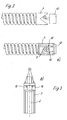
- connection device 1 for connecting a conductor 2 by means of a Piercing contact 3, which a tip 4 - possibly flattened like a knife and / or provided with additional cutting edges - for penetrating a conductor insulation 5 and for subsequent contacting of the line wires 6.
- the connection device 1 comprises an actuating element 7 - here, for example, a Sliding piece or alternatively a rotatably mounted element - which the conductor 2 automatically moved to the tip 4 by means of an actuating spring 8, here pushed forward, see above that the tip 4 first penetrates the conductor insulation 5 and then into the bundle the line wires 6 penetrates.
- the actuating spring 8 is here as an example Helical compression spring designed. Alternatives are e.g. through several smaller ones Spiral springs, leaf springs or other springs can be realized.
- connection device 1 is various for installation in electrical devices Suitable as terminal blocks, contactors and the like.
- the tip 4 itself could also be used an actuating spring can be moved onto the stationary conductor 2 (not ) Shown.
- the actuating element 7 is provided with a first centering device for centering the Conductor provided which as a tapered, here V-shaped recess 9 on the the conductor 2 facing side of the actuating element 7 is formed.
- V-shaped Recess 9 becomes the head 2 during the feed movement of the Actuating element 7 virtually automatically in the area of the rear base pressed so that the risk of incorrect wiring is reduced, in which the Tip 4 brushes past conductor 2 or does not penetrate it correctly.
- connection device via the first centering device also provided with a second centering device.
- the second centering device is again a tapered, here V-shaped Recess or recess 11 designed, which is shown in FIG Actuator 7 separately formed support member 12 (e.g. an inner Wall of an insulating material housing or an element separate from this) Piercing contact is formed, which carries the tip 4.
- the top 4 is in the Arranged due to the recess 11.
- the guidance of the actuating element 7 and the circuitry security are complementary also increased by the fact that the actuating element 7 and the supporting element 12 on their mutually facing sides with complementary, interlocking Recesses and projections or grooves and webs 13, 14 are provided.
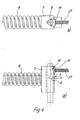
- the second centering device can also be used in a different way than in the manner of FIG. 1 will be realized. So one of the two centering devices can be mutually opposite spring bars 15, 16 realized with mutually parallel edges which center the conductor 2 between them. Such a solution combined with the V-shaped recess 9, FIG. 3 shows
- the spring bars 15, 16 and / or the tapering recesses 9, 12 can be used as resilient rags made of insulating material or possibly can also be bent from a sheet (see Fig. 3b; bending points A).
- the two V-shaped recesses 9, 11 are the same Have opening angle and the actuating element 7 and the support element 12 are the same width on the sides facing each other, they can be used for further Increasing the centering security also have different opening angles and / or differ widely so that e.g. the support element 12 in one of the two recesses 9 can dip a bit.
- a solution shows Fig. 4.
- the tip 4 of the connecting device 1 is further axially offset second tapered recess 11 is formed, whereas the Actuating element 7 - viewed axially in the direction of the conductor - both via the axial Length of the piercing contact 3 and also over the axial length of the support element 12 extends.
- the arrangement according to FIG. 4 has the further advantage that the support element 12 is designed to be movable, i.e. the support element can have its own support spring 28 are assigned to the support element 12 in the direction of the actuating element 7 advances (perpendicular to the conductor axial direction) so that the centering effect takes place, before the conductor 2 is wired through the tip 4 of the piercing contact 3.
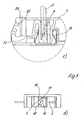
- connection devices can be in one Arrange insulating housing 17, which has an insertion opening on its upper side 18 for a conductor and possibly for an operating tool, such as a screwdriver (not shown here) is provided.
- the actuating element 7 has one here Conductor receptacle, which on both sides with V-shaped recesses 9, 11, i.e. With a first tapered centering device and a second itself tapering centering device is provided.
- the second tapering centering device is a spring bar 16 from the Insulated material is formed and resiliently lies against the conductor or presses the conductor one-sided in the direction of the first V-shaped recess 9, so that this at Insertion into the actuating element 7 automatically in each case in the base area of the V-shaped Recess 9, 10 is centered.
- a U-shaped spring is provided as the actuating spring 19, which is on the one hand with one of its longitudinal legs on the actuating element 7 and on the other a conductive projection 20 connected to a busbar or other Supported in the insulating housing 17.
- the spring legs of the U-shaped spring are pre-bent towards each other. When contracting the spring legs the actuating element 7 is pulled in the direction of the piercing contact 3, which on Projection 20 is formed or arranged so that the head 2 as the Actuating element 7 from the U-shaped actuating spring 19 automatically on the Piercing contact 3 is pulled.
- the connecting device 1 is also a locking and triggering device 21 assigned, which has an arm 23 provided with a hook section 22, which resiliently engages behind an undercut 24 in the insulating material housing 17. Doing so the arm 23 up a pin 25 in the insulating housing, which from the Isolierstoffgeophuse 17 protrudes outwards and at its end with a button-like Actuating surface 26 is provided so that by depressing the actuating surface 26 or the pin 25 formed thereon, the hook section 22 of the arm 23 in Insulation housing can be moved down.
- the advantage of the locking device is that the clamp is biased can be delivered, i.e. it is only necessary to insert a ladder from above into the Insert the terminal and then carry out the wiring without tools.
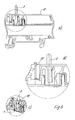
- Figure 6 illustrates that the compact and structurally simple connection device 5 particularly advantageous as part of a terminal block 27 for snapping on a mounting rail can be used.
- FIG. 6c illustrates the function of the in a perspective view Double centering.
Landscapes
- Coupling Device And Connection With Printed Circuit (AREA)
- Connections By Means Of Piercing Elements, Nuts, Or Screws (AREA)
- Multi-Conductor Connections (AREA)
Abstract
Description
- Fig. 1a-d
- zwei Schnitte und zwei perspektivische Ansichten einer ersten erfindungsgemäßen Anschlußvorrichtung mit Piercingkontakt;
- Figur 2
- eine Anschlußvorrichtung nach dem Stand der Technik;
- Figur 3a,b
- zwei verschiedene Ansichten einer zweiten Anschlußvorrichtung;
- Figur 4a,b
- zwei verschiedene Ansichten einer dritten Anschlußvorrichtung;
- Figur 5a-d
- vier verschiedene Betriebszustände beim Schalten einer vierten Anschlußvorrichtung und
- Figur 6a-c
- eine Reihenklemme mit einer Anschlußvorrichtung nach Art der Figur 5 sowie zwei verschiedene Ausschnittsvergrößerungen eines Bereiches der Reihenklemme, einmal in einer Seitenansicht und einmal in einer perspektivischen Ansicht.
- Anschlußvorrichtung
- 1
- Leiter
- 2
- Piercingkontakt
- 3
- Spitze
- 4
- Leiterisolierung
- 5
- Leitungsader
- 6
- Betätigungselement
- 7
- Betätigungsfeder
- 8
- Aussparung
- 9
- Aussparung
- 10
- Aussparung
- 11
- Abstützelement
- 12
- Steg/Nut
- 13
- Steg/Nut
- 14
- Federstege
- 15,16
- Isolierstoffgehäuse
- 17
- Einführöffnung
- 18
- Betätigungsfeder
- 19
- Vorsprung
- 20
- Verriegelungs-/Auslöseeinrichtung
- 21
- Hakenabschnitt
- 22
- Arm
- 23
- Hinterschnitt
- 24
- Stift
- 25
- Betätigungsfläche
- 26
- Reihenklemme
- 27
- Abstützfeder
- 28
- Biegestellen
- A
Claims (16)
- Anschlussvorrichtung (1) zum Anschluss eines Leiters (2) und einer Leiterisolierung (5) und wenigstens einer Leitungsader (6),a) mit einem isolationsdurchstechenden Piercingkontakt (3), welcher eine ggf. mit Schneidkanten versehene Spitze (4) zum Durchdringen der Leiterisolierung (5) und zum Kontaktieren der wenigstens einen Leitungsader (6) aufweist,b) einem mittels einer Betätigungsfeder (8, 19) betätigbaren Betätigungselement (7), welches dazu ausgelegt ist, den Leiter (2) und den Piercingkontakt (3) relativ zueinander zu bewegen, bis der Piercingkontakt (3) die Leiterisolierung (5) durchdringt und die Leitungsadem (6) kontaktiert,c) wobei das Betätigungselement (7) mit einer Zentriervorrichtung (9) für den Leiter (2) versehen ist,
gekennzeichnet durchd) eine zweite Zentriervorrichtung (11) für den Leiter, die derart mit der ersten Zentriervorrichtung zusammenwirkt, daß der Leiter (2) vor und/oder beim Beschalten doppelt zentriert wird. - Anschlußvorrichtung nach Anspruch 1, dadurch gekennzeichnet, daß die erste und/oder die zweite Zentriervorrichtung als sich verjüngende Aussparung(en) (11) ausgebildet ist(sind.
- Anschlußvorrichtung nach einem der vorstehenden Ansprüche, dadurch gekennzeichnet, daß die erste und/oder die zweite Zentriervorrichtung im Betätigungselement (7) und/oder in einem Abstützelement (12) vorgesehen sind.
- Anschlußvorrichtung nach einem der vorstehenden Ansprüche, dadurch gekennzeichnet, daß auf das Abstützelement (12) eine Abstützfeder (28) einwirkt.
- Anschlußvorrichtung nach einem der vorstehenden Ansprüche, dadurch gekennzeichnet, daß das Betätigungselement (7) breiter ist als das Abstützelement (12), derart, dass das Abstützelement (12) beim Beschalten in die Aussparung (9) des Betätigungselementes (7) eintaucht.
- Anschlußvorrichtung nach einem der vorstehenden Ansprüche, dadurch gekennzeichnet, daß wenigstens eine der Zentriervorrichtungen als Federsteg (15,16) ausgebildet ist, der den Leiter in Richtung der zweiten Zentriervorrichtung bewegt.
- Anschlußvorrichtung nach einem der vorstehenden Ansprüche, dadurch gekennzeichnet, daß beide Zentriervorrichtungen als Federstege (15,16) ausgebildet sind.
- Anschlußvorrichtung nach einem der vorstehenden Ansprüche, dadurch gekennzeichnet, daß die Federstege (15,16) einander gegenüber liegend angeordnet sind und einander gegenüberliegende, parallele Kanten aufweisen.
- Anschlußvorrichtung nach einem der vorstehenden Ansprüche, dadurch gekennzeichnet, daß die Betätigungsfeder (8, 19) eine Schraubenfeder oder eine U-förmige Feder ist
- Zentriervorrichtung nach einem der vorstehenden Ansprüche, dadurch gekennzeichnet, daß der Piercingkontakt (3) axial zu wenigstens einer der Zentriervorrichtungen versetzt angeordnet ist.
- Anschlußvorrichtung nach einem der vorstehenden Ansprüche, gekennzeichnet durch eine Verriegelungs- und Auslösevorrichtung (21).
- Anschlußvorrichtung nach einem der vorstehenden Ansprüche, dadurch gekennzeichnet, daß die Verriegelungs- und Auslösevorrichtung einen Hakenabschnitt (22) aufweist, der an einen federnden Arm (23) des Betätigungselementes (7) angeformt ist und dazu ausgelegt ist, einen Hinterschnitt (24) im Isolierstoffgehäuse zu hintergreifen.
- Anschlußvorrichtung nach einem der vorstehenden Ansprüche, dadurch gekennzeichnet, daß aus dem Isolierstoffgehäuse ein Stift (25) nach außen vorsteht, mit Hilfe dessen der Hakenabschnitt (22) betätigbar ist.
- Anschlußvorrichtung nach einem der vorstehenden Ansprüche, dadurch gekennzeichnet, daß das Betätigungselement (7) und das Abstützelement (12) an ihren einander zugewandten Seiten mit komplementären, ineinandergreifenden Aussparungen und Vorsprüngen, insbesondere Nuten und Stegen (13, 14) versehen sind.
- Anschlußvorrichtung nach einem der vorstehenden Ansprüche, dadurch gekennzeichnet, daß die Zentriervorrichtung den Leiter am Umfang an mehreren Stellen abstützt.
- Anschlußvorrichtung nach einem der vorstehenden Ansprüche, dadurch gekennzeichnet, daß sie in/an stromverbindenden Komponenten wie Reihenklemmen, Steckverbindern, Schützen und Schaltern angeordnet ist.
Applications Claiming Priority (2)
| Application Number | Priority Date | Filing Date | Title |
|---|---|---|---|
| DE20305154U DE20305154U1 (de) | 2003-03-28 | 2003-03-28 | Anschlußvorrichtung mit Piercingkontakt |
| DE20305154U | 2003-03-28 |
Publications (2)
| Publication Number | Publication Date |
|---|---|
| EP1463151A2 true EP1463151A2 (de) | 2004-09-29 |
| EP1463151A3 EP1463151A3 (de) | 2008-03-26 |
Family
ID=32798258
Family Applications (1)
| Application Number | Title | Priority Date | Filing Date |
|---|---|---|---|
| EP04400009A Withdrawn EP1463151A3 (de) | 2003-03-28 | 2004-03-04 | Anschlussvorrichtung mit Piercingkontakt |
Country Status (2)
| Country | Link |
|---|---|
| EP (1) | EP1463151A3 (de) |
| DE (1) | DE20305154U1 (de) |
Cited By (3)
| Publication number | Priority date | Publication date | Assignee | Title |
|---|---|---|---|---|
| DE102008025833A1 (de) | 2008-05-29 | 2009-12-17 | Fraunhofer-Gesellschaft zur Förderung der angewandten Forschung e.V. | Verfahren und Vorrichtung zum stoffschlüssigen Fügen metallischer Anschlussstrukturen |
| EP3024093A1 (de) * | 2014-11-21 | 2016-05-25 | TE Connectivity Nederland B.V. | Isolationsverlagerungs-Kontaktvorrichtung |
| US10035861B2 (en) | 2004-12-22 | 2018-07-31 | Amgen Inc. | Compositions and methods relating to anti-IGF-1 receptor antibodies |
Family Cites Families (7)
| Publication number | Priority date | Publication date | Assignee | Title |
|---|---|---|---|---|
| DE2048116A1 (de) * | 1970-07-01 | 1972-01-13 | Niko Pvba | Anschlußvorrichtung fur elektrische Leiter |
| CH551700A (de) * | 1972-11-17 | 1974-07-15 | Weidmueller Kg C | Reihenklemme. |
| CH578265A5 (de) * | 1975-03-17 | 1976-07-30 | Woertz Fa | |
| US4834672A (en) * | 1985-05-21 | 1989-05-30 | Alfred Michely | Connector |
| CH689682A5 (de) * | 1992-11-24 | 1999-08-13 | Siemens Schweiz Ag | Vorrichtung zur Ankopplung einer Anschlussleitung. |
| DE19604615C1 (de) * | 1996-02-08 | 1997-06-12 | Siemens Ag | Kontaktierungseinrichtung |
| DE19835459C2 (de) * | 1998-08-06 | 2002-12-19 | Phoenix Contact Gmbh & Co | Anschlußklemme für elektrische Leiter |
-
2003
- 2003-03-28 DE DE20305154U patent/DE20305154U1/de not_active Expired - Lifetime
-
2004
- 2004-03-04 EP EP04400009A patent/EP1463151A3/de not_active Withdrawn
Cited By (4)
| Publication number | Priority date | Publication date | Assignee | Title |
|---|---|---|---|---|
| US10035861B2 (en) | 2004-12-22 | 2018-07-31 | Amgen Inc. | Compositions and methods relating to anti-IGF-1 receptor antibodies |
| DE102008025833A1 (de) | 2008-05-29 | 2009-12-17 | Fraunhofer-Gesellschaft zur Förderung der angewandten Forschung e.V. | Verfahren und Vorrichtung zum stoffschlüssigen Fügen metallischer Anschlussstrukturen |
| EP3024093A1 (de) * | 2014-11-21 | 2016-05-25 | TE Connectivity Nederland B.V. | Isolationsverlagerungs-Kontaktvorrichtung |
| WO2016079341A1 (en) * | 2014-11-21 | 2016-05-26 | Te Connectivity Nederland Bv | Insulation displacement contact device |
Also Published As
| Publication number | Publication date |
|---|---|
| DE20305154U1 (de) | 2004-08-19 |
| EP1463151A3 (de) | 2008-03-26 |
Similar Documents
| Publication | Publication Date | Title |
|---|---|---|
| EP1855356B1 (de) | Anschlussvorrichtung für Mehrleiterkabel | |
| EP1936747B1 (de) | Anschlussvorrichtung für Mehrleiterkabel | |
| DE1917503C3 (de) | Schraubenlose Anschluß- oder Verbindungsklemme | |
| EP1515397B1 (de) | Anschlussvorrichtung zum Direktsteckanschluss von Leiterenden | |
| DE19835459C2 (de) | Anschlußklemme für elektrische Leiter | |
| EP0959529B1 (de) | Elektrische Anschlussbaueinheit | |
| EP2917970B1 (de) | Federkraftklemme mit einem betätigungsmittel | |
| WO2011151393A1 (de) | Kontaktelement für steckeranordnung | |
| EP1463152B1 (de) | Anschlussvorrichtung mit selbstauslösendem Piercingkontakt | |
| EP1008205B1 (de) | Reihenklemme zum abisolierungsfreien anschluss isolierter leiter | |
| EP0817314A2 (de) | Anschlussvorrichtung für Schneidkontakt | |
| EP0210945A1 (de) | Vorrichtung zum Anschliessen und Verbinden von Kabeladern | |
| EP1753087B1 (de) | Elektrische Klemme | |
| DE19616912C1 (de) | Anschlußwerkzeug | |
| EP2583357B1 (de) | Reihenklemme | |
| EP2659548B1 (de) | Sammelanschlussvorrichtung | |
| EP1523065B1 (de) | Elektrische Klemme | |
| EP1402598B1 (de) | Elektrische anschlussklemme | |
| EP1251589A1 (de) | Schraubenlose Anschlussklemme | |
| WO2000070714A1 (de) | Schraubenlose anschlussklemme | |
| EP1463151A2 (de) | Anschlussvorrichtung mit Piercingkontakt | |
| DE19604615C1 (de) | Kontaktierungseinrichtung | |
| DE19914308A1 (de) | Elektrische Anschlußbaueinheit | |
| EP1193798B1 (de) | Leiteranschlusselement | |
| EP1355379B1 (de) | Steckverbinder mit Schneidklemmkontakten |
Legal Events
| Date | Code | Title | Description |
|---|---|---|---|
| PUAI | Public reference made under article 153(3) epc to a published international application that has entered the european phase |
Free format text: ORIGINAL CODE: 0009012 |
|
| AK | Designated contracting states |
Kind code of ref document: A2 Designated state(s): AT BE BG CH CY CZ DE DK EE ES FI FR GB GR HU IE IT LI LU MC NL PL PT RO SE SI SK TR |
|
| AX | Request for extension of the european patent |
Extension state: AL HR LT LV MK |
|
| RAP1 | Party data changed (applicant data changed or rights of an application transferred) |
Owner name: WEIDMUELLER INTERFACE GMBH & CO. KG |
|
| PUAL | Search report despatched |
Free format text: ORIGINAL CODE: 0009013 |
|
| AK | Designated contracting states |
Kind code of ref document: A3 Designated state(s): AT BE BG CH CY CZ DE DK EE ES FI FR GB GR HU IE IT LI LU MC NL PL PT RO SE SI SK TR |
|
| AX | Request for extension of the european patent |
Extension state: AL LT LV MK |
|
| AKX | Designation fees paid | ||
| STAA | Information on the status of an ep patent application or granted ep patent |
Free format text: STATUS: THE APPLICATION IS DEEMED TO BE WITHDRAWN |
|
| 18D | Application deemed to be withdrawn |
Effective date: 20080927 |
|
| REG | Reference to a national code |
Ref country code: DE Ref legal event code: 8566 |