EP1465451A2 - Kommunikationsendgerät, Basisstation,Server,Netzsystem und Verfahren zum Weiterreichen - Google Patents
Kommunikationsendgerät, Basisstation,Server,Netzsystem und Verfahren zum Weiterreichen Download PDFInfo
- Publication number
- EP1465451A2 EP1465451A2 EP04101320A EP04101320A EP1465451A2 EP 1465451 A2 EP1465451 A2 EP 1465451A2 EP 04101320 A EP04101320 A EP 04101320A EP 04101320 A EP04101320 A EP 04101320A EP 1465451 A2 EP1465451 A2 EP 1465451A2
- Authority
- EP
- European Patent Office
- Prior art keywords
- connection
- communication
- wireless
- communication terminal
- link quality
- Prior art date
- Legal status (The legal status is an assumption and is not a legal conclusion. Google has not performed a legal analysis and makes no representation as to the accuracy of the status listed.)
- Withdrawn
Links
Images
















Classifications
-
- H—ELECTRICITY
- H04—ELECTRIC COMMUNICATION TECHNIQUE
- H04W—WIRELESS COMMUNICATION NETWORKS
- H04W36/00—Hand-off or reselection arrangements
- H04W36/24—Reselection being triggered by specific parameters
- H04W36/30—Reselection being triggered by specific parameters by measured or perceived connection quality data
- H04W36/302—Reselection being triggered by specific parameters by measured or perceived connection quality data due to low signal strength
-
- H—ELECTRICITY
- H04—ELECTRIC COMMUNICATION TECHNIQUE
- H04W—WIRELESS COMMUNICATION NETWORKS
- H04W36/00—Hand-off or reselection arrangements
- H04W36/14—Reselecting a network or an air interface
-
- H—ELECTRICITY
- H04—ELECTRIC COMMUNICATION TECHNIQUE
- H04W—WIRELESS COMMUNICATION NETWORKS
- H04W88/00—Devices specially adapted for wireless communication networks, e.g. terminals, base stations or access point devices
- H04W88/02—Terminal devices
- H04W88/06—Terminal devices adapted for operation in multiple networks or having at least two operational modes, e.g. multi-mode terminals
Definitions
- the present invention relates to a communication terminal, a base station, a server, a network system, and a handover method in a wireless system, and more particularly to a technique of selection of, connection to, and disconnection from a system in a terminal connectable to a plurality of wireless systems.
- a wireless terminal makes communication with other wireless terminal and a terminal of a wire network via a wireless base station.
- a communication form also exists that is called an ad hoc mode in which each of fellow wireless terminals directly receives/transmits wireless signals from/to the other; however it is left out of consideration in the present invention.
- An area that one wireless base station covers is limited, whereby the wireless terminal performs a handover of appropriately switching over to the neighboring wireless base stations as it migrates for aiming at continuing the communication.
- a frequency band, a modem technique, etc. are the same, by mainly comparing a quality of a wireless link between the wireless terminal and one of a plurality of wireless base stations with a quality between the wireless terminal and another base station, the wireless base station of which the wireless link quality is most excellent is selected to perform the handover.
- the handover within the identical wireless system is a technique already-and-well established, which was described as an example of algorithm in the non-patent document 1.
- a criterion of the handover is often governed by a priority for the above wireless system set by a user rather than the wireless link quality.
- a timing at which the handover between the wireless systems is executed is limited to a time of starting the wireless terminal, or a case where the wireless terminal migrated from the outside of a range of the wireless system within the range, and it is rare that the wireless system is switched over during communication.
- the user of the wireless LAN terminal automatically pre-registered the system name (Service Set ID in the IEEE Standard 802.11) of the connectable wireless LANs in the order of a priority to set information, which was employed for authentication and encryption in the wireless link layer, together therewith responding to necessity.
- the system name Service Set ID in the IEEE Standard 802.11
- the wireless LAN terminal migrated from the outside of the service range of the wireless LAN within the service range of anyone of the already-registered wireless LANs that the wireless LAN system having the highest priority is selected for connection according to this priority.
- the terminal firstly attempts a connection to the system of the Home Public Land Mobile Network (HPLMN) with which the user made a contract.
- HPLMN Home Public Land Mobile Network
- the terminal next attempts a connection to the system of the Public Land Mobile Network described in the "User Controlled PLMN Selector" field in the USLM (Universal Subscriber Identity Module) within the terminal, and further attempts a connection to the system of the Public Land Mobile Network described in the "Operator Controlled PLMN Selector" field.
- the system of the Public Land Mobile Network having a sufficient reception signal quality is randomly selected for connection, and in a case where no system of the Public Land Mobile Network having a sufficient reception signal quality is yet further found, the system of the Public Land Mobile Network is selected in the order of reception signal intensity.
- the Home Public Land Mobile Network and the Public Land Mobile Network other than it differ in the accounting system for the user, whereby there is also the case that the user does not always desire the automatic connection to the Public Land Mobile Network automatically selected.
- the technique of the non-patent document 3 however, the problem existed of selecting the wireless system automatically according to the above-mentioned procedure to attempt a connection.
- connection cost function fn (Bn, Pn, Cn) wb ⁇ ln (l/Bn) + wp ⁇ ln (Pn)+ wc ⁇ ln (Cn) for a plurality of the wireless systems, with a link band parameter of a wireless system n taken as Bn, a power consumption parameter as Pn, and an accounting condition as Cn, employing weighting parameters wb, wp, and wc.
- the wireless system As an example of the wireless system, were listed the mobile telephone having the GSM (Global System for Mobile Communication) technique, the wireless LAN, and an infrared network. No wireless link quality is included in the above-mentioned connection cost function, whereby it is at the time that a link to the existing wireless system was disconnected, or at the time that a link to a new wireless system was established that the handover is carried out.
- GSM Global System for Mobile Communication
- this non-patent document 4 was proposed a method of causing the terminal to have a time hysteresis for realizing stability of the handover, so that the next handover was carried out only if the elapse time after the handover was equal to or more than a specified value in order to prevent the frequent link disconnection and re-connection at the time of deterioration in the wireless link quality.
- the user has to manually set the weighting parameters of the above-mentioned connection function, whereby the problem existed that it was difficult for the user having less knowledge about the network to set them.
- the link band employs only a physical velocity of the link, whereby the problem existed that the portion was not reflected that varied depending upon the operational situation such as the congestion situation of the network. Furthermore, no restriction was imposed on the number of the wireless system to which the links can be simultaneously established, whereby the problem existed that the power consumption of the wireless terminal resulted in augmenting as the number of the wireless system to which the links were established increased.
- the non-patent document 4 in switching the systems of which the switching technique, the modulation technique, and the transmission medium are different respectively, there is the problem associated with different characteristics that respective systems have.
- the stabilized telephone service can be offered because the circuit switching technique is employed even though the transmission velocity is low; however, in the wireless LAN, the stability of the telephone service lowers because the packet switching technique allowing for collision is employed even though the transmission velocity is fast.
- the user who utilizes the telephone service sometimes desires the offer of the service by the mobile telephone having the GSM technique even though the wireless LAN is available.
- the user who employs the mobile telephone having the GSM technique to utilize the data transfer service desires to utilize the data communication service by immediately switching over to the wireless LAN if it becomes available. In such a manner, the problem exists that a control in strict conformity with the communication service that the user utilizes is impossible to take.
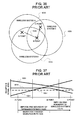
- Fig. 36 wireless systems A, B, and C exist, and 1000, 1010, and 1020 indicate areas in which the stabilized communication service can be offered from the wireless system A, B, and C respectively.
- the user switched on the power source of his/her terminal to initiate the communication at an A point, and migrated to a C point via a B point as shown by a migration path 1030.
- the user's connection priority for the wireless communication system A, the wireless communication system B, and the wireless communication system C rises in that order.
- Fig. 37 is a view that schematically illustrates the levels of the reception signal to be received in the user's terminal at the time that the user migrated according to the migration path 1030.
- 1001, 1011, and 1021 indicate the reception levels of the wireless communication system A, B, and C respectively.
- the signal level to be shown by the signal level 1031 is taken as a minimum reception signal level necessary for making the stabilized communication.
- the user migrates from the A point up to the B point.
- the wireless systems A and B are connectable at the A point where the user switches on the power source of his/her terminal, and the user's terminal connects to the wireless system B because the wireless system B is higher than the wireless communication system A in terms of the connection priority.
- the user's terminal migrates according to the migration path 1030, when it enters the domain in which the stabilized communication service can be received from the wireless system C, the reception signal level from the wireless system C exceeds the signal level 1031.
- the user desires to immediately carry out the connection switching (handover) to the wireless system C if the situation comes that the stabilized communication service can be received from the wireless system C having a higher connection priority, to which the connection was impossible to make at the time point that he/she switched on the power source of his/her terminal.
- the wireless terminal migrates from the B point up to the C point, it crosses over 1010 that is a service area boundary of the wireless system B, and the reception signal level from the wireless system B falls below the signal level 1031.
- the wireless system A and the wireless system C are detected as a candidate for the connection system, and the handover to the wireless system C having a higher priority is carried out based upon the connection priority.
- the handover is carried out to the wireless communication system C of which the connection priority is higher, and yet from which the stabilized communication service can be received.
- the prior art there is no possibility of the handover to the wireless system C until it migrates from the B point up to the C point.
- the present invention has an objective of stably realizing the handover between the wireless systems responding to connection policy information such as the priority of the wireless system and the advisability condition of the automatic connection to be set by the user, and the wireless link quality between the wireless terminal and each wireless system.
- Another objective of the present invention is to impose restrictions on the number of the wireless links that can be simultaneously established from the wireless terminal to restrain the power consumption of the wireless terminal, and to dynamically incorporate the operational situation of the network such as the congestion status for reflecting it in the conditioned determination of the handover.
- Yet another objective of the present invention is to solve the problem that no restriction is imposed on the number of the wireless system to which the links can be simultaneously established, resulting in that the power consumption augments as the number of the wireless system to which the link was established increases.
- the communication terminal in accordance with the present invention is a communication terminal connectable to a plurality of communication systems, which is characterized in including communication system selection means for deciding the communication system to which to connect, based on a communication link quality and a connection policy including a priority of a connection set for each of said plurality of said communication systems.
- the base station in accordance with the present invention is a base station for making communication with a communication terminal connectable to a plurality of communication systems, and yet adapted to decide the communication system to which to connect based on a communication link quality and a connection policy, which is characterized in including means for informing said communication terminal of said connection policy.
- the server in accordance with the present invention is a server for making communication with a communication terminal connectable to a plurality of communication systems, and yet adapted to decide the communication system to which to connect based on a communication link quality and a connection policy, which is characterized in including means for informing said communication terminal of said connection policy.
- the handover method between the communication systems in accordance with the present invention is a handover method between the communication systems, of a communication terminal connectable to a plurality of communication systems, which is characterized in including a communication system selection step of deciding the communication system to which to connect in said communication terminal, based on a communication link quality and a connection policy set for each of said plurality of said communication systems.
- the network system in accordance with the present invention is a network system having a function that a communication terminal connectable to a plurality of communication systems makes the handover between the communication systems, which is characterized in that said communication terminal includes means for selecting the communication system to which the connection should be initiated according to a communication link quality and a connection policy.
- the program in accordance with the present invention is a computer-readable program for controlling an operation of a communication terminal connectable to a plurality of communication systems, which is characterized in including a communication system selection step of deciding the communication system to which to connect, based on a communication link quality, and a connection policy set for each of said plurality of said communication systems.
- Another program in accordance with the present invention is a computer-readable program for controlling an operation of a base station for making communication with a communication terminal connectable to a plurality of communication systems and yet adapted to decide the communication system to which to connect based on a communication link quality and a connection policy, which is characterized in including a step of informing said communication terminal of said connection policy.
- Yet another program in accordance with the present invention is a computer-readable program for controlling an operation of a network management server for making communication with a communication terminal connectable to a plurality of communication systems and yet adapted to decide the communication system to which to connect according to a communication link quality and a connection policy, which is characterized in including a step of informing said communication terminal of said connection policy.
- a configuration is made so that the communication system to which the connection should be initiated is selected responding to connection policy information such as the priority of each communication system and the advisability condition of the automatic connection to be set by the user of the communication terminal that is a user, and the communication link quality between the wireless terminal and each communication system. Doing so allows the handover between the communication systems to be stably realized. Furthermore, it becomes possible to impose restrictions on the number of the communication link that can be simultaneously established from the communication terminal for restraining the power consumption of the communication terminal, and to dynamically incorporate the operational situation of the network such as the congestion status for reflecting it in the conditioned determination of the handover.
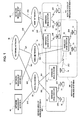
- Fig. 1 is illustrated a connection relation of a wireless terminal and a wireless system in a first embodiment of the present invention.
- the wireless system is configured of wire networks, wireless base stations, wire links, wireless links, and network management servers.
- the wireless system are listed a wireless LAN system in conformity with the IEEE 802.11 Standard, and a mobile telephone system in conformity with the 3 GPP Standard, etc., however it is not always limited hereto.
- independent wireless system identifiers are assigned by different management organizations to the wireless systems that conform to the identical technical specification, they are regarded as a different wireless system respectively.
- the wireless terminal selects one or more wireless systems to connect to an external network, with the start and the migration thereof.
- wireless terminals 10 and 11 which are connected to a wireless base station 20, make data communication via wireless links 200 and 201.
- Wireless base stations 20 and 21 are connected to a wire network 30 of the wireless system A via wire links 300 and 301 respectively, and further connected to a network management server 40 and an external network 50 via wire links 310 and 320 respectively.
- wireless terminals 12, 13 and 14, which are connected to a wireless base stations 22, make data communication via wireless link 203, 204, and 202.
- the wireless terminal 12 is connectable to any of the wireless base station 22 of the wireless system B and the wireless base station 21 of the wireless system A; however, herein, it is connected to the wireless base station 22 of the wireless system B.
- the wireless base station 22 is connected to a wire network 31 of the wireless system B via a wire link 302, and further connected to a network wireless-resource management server 41 and the external network 50 via wire links 311 and 321 respectively.
- a wireless terminal 15 that is connected to a wireless base station 23, and wireless terminals 16 and 17 that are connected to a wireless base station 24 make data communication via wireless links 206, 207, and 205.
- the wireless terminals 15 and 16 are connectable to any of the wireless base station 22 of the wireless system B and the wireless base stations 23 and 24 of the wireless system C; however, herein, they are connected to the wireless base stations 23 and 24 of the wireless system C respectively.
- the wireless base stations 23 and 24 are connected to a wire network 32 of the wireless system C via wire links 303 and 304, and further connected to a network management server 42 and the external network 50 via wire links 312 and 322 respectively.
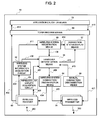
- a wireless receiver 60 receives wireless signals from the wireless link 200, it performs a modulation of the physical layer and a termination operation of the data link layer to output reception data 400, 402, and 403 to TCP/IP (Transmission Control Protocol/Internet Protocol) process means 69, a wireless system information acquisition circuit 62, and a wireless link quality acquisition circuit 63. Also, a wireless transmitter 61 performs the termination operation of the data link layer, and the modulation of the physical layer for transmission data 401 that was input, and transmits wireless signals to the wireless link 200.
- TCP/IP Transmission Control Protocol/Internet Protocol
- the wireless receiver 60 and the wireless transmitter 61 are illustrated in plural; however one is enough for each thereof.
- a set of the wireless receiver and the wireless transmitter becomes a necessity responding to the simultaneous connection number.
- the wireless system information acquisition circuit 62 acquires wireless system information necessary for connection such as wireless system identifiers about which the wireless system informs, and output it to handover determination means 65 and wireless system registration means 66.
- a wireless link quality acquisition circuit 63 measures the wireless link quality between the wireless base station of the wireless system that exists within the service range, and the wireless terminal to output its result to the handover determination means 65.
- Wireless system connection/disconnection means 64 gives an instruction for a connection/disconnection to/from the wireless system, and makes an alteration to various configurations for the wireless receiver 60 and the wireless transmitter 61 on receipt of a request by the handover determination means.
- the handover determination means 65 makes a determination of the handover based on information that was input.
- the wireless system registration means 66 stores wireless system information, a priority, a wireless link quality threshold of the automatic connection, etc. that were input from the user, and outputs wireless system registration information to the handover determination means 65 and connection status display means 67.
- the connection status display means 67 displays for the user information of the wireless systems, which are in connection, were already registered, and were not registered yet but are within the service range, together with the wireless link quality.
- Manual connection/disconnection means 68 outputs manual connection/disconnection instruction information to the handover determination means 65 on receipt of an instruction for the connection/disconnection to/from the wireless system by a user's manual operation.
- TCP/IP process means 69 and application execution means 70 transmit/receive data for executing communication applications on the wireless terminal.
- application selection means 78 which is introduced into a block of Fig. 2, has the wireless system registration means 66 for each application under the control thereof.
- the application selection means 78 inputs application information under execution from the application execution means 70 to select the appropriate wireless system registration means.
- a transfer path is decided unilaterally in a general terminal irrespective of the applications, whereby so as to introduce the handover control that corresponds to such applications, the wireless terminal needs to correspond so that an input/output interface can be designated application by application.
- connection destination wireless-systems to be requested by a plurality of the applications differ respectively, whereby a connection is impossible to make simultaneously. Accordingly, so as to switch over the handover control depending upon the applications, it is necessary to mediate a competition between the connection destination wireless-systems in such a manner that a priority is preset for the applications to select the connection destination wireless system designated by the application having a high priority.
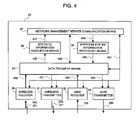
- FIG. 4 is illustrated an internal configuration of the wireless base station 20 in the first embodiment of the present invention.
- a wireless receiver 80 and a wireless transmitter 81 perform a modem process and a data link layer termination process of wireless signals to be transmitted/received via the wireless links 200 and 201.
- a wire receiver 82 and a wire transmitter 83 perform the modem process and the data link layer termination process of wireless signals to be transmitted/received via the wire link 300.
- Data transfer means 84 performs a data transfer process with the wireless receiver 80, the wireless transmitter 81, the wire receiver 82, and the wire transmitter 83.
- the data transfer means 84 outputs broadcast transmission data input from wireless system information broadcast means 86 to the wireless transmitter 81.
- Statistic information acquisition means 85 generates statistic data 457 from transmission/reception data information 455 to output it to network management server communication means 87.
- the wireless system information broadcast means 86 generates data for broadcasting the wireless system information such as the wireless system identifiers to the wireless terminals under the control thereof to output it to the data transfer means 84.
- the network management server communication means 87 performs a protocol process for making communication with the network management server, and carries out the output of statistic information, the trap generation at the time of abnormality, and so on. Also, in a case where the network management server communication means 87 was requested to make an alteration to the setting of the wireless base station by the network management server, it outputs configuration information to the data transfer means 84, and the wireless transmitter/receiver 80/81 and the wire transmitter/receiver 82/83 to execute an alteration to various settings.
- Fig. 5 is a view illustrating the wireless system information of which the wireless base station 20 makes the broadcast transmission to the wireless terminals under the control thereof in the first embodiment of the present invention.
- Wireless system information 950 is configured of a destination wireless-terminal identifier 960, a transmission source base station identifier 961, a packet classification field 962, and a wireless system identifier (N) 963.
- N wireless system identifier
- a broadcast address is set for the destination wireless-terminal identifier 960.
- An address of the wireless base station 20 is set for the transmission source base station identifier 961.
- the packet classification field 962 is used for identifying the type of normal data and management data, and an identifier indicating the wireless system information is set herein.
- the wireless system identifier (N) 963 is a wireless system identifier to be set by a management organization. For example, with the wireless system in conformity with the IEEE 802.11 Standard, the Service Set Identifier (SSID) is equivalent to the wireless system identifier.
- SSID Service Set Identifier
- Fig. 6 wireless system registration information 500 of the wireless terminal 10 in the first embodiment of the present invention.
- Information to be registered is a wireless interface 510, a system identifier (N) 520, a priority (P) of a connection 530, and a connection initiation wireless-link quality threshold (Q1) 540.
- Interface information such as a WLAN (Wireless LAN), and a cellular telephone is set for the wireless interface 510. If the wireless terminal has only one wireless interface, the wireless interface 510 can be omitted.
- the system identifier of the wireless system is registered to the field of the system identifier (N) 520.
- Fig. 6 five kinds of the system identifiers, OFFICE1, LOUNGE1, LOUNGE2, PUBLIC1, and PUBLIC2 are registered.
- the priority of the connection to the wireless system designated by the user is registered to the priority (P) of connection 530.
- P priority
- eight stages of the priorities ranging from 0 up to 7 are defined.
- the threshold information of the wireless link quality necessary for automatically initiating the connection is set for the connection initiation wireless-link quality threshold (Q1) information.
- Q1 wireless-link quality threshold
- a method of evaluating the link quality there are various methods such as the method of employing a signal level, the method of employing a signal to noise level ratio, the method of employing a packet error rate, and the method of employing a retransmission probability.
- a receiving sensitivity (a reception signal level at which a packet loss rate amounts to 1%) of the wireless receiver taken as a reference
- a difference between the level of the signal that the wireless terminal received from the wireless base station, and the receiving sensitivity is compared to the threshold Q1.
- the connection is made immediately after the wireless link becomes available in a case where Q1 is assumed to be next to 0 (zero), whereby the condition of the connection is eased.
- the condition of the initial connection is intensified when Q1 is assumed to be large, thus allowing the communication after the connection to be stabilized relatively.
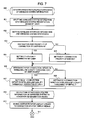
- Fig. 7 is illustrated a flowchart at the moment that the wireless system registration means 66 of the wireless terminal 10 registers/updates the wireless system information in the first embodiment of the present invention.
- the wireless system information is input into the wireless system registration means 66 by the user (step 801), at first, it sets wireless interface information and a wireless system identifier N (step 802). Next, it checks whether a designation for the priority P of the connection by the user exists (step 803) to set its value (step 804) in a case where it exists, and to set the connection priority of a default in a case where it does not exist (step 805).
- the wireless system registration means 66 checks whether a designation for the connection initiation wireless-link quality threshold Q1 by the user exists (step 806) to set its value in a case where it exists (step 807), and to set the connection initiation wireless-link quality threshold of the default in a case where it does not exist (step 808). It outputs these kinds of the information that were set to the handover determination means 65 and the connection status display means 67 (steps 809 and 810).
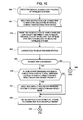
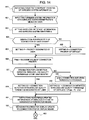
- Fig. 8 is illustrated a flowchart of the handover process that the handover determination means 65 of the wireless terminal 10 performs in the first embodiment of the present invention.
- the handover determination means 65 performs the determination of the handover periodically, and initiates a series of determination processes when determination timing comes (step 601). At first, it acquires wireless system registration information from the wireless system registration means 66 (step 602), acquires an identifier list of the connectable wireless systems from the wireless system information acquisition circuit 62 (step 603), and acquires the wireless link quality for the connectable wireless systems from the wireless link quality acquisition circuit 63 (step 604).
- the handover determination means 65 selects connection destination candidates from the wireless systems in the order of a high priority (step 605) to perform an automatic connection process of the wireless systems (step 607). After it performed this process for all wireless systems, it schedules the determination timing of the next handover (step 606), and comes to a standstill.
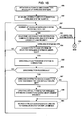
- Fig. 9 is a flowchart illustrating the details of the wireless system automatic-connection process 607 in Fig. 8.
- the handover determination means 65 selects a base station of which the wireless link quality between it and the wireless terminal is most excellent as a connection destination candidate, out of the base stations that belong to the selected wireless system (step 611). It checks whether the connection to this base station is already under way (step 612) to finish the process as it stands if it is under way (step 613).
- step 614 With the wireless link quality between the base station that is a connection destination candidate and the wireless terminal taken as Q (step 614), and the connection initiation wireless-link quality threshold already registered to the wireless system that is a connection destination candidate (step 615) as Q1, a magnitude relation of Q and Q1 is checked (step 616).
- step 617 If Q is less than Q1, the process is finished (step 617). In a case where Q is equal to or more than Q1, the wireless system connection/disconnection means 68 is instructed to make a connection to the selected wireless base station (step 618), and it is checked whether the connection succeeded (step 619). In a case where the connection failed, the process is finished (step 620). In a case where the connection succeeded, and in addition hereto in a case where the wireless systems in connection exist in plural, and the wireless system to which a connection was newly made has the highest priority (step 621), a default route is updated for the wireless system to which a connection was newly made (step 622).
- the so-called default route points to a pair of the address and the output interface that the above terminal sets for the transfer destination at the moment of transmitting a packet of which the destination address does not exist in a routing table. Normally, it is one interface that can be designated as a default route, and the wireless system having the highest priority is selected in a case where a plurality of the wireless systems can be simultaneously utilized.
- the connection status display means 67 is given an instruction for display update (step 623), and the process is finished (step 624).
- Fig. 10 is a flowchart of the wireless system manual-connection process that the handover determination means 65 of the wireless terminal 10 performs in the first embodiment of the present invention.
- the connection process by the user's manual operation is performed in addition to the automatic handover shown in Fig. 8 and Fig. 9, its process follows this flowchart.
- the handover determination means 65 selects the base station of which the wireless link quality between the base station and the wireless terminal is most excellent as a connection destination candidate, out of the base stations that belong to the selected wireless system (step 632).
- step 633 instructs the wireless system connection/disconnection means 64 to make a connection to the selected wireless base station (step 633), and checks whether the connection succeeded (step 634). It finishes the process in a case where the connection failed (step 535). In a case where the connection succeeded, and in addition hereto in a case where the wireless systems in connection exist in plural, and the wireless system to which a connection was newly made has the highest priority (step 636), it updates a default route for the wireless system to which a connection was newly made (step 637). Finally, the connection-status display means 67 is given an instruction for the display update (step 638), and the process is finished (step 639).
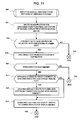
- Fig. 11 is a flowchart of the wireless system manual-disconnection process that the handover determination means 65 of the wireless terminal 10 performs in the first embodiment of the present invention.
- the wireless system disconnection instruction was input by the manual connection/disconnection means 68 (step 641)
- step 645 It is checked whether the disconnection failed (step 645), and in a case where the disconnection failed, the process is finished (step 646).
- the disconnection succeeded an in addition hereto, in a case where the wireless system to which the connection was disconnected has the default route set (step 647), next, the default route is updated for the wireless system having a high priority (step 648).
- the connection status display means 67 is given an instruction for the display update (step 649), and the process is finished (step 650).
- setting the priority and the link quality threshold of the connection initiation wireless system by wireless system to execute the handover between the systems according hereto allows the handover between the wireless systems to be stably realized while the user's connection policy is reflected.
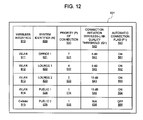
- Fig. 12 is illustrated wireless system registration information 501 of the wireless terminal 10 in a second embodiment of the present invention.
- wireless system registration information 501 automatic connection flag (F1) information is defined wireless system by wireless system in addition to the wireless system registration information 500 in the first embodiment shown in Fig. 6.
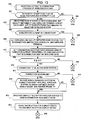
- Fig. 13 is a flowchart of the wireless system automatic-connection process that the handover determination means 65 of the wireless terminal 10 performs in the second embodiment of the present invention. As to the entire process of the handover, it is similar to the flowchart of the first embodiment shown in Fig. 8.
- the wireless system that was a connection destination candidate was selected, at first, it is checked whether the automatic connection flag F1 of the wireless system was set to ON (step 661). In a case where this flag F1 is not at ON, the process is finished as it stands (step 662). In a case where the flag F1 is at ON, hereinafter is performed the process similar to the wireless system automatic-connection process in the first embodiment shown in Fig. 9.
- Defining the automatic connection flag of the wireless system in such a manner allows the automatic connection to the wireless system to be avoided in a case where the user does not always desire the automatic connection such as a case where the accounting systems of respective wireless system differ.
- Fig. 14 is illustrated a flowchart at the moment that the wireless system registration means 66 of the wireless terminal 10 registers/updates the wireless system information in a third embodiment of the present invention.
- the setting is automatically made so that Q1 and the priority P have a negative correlation.
- Pmax is taken as a maximum value of the priority of the connection to the wireless system to be pre-decided in a fixed manner (step 826), and it is checked whether a designation for the connection initiation wireless-link quality threshold (Q1) by the user exists (step 827).
- the designated connection initiation wireless-link quality threshold is used as it stands (step 828).
- ⁇ Q1 is set for a connection initiation threshold difference to be pre-decided in a fixed manner (step 829), and Q1 for (a connection initiation wireless-link quality threshold of a default) + (Pmax - P) ⁇ ⁇ Q1) (step 830).
- the registered/updated information of the wireless system is output to the handover determination means 65 (step 831) to give an instruction for the display update to the connection-status display means 67, and the process is finished (step 832).
- automating the setting so that Q1 and the priority P have a negative correlation in such a manner allows the wireless system having a higher priority, of which the connection condition is eased all the more, to be selected more easily for connection.
- Fig. 15 is illustrated a flowchart of the handover process that the handover determination means 65 of the wireless terminal 10 performs in a fourth embodiment of the present invention.
- the wireless system in addition to the automatic connection process for the wireless system, in a case where the number of the above wireless systems in connection exceeded the maximum simultaneous-connection wireless-system number M, the wireless system are selected in the order of a low priority P to perform the automatic disconnection process of automatically disconnecting the connection to the selected wireless system.
- Fig. 16 is illustrated a flowchart of the wireless system automatic-disconnection process that the handover determination means 65 of the wireless terminal 10 performs in the fourth embodiment of the present invention.
- the maximum simultaneous-connection wireless-system number M is pre-decided in a fixed manner (step 690) to check whether the current wireless system number in connection exceeded M (step 691).
- This wireless system number in connection increases by 1 (one) whenever the connection to the wireless system is newly made, and it decreases by 1 (one) when the connection is disconnected.
- the connection to the existing wireless system is disconnected, no addition is operated.
- the process is finished as it stands (step 693).
- the disconnection destination candidates are selected from the wireless systems in the order of a low priority (step 692).
- the disconnection destination candidates are selected from other wireless systems than the already-selected wireless system in a loop process. If the connection to the base station of the selected wireless system is under way (step 694), the wireless system connection/disconnection means 64 is given an instruction for disconnecting the connection to the base station (step 695).
- step 696 it is checked whether the wireless system to which the connection was disconnected has the default route set (step 697), and in a case where it has the default route set, the default route is updated for the wireless system in connection having the next highest priority (step 698).
- connection status display means 67 is given an instruction for the display update (step 699), and the process returns to the step 691.
- the disconnection process is performed by the manual disconnection operation of the user, or in a case where the wireless link quality deteriorated to the degree that the wireless link was impossible to maintain.
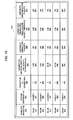
- Fig. 17 is illustrated wireless system registration information 502 of the wireless terminal 10 in a fifth embodiment of the present invention.
- connection termination wireless-link quality threshold (Q2) information 560 is defined wireless system by wireless system in addition to the wireless system registration information 501 in the second embodiment shown in Fig. 12.
- Fig. 18 is a flowchart of the wireless system automatic-disconnection process that the handover determination means 65 of the wireless terminal 10 performs in the fifth embodiment of the present invention.
- the disconnection destination candidates are selected from the wireless systems in the order of a low priority (step 701). In a case where all wireless systems were checked, the process is finished (step 702). In a case where the wireless system was selected, it is checked whether the connection to the base station of the selected wireless system is under way (step 703). In a case where the connection to the base station of the above wireless system is under way, the wireless link quality between the base station that is a disconnection destination candidate, and the wireless terminal is taken as Q (step 704), and the connection termination wireless-link quality threshold already registered to the wireless system that is a disconnection destination candidate as Q2 (step 705).
- connection to the base station in connection is disconnected (step 707), and in addition hereto, in a case where the disconnection succeeded (step 708), and the wireless system to which the connection was disconnected has the default route set (step 709), the default route is updated for the wireless system in connection having the next highest priority (step 710).
- the connection status display means 67 is given an instruction for the display update (step 711) and the process returns to the step 701.
- Q2 is assumed to be large, the disconnection condition from the above wireless system is eased, thus allowing the switchover to the other wireless systems to be made easily.
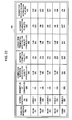
- Fig. 19 is illustrated wireless system registration information 503 of the wireless terminal 10 in a sixth embodiment of the present invention.
- wireless system registration information 503 automatic disconnection flag (F2) information 570 is defined wireless system by wireless system in addition to the wireless system registration information 502 in the fifth embodiment.
- Fig. 20 is a flowchart of the wireless system automatic-disconnection process that the handover determination means 65 of the wireless terminal 10 performs in the sixth embodiment of the present invention.
- a difference between this flowchart, and the flowchart of the wireless system automatic-disconnection process of the fifth embodiment shown in Fig. 18 lies in checking in the step 713 whether the automatic disconnection flag (F2) of the above wireless system has was set to ON to perform the automatic disconnection process only in a case of ON.
- the automatic disconnection flag F2 was not set to ON, the connection to the wireless system is disconnected by the manual operation of the user, or it is disconnected at the first time when the wireless link quality deteriorated to the degree that the wireless link was impossible to maintain.
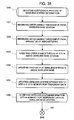
- Fig. 21 is illustrated a flowchart at the moment that the wireless system registration means 66 of the wireless terminal 10 registers/updates the wireless system information in a seventh embodiment of the present invention.
- a difference between this flowchart, and the registration/update flowchart of the wireless system information in the third embodiment of the present invention shown in Fig. 14 lies in making it a rule to make the automatic setting so that the connection termination wireless-link quality threshold Q2 and the priority P have a negative correlation in the steps subsequent to the step 851.
- connection termination wireless-link quality threshold Q2 by the user exists.
- the designated connection termination wireless-link quality threshold is used as it stands (step 852).
- ⁇ Q2 is set for a connection termination threshold difference to be pre-decided in a fixed manner (step 853), and Q2 for (a connection termination wireless-link quality threshold of a default) + (Pmax - P) ⁇ ⁇ Q2) (step 854).
- the process is finished (step 856).
- automating the setting so that Q2 and the priority P have a negative correlation in such a manner allows the wireless system having a higher priority, of which the disconnection condition is eased all the more, to be given a longer connection time.
- Fig. 22 is illustrated wireless system registration information 504 of the wireless terminal 10 in an eighth embodiment of the present invention.
- connection status change notification flag (F3) information 580 is defined wireless system by wireless system in addition to the wireless system registration information 503 in the sixth embodiment.
- Fig. 23 is illustrated a flowchart at the moment that the connection status display means 67 of the wireless terminal 10 makes a notification of the connection/disconnection to/from the wireless system in the eighth embodiment of the present invention.
- the connection status display means 67 receives a notification of the connection to a new wireless system from the handover determination means 65 (step 731), it checks whether the connection status change notification flag F3 of the wireless system to which the connection was newly made is at ON (step 732).
- connection status display means 67 makes a pop-up display of "connection initiation (wireless system name)" on a screen of the wireless terminal (step 733), and further, causes the wireless terminal to generate a beep sound for notifying the connection initiation (step 734).
- the connection status display means 67 received a notification of the disconnection from the wireless system in connection from the handover determination means 65 (step 736)
- F3 was at ON, it causes the wireless terminal to make the pop-up display of "connection termination (wireless system name)" (step 738) and to generate the beep sound for notifying the connection termination (step 739).
- Automating the handover between the wireless systems in such a manner, and explicitly notifying the generation of the handover to the user allows the handover that the user does not attempt to be prevented from being generated.
- Fig. 24 is illustrated wireless system registration information 505 of the wireless terminal 10 in a ninth embodiment of the present invention.
- authentication request flag (F4) information 590 is defined wireless system by wireless system in addition to the wireless system registration information 504 in the eighth embodiment.
- Fig. 25 is a flowchart of a wireless system initial-authentication process that the handover determination means 65 of the wireless terminal 10 performs in the ninth embodiment of the present invention.
- the connection to a new wireless system is made (step 761), and it is checked whether the authentication request flag F4 of the wireless system to which the connection was newly made is at ON (step 762).
- the handover determination means 65 starts a Web browser (step 764) to establish a TLS (Transport Layer Security) session, and to cipher a message that is transmitted/received hereafter (step 765).
- it displays an authentication information input request screen (step 766), and when authentication information is input from the user (step 767), it transmits the authentication information to the wireless system to which the connection was newly made (step 768).
- For the transmitted authentication information it acquires the authentication result from the wireless system (step 769). If the authentication is not successful (step 770), it gives the connection status display means 67 an instruction for the display update to the effect that the authentication failed (step 771), and finishes the process (step 772).
- step 773 acquires a wireless signal cryptography key from the wireless system
- step 774 sets the acquired wireless signal cryptography key for the wireless transmitter 61 and the wireless receiver 60
- step 776 gives the connection status display means 67 an instruction for the display update (step 775) to finish the process (step 776).
- wireless system information 951 of which the wireless base station 20 makes the broadcast transmission to the wireless terminals under the control thereof in a tenth embodiment of the present invention.
- priority (P) information of a connection 964, connection initiation wireless-link quality threshold (Q1) information 965, automatic connection flag (F1) information 966, connection termination wireless-link quality threshold (Q2) information 967, automatic disconnection flag (F2) information 968, connection status change notification flag (F3) information 969, and authentication request flag (F4) information 970 are defined in addition to the wireless system information 950 in the first embodiment shown in Fig. 5.
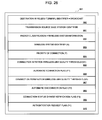
- Fig. 27 and Fig. 28 is illustrated a wireless system information registration/update operation flowchart at the moment that the wireless terminal received this wireless system information 501.
- the wireless system registration means 66 checks whether the wireless interface and the wireless system identifier N that were input were already registered (step 842), and if they were not registered yet, it finishes the process (step 843). In a case where they were already registered, when the user did not designated the priority of connection P (step 844), and yet the priority P of the connection existed in the received wireless system information (step 846), the received priority value is set for P (step 847). In a case other than it, the current priority value is used as it stands (step 845).
- connection initiation wireless-link quality threshold Q1 steps 848 to 850
- connection termination wireless-link quality threshold Q2 steps 851 to 855
- automatic connection flag F1 steps 856 to 859
- automatic disconnection flag F2 steps 860 to 863
- connection status change notification flag F3 steps 864 to 867
- authentication request flag F4 steps 868 to 871
- step 872 After the update process for all kinds of the wireless system registration information was completed, information of the wireless system is output to the handover determination means 65 (step 872), the connection status display means 67 is given an instruction for the display update (step 873), and the process is finished (step 874).
- the handover determination means 65 After the update process for all kinds of the wireless system registration information was completed, information of the wireless system is output to the handover determination means 65 (step 872), the connection status display means 67 is given an instruction for the display update (step 873), and the process is finished (step 874).
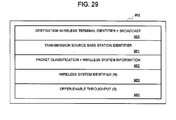
- Fig. 29 is illustrated wireless system information 952 of which the wireless base station 20 makes the broadcast transmission to the wireless terminals under the control thereof in the eleventh embodiment of the present invention.
- the wireless system information 952 includes offer-enable throughput (S) information 980 in addition to the wireless system information 950 in the first embodiment shown in Fig. 5.
- This offer-enable throughput S is a throughput that the wireless system management server sets for the wireless station based on the values measured at the wireless base station and the wire network, which is a value having the congestion situation of the network etc. reflected.
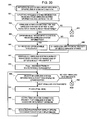
- Fig. 30 is a flowchart at the moment that the wireless system registration means 66 of the wireless terminal 10, on receipt of this wireless system information 952, registers/updates the wireless system information.
- the wireless system registration means 66 checks whether the wireless interface and the wireless system identifier N that were input were already registered (step 882), and if they were not registered yet, it finishes the process (step 883). In a case where they were already registered, it checks whether the offer-enable throughput S exists in the received wireless system information (step 884), if it exists, the received value is set for S (step 885), and if it does not exist, a wireless link physical-velocity of the wireless system is set for S (step 886).
- Fig. 31 is illustrated wireless system information 953 of which the wireless base station 20 makes the broadcast transmission to the wireless terminals under the control thereof in a twelfth embodiment of the present invention.
- the wireless system information 953 includes accounting condition (C) information 990 in addition to the wireless system information 950 in the first embodiment shown in Fig. 5.
- the accounting condition which is a value to be set wireless system by wireless system, is defined per the unit time, or the unit transmission/reception data quantity.
- Fig. 32 is a flowchart at the moment that the wireless system registration means 66 of the wireless terminal 10, on receipt of this wireless system information 953, registers/updates the wireless system information.
- the wireless system registration means 66 checks whether the wireless interface and the wireless system identifier N that were input were already registered (step 902). If they were already registered, it checks whether the accounting condition C is included in the wireless system information received next (step 904), if it is included, the received accounting condition is set for C (step 905), and if it is not, C is set to 0 (zero) (step 906).
- step 907 sorts all wireless systems already registered in the order of magnitude of the accounting condition C (step 907) to take the maximum priority as Pmax, and a reference accounting condition as Ct (step 908). It selects the wireless system information already registered in the order sorted (step 909) to decide the priority of connection P as follows.
- P max (0, Pmax -
- max (x, y) is a function for returning either x or y, whichever is a larger value
- is a minimum integer that does not exceed z.
- connection priority P of the wireless system is output to the handover determination means 65 (step 912), and after the connection status display means 67 is given an instruction for the display update (step 913), the process returns to the step 909.
- the priority P it becomes possible to automatically set the priority so that the lower the accounting condition is, the more highly the priority of connection is raised in the wireless terminal, based upon the accounting condition of which the wireless system informed, i.e. the priority P has a negative correlation as against the accounting condition.
- the above-mentioned wireless system information can be also notified directly to the wireless terminal from the network management server without generating it in the wireless system information broadcast means 86.
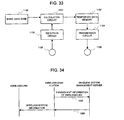
- the wireless system information broadcast means 86 within the wireless base station is not required, and the network management server is configured as shown in Fig. 33.
- 1100 is a basic data base
- 1101 is a calculation circuit
- 1102 is a temporary data memory
- 1103 is a reception circuit
- 1104 is a transmission circuit
- 1105 is an input terminal
- 1106 is an output terminal.
- the basic data base 1100 keeps at least one parameter of the priority P of the connection to the wireless system from the wireless terminal, the threshold Q1 of the wireless link quality with which the connection to the wireless system should be initiated, the threshold Q2 of the wireless link quality with which the connection to the wireless system should be disconnected, the flag F1 for making the switchover as to whether or not the connection to the wireless system is made automatically, the flag F2 for making the switchover as to whether or not the connection to the wireless system is disconnected automatically, the flag F3 for making the setting as to whether or not a change in the connection status to the wireless system is notified to the user of the wireless terminal, the flag F4 for making the setting as to whether or not the user of the wireless terminal is prompted to input the authentication information at the time of the connection to the wireless system, and the accounting condition C per the unit time, or per the transmission/reception data quantity that is required for the wireless terminal's connection.
- the temporary data memory 1102 is retained a value shaped as the wireless system information by the calculation circuit 1101, based upon: the offer-enable throughput S obtained by taking into consideration both the offer-enable throughput in the interval ranging from the wireless base station to the wireless link that is input via the input terminal 1105 and the reception circuit 1103, and the offer-enable throughput of the wire network that the wireless system management server measured; and information of the basic data base 1100.
- the wireless system information stored in the temporary data memory 1102 is notified to the wireless terminal through the wireless base station via the transmission circuit 104 and the output terminal 1106, as shown in Fig. 34.
- Fig. 35 is illustrated an operational flow of the network wireless-system management server at this moment.
- the network management server receives the ffer-enable throughput from the wireless base station and the apparatus of the wire network, it keeps its values steps 1201 and 1202). It decides the offer-enable hroughput S in the above wireless base station in consideration of these values (step 1203) to decide the value of the priority P of the wireless system to be broadcasted from the above wireless base station responding to the value of S, etc. (step 1204). Further, after it wrote the updated wireless system information into the temporary data memory (step 1205) to output the wireless system information to the wireless base station step 1206), it finishes the process (step 1207).
- the wireless system was exemplified for explanation; however as a rule, not only a plurality of the wireless systems, but also the system in which the wireless system and the wire system exist together, and the wire system are acceptable, and further, it is apparent that, as to the wireless communication system, not only the mobile communication system but also a communication system including the LAN system, etc. are acceptable.
- the present invention it becomes possible to stably realize the handover between the communication systems responding to the connection policy information such as the priority of the communication system and the advisability condition of the automatic connection to be set by the user, and the communication link quality between the wireless terminal and each communication system. Further, in accordance with the present invention, it becomes possible to impose restrictions on the number of the communication link that can be simultaneously established from the communication terminal to restrain the power consumption of the communication terminal, and to dynamically incorporate the operational situation of the network such as the congestion status for reflecting it in the conditioned determination of the handover.
Landscapes
- Engineering & Computer Science (AREA)
- Computer Networks & Wireless Communication (AREA)
- Signal Processing (AREA)
- Mobile Radio Communication Systems (AREA)
- Small-Scale Networks (AREA)
Applications Claiming Priority (2)
| Application Number | Priority Date | Filing Date | Title |
|---|---|---|---|
| JP2003093187 | 2003-03-31 | ||
| JP2003093187A JP2004304399A (ja) | 2003-03-31 | 2003-03-31 | 通信端末、基地局、サーバ、ネットワークシステム及びハンドオーバ方法 |
Publications (2)
| Publication Number | Publication Date |
|---|---|
| EP1465451A2 true EP1465451A2 (de) | 2004-10-06 |
| EP1465451A3 EP1465451A3 (de) | 2007-07-18 |
Family
ID=32844596
Family Applications (1)
| Application Number | Title | Priority Date | Filing Date |
|---|---|---|---|
| EP04101320A Withdrawn EP1465451A3 (de) | 2003-03-31 | 2004-03-31 | Kommunikationsendgerät, Basisstation,Server,Netzsystem und Verfahren zum Weiterreichen |
Country Status (4)
| Country | Link |
|---|---|
| US (1) | US20040192221A1 (de) |
| EP (1) | EP1465451A3 (de) |
| JP (1) | JP2004304399A (de) |
| CN (1) | CN1535045A (de) |
Cited By (3)
| Publication number | Priority date | Publication date | Assignee | Title |
|---|---|---|---|---|
| EP1768431A1 (de) * | 2005-09-21 | 2007-03-28 | NTT DoCoMo INC. | Netzauswahl für Endgerät mit mehreren Moden |
| WO2006130807A3 (en) * | 2005-06-01 | 2007-05-24 | Qualcomm Inc | Selecting data interfaces in a multi-homing, multi-mode communication device |
| WO2008093685A1 (ja) * | 2007-01-30 | 2008-08-07 | Kyocera Corporation | 無線通信装置及び無線通信方法 |
Families Citing this family (87)
| Publication number | Priority date | Publication date | Assignee | Title |
|---|---|---|---|---|
| US7047036B2 (en) | 2002-07-02 | 2006-05-16 | Interdigital Technology Corporation | Method and apparatus for handoff between a wireless local area network (WLAN) and a universal mobile telecommunication system (UMTS) |
| US7616559B2 (en) * | 2003-09-03 | 2009-11-10 | Bytemobile, Inc. | Multi-link network architecture, including security, in seamless roaming communications systems and methods |
| JP3960963B2 (ja) * | 2003-10-29 | 2007-08-15 | 京セラ株式会社 | 移動通信端末、移動通信管理装置、移動通信システム、移動通信端末プログラム、移動通信管理プログラムおよび移動通信方法 |
| TWI249360B (en) | 2003-11-13 | 2006-02-11 | Interdigital Tech Corp | Method and system for facilitating inter-system handover |
| JP4642069B2 (ja) | 2004-03-12 | 2011-03-02 | インターデイジタル テクノロジー コーポレーション | マルチモード無線送受信装置を用いた、無線通信システム間での無線アクセス技術を切り換えるための方法及び装置 |
| US9089003B2 (en) * | 2004-07-28 | 2015-07-21 | Broadcom Corporation | Quality-of-service (QoS)-based delivery of multimedia call sessions using multi-network simulcasting |
| US7742436B2 (en) * | 2004-09-02 | 2010-06-22 | General Dynamics C4 Systems, Inc. | Distributed networking agent and method of making and using the same |
| CN1747588A (zh) * | 2004-09-08 | 2006-03-15 | 展讯通信(上海)有限公司 | 移动通信终端小区锁定的方法 |
| WO2006046283A1 (ja) * | 2004-10-26 | 2006-05-04 | Mitsubishi Denki Kabushiki Kaisha | 無線移動局装置及び通信切替判定方法 |
| WO2006080053A1 (ja) * | 2005-01-26 | 2006-08-03 | Fujitsu Limited | 基地局装置、端末、移動通信システム及び優先度設定方法 |
| US20080132236A1 (en) * | 2005-03-07 | 2008-06-05 | Shinji Kiribayashi | Mobile Communication Terminal and Method for Notifying Handover Operation |
| KR20060098019A (ko) * | 2005-03-08 | 2006-09-18 | 삼성전자주식회사 | 듀얼모드 단말기에서 핸드오버 방법 |
| US7113788B1 (en) * | 2005-03-08 | 2006-09-26 | Motorola, Inc. | Method and apparatus for network formation |
| JP4651419B2 (ja) | 2005-03-11 | 2011-03-16 | 株式会社エヌ・ティ・ティ・ドコモ | 無線通信装置及び無線通信方法 |
| US20060209686A1 (en) * | 2005-03-15 | 2006-09-21 | Nokia Corporation | Flow control with dynamic priority allocation for handover calls |
| US20060209798A1 (en) * | 2005-03-15 | 2006-09-21 | Nokia Corporation | Call-re-establishment via alternative access network |
| US20060276190A1 (en) * | 2005-05-19 | 2006-12-07 | Interdigital Technology Corporation | Method and apparatus for implementing a handoff between radio access networks deployed under different radio access technologies |
| US7263353B2 (en) * | 2005-06-29 | 2007-08-28 | Nokia Corporation | System and method for automatic application profile and policy creation |
| KR100727408B1 (ko) | 2005-08-29 | 2007-06-13 | 한국전자통신연구원 | 이종 액세스 시스템에서의 핸드오버 제어 장치 및 방법 |
| FR2890522B1 (fr) | 2005-09-02 | 2007-11-30 | Nec Technologies Uk Ltd | Procede d'acceleration de la recherche d'un reseau de telecommunication par un terminal mobile |
| JP4550705B2 (ja) * | 2005-09-22 | 2010-09-22 | 株式会社東芝 | サーバ装置 |
| US20070076662A1 (en) * | 2005-09-30 | 2007-04-05 | Nikhil Jain | Handoffs in a wireless local area network |
| JP2007166274A (ja) * | 2005-12-14 | 2007-06-28 | Nakayo Telecommun Inc | 無線lan端末および無線lanシステム |
| US8121027B2 (en) * | 2005-12-27 | 2012-02-21 | Hitachi, Ltd. | Access gateway, terminal and method of controlling flow in wireless system |
| JP4998459B2 (ja) * | 2006-03-01 | 2012-08-15 | 日本電気株式会社 | 通信回線切替方法及びその装置 |
| KR101185570B1 (ko) * | 2006-03-04 | 2012-09-24 | 삼성전자주식회사 | 이동망 환경에서의 다중 인터페이스를 이용한 자원예약방법 |
| US8504100B2 (en) * | 2006-05-23 | 2013-08-06 | Connectsoft, Inc. | System and method for multi-radio control |
| GB2439122A (en) * | 2006-06-09 | 2007-12-19 | Symbian Software Ltd | Reducing power consumption of a mobile device |
| EP2033353A2 (de) * | 2006-06-19 | 2009-03-11 | Nokia Corporation | Vorrichtung, verfahren und computerprogrammprodukt zur bereitstellung von präemptiven anytime-neuübertragungen |
| US7558255B2 (en) * | 2006-07-13 | 2009-07-07 | Alcatel-Lucent Usa Inc. | Method of switching modes of uplink transmission in a wireless communication system |
| KR100789900B1 (ko) | 2006-07-27 | 2007-12-28 | 에스케이 텔레콤주식회사 | 이종 무선 네트워크에 접속할 수 있는 멀티 무선인터페이스를 가진 이동단말의 정책을 기반으로 한핸드오버 방법 |
| US7885674B2 (en) * | 2006-08-22 | 2011-02-08 | Cisco Technology, Inc. | Determining which channels are accessible by a communication device in a push-to-talk communication network |
| KR100809260B1 (ko) * | 2006-10-18 | 2008-03-03 | 포항공과대학교 산학협력단 | 차세대 이동통신 네트워크에서의 상황 정보를 이용한핸드오버 결정 방법 및 장치 |
| US8483764B2 (en) * | 2006-11-10 | 2013-07-09 | Research In Motion Limited | System, method and mobile device for management of wireless connections |
| KR100987489B1 (ko) * | 2006-11-13 | 2010-10-13 | 리서치 인 모션 리미티드 | 무선 모드 표시자를 디스플레이하는 시스템, 방법 및모바일 장치 |
| US9049690B2 (en) * | 2006-12-27 | 2015-06-02 | Kyocera Corporation | Communication system, wireless communication terminal, communication method, wireless communication method, wireless communication apparatus and control method thereof |
| KR100804831B1 (ko) * | 2006-12-28 | 2008-02-20 | 삼성전자주식회사 | 무선 usb 호스트 및 무선 usb 디바이스간에 세션을생성하고 관리하는 방법, 무선 usb 호스트 및 무선usb 디바이스 |
| US20100105381A1 (en) * | 2007-02-27 | 2010-04-29 | Kyocera Corporation | Radio communication terminal and in-cell return processing method |
| JP4890319B2 (ja) * | 2007-03-29 | 2012-03-07 | 京セラ株式会社 | 携帯端末装置 |
| JP5160152B2 (ja) * | 2007-06-28 | 2013-03-13 | 京セラ株式会社 | 無線端末、情報処理装置、情報処理プログラム及び情報処理方法 |
| KR100903928B1 (ko) | 2007-07-25 | 2009-06-19 | 후지쯔 가부시끼가이샤 | 기지국 장치, 단말기, 이동 통신 시스템 및 우선도 설정방법 |
| JP4516586B2 (ja) * | 2007-08-27 | 2010-08-04 | 株式会社日立製作所 | 移動体通信システム |
| US8588738B2 (en) | 2007-10-01 | 2013-11-19 | Qualcomm Incorporated | Mobile access in a diverse access point network |
| US9066316B2 (en) | 2007-11-19 | 2015-06-23 | Qualcomm Incorporated | Diagnostic monitoring by a wireless device |
| US8385228B2 (en) * | 2008-01-03 | 2013-02-26 | Cisco Technology, Inc. | Communication paradigm switching based on link quality information |
| JP4988610B2 (ja) * | 2008-01-18 | 2012-08-01 | 株式会社日立国際電気 | 基地局切替装置 |
| JP5015813B2 (ja) * | 2008-01-31 | 2012-08-29 | 京セラ株式会社 | 無線通信装置及び無線通信方法 |
| JP4946933B2 (ja) * | 2008-03-24 | 2012-06-06 | 沖電気工業株式会社 | 移動体通信システム、セッション継続判断サーバ及びセッション継続方法 |
| CN101562870A (zh) * | 2008-04-17 | 2009-10-21 | 中兴通讯股份有限公司 | 自动选择网络方法以及终端 |
| JP2010028675A (ja) * | 2008-07-23 | 2010-02-04 | Fujitsu Ltd | 通信システム、基地局、移動端末およびデータ転送方法 |
| US20110211557A1 (en) * | 2008-09-04 | 2011-09-01 | Panasonic Corporation | Handover processing method, and mobile node, connection managing apparatus and base station used in that method |
| JP2010093792A (ja) * | 2008-09-10 | 2010-04-22 | Panasonic Corp | 無線通信制御システムおよび方法 |
| JP5343747B2 (ja) | 2008-09-30 | 2013-11-13 | 日本電気株式会社 | 無線通信システム、管理サーバ、ネットワーク選択方法、および管理サーバプログラム |
| WO2010041412A1 (ja) * | 2008-10-09 | 2010-04-15 | 株式会社日立製作所 | 移動端末 |
| US20100097956A1 (en) * | 2008-10-20 | 2010-04-22 | Toshiba America Research, Inc. | Multi-interface management configuration method and graphical user interface for connection manager |
| CN101394357B (zh) * | 2008-10-29 | 2011-09-14 | 北京大学 | 无线自组织网的路由建立及链路检测的方法及装置 |
| CN101394356B (zh) * | 2008-10-29 | 2011-02-16 | 北京大学 | 无线自组织网的路由建立方法及装置 |
| JP5155819B2 (ja) * | 2008-10-30 | 2013-03-06 | パナソニック株式会社 | 無線送受信装置および方法、ならびに、端末装置、基地局装置および無線通信システム |
| US8190768B2 (en) * | 2008-10-31 | 2012-05-29 | Toshiba America Research, Inc. | Network selection mechanism |
| JP2010124225A (ja) * | 2008-11-19 | 2010-06-03 | Ntt Docomo Inc | 制御装置、移動通信端末、通信システム、及び通信方法 |
| WO2011021256A1 (ja) * | 2009-08-21 | 2011-02-24 | 富士通株式会社 | 無線アクセスネットワーク、基地局、データ転送方法 |
| JPWO2011043044A1 (ja) * | 2009-10-05 | 2013-03-04 | パナソニック株式会社 | 端末装置、基地局装置、無線通信方法および無線通信システム |
| JP5454198B2 (ja) * | 2010-02-12 | 2014-03-26 | 富士通モバイルコミュニケーションズ株式会社 | 無線端末及び無線通信システム選択方法 |
| US8666412B2 (en) | 2010-04-26 | 2014-03-04 | Nec Corporation | Communications terminal, connection destination display method, and computer program |
| JP5592697B2 (ja) * | 2010-05-21 | 2014-09-17 | 株式会社Nttドコモ | 通信システム、無線通信装置及び通信方法 |
| US8489024B1 (en) * | 2010-08-19 | 2013-07-16 | Qualcomm Incorporated | Determining chain configuration for a wireless protocol in a wireless device supporting multiple wireless protocols |
| KR101131841B1 (ko) * | 2010-11-26 | 2012-03-30 | 삼성에스디에스 주식회사 | 적응적 로밍 임계치 매개변수 설정 시스템 및 방법 |
| JP2013051610A (ja) * | 2011-08-31 | 2013-03-14 | Kddi Corp | 無線通信装置およびプログラム |
| CN102497658B (zh) * | 2011-12-22 | 2014-06-18 | 电子科技大学 | 一种异构网络的多模切换方法 |
| JP5410591B2 (ja) * | 2012-10-24 | 2014-02-05 | パナソニック株式会社 | 無線送受信装置および無線送受信方法 |
| US9955403B2 (en) | 2012-12-20 | 2018-04-24 | Lg Electronics Inc. | Method for communicating in wireless communication system supporting multiple access network and apparatus supporting same |
| JP6112903B2 (ja) | 2013-02-22 | 2017-04-12 | キヤノン株式会社 | 通信装置、通信装置の制御方法、コンピュータプログラム |
| JPWO2014133066A1 (ja) * | 2013-02-28 | 2017-02-02 | 日本電気株式会社 | 通信システム、端末、通信制御装置、通信方法及びプログラム |
| US9826464B2 (en) * | 2013-03-26 | 2017-11-21 | Bandwidthx Inc. | Systems and methods for establishing wireless connections based on access conditions |
| JP2015220613A (ja) * | 2014-05-16 | 2015-12-07 | 株式会社東芝 | 無線受信装置 |
| JP6476616B2 (ja) | 2014-07-04 | 2019-03-06 | 富士ゼロックス株式会社 | 通信装置、端末装置および画像処理システム |
| JP2016019044A (ja) | 2014-07-04 | 2016-02-01 | 富士ゼロックス株式会社 | 情報処理装置およびシステム |
| JP2016046792A (ja) | 2014-08-27 | 2016-04-04 | 富士通株式会社 | 移動通信装置、無線通信方法および通信制御プログラム |
| JP6481501B2 (ja) * | 2014-09-02 | 2019-03-13 | 日本電気株式会社 | 通信端末装置および方法 |
| US9871723B2 (en) * | 2015-02-09 | 2018-01-16 | Telefonaktiebolaget Lm Ericsson (Publ) | Method and device for handling multi path connections |
| JP6575860B2 (ja) * | 2015-09-09 | 2019-09-18 | パナソニックIpマネジメント株式会社 | 端末装置、基地局装置、通信システム、および通信品質測定方法 |
| WO2018125682A1 (en) | 2016-12-27 | 2018-07-05 | Bandwidthx Inc. | Auto-discovery of amenities |
| WO2018125704A1 (en) | 2016-12-27 | 2018-07-05 | Bandwidthx Inc. | Radio management based on user intervention |
| CN106970175A (zh) * | 2017-03-18 | 2017-07-21 | 南京科捷分析仪器有限公司 | 全自动在线氦离子气相色谱仪 |
| US10530698B2 (en) * | 2017-08-31 | 2020-01-07 | Intel Corporation | Method and apparatus for offloading packet classification processing of an access point in a residential gateway |
| JP7363566B2 (ja) * | 2020-02-21 | 2023-10-18 | 株式会社デンソー | 車載装置、車両用システム、及び端末接続管理方法 |
| CN116887364A (zh) * | 2023-08-08 | 2023-10-13 | 亚太卫星宽带通信(深圳)有限公司 | 一种融合5g通信技术的卫星端站通信方法及装置 |
Family Cites Families (10)
| Publication number | Priority date | Publication date | Assignee | Title |
|---|---|---|---|---|
| FI106671B (fi) * | 1995-03-13 | 2001-03-15 | Nokia Mobile Phones Ltd | Matkaviestinkokonaisuus, matkaviestinpäätelaite ja menetelmä yhteyden muodostamiseksi matkaviestinpäätelaitteelta |
| EP0762791A3 (de) * | 1995-08-31 | 1999-05-06 | Hagenuk Gmbh | Verfahren zum automatischen Umschalten der Betriebsart in einem Mobiltelefon für Multi-Mode-Betrieb |
| US5903832A (en) * | 1995-12-21 | 1999-05-11 | Nokia Mobile Phones Llimited | Mobile terminal having enhanced system selection capability |
| JP3389908B2 (ja) * | 2000-01-07 | 2003-03-24 | 日本電気株式会社 | 移動端末のネットワーク選択方法及び移動端末のネットワーク選択プログラムを記録した記憶媒体 |
| EP1117265A1 (de) * | 2000-01-15 | 2001-07-18 | Telefonaktiebolaget Lm Ericsson | Verfahren und Vorrichtung zum globalen Roaming |
| GB2359220A (en) * | 2000-02-03 | 2001-08-15 | Orange Personal Comm Serv Ltd | Handover in accordance with a network policy |
| FI109163B (fi) * | 2000-02-24 | 2002-05-31 | Nokia Corp | Menetelmä ja laitteisto liikkuvuuden tukemiseksi tietoliikennejärjestelmässä |
| DE10010958A1 (de) * | 2000-03-06 | 2001-09-20 | Siemens Ag | Verfahren zur Intersystem-Verbindungsweiterschaltung |
| DE10036141B4 (de) * | 2000-07-25 | 2005-09-08 | Siemens Ag | Verfahren zur verbesserten Auswahl eines Kommunikationsnetzes für eine Station |
| US20020039892A1 (en) * | 2000-10-04 | 2002-04-04 | Bo Lindell | System and method for network and service selection in a mobile communication station |
-
2003
- 2003-03-31 JP JP2003093187A patent/JP2004304399A/ja active Pending
-
2004
- 2004-03-30 US US10/811,992 patent/US20040192221A1/en not_active Abandoned
- 2004-03-31 EP EP04101320A patent/EP1465451A3/de not_active Withdrawn
- 2004-03-31 CN CNA2004100316477A patent/CN1535045A/zh active Pending
Cited By (10)
| Publication number | Priority date | Publication date | Assignee | Title |
|---|---|---|---|---|
| WO2006130807A3 (en) * | 2005-06-01 | 2007-05-24 | Qualcomm Inc | Selecting data interfaces in a multi-homing, multi-mode communication device |
| US8526463B2 (en) | 2005-06-01 | 2013-09-03 | Qualcomm Incorporated | System and method to support data applications in a multi-homing, multi-mode communication device |
| US9185582B2 (en) | 2005-06-01 | 2015-11-10 | Qualcomm Incorporated | System and method to support data applications in a multi-homing, multi-mode communication device |
| US9185583B2 (en) | 2005-06-01 | 2015-11-10 | Qualcomm Incorporated | System and method to support data applications in a multi-homing, multi-mode communication device |
| US9258721B2 (en) | 2005-06-01 | 2016-02-09 | Qualcomm Incorporated | System and method to support data applications in a multi-homing, multi-mode communication device |
| EP1768431A1 (de) * | 2005-09-21 | 2007-03-28 | NTT DoCoMo INC. | Netzauswahl für Endgerät mit mehreren Moden |
| US8526398B2 (en) | 2005-09-21 | 2013-09-03 | Ntt Docomo, Inc. | Communication terminal and communication method |
| WO2008093685A1 (ja) * | 2007-01-30 | 2008-08-07 | Kyocera Corporation | 無線通信装置及び無線通信方法 |
| JP2008187541A (ja) * | 2007-01-30 | 2008-08-14 | Kyocera Corp | 無線通信装置及び無線通信方法 |
| US8238306B2 (en) | 2007-01-30 | 2012-08-07 | Kyocera Corporation | Radio communication device and radio communication method |
Also Published As
| Publication number | Publication date |
|---|---|
| CN1535045A (zh) | 2004-10-06 |
| US20040192221A1 (en) | 2004-09-30 |
| JP2004304399A (ja) | 2004-10-28 |
| EP1465451A3 (de) | 2007-07-18 |
Similar Documents
| Publication | Publication Date | Title |
|---|---|---|
| EP1465451A2 (de) | Kommunikationsendgerät, Basisstation,Server,Netzsystem und Verfahren zum Weiterreichen | |
| KR101421287B1 (ko) | 네트워크 선택 | |
| EP1071305B1 (de) | Verfahren und Einrichtung für basisstations-kontrolliertes Weiterreichen | |
| US7610014B2 (en) | System and method for selecting a cellular network on a wireless local area network | |
| JP4012212B2 (ja) | 移動無線端末装置 | |
| EP1610507A1 (de) | Variable Abtastrate für WLAN-Verbindungen | |
| US8917642B2 (en) | Station, station control method, and station control program | |
| JP2004096708A (ja) | 無線構内情報通信網と移動電話の連動サービスのためのシステム選択及びデータ伝送方法 | |
| JPH10257549A (ja) | セルラ無線システム | |
| JP4213125B2 (ja) | 無線ローカルエリアネットワーク上でセルラーネットワークを選択するシステムおよび方法 | |
| US7369573B2 (en) | Independent mode selection for forward and reverse links | |
| KR100716531B1 (ko) | 이동 장치에 의한 무선 채널 선택 방법 및 시스템 | |
| CN107124744B (zh) | 一种网络切换方法及无线接入点 | |
| JP4256020B2 (ja) | 移動無線端末とこの移動無線端末における基地局選択方法 | |
| WO2006011452A1 (ja) | 無線通信端末、プログラム及び通信方法 | |
| US7421280B2 (en) | Wireless network and wireless access terminals using enhanced SYNC—ID parameter | |
| KR100742169B1 (ko) | 무선 근거리 통신망 및 이동국 간의 셀룰러 네트워크정보의 통신을 위한 방법 및 장치 | |
| JP2008113220A (ja) | 無線基地局、無線通信システム、通信制御方法、および通信制御プログラム | |
| US8228807B2 (en) | Method and apparatus for scanning channels in wireless local area network | |
| US20150319683A1 (en) | Communication system, communication device, and connection selection control method | |
| JP6361013B2 (ja) | 無線基地局装置、無線通信システム、及び、無線基地局装置の制御方法 | |
| JP4807055B2 (ja) | 通信路選択方法及び通信路選択制御システム並びにプログラム | |
| JP2002300653A (ja) | 携帯電話システムと異事業者間の無線通信網切替え方法 | |
| JP4645338B2 (ja) | 無線通信システム、無線制御局及びそれらに用いるサービス変更方法 | |
| CN119729670A (zh) | 无线终端的漫游方法、装置、计算机设备及存储介质 |
Legal Events
| Date | Code | Title | Description |
|---|---|---|---|
| PUAI | Public reference made under article 153(3) epc to a published international application that has entered the european phase |
Free format text: ORIGINAL CODE: 0009012 |
|
| AK | Designated contracting states |
Kind code of ref document: A2 Designated state(s): AT BE BG CH CY CZ DE DK EE ES FI FR GB GR HU IE IT LI LU MC NL PL PT RO SE SI SK TR |
|
| AX | Request for extension of the european patent |
Extension state: AL LT LV MK |
|
| PUAL | Search report despatched |
Free format text: ORIGINAL CODE: 0009013 |
|
| AK | Designated contracting states |
Kind code of ref document: A3 Designated state(s): AT BE BG CH CY CZ DE DK EE ES FI FR GB GR HU IE IT LI LU MC NL PL PT RO SE SI SK TR |
|
| AX | Request for extension of the european patent |
Extension state: AL LT LV MK |
|
| 17P | Request for examination filed |
Effective date: 20070808 |
|
| 17Q | First examination report despatched |
Effective date: 20071004 |
|
| AKX | Designation fees paid |
Designated state(s): AT BE BG CH CY CZ DE DK EE ES FI FR GB GR HU IE IT LI LU MC NL PL PT RO SE SI SK TR |
|
| STAA | Information on the status of an ep patent application or granted ep patent |
Free format text: STATUS: THE APPLICATION IS DEEMED TO BE WITHDRAWN |
|
| 18D | Application deemed to be withdrawn |
Effective date: 20080414 |