EP1466838A1 - Emballage pour produit pharmaceutique et procédé de fabrication et de stérilisation de celui-ci - Google Patents
Emballage pour produit pharmaceutique et procédé de fabrication et de stérilisation de celui-ci Download PDFInfo
- Publication number
- EP1466838A1 EP1466838A1 EP04009619A EP04009619A EP1466838A1 EP 1466838 A1 EP1466838 A1 EP 1466838A1 EP 04009619 A EP04009619 A EP 04009619A EP 04009619 A EP04009619 A EP 04009619A EP 1466838 A1 EP1466838 A1 EP 1466838A1
- Authority
- EP
- European Patent Office
- Prior art keywords
- package
- micrometer
- film material
- cover member
- base portion
- Prior art date
- Legal status (The legal status is an assumption and is not a legal conclusion. Google has not performed a legal analysis and makes no representation as to the accuracy of the status listed.)
- Withdrawn
Links
Images



Classifications
-
- B—PERFORMING OPERATIONS; TRANSPORTING
- B65—CONVEYING; PACKING; STORING; HANDLING THIN OR FILAMENTARY MATERIAL
- B65D—CONTAINERS FOR STORAGE OR TRANSPORT OF ARTICLES OR MATERIALS, e.g. BAGS, BARRELS, BOTTLES, BOXES, CANS, CARTONS, CRATES, DRUMS, JARS, TANKS, HOPPERS, FORWARDING CONTAINERS; ACCESSORIES, CLOSURES, OR FITTINGS THEREFOR; PACKAGING ELEMENTS; PACKAGES
- B65D77/00—Packages formed by enclosing articles or materials in preformed containers, e.g. boxes, cartons, sacks or bags
- B65D77/10—Container closures formed after filling
- B65D77/20—Container closures formed after filling by applying separate lids or covers, i.e. flexible membrane or foil-like covers
-
- B—PERFORMING OPERATIONS; TRANSPORTING
- B65—CONVEYING; PACKING; STORING; HANDLING THIN OR FILAMENTARY MATERIAL
- B65B—MACHINES, APPARATUS OR DEVICES FOR, OR METHODS OF, PACKAGING ARTICLES OR MATERIALS; UNPACKING
- B65B55/00—Preserving, protecting or purifying packages or package contents in association with packaging
- B65B55/02—Sterilising, e.g. of complete packages
- B65B55/027—Packaging in aseptic chambers
-
- B—PERFORMING OPERATIONS; TRANSPORTING
- B65—CONVEYING; PACKING; STORING; HANDLING THIN OR FILAMENTARY MATERIAL
- B65D—CONTAINERS FOR STORAGE OR TRANSPORT OF ARTICLES OR MATERIALS, e.g. BAGS, BARRELS, BOTTLES, BOXES, CANS, CARTONS, CRATES, DRUMS, JARS, TANKS, HOPPERS, FORWARDING CONTAINERS; ACCESSORIES, CLOSURES, OR FITTINGS THEREFOR; PACKAGING ELEMENTS; PACKAGES
- B65D75/00—Packages comprising articles or materials partially or wholly enclosed in strips, sheets, blanks, tubes or webs of flexible sheet material, e.g. in folded wrappers
- B65D75/28—Articles or materials wholly enclosed in composite wrappers, i.e. wrappers formed by associating or interconnecting two or more sheets or blanks
- B65D75/30—Articles or materials enclosed between two opposed sheets or blanks having their margins united, e.g. by pressure-sensitive adhesive, crimping, heat-sealing, or welding
- B65D75/32—Articles or materials enclosed between two opposed sheets or blanks having their margins united, e.g. by pressure-sensitive adhesive, crimping, heat-sealing, or welding one or both sheets or blanks being recessed to accommodate contents
-
- B—PERFORMING OPERATIONS; TRANSPORTING
- B65—CONVEYING; PACKING; STORING; HANDLING THIN OR FILAMENTARY MATERIAL
- B65D—CONTAINERS FOR STORAGE OR TRANSPORT OF ARTICLES OR MATERIALS, e.g. BAGS, BARRELS, BOTTLES, BOXES, CANS, CARTONS, CRATES, DRUMS, JARS, TANKS, HOPPERS, FORWARDING CONTAINERS; ACCESSORIES, CLOSURES, OR FITTINGS THEREFOR; PACKAGING ELEMENTS; PACKAGES
- B65D75/00—Packages comprising articles or materials partially or wholly enclosed in strips, sheets, blanks, tubes or webs of flexible sheet material, e.g. in folded wrappers
- B65D75/52—Details
- B65D75/58—Opening or contents-removing devices added or incorporated during package manufacture
- B65D75/5894—Preformed openings provided in a wall portion and covered by a separate removable flexible element
Definitions
- the invention relates to a package for a pharmaceutical product, particularly a blister package used to dispense liquids, cream, ointment or gel, and a method of manufacturing and sterilizing said package.
- dropper bottle assemblies it is well known to use dropper bottle assemblies to dispense a variety of liquids, typically one drop at a time.
- a liquid reagent used in laboratories, dispensing eye medication, dispensing ear medication, dispensing nose medication, or in any other environment where dispensing of a liquid in controlled drop increments is desired.
- a typical prior art bottle assembly comprises a plastic squeeze bottle, a nozzle tip or dropper which is snap fit into the bottle and a cap or closure which is threaded onto the bottle. Liquid is dispensed one drop at a time by squeezing the bottle so as to force liquid out the end of the nozzle tip.
- the bottle, the nozzle tip and the cap are normally made of low density polyethylene because this material has a high enough modules of elasticity for squeezing the cylindrical side wall of the bottle with one's fingers which causes the liquid therein to pass through a passageway.
- these bottles are used for a multidose presentation and not for a single dose presentation.
- the bottle For filling the bottle with a pharmaceutical product, particularly an ophthalmic liquid which has to fulfill the conditions concerning sterility, it is state of the art to filtrate and to sterilize the solution or liquid which should be filled into the bottles by filtration or autoclaving. Also the bottles, the nozzle tips and the caps are sterilized, e.g. by ethylene oxide treatment, gamma, electron beam irradiation or steam sterilization. The filling of the bottles takes place in aseptic room conditions. However, after filling the bottles, inserting the nozzle tip into the neck portion and threading the cap onto the bottle no further sterilization will proceed. The filled and closed bottles are removed from the aseptic area.
- the aseptic area is normally a room which stands under slight excess air pressure and the entrance and the exit of the room are constructed as sluices.
- Such single dose units are produced by a blow filling seal process.
- low density polyethylene in a granulated form is poured into an extruder, then heating of the granulated material takes place and a moulding is formed.
- the pharmaceutical product is filled into the moulding and afterwards the moulding is closed by sealing.
- the whole process takes place in an aseptic area.
- the consumer breaks off the sealed tip,of the single dose unit. Frequently filaments arise by breaking off the tip which could effect injuries of the eye or the nose.
- a pharmaceutical product as used hereinbefore or hereinafter is understood to relate in particular to a pharmaceutical composition, which is preferably an aqueous and/or a non-aqueous pharmaceutical composition or a mixture of a non-aqueous and an aqueous pharmaceutical composition, which is preferably a liquid solution, a gel or an ointment, wherein pharmaceutical relates preferably to an ophthalmic, an otic and/or a nasal administration.
- a pharmaceutical composition which is preferably an aqueous and/or a non-aqueous pharmaceutical composition or a mixture of a non-aqueous and an aqueous pharmaceutical composition, which is preferably a liquid solution, a gel or an ointment, wherein pharmaceutical relates preferably to an ophthalmic, an otic and/or a nasal administration.
- the necessarily small preparation amount has to be positioned with great care in the eye not to invoke the dosing, overflow, side-effect and targeting errors mentioned.
- the positioning should be possible in at least one convenient patient posture for body, head and hand. Strained body positions are not only a convenience problem but may result in forced errors from stressed operation and trembling. It is desirable that the administration can be conducted in different body positions such as standings, sitting and lying, if possible also highly independent of applicator orientation. Equally important is a natural and relaxed arm and grip position during orientation, contacting and applicating.
- the device should also assist the user in delivering a precise volume of the preparation and not allow too small or large or inadvertently repeated ejections.
- a single design should fit varying anatomies without adjustments and should not induce fear for contact pain or discomfort. These requirements should be met both at patient self-treatment and operator assisted treatment. When the administration responsibility is placed on the patient simplicity is vital to suit also children, elderly and disabled persons, perhaps with reduced sight capabilities and hand strengths. Particularly, the applicator should have a very smooth surface to avoid injuries of the eye or nose. Finally, a functional and convenient applicator device should meet several secondary demands, such as simple container filling, simple orifice opening and closure, ease of bottle identification and filling status control, overall design suitable to use and carry around in daily life and low costs for manufacture and assembly.
- the invention addresses the problem of providing a pharmaceutical package, particularly a blister package filled with a pharmaceutical product, particularly an ophthalmic solution or gel, which meets the requirements of the European Pharmacopoeia regulation and/or EU-regulation without any significant deformation after the autoclaving proceedings. Furthermore, the invention addresses the problem of providing a package for a single dose unit without causing high costs and better meeting the specific and general design demands explained.
- the use of a specific form of polypropylene for the material of the package enables to fulfill the European Pharmacopoeia regulation and/or EU regulation.
- Packages made of a specific form of polypropylene are heat-resistant and retain their formation after the autoclaving processing.
- the invention provides a blister package for a single dose application particularly for dispensing an ophthalmic solution or gel by impressing the cover sheet of the package.
- the blister package is manufactured by a thermoforming process and not by an injection molding process or blow filling seal process the costs are less expensive in term of primary packaging components and investment equipments.
- the blister package 1 consists of a lower base portion 2 and a cover member 3.
- the lower portion includes a cavity indicated generally as 4 which is advantageously formed by inclined sidewalls 5 and upstanding side walls 6 and a bottom 7 which has a circular, flat and smooth surface.
- the cavity 4 is surrounded by outward extending flange 8.
- Cover member 3 is welded completely to flange 8 around the opening of cavity 4.
- Cavity 4 is sized to receive a pharmaceutical product, preferably an ophthalmologic product.
- the volume of the cavity 4 can vary between about 0.3 to 1.5 ml or about 20 ml.
- the inclined side walls 5 preferably have a rounded geometry to avoid sharp edges for safety reasons.
- the upstanding side walls 6 have preferably no rounded portions in order to stabilize the cavity 4 as in the contact area of the side walls 5, 6 the cavity 4 is quite rigid.
- the cover member 3 covering the cavity 4 and the flange 8 can be used as a receptive surface for later printing parameters such as the trademark, lot number, expiry date, a bar code or other product information. Printing can be done by ink jet printing, but other methods as laser printing are also possible.
- the bottom surface 7 has in the centre an calibrated orifice 9 which is closed by a second cover member 10 preventing the blister package from any leakage.
- This second cover member 10 is sealed to the flat bottom surface 7 and extends well beyond the bottom area 7.
- the cover member 10 is a polypropylene foil and the unsealed edges of the cover member 10 thereby provide gripping means whereby the cover member 10 may be readily stripped from the bottom surface 7 to gain access to orifice 9. This can easily be handled as the flange 8 serves as a second gripping means for holding the blister package in the other hand.
- the pharmaceutical product preferably a liquid is dispensed by first removing the second cover member 10 and then impressing the cover member 3 of the package with one's fingers which causes the liquid therein to pass through the orifice 9.
- the blister packages 1 can be used also for ophthalmological applications as this part of the blister package comes very close to the eye when eye drops are applied.
- the liquid or gel in the blister package can be easily released as no high pressure is needed, which is advantageous especially for elderly persons having not sufficient strength in their finger tips anymore.
- the lower portion 2 of the package according to the present invention is preferably produced by thermoforming a specific form of polypropylene sheet material, which fulfills the European Pharmacopoeia, 3rd. edition (1997), and/or the EU regulation mentioned above, which ensure a higher level of safety.
- the sheet material has a thickness of about 0.3 mm to about 0.7 mm, preferably about 0.5 mm. Such a low thickness is not known in the prior art as the normally used polypropylene or polyethylene sheet material has a thickness of 0.8 mm and more. If the sheet thickness is too thin, then the stability of the formed blister package decreases. However, if the wall thickness is too thick, then the squeezability of the package decreases and the bottle becomes too rigid.
- the preferable value of the wall thickness is lower than in comparison with the prior art polypropylene or polyethylene blister packages which are typically twice as thick as the polypropylene blister-package of the present invention, so that there is much lesser material necessary for producing the blister packages.
- the polypropylene is clear or if the product is sensitive to the light the polypropylene may be white by addition of titanium dioxide.
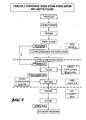
- a first possible process of manufacturing and sterilizing a blister package according to the present invention is illustrated.
- the plastic film material for the lower base portion 2 and the upper film material for the cover member 3 are prepared for the following steam sterilization in an autoclaving chamber.
- the plastic film material is a polypropylene film material.
- the thickness of the film material for the lower base portion 2 is about 500 micrometer, whereas the thickness of the film material for the cover member 3 is about 100 micrometer.
- transversal holes are pressed into an intermediate film located between the two layers formed by the lower and upper film material for the steam flow in the autoclaving chamber.
- the complete system is packaged around a mandrel as a roll.
- this packaged film material is sterilized by a temperature of 121 °C during 20 minutes. Subsequently, the preheating process of the film material for the lower base portion 2 takes place.
- the lower film material is progressively heated in three steps from 20°C to about 200°C between two hot-plates at each preheating station. Afterwards the lower base portion 2 of the blister package is thermoformed using dies and molds with a specific temperature for the dies and molds. The temperature, the pressure and the time can be regulated by computer-control. Typically, fifteen lower base portions are produced at one cycle, whereby one cycle takes six seconds.
- an orifice for delivering the product at the moment of the use by the customer is pierced through the flat bottom surface 7 of the blister package.
- this orifice is closed by the second cover member 10 which is a Tiroff-film.
- the Tiroff-film is also a plastic foil, preferably a polypropylene foil with a thickness of about 50 micrometer to about 100 micrometer and can be sterilized by gamma-radiation or steam sterilisation.
- the dies, molds, perforating punches and sealing punches are also sterilized in an autoclaving chamber before used at the thermoforming, piercing and Tiroff setting stations. After closing the orifice it is tested if the lower base portion is free from leakage. If this is the case, the cavity is filled from the top with the liquid/ gel or ointment, again fifteen units at one time. This filling takes place under aseptic conditions. Subsequently, the upper film is welded onto the flange. The welding procedure requires a temperature of about 150 to 160°C. In contrast to sealing the welded parts could not be separated again. By means of temperature, pressure and surface contact between the filled unit and the upper film are welded.
- the temperature, the pressure and the surface contact can be regulated by computer-control. Afterwards the filled and welded blister packages are transferred out of the aseptic area and a second leakage test is performed. Then the upper film of the blister packages is printed with product parameters by ink jet or laser printing. At the last station the film material is cut into a strip of preferably five single units, which are packed into a secondary packaging.
- Fig. 7 and Fig. 8 show process variations.
- the preheating, thermoforming, piercing and Tiroff setting stations take place in a non-aseptic area.
- the film material is cut into suitable parts for an autoclaving procedure.
- the sterilized units are filled with the pharmaceutical product under aseptic conditions.
- the sterilized upper film is welded onto the flange.
- the filled and welded blister packages are transferred out of the aseptic area and the upper film of the blister packages is printed with product parameters.
- the film material is cut into a strip of preferably five single units, a further leaking test takes place and then the strips are packed into a secondary packaging.
- Fig. 8 The process illustrated in Fig. 8 is similar to the process of Fig. 7 with the exception that for the sterilization no autoclaving proceedings are performed but a sterilization by pulsed light. This enables to use a continuous process without the application of an autoclaving chamber.
- the temperature can be adjusted very quickly if some corrections might be necessary.
- the chamber is provided with a pressure device for generating a counter pressure in the autoclaving chamber.
- the pressure can be adjusted very quickly if some corrections might be necessary.
- the counter pressure is regulated electronically via computer control. Said pressure set-up is advantageously used for avoiding a blowing-up of the bottles. After introducing the bottles into the chamber, the temperature rises typically from room temperature to 121 °C and the pressure rises typically from atmospheric pressure to a maximum value which is characteristic for the sterilization process. Typically, the choice of the pressure value depends on the form of the bottles.
- the invention provides a plastic package particularly a blister package for pharmaceutical products, especially for ophthalmic pharmaceutical solutions and gels which can be sterilized as a whole after filling the product into the package by an autoclaving process in accordance to the invention. Furthermore, no deformation can be observed after having exposed said package to an autoclaving process in accordance to the invention.
- a package according to the invention especially a blister package with an ophthalmic solution, gel or ointment, fulfills the European Pharmacopoeia, 3rd. edition (1997), and/or the EU regulation mentioned above, which ensure a higher level of safety in term of sterility and of easy and safety use.
- the invention provides an attractive and less expensive blister package for the merchandising of pharmaceutical products, particularly eye drops, and is constructed in a manner which facilitates production.
- the plastic material particularly the polypropylene material used for fabricating the package in accordance to the invention exhibits physical chemical properties which meet the requirements laid down in the supplement of 1998 of the European Pharmacopoeia, 3rd edition (1997). This is in particular applicable to the additives comprised in the PP-material in accordance to the invention.
- the package of the present invention may be constructed of materials other than those identified herein.
Landscapes
- Engineering & Computer Science (AREA)
- Mechanical Engineering (AREA)
- Chemical & Material Sciences (AREA)
- Composite Materials (AREA)
- Medical Preparation Storing Or Oral Administration Devices (AREA)
- Packages (AREA)
- Rigid Containers With Two Or More Constituent Elements (AREA)
- Apparatus For Disinfection Or Sterilisation (AREA)
Applications Claiming Priority (4)
| Application Number | Priority Date | Filing Date | Title |
|---|---|---|---|
| EP99120609 | 1999-10-18 | ||
| EP99120609 | 1999-10-18 | ||
| PCT/EP2000/010169 WO2001028885A1 (fr) | 1999-10-18 | 2000-10-16 | Emballage pour produit pharmaceutique et procede de fabrication et de sterilisation de celui-ci |
| EP00971387A EP1222123A1 (fr) | 1999-10-18 | 2000-10-16 | Emballage pour produit pharmaceutique et procede de fabrication et de sterilisation de celui-ci |
Related Parent Applications (1)
| Application Number | Title | Priority Date | Filing Date |
|---|---|---|---|
| EP00971387A Division EP1222123A1 (fr) | 1999-10-18 | 2000-10-16 | Emballage pour produit pharmaceutique et procede de fabrication et de sterilisation de celui-ci |
Publications (1)
| Publication Number | Publication Date |
|---|---|
| EP1466838A1 true EP1466838A1 (fr) | 2004-10-13 |
Family
ID=8239217
Family Applications (2)
| Application Number | Title | Priority Date | Filing Date |
|---|---|---|---|
| EP00971387A Withdrawn EP1222123A1 (fr) | 1999-10-18 | 2000-10-16 | Emballage pour produit pharmaceutique et procede de fabrication et de sterilisation de celui-ci |
| EP04009619A Withdrawn EP1466838A1 (fr) | 1999-10-18 | 2000-10-16 | Emballage pour produit pharmaceutique et procédé de fabrication et de stérilisation de celui-ci |
Family Applications Before (1)
| Application Number | Title | Priority Date | Filing Date |
|---|---|---|---|
| EP00971387A Withdrawn EP1222123A1 (fr) | 1999-10-18 | 2000-10-16 | Emballage pour produit pharmaceutique et procede de fabrication et de sterilisation de celui-ci |
Country Status (7)
| Country | Link |
|---|---|
| US (2) | US7067084B1 (fr) |
| EP (2) | EP1222123A1 (fr) |
| JP (1) | JP2003512107A (fr) |
| AR (1) | AR029768A1 (fr) |
| AU (1) | AU1025801A (fr) |
| CA (1) | CA2385281A1 (fr) |
| WO (1) | WO2001028885A1 (fr) |
Cited By (1)
| Publication number | Priority date | Publication date | Assignee | Title |
|---|---|---|---|---|
| WO2009121949A1 (fr) * | 2008-04-04 | 2009-10-08 | Ethypharm | Procede de conditionnement de produits dans des alveoles d'une plaque et machine de conditionnement correspondante |
Families Citing this family (19)
| Publication number | Priority date | Publication date | Assignee | Title |
|---|---|---|---|---|
| AR029768A1 (es) * | 1999-10-18 | 2003-07-16 | Novartis Ag | Paquete de plastico para un producto farmaceutico y metodo para fabricar y esterilizar un paquete farmaceutico |
| AU2003221379A1 (en) * | 2002-03-18 | 2003-09-29 | Santen Pharmaceutical Co., Ltd. | High-temperature-sterilizable instillator |
| AU2005324723A1 (en) * | 2005-01-13 | 2006-07-20 | Bormioli Rocco & Figlio S.P.A. | A process for sterile packaging of containers with drop-dispensers, and means for actuating the process |
| JP4956818B2 (ja) * | 2006-08-04 | 2012-06-20 | 実治 田中 | 目薬容器 |
| AT504573B1 (de) * | 2006-12-04 | 2010-09-15 | Ebewe Pharma Gmbh Nfg Kg | Verpackung für kleinvolumige flaschen |
| JP5651496B2 (ja) * | 2010-08-30 | 2015-01-14 | 富士フイルム株式会社 | ポーションパックの開封方法 |
| USD693695S1 (en) | 2012-03-28 | 2013-11-19 | Aventisub Ii Inc. | Package for product |
| US8899419B2 (en) | 2012-03-28 | 2014-12-02 | Aventisub Ii Inc. | Package with break-away clamshell |
| USD697813S1 (en) | 2012-03-28 | 2014-01-21 | Aventisub Ii Inc. | Clamshell having blisters received therein |
| USD694644S1 (en) | 2012-03-28 | 2013-12-03 | Aventisub Ii Inc. | Clamshell package having blisters |
| US8919559B2 (en) | 2012-03-28 | 2014-12-30 | Aventisub Ii Inc. | Package with break-away clamshell |
| USD695625S1 (en) | 2012-03-28 | 2013-12-17 | Aventisub Ii Inc. | Package for product |
| USD687313S1 (en) | 2012-03-28 | 2013-08-06 | Aventisub Ii Inc. | A-shaped blister card |
| US20140011980A1 (en) * | 2012-07-03 | 2014-01-09 | Allergan, Inc. | Methods for sterilizing compositions and resulting compositions |
| NL2011625C2 (nl) * | 2013-10-16 | 2015-04-20 | Bosch Sprang Beheer B V | Matrijssysteem voor een thermovormmachine, thermovormmachine en werkwijze voor het thermovormen van een product. |
| CH714053A1 (de) * | 2017-08-11 | 2019-02-15 | Pantec Ag | Verabreichungsvorrichtung und Verfahren zur Herstellung einer solchen. |
| KR102056732B1 (ko) * | 2019-07-10 | 2019-12-17 | (주)알메디카 | 환자 맞춤형 약액을 수용하기 위한 일회용 약액 용기, 이를 제작하는 장치, 및 제작 방법 |
| US20240416097A1 (en) | 2021-11-03 | 2024-12-19 | Merck Sharp & Dohme Llc | Microneedle injector and methods of making and using same |
| US12145786B2 (en) * | 2021-11-04 | 2024-11-19 | Local Bounti Operating Company, Llc | Optimized packaging for leafy green products |
Citations (5)
| Publication number | Priority date | Publication date | Assignee | Title |
|---|---|---|---|---|
| FR1338948A (fr) * | 1962-08-21 | 1963-10-04 | Conditionnement de doses unitaires en compte-gouttes perdus | |
| US3782066A (en) * | 1971-04-26 | 1974-01-01 | Ind Werke Karlsruke Augsburg A | Method of making and filling an aseptic packing container |
| EP0025621A1 (fr) * | 1979-09-12 | 1981-03-25 | Ab Tetra Pak | Procédé pour la fabrication d'un récipient pour contenu sous pression |
| US5246106A (en) * | 1992-04-07 | 1993-09-21 | Johnson Jimmie L | Compartmental communion container |
| FR2698608A3 (fr) * | 1992-11-30 | 1994-06-03 | Thermoland | Boîte d'emballage. |
Family Cites Families (13)
| Publication number | Priority date | Publication date | Assignee | Title |
|---|---|---|---|---|
| US3154074A (en) * | 1962-10-23 | 1964-10-27 | Lehn & Fink Products Corp | Internal medicament applicator |
| SE7502318L (sv) * | 1975-03-03 | 1976-09-06 | Af Ekenstam Thuresson Bo | Emballage for flytande till halvfasta material, passande for smerre kvantiteter |
| JPS54154982U (fr) * | 1978-04-15 | 1979-10-27 | ||
| DE69333721T2 (de) * | 1992-12-17 | 2006-03-02 | Unilever N.V. | Spendervorrichtung |
| JPH07148853A (ja) * | 1993-10-04 | 1995-06-13 | Dainippon Printing Co Ltd | ポリプロピレン系樹脂シートとその製造方法および包装体 |
| US5439643A (en) * | 1993-11-03 | 1995-08-08 | Liebert; Richard T. | Method and apparatus for terminal sterilization |
| US5487726A (en) * | 1994-06-16 | 1996-01-30 | Ryder International Corporation | Vaccine applicator system |
| KR100439006B1 (ko) * | 1994-08-30 | 2005-04-06 | 파마시아 에이비 | 안과 치료용 장치,치료액체를 방출시키는 방법 및 액체 투여액용 패키지 |
| US6146875A (en) * | 1997-05-02 | 2000-11-14 | Ward; N. Robert | Method for culturing microorganisms in prefilled flexible containers |
| AUPO728797A0 (en) * | 1997-06-11 | 1997-07-03 | Containers Pty Ltd | Preferential heating of materials by use of non-ionising electromagnetic radiation |
| US6099682A (en) * | 1998-02-09 | 2000-08-08 | 3M Innovative Properties Company Corporation Of Delaware | Cold seal package and method for making the same |
| KR20060109356A (ko) * | 1999-08-03 | 2006-10-19 | 화이자 헬스 에이비 | 액체 분출 방법 및 액체 분출 장치 |
| AR029768A1 (es) * | 1999-10-18 | 2003-07-16 | Novartis Ag | Paquete de plastico para un producto farmaceutico y metodo para fabricar y esterilizar un paquete farmaceutico |
-
2000
- 2000-10-13 AR ARP000105428A patent/AR029768A1/es active IP Right Grant
- 2000-10-16 AU AU10258/01A patent/AU1025801A/en not_active Abandoned
- 2000-10-16 JP JP2001531687A patent/JP2003512107A/ja active Pending
- 2000-10-16 WO PCT/EP2000/010169 patent/WO2001028885A1/fr not_active Ceased
- 2000-10-16 EP EP00971387A patent/EP1222123A1/fr not_active Withdrawn
- 2000-10-16 CA CA002385281A patent/CA2385281A1/fr not_active Abandoned
- 2000-10-16 EP EP04009619A patent/EP1466838A1/fr not_active Withdrawn
- 2000-10-16 US US10/110,916 patent/US7067084B1/en not_active Expired - Fee Related
-
2006
- 2006-05-22 US US11/438,163 patent/US20060207912A1/en not_active Abandoned
Patent Citations (5)
| Publication number | Priority date | Publication date | Assignee | Title |
|---|---|---|---|---|
| FR1338948A (fr) * | 1962-08-21 | 1963-10-04 | Conditionnement de doses unitaires en compte-gouttes perdus | |
| US3782066A (en) * | 1971-04-26 | 1974-01-01 | Ind Werke Karlsruke Augsburg A | Method of making and filling an aseptic packing container |
| EP0025621A1 (fr) * | 1979-09-12 | 1981-03-25 | Ab Tetra Pak | Procédé pour la fabrication d'un récipient pour contenu sous pression |
| US5246106A (en) * | 1992-04-07 | 1993-09-21 | Johnson Jimmie L | Compartmental communion container |
| FR2698608A3 (fr) * | 1992-11-30 | 1994-06-03 | Thermoland | Boîte d'emballage. |
Cited By (2)
| Publication number | Priority date | Publication date | Assignee | Title |
|---|---|---|---|---|
| WO2009121949A1 (fr) * | 2008-04-04 | 2009-10-08 | Ethypharm | Procede de conditionnement de produits dans des alveoles d'une plaque et machine de conditionnement correspondante |
| FR2929594A1 (fr) * | 2008-04-04 | 2009-10-09 | Ethypharm Sa | Procede de conditionnement de produits dans des alveoles d'une plaque et machine de conditionnement correspondante |
Also Published As
| Publication number | Publication date |
|---|---|
| JP2003512107A (ja) | 2003-04-02 |
| AR029768A1 (es) | 2003-07-16 |
| CA2385281A1 (fr) | 2001-04-26 |
| EP1222123A1 (fr) | 2002-07-17 |
| WO2001028885A1 (fr) | 2001-04-26 |
| AU1025801A (en) | 2001-04-30 |
| US20060207912A1 (en) | 2006-09-21 |
| US7067084B1 (en) | 2006-06-27 |
Similar Documents
| Publication | Publication Date | Title |
|---|---|---|
| US7067084B1 (en) | Package for a pharmaceutical product and method of manufacturing and sterilizing the package | |
| US6666359B2 (en) | Controlled-dose dispenser with integral nozzle and cap | |
| EP0513197B1 (fr) | Ensemble a dose unitaire | |
| CA2011734C (fr) | Distributeur de gouttes | |
| EP1181197B1 (fr) | Emballage pour produit pharmaceutique et procede de sterilisation de cet emballage | |
| CA1214138A (fr) | Recipients | |
| JPH0580910B2 (fr) | ||
| JP2012515121A (ja) | 物質の無菌混合のためのパッケージ製品、挿入体、および、区画室、並びに、これらと共に使用するための方法 | |
| EP0150751A1 (fr) | Emballage pour distribuer une préparation liquide ou en pâte sur une partie du corps humain ou animal | |
| US10639192B2 (en) | Device and method for administering a liquid drop by drop | |
| KR20190013829A (ko) | 2-파트 플라스틱 블랭크 세트 | |
| RU168297U1 (ru) | Флакон-капельница для жидких лекарственных форм | |
| JP2002087446A (ja) | 液体収容容器及びそのホルダー並びに液体容器の製造方法 |
Legal Events
| Date | Code | Title | Description |
|---|---|---|---|
| PUAI | Public reference made under article 153(3) epc to a published international application that has entered the european phase |
Free format text: ORIGINAL CODE: 0009012 |
|
| AC | Divisional application: reference to earlier application |
Ref document number: 1222123 Country of ref document: EP Kind code of ref document: P |
|
| AK | Designated contracting states |
Kind code of ref document: A1 Designated state(s): AT BE CH CY DE DK ES FI FR GB GR IE IT LI LU MC NL PT SE |
|
| 17P | Request for examination filed |
Effective date: 20050413 |
|
| RAP1 | Party data changed (applicant data changed or rights of an application transferred) |
Owner name: NOVARTIS AG Owner name: NOVARTIS PHARMA GMBH |
|
| AKX | Designation fees paid |
Designated state(s): AT BE CH CY DE DK ES FI FR GB GR IE IT LI LU MC NL PT SE |
|
| STAA | Information on the status of an ep patent application or granted ep patent |
Free format text: STATUS: THE APPLICATION IS DEEMED TO BE WITHDRAWN |
|
| 18D | Application deemed to be withdrawn |
Effective date: 20100504 |