EP1473949A2 - Provision d'un service d'acheminement de contenu à un utilisateur dans un système de messagerie selon l'information d'identification de l'utilisateur - Google Patents
Provision d'un service d'acheminement de contenu à un utilisateur dans un système de messagerie selon l'information d'identification de l'utilisateur Download PDFInfo
- Publication number
- EP1473949A2 EP1473949A2 EP04250660A EP04250660A EP1473949A2 EP 1473949 A2 EP1473949 A2 EP 1473949A2 EP 04250660 A EP04250660 A EP 04250660A EP 04250660 A EP04250660 A EP 04250660A EP 1473949 A2 EP1473949 A2 EP 1473949A2
- Authority
- EP
- European Patent Office
- Prior art keywords
- content
- identification information
- terminal
- user
- server
- Prior art date
- Legal status (The legal status is an assumption and is not a legal conclusion. Google has not performed a legal analysis and makes no representation as to the accuracy of the status listed.)
- Withdrawn
Links
Images









Classifications
-
- H—ELECTRICITY
- H04—ELECTRIC COMMUNICATION TECHNIQUE
- H04M—TELEPHONIC COMMUNICATION
- H04M3/00—Automatic or semi-automatic exchanges
- H04M3/38—Graded-service arrangements, i.e. some subscribers prevented from establishing certain connections
- H04M3/387—Graded-service arrangements, i.e. some subscribers prevented from establishing certain connections using subscriber identification cards
-
- H—ELECTRICITY
- H04—ELECTRIC COMMUNICATION TECHNIQUE
- H04L—TRANSMISSION OF DIGITAL INFORMATION, e.g. TELEGRAPHIC COMMUNICATION
- H04L51/00—User-to-user messaging in packet-switching networks, transmitted according to store-and-forward or real-time protocols, e.g. e-mail
- H04L51/21—Monitoring or handling of messages
- H04L51/214—Monitoring or handling of messages using selective forwarding
-
- H—ELECTRICITY
- H04—ELECTRIC COMMUNICATION TECHNIQUE
- H04L—TRANSMISSION OF DIGITAL INFORMATION, e.g. TELEGRAPHIC COMMUNICATION
- H04L67/00—Network arrangements or protocols for supporting network services or applications
- H04L67/50—Network services
- H04L67/52—Network services specially adapted for the location of the user terminal
-
- H—ELECTRICITY
- H04—ELECTRIC COMMUNICATION TECHNIQUE
- H04M—TELEPHONIC COMMUNICATION
- H04M3/00—Automatic or semi-automatic exchanges
- H04M3/42—Systems providing special services or facilities to subscribers
- H04M3/42229—Personal communication services, i.e. services related to one subscriber independent of his terminal and/or location
-
- H—ELECTRICITY
- H04—ELECTRIC COMMUNICATION TECHNIQUE
- H04M—TELEPHONIC COMMUNICATION
- H04M3/00—Automatic or semi-automatic exchanges
- H04M3/42—Systems providing special services or facilities to subscribers
- H04M3/42229—Personal communication services, i.e. services related to one subscriber independent of his terminal and/or location
- H04M3/42263—Personal communication services, i.e. services related to one subscriber independent of his terminal and/or location where the same subscriber uses different terminals, i.e. nomadism
- H04M3/42272—Personal communication services, i.e. services related to one subscriber independent of his terminal and/or location where the same subscriber uses different terminals, i.e. nomadism whereby the subscriber registers to the terminals for personalised service provision
-
- H—ELECTRICITY
- H04—ELECTRIC COMMUNICATION TECHNIQUE
- H04W—WIRELESS COMMUNICATION NETWORKS
- H04W4/00—Services specially adapted for wireless communication networks; Facilities therefor
- H04W4/12—Messaging; Mailboxes; Announcements
-
- H—ELECTRICITY
- H04—ELECTRIC COMMUNICATION TECHNIQUE
- H04L—TRANSMISSION OF DIGITAL INFORMATION, e.g. TELEGRAPHIC COMMUNICATION
- H04L51/00—User-to-user messaging in packet-switching networks, transmitted according to store-and-forward or real-time protocols, e.g. e-mail
- H04L51/06—Message adaptation to terminal or network requirements
- H04L51/066—Format adaptation, e.g. format conversion or compression
-
- H—ELECTRICITY
- H04—ELECTRIC COMMUNICATION TECHNIQUE
- H04M—TELEPHONIC COMMUNICATION
- H04M2242/00—Special services or facilities
- H04M2242/30—Determination of the location of a subscriber
-
- H—ELECTRICITY
- H04—ELECTRIC COMMUNICATION TECHNIQUE
- H04M—TELEPHONIC COMMUNICATION
- H04M3/00—Automatic or semi-automatic exchanges
- H04M3/42—Systems providing special services or facilities to subscribers
- H04M3/42025—Calling or Called party identification service
- H04M3/42034—Calling party identification service
- H04M3/42059—Making use of the calling party identifier
-
- H—ELECTRICITY
- H04—ELECTRIC COMMUNICATION TECHNIQUE
- H04M—TELEPHONIC COMMUNICATION
- H04M3/00—Automatic or semi-automatic exchanges
- H04M3/42—Systems providing special services or facilities to subscribers
- H04M3/50—Centralised arrangements for answering calls; Centralised arrangements for recording messages for absent or busy subscribers ; Centralised arrangements for recording messages
- H04M3/53—Centralised arrangements for recording incoming messages, i.e. mailbox systems
- H04M3/533—Voice mail systems
- H04M3/53333—Message receiving aspects
-
- H—ELECTRICITY
- H04—ELECTRIC COMMUNICATION TECHNIQUE
- H04W—WIRELESS COMMUNICATION NETWORKS
- H04W4/00—Services specially adapted for wireless communication networks; Facilities therefor
- H04W4/02—Services making use of location information
-
- H—ELECTRICITY
- H04—ELECTRIC COMMUNICATION TECHNIQUE
- H04W—WIRELESS COMMUNICATION NETWORKS
- H04W4/00—Services specially adapted for wireless communication networks; Facilities therefor
- H04W4/02—Services making use of location information
- H04W4/029—Location-based management or tracking services
-
- H—ELECTRICITY
- H04—ELECTRIC COMMUNICATION TECHNIQUE
- H04W—WIRELESS COMMUNICATION NETWORKS
- H04W8/00—Network data management
- H04W8/18—Processing of user or subscriber data, e.g. subscribed services, user preferences or user profiles; Transfer of user or subscriber data
-
- H—ELECTRICITY
- H04—ELECTRIC COMMUNICATION TECHNIQUE
- H04W—WIRELESS COMMUNICATION NETWORKS
- H04W84/00—Network topologies
- H04W84/18—Self-organising networks, e.g. ad-hoc networks or sensor networks
-
- H—ELECTRICITY
- H04—ELECTRIC COMMUNICATION TECHNIQUE
- H04W—WIRELESS COMMUNICATION NETWORKS
- H04W88/00—Devices specially adapted for wireless communication networks, e.g. terminals, base stations or access point devices
- H04W88/18—Service support devices; Network management devices
- H04W88/184—Messaging devices, e.g. message centre
Definitions
- the present invention relates to a messaging system which sends information, content, etc., desired by a user to a terminal in the vicinity of the user depending on the movement of the user. Also, the invention relates to a messaging server, a terminal, a content sending server and a home agent server, which are included in the messaging system.
- UPT Universal Personal Telecommunication
- UPT service may be typical of a service which dynamically changes destinations of voice communication depending on movement of a user.
- the terminal telephone and the like
- the user conducts an operation to register the terminal to be used in the place where the user has moved to.
- this registration operation it is assumed that the user manipulates a dial or push-buttons of the terminal (telephone) to register the terminal, or the user conducts an operation such as having his own ID card read by a card reader and the like.
- a "pseudo-push" type service which notifies a user of content (information) updating and prompts the user to refer to the updated content.
- the service is configured to notify the user's terminal that content of a website etc has been updated.
- the URL Uniform Resource Locator
- the server will check whether the contents have been updated or not, one or more times a day (for example, four times), and if updated, the server will notify the terminal of the fact that the website has been updated. The user will acquire new content from the server according to the notification.
- an information providing apparatus utilizing a mobile communication network which provides information to a mobile communication terminal
- an information providing apparatus may be quoted, which allows a small highly transportable mobile communication terminal to acquire and output multimedia information from and to the server connected to a wireless communication network or external information communication network (for example, see International Publication No. W097/14244).
- the mobile communication terminal is provided with means for telephone communication and means for a man-machine interface.
- the server for the mobile communication terminal is provided with a database storing the multimedia information, means for external communication which receives the multimedia information from the network servers, means for data processing which process or convert the multimedia information and means for transfer which transfer the multimedia information to the mobile communication terminal.
- the wireless providing system for CATV service may be quoted, which provides CATV on wireless communication (for example, see Japanese Patent Application Laid-open Pub. No. 2001-103446).
- the user authentication system may be quoted, which, in a room or field environment where a plurality of terminals (personal computers) with standard specification are located, by communicating with the wireless tag which is carried by the user, automatically conducts initialization and user authentication of the approaching (next to be used) terminal and provides a work environment corresponding to the user (for example, see Japanese Patent Application Laid-open Pub. X10. 2002-157040).
- the present invention was conceived in view of this background. It is therefore desirable to provide a messaging system which can send a variety of content or information desired by a user, such as text, image, video and the like, to a terminal in the vicinity of the user, depending on the movement of the user.
- a messaging system comprising a messaging server delivering content; and a terminal used by a user, wherein the terminal sends user identification information about the user using the terminal to the messaging server and receives content delivered from the messaging server, and wherein the messaging server holds (stores) correspondingly the user identification information of the user to whom a content delivery service is provided and the content desired by the user, the messaging server delivering to the terminal the content corresponding to the user identification information sent from the terminal.
- the terminal used by a user sends user identification information of the user to the messaging server.
- the messaging server holds the user identification information of the user to whom content delivery service is provided and content (text data, image data, video data, voice data, music etc) which is desired by the user and which are related with the user identification information, and delivers to the terminal the content corresponding to the user identification information sent from the terminal.
- the terminal receives contents delivered from the messaging server. Therefore, even if the user has moved, by the terminal located in the vicinity of the user transmitting the user identification information of the user to the messaging server, the terminal receives content desired by the user.
- the received content is, for example, displayed by a display device, output from speakers as sound or stored in a memory device.
- the user can receive the delivery of content with the terminal where the user has moved to.
- the terminal reads the user identification information from the wireless tag and sends the read user identification information to the messaging server.
- the terminal reads the user identification information from the wireless tag and sends the read user identification information to the messaging server.
- a messaging system comprising a terminal used by a user; a content sending server; a home agent server; and a home agent address management server, wherein the terminal sends user identification information of a user using the terminal to the home agent address management server, the terminal receives an address or user identification information of the home agent server returned from the home agent address management server, the terminal sends the user identification information to the home agent server accommodating (hosting) the terminal based on the received address or user identification information of the home agent server, the terminal receives the content delivered from the home agent server, and wherein the home agent address management server holds corresponding user identification information of the user to whom a content delivery service is provided and an address or identification information of the home agent server accommodating the user, the home agent address management server returning to the terminal an address or identification information of the home agent server corresponding to the user identification information sent from the terminal, wherein the content sending server holds a content and sends the held content to the home agent server accommodating the user to whom the content is delivered, and wherein the
- the terminal used by the user sends user identification information of the user using the terminal to a home agent address management server.
- the home agent address management server holds the user identification information of the user who receives the content delivery service and address or identification information, which is related with the user identification information, of the home agent server which includes (accommodates) the user. Then, the home agent address management server returns, to the terminal, the address or identification information of the home agent server corresponding to the user identification information sent from the terminal.
- the terminal receives the address or identification information of the home agent server returned from the home agent address management server, and based on the address or identification information of the home agent server received, sends the user identification information to the home agent server which accommodates the terminal.
- a content sending server holds content and sends the held content to the home agent server which accommodates the user to whom the content is delivered.
- the home agent server receives the content sent from the content sending server, and sends to the terminal the content corresponding to the user identification information sent from the terminal.
- the terminal receives the content delivered from the home agent server.
- the terminal even if the user has moved, by the terminal located in the vicinity of the user transmitting the user identifier of the user to the home agent server, the terminal receives content desired by the user. In this way, even if the user has moved, the user can receive the delivery service of content with the terminal where the user has moved to.
- a messaging server comprising a memory unit which holds (stores) corresponding user identification information of a user to whom a content (information) delivery service is provided and a content (data) desired by the user; a reception unit which receives user identification information sent from a terminal used by the user; and a delivery unit which reads out from the memory unit a content corresponding to the user identification information received by the reception unit, the delivery unit delivering the read content to the terminal.
- a terminal used by a user to whom a content delivery service is provided, and which receives delivered content comprising a transmission unit which transmits user identification information of the user using the terminal to a messaging server which delivers content (to the terminal); a reception unit which receives from the messaging server the content corresponding to user identification information sent from the transmission unit; and a processing unit which executes processes, including display, audio output and storage, for the content received by the reception unit.
- a terminal used by a user to whom the content delivery service is provided, and which receives content delivered comprising a first transmission unit which transmits user identification information of the user using the terminal to a home agent address management server which manages an address of a home agent server delivering the content; a first reception unit which receives from the home agent address management server an address or identification information of a home agent server corresponding to the user identification information sent from the first transmission unit; a second transmission unit which transmits the user identification information to the home agent server based on the address or identification information of a home agent server which is received by the first reception unit; a second reception unit which receives from the home agent server the content corresponding to the user identification information sent from the second transmission unit; and a processing unit which executes processes, including display, audio output and storage, for the content received by the second reception unit.
- a content sending server comprising a memory unit which stores corresponding user identification information-of a user to whom content delivery service is provided and content (information) desired by the user; and a content sending unit which accommodates the user corresponding to the user identification information, the content sending unit sending the content corresponding to the user identification information to a home agent server which sends the content desired by the user having the user identification information to the terminal that has sent the user identification information.
- a home agent server accommodating (hosting) a user and which delivers content desired by the user to a terminal used by the user, the home agent server comprising a user identification information reception unit (used by a user and) which receives user identification information of the user sent from the terminal which receives the content; a content reception unit which receives the content corresponding to the user identification information which is sent from a content sending server; and a forwarding unit which forwards the content received by the content reception unit to the terminal.
- the above aspects of the invention enable the efficient transfer of data between appliances, improving communication and targeting data to the most appropriate output device.
- contents refers to any kind of content capable of being delivered to a user.
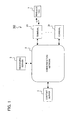
- Fig. 1 is a block diagram showing overall configuration of a messaging system 100 according to the first embodiment of the present invention.
- the messaging system 100 has a wireless tag 1 carried by a user, as well as plural (r: r is integer more than 1) terminals 21 to 2r which are connected to a communication network 5 and can communicate with each other, a messaging server 3 and a content server 4.
- a plurality of the messaging servers 3 may be provided for the purpose of load sharing.
- a plurality of the content servers 4 may be provided, and in this case, each content server may store different contents.
- the communication network 5 consists of, for example, Internet, LAN, mobile communication network and the like.
- the messaging service provided by the messaging service 100 is the service such that if the user has moved between the terminals, contents desired by the user are automatically delivered to the terminal where the user has moved to.
- This service is provided as follows.
- the subscribed user of the messaging service is given the wireless tag 1 storing tag information, such as user identifier (user ID), from the service provider.
- tag information such as user identifier (user ID)
- the user advises the service provider about what contents are preferred to be received under what conditions.
- the service provider registers an address and the delivery condition of the content server (content server 4) into the messaging server 3, according to the application.
- the terminal 21 After subscription to the service, when the user carrying the wireless tag 1 approaches one of the terminals 21 to 2r (assumed as the terminal 21), the terminal 21 wirelessly communicates with the wireless tag 1, and reads tag information stored in the wireless tag 1 by wireless communication. Then, the terminal 21 sends to the messaging server 3 the user ID, information of the terminal 21 and the like contained in the tag information.
- the messaging server 3 reads out contents from the content server 4 storing contents desired by the user based on the information sent from the terminal 21, and delivers the read out contents to the terminal 21. In this way, the user can acquire desired contents (data, information) on the terminal 21 to which the user has moved.
- the wireless tag 1 is provided with internal memory (such as ROM and flash memory), and in this internal memory, tag information is stored.
- the tag information includes the user identifier (user ID) and the identifier of the messaging server 3 (messaging server ID).
- the messaging ID for one which provides service to the user carrying the wireless tag 1 (that is, the messaging server which accommodates the user) is stored in the internal memory.
- the user ID is an identifier allocated to a user by the service provider and the like when the user subscribed to the messaging service, and is information to uniquely distinguish the user from other users.
- NAI Network Access Identifier
- IETF Internet Engineering Task Force
- the messaging server ID is information to uniquely identify the messaging server.
- the messaging server ID for example, FQDN (Fully Qualified Domain Name) may be used. It is to be noted that, if only one messaging server is provided, the messaging server ID can be stored in the terminals 21 to 2r, and in this case, the messaging server ID may not be included in the tag information.
- the wireless tag 1 wirelessly communicates with a device (assumed as the terminal 2i (i is any of 1 to r)) which is present within a predetermined distance (for example, several tens of centimeters or several meters), and sends to the terminal 2i the tag information stored in the internal memory.
- the wireless tag 1 may be one which has a built-in power source supplying electric power for wireless communication, or may be one which has no built-in power source and has circuits generating electric power with wireless signals from the terminal 2i.
- the wireless tag 1 may wirelessly communicate with these two or more terminals, and may send the tag information to the two or more terminals.
- the terminals 21 to 2r may be personal computers, PDAs, kiosk terminals, car navigation systems and the like used by a user.
- the terminals 21 to 2r have differences between these personal computers, PDAs, kiosk terminals, car navigation systems and the like, but have the same configuration for realizing functions related to the present invention.
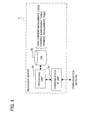
- Fig. 2 is a block diagram showing configuration of the terminal 21 as the representation of the terminal 21 to 2r.
- the terminal 21 has a wireless tag reader 2a, a processing unit 2b, a communication interface unit (communication IF unit) 2c, a memory unit 2d, an output unit 2e and an input unit 2f.
- the wireless tag reader 2a wirelessly communicates with the wireless tag 1, and reads (receives) the tag information stored in the internal memory of the wireless tag 1.
- the read tag information is given to the processing unit 2b, and stored in the memory unit 2d (RAM and the like) by the processing unit 2b.
- terminal ID terminal ID
- terminal address a terminal address and content format of the terminal 21 are stored in advance.
- the terminal ID is information to uniquely distinguish the terminal 21 from other terminals. If the terminal 21 is a mobile communication terminal supporting MobileIP, a home address may be used as the terminal ID, for example.
- the terminal address is an address of the terminal 21 in the communication network 5.
- IP address may be used as the terminal address.
- a home address or a care-of-address may be used as the terminal address, for example. In this case, if the terminal 21 is present on the home network, the terminal address will have the home address, and if the terminal 21 is present on the foreign network, the terminal address will have the care-of-address. And, contents sent to the home address can be forwarded to the care-of-address on the home network.
- the content format represents the format of data contents which can be output (for example, visual or audio output) to the output unit 2e of the terminal 21.
- the content format is text if the output unit 2e of the terminal 21 is a display unit which can display only text.
- the content format may include file format such as PDF format and HTML format, audio format or data indicating the size of screen display (horizontal and vertical resolutions).
- this tag information is also stored in the memory unit 2d temporarily. If this tag information becomes unnecessary, it will be deleted (erased) from the memory 2d, as stated below.
- the processing unit 2b controls the wireless tag reader 2a, the communication IF unit 2c, the output unit 2e and the input unit 2f, as well as performs processes such as storing the tag information from the wireless tag reader 2a in the memory unit 2d, deleting unnecessary tag information from the memory unit 2d, registering terminals into the messaging server 3 and providing the contents sent from the messaging server 3 to users.
- the processing unit 2b may be achieved by hardware circuits, or may be achieved by programs or CPU running these programs.
- the communication IF unit 2c performs sending and receiving operations of data from and to the communication network 5, gives data received from the communication network 5 to the processing unit 2b and sends data from the processing unit 2b to the communication network 5 (messaging server 3). Communications between the communication IF unit 2c and the communication network 5 may be wired communication or wireless communication.
- the output unit 2e consists of a display unit (for example, CRT display and LCD), speakers and others, and outputs (audio-outputs, displays etc.) messages, contents and the like.
- the input unit 2f consists of a keyboard, a mouse, a touch panel and others, and is used by users in order to operate the terminal 21.
- the messaging server 3 registers terminals and delivers contents from the content server 4 to registered terminals under predetermined conditions.
- Fig. 3 is a block diagram showing configuration of the messaging server.
- the messaging server 3 has a processing unit 3a, a database (DB) 3b and a communication IF unit 3c.
- the DB 3b stores user content management tables, content management tables and terminal management tables, as well as contents acquired from the content server4.
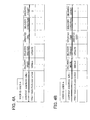
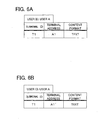
- Figs. 4A and 4B show examples of the user content management table, and Fig. 4A shows the table before distributing contents and Fig. 4B shows the table after distributing contents, respectively.
- the user content management table is a table which manages contents desired by a user, delivery condition of contents and delivery situation of contents, and is generated when a user subscribes to the messaging service, by the service provider or the like based on subscription information provided from the user, or after subscription, by the user through any of the terminals 2i.
- the user content management table is provided with respect to each user ID, and indexed and searched by the user ID.
- Figs. 4A and 4B show examples of the user content management table when the user ID is user A, and if other users such as user B or user C are present, the user content management table for user B, the user content management table for user C and so on will be provided.
- the user content management table has user ID, content address (URL), delivery mode, delivery trigger, updated time, delivery conditions and delivery count.
- the user ID is an identifier allocated to the subscribed user, and is the same as the user ID of the tag information stated above.
- the content address is address indicating storage places of contents desired by users (for example, any Web page in the content server 4). As the content address, URL may be used, for example.
- the delivery mode indicates whether contents addressed by the content address are delivered to a plurality of terminals (multi-mode) or single terminal (single-mode).
- multi-mode is, for example, the case that contents are delivered to both the PDA carried by the user and the kiosk terminal located in vicinity of the user.
- Fig. 4A since "single-mode" is shown as the delivery mode, contents desired by the user A are delivered to single terminal only.
- the delivery trigger indicates opportunity that contents are delivered to terminals.
- "update” is shown as the delivery trigger, every time the contents are updated, the updated contents are delivered to the user.
- the delivery trigger can be configured such that contents are delivered hourly.
- the updated time indicates the last time the contents were updated.
- Fig. 4A shows the user content management table before content delivery, therefore the last updated time is not displayed in the updated time field of this table, and, for example, the value such as "NULL" is filled in.
- Fig. 4B shows the user content management table after content delivery, therefore the updated time field is filled with "July 1, 2002, 13:00" which is last updated time of the delivered content.
- the delivery conditions indicate under what conditions the contents desired by the user are delivered. For example, if the content is stock price information and the user wants to be delivered the content only when stock price go beyond 500 yen, "over 500 yen" is set up as the delivery condition. As shown in Figs. 4A and 4B, if the delivery conditions are not particularly set up, the contents will be delivered based only on the delivery trigger.
- the delivery count indicates number of times contents are delivered to the user. As the default value of the delivery count, zero (0) is set up as shown in Fig. 4A, then the delivery count is incremented by one each time the content is delivered. Fig. 4B shows the table after the content has been delivered once, therefore the delivery count would be one (1). This delivery count is utilized in the case when the user is charged based on the number of times of delivery. Therefore, for the user to whom fixed amount is charged, like in the case of the fixed rate service, the delivery count parameter may not be provided.
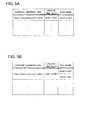
- Figs. 5A and 5B show examples of the content management table, and Fig. 5A shows the table before generating the file for which content format is converted and Fig. 5B shows the table after generating the file whose content format is converted, respectively.
- the content management table is a table which manages properties of contents delivered to user, file names of contents stored in messaging server 3 and the like, and are generated, when a user subscribe to the messaging service, by the service provider or the like based on subscription information provided from the user, or after subscription, by the messaging server 3 with the user's operation through the terminals 2i.
- the content management table has contents address, update time slot and file name as data items.
- the content address is the same as the content address of the user content management table described above in Figs. 4A and 4B.
- the update time slot is one of the properties of the content, indicating the time slot when the content may be updated. For example, if the content is stock price information, then the update time slot is 9:00 to 15:00 because during that time stock trade is operated, and so these times are filled in as the update time slot.
- the file name is a local file name in the messaging server 3, which is given when the contents read out from the content server are stored in DB 3b.
- Fig. 5A shows that the content (for example, stock price information) has been stored in DB 3b with the file name "stock/z.html".
- DB 3b When delivered to a terminal, those contents stored in DB 3b are converted to the format which can be output (displayed) by the terminal (the content format of the terminal stated above), as stated below.
- the converted contents are stored in DB 3b with other file names.
- Fig. 5 shows that the HTML format content (file name) "stock/z.html” has been converted to the text format content "stock/z.txt", and both of those files has been stored in DB 3b.
- Figs. 6A and 6B show examples of the terminal management table, and Fig. 6A shows the table before changing the terminal address and Fig. 6B shows the table after changing the terminal address, respectively.
- the terminal management table is a table which manages information of the terminal. If the terminal is a personally owned terminal (for example, PDA or cell phone) of the user, the terminal management table can be generated (registered) in the messaging server 3 in advance through the management terminal maintained by the service provider, or can be generated in the messaging server 3 through any of the terminals 2i when acquiring contents.
- the terminal management table can be generated (registered) in the messaging server 3 in advance through the management terminal maintained by the service provider, or can be generated in the messaging server 3 through any of the terminals 2i when acquiring contents.
- the terminal 2i is a terminal which can be utilized by anyone, such as kiosk terminals and terminals installed in an Internet cafe, it is considered that registration in advance is difficult, therefore, the table will be generated through the terminal operated by the user oneself when acquiring contents.
- the terminal management table is provided with respect to each user ID, and indexed and searched by the user ID.
- Figs. 6A and 6B show examples of the terminal management table when the user ID is user A, and if other users such as user B or user C are present, the terminal management table for user B, the terminal management table for user C and so on will be provided.
- the terminal management table has user ID, terminal ID, terminal address and content format as data items.
- the user ID is an identifier allocated to the subscribed user, and same as the user ID of the tag information stated above.
- the terminal ID, the terminal address and content format are those stated above, and are the same as those stored in the memory unit 2d of the terminal. It is to be noted that, in the case of multi-mode in which a plurality of terminals are allocated to a single user (described below), the terminal ID, the terminal address and the content format of each terminal may be provided (see Fig. 17, which is described below).
- the terminal 2i is a mobile communication terminal such as a PDA or a cell phone
- the address of the terminal 2i will change along with movement of the terminal 2i. Therefore, the address of the terminal 2i may change from address A1 to A1' as shown in Figs. 6A and 6B.
- the user can modify details of the user content management table, content management table, and the terminal management table stored in the messaging server through the terminal 2i of the user or a dedicated terminal.
- the communication IF unit 3c of the messaging server 3 performs sending and receiving processes for sending and receiving operations of data from and to the communication network 5, gives data from the communication network 5 (the content server 4 and the terminals 21 to 2r) to the processing unit 3a, and sends data from the processing unit 3a to any of the terminals 2i through the communication network 5.
- Communications between the communication IF unit 3c and the communication network 5 may be wired communication or wireless communication.
- a plurality of the messaging servers may be provided, and in this case, load sharing is performed such that one messaging server includes server A, another messaging server includes server B and so on.
- the content server 4 is a server which stores contents provided on users.
- the contents include a variety of information such as stock price information, news, music and image
- the content formats also include a variety of formats, for example, image data in bitmap, JPEG, MPEG, GIF formats and the like, HTML format data and text data.
- a plurality of the content servers may be provided, and in this case, it is possible to take the form such that one content server stores stock price information and another content server stores news.
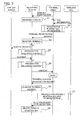
- Fig. 7 is a sequence diagram showing process flow of the messaging system 100 from the content registration to the content delivery.
- Fig. 8 is a flow chart showing the tag information reading flow of step S2 in Fig. 7.
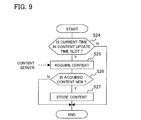
- Fig. 9 is a flow chart showing flow of the content acquisition process of step S4 in Fig. 7.
- Fig. 10 is a flow chart showing flow of the content distributing process of step S5 in Fig. 7.
- Fig. 11 is a flow chart showing the registration deletion request sending flow of step S6 in Fig. 7.
- the terminal 21 is assumed herein as a PDA carried by the user who possesses the wireless tag 1.
- the PDA 21 is able to wirelessly communicate with a mobile communication network being included in the communication network 5 and communicates with the messaging server 3 through the communication network 5.
- the content desired by the user is stock price information of a company (assumed as Company Z), which is stored in the contents server 4.
- the registration of this stock price information of Company Z is assumed to be conducted by the user using the PDA 21 at the time of subscription to the service or after subscription to the service.
- the user accesses the messaging server 3 and registers the stock price information which is the content desired by the user using the PDA 21.
- the messaging server 3 has functions of Web server, and the user accesses the messaging server 3 from Web browser of the PDA 21 and registers the content on Web screen.
- the user specifies the user ID, the content address, the delivery mode, the delivery trigger, the delivery condition and the update time slot using the PDA 21.
- the messaging server 3 Based on these specified information, the messaging server 3 generates the user content management table (see Fig. 4A) and the content management table (see Fig. 5A), then registers the content (stock price information) (S1 in Fig. 7).
- the messaging server 3 will decide user ID, allocate it to user and store it as the user ID of the user content management table.
- the content registration information is preferred to be prevented from alteration by other users with security functions equipped with the communication network 5, the PDA 21, the messaging server 3 and others.
- the PDA 21 wirelessly communicates with the wireless tag 1 and reads the tag information stored in the internal memory of the wireless tag 1 (in this case, the user ID (user A) and the messaging server ID (FQDN)) (S2 in Fig. 7). Reading of the tag information is performed by user pressing a wireless tag registration button (tag information reading button) provided on the input unit 2e of the PDA 21. This wireless tag registration button may be an icon displayed on the output unit 2e.
- the PDA 21 wirelessly communicates with the wireless tag 1 within a predetermined distance and reads the tag information stored in the internal memory of the wireless tag 1 by wireless communication (S21 in Fig. 8).
- the PDA 21 After reading tag information, the PDA 21 acquires IP address of the messaging server 3 from the messaging server ID (FQDN) by means of mechanism (provided on the communication network 5) such as DNS (Domain Name System). Based on the IP address acquired, the PDA 21 sends registration request of itself (terminal registration request) to the messaging server 3 (S22 in Fig. 8).
- mechanism provided on the communication network 5
- DNS Domain Name System
- This terminal registration request includes the user ID (user A) contained in the tag information, as well as the terminal ID (T1), the terminal address (IP address A1) and the content format (text) stored in memory unit 2d of the PDA 21.
- messaging server 3 When receiving the terminal registration request, messaging server 3 (processing unit 3a) generates in DB 3b the terminal management table (see Fig. 6A) corresponding to the user ID included in the terminal registration request and registers the terminal (S3 in Fig. 7).
- the PDA 21 stored the tag information in the memory unit 2d (S23 in Fig. 8).
- the messaging server 3 acquires the content from the content server 4 in order to deliver the content to the registered terminal (S4 in Fig. 7).
- the messaging server 3 compares the update time slot in the content management table with current time and decides whether it is possible or not that the content to be delivered to the user A (stock price information) has been updated (S24 in Fig. 9).
- the messaging server 3 compares current time with the content update time slot and; if current time is included in the range of the content update time slot 9:00 to 15:00 (Y of S24 in Fig. 9), requests the stock price information from the content server 4 at a predetermined frequency. On the other hand, if current time is not included in the range of the content update time slot (N of S24 in Fig. 9), the messaging server 3 does not request the stock price information from the content server 4.
- HTTP Hyper Text Transfer Protocol
- the content server and the messaging server may be configured as single server, and in this case, the internal protocol defined exclusively may be used.
- the frequency of requesting content may be a predetermined frequency considering capabilities of the messaging server 3 and the content server 4 (for example, once every five (5) or ten (10) minuets), or may be the frequency for which the user has applied.
- the messaging server 3 compares the acquired stock price information with the stock price information already stored in DB 3b and decides whether the acquired stock price information is new or not (S26 in Fig. 9). More specifically, comparing the updated times of both stock price information (for example, time information set up in the Last-Modified entity-header field of HTTP/1.1), if the acquired stock price information is later than the stock price information already stored, it is decided that the acquired stock price information is new, otherwise it is decided that the acquired stock price information is not new. Also, if the stock price information is not stored in DB 3b, it is decided that the acquired stock price information is new.
- the updated times of both stock price information for example, time information set up in the Last-Modified entity-header field of HTTP/1.1
- the messaging server 3 stores (memorizes) the acquired stock price information in DB 3b, and registers the content address (URL). and the file name associated to the stock price information into the content management table (see Fig. 5A) (S27 in Fig.9).
- acquired stock price information is not new (N of S26 in Fig. 9)
- the storing operation of step S27 is not executed.
- the messaging server 3 executes a distributing process of stock price information (S5 in Fig. 7). More specifically, first, the messaging server 3 refers to the user content management table and searches the content to be delivered to the terminal of the user (S31 in Fig. 10). In this search; for the PDA 21, the stock price information is searched.
- the messaging server 3 decides whether the searched content satisfies delivery conditions (the delivery trigger and the delivery condition in the user content management table) or not (S32 in Fig. 10). For stock price information, it is decided that the stock price information is updated or not, based on the update time in the user content management table.
- the updated time is not filled in (i.e., stock price information is not delivered at all), or if the filled-in updated time is earlier than the updated time of the stock price information stored in DB 3d, it is decided that the stock price information is updated, and consequently, satisfies the delivery condition.
- the messaging server 3 refers to the terminal management table and selects the terminal to which the content is delivered (S33 in Fig. 10). For the stock price information, PDA 21 of the user A (T1) is selected.
- the messaging server 3 refers to content format of the selected terminal in the terminal management table and decides whether the content which has the content format of the terminal is stored in DB 3b or not (S34 in Fig. 10).
- the content format of PDA 21 is in text format, but the stock price information stored in DB 3b of the messaging server 3 is in HTML format. Therefore, stock price information in text format, which is the content format of PDA 21, is not stored. in DB 3b.
- the messaging server 3 converts the content format and stores the converted content in DB 3b (S35 and S3 6 in Fig. 10).
- the messaging server 3 does not execute processes of step S35 and S36 and immediately executes content distributing process of step S37.
- the stock price information in HTML format is converted to the stock price information in text format and stored in DB 3b (S35 and S36 in Fig. 10). Conversion from HTML format to text format is achieved, for example, by deleting HTML tags from HTML documents.
- the messaging server 3 After converting the content format and storing the converted content, the messaging server 3 registers file name of the converted content into the content management table. For example, for the stock price information in text format, file name "stock/z.txt" is registered in the content management table (see Fig. 5B).
- the messaging server 3 delivers the converted content (the stock price information in text format) to PDA 21 (S37 in Fig. 10).
- the messaging server 3 writes information set up in the Last-Modified entity-header field of HTTP/1.1 (for example, 2002.07.01 13:00) into the content updated time field of the content management table. Also, the messaging server 3 increments the content delivery count by one.
- the messaging server 3 decides whether the delivery mode of the user content management table is single-mode or multi-mode (S38 in Fig. 10). If it is single-mode (Y of S38 in Fig. 10), the messaging server 3 terminates the distributing process for the time being, and if it is multi-mode (Y of S38 in Fig. 10), in order to execute distributing processes for other registered terminals, the messaging server 3 executes processes of step S33 to S37 for other registered terminals, then terminates the distributing process.
- the content acquisition process (S4 in Fig. 7) and the content distributing process (S5 in Fig. 7) are repeated with predetermined time intervals, and the updated content is delivered to the registered terminal.
- the predetermined time intervals may be determined in advance or may be specified by the user.
- the messaging server 3 would multicast the stock price information to user A and user B.
- the messaging server 31 would deliver the stock price information to the terminal of user A and the messaging server 32 would deliver the stock price information to the terminal of user B.
- the messaging server 3 stops the.content acquisition process and the content distributing process until start time of the content update time slot (9:00) comes around again.
- PDA 21 moves from home network to external network, for example, and the terminal address changes from address A1 to A1', PDA 21 sends the terminal registration request to the messaging server 3.
- This terminal registration request includes the user ID (A), the terminal ID (T1) and the changed terminal address (A1').
- the messaging server 3 When the messaging server 3 receives the terminal address registration request, it changes the terminal address of the terminal management table, corresponding to the user ID (A) and the terminal ID (T1) included in the terminal address registration request, from A1 to A1' (S6 in Fig. 7, see Fig. 6B). In this way, PDA 21 can be delivered contents, if the address has been changed.
- delivery can be stopped by deleting registration of the terminal in the messaging server 3. This deletion of registration is achieved by sending the registration deletion request to the messaging server 3.
- This registration delete button may be an icon.
- PDA 21 processing unit 2b
- PDA 21 reads the user ID, the messaging server ID and the terminal ID from the memory unit 2d (S41 in Fig. 11).
- PDA 21 it is possible to make PDA 21 not store the user ID and the messaging server ID received from the wireless tag 1 in the memory unit 2d. In this case, when registration deleting process is executed, PDA 21 would read the user ID and the messaging server ID (i.e., tag information) from the wireless tag 1 again.
- PDA 21 acquires IP address of the messaging server 3 from the messaging server ID (FQDN) by means of mechanism such as DNS, and sends registration deletion request including the user ID and the terminal ID to the messaging server 3 (S42 in Fig. 11).
- IP address of the messaging server 3 acquired at the time of terminal registration may be stored in the memory unit 2d, and in this case, PDA 21 can access the messaging server 3, using IP address of the messaging server 3 stored in the memory unit 2d, without using DNS and the like.
- the messaging server 3 When the messaging server 3 receives this registration deletion request, it deletes (erases) the terminal management table corresponding to the user ID and the terminal ID included in the registration deletion request. Consequently, contents will not be delivered from the messaging server 3.
- PDA 21 After sending the registration deletion request, PDA 21 immediately deletes (erases) the tag information stored in the memory unit 2d (S43 in Fig. 11).
- the tag information from the wireless tag 1 may be read when PDA 21 is supplied with power (turned on), in addition to or as substitute for the operation of the tag information reading button of PDA 21. Also, deletion of the tag information from PDA 21 and deletion of the terminal registration information from the messaging server may be executed when PDA 21 is turned off power. This is same in the cases of a following example (2) of a kiosk terminal and the like and an example (3) of a car navigation system, as well as in second and third embodiments.
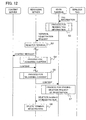
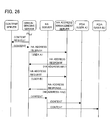
- Fig. 12 is a sequence diagram showing process flow of the messaging system 100.
- the same processes as those of Fig. 7 are given the same symbols, and detail description thereof will be omitted.
- a kiosk terminal 22 is provided with a terminal registration menu or a terminal registration button.
- a wireless tag reader 2a of the terminal 22 reads tag information (user ID and messaging server ID (FQDN)) stored in the wireless tag 1 (S2 in Fig 12).
- the kiosk terminal 22 acquires IP address of the messaging server 3 from FQDN of the messaging server 3 by means of mechanism such as DNS. Subsequently, the kiosk terminal 22 sends to the messaging server 3 the terminal registration request message including the user ID (user A), the terminal ID (T2), the terminal address (A2) and the receivable content format (HTML format) (S2 in Fig. 12).
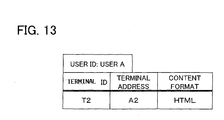
- the messaging server 3 registers the kiosk terminal 22 based on the terminal registration request message (S3 in Fig. 12). Since the user has specified single-mode as the delivery mode, details of the user terminal management table in above example (1) are overwritten with information configured in the terminal registration request message, as shown in Fig. 13.
- the messaging server 3 requests and acquires the content from the content server 4 in order to deliver to the user A (S4 in Fig. 12).
- the messaging server 3 compares updated time of the content already acquired with updated time of the content acquired this time, and if the content acquired this time is newer than the content acquired and stored previously, then the messaging server 3 replaces the content acquired previously with the content acquired this time.
- the messaging server 3 replaces content update information in the content management table with the information of new content.
- the messaging server 3 compares update information of the content delivered to the user A previously with update information of the content registered in the content management table.
- the content has been updated after last time the content was delivered (for example, the value of the Last-Modified entity-header field is 2002.07.01 13:10, which is given to the content response message received from the content server 4).
- the messaging server 3 selects the terminal to which the content is delivered (kiosk terminal 22) based on the user terminal management table shown in Fig. 13, and delivers the content to the kiosk terminal 22 (S5 in Fig. 12). Since the kiosk terminal 22 can be delivered with HTML documents, the messaging server 3 does not execute the content converting process.
- the user can terminate the use of the terminal by selecting a terminal registration delete menu or pressing a terminal registration delete button provided on the kiosk terminal 22.
- the kiosk terminal 22 automatically reads the tag information from the wireless tag 1 approaching within a predetermined distance (several tens of centimeters or several meters) and executes the registering process.
- registration deleting process is automatically executed when the wireless tag 1 moves a predetermined distance or more away from the kiosk terminal 22.
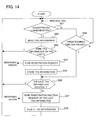
- Fig. 14 is a flow chart showing the tag information reading flow and the registration deletion request transmitting flow in the case that the registering process and the registration deleting process of the terminal is executed automatically.
- the kiosk terminal 22 checks whether it is possible to communicate with wireless tag 1 or not, with predetermined time intervals (for example, time intervals of between several milliseconds and several seconds) (S51). This is achieved, for example, by the kiosk terminal 22 transmitting a predetermined code sequence (for example preamble signal) with predetermined time intervals at predetermined signal strength and by the wireless tag 1 sending back acknowledgement response (Ack) to the terminal 22 at predetermined signal strength when receiving this code sequence.
- a predetermined code sequence for example preamble signal
- Ack back acknowledgement response
- the kiosk terminal 22 When being able to communicate with the wireless tag 1 (Y of S51), the kiosk terminal 22 reads the tag information from the wireless tag 1, compares the read tag information with the tag information already stored in the memory unit 2d of the kiosk terminal 22 (the last tag information) and decides whether both tag information is the same or not (S53).
- the kiosk terminal 22 transmits to the messaging server 3 the terminal registration request based on the tag information read out in step S 52 (S54), and after transmission, stores the tag information in the memory unit 2d (S55).
- steps S54 and S55 are the same as processes of steps S22 and S23 in Fig. 8 described above, respectively. In this way, the terminal registering process is executed in the messaging server 3.
- step S53 when step S53 is "N", it may be possible to additionally read out tag information from the wireless tag 1 one or more times periodically, then proceed to step S54 in the case that all these read tag information are the same. In this way, registration of new tag information is ensured.
- step S53 if both read and stored tag information are the same (Y of S53), since this means that the same wireless tag 1 is present in the vicinity of the kiosk terminal 22, the kiosk terminal 22 will not send the terminal registration request or the terminal registration deletion request and will repeat the deciding process of step S51 again.
- the kiosk terminal 22 decides whether the last tag information is deleted from the memory unit 2d (S56). If the last tag information is not deleted (N of S56), the kiosk terminal 22 sends registration deletion request of the last tag information to the messaging server 3 (S57) and deletes the last tag information from the memory unit 2d (S58). These processes of steps S57 and S58 are the same as processes of steps S42 and S43 in Fig. 11 described above, respectively. In this way, the terminal registration deleting process is executed in the messaging server 3.
- step S56 if the last tag information is already deleted from the memory unit 2d in step S56, the terminal registration is also deleted in the messaging server 3, therefore the kiosk terminal 22 will not send the registration deletion request to the messaging server 3 and will repeat processes form step S51.
- the kiosk terminal 22 decides that communication with the wireless tag 1 can not established (N of S51) in step 51 (N of S51), it decides whether a predetermined time period (for example, between several seconds and several tens of seconds) has passed or not (S59). If a predetermined time period has passed, in other word, if the time period during which communication with the wireless tag 1 can not established exceeds a predetermined time period (Y of S59), since it is considered that the wireless tag 1 moves outside a predetermined distance from the kiosk terminal 22, the kiosk terminal 22 would execute processes from step S56. On the other hand, if a predetermined time period has not passed (N of S59), the kiosk terminal 22 would return to step S51 again.
- a predetermined time period for example, between several seconds and several tens of seconds
- the terminal may be a car navigation system (hereinafter referred to as "car navigation system") 23 equipped to a vehicle, and processes to deliver contents (for example, traffic information) to a car navigation system by means of a voice (audio) call protocol are described below.
- car navigation system hereinafter referred to as "car navigation system” 23 equipped to a vehicle, and processes to deliver contents (for example, traffic information) to a car navigation system by means of a voice (audio) call protocol are described below.
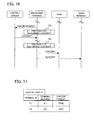
- Fig. 15 is a sequence diagram showing flow of processes of content delivery to the car navigation system 23 by such means
- an announce server which is not shown is connected to the communication network 5 shown in Fig. 1.
- the announce server has functions to set up call to the car navigation system 23 with a protocol such as VoIP (Voice over IP), convert the content (traffic information) to audio data and send it to the car navigation system.
- VoIP Voice over IP
- the car navigation system 23 When a user requests terminal registration to the car navigation system 23, the car navigation system 23 reads tag information from the wireless tag 1 and sends a terminal registration request to the messaging server 3 (82). In this way, the messaging server 3 registers the car navigation system 23 (S3). In this point, "voice" is specified as the format of traffic information (e.g. audio data) sent to the car navigation system 23. Then, the messaging server 3 acquires the content from the content server 4 (S4).
- the messaging server 3 requests set-up of voice call for the car navigation system to the announce server (S5). In this way, the announce server sets up voice call between it and the car navigation system 23.
- the messaging server 3 sends an announce request and traffic information to the announce server.
- the announce server converts the traffic information to audio (voice) data and sends it to the car navigation system 23, according to the announce request (S9).
- the announce server disconnects voice call between it and the car navigation system 23.
- the announce server may be omitted, and in this case, the messaging server 3 executes the set-up of call between it and the car navigation system as well as the process of converting data contents to audio format.
- FIG. 16 is sequence diagram showing content delivery to a plurality of terminals in the case of multi-mode
- Fig. 17 shows an example of the terminal management table of the user in multi-mode.
- multi-mode is specified as the delivery mode in the user content management table
- multiple sets two (2) sets in Fig. 17
- This plurality of terminals registered in the terminal management table is delivered with identical contents.
- step S4 the content acquisition process of step S4 is executed, and the content is delivered to the plurality of terminals registered in the terminal management table (for example, PDA 21 and the kiosk terminal 22).
- the content is delivered to PDA 21 in text format and to the kiosk terminal 22 in HTML format.
- the delivery count in the user content management table is incremented by two.
- step S5 details of the content distributing process of step S5 is described above referring to Fig. 10, therefore description thereof is omitted here.
- the content converting process is assumed to be executed by the messaging server 3, it is possible that a conversion apparatus other than the messaging server 3 (for example, a content conversion server) may be connected to the communication network and this conversion apparatus may execute the content converting process.
- a conversion apparatus other than the messaging server 3 for example, a content conversion server
- PDA 21 is assumed to notify the messaging server 3 of the changed terminal address
- a location management server managing the terminal address of PDA 21 is connected to the communication network 5, it may be possible to notify this location management server of the changed terminal address of PDA 21.
- the location management server further notifies the messaging server 3 of the notified terminal address. In this way, PDA 21 has no need to notify the messaging server 3 of the address.
- the charging may also be performed according to the delivery period of contents. Further, independently from the delivery count and the delivery period of contents, a fixed-rate system for each terminal of a fixed-rate system for each user may be chosen.
- Fig. 18 is a block diagram showing general configuration of a messaging system 100 according to the second embodiment.
- the messaging system 200 has a wireless tag 1, plural (r) terminals 21 to 2r, plural (q:q is integer more than 2) messaging servers 31 to 3q, content server 4 and a messaging server address management server 6.
- the same components as the messaging system 100 according to the first embodiment are given the same symbols, and detail description thereof is omitted.
- the messaging servers 31 to 3q have substantially same function as the messaging server 3.
- a plurality of messaging servers is provided here; it may be possible to provide only one messaging server. Also, a plurality of the messaging server address management server may be provided on perform load sharing.
- the internal memory in the wireless tag 1 only stores the user ID and does not store the messaging server ID (for example, FQDN). This is for the purpose of lowering memory capacity of the internal memory in the wireless tag 1 and reducing cost and size of the wireless tag 1.
- the address of the messaging server is requested based on the messaging ID stored in the wireless tag 1, but in this embodiment, since the messaging server ID is not stored in the wireless tag 1, the messaging server address management server 6 is provided in order to request the address of the messaging server.
- This messaging server address management server 6 requests the address of the messaging server accommodating a user with the user ID, based on the user ID stored in the wireless tag 1.
- the messaging server address management server 6 holds a messaging server address management table in order to request the address of the messaging server accommodating the user.
- Fig. 19 shows an example of the messaging server address management table.
- the messaging server address management table has data items having the user ID and the address of the messaging server accommodating a user with the user ID (the messaging server address).
- Fig.20 is a sequence diagram showing flow of processes in the messaging system 200.
- a user who has user A as the user ID registers desired content (for example, stock price information) into one of the messaging servers 31 to 3q (assumed as the messaging server 31), using one of the terminals 21 to 2r (assumed as PDA 21).
- desired content for example, stock price information
- Selecting one messaging server 31 from a plurality of the messaging servers 31 to 3q may be achieved by user A specifying an address, URL and the like, or may be achieved as below.
- a service reception server for example, Web server
- the user A accesses to the service reception server.
- the service reception server selects one messaging server such that load or the number of user registration is balanced, or with Round Robin method, and registers the content of the user A into the selected messaging server.
- the messaging server 31 With registration of the content, the messaging server 31 holds the user content management table (see Figs. 4A and 4B) for user A, as with the case with the first embodiment (S61).
- the address of the messaging server address management server 6 or FDQN is stored in the messaging server 31 (and 32 to 3q) in advance, and the messaging server 31 (and 32 to 3q) accesses the messaging server address management server 6 based on this address or FQDN. If a plurality of the messaging server address management servers 6 is provided, the messaging servers 31 to 3q execute address registration by selecting one of the messaging server address management server or execute address registration into messaging server address management server specified to each messaging server in advance.
- the former method includes, for example, a method which selects one messaging server address management server such that the load of the messaging server address management servers becomes uniform.
- PDA 21 reads the user ID (the tag information) from the wireless tag 1 (S63).
- PDA 21 sends an address request to the messaging server address management server 6.
- This address request includes the read user ID (user A).
- the address of the messaging server address management server 6 or FDQN is stored in PDA 21 in advance, and PDA 21 sends the address request to the messaging server address management server 6 based on this stored address or FQDN. The same applies to other terminals 22 to 2r.
- the messaging server address management server 6 returns to PDA 21 the messaging server address MA corresponding to the user ID included in the address request, as address response.
- PDA 21 sends a terminal registration request to the messaging server 31 using the messaging server address MA returned with the address response.
- the messaging server 31 registers PDA 21 (S64), and after that, just like the first embodiment, contents are delivered to PDA 21 which is the registered terminal.
- the messaging server address of the messaging server address management table may be IP address or FQDN.
- FQDN the terminal would acquire IP address of the messaging server from FQDN using DNS and the like.
- Functions of the messaging server in the first embodiment may be divided and distributed to a plurality of servers.
- functions of the messaging server are divided and are distributed and deployed to a content sending server, a home agent (HA) and a home agent (HA) address management server.
- HA home agent
- HA home agent
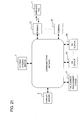
- Fig. 21 is a block diagram showing general configuration of a messaging system 300 according to the third embodiment.
- the messaging system 300 has a wireless tag 1, r terminals 21 to 2r, the content sending server, plural (s: s is integer more than 2) HA servers 81 to 8s, a HA address management server 9 and a content server 4.
- s is integer more than 2
- HA servers 81 to 8s HA address management server 9
- content server 4 The same components as the messaging system 100 (see Fig. 1) according to the first embodiment (the wireless tag 1, the terminals 21 to 2r and the content server 4) are given the same symbols, and detail description thereof is omitted.
- pluralities of the content sending servers, the HA address management servers and the content servers 4 may be provided.
- the content sending server 7 acquires contents from the content server 4 and sends the acquired contents to the HA server accommodating the user desiring the contents out of the HA servers 81 to 8s.
- the content sending server 7 has a database (DB) internally, as is the case with the messaging server 3, and stores a user content management table in this DB.
- DB database
- Fig. 22 shows an example of the user content management table held by the content sending server (internal DB).
- the user content management table is a table which manages contents desired by the user and delivery conditions of contents, and is generated, when a user subscribes to the messaging service, by the service provider or the like based on subscription information provided from the user, or after subscription, by the user through any of the terminals 2i.
- the user content management table is provided with respect to each user ID, and indexed and searched by the user ID.
- the user content management table has the user ID, the content address (URL), the delivery trigger, the updated time and the delivery conditions as data items.
- NAI may be used as is the case with the user ID in the first embodiment described above, or IP address (a home address of the user) may be used.
- IP address a home address of the user
- Each data item of the content address, the delivery trigger, the updated time and the delivery conditions is the same as that of the user content management table in the first embodiment described above (see Figs. 4A and 4B), therefore description thereof is omitted here.
- HA servers 81 to 8s are servers in which users are accommodated and terminals used by users are registered. With this registration of users, HA 81 to 8s generate and hold the terminal management tables.
- Fig. 23 shows an example of the terminal management table held by HA servers.
- the terminal management table is a table which manages information of a terminal. If the terminal is a personally owned terminal (for example, PDA or cell phone) of the user, the terminal management table can be generated (registered) in the HA servers 81 to 8s in advance through the management terminal maintained by the service provider, or can be generated in the HA servers 81 to 8s through any of the terminals 2i when acquiring contents.
- the terminal 2i is a terminal which can be utilized by anyone, such as kiosk terminals and terminals installed in Internet Café, it is considered that registration in advance is difficult, therefore, the table will be generated through the terminal operated by the user oneself when acquiring contents.
- the terminal management table is provided with respect to each user ID, and indexed and searched by the user ID.
- the terminal management table has the user ID, the terminal ID, the terminal address, the content format, the delivery mode and the delivery count.
- the user ID is the same as that described for the user content management table (see Fig. 22) stated above.
- the terminal ID, the terminal address, the content format, the delivery mode and the delivery count are the same as those in the first embodiment stated above, therefore description thereof is omitted.
- the HA address management server is a server which manages addresses of HA accommodating each user, and holds a HA address management table in internal DB to conducts these management.
- Fig. 24 shows an example of the HA address management table.
- the HA address management table has a user ID and an address of HA accommodating a user of the user ID (HA adress) as data items.
- the user ID is the same as that of the user content management table described above.
- the HA address is an address of the HA server accommodating the user having the user ID.
- the HA address may be IP address or FQDN.
- Fig. 25 is a sequence diagram showing flow of processes in the messaging system 300.
- the terminal used by a user is assumed as PDA 21.
- a user accesses the content sending server 7 and registers desiring contents at the time of subscription (S71).
- an address of the content sending server is stored in PDA 21 in advance, or is input by the user A.
- the service reception server not shown
- PDA 21 may access this service reception server and may register contents into the content sending server.
- the service reception server may select the content sending server such that load or the number of users accommodated in the content sending server becomes uniform.
- the user ID, the content address (URL), the delivery trigger, the updated time, the delivery condition and the delivery mode are sent to the content sending server from PDA 21. If the user ID is allocated to a user at the time of contents registration, the user ID is not sent.
- the user ID, the content address, the delivery trigger and the delivery condition are stored in DB of the content sending server 7 as the user contents management table (see Fig. 22).
- the delivery mode is stored in the content sending server 7 temporarily, then sent to the HA server by user registration.
- the content sending server 7 determines which of the HA servers 81 to 8s accommodates the user A and sends a user registration request of the user A to the determined HA server (assumed as HA server 81). In this way, the HA server 81 registers the user A (S 72).
- the method to determine the HA server may be a method in which, every time the user registration is executed, HA server is changed in order, such as Round Robin method, or may be a method in which the HA server is determined such that load, the number of users accommodated and the like of the HA servers become uniform. It is to be noted that addresses of the HA server 81 to 8s (IP addresses or FQDN) are stored in the content sending server in advance.
- the user registration request includes the user ID (user A) and the delivery mode.
- the HA server 81 Upon the user registration, the HA server 81 generates new entry for the user A on the terminal management table; the user ID (user A) and the delivery mode sent from the content sending server 7 are registered into the entry; and zero is set as default value of the delivery count.
- the content server 7 sends to the HA address management server 9 a set of the user ID of the user A and the address of the HA server accommodating the user A (assumed as HA1).
- the HA address management server 9 registers the set of the user ID and the HA address sent from the content sending server 7 into the HA address management table (S73, see Fig. 25).
- the content sent to the IP address (i.e., user ID) is first sent to the HA server 81 (HA1) accommodating the user A and then forwarded from the HA server 81 to the terminal 21 used by the user A. Therefore, in this case, the IP address or the user ID is ascertained after the HA server is determined (or after HA address registration is executed). Consequently, after the HA server is determined (or after HA address registration is executed), the wireless tag 1 storing the user ID will be given to the user, or the user ID will be stored in the wireless tag 1 that is given to the user in advance.
- the PDA 21 of the user A reads the user ID from the wireless tag 1 held by the user A (S74). After read-out of the user ID, PDA 21 sends HA address request including the user ID to the HA address management server 9.
- the HA address management server 9 refers to the HA address management table and returns an address of the HA server accommodating the user A (HA1) to PDA 21.
- PDA 21 sends terminal registration request to the HA server 81 accommodating the user A, based on the returned address HA1 of the HA server, and registers itself.
- This terminal registration request includes, in addition to the user ID, the terminal ID of PDA21, the terminal address A1 and the text format.
- the HA server 81 registers the terminal ID, the terminal address and the content format into the entry corresponding to the user ID on the terminal management table (see Fig. 23) (S75).
- the content sending server 7 sends content request to the content server 4, based on the content address on the user content management table (see Fig. 22) of the user A, and acquires the content as response to that (S76).
- the content sending server 7 delivers the content according to the delivery trigger and the delivery condition on the user content management table of the user A (S77).
- the content is delivered to the HA server 81 accommodating the user A and forwarded from the HA server 81 to PDA 21.
- the content sending server 7 requests a HA address of the HA server 81 to the HA address management server 9.
- This HA address request includes the user ID (user A).
- the HA address management server 9 refers to a HA address corresponding to the user ID included in the HA address request from the HA address management table and returns this to the content management server 7. Based on the returned HA address, the content sending server 7 sends the content to the HA server 81.
- Step S72 the content sending server 7 has decided the HA server.
- the content sending server 9 may have stored the HA address, corresponding to the user ID, and may use this HA address at the time of content delivery. In this way, it is possible to send the content to the HA server 81 without acquiring the HA address from the HA address management server 9, and the communication cost is reduced.
- the communication of the HA address request (and HA address response) with the HA address management server 9 may be omitted. This is because, as mentioned above, in this case, due to the user ID and HA address systems just like MobileIP, the content sent to the user ID is sent to the HA server accommodating the user by the communication network 5.
- a home agent server and a user identifier allocated to the user accommodated in the home agent server are allocated such that these belong to the same subnet, and the home agent server is positioned as a gateway residing at the entry point of the subnet.
- the content sending server 7 sends to the HA server 81 the user ID of the user A along with the content.
- the HA server 81 Upon receiving the user ID (user A) sent along with the content, the HA server 81 refers to the terminal address, the content format and the like on the terminal management table (see Fig. 23) corresponding to the user ID. Subsequently, if conversion of the content based on the referred content format is needed, the HA server 81 converts a format of the content. Subsequently, the HA server 81 sends to the terminal (i.e., PDA 21) the content (or the converted content) according to the referred terminal address. In this way, the content is output on the display unit and the like of PDA 21, and the user A can view and listen to the content.
- the terminal i.e., PDA 21
- IP address home address
- terminal address care-of-address
- the content sending server 7 sets up the user ID on the header of the content and sends the content (packet) to the HA server 81.
- the HA server 81 may encapsulate the content (packet) from the content server 7 and may send to PDA 21 as new packet which destination address is the terminal address (IP address) of PDA 21, or may remove the header of the packet from the content server 7 and may send it after adding new header which destination address is the terminal address of PDA 21.
- the same content is delivered to a plurality of users accommodated in the same HA server (assumed as 81), it is possible to send the content from the content sending server 7 to the HA server only once, then send the content to a plurality of terminals.
- Fig. 26 is a sequence diagram in the case of delivering the same content to a plurality of users contained in the same HA server 81.
- this figure an example in which the same content is delivered to two (2) users A and B accommodated in the HA server 81 is illustrated.
- the content sending server 7 After acquiring the content from the content server 4, the content sending server 7 requests the delivery targets of the contents with the terminal management table. In this example, a plurality of users which are users A and B are requested as the delivery targets. In this way, the content sending server 7 acquires addresses of the HA servers accommodating each user from the HA address management server 9. Consequently, upon recognizing that the users A and B are accommodated in the same HA server 81, the content server 7 sends to the HA server 81 the content and the user identifiers of the users A and B.
- the HA server 81 When receiving the content, the HA server 81 recognizes that the content must be delivered to both of the users A and B by analyzing the message and forwards it to the users.
- the present invention it is possible to send a variety of content or information desired by a user, such as text data, image data, video data and audio data to a terminal located in the vicinity of the user, depending on the movement of the user. Also, according to the present invention, it is possible to simplify the procedure for registering a user to a terminal. Further, according to the present invention, it is possible to convert content according to the abilities and characteristics (e.g. compatible formats) of a terminal, and deliver converted content to the terminal.
- the abilities and characteristics e.g. compatible formats
- the present invention reduces unnecessary communication, data storage and loading of system modules, or a communication network.
Landscapes
- Engineering & Computer Science (AREA)
- Signal Processing (AREA)
- Computer Networks & Wireless Communication (AREA)
- Information Transfer Between Computers (AREA)
- Telephonic Communication Services (AREA)
- Mobile Radio Communication Systems (AREA)
Applications Claiming Priority (2)
| Application Number | Priority Date | Filing Date | Title |
|---|---|---|---|
| JP2003029779A JP2004240761A (ja) | 2003-02-06 | 2003-02-06 | メッセージングシステム |
| JP2003029779 | 2003-02-06 |
Publications (2)
| Publication Number | Publication Date |
|---|---|
| EP1473949A2 true EP1473949A2 (fr) | 2004-11-03 |
| EP1473949A3 EP1473949A3 (fr) | 2006-05-10 |
Family
ID=32820840
Family Applications (1)
| Application Number | Title | Priority Date | Filing Date |
|---|---|---|---|
| EP04250660A Withdrawn EP1473949A3 (fr) | 2003-02-06 | 2004-02-06 | Provision d'un service d'acheminement de contenu à un utilisateur dans un système de messagerie selon l'information d'identification de l'utilisateur |
Country Status (3)
| Country | Link |
|---|---|
| US (1) | US20040156487A1 (fr) |
| EP (1) | EP1473949A3 (fr) |
| JP (1) | JP2004240761A (fr) |
Cited By (1)
| Publication number | Priority date | Publication date | Assignee | Title |
|---|---|---|---|---|
| CN102007783A (zh) * | 2008-02-13 | 2011-04-06 | 三星电子株式会社 | 用于互配融合消息服务的方法和系统 |
Families Citing this family (32)
| Publication number | Priority date | Publication date | Assignee | Title |
|---|---|---|---|---|
| US6985720B2 (en) * | 2002-07-12 | 2006-01-10 | Qualcomm, Incorporated | Apparatus and method for transparent and integrated wireless messaging in a multi-mode environment |
| US7496500B2 (en) * | 2004-03-01 | 2009-02-24 | Microsoft Corporation | Systems and methods that determine intent of data and respond to the data based on the intent |
| US20050221852A1 (en) * | 2004-04-05 | 2005-10-06 | D Avello Robert F | Methods for controlling processing of inputs to a vehicle wireless communication interface |
| KR100643326B1 (ko) | 2005-02-22 | 2006-11-10 | 삼성전자주식회사 | 홈 네트워크 시스템 및 그의 컨텐츠 전송 방법 |
| AU2006239739B2 (en) * | 2005-04-28 | 2009-12-10 | Hww Limited | A system for the delivery of mobile content |
| WO2006113975A1 (fr) * | 2005-04-28 | 2006-11-02 | Hww Limited | Systeme pour l’acheminement d’un contenu mobile |
| JP4516496B2 (ja) * | 2005-07-27 | 2010-08-04 | 株式会社日立製作所 | マルチキャスト配信方法及びシステム、コンテンツサーバ |
| EP1755273B1 (fr) * | 2005-08-18 | 2016-11-09 | LG Electronics Inc. | Procédé et dispositif d'authentification d'un terminal télématique embarqué dans un véhicule |
| JP2007104613A (ja) * | 2005-10-07 | 2007-04-19 | Sony Computer Entertainment Inc | 電子通信方法、電子通信システム、通信端末、およびサーバ |
| KR101117286B1 (ko) | 2005-10-12 | 2012-03-22 | 삼성전자주식회사 | 미디어 재생기를 이용하여 컨텐츠를 재생하는 홈 네트워크시스템 및 그 방법 |
| US20070094336A1 (en) * | 2005-10-24 | 2007-04-26 | Microsoft Corporation | Asynchronous server synchronously storing persistent data batches |
| KR100779089B1 (ko) * | 2005-12-07 | 2007-11-27 | 한국전자통신연구원 | 단말 정보에 기반한 맞춤형 컨텐츠 제공 방법 및 그 장치 |
| JP4840158B2 (ja) * | 2007-01-25 | 2011-12-21 | ブラザー工業株式会社 | 情報処理装置とコンピュータプログラムとメモリシステム |
| JP4985225B2 (ja) * | 2007-08-23 | 2012-07-25 | ブラザー工業株式会社 | 通信装置及び通信システム |
| EP2243304B8 (fr) * | 2008-02-15 | 2012-12-26 | Research In Motion Limited | Système et procédé pour fournir un contenu acheminé à un dispositif mobile |
| CA2727121C (fr) * | 2008-06-18 | 2017-08-22 | Chalk Media Service Corp. | Procede et systeme de reedition de contenu mobile |
| KR101297163B1 (ko) * | 2008-10-28 | 2013-08-21 | 에스케이플래닛 주식회사 | 근거리 통신망을 이용한 교통 정보 제공 시스템, 방법, 서비스 서버, 교통 정보 중계 방법, 어플리케이션 서버, 교통 정보 제공 방법, 이동통신단말기, 네비게이션 단말기,실행 방법 및 저장 매체 |
| FR2942364B1 (fr) * | 2009-02-16 | 2011-05-27 | Alcatel Lucent | Gestion de service telephonique et d'etat d'alimentation d'un terminal de communication en fonction de la presence d'un utilisateur |
| US8233919B2 (en) | 2009-08-09 | 2012-07-31 | Hntb Holdings Ltd. | Intelligently providing user-specific transportation-related information |
| CN102648614A (zh) * | 2009-10-09 | 2012-08-22 | 瑞典爱立信有限公司 | 用于处理通信系统所存储的数据的方法 |
| WO2012095983A1 (fr) * | 2011-01-13 | 2012-07-19 | 富士通株式会社 | Procédé de planification |
| JP5684026B2 (ja) * | 2011-03-31 | 2015-03-11 | 能美防災株式会社 | 火災感知器およびその試験器 |
| KR20130012188A (ko) * | 2011-06-24 | 2013-02-01 | 주식회사 케이티 | 서비스 제공 방법 및 시스템 |
| US11751123B2 (en) * | 2013-05-08 | 2023-09-05 | Cellcontrol, Inc. | Context-aware mobile device management |
| FI20145263A7 (fi) * | 2014-03-20 | 2015-09-21 | Sanoma Media Finland Oy | Tilauksen varmentaminen |
| JP6406902B2 (ja) * | 2014-07-11 | 2018-10-17 | 株式会社Adam | コンテンツデータ制御システム |
| US9445396B1 (en) * | 2015-03-13 | 2016-09-13 | Toshiba Global Commerce Solutions Holdings Corporation | Signage acknowledgement tied to personal computer device |
| JP6881297B2 (ja) | 2015-03-20 | 2021-06-02 | 日本電気株式会社 | 車両通信システム、mme、車両端末、及び方法 |
| WO2017020160A1 (fr) * | 2015-07-31 | 2017-02-09 | 李强生 | Procédé de recommandation d'adresse actuelle de contact de téléphone mobile proche, et système de poussée d'informations |
| WO2017020161A1 (fr) * | 2015-07-31 | 2017-02-09 | 李强生 | Procédé de poussée d'informations devant être utilisé lors de la recommandation d'un contact proche, et système de poussée d'informations |
| US11146514B2 (en) * | 2018-05-07 | 2021-10-12 | Apple Inc. | Sharing content in a messaging application |
| JP6537007B1 (ja) * | 2019-03-11 | 2019-07-03 | TechnoProducer株式会社 | 情報配信サーバ、情報配信方法及び情報配信プログラム |
Family Cites Families (11)
| Publication number | Priority date | Publication date | Assignee | Title |
|---|---|---|---|---|
| SE510664C2 (sv) * | 1996-10-29 | 1999-06-14 | Ericsson Telefon Ab L M | Metoder och anordning för meddelandehantering i ett kommunikationssystem |
| JPH11232193A (ja) * | 1998-02-12 | 1999-08-27 | Sony Corp | 情報処理装置および方法、情報処理システム、並びに提供媒体 |
| US6400272B1 (en) * | 1999-04-01 | 2002-06-04 | Presto Technologies, Inc. | Wireless transceiver for communicating with tags |
| WO2000076249A1 (fr) * | 1999-06-08 | 2000-12-14 | Telefonaktiebolaget Lm Ericsson (Publ) | Acces d'un hote mobile a l'internet |
| US6445922B1 (en) * | 1999-12-15 | 2002-09-03 | Lucent Technologies Inc. | Method and system for support of overlapping IP addresses between an interworking function and a mobile IP foreign agent |
| US7953818B2 (en) * | 2000-11-20 | 2011-05-31 | Flexiworld Technologies, Inc. | Output device and system for rendering digital content |
| JP3969050B2 (ja) * | 2001-02-21 | 2007-08-29 | ソニー株式会社 | 情報端末 |
| US7076244B2 (en) * | 2001-07-23 | 2006-07-11 | Research In Motion Limited | System and method for pushing information to a mobile device |
| US20030037243A1 (en) * | 2001-08-14 | 2003-02-20 | International Business Machines Corporation | Method and system for managing the presentation of information |
| JP3719659B2 (ja) * | 2001-12-26 | 2005-11-24 | 株式会社日立製作所 | 情報受信システム及び情報受信端末 |
| US8386389B2 (en) * | 2002-04-30 | 2013-02-26 | Hewlett-Packard Development Company, L.P. | Service delivery systems and methods |
-
2003
- 2003-02-06 JP JP2003029779A patent/JP2004240761A/ja active Pending
-
2004
- 2004-02-04 US US10/771,704 patent/US20040156487A1/en not_active Abandoned
- 2004-02-06 EP EP04250660A patent/EP1473949A3/fr not_active Withdrawn
Cited By (4)
| Publication number | Priority date | Publication date | Assignee | Title |
|---|---|---|---|---|
| CN102007783A (zh) * | 2008-02-13 | 2011-04-06 | 三星电子株式会社 | 用于互配融合消息服务的方法和系统 |
| CN102007783B (zh) * | 2008-02-13 | 2013-09-11 | 三星电子株式会社 | 用于互配融合消息服务的方法和系统 |
| US8626850B2 (en) | 2008-02-13 | 2014-01-07 | Samsung Electronics Co., Ltd | Method and system for interworking converged messaging service |
| US9088531B2 (en) | 2008-02-13 | 2015-07-21 | Samsung Electronics Co., Ltd | Interworking method and system in converged IP messaging service |
Also Published As
| Publication number | Publication date |
|---|---|
| JP2004240761A (ja) | 2004-08-26 |
| US20040156487A1 (en) | 2004-08-12 |
| EP1473949A3 (fr) | 2006-05-10 |
Similar Documents
| Publication | Publication Date | Title |
|---|---|---|
| EP1473949A2 (fr) | Provision d'un service d'acheminement de contenu à un utilisateur dans un système de messagerie selon l'information d'identification de l'utilisateur | |
| US9363314B2 (en) | Systems and methods for event notification framework in a machine-to-machine (M2M) context | |
| US8073920B2 (en) | Service authorizer | |
| US7933963B2 (en) | Reception notification control method and system | |
| CN101800760B (zh) | 一种访问数据业务的实现方法及系统 | |
| US20030236769A1 (en) | Method and device for mobile communication | |
| CN100430920C (zh) | 代理内容服务器、互联网业务供应系统和访问内容服务器的方法 | |
| KR20040018392A (ko) | 데이터 정보 획득 방법 및 장치 | |
| JP2001285916A (ja) | 移動通信システム | |
| US20040230653A1 (en) | Structure for an electronic newsletter subscription system of a multimedia messaging service | |
| KR101973531B1 (ko) | 복수의 클라이언트 간의 어플리케이션 자동 공유 방법 및 장치 | |
| KR20060086705A (ko) | 단문메시지 서비스를 이용한 데이터 공유 방법 | |
| US7779078B2 (en) | Method and system for managing multimedia messages in a mobile communication systems | |
| JP2001051928A (ja) | 情報配信システム及びその配信方法 | |
| US20060198350A1 (en) | Method for transmitting messages in mobile communications system and mobile communications terminal | |
| JP2014167689A (ja) | 情報管理サーバ、情報配信システム、および、情報配信方法 | |
| CN102685732A (zh) | 一种甩信终端连接方法、终端和系统 | |
| RU2351991C2 (ru) | Система и способ организации доступа к мобильным информационным устройствам | |
| JP4989713B2 (ja) | プレゼンス・サービス・システムにおける情報配信の方法 | |
| JP3852731B2 (ja) | 地図表示方法、地図表示システム及び地図情報所在管理サーバ | |
| CN101388861A (zh) | 终端间互助行为管理系统及其方法 | |
| WO2008087474A2 (fr) | Appareil et procédés d'émission de profil | |
| KR100948690B1 (ko) | 개방형 인터페이스를 이용한 주문 서비스 중계 장치 및방법 | |
| JP2003008743A (ja) | サービス提供方法および中継装置 | |
| KR100865334B1 (ko) | 클라이언트 세션 식별자를 이용한 세션 관리 방법 및시스템 |
Legal Events
| Date | Code | Title | Description |
|---|---|---|---|
| PUAI | Public reference made under article 153(3) epc to a published international application that has entered the european phase |
Free format text: ORIGINAL CODE: 0009012 |
|
| AK | Designated contracting states |
Kind code of ref document: A2 Designated state(s): AT BE BG CH CY CZ DE DK EE ES FI FR GB GR HU IE IT LI LU MC NL PT RO SE SI SK TR |
|
| AX | Request for extension of the european patent |
Extension state: AL LT LV MK |
|
| PUAL | Search report despatched |
Free format text: ORIGINAL CODE: 0009013 |
|
| AK | Designated contracting states |
Kind code of ref document: A3 Designated state(s): AT BE BG CH CY CZ DE DK EE ES FI FR GB GR HU IE IT LI LU MC NL PT RO SE SI SK TR |
|
| AX | Request for extension of the european patent |
Extension state: AL LT LV MK |
|
| 17P | Request for examination filed |
Effective date: 20061106 |
|
| AKX | Designation fees paid |
Designated state(s): DE FR GB |
|
| 17Q | First examination report despatched |
Effective date: 20071031 |
|
| STAA | Information on the status of an ep patent application or granted ep patent |
Free format text: STATUS: THE APPLICATION IS DEEMED TO BE WITHDRAWN |
|
| 18D | Application deemed to be withdrawn |
Effective date: 20100901 |