EP1473969A2 - Verfahren zur Entfaltung der Anpassungssoftware für Hörhilfegeràt und dafür angepasstes Hörhilfegeràt - Google Patents
Verfahren zur Entfaltung der Anpassungssoftware für Hörhilfegeràt und dafür angepasstes Hörhilfegeràt Download PDFInfo
- Publication number
- EP1473969A2 EP1473969A2 EP04405290A EP04405290A EP1473969A2 EP 1473969 A2 EP1473969 A2 EP 1473969A2 EP 04405290 A EP04405290 A EP 04405290A EP 04405290 A EP04405290 A EP 04405290A EP 1473969 A2 EP1473969 A2 EP 1473969A2
- Authority
- EP
- European Patent Office
- Prior art keywords
- fitting
- data
- hearing instrument
- external device
- software
- Prior art date
- Legal status (The legal status is an assumption and is not a legal conclusion. Google has not performed a legal analysis and makes no representation as to the accuracy of the status listed.)
- Withdrawn
Links
Images


Classifications
-
- H—ELECTRICITY
- H04—ELECTRIC COMMUNICATION TECHNIQUE
- H04R—LOUDSPEAKERS, MICROPHONES, GRAMOPHONE PICK-UPS OR LIKE ACOUSTIC ELECTROMECHANICAL TRANSDUCERS; ELECTRIC HEARING AIDS; PUBLIC ADDRESS SYSTEMS
- H04R25/00—Electric hearing aids
- H04R25/70—Adaptation of deaf aid to hearing loss, e.g. initial electronic fitting
Definitions
- the invention relates to the field of hearing instrument systems. It relates to a method for deploying hearing instrument fitting software, and to a hearing instrument and an interface device adapted therefor, as described in the preamble of the corresponding independent claims.
- hearing instrument or “hearing device”, as understood here, denotes on the one hand hearing aid devices that are therapeutic devices improving the hearing ability of individuals, primarily according to diagnostic results. Such hearing aid devices may be Behind-The-Ear hearing aid devices or In-The-Ear hearing aid devices.
- hearing aid devices stands for devices which may improve the hearing of individuals with normal hearing e.g. in specific acoustical situations as in a very noisy environment or in concert halls, or which may even be used in context with remote communication or with audio listening, for instance as provided by headphones.
- the hearing devices as addressed by the present invention are so-called active hearing devices which comprise at the input side at least one acoustical to electrical converter, such as a microphone, at the output side at least one electrical to mechanical converter, such as a loudspeaker, and which further comprise a signal processing unit for processing signals according to the output signals of the acoustical to electrical converter and for generating output signals to the electrical input of the electrical to mechanical output converter.
- the signal processing circuit may be an analog, digital or hybrid analog-digital circuit, and may be implemented with discrete electronic components, integrated circuits, or a combination of both.
- fitting denotes the process of determining at least one audiological parameter from at least one aural response obtained from a user of the hearing instrument, and programming or configuring the hearing instrument in accordance with or based on said audiological parameter. In this manner, parameters influencing the audio and audiological performance of the hearing instrument are adjusted and thereby tailored or fitted to the end user.
- the fitting process determines and/or adjusts program parameters embodied in said software, be it in the form of program code instructions, algorithmic parameters or in the form of data processed by the program.
- WO 01/54458 A2 discloses a communication system linking e.g. a hearing instrument to a programming device and further, via a mobile device such as a cellular phone, to a communications network such as the internet, and to a server computer.
- the communication system is used to provide instructions and program code to update the hearing instrument software or its parameters. For example, an aural response is determined by executing a program downloaded from the server to the mobile device, then response data is uploaded from the mobile device to the server.
- a fitting program executing on the server determines program or parameter updates which then are sent, via the mobile device and optionally through the programming device, to the hearing instrument.
- the mobile device comprises all the software needed for fitting, so it must not be downloaded from the server or executed on the server. However, in this as in all the other embodiments presented, any use of updated fitting software requires a connection to the server via the communication system.
- US 2002054689 shows the downloading of hearing device software from a network to a local client and then storing the software in the hearing device.
- EP 0 794 687 A1 discloses a method for determining a transmission characteristic of a hearing instrument.
- a program to be executed by a hearing instrument processor is generated by an external device. This generation process is based, among others, on hardware parameters describing the physical setup of the hearing device, which hardware parameters are stored in the hearing instrument and transmitted to the external device together with data characterizing hearing situations encountered and recorded during the use of the hearing instrument.
- the fitting software running on the external device must be programmed to recognize the predetermined possible hardware configurations and to generate a new software that works on said hardware configuration.
- the hearing instrument itself comprises the information defining the fitting software - be it the complete fitting software or an update or change to a fitting software residing in an external device, such as a programming device, a personal computer, digital assistant or the like.
- the hearing instrument software When the hearing instrument software is modified, a new software release is incorporated in hearing instruments being manufactured and distributed. Corresponding modifications are made to the fitting program definition data which comprises at least one of meta-data, fitting program code and fitting program data, and which is distributed together with the new hearing instrument software, stored in the hearing instrument. In this manner, the fitting software can be automatically modified to correspond precisely to the hearing instrument's software, and preferably no additional communication or software distribution channels are required.
- the fitting program definition data defines fitting program code that is executable on a data processing device. In this manner, a complete fitting software can be distributed from within the memory of the hearing device.
- the fitting program code is executable by a data processing device arranged in the hearing instrument itself.
- the hearing instrument may communicate with an external device or may make use of interface means provided as part of the hearing instrument itself.
- an external device is arranged to communicate with the hearing instrument, be it by wireless or wired means.
- a simple version of the external device comprises at least one analog and/or at least one digital input means.
- the external device may be a simple box with one or more potentiometers and switches.
- the states of these input devices may be determined by an analog to digital converter (ADC) in the hearing instrument itself, or the box may comprise ADCs and communication circuits for communicating with the hearing instrument by means of known digital communication protocols such as RS-232, I2C, etc.
- ADC analog to digital converter
- the audio output of the hearing instrument and/or display means such as light emitting diodes or an alphanumeric display arranged on the box.
- the external device is a handheld or mobile device such as a personal digital assistant, a mobile phone, a laptop computer etc.
- the hearing instrument communicates with the external device by means of one of the communication links mentioned above, or by wireless means such as Bluetooth or other protocols.
- wireless means such as Bluetooth or other protocols.
- the tasks and the computational load of the fitting software are distributed according to one of the following preferred embodiments:
- the fitting program definition data corresponds to the code of the fitting program being executed in the hearing instrument.
- the fitting program definition data comprises fitting program code that is executable and executed on a data processing device arranged in the external device: Fitting program definition data is loaded from the hearing instrument into the external device and executed therein, with
- the fitting program definition data defines code or data that is loaded into the external device and that replaces, complements or defines program data and/or program code of the fitting software that is already resident in the external device and/or has been or can be transferred to the external device by other means.
- the resident software is updated or configured exactly according to the software version running on the hearing instrument.
- This update or configuration may be accomplished according to one or more of different preferred procedures:
- fitting program definition data may be stored in the hearing instrument and optionally also transferred to the external device in compressed form.
- fitting program definition data therefore, depending on the context, refers to the uncompressed or the compressed representation.
- the compression scheme may take one of the following preferred forms:
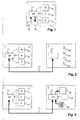
- a hearing instrument 1 comprises a hearing instrument data processing device or hearing instrument processor 11 and storage means storing fitting program definition data 3.
- the fitting program definition data 3 comprises at least one of meta-data 12, fitting program code 13 and fitting program data 14.
- the hearing instrument processor 11 is configured to execute the fitting program code 13. Execution of the code is optionally controlled according to the meta-data 12 and uses and/or modifies the fitting program data 14.
- the hearing instrument processor 11 is arranged to accept input data from a hearing instrument input device 15 such as at least one push button or switch, and/or one or more analog input devices such as control wheels or sliders.
- the hearing instrument 1 also comprises hearing instrument software, (not shown) that is, program code that implements the actual audio data processing function of the hearing instrument 1 and that is configured and/or parameterised by the fitting process.
- the hearing instrument processor 11 executes the fitting program code 13
- user interaction is accomplished by means of the hearing instrument input device 15 and the hearing instrument output device 16.
- FIG. 2 schematically shows a second preferred embodiment of the invention.
- mainly the features of the respective embodiment are shown and explained.
- the other features not shown in the respective figures or mentioned in the description may be present as well.
- an external device 2 is present, which in this case is a simple box with insignificant data processing means, and comprising one or more external device input devices 25 and optionally one or more external device output devices 26, and interface means 27 to the communication link 17.
- An external device input device 25 is e.g. a potentiometer, a latching or non-latching pushbutton or a toggle switch.
- An external device output device 26 is e.g. a light emitting diode or an alphanumeric liquid crystal display.
- the hearing instrument 1 and the external device 2 are arranged to communicate through a communication link 17. If the external device 2 comprises one or more analog potentiometers, their values can be determined by an analog to digital converter (ADC) located in the hearing instrument.
- ADC analog to digital converter
- the interface means 27 then preferably comprises a multiplexer arranged for sequentially connecting the potentiometers to a line of the communication link 17.
- the interface means 27 comprises ADC conversion means and a communication interface for exchanging data with the hearing instrument 1 according to a predetermined communication protocol.
- the resistor values for the potentiometers are spread by proper selection of the potentiometer and/or additional resistors so that the state of multiple potentiometers can be read out using one single ADC.
- the communication with the user is accomplished in a similar manner as with the first embodiment.
- the input means are more comfortable and easier to operate.
- Figure 7 shows a preferred embodiment of the invention in which the external device 2 is a box 31 comprising a non-latching pushbutton 32 and a potentiometer 33. These serve as digital and analog input devices respectively that are configured to provide input signals readable by the hearing instrument 1.
- a set of covers or overlays 34, 37 is provided, as shown in Figure 8 and Figure 9 .
- the covers 34, 37 are shaped with openings or holes 35, 36 such that they can be placed over a box surface with the openings 35, 36 fitting over the pushbutton 32 and the potentiometer knob 33.
- the input elements 32, 33 can have different meanings in different steps of the fitting process.
- the box has one button 32 that is usually labelled SAVE.
- the said cover will then be replaced every time the user has pressed said SAVE button 32.
- a first step for example, the maximum output power (MPO) is fitted, with the first cover 34 being in place:
- MPO maximum output power
- the user turns the knob 33 to a position according to the engravings of the first cover.
- he presses SAVE replaces the first cover 34 by the second cover 37 and continues with step two.
- the gain is configured using the same potentiometer 33.
- the second cover 37 for step two shows the possible gain values.
- the covers are also configured to indicate a label and/or a scale for an output device 26.
- FIG. 3 schematically shows a third preferred embodiment of the invention.
- the external device 2 here comprises its own data processing device 21, and program storage means storing, among others, browser or terminal emulator software 28.
- the external device 2 may be a handheld mobile or a stationary computing device such as a personal digital assistant (PDA), cell phone, laptop or desktop computer etc., or a device dedicated to hearing instrument applications.
- the external device input device 25 typically is a keyboard or keypad or touch screen
- the external device output device 26 typically is an alphanumeric or graphics capable screen.
- instructions guiding the user or an audiologist through the fitting process may be displayed on the external device output device 26.
- Figure 4 schematically shows a fourth preferred embodiment of the invention.
- at least one of the meta-data 12, the fitting program code 13, and the fitting program data 14 is transferred by means of the communication link 17 to a storage location in the external device 2.
- the different types of code or data are stored as fitting program definition data 3 in the hearing instrument, in plain or in compressed form, and may be decompressed by the hearing instrument processor 11 or by the external device processor 21.
- the different types of code or data comprise information that specifies how and where to combine it with program code or data that is already resident in the external device 2.
- a complete fitting software can be transferred from the hearing instrument 1 to the external device 2.
- the maximum output power (MPO) is displayed on the screen, but the value is received as metadata from the hearing instrument 1.
- MPO maximum output power
- the memory 3 of the hearing instrument 1 stores program code 13 for the fitting process of a specific hearing instrument feature, such as a specific feedback canceller.
- the code is transferred to the external device 2 and executed by the processor 21.
- the code then generates an additional graphical user interface control element such as a control slider for the new parameter. As a result, the control has been introduced for this particular hearing instrument only.
- FIG. 5 schematically shows a fifth preferred embodiment of the invention.
- Only meta-data 12 is transferred from the hearing instrument 1 to the external device 2.
- the use of meta-data 12 is based on the fact that the hearing instrument software is modularised, structured and parameterised, and that this is done in a fashion that different versions of the software, differing in structure and parameters, can be represented by a set of so-called meta-data items. Having the hearing instrument software structured in this manner allows to manufacture different types of hearing instruments and their associated software to a large extent in the same manner up to a late production stage. Individual model types are then created by configuring the hardware and the software, or even only the software, in accordance with the structural flexibility inherent in the software, by setting values of meta-data parameters.
- meta-data items represent information such as
- the fitting software 23 that is already resident in the external device 2 is configured to accept and properly process the meta-data description of the large variety of hearing instruments corresponding to the variability of the different meta-data items.
- the working of the fitting software and its interaction with the user or audiologist is adapted according to the meta-data.
- the meta-data 12 may be considered as a special type of fitting program data 14 that controls execution of the fitting software. For example, if the meta-data 12 shows that a noise canceller software module or functionality is present in the hearing instrument, then the fitting software
- FIG. 6 schematically shows a sixth preferred embodiment of the invention.
- the external device 2 comprises a communication link via a computer network 18 such as the internet to a server 19.
- the fitting program definition data 3 comprises a network location specification such as an URL (uniform resource locator) 20.
- This URL 20 specifies the location of at least one of meta-data 12, fitting program code 13 and fitting program data 14 to be downloaded from the server 19 to the external device 2.
- the downloaded information of these different types is in a form as essentially described in the above and is processed in the external device 2 in a like manner.
- the embedded software of the hearing instrument 1 is of a later version as the software 13 in the fitting device 2.
- the hearing instrument now transfers a piece of code or metadata 20 to the external device 2, causing the external device 2 to request some kind of update from a third device or server 19, using the internet or a dial up connection (18)
- the storage means arranged in the hearing instrument is a non-volatile memory.
- Suitable memory technologies currently available are e.g.. FLASH memories, E2PROM memories, EPROM memories, fusable link memories, PROM memories ROM memories and powered RAM memories
Landscapes
- Health & Medical Sciences (AREA)
- General Health & Medical Sciences (AREA)
- Neurosurgery (AREA)
- Otolaryngology (AREA)
- Physics & Mathematics (AREA)
- Engineering & Computer Science (AREA)
- Acoustics & Sound (AREA)
- Signal Processing (AREA)
- Stored Programmes (AREA)
Priority Applications (1)
| Application Number | Priority Date | Filing Date | Title |
|---|---|---|---|
| EP04405290A EP1473969A3 (de) | 2004-05-07 | 2004-05-07 | Verfahren zur Entfaltung der Anpassungssoftware für Hörhilfegeràt und dafür angepasstes Hörhilfegeràt |
Applications Claiming Priority (1)
| Application Number | Priority Date | Filing Date | Title |
|---|---|---|---|
| EP04405290A EP1473969A3 (de) | 2004-05-07 | 2004-05-07 | Verfahren zur Entfaltung der Anpassungssoftware für Hörhilfegeràt und dafür angepasstes Hörhilfegeràt |
Publications (2)
| Publication Number | Publication Date |
|---|---|
| EP1473969A2 true EP1473969A2 (de) | 2004-11-03 |
| EP1473969A3 EP1473969A3 (de) | 2005-02-16 |
Family
ID=32982065
Family Applications (1)
| Application Number | Title | Priority Date | Filing Date |
|---|---|---|---|
| EP04405290A Withdrawn EP1473969A3 (de) | 2004-05-07 | 2004-05-07 | Verfahren zur Entfaltung der Anpassungssoftware für Hörhilfegeràt und dafür angepasstes Hörhilfegeràt |
Country Status (1)
| Country | Link |
|---|---|
| EP (1) | EP1473969A3 (de) |
Cited By (7)
| Publication number | Priority date | Publication date | Assignee | Title |
|---|---|---|---|---|
| WO2007020301A3 (en) * | 2006-10-23 | 2007-08-23 | Phonak Ag | Use of hearing devices for distributing data, and corresponding methods and devices |
| WO2007020300A3 (en) * | 2006-10-20 | 2007-09-13 | Phonak Ag | Method for installing a new version of a hearing-device fitting-software package on a computer system |
| WO2007045697A3 (de) * | 2007-01-15 | 2007-12-06 | Phonak Ag | Method and system for manufacturing a hearing device with a customized feature set |
| US8009848B2 (en) | 2005-06-27 | 2011-08-30 | Phonak Ag | Hearing device system, hearing device maintenance system, and method for maintaining a hearing device system |
| US10904677B2 (en) | 2015-10-29 | 2021-01-26 | Widex A/S | System and method for managing a customizable configuration in a hearing aid |
| US11323826B2 (en) | 2015-07-09 | 2022-05-03 | Widex A/S | System and method for feature management in a hearing aid |
| US11477563B2 (en) | 2018-06-15 | 2022-10-18 | Goertek Technology Co., Ltd. | TWS earphone, charging case, upgrading method thereof and storage medium |
Family Cites Families (3)
| Publication number | Priority date | Publication date | Assignee | Title |
|---|---|---|---|---|
| AU2001229591A1 (en) * | 2000-01-20 | 2001-07-31 | Starkey Laboratories, Inc. | Hearing aid systems |
| EP1351552A3 (de) * | 2003-03-27 | 2004-05-06 | Phonak Ag | Verfahren zum Anpassen eines Hörgerätes an eine momentane akutische Umgebungssituation und Hörgerätesystem |
| EP1420611B1 (de) * | 2003-11-20 | 2006-08-16 | Phonak Ag | Verfahren zum Anpassen eines Hörgerätes an eine momentane akustische Umgebungssituation und Hörgerätesystem |
-
2004
- 2004-05-07 EP EP04405290A patent/EP1473969A3/de not_active Withdrawn
Non-Patent Citations (1)
| Title |
|---|
| None * |
Cited By (8)
| Publication number | Priority date | Publication date | Assignee | Title |
|---|---|---|---|---|
| US8009848B2 (en) | 2005-06-27 | 2011-08-30 | Phonak Ag | Hearing device system, hearing device maintenance system, and method for maintaining a hearing device system |
| WO2007020300A3 (en) * | 2006-10-20 | 2007-09-13 | Phonak Ag | Method for installing a new version of a hearing-device fitting-software package on a computer system |
| WO2007020301A3 (en) * | 2006-10-23 | 2007-08-23 | Phonak Ag | Use of hearing devices for distributing data, and corresponding methods and devices |
| WO2007045697A3 (de) * | 2007-01-15 | 2007-12-06 | Phonak Ag | Method and system for manufacturing a hearing device with a customized feature set |
| US11323826B2 (en) | 2015-07-09 | 2022-05-03 | Widex A/S | System and method for feature management in a hearing aid |
| US12041421B2 (en) | 2015-07-09 | 2024-07-16 | Widex A/S | System and method for feature management in a hearing aid |
| US10904677B2 (en) | 2015-10-29 | 2021-01-26 | Widex A/S | System and method for managing a customizable configuration in a hearing aid |
| US11477563B2 (en) | 2018-06-15 | 2022-10-18 | Goertek Technology Co., Ltd. | TWS earphone, charging case, upgrading method thereof and storage medium |
Also Published As
| Publication number | Publication date |
|---|---|
| EP1473969A3 (de) | 2005-02-16 |
Similar Documents
| Publication | Publication Date | Title |
|---|---|---|
| US8798295B2 (en) | Method for deploying hearing instrument fitting software, and hearing instrument adapted therefor | |
| AU2012369343B2 (en) | Hearing aid fitting system and a method of fitting a hearing aid system | |
| EP2053594A2 (de) | Polyphones Türklingelsystem | |
| CN101088272B (zh) | 用于修改多媒体用户界面的行为模式的移动终端、关联方法及装置 | |
| EP2346271B1 (de) | Steuerung der Betriebsparameter in einem binauralen Hörsystem | |
| US9113279B2 (en) | Method for adjusting a hearing apparatus via a formal language | |
| EP1438874A1 (de) | Klangverbesserung für mobiltelefone und andere produkte, die personalisierte audiosignale für benutzer erzeugen | |
| EP1420611A1 (de) | Verfahren zum Anpassen eines Hörgerätes an eine momentane akustische Umgebungssituation und Hörgerätesystem | |
| US7885416B2 (en) | Device and method to adjust a hearing device | |
| US20100067711A1 (en) | Method and system for manufacturing a hearing device with a customized feature set | |
| DK2628318T3 (en) | PROCEDURE FOR ADJUSTING A HEARING AND HEARING WHICH CAN BE USED ACCORDING TO THE PROCEDURE | |
| US20070079692A1 (en) | MIDI-compatible hearing device | |
| EP1473969A2 (de) | Verfahren zur Entfaltung der Anpassungssoftware für Hörhilfegeràt und dafür angepasstes Hörhilfegeràt | |
| CN109195068A (zh) | 音频处理方法、装置以及音频设备 | |
| JP2008148317A (ja) | 自動プログラミング式聴取装置及びそのプログラミング方法 | |
| AU2006349527B2 (en) | Hearing aid with memory space for functional settings and learned settings, and programming method thereof | |
| US20120183166A1 (en) | Method and apparatus for fitting hearing devices | |
| EP2291003A2 (de) | MIDI-kompatibles Hörgerät | |
| EP1713302A1 (de) | Anordnung und Verfahren zur individuellen Einstellung eines Hörgeräts | |
| EP2569955B1 (de) | Hörgerät und verfahren zu dessen betrieb | |
| KR100861502B1 (ko) | 이동통신 단말기 및 그 동작방법 | |
| Curran | Starkey Laboratories, Inc.: Trilogy System | |
| JP2009239379A (ja) | 音響機器用パラメータアクセス方法及び音響機器 | |
| Engebretson et al. | Adaptive gain and filtering circuit for a sound reproduction system | |
| AU2010249155A1 (en) | Control of operating parameters in a binaural listening system |
Legal Events
| Date | Code | Title | Description |
|---|---|---|---|
| PUAI | Public reference made under article 153(3) epc to a published international application that has entered the european phase |
Free format text: ORIGINAL CODE: 0009012 |
|
| AK | Designated contracting states |
Kind code of ref document: A2 Designated state(s): AT BE BG CH CY CZ DE DK EE ES FI FR GB GR HU IE IT LI LU MC NL PL PT RO SE SI SK TR |
|
| AX | Request for extension of the european patent |
Extension state: AL HR LT LV MK |
|
| PUAL | Search report despatched |
Free format text: ORIGINAL CODE: 0009013 |
|
| AK | Designated contracting states |
Kind code of ref document: A3 Designated state(s): AT BE BG CH CY CZ DE DK EE ES FI FR GB GR HU IE IT LI LU MC NL PL PT RO SE SI SK TR |
|
| AX | Request for extension of the european patent |
Extension state: AL HR LT LV MK |
|
| 17P | Request for examination filed |
Effective date: 20050407 |
|
| AKX | Designation fees paid |
Designated state(s): CH DE DK LI |
|
| RAP1 | Party data changed (applicant data changed or rights of an application transferred) |
Owner name: SONOVA AG |
|
| STAA | Information on the status of an ep patent application or granted ep patent |
Free format text: STATUS: EXAMINATION IS IN PROGRESS |
|
| STAA | Information on the status of an ep patent application or granted ep patent |
Free format text: STATUS: THE APPLICATION IS DEEMED TO BE WITHDRAWN |
|
| 18D | Application deemed to be withdrawn |
Effective date: 20180809 |
|
| RIC1 | Information provided on ipc code assigned before grant |
Ipc: H04R 25/00 20060101AFI20040906BHEP |