EP1476470B1 - ST RKEDERIVATE, ST RKE−WIRKSTOFF−KONJ UGATE, VERFAHREN ZU IHRER HERSTELLUNG UND IHRE VERWENDUNG ALS ARZNEIMITTEL - Google Patents
ST RKEDERIVATE, ST RKE−WIRKSTOFF−KONJ UGATE, VERFAHREN ZU IHRER HERSTELLUNG UND IHRE VERWENDUNG ALS ARZNEIMITTEL Download PDFInfo
- Publication number
- EP1476470B1 EP1476470B1 EP03708114A EP03708114A EP1476470B1 EP 1476470 B1 EP1476470 B1 EP 1476470B1 EP 03708114 A EP03708114 A EP 03708114A EP 03708114 A EP03708114 A EP 03708114A EP 1476470 B1 EP1476470 B1 EP 1476470B1
- Authority
- EP
- European Patent Office
- Prior art keywords
- starch
- residue
- active
- agent
- oxidised
- Prior art date
- Legal status (The legal status is an assumption and is not a legal conclusion. Google has not performed a legal analysis and makes no representation as to the accuracy of the status listed.)
- Expired - Lifetime
Links
- 0 C*C(N*NC(C*)=O)=O Chemical compound C*C(N*NC(C*)=O)=O 0.000 description 2
Classifications
-
- C—CHEMISTRY; METALLURGY
- C08—ORGANIC MACROMOLECULAR COMPOUNDS; THEIR PREPARATION OR CHEMICAL WORKING-UP; COMPOSITIONS BASED THEREON
- C08B—POLYSACCHARIDES; DERIVATIVES THEREOF
- C08B31/00—Preparation of derivatives of starch
-
- A—HUMAN NECESSITIES
- A61—MEDICAL OR VETERINARY SCIENCE; HYGIENE
- A61K—PREPARATIONS FOR MEDICAL, DENTAL OR TOILETRY PURPOSES
- A61K47/00—Medicinal preparations characterised by the non-active ingredients used, e.g. carriers or inert additives; Targeting or modifying agents chemically bound to the active ingredient
- A61K47/50—Medicinal preparations characterised by the non-active ingredients used, e.g. carriers or inert additives; Targeting or modifying agents chemically bound to the active ingredient the non-active ingredient being chemically bound to the active ingredient, e.g. polymer-drug conjugates
- A61K47/51—Medicinal preparations characterised by the non-active ingredients used, e.g. carriers or inert additives; Targeting or modifying agents chemically bound to the active ingredient the non-active ingredient being chemically bound to the active ingredient, e.g. polymer-drug conjugates the non-active ingredient being a modifying agent
- A61K47/56—Medicinal preparations characterised by the non-active ingredients used, e.g. carriers or inert additives; Targeting or modifying agents chemically bound to the active ingredient the non-active ingredient being chemically bound to the active ingredient, e.g. polymer-drug conjugates the non-active ingredient being a modifying agent the modifying agent being an organic macromolecular compound, e.g. an oligomeric, polymeric or dendrimeric molecule
- A61K47/61—Medicinal preparations characterised by the non-active ingredients used, e.g. carriers or inert additives; Targeting or modifying agents chemically bound to the active ingredient the non-active ingredient being chemically bound to the active ingredient, e.g. polymer-drug conjugates the non-active ingredient being a modifying agent the modifying agent being an organic macromolecular compound, e.g. an oligomeric, polymeric or dendrimeric molecule the organic macromolecular compound being a polysaccharide or a derivative thereof
-
- A—HUMAN NECESSITIES
- A61—MEDICAL OR VETERINARY SCIENCE; HYGIENE
- A61P—SPECIFIC THERAPEUTIC ACTIVITY OF CHEMICAL COMPOUNDS OR MEDICINAL PREPARATIONS
- A61P31/00—Antiinfectives, i.e. antibiotics, antiseptics, chemotherapeutics
-
- A—HUMAN NECESSITIES
- A61—MEDICAL OR VETERINARY SCIENCE; HYGIENE
- A61P—SPECIFIC THERAPEUTIC ACTIVITY OF CHEMICAL COMPOUNDS OR MEDICINAL PREPARATIONS
- A61P5/00—Drugs for disorders of the endocrine system
Definitions
- the present invention relates to starch derivatives, conjugates of such starch derivatives with active ingredients and a process for their preparation. Furthermore, the invention relates to the use of the starch-drug conjugates as a medicament.
- polyethylene glycol derivatives it is possible to increase by the coupling of polyethylene glycol derivatives, the molecular weight of drugs so that the filtration through the kidney is no longer possible, ie that the so-called renal threshold is exceeded and so the plasma half-lives of such derivatives significantly compared to be extended to the unconjugated drugs.
- by coupling with polyethylene glycol derivatives can reduce the antigenicity of, for example, proteins of non-human origin, the otherwise lead to immunological side effects in the application.
- polyethylene glycol has the disadvantage that it is a non-metabolizable molecule and can also lead to vacuolation of the kidney with this derivatized proteins. Therefore, it is of particular interest to carry out derivatizations of active substances with metabolizable polymers whose degradation in the body is preferably controllable.
- a suitable molecule for this is hydroxyethyl starch (HES), which has long been widely used as a plasma expander in various molecular specifications ( DE 196 28 705 A1 ).
- HES only rarely and to a very limited extent has side effects when applied in very high doses, compared to other plasma expanders, e.g. Gelatin derivatives or dextranes, or human albumin.
- a widely unsolved problem in the derivatization of drugs is the selective attachment of the drug to the carrier.
- the carrier For example, in the case of proteins, it is desirable to couple to a carrier at a sufficient distance from the reactive center or receptor. Otherwise, the activity can be reduced or destroyed.
- de 196 28 705 A1 describes a method for attaching hemoglobin to hydroxyethyl starch. However, it finds the binding relatively unselective over the numerous free amino groups of hemoglobin instead.
- the describes FR 2600897 a process for the coupling of trypsin with starch derivatives, in which the hydroxyl groups on the carbon atoms 2 and 3 of the glucopyranose fragments of the starch derivatives are oxidized with a metaperiodate, the oxidized functions aminated with an alkylenediamine, the glutaraldehyde activated with aminated groups, and the starch derivative via the activated functions with trypsin coupled.
- the object of the invention was to provide starch derivatives which bind as selectively as possible to an active substance.
- starch derivative should be such that the most quantitative possible binding of an active ingredient takes place by covalent bonding to this starch derivative.
- Another object of the invention was to provide starch derivatives whose degradation behavior can be controlled in the organism.
- the starch derivatives should be such that they can not pass the renal threshold and prevent rapid elimination.
- the starch derivatives should have a prolonged half-life in the blood serum. Nevertheless, the starch derivatives should be completely degradable within a physiologically reasonable time.
- solubility behavior of active substances in the aqueous phase and in organic solvents should be able to be controlled by their attachment to the named starch derivatives in a wide range.
- the invention was the object of a simple and inexpensive method for Preparation of such starch derivatives and their coupling products with active ingredients to provide.
- Claims 29-31 describe pharmaceutical compositions comprising the starch-drug conjugates of the invention and preferred medical uses of these drugs.
- the compounds of the formula (I) are completely degradable within a physiologically reasonable time and still have a controllable elimination behavior on the other hand.
- Derivatives according to claim 1 can generally be prepared from any starch having a group which can be oxidized to a carboxylic acid. Preferably it is this is the reducing end group of a strength. It has been found that the abovementioned properties of the compound (I) can be achieved particularly well when the oxidized starch radical R-CO- is a hydroxyethyl starch radical.
- Starting materials for the production of hydroxyethyl starch are starches which have a high content of amylopectin, the highly branched component of starch, in particular potato starch, waxy maize starch, sorghum starch or waxy rice starch.
- these starches are subjected to a hydrolytic degradation reaction.
- the molecular weight is reduced from about 20,000,000 daltons to several million daltons.
- the degree of substitution MS (molar substitution) is defined as the average number of hydroxyethyl groups per anhydroglucose unit. It is determined from the total number of hydroxyethyl groups in a sample, for example according to Morgan, by ether cleavage and subsequent quantitative determination of ethyl iodide and ethylene, which are formed in this case.
- a hydroxyethyl starch residue within the formula (I) of the present invention preferably has a degree of substitution MS of 0.1 to 0.8.
- the hydroxyethyl starch test particularly preferably has a degree of substitution MS of 0.4 to 0.7.
- the reactivity of the individual hydroxy groups in the unsubstituted anhydroglucose unit with respect to hydroxyethylation varies depending on the reaction conditions. Within certain limits, this influences the substitution pattern, ie the individual, differently substituted anhydroglucoses, which are statistically distributed among the individual polymer molecules.
- the C 2 - and the C 6 position hydroxyethylated, the C 6 position is substituted more frequently because of their easier accessibility.
- HES hydroxyethyl starches
- the production of such HES will be in EP 0 402 724 B2 described. They are completely degradable within a physiologically reasonable time and on the other hand still have a controllable elimination behavior.
- the predominant C 2 substitution makes the hydroxyethyl starch relatively difficult to degrade for ⁇ -amylase. It is advantageous that as far as possible no anhydroglucose units which are substituted one after the other within the polymer molecules occur in order to ensure complete biodegradability.
- such hydroxyethyl starches have a sufficiently high solubility in an aqueous medium, so that the solutions are stable over longer periods and no agglomerates or gels are formed.
- a hydroxyethyl starch group within the formula (I) of the present invention preferably has a ratio of C 2 : C 6 substitution in the range of 2 to 12. More preferably, the ratio of C 2 : C 6 substitution is 3 to 11.
- HES hydroxyethyl starches
- de 196 28 705 A1 describes a process in which HES is oxidized with iodine / potassium hydroxide at the reducing end. Subsequent coupling to an active ingredient can take place via the acid function obtained.
- the radical R-CO- in the compound of the formula (I) according to the invention denotes an oxidized hydroxyethyl starch radical which has been oxidized at the reducing end group to a carboxylic acid in the manner described.
- hydroxyethyl starch is not present as a molecularly uniform substance with a defined molecular weight, but as a mixture of molecules of different sizes, which also substituted differently by hydroxyethyl groups are.
- the characterization of such mixtures requires the use of statistically averaged quantities (cf. K. Sommermeyer et. al., "Clinically Used Hydroxyethyl Starch: Physico-chemical Characterization", Whypharmazie, 271 (1987 )).
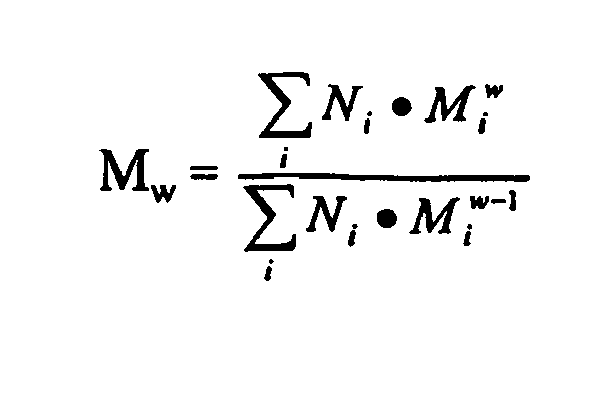
- the average molecular weight Mw The general definition of this mean is:
- a hydroxyethyl starch R-CO- within the formula (I) of the present invention preferably has an average molecular weight Mw of 2,000 to 1,000,000 D (determined by gel permeation chromatography). Even more preferably, the average molecular weight Mw is 5,000 to 500,000 D, and most preferably 8,000 to 250,000 D.
- R "in the compound (I) may contain both saturated and unsaturated bonds, and an alkyl, aryl or aralkyl group as R" may also contain other substituents such as alkyl, aryl, aralkyl, halogen, carbonyl , Acyl, carboxyl, carboxyl ester, hydroxy, thiol, alkoxy and / or alkylthio substituents.
- the invention also relates to starch / active substance conjugates of the general formula (II) where R "is a straight-chain or branched alkyl, aryl or aralkyl group, R-CO- is an oxidized substituted or unsubstituted starch residue which is attached to the reducing end group is oxidized to a carboxylic acid, and R 'is the residue of an active ingredient.
- the starch-active ingredient conjugates of the formula (II) are coupling products of the compounds of the formula (I) described above and an active substance which contains at least one SH group.
- the radicals R-CO- and R have the same meanings as already explained above with reference to the formula (I).
- Preferred active ingredients R'-SH which are contained as the radical R'-S- in the compounds of the formula (II), are selected from a peptide, a protein, an antibiotic, a nucleic acid, or a hormone. The prerequisite is that these compounds contain at least one SH group.
- cysteine muteins of therapeutic proteins in which an exchange or introduction of cysteine residues has been specifically carried out by genetically engineered mutagenesis.
- Such an exchange is known in the art and described, inter alia, in: A. Bendele et al., Short Communication: Renal Tubular Vacuolation in Animals Treaded with Polyethylene Glycol-conjugated Proteins, Toxicological Sciences 42, 152-157 (1998) ,
- SH functions can be introduced into drugs bearing a primary amino group by reaction with 2-iminothiolane (Trauts reagent) before the active compounds are reacted with compounds of the formula (I).
- the introduction of SH functions into drugs, such as proteins, by this method is well known in the art.
- Preferred drug proteins are therapeutic antibodies, antibody Fab fragments or antibody F (ab ') 2 fragments.
- Such antibody fragments are slightly renal due to their relatively small molecular weight and can be extended by derivatization with starch in their serum half-life. It has also been found within the scope of the present invention that the hydrolytic degradation of the antibodies or of the antibody fragments by proteases can be reduced by means of the derivatization with hydroxyethyl starch.
- the active ingredient is a cytokine, in particular an interferon ⁇ 2a or an interferon ⁇ 2b, or erytropoietin.
- solubility of an active substance in the aqueous medium can be influenced if it is coupled to a compound of the formula (I) and converted into a starch / active substance conjugate of the formula (II).
- solubility of a protein or enzyme in organic solvents can be increased if the protein or enzyme is added to a compound of the formula (I) coupled and converted into a starch-drug conjugate of formula (II).
- Preferred aprotic solvents are dimethylformamide, dimethyl sulfoxide or dimethylacetamide.
- the thiol group of an active ingredient reacts faster than other reactive groups with compounds of the formula (I).
- the pH is 6.5-8.5. Under these conditions deprotonation of the thiol group to thiolation takes place, which is particularly reactive and reacts selectively with compounds of formula (I).
- the coupling method is particularly preferably carried out using peptides or proteins containing SH groups.
- a reaction of the compound (I) is also possible with SS groups of a protein or peptide after they have been converted into SH groups.
- the yields of the reaction of compounds of the formula (I) with an SH group-containing peptide or protein are between 20% and 90%, depending on the molecular weight of the protein or peptide and the number of SH or SS groups. In the favorable case, therefore, a largely quantitative coupling of an active substance to the starch carrier can be achieved.
- step c) of the process described above it is also possible to react an intermediate of formula (III) in step c) of the process described above with other conventional crosslinking agents instead of a haloacetic acid.
- a functional group of the crosslinking agent reacts with the primary amino group of the compound (III).
- one of the remaining functional groups of the crosslinking agent reacts with a functional group of an active agent, preferably with an SH group, thereby forming a starch-drug conjugate.
- Common crosslinking agents are, for example, bifunctional crosslinking agents with ⁇ - ⁇ -terminal identical or different functional groups. An overview of such crosslinking agents can be found in the catalog of Perbio (2001/2002).
- a functional group of the crosslinking agent reacts with the carboxyl group of the oxidized starch or hydroxyethyl starch.
- one of the remaining functional groups of the crosslinking agent reacts with a functional group of an active agent, preferably with an SH group, thereby forming a starch-drug conjugate.
- the above-described starch derivatives of active ingredients are used for the preparation of a medicament.
- this is a drug for the treatment of infectious diseases or hormonal disorders.
- such a drug may contain conventional pharmaceutical excipients.
Landscapes
- Health & Medical Sciences (AREA)
- Chemical & Material Sciences (AREA)
- Medicinal Chemistry (AREA)
- Life Sciences & Earth Sciences (AREA)
- Engineering & Computer Science (AREA)
- Chemical Kinetics & Catalysis (AREA)
- Veterinary Medicine (AREA)
- Public Health (AREA)
- Organic Chemistry (AREA)
- Pharmacology & Pharmacy (AREA)
- Animal Behavior & Ethology (AREA)
- General Health & Medical Sciences (AREA)
- Bioinformatics & Cheminformatics (AREA)
- Nuclear Medicine, Radiotherapy & Molecular Imaging (AREA)
- Epidemiology (AREA)
- General Chemical & Material Sciences (AREA)
- Biochemistry (AREA)
- Materials Engineering (AREA)
- Polymers & Plastics (AREA)
- Communicable Diseases (AREA)
- Oncology (AREA)
- Diabetes (AREA)
- Endocrinology (AREA)
- Medicinal Preparation (AREA)
- Polysaccharides And Polysaccharide Derivatives (AREA)
- Pharmaceuticals Containing Other Organic And Inorganic Compounds (AREA)
- Medicines That Contain Protein Lipid Enzymes And Other Medicines (AREA)
- Organic Low-Molecular-Weight Compounds And Preparation Thereof (AREA)
Description
- Die vorliegende Erfindung betrifft Stärkederivate, Konjugate aus solchen Stärkederivaten mit Wirkstoffen und ein Verfahren zu ihrer Herstellung. Ferner betrifft die Erfindung die Verwendung der Stärke-Wirkstoff-Konjugate als Arzneimittel.
- Die Konjugation von pharmazeutischen Wirkstoffen wie therapeutischen Proteinen, Antibiotika, Nukleinsäuren, Cytokinen oder Hormonen mit Polyethylenglycol-Derivaten ("Pegylierung") ist eine weit verbreitete Methode (Francis G. E. et al., Polyethylene glycol modification in tumor tageting and cytokine therapy., J. Drug Targeting (1995), 3: 321-340). Damit werden beispielsweise an sich wasserunlösliche Wirkstoffe in lösliche Derivate umgewandelt, die dann in die Blutbahn applizierbar sind.
- Weiterhin ist es möglich, durch die Kopplung von Polyethylenglycol-Derivaten das Molekulargewicht von Wirkstoffen so zu erhöhen, dass die Filtration über die Niere nicht mehr möglich ist, d.h. dass die sogenannte Nierenschwelle überschritten wird und so die Plasma-Halbwertszeiten solcher Derivate erheblich im Vergleich zu den unkonjugierten Wirkstoffen verlängert werden. Darüber hinaus lassen sich durch die Kopplung mit Polyethylenglycol-Derivaten die Antigenität von z.B. Proteinen nicht menschlichen Ursprungs reduzieren, die ansonsten zu immunologischen Nebenwirkungen bei der Applikation führen würden.
- Polyethylenglycol (PEG) hat jedoch den Nachteil, dass es ein nicht metabolisierbares Molekül ist und mit diesem derivatisierte Proteine auch zur Vakuolisierung der Niere führen können. Daher ist es von besonderem Interesse, Derivatisierungen von Wirkstoffen mit metabolisierbaren Polymeren durchzuführen, deren Abbau im Körper vorzugsweise steuerbar ist. Ein geeignetes Molekül hierfür ist Hydroxyethylstärke (HES), welche als Plasmaexpander in verschiedenen molekularen Spezifikationen seit langem breit eingesetzt wird (
DE 196 28 705 A1 ). - HES weist auch bei Applikation in sehr hohen Dosen nur sehr selten und in sehr geringem Umfang Nebenwirkungen auf, verglichen mit anderen Plasmaexpandern, wie z.B. Gelatine-Derivaten oder Dextranen, oder auch Humanalbumin.
- Ein weithin ungelöstes Problem bei der Derivatisierung von Wirkstoffen ist jedoch die selektive Anbindung des Wirkstoffs an den Träger. Bei Proteinen ist es beispielsweise wünschenswert, die Kopplung an einen Träger in ausreichender Entfernung vom reaktiven Zentrum oder vom Rezeptor durchzuführen. Ansonsten kann die Aktivität herabgesetzt oder zerstört werden.
- De
196 28 705 A1 - Diese bilden durch Reaktion mit den in oxidierter Form vorliegenden reduzierenden Endgruppen der Hydroxyethylstärke Amidbindungen aus.
- Ferner beschreibt die
FR 2600897 - In Anbetracht des diskutierten Standes der Technik lag der Erfindung die Aufgabe zugrunde, Stärkederivate zur Verfügung zu stellen, die möglichst selektiv an einen Wirkstoff binden.
- Ferner sollte ein solches Stärkederivat so beschaffen sein, dass eine möglichst quantitative Anbindung eines Wirkstoffes durch kovalente Bindung an dieses Stärkederivat stattfindet.
- Der Erfindung lag weiterhin die Aufgabe zugrunde, Stärkederivate zur Verfügung zu stellen, deren Abbauverhalten im Organismus steuerbar ist. Insbesondere sollten die Stärkederivate derart beschaffen sein, dass sie die Nierenschwelle nicht passieren können und eine schnelle Ausscheidung verhindert wird. Im Ergebnis sollten die Stärkederivate eine verlängerte Halbwertzeit im Blutserum aufweisen. Dennoch sollten die Stärkederivate innerhalb einer physiologisch vernünftigen Zeit restlos abbaubar sein.
- Ebenso sollte das Löslichkeitsverhalten von Wirkstoffen in wässriger Phase und in organischen Lösungsmitteln durch ihre Anbindung an die benannten Stärkederivate in einem weiten Bereich gesteuert werden können.
- Schließlich lag der Erfindung die Aufgabe zugrunde ein möglichst einfaches und kostengünstiges Verfahren zur Herstellung solcher Stärkederivate und ihrer Kopplungsprodukte mit Wirkstoffen zur Verfügung zu stellen.
- Gelöst werden diese Aufgaben sowie weitere, die zwar nicht wörtlich genannt werden, sich aber aus den hierin diskutierten Zusammenhängen wie selbstverständlich ableiten lassen oder sich aus diesen zwangsläufig ergeben, mit den in Anspruch 1 beschriebenen Stärkederivaten. Zweckmäßige Abwandlungen dieser erfindungsgemäßen Stärkederivate werden in den auf Anspruch 1 rückbezogenen Unteransprüchen 2-9 unter Schutz gestellt.
- In den Ansprüchen 10-25 werden Konjugate solcher Stärkederivate mit Wirkstoffen unter Schutz gestellt.
- Hinsichtlich eines Verfahrens zur Herstellung der Stärke-Wirkstoff-Konjugate, bei dem man die genannten Stärkederivate als Zwischenprodukt erhält, liefern die Ansprüche 26-28 eine Lösung der zugrunde liegenden Aufgabe.
- Die Ansprüche 29-31 beschreiben Arzneimittel, welche die erfindungsgemäßen Stärke-Wirkstoff-Konjugate umfassen und bevorzugte medizinische Verwendungen dieser Arzneimittel.
- Durch die Bereitstellung von Verbindungen der Formel (I)

- Weiterhin werden durch die erfindungsgemäße Verbindung die folgenden Vorteile erzielt:
- Durch die besondere Ausgestaltung der Stärkederivate wird verhindert, dass diese die Nierenschwelle passieren können, wodurch die Halbwertzeit des Wirkstoffs im Blutserum verlängert wird. Die Halbwertszeit beschreibt die Zeit, nach der die Hälfte des eingesetzten Wirkstoffs abgebaut oder ausgeschieden wurde.
- Die Verbindungen der Formel (I) sind innerhalb einer physiologisch vernünftigen Zeit restlos abbaubar und weisen auf der anderen Seite dennoch ein steuerbares Eliminationsverhalten auf.
- Derivate nach Anspruch 1 lassen sich generell von jeder Stärke herstellen, die eine zu einer Carbonsäure oxidierbare Gruppe aufweist. Vorzugsweise handelt es sich dabei um die reduzierende Endgruppe einer Stärke. Es wurde gefunden, dass die zuvor genannten Eigenschaften der Verbindung (I) besonders gut erzielt werden können, wenn der oxidierte Stärkerest R-CO- ein Hydroxyethylstärkerest ist.
- Ausgangsprodukte für die Gewinnung von Hydroxyethylstärke sind Stärken, die einen hohen Gehalt an Amylopektin, der hochverzweigten Komponente von Stärke, aufweisen, insbesondere Kartoffelstärke, Wachsmaisstärke, Sorghumstärke oder wachsartige Reisstärke.
- Zur groben Voreinstellung des beabsichtigten Molekulargewichts werden diese Stärken einer hydrolytischen Abbaureaktion unterworfen. Dabei wird das Molekulargewicht von etwa 20.000.000 Dalton auf mehrere Millionen Dalton reduziert.
- Bei der anschließenden alkalischen Hydroxyethylierung mit bekannten Hydroxyethylierungsmitteln ist die Einführung einer Hydroxyethylgruppe in Position 2, 3 und 6 der Anhydroglucoseeinheit möglich. Disubstituierte Einheiten, wie 2,3-Dihydroxyethylanhydroglucose, 2,6-Dihydroxyethylanhydroglucose werden dabei mit geringerer Wahrscheinlichkeit bei der Synthese gebildet.
- Für die Erfassung der Substitution durch Hydroxyethylgruppen existieren zwei unterschiedlich definierte Substitutionsgrade.
- Der Substitutionsgrad MS (molar substitution) ist definiert als die durchschnittliche Anzahl von Hydroxyethylgruppen pro Anhydroglucoseeinheit. Er wird ermittelt aus der Gesamtanzahl der Hydroxyethylgruppen in einer Probe, beispielsweise nach Morgan, durch Ätherspaltung und anschließender quantitativer Bestimmung von Ethyliodid und Ethylen, die hierbei gebildet werden.
- Hingegen ist der Substitutionsgrad DS (degree of substitution) definiert als der Anteil der substituierten Anhydroglucoseeinheiten aller Anhydroglucoseeinheiten. Ihn kann man bestimmen aus der gemessenen Menge der unsubstituierten Glucose nach Hydrolyse einer Probe. Aus diesen Definitionen ergibt sich, daß MS > DS. Für den Fall, daß nur Monosubstitution vorliegt, also jede substituierte Anhydroglucoseeinheit nur eine Hydroxyethylgruppe trägt, ist MS = DS.
- Ein Hydroxyethylstärkerest innerhalb der Formel (I) der vorliegenden Erfindung weist bevorzugt einen Substitutionsgrad MS von 0,1 bis 0,8 auf. Besonders bevorzugt weist der Hydroxyethylstärkerest einen Substitutionsgrad MS von 0,4 bis 0,7 auf.
- Die Reaktivität der einzelnen Hydroxygruppen in der unsubstituierten Anhydroglucoseeinheit gegenüber Hydroxyethylierung ist je nach Reaktionsbedingungen unterschiedlich. Innerhalb gewisser Grenzen ist dadurch das Substitutionsmuster, also die einzelnen, unterschiedlich substituierten Anhydroglucosen, die statistisch auf die einzelnen Polymermoleküle verteilt sind, beeinflußbar. Vorteilhaft werden überwiegend die C2- und die C6-Position hydroxyethyliert, wobei die C6-Position aufgrund ihrer leichteren Zugänglichkeit häufiger substituiert wird.
- Vorzugsweise verwendet werden im Rahmen dieser Erfindung überwiegend in C2-Position substituierte Hydroxyethylstärken (HES), die möglichst homogen substituiert sind. Die Herstellung solcher HES wird in
EP 0 402 724 B2 beschrieben. Sie sind innerhalb einer physiologisch vernünftigen Zeit restlos abbaubar und weisen auf der anderen Seite dennoch ein steuerbares Eliminationsverhalten auf. Die überwiegende C2-Substitution macht die Hydroxyethylstärke relativ schwierig abbaubar für α-Amylase. Es ist von Vorteil, daß möglichst keine innerhalb der Polymermoleküle hintereinander substituieren Anhydroglucoseeinheiten auftreten, um die restlose Abbaubarkeit zu gewährleisten. Weiterhin besitzen solche Hydroxyethylstärken trotz der niedrigen Substitution eine ausreichend hohe Löslichkeit in wässrigem Medium, so daß die Lösungen auch über längere Zeiträume stabil sind und sich keine Agglomerate bzw. Gele bilden. - Bezogen auf die Hydroxyethylgruppen der Anhydroglucoseeinheiten weist ein Hydroxyethylstärkerest innerhalb der Formel (I) der vorliegenden Erfindung bevorzugt ein Verhältnis von C2:C6-Substitution im Bereich von 2 bis 12 auf. Besonders bevorzugt beträgt das Verhältnis von C2:C6-Substitution 3 bis 11.
- Zur Kopplung mit einem Wirkstoff werden Hydroxyethylstärken (HES) bevorzugt an ihrem reduzierenden Ende zur Carbonsäure bzw. zum Lacton oxidiert. De
196 28 705 A1 - Der Rest R-CO- in der erfindungsgemäßen Verbindung der Formel (I) bezeichnet in der bevorzugten Ausgestaltung einen oxidierten Hydroxyethylstärkerest, der an der reduzierenden Endgruppe auf die beschriebene Art und Weise zu einer Carbonsäure oxidiert ist.
- Bedingt durch den Einsatz des natürlichen Ausgangsrohstoffes Amylopektin sowie durch das Herstellungsverfahren, bei dem im gewissen Umfang eine Spaltung der Polymerketten notwendig ist, liegt Hydroxyethylstärke nicht als molekulareinheitliche Substanz mit definiertem Molekulargewicht vor, sondern als Gemisch von Molekülen unterschiedlicher Größe, die auch verschieden durch Hydroxyethylgruppen substituiert sind. Die Charakterisierung solcher Gemische bedarf der Zuhilfenahme statistisch gemittelter Größen (vgl. K. Sommermeyer et. al., "Klinisch verwendete Hydroxyethylstärke: Physikalisch-chemische Charakterisierung", Krankenhauspharmazie, 271 (1987)). Zur Kennzeichnung des durchschnittlichen Molekulargewichts dient daher das gemittelte Molekulargewicht Mw. Die allgemeine Definition dieses Mittelwerts lautet:
- Ein Hydroxyethylstärkerest R-CO- innerhalb der Formel (I) der vorliegenden Erfindung besitzt bevorzugt ein mittleres Molekulargewicht Mw von 2.000 bis 1.000.000 D (bestimmt mit Gelpermeationschromatographie). Noch mehr bevorzugt beträgt das mittlere Molekulargewicht Mw 5.000 bis 500.000 D und am meisten bevorzugt 8.000 bis 250.000 D.
- Die Gruppe R" in der Verbindung (I) kann sowohl gesättigte als auch ungesättigte Bindungen enthalten. Ein Alkyl-, Arylrest oder Aralkylrest als R" kann ebenso weitere Substituenten enthalten, wie z.B. Alkyl-, Aryl-, Aralkyl-, Halogen-, Carbonyl-, Acyl-, Carboxyl-, Carboxylester-, Hydroxy, Thiol-, Alkoxy- und/oder Alkylthiosubstituenten. In einer bevorzugten Ausführungsform ist R" eine Gruppe der Formel (CH2)n, wobei n eine ganze Zahl von 1 bis 10 bedeutet. Besonders bevorzugt ist R" eine Ethylen-, Propylen-, Butylen-, Pentamethylen-, Hexamethylen- oder Oktamethylengruppe.
- Die Erfindung betrifft ebenfalls Stärke-Wirkstoff-Konjugate der allgemeinen Formel (II)

- Die Stärke-Wirkstoff-Konjugate der Formel (II) sind Kopplungsprodukte aus den zuvor beschriebenen Verbindungen der Formel (I) und einem Wirkstoff, welcher mindestens eine SH-Gruppe enthält. Die Reste R-CO- und R" haben die selben Bedeutungen wie bereits zuvor anhand der Formel (I) erläutert.
- Bevorzugte Wirkstoffe R'-SH, die als Rest R'-S- in den Verbindungen der Formel (II) enthalten sind, sind ausgewählt aus einem Peptid, einem Protein, einem Antibiotikum, einer Nukleinsäure, oder einem Hormon. Voraussetzung ist, dass diese Verbindungen mindestens eine SH-Gruppe enthalten.
- Es kann sich ebenso um ein Protein oder Petid handeln, dem ein Cysteinrest durch gezielte Mutagenese eingeführt wurde. Sofern in Proteinen oder Peptiden keine SH-Gruppen vorhanden sind, können im Rahmen der vorliegenden Erfindung sogenannte Cysteinmuteine von therapeutischen Proteinen verwendet werden, bei denen durch gentechnisch gezielte Mutagenese ein Austausch bzw. eine Einführung von Cysteinresten gezielt durchgeführt wurde. Ein solcher Austausch ist der Fachwelt bekannt und u.a. beschrieben in: A. Bendele et al., Short Communication: Renal Tubular Vacuolation in Animals Treaded with Polyethylene-Glycol-conjugated Proteins, Toxicological Sciences 42, 152-157 (1998).
- Ebenso können SH-Funktionen in Wirkstoffe, die eine primäre Aminogruppe tragen, durch Umsetzung mit 2-Iminothiolan (Trauts-Reagenz) eingeführt werden, bevor man die Wirkstoffe mit Verbindungen der Formel (I) umsetzt. Die Einführung von SH-Funktionen in Wirkstoffe, wie z.B. in Proteine, mittels dieser Methode ist der Fachwelt allgemein bekannt.
- Bevorzugte Wirkstoff-Proteine sind therapeutische Antikörper, Antikörper-Fab-Fragmente oder Antikörper-F(ab')2-Fragmente. Solche Antikörper Fragmente sind wegen ihres relativ kleinen Molekulargewichts leicht nierengängig und können durch die Derivatisierung mit Stärke in ihrer Serum-Halbwertszeit verlängert werden. Ebenso wurde im Rahmen der vorliegenden Erfindung festgestellt, dass der hydrolytische Abbau der Antikörper bzw. der Antikörperfragmente durch Proteasen mit Hilfe der Derivatisierung mit Hydroxyethylstärke verringert werden kann.
- In weiteren bevorzugten Ausführungsformen handelt es sich bei dem Wirkstoff um ein Cytokin, insbesondere um ein Interferon α 2a oder ein Interferon α 2b, oder um Erytropoetin.
- Im Rahmen der vorliegenden Erfindung wurde festgestellt, dass die Löslichkeit eines Wirstoffs im wäßrigen Medium beeinflusst werden kann, wenn man diesen an eine Verbindung der Formel (I) koppelt und in ein Stärke-Wirkstoff-Konjugat der Formel (II) überführt.
- Im Rahmen der Erfindung wurde ebenfalls festgestellt, dass die Löslichkeit eines Proteins oder Enzyms in organischen Lösungsmitteln erhöht werden kann, wenn man das Protein oder Enzym an eine Verbindung der Formel (I) koppelt und in ein Stärke-Wirkstoff-Konjugat der Formel (II) überführt. Bevorzugte aprotische Lösungsmitteln sind Dimethylformamid, Dimethylsulfoxid oder Dimethylacetamid.
- Die vorliegende Erfindung betrifft in einem weiteren Aspekt ebenso ein Verfahren zur Herstellung der vorangehend beschriebenen Stärke-Wirkstoff-Konjugate der Formel (II). Als Zwischenprodukt dieses Verfahrens wird das eingangs beschriebene Stärkederivat der Formel (I) erhalten. Das Verfahren ist durch folgende Schritte gekennzeichnet:
- a) Zunächst werden die reduzierenden Endgruppen einer substituierten oder unsubstituierten Stärke selektiv zur Carboxyl- oder Lactongruppe oxidiert. Bevorzugt wird Hydroxyethylstärke eingesetzt. Die Oxidation kann beispielsweise mit Iod/Kaliumhydroxid entsprechend
DE 196 28 705 A1 erfolgen. - b) Die in Schritt a) erhaltene oxidierte Stärke oder Hydroxyethylstärke wird an ihrer Carboxylgruppe oder Lactongruppe mit einem Diamin
H2R-R"-NH2
umgesetzt, wobei R" einen Alkyl-, Aryl- oder Aralkylrest bedeutet, welcher verzweigt oder unverzweigt sein kann. Ebenso können die genannte Reste sowohl gesättigte als auch ungesättigte Bindungen enthalten. Ein Alkylrest, Arylrest oder Aralkylrest kann ebenso weitere Substituenten enthalten, wie z.B. Alkyl-, Aryl-, Aralkyl-, Halogen-, Carbonyl-, Acyl-, Carboxyl-, Carboxylester-, Hydroxy, Thiol-, Alkoxy- und/oder Alkylthiosubstituenten.
Vorzugsweise ist R" ein unverzweigter gesättigter Alkylrest (CH2)n, wobei n eine ganze Zahl von 2 bis 10 bedeutet. Besonders bevorzugte Verbindungen sind Ethylendiamin, 1,3-Diaminopropan, 1,4-Diaminobutan, 1,5-Diaminopentan, 1,6-Diaminohexan und 1,8-Diaminooktan.
Durch die Umsetzung der oxidierten substituierten oder unsubstituierten Stärke mit dem zuvor beschriebenen Diamin erhält man eine Verbindung der Formel (III)
- c) Die Verbindung der Formel (III) wird mit einer Halogenessigsäure und 1-Ethyl-3-(3-dimethylaminopropyl) carbodiimid als Aktivator zu einer Verbindung der Formel (I) umgesetzt

- d) Schließlich wird die Verbindung der Formel (I) mit einem Wirkstoff mit mindestens einem Thiolrest R'-SH zu einem Stärke-Wirkstoff-Konjugat der allgemeinen Formel (II) umgesetzt.

- Es wurde gefunden, dass unter neutralen bis leicht alkalischen Bedingungen die Thiolgruppe eines Wirkstoffs schneller als andere reaktive Gruppen mit Verbindungen der Formel (I) reagiert. Vorzugsweise beträgt der pH-Wert 6,5-8,5. Unter diesen Bedingungen findet eine Deprotonierung der Thiolgruppe zum Thiolation statt, welches besonders reaktiv ist und selektiv mit Verbindungen der Formel (I) reagiert.
- Es wurde festgestellt, dass mit dem voranstehend beschriebenen Verfahren die Derivatisierung eines Wirkstoffs durch Kopplung an eine Stärke äußerst selektiv durchgeführt werden kann. Selektiv bedeutet in diesem Fall, dass ein Wirkstoff im wesentlichen nur über seine Thiolgruppen mit Verbindungen der Formel (I) reagiert und dass die Kopplung zum Stärke-Wirkstoff-Konjugat im wesentlichen nur über Thioetherbindungen stattfindet.
- Besonders bevorzugt wird das Kopplungsverfahren mit SH-Gruppen enthaltenden Peptiden oder Proteinen durchgeführt. Dabei ist eine Reaktion der Verbindung (I) auch mit SS-Gruppen eines Proteins oder Peptids möglich, nachdem diese in SH-Gruppen überführt wurden.
- Die Ausbeuten der Umsetzung von Verbindungen der Formel (I) mit einem SH-Gruppen enthaltenden Peptid oder Protein betragen je nach Molekulargewicht des Proteins oder Peptids und der Anzahl der SH- oder SS-Gruppen zwischen 20% und 90%. Im günstigen Fall ist demzufolge eine weitgehend quantitative Kopplung eines Wirkstoffs an den Stärketräger erreichbar.
- Es ist ebenso möglich, ein Zwischenprodukt der Formel (III) in Schritt c) des oben beschriebenen Verfahrens statt mit einer Halogenessigsäure mit anderen gebräuchlichen Vernetzungsmitteln umzusetzen. In diesem Fall reagiert eine funktionelle Gruppe des Vernetzungsmittels mit der primären Aminogruppe der Verbindung (III). Im folgenden Schritt reagiert eine der übrigen funktionellen Gruppen des Vernetzungsmittels mit einer funktionellen Gruppe eines Wirkstoffes, vorzugsweise mit einer SH-Gruppe, wodurch ein Stärke-Wirkstoff-Konjugat gebildet wird. Gebräuchliche Vernetzungsmittel sind z.B. bifunktionelle Vernetzungsmittel mit α-ω-endständigen gleichartigen oder verschiedenen funktionellen Gruppen. Eine Übersicht über solche Vernetzungsmittel ist im Katalog der Firma Perbio (2001/2002) zu finden.
- Weiterhin ist es möglich und für den Fachmann selbstverständlich, einen eingangs beschriebenen Stärkerest oder Hydroxyethylstärkerest, der an der reduzierenden Endgruppe zu einer Carbonsäure oxidiert ist, direkt mit einem der oben beschriebenen gebräuchlichen Vernetzungsmittel umzusetzen. In diesem Fall reagiert eine funktionelle Gruppe des Vernetzungsmittels mit der Carboxylgruppe der oxidierten Stärke bzw. Hydroxyethylstärke. Im folgenden Schritt reagiert eine der übrigen funktionellen Gruppen des Vernetzungsmittels mit einer funktionellen Gruppe eines Wirkstoffes, vorzugsweise mit einer SH-Gruppe, wodurch ein Stärke-Wirkstoff-Konjugat gebildet wird.
- Gemäß einem Aspekt der vorliegenden Erfindung werden die zuvor beschriebenen Stärkederivate von Wirkstoffen zur Herstellung eines Arzneimittels verwendet. Vorzugsweise handelt es sich dabei um ein Arzneimittel zur Behandlung von Infektionskrankheiten oder hormoneller Störungen. In diesem Zusammenhang kann ein solches Arzneimittel übliche pharmazeutische Hilfsstoffe enthalten.
- Nachfolgend wird die Erfindung durch ein Beispiel beschrieben, ohne dass die Erfindung auf dieses beschränkt werden soll.
- 10 g analog
DE 196 28 705 A1 hergestelltes Konjugat aus oxidierter Hydroxyethylstärke mit einem mittleren Molekulargewichtes Mw von 40.000 und einem Substitutionsgrad MS von 0,2 wurden zusammen mit Ethylendiamin in 50 ml destilliertem Wasser gelöst. 0,2 g Bromessigsäure wurden in 5 ml destilliertem Wasser gelöst, der pH-Wert mit 0,01 normaler Natronlauge auf 4,5 eingestellt und diese Lösung zu der oben beschriebenen aminofunktionalisierten Hydroxyethylärke gegeben. Während des Rührens wurden 0,1 g 1-Ethyl-3-(3-dimethylaminopropyl)carbodiimid zur Reaktionsmischung gegeben, und der pH-Wert für eine Stunde durch Zugabe von 0,01 normaler Salzsäure und anschließend 0,01 normaler Natronlauge bei 4,5 gehalten. Nach weiteren 2 Stunden Reaktionszeit wurde das Reaktionsprodukt ultrafiltriert und danach mit Ethanol gefällt und gewaschen und unter Lichtschutz im Vakuum getrocknet.
Claims (31)
- Stärkederivate der Formel (I)

- Stärkederivate nach Anspruch 1, wobei R" eine Gruppe der Formel (CH2)n ist und n eine ganze Zahl von 1 bis 10 bedeutet.
- Stärkederivate nach Anspruch 1 oder 2, wobei der Rest R-CO- ein zur Carbonsäure oxidierter Hydroxyethylstärkerest ist, der ein Molekulargewicht Mw von 2.000 bis 1.000.000 D aufweist.
- Stärkederivate nach Anspruch 1 oder 2, wobei der Rest R-CO- ein zur Carbonsäure oxidierter Hydroxyethylstärkerest ist, der ein Molekulargewicht Mw von 5.000 bis 500.000 D aufweist.
- Stärkederivate nach Anspruch 1 oder 2, wobei der Rest R-CO- ein zur Carbonsäure oxidierter Hydroxyethylstärkerest ist, der ein Molekulargewicht Mw von 8.000 bis 250.000 D aufweist.
- Stärkederivate nach Anspruch 1-5, wobei der Rest R-CO- ein zur Carbonsäure oxidierter Hydroxyethylstärkerest ist, der einen Substitutionsgrad MS von 0,1 bis 0,8 aufweist.
- Stärkederivate nach Anspruch 1-5, wobei der Rest R-CO- ein zur Carbonsäure oxidierter Hydroxyethylstärkerest ist, der einen Substitutionsgrad MS von 0,4 bis 0,7 aufweist.
- Stärkederivate nach Anspruch 1-7, wobei der Rest R-CO- ein zur Carbonsäure oxidierter Hydroxyethylstärkerest ist, der ein Verhältnis von C2:C6 Substitution im Bereich von 2-12, bezogen auf die Hydroxyethylgruppen der Anhydroglucoseeinheiten, aufweist.
- Stärkederivate nach Anspruch 1-7, wobei der Rest R-CO- ein zur Carbonsäure oxidierter Hydroxyethylstärkerest ist, der ein Verhältnis von C2:C6 Substitution im Bereich von 3-11, bezogen auf die Hydroxyethylgruppen der Anhydroglucoseeinheiten, aufweist.
- Stärke-Wirkstoff-Konjugate der Formel (II)

- Stärke-Wirkstoff-Konjugate nach Anspruch 10, wobei R" eine Gruppe der Formel (CH2)n ist und n eine ganze Zahl von 1 bis 10 bedeutet.
- Stärke-Wirkstoff-Konjugate nach Anspruch 10 oder 11, wobei der Rest R-CO- ein zur Carbonsäure oxidierter Hydroxyethylstärkerest ist, der ein Molekulargewicht Mw von 2.000 bis 1.000.000 D aufweist.
- Stärke-Wirkstoff-Konjugate nach Anspruch 10 oder 11, wobei der Rest R-CO- ein zur Carbonsäure oxidierter Hydroxyethylstärkerest ist, der ein Molekulargewicht Mw von 5.000 bis 500.000 D aufweist.
- Stärke-Wirkstoff-Konjugate nach Anspruch 10 oder 11, wobei der Rest R-CO- ein zur Carbonsäure oxidierter Hydroxyethylstärkerest ist, der ein Molekulargewicht Mw von 8.000 bis 250.000 D aufweist.
- Stärke-Wirkstoff-Konjugate nach Anspruch 10-14, wobei der Rest R-CO- ein zur Carbonsäure oxidierter Hydroxyethylstärkerest ist, der einen Substitutionsgrad MS von 0,1 bis 0,8 aufweist.
- Stärke-Wirkstoff-Konjugate nach Anspruch 10-14, wobei der Rest R-CO- ein zur Carbonsäure oxidierter Hydroxyethylstärkerest ist, der einen Substitutionsgrad MS von 0,4 bis 0,7 aufweist.
- Stärke-Wirkstoff-Konjugate nach Anspruch 10-16, wobei der Rest R-CO- ein zur Carbonsäure oxidierter Hydroxyethylstärkerest ist, der ein Verhältnis von C2:C6 Substitution im Bereich von 2-12, bezogen auf die Hydroxyethylgruppen der Anhydroglucoseeinheiten, aufweist.
- Stärke-Wirkstoff-Konjugate nach Anspruch 10-16, wobei der Rest R-CO- ein zur Carbonsäure oxidierter Hydroxyethylstärkerest ist, der ein Verhältnis von C2:C6 Substitution im Bereich von 3-11, bezogen auf die Hydroxyethylgruppen der Anhydroglucoseeinheiten, aufweist.
- Stärke-Wirkstoff-Konjugate nach Anspruch 10-18, wobei der Wirkstoff ausgewählt ist aus einem Peptid, einem Protein, einem Antibiotikum, einer Nukleinsäure oder einem Hormon.
- Stärke-Wirkstoff-Konjugate nach Anspruch 19, wobei es sich bei dem Protein um einen Antikörper, ein Antikörper-Fab-Fragment oder ein Antikörper-F(ab')2-Fragment handelt.
- Stärke-Wirkstoff-Konjugate nach Anspruch 19, wobei es sich bei dem Protein um Erythropoetin handelt.
- Stärke-Wirkstoff-Konjugate nach Anspruch 19, wobei es sich bei dem Protein um ein Peptid oder Protein handelt, dem durch gezielte Mutagenese ein Cysteinrest eingefügt wurde.
- Stärke-Wirkstoff-Konjugate nach Anspruch 19, wobei es sich um einen Wirkstoff handelt, dem durch Umsetzung mit 2-Iminothiolan eine SH-Funktion eingefügt wurde.
- Stärke-Wirkstoff-Konjugate nach Anspruch 19, wobei es sich bei dem Wirkstoff um ein Cytokin handelt.
- Stärke-Wirkstoff-Konjugate nach Anspruch 24, wobei das Cytokin ausgewählt ist aus Interferon α 2a und Interferon α 2b.
- Verfahren zur Herstellung von Stärke-Wirkstoff-Konjugaten, dadurch gekennzeichnet, dass mana) die reduzierenden Endgruppen einer substituierten oder unsubstituierten Stärke zur Carboxyl- oder Lactongruppe oxidiert,b) die in Schritt a) hergestellte Carboxylgruppe bzw. das Lacton mit einem Diamin
H2N-R"-NH2
wobei R" eine geradkettige oder verzweigte Alkyl-, Aryl- oder Aralkylgruppe bedeutet, zu einer Verbindung der Formel (III) umsetzt c) die Verbindung der Formel (III) mit einer Halogenessigsäure und 1-Ethyl-3-(3-dimethylaminopropyl) carbodiimid als Aktivator zu einer Verbindung der Formel (I) umsetzt
 d) die Verbindung der Formel (I) mit einem mindestens eine SH-Gruppe enthaltenden Wirkstoff R'SH zu einem Stärke-Wirkstoff-Konjugat der allgemeinen Formel (II) umsetzt.
- Verfahren nach Anspruch 26, dadurch gekennzeichnet, dass R" eine Gruppe der Formel (CH2)n ist, wobei n eine ganze Zahl von 1 bis 10 bedeutet.
- Verfahren nach Anspruch 26 oder 27, dadurch gekennzeichnet, dass die Umsetzung des Schrittes d) bei einem pH-Wert zwischen 6,5 und 8,5 durchgeführt wird.
- Arzneimittel, umfassend ein Stärke-Wirkstoff-Konjugat gemäß den Ansprüchen 10-25.
- Verwendung von Stärke-Wirkstoff-Konjugaten gemäß den Ansprüchen 10-25 zur Herstellung eines Arzneimittels zur Behandlung von Infektionskrankheiten.
- Verwendung von Stärke-Wirkstoff-Konjugaten gemäß den Ansprüchen 10-25 zur Herstellung eines Arzneimittels zur Behandlung hormoneller Störungen.
Applications Claiming Priority (3)
| Application Number | Priority Date | Filing Date | Title |
|---|---|---|---|
| DE10207072 | 2002-02-20 | ||
| DE10207072A DE10207072A1 (de) | 2002-02-20 | 2002-02-20 | Stärkederivate, ihre Konjugate und Verfahren zur Herstellung derselben |
| PCT/EP2003/001716 WO2003070772A1 (de) | 2002-02-20 | 2003-02-20 | Stärkederivate, stärke-wirkstoff-konjugate, verfahren zu ihrer herstellung und ihre verwendung als arzneimittel |
Publications (2)
| Publication Number | Publication Date |
|---|---|
| EP1476470A1 EP1476470A1 (de) | 2004-11-17 |
| EP1476470B1 true EP1476470B1 (de) | 2007-08-22 |
Family
ID=27635176
Family Applications (1)
| Application Number | Title | Priority Date | Filing Date |
|---|---|---|---|
| EP03708114A Expired - Lifetime EP1476470B1 (de) | 2002-02-20 | 2003-02-20 | ST RKEDERIVATE, ST RKE−WIRKSTOFF−KONJ UGATE, VERFAHREN ZU IHRER HERSTELLUNG UND IHRE VERWENDUNG ALS ARZNEIMITTEL |
Country Status (13)
| Country | Link |
|---|---|
| US (1) | US7285661B2 (de) |
| EP (1) | EP1476470B1 (de) |
| JP (1) | JP2005529192A (de) |
| CN (1) | CN1625569A (de) |
| AT (1) | ATE370974T1 (de) |
| AU (1) | AU2003212255B2 (de) |
| CA (1) | CA2473068C (de) |
| DE (2) | DE10207072A1 (de) |
| DK (1) | DK1476470T3 (de) |
| ES (1) | ES2289262T3 (de) |
| MX (1) | MXPA04007068A (de) |
| PL (1) | PL370779A1 (de) |
| WO (1) | WO2003070772A1 (de) |
Families Citing this family (22)
| Publication number | Priority date | Publication date | Assignee | Title |
|---|---|---|---|---|
| DE10112825A1 (de) * | 2001-03-16 | 2002-10-02 | Fresenius Kabi De Gmbh | HESylierung von Wirkstoffen in wässriger Lösung |
| DE10209821A1 (de) | 2002-03-06 | 2003-09-25 | Biotechnologie Ges Mittelhesse | Kopplung von Proteinen an ein modifiziertes Polysaccharid |
| DE10209822A1 (de) * | 2002-03-06 | 2003-09-25 | Biotechnologie Ges Mittelhesse | Kopplung niedermolekularer Substanzen an ein modifiziertes Polysaccharid |
| BR0314227A (pt) * | 2002-09-11 | 2005-10-25 | Fresenius Kabi De Gmbh | Derivados de amido de hidroxialquila |
| US7538092B2 (en) | 2002-10-08 | 2009-05-26 | Fresenius Kabi Deutschland Gmbh | Pharmaceutically active oligosaccharide conjugates |
| EP1473308A1 (de) * | 2003-04-28 | 2004-11-03 | B. Braun Melsungen Ag | Stärkederivate zur klinischen, insbesondere parenteralen Anwendung |
| BRPI0412671A (pt) * | 2003-08-08 | 2006-10-03 | Fresenius Kabi De Gmbh | conjugados de um polìmero e uma proteìna ligados por um grupo de ligação de oxima |
| WO2005014655A2 (en) * | 2003-08-08 | 2005-02-17 | Fresenius Kabi Deutschland Gmbh | Conjugates of hydroxyalkyl starch and a protein |
| PL1660134T3 (pl) * | 2003-08-08 | 2011-05-31 | Fresenius Kabi Deutschland Gmbh | Koniugaty hydroksyalkiloskrobi i G-CSF |
| CA2555467C (en) * | 2004-02-09 | 2012-10-09 | Noxxon Pharma Ag | Process for the production of conjugates from polysaccharides and polynucleotides |
| AU2005217157B2 (en) | 2004-03-01 | 2011-05-12 | B. Braun Melsungen Ag | Hydroxyethyl starch |
| JP5191729B2 (ja) | 2004-03-11 | 2013-05-08 | フレゼニウス・カビ・ドイチュラント・ゲゼルシャフト・ミット・ベシュレンクテル・ハフツング | 還元的アミノ化によって製造される、ヒドロキシアルキルデンプンとタンパク質とのコンジュゲート |
| ES2390885T3 (es) * | 2004-03-11 | 2012-11-19 | Fresenius Kabi Deutschland Gmbh | Conjugados de hidroxialquilalmidón y una proteína |
| CN101137396A (zh) * | 2005-03-11 | 2008-03-05 | 弗雷泽纽斯卡比德国有限公司 | 由无活性初始材料制备生物活性糖蛋白 |
| CN102159230A (zh) | 2008-07-23 | 2011-08-17 | Ambrx公司 | 经修饰的牛g-csf多肽和其用途 |
| BR112012015597A2 (pt) | 2009-12-21 | 2017-01-31 | Ambrx Inc | peptídeos de somatotropina suínos modificados e seus usos |
| MX349301B (es) | 2009-12-21 | 2017-07-21 | Ambrx Inc | Polipéptidos de somatotropina bovina modificados y sus usos. |
| TWI480288B (zh) | 2010-09-23 | 2015-04-11 | Lilly Co Eli | 牛顆粒細胞群落刺激因子及其變體之調配物 |
| RU2014103288A (ru) | 2011-07-01 | 2015-08-10 | Байер Интеллектчуал Проперти Гмбх | Слитые полипептиды релаксина и их применение |
| CN102321185B (zh) * | 2011-08-09 | 2012-12-19 | 武汉华科大生命科技有限公司 | 一种中分子量羟乙基淀粉的合成方法 |
| WO2015132724A1 (en) | 2014-03-05 | 2015-09-11 | Pfizer Inc. | Improved muteins of clotting factor viii |
| WO2024241086A1 (en) | 2023-05-24 | 2024-11-28 | Ambrx, Inc. | Pegylated bovine interferon lambda and methods of use thereof |
Family Cites Families (3)
| Publication number | Priority date | Publication date | Assignee | Title |
|---|---|---|---|---|
| FR2600897A1 (fr) * | 1986-07-04 | 1988-01-08 | Pf Medicament | Pansement proteolytique et absorbant et procede pour sa preparation |
| DE19628705A1 (de) * | 1996-07-08 | 1998-01-15 | Fresenius Ag | Neue Sauerstoff-Transport-Mittel, diese enthaltende Hämoglobin-Hydroxyethylstärke-Konjugate, Verfahren zu deren Herstellung, sowie deren Verwendung als Blutersatzstoffe |
| DE10135694A1 (de) * | 2001-07-21 | 2003-02-06 | Supramol Parenteral Colloids | Amphiphile Stärke-und Hydroxyethylstärke-Konjugate |
-
2002
- 2002-02-20 DE DE10207072A patent/DE10207072A1/de not_active Withdrawn
-
2003
- 2003-02-20 JP JP2003569679A patent/JP2005529192A/ja active Pending
- 2003-02-20 PL PL03370779A patent/PL370779A1/xx not_active Application Discontinuation
- 2003-02-20 CN CNA038031523A patent/CN1625569A/zh active Pending
- 2003-02-20 AU AU2003212255A patent/AU2003212255B2/en not_active Ceased
- 2003-02-20 US US10/504,892 patent/US7285661B2/en not_active Expired - Fee Related
- 2003-02-20 ES ES03708114T patent/ES2289262T3/es not_active Expired - Lifetime
- 2003-02-20 WO PCT/EP2003/001716 patent/WO2003070772A1/de not_active Ceased
- 2003-02-20 EP EP03708114A patent/EP1476470B1/de not_active Expired - Lifetime
- 2003-02-20 MX MXPA04007068A patent/MXPA04007068A/es active IP Right Grant
- 2003-02-20 DE DE50308003T patent/DE50308003D1/de not_active Expired - Lifetime
- 2003-02-20 CA CA2473068A patent/CA2473068C/en not_active Expired - Fee Related
- 2003-02-20 DK DK03708114T patent/DK1476470T3/da active
- 2003-02-20 AT AT03708114T patent/ATE370974T1/de active
Non-Patent Citations (1)
| Title |
|---|
| None * |
Also Published As
| Publication number | Publication date |
|---|---|
| PL370779A1 (en) | 2005-05-30 |
| JP2005529192A (ja) | 2005-09-29 |
| ES2289262T3 (es) | 2008-02-01 |
| CN1625569A (zh) | 2005-06-08 |
| ATE370974T1 (de) | 2007-09-15 |
| WO2003070772A1 (de) | 2003-08-28 |
| DE50308003D1 (de) | 2007-10-04 |
| DE10207072A1 (de) | 2003-08-28 |
| MXPA04007068A (es) | 2004-11-01 |
| EP1476470A1 (de) | 2004-11-17 |
| US20050065113A1 (en) | 2005-03-24 |
| DK1476470T3 (da) | 2007-11-12 |
| US7285661B2 (en) | 2007-10-23 |
| CA2473068A1 (en) | 2003-08-28 |
| AU2003212255B2 (en) | 2009-01-22 |
| CA2473068C (en) | 2011-06-07 |
| AU2003212255A1 (en) | 2003-09-09 |
Similar Documents
| Publication | Publication Date | Title |
|---|---|---|
| EP1476470B1 (de) | ST RKEDERIVATE, ST RKE−WIRKSTOFF−KONJ UGATE, VERFAHREN ZU IHRER HERSTELLUNG UND IHRE VERWENDUNG ALS ARZNEIMITTEL | |
| EP1372735B1 (de) | Hydroxyalkylstärke-wirkstoff-konjugate | |
| EP1480681B1 (de) | Kopplung niedermolekularer substanzen an hydroxyalkylstärke | |
| DE602004009314T2 (de) | Polysialinsäurederivate | |
| DE69730352T2 (de) | Verfahren zur herstellung eines arzneimittelkomplexes | |
| DE69116144T2 (de) | Bindung substratspezifischer affinitätssubstanzen an liposomen | |
| DE69425464T2 (de) | Polysaccharidderivat und wirkstoffträger | |
| DE69823055T3 (de) | Abgabe von polyethylene glycol-molekül-konjugaten aus abbaubarem hydrogel | |
| EP1126881B1 (de) | Mucoadhäsive polymere, deren verwendung sowie deren herstellungsverfahren | |
| DE69125939T2 (de) | N-acetylcarboxymethylchitosanderivat und verfahren zur herstellung | |
| DE10209821A1 (de) | Kopplung von Proteinen an ein modifiziertes Polysaccharid | |
| DE69125848T2 (de) | Targeting von therapeutischen mitteln durch verwendung von polysacchariden | |
| DE2646854A1 (de) | Substanz zur verwendung als blutersatz oder blutstrecker, makromolekulare, wasserloesliche verbindung sowie verfahren zur herstellung eines wasserloeslichen makromolekularen produkts, insbesondere als das sauerstofftransportmaterial in einem blutersatz oder blutstrecker | |
| DE3876997T2 (de) | Konjugate von superoxiddismutase. | |
| EP0193917A2 (de) | Wasserdispersible und wasserlösliche Polymerzusammensetzungen für parenterale Anwendung | |
| WO2004050710A2 (de) | Aldonsäure-ester, verfahren zu ihrer herstellung und verfahren zur herstellung von mit polysacchariden oder polysaccharid-derivaten an freien aminogruppen gekoppelten pharmazeutischen wirkstoffen | |
| WO1996012505A1 (de) | Konjugate aus einem poly- oder oligopeptid und einer niedermolekularen lipophilen verbindung | |
| DE69829880T2 (de) | Konjugate enthaltend zwei wirkstoffe | |
| EP1587842A1 (de) | Kohlens urediester, verfahren zu ihrer herstellung und verfahren zur herstellung von mit polysacchariden oder polysaccharid-derivaten an freien aminogruppen gekoppelten pharmazeutischen wirkstoffen | |
| DE10254745A1 (de) | Imidazolide von Polysaccharid Aldonsäuren, Verfahren zu ihrer Herstellung und Verwendung zur Kopplung an pharmazeutische Wirkstoffe | |
| EP0821593A2 (de) | Konjugat aus einem wirkstoff, einem polyether und ggf. einem nicht als körperfremd angesehenen, nativen protein | |
| DE3751543T2 (de) | Lektinkomplex, sowie verfahren und sonde zu dessen herstellung. | |
| EP1628684B1 (de) | Wasserlösliche komplexe von arzneistoffen mit hochmolekularen stärkederivaten | |
| EP1841792B1 (de) | Verfahren zur herstellung von albumin-konjugaten mit gyrasehemmern |
Legal Events
| Date | Code | Title | Description |
|---|---|---|---|
| PUAI | Public reference made under article 153(3) epc to a published international application that has entered the european phase |
Free format text: ORIGINAL CODE: 0009012 |
|
| 17P | Request for examination filed |
Effective date: 20040707 |
|
| AK | Designated contracting states |
Kind code of ref document: A1 Designated state(s): AT BE BG CH CY CZ DE DK EE ES FI FR GB GR HU IE IT LI LU MC NL PT SE SI SK TR |
|
| AX | Request for extension of the european patent |
Extension state: AL LT LV MK RO |
|
| 17Q | First examination report despatched |
Effective date: 20061211 |
|
| GRAP | Despatch of communication of intention to grant a patent |
Free format text: ORIGINAL CODE: EPIDOSNIGR1 |
|
| GRAS | Grant fee paid |
Free format text: ORIGINAL CODE: EPIDOSNIGR3 |
|
| GRAA | (expected) grant |
Free format text: ORIGINAL CODE: 0009210 |
|
| AK | Designated contracting states |
Kind code of ref document: B1 Designated state(s): AT BE BG CH CY CZ DE DK EE ES FI FR GB GR HU IE IT LI LU MC NL PT SE SI SK TR |
|
| REG | Reference to a national code |
Ref country code: GB Ref legal event code: FG4D Free format text: NOT ENGLISH |
|
| REG | Reference to a national code |
Ref country code: CH Ref legal event code: EP |
|
| REG | Reference to a national code |
Ref country code: IE Ref legal event code: FG4D Free format text: LANGUAGE OF EP DOCUMENT: GERMAN |
|
| REF | Corresponds to: |
Ref document number: 50308003 Country of ref document: DE Date of ref document: 20071004 Kind code of ref document: P |
|
| GBT | Gb: translation of ep patent filed (gb section 77(6)(a)/1977) |
Effective date: 20071001 |
|
| REG | Reference to a national code |
Ref country code: DK Ref legal event code: T3 |
|
| REG | Reference to a national code |
Ref country code: SE Ref legal event code: TRGR |
|
| PG25 | Lapsed in a contracting state [announced via postgrant information from national office to epo] |
Ref country code: BG Free format text: LAPSE BECAUSE OF FAILURE TO SUBMIT A TRANSLATION OF THE DESCRIPTION OR TO PAY THE FEE WITHIN THE PRESCRIBED TIME-LIMIT Effective date: 20071122 Ref country code: FI Free format text: LAPSE BECAUSE OF FAILURE TO SUBMIT A TRANSLATION OF THE DESCRIPTION OR TO PAY THE FEE WITHIN THE PRESCRIBED TIME-LIMIT Effective date: 20070822 |
|
| REG | Reference to a national code |
Ref country code: ES Ref legal event code: FG2A Ref document number: 2289262 Country of ref document: ES Kind code of ref document: T3 |
|
| PG25 | Lapsed in a contracting state [announced via postgrant information from national office to epo] |
Ref country code: GR Free format text: LAPSE BECAUSE OF FAILURE TO SUBMIT A TRANSLATION OF THE DESCRIPTION OR TO PAY THE FEE WITHIN THE PRESCRIBED TIME-LIMIT Effective date: 20071123 |
|
| PG25 | Lapsed in a contracting state [announced via postgrant information from national office to epo] |
Ref country code: SK Free format text: LAPSE BECAUSE OF FAILURE TO SUBMIT A TRANSLATION OF THE DESCRIPTION OR TO PAY THE FEE WITHIN THE PRESCRIBED TIME-LIMIT Effective date: 20070822 Ref country code: CZ Free format text: LAPSE BECAUSE OF FAILURE TO SUBMIT A TRANSLATION OF THE DESCRIPTION OR TO PAY THE FEE WITHIN THE PRESCRIBED TIME-LIMIT Effective date: 20070822 Ref country code: PT Free format text: LAPSE BECAUSE OF FAILURE TO SUBMIT A TRANSLATION OF THE DESCRIPTION OR TO PAY THE FEE WITHIN THE PRESCRIBED TIME-LIMIT Effective date: 20080122 |
|
| PLBE | No opposition filed within time limit |
Free format text: ORIGINAL CODE: 0009261 |
|
| STAA | Information on the status of an ep patent application or granted ep patent |
Free format text: STATUS: NO OPPOSITION FILED WITHIN TIME LIMIT |
|
| 26N | No opposition filed |
Effective date: 20080526 |
|
| PG25 | Lapsed in a contracting state [announced via postgrant information from national office to epo] |
Ref country code: MC Free format text: LAPSE BECAUSE OF NON-PAYMENT OF DUE FEES Effective date: 20080228 |
|
| PG25 | Lapsed in a contracting state [announced via postgrant information from national office to epo] |
Ref country code: EE Free format text: LAPSE BECAUSE OF FAILURE TO SUBMIT A TRANSLATION OF THE DESCRIPTION OR TO PAY THE FEE WITHIN THE PRESCRIBED TIME-LIMIT Effective date: 20070822 |
|
| PG25 | Lapsed in a contracting state [announced via postgrant information from national office to epo] |
Ref country code: SI Free format text: LAPSE BECAUSE OF FAILURE TO SUBMIT A TRANSLATION OF THE DESCRIPTION OR TO PAY THE FEE WITHIN THE PRESCRIBED TIME-LIMIT Effective date: 20070822 |
|
| PG25 | Lapsed in a contracting state [announced via postgrant information from national office to epo] |
Ref country code: CY Free format text: LAPSE BECAUSE OF FAILURE TO SUBMIT A TRANSLATION OF THE DESCRIPTION OR TO PAY THE FEE WITHIN THE PRESCRIBED TIME-LIMIT Effective date: 20070822 |
|
| PG25 | Lapsed in a contracting state [announced via postgrant information from national office to epo] |
Ref country code: LU Free format text: LAPSE BECAUSE OF NON-PAYMENT OF DUE FEES Effective date: 20080220 Ref country code: HU Free format text: LAPSE BECAUSE OF FAILURE TO SUBMIT A TRANSLATION OF THE DESCRIPTION OR TO PAY THE FEE WITHIN THE PRESCRIBED TIME-LIMIT Effective date: 20080223 |
|
| PGFP | Annual fee paid to national office [announced via postgrant information from national office to epo] |
Ref country code: IE Payment date: 20110127 Year of fee payment: 9 Ref country code: DK Payment date: 20110127 Year of fee payment: 9 |
|
| PGFP | Annual fee paid to national office [announced via postgrant information from national office to epo] |
Ref country code: CH Payment date: 20110228 Year of fee payment: 9 Ref country code: AT Payment date: 20110228 Year of fee payment: 9 Ref country code: SE Payment date: 20110224 Year of fee payment: 9 Ref country code: TR Payment date: 20110207 Year of fee payment: 9 Ref country code: NL Payment date: 20110303 Year of fee payment: 9 |
|
| PGFP | Annual fee paid to national office [announced via postgrant information from national office to epo] |
Ref country code: BE Payment date: 20110228 Year of fee payment: 9 |
|
| BERE | Be: lapsed |
Owner name: FRESENIUS KABI DEUTSCHLAND G.M.B.H. Effective date: 20120228 |
|
| REG | Reference to a national code |
Ref country code: NL Ref legal event code: V1 Effective date: 20120901 |
|
| REG | Reference to a national code |
Ref country code: CH Ref legal event code: PL |
|
| PG25 | Lapsed in a contracting state [announced via postgrant information from national office to epo] |
Ref country code: CH Free format text: LAPSE BECAUSE OF NON-PAYMENT OF DUE FEES Effective date: 20120229 Ref country code: LI Free format text: LAPSE BECAUSE OF NON-PAYMENT OF DUE FEES Effective date: 20120229 Ref country code: SE Free format text: LAPSE BECAUSE OF NON-PAYMENT OF DUE FEES Effective date: 20120221 |
|
| REG | Reference to a national code |
Ref country code: DK Ref legal event code: EBP |
|
| REG | Reference to a national code |
Ref country code: IE Ref legal event code: MM4A |
|
| REG | Reference to a national code |
Ref country code: AT Ref legal event code: MM01 Ref document number: 370974 Country of ref document: AT Kind code of ref document: T Effective date: 20120220 |
|
| PG25 | Lapsed in a contracting state [announced via postgrant information from national office to epo] |
Ref country code: BE Free format text: LAPSE BECAUSE OF NON-PAYMENT OF DUE FEES Effective date: 20120228 |
|
| PG25 | Lapsed in a contracting state [announced via postgrant information from national office to epo] |
Ref country code: NL Free format text: LAPSE BECAUSE OF NON-PAYMENT OF DUE FEES Effective date: 20120901 Ref country code: AT Free format text: LAPSE BECAUSE OF NON-PAYMENT OF DUE FEES Effective date: 20120220 Ref country code: IE Free format text: LAPSE BECAUSE OF NON-PAYMENT OF DUE FEES Effective date: 20120220 |
|
| PG25 | Lapsed in a contracting state [announced via postgrant information from national office to epo] |
Ref country code: DK Free format text: LAPSE BECAUSE OF NON-PAYMENT OF DUE FEES Effective date: 20120229 |
|
| PG25 | Lapsed in a contracting state [announced via postgrant information from national office to epo] |
Ref country code: TR Free format text: LAPSE BECAUSE OF NON-PAYMENT OF DUE FEES Effective date: 20120220 |
|
| PGFP | Annual fee paid to national office [announced via postgrant information from national office to epo] |
Ref country code: DE Payment date: 20140227 Year of fee payment: 12 |
|
| PGFP | Annual fee paid to national office [announced via postgrant information from national office to epo] |
Ref country code: IT Payment date: 20140227 Year of fee payment: 12 Ref country code: FR Payment date: 20140227 Year of fee payment: 12 Ref country code: ES Payment date: 20140227 Year of fee payment: 12 |
|
| PGFP | Annual fee paid to national office [announced via postgrant information from national office to epo] |
Ref country code: GB Payment date: 20140226 Year of fee payment: 12 |
|
| REG | Reference to a national code |
Ref country code: DE Ref legal event code: R119 Ref document number: 50308003 Country of ref document: DE |
|
| GBPC | Gb: european patent ceased through non-payment of renewal fee |
Effective date: 20150220 |
|
| REG | Reference to a national code |
Ref country code: FR Ref legal event code: ST Effective date: 20151030 |
|
| PG25 | Lapsed in a contracting state [announced via postgrant information from national office to epo] |
Ref country code: IT Free format text: LAPSE BECAUSE OF NON-PAYMENT OF DUE FEES Effective date: 20150220 |
|
| PG25 | Lapsed in a contracting state [announced via postgrant information from national office to epo] |
Ref country code: GB Free format text: LAPSE BECAUSE OF NON-PAYMENT OF DUE FEES Effective date: 20150220 Ref country code: DE Free format text: LAPSE BECAUSE OF NON-PAYMENT OF DUE FEES Effective date: 20150901 |
|
| PG25 | Lapsed in a contracting state [announced via postgrant information from national office to epo] |
Ref country code: FR Free format text: LAPSE BECAUSE OF NON-PAYMENT OF DUE FEES Effective date: 20150302 |
|
| PG25 | Lapsed in a contracting state [announced via postgrant information from national office to epo] |
Ref country code: ES Free format text: LAPSE BECAUSE OF NON-PAYMENT OF DUE FEES Effective date: 20160221 |