EP1478202B1 - Verfahren zum finden und messen einer mobilstation - Google Patents
Verfahren zum finden und messen einer mobilstation Download PDFInfo
- Publication number
- EP1478202B1 EP1478202B1 EP03731616A EP03731616A EP1478202B1 EP 1478202 B1 EP1478202 B1 EP 1478202B1 EP 03731616 A EP03731616 A EP 03731616A EP 03731616 A EP03731616 A EP 03731616A EP 1478202 B1 EP1478202 B1 EP 1478202B1
- Authority
- EP
- European Patent Office
- Prior art keywords
- search window
- base station
- effective
- path
- neighbor base
- Prior art date
- Legal status (The legal status is an assumption and is not a legal conclusion. Google has not performed a legal analysis and makes no representation as to the accuracy of the status listed.)
- Expired - Lifetime
Links
- 238000000034 method Methods 0.000 title claims abstract description 33
- 238000005259 measurement Methods 0.000 claims description 12
- 230000001681 protective effect Effects 0.000 claims description 4
- 230000001902 propagating effect Effects 0.000 claims 2
- 230000000977 initiatory effect Effects 0.000 claims 1
- 230000000873 masking effect Effects 0.000 claims 1
- 238000010295 mobile communication Methods 0.000 abstract description 2
- 238000010586 diagram Methods 0.000 description 10
- 238000001514 detection method Methods 0.000 description 5
- 238000007796 conventional method Methods 0.000 description 3
- 238000004891 communication Methods 0.000 description 2
- 230000001186 cumulative effect Effects 0.000 description 2
- 238000005516 engineering process Methods 0.000 description 2
- 230000001360 synchronised effect Effects 0.000 description 2
- 238000007630 basic procedure Methods 0.000 description 1
- 230000005540 biological transmission Effects 0.000 description 1
- 230000003750 conditioning effect Effects 0.000 description 1
- 230000003247 decreasing effect Effects 0.000 description 1
- 238000005562 fading Methods 0.000 description 1
- 238000000691 measurement method Methods 0.000 description 1
Images



Classifications
-
- H—ELECTRICITY
- H04—ELECTRIC COMMUNICATION TECHNIQUE
- H04W—WIRELESS COMMUNICATION NETWORKS
- H04W64/00—Locating users or terminals or network equipment for network management purposes, e.g. mobility management
-
- G—PHYSICS
- G01—MEASURING; TESTING
- G01S—RADIO DIRECTION-FINDING; RADIO NAVIGATION; DETERMINING DISTANCE OR VELOCITY BY USE OF RADIO WAVES; LOCATING OR PRESENCE-DETECTING BY USE OF THE REFLECTION OR RERADIATION OF RADIO WAVES; ANALOGOUS ARRANGEMENTS USING OTHER WAVES
- G01S5/00—Position-fixing by co-ordinating two or more direction or position line determinations; Position-fixing by co-ordinating two or more distance determinations
- G01S5/02—Position-fixing by co-ordinating two or more direction or position line determinations; Position-fixing by co-ordinating two or more distance determinations using radio waves
Definitions
- the present invention relates generally to radiolocation technology, and more particularly to a method of location and measuring a mobile station (MS) in the mobile communication field.
- MS mobile station
- a TOA value or TDOA value is obtained by measuring arrival time or arrival time difference of downlink signals from different base stations to the MS. No matter the measurement is an arrival time or an arrival time difference of downlink signals, how a MS captures and detects effectively the first path of downlink signals from different base stations should be concerned.
- a MS locating with TDOA needs to measure the arrival time difference of downlink signals from different base stations, i.e. making OTDOA (Observed TDOA) measurement in 3GPP.
- OTDOA Observed TDOA
- the basic procedure of OTDOA is as follows: the Mobile Location Center initiates to the MS a OTDOA measurement request for designated reference base station; after the MS has received the measurement request, the MS detects the first path of the downlink signal of the reference base station and at the same detects the downlink signal of other neighbor base stations.
- the MS sets appropriate search window according to the search window parameters in the measurement request to detect the downlink signals of the neighbor base stations.
- the general search window setting method for the neighbor base stations is as follows: take the location that corresponds the first path of the detected reference base station downlink signal as the center of the search window, take double distances, which can be represented as a propagation time, between a neighbor base station and the reference base station as the search window width; for every neighbor base station, set the search window in the same way, capture and detect the first path of downlink signals, and then subtract or make correlation operation with the downlink signal first path of the reference base station to obtain appropriate time-delay estimated TDOA value.
- Advantages of the method mentioned above are that it is simple to set search window and can capture the neighbor signals completely.
- the disadvantages are as follows: since its search window is wider, so determination of the first path in the search window is more difficult; and the determination correctness is lower which is that: at conditioning of the same noise threshold, with a wider search window, the false alarm probability is higher, i.e. the probability of seeing a noise as a first path is higher.
- the false alarm probability is higher, i.e. the probability of seeing a noise as a first path is higher.
- a locating measurement it is more concerned about the accuracy of first path location but not about whether the captured multipath signals are completed; this is totally different with the aim of multipath searching with a Rake receiver.
- the conventional first path signal measurement method will take the second path as the first path, in this case there is a larger measurement error that is meaningless for location estimation. Therefore, the conventional first path detection method has the disadvantages of a larger false alarm probability and a large error of the first path detection that will decrease MS locating accuracy.
- US6191738 discloses a method for locating a remote unit within a communication system. However, US6191738 utilizes a technique of searching the MS by the base stations.
- the objective of the invention is to improve the conventional first path determination method in order to raise the first path determination accuracy of the downlink signal of a neighbor base station and further to raise the whole locating accuracy.
- the improvement is that with geometrical relationship such as the distance between a MS to the reference base station and the distance between a neighbor base station to the reference base station, an effective range of the downlink signal first path of the neighbor base station can be calculated; the effective range is an effective search window that is shorter than the original search window, The effective search window is obtained on the base of subdivision of the original search window, the first path determination of the neighbor base station downlink signal is made within the effective search window.
- the new determination method uses the correlation data of the large search window and the effective search window to determine the first path of the neighbor base station downlink signal, so a first path measurement accuracy of a neighbor base station downlink signal is raised, therefore a MS locating accuracy is raised too.
- the technical scheme of the invention is as follows: set a large search window and a effective search window reasonably based on information concerning about a reference base station, neighbor base stations and a MS; detect the first path of downlink signals of the reference base station and the neighbor base stations through the large search window and the effective search window.
- First path detective method of a downlink signal of a neighbor base station is as follows: calculate noise average power using the correlation data of the large search window, determine and obtain the first path of the downlink signal of said neighbor base station using said noise average power and said the correlation data of the effective search window, make correlation computation of the first path of the downlink signal of said reference base station and the first path of the downlink signal of said neighbor base station or subtract directly these two first path to obtain the TDOA, locating said MS with said TDOA.
- the effective search window is within a large search window.
- Said information concerning about a reference base station, neighbor base stations and a MS includes a distance between a MS and a reference base station, and a distance between a neighbor base station and a reference base station.
- the method of the invention comprises the steps as defined by claim 1.
- the invention proposes the method that has an effective search window, so the false alarm probability of first path detection of the neighbor base station downlink signal is decreased; said false alarm probability is the probability of mistaken taking a noise as an effective path.
- the method can get rid of the first path measurement with larger error and raises the first path determination accuracy of a neighbor base station downlink signal.
- the method makes noise statistic with a large search window and uses an effective search window width to calculate the SNR threshold, so a noise statistic without enough accuracy caused by a shorter effective search window width is avoided, the setting of a noise power threshold is more reasonable, and the first path determination accuracy is raised.
- an effective search window is large enough and hardware resources of a MS multipath searcher is limited, using effective search window parameters to set a large search window can save some hardware resources of a multipath searcher.
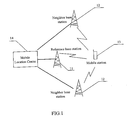
- Figure 1 shows a structure diagram of locating and measuring a MS; the diagram shows relationship among a reference base station 11, neighbor base stations 12, a MS 13 and a Mobile Location Center 14.
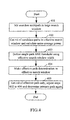
- FIG. 2 shows the general flowchart of the invention; it includes the following steps:
- Step 204 The MS 13 makes noise statistic of downlink signals of the neighbor base stations 12 using data of the large search window, and makes the first path determination of downlink signals of the neighbor base stations 12 using data of the effective search window.
- Step 205 The MS 13 outputs first path determinations of downlink signals of different base stations. According to the first path of the reference base station 11 signal and the first path determination of more than two different neighbor base stations 12 signal, the estimated TDOA values of appropriate time delay difference are constructed; the Mobile Location Center 14 can effectively estimate the geographical location of MS 13 according to more than two said estimated TDOA values, so the MS 13 is located.
- Figure 3 shows the specific computation steps of the starting location T start and stop location T stop of the large search window and the starting location t start and stop location t stop of the effective search window, which are used in above Step 202.
- Step 301 The large search window parameters are obtained as follows, which are same as conventional method: take the first path location of the reference base station 11 downlink signal as reference center, and the arrival time of the neighbor base stations 12 signal is within the range [RTD-D , RTD+D], wherein the D is the distance d between the reference base station 11 and the neighbor base stations 12 but taking a chip as the unit, and the RTD, taking a chip as its unit, represents the transmitting time difference of downlink signals between the reference base station 11 and the neighbor base station 12, because they are not synchronized. Chip mentioned above is a time unit.
- a chip 1/3.84e6s; the distance between the reference base station 11 and the neighbor base station 12 corresponds with the propagation time of the signals one by one, and the radio signal propagation velocity is the velocity of light, so taking the distance divided by the velocity of light is the corresponding propagation time.
- Figure 5 shows the case that the reference base station 11 is an omni-directional cell.
- the distance of the MS 13 to the reference base station 11 is r1
- the distance between the reference base station 11 and the neighbor base station 12 is d; in this case, the distance between the neighbor base station 12 and the MS 13 must be within [
- Figure 6 shows the case that the reference base station 11 is a multiple sectors base station.
- the distance between the MS 13 and the reference base station 11 is r1
- the distance between the reference base station 11 and a neighbor base station 12 is d
- the angles between the two sector boundaries 61 and 62 of the reference base station 11 and the line from the reference base station 11 to the neighbor base stations 12 are a1 and a2, respectively; in this case, the range of r2 that is the distance between the MS 13 and the neighbor base station 12 will be defined with the following method:
- r2 is the distance between the neighbor base station 12 and the MS 13:
- the range of r2 is [
- the range of r2 is [ min (d3 , d4) , max (d3 , d4) ].
- the method to define the effective search window range can be obtained from the geometrical principle mentioned above.
- Auxiliary information to define the range of the effective search window includes r1, which is the distance between the reference base station 11 and the MS 13, and basic configure information of the locating center; the later is easier to obtain, so the key point is how to obtain the r1.
- Step 303 Obtain the measured RTT (Round Trip Time) and the time difference of transmitting time and receiving time UE_Rx_Tx of the MS 13; in a W-CDMA, a base station that is connected with the MS 13 can provide the corresponding measured value of RTT.
- RTT Random Trip Time
- the UE_Rx_Tx represents time difference of the receiving-transmitting time that is the time difference between the MS 13 receiving a signal from the reference base station 11 and transmitting an appropriate uplink signal.
- Step 305 After getting the STT that corresponds to r1, the absolute distance range [dmin , dmax] of the effective search window and the corresponding time range [ D max, D min ] can be defined, wherein the time range [ D max , D min ] is absolute time.
- Step 306. Set the protective width of the effective search window to t protect .
- Step 307. Calculate the starting location of the effective search window t start and the stop location of the effective search window t stop by STT, RTD, D max , D min and t protect , and the first path location of the reference base station 11 that is detected by the MS 13 is taken as the center origin of the effective search window.
- the [ D min , D max ] is the time range of the effective search window taking a chip as its unit, and they comes from the distance range [dmin , dmax];
- the t protect represents the error protective width of the effective search window, in general it is 1 to 2 chips.
- Step 308 The parameters of the starting location and the stop location of the large search window and the effective search window are outputted; they are T start , T stop and t start , t stop , respectively, and the reference origin location of the large search window and the effective search window takes the first path location of the downlink signal of the reference base station 11.
- the first path determination of the downlink signal of the neighbor base stations 12 in Step 204 takes the following steps:
- Step 405 Purpose of Step 405 is to raise accuracy of the first path detection. When the width of the large search window is larger, with or without several sample points does not affect the statistical noise average power so much, so the Step 405 may be neglected.
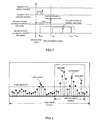
- Figure 8 shows a diagram for the first path determination of a neighbor base stations 12, using a large search window and an effective search window.
- the dot-line is the noise threshold, and the paths that are within the large search window, out of the effective search window and above the threshold are the 'false alarm' and are got rid of; search every path in the effective search window to obtain the first path of the downlink signal of a neighbor base stations 12.
Landscapes
- Engineering & Computer Science (AREA)
- Physics & Mathematics (AREA)
- General Physics & Mathematics (AREA)
- Radar, Positioning & Navigation (AREA)
- Remote Sensing (AREA)
- Computer Networks & Wireless Communication (AREA)
- Signal Processing (AREA)
- Mobile Radio Communication Systems (AREA)
Claims (5)
- Verfahren zur Ortung einer Mobilstation (13), MS, umfassend:Auswählen einer Referenzbasisstation (11) und einer benachbarten Basisstation (12) gemäß der Qualität von Empfangssignalen, wobei das Auswählen von einem mobilen Ortungszentrum (14) ausgeführt wird;Berechnen von Parametern eines großen Suchfensters und eines effektiven Suchfensters, worin das effektive Suchfenster innerhalb des großen Suchfensters angeordnet ist, wobei die berechneten Parameter umfassen: eine Startposition Tstart und eine Stopposition Tstop des großen Suchfensters und eine Startposition tstart und eine Stopposition tstop des effektiven Suchfensters;Berechnen von Tstart und Tstop gemäß einer relativen Sendezeitdifferenz (RTD) des von der Referenzbasisstation (11) gesendeten Signals und des von der benachbarten Basisstation (12) gesendeten Signals, und einer Ausbreitungszeit D, die einer Entfernung zwischen der Referenzbasisstation (11) und der benachbarten Basisstation (12) entspricht, mit den folgenden Formeln


wobei die berechneten Parameter tstart und tstop gemäß einer ersten Zeit berechnet werden, die einem Signal entspricht, das eine Entfernung zwischen der Referenzbasisstation (11) und der MS (13) zurücklegt, und einer zweiten Zeit, die einem Signal entspricht, das eine Entfernung zwischen der Referenzbasisstation (11) und der benachbarten Basisstation (12) zurücklegt, wobei die Berechnung durch das mobile Ortungszentrum (14) ausgeführt wird;Initiieren einer Messanforderung an die MS (13);Einstellen des großen Suchfensters und des effektiven Suchfensters gemäß den berechneten Parametern, wobei ein Ursprung des großen Suchfensters und des effektiven Suchfensters als die Position eines ersten detektierten Wegs eines Signals genommen wird, das von der Referenzbasisstation (11) an die MS (13) gesendet wird, wobei das Einstellen durch die MS ausgeführt wird;Bestimmen einer mittleren Rauschleistung innerhalb des großen Suchfensters;Bestimmen des ersten Wegs eines Signals, das von der benachbarten Basisstation (12) gesendet wird und von der MS (13) innerhalb des effektiven Suchfensters empfangen wird und eine Leistung hat, die größer ist als eine Schwellenrauschleistung, wobei die Schwellenrauschleistung gemäß der mittleren Rauschleistung bestimmt wird;Ausgeben der ersten Wegbestimmung von der MS (13);Ausführen einer Korrelationsoperation mit dem ersten Weg des von der benachbarten Basisstation (12) empfangenen Signals und einem ersten Weg eines von der Referenzbasisstation (11) empfangenen Signals sowie Ermitteln der Laufzeitdifferenz (TDOA);Ortung der MS (13) gemäß der TDOA. - Verfahren nach Anspruch 1, worin der Schritt des Berechnens von Parametern eines großen Suchfensters und eines effektiven Suchfensters außerdem umfasst:Berechnen einer Signallaufzeit, STT (Single Trip Time), von der MS (13) zur Referenzbasisstation (11) gemäß gemessener RTT (Round Trip Time), d. h. einer Signalumlaufzeit zwischen der Referenzbasisstation (11) und der MS (13), und gemessener UE_Rx_Tx, worin UE_Rx_Tx eine Zeitdifferenz darstellt zwischen dem Empfang durch die MS (13) eines Signals von der Referenzbasisstation (11) und dem Senden eines Uplink-Signals von der MS an die Referenzbasisstation (11), mit der folgenden Formel:
 Berechnen eines effektiven Bereichs der Reichweite Dmin und Dmax des von der benachbarten Basisstation gesendeten Signals gemäß der Sektorversorgungsfläche der Referenzbasisstation (11), einer Entfernung zwischen der benachbarten Basisstation (12) und der Referenzbasisstation (11), der STT und einem geometrischen Relationsprinzip;Einstellen einer Schutzbreite tprotect für das effektive Suchfenster, worin tprotect die Fehlerschutzbreite des effektiven Suchfensters darstellt;Berechnen der Startposition tstart und Stopposition tstop des effektiven Suchfensters gemäß STT, RTD, Dmin, Dmax und tprotect mit folgenden Formeln:
 Ausgeben der Parameter des großen Suchfensters: Tstart und Tstop, und der Parameter des effektiven Suchfensters: tstart und tstop.
 - Verfahren nach Anspruch 1, worin die Bestimmungsschritte außerdem umfassen:Ausführen von Mehrwegsuche im großen Suchfenster durch die MS (13) und Definieren von Kandidatenwegen im effektiven Suchfenster;Verwerfen der Kandidatenwege im effektiven Suchfenster durch die MS (13) und Berechnen einer mittleren Rauschleistung im großen Suchfenster;Definieren einer Einzelweg-Rauschabstand(SNR)-Schwelle gemäß einer Breite des effektiven Suchfensters durch die MS (13), worin die Einzelweg-SNR-Schwelle ein Leistungsverhältnis ist, das einem erwarteten Rauschpegel entspricht; undAusführen einer Mehrwegbestimmung des durch die benachbarte Basisstation (12) gesendeten Signals im effektiven Suchfenster, um den ersten Weg des von der benachbarten Basisstation (12) gesendeten Signals auszuwählen gemäß der mittleren Rauschleistung des großen Suchfensters, die im Schritt des Verwerfens der Kandidatenwege berechnet wurde, und der Einzelweg-SNR-Schwelle, die im Definitionsschritt des Einzelweg-SNR definiert wurde.
- Verfahren nach Anspruch 3, worin der Schritt des Ausführens der Mehrwegbestimmung außerdem umfasst:Bestimmen der Schwellenrauschleistung, die eine erwartete Fehlalarmwahrscheinlichkeit gemäß der mittleren Rauschleistung und der Einzelweg-SNR-Schwelle erfüllt; undDefinieren der Kandidatenwege, deren Leistung größer als die Schwellenrauschleistung im effektiven Suchfenster ist, als effektive Wege, und Auswählen des frühesten effektiven Wegs unter allen effektiven Wegen als den effektiven ersten Weg des von der benachbarten Basisstation (12) gesendeten Signals.
- Verfahren nach Anspruch 3 oder Anspruch 4, worin die Bestimmungsschritte außerdem umfassen:Verwerfen der effektiven Wege gemäß einem Ergebnis der Ausführung der Mehrwegbestimmung;Wiederholen der Schritte des Verwerfens von Kandidatenwegen und Ausführen von Mehrwegbestimmung, um wieder Mehrwegbestimmung des von der benachbarten Basisstation (12) im effektiven Suchfenster gesendeten Signals auszuführen, worin die Einzelweg-SNR-Schwelle beibehalten wird; und Auswählen eines finalen effektiven ersten Wegs.
Applications Claiming Priority (3)
| Application Number | Priority Date | Filing Date | Title |
|---|---|---|---|
| CNB021106371A CN1292261C (zh) | 2002-01-24 | 2002-01-24 | 一种移动台定位测量的方法 |
| CN02110637 | 2002-01-24 | ||
| PCT/CN2003/000056 WO2003063534A1 (en) | 2002-01-24 | 2003-01-23 | A method of locating and measuring a mobile station |
Publications (3)
| Publication Number | Publication Date |
|---|---|
| EP1478202A1 EP1478202A1 (de) | 2004-11-17 |
| EP1478202A4 EP1478202A4 (de) | 2007-02-28 |
| EP1478202B1 true EP1478202B1 (de) | 2008-08-13 |
Family
ID=27587812
Family Applications (1)
| Application Number | Title | Priority Date | Filing Date |
|---|---|---|---|
| EP03731616A Expired - Lifetime EP1478202B1 (de) | 2002-01-24 | 2003-01-23 | Verfahren zum finden und messen einer mobilstation |
Country Status (6)
| Country | Link |
|---|---|
| US (1) | US7065369B2 (de) |
| EP (1) | EP1478202B1 (de) |
| CN (1) | CN1292261C (de) |
| AT (1) | ATE404881T1 (de) |
| DE (1) | DE60322839D1 (de) |
| WO (1) | WO2003063534A1 (de) |
Families Citing this family (50)
| Publication number | Priority date | Publication date | Assignee | Title |
|---|---|---|---|---|
| CN100536594C (zh) * | 2002-12-02 | 2009-09-02 | 诺基亚公司 | 信号延迟的估计 |
| US20040203921A1 (en) * | 2003-03-21 | 2004-10-14 | Nicholas Bromhead | Sub-sector timing advance positions determinations |
| US7702338B2 (en) * | 2004-09-29 | 2010-04-20 | Qualcomm Incorporated | Method for finding the location of a mobile terminal in a cellular radio system |
| KR101042835B1 (ko) | 2005-01-13 | 2011-06-20 | 삼성전자주식회사 | 휴대인터넷 신호를 이용한 중계기 존재 여부 판단 및 그를이용한 단말 위치 측정 방법 |
| US20060239391A1 (en) * | 2005-04-20 | 2006-10-26 | Flanagan Michael J | Evaluating base station timing in an asynchronous network |
| EP1980125A4 (de) * | 2006-02-03 | 2013-09-25 | Ericsson Telefon Ab L M | Verfahren und anordnung für hochpräzise positionsreferenzmessungen an innenorten |
| US8254264B1 (en) * | 2006-04-28 | 2012-08-28 | Hewlett-Packard Development Company, L.P. | Network latency estimation |
| US8838481B2 (en) | 2011-07-26 | 2014-09-16 | Golba Llc | Method and system for location based hands-free payment |
| US8838477B2 (en) | 2011-06-09 | 2014-09-16 | Golba Llc | Method and system for communicating location of a mobile device for hands-free payment |
| WO2008089688A1 (fr) * | 2007-01-22 | 2008-07-31 | Huawei Technologies Co., Ltd. | Procédé, dispositif et système de mesure du temps de transmission aller-retour |
| CN101232718A (zh) * | 2007-01-22 | 2008-07-30 | 华为技术有限公司 | 一种测距方法、设备及系统 |
| WO2008089691A1 (fr) * | 2007-01-22 | 2008-07-31 | Huawei Technologies Co., Ltd. | Procédé, dispositif et système de mesure du temps de transmission aller-retour |
| ES2371120T3 (es) * | 2008-07-24 | 2011-12-27 | Ses Astra S.A. | Sistema y procedimiento de estimación de posición de nave espacial. |
| CN101656909B (zh) * | 2008-08-21 | 2012-12-26 | 中国移动通信集团公司 | 一种移动终端的定位方法和基站 |
| US8103287B2 (en) | 2008-09-30 | 2012-01-24 | Apple Inc. | Methods and apparatus for resolving wireless signal components |
| US8699453B2 (en) * | 2009-02-02 | 2014-04-15 | Qualcomm Incorporated | Reuse of RF receive chain for hand-in assistance |
| CN101848414B (zh) * | 2009-03-24 | 2013-04-17 | 电信科学技术研究院 | 确定信号传播时延的方法、对移动台定位的方法 |
| EP2464989A2 (de) | 2009-08-13 | 2012-06-20 | InterDigital Patent Holdings, Inc. | Hilfsvorrichtung und verfahren für positionsmessungen |
| US8233457B1 (en) * | 2009-09-03 | 2012-07-31 | Qualcomm Atheros, Inc. | Synchronization-free station locator in wireless network |
| CN102783227B (zh) * | 2010-02-19 | 2018-03-16 | 无线星球有限责任公司 | 确定定时不确定性的方法和装置 |
| WO2011100859A1 (en) | 2010-02-19 | 2011-08-25 | Telefonaktiebolaget L M Ericsson (Publ) | Improvements on otdoa and agnss positioning and timing information obtaining and updating |
| US8743699B1 (en) | 2010-05-07 | 2014-06-03 | Qualcomm Incorporated | RFID tag assisted GPS receiver system |
| US8681741B1 (en) | 2010-05-07 | 2014-03-25 | Qualcomm Incorporated | Autonomous hybrid WLAN/GPS location self-awareness |
| US8675539B1 (en) | 2010-05-07 | 2014-03-18 | Qualcomm Incorporated | Management-packet communication of GPS satellite positions |
| WO2012021097A2 (en) * | 2010-08-11 | 2012-02-16 | Telefonaktiebolaget L M Ericsson (Publ) | Methods of providing cell grouping for positioning and related networks and devices |
| US8547870B2 (en) * | 2011-06-07 | 2013-10-01 | Qualcomm Incorporated | Hybrid positioning mechanism for wireless communication devices |
| US8509809B2 (en) | 2011-06-10 | 2013-08-13 | Qualcomm Incorporated | Third party device location estimation in wireless communication networks |
| US8909244B2 (en) | 2011-06-28 | 2014-12-09 | Qualcomm Incorporated | Distributed positioning mechanism for wireless communication devices |
| CN102904603B (zh) * | 2011-07-28 | 2016-06-15 | 中兴通讯股份有限公司 | 搜索窗处理方法及装置 |
| CN102958084B (zh) * | 2011-08-23 | 2018-03-02 | 中兴通讯股份有限公司 | 一种时延差的纠正方法和系统 |
| US8521181B2 (en) | 2011-09-19 | 2013-08-27 | Qualcomm Incorporated | Time of arrival based positioning system |
| US8457655B2 (en) | 2011-09-19 | 2013-06-04 | Qualcomm Incorporated | Hybrid time of arrival based positioning system |
| US8489114B2 (en) | 2011-09-19 | 2013-07-16 | Qualcomm Incorporated | Time difference of arrival based positioning system |
| US8755304B2 (en) | 2011-10-21 | 2014-06-17 | Qualcomm Incorporated | Time of arrival based positioning for wireless communication systems |
| EP2783537A4 (de) * | 2011-11-21 | 2015-07-22 | Ericsson Telefon Ab L M | Verfahren und vorrichtung für relative zeitgebungsmessungen |
| US8824325B2 (en) | 2011-12-08 | 2014-09-02 | Qualcomm Incorporated | Positioning technique for wireless communication system |
| CN102571668B (zh) * | 2012-01-06 | 2014-09-03 | 合肥东芯通信股份有限公司 | 一种lte系统中的相位补偿方法和系统 |
| CN102608569B (zh) * | 2012-03-29 | 2013-06-19 | 清华大学 | 基于双观测点的空间匹配无源定位方法 |
| CN103298109B (zh) * | 2013-06-21 | 2016-04-06 | 北京恒远创智信息技术有限公司 | 提高基站定位成功率的方法 |
| CN103983275B (zh) * | 2014-04-28 | 2016-11-09 | 上海融军科技有限公司 | 双基准信号源飞行器方向标定方法 |
| JP2017521638A (ja) * | 2014-05-29 | 2017-08-03 | インテル・コーポレーション | オーディオ信号を用いるデバイス間の距離の測定 |
| CN104090261A (zh) * | 2014-06-26 | 2014-10-08 | 西安电子工程研究所 | 一种tdoa定位系统中采用距离建模的定位方法 |
| WO2016122860A1 (en) * | 2015-01-29 | 2016-08-04 | Zte Corporation | Method and apparatus for obtaining arrival time difference in mobile positioning |
| US9622207B1 (en) * | 2016-03-22 | 2017-04-11 | Qualcomm Incorporated | Wireless transmit station search window reduction |
| US10375669B2 (en) * | 2017-08-04 | 2019-08-06 | Qualcomm Incorporated | Methods and systems for locating a mobile device using an asynchronous wireless network |
| US11362921B2 (en) | 2017-12-19 | 2022-06-14 | Qualcomm Incorporated | Systems and methods for multiple round trip time (RTT) estimation in wireless networks |
| CN108646218A (zh) * | 2018-04-28 | 2018-10-12 | 中国科学院大气物理研究所 | 一种基于动态测量的闪电定位网精度评估方法 |
| JP7330210B2 (ja) * | 2018-05-23 | 2023-08-21 | デラヴァル ホルディング アーベー | 動物タグを位置決定するためのシステム、方法、及びコンピュータプログラム |
| CN114089274A (zh) * | 2021-10-29 | 2022-02-25 | 宁波同讯精密工业有限公司 | 基于可重构天线的室内定位系统 |
| US20250044440A1 (en) * | 2022-03-04 | 2025-02-06 | Qualcomm Incorporated | New radio (nr) round trip time (rtt) using carrier phase |
Family Cites Families (14)
| Publication number | Priority date | Publication date | Assignee | Title |
|---|---|---|---|---|
| FR2716609B1 (fr) * | 1994-02-28 | 1996-04-12 | C S P Diffusion Sa | Pince à cheveux à anneaux élastiques. |
| MX9601211A (es) * | 1994-07-29 | 1997-06-28 | Qualcomm Inc | Metodo y aparato mejorados para llevar a cabo la adquisicion de busqueda en un sistema de comunicacion de cdma. |
| US6236365B1 (en) * | 1996-09-09 | 2001-05-22 | Tracbeam, Llc | Location of a mobile station using a plurality of commercial wireless infrastructures |
| FI104528B (fi) * | 1996-10-03 | 2000-02-15 | Nokia Networks Oy | Liikkuvan aseman paikallistamismenetelmä ja solukkoradioverkko |
| US6307840B1 (en) * | 1997-09-19 | 2001-10-23 | Qualcomm Incorporated | Mobile station assisted timing synchronization in CDMA communication system |
| US6526039B1 (en) * | 1998-02-12 | 2003-02-25 | Telefonaktiebolaget Lm Ericsson | Method and system for facilitating timing of base stations in an asynchronous CDMA mobile communications system |
| US6081229A (en) * | 1998-03-17 | 2000-06-27 | Qualcomm Incorporated | System and method for determining the position of a wireless CDMA transceiver |
| US6229842B1 (en) * | 1998-07-16 | 2001-05-08 | Telefonaktiebolaget Lm Ericsson (Publ) | Adaptive path selection threshold setting for DS-CDMA receivers |
| US6542743B1 (en) * | 1999-08-31 | 2003-04-01 | Qualcomm, Incorporated | Method and apparatus for reducing pilot search times utilizing mobile station location information |
| US6191738B1 (en) * | 1999-09-30 | 2001-02-20 | Motorola, Inc. | Method and apparatus for locating a remote unit within a communication system |
| GB0000528D0 (en) * | 2000-01-11 | 2000-03-01 | Nokia Networks Oy | Location of a station in a telecommunications system |
| US6775252B1 (en) * | 2000-03-31 | 2004-08-10 | Qualcomm, Inc. | Dynamic adjustment of search window size in response to signal strength |
| US6665540B2 (en) * | 2001-02-02 | 2003-12-16 | Nokia Mobile Phones, Ltd. | Method and system for locating a mobile terminal in a cellular radio network |
| US20040248587A1 (en) * | 2001-09-20 | 2004-12-09 | Jarko Niemenmaa | Method and network element for providing location services using predetermined portions of a broadcast signal |
-
2002
- 2002-01-24 CN CNB021106371A patent/CN1292261C/zh not_active Expired - Lifetime
-
2003
- 2003-01-23 EP EP03731616A patent/EP1478202B1/de not_active Expired - Lifetime
- 2003-01-23 DE DE60322839T patent/DE60322839D1/de not_active Expired - Lifetime
- 2003-01-23 AT AT03731616T patent/ATE404881T1/de not_active IP Right Cessation
- 2003-01-23 WO PCT/CN2003/000056 patent/WO2003063534A1/zh not_active Ceased
-
2004
- 2004-07-26 US US10/898,911 patent/US7065369B2/en not_active Expired - Lifetime
Also Published As
| Publication number | Publication date |
|---|---|
| WO2003063534A1 (en) | 2003-07-31 |
| DE60322839D1 (de) | 2008-09-25 |
| EP1478202A1 (de) | 2004-11-17 |
| US7065369B2 (en) | 2006-06-20 |
| CN1434305A (zh) | 2003-08-06 |
| CN1292261C (zh) | 2006-12-27 |
| EP1478202A4 (de) | 2007-02-28 |
| ATE404881T1 (de) | 2008-08-15 |
| US20040264407A1 (en) | 2004-12-30 |
Similar Documents
| Publication | Publication Date | Title |
|---|---|---|
| US7065369B2 (en) | Method of locating and measuring a mobile station | |
| US7099640B2 (en) | Method distinguishing line of sight (LOS) from non-line of sight (NLOS) in CDMA mobile communication system | |
| JP3740953B2 (ja) | 無線位置測定端末および無線位置測定システム | |
| JP3461167B2 (ja) | 位置計算方法及び位置算出装置 | |
| KR102416604B1 (ko) | 무선통신 시스템의 정밀 측위 방법 및 장치 | |
| EP1286174B1 (de) | Funkhandgerät und Ortungssystem | |
| JP4100320B2 (ja) | 位置検出システムおよび装置 | |
| CA2192579C (en) | Method and apparatus for location finding in a cdma system | |
| EP1167993B1 (de) | Verfahren und Vorrichtung zur Abstandmessung und Ortung mittels Bandspreizsignalen | |
| JP5015934B2 (ja) | 携帯電話システムを効率的に使用するためにユーザの形態を分類するための方法および装置 | |
| US8249624B2 (en) | Positioning method and system in two or more cellular networks | |
| US7068742B2 (en) | Method and apparatus for resolving multipath components for wireless location finding | |
| CN102143578A (zh) | 用于在通信网络中估计节点位置的方法和设备 | |
| US7580450B2 (en) | Parameter estimator with dynamically variable integration time | |
| US6253084B1 (en) | Process and device for managing intercellular transfers of radio communications in a cellular radio communication system by measuring virtual speeds of cellular devices | |
| US6256494B1 (en) | Method of and apparatus for estimating a characteristic of a signal | |
| CN101848414B (zh) | 确定信号传播时延的方法、对移动台定位的方法 | |
| US7218939B2 (en) | Estimation of a signal delay | |
| JP2003329757A (ja) | 無線位置測定方法および装置 | |
| CN1329741C (zh) | 一种获取环境数据的装置及其实现的方法 | |
| US7532858B2 (en) | Method for determining existence of repeater using portable internet signal and method for measuring position of mobile station using the same | |
| KR100736412B1 (ko) | 펄스 피크의 위치 결정 | |
| KR100736419B1 (ko) | 신호 지연 추정 | |
| JP2009505463A (ja) | 移動電気通信ネットワークにおける方法および配置構成 |
Legal Events
| Date | Code | Title | Description |
|---|---|---|---|
| PUAI | Public reference made under article 153(3) epc to a published international application that has entered the european phase |
Free format text: ORIGINAL CODE: 0009012 |
|
| 17P | Request for examination filed |
Effective date: 20040823 |
|
| AK | Designated contracting states |
Kind code of ref document: A1 Designated state(s): AT BE BG CH CY CZ DE DK EE ES FI FR GB GR HU IE IT LI LU MC NL PT SE SI SK TR |
|
| AX | Request for extension of the european patent |
Extension state: AL LT LV MK RO |
|
| A4 | Supplementary search report drawn up and despatched |
Effective date: 20070130 |
|
| RIC1 | Information provided on ipc code assigned before grant |
Ipc: H04B 1/707 20060101ALI20070124BHEP Ipc: G01S 5/02 20060101AFI20070124BHEP Ipc: H04Q 7/38 20060101ALI20070124BHEP |
|
| 17Q | First examination report despatched |
Effective date: 20070619 |
|
| GRAP | Despatch of communication of intention to grant a patent |
Free format text: ORIGINAL CODE: EPIDOSNIGR1 |
|
| GRAS | Grant fee paid |
Free format text: ORIGINAL CODE: EPIDOSNIGR3 |
|
| GRAA | (expected) grant |
Free format text: ORIGINAL CODE: 0009210 |
|
| AK | Designated contracting states |
Kind code of ref document: B1 Designated state(s): AT BE BG CH CY CZ DE DK EE ES FI FR GB GR HU IE IT LI LU MC NL PT SE SI SK TR |
|
| REG | Reference to a national code |
Ref country code: GB Ref legal event code: FG4D |
|
| REG | Reference to a national code |
Ref country code: CH Ref legal event code: EP |
|
| REG | Reference to a national code |
Ref country code: IE Ref legal event code: FG4D |
|
| REF | Corresponds to: |
Ref document number: 60322839 Country of ref document: DE Date of ref document: 20080925 Kind code of ref document: P |
|
| PG25 | Lapsed in a contracting state [announced via postgrant information from national office to epo] |
Ref country code: NL Free format text: LAPSE BECAUSE OF FAILURE TO SUBMIT A TRANSLATION OF THE DESCRIPTION OR TO PAY THE FEE WITHIN THE PRESCRIBED TIME-LIMIT Effective date: 20080813 Ref country code: ES Free format text: LAPSE BECAUSE OF FAILURE TO SUBMIT A TRANSLATION OF THE DESCRIPTION OR TO PAY THE FEE WITHIN THE PRESCRIBED TIME-LIMIT Effective date: 20081124 |
|
| PG25 | Lapsed in a contracting state [announced via postgrant information from national office to epo] |
Ref country code: FI Free format text: LAPSE BECAUSE OF FAILURE TO SUBMIT A TRANSLATION OF THE DESCRIPTION OR TO PAY THE FEE WITHIN THE PRESCRIBED TIME-LIMIT Effective date: 20080813 Ref country code: SI Free format text: LAPSE BECAUSE OF FAILURE TO SUBMIT A TRANSLATION OF THE DESCRIPTION OR TO PAY THE FEE WITHIN THE PRESCRIBED TIME-LIMIT Effective date: 20080813 Ref country code: AT Free format text: LAPSE BECAUSE OF FAILURE TO SUBMIT A TRANSLATION OF THE DESCRIPTION OR TO PAY THE FEE WITHIN THE PRESCRIBED TIME-LIMIT Effective date: 20080813 |
|
| PG25 | Lapsed in a contracting state [announced via postgrant information from national office to epo] |
Ref country code: BE Free format text: LAPSE BECAUSE OF FAILURE TO SUBMIT A TRANSLATION OF THE DESCRIPTION OR TO PAY THE FEE WITHIN THE PRESCRIBED TIME-LIMIT Effective date: 20080813 |
|
| PG25 | Lapsed in a contracting state [announced via postgrant information from national office to epo] |
Ref country code: DK Free format text: LAPSE BECAUSE OF FAILURE TO SUBMIT A TRANSLATION OF THE DESCRIPTION OR TO PAY THE FEE WITHIN THE PRESCRIBED TIME-LIMIT Effective date: 20080813 Ref country code: BG Free format text: LAPSE BECAUSE OF FAILURE TO SUBMIT A TRANSLATION OF THE DESCRIPTION OR TO PAY THE FEE WITHIN THE PRESCRIBED TIME-LIMIT Effective date: 20081113 |
|
| PG25 | Lapsed in a contracting state [announced via postgrant information from national office to epo] |
Ref country code: SK Free format text: LAPSE BECAUSE OF FAILURE TO SUBMIT A TRANSLATION OF THE DESCRIPTION OR TO PAY THE FEE WITHIN THE PRESCRIBED TIME-LIMIT Effective date: 20080813 Ref country code: PT Free format text: LAPSE BECAUSE OF FAILURE TO SUBMIT A TRANSLATION OF THE DESCRIPTION OR TO PAY THE FEE WITHIN THE PRESCRIBED TIME-LIMIT Effective date: 20090113 Ref country code: CZ Free format text: LAPSE BECAUSE OF FAILURE TO SUBMIT A TRANSLATION OF THE DESCRIPTION OR TO PAY THE FEE WITHIN THE PRESCRIBED TIME-LIMIT Effective date: 20080813 |
|
| PLBE | No opposition filed within time limit |
Free format text: ORIGINAL CODE: 0009261 |
|
| STAA | Information on the status of an ep patent application or granted ep patent |
Free format text: STATUS: NO OPPOSITION FILED WITHIN TIME LIMIT |
|
| 26N | No opposition filed |
Effective date: 20090514 |
|
| PG25 | Lapsed in a contracting state [announced via postgrant information from national office to epo] |
Ref country code: EE Free format text: LAPSE BECAUSE OF FAILURE TO SUBMIT A TRANSLATION OF THE DESCRIPTION OR TO PAY THE FEE WITHIN THE PRESCRIBED TIME-LIMIT Effective date: 20080813 |
|
| PG25 | Lapsed in a contracting state [announced via postgrant information from national office to epo] |
Ref country code: IT Free format text: LAPSE BECAUSE OF FAILURE TO SUBMIT A TRANSLATION OF THE DESCRIPTION OR TO PAY THE FEE WITHIN THE PRESCRIBED TIME-LIMIT Effective date: 20080813 Ref country code: MC Free format text: LAPSE BECAUSE OF NON-PAYMENT OF DUE FEES Effective date: 20090131 |
|
| REG | Reference to a national code |
Ref country code: CH Ref legal event code: PL |
|
| PG25 | Lapsed in a contracting state [announced via postgrant information from national office to epo] |
Ref country code: LI Free format text: LAPSE BECAUSE OF NON-PAYMENT OF DUE FEES Effective date: 20090131 Ref country code: CH Free format text: LAPSE BECAUSE OF NON-PAYMENT OF DUE FEES Effective date: 20090131 |
|
| REG | Reference to a national code |
Ref country code: FR Ref legal event code: ST Effective date: 20091030 |
|
| PG25 | Lapsed in a contracting state [announced via postgrant information from national office to epo] |
Ref country code: SE Free format text: LAPSE BECAUSE OF FAILURE TO SUBMIT A TRANSLATION OF THE DESCRIPTION OR TO PAY THE FEE WITHIN THE PRESCRIBED TIME-LIMIT Effective date: 20081113 Ref country code: IE Free format text: LAPSE BECAUSE OF NON-PAYMENT OF DUE FEES Effective date: 20090123 |
|
| PG25 | Lapsed in a contracting state [announced via postgrant information from national office to epo] |
Ref country code: FR Free format text: LAPSE BECAUSE OF NON-PAYMENT OF DUE FEES Effective date: 20090202 |
|
| PG25 | Lapsed in a contracting state [announced via postgrant information from national office to epo] |
Ref country code: GR Free format text: LAPSE BECAUSE OF FAILURE TO SUBMIT A TRANSLATION OF THE DESCRIPTION OR TO PAY THE FEE WITHIN THE PRESCRIBED TIME-LIMIT Effective date: 20081114 |
|
| PG25 | Lapsed in a contracting state [announced via postgrant information from national office to epo] |
Ref country code: LU Free format text: LAPSE BECAUSE OF NON-PAYMENT OF DUE FEES Effective date: 20090123 |
|
| PG25 | Lapsed in a contracting state [announced via postgrant information from national office to epo] |
Ref country code: HU Free format text: LAPSE BECAUSE OF FAILURE TO SUBMIT A TRANSLATION OF THE DESCRIPTION OR TO PAY THE FEE WITHIN THE PRESCRIBED TIME-LIMIT Effective date: 20090214 |
|
| PG25 | Lapsed in a contracting state [announced via postgrant information from national office to epo] |
Ref country code: TR Free format text: LAPSE BECAUSE OF FAILURE TO SUBMIT A TRANSLATION OF THE DESCRIPTION OR TO PAY THE FEE WITHIN THE PRESCRIBED TIME-LIMIT Effective date: 20080813 |
|
| PG25 | Lapsed in a contracting state [announced via postgrant information from national office to epo] |
Ref country code: CY Free format text: LAPSE BECAUSE OF FAILURE TO SUBMIT A TRANSLATION OF THE DESCRIPTION OR TO PAY THE FEE WITHIN THE PRESCRIBED TIME-LIMIT Effective date: 20080813 |
|
| PGFP | Annual fee paid to national office [announced via postgrant information from national office to epo] |
Ref country code: GB Payment date: 20211206 Year of fee payment: 20 |
|
| PGFP | Annual fee paid to national office [announced via postgrant information from national office to epo] |
Ref country code: DE Payment date: 20211130 Year of fee payment: 20 |
|
| REG | Reference to a national code |
Ref country code: DE Ref legal event code: R071 Ref document number: 60322839 Country of ref document: DE |
|
| REG | Reference to a national code |
Ref country code: GB Ref legal event code: PE20 Expiry date: 20230122 |
|
| PG25 | Lapsed in a contracting state [announced via postgrant information from national office to epo] |
Ref country code: GB Free format text: LAPSE BECAUSE OF EXPIRATION OF PROTECTION Effective date: 20230122 |