EP1479254B1 - Vorrichtung und zugeordnetes verfahren zur ermöglichung der kommunikationsbetriebsmittelzuteilung in einem paketfunkkommunikationssystem - Google Patents
Vorrichtung und zugeordnetes verfahren zur ermöglichung der kommunikationsbetriebsmittelzuteilung in einem paketfunkkommunikationssystem Download PDFInfo
- Publication number
- EP1479254B1 EP1479254B1 EP20020801671 EP02801671A EP1479254B1 EP 1479254 B1 EP1479254 B1 EP 1479254B1 EP 20020801671 EP20020801671 EP 20020801671 EP 02801671 A EP02801671 A EP 02801671A EP 1479254 B1 EP1479254 B1 EP 1479254B1
- Authority
- EP
- European Patent Office
- Prior art keywords
- packet
- channel
- mobile station
- control channel
- request
- Prior art date
- Legal status (The legal status is an assumption and is not a legal conclusion. Google has not performed a legal analysis and makes no representation as to the accuracy of the status listed.)
- Expired - Lifetime
Links
Images

Classifications
-
- H—ELECTRICITY
- H04—ELECTRIC COMMUNICATION TECHNIQUE
- H04W—WIRELESS COMMUNICATION NETWORKS
- H04W74/00—Wireless channel access
- H04W74/002—Transmission of channel access control information
- H04W74/004—Transmission of channel access control information in the uplink, i.e. towards network
-
- H—ELECTRICITY
- H04—ELECTRIC COMMUNICATION TECHNIQUE
- H04W—WIRELESS COMMUNICATION NETWORKS
- H04W74/00—Wireless channel access
- H04W74/08—Non-scheduled access, e.g. ALOHA
- H04W74/0833—Random access procedures, e.g. with 4-step access
-
- H—ELECTRICITY
- H04—ELECTRIC COMMUNICATION TECHNIQUE
- H04W—WIRELESS COMMUNICATION NETWORKS
- H04W74/00—Wireless channel access
- H04W74/08—Non-scheduled access, e.g. ALOHA
- H04W74/0833—Random access procedures, e.g. with 4-step access
- H04W74/0838—Random access procedures, e.g. with 4-step access using contention-free random access [CFRA]
Definitions
- the present invention relates to apparatus, and an associated method, by which to initiate, from a mobile station, a request for allocation of a dedicated channel (e.g. SDCCH (Stand-alone Dedicated Control Channel)), upon which to communicate packet-formatted data to effectuate the communication service.
- a dedicated channel e.g. SDCCH (Stand-alone Dedicated Control Channel)
- the request is generated without requiring the mobile station to tune to the CCCH (common control channel) to generate the request, hence reducing the risk for CCCH congestion. Instead, the request is generated, e.g., while the mobile station is tuned to the PCCCH (packet common control channel). Quicker and more efficient allocation of communication resources is thereby permitted.
- a communication system operates to communicate data between two, or more, locations. Communication stations of the communication system are positioned at the separate locations, and the data is communicated therebetween. At a minimum, a first of the communication stations forms a sending station, and a second of the communication stations forms a receiving station. Data is communicated upon a communication channel that is formed to interconnect the communication stations positioned at the separate locations.
- the communication channel upon which data is communicated is defined upon a radio link extending between the communication stations. Because a radio link is utilized to form the communication channel, a wireline connection is not required to interconnect the communication stations. Communications by way of a radio communication system are therefore advantageous when the use of a wireline connection would be inconvenient or impractical. And, most mobile communication systems are radio communication systems as the need for the wireline connection is obviated, thereby providing the capability of the communication stations operable therein to be mobile. And, infrastructure costs associated with a radio communication system are generally less than the corresponding infrastructure costs associated with a wireline communication system as the need to install fixed connections between the sending and the receiving stations are obviated.
- a cellular communication system is a type of radio communication system and is exemplary of a radio communication system that has been made possible due to advancements in communication technologies. Telephonic communication of data is provided through the use of a cellular communication system.
- Portable radio transceivers referred to as mobile stations, are used by subscribers to a cellular communication system.
- a mobile station is utilized generally in a manner analogous to the manner by which a conventional, telephonic station is utilized.
- First-generation, cellular communication systems utilize analog communication schemes while subsequent generation communication systems have generally utilized digital communication schemes.
- Digital communication schemes permit improved efficiency of limited available bandwidth within which radio links are formable upon which communication channels can be defined.
- GSM Global System for Mobile communications
- GSM Global System for Mobile communications
- GPRS General Packet Radio Service
- GPRS for GSM permits packet communication services to be effectuated utilizing packet-switched connections.
- Signaling protocols have been set forth by which to allocate communication resources to effectuate a GPRS communication service.
- Request for resources is made by the mobile station.
- Resources are requested responsive to a mobile-originated communication or responsive to a mobile-terminated communication.
- the GPRS capable mobile station In today's GPRS, or generally in A/Gb mode of operation, prior to the request for allocation of communication resources, the GPRS capable mobile station "camps" in an RR idle mode/packet idle mode on a CCCH (Common Control Channel) when a fifty-one-multiframe GSM implementation is followed and no PCCCH is provided in the cell.
- CCCH Common Control Channel
- the system is GPRS capable, a fifty-two-multiframe GSM scheme is followed in packet idle mode, , provided that a PCCCH (Packet Common Control Channel) is provided in the cell.
- the GPRS capable mobile station camps on the PCCCH.
- a cell supporting Iu mode must support the PCCCH. An Iu capable MS operating in Iu mode in such a cell camps on PCCCH.
- A/Gb mode of operation when the fifty-two-multiframe scheme is followed and the mobile station camps on the PCCCH, if the mobile station is paged for an RR connection establishment (i.e. circuit-switched services), such as by a page generated on a packet paging channel (PPCH), the mobile station must stop monitoring the PCCCH and, instead, tune to the common control channel CCCH.
- the mobile station Once the mobile station is tuned to the CCCH, the mobile station may request, by way of a random access upon a random access channel (RACH), allocation of a SDCCH (Stand-alone Dedicated Control Channel). Responsive to the request, a channel assignment is assigned by way of an access grant channel (AGCH).
- RACH random access channel
- SDCCH Stand-alone Dedicated Control Channel
- a corresponding procedure is required when a mobile- originated voice call is initiated. That is to say, when the mobile station is camping on a PCCCH and a spontaneous request is to be generated, i. e. , the mobile-originated voice call is to be effectuated, the mobile station retunes to the CCCH. Once tuned to the CCCH, the mobile station requests an SDCCH by way of the random access channel.
- the existing need for the mobile station to move from the PCCCH to the CCCH not only increases the risk of CCCH congestion, but also increases the delay to the allocation of the channel and corresponding effectuation of the communication service.
- 3GPP TSG GERAN WG2#5Bis document G2-010065 by Ericsson titled "SDCCH Allocation for RRC Signaling" discloses allocating an SDCCH in support of RRC signaling where mobile station is camping on a CCCH and on a PCCCH.
- the mobile station is in the RRC connected mode or RRC idle mode, and leaves the PCCCH and tunes to a CCCH where it sends a channel request that indicates procedures that can be completed with a SDCCH.
- the mobile station is allocated an SDCCH where contention resolution is completed and RRC payload is transmitted.
- the present invention accordingly, advantageously provides apparatus, and an associated method, by which to facilitate allocation of communication resources to effectuate a packet communication service in a packet radio communication system, such as a GSM (Global System for Mobile communications) that provides for GPRS (General Packet Radio Service).
- a packet radio communication system such as a GSM (Global System for Mobile communications) that provides for GPRS (General Packet Radio Service).
- a manner is provided by which to initiate, from a mobile station, a request for allocation of a dedicated channel (e.g. SDCCH (Stand-alone Dedicated Control Channel)), upon which to communicate packet-formatted data to effectuate a communication service.
- a dedicated channel e.g. SDCCH (Stand-alone Dedicated Control Channel)
- the request is generated without requiring the mobile station to tune to the CCCH (common control channel )to generate the request, hence reducing the risk for CCCH congestion. Instead, requests for the allocation of the communication resources is made while the mobile station is camped on, i.e., tuned to, the PCCCH (packet common control channel). Quicker, and more efficient, allocation of communication resources is thereby permitted.
- CCCH common control channel
- the request generated by the mobile station upon the PCCCH is of a multi-bit value.
- the multi-bit value forming the request is of an eleven bit-length in which the access request, of an SRB configuration, is of a bit-length of six bits and remaining bits of the request message, i.e., the remaining five bits are of random values.
- the request message is of an eight-bit length. Five of the bits, in an SRB configuration, define the access request, and the remaining bits, three bits, are of random values.
- a mobile station is operable alternately in an Iu-mode and an A/Gb mode, or in Iu mode only, or in A/Gb mode only.
- the dedicated channel request message is common to both of the modes of operation.
- the dedicated channel request message message is applicable to Iu mode of operation only.
- the values of the dedicated channel request message are of first values for Iu-mode of operation (hence indicative of an Iu mode access) and of second values for A/Gb mode of operation (hence indicative of an A/Gb mode access).
- a request message generator is provided to a mobile station at which to generate a request for allocation of the communication resources to effectuate a communication service.
- the request message generator generates a request for the allocation of the channel when a mobile-originated communication session is to be initiated.
- the message generator generates a request message when a mobile-terminated communication session is to be effectuated.
- the mobile station is alerted to the mobile-terminated communication session when a page is broadcast thereto.
- a network part of the packet radio communication system includes a response message generator that generates a response message responsive to the request message.
- the response message includes, if appropriate, allocation of a channel assignment.
- the packet radio communication system permits communication of packet-formatted data between a network part and a mobile station. Assignation of a dedicated channel (e.g. stand-alone dedicated control channel) used pursuant to effectuation of a communication service in which the packet-formatted data is communicated is facilitated.
- a packet channel request message generator is selectably operable to generate a packet channel request message by way of a packet common control channel. The packet channel request message forms a request for the assignation thereto of a dedicate channel (e.g. a stand-alone dedicated control channel).
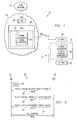
- a communication system shown generally at 10, operates to provide for radio communications of data with mobile stations, of which the mobile station 12 is exemplary.
- the communication system forms a cellular communication system operable generally pursuant to a GSM (Global System for Mobile communications) operational specification in which GPRS (General Packet Radio Service) is implemented.
- GSM Global System for Mobile communications
- GPRS General Packet Radio Service
- the communication system further includes a network part, here shown to include a radio access network (RAN) 14 and a core network (CN) 16.
- the core network forms, for instance, a packet data network, and the radio access network is constructed, and is operable, generally pursuant to the aforementioned GSM standard that provides for GPRS.
- the radio access network includes, amongst other things, base station systems (BSSs) of which the base station system 18 is representative. Communication of data to effectuate a communication service is performed by communicating the data upon communication channels defined upon radio links formed between the base station system 18 and the mobile station 12. Data is communicated on both various signaling and data channels by which to effectuate the communication of the data between the base station system and the mobile station.
- BSSs base station systems
- Communication services that can be effectuated between the network part of the communication system and the mobile station are generally categorized as being either mobile-terminated communications or mobile-originated communications.
- a communication session by which to effectuate the communication service is effectuated by a communication node other than the mobile station 12.
- the communications are mobile-originated, the communication session pursuant to which the communication service is to be effectuated is originated at the mobile station 12.
- the operational specification of the GSM system sets forth signaling protocols and device operational requirements of the devices of the communication system. For instance, operational modes of the mobile station are defined. Included amongst the operational modes are an Iu mode and a Ab/G mode. And, active and idle modes are defined for the mobile station.
- Various channels are also defined pursuant to the GSM operational specifications.
- additional signaling channels are defined.
- a CCCH Common Control Channel
- PCCCH Packet Common Control Channel
- the mobile station When a PCCCH is available, the mobile station camps on the PCCCH. If, while the mobile station is camped-on the PCCCH, and a page is broadcast to the mobile station, existing operation requires the mobile station to stop monitoring the PCCCH and, instead, go to the CCCH.
- the mobile station requests, by way of a random access channel (RACH), allocation of a dedicated channel such as a stand-alone dedicated control channel (SDCCH).
- RACH random access channel
- SDCCH stand-alone dedicated control channel
- the dedicated channel e.g. SDCCH is thereafter assigned to the mobile station upon which to effectuate the communication service.
- a mobile-originated communication session analogously also requires the mobile station to tune out of the PCCCH and to the CCCH prior to requesting allocation of the stand-alone dedicated control channel.
- the mobile station 12 forms a radio transceiver having a receive part 28 and a transmit part 32.
- the mobile station is further shown to include apparatus 34 of an embodiment of the present invention.
- the apparatus 34 includes a channel allocation request message generator 36.
- the channel allocation request message generator is selectably operable to generate a channel allocation request message while the mobile station is camped-on the packet common control channel (PCCCH). Because the request message is generated, and sent, while the mobile station remains camped-on the PCCCH, the channel allocation is able to be granted more quickly, resulting in fewer delays in the effectuation of the communication service.
- PCCCH packet common control channel
- the base station system 18 also includes apparatus 34 of an embodiment of the present invention.
- the apparatus 34 is here shown to be positioned at the base station system to form a portion thereof. In other implementations, the apparatus can be positioned elsewhere at the network part of the communication system, or coupled thereto.
- the network part of the apparatus 34 here operates, responsive to detection at the network of the channel allocation request message to generate a channel allocation message for communication to the mobile station to identify, therein, the channel allocation upon which to send the packet data to effectuate the packet communication service.
- the apparatus 34 includes a channel allocation signal generator 38 that generates the channel allocation message for communication to the mobile station.
- the channel allocation signal message generator is coupled to a radio resource controller (RRC), and the RRC determines the channel allocation and provides indication thereof to the signal message generator.
- RRC radio resource controller
- a packet channel request message generated by the message generator 36 enables the mobile station 12 to request, by way of a packet random access channel (PRACH), allocation of a dedicated channel (such as stand-alone dedicated control channel (SDCCH)) by which to communicate the packet data. That is, a dedicated channel request is sent within a packet channel request message communicated upon the PRACH. And, the channel allocation signal generator 38 generates a new message, a packet DBPSCH assignment message to assign the dedicated channel by way of a PCCCH (PAGCH). As a result, the mobile station, camped-on the PCCCH is able to request allocation of the dedicated channel without going to the CCCH. And, assignation of the dedicated channel is made by way of the PCCCH.
- PRACH packet random access channel
- SDCCH stand-alone dedicated control channel
- the signaling is provided both for a mobile station operable in a GERAN ReI Iu mode as well as a possible enhancement to the GERAN A/Gb mode.
- the apparatus 34 provides for the introduction of a signaling radio bearer access request on the PRACH. In this manner, a dedicated channel such as an SDCCH can be allocated as an answer to an SRB access request.
- the SDCCH request is common to both the Iu mode and the A/Gb mode.
- the SDCCH requests different values depending upon whether the mobile station is in the Iu mode or the A/Gb mode.
- the alternate format is as follows:
- the GERAN is able to detect, from the cause value that is received, whether the mobile station is making a A/Gb access or an Iu access. Note, however, that an EGPRS packet channel request message need not include any SDCCH requests. But, such a request can be later-introduced.
- a packet DBPSCH assignment message is selectably generated and returned to the mobile station.
- the channel allocation signal message generator 38 generates an RLC/MAC control message that is sent on the PAGCH as an answer to the Dedicated Channel request (PRACH) or an SRB access request.
- the message is here designated as a packet DBPSCH assignment message.
- generation and communication of this message at the RLC/MAC is triggered responsive to operation of the RRC. And, the parameters required to allocate the dedicated channel are also provided by the RRC.
- the message can be identified by ReI5 mobile stations 12 only.
- new uplink message-type is proposed as follows:
- a signaling radio bearer access request can also be formed in the eleven-bit packet channel request on the packet random access channel (PRACH) to request allocation of a dedicated channel.
- PRACH packet random access channel
- the SRB access request is indicative of an Iu access.
- the packet DBPSCH assignment message generated by the signal message generator 38 is selectably generated responsive to the SRB access request.
- the network part of the communication system allocates a dedicated channel (e.g. SDCCH) or a shared channel (i.e. a TBF on an SBPSCH). For example, if in a paging request, the network indicates that an SDCCH is required, the network, upon reception of the SRB access request from the mobile station, allocates the SDCCH.
- a dedicated channel e.g. SDCCH
- a shared channel i.e. a TBF on an SBPSCH.
- FIG. 2 illustrates a message sequence diagram, shown generally at 52, representative of signaling generated during operation of an embodiment of the present invention between the parts of the apparatus 34 positioned at the mobile station 12 and at the base station system 18.
- the mobile station is camped-on the PCCCH.
- a packet paging request is generated upon the packet paging channel (PPCCH) as a packet paging request indicating that a dedicated channel (e.g. SDCCH) is required.
- PPCCH packet paging channel
- the request message generator 36 at the mobile station generates a packet channel request, indicated by the segment 58, on the packet random access channel (PRACH). And, upon delivery of the request to the network part of the communication system, communication resources are selectably allocated by the RRC 42. And, as indicated by the segment 62, the signal message generator 38 generates a packet DBPSCH assignment on the PAGCH. Thereafter, and as indicated by the segment 64, RRC signaling is effectuated on the assigned SDCCH.
- PRACH packet random access channel
- FIG. 3 illustrates a message sequence diagram, shown generally at 72, representative also of signaling generated during operation of an embodiment of the present invention between the mobile station 12 and the base station system 18 pursuant to an embodiment of the present invention.
- the mobile station remains camped-on the packet common control channel (PCCCH), indicated by the block 74.
- PCCCH packet common control channel
- a packet paging request is broadcast, indicated by the segment 76, upon the PPCH.
- the mobile station generates a packet channel request pursuant to an embodiment of the present invention, here an SRB access request, upon the packet random access channel (PRACH).
- PRACH packet random access channel
- the channel allocation signal message generator selectably operates to generate a packet DBPSCH assignment message, indicated by the segment 82, upon the PAGCH. Thereafter, and as indicated by the segment 84, RRC message exchange is effectuated upon the assigned SDCCH.
- FIG 4 illustrates a message sequence diagram, shown generally at 92, also representative of operation of an embodiment of the present invention implemented in the communication system 10 shown in Figure 1 .
- the mobile station camps-on the packet common control channel, here indicated at the block 94.
- a packet paging request, indicated by the segment 96, is generated by the base station system and communicated to the mobile station on the PPCH.
- a packet channel request, indicated by the segment 98, is generated by the mobile station and communicated back to the base station system.
- a packet uplink assignment is generated to assign a shared channel, indicated by the segment 102.
- an RRC message is generated by the mobile station and communicated upon the PDTCH.
- a packet downlink assignment is generated and, thereafter, an RRC message, indicated by the segment 108, is sent on the PDTCH.
- the channel allocation is able to be more quickly granted.
Landscapes
- Engineering & Computer Science (AREA)
- Computer Networks & Wireless Communication (AREA)
- Signal Processing (AREA)
- Mobile Radio Communication Systems (AREA)
Claims (19)
- Vorrichtung (34) für eine Mobilstation (12) eines Paket-Funk-Kommunikationssystems, wobei die Mobilstation (12) auf einem paket-gemeinsamen Steuerkanal kampiert, dadurch gekennzeichnet, dass die Vorrichtung (34) umfasst: einen Paket-Kanal-Anforderungsnachricht-Erzeuger (36), der selektiv betreibbar ist, eine Paket-Kanal-Anforderungsnachricht im Wege eines Paket-Direktzugriff-Kanals zu erzeugen, während die Mobilstation (12) auf dem paket-gemeinsamen Steuerkanal kampieren bleibt, ohne zu erfordern, dass die Mobilstation (12) sich auf einen gemeinsamen Steuerkanal einstellt, wobei die Paket-Kanal-Anforderungsnachricht eine Anforderung zur Zuweisung zu derselben eines selbstständigen dedizierten Steuerkanals bildet.
- Vorrichtung (34) nach Anspruch 1, wobei das Paket-Funk-Kommunikationssystem allgemein gemäß Systemprotokollen eines Global System for Mobile Communication, das einen General Packet Radio Service bereitstellt, betreibbar ist, wobei die Mobilstation (12) in einem lu-Modus betreibbar ist, und wobei die Paket-Kanal-Anforderungsnachricht, die von dem Paket-Kanal-Anforderungsnachricht-Erzeuger (36) erzeugt wird, erzeugt wird, während die Mobilstation (12) in dem lu-Modus betrieben wird.
- Vorrichtung (34) nach Anspruch 1 oder 2, wobei das Paket-Funk-Kommunikationssystem allgemein gemäß Systemprotokollen eines Global System for Mobile Communication, das einen General Packet Radio Service bereitstellt, betreibbar ist, wobei die Mobilstation (12) in einem A/Gb-Modus betreibbar ist, und wobei die Paket-Kanal-Anforderungsnachricht, die von dem Paket-Kanal-Anforderungsnachricht-Erzeuger (36) erzeugt wird, erzeugt wird, während die Mobilstation (12) in dem A/Gb-Modus betrieben wird.
- Vorrichtung (34) nach Anspruch 2 oder 3, wobei die Paket-Kanal-Anforderungsnachricht von ersten Werten ist, wenn sie erzeugt wird, während die Mobilstation (12) in dem lu-Modus betrieben wird, und von zweiten Werten ist, wenn sie erzeugt wird, während die Mobilstation (12) in dem A/Gb-Modus betrieben wird.
- Vorrichtung (34) nach einem der vorangegangen Ansprüche, wobei die Paket-Kanal-Anforderungsnachricht, die von dem Paket-Kanal-Anforderungsnachricht-Erzeuger (36) erzeugt wird, von einer Mehr-Bit-Länge ist, die Anforderungsbits und andere Bits beinhaltet.
- Vorrichtung (34) nach Anspruch 5, wobei die Anforderungsbits eine Sechs-Bit-Sequenz umfassen.
- Vorrichtung (34) nach Anspruch 6, wobei die anderen Bits Zufallswertbits einer Fünf-Bit-Länge umfassen.
- Vorrichtung (34) nach Anspruch 5, wobei die Paket-Kanal-Anforderungsnachricht von einer Elf-Bit-Länge ist.
- Vorrichtung (34) nach Anspruch 5, wobei die Anforderungsbits eine Fünf-Bit-Sequenz umfassen.
- Vorrichtung (34) nach Anspruch 9, wobei die anderen Bits Zufallswertbits einer Drei-Bit-Länge umfassen.
- Vorrichtung (34) für einen Netzwerkteil eines Paket-Funk-Kommunikationssystems zum selektiven Zuweisen eines selbstständigen dedizierten Steuerkanals (SDCCH) zu einer Mobilstation (12), dadurch gekennzeichnet, dass die Vorrichtung (34) umfasst: ein Paket-Selbstständiger-Dedizierter-Steuerkanal-Zuweisungsnachricht-Erzeuger (38), der selektiv ansprechbar betreibbar ist auf eine Detektion, an dem Netzwerkteil des Paket-Funk-Kommunikationssystems, einer Anforderung nach einer Selbstständiger-Dedizierter-Steuerkanal-Zuweisung, wobei die Anforderung aus einer Paket-Kanal-Anforderungsnachricht geformt ist, die eine in der Mobilstation erzeugte, auf einem Paket-Direktzugriff-Kanal gesendete Anforderung beinhaltet, während die Mobilstation (12) auf dem paket-gemeinsamen Steuerkanal kampieren bleibt, ohne zu erfordern, dass die Mobilstation (12) sich auf einen gemeinsamen Steuerkanal einstellt, wobei der Paket-Selbstständiger-Dedizierter-Steuerkanal-Zuweisungsnachricht-Erzeuger dafür vorgesehen ist, die Selbstständiger-Dedizierter-Steuerkanal-Nachricht zur Kommunikation an die Mobilstation (12) zu erzeugen.
- Vorrichtung (34) nach Anspruch 11, wobei der Netzwerkteil eine Funk-Ressourcen-Steuerung umfasst, und wobei Kanal-Allokationen, die in der Selbstständiger-Dedizierter-Steuerkanal-Zuweisung enthalten sind, durch die Funk-Ressourcen-Steuerung vorgenommen werden.
- Vorrichtung (34) nach Anspruch 12, wobei das Paket-Funk-Kommunikationssystem einen Paket Access Grant Channel definiert und wobei die Selbstständiger-Dedizierter-Steuerkanal-Nachricht auf dem Paket Access Grant Channel übertragen wird.
- Vorrichtung (34) nach Anspruch 12, wobei die Anforderung nach der Selbstständiger-Dedizierter-Steuerkanal-Zuweisung, in Antwort auf welche der Paket-Selbstständiger-Dedizierter-Steuerkanal selektiv betreibbar ist, einen Signalling Radio Bearer Access Request umfasst, der auf einem Paket-Funk-Direktzugriff-Kanal erzeugt wird.
- Verfahren zum Kommunizieren in einem Paket-Funk-Kommunikationssystem, dadurch gekennzeichnet, dass das Verfahren umfasst: Selektives Erzeugen einer Paket-Kanal-Anforderungsnachricht an einer Mobilstation (12) im Wege eines Paket-Direktzugriff-Kanals, während die Mobilstation (12) auf einem paket-gemeinsamen Steuerkanal kampiert, ohne zu erfordern, dass die Mobilstation (12) sich auf einen gemeinsamen Steuerkanal einstellt, um die Zuweisung des selbstständigen dedizierten Steuerkanals anzufordern, um den Kommunikationsdienst zu bewirken; und Senden der Paket-Kanal-Anforderungsnachricht während die Mobilstation (12) auf dem paket-gemeinsamen Steuerkanal kampieren bleibt.
- Verfahren nach Anspruch 15, des Weiteren umfassend die Operationen: Detektieren der auf dem paket-gemeinsamen Steuerkanal auf die Lieferung an einen Netzwerkteil eines Paket-Funk-Kommunikationssystems hin erzeugten Paket-Kanal-Anforderungsnachricht; und selektives Erzeugen einer Selbstständiger-Dedizierter-Steuerkanal-Nachricht zur Kommunikation an die Mobilstation (12).
- Verfahren nach Anspruch 16, wobei der Netzwerkteil eine Funk-Ressourcen-Steuerung umfasst, und wobei die Selbstständiger-Dedizierter-Steuerkanal-Nachricht von Werten ist, die durch die Funk-Ressourcen-Steuerung bestimmt werden.
- Verfahren nach Anspruch 15, wobei die Paket-Kanal-Anforderungsnachricht von einer Elf-Bit-Länge ist.
- Verfahren nach Anspruch 15, wobei die Paket-Kanal-Anforderungsnachricht von einer Acht-Bit-Länge ist.
Applications Claiming Priority (5)
| Application Number | Priority Date | Filing Date | Title |
|---|---|---|---|
| US135810 | 1980-03-31 | ||
| US32983801P | 2001-10-17 | 2001-10-17 | |
| US329838P | 2001-10-17 | ||
| US10/135,810 US7333825B2 (en) | 2001-10-17 | 2002-04-30 | Apparatus, and associated method, for facilitating communication resource allocation in a packet radio communication system |
| PCT/US2002/032284 WO2003034758A1 (en) | 2001-10-17 | 2002-10-10 | Apparatus, and associated method, for facilitating communication resource allocation in a packet radio communication system |
Publications (3)
| Publication Number | Publication Date |
|---|---|
| EP1479254A1 EP1479254A1 (de) | 2004-11-24 |
| EP1479254A4 EP1479254A4 (de) | 2008-06-18 |
| EP1479254B1 true EP1479254B1 (de) | 2015-04-29 |
Family
ID=26833697
Family Applications (1)
| Application Number | Title | Priority Date | Filing Date |
|---|---|---|---|
| EP20020801671 Expired - Lifetime EP1479254B1 (de) | 2001-10-17 | 2002-10-10 | Vorrichtung und zugeordnetes verfahren zur ermöglichung der kommunikationsbetriebsmittelzuteilung in einem paketfunkkommunikationssystem |
Country Status (6)
| Country | Link |
|---|---|
| US (1) | US7333825B2 (de) |
| EP (1) | EP1479254B1 (de) |
| DK (1) | DK1479254T3 (de) |
| ES (1) | ES2542984T3 (de) |
| PT (1) | PT1479254E (de) |
| WO (1) | WO2003034758A1 (de) |
Families Citing this family (14)
| Publication number | Priority date | Publication date | Assignee | Title |
|---|---|---|---|---|
| WO2004073337A1 (en) * | 2003-02-12 | 2004-08-26 | Research In Motion Limited | Apparatus, and associated, method, for facilitating initiation of channel allocation to communicate data in a radio communication system. |
| SE0301400D0 (sv) * | 2003-05-12 | 2003-05-12 | Ericsson Telefon Ab L M | A method in a telecommunication system |
| AU2005242329B2 (en) * | 2004-04-30 | 2008-05-29 | Interdigital Technology Corporation | Method and apparatus for minimizing redundant enhanced uplink allocation requests and fault-isolating enhanced uplink transmission failures |
| GB0413484D0 (en) * | 2004-06-16 | 2004-07-21 | Nokia Corp | Inter-mode/inter-rat handover |
| US7522519B2 (en) * | 2004-08-31 | 2009-04-21 | Nokia Corporation | Apparatus, and associated method, for asynchronously pre-reserving channel to effectuate an interactive packet communication service in a radio communication system |
| US7715847B2 (en) * | 2005-03-09 | 2010-05-11 | Qualcomm Incorporated | Use of decremental assignments |
| US20080233976A1 (en) * | 2005-08-23 | 2008-09-25 | Telefonaktiebolaget Lm Ericsson (Publ) | Method and Arrangement For Avoiding Colisions Between Access Attempts In a Mobile Communication Network |
| FI20055591A0 (fi) * | 2005-11-03 | 2005-11-03 | Nokia Corp | Radioresurssien hallinta |
| EP1853008A1 (de) * | 2006-05-03 | 2007-11-07 | Nokia Siemens Networks Gmbh & Co. Kg | Knoten, Teilnehmergerät und Verfahren zum Ermöglichen des Zugangs von Teilnehmergeräten in einem Kommunikationssystem |
| WO2008004806A1 (en) * | 2006-07-03 | 2008-01-10 | Electronics And Telecommunications Research Institute | Apparatus and method for relaying between base station and mobile station, and method for receiving control information |
| JP4440909B2 (ja) * | 2006-09-25 | 2010-03-24 | 京セラ株式会社 | 無線通信システム、無線通信端末及び基地局並びに無線通信方法 |
| US20120327790A1 (en) * | 2011-06-24 | 2012-12-27 | Mediatek Inc. | Apparatuses and methods for coordinating circuit switched (cs) services in packet transfer mode (ptm) |
| US8515489B2 (en) | 2011-08-29 | 2013-08-20 | Mediatek Inc. | Methods for scheduling radio activities for multiple radio access technologie modules in a communications apparatus and communications apparatuses utilizing the same |
| FR3001055B1 (fr) * | 2013-01-16 | 2015-01-02 | Thales Sa | Systeme de capteurs integres en suite |
Family Cites Families (8)
| Publication number | Priority date | Publication date | Assignee | Title |
|---|---|---|---|---|
| FI91699C (fi) * | 1992-08-14 | 1994-07-25 | Nokia Telecommunications Oy | Menetelmä käyttäjädatan siirtämiseksi pakettimuodossa solukkoradiojärjestelmässä sekä liikkuva asema |
| US6047189A (en) | 1996-10-11 | 2000-04-04 | Arraycomm, Inc. | Adaptive method for channel assignment in a cellular communication system |
| US7302251B2 (en) * | 2000-10-06 | 2007-11-27 | Nortel Networks Limited | Channel request and contention resolution apparatus and method |
| US6714794B1 (en) * | 2000-10-30 | 2004-03-30 | Motorola, Inc. | Communication system for wireless communication of content to users |
| US6438114B1 (en) * | 2001-02-05 | 2002-08-20 | Motorola, Inc. | Method and apparatus for enabling multimedia calls using session initiation protocol |
| US6477160B2 (en) | 2001-03-21 | 2002-11-05 | Motorola, Inc. | Communication device having proximity controlled transmission |
| US6701151B2 (en) * | 2001-03-27 | 2004-03-02 | Ericsson Inc. | Short access for realizing a signaling radio bearer in geran |
| FI20011259L (fi) * | 2001-05-28 | 2002-11-29 | Nokia Corp | Yhteydenmuodostusparametrien välittäminen pakettidataverkossa |
-
2002
- 2002-04-30 US US10/135,810 patent/US7333825B2/en not_active Expired - Lifetime
- 2002-10-10 EP EP20020801671 patent/EP1479254B1/de not_active Expired - Lifetime
- 2002-10-10 DK DK02801671.5T patent/DK1479254T3/en active
- 2002-10-10 WO PCT/US2002/032284 patent/WO2003034758A1/en not_active Ceased
- 2002-10-10 PT PT28016715T patent/PT1479254E/pt unknown
- 2002-10-10 ES ES02801671.5T patent/ES2542984T3/es not_active Expired - Lifetime
Also Published As
| Publication number | Publication date |
|---|---|
| US7333825B2 (en) | 2008-02-19 |
| EP1479254A4 (de) | 2008-06-18 |
| PT1479254E (pt) | 2015-08-24 |
| WO2003034758A1 (en) | 2003-04-24 |
| EP1479254A1 (de) | 2004-11-24 |
| US20030078059A1 (en) | 2003-04-24 |
| ES2542984T3 (es) | 2015-08-13 |
| DK1479254T3 (en) | 2015-06-29 |
Similar Documents
| Publication | Publication Date | Title |
|---|---|---|
| US5502721A (en) | Packet data transfer in a cellular radio system | |
| EP0611508B1 (de) | Verfahren und anordnung zur übertragung von paketdaten | |
| EP1133888B1 (de) | Zugriffsverfahren für mobilkommunikationssystem | |
| US6075779A (en) | Random access channel congestion control for broadcast teleservice acknowledgment messages | |
| EP1016298B1 (de) | Optimale nutzung von logischen kanälen in einem mobilen telekommunikationsnetzwerk | |
| US6038223A (en) | Access scheme for packet data in a digital cellular communication system | |
| KR100669295B1 (ko) | 이동위성통신을위한랜덤억세스방법 | |
| EP1479254B1 (de) | Vorrichtung und zugeordnetes verfahren zur ermöglichung der kommunikationsbetriebsmittelzuteilung in einem paketfunkkommunikationssystem | |
| US5729541A (en) | System for transmitting packet data in radio telephone TDMA systems | |
| US6701151B2 (en) | Short access for realizing a signaling radio bearer in geran | |
| FI91701C (fi) | Menetelmä käyttäjädatan siirtämiseksi pakettimuodossa solukkoradiojärjestelmässä sekä liikkuva asema solukkoradiojärjestelmää varten | |
| CN103202078B (zh) | 用于向无线终端分配无线网络分组资源的方法和装置 | |
| WO2002051177A1 (en) | A method in a communications system for assigning transmission resources | |
| JP4446642B2 (ja) | 無線通信システム | |
| AU2001277475B2 (en) | Method for rapidly allocating radio resources to logical channels in a down-link direction | |
| WO2001047314A2 (en) | Dynamic allocation of random access capacity in gprs networks |
Legal Events
| Date | Code | Title | Description |
|---|---|---|---|
| PUAI | Public reference made under article 153(3) epc to a published international application that has entered the european phase |
Free format text: ORIGINAL CODE: 0009012 |
|
| 17P | Request for examination filed |
Effective date: 20040825 |
|
| AK | Designated contracting states |
Kind code of ref document: A1 Designated state(s): AT BE CH CY DE DK ES FI FR GB GR IE IT LI LU MC NL PT SE TR |
|
| AX | Request for extension of the european patent |
Extension state: AL LT LV MK RO SI |
|
| A4 | Supplementary search report drawn up and despatched |
Effective date: 20080521 |
|
| RAP1 | Party data changed (applicant data changed or rights of an application transferred) |
Owner name: NOKIA INC. Owner name: NOKIA CORPORATION |
|
| 17Q | First examination report despatched |
Effective date: 20080918 |
|
| RAP1 | Party data changed (applicant data changed or rights of an application transferred) |
Owner name: SISVEL INTERNATIONAL S.A. Owner name: NOKIA INC. |
|
| RAP1 | Party data changed (applicant data changed or rights of an application transferred) |
Owner name: SISVEL INTERNATIONAL S.A. |
|
| REG | Reference to a national code |
Ref country code: DE Ref legal event code: R079 Ref document number: 60247154 Country of ref document: DE Free format text: PREVIOUS MAIN CLASS: H04Q0007240000 Ipc: H04W0074000000 |
|
| GRAP | Despatch of communication of intention to grant a patent |
Free format text: ORIGINAL CODE: EPIDOSNIGR1 |
|
| RIC1 | Information provided on ipc code assigned before grant |
Ipc: H04W 74/08 20090101ALN20141027BHEP Ipc: H04W 74/00 20090101AFI20141027BHEP |
|
| INTG | Intention to grant announced |
Effective date: 20141128 |
|
| GRAS | Grant fee paid |
Free format text: ORIGINAL CODE: EPIDOSNIGR3 |
|
| GRAA | (expected) grant |
Free format text: ORIGINAL CODE: 0009210 |
|
| AK | Designated contracting states |
Kind code of ref document: B1 Designated state(s): AT BE CH CY DE DK ES FI FR GB GR IE IT LI LU MC NL PT SE TR |
|
| REG | Reference to a national code |
Ref country code: GB Ref legal event code: FG4D |
|
| REG | Reference to a national code |
Ref country code: CH Ref legal event code: EP |
|
| REG | Reference to a national code |
Ref country code: AT Ref legal event code: REF Ref document number: 725025 Country of ref document: AT Kind code of ref document: T Effective date: 20150515 |
|
| REG | Reference to a national code |
Ref country code: IE Ref legal event code: FG4D |
|
| REG | Reference to a national code |
Ref country code: DE Ref legal event code: R096 Ref document number: 60247154 Country of ref document: DE Effective date: 20150611 |
|
| REG | Reference to a national code |
Ref country code: NL Ref legal event code: T3 |
|
| REG | Reference to a national code |
Ref country code: DK Ref legal event code: T3 Effective date: 20150625 |
|
| REG | Reference to a national code |
Ref country code: CH Ref legal event code: NV Representative=s name: KATZAROV S.A., CH |
|
| RAP2 | Party data changed (patent owner data changed or rights of a patent transferred) |
Owner name: SISVEL INTERNATIONAL S.A. |
|
| REG | Reference to a national code |
Ref country code: SE Ref legal event code: TRGR |
|
| REG | Reference to a national code |
Ref country code: ES Ref legal event code: FG2A Ref document number: 2542984 Country of ref document: ES Kind code of ref document: T3 Effective date: 20150813 |
|
| REG | Reference to a national code |
Ref country code: PT Ref legal event code: SC4A Free format text: AVAILABILITY OF NATIONAL TRANSLATION Effective date: 20150703 |
|
| REG | Reference to a national code |
Ref country code: FR Ref legal event code: PLFP Year of fee payment: 14 |
|
| REG | Reference to a national code |
Ref country code: GR Ref legal event code: EP Ref document number: 20150401557 Country of ref document: GR Effective date: 20150901 |
|
| REG | Reference to a national code |
Ref country code: DE Ref legal event code: R097 Ref document number: 60247154 Country of ref document: DE |
|
| PLBE | No opposition filed within time limit |
Free format text: ORIGINAL CODE: 0009261 |
|
| STAA | Information on the status of an ep patent application or granted ep patent |
Free format text: STATUS: NO OPPOSITION FILED WITHIN TIME LIMIT |
|
| 26N | No opposition filed |
Effective date: 20160201 |
|
| PG25 | Lapsed in a contracting state [announced via postgrant information from national office to epo] |
Ref country code: MC Free format text: LAPSE BECAUSE OF FAILURE TO SUBMIT A TRANSLATION OF THE DESCRIPTION OR TO PAY THE FEE WITHIN THE PRESCRIBED TIME-LIMIT Effective date: 20150429 |
|
| REG | Reference to a national code |
Ref country code: FR Ref legal event code: PLFP Year of fee payment: 15 |
|
| REG | Reference to a national code |
Ref country code: AT Ref legal event code: UEP Ref document number: 725025 Country of ref document: AT Kind code of ref document: T Effective date: 20150429 |
|
| PG25 | Lapsed in a contracting state [announced via postgrant information from national office to epo] |
Ref country code: CY Free format text: LAPSE BECAUSE OF FAILURE TO SUBMIT A TRANSLATION OF THE DESCRIPTION OR TO PAY THE FEE WITHIN THE PRESCRIBED TIME-LIMIT Effective date: 20150429 |
|
| REG | Reference to a national code |
Ref country code: FR Ref legal event code: PLFP Year of fee payment: 16 |
|
| REG | Reference to a national code |
Ref country code: CH Ref legal event code: PCAR Free format text: NEW ADDRESS: AVENUE DES MORGINES 12, 1213 PETIT-LANCY (CH) |
|
| REG | Reference to a national code |
Ref country code: FR Ref legal event code: PLFP Year of fee payment: 17 |
|
| PGFP | Annual fee paid to national office [announced via postgrant information from national office to epo] |
Ref country code: PT Payment date: 20210921 Year of fee payment: 20 Ref country code: NL Payment date: 20211023 Year of fee payment: 20 |
|
| PGFP | Annual fee paid to national office [announced via postgrant information from national office to epo] |
Ref country code: FI Payment date: 20211027 Year of fee payment: 20 Ref country code: DK Payment date: 20211023 Year of fee payment: 20 Ref country code: ES Payment date: 20211103 Year of fee payment: 20 Ref country code: IE Payment date: 20211021 Year of fee payment: 20 Ref country code: LU Payment date: 20211023 Year of fee payment: 20 Ref country code: GB Payment date: 20211023 Year of fee payment: 20 Ref country code: TR Payment date: 20211007 Year of fee payment: 20 Ref country code: SE Payment date: 20211023 Year of fee payment: 20 Ref country code: DE Payment date: 20211027 Year of fee payment: 20 Ref country code: AT Payment date: 20211027 Year of fee payment: 20 |
|
| PGFP | Annual fee paid to national office [announced via postgrant information from national office to epo] |
Ref country code: IT Payment date: 20211029 Year of fee payment: 20 Ref country code: GR Payment date: 20211027 Year of fee payment: 20 Ref country code: FR Payment date: 20211026 Year of fee payment: 20 Ref country code: CH Payment date: 20211023 Year of fee payment: 20 Ref country code: BE Payment date: 20211023 Year of fee payment: 20 |
|
| REG | Reference to a national code |
Ref country code: DE Ref legal event code: R071 Ref document number: 60247154 Country of ref document: DE |
|
| REG | Reference to a national code |
Ref country code: NL Ref legal event code: MK Effective date: 20221009 |
|
| REG | Reference to a national code |
Ref country code: CH Ref legal event code: PL |
|
| REG | Reference to a national code |
Ref country code: DK Ref legal event code: EUP Expiry date: 20221010 |
|
| REG | Reference to a national code |
Ref country code: BE Ref legal event code: MK Effective date: 20221010 |
|
| REG | Reference to a national code |
Ref country code: ES Ref legal event code: FD2A Effective date: 20221031 |
|
| REG | Reference to a national code |
Ref country code: GB Ref legal event code: PE20 Expiry date: 20221009 |
|
| REG | Reference to a national code |
Ref country code: AT Ref legal event code: MK07 Ref document number: 725025 Country of ref document: AT Kind code of ref document: T Effective date: 20221010 |
|
| REG | Reference to a national code |
Ref country code: SE Ref legal event code: EUG |
|
| REG | Reference to a national code |
Ref country code: IE Ref legal event code: MK9A |
|
| PG25 | Lapsed in a contracting state [announced via postgrant information from national office to epo] |
Ref country code: PT Free format text: LAPSE BECAUSE OF EXPIRATION OF PROTECTION Effective date: 20221019 Ref country code: IE Free format text: LAPSE BECAUSE OF EXPIRATION OF PROTECTION Effective date: 20221010 Ref country code: GB Free format text: LAPSE BECAUSE OF EXPIRATION OF PROTECTION Effective date: 20221009 Ref country code: ES Free format text: LAPSE BECAUSE OF EXPIRATION OF PROTECTION Effective date: 20221011 |