EP1480384A1 - Système pour l'allocation dynamique des fréquences porteuses aux points d'accès d'un réseau local sans fil (WLAN) - Google Patents
Système pour l'allocation dynamique des fréquences porteuses aux points d'accès d'un réseau local sans fil (WLAN) Download PDFInfo
- Publication number
- EP1480384A1 EP1480384A1 EP03405356A EP03405356A EP1480384A1 EP 1480384 A1 EP1480384 A1 EP 1480384A1 EP 03405356 A EP03405356 A EP 03405356A EP 03405356 A EP03405356 A EP 03405356A EP 1480384 A1 EP1480384 A1 EP 1480384A1
- Authority
- EP
- European Patent Office
- Prior art keywords
- access point
- computerized
- computer
- computerized access
- apn
- Prior art date
- Legal status (The legal status is an assumption and is not a legal conclusion. Google has not performed a legal analysis and makes no representation as to the accuracy of the status listed.)
- Withdrawn
Links
- 238000004891 communication Methods 0.000 claims abstract description 34
- 238000004590 computer program Methods 0.000 claims abstract description 24
- 230000008859 change Effects 0.000 claims description 14
- 238000005457 optimization Methods 0.000 claims description 13
- 238000012544 monitoring process Methods 0.000 claims description 11
- 238000012546 transfer Methods 0.000 claims description 4
- 238000000034 method Methods 0.000 abstract description 18
- 230000008569 process Effects 0.000 abstract description 7
- 239000003795 chemical substances by application Substances 0.000 description 76
- 238000010586 diagram Methods 0.000 description 4
- 238000005259 measurement Methods 0.000 description 4
- 230000001419 dependent effect Effects 0.000 description 2
- 208000006047 familial isolated pituitary adenoma Diseases 0.000 description 2
- 208000036974 gastrointestinal defects and immunodeficiency syndrome 1 Diseases 0.000 description 2
- 230000006872 improvement Effects 0.000 description 2
- 238000004088 simulation Methods 0.000 description 2
- 101100172132 Mus musculus Eif3a gene Proteins 0.000 description 1
- 230000009286 beneficial effect Effects 0.000 description 1
- 230000005540 biological transmission Effects 0.000 description 1
- 238000004364 calculation method Methods 0.000 description 1
- 230000001351 cycling effect Effects 0.000 description 1
- 230000002950 deficient Effects 0.000 description 1
- 238000011161 development Methods 0.000 description 1
- 230000000694 effects Effects 0.000 description 1
- 230000005672 electromagnetic field Effects 0.000 description 1
- 230000006870 function Effects 0.000 description 1
- 230000003993 interaction Effects 0.000 description 1
- 239000010977 jade Substances 0.000 description 1
- 230000007246 mechanism Effects 0.000 description 1
Images

Classifications
-
- H—ELECTRICITY
- H04—ELECTRIC COMMUNICATION TECHNIQUE
- H04W—WIRELESS COMMUNICATION NETWORKS
- H04W16/00—Network planning, e.g. coverage or traffic planning tools; Network deployment, e.g. resource partitioning or cells structures
- H04W16/02—Resource partitioning among network components, e.g. reuse partitioning
- H04W16/04—Traffic adaptive resource partitioning
-
- H—ELECTRICITY
- H04—ELECTRIC COMMUNICATION TECHNIQUE
- H04W—WIRELESS COMMUNICATION NETWORKS
- H04W16/00—Network planning, e.g. coverage or traffic planning tools; Network deployment, e.g. resource partitioning or cells structures
- H04W16/02—Resource partitioning among network components, e.g. reuse partitioning
- H04W16/10—Dynamic resource partitioning
-
- H—ELECTRICITY
- H04—ELECTRIC COMMUNICATION TECHNIQUE
- H04W—WIRELESS COMMUNICATION NETWORKS
- H04W28/00—Network traffic management; Network resource management
- H04W28/16—Central resource management; Negotiation of resources or communication parameters, e.g. negotiating bandwidth or QoS [Quality of Service]
-
- H—ELECTRICITY
- H04—ELECTRIC COMMUNICATION TECHNIQUE
- H04W—WIRELESS COMMUNICATION NETWORKS
- H04W84/00—Network topologies
- H04W84/02—Hierarchically pre-organised networks, e.g. paging networks, cellular networks, WLAN [Wireless Local Area Network] or WLL [Wireless Local Loop]
- H04W84/10—Small scale networks; Flat hierarchical networks
- H04W84/12—WLAN [Wireless Local Area Networks]
Definitions
- the present invention relates to a system for dynamic Allocation of carrier frequencies to access points of a local radio network.
- the invention relates in particular to a computer-based system for the dynamic allocation of carrier frequencies to computerized Access points of a local radio network and a computer program product to control one or more processors of such a computer-based System.
- WLAN wireless local area networks
- AP access points
- the end devices are, for example, laptop or palm top computers with a communication module are equipped for local radio networks.
- AP access points
- To access a local radio network covering an extensive geographical area Several computerized access points are provided to enable the area, each covering a sub-area. Typically overlap the radio areas of neighboring access points.
- EP 1257092 a method and specially adapted access points for the dynamic selection of carrier frequencies described in access points of a local radio network.
- the computerized access points monitor their traffic load and exchange information about their traffic load with neighboring access points out.
- an access point has the Possibility to request a neighboring access point, the other exchange currently used radio channels.
- Another procedure in which radio channels through special software modules in the access points dynamically selected is described in the patent application EP 1257090.
- EP 1257092 and EP 1257090 have the Disadvantage that the computerized access points differ from theirs provided with additional software modules as standard Need to become.
- the method according to EP 1257092 and EP 1257090 carried out continuously, which can result when changing the radio channel may cause a mobile device to fail due to a temporary signal loss another access point.
- US 2002/0060995 a system and Procedure for the dynamic selection of radio channels between the access point and terminals of a local radio network.
- a terminal measures the signal strength and the signal at the request of the AP Bit error rate on multiple channels with neighboring access points and transmits the measurement results to the requesting access point. Due to the The access point chooses received measurement results according to US 2002/0060995 if necessary, a new radio channel.
- the procedure according to US 2002/0060995 has the disadvantage that both the computerized Provide access points and the end devices with additional software modules Need to become.
- the computerized Access point also the change to a new radio channel using special Announce messages to all end devices. Both resources of the Access points as well as resources of the end devices need for the quality measurement and be used to change channels.
- a new computer-based system and a suitable one To propose computer program product which the dynamic Allocation of carrier frequencies to computerized access points of a enable local radio network without having to make software or hardware changes at the computerized access points of the local radio network must be made.
- a computer-based system for dynamic Allocation of carrier frequencies to the computerized access points a local radio network is provided, which is computer-based System with the computerized access points via a communication link is connectable.
- the computer-based system is according to the invention set up to store access point information about the computerized Access points, the access point information in each case at least the current carrier frequency of the computerized access point concerned include.
- the computer-based system is set up to determine an optimal carrier frequency for a first one of the computerized ones Access points based on the stored access point information via the computerized access points, and to set the determined optimal Carrier frequency in the first computerized access point over the communication link.
- optimized carrier frequencies taking into account be determined by access point information of neighboring access points. That means, when determining the optimal carrier frequency for a person concerned Access point is not just information about that Access point, but also information about all access points in the Neighborhood of the relevant access point is also taken into account.
- the access points can be optimized via the communication link Carrier frequencies can be assigned without having to do this in the Access points or in the terminals of the local radio network special Steps taken, additional measurements taken or data collected Need to become. This means that the resources of the local mobile network have to be not used for determining and setting the optimal carrier frequency become.
- the computer-based system is preferably set up for Acquisition of current operating values from the first computerized access point over the communication link. Without changes to the access points can use the computer-based system captured via the communication link and in computer-based system.
- Operating values by the computer-based system captured by the computerized access points include, for example, information about the current number of users, associated with the computerized access point in question via the current number of incorrect data packets received in the relevant computerized access point and the current number of received error-free data packets in the computerized access point concerned.
- the computer-based system is preferably set up for calculation a weighting factor for the first computerized access point based on the recorded operating values of the first computerized Access point, and to store access point information related to the calculated weighting factor of the first computerized access point and Weighting factors from second of the computerized access points include.
- the computer-based system is preferably set up for Determine the optimal carrier frequency for the first computerized Access point based on the stored current carrier frequency of the first computerized access point based on the stored Weighting factors of the second computerized access points and based on the stored current carrier frequencies of the second computerized access points.
- the computer-based system is set up to calculate the weighting factor for the first computerized Access point based on a usage rate of the first computerized one Access point based on a failure rate of the first computerized Access point and based on a probability of use of the first computerized access point.
- the computer based system calculates the weighting factor for an access point, for example on the usage rate by dividing the number of users of the first access point by a maximum number of users of the first access point is calculated based on an interference rate that by dividing the detected number of faulty data packets received in the first access point by the total number of received data packets in the first access point is calculated and based on a probability of use, which, for example according to Poisson, are saved from historical values of the number of users of the first access point is calculated.
- the influence of a neighboring access point on the Determining the optimal carrier frequencies can therefore be made dependent on this how often the neighboring access point in question is used by users how much the neighboring one is used with end devices Access point is burdened by interference and how big the The probability is that the neighboring access point in question is from Is used by users with end devices.
- the rate of use weighted higher, for example three times, than the failure rate and the Probability of use.
- the computer-based system is preferably set up determine the optimum carrier frequency for the first computerized access point, by combining one radio channel with one from several defined radio channels assigned carrier frequency is chosen so that the sum of the differences between the assigned carrier frequency and the stored current Carrier frequencies of the second computerized access points if possible is large, with the differences in each case by the stored weighting factor of the relevant second computerized access point become. That means the optimal carrier frequency or an optimal one Radio channel, is determined so that the frequency distance to the carrier frequencies, resp. radio channels, neighboring access points is as large as possible, the frequency spacing in particular from those neighboring Access points that have a high weighting factor are as large as possible, for example because they have a high usage rate or a high failure rate exhibit.
- the computer-based system is preferably set up to determine the optimal carrier frequency of the first computerized access point to be carried out when the current operating values of the first are recorded computerized access point indicate that the current number of users, associated with the first computerized access point is zero and that the current number of faulty data packets received in the first computerized access point exceeds a defined tolerance value.
- the Carrier frequencies are therefore only changed in an access point if the access point is not used by users with end devices. So signal losses for users when changing channels can be avoided, without special messages from the computerized access points must be transmitted to the end devices of users, for which purpose resources of the local mobile network would have to be used.
- the computer-based system comprises a first autonomous agent module that the first computerized Access point is assigned, and second autonomous agent modules, each are assigned to one of the second computerized access points.
- the first and the second agent modules are each functionally identical and are set up to periodically record the current operating values via the communication link for storing the access point information, to determine and set the optimal carrier frequency via the Communication link and if necessary for calculating and Save the weighting factors.
- the agent modules are also set up to exchange access point information via the assigned computerized access point under the agent modules, after in the channel change module of the agent module in question assigned determined computerized access point Carrier frequency was set, the access point information each an access point identification, the current carrier frequency and the calculated weighting factor of the assigned computerized Access point include.
- the first autonomous agent module and the second autonomous agent modules each run on a separate computer, with the separate computer over a communication link are connected to each other, or the first autonomous agent module and / or at least some of the second autonomous Agent modules run on a common computer.
- the Assignment of autonomous agent modules to the computerized Access points enable automatic and independent monitoring every single computerized access point, sharing current Carrier frequencies and weighting factors on the occasion of the autonomous and independent monitoring recorded operating values of the computerized access points are based, among the agent modules, and the targeted determination of optimal carrier frequencies based on the exchanged carrier frequencies and weighting factors by the autonomous agent modules for the computerized one assigned to you Access point.
- the computer-based system is set up to store historical access point information about the computerized access points.
- this is computer-based System set up access point information on the computerized Not to exchange access points among the agent modules, if the agent module's stored access point information, the is assigned to the access point in which a determined optimal carrier frequency set, match historical access point information.
- access point information after setting the determined optimal carrier frequency with historical access point information can be determined whether there is a certain configuration of the Access points repeated, that is, whether the same carrier frequencies, respectively the same radio channels, the access points earlier were assigned immediately.
- By exchanging access point information under the agent modules if the configuration of the Access points that correspond to a historical configuration can be avoided that the cycles of the optimization process are constantly repeated.
- Cycling the optimization process can also be reduced as a result that the optimization process becomes one by one Random process that starts at certain times and time limits Iteration limits are taken into account, and / or that a degree of improvement is determined and that no new carrier frequency is set if the certain degree of improvement does not exceed a defined limit.
- FIGS Components denoted by the same reference numerals.
- reference numeral 7 denotes a local one Radio network, a so-called WLAN.
- the reference symbols AP1, AP2 and APn denote computerized access points, so-called access points, for local radio network 7, which users with corresponding radio-based Communication terminals allow access to the local radio network 7.
- the computerized Access points AP1, AP2, APn via communication links 6 with the computer-based systems 4 and 4 'connected.
- the communication links 6 are contact-based connections, such as communication bus connections or landline connections, or wireless connections that data exchange between one of the access points AP1, AP2, APn and enable the computer-based system 4, 4 '.
- the computer-based Systems 4 and 4 ' are set up for the dynamic allocation of carrier frequencies, or radio channels to the computerized access points AP1, AP2, APn of the local radio network 7, as in the following sections is described in more detail.
- the computer-based system 4 comprises several computers 1, 2, n, which are connected to one another via a communication link 5.
- the communication link 5 is a landline connection or a wireless connection, which enables the data exchange between the computers 1, 2 and n.
- the computers 1, 2, n each comprise a communication module for the data exchange between the computers 1, 2, n via the communication link 5, and for the data exchange with the computerized access points AP1, AP2, APn via the communication links 6, for example based on the so called Simple Mail Transfer Protocol (SMTP).
- the computers 1, 2, n also each comprise an autonomous agent module AM1, AM2, AMn and an associated agent platform 11, 12, 1 n.
- the autonomous agent modules AM1, AM2, AMn and the agent platforms 11, 12, 1 n are preferably programmed Software modules implemented, for example according to the FIPA specifications (Foundation for Intelligent Physical Agents, see http://www.fipa.org) for the interaction of heterogeneous software agents with the help of the JADE software platform (Java Agent Development Framework, see http: // sharon.cselt.it/projects/jade).
- the computers 1, 2, n with the autonomous agent modules AM1, AM2, AMn and the associated agent platforms 11, 12, 1 n can be installed in one embodiment in each case together with the assigned access point AP1, AP2, APn in a housing and via the above mentioned communication bus connections to the assigned access point AP1, AP2, APn.
- the computer-based system 4 ' comprises a computer on which the autonomous agent modules AM 1, AM2, AMn on a common agent platform 14 are executed.
- the common agent platform 14 is like that autonomous agent modules AM1, AM2, AMn preferably as programmed Software module, for example according to the FIPA specifications with the help the JADE software platform.
- the computer 4 also includes a communication module for data exchange with the computerized Access points AP1, AP2, APn, over the communication links 6, for example based on SMTP.
- the autonomous agent modules AM1, AM2, AMn and the agent platforms 11, 12, 1 n and 14 are preferably on a computer program product executed that a computer-readable medium with contained therein Computer program code means for controlling one or more Processors of the computer-based system 4 or 4 'includes.
- the autonomous Agent modules AM1, AM2, AMn each one of the access points AP1, AP2, Assigned to APn.
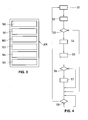
- An autonomous agent module AM is shown schematically in FIG shown, which is designed in the same way as the autonomous agent modules AM1, AM2, AMn.
- the agent module AM comprises (like the agent modules AM1, AM2 and AMn) an optimization module 100, a channel change module 101, a weighting module 102, a monitoring module 103, an update module 104 and a memory module 105.
- step S1 the monitoring module 103 detects the agent module AM1, AM2, AMn current operating values of the assigned access point AP1, AP2, APn.
- the operating values are checked by the monitoring module 103 via the communication link 6 from the so-called management Information database (MIB) of the assigned access point AP1, AP2, APn read and stored in the relevant agent module AM1, AM2, AMn.
- MIB management Information database
- Corresponding to the examples shown in Figures 1 and 2 are so in the agent module AM1 operating values of the access point AP1, in the agent module AM2 operating values of the access point AP2 and in the agent module AMn Operating values of the APn access point are saved.
- the monitoring module 103 thus captures current operating values that correspond to the current number of users of the Access point AP1, AP2, APn specify the current number incorrect data packets received in the assigned access point AP1, Specify AP2, APn, and the current number of error-free data packets received Specify AP1, AP2, APn in the assigned access point.
- the weighting module 102 of the agent module AM1, AM2, AMn calculates a weighting factor for the assigned access point AP1, AP2, APn based on the current operating values acquired in step S1.
- the weighting module 102 calculates the weighting factor for the assigned access point AP1, AP2, APn, based on a usage rate of the assigned access point AP1, AP2, APn, based on a failure rate of the assigned access point AP1, AP2, APn and based on a usage probability of the assigned access point AP1 , AP2, APn.
- the weighting module 102 calculates the usage rate of the assigned access point AP1, AP2, APn by dividing the current number of users of the assigned access point AP1, AP2, APn recorded in step S1 by the maximum number of users of the assigned access point AP1, AP2, APn.
- the weighting module 102 calculates the interference rate of the assigned access point AP1, AP2, APn by dividing the current number of defective data packets received in step S1 in the assigned access point AP1, AP2, APn by the total number of received data packets in the assigned access point AP1, AP2, APn.
- the weighting module 102 calculates the probability of use of the assigned access point AP1, AP2, APn as the probability from the distribution of stored historical values of the recorded number of users of the assigned access point AP1, AP2, APn. Finally, the weighting module 102 transfers the calculated weighting factor for the assigned access point AP1, AP2, APn to the storage module 105 of the relevant agent module AM1, AM2 AMn for storage.
- the weighting module of the agent module AM2 calculates the weighting factor for the assigned access point AP2 based on the usage rate of the assigned access point AP2, based on the failure rate of the assigned access point AP2 and based on the usage probability of the assigned access point AP2 and leaves the calculated weighting factor locally in the memory module 105 of the agent module AM2.
- step S3 the monitoring module 103 examines the agent module AM1, AM2, AMn whether the current number of users acquired in step S1 of the assigned access point AP1, AP2, APn is zero and whether the Current number of faulty data packets received in step S1 a defined tolerance value in the assigned access point AP1, AP2, APn exceeds. If the examination is negative, that is if the current one Greater number of users of the assigned access point AP1, AP2, APn is zero or the current number of faulty data packets received in the assigned access point AP1, AP2, APn does not have the defined tolerance value exceeds, the method moves in the agent module AM1, AM2, AMn in step S8 continues. Otherwise, the process runs in the agent module AM1, AM2, AMn in Step S4 continues.
- the optimization module 100 of the agent module AM1, AM2, AMn determines an optimal carrier frequency or an optimal radio channel for the assigned access point AP1, AP2, APn based on the stored access point information about the access points AP1, AP2, APn.
- the access point information about the adjacent access points AP1, AP2, APn are stored in the memory module 105 and, in addition to identifying the relevant access point AP1, AP2, APn, include the last reported carrier frequency, or the last reported radio channel of the relevant access point AP1, AP2, APn and the last one reported weighting factor of the relevant access point AP1, AP2, APn.
- the optimization module 100 of the agent module AM2 determines the optimal carrier frequency or the optimum radio channel for the assigned access point AP2, based on the current carrier frequency or the current radio channel of the assigned access point AP2, from the current carrier frequencies or current radio channels of the adjacent access points AP1 , APn and from the weighting factors of the neighboring access points AP1, APn.
- the optimization module 100 determines the optimal carrier frequency for the assigned access point AP2 by selecting a radio channel with an assigned carrier frequency from several defined radio channels in such a way that the sum of the differences between the carrier frequency of the selected radio channel and the stored, last reported carrier frequencies of the adjacent access points AP1 and APn is as large as possible, the differences being weighted in each case by the stored last reported weighting factor of the relevant neighboring access point AP1, APn.
- the formula (2) specifies the optimization function f opt (i) for the access point i, where w j is the weighting factor of the adjacent access point j, and ⁇ (i, j) is the difference between the carrier frequency of the access point i and the carrier frequency of the adjacent access point j is:
- step S5 the channel change module 101 sets the agent module AM1, AM2, AMn the optimal carrier frequency determined in step S4, respectively the optimal radio channel determined in the assigned access point AP1, AP2, APn.
- the determined optimal carrier frequency respectively the determined optimal radio channel by the channel change module 101 via the communication link 6 into the MIB of the assigned access point AP1, AP2, APn written.
- the channel change module 101 transfers the set optimal carrier frequency, respectively the set optimal radio channel the memory module 105 of the relevant agent module AM 1, AM2 AMn to save.
- the channel change module 101 writes the Agent module AM2 or the optimal carrier frequency determined in step S4 the determined optimal radio channel in the MIB of the assigned Access point AP2 and leaves the determined optimal carrier frequency, respectively the optimal radio channel determined locally in the memory module 105 of the agent module Save AM2.
- the channel change module 101 of the agent module AM1, AM2, AMn compares the stored access point information about the access points AP1, AP2, APn with stored historical access point information about the access points AP1, AP2, APn.
- the channel change module 101 of the agent module AM1, AM2, AMn compares the carrier frequencies or radio channels stored as access point information, which are assigned to the access points AP1, AP2, APn, with carrier frequencies or radio channels that are stored as historical access point information and past configurations of the assignment of carrier frequencies or respectively Deliver radio channels to the access points AP1, AP2, APn.
- the channel change module 101 of the agent module AM2 compares the carrier frequencies or radio channels stored in the local memory module 105, which are assigned to the access points AP1, AP2, APn, with historical carrier frequencies or radio channels that are stored in the local memory module 105 and past configurations of the assignment of Specify carrier frequencies or radio channels to the access points AP1, AP2, APn. If the current carrier frequencies or radio channels, which are assigned to the access points AP1, AP2, APn according to the stored access point information, match a set of historical carrier frequencies or radio channels which were previously assigned to the access points AP1, AP2, APn according to the stored historical access point information the method in the agent module AM1, AM2, AMn (in the selected example in AM2) continues in step S7.
- the method continues in the agent module AM1, AM2, AMn (in the selected example in AM2) in step S8.
- Access point information in the AM2 agent module identification Carrier frequency / radio channel weighting factor Number of users Number of faulty packages Number of flawless packages assigned access point AP2 a W 2 x y z neighboring access point AP1 b w 1 - - - neighboring access point AP n c W n - - - -
- step S7 the update module 104 transmits the agent module AM1, AM2, AMn current access point information to the agent modules AM1, AM2, AMn, which the neighboring access points AP1, AP2, APn are assigned.
- the agent modules AM1, AM2, AMn of the neighboring ones Access points AP1, AP2, APn store the received access point information each in the local memory module 105.
- the update module transmits 104 of the agent module AM2 the identification of the assigned Access point AP2, the weighting factor calculated in step S2 of the assigned access point AP2 and that determined in step S4 and in Step S5 optimal carrier frequency set in the assigned access point AP2 (or the optimal radio channel) to the agent modules AM1 and AMn of the adjacent access points AP1 or APn.
- Table 1 shows an example of the access point information, which are stored in the memory module 105 of the agent module AM2.
- the access points AP1, AP2, APn in the example of Table 1 AP2 to which the Agent modules AM1, AM2, AMn are assigned (in the example in Table 1 AM2) marked accordingly.
- the neighboring access points AP1, AP2, APn in the example in Table 1 AP1, APn also correspondingly characterized.
- step S9 the agent module AM1, AM2, AMn checks, for example based on a time value, whether the current operating values of the assigned Access point AP1, AP2, APn must be monitored again and, if necessary, continues in step S1. For example, the agent module checks AM2 whether the current operating values of the assigned access point AP2 must be monitored again and moves if necessary in step S1 continued.
Landscapes
- Engineering & Computer Science (AREA)
- Computer Networks & Wireless Communication (AREA)
- Signal Processing (AREA)
- Mobile Radio Communication Systems (AREA)
Priority Applications (5)
| Application Number | Priority Date | Filing Date | Title |
|---|---|---|---|
| EP03405356A EP1480384A1 (fr) | 2003-05-21 | 2003-05-21 | Système pour l'allocation dynamique des fréquences porteuses aux points d'accès d'un réseau local sans fil (WLAN) |
| EP04741591A EP1625704A1 (fr) | 2003-05-21 | 2004-05-18 | Systeme permettant l'attribution dynamique de frequences porteuses a des points d'acces d'un reseau local de radiocommunication (wlan) |
| CA002523370A CA2523370A1 (fr) | 2003-05-21 | 2004-05-18 | Systeme permettant l'attribution dynamique de frequences porteuses a des points d'acces d'un reseau local de radiocommunication (wlan) |
| US10/557,835 US20060291413A1 (en) | 2003-05-21 | 2004-05-18 | System for the dynamic allocation of carrier frequencies to a access points of a wireless local area network (wlan) |
| PCT/EP2004/050838 WO2004105320A1 (fr) | 2003-05-21 | 2004-05-18 | Systeme permettant l'attribution dynamique de frequences porteuses a des points d'acces d'un reseau local de radiocommunication (wlan) |
Applications Claiming Priority (1)
| Application Number | Priority Date | Filing Date | Title |
|---|---|---|---|
| EP03405356A EP1480384A1 (fr) | 2003-05-21 | 2003-05-21 | Système pour l'allocation dynamique des fréquences porteuses aux points d'accès d'un réseau local sans fil (WLAN) |
Publications (1)
| Publication Number | Publication Date |
|---|---|
| EP1480384A1 true EP1480384A1 (fr) | 2004-11-24 |
Family
ID=33041142
Family Applications (2)
| Application Number | Title | Priority Date | Filing Date |
|---|---|---|---|
| EP03405356A Withdrawn EP1480384A1 (fr) | 2003-05-21 | 2003-05-21 | Système pour l'allocation dynamique des fréquences porteuses aux points d'accès d'un réseau local sans fil (WLAN) |
| EP04741591A Withdrawn EP1625704A1 (fr) | 2003-05-21 | 2004-05-18 | Systeme permettant l'attribution dynamique de frequences porteuses a des points d'acces d'un reseau local de radiocommunication (wlan) |
Family Applications After (1)
| Application Number | Title | Priority Date | Filing Date |
|---|---|---|---|
| EP04741591A Withdrawn EP1625704A1 (fr) | 2003-05-21 | 2004-05-18 | Systeme permettant l'attribution dynamique de frequences porteuses a des points d'acces d'un reseau local de radiocommunication (wlan) |
Country Status (4)
| Country | Link |
|---|---|
| US (1) | US20060291413A1 (fr) |
| EP (2) | EP1480384A1 (fr) |
| CA (1) | CA2523370A1 (fr) |
| WO (1) | WO2004105320A1 (fr) |
Families Citing this family (11)
| Publication number | Priority date | Publication date | Assignee | Title |
|---|---|---|---|---|
| US7346357B1 (en) * | 2001-11-08 | 2008-03-18 | At&T Corp. | Frequency assignment for multi-cell IEEE 802.11 wireless networks |
| US7599686B2 (en) | 2005-05-06 | 2009-10-06 | Dell Products L.P. | Systems and methods for RF spectrum management |
| US7474615B2 (en) | 2005-07-11 | 2009-01-06 | Dell Products L.P. | Network optimization based on traffic prioritization |
| US7551641B2 (en) | 2005-07-26 | 2009-06-23 | Dell Products L.P. | Systems and methods for distribution of wireless network access |
| US7903817B2 (en) * | 2006-03-02 | 2011-03-08 | Cisco Technology, Inc. | System and method for wireless network profile provisioning |
| US7716379B2 (en) * | 2007-04-26 | 2010-05-11 | Microsoft Corporation | Hardware control interface for IEEE standard 802.11 including transmission control interface component and a transmission status interface component |
| US8346974B2 (en) | 2007-07-27 | 2013-01-01 | Microsoft Corporation | Hardware control interface for IEEE standard 802.11 |
| US10327254B2 (en) * | 2016-07-28 | 2019-06-18 | GM Global Technology Operations LLC | Method for interference management in vehicles with multiple vehicle hotspots |
| CN113055892B (zh) * | 2019-12-27 | 2022-10-18 | 中国移动通信集团浙江有限公司 | 载波调度方法、装置、计算设备及计算机存储介质 |
| US12598596B2 (en) * | 2022-06-13 | 2026-04-07 | Ruckus Ip Holdings Llc | Channel selection based on multi-hop neighboring-access-point feedback |
| US20240121653A1 (en) * | 2022-09-29 | 2024-04-11 | Samsung Electronics Co., Ltd. | System and method for selecting wireless fidelity (wi-fi) channel for mitigating interferences |
Citations (5)
| Publication number | Priority date | Publication date | Assignee | Title |
|---|---|---|---|---|
| DE4303999A1 (de) * | 1993-02-11 | 1994-08-18 | Philips Patentverwaltung | Mobilfunksystem |
| GB2308789A (en) * | 1995-12-26 | 1997-07-02 | At & T Wireless Services Inc | Spectrum management |
| US5933420A (en) * | 1996-04-30 | 1999-08-03 | 3Com Corporation | Method and apparatus for assigning spectrum of a wireless local area network |
| US20020188723A1 (en) * | 2001-05-11 | 2002-12-12 | Koninklijke Philips Electronics N.V. | Dynamic frequency selection scheme for IEEE 802.11 WLANs |
| EP1311087A2 (fr) * | 2001-11-08 | 2003-05-14 | AT & T Corp. | Attribution des fréquences pour des réseaux multicellulaires sans fil du standard IEEE 802.11 |
Family Cites Families (7)
| Publication number | Priority date | Publication date | Assignee | Title |
|---|---|---|---|---|
| SE500830C2 (sv) * | 1993-05-17 | 1994-09-12 | Ericsson Telefon Ab L M | Förfarande och anordning vid kanalutnyttjandet i ett radiokommunikationssystem |
| CA2182817C (fr) * | 1995-09-08 | 2002-04-09 | Masud Kibria | Methode et appareil d'analyse spectrale |
| US6434367B1 (en) * | 1999-06-11 | 2002-08-13 | Lucent Technologies Inc. | Using decoupled power control sub-channel to control reverse-link channel power |
| US6535833B1 (en) * | 1999-11-22 | 2003-03-18 | Nokia Mobile Phones Ltd. | Method and apparatus for filtering measurements used in a generalized positioning system |
| US6985465B2 (en) * | 2000-07-07 | 2006-01-10 | Koninklijke Philips Electronics N.V. | Dynamic channel selection scheme for IEEE 802.11 WLANs |
| US7406319B2 (en) * | 2001-11-19 | 2008-07-29 | At&T Corp. | WLAN having load balancing by access point admission/termination |
| US6894985B2 (en) * | 2002-08-05 | 2005-05-17 | Harris Corporation | Monitoring link quality in a mobile ad hoc network |
-
2003
- 2003-05-21 EP EP03405356A patent/EP1480384A1/fr not_active Withdrawn
-
2004
- 2004-05-18 CA CA002523370A patent/CA2523370A1/fr not_active Abandoned
- 2004-05-18 WO PCT/EP2004/050838 patent/WO2004105320A1/fr not_active Ceased
- 2004-05-18 EP EP04741591A patent/EP1625704A1/fr not_active Withdrawn
- 2004-05-18 US US10/557,835 patent/US20060291413A1/en not_active Abandoned
Patent Citations (5)
| Publication number | Priority date | Publication date | Assignee | Title |
|---|---|---|---|---|
| DE4303999A1 (de) * | 1993-02-11 | 1994-08-18 | Philips Patentverwaltung | Mobilfunksystem |
| GB2308789A (en) * | 1995-12-26 | 1997-07-02 | At & T Wireless Services Inc | Spectrum management |
| US5933420A (en) * | 1996-04-30 | 1999-08-03 | 3Com Corporation | Method and apparatus for assigning spectrum of a wireless local area network |
| US20020188723A1 (en) * | 2001-05-11 | 2002-12-12 | Koninklijke Philips Electronics N.V. | Dynamic frequency selection scheme for IEEE 802.11 WLANs |
| EP1311087A2 (fr) * | 2001-11-08 | 2003-05-14 | AT & T Corp. | Attribution des fréquences pour des réseaux multicellulaires sans fil du standard IEEE 802.11 |
Also Published As
| Publication number | Publication date |
|---|---|
| WO2004105320A1 (fr) | 2004-12-02 |
| CA2523370A1 (fr) | 2004-12-02 |
| EP1625704A1 (fr) | 2006-02-15 |
| US20060291413A1 (en) | 2006-12-28 |
Similar Documents
| Publication | Publication Date | Title |
|---|---|---|
| DE60108225T2 (de) | Dynamische Frequenzwahl in einem drahtlosen lokalen Netz mit Kanaltausch zwischen Zugriffspunkten | |
| DE60117457T2 (de) | Verfahren und Vorrichtung zur Durchführung drahtloser Kommunikation unter Verwendung einer Vielzahl von Frequenzkanälen | |
| DE60133589T2 (de) | Informieren eines netzwerks über die zu transferierende datenmenge | |
| DE69326656T2 (de) | Verfahren und Gerät zur Selbstorganisation in einem drahtlosen lokalen Netz | |
| DE4302228C2 (de) | Verfahren zur Zuweisung von Frequenzen zu Basisstationen eines Mobilfunknetzes | |
| DE69633201T2 (de) | Verkehrsüberwachung in einem mobilkommunikationsnetzwerk | |
| DE69329215T2 (de) | Einrichtung und Verfahren für die unregelmässige Kanalverteilung in schnurlosen Kommunikationsnetzen | |
| DE60030363T2 (de) | Funknetzwerksteuerung | |
| DE69524119T2 (de) | Dynamischgesteuerte leitweglenkung unter anwendung von virtuellen zielknoten | |
| DE69426788T2 (de) | Adaptives Mediumzugriffssteuerungsschema für ein drahtloses lokales Netz | |
| DE68920490T2 (de) | Verfahren zur Auswahl des geringstwertigen Weges in einem Kommunikationsnetz. | |
| DE68924954T2 (de) | Übertragungssystem für verteilte Datenbanken. | |
| DE60224553T2 (de) | Verfahren und vorrichtung zum automatischen sortieren der nachbarliste einer zelle in einem kommunikationssystem | |
| DE60107374T2 (de) | Kontrollschema für Verbindungszugang durch Verwendung eines verfügbaren Qualitätswertes | |
| DE60215612T2 (de) | Reduzierung von Kanalüberlappungen in drahtlosen lokalen Netzwerken unter Verwendung eines zentralen Zugriffsprotokolls | |
| WO2007128141A1 (fr) | Procédé permettant de faire fonctionner un réseau rfid | |
| EP1186189B1 (fr) | Procede d'attribution de droits d'acces a un canal de communication a des postes d'abonnes d'un reseau de telecommunication et poste d'abonne associe | |
| EP1625704A1 (fr) | Systeme permettant l'attribution dynamique de frequences porteuses a des points d'acces d'un reseau local de radiocommunication (wlan) | |
| DE69117482T2 (de) | Adressverwaltung für entfernte Stationen in einem schleifenförmigen digitalen Übertragungssystem | |
| DE68922905T2 (de) | System und Verfahren zur Zugangsratensteuerung von Stationen in einem Paketvermittlungsnetzwerk. | |
| DE60221566T2 (de) | Verfahren und einrichtung zum datentransfer in einem telekommunikationssystem | |
| DE3130176A1 (de) | Verfahren zur dynamischen zeitschlitzvergabe des organisationskanals zellularer mobilfunknetze in abhaengigkeit vom verkehrsaufkommen | |
| DE60216720T2 (de) | Verfahren zur Auswahl einer maximalen Sendeleistung einer Basisstation | |
| DE4303999A1 (de) | Mobilfunksystem | |
| DE102022126238A1 (de) | Zentralisierte lösung zur topologieoptimierung mit hohem durchsatz für drahtlose maschennetze |
Legal Events
| Date | Code | Title | Description |
|---|---|---|---|
| PUAI | Public reference made under article 153(3) epc to a published international application that has entered the european phase |
Free format text: ORIGINAL CODE: 0009012 |
|
| 17P | Request for examination filed |
Effective date: 20031216 |
|
| AK | Designated contracting states |
Kind code of ref document: A1 Designated state(s): AT BE BG CH CY CZ DE DK EE ES FI FR GB GR HU IE IT LI LU MC NL PT RO SE SI SK TR |
|
| AX | Request for extension of the european patent |
Extension state: AL LT LV MK |
|
| AKX | Designation fees paid | ||
| REG | Reference to a national code |
Ref country code: DE Ref legal event code: 8566 |
|
| STAA | Information on the status of an ep patent application or granted ep patent |
Free format text: STATUS: THE APPLICATION IS DEEMED TO BE WITHDRAWN |
|
| 18D | Application deemed to be withdrawn |
Effective date: 20050524 |