EP1480420B1 - Détermination d'un mode d'introduction par clavier en fonction d'une information de langue - Google Patents
Détermination d'un mode d'introduction par clavier en fonction d'une information de langue Download PDFInfo
- Publication number
- EP1480420B1 EP1480420B1 EP03011446A EP03011446A EP1480420B1 EP 1480420 B1 EP1480420 B1 EP 1480420B1 EP 03011446 A EP03011446 A EP 03011446A EP 03011446 A EP03011446 A EP 03011446A EP 1480420 B1 EP1480420 B1 EP 1480420B1
- Authority
- EP
- European Patent Office
- Prior art keywords
- mobile terminal
- phonebook
- language information
- mode
- record
- Prior art date
- Legal status (The legal status is an assumption and is not a legal conclusion. Google has not performed a legal analysis and makes no representation as to the accuracy of the status listed.)
- Expired - Lifetime
Links
Images

Classifications
-
- G—PHYSICS
- G06—COMPUTING OR CALCULATING; COUNTING
- G06F—ELECTRIC DIGITAL DATA PROCESSING
- G06F3/00—Input arrangements for transferring data to be processed into a form capable of being handled by the computer; Output arrangements for transferring data from processing unit to output unit, e.g. interface arrangements
- G06F3/01—Input arrangements or combined input and output arrangements for interaction between user and computer
- G06F3/02—Input arrangements using manually operated switches, e.g. using keyboards or dials
- G06F3/023—Arrangements for converting discrete items of information into a coded form, e.g. arrangements for interpreting keyboard generated codes as alphanumeric codes, operand codes or instruction codes
- G06F3/0233—Character input methods
- G06F3/0237—Character input methods using prediction or retrieval techniques
-
- H—ELECTRICITY
- H04—ELECTRIC COMMUNICATION TECHNIQUE
- H04M—TELEPHONIC COMMUNICATION
- H04M1/00—Substation equipment, e.g. for use by subscribers
- H04M1/26—Devices for calling a subscriber
- H04M1/27—Devices whereby a plurality of signals may be stored simultaneously
- H04M1/274—Devices whereby a plurality of signals may be stored simultaneously with provision for storing more than one subscriber number at a time, e.g. using toothed disc
- H04M1/2745—Devices whereby a plurality of signals may be stored simultaneously with provision for storing more than one subscriber number at a time, e.g. using toothed disc using static electronic memories, e.g. chips
- H04M1/27467—Methods of retrieving data
- H04M1/2748—Methods of retrieving data by matching character strings
-
- H—ELECTRICITY
- H04—ELECTRIC COMMUNICATION TECHNIQUE
- H04M—TELEPHONIC COMMUNICATION
- H04M1/00—Substation equipment, e.g. for use by subscribers
- H04M1/72—Mobile telephones; Cordless telephones, i.e. devices for establishing wireless links to base stations without route selection
- H04M1/724—User interfaces specially adapted for cordless or mobile telephones
- H04M1/72403—User interfaces specially adapted for cordless or mobile telephones with means for local support of applications that increase the functionality
- H04M1/7243—User interfaces specially adapted for cordless or mobile telephones with means for local support of applications that increase the functionality with interactive means for internal management of messages
- H04M1/72436—User interfaces specially adapted for cordless or mobile telephones with means for local support of applications that increase the functionality with interactive means for internal management of messages for text messaging, e.g. short messaging services [SMS] or e-mails
-
- H—ELECTRICITY
- H04—ELECTRIC COMMUNICATION TECHNIQUE
- H04M—TELEPHONIC COMMUNICATION
- H04M1/00—Substation equipment, e.g. for use by subscribers
- H04M1/26—Devices for calling a subscriber
- H04M1/27—Devices whereby a plurality of signals may be stored simultaneously
- H04M1/274—Devices whereby a plurality of signals may be stored simultaneously with provision for storing more than one subscriber number at a time, e.g. using toothed disc
- H04M1/2745—Devices whereby a plurality of signals may be stored simultaneously with provision for storing more than one subscriber number at a time, e.g. using toothed disc using static electronic memories, e.g. chips
- H04M1/27463—Predictive input, predictive dialling by comparing the dialled sequence with the content of a telephone directory
-
- H—ELECTRICITY
- H04—ELECTRIC COMMUNICATION TECHNIQUE
- H04M—TELEPHONIC COMMUNICATION
- H04M2250/00—Details of telephonic subscriber devices
- H04M2250/58—Details of telephonic subscriber devices including a multilanguage function
-
- H—ELECTRICITY
- H04—ELECTRIC COMMUNICATION TECHNIQUE
- H04M—TELEPHONIC COMMUNICATION
- H04M2250/00—Details of telephonic subscriber devices
- H04M2250/70—Details of telephonic subscriber devices methods for entering alphabetical characters, e.g. multi-tap or dictionary disambiguation
Definitions
- the present invention relates to a control of the keypad input mode for characters on mobile terminals, in particular to a keypad input mode control according to language information associated with a phonebook record.
- Text entry on mobile terminals like e.g. a personal digital assistant or a mobile phone is typically based on a standard telephone keypad.
- the telephone keypad consists of number keys and additional symbol keys with a respective multiple assignation of characters, numbers and/or symbols to allow an entry of text in an alphabetic input mode.
- the characters a to z and some special characters are hereto spread over a subset of the keys.
- an alphabet comprises typically at least 26 characters, three to four characters are grouped on each key resulting in an ambiguous input system.
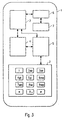
- An example for a respective keypad is shown in Fig. 3.
- the first which is usually referred to as Multitap or multitap-mode is a general purpose text input method where a user presses each key one or more times to specify the desired character.
- a key being assigned the characters m, n, and o will have for instance to be pressed once to obtain the character m, twice for character n, and three times for the character o.
- Problems arise when one character has to be inputted twice or two consecutively inputted characters are provided on the same key.
- a user After having entered the first character, a user will usually have to wait for a certain period or will have to press a special key before being able to enter the second character.
- the multitap-mode is generally not well liked by users of a mobile terminal as it is slow and inefficient.
- dictionary-based disambiguation Another way to overcome the ambiguity is to add a dictionary to the system and compare each key input sequence with the words stored in the dictionary to guess the intended word.
- a respective key input mode technique is known as dictionary-based disambiguation.
- Commercial examples for this type of text input mode are for instance the T9, eZiText, and iTAP text input models.
- dictionary-based disambiguation each key is pressed only once, thus improving the text input rate.
- the guess of the intended text input is based on the probability by which a certain key input sequence corresponds to a certain word. This probability is language dependent.
- the key input sequence 2-8-3 will, assumed the characters a, b, and c are assigned to key 2, t, u, and v to key 8, and d, e, and f to key 3 most probably result in the word 'bud' when an English dictionary is taken as a basis and 'auf' (means e.g. on) when a German dictionary is used. Therefore, each language requires its own dictionary-based disambiguation model.
- a dictionary-based disambiguation model comprises not only the dictionary itself but at least also the probabilities, by which each word of the dictionary can be assigned to a certain key input sequence.
- EP 1 255 184 discloses a communication terminal having a predictive text editor application.
- a language information is either specified by a user or by analysing a received text and the keypad input mode is set to a dictionary-based disambiguation mode which is based on a disambiguation model related to said determined language information when accessible or otherwise the keypad input mode is set to a multitap-mode.
- DE 199 28 666 A1 discloses an extended phone book for a mobile telephone in which a language information is associated with the phone book entries.
- the object of the present invention is to provide an automatic control of the key input mode of a mobile terminal according to the language preferred for a communication with a certain party in a simple and easy way.
- the above object is achieved by a method of controlling a keypad input mode for entering a text message on a mobile terminal according to claim 1 and by a mobile terminal according to claim 6.
- a user of a mobile terminal is prevented from wasting time with writing nonsense text due to a wrongly active dictionary-based disambiguation model and/or searching for an appropriate one.
- the probability of correctly guessing a word intended by entering a certain key sequence is advantageously high when using a disambiguation model formed by the T9, eZiText or iTAP text input method.
- the language information associated to a phonebook record is preferably stored within the phonebook record itself.
- the mobile terminal includes a network access means for accessing a network resource with further phonebook records and/or language information.
- the network access means may hereto advantageously be adapted to automatically establish a respective network link based on a short range wireless network technology like e.g. a Bluetooth or infrared link, and/or by means of a communication link based network access technology
- the mobile terminal is further equipped with a storage means for storing a phonebook and/or a link to a phonebook available on a resource external to the mobile terminal enabling a user to browse for a desired record without having to care for the location where the phonebook records are filed.
- Figure 1 illustrates the basic steps of a method according to the present invention.
- the most common situation on a mobile terminal for deciding in which language a text should be entered is the preparation of a text message to be sent to another party. But a different situation like for instance writing a note regarding a certain person or a person related schedule record may also require a decision in which language the text is to be written.
- a keypad input mode based on a dictionary-based disambiguation model or language model as it is sometimes referred to is preferred. As these models are language dependent, a user will first have to check, which dictionary-based disambiguation model is currently active and probably will then have to select a different one.
- step S00 a relation between a certain party and the text to be written is established in step S01.
- the party is typically identified from a phonebook of the mobile terminal. To speed-up this identification, the relationship used at last may first be offered by default or, in case the text is written in reply or in response to a call or text message received by another party prior to writing the text, the respective party may be presented first of all. Apart from acting in response to a call, SMS or MMS just received and to be answered, a user input is required for the party identification.
- the language information related to the party identified in step S01 is determined next in step S02.
- the language information is preferably stored within the phonebook record containing the party details or linked to it. Alternatively, the language information may be retrieved from address details in the record as e.g. the country of residence or the like. If no such direct or indirect language information is found in the phonebook record, the user will be requested in step S021 for a manual input of the desired information.
- the inputted information is then conveniently stored within the respective phonebook record or linked to it in step S022 before the method proceeds to step S03, which also follows step S02 directly if the language information has been available from the phonebook record.
- a user may skip this part and a default value for the language information is used instead.
- the default may either be the language preferred by the user himself or an indication that no particular language is specified.
- step S03 a search for an appropriate dictionary-based disambiguation model available on the mobile terminal is started in step S03.
- Appropriate means in this context, that the respective dictionary-based disambiguation model supports the language defined by the language information. If an appropriate dictionary-based disambiguation model is found, the keypad input mode will be set on a dictionary-based disambiguation mode based on this model in step S031. Else, the keypad input mode will be set on multitap disambiguation mode in step S032. In both cases, the setting of a proper keypad is completed in step S04.
- Each language information is advantageously linked to its respective phonebook record or stored directly therein.
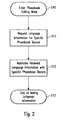
- a procedure shown in Figure 2 may be provided on the mobile terminal.
- a user will in step S11 be requested to provide language information for each phonebook record edited before closing it.
- the entered language information is then associated with the respective phonebook record by either storing it in the database element representing the record or establishing a link to it in step S12 prior to the procedure being completed in step S13.
- the language information can be determined automatically from the received text by means of a text language recognition- system.
- a text language recognition- system Respective systems are for instance described in US 2002/0095288 A1.
- a first system presented therein is based on a Discrete Markov Model, which analyses the transition probabilities between consecutive characters. As these probabilities are strongly language dependent, the language used predominantly in a text can be guessed.
- a further therein proposed system counts the matches from words of the received text with words of the dictionaries of language models from dictionary-based disambiguation models like e.g. T9TM or ZiCorpTM.
- the language recognition may also be based on certain keywords like e.g. "Dear”, “Egregi”, “geehrt” or the like as described in EP 0 984 427 A2.
- the keypad input mode will then be set according to the recognition result.
- a method with one or more procedures described may be realised as a software implemented control of a mobile terminal.
- the software may be stored in a data storage of the mobile terminal or separate from it on a different data carrier which can be accessed from the mobile phone if desired.
- FIG. 3 is a schematic block diagram showing the components required for a mobile terminal 1 according to the present invention. It is to be noted that only those components necessary for the understanding of the present invention are shown. Other components required for the operation of the mobile terminal 1, like a display, antenna, transceiver or the like have been omitted for the sake of a clear illustration.
- the mobile terminal 1 has a keypad 2 formed by an array of keys which are usually used for entering a number or special characters. Some of the keys may also be provided to control certain functions on the mobile terminal 1. In text mode, some keys have a further assignment, whereby at least on one key more than one characters are grouped. Typically, as indicated in Figure 3, three to four characters are grouped on one key, which is the reason for the input ambiguity.
- the mobile terminal 1 further possesses a selecting means 3 for selecting a record from a phonebook available on the mobile terminal 1 as described above in conjunction with Figure 1.
- the language determination means 4 allows to determine a language information associated with a record selected from a phonebook available on the mobile terminal I.
- a phonebook is stored in a storage unit 6 like a memory unit of the mobile terminal 1 itself or a on a SIM (Subscriber Identity Module) card inserted into the respective mobile terminal 1. Due to limited storage capacity available on the mobile terminal 1 or due to a need for managing a phonebook in a context sensitive manner, resources external to the mobile terminal may be used. A user may for instance use a customer database available on a network of his company which data are too sensitive for being transferred on the user's mobile terminal 1. According to an advantageous further development of the present invention, a network access unit 7 is therefore provided on the mobile terminal which enables an automatic set-up of a network link when a phonebook kept separate from the mobile terminal is accessed. The link may be established in response to activating a phonebook link on the mobile terminal or as soon as a user browses for a phonebook entry.
- SIM Subscriber Identity Module
- a network link itself may e.g. be based on a communication link to the communication network of a provider such, that web resources are accessed on the basis of the wireless application protocol (WAP).
- WAP wireless application protocol
- a short range wireless link to a private or company network for instance by means of Bluetooth or infrared technology, is used to benefit from local network resources in the vicinity of the mobile terminal. The latter is particularly useful when the required phonebook content is sensitive to the context of the respective work environment.
- the network access unit 7 may further be used to make the required language model available for the mobile terminal.
- a keypad control 5 is provided on the mobile terminal 1 to control the interpretation of keystrokes on the keypad 2 in terms of at least controlling the keypad input mode according to the language information determined by the language determination means 4.
- the respective keypad input mode is set by the keypad control 5 to a dictionary-based disambiguation mode which is based on a disambiguation model related to said determined language information when accessible or otherwise to multitap-mode.
Landscapes
- Engineering & Computer Science (AREA)
- Theoretical Computer Science (AREA)
- General Engineering & Computer Science (AREA)
- Human Computer Interaction (AREA)
- Signal Processing (AREA)
- Physics & Mathematics (AREA)
- General Physics & Mathematics (AREA)
- Business, Economics & Management (AREA)
- General Business, Economics & Management (AREA)
- Computer Networks & Wireless Communication (AREA)
- Telephone Function (AREA)
- User Interface Of Digital Computer (AREA)
- Input From Keyboards Or The Like (AREA)
- Mobile Radio Communication Systems (AREA)
Claims (9)
- Procédé de commande d'un mode d'entrée au clavier, destiné à la saisie d'un message texte sur un terminal mobile, le procédé comprenant les étapes consistant à :- déterminer (S02, S021, S022) une information de langue associée à un enregistrement d'annuaire téléphonique sélectionné (S01) dans un annuaire téléphonique disponible sur le terminal mobile, et- paramétrer (S031, S032) le mode d'entrée au clavier avec un mode de désambiguïsation fondé sur un dictionnaire, qui est basé sur un modèle de désambiguïsation lié à ladite information de langue déterminée lorsque celle-ci est accessible ou sinon sélectionner pour le mode d'entrée au clavier le mode à frappes multiples (« multitap »),dans lequel l'information de langue associée à un enregistrement de l'annuaire téléphonique est extraite automatiquement d'un message texte reçu antérieurement en provenance d'une partie qui est représentée par l'enregistrement sélectionné dans l'annuaire téléphonique.
- Procédé selon la revendication 1, caractérisé en ce que le message texte est du type SMS ou MMS.
- Procédé selon la revendication 1 ou 2, caractérisé en ce que le modèle de désambiguïsation est formé par un procédé d'entrée de texte T9, un procédé d'entrée de texte eZiText ou un procédé d'entrée de texte iTAP.
- Procédé selon la revendication 1, 2 ou 3, caractérisé en ce que l'information de langue associée à l'enregistrement de l'annuaire téléphonique est stockée dans l'enregistrement de l'annuaire téléphonique lui-même.
- Procédé selon l'une quelconque des revendications 1 à 4, caractérisé en ce que, si aucune information de langue n'est associée à un enregistrement de l'annuaire téléphonique, l'information de langue est déterminée par une valeur par défaut ou une entrée demandée à l'utilisateur.
- Terminal mobile comprenant :- un clavier (2) ayant au moins une touche à laquelle est attribué plus d'un caractère pour la saisie alphabétique,- un moyen de sélection (3), destiné à sélectionner un article dans un annuaire téléphonique disponible sur le terminal mobile (1),- un moyen de détermination de langue (4), destiné à déterminer une information de langue associée à un article sélectionné dans l'annuaire téléphonique, et- un moyen de commande de clavier (5), destiné à commander au moins le mode d'entrée au clavier du terminal mobile,dans lequel le moyen de commande de clavier (5) est adapté pour paramétrer le mode d'entrée au clavier avec un mode de désambiguïsation fondé sur un dictionnaire, qui est basé sur un modèle de désambiguïsation lié à ladite information de langue déterminée lorsque celle-ci est accessible ou sinon paramétrer le mode d'entrée au clavier en mode à frappes multiples (« multitap »),
le terminal mobile comprenant en outre un système de reconnaissance de la langue d'un texte, adapté pour extraire automatiquement l'information de langue associée à un enregistrement de l'annuaire téléphonique à partir d'un message texte reçu antérieurement en provenance d'une partie qui est représentée par l'enregistrement sélectionné dans l'annuaire téléphonique. - Terminal mobile selon la revendication 6, caractérisé en ce que le terminal mobile (1) comprend un moyen d'accès au réseau (7) destiné à accéder à une ressource en réseau.
- Terminal mobile selon la revendication 7, caractérisé en ce que le moyen d'accès au réseau (7) est fondé sur une technologie de liaison au réseau de type sans fil à courte portée et/ou une technologie de liaison au réseau de type liaison de communication.
- Terminal mobile selon la revendication 6, 7 ou 8, caractérisé en ce que le terminal mobile (1) comprend un moyen de stockage (6) destiné à stocker un annuaire téléphonique et/ou une liaison à un annuaire téléphonique disponible sur une ressource extérieure au terminal mobile.
Priority Applications (3)
| Application Number | Priority Date | Filing Date | Title |
|---|---|---|---|
| DE60304246T DE60304246T2 (de) | 2003-05-20 | 2003-05-20 | Einstellung der Betriebsartauswahl in Abhängigkeit von Sprachinformation |
| EP03011446A EP1480420B1 (fr) | 2003-05-20 | 2003-05-20 | Détermination d'un mode d'introduction par clavier en fonction d'une information de langue |
| AT03011446T ATE322121T1 (de) | 2003-05-20 | 2003-05-20 | Einstellung der betriebsartauswahl in abhängigkeit von sprachinformation |
Applications Claiming Priority (1)
| Application Number | Priority Date | Filing Date | Title |
|---|---|---|---|
| EP03011446A EP1480420B1 (fr) | 2003-05-20 | 2003-05-20 | Détermination d'un mode d'introduction par clavier en fonction d'une information de langue |
Publications (2)
| Publication Number | Publication Date |
|---|---|
| EP1480420A1 EP1480420A1 (fr) | 2004-11-24 |
| EP1480420B1 true EP1480420B1 (fr) | 2006-03-29 |
Family
ID=33040969
Family Applications (1)
| Application Number | Title | Priority Date | Filing Date |
|---|---|---|---|
| EP03011446A Expired - Lifetime EP1480420B1 (fr) | 2003-05-20 | 2003-05-20 | Détermination d'un mode d'introduction par clavier en fonction d'une information de langue |
Country Status (3)
| Country | Link |
|---|---|
| EP (1) | EP1480420B1 (fr) |
| AT (1) | ATE322121T1 (fr) |
| DE (1) | DE60304246T2 (fr) |
Cited By (1)
| Publication number | Priority date | Publication date | Assignee | Title |
|---|---|---|---|---|
| CN103003874A (zh) * | 2010-05-06 | 2013-03-27 | 索尼移动通讯有限公司 | 基于语言属性到联系人条目的分配而提供文本服务 |
Families Citing this family (19)
| Publication number | Priority date | Publication date | Assignee | Title |
|---|---|---|---|---|
| US7340390B2 (en) * | 2004-10-27 | 2008-03-04 | Nokia Corporation | Mobile communication terminal and method therefore |
| US7623860B2 (en) * | 2004-10-27 | 2009-11-24 | Nokia Corporation | Mobile communication terminal and method therefore |
| US7825901B2 (en) * | 2004-12-03 | 2010-11-02 | Motorola Mobility, Inc. | Automatic language selection for writing text messages on a handheld device based on a preferred language of the recipient |
| EP1717668A1 (fr) * | 2005-04-29 | 2006-11-02 | Research In Motion Limited | Méthode pour générer du texte possédant certaines caractéristiques dans un dispositif électronique portable, et dispositif électronique portable incorporant cette méthode |
| WO2006125660A2 (fr) * | 2005-05-27 | 2006-11-30 | Sony Ericcson Mobile Communications Ab | Selection automatique de la langue pour le texte saisi dans le cadre d'un message |
| EP1727024A1 (fr) | 2005-05-27 | 2006-11-29 | Sony Ericsson Mobile Communications AB | Sélection automatique de la langue pour la saisie de message textuel |
| US7684821B2 (en) | 2005-09-27 | 2010-03-23 | Research In Motion Limited | Multi-tap keyboard user interface |
| DE602005013227D1 (de) * | 2005-09-27 | 2009-04-23 | Research In Motion Ltd | Benutzerschnittstelle für eine multi-tap Tastatur mit Eingaberegionen |
| US7962857B2 (en) | 2005-10-14 | 2011-06-14 | Research In Motion Limited | Automatic language selection for improving text accuracy |
| EP2202612B1 (fr) * | 2005-10-14 | 2018-12-19 | BlackBerry Limited | Selection automatique de la langue pour simplifier la composition d'un texte |
| KR100800663B1 (ko) * | 2005-12-09 | 2008-02-01 | 삼성전자주식회사 | 이동 통신 단말기의 메시지 송수신 방법 |
| EP1855235A1 (fr) | 2006-05-09 | 2007-11-14 | Research In Motion Limited | Dispositif électronique portatif comprenant la sélection automatique de l'entrée du langage, et procédé associé |
| US7822434B2 (en) | 2006-05-09 | 2010-10-26 | Research In Motion Limited | Handheld electronic device including automatic selection of input language, and associated method |
| EP1901534B1 (fr) | 2006-09-18 | 2010-09-01 | LG Electronics Inc. | Méthode de gestion de langue pour la saisie de texte, méthode d'introduction de texte et terminal mobile |
| US8010338B2 (en) | 2006-11-27 | 2011-08-30 | Sony Ericsson Mobile Communications Ab | Dynamic modification of a messaging language |
| TW200839539A (en) * | 2007-03-29 | 2008-10-01 | Nokia Corp | Business card scanning |
| US8326333B2 (en) | 2009-11-11 | 2012-12-04 | Sony Ericsson Mobile Communications Ab | Electronic device and method of controlling the electronic device |
| US20110161829A1 (en) * | 2009-12-24 | 2011-06-30 | Nokia Corporation | Method and Apparatus for Dictionary Selection |
| US8588825B2 (en) * | 2010-05-25 | 2013-11-19 | Sony Corporation | Text enhancement |
Family Cites Families (4)
| Publication number | Priority date | Publication date | Assignee | Title |
|---|---|---|---|---|
| JPH0833049A (ja) * | 1994-07-19 | 1996-02-02 | Mitsubishi Electric Corp | 携帯型無線通信装置 |
| DE19928666A1 (de) * | 1999-06-23 | 2000-12-28 | Bosch Gmbh Robert | Erweitertes Telefonbuch für ein Mobiltelefon |
| GB2366940B (en) * | 2000-09-06 | 2004-08-11 | Ericsson Telefon Ab L M | Text language detection |
| GB0111012D0 (en) * | 2001-05-04 | 2001-06-27 | Nokia Corp | A communication terminal having a predictive text editor application |
-
2003
- 2003-05-20 DE DE60304246T patent/DE60304246T2/de not_active Expired - Lifetime
- 2003-05-20 AT AT03011446T patent/ATE322121T1/de not_active IP Right Cessation
- 2003-05-20 EP EP03011446A patent/EP1480420B1/fr not_active Expired - Lifetime
Cited By (1)
| Publication number | Priority date | Publication date | Assignee | Title |
|---|---|---|---|---|
| CN103003874A (zh) * | 2010-05-06 | 2013-03-27 | 索尼移动通讯有限公司 | 基于语言属性到联系人条目的分配而提供文本服务 |
Also Published As
| Publication number | Publication date |
|---|---|
| EP1480420A1 (fr) | 2004-11-24 |
| DE60304246T2 (de) | 2006-11-02 |
| DE60304246D1 (de) | 2006-05-18 |
| ATE322121T1 (de) | 2006-04-15 |
Similar Documents
| Publication | Publication Date | Title |
|---|---|---|
| EP1480420B1 (fr) | Détermination d'un mode d'introduction par clavier en fonction d'une information de langue | |
| EP1480421B1 (fr) | Détermination automatique d'un mode d'introduction par clavier en réponse à un message texte entrant | |
| US8169409B2 (en) | Method of managing a language information for a text input and method of inputting a text and a mobile terminal | |
| EP2089789B1 (fr) | Prédiction de mots | |
| US8010338B2 (en) | Dynamic modification of a messaging language | |
| EP1320023A2 (fr) | Terminal de communication possédant une application d'éditeur de texte | |
| US8364134B2 (en) | Automatic language selection for text input in messaging context | |
| US6556841B2 (en) | Spelling correction for two-way mobile communication devices | |
| US7663603B2 (en) | Communications device with a dictionary which can be updated with words contained in the text messages | |
| US20080126075A1 (en) | Input prediction | |
| JP2000092186A (ja) | 通信タ―ミナル | |
| WO2004109547A1 (fr) | Procede et systeme destines au transfert d'enregistrements de donnees actives et passives entre deux memoires | |
| US20030228862A1 (en) | Portable terminal apparatus | |
| US7451178B2 (en) | Data transfer | |
| US20080003984A1 (en) | Method and system for improved handling of message templates | |
| WO2006125660A2 (fr) | Selection automatique de la langue pour le texte saisi dans le cadre d'un message | |
| EP1452951A1 (fr) | Un système de saisie des textes dans des terminaux à clavier réduit | |
| JP3873726B2 (ja) | 電子名刺による日本語変換辞書登録方法及び装置 | |
| JP2002183127A (ja) | ユーザ辞書生成登録システム、辞書サーバ、端末、ユーザ辞書生成方法、ユーザ辞書登録方法、ならびに、情報記録媒体 | |
| KR100608149B1 (ko) | 모바일 단어장 서비스 방법 | |
| KR20040098912A (ko) | 휴대전화를 이용한 외국어학습 시스템 및 방법 | |
| KR20090063969A (ko) | 이동통신단말기의 전화번호부 자동 갱신 방법 | |
| GB2378293A (en) | Processing and storing characters of a non-alphabetical language | |
| ITRM990252A1 (it) | Tecnica di accesso automatico all'elenco informazioni abbonati mediante l'uso della tastiera dei cellulari. | |
| KR20000018534A (ko) | 문자 입력에 의한 자동 다이얼링 방법 |
Legal Events
| Date | Code | Title | Description |
|---|---|---|---|
| PUAI | Public reference made under article 153(3) epc to a published international application that has entered the european phase |
Free format text: ORIGINAL CODE: 0009012 |
|
| AK | Designated contracting states |
Kind code of ref document: A1 Designated state(s): AT BE BG CH CY CZ DE DK EE ES FI FR GB GR HU IE IT LI LU MC NL PT RO SE SI SK TR |
|
| AX | Request for extension of the european patent |
Extension state: AL LT LV MK |
|
| 17P | Request for examination filed |
Effective date: 20041117 |
|
| AKX | Designation fees paid |
Designated state(s): AT BE BG CH CY CZ DE DK EE ES FI FR GB GR HU IE IT LI LU MC NL PT RO SE SI SK TR |
|
| GRAP | Despatch of communication of intention to grant a patent |
Free format text: ORIGINAL CODE: EPIDOSNIGR1 |
|
| GRAS | Grant fee paid |
Free format text: ORIGINAL CODE: EPIDOSNIGR3 |
|
| GRAA | (expected) grant |
Free format text: ORIGINAL CODE: 0009210 |
|
| AK | Designated contracting states |
Kind code of ref document: B1 Designated state(s): AT BE BG CH CY CZ DE DK EE ES FI FR GB GR HU IE IT LI LU MC NL PT RO SE SI SK TR |
|
| PG25 | Lapsed in a contracting state [announced via postgrant information from national office to epo] |
Ref country code: SI Free format text: LAPSE BECAUSE OF FAILURE TO SUBMIT A TRANSLATION OF THE DESCRIPTION OR TO PAY THE FEE WITHIN THE PRESCRIBED TIME-LIMIT Effective date: 20060329 Ref country code: IT Free format text: LAPSE BECAUSE OF FAILURE TO SUBMIT A TRANSLATION OF THE DESCRIPTION OR TO PAY THE FEE WITHIN THE PRESCRIBED TIME-LIMIT;WARNING: LAPSES OF ITALIAN PATENTS WITH EFFECTIVE DATE BEFORE 2007 MAY HAVE OCCURRED AT ANY TIME BEFORE 2007. THE CORRECT EFFECTIVE DATE MAY BE DIFFERENT FROM THE ONE RECORDED. Effective date: 20060329 Ref country code: RO Free format text: LAPSE BECAUSE OF FAILURE TO SUBMIT A TRANSLATION OF THE DESCRIPTION OR TO PAY THE FEE WITHIN THE PRESCRIBED TIME-LIMIT Effective date: 20060329 Ref country code: NL Free format text: LAPSE BECAUSE OF FAILURE TO SUBMIT A TRANSLATION OF THE DESCRIPTION OR TO PAY THE FEE WITHIN THE PRESCRIBED TIME-LIMIT Effective date: 20060329 Ref country code: LI Free format text: LAPSE BECAUSE OF FAILURE TO SUBMIT A TRANSLATION OF THE DESCRIPTION OR TO PAY THE FEE WITHIN THE PRESCRIBED TIME-LIMIT Effective date: 20060329 Ref country code: AT Free format text: LAPSE BECAUSE OF FAILURE TO SUBMIT A TRANSLATION OF THE DESCRIPTION OR TO PAY THE FEE WITHIN THE PRESCRIBED TIME-LIMIT Effective date: 20060329 Ref country code: SK Free format text: LAPSE BECAUSE OF FAILURE TO SUBMIT A TRANSLATION OF THE DESCRIPTION OR TO PAY THE FEE WITHIN THE PRESCRIBED TIME-LIMIT Effective date: 20060329 Ref country code: CH Free format text: LAPSE BECAUSE OF FAILURE TO SUBMIT A TRANSLATION OF THE DESCRIPTION OR TO PAY THE FEE WITHIN THE PRESCRIBED TIME-LIMIT Effective date: 20060329 Ref country code: BE Free format text: LAPSE BECAUSE OF FAILURE TO SUBMIT A TRANSLATION OF THE DESCRIPTION OR TO PAY THE FEE WITHIN THE PRESCRIBED TIME-LIMIT Effective date: 20060329 |
|
| REG | Reference to a national code |
Ref country code: GB Ref legal event code: FG4D |
|
| REG | Reference to a national code |
Ref country code: CH Ref legal event code: EP |
|
| REG | Reference to a national code |
Ref country code: IE Ref legal event code: FG4D |
|
| REF | Corresponds to: |
Ref document number: 60304246 Country of ref document: DE Date of ref document: 20060518 Kind code of ref document: P |
|
| PG25 | Lapsed in a contracting state [announced via postgrant information from national office to epo] |
Ref country code: IE Free format text: LAPSE BECAUSE OF NON-PAYMENT OF DUE FEES Effective date: 20060522 |
|
| PG25 | Lapsed in a contracting state [announced via postgrant information from national office to epo] |
Ref country code: MC Free format text: LAPSE BECAUSE OF NON-PAYMENT OF DUE FEES Effective date: 20060531 |
|
| PG25 | Lapsed in a contracting state [announced via postgrant information from national office to epo] |
Ref country code: SE Free format text: LAPSE BECAUSE OF FAILURE TO SUBMIT A TRANSLATION OF THE DESCRIPTION OR TO PAY THE FEE WITHIN THE PRESCRIBED TIME-LIMIT Effective date: 20060629 Ref country code: DK Free format text: LAPSE BECAUSE OF FAILURE TO SUBMIT A TRANSLATION OF THE DESCRIPTION OR TO PAY THE FEE WITHIN THE PRESCRIBED TIME-LIMIT Effective date: 20060629 Ref country code: BG Free format text: LAPSE BECAUSE OF FAILURE TO SUBMIT A TRANSLATION OF THE DESCRIPTION OR TO PAY THE FEE WITHIN THE PRESCRIBED TIME-LIMIT Effective date: 20060629 |
|
| PG25 | Lapsed in a contracting state [announced via postgrant information from national office to epo] |
Ref country code: ES Free format text: LAPSE BECAUSE OF FAILURE TO SUBMIT A TRANSLATION OF THE DESCRIPTION OR TO PAY THE FEE WITHIN THE PRESCRIBED TIME-LIMIT Effective date: 20060710 |
|
| PG25 | Lapsed in a contracting state [announced via postgrant information from national office to epo] |
Ref country code: PT Free format text: LAPSE BECAUSE OF FAILURE TO SUBMIT A TRANSLATION OF THE DESCRIPTION OR TO PAY THE FEE WITHIN THE PRESCRIBED TIME-LIMIT Effective date: 20060829 |
|
| REG | Reference to a national code |
Ref country code: CH Ref legal event code: PL |
|
| NLV1 | Nl: lapsed or annulled due to failure to fulfill the requirements of art. 29p and 29m of the patents act | ||
| ET | Fr: translation filed | ||
| PLBE | No opposition filed within time limit |
Free format text: ORIGINAL CODE: 0009261 |
|
| STAA | Information on the status of an ep patent application or granted ep patent |
Free format text: STATUS: NO OPPOSITION FILED WITHIN TIME LIMIT |
|
| 26N | No opposition filed |
Effective date: 20070102 |
|
| PG25 | Lapsed in a contracting state [announced via postgrant information from national office to epo] |
Ref country code: CZ Free format text: LAPSE BECAUSE OF FAILURE TO SUBMIT A TRANSLATION OF THE DESCRIPTION OR TO PAY THE FEE WITHIN THE PRESCRIBED TIME-LIMIT Effective date: 20060329 Ref country code: GR Free format text: LAPSE BECAUSE OF FAILURE TO SUBMIT A TRANSLATION OF THE DESCRIPTION OR TO PAY THE FEE WITHIN THE PRESCRIBED TIME-LIMIT Effective date: 20060630 |
|
| PG25 | Lapsed in a contracting state [announced via postgrant information from national office to epo] |
Ref country code: FI Free format text: LAPSE BECAUSE OF FAILURE TO SUBMIT A TRANSLATION OF THE DESCRIPTION OR TO PAY THE FEE WITHIN THE PRESCRIBED TIME-LIMIT Effective date: 20060329 Ref country code: EE Free format text: LAPSE BECAUSE OF FAILURE TO SUBMIT A TRANSLATION OF THE DESCRIPTION OR TO PAY THE FEE WITHIN THE PRESCRIBED TIME-LIMIT Effective date: 20060329 |
|
| PG25 | Lapsed in a contracting state [announced via postgrant information from national office to epo] |
Ref country code: TR Free format text: LAPSE BECAUSE OF FAILURE TO SUBMIT A TRANSLATION OF THE DESCRIPTION OR TO PAY THE FEE WITHIN THE PRESCRIBED TIME-LIMIT Effective date: 20060329 Ref country code: HU Free format text: LAPSE BECAUSE OF FAILURE TO SUBMIT A TRANSLATION OF THE DESCRIPTION OR TO PAY THE FEE WITHIN THE PRESCRIBED TIME-LIMIT Effective date: 20060930 Ref country code: LU Free format text: LAPSE BECAUSE OF NON-PAYMENT OF DUE FEES Effective date: 20060520 |
|
| PG25 | Lapsed in a contracting state [announced via postgrant information from national office to epo] |
Ref country code: CY Free format text: LAPSE BECAUSE OF FAILURE TO SUBMIT A TRANSLATION OF THE DESCRIPTION OR TO PAY THE FEE WITHIN THE PRESCRIBED TIME-LIMIT Effective date: 20060329 |
|
| REG | Reference to a national code |
Ref country code: FR Ref legal event code: PLFP Year of fee payment: 14 |
|
| REG | Reference to a national code |
Ref country code: FR Ref legal event code: PLFP Year of fee payment: 15 |
|
| PGFP | Annual fee paid to national office [announced via postgrant information from national office to epo] |
Ref country code: GB Payment date: 20180329 Year of fee payment: 16 |
|
| REG | Reference to a national code |
Ref country code: FR Ref legal event code: PLFP Year of fee payment: 16 |
|
| PGFP | Annual fee paid to national office [announced via postgrant information from national office to epo] |
Ref country code: FR Payment date: 20180501 Year of fee payment: 16 |
|
| PGFP | Annual fee paid to national office [announced via postgrant information from national office to epo] |
Ref country code: DE Payment date: 20190508 Year of fee payment: 17 |
|
| GBPC | Gb: european patent ceased through non-payment of renewal fee |
Effective date: 20190520 |
|
| PG25 | Lapsed in a contracting state [announced via postgrant information from national office to epo] |
Ref country code: GB Free format text: LAPSE BECAUSE OF NON-PAYMENT OF DUE FEES Effective date: 20190520 |
|
| PG25 | Lapsed in a contracting state [announced via postgrant information from national office to epo] |
Ref country code: FR Free format text: LAPSE BECAUSE OF NON-PAYMENT OF DUE FEES Effective date: 20190531 |
|
| REG | Reference to a national code |
Ref country code: DE Ref legal event code: R119 Ref document number: 60304246 Country of ref document: DE |
|
| PG25 | Lapsed in a contracting state [announced via postgrant information from national office to epo] |
Ref country code: DE Free format text: LAPSE BECAUSE OF NON-PAYMENT OF DUE FEES Effective date: 20201201 |