EP1480505A2 - Bedientafel zur Bedienung von Werkzeug- oder Produktionsmaschinen - Google Patents
Bedientafel zur Bedienung von Werkzeug- oder Produktionsmaschinen Download PDFInfo
- Publication number
- EP1480505A2 EP1480505A2 EP04009566A EP04009566A EP1480505A2 EP 1480505 A2 EP1480505 A2 EP 1480505A2 EP 04009566 A EP04009566 A EP 04009566A EP 04009566 A EP04009566 A EP 04009566A EP 1480505 A2 EP1480505 A2 EP 1480505A2
- Authority
- EP
- European Patent Office
- Prior art keywords
- control panel
- configuration
- panel
- membrane keyboard
- panel according
- Prior art date
- Legal status (The legal status is an assumption and is not a legal conclusion. Google has not performed a legal analysis and makes no representation as to the accuracy of the status listed.)
- Withdrawn
Links
Images




Classifications
-
- H—ELECTRICITY
- H05—ELECTRIC TECHNIQUES NOT OTHERWISE PROVIDED FOR
- H05K—PRINTED CIRCUITS; CASINGS OR CONSTRUCTIONAL DETAILS OF ELECTRIC APPARATUS; MANUFACTURE OF ASSEMBLAGES OF ELECTRICAL COMPONENTS
- H05K5/00—Casings, cabinets or drawers for electric apparatus
- H05K5/02—Details
- H05K5/0208—Interlock mechanisms; Means for avoiding unauthorised use or function, e.g. tamperproof
-
- H—ELECTRICITY
- H01—ELECTRIC ELEMENTS
- H01H—ELECTRIC SWITCHES; RELAYS; SELECTORS; EMERGENCY PROTECTIVE DEVICES
- H01H13/00—Switches having rectilinearly-movable operating part or parts adapted for pushing or pulling in one direction only, e.g. push-button switch
- H01H13/70—Switches having rectilinearly-movable operating part or parts adapted for pushing or pulling in one direction only, e.g. push-button switch having a plurality of operating members associated with different sets of contacts, e.g. keyboard
- H01H13/702—Switches having rectilinearly-movable operating part or parts adapted for pushing or pulling in one direction only, e.g. push-button switch having a plurality of operating members associated with different sets of contacts, e.g. keyboard with contacts carried by or formed from layers in a multilayer structure, e.g. membrane switches
- H01H13/705—Switches having rectilinearly-movable operating part or parts adapted for pushing or pulling in one direction only, e.g. push-button switch having a plurality of operating members associated with different sets of contacts, e.g. keyboard with contacts carried by or formed from layers in a multilayer structure, e.g. membrane switches characterised by construction, mounting or arrangement of operating parts, e.g. push-buttons or keys
-
- H—ELECTRICITY
- H01—ELECTRIC ELEMENTS
- H01H—ELECTRIC SWITCHES; RELAYS; SELECTORS; EMERGENCY PROTECTIVE DEVICES
- H01H2223/00—Casings
- H01H2223/008—Casings metallic
-
- H—ELECTRICITY
- H01—ELECTRIC ELEMENTS
- H01H—ELECTRIC SWITCHES; RELAYS; SELECTORS; EMERGENCY PROTECTIVE DEVICES
- H01H2229/00—Manufacturing
- H01H2229/022—Modular assembly
Definitions
- the invention relates to a control panel for operation of machine tools or production machines, with the control panel one to specific customer requests in terms of shape and equipment customizable membrane keyboard.
- control panels for operating machine tools or production machines are generally known.
- the control panels serve to monitor the production process as well e.g. for entering parameters or for user-guided Control of the machine tool or production machine.
- the plastic front has so far been tool-bound, e.g. with a plastic injection molding machine in a corresponding Injection mold made.
- the production of such Injection molding is very complex and involves high costs.
- New variants of operator panel fronts with one specific customer requests of adapted form and equipment are therefore for small and medium quantities with high Cost and adjustment effort connected. For smaller quantities are therefore special in terms of shape and equipment Design often requires great compromises.
- the interface on the front is tool-based Plastic fronts can only be realized with great effort. The effort for a new product variant is almost the same that of a new development.
- the invention is therefore based on the object of a control panel, that with little effort to meet individual customer requests can be customized to create.
- This task is for an operator panel of the type mentioned Art solved in that the control panel for attachment the membrane keyboard, a shape and equipment of the membrane keyboard adapted front panel and to the outer contour frame profiles adapted to the front panel to accommodate the Has front panel.
- control panel according to the invention enables faster product development process.
- control panel as a rear-side housing closure one adapted to the shape of the front panel Has carrier plate. This ensures a secure housing closure ensured.
- front panel and / or the frame profiles and / or the Carrier plate of the control panel made of metal, this can especially light according to the desired shape and equipment the control panel.
- the membrane keyboard and the front panel one or more cutouts for a display and / or an analog operated manual input and / or short-stroke keys and / or a communication interface having.
- cutouts simple, in any form and almost any Number for specific controls or displays in the
- the membrane keyboard and the front panel can provide the Control panel can be individually adapted to customer requirements.
- USB interface a USB interface
- Fire wire interface a USB interface
- Ethernet interface a professional bus interface
- control panel using a configuration program by selecting possible configurations by the user before manufacturing the operator panel can be planned.
- a configuration program enables a special one for the customer or sales / marketing easy way to control panel before manufacturing to plan.
- FIG. 1 shows the basic structure in the form of an exploded drawing shown the control panel according to the invention.
- a membrane keyboard 1 which is in the form and Features of the membrane keyboard 1 adapted front panel 4 attached will be shown.
- Frame profiles 2a, 2b, 2c and 2d serve to accommodate the Front panel 4.
- the membrane keyboard 1 there are two softkey fields 11a and 11b and a keyboard 12 integrated.
- the membrane keyboard 1 has a cutout 13 and Front panel 4 has a cutout 14 for a display 6.
- Between Front plate 4 and display 6 is a glass sheet 5 for Protection of the display 6 mounted.
- the rear end of the housing is adapted in the form of a front panel 4 Carrier plate 7 realized.
- fastening bolts 8a, 8b, 8c and 8d With the help of fastening bolts 8a, 8b, 8c and 8d, the front panel 4 with the carrier plate 7 connected.
- the display 6 is over with the carrier plate 7 four smaller ones, not in FIG. 1 for the sake of clarity numbered fastening bolts, fastened.
- the manufacturers of control panels more and more the requirement for a tool or production machine customized control panels to deliver.
- the location and number of softkey fields which each have a variable number of softkeys and the keyboard fields as well as the position and size of the display especially the height and width of the display and the shape especially the height and width of the control panel individually be definable by the customer.
- the control panel according to the invention now sets at this point on.
- a front panel 4 can easily e.g. by means of stamping from sheet metal, even in small quantities can be produced inexpensively.
- the one on the front panel 4 adapted frame profiles 2a, 2b, 2c and 2d can also made of metal profiles, even in smaller quantities can be produced inexpensively. You only need to do this from a long profile bar the frame profiles accordingly the required length and width of the front panel 4 or the membrane keyboard 1 can be cut.
- the otherwise usual used plastic front is quasi through a modular system, that the four frame profiles 2a, 2b, 2c and 2d and a front plate 4, replaced.
- the Modular system is implemented in the form of a picture frame. This is also a cost-effective production of control panels possible with small quantities.
- the membrane keyboard 1 can of course other cutouts, e.g. for a communication interface or an analog operated manual input, exhibit.
- the front panel 4 can then be used accordingly corresponding cutouts are made.
- Embodiment has the front panel 4 an additional Cutout 15 for the passage of a ribbon cable 16 from the membrane keyboard 1.
- the front panel 4 can easily be labeled for e.g. the USB port or an analog one Realize manual input.
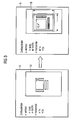
- FIGS 2 to 5 are exemplary each two from the configuration program on one screen generated screen window 9 shown.
- the configuration program can e.g. on a standard staff Computer or laptop or the like are started.
- First the user must determine the size of the display. For this he can either the display size in the embodiment set to 10.4 cm, 12 cm or 15 cm screen diagonal.
- Display size in the exemplary embodiment was 10.4 cm screen diagonal selected
- the configuration program creates production-relevant drawings for the selected one Configuration of the control panel.
- front panel and the frame profiles not necessarily made of metal as in the embodiment his. It can also consist of other materials. Metal versions are particularly easy to match Adjust membrane keyboard.
- a machine tool e.g. single or multi-axis turning, milling, drilling or grinding machines are to be understood. Become a machine tool also machining centers, linear and rotary Transfer machines, laser machines or rolling and gear cutting machines counted. Common to all is that a material is processed is carried out, this machining multi-axis can be.
- the production machines are e.g. Textile-, Plastic, wood, glass, ceramic or stone processing machines counted. Machines for metal forming, packaging technology, Printing technology, conveyor technology, pump technology, fan technology, Lifting tools and robots are also among the Production machines.
Landscapes
- Engineering & Computer Science (AREA)
- Computer Security & Cryptography (AREA)
- Microelectronics & Electronic Packaging (AREA)
- Numerical Control (AREA)
- Injection Moulding Of Plastics Or The Like (AREA)
- Casings For Electric Apparatus (AREA)
- General Factory Administration (AREA)
Abstract
Description
- FIG 1
- den Basisaufbau der Bedientafel,
- FIG 2
- die Auswahl der Displaygröße mit dem Konfigurationsprogramms,
- FIG 3
- die Auswahl der Anzahl und Lage der Softkeyfelder mit dem Konfigurationsprogramm,
- FIG 4
- die Auswahl der Lage eines Tastaturblocks mit dem Konfigurationsprogramms und
- FIG 5
- eine Auswahl der Minimalabmessung der Bedientafel sowie das Ergebnis der gewählten Konfiguration.
Claims (9)
- Bedientafel zur Bedienung von Werkzeug- oder Produktionsmaschinen wobei die Bedientafel ein an spezifische Kundenwünsche in der Form und Ausstattung anpassbare Folientastatur (1) aufweist, dadurch gekennzeichnet, dass die Bedientafel zur Befestigung der Folientastatur (1), eine an die Form und Ausstattung der Folientastatur (1) angepasste Frontplatte (4) sowie an die Außenkontur der Frontplatte (4) angepasste Rahmenprofile (2a,2b,2c,2d) zur Aufnahme der Frontplatte (4) aufweist.
- Bedientafel nach Anspruch 1, dadurch gekennzeichnet, dass die Bedientafel als rückwandseitiger Gehäuseabschluss eine in der Form der Frontplatte (4) angepasste Trägerplatte (7) aufweist.
- Bedientafel, nach einem der vorhergehenden Ansprüche, dadurch gekennzeichnet, dass die Frontplatte (4) und/oder die Rahmenprofile (2a,2b,2c,2d) und/oder die Trägerplatte (7) aus Metall besteht.
- Bedientafel, nach einem der vorhergehenden Ansprüche, dadurch gekennzeichnet, dass die Folientastatur (1) und die Frontplatte (4) einen oder mehrere Ausschnitte (14,15) für einen Display (6) und/oder eine analog bedienbare Handeingabe und/oder Kurzhubtasten und/oder eine Kommunikationsschnittstelle aufweist.
- Bedientafel, nach Anspruche 4, dadurch gekennzeichnet, dass als Kommunikationsschnittstelle eine USB-Schnittstelle, Fire-Wire-Schnittstelle, Ethernet-Schnittstelle oder eine Profi-Bus-Schnittstelle vorgesehen ist.
- Bedientafel nach einem der vorhergehenden Ansprüche, dadurch gekennzeichnet, dass die Bedientafel mit Hilfe eines Konfigurationsprogramms durch Auswahl von möglichen Konfigurationen vom Anwender vor Fertigung der Bedientafel planbar ist.
- Bedientafel, nach Anspruche 6, dadurch gekennzeichnet, dass die Auswahl der möglichen Konfigurationen vom Anwender mittels einer schrittweisen Auswahl und Darstellung der Konfiguration durchführbar ist.
- Bedientafel, nach Anspruch 6 oder 7, dadurch gekennzeichnet, dass nach durchgeführter Konfiguration vom Konfigurationsprogramm eine Berechnung der Kosten und/oder des Preises der Bedientafel erfolgt.
- Bedientafel, nach Anspruch 6, 7 oder 8, dadurch gekennzeichnet, dass nach durchgeführter Konfiguration vom Konfigurationsprogramm fertigungsrelevante Zeichnungen für die Bedientafel erstellbar sind.
Applications Claiming Priority (2)
| Application Number | Priority Date | Filing Date | Title |
|---|---|---|---|
| DE10321663A DE10321663A1 (de) | 2003-05-14 | 2003-05-14 | Bedientafel zur Bedienung von Werkzeug-oder Produktionsmaschinen |
| DE10321663 | 2003-05-14 |
Publications (2)
| Publication Number | Publication Date |
|---|---|
| EP1480505A2 true EP1480505A2 (de) | 2004-11-24 |
| EP1480505A3 EP1480505A3 (de) | 2007-07-18 |
Family
ID=33039176
Family Applications (1)
| Application Number | Title | Priority Date | Filing Date |
|---|---|---|---|
| EP04009566A Withdrawn EP1480505A3 (de) | 2003-05-14 | 2004-04-22 | Bedientafel zur Bedienung von Werkzeug- oder Produktionsmaschinen |
Country Status (3)
| Country | Link |
|---|---|
| US (1) | US20040239634A1 (de) |
| EP (1) | EP1480505A3 (de) |
| DE (1) | DE10321663A1 (de) |
Families Citing this family (2)
| Publication number | Priority date | Publication date | Assignee | Title |
|---|---|---|---|---|
| AU2008258137A1 (en) * | 2008-12-15 | 2010-07-01 | Handiicom Pty Ltd | A face plate |
| US11554461B1 (en) | 2018-02-13 | 2023-01-17 | Omax Corporation | Articulating apparatus of a waterjet system and related technology |
Family Cites Families (24)
| Publication number | Priority date | Publication date | Assignee | Title |
|---|---|---|---|---|
| US4284144A (en) * | 1979-10-03 | 1981-08-18 | The United States Of America As Represented By The Secretary Of The Interior | Passive explosion barrier for mines |
| DE3511601A1 (de) * | 1985-03-27 | 1986-10-02 | Createc Elektronik Gmbh | Signalverarbeitungsgeraet |
| GB8728836D0 (en) * | 1987-12-10 | 1988-01-27 | Quantel Ltd | Electronic image processing |
| US5528235A (en) * | 1991-09-03 | 1996-06-18 | Edward D. Lin | Multi-status multi-function data processing key and key array |
| DE9402643U1 (de) * | 1994-02-17 | 1994-04-07 | MEYRA Wilhelm Meyer GmbH & Co KG, 32689 Kalletal | Betätigungsvorrichtung für Folientastaturen |
| US5636101A (en) * | 1995-09-27 | 1997-06-03 | Dynapro Systems, Inc. | Touch screen enclosure system having touch screen pan and hinged rear enclosure section for ease of serviceability |
| DE19607137A1 (de) * | 1996-02-26 | 1997-08-28 | Robert Duscher | Aufnahmerahmen für Einbaugeräte von Bedien- und Arbeitspulten |
| DE19609795A1 (de) * | 1996-03-13 | 1997-07-03 | Loh Kg Rittal Werk | Gehäuse |
| US5844554A (en) * | 1996-09-17 | 1998-12-01 | Bt Squared Technologies, Inc. | Methods and systems for user interfaces and constraint handling configurations software |
| US5892178A (en) * | 1997-03-20 | 1999-04-06 | Qualcomm Incorporated | Support fixture for control panel assembly |
| US6803905B1 (en) * | 1997-05-30 | 2004-10-12 | International Business Machines Corporation | Touch sensitive apparatus and method for improved visual feedback |
| US6003012A (en) * | 1997-12-05 | 1999-12-14 | Square D Company | Methodology and computer-based tools for design, production and sales of customized switchboards |
| JP4074431B2 (ja) * | 1997-12-16 | 2008-04-09 | マイクロソフト コーポレーション | ソフト入力パネルシステムおよび方法 |
| DE19816712A1 (de) * | 1998-04-16 | 1999-10-21 | Siemens Ag | Elektronisches Gerät, insbesondere Industrierechner |
| US6181390B1 (en) * | 1999-01-27 | 2001-01-30 | Compal Electronics, Inc. | Display holder with multiple side frames |
| US6204906B1 (en) * | 1999-03-22 | 2001-03-20 | Lawrence E. Tannas, Jr. | Methods of customizing the physical size and shape of commercial off-the-shelf (COTS) electronic displays |
| DE20004263U1 (de) * | 2000-03-07 | 2001-01-04 | bopla Gehäuse Systeme GmbH, 32257 Bünde | Gehäuse mit einer Deckelplatte |
| DE10013283B4 (de) * | 2000-03-17 | 2004-01-29 | Rittal Gmbh & Co. Kg | Tragarmsystem |
| US20010027350A1 (en) * | 2000-03-28 | 2001-10-04 | Yasutaka Koga | Manufacturing management system, manufacturing management method, and recording medium storing programs for executing the method |
| FR2813143B1 (fr) * | 2000-08-18 | 2003-07-25 | Schlumberger Systems & Service | Appareil electronique comportant un clavier de commande souple |
| JP3437958B2 (ja) * | 2001-01-23 | 2003-08-18 | 株式会社エルコム | キーボード装置およびその製造方法 |
| US7068385B2 (en) * | 2001-02-22 | 2006-06-27 | Hewlett-Packard Development Company, L.P. | User configurable control panel capable of displaying Internet-derived information |
| JP2002312008A (ja) * | 2001-04-12 | 2002-10-25 | Fanuc Ltd | 数値制御装置 |
| US6483428B1 (en) * | 2001-08-22 | 2002-11-19 | Matsushita Electric Industrial Co., Ltd. | Removable front panel for an entertainment device |
-
2003
- 2003-05-14 DE DE10321663A patent/DE10321663A1/de not_active Withdrawn
-
2004
- 2004-04-22 EP EP04009566A patent/EP1480505A3/de not_active Withdrawn
- 2004-05-14 US US10/846,360 patent/US20040239634A1/en not_active Abandoned
Also Published As
| Publication number | Publication date |
|---|---|
| US20040239634A1 (en) | 2004-12-02 |
| EP1480505A3 (de) | 2007-07-18 |
| DE10321663A1 (de) | 2004-12-09 |
Similar Documents
| Publication | Publication Date | Title |
|---|---|---|
| DE10325895A1 (de) | Werkzeug- oder Produktionsmaschine mit Head-up-Display | |
| EP3095412A2 (de) | Rohling zur herstellung eines dentalelements | |
| DE102013011688A1 (de) | Datenanzeigevorrichtung für Maschinenwerkzeuge zur Anzeige von Daten aufgrund vorgegebener Zustände | |
| DE20109700U1 (de) | Modularisiertes Industrie-Bedienpult | |
| DE9301390U1 (de) | Schweißgerät o.dgl. | |
| DE3222426C1 (de) | Elektrohandwerkzeug, insbesondere Stichsäge für Heimwerker | |
| EP1480505A2 (de) | Bedientafel zur Bedienung von Werkzeug- oder Produktionsmaschinen | |
| EP3254272B1 (de) | Bildanzeigegerät und zugehöriges montage- und demontageverfahren | |
| EP0858016A1 (de) | Numerische Steuerung mit Bedienoberfläche in Fenstertechnik | |
| DE3606036A1 (de) | Schlittenaggregat, insbesondere fuer eine stanzbiegemaschine | |
| DE102009031830B3 (de) | CNC-Bearbeitungsmaschine | |
| EP1403863A2 (de) | Vorrichtung und Verfahren zum Auffinden und Darstellen von Informationen | |
| DE69601555T2 (de) | Modularer Schaltschrank | |
| DE2940635C2 (de) | Profilstahlschere, -stanze o.dgl. | |
| DE1427763C3 (de) | Steinsägemaschine zum Zerteilen von Blöcken | |
| EP2845682A1 (de) | Werkzeugmaschine | |
| EP2645229A1 (de) | Abarbeitung von Arbeitsschritten eines Druckproduktherstellungsverfahrens | |
| DE29804896U1 (de) | Steuergerätegehäuse | |
| DE29510303U1 (de) | Computergehäuse | |
| DE2616195A1 (de) | Elektronischer rechner | |
| DE102016102758A1 (de) | Gargerätserie | |
| EP4181639A1 (de) | Vorrichtungen und verfahren zur montage einer mehrfachanzeigebaugruppe | |
| DE102023123699A1 (de) | Kabine für eine landwirtschaftliche Arbeitsmaschine | |
| DE2040856A1 (de) | Schaltschrank im Baukastensystem fuer elektrische Anlagen | |
| WO2020083635A1 (de) | Antriebssystem und profiliermodul für eine profilieranlage |
Legal Events
| Date | Code | Title | Description |
|---|---|---|---|
| PUAI | Public reference made under article 153(3) epc to a published international application that has entered the european phase |
Free format text: ORIGINAL CODE: 0009012 |
|
| AK | Designated contracting states |
Kind code of ref document: A2 Designated state(s): AT BE BG CH CY CZ DE DK EE ES FI FR GB GR HU IE IT LI LU MC NL PL PT RO SE SI SK TR |
|
| AX | Request for extension of the european patent |
Extension state: AL HR LT LV MK |
|
| PUAL | Search report despatched |
Free format text: ORIGINAL CODE: 0009013 |
|
| AK | Designated contracting states |
Kind code of ref document: A3 Designated state(s): AT BE BG CH CY CZ DE DK EE ES FI FR GB GR HU IE IT LI LU MC NL PL PT RO SE SI SK TR |
|
| AX | Request for extension of the european patent |
Extension state: AL HR LT LV MK |
|
| RIC1 | Information provided on ipc code assigned before grant |
Ipc: H05K 5/00 20060101AFI20070612BHEP |
|
| 17P | Request for examination filed |
Effective date: 20070822 |
|
| AKX | Designation fees paid |
Designated state(s): DE FR GB |
|
| STAA | Information on the status of an ep patent application or granted ep patent |
Free format text: STATUS: THE APPLICATION IS DEEMED TO BE WITHDRAWN |
|
| 18D | Application deemed to be withdrawn |
Effective date: 20101103 |