EP1481694A1 - Pansement biodégradable et hemostatique - Google Patents
Pansement biodégradable et hemostatique Download PDFInfo
- Publication number
- EP1481694A1 EP1481694A1 EP20040253207 EP04253207A EP1481694A1 EP 1481694 A1 EP1481694 A1 EP 1481694A1 EP 20040253207 EP20040253207 EP 20040253207 EP 04253207 A EP04253207 A EP 04253207A EP 1481694 A1 EP1481694 A1 EP 1481694A1
- Authority
- EP
- European Patent Office
- Prior art keywords
- fabric
- cellulose
- wound dressing
- wound
- aldehyde
- Prior art date
- Legal status (The legal status is an assumption and is not a legal conclusion. Google has not performed a legal analysis and makes no representation as to the accuracy of the status listed.)
- Withdrawn
Links
- 230000002439 hemostatic effect Effects 0.000 title claims abstract description 40
- 239000004744 fabric Substances 0.000 claims abstract description 177
- 239000011159 matrix material Substances 0.000 claims abstract description 47
- 239000000758 substrate Substances 0.000 claims abstract description 43
- 239000002874 hemostatic agent Substances 0.000 claims abstract description 27
- 229920001282 polysaccharide Polymers 0.000 claims abstract description 25
- 239000005017 polysaccharide Substances 0.000 claims abstract description 25
- 229920000249 biocompatible polymer Polymers 0.000 claims abstract description 4
- 150000004804 polysaccharides Chemical class 0.000 claims description 24
- 239000000835 fiber Substances 0.000 claims description 16
- 229920000663 Hydroxyethyl cellulose Polymers 0.000 claims description 13
- 229920002678 cellulose Polymers 0.000 claims description 13
- 239000001913 cellulose Substances 0.000 claims description 13
- 239000004627 regenerated cellulose Substances 0.000 claims description 10
- 239000004354 Hydroxyethyl cellulose Substances 0.000 claims description 7
- 239000002253 acid Substances 0.000 claims description 7
- 235000019447 hydroxyethyl cellulose Nutrition 0.000 claims description 7
- 229920002971 Heparan sulfate Polymers 0.000 claims description 6
- 229920002101 Chitin Polymers 0.000 claims description 5
- -1 dextran sulfate Chemical class 0.000 claims description 5
- KIUKXJAPPMFGSW-DNGZLQJQSA-N (2S,3S,4S,5R,6R)-6-[(2S,3R,4R,5S,6R)-3-Acetamido-2-[(2S,3S,4R,5R,6R)-6-[(2R,3R,4R,5S,6R)-3-acetamido-2,5-dihydroxy-6-(hydroxymethyl)oxan-4-yl]oxy-2-carboxy-4,5-dihydroxyoxan-3-yl]oxy-5-hydroxy-6-(hydroxymethyl)oxan-4-yl]oxy-3,4,5-trihydroxyoxane-2-carboxylic acid Chemical compound CC(=O)N[C@H]1[C@H](O)O[C@H](CO)[C@@H](O)[C@@H]1O[C@H]1[C@H](O)[C@@H](O)[C@H](O[C@H]2[C@@H]([C@@H](O[C@H]3[C@@H]([C@@H](O)[C@H](O)[C@H](O3)C(O)=O)O)[C@H](O)[C@@H](CO)O2)NC(C)=O)[C@@H](C(O)=O)O1 KIUKXJAPPMFGSW-DNGZLQJQSA-N 0.000 claims description 4
- 229920002134 Carboxymethyl cellulose Polymers 0.000 claims description 4
- 229920001661 Chitosan Polymers 0.000 claims description 4
- 229920002307 Dextran Chemical class 0.000 claims description 4
- HTTJABKRGRZYRN-UHFFFAOYSA-N Heparin Chemical compound OC1C(NC(=O)C)C(O)OC(COS(O)(=O)=O)C1OC1C(OS(O)(=O)=O)C(O)C(OC2C(C(OS(O)(=O)=O)C(OC3C(C(O)C(O)C(O3)C(O)=O)OS(O)(=O)=O)C(CO)O2)NS(O)(=O)=O)C(C(O)=O)O1 HTTJABKRGRZYRN-UHFFFAOYSA-N 0.000 claims description 4
- QAOWNCQODCNURD-UHFFFAOYSA-L Sulfate Chemical compound [O-]S([O-])(=O)=O QAOWNCQODCNURD-UHFFFAOYSA-L 0.000 claims description 4
- 235000010443 alginic acid Nutrition 0.000 claims description 4
- 229920000615 alginic acid Chemical class 0.000 claims description 4
- 125000003545 alkoxy group Chemical group 0.000 claims description 4
- 125000000217 alkyl group Chemical group 0.000 claims description 4
- 125000003118 aryl group Chemical group 0.000 claims description 4
- 125000004104 aryloxy group Chemical group 0.000 claims description 4
- 239000001768 carboxy methyl cellulose Substances 0.000 claims description 4
- 235000010948 carboxy methyl cellulose Nutrition 0.000 claims description 4
- 125000002057 carboxymethyl group Chemical group [H]OC(=O)C([H])([H])[*] 0.000 claims description 4
- 239000008112 carboxymethyl-cellulose Substances 0.000 claims description 4
- 229960002086 dextran Drugs 0.000 claims description 4
- 229920002674 hyaluronan Polymers 0.000 claims description 4
- 229960003160 hyaluronic acid Drugs 0.000 claims description 4
- 150000003839 salts Chemical class 0.000 claims description 4
- FHVDTGUDJYJELY-UHFFFAOYSA-N 6-{[2-carboxy-4,5-dihydroxy-6-(phosphanyloxy)oxan-3-yl]oxy}-4,5-dihydroxy-3-phosphanyloxane-2-carboxylic acid Chemical class O1C(C(O)=O)C(P)C(O)C(O)C1OC1C(C(O)=O)OC(OP)C(O)C1O FHVDTGUDJYJELY-UHFFFAOYSA-N 0.000 claims description 2
- GJCOSYZMQJWQCA-UHFFFAOYSA-N 9H-xanthene Chemical class C1=CC=C2CC3=CC=CC=C3OC2=C1 GJCOSYZMQJWQCA-UHFFFAOYSA-N 0.000 claims description 2
- 229920000945 Amylopectin Polymers 0.000 claims description 2
- 229920000856 Amylose Polymers 0.000 claims description 2
- 229920002567 Chondroitin Chemical class 0.000 claims description 2
- 229920001287 Chondroitin sulfate Chemical class 0.000 claims description 2
- 229920002558 Curdlan Polymers 0.000 claims description 2
- 239000001879 Curdlan Substances 0.000 claims description 2
- 229920000045 Dermatan sulfate Polymers 0.000 claims description 2
- 229920002527 Glycogen Chemical class 0.000 claims description 2
- 102000011782 Keratins Human genes 0.000 claims description 2
- 108010076876 Keratins Proteins 0.000 claims description 2
- ABLZXFCXXLZCGV-UHFFFAOYSA-N Phosphorous acid Chemical compound OP(O)=O ABLZXFCXXLZCGV-UHFFFAOYSA-N 0.000 claims description 2
- HDSBZMRLPLPFLQ-UHFFFAOYSA-N Propylene glycol alginate Chemical class OC1C(O)C(OC)OC(C(O)=O)C1OC1C(O)C(O)C(C)C(C(=O)OCC(C)O)O1 HDSBZMRLPLPFLQ-UHFFFAOYSA-N 0.000 claims description 2
- 229920001218 Pullulan Chemical class 0.000 claims description 2
- 239000004373 Pullulan Chemical class 0.000 claims description 2
- 229920002472 Starch Polymers 0.000 claims description 2
- RAHZWNYVWXNFOC-UHFFFAOYSA-N Sulphur dioxide Chemical group O=S=O RAHZWNYVWXNFOC-UHFFFAOYSA-N 0.000 claims description 2
- 229940072056 alginate Drugs 0.000 claims description 2
- 239000000783 alginic acid Chemical class 0.000 claims description 2
- 229960001126 alginic acid Drugs 0.000 claims description 2
- 150000004781 alginic acids Chemical class 0.000 claims description 2
- 229920013820 alkyl cellulose Polymers 0.000 claims description 2
- WQZGKKKJIJFFOK-VFUOTHLCSA-N beta-D-glucose Chemical class OC[C@H]1O[C@@H](O)[C@H](O)[C@@H](O)[C@@H]1O WQZGKKKJIJFFOK-VFUOTHLCSA-N 0.000 claims description 2
- 229920003064 carboxyethyl cellulose Polymers 0.000 claims description 2
- 229920001525 carrageenan Polymers 0.000 claims description 2
- 235000010418 carrageenan Nutrition 0.000 claims description 2
- 229940045110 chitosan Drugs 0.000 claims description 2
- DLGJWSVWTWEWBJ-HGGSSLSASA-N chondroitin Chemical class CC(O)=N[C@@H]1[C@H](O)O[C@H](CO)[C@H](O)[C@@H]1OC1[C@H](O)[C@H](O)C=C(C(O)=O)O1 DLGJWSVWTWEWBJ-HGGSSLSASA-N 0.000 claims description 2
- 229940107200 chondroitin sulfates Drugs 0.000 claims description 2
- 235000019316 curdlan Nutrition 0.000 claims description 2
- 229940078035 curdlan Drugs 0.000 claims description 2
- 229940051593 dermatan sulfate Drugs 0.000 claims description 2
- 229960000633 dextran sulfate Drugs 0.000 claims description 2
- 229960002442 glucosamine Drugs 0.000 claims description 2
- 229940096919 glycogen Drugs 0.000 claims description 2
- 229920000669 heparin Polymers 0.000 claims description 2
- 229960002897 heparin Drugs 0.000 claims description 2
- 229920013821 hydroxy alkyl cellulose Polymers 0.000 claims description 2
- 239000001814 pectin Chemical class 0.000 claims description 2
- 229920001277 pectin Chemical class 0.000 claims description 2
- 235000010987 pectin Nutrition 0.000 claims description 2
- 229960000292 pectin Drugs 0.000 claims description 2
- LFGREXWGYUGZLY-UHFFFAOYSA-N phosphoryl Chemical group [P]=O LFGREXWGYUGZLY-UHFFFAOYSA-N 0.000 claims description 2
- 239000000770 propane-1,2-diol alginate Chemical class 0.000 claims description 2
- 235000010409 propane-1,2-diol alginate Nutrition 0.000 claims description 2
- 235000019423 pullulan Nutrition 0.000 claims description 2
- 239000008107 starch Substances 0.000 claims description 2
- 235000019698 starch Nutrition 0.000 claims description 2
- BDHFUVZGWQCTTF-UHFFFAOYSA-N sulfonic acid Chemical compound OS(=O)=O BDHFUVZGWQCTTF-UHFFFAOYSA-N 0.000 claims description 2
- 229920001285 xanthan gum Chemical class 0.000 claims description 2
- 239000001856 Ethyl cellulose Substances 0.000 claims 1
- ZZSNKZQZMQGXPY-UHFFFAOYSA-N Ethyl cellulose Chemical compound CCOCC1OC(OC)C(OCC)C(OCC)C1OC1C(O)C(O)C(OC)C(CO)O1 ZZSNKZQZMQGXPY-UHFFFAOYSA-N 0.000 claims 1
- AVJBPWGFOQAPRH-FWMKGIEWSA-L dermatan sulfate Chemical compound CC(=O)N[C@H]1[C@H](O)O[C@H](CO)[C@H](OS([O-])(=O)=O)[C@@H]1O[C@H]1[C@H](O)[C@@H](O)[C@H](O)[C@H](C([O-])=O)O1 AVJBPWGFOQAPRH-FWMKGIEWSA-L 0.000 claims 1
- 235000019325 ethyl cellulose Nutrition 0.000 claims 1
- 229920013819 hydroxyethyl ethylcellulose Polymers 0.000 claims 1
- 150000004676 glycans Chemical class 0.000 abstract 1
- 208000027418 Wounds and injury Diseases 0.000 description 87
- 229920000642 polymer Polymers 0.000 description 74
- 239000000243 solution Substances 0.000 description 45
- 230000023597 hemostasis Effects 0.000 description 27
- 208000032843 Hemorrhage Diseases 0.000 description 21
- 238000004108 freeze drying Methods 0.000 description 21
- 230000000740 bleeding effect Effects 0.000 description 20
- 238000000034 method Methods 0.000 description 17
- 229920002201 Oxidized cellulose Polymers 0.000 description 16
- 229940107304 oxidized cellulose Drugs 0.000 description 16
- 238000012546 transfer Methods 0.000 description 16
- 229920006395 saturated elastomer Polymers 0.000 description 15
- 210000001124 body fluid Anatomy 0.000 description 13
- 239000010839 body fluid Substances 0.000 description 13
- 238000004626 scanning electron microscopy Methods 0.000 description 12
- 238000009826 distribution Methods 0.000 description 10
- 239000000463 material Substances 0.000 description 10
- KFZMGEQAYNKOFK-UHFFFAOYSA-N Isopropanol Chemical compound CC(C)O KFZMGEQAYNKOFK-UHFFFAOYSA-N 0.000 description 9
- 238000002425 crystallisation Methods 0.000 description 9
- 230000008025 crystallization Effects 0.000 description 9
- 238000002360 preparation method Methods 0.000 description 9
- XLYOFNOQVPJJNP-UHFFFAOYSA-N water Substances O XLYOFNOQVPJJNP-UHFFFAOYSA-N 0.000 description 9
- 239000008280 blood Substances 0.000 description 7
- 210000004369 blood Anatomy 0.000 description 7
- 239000010410 layer Substances 0.000 description 7
- 229920000609 methyl cellulose Polymers 0.000 description 7
- 239000001923 methylcellulose Substances 0.000 description 7
- 235000010981 methylcellulose Nutrition 0.000 description 7
- 238000001356 surgical procedure Methods 0.000 description 7
- LYCAIKOWRPUZTN-UHFFFAOYSA-N Ethylene glycol Chemical compound OCCO LYCAIKOWRPUZTN-UHFFFAOYSA-N 0.000 description 6
- 238000010521 absorption reaction Methods 0.000 description 6
- 229910052799 carbon Inorganic materials 0.000 description 6
- 239000003795 chemical substances by application Substances 0.000 description 6
- 239000011248 coating agent Substances 0.000 description 6
- 238000000576 coating method Methods 0.000 description 6
- 230000000052 comparative effect Effects 0.000 description 6
- 238000007710 freezing Methods 0.000 description 6
- 230000008014 freezing Effects 0.000 description 6
- 239000002904 solvent Substances 0.000 description 6
- 230000015572 biosynthetic process Effects 0.000 description 5
- 238000006243 chemical reaction Methods 0.000 description 5
- 230000003750 conditioning effect Effects 0.000 description 5
- 230000036571 hydration Effects 0.000 description 5
- 238000006703 hydration reaction Methods 0.000 description 5
- CSCPPACGZOOCGX-UHFFFAOYSA-N Acetone Chemical compound CC(C)=O CSCPPACGZOOCGX-UHFFFAOYSA-N 0.000 description 4
- 238000010276 construction Methods 0.000 description 4
- 230000007547 defect Effects 0.000 description 4
- 239000008367 deionised water Substances 0.000 description 4
- 229910021641 deionized water Inorganic materials 0.000 description 4
- 235000004879 dioscorea Nutrition 0.000 description 4
- 238000004090 dissolution Methods 0.000 description 4
- 239000007788 liquid Substances 0.000 description 4
- 238000004519 manufacturing process Methods 0.000 description 4
- 239000000203 mixture Substances 0.000 description 4
- 230000000704 physical effect Effects 0.000 description 4
- 238000002791 soaking Methods 0.000 description 4
- 239000007787 solid Substances 0.000 description 4
- 239000007790 solid phase Substances 0.000 description 4
- 210000001519 tissue Anatomy 0.000 description 4
- 229920000297 Rayon Polymers 0.000 description 3
- 238000007605 air drying Methods 0.000 description 3
- 230000000845 anti-microbial effect Effects 0.000 description 3
- 239000007864 aqueous solution Substances 0.000 description 3
- 125000003178 carboxy group Chemical group [H]OC(*)=O 0.000 description 3
- 239000002131 composite material Substances 0.000 description 3
- 230000001143 conditioned effect Effects 0.000 description 3
- 239000003814 drug Substances 0.000 description 3
- 230000003993 interaction Effects 0.000 description 3
- 238000009940 knitting Methods 0.000 description 3
- 230000003647 oxidation Effects 0.000 description 3
- 238000007254 oxidation reaction Methods 0.000 description 3
- 239000002964 rayon Substances 0.000 description 3
- 238000007789 sealing Methods 0.000 description 3
- 210000000952 spleen Anatomy 0.000 description 3
- 239000000126 substance Substances 0.000 description 3
- OKTJSMMVPCPJKN-UHFFFAOYSA-N Carbon Chemical compound [C] OKTJSMMVPCPJKN-UHFFFAOYSA-N 0.000 description 2
- 229920003043 Cellulose fiber Polymers 0.000 description 2
- 239000000853 adhesive Substances 0.000 description 2
- 230000001070 adhesive effect Effects 0.000 description 2
- 239000003242 anti bacterial agent Substances 0.000 description 2
- 239000000872 buffer Substances 0.000 description 2
- 239000011247 coating layer Substances 0.000 description 2
- 238000000502 dialysis Methods 0.000 description 2
- WFPZPJSADLPSON-UHFFFAOYSA-N dinitrogen tetraoxide Chemical compound [O-][N+](=O)[N+]([O-])=O WFPZPJSADLPSON-UHFFFAOYSA-N 0.000 description 2
- LOKCTEFSRHRXRJ-UHFFFAOYSA-I dipotassium trisodium dihydrogen phosphate hydrogen phosphate dichloride Chemical compound P(=O)(O)(O)[O-].[K+].P(=O)(O)([O-])[O-].[Na+].[Na+].[Cl-].[K+].[Cl-].[Na+] LOKCTEFSRHRXRJ-UHFFFAOYSA-I 0.000 description 2
- 238000001035 drying Methods 0.000 description 2
- 238000011156 evaluation Methods 0.000 description 2
- 239000012530 fluid Substances 0.000 description 2
- 239000006260 foam Substances 0.000 description 2
- 125000002485 formyl group Chemical group [H]C(*)=O 0.000 description 2
- 229920001903 high density polyethylene Polymers 0.000 description 2
- 239000004700 high-density polyethylene Substances 0.000 description 2
- 208000014674 injury Diseases 0.000 description 2
- 239000007791 liquid phase Substances 0.000 description 2
- 210000004185 liver Anatomy 0.000 description 2
- 238000012792 lyophilization process Methods 0.000 description 2
- 229920001542 oligosaccharide Polymers 0.000 description 2
- 150000002482 oligosaccharides Chemical class 0.000 description 2
- 239000007800 oxidant agent Substances 0.000 description 2
- KHIWWQKSHDUIBK-UHFFFAOYSA-N periodic acid Chemical compound OI(=O)(=O)=O KHIWWQKSHDUIBK-UHFFFAOYSA-N 0.000 description 2
- 239000002953 phosphate buffered saline Substances 0.000 description 2
- 229920000728 polyester Polymers 0.000 description 2
- 102000040430 polynucleotide Human genes 0.000 description 2
- 108091033319 polynucleotide Proteins 0.000 description 2
- 239000011148 porous material Substances 0.000 description 2
- 239000002244 precipitate Substances 0.000 description 2
- 239000011541 reaction mixture Substances 0.000 description 2
- VWDWKYIASSYTQR-UHFFFAOYSA-N sodium nitrate Chemical compound [Na+].[O-][N+]([O-])=O VWDWKYIASSYTQR-UHFFFAOYSA-N 0.000 description 2
- 239000006228 supernatant Substances 0.000 description 2
- 238000012360 testing method Methods 0.000 description 2
- VZGDMQKNWNREIO-UHFFFAOYSA-N tetrachloromethane Chemical compound ClC(Cl)(Cl)Cl VZGDMQKNWNREIO-UHFFFAOYSA-N 0.000 description 2
- 229940124597 therapeutic agent Drugs 0.000 description 2
- 230000008733 trauma Effects 0.000 description 2
- OHVLMTFVQDZYHP-UHFFFAOYSA-N 1-(2,4,6,7-tetrahydrotriazolo[4,5-c]pyridin-5-yl)-2-[4-[2-[[3-(trifluoromethoxy)phenyl]methylamino]pyrimidin-5-yl]piperazin-1-yl]ethanone Chemical compound N1N=NC=2CN(CCC=21)C(CN1CCN(CC1)C=1C=NC(=NC=1)NCC1=CC(=CC=C1)OC(F)(F)F)=O OHVLMTFVQDZYHP-UHFFFAOYSA-N 0.000 description 1
- KZEVSDGEBAJOTK-UHFFFAOYSA-N 1-(2,4,6,7-tetrahydrotriazolo[4,5-c]pyridin-5-yl)-2-[5-[2-[[3-(trifluoromethoxy)phenyl]methylamino]pyrimidin-5-yl]-1,3,4-oxadiazol-2-yl]ethanone Chemical compound N1N=NC=2CN(CCC=21)C(CC=1OC(=NN=1)C=1C=NC(=NC=1)NCC1=CC(=CC=C1)OC(F)(F)F)=O KZEVSDGEBAJOTK-UHFFFAOYSA-N 0.000 description 1
- LDXJRKWFNNFDSA-UHFFFAOYSA-N 2-(2,4,6,7-tetrahydrotriazolo[4,5-c]pyridin-5-yl)-1-[4-[2-[[3-(trifluoromethoxy)phenyl]methylamino]pyrimidin-5-yl]piperazin-1-yl]ethanone Chemical compound C1CN(CC2=NNN=C21)CC(=O)N3CCN(CC3)C4=CN=C(N=C4)NCC5=CC(=CC=C5)OC(F)(F)F LDXJRKWFNNFDSA-UHFFFAOYSA-N 0.000 description 1
- JQMFQLVAJGZSQS-UHFFFAOYSA-N 2-[4-[2-(2,3-dihydro-1H-inden-2-ylamino)pyrimidin-5-yl]piperazin-1-yl]-N-(2-oxo-3H-1,3-benzoxazol-6-yl)acetamide Chemical compound C1C(CC2=CC=CC=C12)NC1=NC=C(C=N1)N1CCN(CC1)CC(=O)NC1=CC2=C(NC(O2)=O)C=C1 JQMFQLVAJGZSQS-UHFFFAOYSA-N 0.000 description 1
- MGWGWNFMUOTEHG-UHFFFAOYSA-N 4-(3,5-dimethylphenyl)-1,3-thiazol-2-amine Chemical compound CC1=CC(C)=CC(C=2N=C(N)SC=2)=C1 MGWGWNFMUOTEHG-UHFFFAOYSA-N 0.000 description 1
- 206010053567 Coagulopathies Diseases 0.000 description 1
- 102000008186 Collagen Human genes 0.000 description 1
- 108010035532 Collagen Proteins 0.000 description 1
- 208000005422 Foreign-Body reaction Diseases 0.000 description 1
- 208000031220 Hemophilia Diseases 0.000 description 1
- 208000009292 Hemophilia A Diseases 0.000 description 1
- 229920002845 Poly(methacrylic acid) Polymers 0.000 description 1
- 239000004952 Polyamide Substances 0.000 description 1
- 239000004743 Polypropylene Substances 0.000 description 1
- 229920002125 Sokalan® Polymers 0.000 description 1
- 238000012084 abdominal surgery Methods 0.000 description 1
- 230000002411 adverse Effects 0.000 description 1
- AVJBPWGFOQAPRH-FWMKGIEWSA-N alpha-L-IdopA-(1->3)-beta-D-GalpNAc4S Chemical compound CC(=O)N[C@H]1[C@H](O)O[C@H](CO)[C@H](OS(O)(=O)=O)[C@@H]1O[C@H]1[C@H](O)[C@@H](O)[C@H](O)[C@H](C(O)=O)O1 AVJBPWGFOQAPRH-FWMKGIEWSA-N 0.000 description 1
- 229940035676 analgesics Drugs 0.000 description 1
- 239000000730 antalgic agent Substances 0.000 description 1
- 230000000844 anti-bacterial effect Effects 0.000 description 1
- 229940088710 antibiotic agent Drugs 0.000 description 1
- 229940030225 antihemorrhagics Drugs 0.000 description 1
- 208000007474 aortic aneurysm Diseases 0.000 description 1
- 238000013459 approach Methods 0.000 description 1
- 210000002565 arteriole Anatomy 0.000 description 1
- 238000005452 bending Methods 0.000 description 1
- 238000006065 biodegradation reaction Methods 0.000 description 1
- 239000003124 biologic agent Substances 0.000 description 1
- 208000034158 bleeding Diseases 0.000 description 1
- 230000017531 blood circulation Effects 0.000 description 1
- 235000010410 calcium alginate Nutrition 0.000 description 1
- 239000000648 calcium alginate Substances 0.000 description 1
- 229960002681 calcium alginate Drugs 0.000 description 1
- OKHHGHGGPDJQHR-YMOPUZKJSA-L calcium;(2s,3s,4s,5s,6r)-6-[(2r,3s,4r,5s,6r)-2-carboxy-6-[(2r,3s,4r,5s,6r)-2-carboxylato-4,5,6-trihydroxyoxan-3-yl]oxy-4,5-dihydroxyoxan-3-yl]oxy-3,4,5-trihydroxyoxane-2-carboxylate Chemical compound [Ca+2].O[C@@H]1[C@H](O)[C@H](O)O[C@@H](C([O-])=O)[C@H]1O[C@H]1[C@@H](O)[C@@H](O)[C@H](O[C@H]2[C@H]([C@@H](O)[C@H](O)[C@H](O2)C([O-])=O)O)[C@H](C(O)=O)O1 OKHHGHGGPDJQHR-YMOPUZKJSA-L 0.000 description 1
- 150000001720 carbohydrates Chemical group 0.000 description 1
- 150000001732 carboxylic acid derivatives Chemical group 0.000 description 1
- 125000002843 carboxylic acid group Chemical group 0.000 description 1
- 238000013130 cardiovascular surgery Methods 0.000 description 1
- 230000015556 catabolic process Effects 0.000 description 1
- 231100000481 chemical toxicant Toxicity 0.000 description 1
- 230000001684 chronic effect Effects 0.000 description 1
- 229920001436 collagen Polymers 0.000 description 1
- 238000005520 cutting process Methods 0.000 description 1
- 238000006731 degradation reaction Methods 0.000 description 1
- 230000001627 detrimental effect Effects 0.000 description 1
- 229940079593 drug Drugs 0.000 description 1
- 239000003480 eluent Substances 0.000 description 1
- 230000002708 enhancing effect Effects 0.000 description 1
- 238000002474 experimental method Methods 0.000 description 1
- 239000003102 growth factor Substances 0.000 description 1
- 239000007943 implant Substances 0.000 description 1
- 238000002513 implantation Methods 0.000 description 1
- 230000001788 irregular Effects 0.000 description 1
- 150000002632 lipids Chemical class 0.000 description 1
- 238000001000 micrograph Methods 0.000 description 1
- 239000013642 negative control Substances 0.000 description 1
- JCXJVPUVTGWSNB-UHFFFAOYSA-N nitrogen dioxide Inorganic materials O=[N]=O JCXJVPUVTGWSNB-UHFFFAOYSA-N 0.000 description 1
- 239000004745 nonwoven fabric Substances 0.000 description 1
- 239000003973 paint Substances 0.000 description 1
- 206010033675 panniculitis Diseases 0.000 description 1
- 239000008177 pharmaceutical agent Substances 0.000 description 1
- 239000012071 phase Substances 0.000 description 1
- 229920000233 poly(alkylene oxides) Polymers 0.000 description 1
- 229920001281 polyalkylene Polymers 0.000 description 1
- 229920002647 polyamide Polymers 0.000 description 1
- 229920000768 polyamine Polymers 0.000 description 1
- 229920000570 polyether Polymers 0.000 description 1
- 239000002157 polynucleotide Substances 0.000 description 1
- 229920001184 polypeptide Polymers 0.000 description 1
- 229920001155 polypropylene Polymers 0.000 description 1
- 229920006295 polythiol Polymers 0.000 description 1
- 238000011176 pooling Methods 0.000 description 1
- 102000004196 processed proteins & peptides Human genes 0.000 description 1
- 108090000765 processed proteins & peptides Proteins 0.000 description 1
- 238000012545 processing Methods 0.000 description 1
- 102000004169 proteins and genes Human genes 0.000 description 1
- 108090000623 proteins and genes Proteins 0.000 description 1
- 230000001105 regulatory effect Effects 0.000 description 1
- 238000002271 resection Methods 0.000 description 1
- 230000000717 retained effect Effects 0.000 description 1
- 238000001542 size-exclusion chromatography Methods 0.000 description 1
- 230000003393 splenic effect Effects 0.000 description 1
- 230000001954 sterilising effect Effects 0.000 description 1
- 238000004659 sterilization and disinfection Methods 0.000 description 1
- 210000004304 subcutaneous tissue Anatomy 0.000 description 1
- 238000000859 sublimation Methods 0.000 description 1
- 230000008022 sublimation Effects 0.000 description 1
- TXEYQDLBPFQVAA-UHFFFAOYSA-N tetrafluoromethane Chemical compound FC(F)(F)F TXEYQDLBPFQVAA-UHFFFAOYSA-N 0.000 description 1
- 210000000115 thoracic cavity Anatomy 0.000 description 1
- 230000000699 topical effect Effects 0.000 description 1
- 239000003440 toxic substance Substances 0.000 description 1
- 238000001291 vacuum drying Methods 0.000 description 1
- 239000005526 vasoconstrictor agent Substances 0.000 description 1
- 229920002554 vinyl polymer Polymers 0.000 description 1
- 239000002759 woven fabric Substances 0.000 description 1
Images





Classifications
-
- D—TEXTILES; PAPER
- D04—BRAIDING; LACE-MAKING; KNITTING; TRIMMINGS; NON-WOVEN FABRICS
- D04B—KNITTING
- D04B21/00—Warp knitting processes for the production of fabrics or articles not dependent on the use of particular machines; Fabrics or articles defined by such processes
- D04B21/14—Fabrics characterised by the incorporation by knitting, in one or more thread, fleece, or fabric layers, of reinforcing, binding, or decorative threads; Fabrics incorporating small auxiliary elements, e.g. for decorative purposes
- D04B21/16—Fabrics characterised by the incorporation by knitting, in one or more thread, fleece, or fabric layers, of reinforcing, binding, or decorative threads; Fabrics incorporating small auxiliary elements, e.g. for decorative purposes incorporating synthetic threads
-
- A—HUMAN NECESSITIES
- A61—MEDICAL OR VETERINARY SCIENCE; HYGIENE
- A61L—METHODS OR APPARATUS FOR STERILISING MATERIALS OR OBJECTS IN GENERAL; DISINFECTION, STERILISATION OR DEODORISATION OF AIR; CHEMICAL ASPECTS OF BANDAGES, DRESSINGS, ABSORBENT PADS OR SURGICAL ARTICLES; MATERIALS FOR BANDAGES, DRESSINGS, ABSORBENT PADS OR SURGICAL ARTICLES
- A61L15/00—Chemical aspects of, or use of materials for, bandages, dressings or absorbent pads
- A61L15/16—Bandages, dressings or absorbent pads for physiological fluids such as urine or blood, e.g. sanitary towels, tampons
- A61L15/22—Bandages, dressings or absorbent pads for physiological fluids such as urine or blood, e.g. sanitary towels, tampons containing macromolecular materials
- A61L15/28—Polysaccharides or their derivatives
-
- A—HUMAN NECESSITIES
- A61—MEDICAL OR VETERINARY SCIENCE; HYGIENE
- A61L—METHODS OR APPARATUS FOR STERILISING MATERIALS OR OBJECTS IN GENERAL; DISINFECTION, STERILISATION OR DEODORISATION OF AIR; CHEMICAL ASPECTS OF BANDAGES, DRESSINGS, ABSORBENT PADS OR SURGICAL ARTICLES; MATERIALS FOR BANDAGES, DRESSINGS, ABSORBENT PADS OR SURGICAL ARTICLES
- A61L15/00—Chemical aspects of, or use of materials for, bandages, dressings or absorbent pads
- A61L15/16—Bandages, dressings or absorbent pads for physiological fluids such as urine or blood, e.g. sanitary towels, tampons
- A61L15/42—Use of materials characterised by their function or physical properties
- A61L15/425—Porous materials, e.g. foams or sponges
-
- A—HUMAN NECESSITIES
- A61—MEDICAL OR VETERINARY SCIENCE; HYGIENE
- A61L—METHODS OR APPARATUS FOR STERILISING MATERIALS OR OBJECTS IN GENERAL; DISINFECTION, STERILISATION OR DEODORISATION OF AIR; CHEMICAL ASPECTS OF BANDAGES, DRESSINGS, ABSORBENT PADS OR SURGICAL ARTICLES; MATERIALS FOR BANDAGES, DRESSINGS, ABSORBENT PADS OR SURGICAL ARTICLES
- A61L2400/00—Materials characterised by their function or physical properties
- A61L2400/04—Materials for stopping bleeding
-
- D—TEXTILES; PAPER
- D10—INDEXING SCHEME ASSOCIATED WITH SUBLASSES OF SECTION D, RELATING TO TEXTILES
- D10B—INDEXING SCHEME ASSOCIATED WITH SUBLASSES OF SECTION D, RELATING TO TEXTILES
- D10B2509/00—Medical; Hygiene
- D10B2509/08—Hernia repair mesh
-
- Y—GENERAL TAGGING OF NEW TECHNOLOGICAL DEVELOPMENTS; GENERAL TAGGING OF CROSS-SECTIONAL TECHNOLOGIES SPANNING OVER SEVERAL SECTIONS OF THE IPC; TECHNICAL SUBJECTS COVERED BY FORMER USPC CROSS-REFERENCE ART COLLECTIONS [XRACs] AND DIGESTS
- Y10—TECHNICAL SUBJECTS COVERED BY FORMER USPC
- Y10T—TECHNICAL SUBJECTS COVERED BY FORMER US CLASSIFICATION
- Y10T442/00—Fabric [woven, knitted, or nonwoven textile or cloth, etc.]
- Y10T442/20—Coated or impregnated woven, knit, or nonwoven fabric which is not [a] associated with another preformed layer or fiber layer or, [b] with respect to woven and knit, characterized, respectively, by a particular or differential weave or knit, wherein the coating or impregnation is neither a foamed material nor a free metal or alloy layer
- Y10T442/2525—Coating or impregnation functions biologically [e.g., insect repellent, antiseptic, insecticide, bactericide, etc.]
Definitions
- the present invention relates to hemostatic wound dressings containing a fabric substrate and a porous, biocompatible, biodegradable, water-soluble or water-swellable polymeric matrix.
- carboxylic-oxidized cellulose Due to its biodegradability and its bactericidal and hemostatic properties, cellulose that has been oxidized to contain carboxylic acid moieties, hereinafter referred to as carboxylic-oxidized cellulose, has long been used as a topical hemostatic wound dressing in a variety of surgical procedures, including neurosurgery, abdominal surgery, cardiovascular surgery, thoracic surgery, head and neck surgery, pelvic surgery and skin and subcutaneous tissue procedures.
- hemostatic wound dressings include knitted or non-woven fabrics comprising carboxylic-oxidized cellulose.
- oxidized regenerated cellulose is carboxylic-oxidized cellulose comprising reactive carboxylic acid groups and which has been treated to increase homogeneity of the cellulose fiber.
- examples of such hemostatic wound dressings commercially available include Surgicel® absorbable hemostat; Surgicel Nu-Knit® absorbable hemostat; and Surgicel® Fibrillar absorbable hemostat; all available from Johnson & Johnson Wound Management Worldwide, a division of Ethicon, Inc., Somerville, New Jersey, a Johnson & Johnson Company.
- oxidized cellulose hemostats containing carboxylic-oxidized cellulose include Oxycel® absorbable cellulose surgical dressing from Becton Dickinson and Company, Morris Plains, New Jersey.
- the oxidized cellulose hemostats noted above are knitted fabrics having a porous structure effective for providing hemostasis. They exhibit good tensile and compressive strength and are flexible such that a physician can effectively place the hemostat in position and maneuver the dressing during the particular procedure being performed.
- hemostatic wound dressing that can be used in internal surgical procedures.
- bioabsorbability and/or biodegradability of an implant e.g. a hemostat
- an implant e.g. a hemostat
- the present invention provides biodegradable wound dressings that provide hemostatic and anti-microbial properties equivalent to or better than conventional carboxylic-oxidized cellulose-based hemostatic wound dressings.
- the present invention is directed to hemostatic wound dressings comprising a fabric substrate, said fabric substrate comprising a first wound-contacting surface and a second surface opposing said first wound-contacting surface, said fabric substrate comprising fibers and having flexibility, strength and porosity effective for use as a hemostat, said fabric comprising a biocompatible polymer; and a porous, polymeric matrix distributed at least on said first wound contacting surface and through said fabric substrate, said porous, polymeric matrix comprising a biocompatible, biodegradable water-soluble or water-swellable aldehyde-oxidized polysaccharide.
- the wound dressings further comprise a biodegradable, porous, polymeric matrix disposed at least on the first wound-contacting surface and distributed through the fabric substrate.
- the porous, polymeric matrix further is disposed on the second opposing surface.
- the polymeric matrix may be disposed substantially homogenously on the first wound-contacting surface and through the substrate.
- the second surface also may contact the wound or body tissue when placed on or in the body.
- the hemostatic wound dressings of the present invention provide and maintain effective hemostasis when applied to a wound requiring hemostasis.
- Effective hemostasis is the ability to control and/or abate capillary, venous, or arteriole bleeding within an effective time, as recognized by those skilled in the art of hemostasis. Further indications of effective hemostasis may be provided by governmental regulatory standards and the like.
- Fabrics utilized in conventional hemostatic wound dressings such as Surgicel® absorbable hemostat; Surgicel Nu-Knit® absorbable hemostat; and Surgicel® Fibrillar absorbable hemostat; all available from Johnson & Johnson Wound Management Worldwide, a division of Ethicon, Inc., Somerville, New Jersey, a Johnson & Johnson Company, as well as Oxycel® absorbable cellulose surgical dressing from Becton Dickinson and Company, Morris Plains, New Jersey, all may be used in preparing wound dressings according to the present invention.
- wound dressings of the present invention are effective in providing and maintaining hemostasis in cases of severe bleeding.
- severe bleeding is meant to include those cases of bleeding where a relatively high volume of blood is lost at a relatively high rate.
- severe bleeding include, without limitation, bleeding due to arterial puncture, liver resection, blunt liver trauma, blunt spleen trauma, aortic aneurysm, bleeding from patients with over-anticoagulation, or bleeding from patients with coagulopathies, such as hemophilia.
- Such wound dressings allow a patient to ambulate quicker than the current standard of care following, e.g. a diagnostic or interventional endovascular procedure.
- the composite hemostat of the present invention remains very flexible, conforms to a bleeding site and retains good tensile and compressive strength to withstand handling during application.
- the hemostat can be cut into different sizes and shapes to fit the surgical needs. It can be rolled up or packed into irregular anatomic areas.
- the fabric in a preferred embodiment capable of providing and maintaining effective hemostasis is a knitted carboxylic-oxidized regenerated cellulose, such as the fabric used to manufacture Surgicel Nu-Knit® absorbable hemostat available from Ethicon, Inc., Somerville, New Jersey.
- the wound dressings may further include hemostatic agents, or other biological or therapeutic agents, moieties or species, including drugs and pharmaceutical agents that are acid-insensitive.
- acid-insensitive it is meant that they are not detrimentally affected by acid species, such as carboxyl groups contained on conventional carboxylic-oxidized cellulose wound dressings such that they are no longer useful for their intended purpose.
- the agents may be bound within the polymeric matrix, as well as to the fabric surfaces and/or within the fabric.
- the agents may be bound by chemical or physical means.
- the agents may be dispersed partially or homogenously through the fabric and/or the polymeric matrix.
- therapeutic agents include, but are not limited to, analgesics, antibiotics, anti-bacterial agents, vaso-constricting agents, anti-adhesion agents, styptic agents and growth factors.
- the fabric substrates utilized in the present invention may be woven or nonwoven, provided that the fabric possesses the physical properties necessary for use in hemostatic wound dressings.
- a preferred woven fabric has a dense, knitted structure that provides form and shape for the hemostatic wound dressings. Such fabrics are described in US-A-4,626,253.
- the absorbable hemostatic fabrics are warp knitted tricot fabrics constructed of bright rayon yam which is subsequently oxidized to include carboxyl or aldehyde moieties in amounts effective to provide the fabrics with biodegradability and anti-microbial activity.
- the fabrics are characterized by having a single ply thickness of at least about 0.5 mm, a density of at least about 0.03 g/cm 2 , air porosity of less than about 150 cm 3 /sec/cm 2 , and liquid absorption capacity of at least about 3 times the dry weight of the fabric and at least about 0.1 g water per cm 2 of the fabric.
- the knitted fabrics have good bulk without undue weight, are soft and drapable, and conform well to the configuration of the surface to which they are applied.
- the fabric may be cut into suitable sizes and shapes without running or fraying along the cut edge. Fabric strength after oxidation is adequate for use as a surgical hemostat.
- Preferred hemostatic fabrics used in the present invention comprise oxidized cellulose and are best characterized by their physical properties of thickness, bulk, porosity and liquid absorption capacity, as recited above. Suitable fabrics having these properties may be constructed by knitting 60 denier, 18-filament bright rayon yam on a 32-gauge machine at a knit quality of 12.
- a suitable tricot fabric construction is front-bar 1-0, 10-11; back-bar 2-3, 1-0.
- the extended shog movement imparted to the front bar results in a 188 inch runner compared to a 70 inch runner for the back guide bar, and increases the fabric bulk and density.
- the ratio of front to back bar runners in this particular construction is 1:2.7.
- Typical physical and hemostatic properties of preferred fabrics produced as described above are noted in Table 1.
- the tricot fabrics utilized in the present invention may be constructed from bright rayon yams of from about 40 to 80 total denier. Each yam may contain from 10 to 25 individual filaments, although each individual filament preferably is less than 5 denier to avoid extended absorption times.
- the high bulk and fabric density are obtained by knitting at 28 gauge or finer, preferably at 32 gauge, with a fabric quality of about 10 or 12 (40 to 48 courses per inch).
- a long guide bar shog movement of at least 6 needle spaces, and preferably 8 to 12 spaces, further increases fabric thickness and density.
- Polymers useful in preparing the fabric substrates in wound dressings of the present invention include, without limitation, collagen, calcium alginate, chitin, polyester, polypropylene, polysaccharides, polyacrylic acids, polymethacrylic acids, polyamines, polyimines, polyamides, polyesters, polyethers, polynucleotides, polynucleic acids, polypeptides, proteins, poly (alkylene oxide), polyalkylenes, polythioesters, polythioethers, polyvinyls, polymers comprising lipids, and mixtures thereof.
- carboxylic-oxidized polysaccharides are used to prepare wound dressings of the present invention. More preferably, carboxylic-oxizided cellulose is used to prepare fabrics used in wound dressings of the present invention. Even more preferably, carboxylic-oxidized regenerated cellulose is used to prepare fabric substrates used in wound dressings of the present invention. Regenerated cellulose is preferred due to its higher degree of uniformity versus cellulose that has not been regenerated. Regenerated cellulose and a detailed description of how to make regenerated carboxylic-oxidized cellulose is set forth in US-A-3,364,200 and US-A-5,180,398. As such, teachings concerning regenerated oxidized cellulose and methods of making same are well within the knowledge of one skilled in the art of hemostatic wound dressings.
- Certain of the wound dressings of the present invention utilize fabric substrates that have been oxidized to contain carboxyl moieties in amounts effective to provide the fabrics with biodegradability and anti-microbial activity.
- US-A-3,364,200 discloses the preparation of carboxylic-oxidized cellulose with an oxidizing agent such as dinitrogen tetroxide in a Freon medium.
- US-A-5,180,398 discloses the preparation of carboxylic-oxidized cellulose with an oxidizing agent such as nitrogen dioxide in a per-fluorocarbon solvent. After oxidation by either method, the fabric is thoroughly washed with a solvent such as carbon tetrachloride, followed by aqueous solution of 50 percent isopropyl alcohol (IPA), and finally with 99% IPA. Prior to oxidation, the fabric is constructed in the desired woven or nonwoven construct suitable for use as a hemostat. Certain wound dressings according to the present invention that utilize such fabrics have been found to provide and maintain hemostasis in cases of severe bleeding.
- the fabric preferably is conditioned prior to saturation with polymer solution and lyophilization as described herein in order to provide substantially homogenous distribution of the polymer solution on and through the fabric substrate.
- Conditioning of the fabric can be achieved by storing the fabric at room temperature under ambient conditions for at least 6 month, or conditioning of the fabric can be accelerated.
- the fabric is exposed to conditions of about 4°C to about 90°C, at a relative humidity of from about 5% to about 90%, for a time of from about 1 hour to 48 months. More preferably, the fabric is exposed to conditions of about 4°C to about 60°C, at a relative humidity of from about 30% to about 90%, for a time of from about 72 hours to 48 months.
- the fabric is exposed to conditions of about 18°C to about 50°C, at a relative humidity of from about 60% to about 80%, for a time of from about 72 hours to 366 hours. Most preferably, the fabric is conditioned at a temperature of about 50°C, at a relative humidity of about 70%, for a time of about 168 hours.
- the fabric may be placed horizontally in a conditioned environment, taking care to provide spacing between the fabric substrates to allow proper conditioning.
- the fabric also may be suspended vertically to allow conditioning.
- the fabric substrate will comprise at least about 3 weight percent of water-soluble molecules, preferably from about 3 to about 30 weight percent, more preferably from about 8 to about 20 weight percent, even more preferably from about 9 to about 12 weight percent, and most preferably about 10 weight percent.
- the water-soluble molecules are acid-substituted oligosaccharides containing approximately 5 or fewer saccharide rings.
- the hemostatic efficacy of the wound dressing containing such carboxylic-oxidized cellulose fabric substrates is improved when the contents of the water-soluble molecules reach about 8%, preferably about 10%, based on the weight of the fabric substrate.
- Fabric substrates used in the present invention also will comprise from about 3 to about 20 weight percent of water, preferably from about 7 to about 13 weight percent, and more preferably from about 9 to about 12 weight percent water.
- Similar levels of moisture and water-soluble molecules in the carboxylic-oxidized cellulose fabric substrate also may be achieved by other means.
- sterilization of the fabric by known techniques, such as gamma or e-beam irradiation, may provide similar content of water and/or water-soluble molecules.
- water-soluble molecules such as oligosaccharides could be added to the fabric prior to distribution of the porous, polymeric matrix on and through the fabric.
- wound dressings of the present invention comprise a biodegradable, porous, polymeric matrix disposed at least on the first wound-contacting surface and dispersed through the fabric substrate.
- the matrix also is disposed on the second opposing surface.
- the polymer matrix may be homogenously disposed on both of the first and second surfaces and dispersed through the fabric.
- the polymer used to prepare the porous, polymeric matrix in wound dressings of the present invention is a biocompatible, biodegradable water-soluble or water-swellable aldehyde-oxidized polysaccharide.
- the water-soluble or water-swellable polysaccharide rapidly absorbs blood or other body fluids and forms a tacky or sticky gel adhered to tissue when placed in contact therewith.
- the fluid-absorbing polysaccharide when in a dry or concentrated state, interacts with body fluid through a hydration process. Once applied in a bleeding site, the polysaccharide interacts with the water component in the blood via the hydration process.
- the hydration force provides an adhesive interaction that aids the hemostat adhere to the bleeding site.
- the adhesion creates a sealing layer between the hemostat and the bleeding site to stop the blood flow.
- Polysaccharides that may be aldehyde-oxidized according to the present invention include, without limitation, cellulose, cellulose derivatives, e.g. alkyl cellulose, for instance methyl cellulose, hydroxyalkyl cellulose, alkylhydroxyalkyl cellulose, cellulose sulfate, salts of carboxymethyl cellulose, carboxymethyl cellulose and carboxyethyl cellulose, chitin, carboxymethyl chitin, hyaluronic acid, salts of hyaluronic acid, alginate, alginic acid, propylene glycol alginate, glycogen, dextran, dextran sulfate, curdlan, pectin, pullulan, xanthan, chondroitin, chondroitin sulfates, carboxymethyl dextran, carboxymethyl chitosan, heparin, heparin sulfate, heparan, heparan sulfate, dermatan sul
- the aldehyde-oxidized polysaccharide will contain an amount of aldehyde moieties effective to render the modified polysaccharide biodegradable, meaning that the polysaccharide is degradable by the body into components that either are resorbable by the body, or that can be passed readily by the body. More particularly, the biodegraded components do not elicit permanent chronic foreign body reaction when they are absorbed by the body, such that no permanent trace or residual of the component is retained at the implantation site.
- the polysaccharide is oxidized as described herein to assure that the aldehyde-oxidized polysaccharide is biodegradable.
- biodegradable, aldehyde-oxidized polysaccharides may be represented by Structure I below.
- R may be CH 2 OR 3 , COOR 4 , sulphonic acid, or phosphonic acid; R 3 and R 4 may be H, alkyl, aryl, alkoxy or aryloxy, and R 1 and R 2 may be H, alkyl, aryl, alkoxy, aryloxy, sulphonyl or phosphoryl.
- the steps involved in the preparation of the novel porous structure comprise dissolving the appropriate polymer to be lyophilized in an appropriate solvent for the polymer to prepare a homogenous polymer solution.
- the fabric then is contacted with the polymer solution such that it is saturated with the polymer solution.
- the fabric substrate and polymer solution incorporated in the dense construct of the fabric then is subjected to a freezing and vacuum drying cycle.
- the freezing/drying step phase removes the solvent by sublimation, leaving a porous, polymer matrix structure disposed on and through the fabric substrate.
- the wound dressing comprising a fabric substrate that comprises a matrix of the water-soluble or water-swellable polymer and having microporous and/or nanoporous structure is obtained.
- the lyophilization conditions are important to the novel porous structure in order to create a large matrix surface area in the hemostat with which body fluids can interact once the dressing is applied to a wound requiring hemostasis.
- a preferred method is to quickly freeze the fabric/polymer construct at lower than 0°C, preferably at about -50°C, and to remove the solvent under high vacuum.
- the porous matrix produced thereby provides a large fluid-absorbing capacity to the hemostatic wound dressing.
- a very large surface area of polymer is exposed to the fluid instantly.
- the hydration force of the hemostat and subsequent formation of a tacky gelatinous layer helps to create an adhesive interaction between the hemostat and the bleeding site.
- the microporous structure of the polymeric matrix also allows blood to quickly pass through the fabric surface before the hydration takes place, thus providing an increased amount of the polymer to come in contact with the body fluids.
- the formation of a gelatinous sheet on oxidized cellulose upon blood contact will enhance the sealing property of the water-soluble gelatinous layer, which is critical to rapid hemostasis in cases ranging from moderate to severe bleeding.
- the fabric substrate comprises the biodegradable polymeric matrix in an amount effective to provide and maintain effective hemostasis; in some embodiments in cases of severe bleeding. If the ratio of polymer to fabric is too low, the polymer does not provide an effective seal to physically block the bleeding, thus reducing the hemostatic properties. If the ratio is too high, the composite hemostat wound dressing will be too stiff or too brittle to conform to wound tissue in surgical applications, thus adversely affecting the mechanical properties necessary for handling by the physician in placement and manipulation of the dressing. Such an excessive ratio will also prevent the blood from quickly passing through the fabric surface to form the gelatinous layer on the oxidized biodegradable cellulose that is critical for enhancing the sealing property.
- a preferred weight ratio of polymer to fabric is from about 1:99 to about 15:85.
- a more preferred weight ratio of polymer to fabric is from about 3:97 to about 10:90.
- Wound dressings of the present invention are best exemplified in the figures prepared by scanning electron microscope.
- the samples were prepared by cutting 1-cm 2 sections of the dressings by using a razor. Micrographs of both the first surface and opposing second surface, and cross-sections were prepared and mounted on carbon stubs using carbon paint.
- the samples were gold-sputtered and examined by scanning electron microscopy (SEM) under high vacuum at 4KV.
- Figure 1 is a cross-section view (75X) of uncoated carboxylic-oxidized regenerated cellulose fibers 12 organized as fiber bundles 14 and knitted into fabric 10 according to preferred embodiments of the invention discussed herein above.
- One commercial example of such a fabric is Surgicel Nu-Knit® absorbable hemostatic wound dressing.
- Figure 2 is a view of a first surface of the fabric of Figure 1. Individual fibers 12 are shown within a bundle.
- Figure 3 is a cross-section view of fabric 20 having first wound-contacting surface 22 and opposing surface 24 and that has been saturated with a solution of polymer and then air dried, i.e. without lyophilization. Individual fibers 23 also are shown.
- Figure 4 is a view of surface 22 of fabric 20.
- polymer 26 agglomerates and adheres to fibers 23, in many instances adhering fibers 23 one to the other and creating large voids 28 in the hemostatic fabric through which body fluids may pass.
- Polymer 26 dispersed on and through fabric 20 is not in the state of a porous matrix and thus provides no hemostasis in cases of severe bleeding as described herein above due, at least in part, to a lack of sufficient porosity, e.g. surface area, to provide polymer/body fluid interaction effective to provide and maintain hemostasis in cases of severe bleeding.
- Figure 5 is a view of opposing surface 24 of fabric 20.
- opposing surface 24 contains a larger concentration of polymer coating material as opposed to surface 22 shown in Figure 4, obscuring most of fibers 23, although the knitting pattern could still be discerned.
- the coating was thick enough to span across all of the fibers and generate an intact layer 27 of its own, also shown in Figure 3. This layer appeared to be brittle, as cracks 29 in the coating were observed.
- the coating layer thickness varied from as thin as about 3 microns in some sections to about 30-65 microns in other sections.
- surface 22 contained significantly less polymer.
- the coating was significantly thinner on the fibers than the coating on the opposing surface. While some polymer was observed to span across some fibers, the coating was incomplete or had perforations present.
- the coating layer thickness, where present, did not exceed about 2 microns.
- the fabrics prepared by air-drying do not contain a porous, polymeric matrix homogenously dispersed on the surfaces and there through. Such fabrics are brittle, stiff, do not conform to wound sites, are not able to be handled by physicians, and generally are not suitable for use as wound dressings.
- Hemostatic fabrics according to the present invention and comprising aldehyde-oxidized methylcellulose as the polymer matrix are set forth in Figures 6-8.
- a porous, polymer matrix is distributed on wound-contacting surface 32, opposing surface 34 and throughout fabric 30.
- Polymer 36 forms a porous matrix integrated with knitted fibers 33.
- the porous polymer matrix exhibits significant liquid absorption properties from capillary action in the same manner as a sponge.
- the polymer matrix disposed on surface 32 contains countless pores, ranging from about two microns to as large as about 35 microns in diameter or greater.
- polymer 36 is present in the form of a porous matrix about fibers 33, thereby providing ample polymer surface area with which body fluids can interact upon contact therewith.
- Opposing surface 34 shown in Figure 8 also contains polymer 36 in the form of a porous matrix.
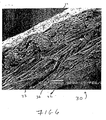
- a hemostatic wound dressing fabricated from carboxylic-oxidized regenerated cellulose fabric and a biodegradable polymeric aldehyde-oxidized hydroxyethyl cellulose according to the present invention is represented in Figures 9-11.
- a porous, polymer matrix is distributed on surfaces 42 and 44 and throughout fabric 40.
- Polymer 46 forms a porous, polymer matrix integrated with the knitted fibers 43.
- the porous, polymer matrix exhibits significant liquid absorption properties from capillary action in the same manner as a sponge.
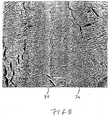
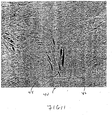
- the polymer matrix disposed on relative surfaces 42 and 44 contains countless pores, ranging from about ten microns to as large as about 400 microns in diameter, or greater.
- Figure 10 shows surface 42 of fabric 40.
- polymer 46 is present in the form of a porous matrix about fibers 43, thereby providing ample polymer surface area with which body fluids can interact upon contact therewith.
- Opposing surface 44 shown in Figure 11 also contains polymer 46 in the form of a porous matrix.
- fabrics and wound dressings of the present invention contain a porous, polymeric matrix dispersed on the surfaces and substantially through the fabric. Due to the porous nature of the matrix, body fluids are permitted to pass into the matrix, where ample surface area of polymer is present to interact with the body fluids. This results in faster and a higher degree of hemostasis.
- comparative fabrics and wound dressings do not contain a porous, polymeric matrix, either on a surface of the dressing or dispersed throughout the fabric. As a result, the amount of polymer present to interact with body fluids is significantly reduced. In addition, due to the formation of agglomerated polymer layers during air drying, body fluids are not permitted to pass freely into the wound dressing where they can interact with and bind to the dressing. Additionally, such fabrics were found to be brittle and stiff, such that placement within and conformance to a wound site by a physician is not acceptable.
- Certain problems are associated with producing a wound dressing of the present invention on a larger scale as described above, where the wound dressing will possess mechanical and hemostatic properties suitable for use as a hemostatic dressing. For instance, if one were to attempt to transfer the container having the polymer solution and saturated fabric disposed therein into the lyophilization unit, during transfer of the container into the lyophilization unit, it is difficult to maintain a constant level of the polymer solution above the fabric in the tray due to movement, e.g. shifting or "sloshing", of the solution in relation to the fabric.
- the fabric surface may even be exposed and the turbulence of the shifting polymer solution in the container may result in poor distribution of polymer on the surface of and through the fabric, particularly with respect to the distribution of the polymer on the surface. This in turn is detrimental to the effectiveness of the hemostatic property of the wound dressing.
- processes of the present invention utilize a transfer support means, e.g. a transfer sheet or carrier, in order to transfer the saturated fabric from the container used to saturate the fabric with polymer solution into the lyophilization unit.
- a transfer support means e.g. a transfer sheet or carrier
- caution must be exercised to minimize disturbance of the homogenous distribution of polymer solution in relationship to the fabric and to minimize deformation, e.g. stretching or tearing, of the fabric substrate during transfer into the lyophilization unit.
- the formation of air bubbles or voids between the fabric substrate and the transfer support means while transferring the fabric to the support means must be substantially avoided so as not to create an unacceptable number defects in the wound dressing.
- the method provides for the transfer of the saturated fabric substrate onto the transfer support mean and transferring the saturated fabric substrate and support means to a lyophilization unit.
- the transfer of the saturated fabric onto the support means is accomplished in a fashion to create a hydraulic pressure sufficient to allow air bubbles to escape from between the fabric substrate and the support means.
- the distal end of the fabric is joined with the support means and moved in a continuous fashion, at a controlled rate, while maintaining a desired angle of incidence between the fabric and the support means until the proximal end also is supported by the support means to prevent, or at least minimize bubble formation.
- maintaining such conditions of transfer also prevent, or at least minimize, physical deformation of the substrate, such as stretching or tearing.
- the angle of incidence between the fabric and the support means will range from about 20° to about 90°. More preferably, the angle of incidence will range from about 30° to about 60°. Even more preferably, the angle of incidence will be about 45°.
- the rate of advancing the fabric onto the support means preferably will range from about 8 inches per minute to about 2 inches per minute. Preferably, the rate of transfer is about 7 inches per minute.
- the support means should be made of an inert material that will not release any toxic chemical substance or any substance that may alter the characteristics of the wound dressing. It is important that the support means does not alter the freezing and drying parameters associated with the lyophilization process stated above. Therefore, the material used for the support means should be cryolitically stable, such that it may withstand extremely low temperatures without deformation, preferably down to about -50°C. If the support means is not stable at low temperatures, deformation of the means will lead to defects in the wound dressing.
- the support means used for transferring the saturated fabric is of density, mechanical strength, flexibility and thickness to provide sufficient support for the fabric, while avoiding excessive bending and mechanical deformation of the saturated fabric substrate. If the support means is too thick and rigid, it may be difficult to slide the saturated fabric onto the support means. If the supporting means is too soft and flexible, the saturated fabric may bend excessively, thereby causing stretching or other mechanical deformation, which may lead to pooling and running of the polymer solution on the surface, or the creation of surface defects during lyophilization.
- the support means used for transferring the fabric substrate provides a smooth and flat surface to prevent air bubbles from being trapped under the saturated fabric substrate.
- the transfer means further must possess heat transfer efficiency suitable for rapid freezing of the fabric/polymer construct and removal of the solvent under high vacuum in the lyophilization unit so as to maintain the homogenous distribution of the porous, polymer matrix on and through the fabric substrate after lyophilization.
- heat transfer efficiency it is meant that heat is transferred quickly from the support means to the saturated fabric to facilitate rapid freezing.
- a preferred support means is a high-density polyethylene sheet having a preferred thickness of between about 50 mils and about 200 mils. Most preferred support means is high-density polyethylene having a preferred thickness of between about 60 mils and about 100 mils.
- HEC hydroxyethyl cellulose
- CORC carboxylic oxidized regenerated cellulose
- methylcellulose from Aldrich
- 10 g of the MC solution was transferred into a crystallization dish with a diameter of 10 cm.
- a piece of Surgicel Nu-Knit® fabric with a diameter of 9.8 cm (about 1.3 gram) was placed on the MC solution in the crystallization dish. After soaking the fabric for 3 minutes, the wet fabric in the dish was then lyophilized overnight. A very flexible patch was formed. The patch was further dried at room temperature under vacuum. The CORC/MC patch then was evaluated for hemostasis as set forth below. Results are provided in Table 1.
- aldehyde-oxidized hydroxyethyl cellulose (AOHEC) were dissolved in 98 g of deionized water. After complete dissolution of the polymer, 10 g of the AOHEC solution was transferred into a crystallization dish with a diameter of 10 cm. A piece of Surgicel Nu-Knit® absorbable hemostat, based on carboxylic oxidized regenerated cellulose (CORC), having a diameter of 9.8 cm (about 1.3 gram) was placed on the AOHEC solution in the crystallization dish. After soaking the fabric in the solution for 3 minutes, the wet fabric in the dish was then lyophilized overnight. A very flexible patch was formed. The patch was further dried at room temperature under vacuum. The CORC/AOHEC patch then was evaluated for hemostasis as set forth below. Results are provided in Table 2.
- the solution from Example 3 had higher molecular weight soluble polymers than the solution from Example 5, which had more of higher molecular weight soluble polymers than the solution from the Surgicel Nu-Knit® fabric control. This indicated that there was degradation of material from Example 5 in the buffer.
- a porcine spleen incision model was used for hemostasis evaluation of different materials.
- the materials were cut into 2.5 cm X 1.5 cm rectangles.
- a linear incision of 1.5 cm with a depth of 0.3 cm was made with a surgical blade on a porcine spleen.
- digital tamponade was applied to the incision for 2 minutes.
- the hemostasis was then evaluated. Additional applications of digital tamponade for 30 seconds each time were used until complete hemostasis was achieved. Fabrics failing to provide hemostasis within 12 minutes were considered to be failures. Table 2 lists the results of the evaluation.
- wound dressings of the present invention achieve comparable effective hemostasis compared to currently utilized hemostatic wound dressings, showing that imparting biodegradability does not detrimentally alter the hemostatic efficacy.
Landscapes
- Health & Medical Sciences (AREA)
- Engineering & Computer Science (AREA)
- Chemical & Material Sciences (AREA)
- Epidemiology (AREA)
- Hematology (AREA)
- Materials Engineering (AREA)
- Life Sciences & Earth Sciences (AREA)
- Animal Behavior & Ethology (AREA)
- General Health & Medical Sciences (AREA)
- Public Health (AREA)
- Veterinary Medicine (AREA)
- Dispersion Chemistry (AREA)
- Textile Engineering (AREA)
- Materials For Medical Uses (AREA)
Applications Claiming Priority (2)
| Application Number | Priority Date | Filing Date | Title |
|---|---|---|---|
| US10/448,878 US20040241212A1 (en) | 2003-05-30 | 2003-05-30 | Biodegradable hemostatic wound dressings |
| US448878 | 2003-05-30 |
Publications (1)
| Publication Number | Publication Date |
|---|---|
| EP1481694A1 true EP1481694A1 (fr) | 2004-12-01 |
Family
ID=33131620
Family Applications (1)
| Application Number | Title | Priority Date | Filing Date |
|---|---|---|---|
| EP20040253207 Withdrawn EP1481694A1 (fr) | 2003-05-30 | 2004-05-28 | Pansement biodégradable et hemostatique |
Country Status (3)
| Country | Link |
|---|---|
| US (1) | US20040241212A1 (fr) |
| EP (1) | EP1481694A1 (fr) |
| JP (1) | JP2005046601A (fr) |
Cited By (7)
| Publication number | Priority date | Publication date | Assignee | Title |
|---|---|---|---|---|
| WO2007048831A3 (fr) * | 2005-10-27 | 2007-06-28 | Coloplast As | Squelette biodegradable avec materiau de matrice extracellulaire |
| WO2007121912A3 (fr) * | 2006-04-20 | 2008-01-10 | Aesculap Ag & Co Kg | Pansement multicouche |
| CN102198288A (zh) * | 2011-05-20 | 2011-09-28 | 威高集团有限公司 | 一种水溶型止血材料及其制备方法 |
| EP2586468A1 (fr) * | 2011-10-28 | 2013-05-01 | France Chirurgie Instrumentation SAS (FCI) | Produit composite poreux, notamment implant médical, par exemple bille intraculaire, et procédé de fabrication |
| FR2981850A1 (fr) * | 2011-10-28 | 2013-05-03 | France Chirurgie Instr | Produit composite poreux, notamment implant medical, par exemple bille intraoculaire, et procede de fabrication |
| CN109395143A (zh) * | 2018-10-16 | 2019-03-01 | 广州润虹医药科技股份有限公司 | 一种抗菌防粘连水胶体油纱及其制备方法 |
| CN105664224B (zh) * | 2016-02-25 | 2019-05-28 | 中国人民解放军军事医学科学院卫生装备研究所 | 一种低分子量羧甲基壳聚糖复合海藻酸敷料及其制备方法 |
Families Citing this family (17)
| Publication number | Priority date | Publication date | Assignee | Title |
|---|---|---|---|---|
| US20040101546A1 (en) * | 2002-11-26 | 2004-05-27 | Gorman Anne Jessica | Hemostatic wound dressing containing aldehyde-modified polysaccharide and hemostatic agents |
| CA2584698C (fr) | 2004-10-20 | 2014-02-25 | Ethicon, Inc. | Pansement hemostatique multicouche absorbable renforce et son procede de fabrication |
| US9358318B2 (en) * | 2004-10-20 | 2016-06-07 | Ethicon, Inc. | Method of making a reinforced absorbable multilayered hemostatic wound dressing |
| FR2898502B1 (fr) * | 2006-03-16 | 2012-06-15 | Sofradim Production | Tissu prothetique tridimensionnel a face dense resorbable |
| CN100453122C (zh) * | 2006-09-29 | 2009-01-21 | 沈晶 | 一种止血微粒及其制法 |
| RU2334482C1 (ru) * | 2007-04-09 | 2008-09-27 | Государственное образовательное учреждение высшего профессионального образования "БАШКИРСКИЙ ГОСУДАРСТВЕННЫЙ МЕДИЦИНСКИЙ УНИВЕРСИТЕТ Федерального Агентства по здравоохранению и социальному развитию" (ГОУ ВПО БГМУ РОСЗДРАВА) | Способ поэтапного лечения обширных гнойных ран с применением перевязочного средства |
| US20090062233A1 (en) | 2007-08-09 | 2009-03-05 | Xin Ji | Modified starch material of biocompatible hemostasis |
| US8557874B2 (en) * | 2007-11-26 | 2013-10-15 | Epic Wound Care, Inc. | Hemostatic material |
| WO2010129587A1 (fr) * | 2009-05-04 | 2010-11-11 | Oregon Biomedical Engineering Institute, Inc. | Dispositifs et méthodes de lutte contre l'hémorragie |
| JP2011125695A (ja) * | 2009-11-17 | 2011-06-30 | Asahi Kasei Fibers Corp | 医療用基材 |
| US20120115384A1 (en) | 2010-11-10 | 2012-05-10 | Fitz Benjamin D | Resorbable Laparoscopically Deployable Hemostat |
| FR2968533B1 (fr) * | 2010-12-08 | 2013-09-06 | Brothier Lab | Dispositif medical de renfort |
| US10058490B2 (en) * | 2014-12-24 | 2018-08-28 | L'oreal | Acoustically-activated cosmetic hydrogels |
| CN107847635B (zh) * | 2015-05-06 | 2021-08-27 | 捷锐士阿希迈公司(以奥林巴斯美国外科技术名义) | 羧甲基壳聚糖海绵制剂 |
| WO2017081692A2 (fr) * | 2015-11-12 | 2017-05-18 | Curical Technologies Ltd. | Articles biocompatibles comprenant des ions cuivre noyés dans la masse et revêtement à libération d'ions cuivre |
| EP3870125A4 (fr) * | 2018-10-24 | 2022-08-03 | Somnio Global Holdings, LLC | Pansements fonctionnels pour la cicatrisation de plaies |
| CN113975455B (zh) * | 2021-10-28 | 2022-11-25 | 赛克赛斯生物科技股份有限公司 | 一种可吸收止血粉和制备方法及其用途 |
Citations (4)
| Publication number | Priority date | Publication date | Assignee | Title |
|---|---|---|---|---|
| US4600574A (en) * | 1984-03-21 | 1986-07-15 | Immuno Aktiengesellschaft Fur Chemisch-Medizinische Produkte | Method of producing a tissue adhesive |
| EP0815879A2 (fr) * | 1996-06-28 | 1998-01-07 | JOHNSON & JOHNSON MEDICAL, INC. | Dispositifs médicaux biorésorbables en polysaccharides oxidés |
| WO2003020191A1 (fr) * | 2001-09-04 | 2003-03-13 | University Of Iowa Research Foundation | Membranes a base de celluloses pour echafaudages biodegradables |
| EP1378255A2 (fr) * | 2002-06-28 | 2004-01-07 | Ethicon, Inc. | Pansement hémostatique pour blessures et son procédé de fabrication |
Family Cites Families (25)
| Publication number | Priority date | Publication date | Assignee | Title |
|---|---|---|---|---|
| US2517772A (en) * | 1945-05-11 | 1950-08-08 | Parke Davis & Co | Neutralized oxidized cellulose products |
| US2914444A (en) * | 1950-12-12 | 1959-11-24 | David F Smith | Cellulosic hemostatic composition |
| US2773000A (en) * | 1952-06-06 | 1956-12-04 | Johnson & Johnson | Hemostatic surgical dressings |
| US3364200A (en) * | 1960-03-28 | 1968-01-16 | Johnson & Johnson | Oxidized cellulose product and method for preparing the same |
| US3328529A (en) * | 1964-08-31 | 1967-06-27 | Heath Co | Phase shifting circuit for fm stereo receiver |
| US3868955A (en) * | 1973-10-05 | 1975-03-04 | Personal Products Co | Aldehyde polysaccharide dressings |
| US4289824A (en) * | 1977-04-22 | 1981-09-15 | Avtex Fibers Inc. | High fluid-holding alloy rayon fiber mass |
| DE3037513C2 (de) * | 1980-10-03 | 1983-05-05 | Steffan, Wolfgang, 8425 Neustadt | Kollagene Wundauflage |
| US4626253A (en) * | 1984-10-05 | 1986-12-02 | Johnson & Johnson Products, Inc. | Surgical hemostat comprising oxidized cellulose |
| US4840626A (en) * | 1986-09-29 | 1989-06-20 | Johnson & Johnson Patient Care, Inc. | Heparin-containing adhesion prevention barrier and process |
| US4752466A (en) * | 1987-08-31 | 1988-06-21 | Johnson & Johnson Products, Inc. | Thrombin aerosol |
| US5134229A (en) * | 1990-01-12 | 1992-07-28 | Johnson & Johnson Medical, Inc. | Process for preparing a neutralized oxidized cellulose product and its method of use |
| US5180398A (en) * | 1990-12-20 | 1993-01-19 | Johnson & Johnson Medical, Inc. | Cellulose oxidation by a perfluorinated hydrocarbon solution of nitrogen dioxide |
| US5409703A (en) * | 1993-06-24 | 1995-04-25 | Carrington Laboratories, Inc. | Dried hydrogel from hydrophilic-hygroscopic polymer |
| DE69433939T2 (de) * | 1993-11-03 | 2005-08-11 | Clarion Pharmaceuticals, Inc., Madison | Hämostatisches pflaster |
| US5821343A (en) * | 1996-04-25 | 1998-10-13 | Medtronic Inc | Oxidative method for attachment of biomolecules to surfaces of medical devices |
| US5945319A (en) * | 1996-04-25 | 1999-08-31 | Medtronic, Inc. | Periodate oxidative method for attachment of biomolecules to medical device surfaces |
| US5925552A (en) * | 1996-04-25 | 1999-07-20 | Medtronic, Inc. | Method for attachment of biomolecules to medical devices surfaces |
| US20030073663A1 (en) * | 1997-06-25 | 2003-04-17 | David M Wiseman | Bioabsorbable medical devices from oxidized polysaccharides |
| JP3114016B2 (ja) * | 1998-05-15 | 2000-12-04 | 株式会社ホギメディカル | 細胞接着促進効果を有する創傷止血材 |
| US6261679B1 (en) * | 1998-05-22 | 2001-07-17 | Kimberly-Clark Worldwide, Inc. | Fibrous absorbent material and methods of making the same |
| DE19851334C2 (de) * | 1998-11-06 | 2000-09-28 | Aventis Behring Gmbh | Flexible Wundauflage auf Fibrinbasis und Verfahren zu ihrer Herstellung |
| US6306424B1 (en) * | 1999-06-30 | 2001-10-23 | Ethicon, Inc. | Foam composite for the repair or regeneration of tissue |
| US6333029B1 (en) * | 1999-06-30 | 2001-12-25 | Ethicon, Inc. | Porous tissue scaffoldings for the repair of regeneration of tissue |
| US6599323B2 (en) * | 2000-12-21 | 2003-07-29 | Ethicon, Inc. | Reinforced tissue implants and methods of manufacture and use |
-
2003
- 2003-05-30 US US10/448,878 patent/US20040241212A1/en not_active Abandoned
-
2004
- 2004-05-28 EP EP20040253207 patent/EP1481694A1/fr not_active Withdrawn
- 2004-05-28 JP JP2004159818A patent/JP2005046601A/ja active Pending
Patent Citations (4)
| Publication number | Priority date | Publication date | Assignee | Title |
|---|---|---|---|---|
| US4600574A (en) * | 1984-03-21 | 1986-07-15 | Immuno Aktiengesellschaft Fur Chemisch-Medizinische Produkte | Method of producing a tissue adhesive |
| EP0815879A2 (fr) * | 1996-06-28 | 1998-01-07 | JOHNSON & JOHNSON MEDICAL, INC. | Dispositifs médicaux biorésorbables en polysaccharides oxidés |
| WO2003020191A1 (fr) * | 2001-09-04 | 2003-03-13 | University Of Iowa Research Foundation | Membranes a base de celluloses pour echafaudages biodegradables |
| EP1378255A2 (fr) * | 2002-06-28 | 2004-01-07 | Ethicon, Inc. | Pansement hémostatique pour blessures et son procédé de fabrication |
Cited By (10)
| Publication number | Priority date | Publication date | Assignee | Title |
|---|---|---|---|---|
| WO2007048831A3 (fr) * | 2005-10-27 | 2007-06-28 | Coloplast As | Squelette biodegradable avec materiau de matrice extracellulaire |
| US8053559B2 (en) | 2005-10-27 | 2011-11-08 | Coloplast A/S | Biodegradable scaffold with ECM material |
| WO2007121912A3 (fr) * | 2006-04-20 | 2008-01-10 | Aesculap Ag & Co Kg | Pansement multicouche |
| CN102198288A (zh) * | 2011-05-20 | 2011-09-28 | 威高集团有限公司 | 一种水溶型止血材料及其制备方法 |
| EP2586468A1 (fr) * | 2011-10-28 | 2013-05-01 | France Chirurgie Instrumentation SAS (FCI) | Produit composite poreux, notamment implant médical, par exemple bille intraculaire, et procédé de fabrication |
| FR2981850A1 (fr) * | 2011-10-28 | 2013-05-03 | France Chirurgie Instr | Produit composite poreux, notamment implant medical, par exemple bille intraoculaire, et procede de fabrication |
| FR2981851A1 (fr) * | 2011-10-28 | 2013-05-03 | France Chirurgie Instr | Produit composite, notamment implant medical par exemple bille intraoculaire, et procede de fabrication |
| CN105664224B (zh) * | 2016-02-25 | 2019-05-28 | 中国人民解放军军事医学科学院卫生装备研究所 | 一种低分子量羧甲基壳聚糖复合海藻酸敷料及其制备方法 |
| CN109395143A (zh) * | 2018-10-16 | 2019-03-01 | 广州润虹医药科技股份有限公司 | 一种抗菌防粘连水胶体油纱及其制备方法 |
| CN109395143B (zh) * | 2018-10-16 | 2021-06-01 | 广州润虹医药科技股份有限公司 | 一种抗菌防粘连水胶体油纱及其制备方法 |
Also Published As
| Publication number | Publication date |
|---|---|
| US20040241212A1 (en) | 2004-12-02 |
| JP2005046601A (ja) | 2005-02-24 |
Similar Documents
| Publication | Publication Date | Title |
|---|---|---|
| AU2003204989B2 (en) | Hemostatic wound dressings and methods of making same | |
| US7019191B2 (en) | Hemostatic wound dressings and methods of making same | |
| EP1481694A1 (fr) | Pansement biodégradable et hemostatique | |
| AU2003204986B2 (en) | Hemostatic wound dressing and method of making same | |
| US8709463B2 (en) | Hemostatic devices and methods of making same | |
| EP1535631A2 (fr) | Pansement hémostatique contenant des polymères protéiniques | |
| EP1430911A2 (fr) | pansement hemostatique et tissu contenant un polysaccharide modifié en aldéhyde |
Legal Events
| Date | Code | Title | Description |
|---|---|---|---|
| PUAI | Public reference made under article 153(3) epc to a published international application that has entered the european phase |
Free format text: ORIGINAL CODE: 0009012 |
|
| AK | Designated contracting states |
Kind code of ref document: A1 Designated state(s): AT BE BG CH CY CZ DE DK EE ES FI FR GB GR HU IE IT LI LU MC NL PL PT RO SE SI SK TR |
|
| AX | Request for extension of the european patent |
Extension state: AL HR LT LV MK |
|
| 17P | Request for examination filed |
Effective date: 20050511 |
|
| 17Q | First examination report despatched |
Effective date: 20050615 |
|
| AKX | Designation fees paid |
Designated state(s): AT BE BG CH CY CZ DE DK EE ES FI FR GB GR HU IE IT LI LU MC NL PL PT RO SE SI SK TR |
|
| 17Q | First examination report despatched |
Effective date: 20050615 |
|
| STAA | Information on the status of an ep patent application or granted ep patent |
Free format text: STATUS: THE APPLICATION IS DEEMED TO BE WITHDRAWN |
|
| 18D | Application deemed to be withdrawn |
Effective date: 20070220 |