EP1484676B1 - Konfiguration eines Computers in einem Netzwerk - Google Patents
Konfiguration eines Computers in einem Netzwerk Download PDFInfo
- Publication number
- EP1484676B1 EP1484676B1 EP03012839A EP03012839A EP1484676B1 EP 1484676 B1 EP1484676 B1 EP 1484676B1 EP 03012839 A EP03012839 A EP 03012839A EP 03012839 A EP03012839 A EP 03012839A EP 1484676 B1 EP1484676 B1 EP 1484676B1
- Authority
- EP
- European Patent Office
- Prior art keywords
- computer
- new computer
- permanent
- temporary
- network
- Prior art date
- Legal status (The legal status is an assumption and is not a legal conclusion. Google has not performed a legal analysis and makes no representation as to the accuracy of the status listed.)
- Expired - Lifetime
Links
- 238000000034 method Methods 0.000 claims abstract description 31
- 238000012546 transfer Methods 0.000 claims description 8
- 238000004590 computer program Methods 0.000 claims description 7
- 230000005540 biological transmission Effects 0.000 claims description 6
- 230000003993 interaction Effects 0.000 description 6
- 230000009471 action Effects 0.000 description 4
- 238000005516 engineering process Methods 0.000 description 3
- 238000009434 installation Methods 0.000 description 3
- 230000003287 optical effect Effects 0.000 description 3
- 238000012545 processing Methods 0.000 description 3
- 238000010586 diagram Methods 0.000 description 2
- 230000035484 reaction time Effects 0.000 description 2
- 238000013459 approach Methods 0.000 description 1
- 230000008901 benefit Effects 0.000 description 1
- 239000000969 carrier Substances 0.000 description 1
- 238000006243 chemical reaction Methods 0.000 description 1
- 238000004891 communication Methods 0.000 description 1
- 230000003247 decreasing effect Effects 0.000 description 1
- 230000006870 function Effects 0.000 description 1
- 239000004973 liquid crystal related substance Substances 0.000 description 1
- 238000004519 manufacturing process Methods 0.000 description 1
- 238000010295 mobile communication Methods 0.000 description 1
- 238000012544 monitoring process Methods 0.000 description 1
- 230000008439 repair process Effects 0.000 description 1
- 230000004044 response Effects 0.000 description 1
- 239000004065 semiconductor Substances 0.000 description 1
Images


Classifications
-
- H—ELECTRICITY
- H04—ELECTRIC COMMUNICATION TECHNIQUE
- H04L—TRANSMISSION OF DIGITAL INFORMATION, e.g. TELEGRAPHIC COMMUNICATION
- H04L41/00—Arrangements for maintenance, administration or management of data switching networks, e.g. of packet switching networks
- H04L41/08—Configuration management of networks or network elements
- H04L41/0803—Configuration setting
- H04L41/0813—Configuration setting characterised by the conditions triggering a change of settings
- H04L41/0816—Configuration setting characterised by the conditions triggering a change of settings the condition being an adaptation, e.g. in response to network events
-
- H—ELECTRICITY
- H04—ELECTRIC COMMUNICATION TECHNIQUE
- H04L—TRANSMISSION OF DIGITAL INFORMATION, e.g. TELEGRAPHIC COMMUNICATION
- H04L41/00—Arrangements for maintenance, administration or management of data switching networks, e.g. of packet switching networks
- H04L41/08—Configuration management of networks or network elements
- H04L41/0876—Aspects of the degree of configuration automation
- H04L41/0886—Fully automatic configuration
-
- H—ELECTRICITY
- H04—ELECTRIC COMMUNICATION TECHNIQUE
- H04L—TRANSMISSION OF DIGITAL INFORMATION, e.g. TELEGRAPHIC COMMUNICATION
- H04L61/00—Network arrangements, protocols or services for addressing or naming
- H04L61/50—Address allocation
- H04L61/5007—Internet protocol [IP] addresses
- H04L61/5014—Internet protocol [IP] addresses using dynamic host configuration protocol [DHCP] or bootstrap protocol [BOOTP]
-
- H—ELECTRICITY
- H04—ELECTRIC COMMUNICATION TECHNIQUE
- H04L—TRANSMISSION OF DIGITAL INFORMATION, e.g. TELEGRAPHIC COMMUNICATION
- H04L67/00—Network arrangements or protocols for supporting network services or applications
- H04L67/34—Network arrangements or protocols for supporting network services or applications involving the movement of software or configuration parameters
-
- H—ELECTRICITY
- H04—ELECTRIC COMMUNICATION TECHNIQUE
- H04L—TRANSMISSION OF DIGITAL INFORMATION, e.g. TELEGRAPHIC COMMUNICATION
- H04L69/00—Network arrangements, protocols or services independent of the application payload and not provided for in the other groups of this subclass
- H04L69/30—Definitions, standards or architectural aspects of layered protocol stacks
- H04L69/32—Architecture of open systems interconnection [OSI] 7-layer type protocol stacks, e.g. the interfaces between the data link level and the physical level
- H04L69/322—Intralayer communication protocols among peer entities or protocol data unit [PDU] definitions
- H04L69/329—Intralayer communication protocols among peer entities or protocol data unit [PDU] definitions in the application layer [OSI layer 7]
Definitions
- the invention relates to a method for automatically configuring a new computer within a computer network.
- the invention further relates to a computer system for automatically configuring a new computer within a computer network.
- the invention also refers to a computer program product for automatically configuring a new computer within a computer network.
- Server may stand for a computer (i.e. a processor with memory) that executes the service.
- a set of servers is made up of at least one computer, or server (with processor and memory).
- a service may stand for software that is part of a business application, for example, a database node, an application component, a J2EE engine, an Internet portal etc.
- a set of services may stand for at least one service. Conveniently, a set makes up an Enterprise Service Architecture (ESA).
- ESA Enterprise Service Architecture
- United States Patent Application US 2003/0005096 describes a method for automatically installing a new computer using remote boot servers on a network.
- the Total Costs of Ownership could be decreased by introducing methods for automatically installing new computers within a computer network.
- a temporary environment such as a temporary operation system, which may be hardware independent, is loaded onto said new computer. This will be done automatically after the new computer is plugged and connected to the computer network and powered on.
- the temporary environment provides methods which allocate a permanent identification for said new computer within said computer network.
- This permanent identification will be assigned to said new computer within said computer network using a unique identification of said new computer.
- Each computer within a computer network has a unique identification.
- the new computer may be identified and addressed. Communication with said new computer may then be carried out using said permanent identification.
- data may be transferred to said new computer from any other computer of the network.
- a permanent environment is loaded from said computer network to said new computer upon restart of said new computer using said permanent identification assigned to said unique identification.
- a permanent environment may be loaded upon restart of said new computer onto said new computer as the new computer may be addressed unambiguously.
- This permanent environment enables the new computer to carry out services within the computer network without manual interaction.
- the permanent environment may be an operating system being customized to enable the computer to carry out at least one service.
- the permanent environment is installed automatically, without human or manual intervention.
- the computer registers itself within said computer network automatically and is provided with its permanent operating system automatically.
- New services may be provided by just plugging in a new computer, which may be a processor located on a single circuit board within a server rack, such as in blade server technology, at any time without human intervention. This reduces TCO. As new services might need new servers, these servers may be provided at demand. The new services may thus be provided by the new servers quickly and without much labour.
- a temporary identification for said new computer is requested. This temporary identification is requested prior to loading said temporary environment to said new computer.
- said new computer may be identified within the computer network. The computer is addressed by said temporary identification.
- said temporary identification is requested from a host configuration server.
- This host configuration server may provide a dynamic host configuration protocol (DHCP).
- DHCP dynamic host configuration protocol
- said temporary environment is loaded to said new computer using said temporary identification.
- the temporary environment may be loaded onto the new computer using the temporary identification.
- said temporary environment is loaded onto said new computer from a host configuration server.
- said temporary environment may be stored.
- This temporary environment may run on any computer with low requirements on hardware capabilities of these computers.
- the host configuration server stores the temporary environment and provides it to each new computer, which is plugged into the computer network.
- the temporary environment may be a small generic operating system.
- said temporary environment identifies properties of said new computer.
- the properties of said new computer may be defined by the type of its CPU, memory, hard disc, network interface, periphery devices, and others. By identifying said properties of said new computer, its hardware is known to the temporary environment.
- said temporary environment customizes entries of said permanent environment using said properties of said new computer, to create a customized permanent environment for said new computer prior to loading said permanent environment to said new computer.
- the customization may be carried out by adjusting a variable part of the permanent environment.
- said customization is at least partially carried out by modifying configuration files within said permanent environment said permanent environment therefore comprises a variable part.
- the variable part may be comprised of single files as well as file entries. These data may be changed by the temporary environment to customize the permanent environment for each new computer.
- said customization is at least partially carried out by modifying entries within a file system of said computer network.
- the temporary environment generates and/or modifies entries within configuration files of the permanent environment.
- the files may be stored within a network information system (NIS).
- NIS network information system
- Services running on the permanent environment may be configured to run on the new computer with its specific hardware configuration.
- said customized permanent environment is stored at least partially within a host configuration server and/or a network information server and/or a file system of said computer network.
- said customized permanent environment is saved and may be provided to the new computer later on. This may be upon restart or reboot of said new computer.
- the customized environment may then be loaded onto said new computer. As this environment is customized according to the hardware specifications of said new computer, it fits well for the new computer and may run without any human interaction.
- said temporary environment allocates a hostname for said new computer within said computer network. This may be done within a host configuration server, such as a DHCP server. Hostname and permanent identification may be stored i.e. within the DHCP server within its DHCPD.conf files.
- said temporary environment preferably registers said permanent identification and said hostname within a name resolution server.
- Said new computer may comprise a pre-boot environment (PXE).
- PXE pre-boot environment
- This environment allows running said temporary environment on a computer.
- a pre-boot execution environment will often be provided by circuit boards being run as a computer/server within a server rack.
- said temporary identification is released after said permanent identification is allocated and assigned within said host configuration server.
- the temporary identification is obsolete as the new computer may then be addressed using said permanent identification.
- Said temporary identification and/or said permanent identification of said new computer are preferably an Internet Protocol Address (IP-Address). This allows addressing the new computer using a standard protocol.
- IP-Address Internet Protocol Address
- Transmission Control Protocol/Internet Protocol TCP/IP
- FTP File Transfer Protocol
- the file transfer may use a Trivial File Transfer Protocol (TFTP) which uses functionality of a User Datagram Protocol (UDP) or TCP.
- TFTP Trivial File Transfer Protocol
- UDP User Datagram Protocol
- TCP Transmission Control Protocol/Internet Protocol
- IP IP
- a unique identification of said new computer is preferably a Media Access Control (MAC) address of said new computer.
- the MAC-address is a hardware key that identifies a particular computer. This number is unique within computers of an organisation or a network. This number may be derived from hardware properties, such as a network interface card.
- the objects of the invention are also solved by a computer system for automatically configuring a new computer within a computer network according to claim 16.
- a further aspect of the invention is a computer program product for automatically configuring a new computer within a computer network according to claim 17.
- FIGS. 1-4 reference numbers 100/200, 110/210 etc. denote similar elements, the function of these elements may be different.
- the present invention is implemented bby computers, within a computer network.
- An example is illustrated in connection with Fig. 1.
- FIG. 1 illustrates a simplified block diagram of exemplary computer system 999 having a plurality of computers 900, 901, 902 (or even more).
- Computer 900 can communicate with computers 901 and 902 over network 990.
- Computer 900 has processor 910, memory 920, bus 930, and, optionally, input device 940 and output device 950 (I/O devices, user interface 960).
- the invention is implemented by computer program product 100 (CPP), carrier 970 and signal 980.
- computer 901/902 is sometimes referred to as "remote computer", computer 901/902 is, for example, a server, a peer device or other common network node, and typically has many or all of the elements described relative to computer 900.
- Computer 900 is, for example, a conventional personal computer (PC), a desktop device or a hand-held device, a multiprocessor computer, a pen computer, a microprocessor-based or programmable consumer electronics device, a minicomputer, a mainframe computer, a personal mobile computing device, a mobile phone, a portable or stationary personal computer, a palmtop computer or the like.
- PC personal computer
- desktop device or hand-held device a multiprocessor computer
- a pen computer a microprocessor-based or programmable consumer electronics device
- minicomputer a mainframe computer
- personal mobile computing device a mobile phone
- portable or stationary personal computer a palmtop computer or the like.
- Processor 910 is, for example, a central processing unit (CPU), a micro-controller unit (MCU), digital signal processor (DSP), or the like.
- CPU central processing unit
- MCU micro-controller unit
- DSP digital signal processor
- Memory 920 is elements that temporarily or permanently store data and instructions. Although memory 920 is illustrated as part of computer 900, memory can also be implemented in network 990, in computers 901/902 and in processor 910 itself (e.g., cache, register), or elsewhere. Memory 920 can be a read only memory (ROM), a random access memory (RAM), or a memory with other access options. Memory 920 is physically implemented by computer-readable media, for example: (a) magnetic media, like a hard disk, a floppy disk, or other magnetic disk, a tape, a cassette tape; (b) optical media, like optical disk (CD-ROM, digital versatile disk - DVD); (c) semiconductor media, like DRAM, SRAM, EPROM, EEPROM, memory stick.
- ROM read only memory
- RAM random access memory
- Memory 920 is physically implemented by computer-readable media, for example: (a) magnetic media, like a hard disk, a floppy disk, or other magnetic disk, a tape, a cassette tape; (b) optical media, like
- memory 920 is distributed. Portions of memory 920 can be removable or non-removable.
- computer 900 uses well-known devices, for example, disk drives, or tape drives.
- Memory 920 stores modules such as, for example, a basic input output system (BIOS), an operating system (OS), a program library, a compiler, an interpreter, and a text-processing tool. Modules are commercially available and can be installed on computer 900. For simplicity, these modules are not illustrated.
- BIOS basic input output system
- OS operating system
- program library a program library
- compiler a compiler
- interpreter a text-processing tool
- CPP 100 has program instructions and - optionally - data that cause processor 910 to execute method steps of the present invention.
- CPP 100 can control the operation of computer 900 and its interaction in network system 999 so that is operates to perform in accordance with the invention.
- CPP 100 can be available as source code in any programming language and as object code ("binary code") in a compiled form.
- CPP 100 is illustrated as being stored in memory 920, CPP 100 can be located elsewhere. CPP 100 can also be embodied in carrier 970.
- Carrier 970 is illustrated outside computer 900. For communicating CPP 100 to computer 900, carrier 970 is conveniently inserted into input device 940. Carrier 970 is implemented as any computer readable medium, such as a medium largely explained above (cf. memory 920). Generally, carrier 970 is an article of manufacture having a computer readable medium with computer readable program code to cause the computer to perform methods of the present invention. Further, signal 980 can also embody computer program product 100.
- CPP 100 carrier 970, and signal 980 in connection with computer 900 is convenient.
- further carriers and further signals embody computer program products (CPP) to be executed by further processors in computers 901 and 902.
- CPP computer program products
- Input device 940 provides data and instructions for processing by computer 900.
- Device 940 can be a keyboard, a pointing device (e.g., mouse, trackball, cursor, direction keys), microphone, joystick, game pad, scanner, or disc drive.
- a wireless receiver e.g., with satellite dish or terrestrial antenna
- a sensor e.g., a thermometer
- a counter e.g., a goods counter in a factory.
- Input device 940 can serve to read carrier 970.
- Output device 950 presents instructions and data that have been processed. For example, this can be a monitor or a display, (cathode ray tube (CRT), flat panel display, liquid crystal display (LCD), speaker, printer, plotter, vibration alert device. Output device 950 can communicate with the user, but it can also communicate with further computers.
- CTR cathode ray tube
- LCD liquid crystal display
- Output device 950 can communicate with the user, but it can also communicate with further computers.
- Input device 940 and output device 950 can be combined to a single device. Any device 940 and 950 can be provided optional.
- Bus 930 and network 990 provide logical and physical connections by conveying instruction and data signals. While connections inside computer 900 are conveniently referred to as “bus 930", connections between computers 900-902 are referred to as “network 990". Optionally, network 990 includes gateways which are computers that specialize in data transmission and protocol conversion.
- Devices 940 and 950 are coupled to computer 900 by bus 930 (as illustrated) or by network 990 (optional). While the signals inside computer 900 are mostly electrical signals, the signals in network are electrical, electromagnetic, and optical or wireless (radio) signals.
- Networks are commonplace in offices, enterprise-wide computer networks, intranets and the Internet (e.g., world wide web WWW).
- Network 990 can be a wired or a wireless network.
- network 990 can be, for example, a local area network (LAN), a wide area network (WAN), a public switched telephone network (PSTN); a Integrated Services Digital Network (ISDN), an infra-red (IR) link, a radio link, like Universal Mobile Telecommunications System (UMTS), Global System for Mobile Communication (GSM), Code Division Multiple Access (CDMA), or satellite link.
- LAN local area network
- WAN wide area network
- PSTN public switched telephone network
- ISDN Integrated Services Digital Network
- IR infra-red
- radio link like Universal Mobile Telecommunications System (UMTS), Global System for Mobile Communication (GSM), Code Division Multiple Access (CDMA), or satellite link.
- UMTS Universal Mobile Telecommunications System
- GSM Global System for Mobile Communication
- CDMA Code Division Multiple Access
- TCP/IP transmission control protocol/internet protocol
- HTTP hypertext transfer protocol
- WAP wireless application protocol
- URL unique resource locator
- URL unique resource identifier
- HTTP hypertext markup language
- XML extensible markup language
- XHTML extensible hypertext markup language
- WML wireless markup language
- SGML standard generalized markup language
- An interface can be, for example, a serial port interface, a parallel port interface, a game port, a universal serial bus (USB) interface, an internal or external modem, a video adapter, or a sound card.
- USB universal serial bus
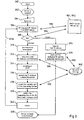
- Fig. 2 depicts a flow chart of a method according to the invention.
- a new server/computer 400 within a computer network 490 is prepared to boot. Power and network cable are plugged.
- the server 400 has no operating system (OS) and must be configured to operate accordingly.
- OS operating system
- the new server 400 is switched on 200.
- the new server 400 requests a temporary environment, e.g. a small generic OS.
- This small generic OS is loaded onto the computer 400, using a Pre-boot Executing Environment (PXE).
- PXE is provided by a BIOS of the computer.
- the functionality of a PXE is supported by a network interface 431, in particular a Network Interface Card (NIC) of the computer 400.
- the computer 400 is connected to a network 490 providing a Dynamic Host Configuration Protocol (DHCP) server 401 and a network storage system 402, which provides a file system.
- DHCP Dynamic Host Configuration Protocol
- the network 490 is monitored by a monitoring system showing a sys-admin all involved servers and services upon request.
- this OS allocates a dedicated IP-Address and a hostname 212 on the DHCP-server 401.
- the DHCP-server 401 reserves the allocated IP-Address and hostname for this new computer exclusively. IP-Address and hostname are published to a name resolution server 403.
- the small generic OS acquires 217 properties of the new server 400. These properties describe the hardware capabilities of the new server 400, such as memory 420, CPU 410, hard-disk, network interface 431, periphery, and further.
- a dedicated OS is assigned to the new server.
- the dedicated OS may be used for multiple other servers.
- the variable part is customized according to the capabilities of each new server. For each new server 400, several files in the variable part will be adapted 218, 220. After the variable part is customized 218, 220 for the new server 400, the new server 400 may be re-booted.
- the server 400 After reboot, the server 400 is assigned its dedicated IP-Address from the DHCP-server 401 and the customized dedicated OS is loaded via the network storage 402 to the new computer 226. After that, the new server 400 may fulfil all services which are provided by the dedicated OS. No manual action had happened.
- the advantage of this method is that it configures the variable part, e.g. the necessary files, of an OS in real time.
- the reaction time on the needs for new serves is reduced, as no manual interaction is necessary.
- the system administrator may react faster on application lacks concerning high work load peeks in unpredicted times as well as in down times of other servers. It minimises the time to deploy common server infrastructure and may increase parameters of service level agreements, such as possible work load, down time, reaction time and further.
- Fig. 3 depicts a more detailed flow chart of an inventive method.
- a new server e.g. a circuit board in a server rack for blade server technology
- the server is plugged and powered on 302, 304.
- the Network Interface Card (NIC) 431 requests 306, via network 490 from DHCP server 401 a temporary IP-Address 306.
- the new computer 400 checks via network 490, whether a permanent OS has already been customized using its MAC address 308.
- the DHCP-server 401 does not know this MAC address upon first start of the new computer 400 and rejects this request.
- the new computer 400 requests via its PXE a temporary OS 310.
- This temporary OS is provided from DHCP-server 401 or any other server 402, 403, 404 within computer network 490.
- the temporary OS allocates a valid IP-Address and a hostname within the DHCP-server 401, 312 for the new computer.
- the DHCP-server 401, in particular the DHCP.conf file is reconfigured 314 accordingly.
- the IP-Address and hostname are published to a name resolution server 316.
- the temporary OS acquires the hardware properties of the new server 400. It determines the hardware facilities of the new computer 400. After that the temporary OS configures a variable part of a permanent OS.
- the permanent OS is stored in network storage 402. It may be configured via computer network 490 in step 318.
- the corresponding files in the permanent OS e.g. hostname, filespace and further, are modified and stored within network storage 402 in step 320.
- the permanent OS may be fully configured and loaded onto the new computer to be run as a full service computer.
- the new computer 400 is re-booted 322.
- the new computer 400 again requests an IP-Address from the DHCP-server 306, and thus transmits its MAC address to the DHCP-server 401.
- the DHCP-server 401 now knows the new computer 400, as in step 314 the MAC address has already been assigned to a valid IP-address.
- the permanent IP-Address allocated in step 312 is assigned to the new computer 324.
- the temporary IP-address is released.
- the permanent OS is loaded via computer network 490 from network storage 402 to the new computer 400 using a file transfer protocol 326, i.e. a Trivial File Transfer Protocol (TFTP).
- TFTP Trivial File Transfer Protocol
- this computer 400 may act as a server within the computer network and is known within the network 328.
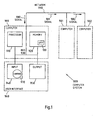
- FIG. 4a depicts a computer system according to the invention.
- a server rack 405 is provided.
- This server rack 405 comprises interfaces 405a to which a plurality of computers 400a, 400b, 400c are plugged.
- a new computer 400 may be plugged into a free interface 405a upon request.
- the server rack is connected to a computer network 490, connecting all computers 400, 400a, 400b, and 400c to the network 490.
- the computer network 490 comprises a DHCP server 401, a network file system 402, a network information server (NIS) 403, and a name resolution server (404).
- NIS network information server
- 404 name resolution server
- FIG. 4b depicts a new computer 400.
- This new computer 400 comprises a CPU 410.
- This CPU allows running a permanent environment and extracting properties of the computer 400.
- a memory 420 is provided, which allows storing a permanent, as well as, a temporary environment and a computer program product.
- the computer 400 also comprises a network interface card 431, connecting the new computer 400 via interface 405a to computer network 490.
- a BIOS of the computer provides a pre-boot environment (PXE).
- the PXE functionality is supported by the NIC 431.
- the NIC 431 may request a temporary and permanent identification from DHCP server 401. It also allows loading a temporary environment, as well as, a permanent environment, or parts thereof, via computer network 490 from DHCP server 401, network storage 402, NIS server 403, or name resolution server 404.
- the NIC 431 also provides a MAC address. This MAC address may be assigned to a permanent IP address within DHCP server 401. A hostname and an IP address may be stored within name resolution server 404.
- the method and system enable customers to easily add new hardware into the data centre.
- the time for deployment is minimised.
- the automated deployment is very useful. Having multiple services, starting on demand on multiple servers, the method is very helpful and time saving to deploy new servers. Further, the system administrator knows about all installed servers, as new servers are registered within the DHCP-server and the name resolution server upon start.
Landscapes
- Engineering & Computer Science (AREA)
- Computer Networks & Wireless Communication (AREA)
- Signal Processing (AREA)
- Automation & Control Theory (AREA)
- Stored Programmes (AREA)
- Data Exchanges In Wide-Area Networks (AREA)
- Computer And Data Communications (AREA)
- Saccharide Compounds (AREA)
Claims (17)
- Verfahren zum automatischen Konfigurieren eines neuen Computers innerhalb eines Computernetzwerkes mit den folgenden Schritten:- Starten einer Preboot-Ausführungsumgebung in dem neuen Computer,- Anfordern einer temporären Identifikation für den genannten neuen Computer durch die genannte Preboot-Ausführungsumgebung,- Laden eines temporären Betriebssystems aus einem Netzwerkspeicher auf den genannten neuen Computer (310) unter Verwendung der genannten temporären Identifikation,- Zuordnen einer permanenten Identifikation für den genannten Computer (312) innerhalb des genannten Computernetzwerkes mit dem genannten temporären Betriebssystem,- Zuweisen der genannten permanenten Identifikation zu dem genannten neuen Computer innerhalb des genannten Computernetzwerkes mit einer eindeutigen Identifikation des genannten neuen Computers (314) unter Verwendung dem genannten temporären Betriebssystem,gekennzeichnet durch- Neustarten des genannten neuen Computers, und- Laden eines permanenten Betriebssystems aus dem genannten Netzwerkspeicher auf den genannten neuen Computer nach dem Neustarten des genannten neuen Computers unter Verwendung der genannten permanenten Identifikation (326).
- Verfahren nach Anspruch 1, wobei die genannte temporäre Identifikation von einem Host-Konfigurationsserver angefordert wird.
- Verfahren nach Anspruch 2, bei dem das genannte temporäre Betriebssystem von einem Host-Konfigurationsserver auf den genannten neuen Computer geladen wird.
- Verfahren nach Anspruch 2 oder 3, bei dem das genannte temporäre Betriebssystem Eigenschaften des genannten neuen Computers (217) identifiziert.
- Verfahren nach Anspruch 4, bei dem das genannte temporäre Betriebssystem Einträge des genannten permanenten Betriebssystems anhand der genannten Eigenschaften des genannten neuen Computers anpasst, um ein kundenspezifisches permanentes Betriebssystem für den genannten neuen Computer (218, 220, 318, 320) zu erzeugen.
- Verfahren nach Anspruch 5, bei dem die genannte Anpassung wenigstens teilweise durch Modifizieren von Konfigurationsdateien innerhalb des genannten permanenten Betriebssystems (218, 220, 318, 320) durchgeführt wird.
- Verfahren nach Anspruch 5 oder 6, bei dem die genannte Anpassung wenigstens teilweise durch Modifizieren von Einträgen in einem Dateisystem des genannten Computernetzwerkes (218, 220, 318, 320) durchgeführt wird.
- Verfahren nach einem der Ansprüche 5 bis 7, wobei das genannte angepasste permanente Betriebssystem wenigstens teilweise in dem genannten Host-Konfigurationsserver und/oder einem Netzwerkinformationsserver und/oder einem Dateisystem des genannten Computernetzwerkes gespeichert wird.
- Verfahren nach einem der Ansprüche 1 bis 8, bei dem das genannte temporäre Betriebssystem einen Hostnamen für den genannten neuen Computer innerhalb des genannten Computernetzwerkes (312) zuordnet.
- Verfahren nach Anspruch 9, bei dem das genannte temporäre Betriebssystem den genannten Hostnamen innerhalb eines Host-Konfigurationsservers zuordnet.
- Verfahren nach einem der Ansprüche 1 bis 10, bei dem das genannte temporäre Betriebssystem die genannte permanente Identifikation und den genannten Hostnamen in einem Namenauflösungsserver registriert.
- Verfahren nach einem der Ansprüche 2 bis 11, bei dem die genannte temporäre Identifikation nach dem Zuordnen der genannten permanenten Identifikation und ihrer Zuweisung innerhalb des genannten Host-Konfigurationsservers aufgelöst wird.
- Verfahren nach einem der Ansprüche 2 bis 12, bei dem die genannte temporäre Identifikation und/oder die genannte permanente Identifikation des genannten neuen Computers eine Internet Protocol Adresse ist.
- Verfahren nach einem der Ansprüche 1 bis 13, bei dem das genannte temporäre Betriebssystem und/oder das genannte permanente Betriebssystem mit einem auf einem Transmission Control Protocol/Internet Protocol File Transfer Protocol, einem Trivial File Transfer Protocol oder einem Network File System zu dem genannten neuen Computer übertragen wird.
- Verfahren nach einem der Ansprüche 1 bis 14, bei dem die genannte eindeutige Identifikation des genannten neuen Computers von einer Media-Access-Steueradresse des genannten neuen Computers erstellt wird.
- Computernetzwerk, das eine Mehrzahl von Computern (401, 402, 403, 404) zum automatischen Konfigurieren eines neuen Computers (400) innerhalb des genannten Computernetzwerkes (490) umfasst,- wobei das genannte Computernetzwerk (490) einen Netzwerkspeicher (402) zum Bereitstellen eines temporären Betriebssystems zu dem genannten neuen Computer (400), einen Host-Konfigurationsserver (401) zum Bereitstellen von temporären Identifikationen und permanenten Identifikationen für Computer innerhalb des genannten Computernetzwerkes (490) und zum Zuweisen der genannten permanenten Identifikationen zu den genannten Computern anhand von eindeutigen Kennungen der genannten Computer umfasst,- wobei der genannte neue Computer (400) Mittel (431) zum Ausführen einer Preboot-Ausführungsumgebung, zum Anfordern einer temporären Identifikation für den genannten neuen Computer, zum Laden eines temporären Betriebssystems aus dem genannten Netzwerkspeicher anhand der genannten temporären Identifikation und zum Ausführen des genannten temporären Betriebssystems umfasst, so dass das genannte temporäre Betriebssystem:- innerhalb des genannten Host-Konfigurationsservers (401) eine permanente Identifikation für den genannten neuen Computer (400) zuordnet, und- dem genannten neuen Computer (400) die genannte permanente Identifikation innerhalb des genannten Host-Konfigurationsservers (401) (490) mit einer eindeutigen Identifikation des genannten neuen Computers (400) zuweist, wobei- der genannte neue Computer (400) ferner Speichermittel (420) zum Speichern eines nach dem Neustarten des genannten Computers (400) mit der genannten permanenten Identifikation aus dem genannten Netzwerkspeicher (402) auf den genannten neuen Computer (400) geladenen permanenten Betriebssystems umfasst.
- Computerprogrammprodukt zum automatischen Konfigurieren eines neuen Computers (400) innerhalb eines Computernetzwerkes (490), wobei das Produkt Folgendes umfasst:- ein Preboot-Ausführungsumgebungsmodul, das beim Ablaufen innerhalb des neuen Computers:- eine temporäre Identifikation für den genannten neuen Computer anfordert und- ein temporäres Betriebssystem aus einem Netzwerkspeicher auf den genannten neuen Computer (310) unter Verwendung der genannten temporären Identifikation lädt- ein temporäres Betriebssystemmodul, das beim Ablaufen auf dem neuen Computer innerhalb des genannten Computernetzwerkes eine permanente Identifikation für den genannten neuen Computer (312) zuordnet, und- dem genannten neuen Computer die genannte permanente Identifikation innerhalb des genannten Computernetzwerkes mit einer eindeutigen Identifikation des genannten neuen Computers (314) zuweist,- und ein Modul, das- nach dem Neustarten des genannten neuen Computers ein permanentes Betriebssystem aus dem genannten Netzwerkspeicher auf den genannten neuen Computer mit der genannten permanenten Identifikation (326) lädt.
Priority Applications (3)
| Application Number | Priority Date | Filing Date | Title |
|---|---|---|---|
| AT03012839T ATE319133T1 (de) | 2003-06-06 | 2003-06-06 | Konfiguration eines computers in einem netzwerk |
| EP03012839A EP1484676B1 (de) | 2003-06-06 | 2003-06-06 | Konfiguration eines Computers in einem Netzwerk |
| DE60303710T DE60303710T2 (de) | 2003-06-06 | 2003-06-06 | Konfiguration eines Computers in einem Netzwerk |
Applications Claiming Priority (1)
| Application Number | Priority Date | Filing Date | Title |
|---|---|---|---|
| EP03012839A EP1484676B1 (de) | 2003-06-06 | 2003-06-06 | Konfiguration eines Computers in einem Netzwerk |
Publications (2)
| Publication Number | Publication Date |
|---|---|
| EP1484676A1 EP1484676A1 (de) | 2004-12-08 |
| EP1484676B1 true EP1484676B1 (de) | 2006-03-01 |
Family
ID=33155168
Family Applications (1)
| Application Number | Title | Priority Date | Filing Date |
|---|---|---|---|
| EP03012839A Expired - Lifetime EP1484676B1 (de) | 2003-06-06 | 2003-06-06 | Konfiguration eines Computers in einem Netzwerk |
Country Status (3)
| Country | Link |
|---|---|
| EP (1) | EP1484676B1 (de) |
| AT (1) | ATE319133T1 (de) |
| DE (1) | DE60303710T2 (de) |
Families Citing this family (1)
| Publication number | Priority date | Publication date | Assignee | Title |
|---|---|---|---|---|
| US20110161953A1 (en) * | 2009-12-30 | 2011-06-30 | Lutz Dominick | Method for operating a hospital information system |
Family Cites Families (2)
| Publication number | Priority date | Publication date | Assignee | Title |
|---|---|---|---|---|
| AU3397300A (en) * | 1999-03-10 | 2000-09-28 | Automation Control Products Llc | Methods and systems for reduced configuration dependency in thin client applications |
| US8126959B2 (en) * | 2001-06-28 | 2012-02-28 | International Business Machines Corporation | Method and system for dynamic redistribution of remote computer boot service in a network containing multiple boot servers |
-
2003
- 2003-06-06 AT AT03012839T patent/ATE319133T1/de not_active IP Right Cessation
- 2003-06-06 DE DE60303710T patent/DE60303710T2/de not_active Expired - Lifetime
- 2003-06-06 EP EP03012839A patent/EP1484676B1/de not_active Expired - Lifetime
Also Published As
| Publication number | Publication date |
|---|---|
| DE60303710D1 (de) | 2006-04-27 |
| EP1484676A1 (de) | 2004-12-08 |
| DE60303710T2 (de) | 2006-10-05 |
| ATE319133T1 (de) | 2006-03-15 |
Similar Documents
| Publication | Publication Date | Title |
|---|---|---|
| US7318148B2 (en) | Automatically configuring a computer | |
| US7720945B2 (en) | Method and system for automatic detection, inventory, and operating system deployment on network boot capable computers | |
| US6810478B1 (en) | System for remote booting of muntliple operating systems using chained bootstrap mechanism in a network | |
| US8775578B2 (en) | Providing hardware updates in a software environment | |
| US8402123B2 (en) | Systems and methods for inventorying un-provisioned systems in a software provisioning environment | |
| US9164749B2 (en) | Differential software provisioning on virtual machines having different configurations | |
| US7802084B2 (en) | System and method for management and installation of operating system images for computers | |
| US7363514B1 (en) | Storage area network(SAN) booting method | |
| US7111055B2 (en) | Method and apparatus to facilitate automated software installation on remote computers over a network | |
| US8271975B2 (en) | Method and system for provisioning software | |
| US9100297B2 (en) | Registering new machines in a software provisioning environment | |
| US6684327B1 (en) | Extensible, flexible, memory efficient technique for network boot without special DHCP/PXE hardware | |
| US7139816B2 (en) | Method, apparatus, and program for server based network computer load balancing across multiple boot servers | |
| US9223369B2 (en) | Providing power management services in a software provisioning environment | |
| US20100138696A1 (en) | Systems and methods for monitoring hardware resources in a software provisioning environment | |
| US20040015957A1 (en) | Method to map an inventory management system to a configuration management system | |
| US20060200539A1 (en) | Determining a boot server network address from which to download an operating system during a boot sequence | |
| US20090083420A1 (en) | Method and Apparatus for Automatically Conducting Hardware Inventories of Computers in a Network | |
| US20040254978A1 (en) | System and method of remotely accessing a computer system to initiate remote mainteneance and management accesses on network computer systems | |
| US7546448B2 (en) | Boot architecture discovery in pre-boot environment | |
| US7761867B2 (en) | Method and system for creation of operating system partition table | |
| EP1486867A1 (de) | Verfahren zur Anpassung eines Softwaredienstes an die Rechnerumgebung | |
| EP1484676B1 (de) | Konfiguration eines Computers in einem Netzwerk | |
| US20050132084A1 (en) | Method and apparatus for providing server local SMBIOS table through out-of-band communication | |
| EP1503282B1 (de) | Automatische Konfiguration eines Computers |
Legal Events
| Date | Code | Title | Description |
|---|---|---|---|
| PUAI | Public reference made under article 153(3) epc to a published international application that has entered the european phase |
Free format text: ORIGINAL CODE: 0009012 |
|
| 17P | Request for examination filed |
Effective date: 20040330 |
|
| AK | Designated contracting states |
Kind code of ref document: A1 Designated state(s): AT BE BG CH CY CZ DE DK EE ES FI FR GB GR HU IE IT LI LU MC NL PT RO SE SI SK TR |
|
| AX | Request for extension of the european patent |
Extension state: AL LT LV MK |
|
| GRAP | Despatch of communication of intention to grant a patent |
Free format text: ORIGINAL CODE: EPIDOSNIGR1 |
|
| AKX | Designation fees paid |
Designated state(s): AT BE BG CH CY CZ DE DK EE ES FI FR GB GR HU IE IT LI LU MC NL PT RO SE SI SK TR |
|
| RAP1 | Party data changed (applicant data changed or rights of an application transferred) |
Owner name: SAP AG |
|
| GRAS | Grant fee paid |
Free format text: ORIGINAL CODE: EPIDOSNIGR3 |
|
| GRAA | (expected) grant |
Free format text: ORIGINAL CODE: 0009210 |
|
| AK | Designated contracting states |
Kind code of ref document: B1 Designated state(s): AT BE BG CH CY CZ DE DK EE ES FI FR GB GR HU IE IT LI LU MC NL PT RO SE SI SK TR |
|
| PG25 | Lapsed in a contracting state [announced via postgrant information from national office to epo] |
Ref country code: IT Free format text: LAPSE BECAUSE OF FAILURE TO SUBMIT A TRANSLATION OF THE DESCRIPTION OR TO PAY THE FEE WITHIN THE PRESCRIBED TIME-LIMIT;WARNING: LAPSES OF ITALIAN PATENTS WITH EFFECTIVE DATE BEFORE 2007 MAY HAVE OCCURRED AT ANY TIME BEFORE 2007. THE CORRECT EFFECTIVE DATE MAY BE DIFFERENT FROM THE ONE RECORDED. Effective date: 20060301 Ref country code: LI Free format text: LAPSE BECAUSE OF FAILURE TO SUBMIT A TRANSLATION OF THE DESCRIPTION OR TO PAY THE FEE WITHIN THE PRESCRIBED TIME-LIMIT Effective date: 20060301 Ref country code: SK Free format text: LAPSE BECAUSE OF FAILURE TO SUBMIT A TRANSLATION OF THE DESCRIPTION OR TO PAY THE FEE WITHIN THE PRESCRIBED TIME-LIMIT Effective date: 20060301 Ref country code: FI Free format text: LAPSE BECAUSE OF FAILURE TO SUBMIT A TRANSLATION OF THE DESCRIPTION OR TO PAY THE FEE WITHIN THE PRESCRIBED TIME-LIMIT Effective date: 20060301 Ref country code: RO Free format text: LAPSE BECAUSE OF FAILURE TO SUBMIT A TRANSLATION OF THE DESCRIPTION OR TO PAY THE FEE WITHIN THE PRESCRIBED TIME-LIMIT Effective date: 20060301 Ref country code: SI Free format text: LAPSE BECAUSE OF FAILURE TO SUBMIT A TRANSLATION OF THE DESCRIPTION OR TO PAY THE FEE WITHIN THE PRESCRIBED TIME-LIMIT Effective date: 20060301 Ref country code: NL Free format text: LAPSE BECAUSE OF FAILURE TO SUBMIT A TRANSLATION OF THE DESCRIPTION OR TO PAY THE FEE WITHIN THE PRESCRIBED TIME-LIMIT Effective date: 20060301 Ref country code: CH Free format text: LAPSE BECAUSE OF FAILURE TO SUBMIT A TRANSLATION OF THE DESCRIPTION OR TO PAY THE FEE WITHIN THE PRESCRIBED TIME-LIMIT Effective date: 20060301 |
|
| REG | Reference to a national code |
Ref country code: GB Ref legal event code: FG4D |
|
| REG | Reference to a national code |
Ref country code: CH Ref legal event code: EP |
|
| REG | Reference to a national code |
Ref country code: IE Ref legal event code: FG4D |
|
| REF | Corresponds to: |
Ref document number: 60303710 Country of ref document: DE Date of ref document: 20060427 Kind code of ref document: P |
|
| PG25 | Lapsed in a contracting state [announced via postgrant information from national office to epo] |
Ref country code: DK Free format text: LAPSE BECAUSE OF FAILURE TO SUBMIT A TRANSLATION OF THE DESCRIPTION OR TO PAY THE FEE WITHIN THE PRESCRIBED TIME-LIMIT Effective date: 20060601 Ref country code: BG Free format text: LAPSE BECAUSE OF FAILURE TO SUBMIT A TRANSLATION OF THE DESCRIPTION OR TO PAY THE FEE WITHIN THE PRESCRIBED TIME-LIMIT Effective date: 20060601 Ref country code: SE Free format text: LAPSE BECAUSE OF FAILURE TO SUBMIT A TRANSLATION OF THE DESCRIPTION OR TO PAY THE FEE WITHIN THE PRESCRIBED TIME-LIMIT Effective date: 20060601 |
|
| PG25 | Lapsed in a contracting state [announced via postgrant information from national office to epo] |
Ref country code: ES Free format text: LAPSE BECAUSE OF FAILURE TO SUBMIT A TRANSLATION OF THE DESCRIPTION OR TO PAY THE FEE WITHIN THE PRESCRIBED TIME-LIMIT Effective date: 20060612 |
|
| PG25 | Lapsed in a contracting state [announced via postgrant information from national office to epo] |
Ref country code: MC Free format text: LAPSE BECAUSE OF NON-PAYMENT OF DUE FEES Effective date: 20060630 |
|
| PG25 | Lapsed in a contracting state [announced via postgrant information from national office to epo] |
Ref country code: PT Free format text: LAPSE BECAUSE OF FAILURE TO SUBMIT A TRANSLATION OF THE DESCRIPTION OR TO PAY THE FEE WITHIN THE PRESCRIBED TIME-LIMIT Effective date: 20060801 |
|
| NLV1 | Nl: lapsed or annulled due to failure to fulfill the requirements of art. 29p and 29m of the patents act | ||
| REG | Reference to a national code |
Ref country code: CH Ref legal event code: PL |
|
| ET | Fr: translation filed | ||
| PLBE | No opposition filed within time limit |
Free format text: ORIGINAL CODE: 0009261 |
|
| STAA | Information on the status of an ep patent application or granted ep patent |
Free format text: STATUS: NO OPPOSITION FILED WITHIN TIME LIMIT |
|
| 26N | No opposition filed |
Effective date: 20061204 |
|
| PG25 | Lapsed in a contracting state [announced via postgrant information from national office to epo] |
Ref country code: CZ Free format text: LAPSE BECAUSE OF FAILURE TO SUBMIT A TRANSLATION OF THE DESCRIPTION OR TO PAY THE FEE WITHIN THE PRESCRIBED TIME-LIMIT Effective date: 20060301 Ref country code: GR Free format text: LAPSE BECAUSE OF FAILURE TO SUBMIT A TRANSLATION OF THE DESCRIPTION OR TO PAY THE FEE WITHIN THE PRESCRIBED TIME-LIMIT Effective date: 20060602 |
|
| PG25 | Lapsed in a contracting state [announced via postgrant information from national office to epo] |
Ref country code: EE Free format text: LAPSE BECAUSE OF FAILURE TO SUBMIT A TRANSLATION OF THE DESCRIPTION OR TO PAY THE FEE WITHIN THE PRESCRIBED TIME-LIMIT Effective date: 20060301 |
|
| PG25 | Lapsed in a contracting state [announced via postgrant information from national office to epo] |
Ref country code: TR Free format text: LAPSE BECAUSE OF FAILURE TO SUBMIT A TRANSLATION OF THE DESCRIPTION OR TO PAY THE FEE WITHIN THE PRESCRIBED TIME-LIMIT Effective date: 20060301 Ref country code: HU Free format text: LAPSE BECAUSE OF FAILURE TO SUBMIT A TRANSLATION OF THE DESCRIPTION OR TO PAY THE FEE WITHIN THE PRESCRIBED TIME-LIMIT Effective date: 20060902 |
|
| PG25 | Lapsed in a contracting state [announced via postgrant information from national office to epo] |
Ref country code: CY Free format text: LAPSE BECAUSE OF FAILURE TO SUBMIT A TRANSLATION OF THE DESCRIPTION OR TO PAY THE FEE WITHIN THE PRESCRIBED TIME-LIMIT Effective date: 20060301 |
|
| PGFP | Annual fee paid to national office [announced via postgrant information from national office to epo] |
Ref country code: AT Payment date: 20100614 Year of fee payment: 8 |
|
| PGFP | Annual fee paid to national office [announced via postgrant information from national office to epo] |
Ref country code: BE Payment date: 20100611 Year of fee payment: 8 |
|
| BERE | Be: lapsed |
Owner name: *SAP A.G. Effective date: 20110630 |
|
| PG25 | Lapsed in a contracting state [announced via postgrant information from national office to epo] |
Ref country code: AT Free format text: LAPSE BECAUSE OF NON-PAYMENT OF DUE FEES Effective date: 20110606 |
|
| REG | Reference to a national code |
Ref country code: AT Ref legal event code: MM01 Ref document number: 319133 Country of ref document: AT Kind code of ref document: T Effective date: 20110606 |
|
| PG25 | Lapsed in a contracting state [announced via postgrant information from national office to epo] |
Ref country code: BE Free format text: LAPSE BECAUSE OF NON-PAYMENT OF DUE FEES Effective date: 20110630 |
|
| PGFP | Annual fee paid to national office [announced via postgrant information from national office to epo] |
Ref country code: IE Payment date: 20130528 Year of fee payment: 11 Ref country code: LU Payment date: 20130530 Year of fee payment: 11 |
|
| REG | Reference to a national code |
Ref country code: DE Ref legal event code: R082 Ref document number: 60303710 Country of ref document: DE Representative=s name: MUELLER-BORE & PARTNER PATENTANWAELTE PARTG MB, DE |
|
| REG | Reference to a national code |
Ref country code: DE Ref legal event code: R081 Ref document number: 60303710 Country of ref document: DE Owner name: SAP SE, DE Free format text: FORMER OWNER: SAP AG, 69190 WALLDORF, DE Effective date: 20141210 Ref country code: DE Ref legal event code: R082 Ref document number: 60303710 Country of ref document: DE Representative=s name: MUELLER-BORE & PARTNER PATENTANWAELTE PARTG MB, DE Effective date: 20141210 |
|
| PG25 | Lapsed in a contracting state [announced via postgrant information from national office to epo] |
Ref country code: LU Free format text: LAPSE BECAUSE OF NON-PAYMENT OF DUE FEES Effective date: 20140606 |
|
| REG | Reference to a national code |
Ref country code: IE Ref legal event code: MM4A |
|
| PG25 | Lapsed in a contracting state [announced via postgrant information from national office to epo] |
Ref country code: IE Free format text: LAPSE BECAUSE OF NON-PAYMENT OF DUE FEES Effective date: 20140606 |
|
| REG | Reference to a national code |
Ref country code: FR Ref legal event code: PLFP Year of fee payment: 14 |
|
| REG | Reference to a national code |
Ref country code: FR Ref legal event code: PLFP Year of fee payment: 15 |
|
| REG | Reference to a national code |
Ref country code: FR Ref legal event code: PLFP Year of fee payment: 16 |
|
| PGFP | Annual fee paid to national office [announced via postgrant information from national office to epo] |
Ref country code: DE Payment date: 20210618 Year of fee payment: 19 Ref country code: FR Payment date: 20210622 Year of fee payment: 19 |
|
| PGFP | Annual fee paid to national office [announced via postgrant information from national office to epo] |
Ref country code: GB Payment date: 20210625 Year of fee payment: 19 |
|
| REG | Reference to a national code |
Ref country code: DE Ref legal event code: R119 Ref document number: 60303710 Country of ref document: DE |
|
| GBPC | Gb: european patent ceased through non-payment of renewal fee |
Effective date: 20220606 |
|
| PG25 | Lapsed in a contracting state [announced via postgrant information from national office to epo] |
Ref country code: FR Free format text: LAPSE BECAUSE OF NON-PAYMENT OF DUE FEES Effective date: 20220630 |
|
| PG25 | Lapsed in a contracting state [announced via postgrant information from national office to epo] |
Ref country code: GB Free format text: LAPSE BECAUSE OF NON-PAYMENT OF DUE FEES Effective date: 20220606 Ref country code: DE Free format text: LAPSE BECAUSE OF NON-PAYMENT OF DUE FEES Effective date: 20230103 |