EP1484859A1 - Procédé de contrôle avec gestion d'un identifiant opaque d'utilisateur de la livraison complète d'un service utilisant un ensemble de serveurs - Google Patents
Procédé de contrôle avec gestion d'un identifiant opaque d'utilisateur de la livraison complète d'un service utilisant un ensemble de serveurs Download PDFInfo
- Publication number
- EP1484859A1 EP1484859A1 EP04290596A EP04290596A EP1484859A1 EP 1484859 A1 EP1484859 A1 EP 1484859A1 EP 04290596 A EP04290596 A EP 04290596A EP 04290596 A EP04290596 A EP 04290596A EP 1484859 A1 EP1484859 A1 EP 1484859A1
- Authority
- EP
- European Patent Office
- Prior art keywords
- transaction
- identifier
- service
- server
- transactional
- Prior art date
- Legal status (The legal status is an assumption and is not a legal conclusion. Google has not performed a legal analysis and makes no representation as to the accuracy of the status listed.)
- Granted
Links
Images

Classifications
-
- H—ELECTRICITY
- H04—ELECTRIC COMMUNICATION TECHNIQUE
- H04M—TELEPHONIC COMMUNICATION
- H04M15/00—Arrangements for metering, time-control or time indication ; Metering, charging or billing arrangements for voice wireline or wireless communications, e.g. VoIP
-
- G—PHYSICS
- G06—COMPUTING OR CALCULATING; COUNTING
- G06F—ELECTRIC DIGITAL DATA PROCESSING
- G06F15/00—Digital computers in general; Data processing equipment in general
- G06F15/16—Combinations of two or more digital computers each having at least an arithmetic unit, a program unit and a register, e.g. for a simultaneous processing of several programs
- G06F15/163—Interprocessor communication
-
- G—PHYSICS
- G06—COMPUTING OR CALCULATING; COUNTING
- G06F—ELECTRIC DIGITAL DATA PROCESSING
- G06F15/00—Digital computers in general; Data processing equipment in general
- G06F15/16—Combinations of two or more digital computers each having at least an arithmetic unit, a program unit and a register, e.g. for a simultaneous processing of several programs
-
- G—PHYSICS
- G06—COMPUTING OR CALCULATING; COUNTING
- G06Q—INFORMATION AND COMMUNICATION TECHNOLOGY [ICT] SPECIALLY ADAPTED FOR ADMINISTRATIVE, COMMERCIAL, FINANCIAL, MANAGERIAL OR SUPERVISORY PURPOSES; SYSTEMS OR METHODS SPECIALLY ADAPTED FOR ADMINISTRATIVE, COMMERCIAL, FINANCIAL, MANAGERIAL OR SUPERVISORY PURPOSES, NOT OTHERWISE PROVIDED FOR
- G06Q20/00—Payment architectures, schemes or protocols
- G06Q20/08—Payment architectures
- G06Q20/14—Payment architectures specially adapted for billing systems
- G06Q20/145—Payments according to the detected use or quantity
-
- G—PHYSICS
- G07—CHECKING-DEVICES
- G07F—COIN-FREED OR LIKE APPARATUS
- G07F17/00—Coin-freed apparatus for hiring articles; Coin-freed facilities or services
- G07F17/0014—Coin-freed apparatus for hiring articles; Coin-freed facilities or services for vending, access and use of specific services not covered anywhere else in G07F17/00
-
- H—ELECTRICITY
- H04—ELECTRIC COMMUNICATION TECHNIQUE
- H04L—TRANSMISSION OF DIGITAL INFORMATION, e.g. TELEGRAPHIC COMMUNICATION
- H04L61/00—Network arrangements, protocols or services for addressing or naming
-
- H—ELECTRICITY
- H04—ELECTRIC COMMUNICATION TECHNIQUE
- H04L—TRANSMISSION OF DIGITAL INFORMATION, e.g. TELEGRAPHIC COMMUNICATION
- H04L61/00—Network arrangements, protocols or services for addressing or naming
- H04L61/35—Network arrangements, protocols or services for addressing or naming involving non-standard use of addresses for implementing network functionalities, e.g. coding subscription information within the address or functional addressing, i.e. assigning an address to a function
-
- H—ELECTRICITY
- H04—ELECTRIC COMMUNICATION TECHNIQUE
- H04L—TRANSMISSION OF DIGITAL INFORMATION, e.g. TELEGRAPHIC COMMUNICATION
- H04L61/00—Network arrangements, protocols or services for addressing or naming
- H04L61/45—Network directories; Name-to-address mapping
-
- H—ELECTRICITY
- H04—ELECTRIC COMMUNICATION TECHNIQUE
- H04M—TELEPHONIC COMMUNICATION
- H04M15/00—Arrangements for metering, time-control or time indication ; Metering, charging or billing arrangements for voice wireline or wireless communications, e.g. VoIP
- H04M15/49—Connection to several service providers
-
- H—ELECTRICITY
- H04—ELECTRIC COMMUNICATION TECHNIQUE
- H04M—TELEPHONIC COMMUNICATION
- H04M15/00—Arrangements for metering, time-control or time indication ; Metering, charging or billing arrangements for voice wireline or wireless communications, e.g. VoIP
- H04M15/53—Arrangements for metering, time-control or time indication ; Metering, charging or billing arrangements for voice wireline or wireless communications, e.g. VoIP using mediation
-
- H—ELECTRICITY
- H04—ELECTRIC COMMUNICATION TECHNIQUE
- H04M—TELEPHONIC COMMUNICATION
- H04M15/00—Arrangements for metering, time-control or time indication ; Metering, charging or billing arrangements for voice wireline or wireless communications, e.g. VoIP
- H04M15/68—Payment of value-added services
-
- H—ELECTRICITY
- H04—ELECTRIC COMMUNICATION TECHNIQUE
- H04W—WIRELESS COMMUNICATION NETWORKS
- H04W4/00—Services specially adapted for wireless communication networks; Facilities therefor
- H04W4/24—Accounting or billing
-
- H—ELECTRICITY
- H04—ELECTRIC COMMUNICATION TECHNIQUE
- H04M—TELEPHONIC COMMUNICATION
- H04M2215/00—Metering arrangements; Time controlling arrangements; Time indicating arrangements
- H04M2215/01—Details of billing arrangements
- H04M2215/0172—Mediation, i.e. device or program to reformat CDRS from one or more switches in order to adapt to one or more billing programs formats
-
- H—ELECTRICITY
- H04—ELECTRIC COMMUNICATION TECHNIQUE
- H04M—TELEPHONIC COMMUNICATION
- H04M2215/00—Metering arrangements; Time controlling arrangements; Time indicating arrangements
- H04M2215/01—Details of billing arrangements
- H04M2215/0196—Payment of value-added services, mainly when their charges are added on the telephone bill, e.g. payment of non-telecom services, e-commerce, on-line banking
-
- H—ELECTRICITY
- H04—ELECTRIC COMMUNICATION TECHNIQUE
- H04M—TELEPHONIC COMMUNICATION
- H04M2215/00—Metering arrangements; Time controlling arrangements; Time indicating arrangements
- H04M2215/20—Technology dependant metering
- H04M2215/2026—Wireless network, e.g. GSM, PCS, TACS
-
- H—ELECTRICITY
- H04—ELECTRIC COMMUNICATION TECHNIQUE
- H04M—TELEPHONIC COMMUNICATION
- H04M2215/00—Metering arrangements; Time controlling arrangements; Time indicating arrangements
- H04M2215/28—SMS billing
-
- H—ELECTRICITY
- H04—ELECTRIC COMMUNICATION TECHNIQUE
- H04M—TELEPHONIC COMMUNICATION
- H04M2215/00—Metering arrangements; Time controlling arrangements; Time indicating arrangements
- H04M2215/32—Involving wireless systems
-
- H—ELECTRICITY
- H04—ELECTRIC COMMUNICATION TECHNIQUE
- H04M—TELEPHONIC COMMUNICATION
- H04M2215/00—Metering arrangements; Time controlling arrangements; Time indicating arrangements
- H04M2215/46—Connection to several service providers
Definitions
- the present invention relates to the field of telecommunications and the management of multimedia services.
- the present invention relates more particularly a process for controlling the complete delivery a service provided via a set of “enablers” and by managing a opaque user ID.
- GID identifier managers
- Such GID managers provide external systems with a means of communicating with a user without however communicating to him his identity.
- GID identifier managers are set up for legal constraints aimed at guaranteeing the confidentiality of certain information.
- the GIDs are however not adapted to manage the notions session or transaction linked to both a service and a user or given group of users.
- GD dialog managers make up by a computer system embedded in a management system billing for services.
- GD dialog managers ensure share a dialogue with the user to inform the user of the price of a service and obtain its confirmation, and on the other hand the initiation of invoicing at the end of a service.
- the GD dialog manager is exclusively oriented towards billing problems and the implementation of a GD manager are technologically dependent on the server element able to create and provide "enabler" services.
- the invention therefore makes it possible to access the offer of a service while guaranteeing the confidentiality of the user vis-à-vis the suppliers of service, by using an opaque session identifier for a user authorized.
- the analysis step includes verification by the correspondence management module server elements "enablers" determined with a service offer listed accessible for the user among the plurality of service offers and control of the authorization to open the transaction by means for controlling the transactional identifier server means, for the service provided by the server elements "enablers" and the specified user, in function in particular of user identification.
- the step of making the transaction is initiated by a value-added service provider having received the opaque transaction identifier from the server medium transactional identifier, the service offer provider performing a ask a given enabler server element, with identifier transaction opaque as a parameter, of a specific service constituting a sub-transaction, to trigger in response on the server element enabler determined sending a request to the transactional identifier server unmask unmasking allowing from the opaque identifier the provision of a non-opaque identification number corresponding to the opaque transaction identifier, a check then being carried out by the means of checking the transactional identifier server means for check whether the determined server element "enabler" is authorized or not for this service and for this user, so that if authorized, the number non-opaque identification (MS-ISDN) is transmitted via a communication called interface enabler towards the server element determined for allow the completion of the sub-transaction.
- MS-ISDN number non-opaque identification
- the transaction identifier is composed of a maximum of 15 digits, and conforms to the numbering plan ITU-T E-164 and the non-opaque identification number is the MSISDN number (Mobile Station Integrated Services Digital Network).
- the server means transaction identifier includes, on the one hand a motor transactional generating emissions of transactional events consist of one or other of the following commands: BEGIN, COMMIT, ROLLBACK and on the other hand a traceability engine recording in said memory each transaction engine event and all information sent during the use of the identifier server means transactional.
- the sending of the identifier opaque transactional to the service provider is preceded by addition to a generation of a transactional event representative of a start of transaction to at least one external system, via a second communication interface of the identifier server means transactional, called transaction notification interface.
- the generation of a transactional event representative of a start of transaction towards at less an external system is performed by a BEGIN command generated by a transactional engine of the transactional identifier server means.
- the server means transactional identifier transmits from the notification interface transactions to at least one external system, representative data of the complete realization of the offer by a COMMIT command generated by the transactional engine to indicate to the external system for example billing that the transaction is completely completed.
- the server means transactional identifier, transmits via the notification interface for transactions, a ROLLBACK end of recovery transaction event to signify to at least one external system that the number of times the error transaction is exceeded and the transaction is canceled for provide data to a dialog manager and whether or not to invoice the service.
- the management means and of the transactional identifier server perform the analysis of the request to open a transaction, in particular by resolution of a correspondence between a technical service address notified in the transaction opening request and a service offer listed among the plurality of service offer descriptions stored in the memory of the transactional identifier server means.
- the memory of the means transaction identifier server stores offer descriptions of service validated by said suppliers, entered via a third communication interface called the interface for supplying service descriptions.
- the description of an offer service includes data formulated in a meta language or equivalent form allowing the means of control of the server medium transactional identifier to control the smooth running of the service and detect the beginning and the end.
- the server means transaction identifier includes a communication interface for value-added service providers, the first interface being intended for the server elements.
- the server means transactional identifier includes an internal logic realizing the following methods: Start, Completed, Error, Mask, Unmask, Update, OpenTransaction, Close Transaction.
- the Start method of transactional identifier server means generates an identifier transactional, creates a transactional context in memory, generates a transaction event of type BEGIN and returns the identifier transactional to the service offer provider.
- the Completed method of transactional identifier server means determines by a test whether a sub-transaction of the transaction has been completed, modify the transactional context, determines, by scrutinizing the description of the offer if the transaction identifier server means must wait for a external event, sets the logic to wait for an elapsed time "TimeOut” or a closing transaction "CloseTransaction”, checks if the transaction is completed and generates a transactional event COMMIT type.
- the Error method of transactional identifier server means checks whether the number of retakes on error is exceeded and if so generates a transactional event ROLLBACK type.
- the Mask method is issued by an "enabler" server element to retrieve information from the targeted offer from the technical address and said plurality of offers, control the access of a subscribed user to the service offer and issue either a denial of access or triggering the Start method.
- the Unmask method is issued by an "enabler" server element to retrieve information from the targeted offer from data representative of the technical address and transactional identifier (trld) and from the offer catalog, check the access of a partner supplier to the server element "enabler”, check that the request made to the server element corresponds to the state current transaction and report to the server element that the server medium transaction ID is awaiting an update, return the MSISDN associated with the opaque transaction identifier, wait of the update, then check that the update received contains the information necessary for the completion of the offer to either issue a Completed method is an Error method.
- an "enabler" server element to retrieve information from the targeted offer from data representative of the technical address and transactional identifier (trld) and from the offer catalog, check the access of a partner supplier to the server element "enabler”, check that the request made to the server element corresponds to the state current transaction and report to the server element that the server medium transaction ID is awaiting an update, return the MSISDN associated with the opaque transaction identifie
- the Update method is issued by an "enabler" server element and constituted by the status waiting for an update regarding the fulfillment of the server request transactional identifier.
- the method OpenTransaction is issued by a value-added service provider to control a partner's access to an operator subscriber and produce either deny access or trigger a Start method.
- the method Close Transaction Issued by a Value-Added Service Provider and generates an event to unlock the "TimeOut" wait for the logic of the transactional identifier server means.
- the method according to the invention is carried out by means transactional identifier server which will be called manager thereafter transaction identifier (GIDT).
- This means identifier server (GIDT) allows to associate an identification element (Userld) corresponding to a user (or group of users) for a transaction or a sub-transaction on a given service.
- This transaction identifier (trld) is used in place of the MS-ISDN number (Mobile Station - Integrated Digital Network Services) in communication with suppliers of service partners (33) such as VASP, application providers and specialized portals or other partners and has the characteristic of being in accordance with the recommendation of a standardized numbering plan, by example ITU - T E.164, which requires a sequence of maximum 15 digits some of the information can identify the operator likely to interpret this transactional identifier (trld).
- the manager transaction identifier (GIDT) comprises a first interface (21) for communication to allow data transmission with servers or enablers (31).
- This manager also includes a second communication interface (22), called interface for notification of transactions, allowing the generation of transactional events representative of a start (ST), a finalization (CT) or a cancellation (ET) transaction to any external system (40).
- This interface (22) allows for example to link the manager (GIDT) to one or more external billing systems (40) and / or a dialog manager.
- the identifier manager transaction includes a management module (27) allowing to associate with a user or group of users and at least one service determined a so-called transactional identifier (trld).
- the manager can for example managing the subscription of users to service offers with service providers (33).
- the manager transaction identifier can also connect to a manager subscriptions.
- the memory (25) of the manager allows in particular to memorize descriptions of service offers validated by suppliers (31), and store a plurality of transaction contexts relating to a user or user group for a service.
- Each transaction context indicates in particular the identification number (Userld) of the user, the transaction identifier (trld), the offer associated with the transaction status.
- This state of progress can be described for example by the number of sub-transactions (R ') completed, sub-transactions (R ') remaining to be executed.
- Descriptions service offers can be entered through a supply system (32) with a third communication interface called the communication interface provision of service descriptions (IFDS).
- the module management (27) is connected to the memory (25) and to the interface for supplying service descriptions (IFDS).
- the memory (25) of the transactional identifier manager stores descriptions of service offers transmitted by the system supply (32) of service descriptions using the interface supply (IFDS).
- the memory (25) stores descriptions detailing the services, in particular the mode of communication with enablers (LOC, SMS, MMS) which are part of the offer.
- This description could be defined from a meta language, Regular Expression, XML Schema or DTD for example, or under any other form allowing the transactional identifier manager (GIDT) to control the smooth running of a service and to detect the start and the end.
- Partner suppliers (33) are aware of the method of description of their service, so that an offer corresponding to the expected description, including one or more services, may be actually performed.
- the description of the service can be present in the following form: "(SMS_MO, LOC, MMS)", that is to say that the complete service must consist of an SMS_MO, a request for locating and sending a multimedia message.
- the description can be formulated as follows: “(LOC, WAP-PUSH +, [close-transaction
- the end service is triggered either on a so-called timeout, or by a explicit close-transaction order called close-transaction of a server enabler (31) or the service provider (33).
- the service description can also detail the content of each request to an enabler server element (31) such as for example "(SMS_MO: ' ⁇ BLAGUE *', MMS)", to signify that the service must be composed of an SMS_MO starting with BLAGUE and a message multimedia.
- an enabler server element (31) such as for example "(SMS_MO: ' ⁇ BLAGUE *', MMS)", to signify that the service must be composed of an SMS_MO starting with BLAGUE and a message multimedia.
- the description of the service may possibly incorporate transactional sub-parts, likely for example to be defined as nested. So in the case of XML description, import or reference mechanisms can be used. In this case, the performance of a service can be conditioned by the realization of transactional sub-parts. These may be invoiced separately by an external system (40) billing.
- the enablers (LOC, SMS, MMS) of Figure 1 are cited only as an example. Any other server element enabler like CAMEL, W
- the server means transaction identifier includes a communication interface (23) for value service providers added (33) or equivalent, the first interface (21) being intended for server elements (LOC, SMS, MMS) of the network.
- This interface additional (23) allows a partner supplier (33) to open a transaction for a given user on a type of service.
- This interface (23) is only necessary if a service provider (33) initiates service to the subscriber, i.e. in PUSH mode, as in the form embodiment of Figure 1 for example.
- the partner supplier (33) of VASP type or the like may have at its disposal a method allowing it to signify that the service, he said, was performed.
- the manager constitutes in most of the case a transparent component for VASP partners or partners like.
- the transactional identifier manager can transmit, from the transaction notification interface (22) to any external system (40), data representative of the complete realization of a service by the COMMIT (CT) command generated by the transaction engine (28) to indicate to the external system (40) by example of invoicing that the transaction is completely completed.
- the manager also stores in memory (25) this evolution of the transactional context.
- the verification step (C4) allows in particular to differentiate between the end of the very last sub-transaction (R ') and the end of an intermediate sub-transaction (R '). The progress of the completion of the transaction can therefore be determined.
- the internal logic of the transaction identifier server medium also performs a method commonly called ERROR (E) which makes it possible to detect and report the presence of errors having a incidence in the process according to the invention.
- E ERROR
- An error code (E0) is received by a comparator means verifying the number of recoveries on error.
- a comparison (E1) is made between the number of recoveries on error and a predetermined threshold. As long as the threshold is not reached, the error is thrown (E2) and has no consequences on the transactional context. In the otherwise, a ROLLBACK (ET) transaction event is sent to external systems (40) to cancel the transaction context.
- the transaction identifier (trld) is immediately deleted.
- the first communication interface (21) makes it possible to initialize a transaction for a given service and user. It also gives a access to the unmasking request (5, 10) of the transaction identifier (trld) initiated by an enabler element (31). This request (5, 10) allows to find most of the time the identification number (Userld) constituted for example MSISDN number. It is also possible to make a request (301) for service update or Update, addressed to this interface (21). As illustrated in FIG. 3, the update update request (301) can be associated with the concrete realization of the enabler request (LOC, SMS, MMS) up to the user subscribed to the service offer, in order to ensure the good service delivery. The Update request is for example also associated with the content of the information which passes from the element enabler (31) to the subscriber, to allow verification of the content of the service.
- LOC enabler request
- the updating method Update is issued by an enabler server element (31). It is made up by putting in the standby state of updating concerning the realization of the transactional identifier (GIDT) server request.
- the update can be performed asynchronously to the completion of the request to a enabler element (31) but can condition transactional COMMIT (CT) of all or part of the service offer.
- CTR transactional COMMIT
- asynchronous messages of issuance notification can be used to ensure that the content has been issued to the user.
- the process according to the invention can also function well in Push / MT than in Pull / MO mode, issuing a request to open transaction (1) of at least one specific service that can be initiated either by a user, either by a service provider (33).
- a service provider 33
- it is the supplier (33) who requests the opening of a transaction to the manager (GIDT) on behalf of a user represented in the request by an identifier (Userld) of the telephone number type or any other user ID.
- This request (1) is sent in Push mode to the manager's first communication interface (21) (GIDT).
- This the latter then proceeds to analyze (1 ') the request (1) via management and control means (26, 27) of the manager (GIDT), in order to check the correspondence of the service object of the request with an offer of service listed among the plurality of service offers stored in memory (25).
- management and control means (26, 27) perform the analysis (1 ') in particular by resolution of a correspondence between a technical service address notified in the request (1) for the opening of transaction and a service offer listed among the plurality of descriptions of service offers stored in the memory (25) of the means identifier server (GIDT).
- a technical address is inserted in the transaction opening request (1) to describe the service provided by the provider (31) making the request (1). This technical address is "resolved" by the manager (GIDT), and this the latter associates with this technical address a transactional identifier (trld).
- the analysis step (1 ') includes verification by the management module (27) of the correspondence of the server elements “enablers” (31) designated in the technical address with a listed service offer accessible for the user among the plurality of service offers and a control of authorization to initiate the transaction by means of control (26) the transaction identifier identifier server (GIDT), for the service provided by these server elements "enablers” (31) and the specified user, in function in particular of user identification (Userld).
- the stage of completion (R) of the transaction using the opaque transaction identifier (trld) follows the analysis step (1 ') of the request (1).
- the request to open transaction (1) issued by the service provider (33) concerns a service using three "enablers" server elements (LOC, SMS, MMS) performing sub-transactions (R ').
- This request (1) addressed to the interface communication (23) with the suppliers of the identifier manager transactional (GIDT), can be described sequentially with a batch open primitives and notifies a user identification.
- the request (1) can relate to at least one service using one or more elements "enablers" servers (31).
- the completion step (R) of the transaction is initiated by the service provider (33), after receipt of the transaction identifier opaque (trld).
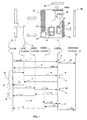
- the service provider (33) makes a request to a determined server (LOC, SMS, MMS) among the enablers server elements (31), with the opaque transactional identifier (trld) in parameter, of a service determined constituting a sub-transaction (R '), as illustrated in FIG. 1.
- the determined server enabler element (LOC, SMS, MMS) sends to the transaction identifier manager (GIDT) a "unmask” unmasking request (5, 10) to authorize from opaque identifier (trld) providing an identification number (Userld) non-opaque corresponding to the opaque transaction identifier (trld).
- GIDT transaction identifier manager
- a control (5 ', 10') is then carried out by the control means (26) of the transactional identifier server means (GITD) to check whether the element determined server "enabler” (LOC, SMS, MMS) is authorized or not for this service and for this user, so that if authorized, the number non-opaque identification (Userld) is transmitted (7, 12) via the first communication interface (21) to the determined server element (LOC, SMS, MMS) to allow the completion of the sub-transaction (R ').
- GITD transactional identifier server means
- the first sub-transaction (R ') relates to a location service involving a server location (LOC).
- This first sub-transaction (R ') begins with a location request (4) made by the service provider (33) and addressed to the localization server (LOC) with the transaction identifier (trld) as a parameter.
- the location server (LOC) After receiving the identification number (Userld) no opaque transmitted (7) by the manager (GIDT), the location server (LOC) transmits (8) the requested location information to the service offer provider (31).
- the manager transaction identifier includes, on the one hand a motor transactional (28) generating emissions of transactional events consist of one or other of the following commands: BEGIN (ST), COMMIT (CT), ROLLBACK (ET) and on the other hand a traceability engine (29) recording in memory (25) each engine event transactional (28) and all of the information issued during the use of the transactional identifier manager (GIDT).
- the analysis step (1 ') with authorization check for the opening of the transaction is immediately followed by sending to at least one external system (40) of a transaction start event, in the form of a BEGIN (ST) command generated by the engine transactional (28).
- Generation of the transaction start event is carried out via the transaction notification interface (22) of the manager (GIDT).
- the external system (40) may consist of a billing system for example to reserve a billing ticket.
- the analysis step (1 ') is also followed by a recording by the traceability engine (29) of service opening statistics, carried out at approximately the same time than the generation of the BEGIN (ST) command.
- a sub-transaction (R ') can be performed.
- the traceability engine (29) records also statistics (6, 11) at the end of each sub-transaction (R ').
- the transaction context is updated upon completion of a sub-transaction (R ').
- the traceability engine (29) has all the information issued by the use of the transactional identifier manager (GIDT), for example on control access whether positive or negative, on the fulfillment of the offer whether it is complete or in progress, etc.
- GIDT transactional identifier manager
- the second sub-transaction (R ') makes intervene a short message server (SMS), the service provider (33) making a request (4) to the server (SMS).
- SMS short message server
- the mode of communication is analogous to the aforementioned case for the sub-transaction (R ') with the location server (LOC).
- LOC location server
- the server (SMS) transmits (13) short message information requested from the service provider (33).
- a third sub-transaction involves an enabler multimedia message server (MMS).
- an inconsistency is detected by the manager (GIDT) between the service description stored in the memory (25) and the server's enabler message request multimedia (MMS). Such an error can be detected for example when the description of the service provides for the sending of an e-mail.
- the two first steps (14, 15) are analogous to the first two steps (4, 5) of the first sub-transaction (R ') concerning the location server (LOC). Then the inconsistency is detected during the execution of the method of unmasking, as illustrated with the corresponding diagram in Figure 3.
- the traceability engine (29) records statistical information (16) representative of the failure of the transaction.
- the manager transaction identifier sends, via the first interface of communication (21), a negative response (17) to the enabler server element (MMS).
- MMS enabler server element
- the latter notifies the service offer provider (31) of the refusal of authorization (18) to send a multimedia short message.
- the transactional identifier manager transmits, via the transaction notification (22), a transactional event of type end of ROLLBACK (ET) recovery to signify to the external system (40) that the end-to-end service failed, the number of times the transaction was resumed error being exceeded.
- This ROLLBACK (ET) event notifies that the transaction is canceled.
- data provided with the transactional event ROLLBACK (ET) are transmitted to a dialog manager and allow to bill or not the service.
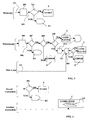
- Figure 3 shows the methods with state logics associated with the interactions between the enablers (31) server elements and the manager (GIDT).
- the manager's mask method of masking transaction identifier GIDT
- the manager's mask method of masking transaction identifier first finds (202) the targeted offer information (203) for the identifier (Userld) from the technical address (201) and the plurality of service offers stored in memory (25).
- the Mask method controls the access (204) of a user subscribed to the service offer (203) and issues either a refusal of access (R1) either triggers the Start (S) method.
- the Unmask unmasking method of the identifier manager transactional first finds (205) the information of the targeted offer (206) from data representative of the address technical and transactional identifier (trld) and from said plurality of offers. Then, as illustrated in Figure 3, the Unmask method controls access (207) of a partner (33) to the enabler server element (LOC, SMS, MMS) and checks (208) that the request made to the server element (LOC, SMS, MMS) is in correspondence with the current context of the transaction.
- a partner to the enabler server element (LOC, SMS, MMS)
- checks (208) that the request made to the server element (LOC, SMS, MMS) is in correspondence with the current context of the transaction.
- the Unmask method is continues by signaling to the enabler server element (LOC, SMS, MMS) that the transactional identifier manager (GIDT) is awaiting an update day, returns (210) the MSISDN number or similar identification (Userld) associated with the opaque transaction identifier (trld), waits (211) for the update Update, then checks (302) that the update received contains the information necessary for the completion of the offer to either issue a Completed method (C) or an Error method (E). Denial of access (R2) is notified when access has not been authorized during the check (207).
- a control step (209) of updating day intervenes after the verification step (208), to directly activate the completion of the offer with a Completed method (C) in the event that the Update update is not required.
- Figure 4 shows the methods of communication between a service provider (33) and the transaction identifier manager (GIDT) used to open and close a transaction.
- the method OpenTransaction is issued by a value-added service provider (33) to the supplier interface (23) of the manager (GIDT) to control access (100) of a partner (33) to an operator subscriber and produce either an access refusal (R3) or trigger a Start (S) method.
- the CloseTransaction method issued by a supplier (33) to the interface for suppliers (23) of the manager (GIDT), generates an event allowing to unlock the wait "TimeOut" of the manager logic transaction identifier (GIDT).
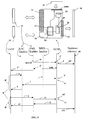
- FIG. 5 illustrates the case of a service described in the memory (25) as being consisting of a location request followed by the sending of a message short SMS.
- the service sequence in particular the invocations to the enablers, is indicated in the description of the service and the technical address of the supplier of service (31) is known to the manager (GIDT).
- a service request from a user must be sent to an enabler server element for messages (SMS), by through an MO message transmitted from the mobile phone of the user.
- the server element enabler (SMS) then intercepts the request for user service.
- the main account of the enabler (SMS) being associated with a technical address of the service, the enabler (SMS) therefore requests opening (O) of a transaction with the transaction identifier (GIDT) for the user and service concerned.
- This opening request (O) addressed to the manager's first communication interface (21) (GIDT), is described sequentially with a batch of primitives open and notifies a user identification.
- An analysis (1 ') request (O) is then made and, in the event of authorization by the means manager (GIDT), a BEGIN (ST) command is generated by the transaction engine (28) to notify an event of start of transaction in the external system (40).
- CT transactional event COMMIT
- One of the advantages of the method according to the invention is that it makes it possible to manage a service session to a subscriber using several enablers of the operator network, generating events on the progress of its realization, which allows for example to invoice a service according to the number of sub-transactions actually carried out.
- Another of the advantages of the invention over the techniques existing is that the operator can guarantee the confidentiality of the data of the user vis-à-vis service providers.
Landscapes
- Engineering & Computer Science (AREA)
- Computer Networks & Wireless Communication (AREA)
- Signal Processing (AREA)
- Business, Economics & Management (AREA)
- Accounting & Taxation (AREA)
- Theoretical Computer Science (AREA)
- Physics & Mathematics (AREA)
- General Physics & Mathematics (AREA)
- Computer Hardware Design (AREA)
- Finance (AREA)
- Software Systems (AREA)
- General Business, Economics & Management (AREA)
- Strategic Management (AREA)
- Economics (AREA)
- Development Economics (AREA)
- General Engineering & Computer Science (AREA)
- Information Retrieval, Db Structures And Fs Structures Therefor (AREA)
- Management, Administration, Business Operations System, And Electronic Commerce (AREA)
- Debugging And Monitoring (AREA)
- Computer And Data Communications (AREA)
- Data Exchanges In Wide-Area Networks (AREA)
- Telephonic Communication Services (AREA)
- Mobile Radio Communication Systems (AREA)
- Supports Or Holders For Household Use (AREA)
Abstract
Description
- Commit : action sur une transaction permettant de faire passer son état à définitivement validé
- Rollback : action sur une transaction en échec permettant de signifier l'abandon de la transaction en cours et de repasser le système dans son état initial
- Begin : action marquant le début d'une transaction
- TimeOut : fin du délai d'attente
- Mask : masquer
- Unmask : démasquer
- Start : démarrer
- Completed : notifier le bon achèvement
- Error : notifier l'erreur
- Update : mettre à jour
- Open Transaction: ouvrir la transaction
- Close Transaction : fermer la transaction
- soit en mode proxy, ce qui impose une intégration technique de la plate-forme logicielle « framework » par les partenaires fournisseurs de services à valeur ajouté VASP et en outre une remise à jour de la plate-forme logicielle « framework » pour y intégrer de nouveaux éléments serveurs « enablers » capables de créer et fournir des services ou simplement de nouvelles interfaces sur des éléments serveurs capables de créer et fournir des services « existants »,
- soit en mode répertoire « directory » ce qui implique qu'une fois la référence allouée sur l'élément serveur capable de créer et fournir des services « enabler » par la plate-forme logicielle « framework », plus aucune information statistique ne passe par lui.
- l'assurance de la bonne livraison d'un service utilisant les éléments serveurs « enablers » d'un réseau opérateur,
- la garantie de la QoS (Qualité de Service) de bout en bout,
- le contrôle de l'accès aux éléments serveurs « enablers » pour un utilisateur et un service donné,
- l'obtention des informations statistiques sur l'utilisation et la réalisation d'un service aussi bien en mode Pull/MO (Mobile Originated) provenant d'une requête du mobile qu'en mode Push/MT (Mobile Terminated) provenant d'une requête d'un élément serveur à destination d'un mobile,
- la gestion des identifiants opaques qui permet à l'opérateur de garantir la confidentialité de l'utilisateur vis-à-vis des fournisseurs de service.
- émission par un élément serveur « enabler» ayant intercepté une demande de service d'un utilisateur ou par un desdits fournisseurs de service d'une requête d'ouverture de transaction d'au moins un service faisant appel à au moins un élément serveur « enabler » déterminé réalisant des sous-transactions, cette requête étant décrite de manière séquentielle avec un lot de primitives ouvertes et adressée à une interface de communication du moyen serveur d'identifiant transactionnel et notifiant une identification de l'utilisateur,
- analyse de la requête et génération d'un identifiant transactionnel opaque par des moyens de gestion et de contrôle du serveur d'identifiant transactionnel, puis
- une étape de réalisation de la transaction utilisant l'identifiant transactionnel opaque.
- le numéro d'identification de l'utilisateur,
- l'identifiant transactionnel,
- l'offre associée à la transaction,
- l'état d'avancement de la transaction pour l'offre associée à celle-ci (nombre de sous-transactions achevées, sous-transactions restant à exécuter, ... ).
- la figure 1 représente schématiquement un exemple de processus mis en oeuvre dans l'invention, dans une variante en mode Push/MT,
- la figure 2 représente trois éléments de logique utilisés par le moyen serveur d'identifiant,
- la figure 3 représente des schémas de logiques d'états associées aux interactions entre les éléments serveurs « enablers » du réseau et le moyen serveur d'identifiant,
- la figure 4 représente un exemple de logiques d'état associées aux interactions entre des fournisseurs de service à valeur ajoutée et le moyen serveur d'identifiant,
- la figure 5 représente schématiquement un exemple de processus mis en oeuvre dans l'invention, dans une variante en mode Pull/MO. De plus, l'annexe précise les abréviations utilisées dans la présente demande.
- gérer les identifiants transactionnels (trld),
- gérer les informations statistiques des accès aux requêtes de démasquage par les enablers (31) du réseau,
- stocker une représentation du service, et plus particulièrement son séquencement/déroulement,
- contrôler le déroulement d'un service et donc s'assurer de sa réalisation de bout en bout,
- émettre des triggers transactionnels, par exemple BEGIN (ST) pour commencer, COMMIT (CT) pour exécuter, ROLLBACK (ET) pour annuler (figure 2).
- génération (S1) d'un identifiant transactionnel d'après les données fournies, dont notamment le numéro MSISDN,
- création (S2) d'un contexte transactionnel comprenant le numéro d'identification (Userld) MSIDSN, l'identifiant transactionnel (trld), l'offre associée à la transaction et l'état d'avancement de la transaction,
- stockage du contexte transactionnel dans la mémoire (25) du gestionnaire (GIDT),
- génération d'un événement transactionnel BEGIN (ST) envoyé vers les systèmes externes (40) pour notifier le début de la transaction, puis,
- envoi (3) par le gestionnaire d'identifiant transactionnel (GIDT) au fournisseur de service (31) de l'identifiant de transaction (trld) correspondant au service.
- éventuellement, test de contrôle (C1) de fin de réalisation (CO) d'une sous-transaction (R'), et modification (C2) de l'état d'avancement de la transaction mémorisé dans le contexte transactionnel en y intégrant la sous-transaction (R') réalisée,
- scrutation de la description de l'offre (C3) pour déterminer s'il est nécessaire que le gestionnaire (GIDT) attende un événement extérieur,
- dans un premier cas, positionnement de la logique en attente (C5) d'un événement, cette attente s'achevant à l'issue d'un délai « TimeOut » ou d'une fermeture de transaction « CloseTransaction », sinon, si aucun événement particulier n'est attendu, vérification (C4) de l'état d'avancement de la transaction, puis
- génération d'un événement transactionnel COMMIT (CT) envoyé vers les systèmes externes (40) pour notifier la fin de la sous-transaction.


Claims (23)
- Procédé de contrôle avec gestion d'un identifiant opaque d'utilisateur de la livraison complète d'un service utilisant au moins un serveur (31), caractérisé en ce qu'il est réalisé par l'intermédiaire d'un moyen serveur d'identifiant transactionnel (GIDT) stockant dans une mémoire (25) pour chaque utilisateur une description d'une pluralité d'offres de service souscrite par l'utilisateur auprès de fournisseurs de service à valeur ajoutée (33), ledit moyen serveur d'identifiant transactionnel (GIDT) comprenant un module de gestion (27) permettant d'associer à un utilisateur ou groupe d'utilisateurs et à au moins un service déterminé un identifiant transactionnel opaque (trld), ledit procédé comprenant les étapes suivantes :émission par un élément serveur « enabler» ayant intercepté une demande de service d'un utilisateur ou par un desdits fournisseurs de service (33) d'une requête d'ouverture de transaction (1) d'au moins un service faisant appel à au moins un élément serveur « enabler » déterminé (31) réalisant des sous-transactions (R'), cette requête (1) étant décrite de manière séquentielle avec un lot de primitives ouvertes et adressée à une interface de communication (21, 23) du moyen serveur d'identifiant transactionnel (GIDT) et notifiant une identification de l'utilisateur (Userld),analyse (1') de la requête et génération d'un identifiant transactionnel opaque (trld) par des moyens de gestion et de contrôle (26, 27) du serveur d'identifiant transactionnel (GIDT), puisune étape de réalisation (R) de la transaction utilisant l'identifiant transactionnel opaque (trld).
- Procédé selon la revendication 1, caractérisé en ce que l'étape d'analyse (1') comprend une vérification par le module de gestion (27) de la correspondance des éléments serveurs « enablers » déterminés (31) avec une offre de service répertoriée accessible pour l'utilisateur parmi la pluralité d'offres de service et un contrôle de l'autorisation d'ouverture de la transaction par des moyens de contrôle (26) du moyen serveur d'identifiant transactionnel (GIDT), pour le service fourni par les éléments serveurs « enablers » (LOC, SMS, MMS) et l'utilisateur spécifié, en fonction notamment de l'identification de l'utilisateur (Userld).
- Procédé selon la revendication 1 ou 2, caractérisé en ce que l'étape de réalisation (R) de la transaction est initiée par un fournisseur de service à valeur ajoutée (33) ayant reçu l'identifiant transactionnel opaque (trld) de la part du moyen serveur d'identifiant transactionnel (GIDT), le fournisseur de service (33) effectuant une demande à un élément serveur enabler déterminé (31), avec l'identifiant transactionnel opaque (trld) en paramètre, d'un service déterminé constituant une sous-transaction, pour déclencher en réponse sur l'élément serveur enabler déterminé (LOC, SMS, MMS) l'envoi vers le serveur d'identifiant transactionnel (GIDT) d'une requête (5) de démasquage « unmask » permettant à partir de l'identifiant opaque (trld) la fourniture d'un numéro d'identification (Userld) non opaque correspondant à l'identifiant transactionnel opaque (trld), un contrôle (5', 10') étant ensuite réalisé par les moyens de contrôle (26) du moyen serveur d'identifiant transactionnel (GITD) pour vérifier si l'élément serveur déterminé « enabler» (LOC, SMS, MMS) est autorisé ou non pour ce service et pour cet utilisateur, de sorte qu'en cas d'autorisation, le numéro d'identification (Userld) non opaque est transmis (7, 12) via une interface de communication dite interface enabler (21) vers l'élément serveur déterminé (31) pour permettre la réalisation de la sous-transaction (R').
- Procédé selon l'une quelconque des revendications 1 à 3, caractérisé en ce que l'identifiant transactionnel (trld), composé d'au maximum 15 digits, est conforme au plan de numérotation UIT-T E-164 et le numéro d'identification (Userld) non opaque est le numéro MSISDN.
- Procédé selon l'une quelconque des revendications 1 à 4, dans lequel le moyen serveur d'identifiant transactionnel (GIDT) comporte, d'une part un moteur transactionnel (28) générant des émissions d'événements transactionnels constitués de l'une ou l'autre des commandes suivantes : BEGIN (ST), COMMIT (CT), ROLLBACK (ET) et d'autre part d'un moteur de traçabilité (29) consignant dans la mémoire (25) chaque événement du moteur transactionnel (28) et l'ensemble des informations émises pendant l'utilisation du moyen serveur d'identifiant transactionnel (GIDT).
- Procédé selon l'une quelconque des revendications 1 à 5, caractérisé en ce que l'identifiant transactionnel opaque (trld) est envoyé (3) au fournisseur d'offres de service (31) après la mémorisation dans la mémoire (25) du moyen serveur d'identifiant transactionnel (GIDT) d'un contexte transactionnel indiquant notamment :un numéro d'identification (Userld) de l'utilisateur,l'identifiant transactionnel (trld),l'offre associée à la transaction,l'état d'avancement de la transaction pour l'offre associée à celle-ci.
- Procédé selon la revendication 6, dans lequel l'envoi (3) de l'identifiant transactionnel opaque (trld) au fournisseur d'offres de service (31) est précédé en outre d'une génération d'un événement transactionnel représentatif d'un début de transaction vers au moins un système externe (40), par l'intermédiaire d'une seconde interface de communication du moyen serveur d'identifiant dite interface de notification des transactions (22).
- Procédé selon la revendication 7, dans lequel la génération d'un événement transactionnel représentatif d'un début de transaction vers au moins un système externe (40) s'effectue par une commande BEGIN (ST) générée par un moteur transactionnel (28) du moyen serveur d'identifiant transactionnel (GIDT).
- Procédé selon la revendication 7 ou 8, dans lequel le moyen serveur d'identifiant transactionnel (GIDT) transmet, depuis l'interface de notification des transactions (22) à au moins un système externe (40), des données représentatives de la réalisation complète de l'offre par une commande COMMIT (CT) générée par le moteur transactionnel (28) pour indiquer au système externe (40) par exemple de facturation que la transaction est complètement réalisée.
- Procédé selon l'une quelconque des revendications 7 à 9, dans lequel le moyen serveur d'identifiant transactionnel, émet, via l'interface de notification des transactions (22), un événement transactionnel de type fin de reprise ROLLBACK pour signifier à au moins un système externe (40) que le nombre de reprise de la transaction sur erreur est dépassé et que la transaction est annulée pour fournir des données à un gestionnaire de dialogue et pour facturer ou non le service.
- Procédé selon l'une quelconque des revendications 1 à 10, dans lequel les moyens de gestion et de contrôle (26, 27) du serveur d'identifiant transactionnel (GIDT) effectuent l'analyse (1') de la requête d'ouverture de transaction notamment par résolution d'une correspondance entre une adresse technique de service notifiée dans la requête (1) d'ouverture de transaction et une offre de service répertoriée parmi la pluralité de descriptions d'offres de service stockées dans la mémoire (25) du moyen serveur d'identifiant transactionnel (GIDT).
- Procédé selon l'une quelconque des revendications 1 à 11, dans lequel la mémoire du moyen serveur d'identifiant transactionnel (GIDT) stocke des descriptions d'offres de service validées par lesdits fournisseurs (31), saisies par l'intermédiaire d'une troisième interface de communication dite interface de fourniture des descriptions de service (IFDS).
- Procédé selon l'une quelconque des revendications 1 à 12, dans lequel la description d'une offre de service comprend des données formulées dans un méta langage ou forme équivalente permettant aux moyens de contrôle de moyen serveur d'identifiant de contrôler le bon déroulement du service et d'en détecter le début et la fin.
- Procédé selon l'une quelconque des revendications 1 à 13, dans lequel le moyen serveur d'identifiant transactionnel (GIDT) comporte une interface de communication supplémentaire (23) destinée aux fournisseurs de services à valeur ajoutée, la première interface (21) étant destinée aux éléments serveurs (31 ).
- Procédé selon l'une quelconque des revendications 1 à 14, dans lequel le moyen serveur d'identifiant transactionnel (GITD) comporte une logique interne réalisant les méthodes suivantes : Start (S), Completed (C), Error (E), Mask, Unmask, Update, OpenTransaction, CloseTransaction.
- Procédé selon la revendication 15, dans lequel la méthode Start (S) du moyen serveur d'identifiant transactionnel (GIDT) génère (S1) un identifiant transactionnel (trld), crée (S2) un contexte transactionnel en mémoire, génère un événement transactionnel de type BEGIN (ST) et retourne l'identifiant transactionnel (trld) au fournisseur d'offres de service (31 ).
- Procédé selon la revendication 15 ou 16, dans lequel la méthode Completed (C) du moyen serveur d'identifiant transactionnel (GIDT) détermine par un test (C1) si une sous-transaction (R') de la transaction a été réalisée (C0), modifie (C2) en conséquence le contexte transactionnel, détermine, en scrutant la description de l'offre (C3) s'il est nécessaire que le moyen serveur d'identifiant transactionnel (GIDT) attende (C5) un événement extérieur, positionne la logique soit en attente d'un temps écoulé « TimeOut » soit d'une fermeture de transaction « CloseTransaction », vérifie (C4) si la transaction est achevée et génère un événement transactionnel de type COMMIT (CT).
- Procédé selon l'une quelconque des revendications 15 à 17, dans lequel la méthode Error (E) du moyen serveur d'identifiant transactionnel (GIDT) vérifie si le nombre de reprise sur erreur est dépassé et dans l'affirmative génère un événement transactionnel de type ROLLBACK (ET).
- Procédé selon l'une quelconque des revendications 15 à 18, dans lequel la méthode Mask est émise par un élément serveur « enabler » pour retrouver (202) les informations de l'offre ciblée (203) à partir de l'adresse technique (201) et de ladite pluralité d'offres, contrôler l'accès (204) d'un utilisateur abonné à l'offre de service et émettre soit un refus d'accès (R1) soit déclencher la méthode Start (S).
- Procédé selon l'une quelconque des revendications 15 à 19, dans lequel la méthode Unmask est émise par un élément serveur « enabler » pour retrouver (205) les informations de l'offre ciblée (206) à partir de données représentatives de l'adresse technique et l'identifiant transactionnel (trld) et à partir de ladite pluralité des offres, contrôler l'accès (207) d'un fournisseur (33) partenaire à l'élément serveur « enabler » (31), vérifier (208) que la requête faite à l'élément serveur est en correspondance avec le contexte actuel de la transaction et signaler à l'élément serveur (31) que le moyen serveur d'identifiant transactionnel (GIDT) est en attente d'une mise à jour, retourner (210) le numéro MSISDN associé à l'identifiant transactionnel opaque (trld), se mettre en attente (211) de la mise à jour, puis vérifier (302) que la mise à jour reçue contient les informations nécessaires pour la réalisation de l'offre pour soit émettre une méthode Completed (C) soit une méthode Error (E).
- Procédé selon l'une quelconque des revendications 15 à 20, dans lequel la méthode Update est émise par un élément serveur « enabler » et constituée par la mise en état d'attente (211) de mise à jour concernant la réalisation de la requête du serveur d'identifiant transactionnel (GIDT).
- Procédé selon l'une quelconque des revendications 15 à 21, dans lequel la méthode OpenTransaction est émise par un fournisseur de services à valeur ajoutée pour contrôler l'accès (100) d'un partenaire à un abonné de l'opérateur et produire soit un refus d'accès (R3) soit déclencher une méthode Start (S).
- Procédé selon l'une quelconque des revendications 17 à 22, dans lequel la méthode Close Transaction est émise par un fournisseur de services à valeur ajoutée (33) et génère un événement permettant de débloquer l'attente « TimeOut » de la logique du moyen serveur d'identifiant transactionnel (GIDT).
Applications Claiming Priority (2)
| Application Number | Priority Date | Filing Date | Title |
|---|---|---|---|
| FR0306898A FR2855924B1 (fr) | 2003-06-06 | 2003-06-06 | Procede de controle avec gestion d'un identifiant opaque d'utilisateur de la livraison complete d'un service utilisant un ensemble de serveurs |
| FR0306898 | 2003-06-06 |
Publications (2)
| Publication Number | Publication Date |
|---|---|
| EP1484859A1 true EP1484859A1 (fr) | 2004-12-08 |
| EP1484859B1 EP1484859B1 (fr) | 2006-05-31 |
Family
ID=33155673
Family Applications (1)
| Application Number | Title | Priority Date | Filing Date |
|---|---|---|---|
| EP04290596A Expired - Lifetime EP1484859B1 (fr) | 2003-06-06 | 2004-03-05 | Procédé de contrôle avec gestion d'un identifiant opaque d'utilisateur de la livraison complète d'un service utilisant un ensemble de serveurs |
Country Status (11)
| Country | Link |
|---|---|
| US (1) | US20040260719A1 (fr) |
| EP (1) | EP1484859B1 (fr) |
| JP (1) | JP2004362591A (fr) |
| KR (1) | KR20040105588A (fr) |
| CN (1) | CN100388206C (fr) |
| AT (1) | ATE328421T1 (fr) |
| DE (1) | DE602004001016T2 (fr) |
| DK (1) | DK1484859T3 (fr) |
| ES (1) | ES2264554T3 (fr) |
| FR (1) | FR2855924B1 (fr) |
| PT (1) | PT1484859E (fr) |
Families Citing this family (8)
| Publication number | Priority date | Publication date | Assignee | Title |
|---|---|---|---|---|
| US8019362B2 (en) | 2003-02-07 | 2011-09-13 | Sybase 365, Inc. | Universal short code administration facility |
| CN1822687B (zh) * | 2006-03-31 | 2010-09-01 | 中兴通讯股份有限公司 | 一种多媒体消息签名业务的实现方法 |
| US8396929B2 (en) * | 2008-07-02 | 2013-03-12 | Sap Portals Israel Ltd. | Method and apparatus for distributed application context aware transaction processing |
| US8078582B2 (en) * | 2009-04-06 | 2011-12-13 | Microsoft Corporation | Data change ordering in multi-log based replication |
| US20110060627A1 (en) * | 2009-09-08 | 2011-03-10 | Piersol Kurt W | Multi-provider forms processing system with quality of service |
| US8671074B2 (en) | 2010-04-12 | 2014-03-11 | Microsoft Corporation | Logical replication in clustered database system with adaptive cloning |
| TWI418224B (zh) * | 2010-06-30 | 2013-12-01 | Htc Corp | 自動設定網路推播服務之語言種類的方法、用戶端及伺服器 |
| US12597027B2 (en) | 2024-02-29 | 2026-04-07 | T-Mobile Usa, Inc. | Systems for describing unknown access management events using identity tags and related transaction chains |
Citations (3)
| Publication number | Priority date | Publication date | Assignee | Title |
|---|---|---|---|---|
| WO2002011474A2 (fr) * | 2000-07-31 | 2002-02-07 | Cellact Ltd. | Systeme et procede permettant de fournir des services anonymes mais personnalises |
| EP1263187A2 (fr) * | 2001-04-23 | 2002-12-04 | Koninklijke KPN N.V. | Une architecture d'un fournisseur du service et procédé pour diffuser des services aux abonnés mobiles d'un système cellulaire |
| WO2002102016A2 (fr) * | 2001-04-23 | 2002-12-19 | Koninklijke Kpn N.V. | Architecture pour fournir des services sur internet |
Family Cites Families (4)
| Publication number | Priority date | Publication date | Assignee | Title |
|---|---|---|---|---|
| JP2001222652A (ja) * | 2000-02-12 | 2001-08-17 | Toha Ri | コンピュータ通信網を通じ標準商品情報を利用した商品配達サービス装置及び方法 |
| US7076467B1 (en) * | 2000-08-04 | 2006-07-11 | Sony Computer Entertainment America Inc. | Network-based method and system for transmitting digital data to a client computer and charging only for data that is used by the client computer user |
| US8868659B2 (en) * | 2001-05-15 | 2014-10-21 | Avaya Inc. | Method and apparatus for automatic notification and response |
| US6898609B2 (en) * | 2002-05-10 | 2005-05-24 | Douglas W. Kerwin | Database scattering system |
-
2003
- 2003-06-06 FR FR0306898A patent/FR2855924B1/fr not_active Expired - Fee Related
-
2004
- 2004-03-05 EP EP04290596A patent/EP1484859B1/fr not_active Expired - Lifetime
- 2004-03-05 ES ES04290596T patent/ES2264554T3/es not_active Expired - Lifetime
- 2004-03-05 DK DK04290596T patent/DK1484859T3/da active
- 2004-03-05 DE DE602004001016T patent/DE602004001016T2/de not_active Expired - Lifetime
- 2004-03-05 AT AT04290596T patent/ATE328421T1/de not_active IP Right Cessation
- 2004-03-05 PT PT04290596T patent/PT1484859E/pt unknown
- 2004-04-14 US US10/823,904 patent/US20040260719A1/en not_active Abandoned
- 2004-05-25 CN CNB2004100458976A patent/CN100388206C/zh not_active Expired - Fee Related
- 2004-06-05 KR KR1020040041133A patent/KR20040105588A/ko not_active Withdrawn
- 2004-06-07 JP JP2004168070A patent/JP2004362591A/ja active Pending
Patent Citations (3)
| Publication number | Priority date | Publication date | Assignee | Title |
|---|---|---|---|---|
| WO2002011474A2 (fr) * | 2000-07-31 | 2002-02-07 | Cellact Ltd. | Systeme et procede permettant de fournir des services anonymes mais personnalises |
| EP1263187A2 (fr) * | 2001-04-23 | 2002-12-04 | Koninklijke KPN N.V. | Une architecture d'un fournisseur du service et procédé pour diffuser des services aux abonnés mobiles d'un système cellulaire |
| WO2002102016A2 (fr) * | 2001-04-23 | 2002-12-19 | Koninklijke Kpn N.V. | Architecture pour fournir des services sur internet |
Also Published As
| Publication number | Publication date |
|---|---|
| FR2855924B1 (fr) | 2005-07-15 |
| PT1484859E (pt) | 2006-09-29 |
| FR2855924A1 (fr) | 2004-12-10 |
| DE602004001016T2 (de) | 2006-12-14 |
| DK1484859T3 (da) | 2006-10-02 |
| DE602004001016D1 (de) | 2006-07-06 |
| CN100388206C (zh) | 2008-05-14 |
| KR20040105588A (ko) | 2004-12-16 |
| ES2264554T3 (es) | 2007-01-01 |
| ATE328421T1 (de) | 2006-06-15 |
| JP2004362591A (ja) | 2004-12-24 |
| CN1573699A (zh) | 2005-02-02 |
| EP1484859B1 (fr) | 2006-05-31 |
| US20040260719A1 (en) | 2004-12-23 |
Similar Documents
| Publication | Publication Date | Title |
|---|---|---|
| US11651400B1 (en) | Multiple data store authentication | |
| US8064583B1 (en) | Multiple data store authentication | |
| US6272536B1 (en) | System and method for the distribution of code and data | |
| US20090037544A1 (en) | Method to provide assistant role in instant message software | |
| EP2087720B1 (fr) | Procédé et système pour générer des opérations de communication planifiées sur des réseaux et systèmes d'information, et mise en oeuvre de ce procédé dans un processus de vérification de facturation | |
| US8365189B2 (en) | Method and apparatus for a service control layer | |
| EP1484859B1 (fr) | Procédé de contrôle avec gestion d'un identifiant opaque d'utilisateur de la livraison complète d'un service utilisant un ensemble de serveurs | |
| EP1604275A2 (fr) | Procede de gestion du declenchement d une application dans u n terminal de service notamment dans un terminal de telecommunication | |
| US20040045008A1 (en) | J2ee connector architecture | |
| US8224933B2 (en) | Method and apparatus for case-based service composition | |
| WO2009121808A1 (fr) | Procede de gestion de messages electroniques a partir d'un client de messagerie et systeme pour mettre en oeuvre le procede | |
| FR2877178A1 (fr) | Procede de filtrage sur messagerie instantanee | |
| JP4819884B2 (ja) | 通信システムにおける、課金の通知を配信する方法及びシステム | |
| FR2793906A1 (fr) | Systeme et procede de gestion d'attributs dans un environnement oriente objet | |
| EP1935149B1 (fr) | Procede et systeme de notification de reception de messages asynchrones | |
| EP1763187A1 (fr) | Procédé de transfert de fichiers dans un système de messagerie instantanée, serveur et programme d'ordinateur associés | |
| JP2025501559A (ja) | サービス処理方法、システム、及びコンピュータ読み取り可能な記憶媒体 | |
| FR2952262A1 (fr) | Autorisation d'etablissement d'appels simultanes | |
| WO2008017776A2 (fr) | Procede et systeme d'authentification d'utilisateurs dans un reseau de communication | |
| WO2010023376A1 (fr) | Système informatique à serveur d'accès simplifié, et procédé correspondant | |
| FR2877114A1 (fr) | Systeme et procede de gestion de messages dans un reseau de communication par messagerie electronique | |
| WO2010149896A1 (fr) | Procede et dispositif d'integration d'applications heterogenes | |
| FR3068801A1 (fr) | Procede et systeme de gestion de licences de logiciel d'une entreprise fournissant des services a une entreprise cliente | |
| EP1513332A1 (fr) | Système et procédé pour la fourniture d'un service de répertoire à des utilisateurs par l'intermédiaire d'un réseau de télécommunications | |
| FR2849319A1 (fr) | Systeme de gestion d'autorisations pour activer des services de telecommunications impliquant plusieurs terminaux |
Legal Events
| Date | Code | Title | Description |
|---|---|---|---|
| PUAI | Public reference made under article 153(3) epc to a published international application that has entered the european phase |
Free format text: ORIGINAL CODE: 0009012 |
|
| AK | Designated contracting states |
Kind code of ref document: A1 Designated state(s): AT BE BG CH CY CZ DE DK EE ES FI FR GB GR HU IE IT LI LU MC NL PL PT RO SE SI SK TR |
|
| AX | Request for extension of the european patent |
Extension state: AL HR LT LV MK |
|
| 17P | Request for examination filed |
Effective date: 20050131 |
|
| 17Q | First examination report despatched |
Effective date: 20050309 |
|
| AKX | Designation fees paid |
Designated state(s): AT BE BG CH CY CZ DE DK EE ES FI FR GB GR HU IE IT LI LU MC NL PL PT RO SE SI SK TR |
|
| GRAP | Despatch of communication of intention to grant a patent |
Free format text: ORIGINAL CODE: EPIDOSNIGR1 |
|
| GRAS | Grant fee paid |
Free format text: ORIGINAL CODE: EPIDOSNIGR3 |
|
| GRAA | (expected) grant |
Free format text: ORIGINAL CODE: 0009210 |
|
| AK | Designated contracting states |
Kind code of ref document: B1 Designated state(s): AT BE BG CH CY CZ DE DK EE ES FI FR GB GR HU IE IT LI LU MC NL PL PT RO SE SI SK TR |
|
| PG25 | Lapsed in a contracting state [announced via postgrant information from national office to epo] |
Ref country code: SK Free format text: LAPSE BECAUSE OF FAILURE TO SUBMIT A TRANSLATION OF THE DESCRIPTION OR TO PAY THE FEE WITHIN THE PRESCRIBED TIME-LIMIT Effective date: 20060531 Ref country code: IT Free format text: LAPSE BECAUSE OF FAILURE TO SUBMIT A TRANSLATION OF THE DESCRIPTION OR TO PAY THE FEE WITHIN THE PRESCRIBED TIME-LIMIT;WARNING: LAPSES OF ITALIAN PATENTS WITH EFFECTIVE DATE BEFORE 2007 MAY HAVE OCCURRED AT ANY TIME BEFORE 2007. THE CORRECT EFFECTIVE DATE MAY BE DIFFERENT FROM THE ONE RECORDED. Effective date: 20060531 Ref country code: RO Free format text: LAPSE BECAUSE OF FAILURE TO SUBMIT A TRANSLATION OF THE DESCRIPTION OR TO PAY THE FEE WITHIN THE PRESCRIBED TIME-LIMIT Effective date: 20060531 Ref country code: PL Free format text: LAPSE BECAUSE OF FAILURE TO SUBMIT A TRANSLATION OF THE DESCRIPTION OR TO PAY THE FEE WITHIN THE PRESCRIBED TIME-LIMIT Effective date: 20060531 Ref country code: SI Free format text: LAPSE BECAUSE OF FAILURE TO SUBMIT A TRANSLATION OF THE DESCRIPTION OR TO PAY THE FEE WITHIN THE PRESCRIBED TIME-LIMIT Effective date: 20060531 Ref country code: CZ Free format text: LAPSE BECAUSE OF FAILURE TO SUBMIT A TRANSLATION OF THE DESCRIPTION OR TO PAY THE FEE WITHIN THE PRESCRIBED TIME-LIMIT Effective date: 20060531 |
|
| REG | Reference to a national code |
Ref country code: GB Ref legal event code: FG4D Free format text: NOT ENGLISH Ref country code: CH Ref legal event code: EP |
|
| REG | Reference to a national code |
Ref country code: IE Ref legal event code: FG4D Free format text: LANGUAGE OF EP DOCUMENT: FRENCH |
|
| REF | Corresponds to: |
Ref document number: 602004001016 Country of ref document: DE Date of ref document: 20060706 Kind code of ref document: P |
|
| REG | Reference to a national code |
Ref country code: CH Ref legal event code: NV Representative=s name: R. A. EGLI & CO. PATENTANWAELTE |
|
| REG | Reference to a national code |
Ref country code: SE Ref legal event code: TRGR |
|
| REG | Reference to a national code |
Ref country code: PT Ref legal event code: SC4A Effective date: 20060809 |
|
| REG | Reference to a national code |
Ref country code: DK Ref legal event code: T3 |
|
| GBT | Gb: translation of ep patent filed (gb section 77(6)(a)/1977) |
Effective date: 20060908 |
|
| REG | Reference to a national code |
Ref country code: GR Ref legal event code: EP Ref document number: 20060402865 Country of ref document: GR |
|
| REG | Reference to a national code |
Ref country code: ES Ref legal event code: FG2A Ref document number: 2264554 Country of ref document: ES Kind code of ref document: T3 |
|
| PLBE | No opposition filed within time limit |
Free format text: ORIGINAL CODE: 0009261 |
|
| STAA | Information on the status of an ep patent application or granted ep patent |
Free format text: STATUS: NO OPPOSITION FILED WITHIN TIME LIMIT |
|
| 26N | No opposition filed |
Effective date: 20070301 |
|
| PG25 | Lapsed in a contracting state [announced via postgrant information from national office to epo] |
Ref country code: BG Free format text: LAPSE BECAUSE OF FAILURE TO SUBMIT A TRANSLATION OF THE DESCRIPTION OR TO PAY THE FEE WITHIN THE PRESCRIBED TIME-LIMIT Effective date: 20060831 |
|
| PG25 | Lapsed in a contracting state [announced via postgrant information from national office to epo] |
Ref country code: EE Free format text: LAPSE BECAUSE OF FAILURE TO SUBMIT A TRANSLATION OF THE DESCRIPTION OR TO PAY THE FEE WITHIN THE PRESCRIBED TIME-LIMIT Effective date: 20060531 |
|
| PG25 | Lapsed in a contracting state [announced via postgrant information from national office to epo] |
Ref country code: CY Free format text: LAPSE BECAUSE OF FAILURE TO SUBMIT A TRANSLATION OF THE DESCRIPTION OR TO PAY THE FEE WITHIN THE PRESCRIBED TIME-LIMIT Effective date: 20060531 |
|
| PG25 | Lapsed in a contracting state [announced via postgrant information from national office to epo] |
Ref country code: HU Free format text: LAPSE BECAUSE OF FAILURE TO SUBMIT A TRANSLATION OF THE DESCRIPTION OR TO PAY THE FEE WITHIN THE PRESCRIBED TIME-LIMIT Effective date: 20061201 Ref country code: TR Free format text: LAPSE BECAUSE OF FAILURE TO SUBMIT A TRANSLATION OF THE DESCRIPTION OR TO PAY THE FEE WITHIN THE PRESCRIBED TIME-LIMIT Effective date: 20060531 |
|
| PGFP | Annual fee paid to national office [announced via postgrant information from national office to epo] |
Ref country code: DK Payment date: 20100224 Year of fee payment: 7 Ref country code: IE Payment date: 20100225 Year of fee payment: 7 Ref country code: PT Payment date: 20100224 Year of fee payment: 7 |
|
| PGFP | Annual fee paid to national office [announced via postgrant information from national office to epo] |
Ref country code: FI Payment date: 20100222 Year of fee payment: 7 |
|
| PGFP | Annual fee paid to national office [announced via postgrant information from national office to epo] |
Ref country code: AT Payment date: 20100219 Year of fee payment: 7 |
|
| PGFP | Annual fee paid to national office [announced via postgrant information from national office to epo] |
Ref country code: NL Payment date: 20100224 Year of fee payment: 7 |
|
| PGFP | Annual fee paid to national office [announced via postgrant information from national office to epo] |
Ref country code: SE Payment date: 20100224 Year of fee payment: 7 |
|
| PGFP | Annual fee paid to national office [announced via postgrant information from national office to epo] |
Ref country code: GR Payment date: 20100222 Year of fee payment: 7 |
|
| REG | Reference to a national code |
Ref country code: PT Ref legal event code: MM4A Free format text: LAPSE DUE TO NON-PAYMENT OF FEES Effective date: 20110905 |
|
| REG | Reference to a national code |
Ref country code: NL Ref legal event code: V1 Effective date: 20111001 |
|
| PG25 | Lapsed in a contracting state [announced via postgrant information from national office to epo] |
Ref country code: PT Free format text: LAPSE BECAUSE OF NON-PAYMENT OF DUE FEES Effective date: 20110905 |
|
| REG | Reference to a national code |
Ref country code: DK Ref legal event code: EBP |
|
| REG | Reference to a national code |
Ref country code: SE Ref legal event code: EUG |
|
| PG25 | Lapsed in a contracting state [announced via postgrant information from national office to epo] |
Ref country code: AT Free format text: LAPSE BECAUSE OF NON-PAYMENT OF DUE FEES Effective date: 20110305 Ref country code: FI Free format text: LAPSE BECAUSE OF NON-PAYMENT OF DUE FEES Effective date: 20110305 |
|
| REG | Reference to a national code |
Ref country code: IE Ref legal event code: MM4A |
|
| PG25 | Lapsed in a contracting state [announced via postgrant information from national office to epo] |
Ref country code: IE Free format text: LAPSE BECAUSE OF NON-PAYMENT OF DUE FEES Effective date: 20110307 Ref country code: NL Free format text: LAPSE BECAUSE OF NON-PAYMENT OF DUE FEES Effective date: 20111001 |
|
| PG25 | Lapsed in a contracting state [announced via postgrant information from national office to epo] |
Ref country code: GR Free format text: LAPSE BECAUSE OF NON-PAYMENT OF DUE FEES Effective date: 20111004 |
|
| PG25 | Lapsed in a contracting state [announced via postgrant information from national office to epo] |
Ref country code: DK Free format text: LAPSE BECAUSE OF NON-PAYMENT OF DUE FEES Effective date: 20110331 |
|
| PG25 | Lapsed in a contracting state [announced via postgrant information from national office to epo] |
Ref country code: SE Free format text: LAPSE BECAUSE OF NON-PAYMENT OF DUE FEES Effective date: 20110306 |
|
| REG | Reference to a national code |
Ref country code: FR Ref legal event code: GC Effective date: 20150310 |
|
| REG | Reference to a national code |
Ref country code: FR Ref legal event code: PLFP Year of fee payment: 13 |
|
| REG | Reference to a national code |
Ref country code: FR Ref legal event code: PLFP Year of fee payment: 14 |
|
| REG | Reference to a national code |
Ref country code: FR Ref legal event code: PLFP Year of fee payment: 15 |
|
| REG | Reference to a national code |
Ref country code: FR Ref legal event code: GC Effective date: 20180111 |
|
| PGFP | Annual fee paid to national office [announced via postgrant information from national office to epo] |
Ref country code: MC Payment date: 20230223 Year of fee payment: 20 Ref country code: LU Payment date: 20230221 Year of fee payment: 20 Ref country code: FR Payment date: 20230222 Year of fee payment: 20 |
|
| PGFP | Annual fee paid to national office [announced via postgrant information from national office to epo] |
Ref country code: IT Payment date: 20230221 Year of fee payment: 20 Ref country code: GB Payment date: 20230222 Year of fee payment: 20 Ref country code: DE Payment date: 20230221 Year of fee payment: 20 Ref country code: BE Payment date: 20230221 Year of fee payment: 20 |
|
| PGFP | Annual fee paid to national office [announced via postgrant information from national office to epo] |
Ref country code: ES Payment date: 20230403 Year of fee payment: 20 Ref country code: CH Payment date: 20230402 Year of fee payment: 20 |
|
| REG | Reference to a national code |
Ref country code: DE Ref legal event code: R071 Ref document number: 602004001016 Country of ref document: DE |
|
| REG | Reference to a national code |
Ref country code: CH Ref legal event code: PL |
|
| REG | Reference to a national code |
Ref country code: BE Ref legal event code: MK Effective date: 20240305 |
|
| REG | Reference to a national code |
Ref country code: GB Ref legal event code: PE20 Expiry date: 20240304 |
|
| REG | Reference to a national code |
Ref country code: ES Ref legal event code: FD2A Effective date: 20240401 |
|
| PG25 | Lapsed in a contracting state [announced via postgrant information from national office to epo] |
Ref country code: ES Free format text: LAPSE BECAUSE OF EXPIRATION OF PROTECTION Effective date: 20240306 |
|
| PG25 | Lapsed in a contracting state [announced via postgrant information from national office to epo] |
Ref country code: ES Free format text: LAPSE BECAUSE OF EXPIRATION OF PROTECTION Effective date: 20240306 Ref country code: GB Free format text: LAPSE BECAUSE OF EXPIRATION OF PROTECTION Effective date: 20240304 |