EP1489573A1 - Selbstlernendes System und Verfahren zur Regelung des Betriebszustandes einer Anlage - Google Patents
Selbstlernendes System und Verfahren zur Regelung des Betriebszustandes einer Anlage Download PDFInfo
- Publication number
- EP1489573A1 EP1489573A1 EP04102721A EP04102721A EP1489573A1 EP 1489573 A1 EP1489573 A1 EP 1489573A1 EP 04102721 A EP04102721 A EP 04102721A EP 04102721 A EP04102721 A EP 04102721A EP 1489573 A1 EP1489573 A1 EP 1489573A1
- Authority
- EP
- European Patent Office
- Prior art keywords
- activity
- state
- person
- equipment
- systems
- Prior art date
- Legal status (The legal status is an assumption and is not a legal conclusion. Google has not performed a legal analysis and makes no representation as to the accuracy of the status listed.)
- Ceased
Links
Images
Classifications
-
- G—PHYSICS
- G08—SIGNALLING
- G08B—SIGNALLING SYSTEMS, e.g. PERSONAL CALLING SYSTEMS; ORDER TELEGRAPHS; ALARM SYSTEMS
- G08B21/00—Alarms responsive to a single specified undesired or abnormal condition and not otherwise provided for
- G08B21/02—Alarms for ensuring the safety of persons
- G08B21/04—Alarms for ensuring the safety of persons responsive to non-activity, e.g. of elderly persons
- G08B21/0407—Alarms for ensuring the safety of persons responsive to non-activity, e.g. of elderly persons based on behaviour analysis
- G08B21/0423—Alarms for ensuring the safety of persons responsive to non-activity, e.g. of elderly persons based on behaviour analysis detecting deviation from an expected pattern of behaviour or schedule
-
- F—MECHANICAL ENGINEERING; LIGHTING; HEATING; WEAPONS; BLASTING
- F24—HEATING; RANGES; VENTILATING
- F24D—DOMESTIC- OR SPACE-HEATING SYSTEMS, e.g. CENTRAL HEATING SYSTEMS; DOMESTIC HOT-WATER SUPPLY SYSTEMS; ELEMENTS OR COMPONENTS THEREFOR
- F24D19/00—Details
- F24D19/10—Arrangement or mounting of control or safety devices
-
- G—PHYSICS
- G08—SIGNALLING
- G08B—SIGNALLING SYSTEMS, e.g. PERSONAL CALLING SYSTEMS; ORDER TELEGRAPHS; ALARM SYSTEMS
- G08B21/00—Alarms responsive to a single specified undesired or abnormal condition and not otherwise provided for
- G08B21/02—Alarms for ensuring the safety of persons
- G08B21/04—Alarms for ensuring the safety of persons responsive to non-activity, e.g. of elderly persons
- G08B21/0438—Sensor means for detecting
- G08B21/0469—Presence detectors to detect unsafe condition, e.g. infrared sensor, microphone
-
- H—ELECTRICITY
- H05—ELECTRIC TECHNIQUES NOT OTHERWISE PROVIDED FOR
- H05B—ELECTRIC HEATING; ELECTRIC LIGHT SOURCES NOT OTHERWISE PROVIDED FOR; CIRCUIT ARRANGEMENTS FOR ELECTRIC LIGHT SOURCES, IN GENERAL
- H05B47/00—Circuit arrangements for operating light sources in general, i.e. where the type of light source is not relevant
- H05B47/10—Controlling the light source
- H05B47/105—Controlling the light source in response to determined parameters
- H05B47/115—Controlling the light source in response to determined parameters by determining the presence or movement of objects or living beings
-
- H—ELECTRICITY
- H05—ELECTRIC TECHNIQUES NOT OTHERWISE PROVIDED FOR
- H05B—ELECTRIC HEATING; ELECTRIC LIGHT SOURCES NOT OTHERWISE PROVIDED FOR; CIRCUIT ARRANGEMENTS FOR ELECTRIC LIGHT SOURCES, IN GENERAL
- H05B47/00—Circuit arrangements for operating light sources in general, i.e. where the type of light source is not relevant
- H05B47/10—Controlling the light source
- H05B47/16—Controlling the light source by timing means
-
- Y—GENERAL TAGGING OF NEW TECHNOLOGICAL DEVELOPMENTS; GENERAL TAGGING OF CROSS-SECTIONAL TECHNOLOGIES SPANNING OVER SEVERAL SECTIONS OF THE IPC; TECHNICAL SUBJECTS COVERED BY FORMER USPC CROSS-REFERENCE ART COLLECTIONS [XRACs] AND DIGESTS
- Y02—TECHNOLOGIES OR APPLICATIONS FOR MITIGATION OR ADAPTATION AGAINST CLIMATE CHANGE
- Y02B—CLIMATE CHANGE MITIGATION TECHNOLOGIES RELATED TO BUILDINGS, e.g. HOUSING, HOUSE APPLIANCES OR RELATED END-USER APPLICATIONS
- Y02B20/00—Energy efficient lighting technologies, e.g. halogen lamps or gas discharge lamps
- Y02B20/40—Control techniques providing energy savings, e.g. smart controller or presence detection
Definitions
- the present invention relates to a system and a anticipatory method for adjusting the states of systems / equipment and / or situation detection specific or abnormal equipment and / or people, to meet the needs expressed by a or several individuals.
- Such a presence estimate can be used for programming and control equipment, and in particular to manage functions, such as heating, exhibiting a certain time of warm-up by anticipating a start-up or termination of these functions, i.e. by anticipating the period of presence of an occupant. She can also be used for situation detection specific or abnormal incurred by individuals in professional or domestic premises.
- Presence covers the presence of people and the activity of these characterized by its level (agitation, immobility ..) or by its type (wandering, entry, going out, resting, sleeping, etc.).
- Presence also covers physiological state (disease, fit, ...) or psychic (relaxation, stress, ...) of the person present.
- detection then means the acquisition of a physical signal representative of the person's mental or physiological state.
- the invention thus relates, in a first embodiment, programming and control equipment, electric or not, which can be a or more of the following equipment: security, heating and air conditioning equipment, ventilation, sound, visualization, lighting, automation (shutters, doors ...) ... located in different areas of business premises or servants.
- programming and control equipment electric or not, which can be a or more of the following equipment: security, heating and air conditioning equipment, ventilation, sound, visualization, lighting, automation (shutters, doors ...) ... located in different areas of business premises or servants.
- the invention relates, in a second mode of realization, the multisensory detection of specific situations (stress, relaxation, illness, ...) or abnormal (fall, run away, accidents, ...) incurred by individuals living in a demarcated environment (hospitalized people, elderly people at home, animals in a zoo, ).
- Programming and control equipment can thus, in the case of heating, consist in reducing the temperature in premises when the occupants are absent or when wish to decrease the temperature, for example the overnight, and to ensure a temperature of desired comfort which can be a function of the state (psychic, physiological, ...) of the person.
- a programming optimizes costs, and achieve energy savings while ensuring the comfort requested by the occupants.
- Occupants of professional premises or domestic workers can be brought, in fact, because of the repetitiveness of their activities, to achieve the programming of equipment contributing to the creation ambiences and security. This programming is often difficult to carry out and is most limited often to distinguish two levels of occupation of premises: empty, occupied.
- the development of electronics and IT allows us to offer solutions based on a prediction of the states of this equipment, which first involves forecasting periods of occupation of these premises.
- Such programming is relatively simple to carry out when it is daily and is for an entire building: it is then known as "daily mono-zone". Its realization becomes quickly complex when it is weekly and multi zone. But then it can leave more than freedom to an occupant who can get better financial party.
- the problem to be solved is that of realization practice of learning habits, determining the probability of reproduction of these habits and operational anticipation related to the treated application, which is based on observation of the occupation of the spatial areas of the building, as well as on the identification of the use of the occupants' time.
- surveillance assistance systems can be defined as an establishment, on the site to be monitored, means of perception and electronic calculations to diagnose at the earliest the appearance of these risks and transmit possibly an alarm. Such alarms can then allow the intervention of the family, neighbors or specialized organizations (firefighters, nurses, caretaker, ).
- the problem to be solved, in this second mode of realization, is that of triggering automatically an alarm, based on a probability of presence / level of activity / state of a person in local.
- the object of the invention is to resolve the technical problems defined above by proposing a system and method of anticipatory processing for meet the needs expressed by one or more individuals, in professional premises or domestic or medical environment, by determining from observing people's habits one way to get a probability of behavior, which is based on the division of time.
- the classification into seven classes can be retained by default, the number of classes being reduced after statistical data processing observing the presence and / or the state of people in the premises and / or adjusting the status of systems (or equipment).
- This classification is done by statistical processing of observation data from presence / activity / condition of people on the premises.
- the system is then distributed among the customer premises and that of a service provider remote.
- the system is then a remote service.
- the system of the invention can also be resident in the occupant.
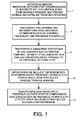
- FIG 1 illustrates the process steps of the invention.
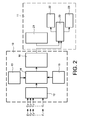
- FIG. 2 illustrates the two modes of realization of the system of the invention.
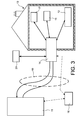
- Figure 3 illustrates an example of realization of the system of the invention.
- the invention thus consists in dividing the premises in Zi spatial zones, to be cut out for each time zone in time bands Tj, and to observe and note the presence / activity / possible state of individuals in each spatial area in these different slices hours. Any presence / activity / status information acquired for an area where a person is applied to the time slot, as soon as a presence is observed, the corresponding spatial area Zi is declared occupied during the time slot Tj concerned.
- Statistical data processing provided by presence detectors or presence parameters allows, for example in by means of for each spatial zone the indications of presence / activity / state of the same time slot according to a classification for example daily on a time horizon defined for example five weeks, to obtain a probability of presence / activity / state.
- This first cutting level a second cutting level of the more macroscopic time.
- This second level of division is then characterized by the application treated, and in particular by the identical setting values for the states of the controlled systems. So the rhythm family, get up, breakfast, lunch, dinner, sleep, ... can be used to adjust a setpoint temperature as a function of this rhythm.
- the software residing in these first processing means integrate the algorithms and make use of simple data processing criteria. So we can say that a person is present in a spatial area during a time slot when the corresponding presence estimator is asked to more than x% of the time.
- This first embodiment can apply to conventional applications: heating, ventilation, lighting, sound level of the chain stereo, ...
- presence data is supplemented with activity and / or person status data.
- the time division can be as precise as one wish in order to establish probabilities within a lapse finer time (a few minutes). We can then build a probability table of very precise presence / activity / state anticipating most likely occupant movements and detect, for example, unusual situations: falls, prolonged immobility, ...
- the state setting values systems taking temperature into account, the brightness, the sound level allows to anticipate the level of occupants' needs: when they arrive, the temperature level can be 20 ° C per example, this level being considered as the level of comfort in the time slot concerned.
- Item (ii) above is rich in opportunities. It allows you to manage questions of security: heating failures, intrusion, security of goods.
- the second embodiment also allows a such an abnormal situation assessment thanks to a comparison between projected values and values real.
- the storage of data returned by the system may require an inconsistent footprint with equipment located locally. It is possible then to relocate the storage and processing of data on an external machine and take advantage of it to benefit from the ergonomics of the Internet.
- the determining the program then becomes a service involving communication with the website a service provider.
- Figure 3 illustrates a diagram organization of a teleprogramming service automatic communicating, electrical or no, and in particular heating, according to the invention: these equipment being located in a building constituted here in one room or area.
- a computer network 10 for example the Internet, connects a tele-services 11, hosting a site of a supplier of 12 equipment remote control service, to a building 13 via a gateway 14, for example home automation.
- a client audit service thanks to a terminal 15 located in said building, a computer personal ("PC") for example, or a terminal 16 located at remote, can connect to gateway 14 or teleservice center 11.
- a detector 17 makes it possible to know the presence of a person in the room shown in building 13.
- Gateway 14 provides communications between the interior and exterior of the building 13.
- the terminals, local 15 and remote 16 are optional. Their purpose is to ensure the connection of the user on the service center, or on the gateway if it has a web server it also, in order to retrieve information or, possibly provide it to the system.
- Such an exemplary embodiment makes it possible to carry out larger data storage, therefore more sophisticated processing than with an entirely local system (because it is less expensive), and therefore to refine the periodicity of the habits of the users and to better personalize their program. It is well suited for determining the classification of typical days. It can also be used in the fine analysis of the behavior of the occupants by means of statistical tools linking together the various sensors. It is applicable in the surveillance of dependent persons in particular to predict their ambulations and launch alerts if necessary.
Landscapes
- Health & Medical Sciences (AREA)
- Engineering & Computer Science (AREA)
- Physics & Mathematics (AREA)
- General Health & Medical Sciences (AREA)
- General Physics & Mathematics (AREA)
- Gerontology & Geriatric Medicine (AREA)
- Business, Economics & Management (AREA)
- Emergency Management (AREA)
- Psychiatry (AREA)
- Psychology (AREA)
- Social Psychology (AREA)
- Thermal Sciences (AREA)
- Chemical & Material Sciences (AREA)
- Combustion & Propulsion (AREA)
- Mechanical Engineering (AREA)
- General Engineering & Computer Science (AREA)
- Human Computer Interaction (AREA)
- Alarm Systems (AREA)
Applications Claiming Priority (2)
| Application Number | Priority Date | Filing Date | Title |
|---|---|---|---|
| FR0350220A FR2856166B1 (fr) | 2003-06-16 | 2003-06-16 | Systeme et procede anticipatifs de reglage des etats de systemes/equipements et/ou de detection de situations anormales. |
| FR0350220 | 2003-06-16 |
Publications (1)
| Publication Number | Publication Date |
|---|---|
| EP1489573A1 true EP1489573A1 (de) | 2004-12-22 |
Family
ID=33396877
Family Applications (1)
| Application Number | Title | Priority Date | Filing Date |
|---|---|---|---|
| EP04102721A Ceased EP1489573A1 (de) | 2003-06-16 | 2004-06-15 | Selbstlernendes System und Verfahren zur Regelung des Betriebszustandes einer Anlage |
Country Status (2)
| Country | Link |
|---|---|
| EP (1) | EP1489573A1 (de) |
| FR (1) | FR2856166B1 (de) |
Cited By (5)
| Publication number | Priority date | Publication date | Assignee | Title |
|---|---|---|---|---|
| EP2309471A1 (de) * | 2009-10-06 | 2011-04-13 | Funai Electric Co., Ltd. | Sicherheitssystem |
| WO2012025868A3 (en) * | 2010-08-27 | 2012-05-18 | Koninklijke Philips Electronics N.V. | Automatic configuration of a lighting system |
| CN106568121A (zh) * | 2016-10-20 | 2017-04-19 | 国网山东省电力公司菏泽供电公司 | 一种楼宇供热状态的监控方法、装置及系统 |
| FR3077409A1 (fr) * | 2018-01-29 | 2019-08-02 | Waloca | Detection de rupture des habitudes de vie d'une personne necessitant surveillance |
| FR3103611A1 (fr) * | 2019-11-26 | 2021-05-28 | Orange | Procédé et dispositif de suivi de l’activité d’une personne en perte d'autonomie |
Citations (4)
| Publication number | Priority date | Publication date | Assignee | Title |
|---|---|---|---|---|
| EP0631219A1 (de) * | 1993-06-28 | 1994-12-28 | Buderus Heiztechnik GmbH | Verfahren zur Temperatursteuerung und- regelung in einzelnen Wohn- oder Arbeitsräumen |
| US6263260B1 (en) * | 1996-05-21 | 2001-07-17 | Hts High Technology Systems Ag | Home and building automation system |
| US20030058339A1 (en) * | 2001-09-27 | 2003-03-27 | Koninklijke Philips Electronics N.V. | Method and apparatus for detecting an event based on patterns of behavior |
| EP1313264A1 (de) * | 2001-11-19 | 2003-05-21 | Electricité de France | Verfahren zur Fernprogrammierung und Fernsteuerung von Geräten in verschiedenen Zonen eines Gebäudes |
-
2003
- 2003-06-16 FR FR0350220A patent/FR2856166B1/fr not_active Expired - Fee Related
-
2004
- 2004-06-15 EP EP04102721A patent/EP1489573A1/de not_active Ceased
Patent Citations (4)
| Publication number | Priority date | Publication date | Assignee | Title |
|---|---|---|---|---|
| EP0631219A1 (de) * | 1993-06-28 | 1994-12-28 | Buderus Heiztechnik GmbH | Verfahren zur Temperatursteuerung und- regelung in einzelnen Wohn- oder Arbeitsräumen |
| US6263260B1 (en) * | 1996-05-21 | 2001-07-17 | Hts High Technology Systems Ag | Home and building automation system |
| US20030058339A1 (en) * | 2001-09-27 | 2003-03-27 | Koninklijke Philips Electronics N.V. | Method and apparatus for detecting an event based on patterns of behavior |
| EP1313264A1 (de) * | 2001-11-19 | 2003-05-21 | Electricité de France | Verfahren zur Fernprogrammierung und Fernsteuerung von Geräten in verschiedenen Zonen eines Gebäudes |
Cited By (10)
| Publication number | Priority date | Publication date | Assignee | Title |
|---|---|---|---|---|
| EP2309471A1 (de) * | 2009-10-06 | 2011-04-13 | Funai Electric Co., Ltd. | Sicherheitssystem |
| US8674836B2 (en) | 2009-10-06 | 2014-03-18 | Funai Electric Co., Ltd. | Security system including abnormality determination of activities of a monitored person and electronic photo frame |
| WO2012025868A3 (en) * | 2010-08-27 | 2012-05-18 | Koninklijke Philips Electronics N.V. | Automatic configuration of a lighting system |
| CN103081571A (zh) * | 2010-08-27 | 2013-05-01 | 皇家飞利浦电子股份有限公司 | 照明系统的自动配置 |
| CN103081571B (zh) * | 2010-08-27 | 2015-04-01 | 皇家飞利浦电子股份有限公司 | 照明系统的自动配置 |
| US9008806B2 (en) | 2010-08-27 | 2015-04-14 | Koninklijkle Philips N.V. | System and method for automatically creating a lighting effect |
| CN106568121A (zh) * | 2016-10-20 | 2017-04-19 | 国网山东省电力公司菏泽供电公司 | 一种楼宇供热状态的监控方法、装置及系统 |
| CN106568121B (zh) * | 2016-10-20 | 2019-05-10 | 国网山东省电力公司菏泽供电公司 | 一种楼宇供热状态的监控方法、装置及系统 |
| FR3077409A1 (fr) * | 2018-01-29 | 2019-08-02 | Waloca | Detection de rupture des habitudes de vie d'une personne necessitant surveillance |
| FR3103611A1 (fr) * | 2019-11-26 | 2021-05-28 | Orange | Procédé et dispositif de suivi de l’activité d’une personne en perte d'autonomie |
Also Published As
| Publication number | Publication date |
|---|---|
| FR2856166A1 (fr) | 2004-12-17 |
| FR2856166B1 (fr) | 2005-08-05 |
Similar Documents
| Publication | Publication Date | Title |
|---|---|---|
| US12205450B2 (en) | Sensing peripheral heuristic evidence, reinforcement, and engagement system | |
| EP1705617A2 (de) | Verfahren und Vorrichtung zur Fernüberwachung der Aktivität einer Person in einer Wohnung | |
| EP2076894A1 (de) | Verfahren und system zum detektieren abnormer situationen einer person an einem wohnungsort | |
| US20230237059A1 (en) | Managing engagement methods of a digital assistant while communicating with a user of the digital assistant | |
| WO2018142107A1 (en) | System for monitoring activity | |
| CA3104823C (en) | Network activity validation | |
| EP2950249A1 (de) | Verfahren zur interaktion einer gruppe von nutzern mit einem automatismus | |
| FR2856166A1 (fr) | Systeme et procede anticipatifs de reglage des etats de systemes/equipements et/ou de detection de situations anormales. | |
| CN108806214B (zh) | 用于发布关于警报的消息的警告系统和方法 | |
| Landry et al. | Supporting routine decision-making with a next-generation alarm clock | |
| EP3213465B1 (de) | Verfahren und systeme zur verwaltung verbundener einheiten | |
| US20250247455A1 (en) | System and method thereof for determining availability of a user for interaction with a digital assistant | |
| WO2007096564A2 (fr) | Systeme et procede d'assistance d'une personne dans la realisation d'activites preetablies | |
| EP3933795B1 (de) | Verfahren zum senden einer elektronischen benachrichtigung | |
| FR3067483A1 (fr) | Procede de detection de presence d'individus | |
| WO2023170574A1 (fr) | Détermination automatique d'une mesure de l'hygiène de vie numérique par agrégation d'un ensemble de mesures hétérogènes provenant de sources hétérogènes | |
| CN117635400A (zh) | 社区的物联网服务方法、装置和社区服务系统 | |
| JP2024075411A (ja) | 見守りシステム及び見守り方法 | |
| FR3035247A1 (fr) | Procede et systeme de surveillance d'un utilisateur | |
| FR3085525A1 (fr) | Surveillance des personnes avec prise en compte des visites | |
| FR3085524A1 (fr) | Procede d'apprentissage du mode de vie d'une personne et detection d'anomalies |
Legal Events
| Date | Code | Title | Description |
|---|---|---|---|
| PUAI | Public reference made under article 153(3) epc to a published international application that has entered the european phase |
Free format text: ORIGINAL CODE: 0009012 |
|
| AK | Designated contracting states |
Kind code of ref document: A1 Designated state(s): AT BE BG CH CY CZ DE DK EE ES FI FR GB GR HU IE IT LI LU MC NL PL PT RO SE SI SK TR |
|
| AX | Request for extension of the european patent |
Extension state: AL HR LT LV MK |
|
| 17P | Request for examination filed |
Effective date: 20050420 |
|
| AKX | Designation fees paid |
Designated state(s): DE ES FR GB IT |
|
| RAP1 | Party data changed (applicant data changed or rights of an application transferred) |
Owner name: ELECTRICITE DE FRANCE |
|
| 17Q | First examination report despatched |
Effective date: 20070417 |
|
| STAA | Information on the status of an ep patent application or granted ep patent |
Free format text: STATUS: THE APPLICATION HAS BEEN REFUSED |
|
| 18R | Application refused |
Effective date: 20150623 |