EP1489885A2 - Verfahren zum Betrieb eines Hörhilfegerätes sowie Hörhilfegerät mit einem Mikrofonsystem, bei dem unterschiedliche Richtcharakteristiken einstellbar sind - Google Patents
Verfahren zum Betrieb eines Hörhilfegerätes sowie Hörhilfegerät mit einem Mikrofonsystem, bei dem unterschiedliche Richtcharakteristiken einstellbar sind Download PDFInfo
- Publication number
- EP1489885A2 EP1489885A2 EP04013290A EP04013290A EP1489885A2 EP 1489885 A2 EP1489885 A2 EP 1489885A2 EP 04013290 A EP04013290 A EP 04013290A EP 04013290 A EP04013290 A EP 04013290A EP 1489885 A2 EP1489885 A2 EP 1489885A2
- Authority
- EP
- European Patent Office
- Prior art keywords
- microphone
- hearing aid
- signal
- hearing
- frequency
- Prior art date
- Legal status (The legal status is an assumption and is not a legal conclusion. Google has not performed a legal analysis and makes no representation as to the accuracy of the status listed.)
- Granted
Links
Images

Classifications
-
- H—ELECTRICITY
- H04—ELECTRIC COMMUNICATION TECHNIQUE
- H04R—LOUDSPEAKERS, MICROPHONES, GRAMOPHONE PICK-UPS OR LIKE ACOUSTIC ELECTROMECHANICAL TRANSDUCERS; ELECTRIC HEARING AIDS; PUBLIC ADDRESS SYSTEMS
- H04R25/00—Electric hearing aids
- H04R25/40—Arrangements for obtaining a desired directivity characteristic
- H04R25/407—Circuits for combining signals of a plurality of transducers
-
- H—ELECTRICITY
- H04—ELECTRIC COMMUNICATION TECHNIQUE
- H04R—LOUDSPEAKERS, MICROPHONES, GRAMOPHONE PICK-UPS OR LIKE ACOUSTIC ELECTROMECHANICAL TRANSDUCERS; ELECTRIC HEARING AIDS; PUBLIC ADDRESS SYSTEMS
- H04R25/00—Electric hearing aids
- H04R25/70—Adaptation of deaf aid to hearing loss, e.g. initial electronic fitting
-
- H—ELECTRICITY
- H04—ELECTRIC COMMUNICATION TECHNIQUE
- H04R—LOUDSPEAKERS, MICROPHONES, GRAMOPHONE PICK-UPS OR LIKE ACOUSTIC ELECTROMECHANICAL TRANSDUCERS; ELECTRIC HEARING AIDS; PUBLIC ADDRESS SYSTEMS
- H04R2225/00—Details of deaf aids covered by H04R25/00, not provided for in any of its subgroups
- H04R2225/41—Detection or adaptation of hearing aid parameters or programs to listening situation, e.g. pub, forest
Definitions
- the invention relates to a method for setting a hearing aid and a hearing aid with a microphone system with variable directional characteristic for recording an acoustic Input signal and output of at least one microphone signal, a signal processing unit and an output transducer. Furthermore, the invention relates to a programming device for a hearing aid.
- the classification may include u.a. influence have on the operation of noise canceling algorithms as well as on the microphone system. For example selected depending on the detected hearing situation (discretely switched or continuously faded) between a omnidirectional directional characteristic (directional characteristic zeroth order) and a clear directivity of the microphone system (Directivity of first or higher order).
- a omnidirectional directional characteristic directional characteristic zeroth order
- a clear directivity of the microphone system Directivity of first or higher order.
- Such microphone systems show a frequency-dependent transmission behavior, in which a significant drop to low frequencies is recorded.
- the noise behavior of the microphones is frequency independent.
- a hearing aid is known with a Signal processing unit and at least two microphones, the different for the formation of directional microphone systems Order can be interconnected, with the directional microphone systems in turn, in the frequency of the Microphones emitted microphone signals dependent weighting interconnected with each other.
- the cutoff frequency between adjacent Frequency bands where a different Weighting of the microphone signals is provided set become.
- EP 0 942 627 A2 is a hearing aid with directional microphone system with a signal processing device, a handset and several microphones whose output signals for Generation of an individual directional microphone characteristic over Delay devices and the signal processing device interconnected in different weightings are.
- the preferred Receiving direction (main direction) in adaptation to a present hearing situation can be set individually.
- the microphone signal of the directional Microphones will be in the range of low signal frequencies in its Amplified amplitude and the microphone signal of the omnidirectional Aligned to microphones. Both the microphone signal of the omnidirectional microphones as well as the microphone signal of the Directional microphones are fed to a switching unit. In a first switching position of the switching unit is omnidirectional microphone and in a second switching position the switching unit the directional microphone with a hearing aid amplifier connected. The switching unit can be dependent on the signal level of a microphone signal automatically switch.
- a disadvantage of the known hearing aid devices with a directional microphone system is that in certain listening situations either the directivity of the microphone system is not optimally used or that a high degree of directivity becomes one clearly audible deterioration of the sound quality.
- the object of the present invention is to improve the sound quality a hearing aid with directional microphone system to improve.
- the hearing aid according to the invention comprises a microphone system with at least two microphones, for directional characteristics to realize zeroth and first order. Preferably however, more than two microphones are present, so that Also directional characteristics of second and higher order possible are.
- the hearing aid device comprises a signal processing unit for processing and frequency-dependent Amplification of the microphone signal generated by the microphone system.
- the signal output is usually by an acoustic Output signal by means of a handset. But they are others, e.g. Vibrating output transducer known.
- a directional characteristic of zero order in the context of the invention is an omnidirectional directional characteristic to understand for example, a single, not with others Microphones interconnected omnidirectional microphone emerges.
- a microphone unit with a directional characteristic first order (directional microphone first order), for example through a single gradient microphone or the electric Interconnection of two omnidirectional microphones realized become.
- directional microphones of the first order is a theoretical one achievable maximum value of the Miniiviti Index (DI) of 6 dB (hypercardioid).
- DI Cosmeticiviti Index
- Directional microphones second and higher order have DI values of 10 dB and more, for example, for better speech intelligibility are advantageous. Does a hearing aid include a microphone system? with for example three omnidirectional microphones, so can be based on this by appropriate interconnection of the microphones simultaneously microphone units with directional characteristics zeroth to second order can be realized.
- a single omnidirectional microphone makes a difference Microphone unit zeroth order dar. Will with two omnidirectional Microphones delay the microphone signal of a microphone, inverted and to the microphone signal of the other microphone adds, it creates a microphone unit of the first order. Will turn with two microphone units first order the microphone signal of a microphone unit delayed, inverted and to the microphone signal of the second microphone unit added first order, this results in a microphone unit with directional characteristic of second order. Let that way depending on the number of omnidirectional microphones - Implement microphone units of any order.
- a microphone system include different microphone units Order, so can between different directional characteristics be switched over, e.g. by switching on or off one or more microphones. Furthermore, by a suitable electrical connection of the microphone units also any mixed forms between the directional characteristics different order are generated. For this purpose, the Microphone signals of the microphone units weighted differently and added before being in the signal processing unit the hearing aid is further processed and amplified. So can a continuous, smooth transition between different directional characteristics are realized, which avoids disturbing artifacts when switching to let.
- the approved Microphone noise to the individual hearing loss of Hearing aid wearer adapted by having a change the directional characteristic only to the extent permitted microphone noise in which this is not done by the hearing aid wearer is distracting.
- On the other hand is at a loud Output signal of the hearing aid, the microphone noise hidden and therefore inaudible. Therefore, in situations with a relatively high signal level of the microphone system generated microphone signal the directivity due to the psychoacoustic Masking of the microphone noise by the loud Input signal can not be restricted.
- the individual rest hearing threshold of the hearing aid wearer the setting of the directivity to take into account.
- the rest hearing threshold of the hearing aid wearer depending on the frequency of the hearing of the Hearing aid carrier supplied test signal determined. Based current hearing aid settings, in particular the signal transmission behavior of the hearing aid and the Concerning the microphone system, this can be done by the microphone system outgoing and the hearing of the hearing aid wearer supplied Microphone noise over the frequency is calculated fairly accurately become. As an alternative to the calculation, it is also possible, the microphone noise under the given settings of the hearing aid as a function of the frequency measure up. A comparison with the previously measured individual Rest hearing threshold of the hearing aid wearer now shows whether the Microphone noise at least in certain frequency ranges above the rest hearing threshold and thus by the hearing aid wearer is perceived. According to the invention is then for the transferable with the hearing aid frequencies as possible high level of directivity adjusted without doing so the microphone noise caused by the microphone system Silence threshold exceeds.
- the directional characteristic of the microphone system adjusted so that the of the Microphone system and the hearing aid wearer's hearing supplied microphone noise at least in a certain Frequency range though above the rest hearing threshold is, but one of the hearing aid wearer individual does not exceed what is considered tolerable.
- the Microphone noise can be adjusted so that this at least approximately over the entire, transferable by the hearing aid Frequency range with the rest hearing threshold or the tolerable level of noise.
- An embodiment of the invention provides that the adjustment of the directional microphone system during operation of the Hearing aid adapted to the current environment becomes.
- a microphone signal with high Signal level allowed a higher level of directivity than this alone taking into account the threshold of hearing loss Case would be.
- this requires the signal level of the microphone signal generated by the microphone system to eat.
- An optimization of the directivity is in particular then reached when the individual masking threshold the Hörzzowski mars determined with respect to the microphone noise becomes. This indicates at which signal level a from an acoustic input signal originating in the output signal of the microphone system, the proportion of microphone noise masked in this output, i. concealed and thus no longer perceptible by the hearing aid wearer is.
- the masking threshold depends on the frequency and the signal level of the microphone noise and indicates which Microphone signals are suitable to the microphone noise cover.
- the degree of directivity of the microphone system is then varies such that, depending on the frequency of a Acoustic input signal as high as possible directivity is achieved without causing the microphone noise the Mask michsschelle exceeds.
- Analogous to the rest hearing threshold can also be one of the hearing aid wearer individually tolerated as tolerated level of microphone noise allowed be, which means that the directivity adjusted is that the microphone noise at least in a certain Frequency range also the masking threshold may exceed certain measure.
- any function which specifies the value of the microphone noise depending on the frequency the rest hearing threshold should exceed or fall short of.
- the adjustment of the directivity of the hearing aid according to of the invention as a function of the rest hearing threshold or the masking threshold may be, for example, during adaptation the hearing aid to the individual hearing loss a hearing aid wearer carried by the acoustician.
- this adaptation takes place automatically the programming device, controlled by an appropriate programming software.
- the programmer calculates these data then values of the setting parameters affecting the setting the directivity as a function of frequency affect.
- the setting of Directivity additionally dependent on the signal level of the Output signal supplied to the hearing of the hearing aid wearer becomes. Also in this regard are by the programmer Setting parameters calculated and on the hearing aid transmit the directivity of the microphone system in Dependence of this signal level during operation of the hearing aid.
- the invention can be used in all known hearing aid types be applied with an adjustable directional microphone, for example for hearing aids worn behind the ear, in ear hearing aids, implantable hearing aids or pocket hearing aids.
- the hearing aid according to the invention also part of a plurality of devices for the care of a hard hearing aid comprehensive hearing aid system be, e.g. Part of a hearing aid system with two am Head worn hearing aids for binaural care or Part of a hearing aid system, consisting of one on the head portable device and a wearable processor unit.
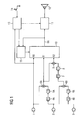
- FIG. 1 shows a schematic diagram of a hearing aid with a directional microphone system according to the invention.
- the microphone system includes three omnidirectional microphones 1, 2 and 3.
- the emanating from the microphone 2 microphone signal is in a Delay unit 4A delayed by an inverter 5A inverted and in a summer 6A to that of the microphone 1 outgoing microphone signal R0 added.
- the two omnidirectional Microphones 1 and 2 thereby form a directional microphone 1, 2 with directivity of the first order, of which the Microphone signal R1 goes off.
- that of the microphone 3 outgoing microphone signal in a 4B delay unit delayed, inverted by an inverter 5B and in one Summer 6B to the outgoing from the microphone 2 microphone signal added.
- the microphones 2 and 3 form by a Directional microphone system 2, 3 with directivity of the first order, whose microphone signal is present at the output of the summer 6B. Will in turn that of the directional microphone system 2, 3 outgoing microphone signal in a delay unit 7 delayed and inverted in an inverter 8 and in a summer 9 to that emanating from the directional microphone system 1, 2 Microphone signal R1 added, it arises from the microphones 1, 2 and 3, a directional microphone system 1, 2, 3 with directional characteristics second order, the microphone signal R2 at the output of Totalizer 9 is present.
- the three microphone signals R0, R1 and R2 are finally fed to a circuit unit 10 in which Switched between the different microphone signals can be or in the different microphone signals R0, R1 and R2 are weighted differently and added together.
- the resulting and output at the output of the circuit unit 10 Microphone output RA finally becomes one Signal processing unit 11 is supplied in the further processing and frequency dependent amplification of the microphone output signal RA to compensate for the individual hearing loss a hearing aid wearer takes place.
- Signal processing unit 11 is supplied in the further processing and frequency dependent amplification of the microphone output signal RA to compensate for the individual hearing loss a hearing aid wearer takes place.
- microphone signal for delivery into an ear canal of the Hearing aid carrier by a handset 12 in an acoustic Signal changed.
- Modern hearing aids can be in a special way to different Adjust listening situations.
- a control unit 13 in the different parameter sets, so-called listening programs, for controlling the signal processing in the hearing aid can be stored and retrieved. Between the different ones Listening programs can be switched by means of a program selection button 14 become.
- the hearing aid has a Automatic situation detection, by means of which the signal processing relevant parameters of the hearing aid adjusted during operation of the hearing aid can be.
- the control unit 13 is the from the omnidirectional microphone 1 outgoing microphone signal fed. Also the directional characteristic of the microphone system is to the detected environmental situation or to the set Hearing program adapted, in the embodiment a microphone control unit 15 is provided which also is controlled by the control unit 13.
- the microphone control unit 15 Depends on the recognized environment situation or the selected hearing program can thus via the microphone control unit 15 between Directional microphone systems with directivity zeroth, first or second order or it can be the emanating from the directional microphones of different order Microphone signals controlled by the microphone control unit 15, weighted and added differently.
- the adjustment of the directivity under Consideration of the individual rest hearing threshold of a hearing aid wearer he follows. This is through an auditory test which is usually determined by a hearing care professional is carried out. Further, in the hearing aid according to the embodiment, the microphone noise for different Directional characteristics determined, e.g. measured or under Consideration of the microphone characteristics, the different Interconnections of the microphones and the signal processing in the hearing aid at the respective hearing aid settings calculated. Subsequently, at the hearing aid the directivity as a function of frequency, the rest hearing threshold as well as the microphone noise at the respective Frequency set.
- the directional characteristic is set that generated by the microphone system and the hearing of the Hearing aid carrier supplied microphone noise on the order
- This rest threshold is, so that a possible high level of directivity is achieved without doing so the microphone noise generated by the microphone system is perceived by the hearing aid wearer as disturbing.
- the hearing aid wearer e.g. at 50dB SPL, so may in this Frequency range a higher degree of directivity allowed be, for example, a directional second Order, without causing the microphone noise from the hearing aid wearer is perceived.
- Another strategy of hearing aid setup may be in it exist that perceptible by the hearing aid wearer Microphone noise does not exceed a certain level.
- the microphone system is then adjusted so that in the output signal the hearing aid from that of the microphone system caused microphone noise at most by just this measure exceeds the rest hearing threshold of the hearing aid wearer.
- This may be tolerated by the hearing aid wearer considered levels of microphone noise throughout, relate by the hearing aid transmittable frequency range or only to a specific frequency range.
- a further development of the invention provides that the microphone control unit 15 also the output signal of the control unit 10 and thus the intended for further processing microphone output signal RA is supplied.
- This has the advantage that in addition to the individual rest threshold and the signal level this microphone signal when setting the directional characteristic can be taken into account.
- the microphone noise namely only at relatively low signal levels this microphone output signal RA perceived as disturbing.
- This microphone output signal RA takes the microphone noise only a small Share of this signal and the overwhelming share of the microphone output signal RA is determined by the acoustic input signal certainly.
- this causes the microphone noise anyway hidden by the acoustic input signal (masked) and thus by the hearing aid wearer is not perceived.
- the individual Masking threshold determined for the microphone noise becomes. Then the directivity depending on the frequency the outgoing of the microphones 1-3 microphone signals R0, R1 and R2 are set so that always the maximum directivity is set at which the microphone noise is straight is still hidden. In the case of a very quiet acoustic Input signal or without acoustic input signal is then automatically at least essentially only that of the omnidirectional microphone 1 outgoing microphone signal R0 on the signal processing unit 11 forwarded. With increasing Signal level in the microphone signal then becomes stepwise switched to directional characteristics of higher order or continuously the weight of the microphone signal R1 or R2 increased over R0.
- the masking threshold can also be taken into account the masking threshold a certain level of microphone noise from the individual hearing aid wearer as be tolerated. Then the directional characteristic of the microphone system adjusted to that degree Microphone noise either over the entire transmittable Frequency range or only in at least one frequency band remains perceptible by the hearing aid wearer.
- the microphone control unit 15 the microphone output RA supplied to adjust the directivity of the microphone system so that the microphone noise supplied to the hearing aid wearer's hearing lies below the rest hearing threshold or by a Payload is hidden. Since the feedback thus before the actual signal processing in the hearing aid by means of Signal processing unit 11 takes place are the microphone control unit 15 also the current control parameters fed to the control unit 13, so that the further processing of the microphone output signal RA by the signal processing unit 11 can be considered. Alternatively could the microphone control unit 15 and the output signal of the signal processing unit 11 are supplied.
- the signal processing in the hearing aid according to the embodiment can be in analog, digital or in combined Circuit technology done. Furthermore, the signal processing also in parallel in adjoining frequency bands (Channels). Preferably also takes place the adjustment of the directional characteristic of the microphone system in frequency bands.
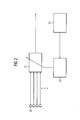
- FIG. 2 shows a block diagram for setting a directional microphone system under consideration an individual rest hearing threshold.
- the microphone system of the Hearing aid includes a microphone array 20 with multiple Microphones, each of which emit a microphone signal becomes.
- a circuit unit 21 is supplied to adjust the directional characteristics. This supplies at its signal output a microphone signal, which for further processing is provided in the hearing aid.
- goal of Hearing aid setting is to the highest possible level To achieve directivity, without the microphone noise to rise so that this from a hearing aid wearer is distracting.
- the individual rest threshold of the Hearing aid wearer depending on the frequency of the Hearing of the hearing aid wearer supplied test signal determined and stored in a storage device 22.
- the Measurement of the rest hearing threshold can be done by a hearing care professional but they can also be done with one suitable measuring equipment (PC with appropriate software) or a hearing aid with integrated tone generator of the hearing aid wearer himself be carried out.
- PC measuring equipment
- a hearing aid with integrated tone generator of the hearing aid wearer himself Is the individual rest hearing threshold of a hearing aid wearer in Dependence of the frequency is known, it can also be the required amplification of quiet input signals in dependence determine from the frequency by the hearing aid, to compensate for the hearing loss.
- hearing loss due to the hearing aid is not complete balanced, but based on the quiet hearing threshold of a Normal hearing only reduced by, for example, 50%. From the necessary amplification of quiet input signals in turn This can be the ear of the hearing aid wearer supplied Microphone noise with quiet input signals or in the absence an acoustic input signal can be determined.
- To the Determine the microphone noise as a function of the frequency and different settings with respect to the directional characteristic be either measurements on the hearing aid carried out or the respective microphone noise is based Hearing aid and microphone characteristics calculated.
- the adjustment of the hearing aid is done and in particular, the circuit unit 21 such that the Microphone noise supplied to the hearing aid wearer's hearing at least approximately coincident with its rest hearing threshold or at least does not exceed them.
- the directivity of the microphone array can also be adjusted in this way be that the resulting microphone noise at least in a certain frequency range, the rest hearing threshold of the hearing aid wearer exceeds a tolerable by this measure.
- this dimension is dependent on the Frequency freely selectable.
- the directivity is then at least in this frequency range is increased until the proportion of microphone noise in the output signal just through the from the acoustic input signal resulting proportion of Output signal is obscured or the maximum directivity is reached. This ensures that always the maximum Directivity is set at which the microphone noise not perceived as disturbing.
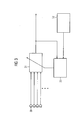
- the masking threshold for the microphone noise is determined by test signals detected, which corresponds to the hearing aid wearer's hearing, e.g. be supplied during the adaptation of the hearing aid. Sine signals, white noise, are preferred as test signals or a noise similar to microphone noise. Data on the measured, individual masking threshold depending on the frequency are then in one Memory device 32 stored in the hearing aid.
- a Calculator 33 calculates from these data and the output signal the circuit unit 31 adaptively optimized Adjustment of the circuit unit 31, so that much directivity is set as possible and still no microphone noise is perceived by the hearing aid wearer. Also in this embodiment, one can have an alternative Realize embodiment in that the directivity of the microphone array is set so that the resulting Microphone noise at least in a certain frequency range the resting hearing threshold of the hearing aid wearer exceeds a tolerable by this measure. Preferably also this measure depending on the frequency freely selectable.
- FIG. 4 Another embodiment for adjusting the directivity a microphone system with multiple microphones 40 shows figure 4. Again, the setting is the same as the previous one Embodiment adaptive taking into account the individual Masking threshold. In contrast to the embodiment according to FIG. 3, however, this is for further processing in a signal processing unit of the hearing aid provided output signal of a circuit unit 41 not taken into account.
- the microphone system includes instead a second circuit unit 42, in which also the from the omnidirectional microphones 40 generated microphone signals and from which the intended for further processing Output signal of the microphone system is apparent.
- the settings of the first circuit unit 41 are static, That is, they are at best in the adaptation of the hearing aid, but not during normal operation set.
- the output signal of this first circuit unit 41 is then combined with the data regarding the individual Masking threshold of the hearing aid wearer, which in a storage device 43 deposited in the hearing aid used to connect the second circuit unit 42 Taxes.
- the microphone noise from the acoustic input signal could be obscured, so in the adaptive circuit unit 42 set a higher level of directivity become.
- the adjustment parameters of the circuit unit 42 become during the ongoing operation of the hearing aid from stored in the memory device 43 history of Masking threshold as a function of the frequency and the signal level the microphone noise and the useful signal and the Output signal of the circuit unit 41 by means of the computing device 44 determined.
- the degree of occlusion i. the difference the signal level of the microphone noise compared to the signal level of the originating from the acoustic input signal Proportion in the output signal of the circuit unit 41, with considered.
- the computing device 44 at the Circuit unit 42 a relatively large increase in Directivity with respect to the generated by the circuit unit 41 Directivity can be adjusted.
- the advantage of this Embodiment is that a feedback loop as in the previous embodiment is avoided.
- the adaptive adjustment of a directional microphone system according to The invention is also based on a masking model, the based on measurements on a large number of subjects.
- the Memory devices 32 and 43 of the embodiments according to Figures 3 and 4 are then data relating to this general Masking model filed in the calculation of setting parameters of the directional microphone system in the rule also gives good results.
- the elaborate measurement of individual masking threshold can be omitted.
- the invention proposes Before that, the setting of the microphone system static or Adaptive taking into account the individual rest threshold or taking into account the individual masking threshold for the microphone noise generated by the microphone system he follows. Thus, always the greatest possible degree be approved to directivity, without causing the hearing aid wearer the microphone noise generated by the microphone system as disturbing.
Landscapes
- Health & Medical Sciences (AREA)
- General Health & Medical Sciences (AREA)
- Neurosurgery (AREA)
- Otolaryngology (AREA)
- Physics & Mathematics (AREA)
- Engineering & Computer Science (AREA)
- Acoustics & Sound (AREA)
- Signal Processing (AREA)
- Circuit For Audible Band Transducer (AREA)
Abstract
Description
Claims (14)
- Verfahren zum Einstellen eines Hörhilfegerätes mit einem Mikrofonsystem (1, 2, 3) mit veränderbarer Richtcharakteristik zur Aufnahme eines akustischen Eingangssignals und Abgabe wenigstens eines Mikrofonausgangssignals (RA), einer Signalverarbeitungseinheit (11) und einem Ausgangswandler (12), mit folgenden Schritten:a) Bestimmen einer Ruhehörschwelle eines Hörhilfegeräteträgers in Abhängigkeit der Signalfrequenz eines dem Gehör des Hörhilfegeräteträgers zugeführten Testsignals,b) Einstellen der Richtcharakteristik des Mikrofonsystems (1, 2, 3) des Hörhilfegerätes in Abhängigkeit der Frequenz des akustischen Eingangssignals und der Ruhehörschwelle.
- Verfahren nach Anspruch 1, wobei die Richtcharakteristik in Abhängigkeit der Frequenz des akustischen Eingangssignals und des Signalpegels des von dem Mikrofonsystem (1, 2, 3) erzeugten Mikrofonausgangssignals (RA) so eingestellt wird, dass der Signalpegel des von dem Mikrofonsystem (1, 2, 3) erzeugten und dem Gehör des Hörhilfegeräteträgers zugeführten Mikrofonrauschens wenigstens im Wesentlichen mit der Ruhehörschwelle bei der jeweiligen Frequenz übereinstimmt.
- Verfahren nach Anspruch 1, wobei die Richtcharakteristik in Abhängigkeit der Frequenz des akustischen Eingangssignals und des Signalpegels des von dem Mikrofonsystem (1, 2, 3) erzeugten Mikrofonausgangssignals (RA) so eingestellt wird, dass sich der Signalpegel des von dem Mikrofonsystem (1, 2, 3) erzeugten und dem Gehör des Hörhilfegeräteträgers zugeführten Mikrofonrauschens wenigstens im Wesentlichen um einen einstellbaren Wert von der Ruhehörschwelle bei der jeweiligen Frequenz unterscheidet.
- Verfahren nach einem der Ansprüche 1 bis 3, wobei die Parameter zum Einstellen der Richtcharakteristik des Mikrofonsystems (1, 2, 3) des Hörhilfegerätes in Abhängigkeit der Frequenz des akustischen Eingangssignals und der Ruhehörschwelle automatisch ermittelt werden.
- Verfahren zum Einstellen eines Hörhilfegerätes mit einem Mikrofonsystem (1, 2, 3) mit veränderbarer Richtcharakteristik zur Aufnahme eines akustischen Eingangssignals und Abgabe wenigstens eines Mikrofonausgangssignals (RA), einer Signalverarbeitungseinheit (9) und einem Ausgangswandler (10), mit folgenden Schritten:a) Bestimmen einer Maskierungsschwelle eines Hörhilfegeräteträgers zur Maskierung des von dem Mikrofonsystem (1, 2, 3) erzeugten Mikrofonrauschens in Abhängigkeit der Signalfrequenz und des Signalpegels eines dem Gehör des Hörhilfegeräteträgers zugeführten Testsignals,b) Ermitteln des Signalpegels eines von dem Mikrofonsystem (1, 2, 3) erzeugten Mikrofonausgangssignals (RA) in Abhängigkeit der Frequenz des Mikrofonausgangssignals (RA),c) Einstellen der Richtcharakteristik des Hörhilfegerätes in Abhängigkeit der Frequenz des Mikrofonausgangssignals (RA), der Maskierungsschwelle und des ermittelten Signalpegels.
- Verfahren nach Anspruch 5, wobei die Richtcharakteristik in Abhängigkeit der Frequenz des Mikrofonausgangssignals (RA) und des Signalpegels des von dem Mikrofonsystem (1, 2, 3) erzeugten Mikrofonausgangssignals (RA) so eingestellt wird, dass der Signalpegel des von dem Mikröfonsystem (1, 2, 3) erzeugten und dem Gehör des Hörhilfegeräteträgers zugeführten Mikrofonrauschens wenigstens im Wesentlichen mit der Maskierungsschwelle bei der jeweiligen Frequenz übereinstimmt.
- Verfahren nach Anspruch 5, wobei die Richtcharakteristik in Abhängigkeit der Frequenz des Mikrofonausgangssignals (RA) und des Signalpegels des von dem Mikrofonsystem (1, 2, 3) erzeugten Mikrofonausgangssignals (RA) so eingestellt wird, dass sich der Signalpegel des von dem Mikrofonsystem (1, 2, 3) erzeugten und dem Gehör des Hörhilfegeräteträgers zugeführten Mikrofonrauschens wenigstens im Wesentlichen um einen konstanten Wert von der Maskierungsschwelle bei der jeweiligen Frequenz unterscheidet.
- Verfahren nach einem der Ansprüche 5 bis 7, wobei die Parameter zum Einstellen der Richtcharakteristik des Hörhilfegerätes in Abhängigkeit der Frequenz des Mikrofonausgangssignals (RA), der Maskierungsschwelle und des ermittelten Signalpegels automatisch ermittelt werden.
- Hörhilfegerät mit einem Mikrofonsystem (1, 2, 3) mit veränderbarer Richtcharakteristik zur Aufnahme eines akustischen Eingangssignals und Abgabe eines Mikrofonausgangssignals (RA), einer Signalverarbeitungseinheit (11) und einem Ausgangswandler (12), wobei das Mikrofonsystem (1, 2, 3) so eingestellt ist, dass der Signalpegel des von dem Mikrofonsystem (1, 2, 3) erzeugten und dem Gehör des Hörhilfegeräteträgers zugeführten Mikrofonrauschens wenigstens im Wesentlichen mit der Ruhehörschwelle bei der jeweiligen Frequenz übereinstimmt.
- Hörhilfegerät mit einem Mikrofonsystem (1, 2, 3) mit veränderbarer Richtcharakteristik zur Aufnahme eines akustischen Eingangssignals und Abgabe eines Mikrofonausgangssignals (RA), einer Signalverarbeitungseinheit (11) und einem Ausgangswandler (12), wobei das Mikrofonsystem (1, 2, 3) in Abhängigkeit der Frequenz des Mikrofonausgangssignals (RA) so eingestellt ist, dass sich der Signalpegel des von dem Mikrofonsystem (1, 2, 3) erzeugten und dem Gehör des Hörhilfegeräteträgers zugeführten Mikrofonrauschens wenigstens im Wesentlichen um einen einstellbaren Wert von der Ruhehörschwelle bei der jeweiligen Frequenz unterscheidet.
- Hörhilfegerät mit einem Mikrofonsystem (1, 2, 3) mit veränderbarer Richtcharakteristik zur Aufnahme eines akustischen Eingangssignals und Abgabe eines Mikrofonausgangssignals (RA), einer Signalverarbeitungseinheit (11) und einem Ausgangswandler (12), wobei das Mikrofonsystem (1, 2, 3) in Abhängigkeit der Frequenz des Mikrofonausgangssignals (RA) so eingestellt ist, dass der Signalpegel des von dem Mikrofonsystem (1, 2, 3) erzeugten und dem Gehör des Hörhilfegeräteträgers zugeführten Mikrofonrauschens wenigstens im Wesentlichen mit der Maskierungsschwelle bei der jeweiligen Frequenz übereinstimmt.
- Hörhilfegerät mit einem Mikrofonsystem (1, 2, 3) mit veränderbarer Richtcharakteristik zur Aufnahme eines akustischen Eingangssignals und Abgabe eines Mikrofonausgangssignals (RA), einer Signalverarbeitungseinheit (11) und einem Ausgangswandler (12), wobei das Mikrofonsystem (1, 2, 3) in Abhängigkeit der Frequenz des Mikrofonausgangssignals (RA) so eingestellt ist, dass sich der Signalpegel des von dem Mikrofonsystem erzeugten und dem Gehör des Hörhilfegeräteträgers zugeführten Mikrofonrauschens wenigstens im Wesentlichen um einen einstellbaren Wert von der Maskierungsschwelle bei der jeweiligen Frequenz unterscheidet.
- Programmiergerät zur Programmierung eines Hörhilfegerätes nach Anspruch 9 oder 10 mit einer Speichereinrichtung (22) zum Speichern von Daten bezüglich der individuellen Ruhehörschwelle eines Hörhilfegeräteträgers in Abhängigkeit der Frequenz eines dem Gehör des Hörhilfegerätes zugeführten Testsignals und mit einer Recheneinrichtung (23) zur Berechnung von Parametern zur Einstellung der Richtcharakteristik des Mikrofonsystems des Hörhilfegerätes in Abhängigkeit dieser Daten.
- Programmiergerät zur Programmierung eines Hörhilfegerätes nach Anspruch 11 oder 12 mit einer Speichereinrichtung (32, 43) zum Speichern von Daten bezüglich der Maskierungsschwelle eines Hörhilfegeräteträgers in Abhängigkeit der Frequenz und des Signalpegels eines dem Gehör des Hörhilfegerätes zugeführten Testsignals und mit einer Recheneinrichtung (33, 44) zur Berechnung von Parametern zur Einstellung der Richtcharakteristik des Mikrofonsystems des Hörhilfegerätes in Abhängigkeit dieser Daten.
Applications Claiming Priority (2)
| Application Number | Priority Date | Filing Date | Title |
|---|---|---|---|
| DE10327889A DE10327889B3 (de) | 2003-06-20 | 2003-06-20 | Verfahren zum Betrieb eines Hörhilfegerätes sowie Hörhilfegerät mit einem Mikrofonsystem, bei dem unterschiedliche Richtcharakteristiken einstellbar sind und Programmiergerät dafür |
| DE10327889 | 2003-06-20 |
Publications (3)
| Publication Number | Publication Date |
|---|---|
| EP1489885A2 true EP1489885A2 (de) | 2004-12-22 |
| EP1489885A3 EP1489885A3 (de) | 2009-07-29 |
| EP1489885B1 EP1489885B1 (de) | 2012-03-07 |
Family
ID=32864513
Family Applications (1)
| Application Number | Title | Priority Date | Filing Date |
|---|---|---|---|
| EP04013290A Expired - Lifetime EP1489885B1 (de) | 2003-06-20 | 2004-06-04 | Verfahren zum Betrieb eines Hörhilfegerätes sowie Hörhilfegerät mit einem Mikrofonsystem, bei dem unterschiedliche Richtcharakteristiken einstellbar sind |
Country Status (6)
| Country | Link |
|---|---|
| US (1) | US7330557B2 (de) |
| EP (1) | EP1489885B1 (de) |
| CN (1) | CN1575043B (de) |
| AU (1) | AU2004202677B2 (de) |
| DE (1) | DE10327889B3 (de) |
| DK (1) | DK1489885T3 (de) |
Cited By (1)
| Publication number | Priority date | Publication date | Assignee | Title |
|---|---|---|---|---|
| WO2013020380A1 (zh) * | 2011-08-10 | 2013-02-14 | 歌尔声学股份有限公司 | 一种通信耳机的语音增强方法、装置及降噪通信耳机 |
Families Citing this family (31)
| Publication number | Priority date | Publication date | Assignee | Title |
|---|---|---|---|---|
| DE10334396B3 (de) * | 2003-07-28 | 2004-10-21 | Siemens Audiologische Technik Gmbh | Hörhilfegerät sowie Verfahren zum Betrieb eines Hörhilfegerätes mit einem Mikrofonsystem, bei dem unterschiedliche Richtcharakteristiken einstellbar sind |
| DE102004052912A1 (de) | 2004-11-02 | 2006-05-11 | Siemens Audiologische Technik Gmbh | Verfahren zur Reduktion von Störleistungen bei einem Richtmikrophon und entsprechendes Akustiksystem |
| DE102005006660B3 (de) * | 2005-02-14 | 2006-11-16 | Siemens Audiologische Technik Gmbh | Verfahren zum Einstellen eines Hörhilfsgeräts, Hörhilfsgerät und mobile Ansteuervorrichtung zur Einstellung eines Hörhilfsgeräts sowie Verfahren zur automatischen Einstellung |
| US7542580B2 (en) * | 2005-02-25 | 2009-06-02 | Starkey Laboratories, Inc. | Microphone placement in hearing assistance devices to provide controlled directivity |
| US20060211910A1 (en) * | 2005-03-18 | 2006-09-21 | Patrik Westerkull | Microphone system for bone anchored bone conduction hearing aids |
| CN1882194B (zh) * | 2005-05-20 | 2011-01-26 | 美商富迪科技股份有限公司 | 内建多个麦克风的模块 |
| US20080285780A1 (en) * | 2005-11-01 | 2008-11-20 | Koninklijke Philips Electronics, N.V. | Method to Adjust a Hearing Aid Device, Hearing Aid System and Hearing Aid Device |
| WO2007102894A2 (en) * | 2005-11-14 | 2007-09-13 | Oticon A/S | Hearing aid system |
| US8396224B2 (en) * | 2006-03-03 | 2013-03-12 | Gn Resound A/S | Methods and apparatuses for setting a hearing aid to an omnidirectional microphone mode or a directional microphone mode |
| EP1992193B1 (de) * | 2006-03-03 | 2011-05-25 | Widex A/S | Hörgerät und verfahren zur verwendung von verstärkungsbegrenzung in einem hörgerät |
| US8180067B2 (en) * | 2006-04-28 | 2012-05-15 | Harman International Industries, Incorporated | System for selectively extracting components of an audio input signal |
| US8036767B2 (en) | 2006-09-20 | 2011-10-11 | Harman International Industries, Incorporated | System for extracting and changing the reverberant content of an audio input signal |
| US7995771B1 (en) * | 2006-09-25 | 2011-08-09 | Advanced Bionics, Llc | Beamforming microphone system |
| EP1926087A1 (de) * | 2006-11-27 | 2008-05-28 | Siemens Audiologische Technik GmbH | Anpassung einer Hörvorrichtung an ein Sprachsignal |
| DE102007035173A1 (de) * | 2007-07-27 | 2009-02-05 | Siemens Medical Instruments Pte. Ltd. | Verfahren zum Einstellen eines Hörsystems mit einem perzeptiven Modell für binaurales Hören und entsprechendes Hörsystem |
| EP2114090B1 (de) * | 2008-04-30 | 2012-06-20 | Siemens Medical Instruments Pte. Ltd. | Schaltung zum Betrieb eines Hörgeräts sowie Hörgerät |
| DE102008049086B4 (de) * | 2008-09-26 | 2011-12-15 | Siemens Medical Instruments Pte. Ltd. | Hörhilfegerät mit einem Richtmikrofonsystem sowie Verfahren zum Betrieb eines derartigen Hörhilfegerätes |
| DE102008055760A1 (de) * | 2008-11-04 | 2010-05-20 | Siemens Medical Instruments Pte. Ltd. | Adaptives Mikrofonsystem für ein Hörgerät und zugehöriges Verfahren zum Betrieb |
| DE102009014053B4 (de) * | 2009-03-19 | 2012-11-22 | Siemens Medical Instruments Pte. Ltd. | Verfahren zum Einstellen einer Richtcharakteristik und Hörvorrichtungen |
| KR101387195B1 (ko) * | 2009-10-05 | 2014-04-21 | 하만인터내셔날인더스트리스인코포레이티드 | 오디오 신호의 공간 추출 시스템 |
| DE102010011730A1 (de) * | 2010-03-17 | 2011-11-17 | Siemens Medical Instruments Pte. Ltd. | Hörvorrichtung und Verfahren zum Erzeugen einer omnidirektionalen Richtcharakteristik |
| EP2843971B1 (de) * | 2013-09-02 | 2018-11-14 | Oticon A/s | Hörgerät mit Mikrofon im Gehörkanal |
| US9763016B2 (en) | 2014-07-31 | 2017-09-12 | Starkey Laboratories, Inc. | Automatic directional switching algorithm for hearing aids |
| DE102016225204B4 (de) * | 2016-12-15 | 2021-10-21 | Sivantos Pte. Ltd. | Verfahren zum Betrieb eines Hörgerätes |
| US10911877B2 (en) * | 2016-12-23 | 2021-02-02 | Gn Hearing A/S | Hearing device with adaptive binaural auditory steering and related method |
| DE102017215823B3 (de) * | 2017-09-07 | 2018-09-20 | Sivantos Pte. Ltd. | Verfahren zum Betrieb eines Hörgerätes |
| DE102018207346B4 (de) * | 2018-05-11 | 2019-11-21 | Sivantos Pte. Ltd. | Verfahren zum Betrieb eines Hörgeräts sowie Hörgerät |
| DE102019201456B3 (de) * | 2019-02-05 | 2020-07-23 | Sivantos Pte. Ltd. | Verfahren für eine individualisierte Signalverarbeitung eines Audiosignals eines Hörgerätes |
| DE102020206367A1 (de) * | 2020-05-20 | 2021-11-25 | Sivantos Pte. Ltd. | Verfahren zum Betrieb eines Hörgeräts und Hörgerät |
| DE102020207585B4 (de) * | 2020-06-18 | 2025-05-08 | Sivantos Pte. Ltd. | Hörsystem mit mindestens einem am Kopf des Nutzers getragenen Hörinstrument sowie Verfahren zum Betrieb eines solchen Hörsystems |
| GB2606191B (en) * | 2021-04-29 | 2025-03-05 | Secr Defence | A method and system for directional processing of audio information |
Citations (2)
| Publication number | Priority date | Publication date | Assignee | Title |
|---|---|---|---|---|
| US20010038699A1 (en) | 2000-03-20 | 2001-11-08 | Audia Technology, Inc. | Automatic directional processing control for multi-microphone system |
| US20020057815A1 (en) | 1993-04-13 | 2002-05-16 | Killion Mead C. | Hearing aid having switchable first and second order directional responses |
Family Cites Families (8)
| Publication number | Priority date | Publication date | Assignee | Title |
|---|---|---|---|---|
| JP2000504948A (ja) * | 1995-12-20 | 2000-04-25 | デシベル インストルメンツ インコーポレイテッド | 補聴なし、シミュレーションされた補聴あり、補聴あり聴力評価のための仮想電気音響聴力測定 |
| DE19810043A1 (de) * | 1998-03-09 | 1999-09-23 | Siemens Audiologische Technik | Hörgerät mit einem Richtmikrofon-System |
| WO2000076268A2 (de) * | 1999-06-02 | 2000-12-14 | Siemens Audiologische Technik Gmbh | Hörhilfsgerät mit richtmikrofonsystem sowie verfahren zum betrieb eines hörhilfsgeräts |
| DE10195945T1 (de) | 2000-03-20 | 2003-04-30 | Audia Technology Inc | Richtverarbeitung für ein System mit mehreren Mikrophonen |
| JP3476764B2 (ja) * | 2000-11-22 | 2003-12-10 | 株式会社テムコジャパン | 聴覚補助器 |
| ATE461515T1 (de) * | 2001-06-28 | 2010-04-15 | Oticon As | Verfahren zur rauschverminderung in einem hörgerät und nach einem solchen verfahren funktionierendes hörgerät |
| CA2420989C (en) * | 2002-03-08 | 2006-12-05 | Gennum Corporation | Low-noise directional microphone system |
| EP2866474A3 (de) * | 2002-04-25 | 2015-05-13 | GN Resound A/S | Anpassungsverfahren und Hörprothese auf Basis von Verlustdaten des Signal-Rausch-Verhältnisses |
-
2003
- 2003-06-20 DE DE10327889A patent/DE10327889B3/de not_active Expired - Fee Related
-
2004
- 2004-06-04 DK DK04013290.4T patent/DK1489885T3/da active
- 2004-06-04 EP EP04013290A patent/EP1489885B1/de not_active Expired - Lifetime
- 2004-06-18 AU AU2004202677A patent/AU2004202677B2/en not_active Ceased
- 2004-06-18 US US10/871,434 patent/US7330557B2/en not_active Expired - Lifetime
- 2004-06-21 CN CN2004100597324A patent/CN1575043B/zh not_active Expired - Fee Related
Patent Citations (2)
| Publication number | Priority date | Publication date | Assignee | Title |
|---|---|---|---|---|
| US20020057815A1 (en) | 1993-04-13 | 2002-05-16 | Killion Mead C. | Hearing aid having switchable first and second order directional responses |
| US20010038699A1 (en) | 2000-03-20 | 2001-11-08 | Audia Technology, Inc. | Automatic directional processing control for multi-microphone system |
Cited By (2)
| Publication number | Priority date | Publication date | Assignee | Title |
|---|---|---|---|---|
| WO2013020380A1 (zh) * | 2011-08-10 | 2013-02-14 | 歌尔声学股份有限公司 | 一种通信耳机的语音增强方法、装置及降噪通信耳机 |
| US9484042B2 (en) | 2011-08-10 | 2016-11-01 | Goertek Inc. | Speech enhancing method, device for communication earphone and noise reducing communication earphone |
Also Published As
| Publication number | Publication date |
|---|---|
| DE10327889B3 (de) | 2004-09-16 |
| CN1575043B (zh) | 2010-05-26 |
| US20050008166A1 (en) | 2005-01-13 |
| DK1489885T3 (da) | 2012-07-02 |
| CN1575043A (zh) | 2005-02-02 |
| AU2004202677A1 (en) | 2005-01-13 |
| EP1489885B1 (de) | 2012-03-07 |
| AU2004202677B2 (en) | 2007-02-08 |
| US7330557B2 (en) | 2008-02-12 |
| EP1489885A3 (de) | 2009-07-29 |
Similar Documents
| Publication | Publication Date | Title |
|---|---|---|
| EP1489885B1 (de) | Verfahren zum Betrieb eines Hörhilfegerätes sowie Hörhilfegerät mit einem Mikrofonsystem, bei dem unterschiedliche Richtcharakteristiken einstellbar sind | |
| DE10331956C5 (de) | Hörhilfegerät sowie Verfahren zum Betrieb eines Hörhilfegerätes mit einem Mikrofonsystem, bei dem unterschiedliche Richtcharakteistiken einstellbar sind | |
| EP2180726B1 (de) | Richtungshören bei binauraler Hörgeräteversorgung | |
| EP1489884B1 (de) | Verfahren zum Betrieb eines Hörhilfegerätes sowie Hörhilfegerät mit einem Mikrofonsystem, bei dem unterschiedliche Richtcharakteristiken einstellbar sind | |
| DE102007017761B4 (de) | Verfahren zur Anpassung eines binauralen Hörgerätesystems | |
| DE102018216667B3 (de) | Verfahren zur Verarbeitung von Mikrofonsignalen in einem Hörsystem sowie Hörsystem | |
| EP1750481A2 (de) | Automatische Verstärkungseinstellung bei einem Hörhilfegerät | |
| EP2226795B1 (de) | Hörvorrichtung und Verfahren zum Reduzieren eines Störgeräuschs für eine Hörvorrichtung | |
| EP1489882A2 (de) | Verfahren zum Betrieb eines Hörhilfegerätes, sowie Hörhilfegerät mit einem Mikrofonsystem, bei dem unterschiedliche Richtcharakteristiken einstellbar sind | |
| DE102007035171A1 (de) | Verfahren zum Anpassen eines Hörgeräts mit Hilfe eines perzeptiven Modells | |
| EP1503612B1 (de) | Hörhilfegerät sowie Verfahren zum Betrieb eines Hörhilfegerätes mit einem Mikrofonsystem, bei dem unterschiedliche Richtcharakteristiken einstellbar sind | |
| EP1432282A2 (de) | Verfahren zum Anpassen eines Hörgerätes an eine momentane akustische Umgebungssituation und Hörgerätesystem | |
| DE602004010317T2 (de) | Verfahren zum Betreiben eines Hörhilfegerätes und Hörhilfegerät | |
| DE102009014053B4 (de) | Verfahren zum Einstellen einer Richtcharakteristik und Hörvorrichtungen | |
| EP3926983B1 (de) | Hörsystem mit mindestens einem am kopf des nutzers getragenen hörinstrument sowie verfahren zum betrieb eines solchen hörsystems | |
| DE102016103297B4 (de) | Vorrichtung und Verfahren zur Konfiguration eines nutzerspezifischen Hörsystems | |
| DE102023202437A1 (de) | Verfahren zur Lokalisierung einer Schallquelle für ein binaurales Hörsystem | |
| EP3913618A1 (de) | Verfahren zum betrieb eines hörgeräts und hörgerät | |
| EP3863306A1 (de) | Hörsystem mit mindestens einem im oder am ohr des nutzers getragenen hörinstrument sowie verfahren zum betrieb eines solchen hörsystems | |
| EP0723381B2 (de) | Vorrichtung zur Hörunterstützung | |
| DE102006046699B3 (de) | Hörvorrichtung mit unsymmetrischer Klangwaage und entsprechendes Einstellverfahren | |
| EP2169984B1 (de) | Hörhilfegerät mit einem Richtmikrofonsystem sowie Verfahren zum Betrieb eines derartigen Hörhilfegerätes | |
| EP2009955B1 (de) | Hörvorrichtung mit passiver, eingangspegelabhängiger Geräuschreduktion | |
| DE102024203743A1 (de) | Verfahren zur direktionalen Signalverarbeitung für ein Hörinstrument | |
| DE102024202131A1 (de) | Verfahren zum Betrieb eines Hörgerätesystems |
Legal Events
| Date | Code | Title | Description |
|---|---|---|---|
| PUAI | Public reference made under article 153(3) epc to a published international application that has entered the european phase |
Free format text: ORIGINAL CODE: 0009012 |
|
| AK | Designated contracting states |
Kind code of ref document: A2 Designated state(s): AT BE BG CH CY CZ DE DK EE ES FI FR GB GR HU IE IT LI LU MC NL PL PT RO SE SI SK TR |
|
| AX | Request for extension of the european patent |
Extension state: AL HR LT LV MK |
|
| PUAL | Search report despatched |
Free format text: ORIGINAL CODE: 0009013 |
|
| AK | Designated contracting states |
Kind code of ref document: A3 Designated state(s): AT BE BG CH CY CZ DE DK EE ES FI FR GB GR HU IE IT LI LU MC NL PL PT RO SE SI SK TR |
|
| AX | Request for extension of the european patent |
Extension state: AL HR LT LV MK |
|
| 17P | Request for examination filed |
Effective date: 20100104 |
|
| AKX | Designation fees paid |
Designated state(s): CH DE DK FR GB LI |
|
| 17Q | First examination report despatched |
Effective date: 20100413 |
|
| GRAP | Despatch of communication of intention to grant a patent |
Free format text: ORIGINAL CODE: EPIDOSNIGR1 |
|
| GRAS | Grant fee paid |
Free format text: ORIGINAL CODE: EPIDOSNIGR3 |
|
| GRAA | (expected) grant |
Free format text: ORIGINAL CODE: 0009210 |
|
| AK | Designated contracting states |
Kind code of ref document: B1 Designated state(s): CH DE DK FR GB LI |
|
| REG | Reference to a national code |
Ref country code: GB Ref legal event code: FG4D Free format text: NOT ENGLISH |
|
| REG | Reference to a national code |
Ref country code: CH Ref legal event code: EP Ref country code: CH Ref legal event code: NV Representative=s name: SIEMENS SCHWEIZ AG |
|
| REG | Reference to a national code |
Ref country code: DE Ref legal event code: R081 Ref document number: 502004013348 Country of ref document: DE Owner name: SIVANTOS GMBH, DE Free format text: FORMER OWNER: SIEMENS AUDIOLOGISCHE TECHNIK GMBH, 91058 ERLANGEN, DE |
|
| REG | Reference to a national code |
Ref country code: DE Ref legal event code: R096 Ref document number: 502004013348 Country of ref document: DE Effective date: 20120516 |
|
| REG | Reference to a national code |
Ref country code: DK Ref legal event code: T3 |
|
| PLBE | No opposition filed within time limit |
Free format text: ORIGINAL CODE: 0009261 |
|
| STAA | Information on the status of an ep patent application or granted ep patent |
Free format text: STATUS: NO OPPOSITION FILED WITHIN TIME LIMIT |
|
| 26N | No opposition filed |
Effective date: 20121210 |
|
| REG | Reference to a national code |
Ref country code: DE Ref legal event code: R097 Ref document number: 502004013348 Country of ref document: DE Effective date: 20121210 |
|
| REG | Reference to a national code |
Ref country code: DE Ref legal event code: R082 Ref document number: 502004013348 Country of ref document: DE Representative=s name: FDST PATENTANWAELTE FREIER DOERR STAMMLER TSCH, DE |
|
| REG | Reference to a national code |
Ref country code: DE Ref legal event code: R082 Ref document number: 502004013348 Country of ref document: DE Representative=s name: FDST PATENTANWAELTE FREIER DOERR STAMMLER TSCH, DE Ref country code: DE Ref legal event code: R081 Ref document number: 502004013348 Country of ref document: DE Owner name: SIVANTOS GMBH, DE Free format text: FORMER OWNER: SIEMENS AUDIOLOGISCHE TECHNIK GMBH, 91058 ERLANGEN, DE |
|
| REG | Reference to a national code |
Ref country code: FR Ref legal event code: PLFP Year of fee payment: 13 |
|
| REG | Reference to a national code |
Ref country code: FR Ref legal event code: PLFP Year of fee payment: 14 |
|
| REG | Reference to a national code |
Ref country code: FR Ref legal event code: PLFP Year of fee payment: 15 |
|
| PGFP | Annual fee paid to national office [announced via postgrant information from national office to epo] |
Ref country code: DK Payment date: 20190624 Year of fee payment: 16 |
|
| PGFP | Annual fee paid to national office [announced via postgrant information from national office to epo] |
Ref country code: FR Payment date: 20190626 Year of fee payment: 16 |
|
| PGFP | Annual fee paid to national office [announced via postgrant information from national office to epo] |
Ref country code: CH Payment date: 20190624 Year of fee payment: 16 |
|
| PGFP | Annual fee paid to national office [announced via postgrant information from national office to epo] |
Ref country code: DE Payment date: 20190624 Year of fee payment: 16 Ref country code: GB Payment date: 20190624 Year of fee payment: 16 |
|
| REG | Reference to a national code |
Ref country code: DE Ref legal event code: R119 Ref document number: 502004013348 Country of ref document: DE |
|
| REG | Reference to a national code |
Ref country code: DK Ref legal event code: EBP Effective date: 20200630 |
|
| REG | Reference to a national code |
Ref country code: CH Ref legal event code: PL |
|
| GBPC | Gb: european patent ceased through non-payment of renewal fee |
Effective date: 20200604 |
|
| PG25 | Lapsed in a contracting state [announced via postgrant information from national office to epo] |
Ref country code: GB Free format text: LAPSE BECAUSE OF NON-PAYMENT OF DUE FEES Effective date: 20200604 Ref country code: FR Free format text: LAPSE BECAUSE OF NON-PAYMENT OF DUE FEES Effective date: 20200630 Ref country code: LI Free format text: LAPSE BECAUSE OF NON-PAYMENT OF DUE FEES Effective date: 20200630 Ref country code: CH Free format text: LAPSE BECAUSE OF NON-PAYMENT OF DUE FEES Effective date: 20200630 |
|
| PG25 | Lapsed in a contracting state [announced via postgrant information from national office to epo] |
Ref country code: DE Free format text: LAPSE BECAUSE OF NON-PAYMENT OF DUE FEES Effective date: 20210101 |
|
| PG25 | Lapsed in a contracting state [announced via postgrant information from national office to epo] |
Ref country code: DK Free format text: LAPSE BECAUSE OF NON-PAYMENT OF DUE FEES Effective date: 20200630 |