EP1490407B1 - Induktion der anti-tumor-ctl-immunität durch in-vivo-aktivierung von 4-1bb und/oder cd40 - Google Patents
Induktion der anti-tumor-ctl-immunität durch in-vivo-aktivierung von 4-1bb und/oder cd40 Download PDFInfo
- Publication number
- EP1490407B1 EP1490407B1 EP03745713A EP03745713A EP1490407B1 EP 1490407 B1 EP1490407 B1 EP 1490407B1 EP 03745713 A EP03745713 A EP 03745713A EP 03745713 A EP03745713 A EP 03745713A EP 1490407 B1 EP1490407 B1 EP 1490407B1
- Authority
- EP
- European Patent Office
- Prior art keywords
- cells
- ctl
- mice
- peptide
- tumor
- Prior art date
- Legal status (The legal status is an assumption and is not a legal conclusion. Google has not performed a legal analysis and makes no representation as to the accuracy of the status listed.)
- Expired - Lifetime
Links
Images













Classifications
-
- C—CHEMISTRY; METALLURGY
- C07—ORGANIC CHEMISTRY
- C07K—PEPTIDES
- C07K16/00—Immunoglobulins [IG], e.g. monoclonal or polyclonal antibodies
- C07K16/18—Immunoglobulins [IG], e.g. monoclonal or polyclonal antibodies against material from animals or humans
- C07K16/28—Immunoglobulins [IG], e.g. monoclonal or polyclonal antibodies against material from animals or humans against receptors, cell surface antigens or cell surface determinants
-
- C—CHEMISTRY; METALLURGY
- C07—ORGANIC CHEMISTRY
- C07K—PEPTIDES
- C07K16/00—Immunoglobulins [IG], e.g. monoclonal or polyclonal antibodies
- C07K16/18—Immunoglobulins [IG], e.g. monoclonal or polyclonal antibodies against material from animals or humans
- C07K16/28—Immunoglobulins [IG], e.g. monoclonal or polyclonal antibodies against material from animals or humans against receptors, cell surface antigens or cell surface determinants
- C07K16/2878—Immunoglobulins [IG], e.g. monoclonal or polyclonal antibodies against material from animals or humans against receptors, cell surface antigens or cell surface determinants against the NGF-receptor/TNF-receptor superfamily, e.g. CD27, CD30, CD40, CD95
-
- A—HUMAN NECESSITIES
- A61—MEDICAL OR VETERINARY SCIENCE; HYGIENE
- A61K—PREPARATIONS FOR MEDICAL, DENTAL OR TOILETRY PURPOSES
- A61K39/00—Medicinal preparations containing antigens or antibodies
- A61K39/12—Viral antigens
-
- A—HUMAN NECESSITIES
- A61—MEDICAL OR VETERINARY SCIENCE; HYGIENE
- A61K—PREPARATIONS FOR MEDICAL, DENTAL OR TOILETRY PURPOSES
- A61K39/00—Medicinal preparations containing antigens or antibodies
- A61K39/395—Antibodies; Immunoglobulins; Immune serum, e.g. antilymphocytic serum
-
- A—HUMAN NECESSITIES
- A61—MEDICAL OR VETERINARY SCIENCE; HYGIENE
- A61P—SPECIFIC THERAPEUTIC ACTIVITY OF CHEMICAL COMPOUNDS OR MEDICINAL PREPARATIONS
- A61P31/00—Antiinfectives, i.e. antibiotics, antiseptics, chemotherapeutics
- A61P31/12—Antivirals
-
- A—HUMAN NECESSITIES
- A61—MEDICAL OR VETERINARY SCIENCE; HYGIENE
- A61P—SPECIFIC THERAPEUTIC ACTIVITY OF CHEMICAL COMPOUNDS OR MEDICINAL PREPARATIONS
- A61P35/00—Antineoplastic agents
-
- C—CHEMISTRY; METALLURGY
- C07—ORGANIC CHEMISTRY
- C07K—PEPTIDES
- C07K14/00—Peptides having more than 20 amino acids; Gastrins; Somatostatins; Melanotropins; Derivatives thereof
- C07K14/005—Peptides having more than 20 amino acids; Gastrins; Somatostatins; Melanotropins; Derivatives thereof from viruses
- C07K14/01—DNA viruses
- C07K14/025—Papovaviridae, e.g. papillomavirus, polyomavirus, SV40, BK virus, JC virus
-
- A—HUMAN NECESSITIES
- A61—MEDICAL OR VETERINARY SCIENCE; HYGIENE
- A61K—PREPARATIONS FOR MEDICAL, DENTAL OR TOILETRY PURPOSES
- A61K39/00—Medicinal preparations containing antigens or antibodies
- A61K2039/505—Medicinal preparations containing antigens or antibodies comprising antibodies
Definitions
- the present invention relates to methods and compositions for treating tumors or infectious diseases, wherein the composition comprises an agonistic anti-CD40 antibody or a fragment thereof.
- the compositions may further comprise polypeptides or nucleic acid sequences having or encoding a class I MHC or class II MHC-restricted T cell epitope.
- TTL cytotoxic T cells
- DC dendritic cells
- T-helper cell is not providing helper signals directly to the CTL (by secretion of IL2), but rather, the T-helper cell is providing a signal to the DC that induces yet uncharacterised cell surface and/or soluble molecules that can activate CTL in the absence of T-helper cells.
- the signal provided by the T-helper cell to the DC is mediated by CD40L-CD40 interaction.
- the immune system is capable of killing autologous cells when they become infected by virus or when they transform into cancer cells. Such a potentially dangerous mechanism must, clearly, be under tight control.
- the immune system's CTL circulate as inactive precursors.
- the precursor T-killer cell To be activated, the precursor T-killer cell must recognise its specific antigen peptide, which is presented as MHC class I molecules on professional APC.
- the APC also need to present the antigen in a proper costimulatory context as provided by, amongst others, the costimulatory surface molecules B7.1 and B7.2 and by the lympokine IL-12.
- T-helper cell that recognises the same antigen on the same APC is needed to fully activate the CTL.
- the specific T-helper cell would supply cytokines such as IL-2 needed for the activation of the CTL.
- Guerder and Matzinger J. Exp. Med. 176:553 (1992)
- the "licensing" model for CTL activation. In this model it was suggested that the T-helper cell, when recognising its antigen on a professional APC, would deliver an activation signal to the APC that as a result would be able to subsequently activate a CTL without the need for the T-helper cell to be present.
- DC circulate through the tissues of our body and in this manner can collect, process and present antigens. After collection of antigens, they migrate to the draining lymph nodes where they present antigen to the T cells. It is well known that a DC needs to be activated to perform optimally. Resting DC express only modest levels of MHC and costimulatory molecules and are poor stimulators of T cells. DC can be activated by inflammatory cytokines and bacterial products, which results in upregulation of MHC and costimulatory molecules. Activation of DC into fully mature DC, expressing optimal levels of MHC molecules, costimulatory molecules and lymphokines such as IL-12, requires additional triggering of these cells through the CD40 receptor. Consequently, the combination of inflammatory cytokines at the site of antigen uptake and the CD40L-CD40 interaction during the T-helper cell interaction result in an optimal capacity to license the DC for CTL activation.
- the CD40 activation pathway was found to be a major immunoregulatory pathway for the generation of primary humoral and cellular immune responses. As described above, the CD40 pathway on DC is responsible for the induction of anti-tumor CTL responses. In addition, activation of the CD40 pathway on macrophages stimulates a strong tumoricidal activity.
- CD40-triggering either by CD40L + Th cells or by agonistic anti-CD40 Ab (in case sufficient T cell help is not available)
- maturation of DC which endows these cells with the capacity to present antigens in the context of the costimulatory signals required for priming of naive CTL (5).
- the costimulatory signal delivered by CD80 and CD86, which are both expressed at high levels on mature DC, to the CD28 receptor on T cells has been investigated most extensively (reviewed in: (6, 7)). Although this signal plays a pivotal role in T cell activation, a number of additional costimulatory pathways also contribute in this process. One of these involves the 4-1 BB/4-1 BBL receptor-ligand pair.
- 4-1 BB is a member of the TNF-receptor (TNFR) family and is expressed on activated CD8 + and CD4 + T cells (8, 9). Its natural ligand, 4-1BBL, is expressed on B cells, macrophages and DC (10-12). In vitro studies have shown that stimulation of T cells with agonistic anti-4-1BB Ab increased TCR-induced proliferation and cytokine production by T cells. Although both CD4 + Th cells and CD8 + CTL could be costimulated in this way, CD8 + T cells were more responsive to 4-1BB triggering than CD4 + T cells (8, 13).
- TNFR TNF-receptor
- the invention relates to CD40 binding molecules, that may be used as such or together with CTL-activating peptides, including tumor antigens or antigens of infectious agents, in a pharmaceutical composition.
- Such composition is useful for enhancing the anti-tumor effect of a peptide tumor vaccine, or for otherwise activating CTLs so that the activated CTLs can act against tumorous or infected cells.
- the CD40 binding molecules can include antibody molecules, as well as homologues, analogues and modified or derived forms thereof, including immunoglobulin fragments like Fab, (Fab') 2 and Fv, as well as small molecules including peptides, oligonucleotides, peptidomimetics and organic compounds which bind to CD40 and activate the CTL response.
- CTL-activating peptides include the adenovirus-derived E1A peptide, having the sequence SGPSNTPPEI (SEQ ID NO:2), and the HPV 16 E7 peptide derived from human papillomavirus type 16, having the sequence RAHYNIVTF (SEQ ID NO:3).
- the CD40 binding molecule, and the CTL activating peptide can be administered to a patient by suitable means, including injection, or gene constructs encoding such a molecule and a peptide can be administered, and the molecule and peptide thereby produced in vivo or ex vivo.
- suitable means including injection, or gene constructs encoding such a molecule and a peptide can be administered, and the molecule and peptide thereby produced in vivo or ex vivo.
- Such a gene therapy is conducted according to methods well known in the art. If the transfection or infection of the gene constructs is done ex vivo, the infected or transfected cells can be administered to the patient, or these steps can be done in vivo whereby the molecule and the peptide are produced endogenously.
- the transfection or infection if done ex vivo, can be by conventional methods, including electroporation, calcium phosphate transfection, micro-injection or by incorporating the gene constructs into suitable liposomes.
- Vectors including a retrovirus, adenovirus or a parvovirus vector, or plasmids, can be used to incorporate the gene constructs, which are then expressed in vivo or ex vivo.
- T-cell help for CTL priming is mediated through CD40-CD40Ligand (CD40L) interactions, and that lack of CTL priming in the absence of CD4 + T cells can be restored by monoclonal antibody (mAb)-mediated CD40 activation of bone marrow-derived APC in the presence of CTL-activating peptides including tumor antigens.
- mAb monoclonal antibody
- blockade of CD40L, expressed by CD4 + T cells results in the failure to raise CTL immunity.
- This defect can be overcome by in vivo CD40-triggering.
- In vivo triggering of CD40 can markedly enhance the efficacy of peptide-based anti-tumor vaccines, or otherwise activate CTLs to result in an anti-tumor or anti-infected cell reaction.
- a CTL-activating peptide can become tolerogenic, meaning that the host reaction against cells expressing such peptide is inhibited, in the absence of anti-CD40.
- a peptide combined with an activating anti-CD40 antibody converts tolerization into strong CTL activation.
- CD40-ligation can provide an already protective tumor-specific peptide-vaccine with the capacity to induce therapeutic CTL immunity in tumor-bearing mice.
- CD40-CD40Ligand pair acts as a switch determining whether naive peripheral CTL are primed or tolerized, Therefore CD40-binding agents such as monoclonal antibodies and other stimulatory ligands can be effectively used in combination with a CTL-activating peptide.
- triggering of 4-1BB through e.g. agonistic anti-4-1BB antibodies delivers a powerful costimulatory signal to CTL, which signal can effectively replace the need for CD4 + T cell help in cross-priming of antigen-specific CTL immunity.
- 4-1BB can convert an otherwise tolerogenic peptide vaccine into a formulation capable of efficient CTL priming.
- Initial activation of naive CTL can occur in the absence of 4-1BB costimulation but this signal permits increased survival of antigen-stimulated CTL.
- the triggering of T-helper-independent CTL immunity by 4-1BB costimulation does require prior stimulation of the TCR and CD-28 dependent costimulation.
- the 4-1BB-mediated survival-signal is thus positioned downstream of antigen-specific TCR triggering and CD-28-dependent costimulation of naive CTL.
- 4-1BB binding molecules as such or in combination with CD40 binding molecule and/or CTL-activating peptides, may thus be used for the preparation of medicaments for the induction, amplification and persistence of antigen-specific CTL responses, e.g. in increasing the potency of anti-tumor vaccines.
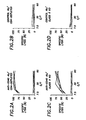
- Splenocytes from normal ( a ) or CD4-depleted B6 ( b ) mice immunized with Ad5E1-BALB/c MECs were tested at various effector/target ratios for lysis of syngeneic MEC target cells loaded with the E1B 192-200 peptide (solid lines), which is derived from human adenovirus and has the sequence VNIRNCCYI (SEQ ID NO: 1)or a D d -restricted control peptide HPV-16E7 49-57 (dashed lines). Each line represents one mouse. Data shown represent one experiment of three performed with similar results.
- Splenocytes from CD4-depleted ( a, b ) or classII-deficient I-Ab-knockout (KO) (c,d) B6 mice were immunized with Ad5E1-BALB/c MECs and treated with either the CD40-activating antibody (Ab) FGK45 ( a, c ) or an isotype control antibody ( b, d ). These splenocytes were tested for E1B-specific CTL activity on syngeneic MEC target cells loaded with either the E1B 192-200 peptide (solid lines) or the HPV-16 E7 49-57 control peptide (dashed lines). Each line represents a single mouse. Data depicted are from two independent experiments. E/T ratio, effector/target ratio.
- FIG. 3 B cells are not essential as cross-priming APCs or for anti-CD40-mediated restoration of cross-priming
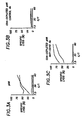
- Splenocytes were taken from untreated ( a ), CD4-depleted B-cell-deficient B6 MT mice ( b, c ), which were immunized with Ad5E1-BALB/c MECs and which received either an isotype control antibody ( b ) or the CD40-activating antibody FGK45 ( c ). These splenocytes were tested for E1B-specific CTL activity on syngeneic MEC target cells loaded with either the E1B 192-200 peptide (solid lines) or the HPV E7 49-57 control peptide (dashed lines). Each line represents one mouse. Data shown represent one experiment of two performed with similar results.
- CD40L blockade prevents cross-priming of E1B-specific CTLs
- Splenocytes were taken from B6 mice immunized with Ad5E1-BALB/c MECs and treated with the CD40L-blocking antibody MR-1 ( a ), or control antibody ( b ), or from mice treated with the CD40L-blocking antibody MR-1 in combination with the CD40-activating antibody FGK45 (c) 24h after immunization.
- These splenocytes were tested for E1B-specific CTL activity on syngeneic MEC target cells loaded with the E1B 192-200 peptide (solid lines) or the HPV-16 E7 49-57 control peptide (dashed lines). Each line represents one mouse. Data shown represent one experiment of three performed with similar results. E/T ratio, effector/target ratio.
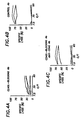
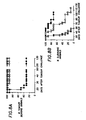
- C57BL/6 mice were injected twice s.c. (1 week interval) with 20 ⁇ g E1A-peptide ( a, b ) or control-peptide ( c, d ) in IFA, and challenged i.p. 1 day later with SAMB7 ( b , d ), a cell line expressing high amounts of E1A-peptide.
- Bulk cultures derived from these mice were tested for E1A-specific cytotoxicity on target cells pulsed with the E1A-peptide (- ⁇ -) or the HPV16 E7-peptide (-O-). Specific lysis of representative bulk cultures at different effector to target (E/T) ratios is shown. This experiment has been repeated 4 times with comparable results.
- Spleen cells derived from untreated C57BL/6 mice (-), or from mice injected s.c. 16 h earlier with 100 ⁇ g of E1A- or HPV16 E7-peptide in IFA were used as stimulator cells for an E1A-specific CTL clone.
- [ 3 H]-thymidine incorporation (cpm) +/- S.E.M. is shown for different effector to stimulator concentrations, without subtraction of background counts. Results are representative of 5 independent experiments.
- Wild type C57BL/6 mice ( a, b ) and H-2 b CD40 -/- mice ( c, d ) were injected s.c. with 20 ⁇ g E1A-peptide in IFA alone (c), in combination with a rat IgG2a control antibody ( a ), or in combination with the anti-CD40 mAb FGK-45 ( b, d ).
- Bulk cultures from these mice were tested for E1A-specific cytotoxicity on target cells pulsed with the E1A-peptide (- ⁇ -), the HPV16 E7-peptide (-O-) or Ad5E1 transformed tumor cells (- ⁇ -). Specific lysis of representative bulk cultures at different E/T ratios is shown.
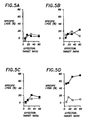
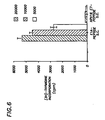
- Figure 8 Therapy of HIPV16 E6 and E7 transformed cells by combination treatment of peptide together with in vivo CD40 triggering
- mice were injected s.c with 25.000 HPV16 transformed syngeneic cells (TC-1).
- C57BL/6 mice were left untreated (-O-) or after 6 days received 100 ⁇ g HPV16 E7-peptide i.p. in IFA (- ⁇ -), 100 ⁇ g HPV16 E7-peptide i.p. in IFA in combination with the anti-CD40 mAb FGK-45 (- ⁇ -) or a control peptide i.p. in IFA in combination with the anti-CD40 mAb FGK-45 (-•-).
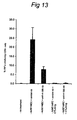
- B6 mice either non-depleted (a) or depleted for CD4 + T cells (b, c, d) were vaccinated with 10 7 TAP k.o. Ad5E1MEC s.c. in combination with systemic doses of control Ab (b), anti-CD40 Ab (c) or anti-4-1BB Ab (d).
- normal B6 mice received a dose of 20 ⁇ g E1A peptide in IFA either in combination with systemic doses of control Ab (e), anti-CD40 (f) or anti-4-1BB Ab (g).
- Splenocytes for immunised mice were restimulated in vitro for 6 days and subsequently tested for antigen-specific cytotoxicity on target cells loaded with the E1B-peptide (panels a-d) or the E1A-peptide (panels e-g)( ⁇ ), the HPV16 E7-peptide ( ⁇ ) or Ad5E1MEC (grey O).
- the stimulatory effects of 4-1BB Ab on priming of Ad5-specific CTL by tumor cells and the peptide vaccine have each been reproducibly observed in 3 separate experiments.
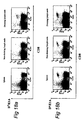
- B6 mice were injected twice with 100 ⁇ g of control Ab (light grey histograms), anti-CD40 Ab (dark grey, left panel) or the anti-4-1BB Ab (dark grey, right panel). Three days later spleen cells were isolated and stained with anti-CD 11c and anti-CD86. Depicted are the CD86 expression levels on CD11c + cells in the spleen.
- B6 bone marrow was isolated and cultured in vitro for 7 days in GM-CSF-containing medium. On day 7, cells were activated by addition of 10 ⁇ g/ml Poly I:C or left untreated. 48h later cells were analysed for 4-1BB expression (black line) or stained with a control Ab (filled light grey). Activation of Poly I:C-treated BMDC was confirmed by measuring CD86 expression (not shown).
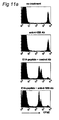
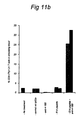
- FIG. 11 Costimulation through 4-1BB is antigen-dependent and results in increased survival of antigen-specific T cells
- mice were injected with 5 x 10 6 Ad5E1A-specific TCR transgenic CD8 + T cells that were labelled with CFSE in vitro. Three days later these mice received a combination of E1A peptide vaccine and Ab as indicated in the figure.
- Peptide vaccination involved a single s.c. 20 ⁇ g dose in IFA, whereas 100ug doses of Ab were administered i.p. on three consecutive days following peptide vaccination.
- spleen cells were isolated and analysed by FACS for the presence of CD8 + /CFSE + T cells. The histogram shows the CFSE intensity of CD8 + T cells.
- B6 Thy1.1 mice were injected with 5 x 10 6 E1A-peptide specific TCR transgenic CD8 + T cells of B6 Thy1.2 origin. Three days later these mice received a combination of E1A peptide vaccine and Ab as indicated in the figure (doses and timing as above). 11 days after injection of the peptide vaccine, blood samples were taken and analysed by FACS for the presence of CD8 + /Thy1.2 + T cells (of E1A-peptide specific TCR transgenic origin).
- Figure 12 4-1BBL is upregulated on activated DC.
- B6 bone marrow was isolated and cultured in vitro for 7 days in GM-CSF-containing medium.
- B6 mice were left untreated or were immunised s.c. with 10 7 Ad5E1-transformed tumor cells in combination with blocking anti-4-1BBL Ab, isotype control Ab and/or CTLA4-Ig as indicated in the figure.
- Spleen cells were isolated 10 days after immunisation and restimulated in vitro for 6 days.
- Bulk cultures were analysed for the presence of antigen-specific CTL by double staining with anti-CD8 antibody and an anti-INFy Ab after overnight stimulation with 1 ⁇ g/ml of the E1B-encoded CTL epitope. The data shown are an average of three independent experiments. Error bars show S.E.M. values.
- FIG. 14 Costimulation through CD28 signalling is prerequisite for efficacy of anti-4-1BB Ab treatment
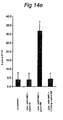
- B6 mice either non-depleted (a) or depleted for CD4 + cells (b-d), were vaccinated with 10 7 Ad5E1MEC s.c. in combination with control Ab (b), anti-4-1BB Ab (c), or anti-4-1 BB Ab in combination with CTLA4-Ig (d).
- Splenocytes were harvested 10 days after vaccination and restimulated in vitro for 7 days.
- Bulk cultures were tested for E1B-specific cytotoxicity on target cells loaded with the E1B-peptide ( ⁇ ), the HPV16 E7-peptide ( ⁇ ) or Ad5E1-transformed tumor cells (grey O).
- the average lysis of these bulk cultures on E1B-peptide loaded target cells at an effector to target ratio of 60:1 is depicted. Error bars represent S.E.M. values from 6 mice over two independent experiments.
- CD28 costimulation facilitates induction of 4-1BB expression on TCR-triggered T cells
- B6 spleen cells were cultured in the presence of the indicated amounts of plate-bound anti-CD3 Ab and/or plate-bound anti-CD28 Ab (5 ⁇ g/ml). After 24h CD8 + T cells were analysed for the expression of 4-1BB.
- Figure 16 4-1BB signalling synergises with CD40 signalling in inducing E1A-specific CTL in vivo
- C57BL/6 mice were vaccinated with E1A-peptide s.c. with 100 micrograms of anti-CD40 Ab FGK-45, anti-4-1BB Ab 3H3, or a combination of both i.p in PBS.
- Ten days later spleen cells were isolated and analysed fro the presence of E1A-specific CTL by staining with CD8-APC and D b -E1A tetramers. Depicted are the absolute numbers of CD8 + T cells in the spleen (upper panel) and the percentage of E1A-specific CTL within this CD8 + population (lower panel).
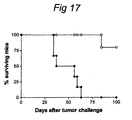
- mice were injected with Ad5E1A-expressing tumor cells. At the time that mice had developed palpable tumors, mice were left untreated (closed circles) or were injected i.v. with a CD40-activating antibody (open circles). Mice were sacrificed when the tumor size exceeded 1 cm 3 to avoid unnecessary suffering.
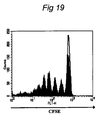
- E1A-specific transgenic T-cells 4*10 6 CFSE-labeled E1A-specific transgenic T-cells were injected i.v. into mice bearing an Ad5E1A-expressing tumor. Seven days later the spleen, tumor-draining lymph node and a non-draining lymph node were taken and analysed for division of E1A-specific CTL by FACS. The results obtained from the tumor-draining lymph node (black area) and the spleen (gray line) are shown and is representative of 12 mice. Results were comparable for anti-CD40-treated mice and untreated mice.
- mice were injected with Ad5E1A-expressing tumor cells. At the time when palpable tumors had developed, mice were left untreated or treated i.v. with the CD40-activating antibody. Five days thereafter, mice were sacrificed and tumorinfiltration of E1A-specific CTL was determined by FACS-analysis. Numbers in the upper right corner represent percentage of TM-positive cells of the total pool of CD8 + cells.
- FIG. 21 Local CD40-activation causes systemic anti-tumor immunity
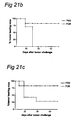
- mice were injected with Ad5E1A-expressing tumor cells in both flanks. At the time when palpable tumors had developed on both flanks, anti-CD40, or PBS as control was given intratumoral in one of the tumors.
- A) Ten days after treatment blood samples were taken and analysed by FACS to determine the presence of Ad5E1A-specific CTL. Results represent the number of E1A-specific CD8 + T-cells as a percentage of the total CD8-pool. (mean + SEM, n 7). *student's T-test: p ⁇ 0,05; **student's T-test: p>0,01; no significant difference between intratumoral and i.v. anti-CD40 treatment.
- B) Percentage of mice bearing a tumor in the flank treated. p ⁇ 0.01C) Percentage of mice bearing a tumor in the not treated flank. p 0.05
- mice were injected with AdSE1A-expressing tumor cells. At the time that mice had developed palpable tumors, treatment was started. Mice received no treatment, anti-CD40 mAb-treatment or a combination of anti-CD40 mAb with a CD8- or a CD4-depleting Ab. Mice were sacrificed when the tumor size exceeded 1 cm 3 to avoid unnecessary suffering.
- FACS-analysis was performed with cells stained with PE-labeled anti-CD40-antibody (black line) or isotype control antibody (gray area). LPS-activated dendritic cells were used as a positive control (dotted line).
- the CD40 binding molecules of the invention can be made by conventional production and screening techniques.
- a rat and a hamster anti-mouse CD40 monoclonal antibody (“Mabs") are each described in Nature 393: 474-77 (1998) and are available commercially (Pharmingen, Inc., CA).
- the anti-mouse CD40 MAb, designated FGK45, which is used in the experiments described below, is described by Rolink.
- A. et al. Immunity 5, 319-330 (1996).
- Agonistic anti-4-1 BB antibodies are described in Hurtado et al. (1997) and Shuford et al. (1997).
- Anti-human CD40 MAbs can be made following techniques well-known in the art, and described by G. Köhler and C.
- MAbs can be raised by immunizing rodents (e.g. mice, rats, hamsters and guinea pigs) with either native CD40 as expressed on cells or purified from human plasma or urine, or recombinant CD40 or its fragments, expressed in a eukaryotic or prokaryotic system.
- Other animals can be used for immunization, e.g. non-human primates, transgenic mice expressing human immunoglobulins and severe combined immunodeficient (SCID) mice transplanted with human B lymphocytes.
- Hybridomas can be generated by conventional procedures by fusing B lymphocytes from the immunized animals with myeloma cells (e.g.
- anti-CD40 MAbs can be generated by screening of recombinant single-chain Fv or Fab libraries from human B lymphocytes in phage-display systems.
- the specificity of the MAbs to CD40 can be tested by enzyme linked immunosorbent assay (ELISA), Western immunoblotting, or other immunochemical techniques.
- ELISA enzyme linked immunosorbent assay
- the activating activity of the antibodies on CTLs, in combination with a CTL-activating peptide can be assessed using the assays described in the Examples below.
- the anti-CD40 MAbs would preferably be used as chimeric, Deimmunised, humanized or human antibodies. Such antibodies can reduce immunogenicity and thus avoid human anti-mouse antibody (HAMA) response. It is preferable that the antibody be IgG4, IgG2, or other genetically mutated IgG or IgM which does not augment antibody-dependent cellular cytotoxicity (S.M. Canfield and S.L. Morrison, J. Exp. Med., 1991: 173: 1483-1491) and complement mediated cytolysis (Y.Xu et al., J. Biol. Chem., 1994: 269: 3468-3474; V.L. Pulito et al., J. Immunol., 1996; 156: 2840-2850).
- HAMA human anti-mouse antibody
- Chimeric antibodies are produced by recombinant processes well known in the art, and have an animal variable region and a human constant region. Humanized antibodies have a greater degree of human peptide sequences than do chimeric antibodies. In a humanized antibody, only the complementarity determining regions (CDRs) which are responsible for antigen binding and specificity are animal derived and have an amino acid sequence corresponding to the animal antibody, and substantially all of the remaining portions of the molecule (except, in some cases, small portions of the framework regions within the variable region) are human derived and correspond in amino acid sequence to a human antibody. See L. Riechmann et al., Nature, 1988; 332: 323-327; G. Winter, United States Patent No. 5,225,539; C.Queen et al., U.S. patent number 5,530,101.
- CDRs complementarity determining regions
- Deimmunised antibodies are antibodies in which the T and B cell epitopes have been eliminated, as described in in International Patent Application PCT/GB98/01473. They have reduced immunogenicity when applied in vivo.
- Human antibodies can be made by several different ways, including by use of human immunoglobulin expression libraries (Stratagene Corp., La Jolla, California) to produce fragments of human antibodies (VH, VL, Fv, Fd, Fab, or (Fab') 2 , and using these fragments to construct whole human antibodies using techniques similar to those for producing chimeric antibodies. Human antibodies can also be produced in transgenic mice with a human immunoglobulin genome. Such mice are available from Abgenix, Inc., Fremont, California, and Medarex, Inc., Annandale, New Jersey.
- Single chain antibodies Single chain antibodies
- Fab can be constructed and expressed by similar means (M.J. Evans et al., J. Immunol. Meth., 1995; 184: 123-138). All of the wholly and partially human antibodies are less immunogenic than wholly murine MAbs, and the fragments and single chain antibodies are also less immunogenic. All these types of antibodies are therefore less likely to evoke an immune or allergic response.
- the smaller size of the antibody fragment may help improve tissue bioavailability, which may be critical for better dose accumulation in acute disease indications, such as tumor treatment.
- variable regions of the anti-CD40 mAbs or the known CTL-activating peptides Based on the molecular structures of the variable regions of the anti-CD40 mAbs or the known CTL-activating peptides, one could use molecular modeling and rational molecular design to generate and screen molecules which mimic the molecular structures of the binding region of the antibodies or the peptides, respectively, and activate CTLs.
- These small molecules can be peptides, peptidomimetics, oligonucleotides, or other organic compounds.
- the mimicking molecules can be used for treatment of cancers and infections. Alternatively, one could use large-scale screening procedures commonly used in the field to isolate suitable molecules from libraries of compounds.
- the disclosure thus relates to a composition
- a composition comprising an agonistic anti-4-1BB antibody, or fragment thereof which stimulates the 4-1BB receptor.
- the composition further comprises an agonistic anti-CD40 antibody, or fragment thereof which stimulates the CD40 receptor.
- composition comprising either (a) an agonistic anti-CD40 antibody, or fragment thereof which stimulates the CD40 receptor, and which composition further comprises one or more molecules selected from proteins, polypeptides, peptides, viruses, or nucleic acid sequences having or encoding a class I MHC or class II MHC-restricted T cell epitope.
- suitable class I MHC and/or class II MHC-restricted T cell epitope are peptides.
- the peptide have a length of at least 8 amino acids, more preferably at least 22 amino acids.
- Preferred peptides have a length 8-10, more preferably 22 - 45 amino acids.
- the disclosure relates to the use of (a)_an agonistic anti-4-1BB antibody, or fragment thereof which stimulates the 4-1BB receptor, (b) an agonistic anti-CD40 antibody, or fragment thereof which stimulates the CD40 receptor, (c) or both in the manufacture of a medicament for the induction of systemic T cell immunity against an antigen.
- the medicament may further comprise one or more molecules selected from proteins, polypeptides, peptides, viruses, or nucleic acid sequences having or encoding a class I MHC or class II MHC-restricted T cell epitope in the manufacture of a medicament for the induction of systemic T cell immunity against an antigen.
- the antigen preferably is a class I MHC or class II MHC-restricted T cell epitope.
- the antigen preferably is an antigen of a tumor or tumor cells, more preferably the antigen is a tumor-specific antigen.
- the antigen may be an antigen of an infectious agent.
- a preferred antigen is an HPV antigen, more preferably the HPV antigen is a peptide having the sequence RAHYNIVTF (SEQ ID NO:3).
- the invention relates to the use of an agonistic anti-CD40 antibody, or fragment thereof which stimulates the CD40 receptor in the manufacture of a medicament for the treatment of a tumor or an infectious agent by induction of systemic T cell immunity, whereby the treatment does not comprise immunisation (e.g. vaccination) with an antigen of the tumor or infectious agent.
- immunisation e.g. vaccination
- the dosage for the molecules of the invention can be readily determined by extrapolation from the in vitro tests and assays described below, or from animal experiments or from human clinical trials.
- the molecules of the invention would be preferentially administered by injection, in the case of antibodies or proteins, although certain small molecules may be suited for oral administration.
- the assays and tests demonstrating the efficacy of the invention are described below.
- E1B-specific CTLs must require cross-priming, that is, the uptake and H-2 b -restricted re-presentation of antigen by host APCs.
- Cross-priming of EIB-specific CTLs is strictly helper-dependent ( Figure 1b), as mice depleted of CD4+ T-helper (T h ) cells before immunization no longer mounted an E1B-specific CTL response.
- mice were depleted of CD4 + T cells in vivo before immunization with Ad5E1BALB/c MECs.
- the mice received a single injection of the activating antibody anti-mouse CD40 mAb FGK45, or of an isotype-matched control antibody.
- Administration of FGK45 to CD4-depleted, immunized mice resulted in the efficient restoration of E1B-specific CTL responses ( Figure 2a) whereas treatment with the control antibody did not ( Figure 2b). Priming of E1B-specific CTLs was not detected in na ⁇ ve mice treated with FGK45 alone (not shown).
- B6 I-A b knockout mice which lack mature functional CD4 + peripheral T cells, were immunized with the Ad5EI-BALB/c MECs.
- the response to immunization in these mice mirrors that seen in the CD4-depleted mice, in that E1B-specific CTLs were detectable only in mice receiving the CD40-activating antibody ( Figure 2c), and not in those receiving the control antibody ( Figure 2d).
- B cells are not required as APCs or accessory cells for cross-priming in this model system, nor are they required for CD40-mediated restoration of cross priming of CTLs in the absence of CD4 + helper T cells.
- Example 2 Blocking the ability of CD4 + helper T cells to interact with APC through the CD40L-CD40 pathway prevents antigen-specific CTL responses in normal mice
- CD40L-CD40 interaction represents the physiological pathway used by CD4 + helper T cells to help CTLs
- blocking the ability of the CD4 + T cells to interact with APC through CD40L-CD40 interaction would be expected to diminish priming of E1B-specific CTL responses in normal mice.
- B6 mice were immunized with Ad5E1-BALB/c MECs and then treated with either the CD40L-blocking antibody MR1, or control antibody.
- Blockade of CD40L results in drastically reduced E1B-specific CTL responses ( Figure 4a) compared to the efficient CTL priming seen in mice receiving the control antibodies ( Figure 4b).
- the priming defect induced by CD40L blockade was fully restored following CD40 signalling by FGK45 ( Figure 4c).
- the defect in CTL-priming induced by CD40L blockade lies in the failure of T H cells to transmit, rather than to receive, CD40L-mediated signals.
- Example 3 E1A-specific CTL unresponsiveness after peptide administration
- mice were injected s.c. with the E1A-peptide or Human Papilloma Virus (HPV) 16 E7-derived control peptide emulsified in IFA. Spleen cells from these mice were isolated 16h later and used as stimulator cells for an E1A-specific CTL clone in vitro. Splenocytes from mice injected with the E1A-peptide s.c. induced specific proliferation, whereas splenocytes from mice injected with the E7-peptide s.c.
- HPV Human Papilloma Virus
- E1A-specific immunity strongly correlated with the presence of CD8 + T cells in the spleen of vaccinated mice that stained with PE-conjugated H-2-D b -tetramers containing the E1A-peptide (D b /E1A).
- CD8 + T cells staining with D b /E1A tetramers could be detected by flow cytometry in mice injected with E1A-peptide and the anti-CD40 mAb, but not in mice injected with E1A-peptide alone (not shown).
- the percentage of CD8 + cells that stained with the D b /E1A tetramers was approximately 3%.
- mice vaccinated with whole adenovirus which induces potent E1A-specific immunity
- comparable amounts of D b /E1A tetramer-reactive CD8 + spleen cells were detected.
- Example 4 CD40-triggering strongly enhances the efficacy of peptide-based anti-cancer vaccines
- mice receiving the E7-peptide in combination with CD40-triggering mounted a more potent CTL-response compared to mice treated with E7-peptide only (data not shown), indicating that CD40-triggering also enhances the efficacy of the HPV16 E7-peptide vaccine and confirming the findings with the E1A peptide described above.
- mice treated 6 days after s.c. injection of CD40-negative HPV16 E6/E7 transformed tumor cells with the HPV16 E7-peptide alone (open squares) are able to slow down tumor growth, but eventually most animals succumb to the tumor (Figure, 8).
- Example 5 In vivo triggering through 4-1BB provides a licence to kill to na ⁇ ve CTL
- Ad5E1-transformed mouse embryo cells Ad5MEC
- B6 Th cell-depleted C57BL/6 mice
- Ad5E1MEC were derived from TAP-deficient mice, and are therefore incapable of presenting the Ad5EI encoded-CTL epitopes in the context of their own MHC (20).
- a different method of inducing antigen-specific CTL immunity against tumors is through vaccination with minimal peptide-epitopes in adjuvant (IFA).
- IFA adjuvant
- peptide-based vaccines induce CTL tolerance rather than priming, unless agonistic anti-CD40 Ab is co-administered (4).
- a trigger through 4-1BB could permit CTL priming by injecting B6 mice with the E1A-peptide vaccine in combination with anti 4-1BB Ab, anti-CD40 Ab or control antibody.
- Example 7 Costimulation through 4-1BB results in increased survival of antigen-stimulated CTL
- TCR transgenic T cells were fluorescently labelled with the dye CFSE and transferred into normal B6 mice, after which these mice were vaccinated with the AdSE1A-peptide in IFA with or without anti-4-1BB Ab treatment.
- the resulting data revealed that proliferation of the TCR-transgenic T cells was equally triggered in mice that had received the E1A-peptide either with or without anti-4-1BB Ab (Fig. 11a).
- anti-4-1BB Ab do not enable CTL priming by increasing the initial activation or proliferative capacity of antigen-specific T cells.
- Ad5E1A-specific TCR transgenic T cells which were from B6 Thy1.2 origin, into B6 Thy1.1 congenic mice. These mice were vaccinated with the Ad5E1A-peptide in IFA with or without anti-4-1BB Ab treatment.
- Figure 3b shows that at 11 days after vaccination, massive expansion of CD8 + T cells from TCR-transgenic origin was observed in mice vaccinated with E1A-peptide in combination with anti-4-1BB Ab, but not in mice that received either E1A-peptide or anti-4-1BB Ab alone.
- Blockade of CD28 costimulation completely inhibited CTL induction and, therefore, additional 4-1BBL blocking in combination with CTLA4-Ig had no extra effect.
- 4-1BBL/4-1BB interactions are important for the cross-priming of antigen-specific CTL, as blocking of the interaction between these molecules greatly diminishes the numbers of tumor-specific CTL that are sustained.
- the signal provided by 4-1BBL is apparently not capable of enabling CTL priming and, as a result, induction of anti-tumor CTL immunity is completely abrogated.
- Example 9 The 4-1BB signal depends on CD28 costimulation
- Example 10 Enabling of CTL priming by a tumor cell or peptide-based vaccine through administration of a synergistic combination of anti-CD40 and anti-4-1BB Ab
- Example 11 Induction of therapeutic anti-tumor immunity through administration of agonistic anti-CD40 Ab to tumor-bearing subjects.
- the localization of antigen presentation is similar in anti-CD40 treated and control mice, in that in both cases this is only detected in the tumor-draining lymph node, not in the co-lateral lymph node ( Figure 20).
- the APC due to a lack of inflammatory 'danger' signals the APC apparently fail to cross-prime anti-tumor CTL responses in the control animals.
- the CD40-signal empowers these APC to effectively prime AdSE1A-specific CTL immunity and, as a result, these CTL are capable of leaving the draining lymph node and gain access to other peripheral lymphoid organs as well as to the tumor.
- Example 12 Induction of therapeutic anti-tumor immunity through administration of a synergistic combination of anti-CD40 and anti-4-1BB Ab to tumor-bearing subjects.
Landscapes
- Health & Medical Sciences (AREA)
- Chemical & Material Sciences (AREA)
- Life Sciences & Earth Sciences (AREA)
- Organic Chemistry (AREA)
- Medicinal Chemistry (AREA)
- Immunology (AREA)
- General Health & Medical Sciences (AREA)
- Genetics & Genomics (AREA)
- Molecular Biology (AREA)
- Animal Behavior & Ethology (AREA)
- Pharmacology & Pharmacy (AREA)
- Public Health (AREA)
- Veterinary Medicine (AREA)
- Virology (AREA)
- Biochemistry (AREA)
- Biophysics (AREA)
- Proteomics, Peptides & Aminoacids (AREA)
- Epidemiology (AREA)
- Microbiology (AREA)
- General Chemical & Material Sciences (AREA)
- Nuclear Medicine, Radiotherapy & Molecular Imaging (AREA)
- Mycology (AREA)
- Chemical Kinetics & Catalysis (AREA)
- Engineering & Computer Science (AREA)
- Bioinformatics & Cheminformatics (AREA)
- Oncology (AREA)
- Communicable Diseases (AREA)
- Gastroenterology & Hepatology (AREA)
- Medicines Containing Antibodies Or Antigens For Use As Internal Diagnostic Agents (AREA)
- Medicines That Contain Protein Lipid Enzymes And Other Medicines (AREA)
- Peptides Or Proteins (AREA)
- Medicines Containing Material From Animals Or Micro-Organisms (AREA)
- Steroid Compounds (AREA)
- Medicines Containing Plant Substances (AREA)
Claims (10)
- Verwendung eines den CD40-Rezeptor stimulierenden, agonistischen anti-CD40-Antikörpers oder eines dessen Fragmente zur Herstellung eines Arzneimittels zur Behandlung eines Tumors oder eines Infektionserregers durch Induktion systemischer T-Zellen-Immunität gegenüber einem Antigen des Tumors bzw. Infektionserregers, dadurch gekennzeichnet, dass die Behandlung keine Immunisierung mit einem Antigen des Tumors bzw. Infektionserregers umfasst.
- Verwendung gemäß Anspruch 1, dadurch gekennzeichnet, dass die infizierten Zellen bzw. die Tumorzellen den CD40-Rezeptor nicht exprimieren.
- Verwendung gemäß Anspruch 1 oder 2, dadurch gekennzeichnet dass der CD40-Rezeptor, auf den der agonistische anti-CD40-Antikörper abgestimmt ist, auf den dendritischen Zellen des zu behandelnden Versuchsobjekts exprimiert wird.
- Verwendung gemäß einem der vorstehenden Ansprüche, dadurch gekennzeichnet, dass die Induktion einer systemischen T-Zellen-Immunität eine Antwort der zytotoxischen T-Zellen darstellt.
- Verwendung gemäß einem der vorstehenden Ansprüche, dadurch gekennzeichnet, dass der agonistische CD40-Antikörper oder eines dessen Fragmente human, humanisiert, chimärisch oder deimmunisiert ist.
- Verwendung gemäß einem der vorstehenden Ansprüche, dadurch gekennzeichnet, dass das Fragment ein VH-, VL-, FV-, Fd-, Fab-, (Fab)2- oder scFv-Fragment eines humanen Antikörpers darstellt.
- Verwendung gemäß einem der vorstehenden Ansprüche, dadurch gekennzeichnet, dass das Arzneimittel zur Verabreichung per Injektion oder orale Gabe bestimmt ist.
- Verwendung gemäß einem der vorstehenden Ansprüche, dadurch gekennzeichnet, dass die Injektion eine intratumorale Injektion ist.
- Verwendung gemäß einem der vorstehenden Ansprüche, dadurch gekennzeichnet, dass das Antigen ein tumorspezifisches Antigen ist.
- Verwendung gemäß einem der vorstehenden Ansprüche, dadurch gekennzeichnet, dass das Antigen ein Antigen des humanen Papillomavirus (HPV) oder Adenovirus ist.
Priority Applications (1)
| Application Number | Priority Date | Filing Date | Title |
|---|---|---|---|
| SI200330832T SI1490407T1 (sl) | 2002-04-04 | 2003-04-04 | Indukcija antitumorske CTL imunosti z in vivo sproĹľitvijo 4-1BB in/ali CD40 |
Applications Claiming Priority (3)
| Application Number | Priority Date | Filing Date | Title |
|---|---|---|---|
| US115620 | 2002-04-04 | ||
| US10/115,620 US20030118588A1 (en) | 1999-05-22 | 2002-04-04 | Induction of anti-tumor CTL immunity through in vivo triggering of 4-1BB and/or CD40 |
| PCT/NL2003/000254 WO2003084999A1 (en) | 2002-04-04 | 2003-04-04 | Induction of anti-tumor ctl immunity through in vivo triggering of 4-1bb and/or cd40 |
Publications (2)
| Publication Number | Publication Date |
|---|---|
| EP1490407A1 EP1490407A1 (de) | 2004-12-29 |
| EP1490407B1 true EP1490407B1 (de) | 2007-05-16 |
Family
ID=28789826
Family Applications (1)
| Application Number | Title | Priority Date | Filing Date |
|---|---|---|---|
| EP03745713A Expired - Lifetime EP1490407B1 (de) | 2002-04-04 | 2003-04-04 | Induktion der anti-tumor-ctl-immunität durch in-vivo-aktivierung von 4-1bb und/oder cd40 |
Country Status (14)
| Country | Link |
|---|---|
| US (1) | US20030118588A1 (de) |
| EP (1) | EP1490407B1 (de) |
| JP (1) | JP2005538043A (de) |
| KR (1) | KR100717901B1 (de) |
| CN (1) | CN1646566A (de) |
| AT (1) | ATE362491T1 (de) |
| AU (1) | AU2003225431B2 (de) |
| CA (1) | CA2480162C (de) |
| DE (1) | DE60313859T2 (de) |
| DK (1) | DK1490407T3 (de) |
| ES (1) | ES2285157T3 (de) |
| NZ (1) | NZ535729A (de) |
| SI (1) | SI1490407T1 (de) |
| WO (1) | WO2003084999A1 (de) |
Families Citing this family (39)
| Publication number | Priority date | Publication date | Assignee | Title |
|---|---|---|---|---|
| AR039067A1 (es) * | 2001-11-09 | 2005-02-09 | Pfizer Prod Inc | Anticuerpos para cd40 |
| US7670604B2 (en) | 2002-12-13 | 2010-03-02 | Aurelium Biopharma, Inc. | Vimentin directed diagnostics and therapeutics for multidrug resistant neoplastic disease |
| US7288638B2 (en) | 2003-10-10 | 2007-10-30 | Bristol-Myers Squibb Company | Fully human antibodies against human 4-1BB |
| EP1695089A1 (de) * | 2003-12-15 | 2006-08-30 | Aurelium Biopharma Inc. | Vimentin-gerichtete diagnose und therapeutikafür eine gegenüber mehreren medikamenten resistente neoplastische krankheit |
| BRPI0509201A (pt) | 2004-03-23 | 2007-08-28 | Biogen Idec Inc | agentes de acoplamento de receptor e usos terapêuticos destes |
| JP2006265155A (ja) * | 2005-03-23 | 2006-10-05 | Link Genomics Kk | 癌の免疫療法 |
| US7807369B2 (en) | 2005-04-27 | 2010-10-05 | Leiden University Medical Center | Methods and means for the treatment of HPV induced intraepithelial neoplasia |
| KR100847755B1 (ko) * | 2006-03-29 | 2008-07-22 | 울산대학교 산학협력단 | 항-4-1bb 항체 및 항-cd4 항체를 포함하는 암 및자가면역질환 치료제 조성물 |
| EP2589654A1 (de) | 2006-05-03 | 2013-05-08 | The Regents of the University of Colorado, a body corporate | Synergistische Hilfsstoffkombination aus CD40-Agonisten-Antikörper/Typ1-Interferon, diese enthaltende Konjugate und ihre Verwendung als Therapeutika zur Verstärkung der Zellimmunität |
| GB0620894D0 (en) * | 2006-10-20 | 2006-11-29 | Univ Southampton | Human immune therapies using a CD27 agonist alone or in combination with other immune modulators |
| EP2462947B1 (de) | 2007-03-26 | 2019-03-13 | Academisch Ziekenhuis Leiden h.o.d.n. LUMC | Von PRAME abstammende Peptide und immunogene Zusammensetzungen damit |
| AU2008269721B2 (en) | 2007-05-31 | 2013-01-10 | Academisch Ziekenhuis Leiden H.O.D.N. Lumc | Intradermal HPV peptide vaccination |
| CN101796070A (zh) | 2007-05-31 | 2010-08-04 | 莱顿教学医院 | p53肽疫苗 |
| JP6035503B2 (ja) | 2007-05-31 | 2016-11-30 | アカデミシュ ジーケンハウス ライデン ハー.オー.デー.エン. ルムク | ワクチンで使用するための、子宮頸部悪性腫瘍に浸潤するt細胞によって標的とされるhpvエピトープ |
| CN102170908A (zh) * | 2008-08-29 | 2011-08-31 | 莱顿大学医学中心附属莱顿教学医院 | 向个体的肿瘤引流淋巴结递送cd40激动剂 |
| WO2010042433A1 (en) | 2008-10-06 | 2010-04-15 | Bristol-Myers Squibb Company | Combination of cd137 antibody and ctla-4 antibody for the treatment of proliferative diseases |
| KR101222587B1 (ko) * | 2010-05-04 | 2013-01-16 | 고려대학교 산학협력단 | 재발암, 내성암 또는 암전이 치료용 조성물 |
| SG10201912092VA (en) | 2010-09-09 | 2020-02-27 | Pfizer | 4-1bb binding molecules |
| DK2663580T3 (en) * | 2011-01-10 | 2017-03-13 | Ct Atlantic Ltd | COMBINATION THERAPY INCLUDING TUMOR ASSOCIATED ANTI-BINDING ANTIBODIES |
| ES2709654T3 (es) | 2011-04-29 | 2019-04-17 | Apexigen Inc | Anticuerpos anti-CD40 y métodos de uso |
| WO2013006050A1 (en) | 2011-07-06 | 2013-01-10 | Isa Pharmaceuticals B.V. | Peptides inducing or enhancing an immune response against prostate-specific membrane protein (PSMA) |
| EP2687849A1 (de) | 2012-07-20 | 2014-01-22 | ISA Pharmaceuticals B.V | Verfahren zur Bereitstellung einer optimierten Immuntherapiezusammensetzung |
| CN104918957B (zh) | 2012-10-30 | 2018-11-16 | 埃派斯进有限公司 | 抗-cd40抗体及其使用方法 |
| EP3094652B1 (de) | 2014-01-13 | 2021-09-29 | Baylor Research Institute | Neuartige impfstoffe gegen hpv und hpv-assoziierte erkrankungen |
| CA2950863C (en) | 2014-06-02 | 2023-01-17 | Isa Pharmaceuticals B.V. | Synthetic long peptides (slp) for therapeutic vaccination against hepatitis b virus infection |
| GB201413665D0 (en) | 2014-07-03 | 2014-09-17 | Transimmune Ag And Yale University | Method for obtaining globally activated monocytes |
| CN113214398B (zh) * | 2015-09-22 | 2022-04-08 | 苏州丁孚靶点生物技术有限公司 | 抗人cd137的完全人抗体及其应用 |
| CN117018170A (zh) | 2016-06-20 | 2023-11-10 | Isa制药有限公司 | 肽疫苗制剂 |
| UA128304C2 (uk) * | 2016-07-14 | 2024-06-05 | Ґенмаб А/С | Мультиспецифічне антитіло до cd40 і cd137 |
| EP3652209A2 (de) | 2017-07-11 | 2020-05-20 | Compass Therapeutics LLC | Agonistische antikörper zur bindung von humanem cd137 und verwendungen davon |
| IL272159B2 (en) | 2017-08-04 | 2026-03-01 | Genmab As | PD-L1 and CD137 binding agents and their use |
| CN111511762B (zh) | 2017-08-21 | 2025-05-06 | 天演药业公司 | 抗cd137分子及其用途 |
| US11718679B2 (en) | 2017-10-31 | 2023-08-08 | Compass Therapeutics Llc | CD137 antibodies and PD-1 antagonists and uses thereof |
| EP3713961A2 (de) | 2017-11-20 | 2020-09-30 | Compass Therapeutics LLC | Cd137-antikörper und tumorantigenbindende antikörper sowie deren verwendung |
| WO2019104716A1 (en) * | 2017-12-01 | 2019-06-06 | Adagene Inc. | Methods for using cd137 ligand as biomarker for treatment with anti-cd137 antibody |
| CN109970864A (zh) * | 2017-12-28 | 2019-07-05 | 上海细胞治疗研究院 | 一种双向激活共刺激分子受体及其用途 |
| WO2019148445A1 (en) | 2018-02-02 | 2019-08-08 | Adagene Inc. | Precision/context-dependent activatable antibodies, and methods of making and using the same |
| US20230087422A1 (en) | 2020-02-07 | 2023-03-23 | Isa Pharmaceuticals B.V. | Treatment of hpv-related diseases |
| WO2022036495A1 (en) | 2020-08-17 | 2022-02-24 | Utc Therapeutics Inc. | Lymphocytes-antigen presenting cells co-stimulators and uses thereof |
Family Cites Families (1)
| Publication number | Priority date | Publication date | Assignee | Title |
|---|---|---|---|---|
| ES2330017T3 (es) * | 1998-05-23 | 2009-12-03 | Leiden University Medical Center | Ligandos de cd40 y peptidos de ctl para tratar tumores. |
-
2002
- 2002-04-04 US US10/115,620 patent/US20030118588A1/en not_active Abandoned
-
2003
- 2003-04-04 DK DK03745713T patent/DK1490407T3/da active
- 2003-04-04 AT AT03745713T patent/ATE362491T1/de active
- 2003-04-04 KR KR1020047015797A patent/KR100717901B1/ko not_active Expired - Fee Related
- 2003-04-04 EP EP03745713A patent/EP1490407B1/de not_active Expired - Lifetime
- 2003-04-04 NZ NZ535729A patent/NZ535729A/en not_active IP Right Cessation
- 2003-04-04 CN CNA038078775A patent/CN1646566A/zh active Pending
- 2003-04-04 CA CA2480162A patent/CA2480162C/en not_active Expired - Fee Related
- 2003-04-04 ES ES03745713T patent/ES2285157T3/es not_active Expired - Lifetime
- 2003-04-04 WO PCT/NL2003/000254 patent/WO2003084999A1/en not_active Ceased
- 2003-04-04 SI SI200330832T patent/SI1490407T1/sl unknown
- 2003-04-04 AU AU2003225431A patent/AU2003225431B2/en not_active Ceased
- 2003-04-04 JP JP2003582193A patent/JP2005538043A/ja active Pending
- 2003-04-04 DE DE60313859T patent/DE60313859T2/de not_active Expired - Lifetime
Also Published As
| Publication number | Publication date |
|---|---|
| DE60313859T2 (de) | 2008-01-24 |
| ATE362491T1 (de) | 2007-06-15 |
| AU2003225431A1 (en) | 2003-10-20 |
| JP2005538043A (ja) | 2005-12-15 |
| EP1490407A1 (de) | 2004-12-29 |
| ES2285157T3 (es) | 2007-11-16 |
| US20030118588A1 (en) | 2003-06-26 |
| DK1490407T3 (da) | 2007-08-13 |
| AU2003225431B2 (en) | 2006-07-27 |
| CA2480162A1 (en) | 2003-10-16 |
| WO2003084999A1 (en) | 2003-10-16 |
| NZ535729A (en) | 2008-02-29 |
| SI1490407T1 (sl) | 2007-08-31 |
| KR100717901B1 (ko) | 2007-05-14 |
| CN1646566A (zh) | 2005-07-27 |
| DE60313859D1 (de) | 2007-06-28 |
| CA2480162C (en) | 2011-07-12 |
| KR20040098048A (ko) | 2004-11-18 |
Similar Documents
| Publication | Publication Date | Title |
|---|---|---|
| CA2480162C (en) | Induction of anti-tumor ctl immunity through in vivo triggering of 4-1bb and/or cd40 | |
| US7563445B2 (en) | CD40 binding molecules and CTL peptides for treating tumors | |
| EP1670828B1 (de) | Humane antikörper gegen humanes 4-1bb (cd137) | |
| WO2011109789A2 (en) | Compositions and methods for targeted immunomodulatory antibodies and fusion proteins | |
| AU2009286247A1 (en) | Delivery of a CD40 agonist to a tumor draining lymph node of a subject | |
| US20050255106A1 (en) | Induction of anti-tumor ctl immunity through in vivo triggering of 4-1bb and/or cd40 | |
| HK1085226B (en) | Fully human antibodies against human 4-1bb (cd137) | |
| NZ546017A (en) | Fully human antibodies against human 4-1BB (cd137) |
Legal Events
| Date | Code | Title | Description |
|---|---|---|---|
| PUAI | Public reference made under article 153(3) epc to a published international application that has entered the european phase |
Free format text: ORIGINAL CODE: 0009012 |
|
| 17P | Request for examination filed |
Effective date: 20040915 |
|
| AK | Designated contracting states |
Kind code of ref document: A1 Designated state(s): AT BE BG CH CY CZ DE DK EE ES FI FR GB GR HU IE IT LI LU MC NL PT RO SE SI SK TR |
|
| AX | Request for extension of the european patent |
Extension state: AL LT LV MK |
|
| GRAP | Despatch of communication of intention to grant a patent |
Free format text: ORIGINAL CODE: EPIDOSNIGR1 |
|
| GRAS | Grant fee paid |
Free format text: ORIGINAL CODE: EPIDOSNIGR3 |
|
| GRAA | (expected) grant |
Free format text: ORIGINAL CODE: 0009210 |
|
| RAP1 | Party data changed (applicant data changed or rights of an application transferred) |
Owner name: ACADEMISCH ZIEKENHUIS LEIDEN H.O.D.N. LEIDS UNIVER |
|
| AK | Designated contracting states |
Kind code of ref document: B1 Designated state(s): AT BE BG CH CY CZ DE DK EE ES FI FR GB GR HU IE IT LI LU MC NL PT RO SE SI SK TR |
|
| PG25 | Lapsed in a contracting state [announced via postgrant information from national office to epo] |
Ref country code: FI Free format text: LAPSE BECAUSE OF FAILURE TO SUBMIT A TRANSLATION OF THE DESCRIPTION OR TO PAY THE FEE WITHIN THE PRESCRIBED TIME-LIMIT Effective date: 20070516 |
|
| REG | Reference to a national code |
Ref country code: GB Ref legal event code: FG4D |
|
| REG | Reference to a national code |
Ref country code: CH Ref legal event code: EP |
|
| REG | Reference to a national code |
Ref country code: IE Ref legal event code: FG4D |
|
| REF | Corresponds to: |
Ref document number: 60313859 Country of ref document: DE Date of ref document: 20070628 Kind code of ref document: P |
|
| REG | Reference to a national code |
Ref country code: DK Ref legal event code: T3 |
|
| REG | Reference to a national code |
Ref country code: SE Ref legal event code: TRGR |
|
| REG | Reference to a national code |
Ref country code: CH Ref legal event code: NV Representative=s name: DR. GRAF & PARTNER INTELLECTUAL PROPERTY |
|
| ET | Fr: translation filed | ||
| REG | Reference to a national code |
Ref country code: ES Ref legal event code: FG2A Ref document number: 2285157 Country of ref document: ES Kind code of ref document: T3 |
|
| PG25 | Lapsed in a contracting state [announced via postgrant information from national office to epo] |
Ref country code: BE Free format text: LAPSE BECAUSE OF FAILURE TO SUBMIT A TRANSLATION OF THE DESCRIPTION OR TO PAY THE FEE WITHIN THE PRESCRIBED TIME-LIMIT Effective date: 20070516 |
|
| PG25 | Lapsed in a contracting state [announced via postgrant information from national office to epo] |
Ref country code: PT Free format text: LAPSE BECAUSE OF FAILURE TO SUBMIT A TRANSLATION OF THE DESCRIPTION OR TO PAY THE FEE WITHIN THE PRESCRIBED TIME-LIMIT Effective date: 20071016 |
|
| PG25 | Lapsed in a contracting state [announced via postgrant information from national office to epo] |
Ref country code: SK Free format text: LAPSE BECAUSE OF FAILURE TO SUBMIT A TRANSLATION OF THE DESCRIPTION OR TO PAY THE FEE WITHIN THE PRESCRIBED TIME-LIMIT Effective date: 20070516 |
|
| PLBE | No opposition filed within time limit |
Free format text: ORIGINAL CODE: 0009261 |
|
| STAA | Information on the status of an ep patent application or granted ep patent |
Free format text: STATUS: NO OPPOSITION FILED WITHIN TIME LIMIT |
|
| 26N | No opposition filed |
Effective date: 20080219 |
|
| PG25 | Lapsed in a contracting state [announced via postgrant information from national office to epo] |
Ref country code: GR Free format text: LAPSE BECAUSE OF FAILURE TO SUBMIT A TRANSLATION OF THE DESCRIPTION OR TO PAY THE FEE WITHIN THE PRESCRIBED TIME-LIMIT Effective date: 20070817 |
|
| PG25 | Lapsed in a contracting state [announced via postgrant information from national office to epo] |
Ref country code: RO Free format text: LAPSE BECAUSE OF FAILURE TO SUBMIT A TRANSLATION OF THE DESCRIPTION OR TO PAY THE FEE WITHIN THE PRESCRIBED TIME-LIMIT Effective date: 20070516 |
|
| PG25 | Lapsed in a contracting state [announced via postgrant information from national office to epo] |
Ref country code: MC Free format text: LAPSE BECAUSE OF NON-PAYMENT OF DUE FEES Effective date: 20080430 |
|
| PG25 | Lapsed in a contracting state [announced via postgrant information from national office to epo] |
Ref country code: EE Free format text: LAPSE BECAUSE OF FAILURE TO SUBMIT A TRANSLATION OF THE DESCRIPTION OR TO PAY THE FEE WITHIN THE PRESCRIBED TIME-LIMIT Effective date: 20070516 |
|
| PG25 | Lapsed in a contracting state [announced via postgrant information from national office to epo] |
Ref country code: CY Free format text: LAPSE BECAUSE OF FAILURE TO SUBMIT A TRANSLATION OF THE DESCRIPTION OR TO PAY THE FEE WITHIN THE PRESCRIBED TIME-LIMIT Effective date: 20070516 |
|
| REG | Reference to a national code |
Ref country code: CH Ref legal event code: PFA Owner name: ACADEMISCH ZIEKENHUIS LEIDEN H.O.D.N. LEIDS UNIVE Free format text: ACADEMISCH ZIEKENHUIS LEIDEN H.O.D.N. LEIDS UNIVERSITAIR MEDISCH CENTRUM#ALBINUSDREEF 2#2333 ZA LEIDEN (NL) -TRANSFER TO- ACADEMISCH ZIEKENHUIS LEIDEN H.O.D.N. LEIDS UNIVERSITAIR MEDISCH CENTRUM#ALBINUSDREEF 2#2333 ZA LEIDEN (NL) |
|
| PG25 | Lapsed in a contracting state [announced via postgrant information from national office to epo] |
Ref country code: LU Free format text: LAPSE BECAUSE OF NON-PAYMENT OF DUE FEES Effective date: 20080404 Ref country code: HU Free format text: LAPSE BECAUSE OF FAILURE TO SUBMIT A TRANSLATION OF THE DESCRIPTION OR TO PAY THE FEE WITHIN THE PRESCRIBED TIME-LIMIT Effective date: 20071117 |
|
| PG25 | Lapsed in a contracting state [announced via postgrant information from national office to epo] |
Ref country code: TR Free format text: LAPSE BECAUSE OF FAILURE TO SUBMIT A TRANSLATION OF THE DESCRIPTION OR TO PAY THE FEE WITHIN THE PRESCRIBED TIME-LIMIT Effective date: 20070516 |
|
| PGFP | Annual fee paid to national office [announced via postgrant information from national office to epo] |
Ref country code: IE Payment date: 20110418 Year of fee payment: 9 Ref country code: CZ Payment date: 20110331 Year of fee payment: 9 |
|
| PGFP | Annual fee paid to national office [announced via postgrant information from national office to epo] |
Ref country code: BG Payment date: 20110426 Year of fee payment: 9 Ref country code: SI Payment date: 20110321 Year of fee payment: 9 |
|
| PGFP | Annual fee paid to national office [announced via postgrant information from national office to epo] |
Ref country code: NL Payment date: 20120402 Year of fee payment: 10 Ref country code: DK Payment date: 20120423 Year of fee payment: 10 Ref country code: CH Payment date: 20120430 Year of fee payment: 10 |
|
| PGFP | Annual fee paid to national office [announced via postgrant information from national office to epo] |
Ref country code: SE Payment date: 20120427 Year of fee payment: 10 Ref country code: FR Payment date: 20120611 Year of fee payment: 10 Ref country code: BE Payment date: 20120531 Year of fee payment: 10 Ref country code: GB Payment date: 20120430 Year of fee payment: 10 |
|
| PGFP | Annual fee paid to national office [announced via postgrant information from national office to epo] |
Ref country code: IT Payment date: 20120420 Year of fee payment: 10 |
|
| PGFP | Annual fee paid to national office [announced via postgrant information from national office to epo] |
Ref country code: ES Payment date: 20120530 Year of fee payment: 10 Ref country code: DE Payment date: 20120702 Year of fee payment: 10 |
|
| REG | Reference to a national code |
Ref country code: IE Ref legal event code: MM4A |
|
| PG25 | Lapsed in a contracting state [announced via postgrant information from national office to epo] |
Ref country code: CZ Free format text: LAPSE BECAUSE OF NON-PAYMENT OF DUE FEES Effective date: 20120404 Ref country code: IE Free format text: LAPSE BECAUSE OF NON-PAYMENT OF DUE FEES Effective date: 20120404 |
|
| REG | Reference to a national code |
Ref country code: SI Ref legal event code: KO00 Effective date: 20130122 |
|
| PGFP | Annual fee paid to national office [announced via postgrant information from national office to epo] |
Ref country code: AT Payment date: 20120425 Year of fee payment: 10 |
|
| PG25 | Lapsed in a contracting state [announced via postgrant information from national office to epo] |
Ref country code: SI Free format text: LAPSE BECAUSE OF NON-PAYMENT OF DUE FEES Effective date: 20120405 |
|
| PG25 | Lapsed in a contracting state [announced via postgrant information from national office to epo] |
Ref country code: BG Free format text: LAPSE BECAUSE OF NON-PAYMENT OF DUE FEES Effective date: 20121231 |
|
| BERE | Be: lapsed |
Owner name: ACADEMISCH ZIEKENHUIS LEIDEN H.O.D.N. LEIDS UNIVE Effective date: 20130430 |
|
| REG | Reference to a national code |
Ref country code: NL Ref legal event code: V1 Effective date: 20131101 |
|
| REG | Reference to a national code |
Ref country code: CH Ref legal event code: PL |
|
| REG | Reference to a national code |
Ref country code: SE Ref legal event code: EUG |
|
| REG | Reference to a national code |
Ref country code: DK Ref legal event code: EBP Effective date: 20130430 |
|
| REG | Reference to a national code |
Ref country code: AT Ref legal event code: MM01 Ref document number: 362491 Country of ref document: AT Kind code of ref document: T Effective date: 20130430 |
|
| GBPC | Gb: european patent ceased through non-payment of renewal fee |
Effective date: 20130404 |
|
| PG25 | Lapsed in a contracting state [announced via postgrant information from national office to epo] |
Ref country code: AT Free format text: LAPSE BECAUSE OF NON-PAYMENT OF DUE FEES Effective date: 20130430 Ref country code: SE Free format text: LAPSE BECAUSE OF NON-PAYMENT OF DUE FEES Effective date: 20130405 Ref country code: GB Free format text: LAPSE BECAUSE OF NON-PAYMENT OF DUE FEES Effective date: 20130404 Ref country code: LI Free format text: LAPSE BECAUSE OF NON-PAYMENT OF DUE FEES Effective date: 20130430 Ref country code: BE Free format text: LAPSE BECAUSE OF FAILURE TO SUBMIT A TRANSLATION OF THE DESCRIPTION OR TO PAY THE FEE WITHIN THE PRESCRIBED TIME-LIMIT Effective date: 20130430 Ref country code: DE Free format text: LAPSE BECAUSE OF NON-PAYMENT OF DUE FEES Effective date: 20131101 Ref country code: CH Free format text: LAPSE BECAUSE OF NON-PAYMENT OF DUE FEES Effective date: 20130430 |
|
| REG | Reference to a national code |
Ref country code: FR Ref legal event code: ST Effective date: 20131231 |
|
| REG | Reference to a national code |
Ref country code: DE Ref legal event code: R119 Ref document number: 60313859 Country of ref document: DE Effective date: 20131101 |
|
| PG25 | Lapsed in a contracting state [announced via postgrant information from national office to epo] |
Ref country code: NL Free format text: LAPSE BECAUSE OF NON-PAYMENT OF DUE FEES Effective date: 20131101 Ref country code: IT Free format text: LAPSE BECAUSE OF NON-PAYMENT OF DUE FEES Effective date: 20130404 Ref country code: FR Free format text: LAPSE BECAUSE OF NON-PAYMENT OF DUE FEES Effective date: 20130430 |
|
| PG25 | Lapsed in a contracting state [announced via postgrant information from national office to epo] |
Ref country code: DK Free format text: LAPSE BECAUSE OF NON-PAYMENT OF DUE FEES Effective date: 20130430 |
|
| REG | Reference to a national code |
Ref country code: ES Ref legal event code: FD2A Effective date: 20140708 |
|
| PG25 | Lapsed in a contracting state [announced via postgrant information from national office to epo] |
Ref country code: ES Free format text: LAPSE BECAUSE OF NON-PAYMENT OF DUE FEES Effective date: 20130405 |