EP1491060B1 - Procede et appareil pour une detection de code invisible - Google Patents
Procede et appareil pour une detection de code invisible Download PDFInfo
- Publication number
- EP1491060B1 EP1491060B1 EP03723819A EP03723819A EP1491060B1 EP 1491060 B1 EP1491060 B1 EP 1491060B1 EP 03723819 A EP03723819 A EP 03723819A EP 03723819 A EP03723819 A EP 03723819A EP 1491060 B1 EP1491060 B1 EP 1491060B1
- Authority
- EP
- European Patent Office
- Prior art keywords
- code
- codes
- candidate
- midamble
- beacon
- Prior art date
- Legal status (The legal status is an assumption and is not a legal conclusion. Google has not performed a legal analysis and makes no representation as to the accuracy of the status listed.)
- Expired - Lifetime
Links
Images




Classifications
-
- H—ELECTRICITY
- H04—ELECTRIC COMMUNICATION TECHNIQUE
- H04B—TRANSMISSION
- H04B7/00—Radio transmission systems, i.e. using radiation field
- H04B7/14—Relay systems
- H04B7/15—Active relay systems
- H04B7/204—Multiple access
- H04B7/216—Code division or spread-spectrum multiple access [CDMA, SSMA]
-
- H—ELECTRICITY
- H04—ELECTRIC COMMUNICATION TECHNIQUE
- H04B—TRANSMISSION
- H04B1/00—Details of transmission systems, not covered by a single one of groups H04B3/00 - H04B13/00; Details of transmission systems not characterised by the medium used for transmission
- H04B1/69—Spread spectrum techniques
- H04B1/707—Spread spectrum techniques using direct sequence modulation
- H04B1/7073—Synchronisation aspects
- H04B1/70735—Code identification
-
- H—ELECTRICITY
- H04—ELECTRIC COMMUNICATION TECHNIQUE
- H04B—TRANSMISSION
- H04B1/00—Details of transmission systems, not covered by a single one of groups H04B3/00 - H04B13/00; Details of transmission systems not characterised by the medium used for transmission
- H04B1/69—Spread spectrum techniques
- H04B1/707—Spread spectrum techniques using direct sequence modulation
- H04B1/7097—Interference-related aspects
- H04B1/7103—Interference-related aspects the interference being multiple access interference
- H04B1/7105—Joint detection techniques, e.g. linear detectors
-
- H—ELECTRICITY
- H04—ELECTRIC COMMUNICATION TECHNIQUE
- H04W—WIRELESS COMMUNICATION NETWORKS
- H04W88/00—Devices specially adapted for wireless communication networks, e.g. terminals, base stations or access point devices
- H04W88/02—Terminal devices
Definitions
- the present invention relates generally to Code Division Multiple Access (CDMA) communication systems. More specifically, the present invention relates to a CDMA receiver.
- CDMA Code Division Multiple Access
- CDMA systems use spread spectrum techniques and multi-code operation to provide higher network capacity in a given bandwidth than a single-code system.
- the increased capacity may be directed to a single user or shared among multiple users.
- a CDMA system generally requires knowledge of the identity of the codes used to construct the transmitted signal.
- the receiver in a User Equipment (UE) may know the identity of all codes, a subset of codes or none of the codes used for any given transmission. Codes associated with signals directed to the desired UE will be referred to hereinafter as “own-UE codes”; and codes associated with signals directed to other receivers will be referred to hereinafter as “other-UE codes.”
- a system includes a means in the receiver to know or learn the identity of own-UE codes via initial programming, signaling, acquisition methods or various other techniques that may include trial and error, which may be inefficient from a power or performance standpoint. Systems may or may not provide a means to learn the identity of other-UE codes. Specific codes used to transmit data can be static or can change from time-to-time.
- Demodulation of data associated with any one code is subject to degraded bit error rates (BER) caused by interfering own-UE codes and/or other-UE codes.
- BER bit error rates
- the receiver can benefit from knowledge of the identity of own-UE or other-UE codes by implementing improved methods that provide a lower BER at a given signal-to-noise ratio in a radio channel with a certain multipath characteristic.
- Multi-user detection is one example of a receiver method that simultaneously processes received signals associated with multiple codes in an attempt to minimize the impact of interference and provide a lower BER, or the same BER in less favorable signal-to-noise-ratio (SNR) or multipath.
- MUD operates optimally when it is configured for the exact set of transmitted codes. To achieve this, MUD requires knowledge of the identity of transmitted own-UE codes and transmitted other-UE codes. In addition, MUD generally requires an estimate of the transmission channel over which the signal was sent. The estimate of the transmission channel is called the "channel response" or "channel estimate.” The transmission channel may be the same for all codes. If transmit diversity, antenna beam steering or other methods of signaling diversity are used at the transmitter, then different transmission channels may be associated with different codes.
- One approach to implementing MUD is to configure the receiver for all codes that may or may not have been transmitted.
- one or more channelization codes in one or more timeslots are allocated to coded composite transport channels (CCTrCHs).
- CCTrCHs coded composite transport channels
- multiple CCTrCHs may be transmitted and may be directed to one or more UEs.
- Each transmitted code is associated with a midamble code shift that may or may not be shared with other transmitted codes.
- the UE estimates the channel response by processing received midambles.
- a CCTrCH is provided with an allocation of channelization codes and timeslots and these are signaled to the UE. Therefore, the UE has a list of allocated codes. However, since not all allocated codes are used in every transmission, the UE has partial information, (i.e. the information regarding own-UE codes). The list of other-UE codes is not available, except in certain cases where some hint as to the total number of codes is indicated through physical layer signaling.
- Each transmitted code is a combination of a channelization code, a channelization code specific multiplier and a scrambling code.
- the scrambling code is signaled to the UE and the code specific multipliers are associated with channelization codes, so the identity of the channelization code itself is the only one of the three that needs to be determined.
- a CCTrCH is said to be in "partial DTX” if not all of the allocated codes are transmitted in a given timeslot. It is said to be in "full DTX” if none of the allocated codes are transmitted in a frame.
- the identity of the transmitted codes for an entire frame can be derived from the Transport Format Combination Index (TFCI) that is signaled to the UE and is multiplexed with the data signal.
- TFCI Transport Format Combination Index
- the TFCI is transmitted in the first timeslot allocated to a CCTrCH, and optionally in subsequent timeslots in the same frame.
- Each UE can process the received TFCI to determine the transmitted own-UE codes in each timeslot of the frame.
- this requires demodulating received data symbols and executing various other processes to decode and interpret the TFCI information.
- the inherent latency of these processes could result in the identity of transmitted own-codes not being available when received data in the first timeslot (and possibly some subsequent timeslots) in the frame are processed in a MUD-device.
- the present invention is directed to a receiver for receiving communication signals in time frames divided into a plurality of timeslots, wherein the timeslots include data signals for a plurality of channels.
- the receiver includes: 1) a data estimation device for decoding the data signals of the timeslot, which comprises a blind code detection device for determining the identity of the plurality of channels when the identity of all channels is not known by the receiver and generating a candidate channel list filled with the identity of selected channels out of the plurality of channels; and 2) a MUD-device, responsive to the blind code detection device, for processing those channels in the candidate code list.
- FIG. 1 is a block diagram of a receiver in accordance with the preferred embodiment of the present invention.
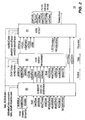
- Figure 2 is a block diagram of a blind code detection block diagram in accordance with the preferred embodiment of the present invention.
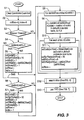
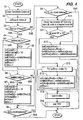
- Figure 3 is a procedure for generation of the candidate code list in the default midamble case in accordance with the preferred embodiment of the invention.
- Figure 4 is a procedure for generation of the candidate code in the common midamble case in accordance with the preferred embodiment of the invention.
- Figure 5 is a procedure for generation of the candidate code list in the UE specific case in accordance with the preferred embodiment of the invention.
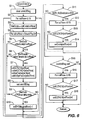
- Figure 6 is a procedure for search allocation (searchAlloc) function in accordance with the preferred embodiment of the invention.
- WO 01/58041 discloses an example of a UE receiver for use in a wireless time division communication system using CDMA.
- the system communicates by using communication bursts, that has an unique channelization code.
- the UE comprises a multiuser detection device (MUD) that recovers received data from the communication bursts by using estimated channel information and selecting active channelization codes e.g. by utilizing a midamble to channelization code mapping by a logic block.
- MOD multiuser detection device
- WO 00/44106 teaches a specific method for the analysis of spread spectrum signal in a wireless cellular system, such as a CDMA system, Multipath signal components of a received signal are correlated with a set of possible spreading sequences, such as possible CDMA channelization code, using a fast Hadamard transformation.
- Figure 7 is a procedure for the use TFCI function in accordance with the preferred embodiment of the invention.
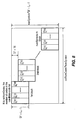
- Figure 8 is a diagram illustrating the construction of the system matrix, A i , in accordance with the preferred embodiment of the present invention.
- Figure 9 is a procedure for the own-UE code detect function in accordance with the preferred embodiment of the present invention.
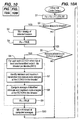
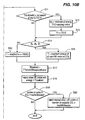
- FIGS. 10A an 10B, taken together, show a procedure for the other-UE code detect function in accordance with the preferred embodiment of the present invention.
- Figure 10 shows the manner in which Figures 10A and 10B are arranged relative to one another.
- a receiver 19 preferably at a user equipment (UE), (mobile or fixed), comprises an antenna 5, an isolator or switch 6, a demodulator 8, a channel estimation device 7 and a data estimation device 2.
- the signals are forwarded to a demultiplexer/decoder 4 to be processed in accordance with well known methods.
- the data estimation device 2 coupled to the demodulator 8 and the channel estimation device 7, comprises a blind code detection (BCD) device 15, a multi-user detection (MUD) device 16 and a TFCI decoder 17.
- BCD blind code detection
- MUD multi-user detection
- the MUD device 16 decodes the received data using the channel impulse responses from the channel estimation device and a set of channelization codes, spreading codes and channel response offsets from the BCD device 15.
- the MUD device 16 may utilize any current MUD method to estimate the data symbols of the received communication, such as a minimum mean squared error block linear equalizer (MMSE-BLE), a zero-forcing block linear equalizer (ZF-BLE) or a plurality of joint detectors, each for detecting one of the pluralities of receivable CCTrCHs associated with the UE.
- MMSE-BLE minimum mean squared error block linear equalizer
- ZF-BLE zero-forcing block linear equalizer
- a plurality of joint detectors each for detecting one of the pluralities of receivable CCTrCHs associated with the UE.
- the BCD device 15 is illustrated as a separate device, the BCD device 15 may be incorporated as a part of the MUD device 16. If desired, the code energy measurement part of BCD may be part of the MUD, i.e.
- a front end component of the MUD (the matched filter) is the same as the BCD code energy measurement function, which measures code energy of a set of codes, the BCD output is fed back to the MUD such that the remaining MUD functions operate on only a subset of the codes originally measured by the front end.
- the BCD device 15 is coupled to demodulator 8, channel estimation device 7, TFCI decoder and MUD 16.
- Channel estimation output of device 7 is an input to the code energy measurement function of the BCD device 15.
- the BCD device 15 provides the set of the channelization codes, spreading factors and channel response offsets to the MUD (or single user detection, i.e., SUD) devices 10 for use in the current timeslot.
- the BCD 15 executes for every timeslot in a frame for which the UE has a downlink allocation.
- the Blind Code Detection function provides to the MUD or the SUD the set of the channelization codes, spreading factors and channel response offsets to be used in the current timeslot. It also indicates to the TPC function those channelization codes that are to be used for the SIR measurement.
- BCD15 measures code energies and makes decisions about which own-UE and other-UE codes to include or not include in the output Detected Code list.
- Detected code list is defined herein as that list of codes which remain when all of the codes in the candidate list have been examined and those not meeting all of the aforesaid criteria are removed from the candidate code list.
- the BCD fills the candidate code list based on the code allocation and midamble allocation method, then deletes some of the codes from the list based on energy measurement or TFCI, which is what is output to the MUD.
- CELL_DCH state the P-CCPCH and up to four DCH CCTrCHs allocated to own-UE may be present, along with codes for other UEs.
- the P-CCPCH and one common channel CCTrCH designated for own-UE may be present, along with codes for other UEs.
- a common channel code is treated the same as an own-UE DCH code, except that a common channel code transmitted as a beacon is considered as detected if its respective midamble was detected by the Midamble Detection function, regardless of its code energy.
- the P-CCPCH is treated as its own unique CCTrCH: it has no TFCI and thus is not subject to the TFCI tests in the Code Detect function, but since it is always transmitted as a beacon, its detection decision is only based on its midamble detection, otherwise it is treated as any other common channel.
- the identities of transmitted and non-transmitted codes signaled by a TFCI and made available by the fast-TFCI function one or two timeslots after receipt of the TFCI are exploited, when available.
- the SUD configuration In the single user detection (SUD) configuration, all allocated own-UE codes are included in, and any other-UE codes are excluded from, the output Detected Code list. Because the MUD configuration will be selected for timeslots containing common channels, the SUD configuration does not contain any special logic for the P-CCPCH. BCD uses the following sub functions as illustrated in Figure 2 .
- the blind code detection (BCD) device 15 comprises: a candidate code list generator 30; a code energy measurement unit 32; and a code detection unit 34. The inputs and outputs of these units are also shown in Figure 2 .
- beacon indicator and possibly the detected midamble shifts and received TFCI, candidate channelization codes for both own-UE and other UEs (for MUD configuration only) are selected.
- the energy of each of the candidate codes is measured based on the soft symbols of the candidate codes at the output of a matched filter.
- the blind code detection procedure operates every DL timeslot.
- Table 1 Fixed point configuration for blind code detection block RxChip Q 5 Word size 6 RxChresp Q 5 Word size 6 A Q 5 Word size 10 AHr Q 5 Word size 10 midDetMidambleEnergy Q 5 Word size 7 MidDetThresh Q 5 Word size 6 ChannelEnergy Q 10 Word size 13 CodeEnergy Q 2 Word size 11 cclEnergyForCodeEngBlockOutput Q 2 Word size 9 cclEnergyForCodeDetBlockInput Q 2 Word size 9 codeDetSumAvgEnergy Q 2 Word size 15 codeDetAveEnergy Q 2 Word size 11 codeDetThreshFactor Q 5 Word size 6 CodeDetThresh Q 3 Word size 11 scaledChanEnergy Q 6 Word size 11 SymbEnergy Q 4 Word size 13 Ac
- the candidate code list is the list of the channelization codes and associated parameters which may have been received in the timeslot and which are later subject to the threshold tests of the code detect (CD) function 34.
- the list is determined based upon the midamble allocation scheme of the timeslot, the detected midamble shifts, and information about the known number of transmitted codes derived from the received TFCI, if available from the fast-TFCI process.
- codes of detected beacon midambles are tagged to prevent rejection by the Code Detect (CD) function 34.
- each detected midamble explicitly indicates a set of channelization codes which may have been transmitted and should be included in the candidate code list.
- the first and the second beacon code are included in the candidate code list if their respective midamble was detected; the beacon codes are flagged as not to be rejected by the Code Detect function 34.
- the list of parameters of PhCHs allocated to own UE is searched to identify own-UE candidate codes and their parameters. For own-UE codes, if the transmitted codes are known from the fast TFCI, the candidate code list is adjusted accordingly.
- beacon timeslots In the common midamble allocation scheme, in non-beacon timeslots, only one (the "common") midamble shift is transmitted. It indicates a set containing the number of channelization codes transmitted in the timeslot. In beacon timeslots, one or two beacon midamble shifts plus the common midamble shift, which indicates the number of channelization codes in the timeslot are transmitted. The beacon codes and their midamble shifts are included in the candidate code list if their respective midamble shifts were detected and those codes are flagged as not to be rejected by the Code Detect function. The number of channelization codes indicated by the common midamble shift is not used. If the common midamble shift is not detected, there are no codes, other than possibly beacon codes, to insert into the candidate code list.
- the candidate code list (ccl)
- the list of parameters of PhCHs allocated to own-UE is searched to identify own-UE candidate codes and their parameters.
- the P-CCPCH cannot be in a common midamble timeslot.
- the candidate code list is adjusted accordingly.
- the UE In all midamble allocation schemes, the UE has a priori knowledge of midamble shifts allocated to own-UE codes. In the Default and Common midamble allocation schemes, the UE knows the midamble-to-code associations for codes possibly allocated to other UEs. However, in the UE Specific midamble allocation scheme, the UE has no knowledge of midamble-to-code associations for codes possibly allocated to other UEs. Because the UE has no knowledge of other-UE midamble shift and channelization code associations, it is impractical to detect other-UE channelization codes. Thus, for every detected midamble shift, the UE simply searches its allocation list and adds to the candidate code list those codes associated with it; no other-UE channelization codes are added to the candidate code list.
- beacon timeslots if the first or second beacon midambles were detected, their respective codes are flagged as not to be rejected by the Code Detect function.
- the P-CCPCH cannot be in a UE Specific timeslot.
- the candidate code list is adjusted accordingly.
- the SearchAlloc function shown in Figure 6 , is used for the Common and Default midamble allocation schemes after all candidate codes have been entered into the candidate code list.
- the own-UE allocation list is searched; any candidate codes found in the allocation list are, by definition, allocated to own-UE.
- the CCTrCH numbers of found candidate codes are copied to the candidate code list.
- Candidate codes not found in the own-UE allocation list will retain the cleared CCTrCH number of zero, which will indicate that the code is not allocated to own UE.
- codes belonging to other UEs are deleted from the candidate code list (S14).
- the code energy measurement function measures the energy of the candidate channelization codes by matched filtering the received data with the system matrix to form soft symbols and then measuring the energy of the soft symbols from each of the candidate codes. To reduce processing, only a limited number of symbols are determined.
- This function operates every DL timeslot.
- This function is performed primarily for the MUD configuration. In the SUD configuration, this function simply formats the output for the SUD.
- Own-UE Code Detect is followed by Other-UE Code Detect. Own-UE codes and other-UE codes are "rejected" by removing them from the candidate code list. After running Own-UE code detection and other-UE code detection and eliminating excess codes, codes remaining in the candidate code list are output in the Detected Code List. If there are no remaining own-UE codes (or P-CCPCH), an abort signal (S10) is output.
- Step 1 of Own-UE Code Detection is run for each CCTrCH in the candidate code list; some own-UE codes may be rejected.
- Step S10 of Own-UE code detect outputs an abort signal, indicating that no further processing of the timeslot is required, if there are no remaining own-UE codes or P-CCPCH in the candidate code list.
- other-UE Code Detect rejects other-UE codes if there are more than maxMudCodes codes in the candidate code list.
- the number of codes is reduced to maxMudCodes by eliminating weaker other-UE codes, at S20.
- Two thresholds are set In one example:
Landscapes
- Engineering & Computer Science (AREA)
- Computer Networks & Wireless Communication (AREA)
- Signal Processing (AREA)
- Mobile Radio Communication Systems (AREA)
- Circuits Of Receivers In General (AREA)
Abstract
Claims (28)
- Equipement d'utilisateur, UE, pour recevoir des signaux de communication dans des trames temporelles constituées d'une pluralité d'intervalles de temps, lesdits intervalles de temps ayant des signaux de données pour une pluralité de canaux, comprenant:un détecteur de code invisible (15) pour identifier un code de canal présent parmi ladite pluralité de canaux incluant des codes de canal qui ne sont pas connus a priori par l'UE et générer une liste de codes de canal candidats d'après ladite pluralité de canaux, qui peuvent inclure des codes de canaux candidats propres à l'UE et d'autres UE; etun détecteur qui est un d'un détecteur multi-utilisateur, MUD, (16) et un détecteur d'utilisateur unique, SUD, pour détecter des codes de canaux candidats propres à l'UE et des codes de canal candidats d'autres UE d'après ladite liste de codes de canaux candidats caractérisé en ce queledit détecteur de code invisible (15) inclut un moyen (34) pour rejeter les codes de canaux candidats propres à l'UE en comparant les codes de canaux candidats propres à l'UE avec un premier seuil d'énergie donné et en rejetant les codes de canaux candidats propres à l'UE ayant une énergie inférieure audit premier seuil, etun moyen pour rejeter (34) des codes de canaux candidats d'autres UE en comparant les codes de canaux candidats d'autres UE avec un second seuil d'énergie donné et en rejetant les codes de canaux candidats d'autres UE ayant une énergie inférieure audit second seuil.
- UE selon la revendication 1, dans lequel ledit détecteur de code invisible (15) comprend:un dispositif (30) pour générer une liste de codes de canaux candidats;un dispositif (32) pour mesurer une énergie de code de canal des codes de canaux de la liste de codes de canaux candidats;et un dispositif (34) pour détecter des codes de canaux.
- UE selon les revendications 1 ou 2, comprenant en outre:un moyen (7) pour détecter des midambles afin de fournir un jeu de codes de canaux candidats et leurs décalages de midambles associés pour une liste de codes de canaux candidats.
- UE selon la revendication 3, dans lequel ledit moyen (7) de détection comprend en outre, soit quand un cas de midamble par défaut a lieu, dans lequel chaque midamble détecté indique explicitement un jeu de codes de mise en canal qui peuvent avoir été transmis, soit quand un cas de midamble commun a lieu, dans lequel un décalage de midamble est transmis:un moyen pour entrer un midamble de radiobalise dans la liste de codes candidas avec son code de mise en canal, son décalage de réponse de canal et son facteur d'étalement associés quand un midamble de radiobalise est détecté; etun moyen pour initialiser un fanion pour un code de radiobalise afin d'empêcher que le code de radiobalise soit rejeté.
- UE selon la revendication 4, dans lequel ledit moyen (7) pour détecter quand un cas de midamble par défaut a lieu comprend en outre:un moyen pour entrer un premier midamble de radiobalise dans la liste de codes candidats avec son code de mise en canal, décalage de réponse de canal et facteur d'étalement associés quand un premier midamble de radiobalise est détecté;un moyen répondant à un échec à détecter un premier midamble de radiobalise et répondant à un second midamble de radiobalise pour entrer le second midamble de radiobalise dans la liste de codes candidats avec son code de mise en canal, décalage de réponse de canal et facteur d'étalement associés quand le second midamble de radiobalise est détecté; etun moyen pour initialiser un fanion afin d'empêcher que le code de radiobalise pour le second midamble de radiobalise soit rejeté.
- UE selon la revendication 3, comprenant en outre:un moyen pour copier les codes identifiés dans la liste de codes candidats conjointement à leurs décalages de midamble, décalages de réponse de canal et facteurs d'étalement associés.
- UE selon la revendication 6, comprenant en outre:un moyen pour rechercher une liste d'allocation propre à l'UE pour chaque code candidat; etun moyen pour chaque code candidat trouvé dans la liste d'allocation propre à l'UE, pour ajouter un numéro de canal de transmission mixte codé associé (CCTrCH) associé à chaque candidat propre à l'UE.
- UE selon la revendication 6, comprenant en outre:un moyen pour initialiser un fanion pour les codes transmis propres à l'UE qui sont connus de l'indicateur de combinaison de format de transport afin d'empêcher que ces codes soient rejetés.
- UE selon la revendication 7, comprenant en outre:un moyen pour supprimer de la liste de codes candidats tous les codes non transmis.
- UE selon la revendication 3, comprenant en outre:un moyen, quand un cas de midamble commun a lieu, pour entrer un midamble de radiobalise dans la liste de codes candidats avec son code de mise en canal, décalage de réponse de canal et facteur d'étalement associés quand un midamble de radiobalise est détecté; etun moyen pour initialiser un fanion pour le code de radiobalise afin d'empêcher que le code de radiobalise soit rejeté;un moyen pour arrêter le traitement si un décalage de midamble commun n'a pas été détecté; etun moyen pour entrer dans la liste de codes candidats tous les codes de mise en canal restants conjointement à un décalage de midamble commun et un facteur d'étalement donné.
- UE selon la revendication 10, comprenant en outre:un moyen, quand un intervalle de temps n'étant pas relatif à la radiobalise a lieu, pour arrêter le traitement si le décalage de midamble commun n'a pas été détecté.
- UE selon la revendication 3, comprenant en outre:un moyen pour rechercher une liste d'allocations propre à l'UE identifiant les codes candidats trouvés dans la liste d'allocation comme un candidat propre à l'UE;un moyen pour copier les numéros CCTrCH des candidats dans la liste de codes candidats; etun moyen pour associer un numéro CCTrCH de zéro pour les candidats non trouvés dans la liste d'allocation propre à l'UE.
- UE selon la revendication 12, comprenant en outre:un moyen pour empêcher un rejet par décision de code des codes connus comme ayant été transmis; etun moyen pour supprimer de la liste de codes candidats les codes qui n'ont pas été transmis sur la base d'un indicateur de combinaison de format de transport (TFCI).
- UE selon la revendication 12, comprenant en outre:un moyen pour identifier les codes candidats de la liste de candidats dont le CCTrCH associé est zéro comme des codes d'autres UE.
- Procédé de réception de communications en trames temporelles constituées d'une pluralité d'intervalles de temps, lesdits intervalles de temps ayant des signaux de données pour une pluralité de canaux, caractérisé en ce qu'il comprend de:a) détecter des midambles pour fournir un jeu de codes de mise en canal et leurs décalages de midambles associés pour une liste de codes candidats;b) identifier des codes candidats propres à l'UE et leurs paramètres associés; etc) identifier des codes candidats d'autres UE et leurs paramètres associés; etd) comparer les codes propres à l'UE et les codes d'autres UE identifiés avec les seuils respectifs et accepter seulement les codes propres à l'UE et les codes d'autres UE qui excèdent leurs seuils respectifs.
- Procédé selon la revendication 15, dans lequel, soit pour un cas de midamble par défaut, dans lequel chaque midamble détecté indique explicitement un jeu de codes de mise en canal qui peuvent avoir été transmis, soit un cas de midamble commun, dans lequel un décalage de midamble est transmis, l'étape (a) comprend en outre de:entrer seulement un midamble de radiobalise et un code de radiobalise dans la liste de codes candidats avec son code de mise en canal, décalage de réponse de canal et facteur d'étalement associés quand un midamble de radiobalise avec plus d'un code et un midamble est détecté; etinitialiser un fanion pour un code de radiobalise afin d'empêcher que le code de radiobalise soit rejeté.
- Procédé selon la revendication 15, dans lequel, pour un cas de midamble par défaut, l'étape (a) comprend en outre de:entrer un midamble de radiobalise dans la liste de codes candidats avec son code de mise en canal, décalage de réponse de canal et facteur d'étalement associés quand un premier midamble de radiobalise est détecté; etinitialiser un fanion pour un premier code de radiobalise afin d'empêcher que le premier code de radiobalise soit rejeté.
- Procédé selon la revendication 17, comprenant en outre de:entrer un midamble de radiobalise dans la liste de codes candidats avec son code de mise en canal, décalage de réponse de canal et facteur d'étalement associés quand un premier midamble de radiobalise est absent et un second midamble de radiobalise est détecté; etinitialiser un fanion pour un second code de radiobalise afin d'empêcher que le second code de radiobalise soit rejeté.
- Procédé selon la revendication 15, dans lequel, pour un cas de midamble par défaut, l'étape (a) comprend en outre de:entrer un premier midamble de radiobalise dans la liste de codes candidats avec son code de mise en canal, décalage de réponse de canal et facteur d'étalement associés quand un premier midamble de radiobalise est détecté; si une détection de midamble échoue à rapporter un premier midamble de radiobalise mais rapporte un second midamble de radiobalise, entrer le second midamble de radiobalise dans la liste de codes candidats avec son code de mise en canal, décalage de réponse de canal et facteur d'étalement associé quand le second midamble de radiobalise est détecté; etinitialiser un fanion afin d'empêcher que le code de radiobalise pour le second midamble de radiobalise soit rejeté.
- Procédé selon la revendication 15, comprenant en outre de:copier les codes identifiés dans la liste de codes candidats conjointement à leurs décalages de midamble, décalages de réponse de canal et facteurs d'étalement associés.
- Procédé selon la revendication 21, comprenant en outre de:rechercher une liste d'allocation propre à l'UE pour chaque code candidat; et pour chaque code candidat trouvé dans la liste d'allocation propre à l'UE, ajouter un numéro de canal de transmission mixte codé (CCTrCH) associé à chaque candidat propre à l'UE.
- Procédé selon la revendication 20, comprenant en outre de:initialiser un fanion pour les codes transmis propres à l'UE qui sont connus de l'indicateur de combinaison de format de transport (TFCI) pour empêcher que ces codes soient rejetés.
- Procédé selon la revendication 21, comprenant en outre de:initialiser un fanion pour les codes transmis propres à l'UE qui sont connus de l'indicateur de combinaison de format de transport (TFCI) afin d'empêcher que ces codes soient rejetés; etsupprimer de la liste de codes candidats tous les codes non transmis.
- Procédé selon la revendication 15, dans lequel, pour un cas de midamble commun, l'étape (a) comprend en outre de:entrer un midamble de radiobalise dans la liste de codes candidats avec son code de mise en canal, son décalage de réponse de canal et son facteur d'étalement associés quand un midamble de radiobalise est détecté; etinitialiser un fanion pour le code de radiobalise afin d'empêcher que le code de radiobalise soit rejeté pendant les étapes subséquentes du procédé:arrêter le traitement si un décalage de midamble commun n'a pas été détecté; etentrer dans la liste de codes candidats tous les codes de mise en canal restants conjointement à un décalage de midamble commun et un facteur d'étalement donné.
- Procédé selon la revendication 24, dans lequel pour un intervalle de temps n'étant pas relatif à la radiobalise, arrêter le traitement si le décalage de midamble commun n'a pas été détecté.
- Procédé selon la revendication 16, comprenant en outre de:rechercher une liste d'allocation propre à l'UE identifiant les codes candidats trouvés dans la liste d'allocation comme un candidat propre à l'UE;copier les numéros CCTrCH des candidats dans la liste de codes candidats; etassocier un numéro CCTrCH de zéro pour les candidats non trouvés das la liste d'allocation propre à l'UE, afin d'indiquer que les codes dans la liste de codes candidats qui ne sont pas des codes propres à l'UE, sont des codes d'autres UE.
- Procédé selon la revendication 26, comprenant en outre de:pour un indicateur de combinaison de format de transport (TFCI) reçu:empêcher un rejet par décision de code des codes connus pour avoir été transmis; etsupprimer de la liste de codes candidats les codes qui n'ont pas été transmis.
- Procédé selon la revendication 26, comprenant en outre de:identifier les codes candidats de la liste de candidats dont le CCTrCH associé est zéro comme des codes d'autres UE.
Priority Applications (1)
| Application Number | Priority Date | Filing Date | Title |
|---|---|---|---|
| EP11188064A EP2426826A1 (fr) | 2002-03-25 | 2003-03-25 | Procédé et appareil de détection de codes invisibles |
Applications Claiming Priority (3)
| Application Number | Priority Date | Filing Date | Title |
|---|---|---|---|
| US36738402P | 2002-03-25 | 2002-03-25 | |
| US367384P | 2002-03-25 | ||
| PCT/US2003/009093 WO2003084254A1 (fr) | 2002-03-25 | 2003-03-25 | Procede et appareil pour une detection de code invisible |
Related Child Applications (1)
| Application Number | Title | Priority Date | Filing Date |
|---|---|---|---|
| EP11188064.7 Division-Into | 2011-11-07 |
Publications (3)
| Publication Number | Publication Date |
|---|---|
| EP1491060A1 EP1491060A1 (fr) | 2004-12-29 |
| EP1491060A4 EP1491060A4 (fr) | 2008-12-10 |
| EP1491060B1 true EP1491060B1 (fr) | 2012-08-08 |
Family
ID=28675351
Family Applications (2)
| Application Number | Title | Priority Date | Filing Date |
|---|---|---|---|
| EP03723819A Expired - Lifetime EP1491060B1 (fr) | 2002-03-25 | 2003-03-25 | Procede et appareil pour une detection de code invisible |
| EP11188064A Withdrawn EP2426826A1 (fr) | 2002-03-25 | 2003-03-25 | Procédé et appareil de détection de codes invisibles |
Family Applications After (1)
| Application Number | Title | Priority Date | Filing Date |
|---|---|---|---|
| EP11188064A Withdrawn EP2426826A1 (fr) | 2002-03-25 | 2003-03-25 | Procédé et appareil de détection de codes invisibles |
Country Status (12)
| Country | Link |
|---|---|
| US (3) | US7522559B2 (fr) |
| EP (2) | EP1491060B1 (fr) |
| JP (3) | JP4002242B2 (fr) |
| KR (5) | KR100959323B1 (fr) |
| CN (1) | CN1643942B (fr) |
| AU (1) | AU2003230729A1 (fr) |
| BR (1) | BR0308843A (fr) |
| CA (1) | CA2480093C (fr) |
| IL (1) | IL163746A0 (fr) |
| MX (1) | MXPA04009331A (fr) |
| TW (4) | TWI309137B (fr) |
| WO (1) | WO2003084254A1 (fr) |
Families Citing this family (26)
| Publication number | Priority date | Publication date | Assignee | Title |
|---|---|---|---|---|
| KR100959323B1 (ko) * | 2002-03-25 | 2010-05-26 | 인터디지탈 테크날러지 코포레이션 | 통신 신호 수신 방법 |
| EP1819110B1 (fr) | 2002-07-31 | 2009-11-04 | Interdigital Technology Corporation | Récepteur TDD CDMA amélioré |
| US6957175B2 (en) * | 2002-11-08 | 2005-10-18 | Interdigital Technology Corporation | Method and apparatus for determining signal-to-interference ratio with reduced bias effect |
| US7031284B2 (en) * | 2003-03-03 | 2006-04-18 | Interdigital Technology Corporation | Wireless communication method and apparatus for optimizing multi-user detection |
| US7428228B2 (en) * | 2003-07-07 | 2008-09-23 | Samsung Electronics Co., Ltd | Method and apparatus for detecting active downlink channelization codes in a TD-CDMA mobile communication system |
| US7437135B2 (en) | 2003-10-30 | 2008-10-14 | Interdigital Technology Corporation | Joint channel equalizer interference canceller advanced receiver |
| US7400692B2 (en) | 2004-01-14 | 2008-07-15 | Interdigital Technology Corporation | Telescoping window based equalization |
| GB2412036A (en) * | 2004-03-08 | 2005-09-14 | Ipwireless Inc | Mitigation of intercell and intracell interference in a cellular communication system |
| US7599344B2 (en) * | 2004-06-08 | 2009-10-06 | Interdigital Technology Corporation | Method and apparatus for reducing multi-user processing in wireless communication systems |
| KR100888839B1 (ko) * | 2004-06-08 | 2009-03-17 | 인터디지탈 테크날러지 코포레이션 | 무선 통신 시스템에서 다수의 사용자 프로세싱을감소시키기 위한 방법 및 장치 |
| US7684378B2 (en) * | 2004-11-08 | 2010-03-23 | Interdigital Technology Corporation | Method and apparatus for estimating channelization codes in a wireless transmit/receive unit |
| US20060280141A1 (en) * | 2005-06-08 | 2006-12-14 | Mcbeath Sean M | Apparatus and method for sharing a unique identifier among a plurality of receivers |
| CA2577539C (fr) * | 2006-02-08 | 2013-04-16 | The Directv Group, Inc. | Identification aveugle de modes de modulation et de codage avances |
| ES2784686T3 (es) | 2006-02-24 | 2020-09-29 | Sun Patent Trust | Técnica de selección de candidatos de bloques de recurso que emplea la programación de paquetes en sistemas de comunicación inalámbrica |
| US8867999B2 (en) | 2009-01-26 | 2014-10-21 | Qualcomm Incorporated | Downlink interference cancellation methods |
| US8385268B2 (en) * | 2009-03-25 | 2013-02-26 | Qualcomm Incorporated | Method and apparatus for efficient control decoding for transparent relaying operation in a wireless communication system |
| CN101883383A (zh) * | 2009-05-08 | 2010-11-10 | 中兴通讯股份有限公司 | 下行测量导频的发送方法 |
| CN102175695B (zh) * | 2010-12-29 | 2012-11-21 | 天津钢管集团股份有限公司 | 无损探伤标准样管制作中内窥镜操作方法 |
| US8611481B2 (en) * | 2011-02-25 | 2013-12-17 | Broadcom Corporation | Blind control channel detection |
| US9723496B2 (en) * | 2011-11-04 | 2017-08-01 | Qualcomm Incorporated | Method and apparatus for interference cancellation by a user equipment using blind detection |
| FR2988243B1 (fr) * | 2012-03-15 | 2014-05-09 | Commissariat Energie Atomique | Methode d'estimation aveugle d'un code d'embrouillage d'une liaison montante cdma 2000 |
| FR2988242B1 (fr) * | 2012-03-15 | 2014-05-09 | Commissariat Energie Atomique | Methode d'estimation aveugle d'un code d'embrouillage d'une liaison montante wcdma |
| JP6019900B2 (ja) * | 2012-08-02 | 2016-11-02 | 三菱電機株式会社 | スペクトル拡散受信装置 |
| JP6218438B2 (ja) * | 2013-06-04 | 2017-10-25 | 日本無線株式会社 | 端局装置 |
| CN107005340B (zh) * | 2014-10-31 | 2020-12-25 | 瑞典爱立信有限公司 | 无线通信网络中的传输数据信号传送 |
| IT201700055080A1 (it) * | 2017-05-22 | 2018-11-22 | Teko Telecom S R L | Sistema di comunicazione wireless e relativo metodo per il trattamento di dati fronthaul di uplink |
Family Cites Families (34)
| Publication number | Priority date | Publication date | Assignee | Title |
|---|---|---|---|---|
| EP1120969B1 (fr) * | 1996-05-17 | 2003-02-05 | Matsushita Electric Industrial Co., Ltd. | Décodeur vidéo à compensation de mouvement |
| JP3715382B2 (ja) | 1996-08-16 | 2005-11-09 | 株式会社東芝 | 受信装置 |
| JP3676001B2 (ja) | 1996-11-06 | 2005-07-27 | 株式会社日立国際電気 | 干渉キャンセラ |
| US6151502A (en) * | 1997-01-29 | 2000-11-21 | Qualcomm Incorporated | Method and apparatus for performing soft hand-off in a wireless communication system |
| US6091762A (en) * | 1997-10-22 | 2000-07-18 | Lsi Logic Corporation | Method and apparatus for quick acquisition of pilot signals using bank switching method |
| JP2930585B1 (ja) | 1998-08-24 | 1999-08-03 | 株式会社ワイ・アール・ピー移動通信基盤技術研究所 | Ds−cdmaシステムにおける信号受信装置 |
| US6205168B1 (en) * | 1998-11-12 | 2001-03-20 | Sharp Laboratories Of America, Inc. | Sequential detection system and method with adaptive bias |
| US6535554B1 (en) * | 1998-11-17 | 2003-03-18 | Harris Corporation | PCS signal separation in a one dimensional channel |
| JP2000144636A (ja) | 1998-11-18 | 2000-05-26 | Kazaoka Kazumi | 橋梁用のプレハブ床版と床版施工法 |
| US6526065B1 (en) * | 1999-01-21 | 2003-02-25 | Industrial Technology Research Institute | Code management system and method for CDMA communication networks |
| US6501788B1 (en) * | 1999-01-22 | 2002-12-31 | Ericsson Inc. | Apparatus and methods for intereference cancellation in spread spectrum communications systems |
| US6483826B1 (en) | 1999-02-19 | 2002-11-19 | Telefonaktiebolaget Lm Ericsson (Publ) | Utilization of plural multiple access types for mobile telecommunications |
| JP3884183B2 (ja) | 1999-02-22 | 2007-02-21 | 三菱電機株式会社 | 直接符号分割多重アクセス用のパス検出装置およびその制御方法 |
| JP2000261411A (ja) | 1999-03-09 | 2000-09-22 | Matsushita Electric Ind Co Ltd | スペクトル拡散受信機、スペクトル拡散受信方法および記録媒体 |
| US6498935B1 (en) * | 1999-04-19 | 2002-12-24 | Agere Systems Inc. | Channel selection and clarity improvement for digital cordless telephones operating in an overlapped range |
| EP1998589B1 (fr) | 1999-05-19 | 2011-06-22 | Interdigital Technology Corporation | Affectation de canaux dans un système de communication CDMA à dispersion spectrale |
| JP2001060894A (ja) * | 1999-07-13 | 2001-03-06 | Texas Instr Inc <Ti> | 局通信信号内のユニークなセルビットシーケンスを周期化した無線通信システム |
| US7372825B1 (en) * | 1999-07-13 | 2008-05-13 | Texas Instruments Incorporated | Wireless communications system with cycling of unique cell bit sequences in station communications |
| JP2001028556A (ja) * | 1999-07-13 | 2001-01-30 | Fujitsu Ten Ltd | スペクトラム拡散された信号の復調装置 |
| US6574270B1 (en) | 1999-07-30 | 2003-06-03 | Ericsson Inc. | Baseband interference canceling spread spectrum communications methods and apparatus |
| JP3373457B2 (ja) | 1999-08-24 | 2003-02-04 | 松下電器産業株式会社 | 無線受信装置及び無線受信方法 |
| JP4275273B2 (ja) * | 1999-11-17 | 2009-06-10 | 株式会社日立国際電気 | 受信機 |
| JP4316759B2 (ja) * | 2000-01-13 | 2009-08-19 | 株式会社日立国際電気 | パス認定方法、cdma方式無線通信端末およびcdma方式無線通信システム |
| MXPA02007499A (es) * | 2000-02-04 | 2003-04-14 | Interdigital Tech Corp | Soporte de deteccion de usuarios multiples en la conexion descendente. |
| ATE415750T1 (de) * | 2000-04-04 | 2008-12-15 | Mitsubishi Electric Inf Tech | Basisstation zur übertragung eines wortes, das für die anzahl der spreizkodes repräsentativ ist, die den mobilen stationen in kommunikation mit der basisstation zugeteilt sind |
| CN1327723C (zh) * | 2000-05-01 | 2007-07-18 | 交互数字技术公司 | 时分双工通信系统中多下行链路时隙的下行链路功率控制 |
| CN1172463C (zh) | 2000-06-12 | 2004-10-20 | 三星电子株式会社 | 在码分多址移动通信系统中分配上行链路随机接入信道的方法 |
| US7031277B2 (en) | 2000-07-18 | 2006-04-18 | Samsung Electronics Co., Ltd. | Method for performing USTS handover and USTS mode switching in a mobile communication system |
| JP2002044053A (ja) | 2000-07-19 | 2002-02-08 | Fujitsu Ltd | Cdmaマルチユーザ受信装置 |
| US7180881B2 (en) * | 2001-09-28 | 2007-02-20 | Interdigital Technology Corporation | Burst detector |
| JP3607854B2 (ja) * | 2001-11-22 | 2005-01-05 | 松下電器産業株式会社 | 基地局装置、移動局装置および送信電力制御方法 |
| US7443908B2 (en) * | 2001-11-26 | 2008-10-28 | Stmicroelectronics S.R.L. | Low complexity detection in digital receivers |
| KR100959323B1 (ko) * | 2002-03-25 | 2010-05-26 | 인터디지탈 테크날러지 코포레이션 | 통신 신호 수신 방법 |
| JP3581356B2 (ja) * | 2002-05-22 | 2004-10-27 | 松下電器産業株式会社 | 通信端末装置及び拡散コード推定方法 |
-
2003
- 2003-03-25 KR KR1020087007161A patent/KR100959323B1/ko not_active Expired - Fee Related
- 2003-03-25 WO PCT/US2003/009093 patent/WO2003084254A1/fr not_active Ceased
- 2003-03-25 IL IL16374603A patent/IL163746A0/xx not_active IP Right Cessation
- 2003-03-25 BR BR0308843-0A patent/BR0308843A/pt not_active IP Right Cessation
- 2003-03-25 EP EP03723819A patent/EP1491060B1/fr not_active Expired - Lifetime
- 2003-03-25 JP JP2003581519A patent/JP4002242B2/ja not_active Expired - Fee Related
- 2003-03-25 CN CN03807022.7A patent/CN1643942B/zh not_active Expired - Fee Related
- 2003-03-25 KR KR1020047015471A patent/KR100610603B1/ko not_active Expired - Fee Related
- 2003-03-25 KR KR1020097021678A patent/KR101006412B1/ko not_active Expired - Fee Related
- 2003-03-25 TW TW092127603A patent/TWI309137B/zh not_active IP Right Cessation
- 2003-03-25 AU AU2003230729A patent/AU2003230729A1/en not_active Abandoned
- 2003-03-25 MX MXPA04009331A patent/MXPA04009331A/es active IP Right Grant
- 2003-03-25 KR KR1020097003775A patent/KR101006404B1/ko not_active Expired - Fee Related
- 2003-03-25 CA CA2480093A patent/CA2480093C/fr not_active Expired - Fee Related
- 2003-03-25 US US10/396,992 patent/US7522559B2/en not_active Expired - Fee Related
- 2003-03-25 TW TW098109631A patent/TW201008143A/zh unknown
- 2003-03-25 EP EP11188064A patent/EP2426826A1/fr not_active Withdrawn
- 2003-03-25 TW TW092106640A patent/TWI271054B/zh not_active IP Right Cessation
- 2003-03-25 TW TW095110614A patent/TWI343195B/zh not_active IP Right Cessation
- 2003-03-25 KR KR1020057016120A patent/KR100907672B1/ko not_active Expired - Fee Related
-
2006
- 2006-01-13 JP JP2006006265A patent/JP4496172B2/ja not_active Expired - Fee Related
-
2009
- 2009-04-20 US US12/426,502 patent/US7684371B2/en not_active Expired - Fee Related
- 2009-08-17 JP JP2009188755A patent/JP2009273152A/ja active Pending
-
2010
- 2010-03-23 US US12/729,467 patent/US8681744B2/en not_active Expired - Fee Related
Also Published As
Similar Documents
| Publication | Publication Date | Title |
|---|---|---|
| EP1491060B1 (fr) | Procede et appareil pour une detection de code invisible | |
| US7848288B2 (en) | Method and apparatus for estimating channelization codes in a wireless transmit/receive unit | |
| EP1442360B1 (fr) | Détecteur de rafales | |
| HK1073755B (en) | Method and apparatus for blind code detection | |
| NO331702B1 (no) | Fremgangsmate og anordning for blindkodedeteksjon |
Legal Events
| Date | Code | Title | Description |
|---|---|---|---|
| PUAI | Public reference made under article 153(3) epc to a published international application that has entered the european phase |
Free format text: ORIGINAL CODE: 0009012 |
|
| 17P | Request for examination filed |
Effective date: 20041025 |
|
| AK | Designated contracting states |
Kind code of ref document: A1 Designated state(s): AT BE BG CH CY CZ DE DK EE ES FI FR GB GR HU IE IT LI LU MC NL PT RO SE SI SK TR |
|
| AX | Request for extension of the european patent |
Extension state: AL LT LV MK |
|
| A4 | Supplementary search report drawn up and despatched |
Effective date: 20081106 |
|
| RIC1 | Information provided on ipc code assigned before grant |
Ipc: H04B 1/707 20060101ALI20081031BHEP Ipc: H04Q 7/00 20060101AFI20031015BHEP |
|
| 17Q | First examination report despatched |
Effective date: 20091106 |
|
| REG | Reference to a national code |
Ref country code: DE Ref legal event code: R079 Ref document number: 60341751 Country of ref document: DE Free format text: PREVIOUS MAIN CLASS: H04Q0007000000 Ipc: H04B0001707300 |
|
| GRAP | Despatch of communication of intention to grant a patent |
Free format text: ORIGINAL CODE: EPIDOSNIGR1 |
|
| RIC1 | Information provided on ipc code assigned before grant |
Ipc: H04B 1/7105 20110101ALI20120130BHEP Ipc: H04B 1/7073 20110101AFI20120130BHEP |
|
| GRAS | Grant fee paid |
Free format text: ORIGINAL CODE: EPIDOSNIGR3 |
|
| GRAA | (expected) grant |
Free format text: ORIGINAL CODE: 0009210 |
|
| AK | Designated contracting states |
Kind code of ref document: B1 Designated state(s): AT BE BG CH CY CZ DE DK EE ES FI FR GB GR HU IE IT LI LU MC NL PT RO SE SI SK TR |
|
| REG | Reference to a national code |
Ref country code: GB Ref legal event code: FG4D |
|
| REG | Reference to a national code |
Ref country code: CH Ref legal event code: EP Ref country code: AT Ref legal event code: REF Ref document number: 570201 Country of ref document: AT Kind code of ref document: T Effective date: 20120815 |
|
| REG | Reference to a national code |
Ref country code: IE Ref legal event code: FG4D |
|
| REG | Reference to a national code |
Ref country code: DE Ref legal event code: R096 Ref document number: 60341751 Country of ref document: DE Effective date: 20121011 |
|
| REG | Reference to a national code |
Ref country code: NL Ref legal event code: VDEP Effective date: 20120808 |
|
| REG | Reference to a national code |
Ref country code: AT Ref legal event code: MK05 Ref document number: 570201 Country of ref document: AT Kind code of ref document: T Effective date: 20120808 |
|
| PG25 | Lapsed in a contracting state [announced via postgrant information from national office to epo] |
Ref country code: FI Free format text: LAPSE BECAUSE OF FAILURE TO SUBMIT A TRANSLATION OF THE DESCRIPTION OR TO PAY THE FEE WITHIN THE PRESCRIBED TIME-LIMIT Effective date: 20120808 Ref country code: AT Free format text: LAPSE BECAUSE OF FAILURE TO SUBMIT A TRANSLATION OF THE DESCRIPTION OR TO PAY THE FEE WITHIN THE PRESCRIBED TIME-LIMIT Effective date: 20120808 Ref country code: CY Free format text: LAPSE BECAUSE OF FAILURE TO SUBMIT A TRANSLATION OF THE DESCRIPTION OR TO PAY THE FEE WITHIN THE PRESCRIBED TIME-LIMIT Effective date: 20120808 |
|
| PG25 | Lapsed in a contracting state [announced via postgrant information from national office to epo] |
Ref country code: GR Free format text: LAPSE BECAUSE OF FAILURE TO SUBMIT A TRANSLATION OF THE DESCRIPTION OR TO PAY THE FEE WITHIN THE PRESCRIBED TIME-LIMIT Effective date: 20121109 Ref country code: BE Free format text: LAPSE BECAUSE OF FAILURE TO SUBMIT A TRANSLATION OF THE DESCRIPTION OR TO PAY THE FEE WITHIN THE PRESCRIBED TIME-LIMIT Effective date: 20120808 Ref country code: SI Free format text: LAPSE BECAUSE OF FAILURE TO SUBMIT A TRANSLATION OF THE DESCRIPTION OR TO PAY THE FEE WITHIN THE PRESCRIBED TIME-LIMIT Effective date: 20120808 Ref country code: SE Free format text: LAPSE BECAUSE OF FAILURE TO SUBMIT A TRANSLATION OF THE DESCRIPTION OR TO PAY THE FEE WITHIN THE PRESCRIBED TIME-LIMIT Effective date: 20120808 Ref country code: PT Free format text: LAPSE BECAUSE OF FAILURE TO SUBMIT A TRANSLATION OF THE DESCRIPTION OR TO PAY THE FEE WITHIN THE PRESCRIBED TIME-LIMIT Effective date: 20121210 |
|
| PG25 | Lapsed in a contracting state [announced via postgrant information from national office to epo] |
Ref country code: NL Free format text: LAPSE BECAUSE OF FAILURE TO SUBMIT A TRANSLATION OF THE DESCRIPTION OR TO PAY THE FEE WITHIN THE PRESCRIBED TIME-LIMIT Effective date: 20120808 |
|
| RAP2 | Party data changed (patent owner data changed or rights of a patent transferred) |
Owner name: INTERDIGITAL TECHNOLOGY CORPORATION |
|
| PG25 | Lapsed in a contracting state [announced via postgrant information from national office to epo] |
Ref country code: ES Free format text: LAPSE BECAUSE OF FAILURE TO SUBMIT A TRANSLATION OF THE DESCRIPTION OR TO PAY THE FEE WITHIN THE PRESCRIBED TIME-LIMIT Effective date: 20121119 Ref country code: EE Free format text: LAPSE BECAUSE OF FAILURE TO SUBMIT A TRANSLATION OF THE DESCRIPTION OR TO PAY THE FEE WITHIN THE PRESCRIBED TIME-LIMIT Effective date: 20120808 Ref country code: CZ Free format text: LAPSE BECAUSE OF FAILURE TO SUBMIT A TRANSLATION OF THE DESCRIPTION OR TO PAY THE FEE WITHIN THE PRESCRIBED TIME-LIMIT Effective date: 20120808 Ref country code: RO Free format text: LAPSE BECAUSE OF FAILURE TO SUBMIT A TRANSLATION OF THE DESCRIPTION OR TO PAY THE FEE WITHIN THE PRESCRIBED TIME-LIMIT Effective date: 20120808 Ref country code: DK Free format text: LAPSE BECAUSE OF FAILURE TO SUBMIT A TRANSLATION OF THE DESCRIPTION OR TO PAY THE FEE WITHIN THE PRESCRIBED TIME-LIMIT Effective date: 20120808 |
|
| PGFP | Annual fee paid to national office [announced via postgrant information from national office to epo] |
Ref country code: FR Payment date: 20130325 Year of fee payment: 11 Ref country code: DE Payment date: 20130320 Year of fee payment: 11 Ref country code: GB Payment date: 20130320 Year of fee payment: 11 |
|
| PG25 | Lapsed in a contracting state [announced via postgrant information from national office to epo] |
Ref country code: SK Free format text: LAPSE BECAUSE OF FAILURE TO SUBMIT A TRANSLATION OF THE DESCRIPTION OR TO PAY THE FEE WITHIN THE PRESCRIBED TIME-LIMIT Effective date: 20120808 Ref country code: IT Free format text: LAPSE BECAUSE OF FAILURE TO SUBMIT A TRANSLATION OF THE DESCRIPTION OR TO PAY THE FEE WITHIN THE PRESCRIBED TIME-LIMIT Effective date: 20120808 |
|
| PLBE | No opposition filed within time limit |
Free format text: ORIGINAL CODE: 0009261 |
|
| STAA | Information on the status of an ep patent application or granted ep patent |
Free format text: STATUS: NO OPPOSITION FILED WITHIN TIME LIMIT |
|
| 26N | No opposition filed |
Effective date: 20130510 |
|
| PG25 | Lapsed in a contracting state [announced via postgrant information from national office to epo] |
Ref country code: BG Free format text: LAPSE BECAUSE OF FAILURE TO SUBMIT A TRANSLATION OF THE DESCRIPTION OR TO PAY THE FEE WITHIN THE PRESCRIBED TIME-LIMIT Effective date: 20121108 |
|
| REG | Reference to a national code |
Ref country code: DE Ref legal event code: R097 Ref document number: 60341751 Country of ref document: DE Effective date: 20130510 |
|
| PG25 | Lapsed in a contracting state [announced via postgrant information from national office to epo] |
Ref country code: MC Free format text: LAPSE BECAUSE OF NON-PAYMENT OF DUE FEES Effective date: 20130331 |
|
| REG | Reference to a national code |
Ref country code: CH Ref legal event code: PL |
|
| REG | Reference to a national code |
Ref country code: IE Ref legal event code: MM4A |
|
| PG25 | Lapsed in a contracting state [announced via postgrant information from national office to epo] |
Ref country code: LI Free format text: LAPSE BECAUSE OF NON-PAYMENT OF DUE FEES Effective date: 20130331 Ref country code: CH Free format text: LAPSE BECAUSE OF NON-PAYMENT OF DUE FEES Effective date: 20130331 Ref country code: IE Free format text: LAPSE BECAUSE OF NON-PAYMENT OF DUE FEES Effective date: 20130325 |
|
| REG | Reference to a national code |
Ref country code: DE Ref legal event code: R119 Ref document number: 60341751 Country of ref document: DE |
|
| GBPC | Gb: european patent ceased through non-payment of renewal fee |
Effective date: 20140325 |
|
| REG | Reference to a national code |
Ref country code: FR Ref legal event code: ST Effective date: 20141128 |
|
| REG | Reference to a national code |
Ref country code: DE Ref legal event code: R119 Ref document number: 60341751 Country of ref document: DE Effective date: 20141001 |
|
| PG25 | Lapsed in a contracting state [announced via postgrant information from national office to epo] |
Ref country code: DE Free format text: LAPSE BECAUSE OF NON-PAYMENT OF DUE FEES Effective date: 20141001 Ref country code: GB Free format text: LAPSE BECAUSE OF NON-PAYMENT OF DUE FEES Effective date: 20140325 Ref country code: FR Free format text: LAPSE BECAUSE OF NON-PAYMENT OF DUE FEES Effective date: 20140331 |
|
| PG25 | Lapsed in a contracting state [announced via postgrant information from national office to epo] |
Ref country code: TR Free format text: LAPSE BECAUSE OF FAILURE TO SUBMIT A TRANSLATION OF THE DESCRIPTION OR TO PAY THE FEE WITHIN THE PRESCRIBED TIME-LIMIT Effective date: 20120808 |
|
| PG25 | Lapsed in a contracting state [announced via postgrant information from national office to epo] |
Ref country code: LU Free format text: LAPSE BECAUSE OF NON-PAYMENT OF DUE FEES Effective date: 20130325 Ref country code: HU Free format text: LAPSE BECAUSE OF FAILURE TO SUBMIT A TRANSLATION OF THE DESCRIPTION OR TO PAY THE FEE WITHIN THE PRESCRIBED TIME-LIMIT; INVALID AB INITIO Effective date: 20030325 |