EP1492034A2 - Frage-optimier-system und Methode - Google Patents
Frage-optimier-system und Methode Download PDFInfo
- Publication number
- EP1492034A2 EP1492034A2 EP04102601A EP04102601A EP1492034A2 EP 1492034 A2 EP1492034 A2 EP 1492034A2 EP 04102601 A EP04102601 A EP 04102601A EP 04102601 A EP04102601 A EP 04102601A EP 1492034 A2 EP1492034 A2 EP 1492034A2
- Authority
- EP
- European Patent Office
- Prior art keywords
- code patterns
- intermediate language
- representation
- input query
- query
- Prior art date
- Legal status (The legal status is an assumption and is not a legal conclusion. Google has not performed a legal analysis and makes no representation as to the accuracy of the status listed.)
- Withdrawn
Links
Images




Classifications
-
- G—PHYSICS
- G06—COMPUTING OR CALCULATING; COUNTING
- G06F—ELECTRIC DIGITAL DATA PROCESSING
- G06F16/00—Information retrieval; Database structures therefor; File system structures therefor
- G06F16/80—Information retrieval; Database structures therefor; File system structures therefor of semi-structured data, e.g. markup language structured data such as SGML, XML or HTML
- G06F16/83—Querying
- G06F16/835—Query processing
- G06F16/8365—Query optimisation
-
- Y—GENERAL TAGGING OF NEW TECHNOLOGICAL DEVELOPMENTS; GENERAL TAGGING OF CROSS-SECTIONAL TECHNOLOGIES SPANNING OVER SEVERAL SECTIONS OF THE IPC; TECHNICAL SUBJECTS COVERED BY FORMER USPC CROSS-REFERENCE ART COLLECTIONS [XRACs] AND DIGESTS
- Y10—TECHNICAL SUBJECTS COVERED BY FORMER USPC
- Y10S—TECHNICAL SUBJECTS COVERED BY FORMER USPC CROSS-REFERENCE ART COLLECTIONS [XRACs] AND DIGESTS
- Y10S707/00—Data processing: database and file management or data structures
- Y10S707/99931—Database or file accessing
- Y10S707/99932—Access augmentation or optimizing
-
- Y—GENERAL TAGGING OF NEW TECHNOLOGICAL DEVELOPMENTS; GENERAL TAGGING OF CROSS-SECTIONAL TECHNOLOGIES SPANNING OVER SEVERAL SECTIONS OF THE IPC; TECHNICAL SUBJECTS COVERED BY FORMER USPC CROSS-REFERENCE ART COLLECTIONS [XRACs] AND DIGESTS
- Y10—TECHNICAL SUBJECTS COVERED BY FORMER USPC
- Y10S—TECHNICAL SUBJECTS COVERED BY FORMER USPC CROSS-REFERENCE ART COLLECTIONS [XRACs] AND DIGESTS
- Y10S707/00—Data processing: database and file management or data structures
- Y10S707/99931—Database or file accessing
- Y10S707/99933—Query processing, i.e. searching
-
- Y—GENERAL TAGGING OF NEW TECHNOLOGICAL DEVELOPMENTS; GENERAL TAGGING OF CROSS-SECTIONAL TECHNOLOGIES SPANNING OVER SEVERAL SECTIONS OF THE IPC; TECHNICAL SUBJECTS COVERED BY FORMER USPC CROSS-REFERENCE ART COLLECTIONS [XRACs] AND DIGESTS
- Y10—TECHNICAL SUBJECTS COVERED BY FORMER USPC
- Y10S—TECHNICAL SUBJECTS COVERED BY FORMER USPC CROSS-REFERENCE ART COLLECTIONS [XRACs] AND DIGESTS
- Y10S707/00—Data processing: database and file management or data structures
- Y10S707/99941—Database schema or data structure
- Y10S707/99943—Generating database or data structure, e.g. via user interface
Definitions
- the invention relates generally to the field of optimization of software queries, and more particularly to optimizations for XML query languages and view definition languages.
- a common technique in programming language optimization is to eliminate temporary expressions when their results are not needed.
- elimination of even temporary XML query language expressions may not be completely side-effect free.
- Some expressions may terminate evaluation an error, such as XQuery's error() function.
- Others may send a message to output, such as XSLT's ⁇ xsl:imessage/> operator.
- Some temporary expressions can be eliminated only if the query language semantics allow it.
- the XQuery error() and false() and the XSLT path expression: document('malformed.xml')//foo[false()]
- a strict implementation of these languages require that both errors be reported, even though an optimizer would like to eliminate both expressions due to the always false() condition.
- XQuery allows the AND operator to short-circuit even when one of its operands may error.
- XSLT allows the document() function to return the empty list when attempting to process such an error. So, both expressions may be optimized at compile-time into the empty list.
- an optin-tizer may want to eliminate the invalid temporary element and return only the text node. Notice also that if these queries are not optimized, they will produce errors at run-time, but when optimized they may not.
- interoperability with other programming languages may be paramount. However, calling a function written in another programming language may cause unknown effects, including possibly side-effects, which can be a barrier to optimization.
- XML construction normally implies copying its contents and this alteration to node identity should be preserved through rewrites and execution.
- foo ( ⁇ x> ⁇ y/> ⁇ /x>)//y)
- This query a function foo() by passing it the result of the expression ( ⁇ x> ⁇ y/> ⁇ /x>)//y, which is just the ⁇ y/> element.
- An optimizer would like to eliminate the apparently unnecessary XMEL construction and navigation and pass only the ⁇ y/> element is selected.
- foo() attempts to access the parent node and defines the function: foo($y) ⁇ $y/..
- an XML optimizer to avoid false substitutions, to avoid that alter the order of rewritten expressions when is important in an optimized XML expression, to avoid side-effects from temporary expression elimination and multiple language use and to avoid construction problems.
- the invention addresses the aforementioned needs and solves them with various systems, methods and techniques that also offer other advantages for optimizing queries.
- the invention is directed to an optimizer/normalizer, and related techniques, which generate optimized intermediate language representation of an input query, such as an XA4L input query.
- the invention may be utilized as either a stand alone optimizer or as part of a larger system involving an XML query runtime system, for example.
- the invention includes a first exemplary method for constructing an optimal representation for an input query by receiving the input query, examining the nodes in a left-depth first to to identify code patterns and node types which are for optimization, tagging the identified code patterns until the intermediate language representation of the input query has been examined in its entirety, searching from the top of the intermediate language representation for tagged code patterns, and adjusting the tagged code with improved code patterns to form an optimal representation for an input query.
- the input to the optimizer/normalizer is assumed to be an input query transformed into an intemiediate language representation containing code patterns and nodes, each node having a respective node type.
- a second exemplary method for constructing an optimal representation for an input query includes receiving the input query, examining the nodes to inspect code patterns associated with respective node types, comparing the inspected code patterns using a pattern match algorithm to detect non-optimized code patterns, and adjusting one or more of the non-optimized code patterns and the inspected code patterns with improved code patterns to form an optimal representation for an input query.
- the input query is an intermediate language representation containing nodes, each node having a respective node type.
- the invention may be embodied in an exemplary system which includes an XML-centric runtime query processing methodology.
- the methodology involves taking multiple XML queries and translating them into an intermediate language representation, performing optimization, and then compiling the queries back into a form compatible with the data source format.
- Figure 1 is a block diagram showing an exemplary computing environment in which aspects of the invention may be implemented.
- Figure 2 depicts an exemplary block diagram architecture in which aspects of the invention may be implemented.
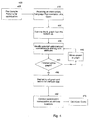
- Figure 3 illustrates a flow diagram an of an optimization method of the invention.
- Figure 4 illustrates a flow diagram an alternate embodiment of an optimization method of the invention.
- Figure 5 illustrates an intermediate language optimization example corresponding to an embodiment of the invention.
- Figure 6 illustrates a piecewise optimization of an intermediate language example corresponding to an embodiment of the invention.
- An exemplary query optimizer/normalizer improves query efficiency by eliminating redundant forms and improving query execution speed.
- An exemplary normalizer function eliminates redundant forms and therefore simplifies back-end compiler implementations by reducing the number of kinds of queries the back ends have to be prepared to process. Better system performance is thereby achieved.
- the optimizer/normalizer may be designed to be used as a standalone component or as part of a larger system.
- the problem of false substitution in optimization is avoided by not performing substitution or rewrites that are incorrect in the face of node identity. This is performed by utilizing a node oriented intermediate language representation of a query as an input. Thus node characteristics may be analyzed as part of the optimization process. A rewrite of a portion of the intermediate language representation of an input query is preferably performed only when reordering will have no effect on any subexpressions in the intermediate representation. The order of an expression is desirably unaffected by clearly identifying order sensitive expressions via the use of an unambiguous intermediate language representation of an input query. Overall, optimization errors and related complications may be avoided through a combination of optimization barriers, explicit operators and careful attention to well-authored rewrite rules.
- the invention may be implemented in one or more of a set of hardware elements and software elements in a computer system.
- a computer system which may include the invention is described hereinbelow.
- FIG. 1 and the following are intended to a brief general of a suitable computing environment in which the invention may be implemented. It should be understood, however, that handheld, portable and other computing devices and computing objects of all kinds are contemplated for use in connection with the present invention.
- a general purpose computer is described below, this is but one example, and the present invention may be implemented with other computing devices, such as a client having network/bus interoperability and interaction.
- the present invention may be implemented in an environment of networked hosted services in which very little or minimal client resources are implicated, e.g., a networked environment in which the client device serves merely as an interface to the network/bus, such as an object placed in an appliance, or other computing devices and objects as well.
- a networked hosted services in which very little or minimal client resources are implicated, e.g., a networked environment in which the client device serves merely as an interface to the network/bus, such as an object placed in an appliance, or other computing devices and objects as well.
- the invention can be implemented via an operating system, for use by a developer of services for a device or object, and/or included within application software that operates according to the invention.
- Software may be described in the general context of computer-executable instructions, such as program modules, being executed by one or more computers, such as client workstations, servers or other devices.
- program modules include routines, programs, objects, components, data structures and the like that perform particular tasks or implement particular abstract types.
- the functionality of the modules may be combined or distributed as desired in various embodiments.
- those skilled in the art will appreciate that the invention may be practiced with other computer configurations.
- PCs personal computers
- automated teller machines server computers
- hand-held or laptop devices multi-processor systems
- microprocessor-based systems programmable consumer electronics
- network PCs appliances
- lights environmental control elements
- minicomputers mainframe computers and the like.
- the invention may also be practiced in distributed computing environments where tasks are performed by remote processing devices that are linked through a communications network/bus or other data transmission medium.
- program modules may be located in both local and remote computer storage media including memory storage devices, and client nodes may in turn behave as server nodes.
- FIG. 1 thus illustrates an example of suitable computing system environment 100 in which the invention may be implemented, although as made clear above, the computing system environment 100 is only one example of a suitable computing environment and is not intended to suggest any limitation as to the scope of use or functionality of the invention. Neither should the computing environment 100 be interpreted as having any dependency or requirement relating to any one or combination of components illustrated in the exemplary operating environment 100.
- an exemplary system for implementing the invention includes a general purpose computing device in the form of a computer system 110.
- Components of computer system 110 may include, but are not limited to, a processing unit 120, a system memory 130, and a system bus 121 that couples various system components including the system memory to the processing unit 120.
- the system bus 121 may be any of several types of bus structures including a memory bus or memory controller, a bus, and a local bus using any of a variety of architectures.
- such architectures include Industry Standard Architecture (ISA) bus, Micro Channel Architecture (MCA) bus, Enhanced ISA (EISA) bus, Video Electronics Standards Association (VESA) local bus, and Peripheral Component Interconnect (PCI) bus (also known as Mezzanine bus).
- ISA Industry Standard Architecture
- MCA Micro Channel Architecture
- EISA Enhanced ISA
- VESA Video Electronics Standards Association
- PCI Peripheral Component Interconnect
- Computer system 110 typically includes a variety of computer readable media.
- Computer readable can be available media that can be accessed by computer system 110 includes both volatile and nonvolatile media, removable and non-removable media.
- Computer readable media may comprise computer storage media and communication media.
- Computer storage media includes volatile and nonvolatile, removable and non-removable media implemented in any method or technology for storage of information such as computer readable instructions, data structures, program modules or other data.
- Computer storage media includes, but is not limited to, Random Access Memory (RAM), Read Only Memory (ROM), Electrically Erasable Programmable Read Only Memory (EEPROM), flash memory or other memory technology, Compact Disk Read Only Memory (CDROM), compact disc-rewritable (CDRW), digital versatile disks (DVD) or other optical disk storage, magnetic cassettes, magnetic tape, magnetic disk storage or other magnetic storage devices, or any other medium which can be used to store the desired information and which can accessed by computer system 110.
- Communication typically embodies computer readable instructions, data structures, program modules or other data in a modulated data signal such as a carrier wave or other transport mechanism and any information delivery media.
- modulated data signal means a signal that has one or more of its characteristics set or changed in such a manner as to encode information in the signal.
- communication media includes wired media such as a wired network or direct-wired connection, and wireless media such as acoustic, RF, infrared and other wireless media. Combinations of any of the above should also be included within the scope of computer readable media.
- the system memory 130 includes computer storage media in the form of volatile and/or nonvolatile memory such as read only memory (ROM) 131 and random access memory (RAM) 132.
- ROM read only memory
- RAM random access memory
- BIOS basic input/output system
- RAM 132 typically contains data and/or program modules that are immediately accessible to and/or presently being operated on by processing unit 120.
- Figure 1 illustrates operating system 134, application programs 135, other program modules 136, and program data 137.
- the computer system 110 may also include other removable/non-removable, volatile/nonvolatile storage media.
- Figure 1 illustrates a hard disk drive 141 that reads from or writes to non-removable, nonvolatile magnetic media, a magnetic disk drive 151 that reads from or writes to a removable, nonvolatile magnetic disk 152, and an optical disk drive 155 that reads from or writes to a removable, nonvolatile optical disk 156, such as a CD ROM, CDRW, DVD, or other optical media.
- removable/non-removable, volatile/nonvolatile computer storage media that can be used in the exemplary operating environment include, but are not limited to, magnetic tape cassettes, flash memory cards, digital versatile disks, digital video tape, solid state RAM, solid state ROM, and the like.
- the hard disk drive 141 is typically connected to the system bus 121 through a non-removable memory interface such as interface 140, and magnetic disk drive 151 and optical disk drive 155 are typically connected to the system bus 121 by a removable memory interface, such as interface 150.
- hard disk drive 141 is illustrated as storing operating system 144, application programs 145, other program modules 146, and program data 147. Note that these components can either be the as or different from operating system 134, application programs 135, other program modules 136, and program data 137. Operating system 144, application programs 145, other program modules 146, and program data 147 are given different numbers here to illustrate that, at a minimum, they are different copies.
- a user may enter commands and information into the computer system 110 through input devices such as a keyboard 162 and pointing device 161, commonly referred to as a mouse, trackball or touch pad.
- Other input devices may include a microphone, joystick, game pad, satellite dish, scanner, or the like. These and other input devices are often connected to the processing unit 120 through a user input interface 160 that is coupled to the system bus 121, but may be connected by other interface and bus structures, such as a parallel port, game port or a universal bus (USB).
- a monitor 191 or other type of device is also connected to the system bus 121 via an interface, as a video interface 190, which may in turn communicate with video memory (not shown).
- computer systems may also include other peripheral output devices such as speakers 197 and printer 196, which may be connected through an output peripheral interface 195.
- the computer system 110 may operate in a networked or environment using logical connections to one or more remote computers, as a remote computer 180.
- the remote computer 180 may be a personal computer, a server, a router, a network PC, a peer or other common network node, and typically includes many or all of the elements described above relative to the computer system 110, although only a memory storage device 181 has been illustrated in Figure 1.
- the logical connections depicted in Figure 1 include a local area network (LAN) 171 and a wide area network (WAN) 173, but may also include other networks/buses.
- LAN local area network
- WAN wide area network
- Such networking environments are commonplace in homes, offices, enterprise-wide computer networks, intranets and the Internet.
- the computer system 110 When used in a LAN networking environment, the computer system 110 is connected to the LAN 171 through a network interface or adapter 170. When used in a WAN networking environment, the computer system 110 typically includes a modem 172 or other means for establishing communications over the WAN 173, such as the Internet.
- the modem 172 which may be internal or external, may be to the system bus 121 via the user input interface 160, or other appropriate mechanism.
- program modules depicted relative to the computer system 110, or portions thereof may be stored in the remote memory storage device.
- Figure 1 illustrates remote application programs 185 as residing on memory device 181. It will be appreciated that the network connections shown are exemplary and other means of establishing a communications link between the computers may be used.
- MICROSOFT®'s .NETTM platform available from Microsoft Corporation, One Microsoft Way, Redmond, Washington 98052, includes servers, building-block services, such as Web-based data storage, and downloadable device software. While exemplary embodiments herein are described in connection with software residing on a computing device, one or more portions of the invention may also be implemented via an operating system, application programming interface (API) or a "middle man" object between any of a coprocessor, a display device and a requesting object, such that operation according to the invention be performed by, supported in or accessed via all of .NETTM's languages and services, and in other distributed computing frameworks as well.
- API application programming interface
- Buffering occurs when an operator cannot be streamed, and instead some data much be cached in memory and then traversed one or more times in order to evaluate the operator. When this occurs, pipeline processing may halt and memory allocations and multiple passes may occur. Turning queries that operate over data twice into queries that operate over it only once is therefore a desired optimization.
- Buffering is mostly an aspect of the physical query plan, tightly coupled to how the query is implemented. However, there are patterns in the logical query plan that can be detected and rewritten. For example, the query sum($x)div count($x) may be equivalent to avg($x). The former expression requires evaluating $x twice, while the latter can perform its computation in a single pass.
- type conversions generally involve going from a string representation to a machine type (like integer) or vice-versa.
- Relational databases traditionally do not optimize such queries well, because they are relatively uncommon in the relational domain where data is already stored as machine types. In the implementation of XML queries, it may be considered desirable to remove as many type conversions and type tests as possible, especially over relational data, but even for ordinary XML data.
- optimizations are generally physical in nature. Although unnecessary SQL/XML conversions may be eliminated, there are some optimizations that are already possible in the logical query plan.
- One approach may be to eliminate type conversions and type tests by refining types during the optimization process. The more precisely static type information is known and understood concerning a query, the more operators may be statically eliminated.
- An embodiment of the invention utilizes an intermediate language representation having a graph structure composed of nodes identifying functional operations in a query. As such, it represents the semantic meaning of a query.
- This intermediate language is a query intermediate language and is termed QIL.
- An example query intermediate language definition is provided in a co-filed patent application entitled QUERY INTERMEDIATE LANGUAGE METHOD AND SYSTEM assigned to Microsoft Corporation of Redmond, WA (Serial No. XX/XXX,XXX, filed on even date herewith). The contents of that co-filed application are considered to be incorporated in its entirety by reference into this application.
- Pattern detection is used to identify candidates for normalization and optimization.
- the patterns developed by such an intermediate language are not of an arbitrary complexity. Generally, the patterns are mostly shallow patterns and are rooted at a particular node and all back-edges are constrained to occur in known locations. Consequently, a pattern match algorithm can easily accommodate this representation.
- the XML intermediate language termed QIL is a representation of an XML query or view.
- the query intermediate language is an explicit representation of the meaning of an XML query.
- the query intermediate language may be viewed as a semantic representation common across all XML query and view language compilers.
- QIL is similar to an ordinary abstract syntax tree (AST) but different in that QIL captures not the syntax of the language but the semantics, or meaning, of a query. Another difference is that QIL is a graph structure and not a tree structure like AST.
- QIL enables the abstraction of multiple different query languages and view definition languages (such as XPath, XSLT, and XQuery) over a variety of different target data sources (such as relational and non-relational data). As such, QIL enables a common construction to support all of the compatible XML languages. Every operation is both explicit and unambiguous.
- the patterns that are generated by QIL and detected by the optimizer are grouped by root node type and then used to generate a subclass for pattern identification and optimization implementation. These subclasses perfonn a left-depth first (i.e., bottom-up) pass over the QIL graph, attempting to match each pattern in turn for a given node type. If no pattern matches, it copies the node (and its entire subgraph, which has already been visited); otherwise, it performs the indicated optimization replacement.
- This approach has worst-case complexity O(gn 2 ) where g is the number of patterns in the grammar and n is the number of nodes in the graph.
- the optimizer views each node and all descendants to match each pattern, although in practice, patterns tend to be only a single level deep so its average time is more accurately approximated as O(gn).
- Figure 2 depicts a block diagram of an exemplary system architecture embodying aspects of the current invention.
- a query runtime architecture 200 including intermediate language compilers and target execution engines, is shown.
- the architecture depicts the exemplary basic blocks implemented to receive, compile, interpret and access data for XML queries upon multiple data sources.
- a plurality of front-end language compilers 210 may be realized which comport with XML or XML related standards.
- the original or input query may be received or input from any one of a plurality of input devices such as are shown in Figure 1.
- the front-end compilers 210 may receive an XML query, XML view, or other related XML language inquiries via an input device (not shown in Figure 2) and produce a compiled XML intermediate language representation 215 of the meaning of the composite of the input queries.
- Typical language types for the front-end compilers 210 include the world wide web consortium (W3C®) published standards of XPath, XML Style sheet Language (XSL), XSLT and XML Query Language (XQuery).
- An view compiler may also be present and include the W3C® standard view of XQuery, among others.
- the intermediate language abstraction between query and view languages and multiple target models allows real data, such as from the Microsoft® .NET TM as well as virtual XML data, to be used as data sources.
- the XML intermediate language representation 215 is input to a query optimizer/normalizer 220.
- the function of the optimizer is to improve query performance and eliminate redundant forms within the input intermediate language representation.
- the optimizer serves to increase system performance by implementing numerous algorithms that reduce the size and decrease the complexity of the XML intermediate language representation prior to the delivery of the optimized XML query representation to the back-end target generators 230.
- each of the back-end target generators 230 may be constructed so that they efficiently work on data sources comporting with the model of the data within each supported data source.
- a target query language generator for a SQL database source may be optimized for efficiency in querying over a relational database with a SQL database management system.
- target query language generator 230a may also be paired with an execution engine 240a to transform the intermediate language representation 215 into a target machine language compatible with a specific data source 250.
- a target generator may also transform an XML intermediate language representation 215 into another intermediate language, such as for example Microsoft® intermediate language (MSIL), so that an execution engine may directly query one or more data sources 250.
- MSIL Microsoft® intermediate language
- the execution engine Upon execution of the compiled query, the execution engine normally produces query results 260 available for further processing, storage, display to a user, or provision to a subsequent software application, for example.
- the target compilers 230 and corresponding execution engines 240 may include such query languages as and SQL, to name a few.
- Another aspect of the architecture is the modularity of data availability. For example, at the point where the optimized XML query representation is generated (e.g., inputs to target generators 230), an output may be generated so that the optimized XML query intermediate language representation itself is available for use in another system or available for delayed target compiling. Also, the optimized XML query representation itself may be directly executed without actually converting first to a specific, non-XML instruction query. Thus, the XML intermediate language may be used to query over one or more data sources without a compiler using an execution engine specifically adapted to execute the optimized XML query intermediate language representation. As another option in system output, the target compiler output(s) may be used as an output for execution in a separate system or by another non-system application.
- the exemplary architecture of Figure 2 inherently allows great flexibility in constructing queries.
- the query architecture allows multiple queries to be input so that an optimized XML intermediate language composite of the multiple queries may be Additionally, multiple back-end target compilers and execution engines may be used to query over data sources of differing data models.
- the architecture 200 also allows a reduction in the number of permutations of front-ends and back ends.
- Figure 2 depicts M front end compilers and N back end compilers, where M are integers. Normally, this combination would yield a total number of possible system paths of M times N. However, because of the common intermediate language utilization, the number of permutations is advantageously reduced to plus N.
- Figure 3 represents a flow diagram 300 for an exemplary flow of optimization in accordance with the invention.
- an intermediate language representation of a query is received 310.
- This intermediate language representation may be the query intermediate language as discussed above or it may be some other intermediate language such as MSIL.
- the intermediate language is assumed to be of a graph or node structure.
- the process 300 then examines the nodes within the intermediate language to determine node type and code pattern 320. Upon an identification of type and code pattern, the patterns are analyzed for identification of a pattern that can be optimized 330. This comparison may be performed by comparing a pre-stored set of node types and/or code patterns that may identify a candidate for optimization. Alternately, an algorithm may be used in conjunction with a node type identification to identify code patterns for optimization.
- the code pattern is optimized 340 by replacement.
- a normalization may occur 340 which may result in the elimination of the repetition.
- the portions of changed and unchanged code are collected 360 and aggregated.
- the code that was examined may be passed on 350 so that the code can be collected 360.
- the process 300 determines whether the intermediate language representation has been fully examined for normalization/optimization purposes. If the code has not been fully examined, the next node is examined 320 and the process of examination and optimization is replicated. If the process 300 has completed examining the intermediate language representation nodes, then the aggregated code is passed on and an optimized query results 380.
- Figure 4 is a flow diagram of an exemplary process 400 that be as an alternative to that of process of Figure 3 for optimization and normalization.
- precompiled patterns for optimization 405 may be stored in an accessible memory
- the process 400 then may receive an intermediate language representation 410.
- the intermediate language representation may be QIL, MSIL, or some other graph or node type of representation.
- the intermediate language representation is examined from the bottom of the graph 420 in an upward fashion.
- potential normalizations and optimizations are discovered and tagged with attributes 430. The attributes are used to identify what kind of normalization or optimization is desirable.
- the process 400 then checks to see if the entire graph has been examined 440. If the process is not yet complete, then the process 400 moves upward in the graph 445 to test the next node and identify potential optimizations 430.
- the process 400 moves to the top of the graph and searches for attributes tagged to the nodes 450.
- Some of the tagged attributes may be those of normalization, such as repetitious nodes, or of optimizations, such as replacement code.
- the attributes may indicate the kind of action (i.e., redundancy deletion, optimization replacement, etc.) that is needed.
- the process 400 conducts the optimization / normalization at the tagged nodes 460 from the top down at the tagged node locations.
- the entire query may be reconstructed from the node type expressions and the optimized query 470 results.
- Rewrites may depend on the node types involved, and occasionally additional conditions, such as conditions on types or values, may be desirable to be satisfied for a rewrite to occur.
- a syntax that is node-centric but allows for additional conditions to be specified is preferably used in the embodiments of the invention.
- node names may be wrapped in parentheses, as are nodes in the LISP language. A node's children, if any, may follow its name. Thus, (X) describes a single node X while (X Y Z) describes a node X with two child nodes, Y and Z. The order of children is significant.
- the entire is also preceded by a name in square brackets; this name may be
- rules may be selectively enabled or disabled for flexibility in code optimization.
- An example rewrite rule may be: [EliminateOr] (Or (True) (False)) ⁇ (True)
- a code pattern may also allow patterns to match any node kind. This is indicated using the wildcard match (*). Typically, any pattern may be labeled by preceding it with a variable ($variableName) and a colon (:). Then, the variable name may be used instead of a node elsewhere in the match pattern or in the replacement. Labels generally provide the only way to express a back-reference.
- Additional conditions may be expressed with a specific notation.
- a node pattern may be followed with code enclosed in curly braces.
- the code may to to any variables that are in scope.
- Figure 5 represents an example of an optimization where rewrites of expressions allow an optimization of the intermediate language code.
- the original code 510 is an embodiment of the query intermediate language representation of an XML query.
- the resulting optimization 520 is the code with specific sections re-wntten.
- a dotted portion 515 of the intermediate language representation 510 may be transformed into an optimized form 520.
- the optimizations may be seen as dotted insertions 525 in the rewrite 520.
- rewrites such as those in Figure 5 are not performed all at once, but instead are divided into smaller rewrites each of which manipulates some part of the graph. As depicted in Figure 6, these smaller rewrites preferably cascade to produce the desired overall effect.
- Figure 6 is a representation of an exemplary cascading of rewrites.
- a first section of text 610 may be as an 615 using the transformation 612 via the elimination of parents depicted by the rule: [EliminateParent] (Parent (For (Content $x:*))) ⁇ $x
- the resultant rewrite may be inserted into the query code 640 and may be further rewritten 645 using the transformation 642 via a tuple rewrite depicted by the rule:
- the constructs of the resultant code when inserted into the original intermediate representation 650 may be optimized 655 further by the transformation 652 via the logical rewrite depicted by the rule: [IntroduceExists] (Gt (Lenght $x:*) (LiteralInt32 0)) ⁇ (Not (IsEmptty $x))
- a further rewrite of the total resultant code 660 may be optimized 655 by the transformation 662 of a tuple rewrite depicted by the rule: [FoldTupleConditional] (Tuple $i:* $w:* (Conditional $cond:* $return:* $list:(List) ⁇ $list.QilType.IsEpmty ⁇ )) ⁇ (Tuple $i (And $w $cond) $return)
- the resultant 665 When the resultant 665 is inserted into the original intermediate language query 510 of Figure 5, the resultant is the optimization as shown in the optimized intermediate code 520 of Figure 5. Thus multiple rewrites may be used in the optimization process of the invention.
- Optimizations are typically classified as either local or global optimizations. Local optimizations, such as constant-folding, are performed by looking at a small connected region of the graph. Global optimizations, such as dead code elimination, are performed by looking at the entire graph. Exemplary optimizations performed in accordance with aspects of the invention are summarized below:
- the local normalizations performed can be grouped into several different categories: constant-folding, commutations, path rewrites, common subexpression-elimination, function inlining, and miscellaneous normalizations. Exemplary samples of the optimization rules and techniques are provided in Appendix I attached hereto.
- Constant folding involves eliminating certain compile-time constants. These optimizations reduce the query size, reduce the size of the code that will be generated, and may significantly affect performance in loop situations. Constant-folding patterns constitute the bulk of the patterns performed by the optimizer.
- Some rewrites are not exactly constant-folding, but reduce the logical complexity of an expression. Others turn irregular forms, such as comparing two Boolean expressions which cannot be transliterated directly into SQL, into regular forms. Such regular forms perform logical operations on Boolean expressions which can be transliterated directly into SQL.
- Navigation optimizations may play a role in query performance because XQuery is compositional (i.e., supporting navigation into other XQuery expressions). Paths in an intermediate language such as QBL are not generally represented with a single operator. Consequently, path rewrites may be composed of many smaller rewrites such as constant-folding patterns, such as for example, EliminateNameOf. Additionally, some path rewrites involve folding navigation operators like Content and Attribute with construction operators like ElementCtor and AttributeCtor.
- Loop-invariant code motion is a common optimization technique in which computations made in a loop that do not change during the loop (i.e., loop-invariant) can be factored out (i.e., code motion). In this way, the computation is performed only once instead of the number of iterations of the loop.
- Some commutation patterns may be too complex to express fully using a pattern language. Therefore, these patterns typically may have a match pattern followed by a code action that performs the replacement.
- the Tuple and Filter node types (and the legacy Tuple node type) occupy a special role, and so have special rewrites associated with them, that are not classified in any other category.
- preserving position may present a barrier to optimization. Therefore, eliminating the position operators is a very worthwhile optimization. Additionally, the position operator satisfies certain constraints. For example, it is always at least 1 and at most the length of the set. Additionally, certain complex patterns using position may still be rewritten in ways that preserve it.
- Sort patterns come in two main varieties.
- One type of sort pattern eliminates unnecessary sorting such as, for example, applying a document order to an expression that is already in document order.
- Another sort pattern may recognize a grouping pattern which may be implemented by a back-end compiler using multiple passes.
- the various techniques described herein may be implemented in connection with hardware or software or, where appropriate, with a combination of both.
- the methods and apparatus of the present invention may take the form of program code (i.e., instructions) embodied in tangible media, such as floppy diskettes, CD-ROMs, hard drives, or any other machine-readable storage medium, wherein, when the program code is loaded into and executed by a machine, such as a computer, the machine becomes an apparatus for practicing the invention.
- the computing device will generally include a processor, a storage medium readable by the processor (including volatile and non-volatile memory and/or storage elements), at least one input device, and at least one output device.
- One or more programs that may utilize the signal processing services of the present invention are preferably implemented in a high level procedural or object oriented programming to communicate a computer.
- the program(s) can be implemented in assembly or machine language, if desired.
- the language may be a compiled or interpreted language, and combined with hardware implementations.
- the methods and apparatus of the present invention may also be practiced via communications embodied in the form of program code that is transmitted over some transmission medium, such as over electrical wiring or cabling, through fiber optics, or via any other form of transmission, wherein, when the program code is received and loaded into and executed by a machine, such as an EPROM, a gate array, a programmable logic device (PLD), a client computer, a video recorder or the like, or a receiving machine having the signal processing capabilities as described in exemplary embodiments above becomes an apparatus for practicing the invention.
- a machine such as an EPROM, a gate array, a programmable logic device (PLD), a client computer, a video recorder or the like, or a receiving machine having the signal processing capabilities as described in exemplary embodiments above becomes an apparatus for practicing the invention.
- PLD programmable logic device
- client computer a video recorder or the like
- a receiving machine having the signal processing capabilities as described in exemplary embodiments above becomes an apparatus for practicing the invention.
Landscapes
- Engineering & Computer Science (AREA)
- Theoretical Computer Science (AREA)
- Data Mining & Analysis (AREA)
- Databases & Information Systems (AREA)
- Physics & Mathematics (AREA)
- General Engineering & Computer Science (AREA)
- General Physics & Mathematics (AREA)
- Devices For Executing Special Programs (AREA)
- Information Retrieval, Db Structures And Fs Structures Therefor (AREA)
- Machine Translation (AREA)
Applications Claiming Priority (2)
| Application Number | Priority Date | Filing Date | Title |
|---|---|---|---|
| US601480 | 1996-02-14 | ||
| US10/601,480 US7146352B2 (en) | 2003-06-23 | 2003-06-23 | Query optimizer system and method |
Publications (2)
| Publication Number | Publication Date |
|---|---|
| EP1492034A2 true EP1492034A2 (de) | 2004-12-29 |
| EP1492034A3 EP1492034A3 (de) | 2005-04-06 |
Family
ID=33418595
Family Applications (1)
| Application Number | Title | Priority Date | Filing Date |
|---|---|---|---|
| EP04102601A Withdrawn EP1492034A3 (de) | 2003-06-23 | 2004-06-08 | Frage-optimier-system und Methode |
Country Status (5)
| Country | Link |
|---|---|
| US (1) | US7146352B2 (de) |
| EP (1) | EP1492034A3 (de) |
| JP (1) | JP2005018767A (de) |
| KR (1) | KR20050000328A (de) |
| CN (1) | CN100517307C (de) |
Cited By (2)
| Publication number | Priority date | Publication date | Assignee | Title |
|---|---|---|---|---|
| US7962476B2 (en) * | 2006-07-26 | 2011-06-14 | Applied Minds, Inc. | Method and apparatus for performing a depth-first join in a database |
| EP2648115A1 (de) * | 2012-04-03 | 2013-10-09 | Seeburger AG | Verfahren und/oder System zur Ausführung von Transformationen von hierarchisch strukturierten Daten und relationalen Daten |
Families Citing this family (122)
| Publication number | Priority date | Publication date | Assignee | Title |
|---|---|---|---|---|
| US7873649B2 (en) * | 2000-09-07 | 2011-01-18 | Oracle International Corporation | Method and mechanism for identifying transaction on a row of data |
| US7519577B2 (en) * | 2003-06-23 | 2009-04-14 | Microsoft Corporation | Query intermediate language method and system |
| US7165063B2 (en) * | 2003-11-19 | 2007-01-16 | International Business Machines Corporation | Context quantifier transformation in XML query rewrite |
| US7562094B1 (en) | 2003-12-31 | 2009-07-14 | Precise Software Solutions, Inc. | Object-level database performance management |
| US7747659B2 (en) * | 2004-01-05 | 2010-06-29 | International Business Machines Corporation | Garbage collector with eager read barrier |
| US8775412B2 (en) * | 2004-01-08 | 2014-07-08 | International Business Machines Corporation | Method and system for a self-healing query access plan |
| US20050240555A1 (en) * | 2004-02-12 | 2005-10-27 | Lockheed Martin Corporation | Interactive electronic technical manual system integrated with the system under test |
| US20050223288A1 (en) * | 2004-02-12 | 2005-10-06 | Lockheed Martin Corporation | Diagnostic fault detection and isolation |
| US7584420B2 (en) | 2004-02-12 | 2009-09-01 | Lockheed Martin Corporation | Graphical authoring and editing of mark-up language sequences |
| US7801702B2 (en) * | 2004-02-12 | 2010-09-21 | Lockheed Martin Corporation | Enhanced diagnostic fault detection and isolation |
| US7603347B2 (en) * | 2004-04-09 | 2009-10-13 | Oracle International Corporation | Mechanism for efficiently evaluating operator trees |
| US7440954B2 (en) * | 2004-04-09 | 2008-10-21 | Oracle International Corporation | Index maintenance for operations involving indexed XML data |
| US7398265B2 (en) * | 2004-04-09 | 2008-07-08 | Oracle International Corporation | Efficient query processing of XML data using XML index |
| US7487142B2 (en) * | 2004-06-10 | 2009-02-03 | International Business Machines Corporation | Methods and apparatus for specifying and processing descriptive queries for data sources |
| US7516121B2 (en) * | 2004-06-23 | 2009-04-07 | Oracle International Corporation | Efficient evaluation of queries using translation |
| DE602005022069D1 (de) * | 2004-06-23 | 2010-08-12 | Oracle Int Corp | Effiziente auswertung von abfragen mittels übersetzung |
| US8566300B2 (en) * | 2004-07-02 | 2013-10-22 | Oracle International Corporation | Mechanism for efficient maintenance of XML index structures in a database system |
| US7668806B2 (en) | 2004-08-05 | 2010-02-23 | Oracle International Corporation | Processing queries against one or more markup language sources |
| US7849183B1 (en) | 2004-08-31 | 2010-12-07 | Precise Software Solutions, Inc. | Method of monitoring network and application performance by analyzing web clients and web servers |
| US9171100B2 (en) | 2004-09-22 | 2015-10-27 | Primo M. Pettovello | MTree an XPath multi-axis structure threaded index |
| US20060064395A1 (en) * | 2004-09-23 | 2006-03-23 | Seguin Christopher A | Data element storage method |
| US20060120181A1 (en) * | 2004-10-05 | 2006-06-08 | Lockheed Martin Corp. | Fault detection and isolation with analysis of built-in-test results |
| US20060085692A1 (en) * | 2004-10-06 | 2006-04-20 | Lockheed Martin Corp. | Bus fault detection and isolation |
| US20080052281A1 (en) * | 2006-08-23 | 2008-02-28 | Lockheed Martin Corporation | Database insertion and retrieval system and method |
| US20060182131A1 (en) * | 2005-01-21 | 2006-08-17 | L-3 Communications Corporation | Gateway interface control |
| US8463801B2 (en) * | 2005-04-04 | 2013-06-11 | Oracle International Corporation | Effectively and efficiently supporting XML sequence type and XQuery sequence natively in a SQL system |
| US20060235839A1 (en) * | 2005-04-19 | 2006-10-19 | Muralidhar Krishnaprasad | Using XML as a common parser architecture to separate parser from compiler |
| US7949941B2 (en) * | 2005-04-22 | 2011-05-24 | Oracle International Corporation | Optimizing XSLT based on input XML document structure description and translating XSLT into equivalent XQuery expressions |
| US7599289B2 (en) * | 2005-05-13 | 2009-10-06 | Lockheed Martin Corporation | Electronic communication control |
| US20060256814A1 (en) * | 2005-05-13 | 2006-11-16 | Lockheed Martin Corporation | Ad hoc computer network |
| US20060256717A1 (en) * | 2005-05-13 | 2006-11-16 | Lockheed Martin Corporation | Electronic packet control system |
| US20060256770A1 (en) * | 2005-05-13 | 2006-11-16 | Lockheed Martin Corporation | Interface for configuring ad hoc network packet control |
| US8166059B2 (en) * | 2005-07-08 | 2012-04-24 | Oracle International Corporation | Optimization of queries on a repository based on constraints on how the data is stored in the repository |
| US7427025B2 (en) * | 2005-07-08 | 2008-09-23 | Lockheed Marlin Corp. | Automated postal voting system and method |
| US7730079B2 (en) * | 2005-08-30 | 2010-06-01 | Microsoft Corporation | Query comprehensions |
| KR100756978B1 (ko) * | 2005-11-02 | 2007-09-07 | 정민경 | 관계형 데이터베이스에서 xml 문서 검색을 위한 질의처리 시스템 및 방법 |
| US7664742B2 (en) * | 2005-11-14 | 2010-02-16 | Pettovello Primo M | Index data structure for a peer-to-peer network |
| US7702642B1 (en) * | 2005-12-07 | 2010-04-20 | Precise Software Solutions, Inc. | Method, system and computer-readable code for instrumenting code for logging database-related strings |
| US20070174309A1 (en) * | 2006-01-18 | 2007-07-26 | Pettovello Primo M | Mtreeini: intermediate nodes and indexes |
| US7873627B2 (en) * | 2006-01-18 | 2011-01-18 | Microsoft Corporation | Relational database scalar subquery optimization |
| US20070209464A1 (en) * | 2006-02-27 | 2007-09-13 | Roline Eric A | Damped yoke bearing for a power steering system |
| US7502777B2 (en) * | 2006-02-28 | 2009-03-10 | Red Hat, Inc. | System and method for self tuning object-relational mappings |
| US7499909B2 (en) * | 2006-07-03 | 2009-03-03 | Oracle International Corporation | Techniques of using a relational caching framework for efficiently handling XML queries in the mid-tier data caching |
| US7992171B2 (en) * | 2006-09-06 | 2011-08-02 | Qurio Holdings, Inc. | System and method for controlled viral distribution of digital content in a social network |
| US20080065590A1 (en) * | 2006-09-07 | 2008-03-13 | Microsoft Corporation | Lightweight query processing over in-memory data structures |
| US7739219B2 (en) | 2006-09-08 | 2010-06-15 | Oracle International Corporation | Techniques of optimizing queries using NULL expression analysis |
| US7716210B2 (en) * | 2006-12-20 | 2010-05-11 | International Business Machines Corporation | Method and apparatus for XML query evaluation using early-outs and multiple passes |
| JP5320787B2 (ja) * | 2008-03-24 | 2013-10-23 | 富士通株式会社 | 検索キー最適化装置及び検索キー最適化プログラム |
| JP5060361B2 (ja) * | 2008-03-28 | 2012-10-31 | 株式会社東芝 | 構造化文書検索装置、方法及びプログラム |
| US7917547B2 (en) * | 2008-06-10 | 2011-03-29 | Microsoft Corporation | Virtualizing objects within queries |
| US9305238B2 (en) * | 2008-08-29 | 2016-04-05 | Oracle International Corporation | Framework for supporting regular expression-based pattern matching in data streams |
| CN101408900B (zh) * | 2008-11-24 | 2011-03-16 | 中国科学院地理科学与资源研究所 | 一种网格计算环境下的分布式空间数据查询优化方法 |
| US20100191717A1 (en) * | 2009-01-28 | 2010-07-29 | Goetz Graefe | Optimization of query processing with top operations |
| US8145859B2 (en) * | 2009-03-02 | 2012-03-27 | Oracle International Corporation | Method and system for spilling from a queue to a persistent store |
| US8190595B2 (en) * | 2009-03-28 | 2012-05-29 | Microsoft Corporation | Flexible query hints in a relational database |
| WO2010120929A2 (en) * | 2009-04-15 | 2010-10-21 | Evri Inc. | Generating user-customized search results and building a semantics-enhanced search engine |
| US8387076B2 (en) | 2009-07-21 | 2013-02-26 | Oracle International Corporation | Standardized database connectivity support for an event processing server |
| US8321450B2 (en) | 2009-07-21 | 2012-11-27 | Oracle International Corporation | Standardized database connectivity support for an event processing server in an embedded context |
| US8386466B2 (en) | 2009-08-03 | 2013-02-26 | Oracle International Corporation | Log visualization tool for a data stream processing server |
| US8527458B2 (en) | 2009-08-03 | 2013-09-03 | Oracle International Corporation | Logging framework for a data stream processing server |
| US8204873B2 (en) * | 2009-08-26 | 2012-06-19 | Hewlett-Packard Development Company, L.P. | System and method for query expression optimization |
| US8631028B1 (en) | 2009-10-29 | 2014-01-14 | Primo M. Pettovello | XPath query processing improvements |
| US9430494B2 (en) | 2009-12-28 | 2016-08-30 | Oracle International Corporation | Spatial data cartridge for event processing systems |
| US9305057B2 (en) | 2009-12-28 | 2016-04-05 | Oracle International Corporation | Extensible indexing framework using data cartridges |
| US8959106B2 (en) | 2009-12-28 | 2015-02-17 | Oracle International Corporation | Class loading using java data cartridges |
| US8713049B2 (en) | 2010-09-17 | 2014-04-29 | Oracle International Corporation | Support for a parameterized query/view in complex event processing |
| US9189280B2 (en) | 2010-11-18 | 2015-11-17 | Oracle International Corporation | Tracking large numbers of moving objects in an event processing system |
| US8429151B2 (en) * | 2010-11-22 | 2013-04-23 | Ianywhere Solutions, Inc. | Highly adaptable query optimizer search space generation process |
| CN101984439A (zh) * | 2010-12-09 | 2011-03-09 | 上海市共进通信技术有限公司 | 基于子查询实现数据源xml查询系统优化的方法 |
| US20120150913A1 (en) * | 2010-12-13 | 2012-06-14 | Microsoft Corporation | Multidimensional data-centric service protocol |
| US8990416B2 (en) | 2011-05-06 | 2015-03-24 | Oracle International Corporation | Support for a new insert stream (ISTREAM) operation in complex event processing (CEP) |
| US9329975B2 (en) | 2011-07-07 | 2016-05-03 | Oracle International Corporation | Continuous query language (CQL) debugger in complex event processing (CEP) |
| KR101277145B1 (ko) * | 2011-12-07 | 2013-06-20 | 한국과학기술연구원 | 공통 표현을 이용한 중간 언어 변환 방법과 그를 위한 시스템 및 컴퓨터로 읽을 수 있는 기록매체 |
| US8914353B2 (en) * | 2011-12-20 | 2014-12-16 | Sap Se | Many-core algorithms for in-memory column store databases |
| US10365900B2 (en) | 2011-12-23 | 2019-07-30 | Dataware Ventures, Llc | Broadening field specialization |
| EP2795484A4 (de) * | 2011-12-23 | 2015-11-11 | Univ Arizona State | Verfahren zur mikrospezialisierung in datenbankverwaltungssystemen |
| EP2877943B1 (de) * | 2012-07-24 | 2021-03-03 | AB Initio Technology LLC | Mapping von entitäten bei datenmodellen |
| US9805095B2 (en) | 2012-09-28 | 2017-10-31 | Oracle International Corporation | State initialization for continuous queries over archived views |
| US9563663B2 (en) | 2012-09-28 | 2017-02-07 | Oracle International Corporation | Fast path evaluation of Boolean predicates |
| CN102929996B (zh) * | 2012-10-24 | 2015-06-03 | 华南理工大学 | XPath查询优化方法及系统 |
| US10956422B2 (en) | 2012-12-05 | 2021-03-23 | Oracle International Corporation | Integrating event processing with map-reduce |
| US10298444B2 (en) | 2013-01-15 | 2019-05-21 | Oracle International Corporation | Variable duration windows on continuous data streams |
| US9098587B2 (en) | 2013-01-15 | 2015-08-04 | Oracle International Corporation | Variable duration non-event pattern matching |
| US9047249B2 (en) | 2013-02-19 | 2015-06-02 | Oracle International Corporation | Handling faults in a continuous event processing (CEP) system |
| US9390135B2 (en) | 2013-02-19 | 2016-07-12 | Oracle International Corporation | Executing continuous event processing (CEP) queries in parallel |
| US9418113B2 (en) | 2013-05-30 | 2016-08-16 | Oracle International Corporation | Value based windows on relations in continuous data streams |
| US9934279B2 (en) | 2013-12-05 | 2018-04-03 | Oracle International Corporation | Pattern matching across multiple input data streams |
| KR102371811B1 (ko) | 2014-03-14 | 2022-03-07 | 아브 이니티오 테크놀로지 엘엘시 | 키드 엔티티들의 속성 매핑 |
| US9244978B2 (en) | 2014-06-11 | 2016-01-26 | Oracle International Corporation | Custom partitioning of a data stream |
| US9712645B2 (en) | 2014-06-26 | 2017-07-18 | Oracle International Corporation | Embedded event processing |
| US10120907B2 (en) | 2014-09-24 | 2018-11-06 | Oracle International Corporation | Scaling event processing using distributed flows and map-reduce operations |
| US9886486B2 (en) | 2014-09-24 | 2018-02-06 | Oracle International Corporation | Enriching events with dynamically typed big data for event processing |
| WO2017018901A1 (en) | 2015-07-24 | 2017-02-02 | Oracle International Corporation | Visually exploring and analyzing event streams |
| CN105183809A (zh) * | 2015-08-26 | 2015-12-23 | 成都布林特信息技术有限公司 | 一种云平台数据查询方法 |
| US10157240B2 (en) * | 2015-10-01 | 2018-12-18 | Ebay Inc. | Systems and methods to generate a concept graph |
| US10339137B2 (en) | 2015-12-07 | 2019-07-02 | Futurewei Technologies, Inc. | System and method for caching and parameterizing IR |
| US10733099B2 (en) | 2015-12-14 | 2020-08-04 | Arizona Board Of Regents On Behalf Of The University Of Arizona | Broadening field specialization |
| WO2017135837A1 (en) | 2016-02-01 | 2017-08-10 | Oracle International Corporation | Pattern based automated test data generation |
| WO2017135838A1 (en) | 2016-02-01 | 2017-08-10 | Oracle International Corporation | Level of detail control for geostreaming |
| CN107967208B (zh) * | 2016-10-20 | 2020-01-17 | 南京大学 | 一种基于深度神经网络的Python资源敏感缺陷代码检测方法 |
| WO2018237342A1 (en) | 2017-06-22 | 2018-12-27 | Dataware Ventures, Llc | Field specialization to reduce memory-access stalls and allocation requests in data-intensive applications |
| CN108345648B (zh) * | 2018-01-18 | 2021-01-26 | 奇安信科技集团股份有限公司 | 一种基于列式存储的获取日志信息的方法及装置 |
| US11914592B2 (en) | 2018-02-27 | 2024-02-27 | Elasticsearch B.V. | Systems and methods for processing structured queries over clusters |
| US11188531B2 (en) * | 2018-02-27 | 2021-11-30 | Elasticsearch B.V. | Systems and methods for converting and resolving structured queries as search queries |
| US12032631B2 (en) * | 2018-05-30 | 2024-07-09 | Ab Initio Technology Llc | Systems and methods for dataflow graph optimization |
| US11461270B2 (en) | 2018-10-31 | 2022-10-04 | Elasticsearch B.V. | Shard splitting |
| US10872085B2 (en) * | 2018-11-02 | 2020-12-22 | Microsoft Technology Licensing, Llc | Recording lineage in query optimization |
| US10997204B2 (en) | 2018-12-21 | 2021-05-04 | Elasticsearch B.V. | Cross cluster replication |
| US11943295B2 (en) | 2019-04-09 | 2024-03-26 | Elasticsearch B.V. | Single bi-directional point of policy control, administration, interactive queries, and security protections |
| US11431558B2 (en) | 2019-04-09 | 2022-08-30 | Elasticsearch B.V. | Data shipper agent management and configuration systems and methods |
| US10891165B2 (en) | 2019-04-12 | 2021-01-12 | Elasticsearch B.V. | Frozen indices |
| US11182093B2 (en) | 2019-05-02 | 2021-11-23 | Elasticsearch B.V. | Index lifecycle management |
| US12013853B2 (en) * | 2019-09-25 | 2024-06-18 | Microsoft Technology Licensing, Llc | Cloud based query workload optimization |
| KR102269174B1 (ko) | 2019-10-07 | 2021-06-24 | 고려대학교 산학협력단 | 스마트 컨트랙트 검증 장치 및 방법 |
| US20200327118A1 (en) * | 2020-06-27 | 2020-10-15 | Intel Corporation | Similarity search using guided reinforcement learning |
| US11604674B2 (en) | 2020-09-04 | 2023-03-14 | Elasticsearch B.V. | Systems and methods for detecting and filtering function calls within processes for malware behavior |
| CN112346730B (zh) * | 2020-11-04 | 2021-08-27 | 星环信息科技(上海)股份有限公司 | 一种中间表示的生成方法、计算机设备及存储介质 |
| KR102378377B1 (ko) | 2020-11-13 | 2022-03-24 | 고려대학교 산학협력단 | 스마트 컨트랙트 내의 취약 트랜잭션 시퀀스 획득 장치 및 방법 |
| US12499164B2 (en) | 2021-04-30 | 2025-12-16 | Elasticsearch B.V. | Controlling precision of searches |
| WO2023056003A1 (en) | 2021-09-30 | 2023-04-06 | Ab Initio Technology Llc | Systems and methods for performing data processing operations using variable level parallelism |
| CN117112613B (zh) * | 2023-08-15 | 2026-02-10 | 招商银行股份有限公司 | 数据查询方法、电子设备及计算机可读存储介质 |
| CN118605850B (zh) * | 2024-08-07 | 2024-11-12 | 之江实验室 | 一种面向Triton编译器流水线的优化系统及优化方法 |
Family Cites Families (7)
| Publication number | Priority date | Publication date | Assignee | Title |
|---|---|---|---|---|
| US6006214A (en) * | 1996-12-04 | 1999-12-21 | International Business Machines Corporation | Database management system, method, and program for providing query rewrite transformations for nested set elimination in database views |
| US6526403B1 (en) * | 1999-12-17 | 2003-02-25 | International Business Machines Corporation | Method, computer program product, and system for rewriting database queries in a heterogenous environment |
| US6934712B2 (en) * | 2000-03-21 | 2005-08-23 | International Business Machines Corporation | Tagging XML query results over relational DBMSs |
| US6654734B1 (en) * | 2000-08-30 | 2003-11-25 | International Business Machines Corporation | System and method for query processing and optimization for XML repositories |
| AU2002228739A1 (en) | 2000-10-27 | 2002-05-06 | Entigen Corporation | Integrating heterogeneous data and tools |
| US6725212B2 (en) * | 2001-08-31 | 2004-04-20 | International Business Machines Corporation | Platform-independent method and system for graphically presenting the evaluation of a query in a database management system |
| US6915290B2 (en) * | 2001-12-11 | 2005-07-05 | International Business Machines Corporation | Database query optimization apparatus and method that represents queries as graphs |
-
2003
- 2003-06-23 US US10/601,480 patent/US7146352B2/en not_active Expired - Fee Related
-
2004
- 2004-06-08 EP EP04102601A patent/EP1492034A3/de not_active Withdrawn
- 2004-06-21 JP JP2004183028A patent/JP2005018767A/ja active Pending
- 2004-06-22 KR KR1020040046467A patent/KR20050000328A/ko not_active Abandoned
- 2004-06-23 CN CNB2004100639914A patent/CN100517307C/zh not_active Expired - Fee Related
Cited By (2)
| Publication number | Priority date | Publication date | Assignee | Title |
|---|---|---|---|---|
| US7962476B2 (en) * | 2006-07-26 | 2011-06-14 | Applied Minds, Inc. | Method and apparatus for performing a depth-first join in a database |
| EP2648115A1 (de) * | 2012-04-03 | 2013-10-09 | Seeburger AG | Verfahren und/oder System zur Ausführung von Transformationen von hierarchisch strukturierten Daten und relationalen Daten |
Also Published As
| Publication number | Publication date |
|---|---|
| KR20050000328A (ko) | 2005-01-03 |
| EP1492034A3 (de) | 2005-04-06 |
| US20050004892A1 (en) | 2005-01-06 |
| JP2005018767A (ja) | 2005-01-20 |
| US7146352B2 (en) | 2006-12-05 |
| CN1609855A (zh) | 2005-04-27 |
| CN100517307C (zh) | 2009-07-22 |
Similar Documents
| Publication | Publication Date | Title |
|---|---|---|
| US7146352B2 (en) | Query optimizer system and method | |
| Syme et al. | Expert F♯ | |
| US7519577B2 (en) | Query intermediate language method and system | |
| US7509305B2 (en) | Method for document-searching | |
| Syme et al. | Expert F♯ 3.0 | |
| US7627541B2 (en) | Transformation of modular finite state transducers | |
| KR20090054442A (ko) | 트리 데이터 구조를 모듈형 유한 상태 변환기로 변환하는 방법, 컴퓨터 판독가능 매체, 컴퓨팅 시스템, 및 변환 프레임워크 | |
| JP2012504826A (ja) | 拡張可能な構文を有するプログラミング言語 | |
| Boshernitsan | Harmonia: A flexible framework for constructing interactive language-based programming tools | |
| Syme et al. | Expert F♯ 2.0 | |
| Bechhofer et al. | Parsing owl dl: trees or triples? | |
| Møller et al. | Static validation of XSL Transformations | |
| Bozzelli et al. | Visibly rational expressions | |
| US20080244380A1 (en) | Method and device for evaluating an expression on elements of a structured document | |
| Nishimura et al. | XML stream transformer generation through program composition and dependency analysis | |
| Kirchner et al. | Xemantics: a rewriting calculus-based semantics of XSLT | |
| Lai | A formal framework for linguistic tree query | |
| Atsumi et al. | An XML C source code interchange format for CASE tools | |
| Evgin et al. | A Model and Declarative Language for Specifying Binary Data Formats | |
| US8397226B2 (en) | Pattern matching over structured literals | |
| Rossi | Extending srcML to Python to Analyze Pythonic Idioms | |
| Sebastian | Evaluation of XPath Queries on XML Streams with Networks of Early Nested Word Automata | |
| Patra | Analyzing code corpora to improve the correctness and reliability of programs | |
| Bettentrupp et al. | A Prototype for Translating XSLT into XQuery. | |
| WO2025114889A1 (en) | Methods and systems for fixing an error in source code |
Legal Events
| Date | Code | Title | Description |
|---|---|---|---|
| PUAI | Public reference made under article 153(3) epc to a published international application that has entered the european phase |
Free format text: ORIGINAL CODE: 0009012 |
|
| AK | Designated contracting states |
Kind code of ref document: A2 Designated state(s): AT BE BG CH CY CZ DE DK EE ES FI FR GB GR HU IE IT LI LU MC NL PL PT RO SE SI SK TR |
|
| AX | Request for extension of the european patent |
Extension state: AL HR LT LV MK |
|
| PUAL | Search report despatched |
Free format text: ORIGINAL CODE: 0009013 |
|
| AK | Designated contracting states |
Kind code of ref document: A3 Designated state(s): AT BE BG CH CY CZ DE DK EE ES FI FR GB GR HU IE IT LI LU MC NL PL PT RO SE SI SK TR |
|
| AX | Request for extension of the european patent |
Extension state: AL HR LT LV MK |
|
| 17P | Request for examination filed |
Effective date: 20050921 |
|
| AKX | Designation fees paid |
Designated state(s): AT BE BG CH CY CZ DE DK EE ES FI FR GB GR HU IE IT LI LU MC NL PL PT RO SE SI SK TR |
|
| STAA | Information on the status of an ep patent application or granted ep patent |
Free format text: STATUS: THE APPLICATION IS DEEMED TO BE WITHDRAWN |
|
| 18D | Application deemed to be withdrawn |
Effective date: 20110104 |