EP1492302B1 - Méthode et système pour établir des sessions de service à courte portée - Google Patents
Méthode et système pour établir des sessions de service à courte portée Download PDFInfo
- Publication number
- EP1492302B1 EP1492302B1 EP04102807.7A EP04102807A EP1492302B1 EP 1492302 B1 EP1492302 B1 EP 1492302B1 EP 04102807 A EP04102807 A EP 04102807A EP 1492302 B1 EP1492302 B1 EP 1492302B1
- Authority
- EP
- European Patent Office
- Prior art keywords
- short
- range wireless
- preconfiguration
- service
- range
- Prior art date
- Legal status (The legal status is an assumption and is not a legal conclusion. Google has not performed a legal analysis and makes no representation as to the accuracy of the status listed.)
- Expired - Lifetime
Links
Images






Classifications
-
- H—ELECTRICITY
- H04—ELECTRIC COMMUNICATION TECHNIQUE
- H04W—WIRELESS COMMUNICATION NETWORKS
- H04W48/00—Access restriction; Network selection; Access point selection
- H04W48/08—Access restriction or access information delivery, e.g. discovery data delivery
- H04W48/14—Access restriction or access information delivery, e.g. discovery data delivery using user query or user detection
-
- G—PHYSICS
- G06—COMPUTING OR CALCULATING; COUNTING
- G06F—ELECTRIC DIGITAL DATA PROCESSING
- G06F21/00—Security arrangements for protecting computers, components thereof, programs or data against unauthorised activity
- G06F21/30—Authentication, i.e. establishing the identity or authorisation of security principals
- G06F21/44—Program or device authentication
-
- G—PHYSICS
- G06—COMPUTING OR CALCULATING; COUNTING
- G06F—ELECTRIC DIGITAL DATA PROCESSING
- G06F21/00—Security arrangements for protecting computers, components thereof, programs or data against unauthorised activity
- G06F21/60—Protecting data
- G06F21/606—Protecting data by securing the transmission between two devices or processes
-
- H—ELECTRICITY
- H04—ELECTRIC COMMUNICATION TECHNIQUE
- H04L—TRANSMISSION OF DIGITAL INFORMATION, e.g. TELEGRAPHIC COMMUNICATION
- H04L63/00—Network architectures or network communication protocols for network security
- H04L63/06—Network architectures or network communication protocols for network security for supporting key management in a packet data network
- H04L63/062—Network architectures or network communication protocols for network security for supporting key management in a packet data network for key distribution, e.g. centrally by trusted party
-
- H—ELECTRICITY
- H04—ELECTRIC COMMUNICATION TECHNIQUE
- H04L—TRANSMISSION OF DIGITAL INFORMATION, e.g. TELEGRAPHIC COMMUNICATION
- H04L63/00—Network architectures or network communication protocols for network security
- H04L63/18—Network architectures or network communication protocols for network security using different networks or channels, e.g. using out of band channels
-
- H—ELECTRICITY
- H04—ELECTRIC COMMUNICATION TECHNIQUE
- H04W—WIRELESS COMMUNICATION NETWORKS
- H04W12/00—Security arrangements; Authentication; Protecting privacy or anonymity
- H04W12/50—Secure pairing of devices
-
- H—ELECTRICITY
- H04—ELECTRIC COMMUNICATION TECHNIQUE
- H04W—WIRELESS COMMUNICATION NETWORKS
- H04W8/00—Network data management
- H04W8/18—Processing of user or subscriber data, e.g. subscribed services, user preferences or user profiles; Transfer of user or subscriber data
- H04W8/183—Processing at user equipment or user record carrier
-
- H—ELECTRICITY
- H04—ELECTRIC COMMUNICATION TECHNIQUE
- H04W—WIRELESS COMMUNICATION NETWORKS
- H04W8/00—Network data management
- H04W8/18—Processing of user or subscriber data, e.g. subscribed services, user preferences or user profiles; Transfer of user or subscriber data
- H04W8/20—Transfer of user or subscriber data
-
- H—ELECTRICITY
- H04—ELECTRIC COMMUNICATION TECHNIQUE
- H04W—WIRELESS COMMUNICATION NETWORKS
- H04W8/00—Network data management
- H04W8/22—Processing or transfer of terminal data, e.g. status or physical capabilities
- H04W8/24—Transfer of terminal data
- H04W8/245—Transfer of terminal data from a network towards a terminal
-
- H—ELECTRICITY
- H04—ELECTRIC COMMUNICATION TECHNIQUE
- H04W—WIRELESS COMMUNICATION NETWORKS
- H04W88/00—Devices specially adapted for wireless communication networks, e.g. terminals, base stations or access point devices
- H04W88/02—Terminal devices
- H04W88/06—Terminal devices adapted for operation in multiple networks or having at least two operational modes, e.g. multi-mode terminals
Definitions
- the present invention relates to wireless communications. More particularly, the present invention relates to the establishment of service sessions over short-range wireless communications networks.
- Short range wireless systems typically involve devices that have a communications range of one hundred meters or less. To provide communications over long distances, these short range systems often interface with other networks. For example, short range networks may interface with cellular networks, wireline telecommunications networks, and the Internet.
- Wireless personal area networks and wireless local area networks (LANs) are each types of short range wireless systems.
- PANs and WLANs typically have the common feature of operating in unlicensed portions of the radio spectrum, usually either in the 2.4 GHz Industrial, Scientific, and Medical (ISM) band or the 5 GHz Unlicensed-National Information Infrastructure (U-NII) band.
- ISM Industrial, Scientific, and Medical
- U-NII Unlicensed-National Information Infrastructure
- wireless local area network technology include the IEEE 802.11 WLAN Standard and the HiperLAN Standard.
- a well-known example of wireless personal area network technology is the Bluetooth Standard.
- Bluetooth defines a short-range radio network, originally intended as a cable replacement. It can be used to create ad hoc networks of up to eight devices, where one device is referred to as a master device. The other devices are referred to as slave devices. The slave devices can communicate with the master device and with each other via the master device.
- the Bluetooth Special Interest Group Specification Of The Bluetooth System, Volumes 1 and 2, Core and Profiles: Version 1.1, February 22, 2001 , describes the principles of Bluetooth device operation and communication protocols. The devices operate in the 2.4 GHz radio band reserved for general use by Industrial, Scientific, and Medical (ISM) applications. Bluetooth devices are designed to find other Bluetooth devices within their communications range and to discover what services they offer.
- Establishing a short-range communications session requires various processes to be performed. For example, in Bluetooth networks, devices perform an inquiry process to learn the identity of other devices in their communications range. Once a first device learns the identity of another device through the inquiry process, the devices perform a process known as paging to establish an unsecured connection between the two devices.
- terminal devices and access points perform a process known as authentication.
- Authentication is a process where two devices verify that they both have the same secret key. This secret key can then be used to effect security features, such as link encryption.
- the devices may communicate with each other according to one or more applications.
- one of the devices may utilize services provided by the other device, such as web browsing, printing, etc. Communicating according to such services is referred to herein as a "service session.”
- Bluetooth provides a protocol known as the Service Discovery Protocol (SDP).
- SDP enables terminals to identify services offered by other devices. According to SDP, The identification of services involves the exchange of multiple messages between devices.
- the establishment of a connection as well as the discovery and selection of services can involve the exchange of an extensive amount of information. Unfortunately, this may consume large amounts of time and battery power. Moreover, this exchange of information places large demands on network bandwidth, as well as on terminal device and access point processing capacity. Accordingly, techniques are needed for the efficient establishment of service sessions.
- devices such as Bluetooth access points can provide different kinds of services for mobile device users.
- an access point can deliver different kinds of content and applications to mobile devices within its coverage area. Examples of such applications include interactive game playing and the creation of messages for various purposes, such as the purchasing of movie tickets.
- a method of setting up a local service session in a short-range wireless communications network comprises receiving preconfiguration information over a long-range network, the preconfiguration information relating to the establishment of the local service session with a remote device in the short-range wireless communications network and including service options and an identifier indicating a location where a short-range wireless service is offered, establishing the local service session in the short-range wireless communications network using the received preconfiguration information, after selection from the service options, and obtaining short-range wireless service application software from the remote device.
- This aspect also provides a wireless communications device comprising a short-range wireless communications portion for communicating across short-range wireless communications networks, a long-range wireless communications portion for communicating across long-range communications networks, a memory and a processor that executes instructions stored in the memory for receiving preconfiguration information over a long-range wireless network, the preconfiguration information relating to the establishment of a local service session with a remote device in a short-range wireless communications network and including service options and an identifier indicating a location where a short-range wireless service is offered, establishing the local service session in the short-range wireless communications network using the received preconfiguration information, after selection from the service options, and obtaining short-range wireless service application software from the remote device.
- the received preconfiguration information may include an address of a remote short-range communications device, such as a Bluetooth device address (BD_ADDR).
- the received preconfiguration information may also include security information, such as a personal identification number (PIN), and/or one or more encryption keys.
- PIN personal identification number
- the preconfiguration information may include an identifier of an offered short-range service, as well as an identifier indicating a location where the short-range service is offered.
- the method, device and/or system may send a request for the preconfiguration information over the long range network.
- a method of setting up a local service session in a short-range wireless communications network between a first wireless communications device and a second wireless communications device comprises sending a first preconfiguration transmission over a long-range network to the first wireless communications device, the first preconfiguration transmission including information relating to the establishment of the local service session in the short-range wireless communications network and an identifier indicating a location where the second wireless communications device is located to enable the first wireless communications device to obtain short-range wireless service application software from the second wireless communications device and sending a second preconfiguration transmission over the long-range network to the second wireless communications device, the second preconfiguration transmission including information relating to the establishment of the local service session in the short-range wireless communications network.
- This aspect also provides a system for setting up a local service session in a short-range wireless communications network between a first wireless communications device and a second wireless communications device, comprising means for sending a first preconfiguration transmission over a long-range network to the first wireless communications device, the first preconfiguration transmission including information relating to the establishment of the local service session in the short-range wireless communications network and an identifier indicating a location where the second wireless communications device is located to enable the first wireless communications device to obtain short-range wireless service application software from the second wireless communications device, and means for sending a second preconfiguration transmission over the long-range network to the second wireless communications device, the second preconfiguration transmission including information relating to the establishment of the local service session in the short-range wireless communications network.
- Each of these transmissions may include an address (e.g., a Bluetooth device address) for one of the first and second communications devices. Additionally, each of these transmissions may include security information, such as a personal identification number (PIN).
- PIN personal identification number
- FIG. 1 is a block diagram of an operational environment embodying the present invention where wireless devices may obtain preconfiguration information to efficiently establish subsequent short-range communications sessions.
- FIG. 1 The environment of FIG. 1 includes a wireless communications device (WCD) 102, which is capable of communicating with devices across various networks.
- WCD wireless communications device
- FIG. 1 shows that WCD 102 may communicate across a long-range communication network 104.
- WCD 102 may communicate with various remote devices, such as an access point 108 and a remote terminal device 110, through ad-hoc short-range radio networks.
- a short-range wireless communications connection may be established between the two devices.
- a typical communicating range is 10 meters.
- Long-range network 104 may include a wireless telephony network.
- FIG. 1 shows long-range network 104 having a cellular network.
- the cellular network includes a plurality of base stations 120, which are each coupled to a mobile switching center (MSC) 122.
- MSC mobile switching center
- This cellular network provides for WCD 102 to exchange data according to various standards, such as GSM, EDGE, and GPRS.
- Long-range network 104 may also include a wireline network.
- FIG. 1 shows that long-range network 104 includes a packet-based network 114, such as the Internet, which is coupled to the cellular network.
- the present invention provides techniques for efficiently establishing a short-range connection between WCD 102 and a remote short-range device by preconfiguring WCD 102 for the remote device connection before it enters communicating range of the remote device.
- This preconfiguration is achieved through communications across long-range network 104. These communications may involve WCD 102 receiving preconfiguration information, such as connection parameters from a preconfiguration server 112, which is coupled to long-range network 104. Alternatively, these communications may involve WCD 102 and another wireless device (such as terminal device 110) exchanging short-range preconfiguration information directly through long-range network 104. This preconfiguration information enables WCD 102 to efficiently establish one or more short-range connections.
- Preconfiguration information may be exchanged in various forms.
- preconfiguration information may be transmitted as one or more messages in a format, such as the short message service (SMS) format.
- SMS short message service
- preconfiguration information may be transmitted as request and response messages according to client/server protocols, such as the hypertext transfer protocol (HTTP), or the wireless application protocol (WAP).
- HTTP hypertext transfer protocol
- WAP wireless application protocol
- FIGs. 2A and 2B are block diagrams of an exemplary WCD 102 implementation that embodies the present invention.
- WCD 102 may be a wireless mobile phone, a wireless PDA, a pager, a laptop computer equipped with short-range and long-range communications capabilities, or other wireless devices apparent to persons skilled in the relevant arts.
- FIG. 2A shows that WCD 102 includes several components.
- WCD 102 includes a communications hardware portion 204 that is coupled to one or more antennas 202.
- Communications hardware portion 204 includes electronics, such as a transceiver and a diplexer. These electronics allow WCD 102 to engage in bi-directional RF communications with long-range and short-range network entities, such as cellular base stations and Bluetooth access points.
- communications hardware portion 204 may include a short-range wireless portion 220 for allowing WCD 102 to communicate across short-range wireless networks, and a long-range wireless portion 222 for allowing WCD 102 to communicate across long-range wireless networks.
- Portions 222 and 224 may each include distinct components.
- portions 222 and 224 may share certain components.
- portions 222 and 224 may each transmit and receive wireless signals via separate antennas, or may alternatively share one or more antennas.
- a processor 206 is coupled to communications hardware portion 204.
- Processor 206 controls all of the functions of WCD 102.
- processor 206 instructs and controls the operation of communications hardware portion 204.
- Processor 206 may be implemented with one or more microprocessors that are each capable of executing software instructions stored in a memory 208.
- a user interface 210 is coupled to processor 206.
- User interface 210 facilitates the exchange of information with a user.
- FIG. 2A shows that user interface 210 includes a user input portion 212 and a user output portion 214.
- User input portion 212 may include one or more devices that allow a user to input information. Examples of such devices include keypads, touch screens, and microphones.
- User output portion 214 allows a user to receive information from WCD 102.
- user output portion 214 may include various devices, such as a display (e.g., the aforementioned touch screen), and one or more audio speakers.
- Exemplary displays include liquid crystal displays (LCDs), and video displays.
- Memory 208 stores information in the form of data and software components. These software components include instructions that can be executed by processor 206. Various types of software components may be stored in memory 208. For instance, memory 208 may store software components that control the operations of communications hardware portion 204, and software components that control the exchange of information through user interface 210. In addition, memory 208 stores software components that are associated with user applications that allow WCD 102 to engage in communications sessions with other devices. These communications sessions include telephony and remote server access with devices across long-range network 104, as well as service sessions with short-range devices across ad hoc networks.
- the above components may be coupled according to various techniques.
- One such technique involves coupling communications hardware 204, processor 206, memory 208, and user interface 210 through one or more bus interfaces.
- each of these components is coupled to a power source, such as a removable and rechargeable battery pack (not shown).
- FIG. 2B is a block diagram illustrating how various functional attributes of the components of FIG. 2A may be allocated between two segments: a terminal host 220, and a terminal module 222.
- Terminal host 220 is responsible for user applications and higher protocol layers, while terminal module 222 is responsible for lower layer protocols.
- terminal module 222 performs link management and link control functions, as well as the transmission and reception of RF signals.
- Terminal host 220 and terminal module 222 communicate according to a host controller interface (HCI) 224.
- HCI host controller interface
- specific formats for messages and/or packets crossing HCI 224 are extablished. Examples of such standard messages include terminal module 222 requesting a link key from terminal host 220, and terminal host 220 providing a link key to the terminal module 222.
- memory 208 stores software components associated with user applications.
- Exemplary user applications allow WCD 102 to select and receive preconfiguration information during a session with preconfiguration server 112. Since such user applications may involve the exchange of information with preconfiguration server 112, memory 208 stores software components that enable communications with preconfiguration server 112 according to protocols, such as the short messaging service (SMS) and the wireless application protocol (WAP).
- SMS short messaging service
- WAP wireless application protocol
- WCD 102 When engaging in WAP communications with preconfiguration server 112, WCD 102 functions as a WAP client.
- terminal host 220 includes WAP client software, such as WAP Client Version 2.0.
- WAP Client Version 2.0 is a commercially available software product provided by Nokia Corporation of Finland.
- WAP Client Version 2.0 contains components, such as a Wireless Markup Language (WML) Browser, a WMLScript engine, a Push Subsystem, and a Wireless Protocol Stack.
- WML Wireless Markup Language
- Application software components stored in memory 208 of WCD 102 interact with the WAP client software to implement a variety of communications applications.
- communications applications include the reception of Internet-based content, such as headline news, exchange rates, sports results, stock quotes, weather forecasts, multilingual phrase dictionaries, personal online calendars, and online travel and banking services.
- WAP-enabled WCD 102 may access small files called decks, which are each composed of smaller pages called cards. Cards are small enough to fit into a small display area that is referred to herein as a microbrowser.
- the small size of the microbrowser and the small file sizes are suitable for accommodating low memory devices and low-bandwidth communications constraints imposed by the wireless portions of communications networks.
- WML Wireless Markup Language
- PDAs personal communicators
- WML cards may include programs written in WMLScript, which is similar to JavaScript. However, through the elimination of several unnecessary functions found in these other scripting languages, WMLScript makes minimal demands on memory 208 and processor 206.
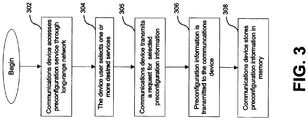
- FIG. 3 is a flowchart illustrating a preconfiguration process according to an embodiment of the present invention. This process may be performed in various communications settings, such as the environment of FIG. 1 .
- this preconfiguration process begins with a step 302.
- a communications device accesses a preconfiguration service through a long-range network.
- this step comprises WCD 102 accessing preconfiguration server 112 through long-range network 104. This may be performed by WCD 102 transmitting one or more messages according to protocols such as HTTP, and WAP, or according to the short messaging service (SMS).
- SMS short messaging service
- the preconfiguration service transmits one or more short-range service selection options to the communications device in the form of one or more messages. These options may be displayed, for example, on the device's touch screen interface as an interactive menu.
- a step 304 the user of the communications device selects one or more desired services. Accordingly, this step comprises the user interacting with the device's user interface to make preconfiguration selections.
- a step 305 is performed.
- the communications device transmits a request to the preconfiguration service (e.g., preconfiguration server 112) for the selected preconfiguration information.
- preconfiguration information is downloaded to the communications device via the long-range network.
- the information transmitted in steps 305 and 306 may be in the form of standardized messages, such as SMS messages, WAP messages, and HTTP messages.
- the communications device stores the preconfiguration information for subsequent use.
- this step comprises WCD 102 storing the received preconfiguration information in memory 208.
- the communications device is ready to efficiently establish short-range service sessions with devices for which it has preconfiguration information.
- FIG. 3 describes a wireless device obtaining preconfiguration information for its own subsequent short-range service sessions
- a first wireless device may preconfigure another wireless device for subsequent short-range service sessions.
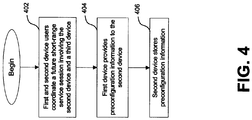
- FIGs. 4 and 5 are flowcharts of preconfiguration processes involving multiple parties according to embodiments of the present invention.
- FIGs. 4 and 5 show preconfiguration processes in which a first device preconfigures a future short-range encounter between a second device and a third device.
- step 402. the users of the first and second devices coordinate a future short-range service session between the second device and the third device. More particularly, step 402 comprises these users arriving at a general agreement or understanding to preconfigure the future short-range encounter.
- Such communications may be performed across communications networks, such as long-range network 104, or an ad-hoc network. Accordingly, the first and second devices may be implemented as the WCD implementation of FIGs. 2A and 2B . Alternatively, such communications may be performed through more traditional means, such as face-to-face conversations or the exchange of paper correspondence.
- a step 404 follows step 402.
- the first device provides preconfiguration information to the second device via a long-range communications network.
- This preconfiguration information may be in the form of one or more standardized (e.g., SMS, WAP, or HTTP) messages.
- the second device stores the preconfiguration information received in step 404.
- this step comprises storing the preconfiguration information in memory 208.
- the second device upon completion of step 406, the second device possesses preconfiguration information so that it may efficiently establish a short-range communications session with the third device.
- FIG. 5 is a flowchart of a process that is similar to the process of FIG. 4 .
- the first device sends preconfiguration information to both the second and third devices. This enables features, such as verification by both the second and third devices that the preconfigured service session is authorized by the first device.
- step 502. the users of the first and second devices coordinate a future short-range service session between the second device and the third device. More particularly, step 502 comprises these users arriving at a general agreement or understanding to preconfigure the future short-range encounter.
- this agreement or understanding may be achieved in various ways involving voice or text communications, which may involve various communications networks or more conventional means of communications.
- a step 504 follows step 502.
- the first device provides preconfiguration information to the second device via a long-range communications network.
- This preconfiguration information may be in the form of one or more standardized (e.g., SMS, WAP, or HTTP) messages.
- the second device stores the preconfiguration information received in step 504.
- this step comprises storing the preconfiguration information in memory 208.
- the first device provides preconfiguration information to the third device via a long-range communications network.
- this preconfiguration information may be in the form of one or more standardized messages.
- the third device stores the preconfiguration information received in step 508 in the same manner as the second device in step 506.
- the second device and the third device possess preconfiguration information so that they may efficiently establish a short-range communications session with each other.
- FIGs. 6 and 7 provide examples of short-range encounters in which a communications device, such as WCD 102, establishes a short-range service session with a remote device. More particularly, FIG. 6 is a flowchart of a conventional short-range encounter in which the communications device does not have preconfiguration information, while FIG. 7 is a flowchart of an efficient short-range encounter according to the present invention in which the communications device utilizes previously received preconfiguration information.
- the conventional short-range encounter of FIG. 6 is described with reference to a WCD (such as WCD 102) and a remote short-range communications device.
- This encounter begins with a step 602 in which the WCD enters communicating range with the remote short range device.
- the WCD and the remote device engage in an inquiry process.
- the WCD learns the identity (or discovers the existence) of the remote device.
- the WCD operates in an inquiry state while the remote device operates in an inquiry scan state.
- the WCD transmits an inquiry packet and the remote device listens for inquiry packets.
- the remote device When the remote device receives the inquiry packet from the WCD, it transmits one or more frequency hop synchronization (FHS) packets, which are received by the WCD.
- the FHS packet(s) allow the WCD to become synchronized with the hop sequence of the remote device.
- the FHS packet(s) enable the WCD to derive information necessary to make a Bluetooth connection with the remote device. This information includes the native clock of the remote device (CLKN), the remote device's Bluetooth address (BD_ADDR), and error correction coding information.
- step 606 the WCD and the remote device engage in a paging process.
- the WCD invites the remote device to join an ad hoc network.
- the paging process results in an unsecured connection being established between the WCD and the remote device.
- step 606 comprises the exchange of various information between the WCD (which is in a paging state) and the remote device (which is in a page scan state).
- the WCD enters the paging state and transmits one or more paging packets.
- These paging packets each include an identification number based on the address of the remote device.
- the remote device (which is in the page scan state) responds to the paging packets by transmitting a packet containing its address.
- the WCD receives this packet from the remote device.
- the WCD transmits a frequency hop synchronization (FHS) packet.
- FHS packet is used to pass information that allows the remote device to synchronize with the frequency hopping sequence of the WCD.
- the remote device Upon receipt of this FHS packet, the remote device transmits a further packet to confirm receipt of the FHS packet.
- a link is formed between the WCD and the remote device and both devices enter into a connection state.
- the WCD operates as a master device and the remote device operates as a slave device.
- the remote device employs the timing and frequency hopping sequence of the WCD.
- the WCD transmits a packet to verify that a link has been set up. The remote device confirms this link by sending a packet to the WCD.
- a master/slave switch is performed.
- this step comprises the remote device transmitting a switch request packet that is received for acceptance by the WCD. If the WCD accepts this switch request, then the WCD will initiate a transition in which transmit timing and frequency-hopping sequences are based on the remote device instead of the WCD. Upon completion of this transition, the remote device becomes the master and the WCD becomes the slave.
- step 606 the paging process of step 606 results in an unsecured connection being established between the WCD and the remote device.
- the WCD and the remote device engage in an authentication process when certain security features are desired. During authentication, the WCD and the remote device verify that they both have the same secret key. This secret key can then be used to effect security features, such as link encryption.
- step 610 may comprise the WCD transmitting a personal identification number (PIN) to the remote device. This PIN "authenticates" the WCD to the remote device.
- PIN personal identification number
- a step 612 the WCD and the remote device engage in a service discovery process.
- the WCD identifies or "discovers" services provided by the remote device.
- this step may include communicating according to the service discovery protocol (SDP). SDP involves the exchange of messages between the WCD and the remote device.
- SDP service discovery protocol
- the remote Bluetooth device stores service discovery information in the form of database records, each including a collection of service attributes that define the services offered by the remote device. That is, each SDP service record includes a collection of service attributes containing various information. For example, attributes may indicate the particular service as well as describe the protocol stack layers that are needed to interact with the service. In addition, attributes may provide descriptive information about the service that is in a format readable by a terminal device's user.
- a step 614 the WCD and the remote device commence a service session in which the WCD utilizes one or more of the services discovered in step 612.
- this step may comprise transmitting service identifier(s) or attribute(s) to the remote device. Such transmissions indicate which service(s) the WCD is interested in initiating.
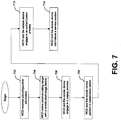
- FIG. 7 is a flowchart of a short-range connection being efficiently established between two devices according to an embodiment of the present invention.
- the two devices are a WCD (such as WCD 102), and a remote short-range communications device.
- This flowchart begins with a step 702.
- the WCD participates in a preconfiguration process, such as the process of FIG. 3 or the process of FIG. 4 .
- step 702 comprises the WCD communicating with a remote device, such as preconfiguration server 112. Through these communications, the WCD receives preconfiguration information for one or more subsequent short-range communication sessions.
- a step 704 the WCD enters communicating range with a remote short range device.
- the WCD and the remote device engage in a paging process, such as the Bluetooth paging process described above with respect to FIG. 6 .
- this step results in a connection being established between the WCD and the remote device.
- this paging process may result in the WCD operating as a master device and the remote device operating as a slave device.
- a master/slave switch is performed. In this step, the roles of the WCD and the remote device are exchanged.
- the WCD and the remote device engage in an authentication process when certain security features are desired.
- This step may comprise the Bluetooth authentication techniques described above with reference to FIG. 6 .
- a step 714 the WCD and the remote device commence a service session in which the WCD utilizes one or more of the services identified through the preconfiguration process performed in 702.
- preconfiguration eliminates the necessity to perform inquiry and service discovery.
- a user may be presented with one or more short-range service selection options during preconfiguration.
- short-range services include printer resources, e-mail, web browsing, telephony, intercom, and radio.
- locations associated with such services may accompany these selection options.
- this preconfiguration information may include various items of information, such as an identifier of the offered service, addresses of one or more remote devices offering this service, and security information.
- preconfiguration information may include an SDP service identifier, one or more BD_ADDRs corresponding to devices offering the service, and security information, such as a PIN or encryption key(s).
- security information such as a PIN or encryption key(s).
- the BD_ADDR is useful in initiating a paging process without first having to perform a remote device inquiry process.
- Security information is useful in streamlining authentication.
- an SDP identifier enables a communications device to efficiently indicate to a remote device which service it would like to initiate.
- preconfiguration information for a service offering includes identifier(s) that indicate one or more locations where the service is offered. This enables a user to known where he can initiate a service session according to the techniques of the present invention.
- FIG. 8 is a diagram illustrating an exchange of information between multiple devices, according an embodiment the present invention.
- FIG. 8 shows a car owner and his friend preconfiguring a short-range Bluetooth connection between the friend and the car owner's car.
- the car is equipped with a Bluetooth and GSM capable device that controls access to the car. More particularly, this Bluetooth device will only allow trusted users operate the car.
- the car owner is a trusted user. However, his friend is not currently a trusted user.
- FIG. 8 shows an exchange of information according to the techniques of the present invention to make the friend a trusted user and grant him access to the car. More particularly, FIG. 8 illustrates a sequence of messages exchanged between the car owner's communication device 802, the friend's device 804, and the car's device 806.
- this sequence begins with a step 820 in which the friend's device 804 initiates a long-range wireless GSM call to the car owner's device 802. During this call, the car owner agrees to loan his car to the friend.
- the car owner sends to the car's device 806 an SMS message containing preconfiguration information across a long-range GSM network.
- This preconfiguration information includes the BD_ADDR of the friend's device 804 and a PIN associated with the friend.
- the car's device 806 adds the friend's device (e.g., its BD_ADDR) to a list of allowed (trusted) users that it maintains.
- a step 824 the car owner sends to the friend's device 804 an SMS message containing preconfiguration information across the long-range GSM network.
- This preconfiguration information includes the BD_ADDR of the car's device 806 and a PIN associated with the car.
- a step 826 follows step 824.
- the friend's device 804 initiates a Bluetooth paging process with the car's device 806.
- this process involves device 804 transmitting the car's BD_ADDR to device 806.
- This paging process results in a Bluetooth connection being established between devices 804 and 806.
- device 804 is the master device
- device 806 is the slave device.
- device 806 checks its list of allowed (trusted) devices and determines that device 804 is in the list.
- a step 828 the car's device 806 initiates a master slave switch by transmitting a request.
- device 804 transmits an FHS packet in a step 830.
- steps 828 and 830 device 806 becomes the master device and device 804 becomes the slave device.
- the car's device 806 transmits a PIN query to verify that the friend is a trusted user.
- the friend's device 804 transmits the PIN received in step 824.
- device 806 determines that device 804 has satisfied three established security criteria for granting access. Namely, device 804 knows the address of device 806, device 804 knows the PIN transmitted in step 824, and device 804 is in the list of allowed devices maintained by device 806. Accordingly, device 806 causes the car's doors to unlock and allows the friend to operate the car.
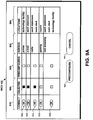
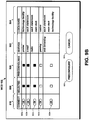
- FIGs. 9A and 9B are views of a user interface for a device, such as WCD 102, according to various embodiments of the present invention. These drawings show that the user interface displays various service selection offerings. For purposes of illustration, these offerings are provided in the context of short-range communications services offered by a cruise ship. However, the features described with reference to these drawings may be employed in other contexts.
- a cruise ship offers various short-range communications services to its passengers.
- a passenger Before boarding the cruise ship, a passenger may use his communications device to access the ship's preconfiguration service.
- this service may be provided by a server that is accessible through long-range communications networks, such as preconfiguration server 112.
- the cruise ship offers printer, e-mail, radio, gaming, and web-browsing services. These services are displayed to the user in a table having multiple rows, where each row includes a column 902 indicating a particular service, a column 904 indicating one or more locations where this service is available, a column 906 indicating whether the user has selected this service for preconfiguration, and a column 908 indicating whether the service has been preconfigured.
- each row includes a column 910 having a connection button for the corresponding service.
- FIG. 9A shows that the user has selected three services for preconfiguration: printer, e-mail, and radio. However, none of these services have been preconfigured. In other words, the user's communications device has not yet received preconfiguration information for these services.
- preconfiguration button 920 When this button is activated, the user's device initiates an exchange of information with the preconfiguration service. This exchange of information may in the form of one or more SMS messages or in the form of requests and responses according to WAP. In this exchange of information, the user's device transmits a request to the preconfiguration service for preconfiguration information corresponding to the selected services. In response, the preconfiguration service transmits this corresponding preconfiguration information. Upon receipt of this information, the display of the user's device is updated to indicate that the device is preconfigured for the selected services, as shown in FIG. 9B .
- the locations associated with the service offerings are also provided in the displays of FIGs. 9A and 9B .
- radio service is provided on the main deck and in each stateroom.
- the user may view his device's preconfiguration settings, as shown in FIG. 9B , to determine which services are available in his present location.
- FIG. 9B shows that when the user is on the main deck, web browsing and radio services are available to him. If the user desires to utilize any of these presently available services, he activates the connect buttons 922 for the corresponding services.
- the techniques of the present invention may be employed in various scenarios.
- One such scenario involves a dating service, which finds matches for people.
- a device such as WCD 102
- a subscriber of this service uploads personal information to the service through a long-range communications network.
- This personal information may indicate the user's particular dating preferences and requirements.
- the service processes this personal information and identifies one or more "matching" people.
- the service sends the user's preconfiguration information corresponding to these matching persons via long-range communications network 104.
- the user may receive a list of favorite party places (e.g., nightclubs) provided by the matching people.
- the user may efficiently establish a short-range communications connection with the matching people's devices. Moreover, when the user is in the favorite party places, he can page that person with the associated known BD_ADDR.
- a further scenario involves a situation where a user may desire his communications device to have limited short-range capabilities. This desire may arise from security concerns. For example, a user may want to prevent his Bluetooth device from entering the inquiry and inquiry scan operational states. This will prevent the device from being discovered by other devices, or discovering other devices. Such limitations may be desirable during an ongoing communications session (either short-range or long-range) where confidential information is being exchanged.
- a user may prefer to establish a short-range communications session with someone familiar.
- Such a communications session may involve, for example, the playing of interactive games during a boring business presentation.
- the user may send preconfiguration information (e.g., his device's BD_ADDR) to his friend across a long-range communications network.
- preconfiguration information e.g., his device's BD_ADDR
- this information may be in a standardized message (e.g., SMS, WAP, or HTTP) format.
- the friend may at this point initiate a Bluetooth paging process with the received BD_ADDR.
- Another scenario involves an airline that provides free information services in the airport to its preferred passengers through short-range wireless communications technologies.
- a preferred passenger visits the airline's password protected web site and sends an SMS message containing preconfiguration information so that the airline's short-range communications devices may efficiently establish short-range communications sessions with the passenger's devices.
- the present invention provides software installation techniques for mobile devices. These techniques may be employed during a short-range device encounter to obtain connectivity software from remote devices, such as Bluetooth access points. For example, in the processes of FIGs. 6 and 7 , these software installation techniques may be employed prior to establishing a service session, as performed in steps 614 and 714.
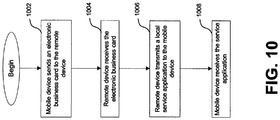
- FIG. 10 is a flowchart of a software installation process according to an embodiment of the present invention.
- This process may be employed when the user of a mobile device, such as WCD 102, knows that he is within the coverage area of a remote short-range device, such as a Bluetooth access point.
- This process begins with a step 1002 in which the mobile device sends an electronic business card (e.g., a vCard) to the remote device.
- an electronic business card e.g., a vCard
- this business card identifies the user.
- the user may know it is within the remote device's coverage area for various reasons. For example, the user may know this from preconfiguration information it previously received according to the techniques described above. However, the user may also determine that it is within the remote device's coverage area by making an inquiry of nearby devices and learning of the remote device by its identifier (such as an access point identifier) received through the inquiry process. In a step 1004, the remote device receives the business card transmitted in step 1002.
- the remote device transmits a local service application to the mobile device.
- This local service application software may be in the form of a Symbian application or a java application.
- the remote device may transmit the local service application software through obex file transfer.
- the mobile device receives the application, where it appears in the user's inbox. At this point, the user can install the software and commence local services with the remote device.
- the present invention also provides software installation techniques that include authentication procedures.
- One such technique is shown in the flowchart of FIG. 11 .
- This flowchart begins with a step 1102, in which the mobile device user sends an SMS message containing a predetermined keyword to an operator service number across a long-range network, such as network 104.
- the user of the mobile device may be informed of the operator service number through audio and/or visual indications when the user enters the service area. Such indications include audio broadcasts and signs.
- the operator system In response to this message, the operator system generates and transmits a passkey to the user in a step 1104.
- This passkey may be decoded into an image format, such as JPEG, and sent to the mobile device via a multimedia messaging service (MMS) message.
- MMS multimedia messaging service
- a step 1106 The user sends the decoded passkey to a remote short-range device, such as a Bluetooth access point.
- the remote device transmits the passkey and a local service application to the mobile device in a step 1108.
- This local service application may be in the form of a Symbian application or a java application.
- the remote device may transmit the local service application software through obex file transfer.
- the mobile device receives the application software, where it appears in the user's inbox. At this point, the user can install the software and commence local services with the remote device.
- the passkey transmitted with the software allows the user to obtain local services. Accordingly, once a connection with the remote device has been established, the remote device requests this passkey to be transmitted by the mobile device. Once the remote device receives this passkey, the mobile device is able to use local services provided by the remote device.
- the present invention is not limited to Bluetooth.
- the present invention can be applied to previous and future developed Bluetooth standards, as well as variations from such Bluetooth standards.
Landscapes
- Engineering & Computer Science (AREA)
- Computer Security & Cryptography (AREA)
- Computer Hardware Design (AREA)
- Theoretical Computer Science (AREA)
- General Engineering & Computer Science (AREA)
- Computer Networks & Wireless Communication (AREA)
- Signal Processing (AREA)
- General Physics & Mathematics (AREA)
- Software Systems (AREA)
- Physics & Mathematics (AREA)
- Computing Systems (AREA)
- Bioethics (AREA)
- General Health & Medical Sciences (AREA)
- Health & Medical Sciences (AREA)
- Mobile Radio Communication Systems (AREA)
- Small-Scale Networks (AREA)
Claims (20)
- Procédé permettant d'établir une session de service local dans un réseau de communication sans fil courte portée, comprenant :la réception d'options de sélection de service sur un réseau longue portée (104), à partir d'un serveur de préconfiguration (112), les options de sélection de service concernant l'établissement de la session de service local avec un dispositif distant (108, 110) dans le réseau de communication sans fil courte portée et comportant une ou plusieurs options de service sans fil courte portée (902) et des identifiants d'emplacement correspondants (904) indiquant un emplacement où une option respective parmi les une ou plusieurs options de service sans fil courte portée est offerte ;la transmission d'une requête au serveur de préconfiguration (112), la requête comportant au moins une option sélectionnée parmi les une ou plusieurs options de service sans fil courte portée ;la réception, à partir du serveur de préconfiguration (112), d'informations de préconfiguration concernant l'option sélectionnée parmi les une ou plusieurs options de service sans fil courte portée ;l'établissement de la session de service local dans le réseau de communication sans fil courte portée en utilisant les informations de préconfiguration reçues, après la sélection d'au moins une option parmi les une ou plusieurs options de service sans fil courte portée ; etl'obtention d'un logiciel d'application de service sans fil courte portée à partir du dispositif distant (108, 110) pour qu'un utilisateur installe ledit logiciel et commence des services locaux avec le dispositif distant.
- Procédé selon la revendication 1, comprenant en outre :
l'envoi d'une requête demandant les informations de préconfiguration sur le réseau longue portée (104). - Procédé selon la revendication 2, dans lequel la requête comporte un identifiant correspondant à la session de service local.
- Procédé selon la revendication 1, dans lequel ladite étape de réception comprend la réception d'un identifiant d'un dispositif de communication sans fil courte portée (108, 110).
- Procédé selon la revendication 1, dans lequel ladite étape de réception comprend la réception d'informations de sécurité.
- Procédé selon la revendication 5, dans lequel les informations de sécurité comprennent un numéro d'identification personnel.
- Procédé selon la revendication 5, dans lequel les informations de sécurité comprennent une clé de cryptage.
- Procédé selon la revendication 1, dans lequel ladite étape de réception comprend la réception d'un identifiant d'un service sans fil courte portée offert.
- Procédé selon la revendication 1, dans lequel ladite étape d'établissement comprend l'établissement d'une connexion avec un dispositif Bluetooth (108).
- Procédé selon la revendication 9, dans lequel le dispositif Bluetooth (108) est un point d'accès offrant la session de service local.
- Dispositif de communication sans fil (102), comprenant :une partie de communication sans fil courte portée (220) permettant de communiquer sur des réseaux de communication sans fil courte portée ;une partie de communication sans fil longue portée (222) permettant de communiquer sur des réseaux de communication longue portée ;une mémoire (208) ; etun processeur (206) configuré pour exécuter des instructions stockées dans la mémoire (208) destinées à :la réception d'options de sélection de service sur un réseau sans fil longue portée (104) à partir d'un serveur de préconfiguration (112), les options de sélection de service concernant l'établissement d'une session de service local avec un dispositif distant (108, 110) dans un réseau de communication sans fil courte portée et comportant une ou plusieurs options de service sans fil courte portée (902) et des identifiants d'emplacement correspondants (904) indiquant un emplacement où une option respective parmi les une ou plusieurs options de service sans fil courte portée est offerte ;la transmission d'une requête au serveur de préconfiguration (112), la requête comportant au moins une option sélectionnée parmi les une ou plusieurs options de service sans fil courte portée ;la réception, à partir du serveur de préconfiguration (112), d'informations de préconfiguration de l'option sélectionnée parmi les une ou plusieurs options de service sans fil courte portée ;l'établissement de la session de service local dans le réseau de communication sans fil courte portée en utilisant les informations de préconfiguration reçues, après la sélection d'au moins une option parmi les une ou plusieurs options de service sans fil courte portée ; etl'obtention d'un logiciel d'application de service sans fil courte portée à partir du dispositif distant (108, 110) pour qu'un utilisateur installe ledit logiciel et commence des services locaux avec le dispositif distant.
- Système permettant d'établir une session de service local dans un réseau de communication sans fil courte portée, comprenant :des moyens (206, 222) destinés à recevoir des options de sélection de service sur un réseau longue portée (104) à partir d'un serveur de préconfiguration (112), les options de sélection de service concernant l'établissement de la session de service local avec un dispositif (108, 110) dans le réseau de communication courte portée et comportant une ou plusieurs options de service sans fil courte portée (902) et des identifiants d'emplacement correspondants (904) indiquant un emplacement où une option respective parmi les une ou plusieurs options de service sans fil courte portée est offerte ;des moyens destinés à transmettre une requête au serveur de préconfiguration (112), la requête comportant au moins une option sélectionnée parmi les une ou plusieurs options de service sans fil courte portée ;des moyens destinés à recevoir à partir du serveur de préconfiguration (112), des informations de préconfiguration concernant l'option sélectionnée parmi les une ou plusieurs options de service sans fil courte portée ;des moyens (206, 220) destinés à établir la session de service local dans le réseau de communication sans fil courte portée en utilisant les informations de préconfiguration reçues, après la sélection d'au moins une option parmi les une ou plusieurs options de service sans fil courte portée ; etdes moyens (206, 220) destinés à obtenir un logiciel d'application de service sans fil courte portée à partir du dispositif (108, 110) pour qu'un utilisateur installe ledit logiciel et commence des services locaux avec le dispositif distant.
- Système selon la revendication 12, dans lequel lesdits moyens de réception (222) comprennent des moyens permettant de recevoir un identifiant d'un dispositif de communication sans fil courte portée distant (108, 110).
- Système selon la revendication 13, dans lequel l'identifiant est une adresse de dispositif Bluetooth.
- Système selon la revendication 12, dans lequel lesdits moyens de réception (206, 222) comprennent des moyens permettant de recevoir des informations de sécurité.
- Système selon la revendication 15, dans lequel les informations de sécurité comprennent un numéro d'identification personnel.
- Système selon la revendication 15, dans lequel les informations de sécurité comprennent une clé de cryptage.
- Système selon la revendication 12, dans lequel lesdits moyens de réception (206, 222) comprennent des moyens permettant de recevoir un identifiant d'un service sans fil courte portée offert.
- Système selon la revendication 12, dans lequel lesdits moyens d'établissement (206, 220) comprennent des moyens permettant d'établir une connexion avec un dispositif Bluetooth (108).
- Système selon la revendication 19, dans lequel le dispositif Bluetooth (108) est un point d'accès offrant la session de service local.
Priority Applications (2)
| Application Number | Priority Date | Filing Date | Title |
|---|---|---|---|
| EP17172963.5A EP3232643B1 (fr) | 2003-06-25 | 2004-06-18 | Méthode et système pour établir des sessions de service à courte portée |
| EP16189518.0A EP3136686A1 (fr) | 2003-06-25 | 2004-06-18 | Méthode et système pour établir des sessions de service à courte portée |
Applications Claiming Priority (2)
| Application Number | Priority Date | Filing Date | Title |
|---|---|---|---|
| US10/602,661 US7158756B2 (en) | 2003-06-25 | 2003-06-25 | Method and system for establishing short-range service sessions |
| US602661 | 2003-06-25 |
Related Child Applications (4)
| Application Number | Title | Priority Date | Filing Date |
|---|---|---|---|
| EP16189518.0A Division-Into EP3136686A1 (fr) | 2003-06-25 | 2004-06-18 | Méthode et système pour établir des sessions de service à courte portée |
| EP16189518.0A Division EP3136686A1 (fr) | 2003-06-25 | 2004-06-18 | Méthode et système pour établir des sessions de service à courte portée |
| EP17172963.5A Division-Into EP3232643B1 (fr) | 2003-06-25 | 2004-06-18 | Méthode et système pour établir des sessions de service à courte portée |
| EP17172963.5A Division EP3232643B1 (fr) | 2003-06-25 | 2004-06-18 | Méthode et système pour établir des sessions de service à courte portée |
Publications (3)
| Publication Number | Publication Date |
|---|---|
| EP1492302A2 EP1492302A2 (fr) | 2004-12-29 |
| EP1492302A3 EP1492302A3 (fr) | 2009-05-20 |
| EP1492302B1 true EP1492302B1 (fr) | 2018-07-25 |
Family
ID=33418639
Family Applications (3)
| Application Number | Title | Priority Date | Filing Date |
|---|---|---|---|
| EP04102807.7A Expired - Lifetime EP1492302B1 (fr) | 2003-06-25 | 2004-06-18 | Méthode et système pour établir des sessions de service à courte portée |
| EP16189518.0A Withdrawn EP3136686A1 (fr) | 2003-06-25 | 2004-06-18 | Méthode et système pour établir des sessions de service à courte portée |
| EP17172963.5A Expired - Lifetime EP3232643B1 (fr) | 2003-06-25 | 2004-06-18 | Méthode et système pour établir des sessions de service à courte portée |
Family Applications After (2)
| Application Number | Title | Priority Date | Filing Date |
|---|---|---|---|
| EP16189518.0A Withdrawn EP3136686A1 (fr) | 2003-06-25 | 2004-06-18 | Méthode et système pour établir des sessions de service à courte portée |
| EP17172963.5A Expired - Lifetime EP3232643B1 (fr) | 2003-06-25 | 2004-06-18 | Méthode et système pour établir des sessions de service à courte portée |
Country Status (4)
| Country | Link |
|---|---|
| US (1) | US7158756B2 (fr) |
| EP (3) | EP1492302B1 (fr) |
| CN (1) | CN100394734C (fr) |
| ES (1) | ES2870916T3 (fr) |
Families Citing this family (60)
| Publication number | Priority date | Publication date | Assignee | Title |
|---|---|---|---|---|
| FR2812509B1 (fr) * | 2000-07-26 | 2002-12-27 | Gemplus Card Int | Procede de reconnaissance securisee entre deux appareils d'un reseau radiofrequence |
| JP3926277B2 (ja) * | 2003-02-17 | 2007-06-06 | 株式会社東芝 | サービス提供装置、サービス提供プログラム及びサービス提供方法 |
| DE10330075B3 (de) * | 2003-07-03 | 2004-10-28 | Siemens Ag | Telekommunikations-Endgerät und Telekommunikationsanordnung |
| US20070276911A1 (en) * | 2003-07-11 | 2007-11-29 | Soujanya Bhumkar | Method and System for Transferring Contact Information and Calendar Events to a Wireless Device Via E-Mail |
| EP1566938A1 (fr) * | 2004-02-18 | 2005-08-24 | Sony International (Europe) GmbH | Appareil d'enregistrement dans un réseau ad-hoc sans fil à bonds multiples |
| JP4670270B2 (ja) * | 2004-06-28 | 2011-04-13 | ソニー株式会社 | 通信システム及び通信装置 |
| US20060083187A1 (en) * | 2004-10-18 | 2006-04-20 | Mobile (R&D) Ltd. | Pairing system and method for wirelessly connecting communication devices |
| US20060126537A1 (en) * | 2004-12-10 | 2006-06-15 | Booth Cory J | System and method to connect devices to a network via a network learning and programming remote control |
| US7359674B2 (en) * | 2005-05-10 | 2008-04-15 | Nokia Corporation | Content distribution & communication system for enhancing service distribution in short range radio environment |
| US7653037B2 (en) * | 2005-09-28 | 2010-01-26 | Qualcomm Incorporated | System and method for distributing wireless network access parameters |
| DE102005053282B4 (de) * | 2005-11-08 | 2012-08-16 | Hewlett-Packard Development Co., L.P. | Einrichtung und Verfahren zum Aufbau einer Kommunikationsverbindung |
| EP1966940B1 (fr) * | 2006-01-31 | 2012-08-15 | Panasonic Corporation | Procédé pour des mises à jour de services sélectives pour des réseaux de communication |
| NZ571374A (en) * | 2006-04-03 | 2012-03-30 | Resonance Holdings Ltd | Methods for determining proximity between radio frequency devices and controlling switches |
| US20070274271A1 (en) * | 2006-05-25 | 2007-11-29 | Motorola, Inc. | Wireless communication device having dual transceivers for network pairing with another device |
| US20070274270A1 (en) * | 2006-05-25 | 2007-11-29 | Motorola, Inc. | Network pairing of wireless communication devices through one or more intermediate devices |
| US8798671B2 (en) * | 2006-07-26 | 2014-08-05 | Motorola Mobility Llc | Dual mode apparatus and method for wireless networking configuration |
| US20080080477A1 (en) * | 2006-10-02 | 2008-04-03 | Nokia Corporation | System and method for connection functionality |
| ES2303464B1 (es) * | 2007-01-19 | 2009-06-04 | Vodafone España, S.A. | Metodo de identificacion, autentificacion y control de cobertura basado en el estandar bluetooth. |
| JP2008193265A (ja) | 2007-02-01 | 2008-08-21 | Canon Inc | 画像処理システム、情報処理装置、画像処理装置及びそれらの制御方法、コンピュータプログラム |
| US20080261617A1 (en) * | 2007-04-22 | 2008-10-23 | Keng-Chung Lin | Mobile wireless apparatus and connection method thereof |
| US20090006846A1 (en) * | 2007-06-27 | 2009-01-01 | Apple Inc. | Bluetooth device as security access key |
| KR101442169B1 (ko) * | 2007-11-27 | 2014-11-03 | 삼성전자주식회사 | 공개키 기반의 블루투스 스마트 키 시스템 및 동작 방법 |
| NZ564196A (en) * | 2007-12-10 | 2010-08-27 | Resonance Holdings Ltd | Electronic lock for security system and key on a wireless device including methods of encoding data |
| US7529542B1 (en) * | 2008-04-21 | 2009-05-05 | International Business Machines Corporation | Method of establishing communication between two or more real world entities and apparatuses performing the same |
| WO2009130796A1 (fr) | 2008-04-22 | 2009-10-29 | Telefonaktiebolaget Lm Ericsson (Publ) | Amorce d'application nfc utilisant gba |
| JP5078736B2 (ja) * | 2008-04-28 | 2012-11-21 | キヤノン株式会社 | 通信装置、通信装置の通信方法、プログラム、記憶媒体 |
| US7936736B2 (en) | 2008-09-08 | 2011-05-03 | Proctor Jr James Arthur | Enforcing policies in wireless communication using exchanged identities |
| US20100087164A1 (en) * | 2008-10-05 | 2010-04-08 | Sony Ericsson Mobile Communications Ab | Wlan set up using phone number identification apparatus and method |
| JP5155821B2 (ja) * | 2008-10-31 | 2013-03-06 | 株式会社東芝 | 無線通信装置および無線通信方法 |
| KR101207178B1 (ko) * | 2008-12-12 | 2012-11-30 | 에스케이플래닛 주식회사 | 다른 이동통신단말기의 인증 정보를 이용하는 종단 단말기에 대한 서비스 제공 시스템, 방법, 서비스 서버, 이동통신단말기, 종단 단말기 및 저장 매체 |
| WO2010090533A2 (fr) * | 2009-01-07 | 2010-08-12 | Resonance Holdings Limited | Système et procédé d'authentification bluetooth |
| US8131217B2 (en) * | 2009-03-31 | 2012-03-06 | Telibrahma Convergent Communications Private Limited | Identification of make and model of communication devices over Bluetooth protocol |
| DE102009054211B4 (de) * | 2009-11-21 | 2020-08-06 | Volkswagen Ag | Verfahren zur automatischen Erstellung einer Kommunikationsverbindung für ein Fahrzeug sowie entsprechend ausgestaltete(s) Kommunikationsverbindung, System und Fahrzeug |
| JP5815924B2 (ja) * | 2010-03-24 | 2015-11-17 | ソニー株式会社 | 情報処理システム、情報処理装置、および管理サーバ |
| IL216072A0 (en) * | 2011-10-31 | 2012-02-29 | Cardo Systems Inc | System and method for managing hardware community |
| US8407759B1 (en) * | 2012-02-24 | 2013-03-26 | Monolith Innovations, LLC | Device, method, and system for secure mobile data storage |
| WO2013189533A1 (fr) * | 2012-06-20 | 2013-12-27 | Nokia Siemens Networks Oy | Communication de dispositif à machine |
| US9258704B2 (en) | 2012-06-27 | 2016-02-09 | Advanced Messaging Technologies, Inc. | Facilitating network login |
| US9167512B2 (en) | 2012-12-13 | 2015-10-20 | Blackberry Limited | Methods and apparatus for use in controlling connections to wireless networks |
| EP2744247B1 (fr) * | 2012-12-13 | 2018-08-01 | BlackBerry Limited | Contrôle de connexions à des réseaux sans fil |
| US9107028B2 (en) | 2012-12-14 | 2015-08-11 | Microsoft Technology Licensing, Llc | Coupling devices using multiple discovery zones |
| US9042829B2 (en) * | 2013-01-04 | 2015-05-26 | Nokia Corporation | Method, apparatus, and computer program product for wireless short-range communication |
| US20140370971A1 (en) * | 2013-06-12 | 2014-12-18 | Wms Gaming, Inc. | Using personal devices to connect network-limited wagering game machines |
| CN103533671A (zh) * | 2013-11-12 | 2014-01-22 | 深圳如果技术有限公司 | 一种蓝牙连接方法、移动终端及车载终端 |
| JP6306866B2 (ja) * | 2013-12-09 | 2018-04-04 | キヤノン株式会社 | 通信装置及びその制御方法、並びにプログラム |
| GB2522022A (en) * | 2014-01-09 | 2015-07-15 | Nokia Technologies Oy | Service Data Provision |
| US10387004B2 (en) * | 2014-04-17 | 2019-08-20 | Jimmy Albert | Real time monitoring of users within a predetermined range and selective receipt of virtual cards |
| US10091310B2 (en) * | 2014-07-17 | 2018-10-02 | Verizon Patent And Licensing Inc. | Method and system for high-latency data collection from sensors |
| DE102014010752A1 (de) * | 2014-07-21 | 2016-01-21 | Wabco Gmbh | Verfahren zum Aufbau einer drahtlosen Verbindung |
| JP6380551B2 (ja) * | 2014-12-01 | 2018-08-29 | 富士通株式会社 | ペアリング管理方法、ペアリング管理プログラム、および端末装置 |
| JP6376015B2 (ja) * | 2015-03-24 | 2018-08-22 | ソニー株式会社 | 情報処理装置、情報処理方法、およびプログラム |
| KR20170016693A (ko) * | 2015-08-04 | 2017-02-14 | 삼성전자주식회사 | 전자 장치 및 전자 장치의 서비스 제공 방법 |
| US10284703B1 (en) * | 2015-08-05 | 2019-05-07 | Netabla, Inc. | Portable full duplex intercom system with bluetooth protocol and method of using the same |
| JP6693218B2 (ja) * | 2016-03-25 | 2020-05-13 | ブラザー工業株式会社 | 近接通信装置のプログラム、携帯装置のプログラム、及びこれらの装置を備えるシステム |
| US10796484B2 (en) * | 2017-06-14 | 2020-10-06 | Anand Babu Chitavadigi | System and method for interactive multimedia and multi-lingual guided tour/panorama tour |
| WO2019083909A1 (fr) * | 2017-10-24 | 2019-05-02 | Antenna Audio, Inc. | Systèmes et procédés pour visites guidées multimédia |
| US10813169B2 (en) * | 2018-03-22 | 2020-10-20 | GoTenna, Inc. | Mesh network deployment kit |
| CN111098797A (zh) * | 2018-10-25 | 2020-05-05 | 上海博泰悦臻电子设备制造有限公司 | 一种车载装置及车辆 |
| US11072310B1 (en) * | 2020-04-15 | 2021-07-27 | GM Global Technology Operations LLC | Method and system to mitigate smart phone battery drainage while using a virtual key to access a vehicle |
| CN116527427A (zh) * | 2023-04-23 | 2023-08-01 | 珠海格力电器股份有限公司 | 远程配网方法及系统 |
Citations (1)
| Publication number | Priority date | Publication date | Assignee | Title |
|---|---|---|---|---|
| WO2001024551A1 (fr) * | 1999-09-29 | 2001-04-05 | Swisscom Mobile Ag | Procede permettant de trouver des membres d'un meme groupe d'interet |
Family Cites Families (10)
| Publication number | Priority date | Publication date | Assignee | Title |
|---|---|---|---|---|
| FI112897B (fi) | 1998-03-03 | 2004-01-30 | Nokia Corp | Menetelmä tiedonsiirtoverkossa ja tiedonsiirtolaite |
| US6766160B1 (en) * | 2000-04-11 | 2004-07-20 | Nokia Corporation | Apparatus, and associated method, for facilitating authentication of communication stations in a mobile communication system |
| US6714797B1 (en) * | 2000-05-17 | 2004-03-30 | Nokia Corporation | System and method for the transfer of digital data to a mobile device |
| GB2364202A (en) * | 2000-06-27 | 2002-01-16 | Nokia Mobile Phones Ltd | Mobile phone for opening locks |
| EP1233570A1 (fr) * | 2001-02-16 | 2002-08-21 | TELEFONAKTIEBOLAGET L M ERICSSON (publ) | Procédé et réseau pour établir une connexion de communication sans fils |
| GB0106681D0 (en) | 2001-03-19 | 2001-05-09 | Philips Electronics Uk Ltd | Arrangement comprising beacon device and portable device |
| US6968178B2 (en) | 2001-04-27 | 2005-11-22 | Hewlett-Packard Development Company, L.P. | Profiles for information acquisition by devices in a wireless network |
| US7715533B2 (en) | 2001-04-27 | 2010-05-11 | Hewlett-Packard Development Company, L.P. | Brokering of information acquisition by devices in a wireless network |
| FI113145B (fi) | 2001-05-03 | 2004-02-27 | Nokia Corp | Laitteen piilottaminen |
| US6845097B2 (en) * | 2001-11-21 | 2005-01-18 | Ixi Mobile (Israel) Ltd. | Device, system, method and computer readable medium for pairing of devices in a short distance wireless network |
-
2003
- 2003-06-25 US US10/602,661 patent/US7158756B2/en not_active Expired - Lifetime
-
2004
- 2004-06-18 EP EP04102807.7A patent/EP1492302B1/fr not_active Expired - Lifetime
- 2004-06-18 ES ES17172963T patent/ES2870916T3/es not_active Expired - Lifetime
- 2004-06-18 EP EP16189518.0A patent/EP3136686A1/fr not_active Withdrawn
- 2004-06-18 EP EP17172963.5A patent/EP3232643B1/fr not_active Expired - Lifetime
- 2004-06-25 CN CNB2004100600774A patent/CN100394734C/zh not_active Expired - Lifetime
Patent Citations (1)
| Publication number | Priority date | Publication date | Assignee | Title |
|---|---|---|---|---|
| WO2001024551A1 (fr) * | 1999-09-29 | 2001-04-05 | Swisscom Mobile Ag | Procede permettant de trouver des membres d'un meme groupe d'interet |
Also Published As
| Publication number | Publication date |
|---|---|
| EP3232643A1 (fr) | 2017-10-18 |
| US20040266347A1 (en) | 2004-12-30 |
| EP1492302A2 (fr) | 2004-12-29 |
| ES2870916T3 (es) | 2021-10-28 |
| EP3232643B1 (fr) | 2021-04-28 |
| CN1578240A (zh) | 2005-02-09 |
| EP3136686A1 (fr) | 2017-03-01 |
| CN100394734C (zh) | 2008-06-11 |
| US7158756B2 (en) | 2007-01-02 |
| EP1492302A3 (fr) | 2009-05-20 |
Similar Documents
| Publication | Publication Date | Title |
|---|---|---|
| EP1492302B1 (fr) | Méthode et système pour établir des sessions de service à courte portée | |
| US7103359B1 (en) | Method and system for access point roaming | |
| US6600902B1 (en) | Multiple link data object conveying method for conveying data objects to wireless stations | |
| US20040014422A1 (en) | Method and system for handovers using service description data | |
| EP1364494B1 (fr) | Authentification de dispositif sans fil à puissance d'émission mutuelle reduite | |
| US7020456B2 (en) | Method and system for authentication of units in a communications network | |
| US8005952B2 (en) | Method for intelligently selecting wireless access point | |
| JP5474135B2 (ja) | 電子装置及び電子装置が実行する方法 | |
| US20070004387A1 (en) | Sharing of services between a mobile computer and a wireless device | |
| WO2001010062A1 (fr) | Procede de lancement d'un dispositif de communication mobile permettant d'executer un message telegraphique | |
| US20050136837A1 (en) | Method and system for detecting and using context in wireless networks | |
| US7529219B2 (en) | System and method for establishing a wireless LAN communication | |
| US8798671B2 (en) | Dual mode apparatus and method for wireless networking configuration | |
| US20060046692A1 (en) | Techniques for establishing secure electronic communication between parties using wireless mobile devices | |
| KR101478207B1 (ko) | 이동통신 단말에서 블루투스를 이용하여 자바푸시를요구하는 기기들을 식별하기 위한 방법 및 장치 | |
| JP2006186941A (ja) | 無線通信装置および無線通信システム | |
| KR100420771B1 (ko) | 블루투스를 이용한 무선 결제 방법 | |
| NO338828B1 (no) | Forbedret løsning for konnektivitet | |
| JP2003348645A (ja) | 複合無線通信システム、及び複合無線通信方法 | |
| Lewis et al. | Smart companion [contextual communication services] |
Legal Events
| Date | Code | Title | Description |
|---|---|---|---|
| PUAI | Public reference made under article 153(3) epc to a published international application that has entered the european phase |
Free format text: ORIGINAL CODE: 0009012 |
|
| AK | Designated contracting states |
Kind code of ref document: A2 Designated state(s): AT BE BG CH CY CZ DE DK EE ES FI FR GB GR HU IE IT LI LU MC NL PL PT RO SE SI SK TR |
|
| AX | Request for extension of the european patent |
Extension state: AL HR LT LV MK |
|
| PUAL | Search report despatched |
Free format text: ORIGINAL CODE: 0009013 |
|
| AK | Designated contracting states |
Kind code of ref document: A3 Designated state(s): AT BE BG CH CY CZ DE DK EE ES FI FR GB GR HU IE IT LI LU MC NL PL PT RO SE SI SK TR |
|
| AX | Request for extension of the european patent |
Extension state: AL HR LT LV MK |
|
| 17P | Request for examination filed |
Effective date: 20090630 |
|
| 17Q | First examination report despatched |
Effective date: 20090918 |
|
| AKX | Designation fees paid |
Designated state(s): AT BE BG CH CY CZ DE DK EE ES FI FR GB GR HU IE IT LI LU MC NL PL PT RO SE SI SK TR |
|
| RAP1 | Party data changed (applicant data changed or rights of an application transferred) |
Owner name: NOKIA CORPORATION |
|
| RAP1 | Party data changed (applicant data changed or rights of an application transferred) |
Owner name: NOKIA TECHNOLOGIES OY |
|
| REG | Reference to a national code |
Ref country code: DE Ref legal event code: R079 Ref document number: 602004052959 Country of ref document: DE Free format text: PREVIOUS MAIN CLASS: H04L0029060000 Ipc: H04W0048140000 |
|
| GRAP | Despatch of communication of intention to grant a patent |
Free format text: ORIGINAL CODE: EPIDOSNIGR1 |
|
| STAA | Information on the status of an ep patent application or granted ep patent |
Free format text: STATUS: GRANT OF PATENT IS INTENDED |
|
| RIC1 | Information provided on ipc code assigned before grant |
Ipc: H04W 88/06 20090101ALN20180115BHEP Ipc: H04W 4/02 20180101ALI20180115BHEP Ipc: H04W 12/04 20090101ALI20180115BHEP Ipc: H04W 8/20 20090101ALN20180115BHEP Ipc: H04L 29/06 20060101ALI20180115BHEP Ipc: H04W 48/14 20090101AFI20180115BHEP Ipc: H04W 8/18 20090101ALN20180115BHEP Ipc: H04W 8/24 20090101ALN20180115BHEP |
|
| INTG | Intention to grant announced |
Effective date: 20180202 |
|
| GRAS | Grant fee paid |
Free format text: ORIGINAL CODE: EPIDOSNIGR3 |
|
| GRAA | (expected) grant |
Free format text: ORIGINAL CODE: 0009210 |
|
| STAA | Information on the status of an ep patent application or granted ep patent |
Free format text: STATUS: THE PATENT HAS BEEN GRANTED |
|
| AK | Designated contracting states |
Kind code of ref document: B1 Designated state(s): AT BE BG CH CY CZ DE DK EE ES FI FR GB GR HU IE IT LI LU MC NL PL PT RO SE SI SK TR |
|
| REG | Reference to a national code |
Ref country code: GB Ref legal event code: FG4D |
|
| REG | Reference to a national code |
Ref country code: CH Ref legal event code: EP |
|
| REG | Reference to a national code |
Ref country code: AT Ref legal event code: REF Ref document number: 1023130 Country of ref document: AT Kind code of ref document: T Effective date: 20180815 |
|
| REG | Reference to a national code |
Ref country code: DE Ref legal event code: R096 Ref document number: 602004052959 Country of ref document: DE |
|
| REG | Reference to a national code |
Ref country code: IE Ref legal event code: FG4D |
|
| REG | Reference to a national code |
Ref country code: NL Ref legal event code: MP Effective date: 20180725 |
|
| PG25 | Lapsed in a contracting state [announced via postgrant information from national office to epo] |
Ref country code: NL Free format text: LAPSE BECAUSE OF FAILURE TO SUBMIT A TRANSLATION OF THE DESCRIPTION OR TO PAY THE FEE WITHIN THE PRESCRIBED TIME-LIMIT Effective date: 20180725 |
|
| REG | Reference to a national code |
Ref country code: AT Ref legal event code: MK05 Ref document number: 1023130 Country of ref document: AT Kind code of ref document: T Effective date: 20180725 |
|
| PG25 | Lapsed in a contracting state [announced via postgrant information from national office to epo] |
Ref country code: BG Free format text: LAPSE BECAUSE OF FAILURE TO SUBMIT A TRANSLATION OF THE DESCRIPTION OR TO PAY THE FEE WITHIN THE PRESCRIBED TIME-LIMIT Effective date: 20181025 Ref country code: SE Free format text: LAPSE BECAUSE OF FAILURE TO SUBMIT A TRANSLATION OF THE DESCRIPTION OR TO PAY THE FEE WITHIN THE PRESCRIBED TIME-LIMIT Effective date: 20180725 Ref country code: AT Free format text: LAPSE BECAUSE OF FAILURE TO SUBMIT A TRANSLATION OF THE DESCRIPTION OR TO PAY THE FEE WITHIN THE PRESCRIBED TIME-LIMIT Effective date: 20180725 Ref country code: GR Free format text: LAPSE BECAUSE OF FAILURE TO SUBMIT A TRANSLATION OF THE DESCRIPTION OR TO PAY THE FEE WITHIN THE PRESCRIBED TIME-LIMIT Effective date: 20181026 Ref country code: FI Free format text: LAPSE BECAUSE OF FAILURE TO SUBMIT A TRANSLATION OF THE DESCRIPTION OR TO PAY THE FEE WITHIN THE PRESCRIBED TIME-LIMIT Effective date: 20180725 Ref country code: PL Free format text: LAPSE BECAUSE OF FAILURE TO SUBMIT A TRANSLATION OF THE DESCRIPTION OR TO PAY THE FEE WITHIN THE PRESCRIBED TIME-LIMIT Effective date: 20180725 |
|
| REG | Reference to a national code |
Ref country code: CH Ref legal event code: PK Free format text: BERICHTIGUNGEN |
|
| RIC2 | Information provided on ipc code assigned after grant |
Ipc: H04W 88/06 20090101ALN20180115BHEP Ipc: H04W 8/18 20090101ALN20180115BHEP Ipc: H04W 8/24 20090101ALN20180115BHEP Ipc: H04W 8/20 20090101ALN20180115BHEP Ipc: H04W 4/02 20180101ALI20180115BHEP Ipc: H04W 12/04 20090101ALI20180115BHEP Ipc: H04L 29/06 20060101ALI20180115BHEP Ipc: H04W 48/14 20090101AFI20180115BHEP |
|
| PG25 | Lapsed in a contracting state [announced via postgrant information from national office to epo] |
Ref country code: ES Free format text: LAPSE BECAUSE OF FAILURE TO SUBMIT A TRANSLATION OF THE DESCRIPTION OR TO PAY THE FEE WITHIN THE PRESCRIBED TIME-LIMIT Effective date: 20180725 |
|
| REG | Reference to a national code |
Ref country code: DE Ref legal event code: R097 Ref document number: 602004052959 Country of ref document: DE |
|
| PG25 | Lapsed in a contracting state [announced via postgrant information from national office to epo] |
Ref country code: CZ Free format text: LAPSE BECAUSE OF FAILURE TO SUBMIT A TRANSLATION OF THE DESCRIPTION OR TO PAY THE FEE WITHIN THE PRESCRIBED TIME-LIMIT Effective date: 20180725 Ref country code: RO Free format text: LAPSE BECAUSE OF FAILURE TO SUBMIT A TRANSLATION OF THE DESCRIPTION OR TO PAY THE FEE WITHIN THE PRESCRIBED TIME-LIMIT Effective date: 20180725 Ref country code: IT Free format text: LAPSE BECAUSE OF FAILURE TO SUBMIT A TRANSLATION OF THE DESCRIPTION OR TO PAY THE FEE WITHIN THE PRESCRIBED TIME-LIMIT Effective date: 20180725 Ref country code: EE Free format text: LAPSE BECAUSE OF FAILURE TO SUBMIT A TRANSLATION OF THE DESCRIPTION OR TO PAY THE FEE WITHIN THE PRESCRIBED TIME-LIMIT Effective date: 20180725 |
|
| PG25 | Lapsed in a contracting state [announced via postgrant information from national office to epo] |
Ref country code: SK Free format text: LAPSE BECAUSE OF FAILURE TO SUBMIT A TRANSLATION OF THE DESCRIPTION OR TO PAY THE FEE WITHIN THE PRESCRIBED TIME-LIMIT Effective date: 20180725 Ref country code: DK Free format text: LAPSE BECAUSE OF FAILURE TO SUBMIT A TRANSLATION OF THE DESCRIPTION OR TO PAY THE FEE WITHIN THE PRESCRIBED TIME-LIMIT Effective date: 20180725 |
|
| PLBE | No opposition filed within time limit |
Free format text: ORIGINAL CODE: 0009261 |
|
| STAA | Information on the status of an ep patent application or granted ep patent |
Free format text: STATUS: NO OPPOSITION FILED WITHIN TIME LIMIT |
|
| 26N | No opposition filed |
Effective date: 20190426 |
|
| PG25 | Lapsed in a contracting state [announced via postgrant information from national office to epo] |
Ref country code: SI Free format text: LAPSE BECAUSE OF FAILURE TO SUBMIT A TRANSLATION OF THE DESCRIPTION OR TO PAY THE FEE WITHIN THE PRESCRIBED TIME-LIMIT Effective date: 20180725 |
|
| PG25 | Lapsed in a contracting state [announced via postgrant information from national office to epo] |
Ref country code: MC Free format text: LAPSE BECAUSE OF FAILURE TO SUBMIT A TRANSLATION OF THE DESCRIPTION OR TO PAY THE FEE WITHIN THE PRESCRIBED TIME-LIMIT Effective date: 20180725 |
|
| REG | Reference to a national code |
Ref country code: CH Ref legal event code: PL |
|
| REG | Reference to a national code |
Ref country code: BE Ref legal event code: MM Effective date: 20190630 |
|
| PG25 | Lapsed in a contracting state [announced via postgrant information from national office to epo] |
Ref country code: TR Free format text: LAPSE BECAUSE OF FAILURE TO SUBMIT A TRANSLATION OF THE DESCRIPTION OR TO PAY THE FEE WITHIN THE PRESCRIBED TIME-LIMIT Effective date: 20180725 |
|
| PG25 | Lapsed in a contracting state [announced via postgrant information from national office to epo] |
Ref country code: IE Free format text: LAPSE BECAUSE OF NON-PAYMENT OF DUE FEES Effective date: 20190618 |
|
| PG25 | Lapsed in a contracting state [announced via postgrant information from national office to epo] |
Ref country code: LU Free format text: LAPSE BECAUSE OF NON-PAYMENT OF DUE FEES Effective date: 20190618 Ref country code: BE Free format text: LAPSE BECAUSE OF NON-PAYMENT OF DUE FEES Effective date: 20190630 Ref country code: LI Free format text: LAPSE BECAUSE OF NON-PAYMENT OF DUE FEES Effective date: 20190630 Ref country code: CH Free format text: LAPSE BECAUSE OF NON-PAYMENT OF DUE FEES Effective date: 20190630 |
|
| PG25 | Lapsed in a contracting state [announced via postgrant information from national office to epo] |
Ref country code: PT Free format text: LAPSE BECAUSE OF FAILURE TO SUBMIT A TRANSLATION OF THE DESCRIPTION OR TO PAY THE FEE WITHIN THE PRESCRIBED TIME-LIMIT Effective date: 20181125 Ref country code: FR Free format text: LAPSE BECAUSE OF NON-PAYMENT OF DUE FEES Effective date: 20190630 |
|
| PG25 | Lapsed in a contracting state [announced via postgrant information from national office to epo] |
Ref country code: CY Free format text: LAPSE BECAUSE OF FAILURE TO SUBMIT A TRANSLATION OF THE DESCRIPTION OR TO PAY THE FEE WITHIN THE PRESCRIBED TIME-LIMIT Effective date: 20180725 |
|
| PG25 | Lapsed in a contracting state [announced via postgrant information from national office to epo] |
Ref country code: HU Free format text: LAPSE BECAUSE OF FAILURE TO SUBMIT A TRANSLATION OF THE DESCRIPTION OR TO PAY THE FEE WITHIN THE PRESCRIBED TIME-LIMIT; INVALID AB INITIO Effective date: 20040618 |
|
| P01 | Opt-out of the competence of the unified patent court (upc) registered |
Effective date: 20230527 |
|
| PGFP | Annual fee paid to national office [announced via postgrant information from national office to epo] |
Ref country code: DE Payment date: 20230502 Year of fee payment: 20 |
|
| PGFP | Annual fee paid to national office [announced via postgrant information from national office to epo] |
Ref country code: GB Payment date: 20230504 Year of fee payment: 20 |
|
| REG | Reference to a national code |
Ref country code: DE Ref legal event code: R071 Ref document number: 602004052959 Country of ref document: DE |
|
| PG25 | Lapsed in a contracting state [announced via postgrant information from national office to epo] |
Ref country code: GB Free format text: LAPSE BECAUSE OF EXPIRATION OF PROTECTION Effective date: 20240617 |
|
| PG25 | Lapsed in a contracting state [announced via postgrant information from national office to epo] |
Ref country code: GB Free format text: LAPSE BECAUSE OF EXPIRATION OF PROTECTION Effective date: 20240617 |