EP1492728B1 - Procede de production d'une saumure d'halogenure - Google Patents
Procede de production d'une saumure d'halogenure Download PDFInfo
- Publication number
- EP1492728B1 EP1492728B1 EP03716990A EP03716990A EP1492728B1 EP 1492728 B1 EP1492728 B1 EP 1492728B1 EP 03716990 A EP03716990 A EP 03716990A EP 03716990 A EP03716990 A EP 03716990A EP 1492728 B1 EP1492728 B1 EP 1492728B1
- Authority
- EP
- European Patent Office
- Prior art keywords
- fluid
- water
- alkali
- gal
- suspended solids
- Prior art date
- Legal status (The legal status is an assumption and is not a legal conclusion. Google has not performed a legal analysis and makes no representation as to the accuracy of the status listed.)
- Expired - Lifetime
Links
- 239000012267 brine Substances 0.000 title claims description 42
- 150000004820 halides Chemical class 0.000 title claims description 42
- HPALAKNZSZLMCH-UHFFFAOYSA-M sodium;chloride;hydrate Chemical compound O.[Na+].[Cl-] HPALAKNZSZLMCH-UHFFFAOYSA-M 0.000 title claims description 42
- 238000004519 manufacturing process Methods 0.000 title claims description 19
- 239000012530 fluid Substances 0.000 claims description 75
- 238000000034 method Methods 0.000 claims description 59
- 239000003638 chemical reducing agent Substances 0.000 claims description 38
- XLYOFNOQVPJJNP-UHFFFAOYSA-N water Substances O XLYOFNOQVPJJNP-UHFFFAOYSA-N 0.000 claims description 38
- WKBOTKDWSSQWDR-UHFFFAOYSA-N Bromine atom Chemical compound [Br] WKBOTKDWSSQWDR-UHFFFAOYSA-N 0.000 claims description 36
- GDTBXPJZTBHREO-UHFFFAOYSA-N bromine Substances BrBr GDTBXPJZTBHREO-UHFFFAOYSA-N 0.000 claims description 36
- 229910052794 bromium Inorganic materials 0.000 claims description 36
- 239000003513 alkali Substances 0.000 claims description 35
- QGZKDVFQNNGYKY-UHFFFAOYSA-N Ammonia Chemical group N QGZKDVFQNNGYKY-UHFFFAOYSA-N 0.000 claims description 34
- 229910052736 halogen Inorganic materials 0.000 claims description 33
- 150000002367 halogens Chemical class 0.000 claims description 33
- 239000007787 solid Substances 0.000 claims description 28
- 229910021529 ammonia Inorganic materials 0.000 claims description 16
- 239000010953 base metal Substances 0.000 claims description 16
- 238000006243 chemical reaction Methods 0.000 claims description 16
- QTBSBXVTEAMEQO-UHFFFAOYSA-N Acetic acid Natural products CC(O)=O QTBSBXVTEAMEQO-UHFFFAOYSA-N 0.000 claims description 13
- 235000008733 Citrus aurantifolia Nutrition 0.000 claims description 13
- 235000011941 Tilia x europaea Nutrition 0.000 claims description 13
- 239000004571 lime Substances 0.000 claims description 13
- 239000013535 sea water Substances 0.000 claims description 12
- ZAMOUSCENKQFHK-UHFFFAOYSA-N Chlorine atom Chemical compound [Cl] ZAMOUSCENKQFHK-UHFFFAOYSA-N 0.000 claims description 10
- 239000000460 chlorine Substances 0.000 claims description 10
- 229910052801 chlorine Inorganic materials 0.000 claims description 10
- 238000000926 separation method Methods 0.000 claims description 10
- 150000005325 alkali earth metal hydroxides Chemical class 0.000 claims description 8
- 229910000287 alkaline earth metal oxide Inorganic materials 0.000 claims description 8
- 229910000000 metal hydroxide Inorganic materials 0.000 claims description 8
- 150000004692 metal hydroxides Chemical class 0.000 claims description 8
- 229910044991 metal oxide Inorganic materials 0.000 claims description 8
- 150000004706 metal oxides Chemical class 0.000 claims description 8
- 229910052751 metal Inorganic materials 0.000 claims description 7
- 239000002184 metal Substances 0.000 claims description 7
- 239000002351 wastewater Substances 0.000 claims description 7
- IKHGUXGNUITLKF-UHFFFAOYSA-N Acetaldehyde Chemical group CC=O IKHGUXGNUITLKF-UHFFFAOYSA-N 0.000 claims description 6
- XEEYBQQBJWHFJM-UHFFFAOYSA-N Iron Chemical compound [Fe] XEEYBQQBJWHFJM-UHFFFAOYSA-N 0.000 claims description 6
- PXHVJJICTQNCMI-UHFFFAOYSA-N Nickel Chemical compound [Ni] PXHVJJICTQNCMI-UHFFFAOYSA-N 0.000 claims description 6
- 150000008044 alkali metal hydroxides Chemical class 0.000 claims description 6
- CPELXLSAUQHCOX-UHFFFAOYSA-M Bromide Chemical compound [Br-] CPELXLSAUQHCOX-UHFFFAOYSA-M 0.000 claims description 5
- 230000005484 gravity Effects 0.000 claims description 5
- 239000008399 tap water Substances 0.000 claims description 5
- 235000020679 tap water Nutrition 0.000 claims description 5
- ZCYVEMRRCGMTRW-UHFFFAOYSA-N 7553-56-2 Chemical compound [I] ZCYVEMRRCGMTRW-UHFFFAOYSA-N 0.000 claims description 3
- OYPRJOBELJOOCE-UHFFFAOYSA-N Calcium Chemical compound [Ca] OYPRJOBELJOOCE-UHFFFAOYSA-N 0.000 claims description 3
- VEXZGXHMUGYJMC-UHFFFAOYSA-M Chloride anion Chemical compound [Cl-] VEXZGXHMUGYJMC-UHFFFAOYSA-M 0.000 claims description 3
- VYZAMTAEIAYCRO-UHFFFAOYSA-N Chromium Chemical compound [Cr] VYZAMTAEIAYCRO-UHFFFAOYSA-N 0.000 claims description 3
- RYGMFSIKBFXOCR-UHFFFAOYSA-N Copper Chemical compound [Cu] RYGMFSIKBFXOCR-UHFFFAOYSA-N 0.000 claims description 3
- FYYHWMGAXLPEAU-UHFFFAOYSA-N Magnesium Chemical compound [Mg] FYYHWMGAXLPEAU-UHFFFAOYSA-N 0.000 claims description 3
- HCHKCACWOHOZIP-UHFFFAOYSA-N Zinc Chemical compound [Zn] HCHKCACWOHOZIP-UHFFFAOYSA-N 0.000 claims description 3
- 229910052782 aluminium Inorganic materials 0.000 claims description 3
- XAGFODPZIPBFFR-UHFFFAOYSA-N aluminium Chemical compound [Al] XAGFODPZIPBFFR-UHFFFAOYSA-N 0.000 claims description 3
- 229910052793 cadmium Inorganic materials 0.000 claims description 3
- BDOSMKKIYDKNTQ-UHFFFAOYSA-N cadmium atom Chemical compound [Cd] BDOSMKKIYDKNTQ-UHFFFAOYSA-N 0.000 claims description 3
- 229910052791 calcium Inorganic materials 0.000 claims description 3
- 239000011575 calcium Substances 0.000 claims description 3
- 229910052804 chromium Inorganic materials 0.000 claims description 3
- 239000011651 chromium Substances 0.000 claims description 3
- 229910017052 cobalt Inorganic materials 0.000 claims description 3
- 239000010941 cobalt Substances 0.000 claims description 3
- GUTLYIVDDKVIGB-UHFFFAOYSA-N cobalt atom Chemical compound [Co] GUTLYIVDDKVIGB-UHFFFAOYSA-N 0.000 claims description 3
- 229910052802 copper Inorganic materials 0.000 claims description 3
- 239000010949 copper Substances 0.000 claims description 3
- 229910052740 iodine Inorganic materials 0.000 claims description 3
- 239000011630 iodine Substances 0.000 claims description 3
- 229910052742 iron Inorganic materials 0.000 claims description 3
- 229910052749 magnesium Inorganic materials 0.000 claims description 3
- 239000011777 magnesium Substances 0.000 claims description 3
- WPBNNNQJVZRUHP-UHFFFAOYSA-L manganese(2+);methyl n-[[2-(methoxycarbonylcarbamothioylamino)phenyl]carbamothioyl]carbamate;n-[2-(sulfidocarbothioylamino)ethyl]carbamodithioate Chemical compound [Mn+2].[S-]C(=S)NCCNC([S-])=S.COC(=O)NC(=S)NC1=CC=CC=C1NC(=S)NC(=O)OC WPBNNNQJVZRUHP-UHFFFAOYSA-L 0.000 claims description 3
- 229910052759 nickel Inorganic materials 0.000 claims description 3
- 238000004064 recycling Methods 0.000 claims description 3
- 229910052712 strontium Inorganic materials 0.000 claims description 3
- CIOAGBVUUVVLOB-UHFFFAOYSA-N strontium atom Chemical compound [Sr] CIOAGBVUUVVLOB-UHFFFAOYSA-N 0.000 claims description 3
- 229910052725 zinc Inorganic materials 0.000 claims description 3
- 239000011701 zinc Substances 0.000 claims description 3
- IKHGUXGNUITLKF-XPULMUKRSA-N acetaldehyde Chemical compound [14CH]([14CH3])=O IKHGUXGNUITLKF-XPULMUKRSA-N 0.000 claims description 2
- 125000000218 acetic acid group Chemical group C(C)(=O)* 0.000 claims description 2
- 239000000047 product Substances 0.000 description 15
- 239000002253 acid Substances 0.000 description 10
- 229910001622 calcium bromide Inorganic materials 0.000 description 10
- WGEFECGEFUFIQW-UHFFFAOYSA-L calcium dibromide Chemical compound [Ca+2].[Br-].[Br-] WGEFECGEFUFIQW-UHFFFAOYSA-L 0.000 description 10
- WSFSSNUMVMOOMR-UHFFFAOYSA-N Formaldehyde Chemical compound O=C WSFSSNUMVMOOMR-UHFFFAOYSA-N 0.000 description 9
- 239000000203 mixture Substances 0.000 description 9
- -1 halide acids Chemical class 0.000 description 7
- 238000001816 cooling Methods 0.000 description 5
- 239000000243 solution Substances 0.000 description 5
- 238000010923 batch production Methods 0.000 description 4
- AXCZMVOFGPJBDE-UHFFFAOYSA-L calcium dihydroxide Chemical compound [OH-].[OH-].[Ca+2] AXCZMVOFGPJBDE-UHFFFAOYSA-L 0.000 description 4
- 239000000920 calcium hydroxide Substances 0.000 description 4
- 235000011116 calcium hydroxide Nutrition 0.000 description 4
- 229910001861 calcium hydroxide Inorganic materials 0.000 description 4
- 239000002826 coolant Substances 0.000 description 4
- 238000001704 evaporation Methods 0.000 description 4
- 230000008020 evaporation Effects 0.000 description 4
- 239000007788 liquid Substances 0.000 description 4
- 229910001509 metal bromide Inorganic materials 0.000 description 4
- 239000002994 raw material Substances 0.000 description 4
- VHUUQVKOLVNVRT-UHFFFAOYSA-N Ammonium hydroxide Chemical compound [NH4+].[OH-] VHUUQVKOLVNVRT-UHFFFAOYSA-N 0.000 description 3
- KWYUFKZDYYNOTN-UHFFFAOYSA-M Potassium hydroxide Chemical compound [OH-].[K+] KWYUFKZDYYNOTN-UHFFFAOYSA-M 0.000 description 3
- HEMHJVSKTPXQMS-UHFFFAOYSA-M Sodium hydroxide Chemical compound [OH-].[Na+] HEMHJVSKTPXQMS-UHFFFAOYSA-M 0.000 description 3
- 235000011114 ammonium hydroxide Nutrition 0.000 description 3
- 239000007795 chemical reaction product Substances 0.000 description 3
- 238000002156 mixing Methods 0.000 description 3
- 238000003860 storage Methods 0.000 description 3
- LYCAIKOWRPUZTN-UHFFFAOYSA-N Ethylene glycol Chemical compound OCCO LYCAIKOWRPUZTN-UHFFFAOYSA-N 0.000 description 2
- 230000015572 biosynthetic process Effects 0.000 description 2
- 238000010924 continuous production Methods 0.000 description 2
- 238000005553 drilling Methods 0.000 description 2
- 238000001914 filtration Methods 0.000 description 2
- 239000012467 final product Substances 0.000 description 2
- 239000007789 gas Substances 0.000 description 2
- 239000000463 material Substances 0.000 description 2
- 238000002360 preparation method Methods 0.000 description 2
- UXVMQQNJUSDDNG-UHFFFAOYSA-L Calcium chloride Chemical compound [Cl-].[Cl-].[Ca+2] UXVMQQNJUSDDNG-UHFFFAOYSA-L 0.000 description 1
- UFHFLCQGNIYNRP-UHFFFAOYSA-N Hydrogen Chemical compound [H][H] UFHFLCQGNIYNRP-UHFFFAOYSA-N 0.000 description 1
- CPELXLSAUQHCOX-UHFFFAOYSA-N Hydrogen bromide Chemical compound Br CPELXLSAUQHCOX-UHFFFAOYSA-N 0.000 description 1
- 150000007513 acids Chemical class 0.000 description 1
- 150000003819 basic metal compounds Chemical class 0.000 description 1
- 239000001110 calcium chloride Substances 0.000 description 1
- 229910001628 calcium chloride Inorganic materials 0.000 description 1
- 238000002425 crystallisation Methods 0.000 description 1
- 230000008025 crystallization Effects 0.000 description 1
- 238000010790 dilution Methods 0.000 description 1
- 239000012895 dilution Substances 0.000 description 1
- 239000000428 dust Substances 0.000 description 1
- 239000000839 emulsion Substances 0.000 description 1
- 239000000706 filtrate Substances 0.000 description 1
- 239000004572 hydraulic lime Substances 0.000 description 1
- 229910052739 hydrogen Inorganic materials 0.000 description 1
- 239000001257 hydrogen Substances 0.000 description 1
- WGCNASOHLSPBMP-UHFFFAOYSA-N hydroxyacetaldehyde Natural products OCC=O WGCNASOHLSPBMP-UHFFFAOYSA-N 0.000 description 1
- 238000012423 maintenance Methods 0.000 description 1
- 229910001507 metal halide Inorganic materials 0.000 description 1
- 150000005309 metal halides Chemical class 0.000 description 1
- 150000002739 metals Chemical class 0.000 description 1
- 238000012986 modification Methods 0.000 description 1
- 230000004048 modification Effects 0.000 description 1
- 238000011017 operating method Methods 0.000 description 1
- 230000003647 oxidation Effects 0.000 description 1
- 238000007254 oxidation reaction Methods 0.000 description 1
- 230000033116 oxidation-reduction process Effects 0.000 description 1
- 238000012545 processing Methods 0.000 description 1
- 238000005086 pumping Methods 0.000 description 1
- 239000002002 slurry Substances 0.000 description 1
- 239000000126 substance Substances 0.000 description 1
- 238000012360 testing method Methods 0.000 description 1
- 239000004753 textile Substances 0.000 description 1
Images
Classifications
-
- C—CHEMISTRY; METALLURGY
- C01—INORGANIC CHEMISTRY
- C01D—COMPOUNDS OF ALKALI METALS, i.e. LITHIUM, SODIUM, POTASSIUM, RUBIDIUM, CAESIUM, OR FRANCIUM
- C01D3/00—Halides of sodium, potassium or alkali metals in general
- C01D3/04—Chlorides
-
- C—CHEMISTRY; METALLURGY
- C01—INORGANIC CHEMISTRY
- C01D—COMPOUNDS OF ALKALI METALS, i.e. LITHIUM, SODIUM, POTASSIUM, RUBIDIUM, CAESIUM, OR FRANCIUM
- C01D3/00—Halides of sodium, potassium or alkali metals in general
- C01D3/10—Bromides
-
- C—CHEMISTRY; METALLURGY
- C01—INORGANIC CHEMISTRY
- C01D—COMPOUNDS OF ALKALI METALS, i.e. LITHIUM, SODIUM, POTASSIUM, RUBIDIUM, CAESIUM, OR FRANCIUM
- C01D3/00—Halides of sodium, potassium or alkali metals in general
- C01D3/12—Iodides
-
- C—CHEMISTRY; METALLURGY
- C01—INORGANIC CHEMISTRY
- C01F—COMPOUNDS OF THE METALS BERYLLIUM, MAGNESIUM, ALUMINIUM, CALCIUM, STRONTIUM, BARIUM, RADIUM, THORIUM, OR OF THE RARE-EARTH METALS
- C01F11/00—Compounds of calcium, strontium, or barium
- C01F11/20—Halides
- C01F11/34—Bromides
Definitions
- the present invention relates to a method for producing a halide brine. More specifically the invention relates to a method for producing a halide brine in a conventional reactor.
- Halide brines are commonly used in industry for various applications, drilling fluids, textile treatment, photographic emulsion, cooling systems, deicing, and dust control, for example.
- the production of halide brines typically required production of intermediate halide acids.
- the production of halide acid from halogen and hydrogen requires expensive equipment.
- intermediate halide acids are formed. These intermediate acids can be corrosive and possibly produce volatile gases thereby requiring expensive equipment for handling and maintenance. Thus the formation of intermediate halide acids during the production of metal halide brines requires expensive capital equipment.
- the present invention relates to an inexpensive and simple method for rapidly manufacturing halide brines in large commercial quantities using conventional equipment.
- an alkali and a reducing agent are added to an aqueous fluid having a density greater than 8.30 lb/gal. (0.994 kg/L), water, sea water or waste water for example.
- a reducing agent can be in liquid form or in gaseous state that goes into solution when added to the aqueous fluid.
- the resulting liquid is contacted with a halogen to form a halide brine.
- Typical halogens used in the process of making the more useful brines are chlorine and bromine to produce the commonly used chloride and bromide brines. This invention eliminates the additional costs that are associated with the production of intermediate halide acids.
- the aqueous fluid comprises water from various sources, essentially pure water, tap water, sea water, river water, pond water, standing water, waste water, brackish water, or combinations thereof.
- the water is a clear water.
- the alkali can be selected from alkali metal hydroxides, alkali earth metal oxides, alkali earth metal hydroxides, base metal oxides, base metal hydroxides, and a combination thereof.
- the metal source of the base metal oxides and base metal hydroxides is selected from iron, zinc, copper, nickel, cadmium, cobalt, aluminum, manganese, chromium, and combinations thereof.
- the earth metal source of the alkali earth metal oxides and alkali earth metal hydroxides can be selected from calcium, magnesium, strontium and combinations thereof.
- the reducing agent can be ammonia.
- the reducing agent can be acetaldehyde.
- An alternative reducing agent can be acetic acid.
- the method of this invention takes place in a conventional reactor, wherein a halogen is converted directly to a halide brine eliminating the need for producing an intermediate halide acid.
- solids are present in the initial aqueous fluid stream such as waste waters.
- the preferred method comprises a further step of separating suspended solids from the beginning fluid prior to entering the reactor.
- the step of separating suspended solids from the final fluid can occur at the end of the reaction process.
- separation of suspended solids occurs both prior to the aqueous fluid entering the reactor as well as after the reacted fluid leaves the reactor.
- the separation of suspended solids from the fluid can be performed in a variety of separators including a gravity filter, a clarifier, a centrifuge, a vacuum filter or a pressure filter. Any suspended solids within the final halide brine fluid can be separated from the fluid after the halogen has reacted with the reaction fluids by know separation techniques.
- An alternative method for producing halide brine comprises adding an alkali to an aqueous fluid having a density greater than 8.30 lb/gal. (0.994 kg/L.) A reducing agent is then added to the resulting fluid and the combined mixture of alkali, reducing agent and aqueous fluid is contacted with a halogen to form a halide brine.
- the reducing agent is added first to the aqueous fluid and then the alkali is charged into the reactor.
- the resulting fluid is contacted with halogen to form a halide brine.
- these steps are performed in a conventional reactor.
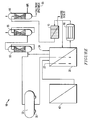
- the Figure illustrates a schematic of a halogen brine reactor system.
- the present invention relates to an innovative method for the direct conversion of a halogen to a halide brine in a conventional reactor such as a simple mixing tank.
- a conventional reactor such as a simple mixing tank.
- the stage of producing intermediate halide acids is eliminated thereby eliminating the necessity of expensive equipment.
- the method of this invention can be used to produce a variety of halide brines, calcium chloride or calcium bromide for example, using a conventional reactor, from various halogens including but not limited to bromine, chlorine and iodine.
- the description of the schematic refers to the production of calcium bromide.
- aqueous fluid 22 having a density greater than 8.30 lb/gal. (0.994 kg/L), water for example, is charged into a conventional reactor 20.
- the aqueous fluid can comprise water from various sources, essentially pure water, tap water, sea water, river water, pond water, standing water, waste water from process plants, brackish water, or combinations thereof.
- Sea water is one preferred aqueous fluid, particularly in the formation of high density brines used for drilling fluids.
- the aqueous fluid is a clear water. If the water is not clear, a separator can be used to separate suspended solids from the beginning fluid prior to entering the reactor 20. Alternatively, separating suspended solids from the final fluid can occur at the end of the reaction process or, if necessary because of "dirty" water, both prior to the reaction and after the halogen brine is produced.
- an alkali 24 (lime is used in the example depicted in the schematic) is added to the aqueous fluid 22 in a conventional reactor.
- the alkali 24 can be selected from alkali metal hydroxides, alkali earth metal oxides, alkali earth metal hydroxides, base metal oxides, base metal hydroxides, and combinations thereof.
- the alkali metal hydroxides can be selected from sodium hydroxide and potassium hydroxide.
- the metal source of the base metal oxides and base metal hydroxides is selected from iron, zinc, copper, nickel, cadmium, cobalt, aluminum, manganese, chromium, and combinations thereof.
- the metal source of the alkali earth metal oxides and alkali earth metal hydroxides can be selected from calcium, magnesium, strontium, and combinations thereof.
- the alkali is in an aqueous fluid form, a lime slurry for example, as shown in the schematic.
- a reducing agent 42 ammonia for example, is added to the aqueous fluid 22 in the reactor 20, either after the addition of the alkali or simultaneously along with the alkali 24.
- the reducing agent 42 can be acetaldehyde.
- Another alternative reducing agent is acetic acid.
- the reducing agent can be in liquid form or a gaseous form that enters into solution upon being charged to the conventional reactor.
- the reducing agent is in a liquid form, such as aqueous ammonia.
- halogen 32 is charged from a storage tank 30 to the conventional reactor 20 to combine with the alkali 24 and reducing agent 42 to form a halide brine 65, calcium bromide for example.
- Typical halogens used in the process of making the more useful brines are chlorine and bromine to produce the commonly used chloride and bromide brines.
- the halogen is added until the resulting fluid has a density of at least 8.5 lb/gal (1.02 kg/L)
- the selection of the specific alkali, reducing agent and halogen depends on the final required density of the halide brine.
- the choice of aqueous fluid, alkali, reducing agent, and halogen, as well as, the concentrations of each of these chemicals in the starting solutions is determined by the required density of the final product.
- seawater readily available in offshore operations, comprises a density greater than tap water, it is a good aqueous fluid source to produce brine of final density greater than 9.0 lb/gal. (1.08 kg/L.)
- the reactor used in this method is a conventional reactor.
- the halogen used is chlorine.
- the mixture of aqueous fluid, alkali, and reducing agent in the conventional reactor is contacted with chlorine to increase the density to at least 8.5 lb/gal. (1.02 kg/L).
- the fluid is contacted with bromine to increase the density to at least 10.0 lb/gal. (1.20 kg/L).
- any suspended solids can be separated from the resulting fluid by conventional means.
- the halogen used is bromine.
- the alkali can be lime added to a water having a density greater than 8.30 lb/gal. (0.994 kg/L.)
- the reducing agent selected for this process is ammonia.
- the mixture of water lime and ammonia in the conventional reactor is contacted with bromine to increase the density to at least 10.0 lb/gal. (1.20 kg/L).
- the fluid is contacted with bromine to increase the density to at least 10.0 lb/gal. (1.20 kg/L). Again, any suspended solids can be separated from the resulting fluid by conventional means.
- both the bromine storage tank 30 and the reactor 20 vent to one or more scrubbers 50, 55 to scrub or remove any small amounts of free gases that may occur, bromine or ammonia, for example.
- a heat exchanger 80 is used to cool the reaction fluids so that optimum temperatures are maintained to produce the desired halide brine and minimize evaporation of bromine or chlorine.
- the temperature can easily increase to higher than 150°F (65.6°C) instantaneously.
- the method of producing a halide brine comprises adding an alkali to an aqueous fluid having a density greater than 8.30 lb/gal. (0.994 kg/L).
- the alkali is selected from alkali metal hydroxides, alkali earth metal oxides, alkali earth metal hydroxides, base metal oxides, base metal hydroxides, and a combination thereof.
- a reducing agent is then added while maintaining the temperature at 68°F (20°C) or above; the reducing agent is selected from a group consisting of ammonia, acetaldehyde, acetic acid, and combinations thereof.
- the fluid resulting from mixture of alkali, aqueous fluid having a density greater than 8.30 lb/gal., and reducing agent is contacted with a halogen to increase the density to at least 8.5 Ib/gal. (1.02 kg/L). As in the previously described embodiments, this reaction is performed in a conventional reactor.
- the method of producing halide brines according to this invention can be a batch process or a continuous process.
- halide brine production is a batch process
- predetermined amounts of raw materials are added into the reactor to produce a fixed amount of the halide brine, calcium bromide for example.
- the product is removed from the reactor before adding the raw materials for the next batch.
- additional lime 24 may be added as bromine or other halogen is charged.
- the additional alkali 24 is carefully added to control the reaction so that substantially all the halogen is consumed within the reactor.
- the charge of alkali, reducing agent, halogen and additional alkali 24 is carefully monitored and controlled throughout the process for the same reason.
- both the pH and the oxidation-reduction potential (ORP) are also monitored so that the end product is within the target pH and ORP for the halide brine being produced.
- suspended solids are present in both the initial aqueous fluid stream such as dirt, in waste waters, as well as, the end product which may also have unconsumed alkali or un-reacted materials.
- One preferred method comprises the separation of suspended solids both prior to the aqueous fluid entering the reactor, as well as, after the reacted fluid leaves the reactor.
- the separation of suspended solids from the fluid can be performed in various separators 70 including a gravity filter, a clarifier, a centrifuge, a vacuum filter or a pressure filter.
- the resulting halide brine 65 is cooled down in the heat exchanger 80 and then residual solids are removed using a separator or filter 70 prior to being sent to a stripper 60 to remove any residual ammonia.
- calcium bromide is produced by combining hydrated lime and ammonia in an aqueous fluid and then reacting elemental bromine with the resulting mixture.
- the reactions that take place are exothermic reactions generating large amounts of heat. This excess heat can be removed by a heat exchanger system.
- lime and ammonia are added to an aqueous fluid having a density greater than 8.30 lb/gal. (0.994 kg/L).
- bromine is charged into the reactor 20 to increase the density to at least 9.0 lb/gal. (1.08 kg/L).
- Additional lime may be added to consume excess bromine and the reaction fluids may be cooled down by recycling them through a heat exchanger.
- any suspended solids are separated from the desired end product, calcium bromide, by a filter and stripped of any excess ammonia in a stripper.
- an alkali is charged to sea water in a conventional reactor such as a mixing tank.
- a reducing agent can be charged to the reactor and the resulting mixture of alkali, reducing agent and sea water contacted with a halogen to increase the density to at least 9.0 lb/gal. (1.08 kg/L). Any suspended solids can be separated from the resulting halide brine.
- Calcium bromide production in this test was a batch process, meaning that predetermined amounts of raw materials were added to the reactor in a stepwise fashion to produce a fixed amount of calcium bromide. When the reactions were complete, the product was removed from the reactor before adding the raw materials for the next batch.
- the bromine scrubber system was checked to be running.
- the damper valve to the reactor vent was opened to the scrubber system.
- the hydrated lime controller was set for 9,310 lb (4,232 kg) hydrated lime addition.
- the rotary valve speed control was set at 6 and the conveyer speed control at 6-7.
- the bromine addition rate was adjusted to maintain batch color of light yellow with excess lime present. When the color went to red, the bromine pump was shut off and the lime charge was allowed to catch up to the bromine charge.
- the reactor temperature was maintained at 185°F-210°F (85°C-100°C) by pumping the reactor contents through the heat exchanger.
- 210°F 100.0°C
- the bromine addition pump was shut off.
- the bromine pump was turned back on when the temperature dropped below 195°F (90.6°C).
- Hydrated lime was added to the reactor to bring the pH to 7.0-8.0 (10:1 dilution). About 20 min after adding lime, a sample was taken from the reactor to determine if the filtrate appeared clear white to slightly cloudy white and did not have an ammonia odor. Also, no yellow color was observed and the oxidation/reduction potential (ORP) was less than 200 mV. The final product was within its target pH and specific gravity range.
- the heat exchanger was run until product temperature dropped to 150°F (65.6°C). If the product had required evaporation, the solution would have been pumped to the evaporator tank without further cooling.
- the heat exchanger system was turned off, first shutting the raw product flow from tank to the heat exchanger by closing the valve next to reactor.
- the coolant flow to the heat exchangers was turned off by turning pump off when the coolant glycol reached ambient temperature. Then the cooling fans were turned off.
- the target density for filtered and cooled sample from the reactor was obtained.
Landscapes
- Chemical & Material Sciences (AREA)
- Organic Chemistry (AREA)
- Inorganic Chemistry (AREA)
- Engineering & Computer Science (AREA)
- Materials Engineering (AREA)
- Life Sciences & Earth Sciences (AREA)
- Geology (AREA)
- Treatment Of Water By Oxidation Or Reduction (AREA)
- Organic Low-Molecular-Weight Compounds And Preparation Thereof (AREA)
- Removal Of Specific Substances (AREA)
Claims (29)
- Procédé de production d'une solution saline d'halogénure, comprenant :(a) l'addition d'un alcalin à un fluide aqueux ayant une densité supérieure à 8,30 livres/gallon (0,994 kg/litre) ;(b) l'addition d'un agent réducteur ; et(c) la mise en contact du fluide résultant de l'étape (b) avec l'halogène pour former une solution saline d'halogénure ;dans lequel la réaction est réalisée dans un réacteur conventionnel.
- Procédé de production d'une solution saline d'halogénure selon la revendication 1, dans lequel l'étape (a) et l'étape (b) de la revendication 1 consistent en une étape comprenant :(a) l'addition d'un alcalin et d'un agent réducteur à un fluide aqueux ayant une densité supérieure à 8,30 livres/gallon (0,994 kg/litre) ; et
l'étape (c) consiste en :(c) la mise en contact du fluide résultant de l'étape (a) avec un halogène pour former une solution saline d'halogénure. - Procédé de production d'une solution saline d'halogénure selon la revendication 1, dans lequel l'étape (a) et l'étape (c) consistent en l'étape de :(a) addition de chaux à un fluide aqueux ayant une densité supérieure à 8,30 livres/gallon (0,994 kg/litre) ;(c) mise en contact du fluide résultant de l'étape (b) avec un halogène pour augmenter la densité jusqu'à au moins 8,5 livres/gallon (1,02 kg/litre) ;
et le procédé comprend en plus l'étape de :(d) séparation de toute matière solide suspendue par rapport aux fluides. - Procédé selon l'une quelconque des revendications précédentes, dans lequel le fluide aqueux comprend de l'eau.
- Procédé selon la revendication 4, dans lequel l'eau est choisie parmi l'eau sensiblement pure, l'eau du robinet, l'eau de mer, l'eau des cours d'eau, l'eau de cuve, l'eau stagnante, les eaux usées, l'eau saumâtre, ou des combinaisons de celles-ci.
- Procédé selon la revendication 4, dans lequel l'eau est une eau claire.
- Procédé selon la revendication 1 ou 2, dans lequel l'alcalin est choisi parmi les hydroxydes de métaux alcalins, les oxydes de métaux alcalino-terreux, les hydroxydes de métaux alcalino-terreux, les oxydes métalliques de base, les hydroxydes métalliques de base et des combinaisons de ceux-ci.
- Procédé selon la revendication 7, dans lequel la source métallique des oxydes métalliques de base et hydroxydes métalliques de base est choisie parmi le fer, le zinc, le cuivre, le nickel, le cadmium, le cobalt, l'aluminium; le manganèse, le chrome et des combinaisons de ceux-ci.
- Procédé selon la revendication 7, dans lequel la source métallique des oxydes de métaux alcalino-terreux et des hydroxydes de métaux alcalino-terreux est choisie parmi le calcium, le magnésium, le strontium et des combinaisons de ceux-ci.
- Procédé selon l'une quelconque des revendications précédentes, dans lequel l'agent réducteur est l'ammoniac.
- Procédé selon l'une quelconque des revendications 1 à 9, dans lequel l'agent réducteur est l'acétaldéhyde.
- Procédé selon l'une quelconque des revendications 1 à 9, dans lequel l'agent réducteur est l'acide acétique.
- Procédé selon l'une quelconque des revendications précédentes, dans lequel l'halogène est choisi parmi le chlore, le brome ou l'iode.
- Procédé selon l'une quelconque des revendications précédentes, comprenant en outre l'étape de séparation des matières solides suspendues par rapport au fluide de départ.
- Procédé selon l'une quelconque des revendications précédentes, comprenant en outre l'étape de séparation des matières solides suspendues par rapport au fluide résultant.
- Procédé selon l'une quelconque des revendications précédentes, dans lequel la séparation des matières solides suspendues par rapport au fluide est réalisée dans un filtre par gravité.
- Procédé selon l'une quelconque des revendications précédentes, dans lequel la séparation des matières solides suspendues par rapport au fluide est réalisée dans un bassin de clarification.
- Procédé selon l'une quelconque des revendications précédentes, dans lequel la séparation des matières solides suspendues par rapport au fluide est réalisée dans une centrifugeuse.
- Procédé selon l'une quelconque des revendications précédentes, dans lequel la séparation des matières solides suspendues par rapport au fluide est réalisée dans un filtre sous vide.
- Procédé selon l'une quelconque des revendications précédentes, dans lequel la séparation des matières solides suspendues par rapport au fluide est réalisée dans un filtre sous pression.
- Procédé de production d'une solution saline d'halogénure selon la revendication 1, dans lequel l'étape (a) consiste en l'addition d'un alcalin à un fluide aqueux et l'étape (c) consiste en la mise en contact du fluide résultant de l'étape (b) avec du brome pour augmenter la densité jusqu'à au moins 8,5 livres/gallon (1,02 kg/litre) pour produire une solution saline de bromure.
- Procédé de production d'une solution saline d'halogénure selon la revendication 2, dans lequel l'étape (b) de la revendication 2 consiste en la mise en contact du fluide résultant de l'étape (a) avec du chlore pour augmenter la densité jusqu'à au moins 8,5 livres/gallon (1,02 kg/litre) pour produire une solution saline de chlorure.
- Procédé selon la revendication 22, dans lequel le fluide aqueux est l'eau et l'eau est choisie parmi l'eau sensiblement pure, l'eau du robinet, l'eau de mer, l'eau des cours d'eau, l'eau de cuve, l'eau stagnante, les eaux usées, l'eau saumâtre, ou des combinaisons de celles-ci.
- Procédé de production d'une solution saline d'halogénure selon la revendication 1, dans lequel l'étape (a) consiste en l'addition d'un alcalin à l'eau de mer et l'étape (c) consiste en la mise en contact du fluide résultant de l'étape (b) avec un halogène pour augmenter la densité jusqu'à au moins 9,0 livres/gallon (1,08 kg/litre) et, à l'étape (d), toute matière solide suspendue est séparée du fluide résultant de l'étape (c).
- Procédé de production d'une solution saline d'halogénure haute densité selon la revendication 3, dans lequel l'étape (b) et l'étape (c) consistent en :(b) l'addition d'ammoniac comme agent réducteur ; et(c) la mise en contact du fluide résultant de l'étape (b) avec du brome pour augmenter la densité jusqu'à au moins 10,0 livres/gallon (1,20 kg/litre) pour produire une solution saline de bromure, et à l'étape (d), les matières solides suspendues sont séparées du fluide résultant de l'étape (c).
- Procédé de production d'une solution saline d'halogénure selon la revendication 1, dans lequel l'étape (a) consiste en l'addition d'un alcalin à l'eau de mer et, à l'étape (b), l'ammoniac est ajoutée comme agent réducteur et l'halogène, à l'étape (c), est choisi parmi le chlore, le brome ou l'iode pour augmenter la densité jusqu'à au moins 9,0 livres/gallon (1,08 kg/litre) et, à l'étape (d), toute matière solide suspendue est séparée du fluide résultant de l'étape (c).
- Procédé de production d'une solution saline d'halogénure selon la revendication 1, dans lequel l'étape (a) consiste en l'addition d'un alcalin à l'eau de mer et, à l'étape (c), la densité est augmentée jusqu'à au moins 10,0 livres/gallon (1,20 kg/litre) et, à l'étape (d), toute matière solide suspendue est séparée du fluide résultant de l'étape (c).
- Procédé selon l'une quelconque des revendications précédentes, dans lequel la température est maintenue par recyclage du fluide à travers un échangeur de chaleur.
- Procédé de production d'une solution saline d'halogénure selon la revendication 1, dans lequel l'alcalin ajouté à l'étape (a) est choisi parmi les hydroxydes de métaux alcalins, les oxydes de métaux alcalino-terreux, les hydroxydes de métaux alcalino-terreux, les oxydes métalliques de base, les hydroxydes métalliques de base, et une combinaison de ceux-ci ; et à l'étape (b), l'agent réducteur est ajouté tout en maintenant la température à 68°F (20°C) ou au-dessus, et l'agent réducteur est choisi dans un groupe constitué de l'ammoniac, l'acétaldéhyde, l'acide acétique, et des combinaisons de ceux-ci ; et à l'étape (c), le densité est augmentée jusqu'à au moins 8,5 livres/gallon (1,02 kg/litre).
Applications Claiming Priority (3)
| Application Number | Priority Date | Filing Date | Title |
|---|---|---|---|
| US37129302P | 2002-04-10 | 2002-04-10 | |
| US371293P | 2002-04-10 | ||
| PCT/US2003/010424 WO2003086972A1 (fr) | 2002-04-10 | 2003-04-04 | Procede de production d'une saumure d'halogenure |
Publications (2)
| Publication Number | Publication Date |
|---|---|
| EP1492728A1 EP1492728A1 (fr) | 2005-01-05 |
| EP1492728B1 true EP1492728B1 (fr) | 2006-09-06 |
Family
ID=29250664
Family Applications (1)
| Application Number | Title | Priority Date | Filing Date |
|---|---|---|---|
| EP03716990A Expired - Lifetime EP1492728B1 (fr) | 2002-04-10 | 2003-04-04 | Procede de production d'une saumure d'halogenure |
Country Status (5)
| Country | Link |
|---|---|
| US (1) | US7087209B2 (fr) |
| EP (1) | EP1492728B1 (fr) |
| IL (1) | IL164333A0 (fr) |
| NO (1) | NO20044708L (fr) |
| WO (1) | WO2003086972A1 (fr) |
Families Citing this family (6)
| Publication number | Priority date | Publication date | Assignee | Title |
|---|---|---|---|---|
| IL141661A (en) * | 2001-02-26 | 2006-12-10 | Bromine Compounds Ltd | Process and facility for the production of bromine calcium by liquid-liquid extraction |
| US8377409B2 (en) * | 2009-09-15 | 2013-02-19 | Ati Properties, Inc. | Methods for making brines |
| US9688543B2 (en) | 2013-12-09 | 2017-06-27 | Lanxess Solutions Us, Inc. | Method for making bromides |
| CN114436293B (zh) * | 2022-04-12 | 2022-07-01 | 天津长芦汉沽盐场有限责任公司 | 一种低浓度卤水直接生产溴化钠的方法 |
| US20250074785A1 (en) | 2023-08-30 | 2025-03-06 | Tetra Technologies Inc. | Composition of an ultra-pure zinc bromide and zinc chloride blend produced from a method of reacting chlorine with a mixture of zinc bromide and zinc |
| US12565434B2 (en) * | 2024-05-01 | 2026-03-03 | International Battery Metals, Ltd. | Prevention of silica fouling in geothermal brine |
Family Cites Families (20)
| Publication number | Priority date | Publication date | Assignee | Title |
|---|---|---|---|---|
| GB285915A (en) | 1927-02-25 | 1928-09-13 | Johannes Hendrik Van Der Meule | An improved process for preparing metal bromides |
| US1775598A (en) | 1927-02-25 | 1930-09-09 | Meulen Johannes Hendrik Va Der | Process of preparing metal bromides |
| US1863375A (en) | 1929-06-03 | 1932-06-14 | Dow Chemical Co | Method of making bromides |
| GB358728A (en) * | 1929-10-14 | 1931-10-15 | Johannes Hendrik Van Der Meule | Process of preparing iodides of alkali metals or alkaline earth metals |
| US2007758A (en) | 1933-02-20 | 1935-07-09 | Dow Chemical Co | Method of making bromides |
| US2269733A (en) | 1938-06-17 | 1942-01-13 | American Potash & Chem Corp | Process and manufacture of metallic bromides |
| US2415346A (en) | 1943-11-13 | 1947-02-04 | Mallinckrodt Chemical Works | Process of making metal halides |
| US3431068A (en) | 1966-06-27 | 1969-03-04 | Dow Chemical Co | Method of preparing alkali metal halides |
| FR92474E (fr) | 1966-07-22 | 1968-11-15 | Soc Etu Chimiques Ind Et Agri | Perfectionnement à la fabrication des bromites |
| US3896213A (en) * | 1973-07-05 | 1975-07-22 | Olin Corp | Process for disposing of off-gases containing carbon dioxide and chlorine |
| US4083942A (en) | 1977-03-03 | 1978-04-11 | Great Lakes Chemical Corporation | Process for producing metal bromides |
| US4111991A (en) * | 1977-05-16 | 1978-09-05 | Deepwater Chemical Co. | Process for making halogen salts |
| US4138354A (en) | 1977-12-12 | 1979-02-06 | Chemetals Corporation | Preparation of manganese/cobalt bromide |
| US4248850A (en) | 1979-02-26 | 1981-02-03 | Ethyl Corporation | Preparation of metal bromides |
| US4514374A (en) | 1982-10-15 | 1985-04-30 | Ethyl Corporation | Metal bromide preparation |
| US4549973A (en) * | 1983-04-25 | 1985-10-29 | Ethyl Corporation | Decolorization of calcium bromide brines |
| SU1279965A1 (ru) * | 1984-12-26 | 1986-12-30 | Предприятие П/Я В-8046 | Способ получени бромистого кальци |
| US5230879A (en) | 1992-01-29 | 1993-07-27 | Ethyl Corporation | Reduction of metal halates and recovery of metal halides |
| US6117408A (en) * | 1999-06-29 | 2000-09-12 | Tetra Technologies, Inc. | Method of producing zinc bromide |
| US6730234B2 (en) * | 2001-03-15 | 2004-05-04 | Tetra Technologies, Inc. | Method for regeneration of used halide fluids |
-
2003
- 2003-04-04 EP EP03716990A patent/EP1492728B1/fr not_active Expired - Lifetime
- 2003-04-04 WO PCT/US2003/010424 patent/WO2003086972A1/fr not_active Ceased
- 2003-04-04 IL IL16433303A patent/IL164333A0/xx unknown
- 2003-04-04 US US10/407,417 patent/US7087209B2/en not_active Expired - Lifetime
-
2004
- 2004-10-29 NO NO20044708A patent/NO20044708L/no not_active Application Discontinuation
Also Published As
| Publication number | Publication date |
|---|---|
| IL164333A0 (en) | 2005-12-18 |
| US7087209B2 (en) | 2006-08-08 |
| US20030198589A1 (en) | 2003-10-23 |
| WO2003086972A1 (fr) | 2003-10-23 |
| EP1492728A1 (fr) | 2005-01-05 |
| NO20044708L (no) | 2004-10-29 |
Similar Documents
| Publication | Publication Date | Title |
|---|---|---|
| CN115924939B (zh) | 氢氧化锂和碳酸锂的生产 | |
| JP2024546406A (ja) | リチウムイオン電池からリチウムを回収するためのプロセスおよびシステム | |
| CN102602965A (zh) | 从含锂卤水中直接制备高纯度锂化合物的方法 | |
| CN109607572A (zh) | 一种综合利用地下卤水生产精制盐水与钙镁化合物的方法 | |
| EP1492728B1 (fr) | Procede de production d'une saumure d'halogenure | |
| CN110436679A (zh) | 碳酸锂洗水资源化综合利用的装置及其方法 | |
| US20110033350A1 (en) | Process for recovering substances from high salinity liquids | |
| US9527753B1 (en) | Production of zinc chloride and zinc sulfate from geothermal brines | |
| EP2493810A2 (fr) | Procédé de production de dioxyde de chlore | |
| WO2005049873A1 (fr) | Procede de recuperation de metal de catalyseur a partir de dechets de production de l'acide terephtalique | |
| US11931701B2 (en) | Production of lithium hydroxide and lithium carbonate | |
| KR102480233B1 (ko) | 해수의 마그네슘을 고순도 황산마그네슘으로 회수하는 방법 | |
| JP2008127266A (ja) | 銅エッチング廃液から酸化第2銅を製造する方法 | |
| CN1012441B (zh) | 氯酸钠的生产的方法 | |
| AU2021435424A1 (en) | System for the production of lithium hydroxide (lioh) directly from lithium chloride (lici), without the need for the intermediate production of lithium carbonate or the like | |
| US6117408A (en) | Method of producing zinc bromide | |
| EP4491577A1 (fr) | Production d'hydroxyde de lithium et de carbonate de lithium | |
| EP4660140A1 (fr) | Utilisation de sulfate de sodium provenant du recyclage de batterie | |
| CN115893507B (zh) | 一种用含高镁、锰、钛杂质的绿矾渣制备高纯硫酸亚铁的方法 | |
| EP4660137A1 (fr) | Recyclage d'effluents issus de la production de carbonate de sodium et de sulfate de calcium | |
| CN109574042B (zh) | 一种含钾和钠的混合氯化盐中钾钠的分离方法 | |
| CN106008278B (zh) | 一种联二脲的制备方法 | |
| CN113860567A (zh) | 一种含脂肪酸盐废水的处理方法 | |
| KR20220123858A (ko) | 중금속 제거방법 | |
| FR3154993A1 (fr) | Procédé de valorisation d’une saumure issue du dessalement d’eau de mer. |
Legal Events
| Date | Code | Title | Description |
|---|---|---|---|
| PUAI | Public reference made under article 153(3) epc to a published international application that has entered the european phase |
Free format text: ORIGINAL CODE: 0009012 |
|
| 17P | Request for examination filed |
Effective date: 20041021 |
|
| AK | Designated contracting states |
Kind code of ref document: A1 Designated state(s): AT BE BG CH CY CZ DE DK EE ES FI FR GB GR HU IE IT LI LU MC NL PT RO SE SI SK TR |
|
| AX | Request for extension of the european patent |
Extension state: AL LT LV MK |
|
| 17Q | First examination report despatched |
Effective date: 20050113 |
|
| GRAP | Despatch of communication of intention to grant a patent |
Free format text: ORIGINAL CODE: EPIDOSNIGR1 |
|
| GRAC | Information related to communication of intention to grant a patent modified |
Free format text: ORIGINAL CODE: EPIDOSCIGR1 |
|
| REG | Reference to a national code |
Ref country code: DE Ref legal event code: 8566 |
|
| GRAS | Grant fee paid |
Free format text: ORIGINAL CODE: EPIDOSNIGR3 |
|
| GRAA | (expected) grant |
Free format text: ORIGINAL CODE: 0009210 |
|
| AK | Designated contracting states |
Kind code of ref document: B1 Designated state(s): GB NL |
|
| REG | Reference to a national code |
Ref country code: GB Ref legal event code: FG4D |
|
| PLBE | No opposition filed within time limit |
Free format text: ORIGINAL CODE: 0009261 |
|
| STAA | Information on the status of an ep patent application or granted ep patent |
Free format text: STATUS: NO OPPOSITION FILED WITHIN TIME LIMIT |
|
| 26N | No opposition filed |
Effective date: 20070607 |
|
| PGFP | Annual fee paid to national office [announced via postgrant information from national office to epo] |
Ref country code: GB Payment date: 20220224 Year of fee payment: 20 |
|
| PGFP | Annual fee paid to national office [announced via postgrant information from national office to epo] |
Ref country code: NL Payment date: 20220314 Year of fee payment: 20 |
|
| REG | Reference to a national code |
Ref country code: NL Ref legal event code: MK Effective date: 20230403 |
|
| REG | Reference to a national code |
Ref country code: GB Ref legal event code: PE20 Expiry date: 20230403 |
|
| PG25 | Lapsed in a contracting state [announced via postgrant information from national office to epo] |
Ref country code: GB Free format text: LAPSE BECAUSE OF EXPIRATION OF PROTECTION Effective date: 20230403 |