EP1492872B1 - Expression von phospholipid:diacylglycerin-acyltransferase (pdat) zur herstellung von pflanzlichen speicherlipiden enthaltend mehrfach ungesättigte fettsäuren - Google Patents
Expression von phospholipid:diacylglycerin-acyltransferase (pdat) zur herstellung von pflanzlichen speicherlipiden enthaltend mehrfach ungesättigte fettsäuren Download PDFInfo
- Publication number
- EP1492872B1 EP1492872B1 EP03720344A EP03720344A EP1492872B1 EP 1492872 B1 EP1492872 B1 EP 1492872B1 EP 03720344 A EP03720344 A EP 03720344A EP 03720344 A EP03720344 A EP 03720344A EP 1492872 B1 EP1492872 B1 EP 1492872B1
- Authority
- EP
- European Patent Office
- Prior art keywords
- enzyme
- activity
- fatty acids
- pdat
- acid
- Prior art date
- Legal status (The legal status is an assumption and is not a legal conclusion. Google has not performed a legal analysis and makes no representation as to the accuracy of the status listed.)
- Expired - Lifetime
Links
- 235000020777 polyunsaturated fatty acids Nutrition 0.000 title claims abstract description 21
- 238000004519 manufacturing process Methods 0.000 title claims abstract description 14
- 230000014509 gene expression Effects 0.000 title claims description 34
- 150000002632 lipids Chemical class 0.000 title abstract description 21
- 238000003860 storage Methods 0.000 title abstract description 5
- 150000003904 phospholipids Chemical class 0.000 title description 3
- 102000057234 Acyl transferases Human genes 0.000 title 1
- 108700016155 Acyl transferases Proteins 0.000 title 1
- 102000004190 Enzymes Human genes 0.000 claims abstract description 60
- 108090000790 Enzymes Proteins 0.000 claims abstract description 60
- 108030002650 Phospholipid:diacylglycerol acyltransferases Proteins 0.000 claims abstract description 53
- 230000000694 effects Effects 0.000 claims abstract description 52
- 239000000203 mixture Substances 0.000 claims abstract description 15
- 241000196324 Embryophyta Species 0.000 claims description 80
- 150000003626 triacylglycerols Chemical class 0.000 claims description 33
- 125000003729 nucleotide group Chemical group 0.000 claims description 31
- 239000002773 nucleotide Substances 0.000 claims description 30
- 230000001105 regulatory effect Effects 0.000 claims description 17
- YZXBAPSDXZZRGB-DOFZRALJSA-N arachidonic acid Chemical compound CCCCC\C=C/C\C=C/C\C=C/C\C=C/CCCC(O)=O YZXBAPSDXZZRGB-DOFZRALJSA-N 0.000 claims description 14
- MBMBGCFOFBJSGT-KUBAVDMBSA-N all-cis-docosa-4,7,10,13,16,19-hexaenoic acid Chemical compound CC\C=C/C\C=C/C\C=C/C\C=C/C\C=C/C\C=C/CCC(O)=O MBMBGCFOFBJSGT-KUBAVDMBSA-N 0.000 claims description 8
- -1 epoxygenase Proteins 0.000 claims description 8
- 241000219195 Arabidopsis thaliana Species 0.000 claims description 7
- 235000021342 arachidonic acid Nutrition 0.000 claims description 7
- 229940114079 arachidonic acid Drugs 0.000 claims description 7
- 235000020978 long-chain polyunsaturated fatty acids Nutrition 0.000 claims description 6
- 102100021023 Gamma-glutamyl hydrolase Human genes 0.000 claims description 5
- 102000004195 Isomerases Human genes 0.000 claims description 5
- 108090000769 Isomerases Proteins 0.000 claims description 5
- 108010062699 gamma-Glutamyl Hydrolase Proteins 0.000 claims description 5
- VZCCETWTMQHEPK-UHFFFAOYSA-N gamma-Linolensaeure Natural products CCCCCC=CCC=CCC=CCCCCC(O)=O VZCCETWTMQHEPK-UHFFFAOYSA-N 0.000 claims description 5
- VZCCETWTMQHEPK-QNEBEIHSSA-N gamma-linolenic acid Chemical compound CCCCC\C=C/C\C=C/C\C=C/CCCCC(O)=O VZCCETWTMQHEPK-QNEBEIHSSA-N 0.000 claims description 5
- 235000020664 gamma-linolenic acid Nutrition 0.000 claims description 5
- 229960002733 gamolenic acid Drugs 0.000 claims description 5
- 108700028369 Alleles Proteins 0.000 claims description 4
- OPGOLNDOMSBSCW-CLNHMMGSSA-N Fursultiamine hydrochloride Chemical compound Cl.C1CCOC1CSSC(\CCO)=C(/C)N(C=O)CC1=CN=C(C)N=C1N OPGOLNDOMSBSCW-CLNHMMGSSA-N 0.000 claims description 4
- 108010074633 Mixed Function Oxygenases Proteins 0.000 claims description 4
- 102000008109 Mixed Function Oxygenases Human genes 0.000 claims description 4
- 108010056748 acetylenase Proteins 0.000 claims description 4
- JAZBEHYOTPTENJ-JLNKQSITSA-N all-cis-5,8,11,14,17-icosapentaenoic acid Chemical compound CC\C=C/C\C=C/C\C=C/C\C=C/C\C=C/CCCC(O)=O JAZBEHYOTPTENJ-JLNKQSITSA-N 0.000 claims description 4
- 235000020669 docosahexaenoic acid Nutrition 0.000 claims description 4
- 229940090949 docosahexaenoic acid Drugs 0.000 claims description 4
- 235000020673 eicosapentaenoic acid Nutrition 0.000 claims description 4
- 229960005135 eicosapentaenoic acid Drugs 0.000 claims description 4
- JAZBEHYOTPTENJ-UHFFFAOYSA-N eicosapentaenoic acid Natural products CCC=CCC=CCC=CCC=CCC=CCCCC(O)=O JAZBEHYOTPTENJ-UHFFFAOYSA-N 0.000 claims description 4
- JIWBIWFOSCKQMA-UHFFFAOYSA-N stearidonic acid Natural products CCC=CCC=CCC=CCC=CCCCCC(O)=O JIWBIWFOSCKQMA-UHFFFAOYSA-N 0.000 claims description 4
- 230000010076 replication Effects 0.000 claims description 2
- 230000003362 replicative effect Effects 0.000 claims description 2
- 101710133727 Phospholipid:diacylglycerol acyltransferase Proteins 0.000 claims 6
- 125000003275 alpha amino acid group Chemical group 0.000 claims 1
- 108090000623 proteins and genes Proteins 0.000 description 63
- 239000000194 fatty acid Substances 0.000 description 47
- 235000014113 dietary fatty acids Nutrition 0.000 description 46
- 229930195729 fatty acid Natural products 0.000 description 46
- 150000004665 fatty acids Chemical class 0.000 description 46
- 239000013598 vector Substances 0.000 description 42
- 210000004027 cell Anatomy 0.000 description 29
- 238000000034 method Methods 0.000 description 21
- WTJKGGKOPKCXLL-RRHRGVEJSA-N phosphatidylcholine Chemical compound CCCCCCCCCCCCCCCC(=O)OC[C@H](COP([O-])(=O)OCC[N+](C)(C)C)OC(=O)CCCCCCCC=CCCCCCCCC WTJKGGKOPKCXLL-RRHRGVEJSA-N 0.000 description 21
- 108091028043 Nucleic acid sequence Proteins 0.000 description 19
- 210000001589 microsome Anatomy 0.000 description 18
- 238000002360 preparation method Methods 0.000 description 17
- 230000001965 increasing effect Effects 0.000 description 16
- 230000015572 biosynthetic process Effects 0.000 description 13
- 238000003786 synthesis reaction Methods 0.000 description 13
- VLKZOEOYAKHREP-UHFFFAOYSA-N n-Hexane Chemical compound CCCCCC VLKZOEOYAKHREP-UHFFFAOYSA-N 0.000 description 12
- 239000003921 oil Substances 0.000 description 12
- 235000019198 oils Nutrition 0.000 description 12
- 102000004169 proteins and genes Human genes 0.000 description 12
- 239000000758 substrate Substances 0.000 description 12
- 240000004808 Saccharomyces cerevisiae Species 0.000 description 11
- 125000002252 acyl group Chemical group 0.000 description 11
- 108091032973 (ribonucleotides)n+m Proteins 0.000 description 10
- 235000014680 Saccharomyces cerevisiae Nutrition 0.000 description 10
- 238000012546 transfer Methods 0.000 description 10
- 230000009466 transformation Effects 0.000 description 10
- 108020004414 DNA Proteins 0.000 description 9
- 239000012528 membrane Substances 0.000 description 9
- 240000002791 Brassica napus Species 0.000 description 8
- 230000006870 function Effects 0.000 description 8
- 150000008104 phosphatidylethanolamines Chemical class 0.000 description 8
- 108010028995 phospholipid diacylglycerol acyltransferase Proteins 0.000 description 8
- 230000009261 transgenic effect Effects 0.000 description 8
- PORPENFLTBBHSG-MGBGTMOVSA-N 1,2-dihexadecanoyl-sn-glycerol-3-phosphate Chemical compound CCCCCCCCCCCCCCCC(=O)OC[C@H](COP(O)(O)=O)OC(=O)CCCCCCCCCCCCCCC PORPENFLTBBHSG-MGBGTMOVSA-N 0.000 description 7
- JZNWSCPGTDBMEW-UHFFFAOYSA-N Glycerophosphorylethanolamin Natural products NCCOP(O)(=O)OCC(O)CO JZNWSCPGTDBMEW-UHFFFAOYSA-N 0.000 description 7
- 239000002253 acid Substances 0.000 description 7
- 150000001413 amino acids Chemical group 0.000 description 7
- 150000001982 diacylglycerols Chemical class 0.000 description 7
- 239000002609 medium Substances 0.000 description 7
- 241000219194 Arabidopsis Species 0.000 description 6
- UHOVQNZJYSORNB-UHFFFAOYSA-N Benzene Chemical compound C1=CC=CC=C1 UHOVQNZJYSORNB-UHFFFAOYSA-N 0.000 description 6
- HEDRZPFGACZZDS-UHFFFAOYSA-N Chloroform Chemical compound ClC(Cl)Cl HEDRZPFGACZZDS-UHFFFAOYSA-N 0.000 description 6
- 235000003222 Helianthus annuus Nutrition 0.000 description 6
- OKKJLVBELUTLKV-UHFFFAOYSA-N Methanol Chemical compound OC OKKJLVBELUTLKV-UHFFFAOYSA-N 0.000 description 6
- 229930006000 Sucrose Natural products 0.000 description 6
- CZMRCDWAGMRECN-UGDNZRGBSA-N Sucrose Chemical compound O[C@H]1[C@H](O)[C@@H](CO)O[C@@]1(CO)O[C@@H]1[C@H](O)[C@@H](O)[C@H](O)[C@@H](CO)O1 CZMRCDWAGMRECN-UGDNZRGBSA-N 0.000 description 6
- DTOSIQBPPRVQHS-PDBXOOCHSA-N alpha-linolenic acid Chemical compound CC\C=C/C\C=C/C\C=C/CCCCCCCC(O)=O DTOSIQBPPRVQHS-PDBXOOCHSA-N 0.000 description 6
- 235000020661 alpha-linolenic acid Nutrition 0.000 description 6
- 238000004458 analytical method Methods 0.000 description 6
- 229960004488 linolenic acid Drugs 0.000 description 6
- KQQKGWQCNNTQJW-UHFFFAOYSA-N linolenic acid Natural products CC=CCCC=CCC=CCCCCCCCC(O)=O KQQKGWQCNNTQJW-UHFFFAOYSA-N 0.000 description 6
- WBHHMMIMDMUBKC-QJWNTBNXSA-N ricinoleic acid Chemical compound CCCCCC[C@@H](O)C\C=C/CCCCCCCC(O)=O WBHHMMIMDMUBKC-QJWNTBNXSA-N 0.000 description 6
- FEUQNCSVHBHROZ-UHFFFAOYSA-N ricinoleic acid Natural products CCCCCCC(O[Si](C)(C)C)CC=CCCCCCCCC(=O)OC FEUQNCSVHBHROZ-UHFFFAOYSA-N 0.000 description 6
- 239000005720 sucrose Substances 0.000 description 6
- 235000003255 Carthamus tinctorius Nutrition 0.000 description 5
- 244000020518 Carthamus tinctorius Species 0.000 description 5
- 241000233866 Fungi Species 0.000 description 5
- 235000010469 Glycine max Nutrition 0.000 description 5
- 244000020551 Helianthus annuus Species 0.000 description 5
- 238000000636 Northern blotting Methods 0.000 description 5
- 235000004443 Ricinus communis Nutrition 0.000 description 5
- 238000006243 chemical reaction Methods 0.000 description 5
- 238000002474 experimental method Methods 0.000 description 5
- 229930027917 kanamycin Natural products 0.000 description 5
- SBUJHOSQTJFQJX-NOAMYHISSA-N kanamycin Chemical compound O[C@@H]1[C@@H](O)[C@H](O)[C@@H](CN)O[C@@H]1O[C@H]1[C@H](O)[C@@H](O[C@@H]2[C@@H]([C@@H](N)[C@H](O)[C@@H](CO)O2)O)[C@H](N)C[C@@H]1N SBUJHOSQTJFQJX-NOAMYHISSA-N 0.000 description 5
- 229960000318 kanamycin Drugs 0.000 description 5
- 229930182823 kanamycin A Natural products 0.000 description 5
- 244000005700 microbiome Species 0.000 description 5
- 150000007523 nucleic acids Chemical class 0.000 description 5
- 229960003656 ricinoleic acid Drugs 0.000 description 5
- 238000013519 translation Methods 0.000 description 5
- 235000004977 Brassica sinapistrum Nutrition 0.000 description 4
- 108091026890 Coding region Proteins 0.000 description 4
- 235000001950 Elaeis guineensis Nutrition 0.000 description 4
- 244000127993 Elaeis melanococca Species 0.000 description 4
- 239000004593 Epoxy Substances 0.000 description 4
- KFZMGEQAYNKOFK-UHFFFAOYSA-N Isopropanol Chemical compound CC(C)O KFZMGEQAYNKOFK-UHFFFAOYSA-N 0.000 description 4
- 235000004431 Linum usitatissimum Nutrition 0.000 description 4
- 240000006240 Linum usitatissimum Species 0.000 description 4
- 241001465754 Metazoa Species 0.000 description 4
- 240000008042 Zea mays Species 0.000 description 4
- 235000002017 Zea mays subsp mays Nutrition 0.000 description 4
- 125000004432 carbon atom Chemical group C* 0.000 description 4
- 230000003197 catalytic effect Effects 0.000 description 4
- AZZMGZXNTDTSME-JUZDKLSSSA-M cefotaxime sodium Chemical compound [Na+].N([C@@H]1C(N2C(=C(COC(C)=O)CS[C@@H]21)C([O-])=O)=O)C(=O)\C(=N/OC)C1=CSC(N)=N1 AZZMGZXNTDTSME-JUZDKLSSSA-M 0.000 description 4
- 239000003623 enhancer Substances 0.000 description 4
- 235000013305 food Nutrition 0.000 description 4
- 239000012634 fragment Substances 0.000 description 4
- 238000009396 hybridization Methods 0.000 description 4
- 125000002887 hydroxy group Chemical group [H]O* 0.000 description 4
- 238000011534 incubation Methods 0.000 description 4
- 230000003228 microsomal effect Effects 0.000 description 4
- 239000000047 product Substances 0.000 description 4
- 239000002904 solvent Substances 0.000 description 4
- CCPPLLJZDQAOHD-UHFFFAOYSA-N vernolic acid Natural products CCCCCC1OC1CC=CCCCCCCCC(O)=O CCPPLLJZDQAOHD-UHFFFAOYSA-N 0.000 description 4
- CCPPLLJZDQAOHD-BEBBCNLGSA-N (-)-vernolic acid Chemical compound CCCCC[C@@H]1O[C@@H]1C\C=C/CCCCCCCC(O)=O CCPPLLJZDQAOHD-BEBBCNLGSA-N 0.000 description 3
- QTBSBXVTEAMEQO-UHFFFAOYSA-N Acetic acid Chemical compound CC(O)=O QTBSBXVTEAMEQO-UHFFFAOYSA-N 0.000 description 3
- CSCPPACGZOOCGX-UHFFFAOYSA-N Acetone Chemical compound CC(C)=O CSCPPACGZOOCGX-UHFFFAOYSA-N 0.000 description 3
- 241000589158 Agrobacterium Species 0.000 description 3
- 241000589155 Agrobacterium tumefaciens Species 0.000 description 3
- 235000017060 Arachis glabrata Nutrition 0.000 description 3
- 244000105624 Arachis hypogaea Species 0.000 description 3
- 235000010777 Arachis hypogaea Nutrition 0.000 description 3
- 235000018262 Arachis monticola Nutrition 0.000 description 3
- 239000002028 Biomass Substances 0.000 description 3
- 235000006008 Brassica napus var napus Nutrition 0.000 description 3
- 244000060011 Cocos nucifera Species 0.000 description 3
- 235000013162 Cocos nucifera Nutrition 0.000 description 3
- 108700010070 Codon Usage Proteins 0.000 description 3
- 229920000742 Cotton Polymers 0.000 description 3
- RTZKZFJDLAIYFH-UHFFFAOYSA-N Diethyl ether Chemical compound CCOCC RTZKZFJDLAIYFH-UHFFFAOYSA-N 0.000 description 3
- LFQSCWFLJHTTHZ-UHFFFAOYSA-N Ethanol Chemical compound CCO LFQSCWFLJHTTHZ-UHFFFAOYSA-N 0.000 description 3
- 244000068988 Glycine max Species 0.000 description 3
- 241000219146 Gossypium Species 0.000 description 3
- 101710202365 Napin Proteins 0.000 description 3
- 235000010627 Phaseolus vulgaris Nutrition 0.000 description 3
- 244000046052 Phaseolus vulgaris Species 0.000 description 3
- 235000009470 Theobroma cacao Nutrition 0.000 description 3
- 244000299461 Theobroma cacao Species 0.000 description 3
- 235000005824 Zea mays ssp. parviglumis Nutrition 0.000 description 3
- 229940088530 claforan Drugs 0.000 description 3
- 235000005822 corn Nutrition 0.000 description 3
- 239000003814 drug Substances 0.000 description 3
- 125000003700 epoxy group Chemical group 0.000 description 3
- 239000013604 expression vector Substances 0.000 description 3
- 238000000605 extraction Methods 0.000 description 3
- 238000000338 in vitro Methods 0.000 description 3
- OYHQOLUKZRVURQ-IXWMQOLASA-N linoleic acid Natural products CCCCC\C=C/C\C=C\CCCCCCCC(O)=O OYHQOLUKZRVURQ-IXWMQOLASA-N 0.000 description 3
- 238000009630 liquid culture Methods 0.000 description 3
- 238000010369 molecular cloning Methods 0.000 description 3
- 239000006870 ms-medium Substances 0.000 description 3
- 230000035772 mutation Effects 0.000 description 3
- 235000020232 peanut Nutrition 0.000 description 3
- 229920001184 polypeptide Polymers 0.000 description 3
- 108090000765 processed proteins & peptides Proteins 0.000 description 3
- 102000004196 processed proteins & peptides Human genes 0.000 description 3
- 239000000523 sample Substances 0.000 description 3
- 239000000243 solution Substances 0.000 description 3
- 238000006467 substitution reaction Methods 0.000 description 3
- 238000012360 testing method Methods 0.000 description 3
- 235000021122 unsaturated fatty acids Nutrition 0.000 description 3
- 150000004670 unsaturated fatty acids Chemical class 0.000 description 3
- WRIDQFICGBMAFQ-UHFFFAOYSA-N (E)-8-Octadecenoic acid Natural products CCCCCCCCCC=CCCCCCCC(O)=O WRIDQFICGBMAFQ-UHFFFAOYSA-N 0.000 description 2
- LQJBNNIYVWPHFW-UHFFFAOYSA-N 20:1omega9c fatty acid Natural products CCCCCCCCCCC=CCCCCCCCC(O)=O LQJBNNIYVWPHFW-UHFFFAOYSA-N 0.000 description 2
- AJBZENLMTKDAEK-UHFFFAOYSA-N 3a,5a,5b,8,8,11a-hexamethyl-1-prop-1-en-2-yl-1,2,3,4,5,6,7,7a,9,10,11,11b,12,13,13a,13b-hexadecahydrocyclopenta[a]chrysene-4,9-diol Chemical compound CC12CCC(O)C(C)(C)C1CCC(C1(C)CC3O)(C)C2CCC1C1C3(C)CCC1C(=C)C AJBZENLMTKDAEK-UHFFFAOYSA-N 0.000 description 2
- QSBYPNXLFMSGKH-UHFFFAOYSA-N 9-Heptadecensaeure Natural products CCCCCCCC=CCCCCCCCC(O)=O QSBYPNXLFMSGKH-UHFFFAOYSA-N 0.000 description 2
- JBYXPOFIGCOSSB-GOJKSUSPSA-N 9-cis,11-trans-octadecadienoic acid Chemical compound CCCCCC\C=C\C=C/CCCCCCCC(O)=O JBYXPOFIGCOSSB-GOJKSUSPSA-N 0.000 description 2
- 229920001817 Agar Polymers 0.000 description 2
- IJGRMHOSHXDMSA-UHFFFAOYSA-N Atomic nitrogen Chemical compound N#N IJGRMHOSHXDMSA-UHFFFAOYSA-N 0.000 description 2
- 235000007319 Avena orientalis Nutrition 0.000 description 2
- 244000075850 Avena orientalis Species 0.000 description 2
- 241000894006 Bacteria Species 0.000 description 2
- 241000219310 Beta vulgaris subsp. vulgaris Species 0.000 description 2
- 235000003880 Calendula Nutrition 0.000 description 2
- 240000001432 Calendula officinalis Species 0.000 description 2
- OKTJSMMVPCPJKN-UHFFFAOYSA-N Carbon Chemical compound [C] OKTJSMMVPCPJKN-UHFFFAOYSA-N 0.000 description 2
- 241000701489 Cauliflower mosaic virus Species 0.000 description 2
- 241001250700 Crepis palaestina Species 0.000 description 2
- 241000588724 Escherichia coli Species 0.000 description 2
- WQZGKKKJIJFFOK-GASJEMHNSA-N Glucose Natural products OC[C@H]1OC(O)[C@H](O)[C@@H](O)[C@@H]1O WQZGKKKJIJFFOK-GASJEMHNSA-N 0.000 description 2
- 102000005720 Glutathione transferase Human genes 0.000 description 2
- 108010070675 Glutathione transferase Proteins 0.000 description 2
- XEEYBQQBJWHFJM-UHFFFAOYSA-N Iron Chemical compound [Fe] XEEYBQQBJWHFJM-UHFFFAOYSA-N 0.000 description 2
- 108010044467 Isoenzymes Proteins 0.000 description 2
- 240000003183 Manihot esculenta Species 0.000 description 2
- 235000016735 Manihot esculenta subsp esculenta Nutrition 0.000 description 2
- NWBJYWHLCVSVIJ-UHFFFAOYSA-N N-benzyladenine Chemical compound N=1C=NC=2NC=NC=2C=1NCC1=CC=CC=C1 NWBJYWHLCVSVIJ-UHFFFAOYSA-N 0.000 description 2
- 235000002637 Nicotiana tabacum Nutrition 0.000 description 2
- 244000061176 Nicotiana tabacum Species 0.000 description 2
- ZQPPMHVWECSIRJ-UHFFFAOYSA-N Oleic acid Natural products CCCCCCCCC=CCCCCCCCC(O)=O ZQPPMHVWECSIRJ-UHFFFAOYSA-N 0.000 description 2
- ISWSIDIOOBJBQZ-UHFFFAOYSA-N Phenol Chemical compound OC1=CC=CC=C1 ISWSIDIOOBJBQZ-UHFFFAOYSA-N 0.000 description 2
- 241000195887 Physcomitrella patens Species 0.000 description 2
- 238000002123 RNA extraction Methods 0.000 description 2
- 240000000528 Ricinus communis Species 0.000 description 2
- FAPWRFPIFSIZLT-UHFFFAOYSA-M Sodium chloride Chemical compound [Na+].[Cl-] FAPWRFPIFSIZLT-UHFFFAOYSA-M 0.000 description 2
- 244000061456 Solanum tuberosum Species 0.000 description 2
- 235000002595 Solanum tuberosum Nutrition 0.000 description 2
- 235000021536 Sugar beet Nutrition 0.000 description 2
- 238000007792 addition Methods 0.000 description 2
- 239000008272 agar Substances 0.000 description 2
- 230000002238 attenuated effect Effects 0.000 description 2
- 238000003287 bathing Methods 0.000 description 2
- 230000003115 biocidal effect Effects 0.000 description 2
- 229910052799 carbon Inorganic materials 0.000 description 2
- HVYWMOMLDIMFJA-DPAQBDIFSA-N cholesterol Chemical compound C1C=C2C[C@@H](O)CC[C@]2(C)[C@@H]2[C@@H]1[C@@H]1CC[C@H]([C@H](C)CCCC(C)C)[C@@]1(C)CC2 HVYWMOMLDIMFJA-DPAQBDIFSA-N 0.000 description 2
- 229940108924 conjugated linoleic acid Drugs 0.000 description 2
- 239000002537 cosmetic Substances 0.000 description 2
- 235000005911 diet Nutrition 0.000 description 2
- IJKVHSBPTUYDLN-UHFFFAOYSA-N dihydroxy(oxo)silane Chemical compound O[Si](O)=O IJKVHSBPTUYDLN-UHFFFAOYSA-N 0.000 description 2
- 238000004821 distillation Methods 0.000 description 2
- 238000005516 engineering process Methods 0.000 description 2
- 238000001952 enzyme assay Methods 0.000 description 2
- 125000002534 ethynyl group Chemical group [H]C#C* 0.000 description 2
- 239000003925 fat Substances 0.000 description 2
- 235000019197 fats Nutrition 0.000 description 2
- 238000000855 fermentation Methods 0.000 description 2
- 230000004151 fermentation Effects 0.000 description 2
- 238000001914 filtration Methods 0.000 description 2
- 230000002068 genetic effect Effects 0.000 description 2
- 238000010348 incorporation Methods 0.000 description 2
- 230000008595 infiltration Effects 0.000 description 2
- 238000001764 infiltration Methods 0.000 description 2
- 238000003780 insertion Methods 0.000 description 2
- 230000037431 insertion Effects 0.000 description 2
- PHTQWCKDNZKARW-UHFFFAOYSA-N isoamylol Chemical compound CC(C)CCO PHTQWCKDNZKARW-UHFFFAOYSA-N 0.000 description 2
- QXJSBBXBKPUZAA-UHFFFAOYSA-N isooleic acid Natural products CCCCCCCC=CCCCCCCCCC(O)=O QXJSBBXBKPUZAA-UHFFFAOYSA-N 0.000 description 2
- 239000007788 liquid Substances 0.000 description 2
- 239000000463 material Substances 0.000 description 2
- 238000012986 modification Methods 0.000 description 2
- 230000004048 modification Effects 0.000 description 2
- 238000000302 molecular modelling Methods 0.000 description 2
- 235000021281 monounsaturated fatty acids Nutrition 0.000 description 2
- 108020004707 nucleic acids Proteins 0.000 description 2
- 102000039446 nucleic acids Human genes 0.000 description 2
- 235000015097 nutrients Nutrition 0.000 description 2
- 239000002245 particle Substances 0.000 description 2
- 238000012545 processing Methods 0.000 description 2
- 235000003441 saturated fatty acids Nutrition 0.000 description 2
- 150000004671 saturated fatty acids Chemical class 0.000 description 2
- 239000002689 soil Substances 0.000 description 2
- 238000004809 thin layer chromatography Methods 0.000 description 2
- 238000013518 transcription Methods 0.000 description 2
- 230000035897 transcription Effects 0.000 description 2
- LWIHDJKSTIGBAC-UHFFFAOYSA-K tripotassium phosphate Chemical compound [K+].[K+].[K+].[O-]P([O-])([O-])=O LWIHDJKSTIGBAC-UHFFFAOYSA-K 0.000 description 2
- 238000011144 upstream manufacturing Methods 0.000 description 2
- 235000013311 vegetables Nutrition 0.000 description 2
- CCPPLLJZDQAOHD-DHZHZOJOSA-N 12,13-EpOME(9) Chemical compound CCCCCC1OC1C\C=C\CCCCCCCC(O)=O CCPPLLJZDQAOHD-DHZHZOJOSA-N 0.000 description 1
- IZUAKSAWRVFBPE-UHFFFAOYSA-N 2-methylheptadecanoic acid Chemical compound CCCCCCCCCCCCCCCC(C)C(O)=O IZUAKSAWRVFBPE-UHFFFAOYSA-N 0.000 description 1
- OYHQOLUKZRVURQ-SLFAJGNUSA-N 3131-66-6 Chemical compound CCCCC\C=C/C\C=C/CCCCCCC[14C](O)=O OYHQOLUKZRVURQ-SLFAJGNUSA-N 0.000 description 1
- LBLSRDDHGILUJH-UHFFFAOYSA-N 4-(1h-indol-2-yl)butanoic acid Chemical compound C1=CC=C2NC(CCCC(=O)O)=CC2=C1 LBLSRDDHGILUJH-UHFFFAOYSA-N 0.000 description 1
- 235000001674 Agaricus brunnescens Nutrition 0.000 description 1
- 102000002260 Alkaline Phosphatase Human genes 0.000 description 1
- 108020004774 Alkaline Phosphatase Proteins 0.000 description 1
- 101100243066 Arabidopsis thaliana PDAT1 gene Proteins 0.000 description 1
- 241000208838 Asteraceae Species 0.000 description 1
- 101000972350 Bombyx mori Lebocin-4 Proteins 0.000 description 1
- 235000014698 Brassica juncea var multisecta Nutrition 0.000 description 1
- 235000011293 Brassica napus Nutrition 0.000 description 1
- 240000000385 Brassica napus var. napus Species 0.000 description 1
- 235000006618 Brassica rapa subsp oleifera Nutrition 0.000 description 1
- 235000000540 Brassica rapa subsp rapa Nutrition 0.000 description 1
- DPUOLQHDNGRHBS-UHFFFAOYSA-N Brassidinsaeure Natural products CCCCCCCCC=CCCCCCCCCCCCC(O)=O DPUOLQHDNGRHBS-UHFFFAOYSA-N 0.000 description 1
- 244000025254 Cannabis sativa Species 0.000 description 1
- 235000012766 Cannabis sativa ssp. sativa var. sativa Nutrition 0.000 description 1
- 235000012765 Cannabis sativa ssp. sativa var. spontanea Nutrition 0.000 description 1
- 240000004160 Capsicum annuum Species 0.000 description 1
- 235000008534 Capsicum annuum var annuum Nutrition 0.000 description 1
- 241000223782 Ciliophora Species 0.000 description 1
- 241000132536 Cirsium Species 0.000 description 1
- 241000723221 Crepis Species 0.000 description 1
- 241001250698 Crepis alpina Species 0.000 description 1
- 241000199913 Crypthecodinium Species 0.000 description 1
- 241000195493 Cryptophyta Species 0.000 description 1
- 241000192700 Cyanobacteria Species 0.000 description 1
- 241000701022 Cytomegalovirus Species 0.000 description 1
- 102000053602 DNA Human genes 0.000 description 1
- 235000002767 Daucus carota Nutrition 0.000 description 1
- 244000000626 Daucus carota Species 0.000 description 1
- 108010001348 Diacylglycerol O-acyltransferase Proteins 0.000 description 1
- 102000002148 Diacylglycerol O-acyltransferase Human genes 0.000 description 1
- 101710088335 Diacylglycerol acyltransferase/mycolyltransferase Ag85A Proteins 0.000 description 1
- 101710088334 Diacylglycerol acyltransferase/mycolyltransferase Ag85B Proteins 0.000 description 1
- 101710088427 Diacylglycerol acyltransferase/mycolyltransferase Ag85C Proteins 0.000 description 1
- 241000199914 Dinophyceae Species 0.000 description 1
- URXZXNYJPAJJOQ-UHFFFAOYSA-N Erucic acid Natural products CCCCCCC=CCCCCCCCCCCCC(O)=O URXZXNYJPAJJOQ-UHFFFAOYSA-N 0.000 description 1
- 241000588722 Escherichia Species 0.000 description 1
- 102000018997 Growth Hormone Human genes 0.000 description 1
- 108010051696 Growth Hormone Proteins 0.000 description 1
- 241000208818 Helianthus Species 0.000 description 1
- 241000238631 Hexapoda Species 0.000 description 1
- 240000005979 Hordeum vulgare Species 0.000 description 1
- 235000007340 Hordeum vulgare Nutrition 0.000 description 1
- 241000701109 Human adenovirus 2 Species 0.000 description 1
- 235000003228 Lactuca sativa Nutrition 0.000 description 1
- 240000008415 Lactuca sativa Species 0.000 description 1
- OYHQOLUKZRVURQ-HZJYTTRNSA-N Linoleic acid Chemical compound CCCCC\C=C/C\C=C/CCCCCCCC(O)=O OYHQOLUKZRVURQ-HZJYTTRNSA-N 0.000 description 1
- 102000004882 Lipase Human genes 0.000 description 1
- 108090001060 Lipase Proteins 0.000 description 1
- 239000004367 Lipase Substances 0.000 description 1
- 235000007688 Lycopersicon esculentum Nutrition 0.000 description 1
- 241000829100 Macaca mulatta polyomavirus 1 Species 0.000 description 1
- 101710175625 Maltose/maltodextrin-binding periplasmic protein Proteins 0.000 description 1
- 235000010804 Maranta arundinacea Nutrition 0.000 description 1
- 240000004658 Medicago sativa Species 0.000 description 1
- 235000017587 Medicago sativa ssp. sativa Nutrition 0.000 description 1
- 241000907999 Mortierella alpina Species 0.000 description 1
- 239000005642 Oleic acid Substances 0.000 description 1
- 101710089395 Oleosin Proteins 0.000 description 1
- 240000007594 Oryza sativa Species 0.000 description 1
- 235000007164 Oryza sativa Nutrition 0.000 description 1
- 108091005804 Peptidases Proteins 0.000 description 1
- 102000035195 Peptidases Human genes 0.000 description 1
- 239000002202 Polyethylene glycol Substances 0.000 description 1
- 239000004365 Protease Substances 0.000 description 1
- 241000233639 Pythium Species 0.000 description 1
- 241000197220 Pythium insidiosum Species 0.000 description 1
- 241000235070 Saccharomyces Species 0.000 description 1
- 241000233667 Saprolegnia Species 0.000 description 1
- 241000209056 Secale Species 0.000 description 1
- 235000007238 Secale cereale Nutrition 0.000 description 1
- VYPSYNLAJGMNEJ-UHFFFAOYSA-N Silicium dioxide Chemical compound O=[Si]=O VYPSYNLAJGMNEJ-UHFFFAOYSA-N 0.000 description 1
- 240000003768 Solanum lycopersicum Species 0.000 description 1
- 229920002472 Starch Polymers 0.000 description 1
- 235000021355 Stearic acid Nutrition 0.000 description 1
- 235000012308 Tagetes Nutrition 0.000 description 1
- 241000736851 Tagetes Species 0.000 description 1
- 244000145580 Thalia geniculata Species 0.000 description 1
- 235000012419 Thalia geniculata Nutrition 0.000 description 1
- 235000021307 Triticum Nutrition 0.000 description 1
- 244000098338 Triticum aestivum Species 0.000 description 1
- 235000016383 Zea mays subsp huehuetenangensis Nutrition 0.000 description 1
- 238000009825 accumulation Methods 0.000 description 1
- 150000007513 acids Chemical class 0.000 description 1
- 150000003855 acyl compounds Chemical class 0.000 description 1
- 230000010933 acylation Effects 0.000 description 1
- 238000005917 acylation reaction Methods 0.000 description 1
- BFNBIHQBYMNNAN-UHFFFAOYSA-N ammonium sulfate Chemical compound N.N.OS(O)(=O)=O BFNBIHQBYMNNAN-UHFFFAOYSA-N 0.000 description 1
- 229910052921 ammonium sulfate Inorganic materials 0.000 description 1
- 235000011130 ammonium sulphate Nutrition 0.000 description 1
- 230000003321 amplification Effects 0.000 description 1
- 238000013459 approach Methods 0.000 description 1
- 238000003556 assay Methods 0.000 description 1
- QVGXLLKOCUKJST-UHFFFAOYSA-N atomic oxygen Chemical compound [O] QVGXLLKOCUKJST-UHFFFAOYSA-N 0.000 description 1
- 238000000376 autoradiography Methods 0.000 description 1
- 230000008901 benefit Effects 0.000 description 1
- 230000005540 biological transmission Effects 0.000 description 1
- 239000006227 byproduct Substances 0.000 description 1
- 235000009120 camo Nutrition 0.000 description 1
- 229940041514 candida albicans extract Drugs 0.000 description 1
- 239000001511 capsicum annuum Substances 0.000 description 1
- 230000015556 catabolic process Effects 0.000 description 1
- 238000006555 catalytic reaction Methods 0.000 description 1
- 229960002727 cefotaxime sodium Drugs 0.000 description 1
- 230000003915 cell function Effects 0.000 description 1
- 238000005119 centrifugation Methods 0.000 description 1
- 235000013339 cereals Nutrition 0.000 description 1
- 230000008859 change Effects 0.000 description 1
- 235000005607 chanvre indien Nutrition 0.000 description 1
- 239000007795 chemical reaction product Substances 0.000 description 1
- 238000004140 cleaning Methods 0.000 description 1
- 238000012411 cloning technique Methods 0.000 description 1
- 230000000295 complement effect Effects 0.000 description 1
- 239000002299 complementary DNA Substances 0.000 description 1
- 244000038559 crop plants Species 0.000 description 1
- 239000010779 crude oil Substances 0.000 description 1
- 238000012258 culturing Methods 0.000 description 1
- 238000006731 degradation reaction Methods 0.000 description 1
- 238000012217 deletion Methods 0.000 description 1
- 230000037430 deletion Effects 0.000 description 1
- 238000001514 detection method Methods 0.000 description 1
- 238000011161 development Methods 0.000 description 1
- 230000018109 developmental process Effects 0.000 description 1
- 230000037213 diet Effects 0.000 description 1
- 230000000378 dietary effect Effects 0.000 description 1
- 230000029087 digestion Effects 0.000 description 1
- 238000010790 dilution Methods 0.000 description 1
- 239000012895 dilution Substances 0.000 description 1
- 229940079593 drug Drugs 0.000 description 1
- 238000004043 dyeing Methods 0.000 description 1
- 235000013399 edible fruits Nutrition 0.000 description 1
- 238000001962 electrophoresis Methods 0.000 description 1
- 238000004520 electroporation Methods 0.000 description 1
- 210000002257 embryonic structure Anatomy 0.000 description 1
- 238000004146 energy storage Methods 0.000 description 1
- 230000002255 enzymatic effect Effects 0.000 description 1
- DPUOLQHDNGRHBS-KTKRTIGZSA-N erucic acid Chemical compound CCCCCCCC\C=C/CCCCCCCCCCCC(O)=O DPUOLQHDNGRHBS-KTKRTIGZSA-N 0.000 description 1
- 235000020774 essential nutrients Nutrition 0.000 description 1
- 238000011156 evaluation Methods 0.000 description 1
- 239000000835 fiber Substances 0.000 description 1
- 235000021323 fish oil Nutrition 0.000 description 1
- 235000004426 flaxseed Nutrition 0.000 description 1
- 239000012530 fluid Substances 0.000 description 1
- 235000021588 free fatty acids Nutrition 0.000 description 1
- 238000003958 fumigation Methods 0.000 description 1
- 125000000524 functional group Chemical group 0.000 description 1
- 239000005350 fused silica glass Substances 0.000 description 1
- 230000004927 fusion Effects 0.000 description 1
- 238000007429 general method Methods 0.000 description 1
- 238000010353 genetic engineering Methods 0.000 description 1
- 230000035784 germination Effects 0.000 description 1
- 239000008103 glucose Substances 0.000 description 1
- 230000012010 growth Effects 0.000 description 1
- 239000000122 growth hormone Substances 0.000 description 1
- 238000003306 harvesting Methods 0.000 description 1
- 208000019622 heart disease Diseases 0.000 description 1
- 239000011487 hemp Substances 0.000 description 1
- 230000001939 inductive effect Effects 0.000 description 1
- 239000004615 ingredient Substances 0.000 description 1
- 239000003112 inhibitor Substances 0.000 description 1
- 230000010354 integration Effects 0.000 description 1
- 230000003993 interaction Effects 0.000 description 1
- 238000011835 investigation Methods 0.000 description 1
- 229910052742 iron Inorganic materials 0.000 description 1
- 238000002955 isolation Methods 0.000 description 1
- 235000021374 legumes Nutrition 0.000 description 1
- 125000005647 linker group Chemical group 0.000 description 1
- 235000020778 linoleic acid Nutrition 0.000 description 1
- 235000019421 lipase Nutrition 0.000 description 1
- 230000037356 lipid metabolism Effects 0.000 description 1
- 235000009973 maize Nutrition 0.000 description 1
- 230000001404 mediated effect Effects 0.000 description 1
- 108020004999 messenger RNA Proteins 0.000 description 1
- 230000002503 metabolic effect Effects 0.000 description 1
- 150000004702 methyl esters Chemical class 0.000 description 1
- 230000011987 methylation Effects 0.000 description 1
- 238000007069 methylation reaction Methods 0.000 description 1
- 230000000813 microbial effect Effects 0.000 description 1
- 238000000520 microinjection Methods 0.000 description 1
- 230000007935 neutral effect Effects 0.000 description 1
- 229910052757 nitrogen Inorganic materials 0.000 description 1
- 239000012454 non-polar solvent Substances 0.000 description 1
- 238000003199 nucleic acid amplification method Methods 0.000 description 1
- 235000014571 nuts Nutrition 0.000 description 1
- OJLRCJIHDYPGCL-UHFFFAOYSA-N octadec-9-en-12-yn-2-one Chemical compound CCCCCC#CCC=CCCCCCCC(C)=O OJLRCJIHDYPGCL-UHFFFAOYSA-N 0.000 description 1
- QIQXTHQIDYTFRH-UHFFFAOYSA-N octadecanoic acid Chemical compound CCCCCCCCCCCCCCCCCC(O)=O QIQXTHQIDYTFRH-UHFFFAOYSA-N 0.000 description 1
- OQCDKBAXFALNLD-UHFFFAOYSA-N octadecanoic acid Natural products CCCCCCCC(C)CCCCCCCCC(O)=O OQCDKBAXFALNLD-UHFFFAOYSA-N 0.000 description 1
- ZQPPMHVWECSIRJ-KTKRTIGZSA-N oleic acid Chemical compound CCCCCCCC\C=C/CCCCCCCC(O)=O ZQPPMHVWECSIRJ-KTKRTIGZSA-N 0.000 description 1
- 150000002889 oleic acids Chemical class 0.000 description 1
- 125000001477 organic nitrogen group Chemical group 0.000 description 1
- 229910052760 oxygen Inorganic materials 0.000 description 1
- 239000001301 oxygen Substances 0.000 description 1
- 150000008105 phosphatidylcholines Chemical class 0.000 description 1
- 229940067605 phosphatidylethanolamines Drugs 0.000 description 1
- 239000013612 plasmid Substances 0.000 description 1
- 239000002798 polar solvent Substances 0.000 description 1
- 229920001223 polyethylene glycol Polymers 0.000 description 1
- 229920000642 polymer Polymers 0.000 description 1
- 229910000160 potassium phosphate Inorganic materials 0.000 description 1
- 235000011009 potassium phosphates Nutrition 0.000 description 1
- 230000008569 process Effects 0.000 description 1
- 210000001938 protoplast Anatomy 0.000 description 1
- 230000002285 radioactive effect Effects 0.000 description 1
- 239000002994 raw material Substances 0.000 description 1
- 239000011541 reaction mixture Substances 0.000 description 1
- 230000006798 recombination Effects 0.000 description 1
- 238000005215 recombination Methods 0.000 description 1
- 230000008929 regeneration Effects 0.000 description 1
- 238000011069 regeneration method Methods 0.000 description 1
- 230000010666 regulation of catalytic activity Effects 0.000 description 1
- 108091006091 regulatory enzymes Proteins 0.000 description 1
- 230000009711 regulatory function Effects 0.000 description 1
- 108091008146 restriction endonucleases Proteins 0.000 description 1
- 235000009566 rice Nutrition 0.000 description 1
- 150000003839 salts Chemical class 0.000 description 1
- 238000000926 separation method Methods 0.000 description 1
- 238000012163 sequencing technique Methods 0.000 description 1
- 239000011780 sodium chloride Substances 0.000 description 1
- 239000001509 sodium citrate Substances 0.000 description 1
- NLJMYIDDQXHKNR-UHFFFAOYSA-K sodium citrate Chemical compound O.O.[Na+].[Na+].[Na+].[O-]C(=O)CC(O)(CC([O-])=O)C([O-])=O NLJMYIDDQXHKNR-UHFFFAOYSA-K 0.000 description 1
- 241000894007 species Species 0.000 description 1
- 230000000087 stabilizing effect Effects 0.000 description 1
- 239000008107 starch Substances 0.000 description 1
- 235000019698 starch Nutrition 0.000 description 1
- 239000008117 stearic acid Substances 0.000 description 1
- 235000000346 sugar Nutrition 0.000 description 1
- 150000008163 sugars Chemical class 0.000 description 1
- 230000001502 supplementing effect Effects 0.000 description 1
- 239000000725 suspension Substances 0.000 description 1
- 239000011573 trace mineral Substances 0.000 description 1
- 235000013619 trace mineral Nutrition 0.000 description 1
- 238000006276 transfer reaction Methods 0.000 description 1
- 230000001131 transforming effect Effects 0.000 description 1
- 230000001052 transient effect Effects 0.000 description 1
- UFTFJSFQGQCHQW-UHFFFAOYSA-N triformin Chemical compound O=COCC(OC=O)COC=O UFTFJSFQGQCHQW-UHFFFAOYSA-N 0.000 description 1
- 235000015112 vegetable and seed oil Nutrition 0.000 description 1
- 108700026220 vif Genes Proteins 0.000 description 1
- 230000003612 virological effect Effects 0.000 description 1
- 239000011782 vitamin Substances 0.000 description 1
- 235000013343 vitamin Nutrition 0.000 description 1
- 229940088594 vitamin Drugs 0.000 description 1
- 229930003231 vitamin Natural products 0.000 description 1
- 238000005406 washing Methods 0.000 description 1
- 230000003442 weekly effect Effects 0.000 description 1
- 239000012138 yeast extract Substances 0.000 description 1
Images


Classifications
-
- C—CHEMISTRY; METALLURGY
- C12—BIOCHEMISTRY; BEER; SPIRITS; WINE; VINEGAR; MICROBIOLOGY; ENZYMOLOGY; MUTATION OR GENETIC ENGINEERING
- C12N—MICROORGANISMS OR ENZYMES; COMPOSITIONS THEREOF; PROPAGATING, PRESERVING, OR MAINTAINING MICROORGANISMS; MUTATION OR GENETIC ENGINEERING; CULTURE MEDIA
- C12N9/00—Enzymes; Proenzymes; Compositions thereof; Processes for preparing, activating, inhibiting, separating or purifying enzymes
- C12N9/10—Transferases (2.)
- C12N9/1025—Acyltransferases (2.3)
- C12N9/1029—Acyltransferases (2.3) transferring groups other than amino-acyl groups (2.3.1)
-
- C—CHEMISTRY; METALLURGY
- C12—BIOCHEMISTRY; BEER; SPIRITS; WINE; VINEGAR; MICROBIOLOGY; ENZYMOLOGY; MUTATION OR GENETIC ENGINEERING
- C12N—MICROORGANISMS OR ENZYMES; COMPOSITIONS THEREOF; PROPAGATING, PRESERVING, OR MAINTAINING MICROORGANISMS; MUTATION OR GENETIC ENGINEERING; CULTURE MEDIA
- C12N15/00—Mutation or genetic engineering; DNA or RNA concerning genetic engineering, vectors, e.g. plasmids, or their isolation, preparation or purification; Use of hosts therefor
- C12N15/09—Recombinant DNA-technology
- C12N15/63—Introduction of foreign genetic material using vectors; Vectors; Use of hosts therefor; Regulation of expression
- C12N15/79—Vectors or expression systems specially adapted for eukaryotic hosts
- C12N15/82—Vectors or expression systems specially adapted for eukaryotic hosts for plant cells, e.g. plant artificial chromosomes (PACs)
- C12N15/8241—Phenotypically and genetically modified plants via recombinant DNA technology
- C12N15/8242—Phenotypically and genetically modified plants via recombinant DNA technology with non-agronomic quality (output) traits, e.g. for industrial processing; Value added, non-agronomic traits
- C12N15/8243—Phenotypically and genetically modified plants via recombinant DNA technology with non-agronomic quality (output) traits, e.g. for industrial processing; Value added, non-agronomic traits involving biosynthetic or metabolic pathways, i.e. metabolic engineering, e.g. nicotine, caffeine
- C12N15/8247—Phenotypically and genetically modified plants via recombinant DNA technology with non-agronomic quality (output) traits, e.g. for industrial processing; Value added, non-agronomic traits involving biosynthetic or metabolic pathways, i.e. metabolic engineering, e.g. nicotine, caffeine involving modified lipid metabolism, e.g. seed oil composition
Definitions
- the present invention relates to the use of an enzyme mixture comprising at least one enzyme with phospholipid: Diacylglycerol acyltransferase activity for the production of plant triacylglycerides containing polyunsaturated fatty acids.
- Triacylglyceride is the most abundant energy storage in nature based on fat.
- acyl-CoA diacylglycerol acyltransferases (DAGAT)
- phospholipid diacylglycerol acyltransferases (PDAT) have been known to inhibit the formation of storage fats (triacylglyceride, TAG). catalyze ( Dahlqvist et al., Proc. Natl. Acad. Sci., USA, 2000; 97: 6487-6492 ).
- the enzymes with PDAT activity in an acyl-CoA independent reaction catalyze the transfer of acyl groups from the sn-2 position of the phospholipid to diacylglycerol (DAG), forming TAG and a lyso-phospholipid.
- DAG diacylglycerol
- Biochemical investigations of this transfer reaction have already been carried out in seeds of Ricinus communis and Crepis palestina, which accumulate a high content of ricinoleic acid or vernolic acid, respectively, and in sunflowers which have only saturated fatty acids in their seed oil ( Dahlqvist et al., Proc. Natl. Acad. Sci., USA, 2000; 97: 6487-6492 ).
- the oil ie, triacylglycerides
- Other ingredients such as starch, protein and fiber are considered by-products of lesser value. Increasing the amount of oil by weight at the expense of other components in oil crops would therefore increase the value of the plant.
- genes that regulate the allocation of reduced carbon to the oil production By altering the activity of the genes that regulate the allocation of reduced carbon to the oil production, it is conceivable that the cells accumulate more oil at the expense of other products. Such genes could not only in cells with already high oil production, such. As oil plants, can be used, but could also be a significant oil production in plants with moderate or low oil content, such. As soy, oats, corn, potato, sugar beets or turnips and in microorganisms induce.
- Diacylglycerol acyltransferase have hitherto been cloned from yeast ( WO 00/60095 ).
- yeast shows dependency on the polar head groups of the donor lipid, the transferred acyl group and the acyl chain of the acceptor molecule DAG.
- Increased expression of yeast genes encoding enzymes with PDAT activity in the homologous system of the yeast itself leads to an increase in the oil content in the respective cells.
- monounsaturated fatty acids with hydroxyl, epoxy and acetylene groups are removed from the membrane and transferred into the storage lipid TAG ( WO 00/60095 ).
- polyunsaturated fatty acids In addition to monounsaturated fatty acids, however, there is a considerable worldwide interest in polyunsaturated fatty acids (PUFAs) for industrial use. These polyunsaturated fatty acids are, for example, supplementing food and feed of highest economic interest. For example, a high proportion of lipids with unsaturated fatty acids and especially with polyunsaturated fatty acids is important for the diet of animals and humans, as they also have a positive influence on the triglyceride level or cholesterol level and thus reduce the risk of heart disease. Unsaturated fatty acids are used in various dietetic foods or medicines. Polyunsaturated fatty acids are essential nutrients because the human and animal organism can not self-assemble. However, polyunsaturated fatty acids usually do not occur in plants or only in economically uninteresting concentrations.
- the object of the present invention is therefore to provide polyunsaturated fatty acids from regenerable plant raw materials, the disadvantages of conventional production methods such.
- B a preparation by complex fermentation of (microbial) single cells, distillation of fish oil or polluting processes from non-regenerable petrochemical products are avoided.
- This object is achieved by the use of an enzyme mixture containing at least one enzyme with phospholipid: diacylglycerol acyltransferase (PDAT) activity for the preparation of plant triacylglycerides containing polyunsaturated fatty acids.
- PDAT diacylglycerol acyltransferase
- an enzyme mixture comprising at least one PDAT enzyme together with at least one further enzyme for the synthesis of unusual fatty acids, for example fatty acids with conjugated double bonds or long-chain, polyunsaturated fatty acids.
- polyunsaturated fatty acids are meant those fatty acids having a chain length of at least 14 carbon atoms which have at least 3 double bonds.
- polyunsaturated fatty acids are unusual fatty acids which generally do not occur in plants.
- “unusual fatty acids” include z.
- polyunsaturated fatty acids preferably long-chain polyunsaturated fatty acids or fatty acids having conjugated double bonds.
- interesting examples include gamma-linolenic acid, achachidonic acid, stearidonic acid, eicosapentaenoic acid or docosahexaenoic acid, conjugated linoleic acid or conjugated linolenic acid (CLA).
- CLA conjugated linolenic acid
- long-chain polyunsaturated fatty acids are preferred among the polyunsaturated fatty acids in the present invention.
- long-chain polyunsaturated fatty acids are meant fatty acids having a chain length of at least 18 C atoms and at least 3 double bonds. Preference is given to fatty acids having at least 3 double bonds and having 18-24, particularly preferably 18-22 and in particular 20 C atoms. These include, for example, arachidonic acid, stearidonic acid, eicosapentaenoic acid, gamma-linolenic acid or docosahexaenoic acid. Arachidonic acid is preferred.
- conjugated fatty acids are fatty acids having at least 16 C-atoms and at least 3 conjugated double bonds to understand such.
- CLA conjugated linolenic acid
- the present invention further comprises the use of an enzyme mixture comprising at least one enzyme with phospholipid: diacylglycerol acyltransferase activity and at least one further enzyme having the activity of a hydroxylase, epoxygenase, acetylenase, desaturase, elongase, conjugase, trans-desaturases or isomerases for the preparation of vegetable triacylglycerides containing polyunsaturated fatty acids.
- the coexpression of PDAT and other enzymes involved in the synthesis of unusual fatty acids results in higher accumulation of unusual fatty acids in the triacylglycerides in plants than is the case without PDAT.
- an enzyme mixture containing an enzyme with phospholipid diacylglycerol acyltransferase activity and desaturase activity and elongase activity.
- This use can thus serve for the preparation of triacylglycerides containing long-chain polyunsaturated fatty acids. These are preferably gamma-linolenic acid, arachidonic acid, eicosapentaenoic acid, stearidonic acid or docosahexaenoic acid.
- the invention further includes the use of an enzyme mixture comprising an enzyme with phospholipid: diacylglycerol acyltransferase activity and desaturase or trans-desaturase activity for the production of gamma-linolenic acid or conjugated linoleic acid.
- an enzyme mixture comprising an enzyme with phospholipid: diacylglycerol acyltransferase activity and desaturase or trans-desaturase activity for the production of gamma-linolenic acid or conjugated linoleic acid.
- CLA Conjugated linolenic acid
- a gene encoding a PDAT enzyme together with at least one further gene encoding an enzyme from the group of hydroxylases, epoxygenases, acetylenases, desaturases, elongases, conjugases, Trans-desaturases or isomerases required.
- the increased expression of a gene can be achieved by methods known to those skilled in the art. These include, for example, increasing the copy number of the corresponding gene, at least by a factor of 2, advantageously by a factor of 5-10.
- the replicating nucleotide sequence can be chromosomally or extrachromosomally encoded according to the invention.
- regulatory sequences can influence transcription, RNA stability or RNA processing as well as translation.
- regulatory sequences are u. a. Promoters, enhancers, operators, terminators or translation enhancers. These may be natural regulatory sequences or modified regulatory sequences. Also, an amplification of regulatory sequences is conceivable.
- Increased gene expression is to be seen in relation to an endogenous (natural) enzyme activity.
- a heterologous gene expression is also included, that is to say an expression of one or more genes which naturally do not occur in plants, an increase in gene expression being seen as an increase over a zero value.
- An altered, preferably increased, catalytic and / or altered regulatory activity of PDAT enzymes or of other enzymes which are involved in the synthesis of unusual fatty acids can be made by genetic engineering of the corresponding coding gene sequence or by means of a so-called molecular modeling. The measures required for this are part of the common laboratory practice for the expert.
- the previously discussed embodiments for enhanced expression / enzyme activity also refer to the enzyme (s) contained in a plant cell in addition to the phospholipid: diacylglycerol acyltransferase, to more widely convert unusual fatty acids to triacylglycerides.
- a nucleotide sequence coding for an enzyme with PDAT activity derived from plants is used.
- the isolated nucleotide sequence preferably codes for an enzyme with Arabidopsis thaliana PDAT activity.
- the enzyme having PDAT activity comprises an amino acid sequence according to SEQ ID no. 2 coded by a nucleotide sequence according to SEQ ID no. 1 or alleles thereof.
- an isolated nucleic acid or an isolated nucleic acid fragment is a polymer of RNA or DNA which may be single-stranded or double-stranded and may optionally contain natural, chemically synthesized, modified or artificial nucleotides.
- DNA polymer also includes genomic DNA, cDNA or mixtures thereof.
- alleles are functionally equivalent, ie essentially equivalent, nucleotide sequences.
- Functionally equivalent sequences are those sequences which, despite deviating nucleotide sequence, for example due to the degeneracy of the genetic code, still possess the desired functions.
- Functional equivalents thus include naturally occurring variants of the sequences described herein as well as artificial, e.g. B. obtained by chemical synthesis and optionally adapted to the codon usage of the host organism nucleotide sequences.
- functionally equivalent sequences include those having an altered nucleotide sequence conferring, for example, desensitivity or resistance to inhibitors to the enzyme.
- a functional equivalent also means natural or artificial mutations of an originally isolated sequence which continue to exhibit the desired function. Mutations include substitutions, additions, deletions, permutations, or insertions of one or more nucleotide residues. Also included here are so-called sense mutations, which can lead to the exchange of conserved amino acids at the protein level, which, however, do not lead to any fundamental change in the activity of the protein and are thus functionally neutral. This includes changes in the nucleotide sequence that affect the N- or C-terminus of a protein at the protein level, without, however, significantly affecting the function of the protein. These changes may even exert a stabilizing influence on the protein structure.
- nucleotide sequences are included by the present invention, which is obtained by modification of the nucleotide sequence, resulting in corresponding derivatives.
- the aim of such a modification can z. B. the further limitation of the coding sequence contained therein or z. B. also be the insertion of other restriction enzyme sites.
- Functional equivalents are too those variants whose function is attenuated or enhanced compared to the parent gene or gene fragment.
- artificial DNA sequences are the subject of the present invention as long as they provide the desired properties as described above.
- Such artificial DNA sequences can be determined, for example, by back translation of computer-assisted programs (molecular modeling) or by in vitro selection.
- Particularly suitable are coding DNA sequences obtained by backtranslating a polypeptide sequence according to the codon usage specific to the host organism.
- the specific codon usage can be easily determined by a specialist familiar with molecular genetic methods by computer evaluations of other, already known genes of the organism to be transformed.
- homologous sequences are to be understood as meaning those which are complementary to the nucleotide sequences according to the invention and / or hybridize with them.
- hybridizing sequences according to the invention includes substantially similar nucleotide sequences from the group of DNA or RNA, which undergo a specific interaction (binding) with the aforementioned nucleotide sequences under stringent conditions known per se.
- a preferred, non-limiting example of stringent hybridization conditions is hybridization in 6X sodium chloride / sodium citrate (SSC) at about 45 ° C followed by washing once or twice in 0.2X SSC, 0.1% SDS at 50-65 ° C ,
- SSC 6X sodium chloride / sodium citrate
- SSC 6X sodium chloride / sodium citrate
- SSC 6X sodium chloride / sodium citrate
- SSC 6X sodium chloride / sodium citrate
- SSC 6X sodium chloride / sodium citrate
- SSC 6X sodium chloride / sodium citrate
- SSC 6X sodium chloride
- a homologous nucleotide sequence in the context of the present invention is a sequence which is at least about 40%, preferably at least about 50% or 60%, more preferably at least about 70%, 80% or 90% and most preferably at least about 95% %, 96%, 97%, 98% or 99% or more homology to a nucleotide sequence according to SEQ ID no. 1 has.
- the coding regions preceding (5 'or upstream) and / or subsequent (3' or downstream) sequence areas are also included.
- this includes sequence regions with regulatory function. They can influence transcription, RNA stability or RNA processing as well as translation. Examples of regulatory sequences are u. a. Promoters, enhancers, operators, terminators or translation enhancers.
- the present invention furthermore relates to a gene structure comprising at least one nucleotide sequence coding for a phospholipid: diacylglycerol acyltransferase, and to the operationally linked regulatory sequences which control the expression of the coding sequences in the host cell.
- Suitable host cells are, for example: plant cells or algal cells or microorganisms, such as E. coli, yeast or filamentous fungi.
- An operative linkage means the sequential arrangement of, for example, promoter, coding sequence, terminator and optionally further regulatory elements in such a way that each of the regulatory elements can fulfill its function in the expression of the coding sequence as intended.
- These regulatory nucleotide sequences may be of natural origin or obtained by chemical synthesis.
- any promoter which can control gene expression in the corresponding host organism is suitable as a promoter.
- the promoter CaMV35S of cauliflower mosaic virus Cauliflower mosaic virus; Frank et al., 1980, Cell, 21: 285
- napin promoter from B. napus
- it may also be a chemically inducible promoter by means of which the expression of the genes underlying it in the host cell can be controlled at a specific point in time.
- promoters which allow tissue-specific expression, preferably seed-specific expression. Examples which may be mentioned here are the following promoters: USP promoter ( Bäumlein et al., 1991, Mol. Genet., 225 (3): 459-467 ), Oleosin promoter ( WO 98/45461 ) or legume B4 promoter (LeB4; Bäumlein et al., 1992, Plant Journal, 2 (2): 233-239 ,
- a gene structure is produced by fusion of a suitable promoter with at least one nucleotide sequence according to the invention by conventional recombination and cloning techniques, as described, for example, in US Pat T. Maniatis, EF Fritsch and J. Sambrook, Molecular Cloning: A Laboratory Manual, Cold Spring Harbor Laboratury, Cold Spring Harbor, NY (1989 ) or Kaiser et al., 1994, Methods in Yeast Genetics, Cold Spring Habor Labroatory Press or Guthrie et al., 1994, Guide to Yeast Genetics and Molecular Biology, Methods in Enzymology, Academic Press , are described. For the connection of the DNA fragments with one another adapters or linkers can be attached to the fragments.
- the present invention relates to a vector comprising at least one nucleotide sequence of the type described above coding for a phospholipid: diacylglycerol acyltransferase, with these operatively linked regulatory nucleotide sequences and additional nucleotide sequences for selecting transformed host cells, for replication within the host cell or for integration into the host cell corresponding host cell genome.
- the vector according to the invention may contain a gene structure of the aforementioned type. Suitable vectors are, for example, those which are replicated in microorganisms or plants.
- pGEX Pulsacia Biotech, Inc .; Smith et al., 1988, Gene 67: 31-40
- pMAL New England Biolabs, Beverly, MA
- pRIT5 Pharmacia, Piscataway, NJ
- GTS glutathione S-transferase
- pTrc Amann et al., 1988, Gene 69: 301-315
- pET vectors Sudier et al., Genes Expression Technology, Methods in Enzymology 185, Academic Press, San Diego, California, 1990: 60-89 and Stratagene, Amsterdam, The Netherlands
- pYepSec1 Baldari et al., 1987, Embo J.
- insect cell expression vectors can also be used, for example for expression in Sf 9 cells. These are eg the vectors of the pAc series ( Smith et al. (1983) Mol Cell Biol 3: 2156-2165 ) and the vectors of the pVL series ( Lucklow and Summers (1989) Virology 170: 31-39 ). Further expression vectors are pCDM8 and pMT2PC mentioned in: Seed, B.
- promoters of viral origin are, for example, promoters of polyoma, adenovirus 2, cytomegalovirus or simian virus 40.
- promoters of polyoma for example, promoters of polyoma, adenovirus 2, cytomegalovirus or simian virus 40.
- prokaryotic and eukaryotic expression systems are mentioned in Chapters 16 and 17 in Sambrook et al., Molecular Cloning: A Laboratory Manual 2nd Ed., Cold Spring Harbor Laboratory, Cold Spring Harbor Laboratory Press, Cold Spring Harbor, NY, 1989 ,
- corresponding probes or primers can be synthesized and used to amplify and isolate analogous genes from other organisms, for example using the PCR technique.
- the present invention relates to the amino acids derived from the nucleic acids with PDAT activity.
- PDAT include isoenzymes of PDAT.
- Isoenzymes are enzymes which have the same or a similar substrate specificity and / or catalytic activity but a different primary structure.
- modified forms of PDAT are understood to be those in which there are changes in the sequence, for example at the N- and / or C-terminus, of the polypeptide or in the region of conserved amino acids, but without impairing the function of the enzyme. These changes can be made in the form of amino acid substitutions by methods known per se.
- a particular embodiment of the present invention also encompasses the use of variants of the PDAT according to the invention whose activity is attenuated or enhanced, for example by amino acid substitutions, compared to the respective starting protein.
- polypeptides having the function of a PDAT are subject matter of the present invention, which are modified in their amino acid sequence such that they are sensitive to feedback (eg, regulatory action), for example, the metabolic end products regulating their activity.
- the present invention further includes the transfer of a nucleic acid sequence according to SEQ ID no. 1 or part thereof encoding a PDAT, an allele, homolog or derivative thereof into a host system. Also included is the transfer of a gene construct or vector of the invention into a suitable host system.
- transformation The transfer of foreign genes into the genome of a plant is called transformation. Commonly used methods for transformation and regeneration of plants from plant tissues or plant cells for transient or stable transformation are used. Suitable methods are the protoplast transformation by polyethylene glycol-induced DNA uptake, the biolistic method with the particle gun (the so-called particle bombardment method), the electroporation, the incubation of dry embryos in DNA-containing solution, the microinjection and the Agrobacterium -mediated gene transfer.
- the construct to be expressed is cloned into a vector suitable for transforming Agrobacterium tumefaciens, for example pBin19 (Bevan et al., Nucl. Acids Res. 12 (1984) 8711).
- Agrobacteria transformed with such a vector can then be used in a known manner for the transformation of plants, in particular of crop plants, such as tobacco plants, for example by bathing wounded leaves or leaf pieces in an Agrobacterium solution and then cultivating them in suitable media.
- the transformation of plants with Agrobacterium tumefaciens is described, for example, by Hofgen and Willmitzer in Nucl. Acid Res.
- Agrobacteria transformed with a vector according to the invention can also be used in a known manner to transform plants such as test plants such as Arabidopsis or crops such as cereals, corn, oats, rye, barley, wheat, soy, rice, cotton, sugarbeet, canola, sunflower, flax, hemp, Potato, tobacco, tomato, carrot, paprika, rapeseed, tapioca, manioc, arrowroot, tagetes, alfalfa, lettuce and the various tree, nut and wine species, in particular of oil-containing crops, such as soybean, peanut, castor, sunflower, maize, Cotton, flax, oilseed rape, coconut, oil palm, dyer's safflower (Carthamus tinctorius) or cocoa bean, for example by bathing wounded leaves or pieces of leaf in an agrobacteria solution and then cultivating in suitable media.
- the genetically modified plant cells can be regenerated by all methods known to those skilled in the art. Correspond
- the present invention also includes host organisms into which at least one of the aforementioned nucleotide sequences coding for a phospholipid: diacylglycerol acyltransferase and / or a corresponding gene construct and / or a corresponding vector of the aforementioned type have been transferred.
- the host organisms may also contain nucleotide sequences encoding enzymes that are involved in the synthesis of unusual fatty acids. These nucleotide sequences can also be of natural origin or synthetically produced. Furthermore, they may be genetically engineered and contained in a comparable gene construct and / or vector of the aforementioned kind.
- nucleotide sequences coding for a phospholipid: diacylglycerol acyltransferase and enzymes for the synthesis of unusual fatty acids are contained in a gene construct and / or vector or are present in different gene constructs or vectors.
- the nucleotide sequence coding for a phospholipid: diacylglycerol acyltransferase is present in an increased, at least 2-fold copy and / or to a greater extent starting from expressed upstream regulatory sequences.
- a host organism transformed according to the invention can have one compared to the untransformed wild type increased phospholipid: diacylglycerol acyltransferase activity, which is based on the one hand on an increased proportion of enzymes present in the cell or, inter alia, due to a modified in their catalytic activity of phospholipid: diacylglycerol acyltransferase.
- the regulation of enzyme activity may also be altered.
- the host organisms are, in principle, all organisms which are able to synthesize fatty acids and, in particular, unusual fatty acids, such as polyunsaturated, long-chain unsaturated or conjugated fatty acids, or organisms which are suitable for the expression of recombinant genes.
- These are preferably plants or plant cells and preferably crops or their cells.
- Examples of preferred plants according to the invention are Arabidopsis, Asteraceae such as calendula or crops such as soybean, peanut, castor, sunflower, corn, cotton, flax, linseed, thistle, rapeseed, coconut, oil palm, safflower (Carthamus tinctorius) or cocoa bean.
- microorganisms such as fungi such as the genus Mortierelia, Saprolegnia or Pythium, bacteria such as the genus Escherichia, yeasts such as the genus Saccharomyces, cyanobacteria, ciliates, algae or protozoa, such as dinoflagellates or crypthecodinium.
- organisms that can naturally synthesize oils in larger quantities, e.g. As mushrooms such as Mortierella alpina, Pythium insidiosum or plants such as soybean, oilseed rape, coconut, oil palm, dyeing safflower, castor, calendula, peanut, cocoa bean, sunflower or yeasts, such as Saccharomyces cerevisiae.
- Usable host cells are further mentioned in: Goeddel, Gene Expression Technology: Methods in Enzymology 185, Academic Press, San Diego, CA (1990 ).
- the host organisms are grown or grown in a manner known to those skilled in the art.
- Microorganisms are usually in a liquid medium, the carbon source, usually in the form of sugars, a nitrogen source, usually in the form of organic nitrogen sources, such as yeast extract or salts such as ammonium sulfate, trace elements, such as iron, manganese, magnesium salts and optionally vitamins contains, at temperatures between 0 ° C and 100 ° C, preferably between 10 ° C to 60 ° C attracted under oxygen fumigation.
- the pH of the nutrient fluid can be kept at a fixed value, that is regulated during the cultivation or not.
- the cultivation can take place in a batch, semi-batch or continuous approach. Nutrients can be presented at the beginning of the fermentation or fed in semi-continuously or continuously.
- the transgenic organisms according to the invention have in their triacylglycerides an increased content of unusual fatty acids, such as polyunsaturated fatty acids, long-chain polyunsaturated fatty acids or conjugated fatty acids.
- the content of these fatty acids is increased in comparison to the fatty acid content normally occurring in the triacylglycerides of these plants.
- the lipids are usually obtained after cultivation.
- the organisms can be first digested after harvest or used directly.
- the lipids are advantageously extracted with suitable solvents such as apolar solvents such as hexane or ethanol, isopropanol or mixtures such as hexane / isopropanol, phenol / chloroform / isoamyl alcohol at temperatures between 0 ° C to 80 ° C, preferably between 20 ° C to 50 ° C.
- suitable solvents such as apolar solvents such as hexane or ethanol, isopropanol or mixtures such as hexane / isopropanol, phenol / chloroform / isoamyl alcohol at temperatures between 0 ° C to 80 ° C, preferably between 20 ° C to 50 ° C.
- the biomass is usually extracted with an excess of solvent, for example an excess of solvent to biomass of 1: 4.
- the solvent is then removed, for example via distillation
- the remaining biomass can be removed, for example, by filtration.
- the crude oil thus obtained can then be further purified, for example in which turbidity is removed by addition of polar solvents such as acetone or chloroform and subsequent filtration or centrifugation. Also another cleaning over Pillars is possible.
- polar solvents such as acetone or chloroform
- the invention thus also relates to unusual, polyunsaturated, long-chain polyunsaturated or conjugated fatty acids and triglycerides having an increased content of these fatty acids, which were prepared by the above-mentioned procedures, and their use for the production of food, animal feed, cosmetics or pharmaceuticals. For this purpose, these are added to foods, animal feed, cosmetics or pharmaceuticals in conventional amounts.
- Arabidopsis thaliana plants having the nucleotide sequence according to SEQ ID no. 1 (AB006704). These plants will now be analyzed for their new properties:
- RNA extraction T2 plants transformed with a control vector or with the vector containing the gene AB006704 were used. Since the T2 seedlings segregated with respect to the inserted gene, kanamycin was used to eliminate non-transformed seedlings. T2 seedlings of A. thaliana C24 transformed with the control vector and T2 seedlings of 3 different 35S-AB006704 A. thaliana cv. Columbia transformants surviving on kanamycin plates after germination were grown in liquid culture and used for RNA extraction. RNA was prepared from leaves and roots and separated into a Northern blot. (Fig. 1a). The expression of the Arabidopsis AB006704 gene was the leaves and roots of A.
- thaliana C24 (transformed with the Control vector) barely detectable.
- the expression of the AB006704 gene was clearly visible, both in leaves and in roots, with the highest expression in roots.
- AB006704 was expressed at the highest expression level in transformant No. 1-1-6, with transformants 1-3b-44 and 1-2-13 bands having about 70% and 25% of the intensity of the hybridization band of transformant 1-1, respectively -6 resulted.
- PDAT activity was assessed in microsomal preparations of leaves and roots of T2 plants of A. thaliana C24 (transformed with the control vector) and T2 plants of 3 different 35S-AB006704 transformants of A. thaliana cv. Columbia determines. Plants used for microsome preparation were cultured under the same conditions as plants used for the detection of AB006704 mRNA by Northern blot analyzes. In earlier experiments ( Dahlqvist et. al., 2000, Proc. Natl. Acas. Sci., USA, 97: 6487-6492 ; Data not shown) was in most cases PC with ricinoleic acid in position sn-2 one of the best substrates for the reactions catalyzed by PDAT.
- the content of de novo synthesized 1-OH-TAG generally reflects the expression pattern of the AB006704 gene in plant material used for microsomal preparation ( Figures 1b and 1c).
- Microsomes of transformant 1-1-6 highest AB006704 gene expression
- the microsomes of transformant 1-3b-44 synthesized more TAG than microsomes of transformant 1-2-13 (low expression).
- the microsomes of the transformant produced 1-2-13 more TAG than microsomes, which was transformed with the control empty vector for control.
- AB006704 encodes an enzyme with PDAT activity
- gene AB006704 is shown to encode and utilize an enzyme having PDAT activity to utilize PC as an intermediate acyl donor and DAG as an acyl acceptor in an acyl-CoA independent reaction to form TAG.
- erucic acid 22: 1 was transferred much poorer than oleic acid (18: 1);
- Ricinoleic acid containing a hydroxy group at position 12 was transferred to DAG with the highest efficiency of all the acyl groups tested.
- vernolic acid containing an epoxy group was transferred from PC to DAG sn-2 position almost twice as efficiently as the corresponding linoleic acid.
- the investigated PDAT from A. thaliana also showed differences in specificity towards phospholipids with different polar head groups.
- Phosphatidylethanolamine was used slightly better than phosphatidylcholine (PC).
- PC phosphatidylcholine
- PA phosphatidic acid
- Oleic and ricinolic acid were transferred 3 to 5 times less efficiently from position sn-2 of PA than from PC.
- Acyl compounds of the Aktzeptors have the same effect on the activity of the examined PDAT from A. thaliana.
- sn-1-oleoyl-sn-2-epoxy-DAG is a slightly better acceptor than dioleoyl-DAG ( Figures 1B and 2). This means that not only the chain length but also the number of double bonds as well as the functional group in the vicinity of the head group influence the enzyme activity.
- the nucleotide sequence AB006704 (SEQ ID No. 1) coding for a PDAT enzyme from Arabidopsis thaliana (SEQ ID No. 2) was placed under the control of the 35S promoter. From the ligation product, a NotI fragment was isolated by restriction digestion and this in the binary vector pART27 ( Lee et al., 1998, Science, 280: 915-918 ) downstream of the napin promoter (for seed-specific expression).
- the control vector used is the vector pART27 without the nucleotide sequence coding for PDAT from A. thaliana.
- the previously described vector pART27 containing AB006704 was transformed into A. thaliana cv. Columbia plants via vacuum infiltration ( Bent et. al., 2000, Plant Physiol. 124, (4): 1540-1547 ) transfer.
- a corresponding control vector was in A. thaliana cv. C24 transformed.
- T1 seed was seeded on 1/3 MS plates containing 1% sucrose and 50 ⁇ g / ml kanamycin. Grown seedlings were planted in soil and T2 seeds were harvested.
- constructs for direct expression of the AB006704 gene in plants were prepared.
- the gene was either cloned behind the CaMV 35S or the B. napus napin promoter into a binary vector pART27 and Arabidopsis thaliana (cv., Columbia) was transformed by vacuum infiltration. T2 seedlings were analyzed for PDAT activity and expression of AB006704 gene was analyzed by Northern blot analysis.
- T2 seeds of A. thaliana cv. C24 transformed with the empty vector and T2 seeds of A. thaliana cv. Columbia transformed with a vector containing AB006704 under the control of the 35S promoter were seeded on 1/3 MS plates containing 1% sucrose and 50 ⁇ g / ml kanamycin. Untransformed A. thaliana seeds (cv. Columbia) were sown on plates without kanamycin. After 10 days, the grown seedlings were transferred to culture vessels containing liquid containing 1 ⁇ 2 MS containing 1% sucrose and incubated for 27 days at 23 ° C under light on a shaker. Microsomes of leaves and roots of A. thaliana seedlings grown in liquid culture were grown by the method of Stobart and Stymne (Biochemical Journal, 1985, 232 (1): 217-221 ).
- Radioactively labeled ricinoleic acid (12-hydroxy-9-octadecenoic acid) and vernolic acid (12,13-epoxy-9-octadecenoic acid) were enzymatically prepared from [1- 14 C] -iodic acid and [1- 14 C] -linic acid, respectively, by incubation with microsome preparations synthesized from Ricinus communis or Crepis palaestina seeds ( Bafor et al., 1991, Biochem. J. 280: 507-514 ).
- PC phosphatidylcholines
- PE phosphatidylethanolamines
- PA phosphatidic acid
- the suspension was thoroughly mixed and incubated at 30 ° C for the indicated time up to 60 minutes.
- the lipids were extracted from the reaction mixture with chloroform and purified by thin layer chromatography using silica gel 60 plates (Merck) in hexane / diethyl ether / acetic acid (35: 70: 1.5 v / v) using silica gel 60 plates ( Merck) separately.
- the radioactive lipids were visualized and quantified on the plates by electronic autoradiography (Instant Imager, Packard, USA).
- the fatty acid content in seedlings of A. thaliana wild type (cv. Columbia) and corresponding transformants was determined by the extraction of lipids according to the method of Bligh & Dyer (1959, Can. J. Biochem., Physiol., 37, 911-917 followed by methylation with 2% H 2 SO 4 in dry methanol (60 min at 90 ° C). Lipids in the Arabidopsis seedlings (2-3 mg / sample) were directly methylated with 2 ml of 2% (v / v) H 2 SO 4 in dry methanol (90 min at 90 ° C).
- Figure 1A shows an RNA (Northern Blot) analysis of total RNA from leaves and roots of A. thaliana C24 control plants transformed with the empty control vector and three different A. thaliana plants transformed with the vector containing a nucleotide sequence according to SEQ ID no. 1 (PDAT) under the control of the 35S promoter.
- PDAT SEQ ID no. 1
- FIG. 1B and FIG. 1C show the reaction of sn-1-oleoyl-sn-2- [ 14 C] ricinolyl PC during a 1-hour incubation with microsomes (and unlabelled sn-1-oleoyl-sn-2-oleoly- DAG) from leaves ( Figure 1B) and roots ( Figure 1C) of A. thaliana C24 control plants and three different A. thaliana plants transformed with the vector containing a nucleotide sequence according to SEQ ID no. 1 (PDAT) under the control of the 35S promoter. In the autoradiograph, the average content of radioactivity in the de novo synthesized 1-OH-TAG is expressed as%.
- PDAT SEQ ID no. 1
- Figure 2 shows the in vitro synthesis of TAG containing a vernoloyl and a [ 14 C] ricinoleoyl group in microsomes of leaves of A. thaliana C24 control plant and three different A. thaliana plants transformed with the vector containing a nucleotide sequence according to SEQ ID no. 1 (PDAT) under the control of the 35S promoter.
- the added substrates are sn-1-oteoyl-sn-2- [ 14 C] -epoxy-DAG and sn-1-oleoyl-sn-2- [ 14 C] -ricinoleoyl-PC.
- the autoradiographs indicate average levels of radioactivity in de novo synthesized 1-OH-TAG and 1-OH-1-epoxy-TAG.
- FIG. 3 shows the substrate specificity of the nucleotide sequence according to SEQ ID no. 1 encoded protein with PDAT activity.
- Dioleoyl-DAG together with sn-1-oleoyl-sn-2- [ 14 C] -fatty acid phospholipids (PC, PE, PA) were used as substrates (18: 0-PC, 20: 4-PC, 22: 1 PC, 10: 0 PC and 10: 0 PE with 16: 0 in position sn-1).
- Relative enzyme activities of the PADAT towards various substrates are shown, with the activity being set to 1 over 18: 1 PC. (20: 4 is arachidonic acid).
Landscapes
- Health & Medical Sciences (AREA)
- Life Sciences & Earth Sciences (AREA)
- Genetics & Genomics (AREA)
- Engineering & Computer Science (AREA)
- Chemical & Material Sciences (AREA)
- Zoology (AREA)
- Organic Chemistry (AREA)
- Bioinformatics & Cheminformatics (AREA)
- Biotechnology (AREA)
- Wood Science & Technology (AREA)
- Biomedical Technology (AREA)
- Molecular Biology (AREA)
- General Engineering & Computer Science (AREA)
- Microbiology (AREA)
- Biochemistry (AREA)
- General Health & Medical Sciences (AREA)
- Nutrition Science (AREA)
- Oil, Petroleum & Natural Gas (AREA)
- Medicinal Chemistry (AREA)
- Cell Biology (AREA)
- Physics & Mathematics (AREA)
- Biophysics (AREA)
- Plant Pathology (AREA)
- Breeding Of Plants And Reproduction By Means Of Culturing (AREA)
- Micro-Organisms Or Cultivation Processes Thereof (AREA)
- Preparation Of Compounds By Using Micro-Organisms (AREA)
- Enzymes And Modification Thereof (AREA)
Description
- Die vorliegende Erfindung betrifft die Verwendung eines Enzymgemisches enthaltend wenigstens ein Enzym mit Phospholipid:Diacylglycerin-Acyltransferase Aktivität zur Herstellung von pflanzlichen Triacylglyceriden enthaltend mehrfach ungesättigte Fettsäuren.
- Triacylglycerid (TAG) stellt den in der Natur am häufigsten vorkommenden Energiespeicher auf Fettbasis dar. Neben Acyl-CoA:Diacylglycerol-Acyltransferasen (DAGAT) sind bislang Phospholipid:Diacylglycerin-Acyltransferasen (PDAT) bekannt, welche die Bildung von Speicherfetten (Triacylglycerid, TAG) katalysieren (Dahlqvist et al., Proc. Natl. Acad. Sci., USA, 2000; 97: 6487-6492). Hierbei katalysieren die Enzyme mit PDAT-Aktivität in einer Acyl-CoA-unabhängigen Reaktion den Transfer von Acylgruppen von der sn-2 Position des Phospholipids auf Diacylglycerin (DAG), wodurch TAG und ein Lyso-Phospholipid gebildet wird.
Biochemische Untersuchungen dieser Transferreaktion wurden bereits in Samen von Ricinus communis und Crepis palestina durchgeführt, die einen hohen Gehalt an Ricinolsäure bzw. Vernolsäure akkumulieren, sowie in Sonnenblumen, die nur gesättigte Fettsäuren in ihrem Saatöl aufweisen, durchgeführt (Dahlqvist et al., Proc. Natl. Acad. Sci., USA, 2000; 97: 6487-6492). - In Pflanzen wie Raps, Sonnenblume, Ölpalme usw. ist das Öl (d.h. Triacylglyceride) das wertvollste Produkt der Samen oder Früchte. Andere Bestandteile wie Stärke, Protein und Faserstoffe werden als Nebenprodukte von geringerem Wert angesehen. Eine Erhöhung der Ölmenge bezogen auf das Gewicht auf Kosten anderer Bestandteile in Ölpflanzen würde daher den Wert der Pflanze erhöhen.
- Durch die Veränderung der Aktivität der Gene, welche die Zuteilung von reduziertem Kohlenstoff an die Ölherstellung regulieren, wäre es denkbar, daß die Zellen auf Kosten anderer Produkte mehr Öl akkumulieren. Solche Gene könnten nicht nur in Zellen mit bereits hoher Ölproduktion, wie z. B. Ölpflanzen, verwendet werden, sondern könnten auch eine erhebliche Ölproduktion in Pflanzen mit mäßigem oder niedrigem Ölgehalt, wie z. B. Soja, Hafer, Mais, Kartoffel, Zuckerrüben oder Steckrüben sowie in Mikroorganismen induzieren.
- Gene kodierend für eine Phospholipid:Diacylglycerin-Acyltransferase wurden bislang aus Hefe kloniert (
WO 00/60095 WO 00/60095 WO 00/60095 WO 00/60095 - Neben einfach ungesättigten Fettsäuren besteht jedoch weltweit insbesondere ein erhebliches Interesse an mehrfach ungesättigten Fettsäuren (Poly-unsaturated Fatty Acids; PUFAs) für den großtechnischen Einsatz. Diese mehrfach ungesättigten Fettsäuren sind beispielsweise zur Ergänzung von Nahrungs- und Futtermitteln von höchstem wirtschaftlichen Interesse. So ist ein hoher Anteil an Lipiden mit ungesättigten Fettsäuren und speziell mit mehrfach ungesättigten Fettsäuren für die Ernährung von Tieren und Menschen wichtig, da diese außerdem einen positiven Einfluss auf den Triglyceridspiegel bzw. Cholesterinspiegel haben und damit das Risiko einer Herzerkrankung reduzieren. Ungesättigte Fettsäuren finden in verschiedenen diätischen Lebensmitteln oder Medikamenten Anwendung. Mehrfach ungesättigte Fettsäuren sind essentielle Nährstoffe, da sie der menschliche und tierische Organismus nicht selbst aufbauen kann. Mehrfach ungesättigte Fettsäuren kommen in der Regel jedoch auch in Pflanzen nicht oder nur in wirtschaftlich uninteressanten Konzentrationen vor.
- Aufgabe der vorliegenden Erfindung ist daher, die Bereitstellung mehrfach ungesättigter Fettsäuren aus regenerierbaren Pflanzenrohstoffen, wobei die Nachteile konventioneller Herstellungsmethoden, wie z. B: einer Herstellung durch aufwendige Fermentation aus (mikrobiellen) Einzelzellen, Destillation aus Fischöl oder umweltbelastende Verfahren aus nicht regenerierbaren petrochemischen Erzeugnissen, vermieden werden.
- Diese Aufgabe wird gelöst, durch die Verwendung eines Enzymgemisches enthaltend wenigstens ein Enzym mit Phospholipid:Diacylglycerin-Acyltransferase-(PDAT)-Aktivität zur Herstellung von pflanzlichen Triacylglyceriden enthaltend mehrfach ungesättigte Fettsäuren.
- Ferner können durch die erfindungsgemäße Verwendung eines Enzymgemisches enthaltend wenigstens ein PDAT-Enzym zusammen mit mindestens einem weiteren Enzym für die Synthese von ungewöhnlichen Fettsäuren, beispielsweise Fettsäuren mit konjugierten Doppelbindungen oder langkettige, mehrfach ungesättigte Fettsäuren, bereitgestellt werden.
- Unter "mehrfach ungesättigten Fettsäuren" sind solche Fettsäuren mit einer Kettenlänge von wenigstens 14 C-Atomen zu verstehen, die wenigstens 3 Doppelbindungen aufweisen. Mehrfach ungesättigte Fettsäuren zählen im Sinne der vorliegenden Erfindung zu den ungewöhnlichen Fettsäuren, die in der Regel in Pflanzen nicht vorkommen.
- Zu den "ungewöhnlichen Fettsäuren" zählen z. B. Fettsäuren mit Hydroxy-, Epoxy und Acetylengruppen, mehrfach ungesättigte Fettsäuren, bevorzugt langkettige mehrfach ungesättigte Fettsäuren oder Fettsäuren mit konjugierten Doppelbindungen. Interessant sind hierbei zum Beispiel Gamma-Linolensäure, Achachidonsäure, Stearidonsäure, Eicosapentaensäure oder Docosahexaensäure, konjugierte Linolsäure oder konjugierte Linolensäure (CLA). Diese Aufzählung ist jedoch nicht limitierend.
- Bevorzugt unter den mehrfach ungesättigten Fettsäuren sind in der vorliegenden Erfindung langkettige mehrfach ungesättigte Fettsäuren. Unter "langkettigen mehrfach ungesättigten Fettsäuren" sind Fettsäuen mit einer Kettenlänge von wenigstens 18 C-Atomen und wenigstens 3 Doppelbindungen zu verstehen. Bevorzugt werden Fettsäuren mit wenigstens 3 Doppelbindungen und mit 18-24, besonders bevorzugt mit 18-22 und insbesondere mit 20 C-Atomen. Hierzu zählen beispielsweise Arachidonsäure, Stearidonsäure, Eicosapentaensäure, Gamma-Linolensäure oder Docosahexaensäure. Bevorzugt wird Arachidonsäure.
- Unter konjugierten Fettsäuren sind Fettsäuren mit wenigstens 16 C-Atomen und wenigstens 3 konjugierten Doppelbindungen zu verstehen, wie z. B. CLA (konjugierte Linolensäure).
- Bei der Synthese dieser ungewöhnlichen Fettsäuren sind eine Reihe von Enzymen beteiligt, wie z. B. Hydroxylasen, Epoxygenasen, Acetylenasen, Desaturasen, Elongasen, Conjugasen, trans-Desaturasen oder Isomerasen. Die entstehenden ungewöhnlichen Fettsäuren werden von den Pflanzen in die Membranlipide eingebaut.
Da ungewöhnliche Fettsäuren in der pflanzlichen Membran normalerweise nicht vorkommen, muß gewährleistet sein, daß eine korrekte Membranfunktion und somit eine korrekte Zellfunktion gewährleistet bleibt. Aufgrund dessen sollten die ungewöhnlichen Fettsäuren nur in niedriger Konzentration in den Membranlipiden vorliegen. Dies erfordert, daß die ungewöhnlichen Fettsäuren nach ihrem Einbau in die Membranlipide von dort aus wieder effizient entfernt werden. Dies wird in der vorliegenden Erfindung durch den Einsatz eines Enzymgemisches enthaltend wenigstens ein Enzym mit PDAT-Aktivität erreicht, wobei das PDAT-Enzym die ungewöhnlichen Fettsäuren aus den Membranlipiden entfernt und den Triacylglyceriden der Pflanzensamen zuleitet. - Die vorliegende Erfindung umfaßt ferner die Verwendung eines Enzymgemisches enthaltend wenigstens ein Enzym mit Phospholipid:Diacylglycerin-Acyltransferase-Aktivität und wenigstens ein weiteres Enzym mit der Aktivität einer Hydroxylase, Epoxygenase, Acetylenase, Desaturase, Elongase, Conjugase, trans-Desaturasen oder Isomerasen zur Herstellung von pflanzlichen Triacylglyceriden enthaltend mehrfach ungesättigte Fettsäuren.
Die Coexpression von PDAT und weiteren Enzymen, die an der Synthese ungewöhnlicher Fettsäuren beteiligt sind, führt in Pflanzen zu einer höheren Ansammlung ungewöhnlicher Fettsäuren in den Triacylglyceriden, als dies ohne PDAT der Fall ist. - In einer bevorzugten Variante der vorliegenden Erfindung wird ein Enzymgemisch enthaltend ein Enzym mit Phospholipid:Diacylglycerin-Acyltransferase-Aktivität und Desaturase-Aktivität und Elongase-Aktivität verwendet. Diese Verwendung kann so zur Herstellung von Triacylglyceriden enthaltend langkettige mehrfach ungesättigte Fettsäuren dienen. Bevorzugt sind dies Gamma-Linolensäure, Arachidonsäure, Eicosapentaensäure, Stearidonsäure oder Docosahexaensäure.
- Erfindungsgemäß umfaßt ist ferner die Verwendung eines Enzymgemisches enthaltend ein Enzym mit Phospholipid:Diacylglycerin-Acyltransferase-Aktivität und Desaturase- oder trans-Desaturase-Aktivität zur Herstellung von Gamma-Linolensäure oder konjugierter Linolsäure. Zur Herstellung von Triacylglyceriden enthaltend konjugierte Fettsäuren, wie z.B. konjugierte Linolensäure (CLA) ist erfindungsgemäß die Verwendung eines Enzymgemisches enthaltend wenigstens ein Enzym mit Phospholipid:Diacylglycerin-Acyltransferase-Aktivität und ein Enzym mit Conjugase-, trans-Desaturase- oder Isomerase-Aktivität, geeignet.
- Die Synthese mehrfach ungesättigter Fettsäuren in Pflanzen, deren Einbau in die Membranlipide und die Überführung in Triacylglyceride der Pflanzensamen wird erreicht, indem wenigstens die Aktivität eines PDAT-Enzyms erhöht ist. Dies kann durch eine gesteigerte Genexpression, erhöhte katalytische oder veränderte regulatorische Enyzmaktivität bewerkstelligt werden. Entsprechend erforderliche Maßnahmen sind dem Fachmann bekannt.
- Zur Synthese ungewöhnlicher Fettsäuren, wie langkettige mehrfach ungesättigte oder konjugierte Fettsäuren ist erfindungsgemäß die Expression eines Gens kodierend für ein PDAT-Enzym zusammen mit wenigstens einem weiteren Gen kodierend für ein Enzym aus der Gruppe von Hydroxylasen, Epoxygenasen, Acetylenasen, Desaturasen, Elongasen, Conjugasen, trans-Desaturasen oder Isomerasen erforderlich.
- Die erhöhte Expression eines Gens kann durch einem Fachmann bekannte Vorgehensweisen erreicht werden. Hierzu zählen beispielsweise die Erhöhung der Kopienzahl des entsprechenden Gens, mindestens um den Faktor 2, vorteilhaft um den Faktor 5-10. Die replizierende Nukleotidsequenz kann dabei erfindungsgemäß chromosomal oder extrachromosomal kodiert vorliegen.
- Ferner ist eine operative Verknüpfung mit regulatorischen Sequenzen zu nennen. Sie können die Transkription, die RNA-Stabilität oder das RNA processing sowie die Translation beeinflussen. Beispiele für regulatorische Sequenzen sind u. a. Promotoren, Enhancer, Operatoren, Terminatoren oder Translationsverstärker. Dabei kann es sich um natürliche regulatorische Sequenzen oder modifizierte regulatorische Sequenzen handeln. Auch ist eine Amplifikation regulatorischer Sequenzen denkbar.
- Eine gesteigerte Genexpression ist hierbei in Bezug auf eine endogen (natürlich) vorliegende Enzymaktivität zu sehen. Ferner ist im Sinne der vorliegenden Erfindung auch eine heterologe Genexpression umfaßt, also eine Expression von einem oder mehreren Genen, die natürlicherweise nicht in Pflanzen vorkommen, wobei hier eine Steigerung der Genexpression als Steigerung gegenüber einem Nullwert zu sehen ist.
- Eine veränderte, bevorzugt erhöhte, katalytische und/oder veränderte regulatorische Aktivität von PDAT-Enzymen oder von weiteren Enzymen, die an der Synthese von ungewöhnlichen Fettsäuren beteiligt sind, können durch gentechnische Veränderungen der entsprechend kodierenden Gensequenz oder durch ein sogenanntes molecular modelling vorgenommen werden. Die hierzu erforderlichen Maßnahmen gehören für den Fachmann zur gängigen Laborpraxis.
- Die zuvor gemachten Ausführungen zur verstärkten Expression/Enzymaktivität beziehen sich ebenfalls auf das/die Enzym(e), die zusätzlich zu der Phospholipid:Diacylglycerin-Acyltransferase in einer pflanzlichen Zelle enthalten ist/sind, um in verstärktem Maße ungewöhnliche Fettsäuren in Triacylglyceriden zu überführen.
- In einer vorteilhaften Ausgestaltung der vorliegenden Erfindung wird eine Nukleotidsequenz kodierend für ein Enzym mit PDAT-Aktivität verwendet, das aus Pflanzen stammt. Bevorzugt stammt die isolierte Nukleotidsequenz kodierend für ein Enzym mit PDAT-Aktivität aus Arabidopsis thaliana.
- In einer weiteren Variante der vorliegenden Erfindung umfaßt das Enzym mit PDAT-Aktivität eine Aminosäuresequenz gemäß SEQ ID No. 2 kodiert durch eine Nukleotidsequenz gemäß SEQ ID No. 1 oder Allele davon.
- Diese Sequenzen sind in der
WO 00/60095 - Unter einer isolierten Nukleinsäure oder einem isolierten Nukleinsäurefragment ist erfindungsgemäß ein Polymer aus RNA oder DNA zu verstehen, das einzel- oder doppelsträngig sein kann und optional natürliche, chemisch synthetisierte, modifizierte oder artifizielle Nukleotide enthalten kann. Der Begriff DNA-Polymer schließt hierbei auch genomische DNA, cDNA oder Mischungen davon ein.
- Unter Allelen sind erfindungsgemäß funktionell äquivalente, d. h. im wesentlichen gleichwirkende Nukleotidsequenzen zu verstehen. Funktionell äquivalente Sequenzen sind solche Sequenzen, welche trotz abweichender Nukleotidsequenz, beispielsweise durch die Degeneriertheit des genetischen Codes, noch die gewünschten Funktionen besitzen.
- Funktionelle Äquivalente umfassen somit natürlich vorkommende Varianten der hierin beschriebenen Sequenzen sowie künstliche, z. B. durch chemische Synthese erhaltene und gegebenenfalls an den Kodon-Gebrauch des Wirtsorganismus angepaßte Nukleotid-Sequenzen. Darüber hinaus umfassen funktionell äquivalente Sequenzen solche, die eine veränderte Nukleotidsequenz aufweisen, welche dem Enzym beispielsweise eine Desensitivität oder Resistenz gegenüber Inhibitoren verleiht.
- Unter einem funktionellen Äquivalent versteht man insbesondere auch natürliche oder künstliche Mutationen einer ursprünglich isolierten Sequenz, welche weiterhin die gewünschte Funktion zeigen. Mutationen umfassen Substitutionen, Additionen, Deletionen, Vertauschungen oder Insertionen eines oder mehrerer Nukleotidreste.
Inbegriffen sind hier auch sogenannte Sinnmutationen (sense mutations), die auf Proteinebene beispielsweise zum Austausch konservierter Aminosäuren führen können, welche aber zu keiner grundsätzlichen Veränderung der Aktivität des Proteins führen und somit funktionsneutral sind. Dies beinhaltet auch Veränderungen der Nukleotidsequenz, die auf Proteinebene den N- oder C-Terminus eines Proteins betreffen, ohne jedoch die Funktion des Proteins wesentlich zu beeinträchtigen. Diese Veränderungen können sogar stabilisierenden Einfluß auf die Proteinstruktur ausüben. - Ferner werden beispielsweise auch solche Nukleotidsequenzen durch die vorliegende Erfindung mit umfaßt, welche man durch Modifikation der Nukleotidsequenz, resultierend in entsprechenden Derivaten, erhält. Ziel einer solchen Modifikation kann z. B. die weitere Eingrenzung der darin enthaltenen kodierenden Sequenz oder z. B. auch die Einfügung weiterer Restriktionsenzym-Schnittstellen sein. Funktionelle Äquivalente sind auch solche Varianten, deren Funktion, verglichen mit dem Ausgangsgen bzw. Genfragment, abgeschwächt oder verstärkt ist.
- Außerdem sind artifizielle DNA-Sequenzen Gegenstand der vorliegenden Erfindung, solange sie, wie oben beschrieben, die gewünschten Eigenschaften vermitteln. Solche artifiziellen DNA-Sequenzen können beispielsweise durch Rückübersetzung von mittels computergestützten Programmen (molecular modelling) erstellten Proteinen oder durch in-vitro-Selektion ermittelt werden. Besonders geeignet sind kodierende DNA-Sequenzen, die durch Rückübersetzung einer Polypeptidsequenz gemäß der für den Wirtsorganismus spezifischen Kodon-Nutzung erhalten wurden. Die spezifische Kodon-Nutzung kann ein mit molekulargenetischen Methoden vertrauter Fachmann durch Computerauswertungen anderer, bereits bekannter Gene des zu transformierenden Organismus leicht ermitteln.
- Unter homologen Sequenzen sind erfindungsgemäß solche zu verstehen, die zu den erfindungsgemäßen Nukleotidsequenzen komplementär sind und/oder mit diesen hybridisieren. Der Begriff hybridisierende Sequenzen schließt erfindungsgemäß substanziell ähnliche Nukleotidsequenzen aus der Gruppe von DNA oder RNA ein, die unter an sich bekannten stringenten Bedingungen eine spezifische Wechselwirkung (Bindung) mit den zuvor genannten Nukleotidsequenzen eingehen. Ein bevorzugtes, nicht einschränkendes Beispiel für stringente Hybridisierungsbedingungen ist die Hybridisierung in 6X Natriumchlorid/Natriumcitrat (SSC) bei etwa 45°C mit anschließendem ein- oder mehrmaligen Waschen in 0,2 X SSC, 0,1% SDS bei 50-65°C. Ferner sind hier kurze Nukleotidsequenzen von z. B. 10 bis 30 Nukleotiden, vorzugsweise 12 bis 15 Nukleotiden, mit eingeschlossen. Primer oder Hybridisierungssonden sind ebenfalls eingeschlossen.
- Bei einer homologen Nukleotidsequenz im Rahmen der vorliegenden Erfindung handelt es sich um eine Sequenz, die wenigstens etwa 40%, vorzugsweise wenigstens etwa 50% oder 60%, besonders bevorzugt wenigstens etwa 70%, 80% oder 90% und am meisten bevorzugt wenigstens etwa 95%, 96%, 97%, 98% oder 99% oder mehr Homologie zu einer Nukleotidsequenz gemäß SEQ ID No. 1 aufweist.
- Erfindungsgemäß sind auch die den kodierenden Bereichen (Strukturgenen) vorausgehenden (5'- oder upstream) und/oder nachfolgenden (3'- oder downstream) Sequenzbereiche eingeschlossen. Insbesondere sind hierin Sequenzbereiche mit regulatorischer Funktion inbegriffen. Sie können die Transkription, die RNA-Stabilität oder das RNA processing sowie die Translation beeinflussen. Beispiele für regulatorische Sequenzen sind u. a. Promotoren, Enhancer, Operatoren, Terminatoren oder Translationsverstärker.
- Gegenstand der vorliegenden Erfindung ist ferner eine Genstruktur enthaltend wenigstens eine Nukleotidsequenz kodierend für eine Phospholipid:Diacylglycerin-Acyltransferase sowie mit dieser operativ verknüpfte regulatorische Sequenzen, welche die Expression der kodierenden Sequenzen in der Wirtszelle steuern.
- Geeignete Wirtszellen sind beispielsweise: Pflanzenzellen oder Algenzellen oder Mikroorganismen, wie E. coli, Hefe oder filamentöse Pilze.
- Unter einer operativen Verknüpfung versteht man die sequenzielle Anordnung beispielsweise von Promotor, kodierender Sequenz, Terminator und ggf. weiterer regulatorischer Elemente derart, daß jedes der regulatorischen Elemente seine Funktion bei der Expression der kodierenden Sequenz bestimmungsgemäß erfüllen kann. Diese regulatorischen Nukleotidsequenzen können natürlichen Ursprungs sein oder durch chemische Synthese erhalten werden. Als Promotor ist grundsätzlich jeder Promotor geeignet, der die Genexpression in dem entsprechenden Wirtsorganismus steuern kann.
Beispielhaft sei hier der Promotor CaMV35S des Blumenkohlmosaikvirus (Cauliflower Mosaik Virus; Frank et al., 1980, Cell, 21: 285) genannt oder Napin-Promotor aus B. napus (Stalberg et al., 1993, Plant Molecular Biology, 23: 671-683). Ferner kann es sich erfindungsgemäß auch um einen chemisch induzierbaren Promotor handeln, durch den die Expression der ihm unterliegenden Gene in der Wirtszelle zu einem bestimmten Zeitpunkt gesteuert werden kann. Vorteilhaft sind ferner Promotoren, die eine gewebespezfische Expression, bevorzugt Samenspezifische Expression, erlauben. Als Beispiele sind hier folgende Promotoren zu nennen: USP-Promotor (Bäumlein et al., 1991, Mol. Gen. Genet., 225 (3): 459-467), Oleosin-Promotor (WO 98/45461 - Die Herstellung einer Genstruktur erfolgt durch Fusion eines geeigneten Promotors mit wenigstens einer erfindungsgemäßen Nukleotidsequenz nach gängigen Rekombinations- und Klonierungstechniken, wie sie beispielsweise in T. Maniatis, E.F. Fritsch und J. Sambrook, Molecular Cloning: A Laboratory Manual, Cold Spring Harbor Laboratury, Cold Spring Harbor, NY (1989) oder Kaiser et al., 1994, Methods in Yeast Genetics, Cold Spring Habor Labroatory Press oder Guthrie et al., 1994, Guide to Yeast Genetics and Molecular Biology, Methods in Enzymology, Academic Press, beschrieben sind.
Für die Verbindung der DNA-Fragmente miteinander können an die Fragmente Adaptoren oder Linker angesetzt werden. - Darüber hinaus betrifft die vorliegende Erfindung einen Vektor enthaltend wenigstens eine Nukleotidsequenz der zuvor beschriebenen Art kodierend für eine Phospholipid:Diacylglycerin-Acyltransferase, mit diesen operativ verknüpfte regulative Nukleotidsequenzen sowie zusätzliche Nukleotidsequenzen zur Selektion transformierter Wirtszellen, für die Replikation innerhalb der Wirtszelle oder zur Integration in das entsprechende Wirtszell-Genom. Ferner kann der erfindungsgemäße Vektor eine Genstruktur der vorgenannten Art enthalten.
Als Vektoren eignen sich beispielsweise solche, die in Mikroorganismen oder Pflanzen repliziert werden. Die nachfolgende Aufzählung ist für die vorliegende Erfindung nicht limitierend: pGEX (Pharmacia Biotech, Inc.; Smith et al., 1988, Gene 67:31-40), pMAL (New England Biolabs, Beverly, MA), pRIT5 (Pharmacia, Piscataway, NJ) mit GlutathionS-Transferase (GTS), Maltose-Bindeprotein oder ProteinA, pTrc(Amann et al., 1988, Gene 69: 301-315), pET-Vektoren (Sudier et al., Genen Expression Technology, Methods in Enzymology 185, Academic Press, San Diego, Californien, 1990: 60-89 und Stratagene, Amsterdam, Niederlande), pYepSec1 (Baldari et al., 1987, Embo J. 6: 229-234), pMFa (Kurjan et al., 1982, Cell 30: 933-943), pJRY88 (Schultz et al., 1987, Gene 54: 113-123), pYES-Derivate (Invitrogen Gorporation, San Diego, CA) oder Vektoren für die Nutzung in filamentösen Pilzen sind beschrieben in: van den Hondel, C.A.M.J.J. & Punt, PI. (1991) "Gene transfer systems and vector development for filamentous fungi, in: Applied Molecular Genetics of Fungi, J.F. Peberdy, et al., eds., p. 1-28, Cambridge University Press: Cambridge. Beispiele für Pflanzenexpressionsvektoren finden sich auch in Becker, D., et al. (1992) "New plant binary vectors with selectable markers located proximal to the left border, Plant Mol Biol 20: 1195-1197 oder in Bevan, MW. (1984) "Binary Agrobacterium vectors for plant transformation", Nucl Acid. Res. 12: 8711-8721. Alternativ können auch Insektenzellexpressionsvektoren genutzt werden z.B. für die Expression in Sf 9 Zellen. Dies sind z.B. die Vektoren der pAc Serie (Smith et al. (1983) Mol Cell Biol 3:2156-2165) und der Vektoren der pVL-Serie (Lucklow and Summers (1989) Virology 170:31-39). Weitere Expressionsvektoren sind pCDM8 und pMT2PC genannt in: Seed, B. (1987) Nature 329:840 oder Kaufman et al., (1987) EMBO J. 31 6: 187-195. Dabei sind vorzugsweise zu nutzende Promotoren viralen Ursprungs wie z.B. Promotoren des Polyoma, Adenovirus 2, Cytomegalovirus oder Simian Virus 40. Weitere prokaryotische und eukaryotische Expressionssysteme sind genannt in Kapitel 16 und 17 in Sambrook et al., Molecular Cloning: A Laboratory Manual 2nd, ed., Cold Spring Harbor Laboratory, Cold Spring Harbor Laboratory Press, Cold Spring Harbor, NY, 1989. - Unter Ausnutzung der erfindungsgemäßen Nukleinsäuresequenzen können entsprechende Sonden oder auch Primer synthetisiert und dazu verwendet werden, beispielsweise mit Hilfe der PCR-Technik analoge Gene aus anderen Organismen zu amplifizieren und isolieren.
- Darüber hinaus betrifft die vorliegende Erfindung die aus den Nukleinsäuren abgeleiteten Aminosäuren mit PDAT-Aktivität. Hierzu zählen auch Isoenzyme der PDAT. Unter Isoenzymen versteht man Enzyme, die dieselbe oder eine ähnliche Substratspezifität und/oder katalytische Aktivität, jedoch eine unterschiedliche Primärstruktur aufweisen.
Ferner sind erfindungsgemäß auch modifizierten Formen der PDAT umfaßt. Erfindungsgemäß sind hierunter Enzyme zu verstehen, bei denen Änderungen in der Sequenz, beispielsweise am N- und/oder C-Teminus, des Polypeptids oder im Bereich konservierter Aminosäuren vorliegen, ohne jedoch die Funktion des Enzyms zu beeinträchtigen. Diese Veränderungen können in Form von Aminosäureaustauschen nach an sich bekannten Methoden vorgenommen werden. - Eine besondere Ausführungsvariante der vorliegenden Erfindung umfaßt auch die Verwendung von Varianten der erfindungsgemäßen PDAT, deren Aktivität beispielsweise durch Aminosäureaustausche, verglichen mit dem jeweiligen Ausgangsprotein, abgeschwächt oder verstärkt ist. Gleiches gilt für die Stabilität des erfindungsgemäßen Enzyms in Zellen, die beispielsweise gegenüber dem Abbau durch Proteasen verstärkt oder vermindert anfällig sind.
- Ferner sind Polypeptide mit der Funktion einer PDAT Gegenstand der vorliegenden Erfindung, die in ihrer Aminosäuresequenz derart verändert sind, daß sie gegenüber regulatorisch wirkenden Verbindungen, beispielsweise die sie in ihrer Aktivität regulierenden Stoffwechsel-Endprodukte desensitiv sind (feedback-desensitiv).
- Die vorliegende Erfindung schließt ferner die Übertragung einer Nukleinsäuresequenz gemäß SEQ ID No. 1 oder eines Teils davon, kodierend für eine PDAT, ein Allel, Homolog oder Derivat davon in ein Wirtssystem ein. Dabei ist auch die Übertragung eines erfindungsgemäßen Genkonstrukts oder Vektors in ein geeignetes Wirtssystem eingeschlossen. Die Übertragung von Fremdgenen in das Genom einer Pflanze wird als Transformation bezeichnet. Es werden dabei allgemein gängige Methoden zur Transformation und Regeneration von Pflanzen aus Pflanzengeweben oder Pflanzenzellen zur transienten oder stabilen Transformation genutzt.
Geeignete Methoden sind die Protoplastentransformation durch Polyethylenglykol-induzierte DNA-Aufnahme, das biolistische Verfahren mit der Genkanone (die sogenannte particle bombardment Methode), die Elektroporation, die Inkubation trockener Embryonen in DNA-haltiger Lösung, die Mikroinjektion und der durch Agrobacterium vermittelte Gentransfer. Die genannten Verfahren sind beispielsweise in B. Jenes et al., Techniques for Gene Transfer, in: Transgenic Plants, Vol. 1, Engineering and Utilization, herausgegeben von S.D. Kung und R. Wu, Academic Press (1993) 128-143, in Potrykus Annu. Rev. Plant Physiol. Plant Molec. Biol. 42, (1991), 205-225, Moloney et al., 1992, Plant Cell Reports, 8: 238-242, Mlynarova et al., 1994, Plant Cell Report., 13: 282-285 sowie Bell et al., 1999, In Vitro Cell. Dev. Biol.-Plant., 35 (6): 456-465 beschrieben. - Vorzugsweise wird das zu exprimierende Konstrukt in einen Vektor kloniert, der geeignet ist, Agrobacterium tumefaciens zu transformieren, beispielsweise pBinl9 (Bevan et al., Nucl. Acids Res. 12 (1984) 8711). Mit einem solchen Vektor transformierte Agrobakterien können dann in bekannter Weise zur Transformation von Pflanzen, insbesondere von Kulturpflanzen, wie z.B. von Tabakpflanzen, verwendet werden, indem beispielsweise verwundete Blätter oder Blattstücke in einer Agrobakterienlösung gebadet und anschließend in geeigneten Medien kultiviert werden. Die Transformation von Pflanzen mit Agrobacterium tumefaciens wird beispielsweise von Höfgen und Willmitzer in Nucl. Acid Res. (1988), 16, 9877 beschrieben oder ist unter anderem bekannt aus F.F. White, Vectors for Gene Transfer in Higher Plants; in Transgenic Plants, Vol. 1, Engineering and Utilization, herausgegeben von S.D. Kung und R. Wu, Academic Press, 1993, 5. 15-38.
- Mit einem erfindungsgemäßen Vektor transformierte Agrobakterien können ebenfalls in bekannter Weise zur Transformation von Pflanzen wie Testpflanzen wie Arabidopsis oder Kulturpflanzen wie Getreide, Mais, Hafer, Roggen, Gerste, Weizen, Soja, Reis, Baumwolle, Zuckerrübe, Canola, Sonnenblume, Flachs, Hanf, Kartoffel, Tabak, Tomate, Karotte, Paprika, Raps, Tapioka, Maniok, Pfeilwurz, Tagetes, Alfalfa, Salat und den verschiedenen Baum-, Nuß- und Weinspezies, insbesondere von Ölhaltigen Kulturpflanzen, wie Soja, Erdnuß, Rizinus, Sonnenblume, Mais, Baumwolle, Flachs, Raps, Kokosnuß, Ölpalme, Färbersaflor (Carthamus tinctorius) oder Kakaobohne verwendet werden, z.B. indem verwundete Blätter oder Blattstücke in einer Agrobakterienlösung gebadet und anschließend in geeigneten Medien kultiviert werden. Die genetisch veränderten Pflanzenzellen können über alle dem Fachmann bekannten Methoden regeneriert werden. Entsprechende Methoden können den oben genannten Schriften von S.D. Kung und R. Wu, Potrykus oder Höfgen und Willmitzer entnommen werden.
- Ferner umfaßt die vorliegende Erfindung auch Wirtsorganismen, in die wenigstens eine der zuvor genannten Nukleotidsequenzen kodierend für eine Phospholipid:Diacylglycerin-Acyltransferase und/oder ein entsprechendes Genkonstrukt und/oder ein entsprechender Vektor der zuvor genannten Art übertragen wurden. Zusätzlich können die Wirtsorganismen auch noch Nukleotidsequenzen enthalten, die für Enyzme kodieren, die an der Synthese von ungewöhnlichen Fettsäuren beteiligt sind. Auch diese Nukleotidsequenzen können natürlichen Ursprungs oder synthetisch hergestellt sein. Ferner können sie gentechnisch verändert sein und in einem vergleichbaren Genkonstrukt und/oder Vektor der zuvor genannten Art enthalten sein. Dabei ist es denkbar, daß die Nukleotidsequenzen kodierend für eine Phospholipid:Diacylglycerin-Acyltransferase und Enzyme zur Synthese von ungewöhlichen Fettsäuren in einem Genkonstrukt und/oder Vektor enthalten sind oder in verschiedenen Genkonstrukten oder Vektoren vorliegen. In diesen erfindungsgemäßen transgenen Wirtsorganismen, die gegenüber einem entsprechend nicht transformierten Wirtsorganismus eine verstärkte Produktion von ungewöhnlichen Fettsäuren zeigt, liegt die Nukleotidsequenz kodierend für eine Phospholipid:Diacylglycerin-Acyltransferase in erhöhter, wenigstens 2-facher Kopie vor und/oder wird in verstärktem Maße ausgehend von vorgeschalteten regulatorischen Sequenzen exprimiert. Ferner kann ein erfindungsgemäß transformierter Wirtsorganismus gegenüber dem nicht transformierten Wildtyp eine erhöhte Phospholipid:Diacylglycerin-Acyltransferase-Aktivität aufweisen, die einerseits auf einem erhöhten Anteil an in der Zelle vorliegenden Enzymen bzw. u.a. auch aufgrund einer in ihrer katalytischen Aktivität veränderten Phospholipid:Diacylglycerin-Acyltransferase beruht. Ferner kann auch die Regulierung der Enzymaktivität verändert sein.
- Erfindungsgemäß handelt es sich bei den Wirtsorganismen prinzipiell um alle Organismen, die in der Lage sind, Fettsäuren und hier speziell ungewöhliche Fettsäuren, wie mehrfach ungesättigte, längerkettige ungesättigte oder konjugierte Fettsäuren, zu synthetisieren oder Organismen, die für die Expression rekombinanter Gene geeignet sind. Hierbei handelt es sich bevorzugt um Pflanzen oder pflanzliche Zellen und bevorzugt um Nutzpflanzen oder deren Zellen. Beispiele für erfindungsgemäß bevorzugte Pflanzen sind Arabidopsis, Asteraceae wie Calendula oder Kulturpflanzen wie Soja, Erdnuß, Rizinus, Sonnenblume, Mais, Baumwolle, Flachs, Leinsamen, Disteln, Raps, Kokosnuß, Ölpalme, Färbersaflor (Carthamus tinctorius) oder Kakaobohne.
Denkbar sind aber auch Mikroorganismen, wie Pilze beispielsweise die Gattung Mortierelia, Saprolegnia oder Pythium, Bakterien, wie die Gattung Escherichia, Hefen, wie die Gattung Saccharomyces, Cyanobakterien, Ciliaten, Algen oder Protozoen, wie Dinoflagellaten oder Crypthecodinium. - Bevorzugt werden Organismen, die natürlicherweise Öle in größeren Mengen synthetisieren können, z. B. Pilze wie Mortierella alpina, Pythium insidiosum oder Pflanzen, wie Soja, Raps, Kokosnuß, Ölpalme, Färbersaflor, Rizinus, Calendula, Erdnuß, Kakaobohne, Sonnenblume oder Hefen, wie Saccharomyces cerevisiae.
Nutzbare Wirtszellen sind weiterhin genannt in: Goeddel, Gene Expression Technology: Methods in Enzymology 185, Academic Press, San Diego, CA (1990). - Die Wirtsorganismen werden in dem Fachmann bekannter Weise angezogen bzw. gezüchtet. Mikroorganismen werden in der Regel in einem flüssigen Medium, das eine Kohlenstoffquelle, meist in Form von Zuckern, eine Stickstoffquelle, meist in Form von organischen Stickstoffquellen, wie Hefeextrakt oder Salzen wie Ammoniumsulfat, Spurenelemente, wie Eisen-, Mangan-, Magnesiumsalze und gegebenenfalls Vitamine enthält, bei Temperaturen zwischen 0 °C und 100 °C, bevorzugt zwischen 10 °C bis 60 °C unter Sauerstoffbegasung angezogen. Dabei kann der pH der Nährflüssigkeit auf einen festen Wert gehalten werden, das heißt während der Anzucht reguliert werden oder nicht. Die Anzucht kann im batch-, semi- batch- oder kontinuierlichen Ansatz erfolgen. Nährstoffe können zu Beginn der Fermentation vorgelegt oder semikontinuierlich oder kontinuierlich nachgefüttert werden.
- Zur Erzeugung transgener Pflanzen werden z. B. binäre Vektoren in Agrobacterium tumefaciens oder Escherichia coli genutzt. Zur Transformation wird eine 1:50 Verdünnung einer Übernachtkultur einer transformierten Agrobakterienkolonie in Murashige-Skoog-Medium (MS-Medium; Murashige and Skoog, 1962, Physiol. Plant, 15: 473) mit 3% Saccharose (3MS-Medium) benutzt. Petiolen oder Hypokotyledonen frisch gekeimter steriler Pflanzen (zu je ca. 1 cm2) werden in einer Petrischale mit einer 1:50 Agrobakterienverdünnung für 5-10 Minuten inkubiert. Es folgt eine 3-tägige Conkubation in Dunkelheit bei 25 °C auf 3MS-Medium mit Bacto-Agar. Die Kultivierung wurde nach 3 Tagen mit 16 Stunden Licht/ 8 Stunden Dunkelheit weitergeführt und in wöchentlichem Rhythmus auf MS-Medium mit Claforan (Cefotaxime-Natrium), Antibiotikum, Benzylaminopurin (BAP) und Glukose weitergeführt. Wachsende Sprosse werden auf MS-Medium mit 2% Saccharose (2MS-Medium), Claforan und Bacto-Agar überführt. Sofern sich keine Wurzeln bilden, wird das Wachstumshormon 2-Indolbuttersäure zum Bewurzeln dem Medium zugesetzt. Regeneriert Sprosse werden auf 2MS-Medium mit Antibiotikum und Claforan erhalten, nach Bewurzelung in Erde überführt und nach Kultivierung für 2 Wochen in eine Klimakammer oder im Gewächshaus angezogen, zur Blüte gebracht, reife Samen geerntet und auf den Fettsäuregehalt analysiert.
- Die erfindungsgemäßen transgenen Organismen weisen erfindungsgemäß in ihren Triacylglyceriden einen erhöhten Gehalt an ungewöhnlichen Fettsäuren, wie mehrfach ungesättigte Fettsäuren, lankettige mehrfach ungesättigte Fettsäuren oder konjugierte Fettsäuren, auf. Dabei ist der Gehalt an diesen Fettsäuren im Vergleich zu dem normalerweise in den Triacylglyceriden dieser Pflanzen vorkommenden Fettsäuregehalt erhöht.
- Aus den erfindungsgemäß transgenen Organismen werden nach Anzucht die Lipide in üblicherweise gewonnen. Hierzu können die Organismen nach Ernte zunächst aufgeschlossen werden oder direkt verwendet werden. Die Lipide werden vorteilhaft mit geeigneten Lösungsmitteln wie apolare Lösungsmittel wie Hexan oder Ethanol, Isopropanol oder Gemischen wie Hexan/Isopropanol, Phenol/Chloroform/Isoamylalkohol bei Temperaturen zwischen 0 °C bis 80 °C, bevorzugt zwischen 20 °C bis 50 °C extrahiert. Die Biomasse wird in der Regel mit einem Überschuß an Lösungsmittel extrahiert, beispielsweise einem Überschuß von Lösungsmittel zu Biomasse von 1:4. Das Lösungsmittel wird anschließend beispielsweise über eine Destillation entfernt. Die Extraktion kann auch mit superkritischem CO2 erfolgen. Nach Extraktion kann die restliche Biomasse beispielsweise über Filtration entfernt werden.
Das so gewonnene Rohöl kann anschließend weiter aufgereinigt werden, beispielsweise in dem Trübungen über das Versetzen mit polaren Lösungsmittel wie Aceton oder Chloroform und anschließender Filtration oder Zentrifugation entfernt werden. Auch eine weitere Reinigung über Säulen ist möglich. Zur Gewinnung der freien Fettsäuren aus den Triglyceriden werden diese in üblicher Weise verseift. - Gegenstand der Erfindung sind somit auch ungewöhnliche, mehrfach ungesättigte, längerkettige mehrfach ungesättigte oder konjugierte Fettsäuren sowie Trigylceride mit einem erhöhten Gehalt an diesen Fettsäuren, die nach den oben genannten Vorgehensweisen hergestellt wurden, sowie deren Verwendung zur Herstellung von Nahrungsmitteln, Tierfutter, Kosmetika oder Pharmazeutika. Hierzu werden diese den Nahrungsmitteln, dem Tierfutter, den Kosmetika oder Pharmazeutika in üblichen Mengen zugesetzt.
- In einer Variante der vorliegenden Erfindung wurden Arabidopsis thaliana Pflanzen mit der Nukleotidsequenz gemäß SEQ ID No. 1 (AB006704) transformiert. Nachfolgend werden diese Pflanzen hinsichtlich ihrer neuen Eigenschaften analysiert:
- Zur RNA-Extraktion wurden T2 Pflanzen, die mit einem Kontrollvektor oder mit dem Vektor enthaltend das Gen AB006704 transformiert waren, eingesetzt. Da die T2 Keimlinge hinsichtlich des insertierten Gens eine Segregation aufwiesen, wurde Kanamycin zur Elimination von nichttransformierten Keimlingen eingesetzt. T2 Keimlinge von A. thaliana C24 transformiert mit dem Kontrollvektor und T2 Keimlinge von 3 verschiedenen 35S-AB006704 A. thaliana cv. Columbia Transformanten, die nach dem Keimen auf Platten mit Kanamycin überlebt haben, wurden in Flüssigkultur angezüchtet und für die RNA Extraktion benutzt. RNA wurde von Blättern und Wurzeln präpariert und in einen Northern blot aufgetrennt. (Fig. 1a). Die Expression des Arabidopsis AB006704 Gens war den Blättern und Wurzeln von A. thaliana C24 (transformiert mit dem Kontrollvektor) kaum zu detektieren. In allen 3 35S-AB006704 Transformanten war die Expression des AB006704 Gens deutlich, sowohl in Blättern als auch in Wurzeln, sichtbar, wobei die höchste Expression in Wurzeln erfolgte. AB006704 wurde mit der höchsten Expressionsrate in der Transformante Nr. 1-1-6 exprimiert, wobei die Transformaten 1-3b-44 und 1-2-13 Banden mit etwa 70% bzw. 25% der Intensität der Hybridisierungsbande der Transformante 1-1-6 ergaben.
- PDAT Aktivität wurde in mikrosomalen Präparationen von Blättern und Wurzeln von T2 Pflanzen von A. thaliana C24 (transformiert mit dem Kontrollvektor) und von T2 Pflanzen von 3 unterschiedlichen 35S-AB006704 Transformanten von A. thaliana cv. Columbia bestimmt. Pflanzen, die für die Mikrosomen-Präparation benutzt wurden, wurden unter den gleichen Bedingungen kultiviert wie Pflanzen, die für die Detektion von AB006704 mRNA durch Northern-Blot-Analysen benutzt wurden. In früheren Experimenten (Dahlqvist et. al., 2000, Proc. Natl. Acas. Sci., USA, 97: 6487-6492; Daten nicht gezeigt) war in den meisten Fällen PC mit Ricinolsäure in Position sn-2 eins der besten Substrate für die durch PDAT katalysierten Reaktionen.
- Der Gehalt der de novo synthetisierten 1-OH-TAG gibt im allgemeinen das Expressionsmuster des AB006704 Gens in Pflanzenmaterial wieder, das für die mikrosomale Präparation benutzt wurde (Fig. 1b und 1c). Mikrosomen der Transformante 1-1-6 (höchste AB006704-Genexpression) produzierten mehr TAG als Mikrosomen von Transformante 1-3b-44 (mittleres Expressionsniveau). Die Mikrosomen von Transformante 1-3b-44 synthetisierte mehr TAG als Mikrosomen von Transformante 1-2-13 (niedrige Expression). Ferner produzierten die Mikrosomen der Transformante 1-2-13 mehr TAG als Mikrosomen, die zur Kontrolle mit dem leeren Kontrollvektor transformiert wurde.
- Zum Beweis, daß die Bildung von 14C-markiertem TAG aus dem vorhergehenden Experiment über eine PDAT-katalysierte Reaktion, mit PC als Donor von Fettsäuren und DAG als Acyl-Akzeptor auftritt, wurde in diesem Experiment sn-1-oleoyl-sn-2-epoxy-DAG als Acyl-Akzeptor eingesetzt und als Acyl-Donor sn-1-oleoyl-sn-[14C]ricinoleoyl-PC verwendet. Enzymtests wurden mit der gleichen Mikrosomenpräparation von Blättern von T2 Pflanzen von A. thaliana C24 (transformiert mit dem Kontrollvektor) und T2 Pflanzen von 3 verschiedenen Transformanten von A. thaliana cv. Columbia (mit dem AB006704 Gen unter der Kontrolle des 35S Pormotors), wie in dem bereits vorhergehenden Experiment, durchgeführt. Die de novo Synthese von TAG Molekülen enthaltend beide [14C]-ricinoleoyl und -vernoloyl-Gruppen (Fig. 2) zeigen deutlich die Expressionsmuster des AB006704 Gens in Pflanzenmaterial, welches für die Mikrosomenpräparation (Fig.1a) benutzt wurde. Die erhaltenen Daten zeigen deutlich, daß das transgene PDAT-Gen Fettsäuren von der sn-2 Position von PC auf die Acyl-sn-1-oleoyl-sn-2-epoxy-DAG zur Bildung von TAG nutzen kann. Hierbei werden die Hydroxy- und Epoxy-Fettsäuren in den transgenen Pflanzen enthaltend das Gen AB006704 besser in Triacylglyceride (TAG) eingebaut, als in den Kontrollpflanzen. Aufgrund dessen ist gezeigt, daß das Gen AB006704 ein Enzym mit PDAT-Aktivität kodiert und zur Nutzung von PC als einen intermediären Acyl-Donor und DAG als Acyl-Akzeptor in einer Acyl-CoA-unabhängigen Reaktion zur Bildung von TAG nutzen kann.
- Zur Untersuchung der Substratspezifität (Fig. 3) des A. thaliana Proteins kodiert durch das AB006704-Gen, wurde für den Test eine mikrosomale Präparation von Blättern der Transformante 1-1-6 aus Flüssigkultur genutzt. Das Protein AB006704 zeigte eine höhere Aktivität gegenüber PC mit ungesättigten Fettsäuren in der Position sn-2 als gegenüber PC mit gesättigten Fettsäuren. Unter den 18-C Fettsäuren war PC mit Linolensäure (18:3) in der sn-2 Position das beste Substrat, während Stearinsäure (18:0) am geringsten übertragen wurde. Ferner wurde z.B. Eruicinsäure (22:1) wesentlich schlechter übertragen als Oleinsäure (18:1); Arachidonsäure (20:4) wurde mit annähernd der gleichen Rate wie Linolensäure (18:3) übertragen, obwohl Arachidonsäure eine Doppelbindung mehr als Linolensäure aufweist.
Ricinolsäure, enthaltend eine Hydroxyguppe an Position 12, wurde mit der höchsten Effizienz aller getesteter Acylgruppen auf DAG übertragen. Auch, Vernolsäure, enthaltend eine Epoxygruppe, wurde annähernd doppelt so effizient von der sn-2-Position von PC auf DAG übertragen als die entsprechende Linoleinsäure.
Die untersuchte PDAT aus A. thaliana zeigte außerdem Unterschiede in der Spezifität gegenüber Phospholipiden mit verschiedenen polaren Kopfgruppen. Phosphatidylethanolamin (PE) wurde etwas besser genutzt als Phosphatidylcholin (PC). Die Übertragung von 10:0 bzw. 18:1 von PE war etwa 1,5 mal schneller als von PC. Im Gegensatz dazu war Phosphatidylsäure (PA) ein schlechteres Substrat als PC. Olein- und Ricinolsäure wurden 3- bis 5-mal weniger effizient von Position sn-2 von PA übertragen als von PC. Acyl-Verbindungen des Aktzeptors haben den gleichen Effekt auf die Aktivität der untersuchten PDAT aus A. thaliana. Beispielsweise ist sn-1-oleoyl-sn-2-epoxy-DAG ein etwas besserer Akzeptor als Di-oleoyl-DAG (Fig. 1B und Fig. 2).
Dies bedeutet, daß nicht nur die Kettenlänge, sondern auch die Anzahl der Doppelbindungen sowie ebenfalls die funktionelle Gruppe in der Umgebung der Kopfgruppe die Enzymaktivität beeinflußt. - Nachfolgend wird die vorliegende Erfindung durch weitere Beispiele erläutert, die jedoch nicht limitierend für die Erfindung sind:
- Die Isolierung von Plasmid-DNA aus Bakterien oder Pflanzen sowie alle Techniken zur Restriktion, Klenow- und alkalische Phosphatasebehandlung, Elektrophorese, Transformation, Sequenzierung, RNA-Analysen oder PCR wurden nach Sambrook et al. (Molecular cloning. A laboratory manual (1989) Cold Spring Harbour Laboratory Press) durchgeführt.
- Die Nukleotidsequenz AB006704 (SEQ ID No. 1) kodierend für ein PDAT-Enzym aus Arabidopsis thaliana (SEQ ID No. 2) wurde unter Kontrolle des 35S-Promotors gestellt.
Aus dem Ligationsprodukt wurde durch Restriktionsverdau ein Notl-Fragment isoliert und dieses in den binären Vektors pART27 (Lee et al., 1998, Science, 280: 915-918) stromabwärts des Napin-Promotors (zur Samenspezifischen Expression) kloniert. Als Kontrollvektor dient der Vektor pART27 ohne die Nukleotidsequenz kodierend für PDAT aus A. thaliana. - Der zuvor beschriebene Vektor pART27 enthaltend AB006704 wurde in A. thaliana cv. Columbia Pflanzen über Vakuuminfiltration (Bent et. al., 2000, Plant Physiol. 124, (4): 1540-1547) übertragen. Ein entsprechender Kontrollvektor wurde in A. thaliana cv. C24 transformiert. T1 Samen wurde auf 1/3 MS Platten enthaltend 1% Sukrose und 50 µg/ml Kanamycin ausgesät. Gewachsene Keimlinge wurden in Erde ausgepflanzt und T2 Samen geerntet.
- Zur Überprüfung, ob das Gen AB006704 das PDAT-Enzym kodiert, wurden Konstrukte zur direkten Expression des AB006704 Gens in Pflanzen hergestellt. Dazu wurde das Gen entweder hinter den CaMV 35S oder den B. napus Napin-Promotor in einen binären Vektor pART27 kloniert und Arabidopsis thaliana (cv. Columbia) durch Vakuuminfiltration transformiert. T2 Keimlinge wurden auf ihre PDAT Aktivität analysiert und die Expression des Gens AB006704 durch Northern Blot Analysen untersucht.
- T2 Samen von A. thaliana cv. C24, transformiert mit dem leeren Vektor und T2 Samen von A. thaliana cv. Columbia, transformiert mit einem Vektor enthaltend AB006704 unter der Kontrolle des 35S-Promotors wurden auf 1/3 MS Platten enthaltend 1% Sucrose und 50 µg/ml Kanamycin ausgesäht. Nicht transformierte A. thaliana Samen (cv. Columbia) wurden auf Platten ohne Kanamycin ausgesäht. Nach 10 Tagen wurden die gewachsenen Keimlinge in Kulturgefäße mit Flüssigkeit enthaltend ½ MS enthaltend 1 % Sucrose übertragen und für 27 Tage bei 23°C unter Licht auf einem Schüttler inkubiert. Mikrosomen von Blättern und Wurzeln der A. thaliana Keimlinge, die in Flüssigkultur gewachsen waren, wurden nach dem Verfahren von Stobart und Stymne (Biochemical Journal, 1985, 232 (1): 217-221) präpariert.
- Radioaktiv markierte Ricinolsäure (12-Hydroxy-9-octadecensäure) und Vernolsäure (12,13-Epoxy-9-octadecensäure) wurden enzymatisch aus [1-14C]-Ölsäure bzw. [1-14C]-Linolsäure durch Inkubation mit Mikrosomenpräparationen aus Ricinus communis- bzw. Crepis palaestina-Samen synthetisiert (Bafor et al., 1991, Biochem. J. 280: 507-514). Radioaktiv markierte Crepenylsäure (9-Octadeken-12-ynon-Säure) wurde enzymatisch von [1-14C]-Linolsäure durch Inkubation mit Mikrosomenpräparationen aus Crepis alpina (Lee et al., 1998, Science, 280: 915-918) synthetisiert. Radioaktiv-markierte 10:0, 18:0, 18:1, 18:2, 18:3, 20:1 und 20:4 Fettsäuren sind kommerziell erhältlich. Die Synthese von Phosphatidylcholinen (PC), Phosphatidylethanolaminen (PE) und Phosphatidylsäure (PA) mit 14C-markierten Acylgruppen in der sn-2-Stellung wurde entweder mit enzymatischer (Banas et al., 1992, Plant Science, 84: 137-144) oder synthetischer Acylierung durchgeführt. Sn-1-oleoyl-sn2-epoxy-DAG wurde von Crepis palaestina Triacylglyceriden durch Lipasebehandlung und Separation über Dünnschichtchromatographie präpariert.
- Aliquots von Roh-Mikrosomenfraktionen (entsprechend 12 nmol mikrosomalem PC) aus sich entwickelnden Pflanzensamen wurden über Nacht lyophilisiert. 14C-markierte, in Benzol gelöste Substratlipide (2,5 nmol von PC, PE oder PA mit 14C-markierten Acylgruppen in der sn-2 Position und 1,5 nmol von Di-oleoyl- oder sn1-oleoyl-sn2-epoxy-DAG) wurden dann zu den getrockneten Mikrosomen gegeben. Das Benzol wurde unter N2-Begasung verdampft, wodurch die Lipide in direkten Kontakt mit den Membranen gebracht wurden, und 0,1ml 50mM Kaliumphosphat (pH 7,2) wurde zugefügt. Die Suspension wurde gründlich gemischt und bei 30°C über die angegebene Zeitdauer bis zu 60 min inkubiert. Die Lipide wurden aus der Reaktionsmischung mit Chloroform extrahiert und durch Dünnschichtchromatographie unter Verwendung von Kieselgel-60-Platten (Merck) in Hexan/Diethylether/Essigsäure (35:70:1,5 v/v) unter Einsatz von Kieselgel-60-Platten (Merck) getrennt. Die radioaktiven Lipide wurden auf den Platten über elektronische Autoradiographie (Instant Imager, Packard, USA) sichtbar gemacht und quantifiziert.
- Nicht transformierte A. thaliana Keimlinge (cv. Columbia) und T2 Keimlinge von A. thaliana (cv. Columbia) transformiert mit dem Vektor enthaltend AB006704 unter der Kontrolle des 35S Promotors (Pflanze 1-1-6 mit dem am höchsten exprimierten Gen AB006704), wurde auf 4 verschiedene 1/3 MS Platten enthaltend 1% Sucrose (die Hälfte der Platten mit Kontrollkeimlingen und die andere Hälfte mit transformierten Keimlingen) ausgesäht und für 17 Tage bei 23°C unter Belichtung kultiviert. Das Frischgewicht von jedem Keimling (ungefähr 50 Keimlinge von jedem Typ) wurde gemessen. Kontrolle und transformierte Keimlinge von jeder Platte wurden gesammelt und für die Lipidanalyse eingesetzt.
- Der Fettsäuregehalt in Keimlingen von A. thaliana Wildtyp (cv. Columbia) und entsprechenden Transformanten wurde bestimmt durch die Extraktion von Lipiden nach der Methode von Bligh & Dyer (1959, Can.J. Biochem. Physiol., 37, 911-917) gefolgt von einer Methylierung mit 2% H2SO4 in getrocknetem Methanol (60 min. bei 90°C). Lipide in den Arabidopsis Keimlingen (2-3 mg/Probe) wurden direkt methyliert mit 2 ml 2%iger (v/v) H2SO4 in getrocknetem Methanol (90 min. bei 90°C). Die Methylester wurden mit Hexan extrahiert und über GLC analysiert unter Einsatz von "Chrompack-Capillarsäulen" (WCOT fused-silica - Säule 50 m x 0,32 mm ID beschichtet CD-Wax 58-CB DF=0,2). Zur Quantifizierung des Fettsäuregehaltes wurde Methylheptadecansäure als interner Standard benutzt.
- Im folgenden wird die vorliegende Erfindung anhand der Figuren noch erläutert.
- Figur 1A zeigt eine RNA (Northern-Blot)-Analyse von Gesamt-RNA aus Blättern und Wurzeln von A. thaliana C24 Kontrollpflanzen, die mit dem leeren Kontrollvektor transformiert sind und drei verschiedenen A. thaliana Pflanzen, transformiert mit dem Vektor enthaltend eine Nukleotidsequenz gemäß SEQ ID No. 1 (PDAT) unter der Kontrolle des 35S-Promotors.
- Figur 1B und Figur 1C zeigen die Umsetzung von sn-1-oleoyl-sn-2-[14C]-ricinolyl-PC während einer 1-stündigen Inkubation mit Mikrosomen (und unmarkiertem sn-1-oleoyl-sn-2-oleoly-DAG) aus Blättern (Fig. 1B) und Wurzeln (Fig. 1C) von A. thaliana C24 Kontrollpflanzen und drei verschiedenen A. thaliana Pflanzen, transformiert mit dem Vektor enthaltend eine Nukleotidsequenz gemäß SEQ ID No. 1 (PDAT) unter der Kontrolle des 35S-Promotors. In dem Autoradiogramm ist der durchschnittliche Gehalt an Radioaktivität in dem de-novo synthetisierten 1-OH-TAG als %-Wert angegeben.
- Figur 2 zeigt die in-vitro Synthese von TAG enthaltend eine Vernoloyl- und eine [14C]-ricinoleoyl-Gruppe in Mikrosomen von Blättern von A. thaliana C24 Kontrollpflanze und drei verschiedenen A. thaliana Pflanzen, transformiert mit dem Vektor enthaltend eine Nukleotidsequenz gemäß SEQ ID No. 1 (PDAT) unter der Kontrolle des 35S-Promotors. Die zugegebenen Substrate sind sn-1-oteoyl-sn-2-[14C]-epoxy-DAG und sn-1-oleoyl-sn-2-[14C]-ricinoleoyl-PC. In den Autoradiogrammen sind die durchschnittlichen Gehalte an Radioaktität in de-novo synthetisiertem 1-OH-TAG und 1-OH-1-epoxy-TAG angegeben.
- Figur 3 zeigt die Substratspezifität des durch die Nukleotidsequenz gemäß SEQ ID No. 1 kodierten Proteins mit PDAT-Aktivität. Es wurden Mikrosomenpräparationen von Blättern der A. thaliana Transformante 1-1-6, transformiert mit dem Vektor enthaltend eine Nukleotidsequenz gemäß SEQ ID No. 1 (PDAT) unter der Kontrolle des 35S-Promotors eingesetzt. Dioleoyl-DAG zusammen mit sn-1-oleoyl-sn-2-[14C]-Fettsäure-Phospholipiden (PC, PE, PA) wurden als Substrate (18:0-PC, 20:4-PC, 22:1-PC, 10:0-PC und 10:0-PE mit 16:0 in Position sn-1) eingesetzt. Relative Enzymaktivitäten der PADAT gegenüber verschiedenen Substraten sind dargestellt, wobei die Aktivität gegenüber 18:1-PC als 1 festgesetzt wurde. (20:4 ist Arachidonsäure).
- Ferner ist ein Sequenzprotokoll enthaltend SEQ ID No. 1 und SEQ ID No. 2 für ein PDAT-Enzym aus Arabidopsis thaliana angefügt.
-
- <110> BASF Plant Science GmbH
- <120> Verwendung eins Enzymgemisches zur Herstellung von pflanzlichen Speicherlipiden enthaltend mehrfach ungesättigte Fettsäuren
- <130> 1
- <160> 2
- <170> PatentIn version 3.1
- <210> 1
<211> 2425
<212> DNA
<213> Physcomitrella patens - <220>
<221> CDS
<222> (120)..(2135)
<223> Phospholipid:Diacylglycerin-Acyltransferase - <400> 1


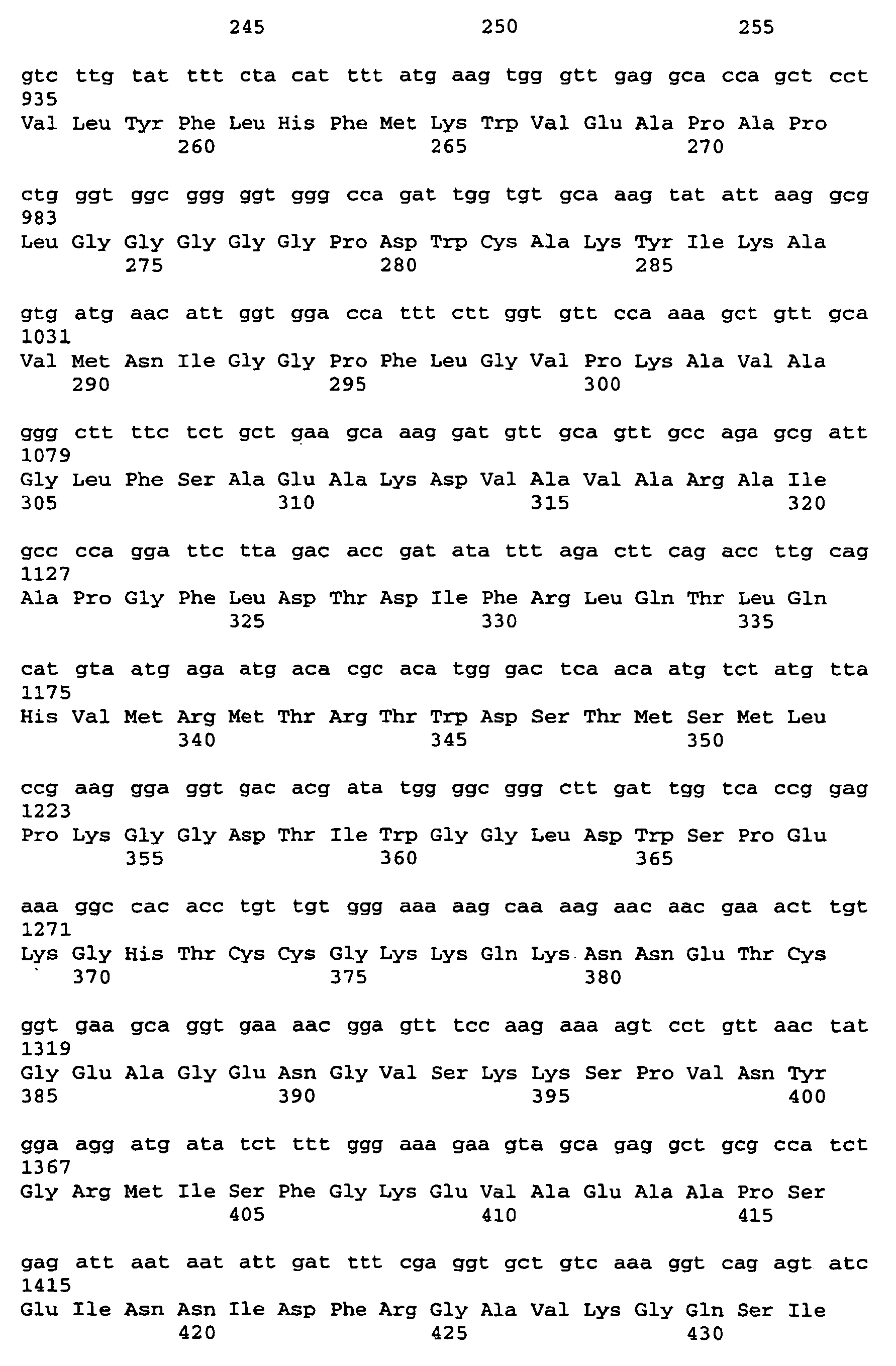


- <210> 2
<211> 671
<212> PRT
<213> Physcomitrella patens - <400> 2


Claims (10)
- Verwendung eines Enzymgemisches enthaltend wenigstens ein Enzym mit Phospholipid:Diacylglycerin-Acyltransferase-Aktivität zur Herstellung von pflanzlichen Triacylglyceriden enthaltend mehrfach ungesättigte Fettsäuren.
- Verwendung gemäß Anspruch 1, wobei ein Enzymgemisch enthaltend wenigstens ein Enzym mit Phospholipid:Diacylglycerin-Acyltransferase-Aktivität und wenigstens ein weiteres Enzym mit der Aktivität einer Hydroxylase, Epoxygenase, Acetylenase, Desaturase, Elongase, Conjugase, trans-Desaturase oder Isomerase eingesetzt wird.
- Verwendung gemäß einem der Ansprüche 1 oder 2, wobei ein Enzymgemisch enthaltend ein Enzym mit Phospholipid:Diacylglycerin-Acyltransferase-Aktivität, Desaturase- und Elongase-Aktivität eingesetzt wird.
- Verwendung gemäß einem der Ansprüche 1-3 zur Herstellung von Triacylglyceriden enthaltend langkettige mehrfach ungesättigte Fettsäuren.
- Verwendung gemäß einem der Ansprüche 1-4 zur Herstellung von Triacylclyceriden enthaltend Gamma-Linolensäure, Arachidonsäure, Eicosapentaensäure, Stearidonsäure oder Docosahexaensäure.
- Verwendung gemäß einem der Ansprüche 1-5, wobei das Enzym mit PDAT-Aktivität durch eine replizierbare Nukleotidsequenz kodiert wird, welche in wenigstens 2-facher Kopie in einer pflanzlichen Zelle vorliegt und/oder welche regulatorische Sequenzen enthält, die eine wenigstens 2-fache Erhöhung der Genexpression und/oder Aktivität des Enzyms mit PDAT-Aktivität bewirkt.
- Verwendung gemäß einem der Ansprüche 1 bis 6, wobei die replizierende Nukleotidsequenz kodierend für ein Enzym mit PDAT-Aktivität chromosomal oder extrachromosomal kodiert vorliegt.
- Verwendung gemäß einem der Ansprüche 1 bis 6, wobei die Nukleotidsequenz kodierend für ein Enzym mit PDAT-Aktivität aus Pflanzen stammt.
- Verwendung gemäß einem der Ansprüche 1 bis 6, wobei die Nukleotidsequenz kodierend für ein Enzym mit PDAT-Aktivität aus Arabidopsis thaliana stammt.
- Verwendung gemäß einem der Ansprüche 1 bis 6, wobei das Enzym mit PDAT-Aktivität eine Aminosäuresequenz gemäß SEQ ID No. 2 kodiert durch eine Nukleotidsequenz gemäß SEQ ID No. 1 oder Allele davon umfaßt.
Applications Claiming Priority (3)
| Application Number | Priority Date | Filing Date | Title |
|---|---|---|---|
| DE10214410 | 2002-03-30 | ||
| DE10214410 | 2002-03-30 | ||
| PCT/EP2003/002955 WO2003083100A1 (de) | 2002-03-30 | 2003-03-21 | Expression von phospholipid: diacylglycerin-acyltransferase (pdat) zur herstellung von planzlichen speicherlipiden enthaltend mehrfach ungesättigte fettsäuren |
Publications (2)
| Publication Number | Publication Date |
|---|---|
| EP1492872A1 EP1492872A1 (de) | 2005-01-05 |
| EP1492872B1 true EP1492872B1 (de) | 2007-09-12 |
Family
ID=28458503
Family Applications (1)
| Application Number | Title | Priority Date | Filing Date |
|---|---|---|---|
| EP03720344A Expired - Lifetime EP1492872B1 (de) | 2002-03-30 | 2003-03-21 | Expression von phospholipid:diacylglycerin-acyltransferase (pdat) zur herstellung von pflanzlichen speicherlipiden enthaltend mehrfach ungesättigte fettsäuren |
Country Status (8)
| Country | Link |
|---|---|
| US (1) | US20050170478A1 (de) |
| EP (1) | EP1492872B1 (de) |
| AT (1) | ATE373085T1 (de) |
| AU (1) | AU2003223975A1 (de) |
| CA (1) | CA2480724A1 (de) |
| DE (1) | DE50308174D1 (de) |
| ES (1) | ES2292957T3 (de) |
| WO (1) | WO2003083100A1 (de) |
Families Citing this family (3)
| Publication number | Priority date | Publication date | Assignee | Title |
|---|---|---|---|---|
| NZ554114A (en) * | 2007-04-23 | 2010-01-29 | Agres Ltd | Plants with an increased ratio of oleosin to TAG synthesising enzymes |
| US8431772B1 (en) | 2008-11-19 | 2013-04-30 | University Of Kentucky Research Foundation | Diacylglycerol acyltransferase sequences and related methods |
| WO2015029997A1 (ja) * | 2013-08-29 | 2015-03-05 | 国立大学法人東京工業大学 | 融合遺伝子、ベクター、トランスジェニック植物、植物油脂の製造方法、トランスジェニック植物の作出方法、およびトランスジェニック植物の作出用キット |
Family Cites Families (2)
| Publication number | Priority date | Publication date | Assignee | Title |
|---|---|---|---|---|
| ATE356213T1 (de) * | 1999-04-01 | 2007-03-15 | Basf Plant Science Gmbh | Enzyme des triacylglycerol-biosynthesewegs und dafür kodierende rekombinante dna moleküle |
| KR100854607B1 (ko) * | 1999-08-30 | 2008-08-27 | 몬산토 테크놀로지 엘엘씨 | 식물 스테롤 아실전달효소 |
-
2003
- 2003-03-21 EP EP03720344A patent/EP1492872B1/de not_active Expired - Lifetime
- 2003-03-21 AU AU2003223975A patent/AU2003223975A1/en not_active Abandoned
- 2003-03-21 WO PCT/EP2003/002955 patent/WO2003083100A1/de not_active Ceased
- 2003-03-21 DE DE50308174T patent/DE50308174D1/de not_active Expired - Fee Related
- 2003-03-21 AT AT03720344T patent/ATE373085T1/de not_active IP Right Cessation
- 2003-03-21 US US10/509,796 patent/US20050170478A1/en not_active Abandoned
- 2003-03-21 ES ES03720344T patent/ES2292957T3/es not_active Expired - Lifetime
- 2003-03-21 CA CA002480724A patent/CA2480724A1/en not_active Abandoned
Also Published As
| Publication number | Publication date |
|---|---|
| AU2003223975A1 (en) | 2003-10-13 |
| WO2003083100A1 (de) | 2003-10-09 |
| ATE373085T1 (de) | 2007-09-15 |
| DE50308174D1 (de) | 2007-10-25 |
| EP1492872A1 (de) | 2005-01-05 |
| ES2292957T3 (es) | 2008-03-16 |
| CA2480724A1 (en) | 2003-10-09 |
| US20050170478A1 (en) | 2005-08-04 |
Similar Documents
| Publication | Publication Date | Title |
|---|---|---|
| EP1356067B1 (de) | Verfahren zur herstellung mehrfach ungesaettigter fettsaeuren, neue biosynthesegene sowie neue pflanzliche expressionskonstrukte | |
| DE69230785T2 (de) | Änderung von Fettsäuren durch eine Desaturase in transgenischem Pflanzengewebe | |
| KR102197208B1 (ko) | 식물 세포에서 장쇄 다중불포화 지방산의 생성 | |
| EP1613744B1 (de) | Delta-4-desaturasen aus euglena gracilis, exprimierende pflanzen und pufa enthaltende öle | |
| EP1599582B1 (de) | Verfahren zur herstellung mehrfach ungesättigter fettsäuren | |
| EP3543324B1 (de) | Verfahren zur herstellung mehrfach ungesättigten fettsäuren in transgenen pflanzen | |
| EP2180046B1 (de) | Verfahren zur Herstellung von mehrfach ungesättigten langkettigen Fettsäuren in transgenen Organismen | |
| DE60309136T2 (de) | Delta 6-desaturase aus primulacaea, pflanzen, exprimierende pflanzen, und öle, welche mehrfach ungesättigte fettsäuren enthalten | |
| EP1506289B1 (de) | Verfahren zum erhöhen des ölgehaltes in pflanzen | |
| EP1472357B1 (de) | Verfahren zur herstellung mehrfach ungesättigter fettsäuren mittels eines neuen elongase-gens | |
| EP1181373B1 (de) | Delta6-acetylenase und delta6-desaturase aus ceratodon purpureus | |
| DE10219203A1 (de) | Verfahren zur Herstellung mehrfach ungesättigter Fettsäuren in Pflanzen | |
| EP1356056A2 (de) | Verfahren zur expression von biosynthesegenen in pflanzlichen samen unter verwendung von neuen multiplen expressionskonstrukten | |
| EP2046960A1 (de) | Verfahren zur herstellung von arachidonsäure und/oder eicosapentaensäure in pflanzen | |
| WO2004087902A2 (de) | Neue pflanzliche acyltransferasen spezifisch für langkettige mehrfach ungesättigte fettsäuren | |
| EP1190080A1 (de) | $g(D)6-DESATURASEGENE EXPRIMIERENDE PFLANZEN UND PUFAS ENTHALTENDE ÖLE AUS DIESEN PFLANZEN UND EIN VERFAHREN ZUR HERSTELLUNG UNGESÄTTIGTER FETTSÄUREN | |
| EP1945775B1 (de) | Verfahren zur herstellung von gamma-linolensäure und/oder stearidonsäure in transgenen brassicaceae und linaceae | |
| WO2007051642A1 (de) | Verfahren zur erhöhung des gesamtölgelhaltes in ölpflanzen | |
| EP1492872B1 (de) | Expression von phospholipid:diacylglycerin-acyltransferase (pdat) zur herstellung von pflanzlichen speicherlipiden enthaltend mehrfach ungesättigte fettsäuren | |
| EP1412488B1 (de) | Verfahren zur herstellung von arachidonsäure in transgenen organismen | |
| DE102004017518A1 (de) | Verfahren zur Herstellung von mehrfach ungesättigten Fettsäuren | |
| DE10030976A1 (de) | DELTA6-Desaturasegene exprimierende Pflanzen und PUFAS enthaltende Öle aus diesen Pflanzen und ein Verfahren zur Herstellung ungesättigter Fettsäuren | |
| DE10205607A1 (de) | Neues Elongasegen und Verfahren zur Herstellung mehrfach ungesättigter Fettsäuren |
Legal Events
| Date | Code | Title | Description |
|---|---|---|---|
| PUAI | Public reference made under article 153(3) epc to a published international application that has entered the european phase |
Free format text: ORIGINAL CODE: 0009012 |
|
| 17P | Request for examination filed |
Effective date: 20041102 |
|
| AK | Designated contracting states |
Kind code of ref document: A1 Designated state(s): AT BE BG CH CY CZ DE DK EE ES FI FR GB GR HU IE IT LI LU MC NL PT RO SE SI SK TR |
|
| AX | Request for extension of the european patent |
Extension state: AL LT LV MK |
|
| 17Q | First examination report despatched |
Effective date: 20060823 |
|
| 17Q | First examination report despatched |
Effective date: 20060823 |
|
| GRAP | Despatch of communication of intention to grant a patent |
Free format text: ORIGINAL CODE: EPIDOSNIGR1 |
|
| GRAS | Grant fee paid |
Free format text: ORIGINAL CODE: EPIDOSNIGR3 |
|
| GRAA | (expected) grant |
Free format text: ORIGINAL CODE: 0009210 |
|
| AK | Designated contracting states |
Kind code of ref document: B1 Designated state(s): AT BE BG CH CY CZ DE DK EE ES FI FR GB GR HU IE IT LI LU MC NL PT RO SE SI SK TR |
|
| AX | Request for extension of the european patent |
Extension state: AL LT LV MK |
|
| REG | Reference to a national code |
Ref country code: GB Ref legal event code: FG4D Free format text: NOT ENGLISH |
|
| REG | Reference to a national code |
Ref country code: CH Ref legal event code: EP |
|
| REF | Corresponds to: |
Ref document number: 50308174 Country of ref document: DE Date of ref document: 20071025 Kind code of ref document: P |
|
| REG | Reference to a national code |
Ref country code: IE Ref legal event code: FG4D Free format text: LANGUAGE OF EP DOCUMENT: GERMAN |
|
| GBT | Gb: translation of ep patent filed (gb section 77(6)(a)/1977) |
Effective date: 20071119 |
|
| REG | Reference to a national code |
Ref country code: SE Ref legal event code: TRGR |
|
| LTIE | Lt: invalidation of european patent or patent extension |
Effective date: 20070912 |
|
| NLV1 | Nl: lapsed or annulled due to failure to fulfill the requirements of art. 29p and 29m of the patents act | ||
| REG | Reference to a national code |
Ref country code: ES Ref legal event code: FG2A Ref document number: 2292957 Country of ref document: ES Kind code of ref document: T3 |
|
| ET | Fr: translation filed | ||
| REG | Reference to a national code |
Ref country code: HU Ref legal event code: AG4A Ref document number: E002643 Country of ref document: HU |
|
| PG25 | Lapsed in a contracting state [announced via postgrant information from national office to epo] |
Ref country code: NL Free format text: LAPSE BECAUSE OF FAILURE TO SUBMIT A TRANSLATION OF THE DESCRIPTION OR TO PAY THE FEE WITHIN THE PRESCRIBED TIME-LIMIT Effective date: 20070912 Ref country code: GR Free format text: LAPSE BECAUSE OF FAILURE TO SUBMIT A TRANSLATION OF THE DESCRIPTION OR TO PAY THE FEE WITHIN THE PRESCRIBED TIME-LIMIT Effective date: 20071213 |
|
| REG | Reference to a national code |
Ref country code: IE Ref legal event code: FD4D |
|
| PG25 | Lapsed in a contracting state [announced via postgrant information from national office to epo] |
Ref country code: SK Free format text: LAPSE BECAUSE OF FAILURE TO SUBMIT A TRANSLATION OF THE DESCRIPTION OR TO PAY THE FEE WITHIN THE PRESCRIBED TIME-LIMIT Effective date: 20070912 Ref country code: PT Free format text: LAPSE BECAUSE OF FAILURE TO SUBMIT A TRANSLATION OF THE DESCRIPTION OR TO PAY THE FEE WITHIN THE PRESCRIBED TIME-LIMIT Effective date: 20080212 |
|
| PGFP | Annual fee paid to national office [announced via postgrant information from national office to epo] |
Ref country code: BG Payment date: 20080321 Year of fee payment: 6 Ref country code: CZ Payment date: 20080208 Year of fee payment: 6 Ref country code: FI Payment date: 20080314 Year of fee payment: 6 Ref country code: GB Payment date: 20080326 Year of fee payment: 6 Ref country code: HU Payment date: 20080311 Year of fee payment: 6 Ref country code: IT Payment date: 20080321 Year of fee payment: 6 Ref country code: SE Payment date: 20080306 Year of fee payment: 6 |
|
| PG25 | Lapsed in a contracting state [announced via postgrant information from national office to epo] |
Ref country code: RO Free format text: LAPSE BECAUSE OF FAILURE TO SUBMIT A TRANSLATION OF THE DESCRIPTION OR TO PAY THE FEE WITHIN THE PRESCRIBED TIME-LIMIT Effective date: 20070912 |
|
| PLBE | No opposition filed within time limit |
Free format text: ORIGINAL CODE: 0009261 |
|
| STAA | Information on the status of an ep patent application or granted ep patent |
Free format text: STATUS: NO OPPOSITION FILED WITHIN TIME LIMIT |
|
| PG25 | Lapsed in a contracting state [announced via postgrant information from national office to epo] |
Ref country code: DK Free format text: LAPSE BECAUSE OF FAILURE TO SUBMIT A TRANSLATION OF THE DESCRIPTION OR TO PAY THE FEE WITHIN THE PRESCRIBED TIME-LIMIT Effective date: 20070912 |
|
| PGFP | Annual fee paid to national office [announced via postgrant information from national office to epo] |
Ref country code: DE Payment date: 20080313 Year of fee payment: 6 Ref country code: ES Payment date: 20080418 Year of fee payment: 6 Ref country code: FR Payment date: 20080311 Year of fee payment: 6 |
|
| 26N | No opposition filed |
Effective date: 20080613 |
|
| PGFP | Annual fee paid to national office [announced via postgrant information from national office to epo] |
Ref country code: BE Payment date: 20080522 Year of fee payment: 6 |
|
| PG25 | Lapsed in a contracting state [announced via postgrant information from national office to epo] |
Ref country code: IE Free format text: LAPSE BECAUSE OF FAILURE TO SUBMIT A TRANSLATION OF THE DESCRIPTION OR TO PAY THE FEE WITHIN THE PRESCRIBED TIME-LIMIT Effective date: 20070912 Ref country code: MC Free format text: LAPSE BECAUSE OF NON-PAYMENT OF DUE FEES Effective date: 20080331 |
|
| REG | Reference to a national code |
Ref country code: CH Ref legal event code: PL |
|
| PG25 | Lapsed in a contracting state [announced via postgrant information from national office to epo] |
Ref country code: LI Free format text: LAPSE BECAUSE OF NON-PAYMENT OF DUE FEES Effective date: 20080331 Ref country code: CH Free format text: LAPSE BECAUSE OF NON-PAYMENT OF DUE FEES Effective date: 20080331 Ref country code: EE Free format text: LAPSE BECAUSE OF FAILURE TO SUBMIT A TRANSLATION OF THE DESCRIPTION OR TO PAY THE FEE WITHIN THE PRESCRIBED TIME-LIMIT Effective date: 20070912 |
|
| PG25 | Lapsed in a contracting state [announced via postgrant information from national office to epo] |
Ref country code: SI Free format text: LAPSE BECAUSE OF FAILURE TO SUBMIT A TRANSLATION OF THE DESCRIPTION OR TO PAY THE FEE WITHIN THE PRESCRIBED TIME-LIMIT Effective date: 20070912 |
|
| PG25 | Lapsed in a contracting state [announced via postgrant information from national office to epo] |
Ref country code: CY Free format text: LAPSE BECAUSE OF FAILURE TO SUBMIT A TRANSLATION OF THE DESCRIPTION OR TO PAY THE FEE WITHIN THE PRESCRIBED TIME-LIMIT Effective date: 20070912 |
|
| PG25 | Lapsed in a contracting state [announced via postgrant information from national office to epo] |
Ref country code: AT Free format text: LAPSE BECAUSE OF NON-PAYMENT OF DUE FEES Effective date: 20080321 |
|
| BERE | Be: lapsed |
Owner name: BASF PLANT SCIENCE G.M.B.H. Effective date: 20090331 |
|
| PG25 | Lapsed in a contracting state [announced via postgrant information from national office to epo] |
Ref country code: CZ Free format text: LAPSE BECAUSE OF NON-PAYMENT OF DUE FEES Effective date: 20090321 Ref country code: FI Free format text: LAPSE BECAUSE OF NON-PAYMENT OF DUE FEES Effective date: 20090321 |
|
| EUG | Se: european patent has lapsed | ||
| GBPC | Gb: european patent ceased through non-payment of renewal fee |
Effective date: 20090321 |
|
| REG | Reference to a national code |
Ref country code: FR Ref legal event code: ST Effective date: 20091130 |
|
| PG25 | Lapsed in a contracting state [announced via postgrant information from national office to epo] |
Ref country code: HU Free format text: LAPSE BECAUSE OF NON-PAYMENT OF DUE FEES Effective date: 20090322 Ref country code: DE Free format text: LAPSE BECAUSE OF NON-PAYMENT OF DUE FEES Effective date: 20091001 |
|
| PG25 | Lapsed in a contracting state [announced via postgrant information from national office to epo] |
Ref country code: BE Free format text: LAPSE BECAUSE OF NON-PAYMENT OF DUE FEES Effective date: 20090331 |
|
| PG25 | Lapsed in a contracting state [announced via postgrant information from national office to epo] |
Ref country code: GB Free format text: LAPSE BECAUSE OF NON-PAYMENT OF DUE FEES Effective date: 20090321 Ref country code: FR Free format text: LAPSE BECAUSE OF NON-PAYMENT OF DUE FEES Effective date: 20091123 |
|
| REG | Reference to a national code |
Ref country code: ES Ref legal event code: FD2A Effective date: 20090323 |
|
| PG25 | Lapsed in a contracting state [announced via postgrant information from national office to epo] |
Ref country code: LU Free format text: LAPSE BECAUSE OF NON-PAYMENT OF DUE FEES Effective date: 20080321 Ref country code: ES Free format text: LAPSE BECAUSE OF NON-PAYMENT OF DUE FEES Effective date: 20090323 |
|
| PG25 | Lapsed in a contracting state [announced via postgrant information from national office to epo] |
Ref country code: TR Free format text: LAPSE BECAUSE OF FAILURE TO SUBMIT A TRANSLATION OF THE DESCRIPTION OR TO PAY THE FEE WITHIN THE PRESCRIBED TIME-LIMIT Effective date: 20070912 |
|
| PG25 | Lapsed in a contracting state [announced via postgrant information from national office to epo] |
Ref country code: IT Free format text: LAPSE BECAUSE OF NON-PAYMENT OF DUE FEES Effective date: 20090321 Ref country code: BG Free format text: LAPSE BECAUSE OF FAILURE TO SUBMIT A TRANSLATION OF THE DESCRIPTION OR TO PAY THE FEE WITHIN THE PRESCRIBED TIME-LIMIT Effective date: 20090331 |
|
| PG25 | Lapsed in a contracting state [announced via postgrant information from national office to epo] |
Ref country code: SE Free format text: LAPSE BECAUSE OF NON-PAYMENT OF DUE FEES Effective date: 20090322 |