EP1494331A2 - Système de contrôle de la charge électrique d'un aéronef - Google Patents
Système de contrôle de la charge électrique d'un aéronef Download PDFInfo
- Publication number
- EP1494331A2 EP1494331A2 EP04076882A EP04076882A EP1494331A2 EP 1494331 A2 EP1494331 A2 EP 1494331A2 EP 04076882 A EP04076882 A EP 04076882A EP 04076882 A EP04076882 A EP 04076882A EP 1494331 A2 EP1494331 A2 EP 1494331A2
- Authority
- EP
- European Patent Office
- Prior art keywords
- engine
- power extraction
- power
- loads
- determining
- Prior art date
- Legal status (The legal status is an assumption and is not a legal conclusion. Google has not performed a legal analysis and makes no representation as to the accuracy of the status listed.)
- Withdrawn
Links
Images


Classifications
-
- H—ELECTRICITY
- H02—GENERATION; CONVERSION OR DISTRIBUTION OF ELECTRIC POWER
- H02J—ELECTRIC POWER NETWORKS; CIRCUIT ARRANGEMENTS OR SYSTEMS FOR SUPPLYING OR DISTRIBUTING ELECTRIC POWER; SYSTEMS FOR STORING ELECTRIC ENERGY
- H02J1/00—Circuit arrangements for DC mains or DC distribution networks
- H02J1/14—Balancing load and power generation in DC networks
-
- B—PERFORMING OPERATIONS; TRANSPORTING
- B64—AIRCRAFT; AVIATION; COSMONAUTICS
- B64D—EQUIPMENT FOR FITTING IN OR TO AIRCRAFT; FLIGHT SUITS; PARACHUTES; ARRANGEMENT OR MOUNTING OF POWER PLANTS OR PROPULSION TRANSMISSIONS IN AIRCRAFT
- B64D41/00—Power installations for auxiliary purposes
-
- H—ELECTRICITY
- H02—GENERATION; CONVERSION OR DISTRIBUTION OF ELECTRIC POWER
- H02J—ELECTRIC POWER NETWORKS; CIRCUIT ARRANGEMENTS OR SYSTEMS FOR SUPPLYING OR DISTRIBUTING ELECTRIC POWER; SYSTEMS FOR STORING ELECTRIC ENERGY
- H02J1/00—Circuit arrangements for DC mains or DC distribution networks
- H02J1/14—Balancing load and power generation in DC networks
- H02J1/15—Balancing load and power generation in DC networks characterised by load management
-
- B—PERFORMING OPERATIONS; TRANSPORTING
- B64—AIRCRAFT; AVIATION; COSMONAUTICS
- B64D—EQUIPMENT FOR FITTING IN OR TO AIRCRAFT; FLIGHT SUITS; PARACHUTES; ARRANGEMENT OR MOUNTING OF POWER PLANTS OR PROPULSION TRANSMISSIONS IN AIRCRAFT
- B64D2221/00—Electric power distribution systems onboard aircraft
-
- H—ELECTRICITY
- H02—GENERATION; CONVERSION OR DISTRIBUTION OF ELECTRIC POWER
- H02J—ELECTRIC POWER NETWORKS; CIRCUIT ARRANGEMENTS OR SYSTEMS FOR SUPPLYING OR DISTRIBUTING ELECTRIC POWER; SYSTEMS FOR STORING ELECTRIC ENERGY
- H02J2105/00—Networks for supplying or distributing electric power characterised by their spatial reach or by the load
- H02J2105/30—Networks for supplying or distributing electric power characterised by their spatial reach or by the load the load networks being external to vehicles, i.e. exchanging power with vehicles
- H02J2105/32—Networks for supplying or distributing electric power characterised by their spatial reach or by the load the load networks being external to vehicles, i.e. exchanging power with vehicles for aircrafts
-
- Y—GENERAL TAGGING OF NEW TECHNOLOGICAL DEVELOPMENTS; GENERAL TAGGING OF CROSS-SECTIONAL TECHNOLOGIES SPANNING OVER SEVERAL SECTIONS OF THE IPC; TECHNICAL SUBJECTS COVERED BY FORMER USPC CROSS-REFERENCE ART COLLECTIONS [XRACs] AND DIGESTS
- Y02—TECHNOLOGIES OR APPLICATIONS FOR MITIGATION OR ADAPTATION AGAINST CLIMATE CHANGE
- Y02T—CLIMATE CHANGE MITIGATION TECHNOLOGIES RELATED TO TRANSPORTATION
- Y02T50/00—Aeronautics or air transport
- Y02T50/40—Weight reduction
Definitions
- the present invention relates to electrical systems and loads of an aircraft. More particularly, the present invention is related to a system and method of controlling secondary electrical load power consumption during operation of an aircraft.
- An aircraft contains an abundant amount of electrical devices and systems that perform various tasks throughout the aircraft. Some of these tasks are related to and include lighting, electronic controls, motors, pumps, air-conditioning systems and controls, and hydraulic loads. The number of electrical devices and systems and corresponding loads contained therein are ever increasing to satisfy new user and vehicle electrical power requirements.
- An aircraft engine typically has an associated engine core secondary horsepower rating, which refers to horsepower extraction capability of that engine. The horsepower that may be extracted from the engine can be applied and converted into electrical energy for use by the electrical loads.
- Each engine is typically certified for use having an associated maximum generator load output. When designing an aircraft, maximum electrical load consumption requirements are determined and an engine having a certified maximum generator load output level that is greater than or equal to that of the maximum electrical load requirements is utilized.
- Aircraft engines are currently designed and selected for a particular application by maximizing generator capability, such that electrical load consumption is within the engine core secondary horsepower extraction capability of that engine. By maximizing generator capability, power consumption of electrical loads does not significantly affect engine operation. When engine operation is significantly affected, the aircraft may become unstable and various devices having a high priority level may operate inappropriately and potentially cause damage to the aircraft or injury to an occupant therein.
- the existing technique for determining an appropriate engine with a desired generator output power rating is no longer suitable.
- the existing technique does not satisfy other aircraft design requirements, such as that of size, weight, complexity, fuel consumption, and related costs involved therein.
- an aircraft may require a particular generator with a high level of power output capability that requires a high level of power from an aircraft engine, which exceeds secondary power limitations of a desired engine.
- the desired engine being one that satisfies some or all of the other above-mentioned design requirements.
- engine size needs to be increased to such an extent that the engine is no longer application feasible.
- secondary power limitations of an engine are not exceeded.
- power systems of an aircraft that are of a high priority such as systems that provide maneuvering, acceleration, and deceleration capability, as well as fuel systems and hydraulic systems, may not operate appropriately.
- power that is being used by lower priority secondary loads may be needed to operate an engine compressor for adequate supply of compressed air for internal turbine combustion.
- Lack of power for the engine compressor can cause the engine turbines to operate inappropriately and negatively effecting engine performance.
- the engine is no longer operating efficiently, since it is working harder to supply additional power and, as a result, is consuming an increased amount of fuel.
- the present invention provides a system and method of controlling secondary electrical load power consumption during operation of an aircraft.
- the method includes determining current operating conditions of the aircraft.
- An engine secondary power extraction limit is determined in response to the current operating conditions.
- Engine secondary power extraction is determined.
- Multiple secondary loads are operated in response to the engine secondary power extraction limit and the engine secondary power extraction.
- One of several advantages of the present invention is that it provides a method for operating secondary electrical loads in response to an engine secondary power extraction limit and current operating conditions of an aircraft.
- power supplied to the secondary loads is limited by the total engine power output rather than by the engine core secondary power extraction capability.
- the present invention allows an aircraft to be designed to include direct power secondary electrical loads that have a combined rated total power consumption level that is greater than that of rated maximum secondary power extraction of an aircraft engine.
- the present invention allows an engine to supply an increased amount of electrical power and satisfy electrical power consumption requirements for an increased number of secondary electrical loads during certain operating conditions.
- Another advantage of the present invention is that it allows for efficient use of power extracted from an aircraft engine, thereby providing an increased level of electrical power that may be extracted from a particular engine that has an associated secondary output power rating level.
- the present invention provides an efficient power management system that minimizes fuel consumption by allowing a smaller engine to be utilized to satisfy secondary output power requirements.
- the present invention provides improved range of an aircraft and allows for increased payload due to a decrease in size and weight of utilized engines and cost involved in operation thereof.
- present invention is described with respect to a secondary electrical load power management system for an aircraft, the present invention may be adapted and applied to various systems including: vehicle systems, aircraft systems, power distribution systems, or other similar systems known in the art.
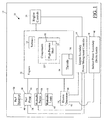
- the management system 10 includes an engine secondary power management controller 14 that is coupled to one or more engines 16 and to multiple secondary electrical loads 18.
- the controller 14 prioritizes and may limit operation of the secondary loads 18 in response to current flight conditions of the aircraft 12.
- the controller 14 is preferably microprocessor based such as a computer having a central processing unit, memory (RAM and/or ROM), and associated input and output buses.
- the controller 14 may be an application-specific integrated circuit or formed of other logic devices known in the art.
- the controller 14 may be a portion of a central vehicle main control unit, an interactive vehicle dynamics module, a flight controller, or may be a stand-alone controller as shown.
- the engines 16 provide power for flight and maneuvering of the aircraft 12 as well as for onboard vehicle electrical and electronic devices and systems.
- the engines 16 have a rated total output power level, which consists of primary output power, used primarily for flight and maneuvering, and secondary output power, used primarily for the secondary loads 18.
- the engines 16 also have a standard engine core secondary horsepower extraction capability limit, which is referred to as the limit as to which secondary power output does not significantly affect performance of engine operation.
- the engines 16 are operated via engine controls 20, such as control inceptors and flight controllers (not shown).
- the controls 20 may be activated or adjusted by a vehicle operator or on-board controller, such as by the controller 14.
- the engines 16 include one or more compressors 22 that supply compressed air for combustion with fuel in turbines 24.
- the fuel is pumped into the turbines 24 via a fuel pump 26 from a fuel reservoir 28.
- the compressors 22 are driven by a high-pressure shaft 30 that extends therethrough.
- a shaft sensor 32 is coupled to the controller 14 and senses rotational speed of the shaft 30.
- the engines 16 may have a throttle 34 or the like for adjusting flow of fuel and compressed air into the turbines 24.
- a throttle sensor 36 is coupled to the controller 14 and senses throttle position. The throttle position is adjusted by the engine controls 20.
- the secondary electrical loads 18 include direct power secondary loads 38 and indirect power secondary loads 40.
- the direct loads 38 receive electrical power directly from the engines 16, whereas the indirect loads 40 receive power from the engines 16 via one of the direct loads 38, such as generators 42.
- the direct loads 38 may include the generators 42 and multiple pumps, such as hydraulic pumps 44 and fuel pump 46.
- the generators 42 may be in the form of auxiliary power units and may have a power rating that exceeds that of the standard engine core secondary horsepower extraction capability of the engines 16.
- the hydraulic pumps 44 may be used for hydraulic loads 48, such as for raising and lowering landing gear, adjusting flaps, slats, ailerons, or other leading or trailing edge devices (not shown), or for other equipment or systems that are hydraulically actuated.
- the indirect loads 40 include electrical devices and systems that may receive electrical power from a generator, such as lights, computer systems, navigation controls, air-conditioning systems, telecommunication systems, and various other electrical devices and systems known in the art.
- FIG. 2 a logic flow diagram illustrating a method of controlling electrical load power consumption during operation of the aircraft 12 and a management control diagram with corresponding power management plot, are shown.
- step 100 the controller 14 determines current operating conditions of the aircraft 12, via one or more aircraft flight condition sensors, such as sensors 32 and 36. In determining the current operating conditions, the controller 14 determines engine primary power extraction. Primary power extraction is determined using an engine rotational speed sensor, such as the shaft sensor 32, using the throttle sensor 36, or by using some other suitable sensor or control device known in the art. The current operating conditions are represented by box 101.
- an engine secondary power extraction limit is determined in response to the current operating conditions. Total output power availability of the engines 16 is assessed in response to determining the primary power extraction. The engine secondary power extraction limit is determined to be approximately equal to the remainder of total output power after supplying power for primary power extraction. The engine secondary power extraction limit is represented by box 103.
- step 104 the controller 14 determines current engine secondary power extraction from the direct loads 38 and determines available power for the indirect loads 40. For example, power needed for the pumps 44 and 46 may be subtracted from the engine secondary power extraction limit to determine the power available for the indirect loads 40.
- Current engine secondary power extraction is represented by box 105.
- step 106 the controller 14 operates the secondary loads 18 in response to the engine secondary power extraction limit and the current engine secondary power extraction.
- the secondary load power operation is also represented by box 107.
- the standard engine core secondary horsepower extraction capability of the engines 16 may be exceeded to provide additional power to various electrical loads when the primary power extraction is below a predetermined limit.
- engine power output capability that may not have been normally utilized for secondary loads may be supplied to the indirect loads 40.
- the controller 14 increases the engine secondary power extraction limit to be greater than the standard engine core secondary horsepower extraction capability level. In so doing, the secondary output power to the indirect loads 40 is increased as long as engine performance as well as other flight systems and components that are of a high level of priority, such as devices that enable or provide safe flight, are not affected by an increase in secondary power consumption.
- step 106A the controller determines whether the engine secondary power extraction is less than or equal to the engine secondary power extraction limit. Maximum engine power is represented by curve A and secondary extracted power is represented by curve B.
- step 106B the controller 14 operates the secondary loads 18 according to the priority level of each device when the engine secondary power extraction is less than or equal to the engine secondary power extraction limit.
- the controller 14 operates the secondary loads 18 according to the priority level of each device when the engine secondary power extraction is less than or equal to the engine secondary power extraction limit.
- the priority level of each device For example, onboard passenger cabin video monitors have a lower priority level as compared to that of navigation or flight controls. Operation of the indirect loads 40 is limited by power output limitations of the generators 42, as opposed to the standard engine core secondary horsepower extraction capability of the engines 16, as with that of prior electrical control systems.
- the secondary load power supplied in step 106B is represented by portion 108 of curve B.
- step 106C the controller 14 limits operation of the secondary loads 18 when the engine secondary power extraction is greater than the engine secondary power extraction limit.
- the secondary loads 18 are limited so that engine secondary power extraction does not exceed the engine secondary power extraction limit.
- the secondary loads 18 are limited by total power output limitations of the engines 16, again as opposed to the standard engine core secondary horsepower extraction capability of the engines 16.
- the secondary load power supplied in step 106C is represented by portion 110 of curve A.
- step 106B and 106C electrical needs of the indirect loads 40 are satisfied in response to priority level and power requirements of each indirect load 40.
- a first indirect load may have a higher priority level than a second indirect load, but the second indirect load may require less power and thus may be supplied power rather than the first indirect load.
- the present invention provides secondary electrical load power management system for an aircraft that provides additional power to secondary electrical loads above that of a standard engine core secondary horsepower extraction capability limit.
- the present invention satisfies an increased level of power consumption requirements from implementation of additional electrical devices and systems.
- the present invention in so doing increases efficient use of engine power to allow a smaller than normal aircraft engine to be utilized that satisfies flight performance requirements, but is smaller in size and is lighter in weight, and yet satisfies requirements for an increased level of secondary output power availability. Also, through use of a smaller engine fuel consumption is minimized and travel range is increased.
Landscapes
- Engineering & Computer Science (AREA)
- Power Engineering (AREA)
- Aviation & Aerospace Engineering (AREA)
- Supply And Distribution Of Alternating Current (AREA)
- Control Of Vehicle Engines Or Engines For Specific Uses (AREA)
- Control Of Electric Motors In General (AREA)
- Control Of Multiple Motors (AREA)
Applications Claiming Priority (2)
| Application Number | Priority Date | Filing Date | Title |
|---|---|---|---|
| US604189 | 1984-04-26 | ||
| US10/604,189 US20050006954A1 (en) | 2003-06-30 | 2003-06-30 | Aircraft secondary electric load controlling system |
Publications (2)
| Publication Number | Publication Date |
|---|---|
| EP1494331A2 true EP1494331A2 (fr) | 2005-01-05 |
| EP1494331A3 EP1494331A3 (fr) | 2013-05-15 |
Family
ID=33435342
Family Applications (1)
| Application Number | Title | Priority Date | Filing Date |
|---|---|---|---|
| EP04076882.2A Withdrawn EP1494331A3 (fr) | 2003-06-30 | 2004-06-29 | Système de contrôle de la charge électrique d'un aéronef |
Country Status (4)
| Country | Link |
|---|---|
| US (1) | US20050006954A1 (fr) |
| EP (1) | EP1494331A3 (fr) |
| BR (1) | BRPI0403675A (fr) |
| CA (1) | CA2472409C (fr) |
Cited By (1)
| Publication number | Priority date | Publication date | Assignee | Title |
|---|---|---|---|---|
| EP1897804B1 (fr) | 2006-09-07 | 2015-12-30 | The Boeing Company | Système et procédé pour commander l'alimentation électrique d'un avion |
Families Citing this family (10)
| Publication number | Priority date | Publication date | Assignee | Title |
|---|---|---|---|---|
| GB0130530D0 (en) * | 2001-12-20 | 2002-02-06 | Bg Intellectual Pty Ltd | A domestic combined heat and power unit |
| US8237308B2 (en) | 2007-12-12 | 2012-08-07 | The Boeing Company | Dynamic electrical load management |
| DE102008048275B4 (de) | 2008-09-22 | 2014-07-24 | Airbus Operations Gmbh | Treibstoffmanagement-System |
| US20110071706A1 (en) * | 2009-09-23 | 2011-03-24 | Adaptive Materials, Inc. | Method for managing power and energy in a fuel cell powered aerial vehicle based on secondary operation priority |
| US20110189587A1 (en) * | 2010-02-01 | 2011-08-04 | Adaptive Materials, Inc. | Interconnect Member for Fuel Cell |
| US8793026B2 (en) | 2010-09-15 | 2014-07-29 | The Boeing Company | Electrical load management system |
| US9815564B2 (en) * | 2013-12-04 | 2017-11-14 | The Boeing Company | Non-propulsive utility power (NPUP) generation system for providing full-time secondary power during operation of an aircraft |
| US10227137B2 (en) * | 2016-03-22 | 2019-03-12 | Ge Aviation Systems Llc | Hybrid power system for an aircraft |
| US11970062B2 (en) | 2017-04-05 | 2024-04-30 | Ge Aviation Systems Llc | Systems and methods of power allocation for hybrid electric architecture |
| US20240327011A1 (en) * | 2023-03-27 | 2024-10-03 | Northrop Grumman Systems Corporation | Adaptive aircraft power management system |
Family Cites Families (5)
| Publication number | Priority date | Publication date | Assignee | Title |
|---|---|---|---|---|
| US4317177A (en) * | 1980-01-14 | 1982-02-23 | Martin P. Miller | Power priority control system for aircraft and test apparatus therefor |
| GB9603350D0 (en) * | 1995-04-05 | 1996-04-17 | Oxley Dev Co Ltd | Aircraft lighting system |
| US6510369B1 (en) * | 1999-08-24 | 2003-01-21 | Plug Power Inc. | Residential load shedding |
| US6380639B1 (en) * | 2000-05-11 | 2002-04-30 | Bombardier Inc. | System, method and apparatus for power regulation |
| FR2823027B1 (fr) * | 2001-03-30 | 2003-07-25 | Labinal | Installation de gestion de puissance dans un avion |
-
2003
- 2003-06-30 US US10/604,189 patent/US20050006954A1/en not_active Abandoned
-
2004
- 2004-06-25 CA CA002472409A patent/CA2472409C/fr not_active Expired - Fee Related
- 2004-06-29 EP EP04076882.2A patent/EP1494331A3/fr not_active Withdrawn
- 2004-06-30 BR BR0403675-1A patent/BRPI0403675A/pt not_active Application Discontinuation
Cited By (2)
| Publication number | Priority date | Publication date | Assignee | Title |
|---|---|---|---|---|
| EP1897804B1 (fr) | 2006-09-07 | 2015-12-30 | The Boeing Company | Système et procédé pour commander l'alimentation électrique d'un avion |
| EP1897804B2 (fr) † | 2006-09-07 | 2019-02-27 | The Boeing Company | Système et procédé pour contrôler l'alimentation électrique d'un avion |
Also Published As
| Publication number | Publication date |
|---|---|
| BRPI0403675A (pt) | 2005-04-05 |
| EP1494331A3 (fr) | 2013-05-15 |
| CA2472409A1 (fr) | 2004-12-30 |
| US20050006954A1 (en) | 2005-01-13 |
| CA2472409C (fr) | 2008-06-10 |
Similar Documents
| Publication | Publication Date | Title |
|---|---|---|
| EP3770398B1 (fr) | Commande de démarrage de moteur de turbine à gaz hybride | |
| CN101140004B (zh) | 飞机动力系统和用于控制飞机系统的方法 | |
| CN100386246C (zh) | 用于飞机的电动辅助动力系统结构 | |
| US11970062B2 (en) | Systems and methods of power allocation for hybrid electric architecture | |
| US20200231288A1 (en) | Hybrid pneumatic and electric secondary power integrated cabin energy system for a pressurized vehicle | |
| US11448135B2 (en) | Systems and methods of power allocation for turboprop and turboshaft aircraft | |
| US6704625B2 (en) | Aircraft architecture with a reduced bleed aircraft secondary power system | |
| US7970497B2 (en) | Smart hybrid electric and bleed architecture | |
| US20060174629A1 (en) | Method and system for coordinating engine operation with electrical power extraction in a more electric vehicle | |
| US9151180B2 (en) | Lubrication driven gas turbine engine actuation system | |
| US20090271086A1 (en) | Hybrid Engine Accessory Power System | |
| CA2472409C (fr) | Regulateur de la charge electrique secondaire d'un aeronef | |
| US7622821B2 (en) | Power distribution system and load management protocol therefor | |
| RU2659860C2 (ru) | Устройство и способ обеспечения нетяговой мощностью летательного аппарата | |
| EP2927461A2 (fr) | Commande de moteur optimisée utilisant des informations d'extraction de puissance en chevaux-vapeur d'un système de puissance secondaire | |
| EP2492451B1 (fr) | Aéronef avec générateur d'urgence couplé à un arbre basse pression | |
| EP2407660A2 (fr) | Système de génération de puissance hydraulique auxiliaire | |
| US20050229838A1 (en) | Aircraft secondary electric load controlling system | |
| EP4174300A1 (fr) | Redémarrage de descente de moteur électrique unique hybride | |
| JP7511536B2 (ja) | 航空機の推進システム | |
| EP4620820A1 (fr) | Procédé d'alimentation d'un aéronef hybride pendant un décollage | |
| US20240327011A1 (en) | Adaptive aircraft power management system | |
| HK1115566A (en) | Electric-based secondary power system architectures for aircraft |
Legal Events
| Date | Code | Title | Description |
|---|---|---|---|
| PUAI | Public reference made under article 153(3) epc to a published international application that has entered the european phase |
Free format text: ORIGINAL CODE: 0009012 |
|
| AK | Designated contracting states |
Kind code of ref document: A2 Designated state(s): AT BE BG CH CY CZ DE DK EE ES FI FR GB GR HU IE IT LI LU MC NL PL PT RO SE SI SK TR |
|
| AX | Request for extension of the european patent |
Extension state: AL HR LT LV MK |
|
| RAP1 | Party data changed (applicant data changed or rights of an application transferred) |
Owner name: THE BOEING COMPANY |
|
| PUAL | Search report despatched |
Free format text: ORIGINAL CODE: 0009013 |
|
| AK | Designated contracting states |
Kind code of ref document: A3 Designated state(s): AT BE BG CH CY CZ DE DK EE ES FI FR GB GR HU IE IT LI LU MC NL PL PT RO SE SI SK TR |
|
| AX | Request for extension of the european patent |
Extension state: AL HR LT LV MK |
|
| RIC1 | Information provided on ipc code assigned before grant |
Ipc: H02J 3/00 20060101AFI20130409BHEP |
|
| 17P | Request for examination filed |
Effective date: 20131114 |
|
| RBV | Designated contracting states (corrected) |
Designated state(s): AT BE BG CH CY CZ DE DK EE ES FI FR GB GR HU IE IT LI LU MC NL PL PT RO SE SI SK TR |
|
| STAA | Information on the status of an ep patent application or granted ep patent |
Free format text: STATUS: THE APPLICATION HAS BEEN WITHDRAWN |
|
| AKX | Designation fees paid |
Designated state(s): AT BE BG CH CY CZ DE DK EE ES FI FR GB GR HU IE IT LI LU MC NL PL PT RO SE SI SK TR |
|
| 18W | Application withdrawn |
Effective date: 20140106 |