EP1494427A2 - Vorrichtung und Verfahren zur Kennzeichnungsgewinnung - Google Patents
Vorrichtung und Verfahren zur Kennzeichnungsgewinnung Download PDFInfo
- Publication number
- EP1494427A2 EP1494427A2 EP04252893A EP04252893A EP1494427A2 EP 1494427 A2 EP1494427 A2 EP 1494427A2 EP 04252893 A EP04252893 A EP 04252893A EP 04252893 A EP04252893 A EP 04252893A EP 1494427 A2 EP1494427 A2 EP 1494427A2
- Authority
- EP
- European Patent Office
- Prior art keywords
- malicious code
- extracted
- signature
- computer system
- packet
- Prior art date
- Legal status (The legal status is an assumption and is not a legal conclusion. Google has not performed a legal analysis and makes no representation as to the accuracy of the status listed.)
- Granted
Links
- 238000000034 method Methods 0.000 title claims description 55
- 238000000605 extraction Methods 0.000 title claims description 43
- 238000001514 detection method Methods 0.000 claims abstract description 26
- 230000015654 memory Effects 0.000 claims description 29
- 230000002265 prevention Effects 0.000 claims description 3
- 230000000903 blocking effect Effects 0.000 description 34
- 230000006399 behavior Effects 0.000 description 24
- 238000010586 diagram Methods 0.000 description 10
- 230000006870 function Effects 0.000 description 7
- 210000000987 immune system Anatomy 0.000 description 4
- 230000010076 replication Effects 0.000 description 4
- 241000700605 Viruses Species 0.000 description 3
- 238000004590 computer program Methods 0.000 description 3
- 230000005540 biological transmission Effects 0.000 description 2
- 230000001413 cellular effect Effects 0.000 description 2
- ZPUCINDJVBIVPJ-LJISPDSOSA-N cocaine Chemical compound O([C@H]1C[C@@H]2CC[C@@H](N2C)[C@H]1C(=O)OC)C(=O)C1=CC=CC=C1 ZPUCINDJVBIVPJ-LJISPDSOSA-N 0.000 description 2
- 230000002155 anti-virotic effect Effects 0.000 description 1
- 230000000694 effects Effects 0.000 description 1
- 230000001681 protective effect Effects 0.000 description 1
- 230000003362 replicative effect Effects 0.000 description 1
Images


Classifications
-
- H—ELECTRICITY
- H04—ELECTRIC COMMUNICATION TECHNIQUE
- H04L—TRANSMISSION OF DIGITAL INFORMATION, e.g. TELEGRAPHIC COMMUNICATION
- H04L63/00—Network architectures or network communication protocols for network security
- H04L63/14—Network architectures or network communication protocols for network security for detecting or protecting against malicious traffic
- H04L63/1408—Network architectures or network communication protocols for network security for detecting or protecting against malicious traffic by monitoring network traffic
- H04L63/1416—Event detection, e.g. attack signature detection
-
- H—ELECTRICITY
- H04—ELECTRIC COMMUNICATION TECHNIQUE
- H04L—TRANSMISSION OF DIGITAL INFORMATION, e.g. TELEGRAPHIC COMMUNICATION
- H04L63/00—Network architectures or network communication protocols for network security
- H04L63/14—Network architectures or network communication protocols for network security for detecting or protecting against malicious traffic
- H04L63/1441—Countermeasures against malicious traffic
- H04L63/145—Countermeasures against malicious traffic the attack involving the propagation of malware through the network, e.g. viruses, trojans or worms
Definitions
- the present invention relates to the protection of computer systems. More particularly, the present invention relates to a behavior-blocking system and method.
- the global analysis center generates a malicious code signature based on the users' submissions. More particularly, the malicious code signature is based on replication of filebased computer viruses only, i.e., viruses that infect files. The malicious code signature is sent back to the client systems.
- the conventional immune systems are based on replication of filebased computer viruses only, the conventional immune systems does not detect or protect against fileless malicious code, e.g., fileless worm code.
- IDS network based intrusion detection system
- Symantec ManHuntTM network intrusion detection system is capable of detecting fileless malicious code.
- This type of network based IDS uses a protocol analyzer module to detecting anomalies associated with the fileless malicious code based on knowledge of the known set of network protocols.
- the attack might be 100 percent successful at the time of detection.
- the Win32/Slammer type worm is detected as UDP_FLOOD_ALERT based on high UDP traffic on the network, well after the attack has become successful.
- Another type of network based intrusion detection system such as snort is also capable of detecting fileless malicious code.
- This type of network based IDS uses a network sniffer module, which looks for particular known signatures on the network. However, if there is no known signature for the fileless malicious code, the attack may be entirely undetected by this type of network based IDS. Thus, this type of network based IDS must be updated frequently to remain effective.
- the signature updates for the fileless malicious code are currently developed by security analysts after carefully analyzing samples of the fileless malicious code. This analysis of the fileless malicious code is relatively slow. Accordingly, it often takes hours or days until new signature updates are created by the security analysts and provided to the network based IDS. During this time, the fileless malicious code may be widespread.
- host computer systems automatically detect malicious code, which is infecting the host computer systems. Further, the host computer systems also automatically generate and send extracted malicious code packets of the malicious code to a local analysis center computer system. In one embodiment, the extracted malicious code packets include signatures of the malicious code.
- the local analysis center computer system determines that an attack is taking place, a signature update is provided to a network intrusion detection system. Further, the local analysis center computer system also automatically sends an extracted malicious code packet or malicious code signature of the malicious code undertaking the attack to a global analysis center. In this manner, the spread of the malicious code is rapidly detected and prevented.
- host computer systems 104 automatically detect malicious code, which is infecting host computer systems 104. Further, host computer systems 104 also automatically generate and send extracted malicious code packets of the malicious code to a local analysis center computer system 112. In one embodiment, the extracted malicious code packets include signatures of the malicious code.
- Local analysis center computer system 112 determines whether an attack is taking place on client network 120 based upon the received extracted malicious code packets. If local analysis center computer system 112 determines that an attack is in fact taking place, local analysis center computer system 112 automatically creates a signature update including the malicious code signature of the malicious code undertaking the attack.
- This signature update is automatically provided to an intrusion detection system 108, which uses the signature update to prevent the further spread of the malicious code on client network 120. Accordingly, the attack is defeated before the malicious code becomes widespread on client network 120.
- local analysis center computer system 112 also automatically sends an extracted malicious code packet or malicious code signature of the malicious code undertaking the attack to a global analysis center 116.
- Global analysis center 116 uses this information to prevent the further spread of the malicious code globally, for example, by delivering signature updates to global clients.
- FIG. 1 is a diagram of a computer system 100 that includes a host signature extraction application 102 executing on a host computer system 104A in accordance with one embodiment of the present invention.
- Host computer system 104A is coupled to a plurality of host computer systems 104B, ... , 104n similar to host computer system 104A by a network 106.
- Network 106 can be any network or network system that is of interest to a user.
- the particular type of and configuration of host computer systems 104A, 104B, ... 104n, collectively host computer systems 104 are not essential to this embodiment of the present invention.
- Intrusion detection system 108 is also coupled to network 106.
- Intrusion detection system 108 is a network based intrusion detection system that is capable of detecting fileless malicious code.
- Intrusion detection system 108 includes a network sniffer module 110, which looks for particular known signatures on network 106.
- Intrusion detection systems such as intrusion detection system 108 are well known to those of skill in the art, e.g., snort, and the particular intrusion detection system used is not essential to this embodiment of the present invention.
- LAC local analysis center
- LAC local analysis center
- a local analysis center (LAC) signature extraction application 114 is executing on LAC computer system 112.
- LAC computer system 112 is also coupled to a global analysis center 116, e.g., over internet 118.
- Global analysis center 116 includes one or more global analysis center computer systems, sometimes called second computer systems, which are not illustrated for simplicity.
- LAC computer system 112 is coupled to global analysis center 116 over network 106 in one embodiment.
- host computer systems 104, intrusion detection system 108 and network 106 are part of a client network 120.
- client network 120 including LAC computer system 112 are located at a client site 122.
- Global analysis center 116 is located at a remote location 124 remote from client site 122.
- Host computer system 104A also includes a behavior blocking application 126A.
- Behavior blocking application 126A detects attacks by malicious code, e.g., fileless malicious code, on host computer system 104A.
- behavior blocking application 126A takes protective action to protect host computer system 104A from the malicious code.
- Behavior blocking application 126A works in conjunction with host signature extraction application 102 as discussed further below in reference to FIGS. 2 and 3.
- behavior blocking application 126A is a shell code blocking application as set forth in Szor, U.S. patent application serial number 10/360,341, filed on February 6, 2003, entitled “SHELL CODE BLOCKING SYSTEM AND METHOD", which is herein incorporated by reference in its entirety.
- behavior blocking application 126A is a send blocking application as set forth in Szor, U.S. patent application serial number [Attorney Docket Number SYMC1033], filed on June 17, 2003, entitled “SEND BLOCKING SYSTEM AND METHOD”, which is herein incorporated by reference in its entirety.
- host computer systems 104B, ... , 104n include behavior blocking applications 126B, ... , 126n, respectively.
- behavior blocking applications 126A, 126B, ..., 126n, collectively behavior blocking applications 126 are the same applications, e.g., are shell code blocking or send blocking applications or a combination thereof.
- behavior blocking applications 126 are different applications.
- behavior blocking application 126A is a shell code blocking application and behavior blocking application 126B is a send blocking application.
- one or more of host computer systems 104A, 104B, ... , 104n does not include a host signature extraction application 102 and a behavior blocking application 126.
- host computer system 104A includes a host signature extraction application 102 and a behavior blocking application 126, i.e., behavior blocking application 126A.
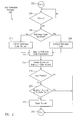
- FIG. 2 is a flow diagram of a host computer process 200 in accordance with one embodiment of the present invention. Execution of host signature extraction application 102 and behavior blocking application 126A on host computer system 104A results in the operations of host computer process 200 as described below in one embodiment. Although host computer process 200 is described in relation to host computer system 104A, in light of this disclosure, those of skill in the art will understand that host computer process 200 is equally applicable to one or more of host computer systems 104B, ..., 104n.
- attack check operation 204 a determination is made as to whether a suspected or actual attack, a malicious exploit, use of common exploit tools such as an autorooter, hereinafter referred to as an attack for simplicity of discussion, has occurred on host computer system 104A. If an attack has not occurred on host computer system 104A, flow remains at attack check operation 204. Conversely, if an attack has occurred on host computer system 104A, flow moves to a malicious code sendable check operation 206.
- malicious code is defined as any computer program, module, set of modules, or code that enters a computer system without an authorized user's knowledge and/or without an authorized user's consent.
- Fileless malicious code is malicious code that is not file based but exists in memory only, e.g., in virtual memory only. More particularly, fileless malicious code is malicious code that appends itself to an active process in memory, sometimes called to a parent application.
- behavior blocking application 126A hooks critical operating system functions, e.g., send functions, of host computer system 104A and monitors calls to the hooked critical operating system functions. Calls by suspected or actual malicious code, hereinafter referred to as malicious code for simplicity of discussion, to the hooked critical operating system functions are detected and terminated and the location in memory of the malicious code is determined by behavior blocking application 126A.
- malicious code Calls by suspected or actual malicious code, hereinafter referred to as malicious code for simplicity of discussion, to the hooked critical operating system functions are detected and terminated and the location in memory of the malicious code is determined by behavior blocking application 126A.
- behavior blocking application 126A is a send blocking application and malicious code, e.g., self replicating fileless malicious code such as a worm, located in a send buffer is attempting to send itself or a copy of itself to another of host computer systems 104.
- behavior blocking application 126A is a shell code blocking application and malicious code, e.g., fileless malicious shell code such as a worm, located in a data area of memory is attempting to open up a shell on host computer system 104A. Accordingly, flow moves from attack check operation 204 to malicious code sendable check operation 206.
- malicious code sendable check operation 206 a determination is made as to whether the malicious code associated with the attack of attack check operation 204 is sendable. If a determination is made that the malicious code is sendable, flow moves from malicious code sendable check operation 206 to an extract malicious code operation 208. Conversely, if a determination is made that the malicious code is not sendable, flow moves from malicious code sendable check operation 206 to an extract malicious code snippet operation 210.
- the malicious code is sendable if sending of the malicious code on network 106 does not cause unacceptable congestion.
- the malicious code is shell code, e.g., is the code that opens up a new shell for the Linux.Slapper worm.
- shell code is written in a very short and compact way and is therefore typically sendable. Accordingly, a determination is made in malicious code sendable check operation 206 that the malicious code is sendable and flow moves to extract malicious code operation 208.
- extract malicious code operation 208 the malicious code or a copy of the malicious code is extracted from the memory location.
- behavior blocking application 126A provides the memory location, sometimes called the caller's address, of the malicious code, for example using a stack trace module.
- the malicious code is copied or cut, sometimes called removed, from the memory location during extract malicious code operation 208.
- the entire content, sometimes called raw data, of the entire memory location, e.g., buffer, is copied or cut and thus non-malicious code may be included with the malicious code.
- flow moves to an append malicious code parameters operation 212.
- the malicious code is not sendable in one embodiment.
- the malicious code is not sendable if sending of the malicious code on network 106 causes unacceptable congestion.
- the malicious code is relatively long and not sendable. Accordingly, a determination is made in malicious code sendable check operation 206 that the malicious code is not sendable and flow moves to extract malicious code snippet operation 210.
- a snippet, sometimes called portion, of the malicious code is extracted from the memory location.
- behavior blocking application 126A provides the memory location, sometimes called the caller's address, of the malicious code.
- a snippet (portion) of the malicious code is copied or cut, sometimes called removed, from the memory location during extract malicious code snippet operation 210. For example, a portion of the content of a buffer containing the malicious code is copied or cut.
- the caller's address is the memory location of the instruction or set of instructions that originated the critical operating system function call.
- a portion of the malicious code around, e.g. at addresses above and below, the caller's address is extracted in extract malicious code snippet operation 210.
- +-4KB of code around the caller's address is extracted although more or less than +-4KB of code are extracted other embodiments. From extract malicious code snippet operation 210, flow moves to append malicious code parameters operation 212.
- append malicious code parameters operation 212 parameters associated with the malicious code are appended to either the malicious code extracted in extract malicious code operation 208 or to the malicious code snippet extracted in extract malicious code snippet operation 210.
- parameters associated with the malicious code include the caller's address such as the location of the sendto() API of the malicious code, the name of the process in which the attack took place, the ports connected to this process, the send() API's connected ports such as UDP 1434, the service pack levels, the operating system information, and patch level information.
- an extracted malicious code packet is created.
- an extracted malicious code packet is a collection of information which includes the malicious code parameters appended in append malicious code parameters operation 212 and either the extracted malicious code or the extracted malicious code snippet depending upon whether extract malicious code operation 208 or extract malicious code snippet operation 210, respectively, is performed.
- this collection of information is formatted as a network or other packet for transmission from host computer system 104A on to network 106.
- Protocols and formats for network packets are well known to those of skill in the art and depend, for example, on the particular type of network 106, and so create extracted malicious code packet operation 214 is not discussed further to avoid detracting from the principals of the invention.
- new packet check operation 216 a determination is made as to whether the extracted malicious code packet created during create extracted malicious code packet operation 214 is new, i.e., is not a copy of a previous extracted malicious code packet previously created in create extracted malicious code packet operation 214.
- the malicious code is repeatedly executed as a result of an endless execution loop through the malicious code.
- the replication code calls sentto() API in an endless loop.
- the malicious code parameters appended in append malicious code parameters operation 212 match previous malicious code parameters of a previous extracted malicious code packet. Further, the malicious code or malicious code snippet extracted in extract malicious code operation 208 or extract malicious code snippet operation 210 matches a previously extracted malicious code or malicious code snippet of a previous extracted malicious code packet, respectively. In this event, a determination is made that the extracted malicious code packet created during create extracted malicious code packet operation 214 is not a new extracted malicious code packet in new packet check operation 216.
- the malicious code parameters appended in append malicious code parameters operation 212 match previous malicious code parameters of a previous extracted malicious code packet, a determination is made that the extracted malicious code packet is not a new extracted malicious code packet in new packet check operation 216.
- the determination that the extracted malicious code packet is not a new extracted malicious code packet is made even if the malicious code or malicious code snippet extracted in extract malicious code operation 208 or extract malicious code snippet operation 210 does not match a previously extracted malicious code or malicious code snippet of a previous extracted malicious code packet, respectively.
- malware parameters appended in append malicious code parameters operation 212 do not match previous malicious code parameters of a previous extracted malicious code packet, a determination is made that the extracted malicious code packet is a new extracted malicious code packet in new packet check operation 216.
- the malicious code or malicious code snippet extracted in extract malicious code operation 208 or extract malicious code snippet operation 210 does not match a previously extracted malicious code or malicious code snippet of a previous extracted malicious code packet, respectively, a determination is made that the extracted malicious code packet is a new extracted malicious code packet in new packet check operation 216.
- a buffer and comparison function e.g., a byte to byte comparison, are used to implement new packet check operation 216.
- a buffer and comparison function e.g., a byte to byte comparison
- other techniques are used in other embodiments and the particular technique used is not essential to the present invention.
- maximum number of packets sent check operation 220 a determination is made as to whether the maximum number of extracted malicious code packets have been sent from host computer system 104A. For example, the number of extracted malicious code packets that have been sent are maintained in a counter and this counter is compared to the maximum number.
- the malicious code mutates each time the malicious code is executed in the endless loop. Accordingly, with this type of malicious code, a determination is made that the extracted malicious code packet is new in new packet check operation 216 each time the malicious code is executed. However, by limiting the maximum number of extracted malicious code packets allowed to be sent from host computer system 104A, flooding of network 106 and local analysis center computer system 112 with redundant information is prevented.
- the maximum number of extracted malicious code packets allowed to be sent from host computer system 104A is three per day although other maximum numbers are used in other embodiments.
- send packet operation 222 the extracted malicious code packet created in create extracted malicious code packet operation 214 is sent from host computer system 104A.
- the extracted malicious code packet is sent via a secure channel, e.g., an encrypted/authenticated channel (SESA).
- SESA encrypted/authenticated channel
- the extracted malicious code packet is not intercepted by intrusion detection system 108. Further, by using an encrypted/authenticated channel, the authenticity of the extracted malicious code packet received by local analysis center computer system 112 is assured.
- the extracted malicious code packet is sent to local analysis center computer system 112 as discussed further below in reference to FIG. 4. In another embodiment, the extracted malicious code packet is sent directly to global analysis center 116. In yet another embodiment, the extracted malicious code packet is sent to both local analysis center computer system 112 and global analysis center 116.
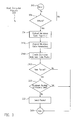
- FIG. 3 is a flow diagram of a host computer process 300 in accordance with one embodiment of the present invention. Execution of host signature extraction application 102 and behavior blocking application 126A on host computer system 104A results in the operations of host computer process 300 as described below in one embodiment. Although host computer process 300 is described in relation to host computer system 104A, in light of this disclosure, those of skill in the art will understand that host computer process 300 is equally applicable to one or more of host computer systems 104B, ..., 104n.
- attack check operation 204 a determination is made as to whether a suspected or actual attack, a malicious exploit, use of common exploit tools such as an autorooter, hereinafter referred to as an attack for simplicity of discussion, has occurred on host computer system 104A. If an attack has not occurred on host computer system 104A, flow remains at attack check operation 204. Conversely, if an attack has occurred on host computer system 104A, flow moves to an extract malicious code signature operation 304.
- the signature sometimes called malicious code signature
- the signature is extracted.
- a custom size signature from the malicious code is extracted using an extraction engine.
- the malicious code signature is 32 bytes of the malicious code extracted backwards from the callers address.
- a signature is a specific sequence of information, e.g., bytes.
- the signature is extracted by processing the malicious code to extract critical malicious code information, for example, information unique to the malicious code, as those of skill in the art will understand in light of this disclosure.
- the following is a replication code snippet, i.e., a malicious code snippet, of the slammer worm.
- the bold area is the automatically selected malicious code signature based on the location of the callers address: 00000142 send_myself: 00000142 8B 45 B4 mov eax, [ebp-4Ch] ; randomize!
- 00000145 8D 0C 40 lea ecx, [eax+eax*2] 00000148 8D 14 88 lea edx, [eax+ecx*4] 0000014B C1 E2 04 shl edx, 4 0000014E 01 C2 add edx, eax 00000150 C1 E2 08 shl edx, 8 00000153 29 C2 sub edx, eax 00000155 8D 04 90 lea eax, [eax+edx*4] 00000158 01 D8 add eax, ebx 0000015A 89 45 B4 mov [ebp-4Ch], eax 0000015D 6A 10 push 16 0000015F 8D 45 B0 lea eax, [ebp-50h] 00000162 50 push eax 00000163 31 C9 xor ecx, ecx 00000165 51 push ecx ; 0 000
- the extracted malicious code signature is: 04 90 01 D8 89 45 B4 6A 10 8D 45 B0 50 31 C9 51 66 81 F1 78 01 51 8D 45 03 50 8B 45 AC 50 FF D6
- Append malicious code parameters operation 212A is similar to append malicious code parameters operation 212 of FIG. 2, the discussion of which is incorporated herein.
- append malicious code parameters operation 212A parameters associated with the malicious code are appended to the extracted malicious code signature extracted in extract malicious code signature operation 304.
- Create extracted malicious code packet operation 214A is similar to create extracted malicious code packet operation 214 of FIG. 2, the discussion of which is incorporated herein.
- an extracted malicious code packet is created.
- an extracted malicious code packet is a collection of information which includes the malicious code parameters appended in append malicious code parameters operation 212A and the extracted malicious code signature extracted in extract malicious code signature operation 304.
- this collection of information is formatted as a network or other packet for transmission from host computer system 104A on to network 106.
- Protocols and formats for network packets are well known to those of skill in the art and depend, for example, on the particular type of network 106, and so create extracted malicious code packet operation 214A is not discussed further to avoid detracting from the principals of the invention.
- New packet check operation 216A is similar to new packet check operation 216 of FIG. 2, the discussion of which is incorporated herein.
- new packet check operation 216A a determination is made as to whether the extracted malicious code packet created during create extracted malicious code packet operation 214A is new, i.e., is not a copy of a previous extracted malicious code packet previously created in create extracted malicious code packet operation 214A.
- the malicious code is repeatedly executed as a result of an endless execution loop through the malicious code.
- a determination is made that the extracted malicious code packet created in create extracted malicious code packet operation 214A is not new, and flow moves to and exits at exit operation 308 or returns to attack check operation 204.
- the malicious code parameters appended in append malicious code parameters operation 212A match previous malicious code parameters of a previous extracted malicious code packet.
- the malicious code signature extracted in extract malicious code signature operation 304 matches a previously extracted malicious code signature of a previous extracted malicious code packet. In this event, a determination is made that the extracted malicious code packet created during create extracted malicious code packet operation 214A is not a new extracted malicious code packet in new packet check operation 216A.
- the malicious code parameters appended in append malicious code parameters operation 212A match previous malicious code parameters of a previous extracted malicious code packet, a determination is made that the extracted malicious code packet is not a new extracted malicious code packet in new packet check operation 216A. The determination that the extracted malicious code packet is not a new extracted malicious code packet is made even if the malicious code signature extracted in extract malicious code signature operation 304 does not match a previously extracted malicious code signature.
- the malicious code signature extracted in extract malicious code signature operation 304 matches a previously extracted malicious code signature of a previous extracted malicious code packet, a determination is made that the extracted malicious code packet is not a new extracted malicious code packet in new packet check operation 216A. The determination that the extracted malicious code packet is not a new extracted malicious code packet is made even if the malicious code parameters appended in append malicious code parameters operation 212A do not match previous malicious code parameters of a previous extracted malicious code packet.
- malware parameters appended in append malicious code parameters operation 212A do not match previous malicious code parameters of a previous extracted malicious code packet, a determination is made that the extracted malicious code packet is a new extracted malicious code packet in new packet check operation 216A.
- the malicious code signature extracted in extract malicious code signature operation 304 does not match a previously extracted malicious code signature of a previous extracted malicious code packet, respectively, a determination is made that the extracted malicious code packet is a new extracted malicious code packet in new packet check operation 216A.
- a buffer and comparison function e.g., a byte to byte comparison, are used to implement new packet check operation 216A.
- a buffer and comparison function e.g., a byte to byte comparison
- other techniques are used in other embodiments and the particular technique used is not essential to the present invention.
- FIG. 4 is a flow diagram of a local analysis center computer process 400 in accordance with one embodiment of the present invention. Execution of local analysis center signature extracted application 114 on local analysis center computer system 112 results in the operations of local analysis center computer process 400 as described below in one embodiment.
- receive packet check operation 404 a determination is made as to whether an extracted malicious code packet has been received by local analysis center computer system 112. As discussed above, an extracted malicious code packet is sent from host computer system 104A in send packet operation 222 of FIGS. 2 and 3 to local analysis center computer center 112.
- check operation 405 a determination is made as to whether the extracted malicious code packet received in receive packet check operation 404 includes a malicious code signature, i.e., when the extracted malicious code packet was created in create extracted malicious code packet operation 214A of FIG. 3. If the extracted malicious code packet does not include a malicious code signature, flow moves to an extract malicious code signature operation 406. Conversely, if the extracted malicious code packet does include a malicious code signature, flow moves to an attack threshold exceeded check operation 408.
- a malicious code signature is extracted from the extracted malicious code packet.
- the malicious code signature is extracted from the extracted malicious code packet in a manner similar to the extraction of the malicious code signature from the malicious code of operation 304 of FIG. 3, the discussion of which is herein incorporated by reference.
- attack threshold exceeded check operation 408 a determination is made as to whether an attack threshold has been exceeded.
- An attack threshold is a minimum threshold of suspicious activity associated with the received extracted malicious code packets to results in a conclusion that an attack has occurred on client network 120.
- an attack threshold counter is incremented each time an extracted malicious code packet is received by local analysis center computer system 112.
- the attack threshold counter is incremented more or less depending upon the suspicion associate with the extracted malicious code packet.
- certain extracted malicious code packets are conclusive or nearly conclusive that an attack has in fact occurred and thus the attack threshold counter is substantially incremented.
- a single instance of these types of extracted malicious code packets may cause the attack threshold counter to be incremented above the attack threshold resulting in a determination that the attack threshold has been exceeded in attack threshold exceeded check operation 408.
- attack threshold exceeded check operation 408 If a determination is made that the attack threshold is not exceeded in attack threshold exceeded check operation 408, flow moves to and exits at exit operation 410 or returns to check operation 404.
- create signature update operation 412 a signature update for intrusion detection system 108 is created.
- a definition file for use by intrusion detection system 108 is updated with the malicious code signature extracted during extract malicious code signature operation 406 or received with the extracted malicious code packet during check operation 404. Updating and use of definition files by intrusion detection systems are well known to those of skill in the art and so is not discussed further to avoid detracting from the principals of the present invention.
- maximum number of updates sent check operation 414 a determination is made as to whether the maximum number of signature updates have been sent from local analysis center computer system 112 to intrusion detection system 108. For example, the number of signature updates that have been sent are maintained in a counter and this counter is compared to the maximum number.
- the maximum number of signature updates allowed to be sent from local analysis center computer system 112 is 3 per day although other maximum numbers are used in other embodiments.
- deliver signature update operation 416 the signature update created in create signature update operation 412 is sent from local analysis center computer system 112.
- the signature update is sent to intrusion detection system 108.
- the signature update is sent directly to global analysis center 116.
- the signature update is sent to both intrusion detection system 108 and global analysis center 116.
- host computer systems 104 automatically detect malicious code, which is infecting host computer systems 104. Further, host computer systems 104 also automatically generate and send extracted malicious code packets from the runtime systems to local analysis center computer system 112.
- Local analysis center computer system 112 determines whether an attack is taking place on client network 120 based upon the received extracted malicious code packets. If local analysis center computer system 112 determines that an attack is in fact taking place, local analysis center computer system 112 automatically creates a signature update including the malicious code signature of the malicious code undertaking the attack.
- This signature update is automatically provided to intrusion detection system 108, which uses the signature update to prevent the further spread of the malicious code on client network 120.
- the signature update is automatically provided, e.g., without human intervention and the associated time delay, to intrusion detection system 108 immediately upon detecting an attack on client network 120. Accordingly, the attack is defeated before the malicious code, e.g., a CodeRed or Slammer type computer worm, becomes widespread on client network 120.
- maximum number of updates sent check operation 414 if affirmative or from deliver signature update operation 416 to maximum number of packets/signatures sent check operation 418.
- maximum number of packets/signatures sent check operation 418 a determination is made as to whether the maximum number of extracted malicious code packets and/or malicious code signatures have been sent from local analysis center computer system 112 to global analysis center 116. For example, the number of extracted malicious code packets and/or malicious code signatures that have been sent are maintained in a counter and this counter is compared to the maximum number.
- the maximum number of extracted malicious code packets and/or malicious code signatures allowed to be sent from local analysis center computer system 112 is 3 per day although other maximum numbers are used in other embodiments.
- send malicious code packet/signature operation 420 the extracted malicious code packet received in check operation 404 and/or the malicious code signature received as part of the extracted malicious code packet received in check operation 404 or extracted in extract malicious code signature operation 406 is sent from local analysis center computer system 112 to global analysis center 116. From send malicious code packet/signature operation 420, flow moves to and exits at exit operation 410 or returns to check operation 404.
- host computer systems 104 automatically detect malicious code, which is infecting host computer systems 104. Further, host computer systems 104 also automatically generate and send extracted malicious code packets to local analysis center computer system 112.
- Local analysis center computer system 112 determines whether an attack is taking place on client network 120 based upon the received extracted malicious code packets. If local analysis center computer system 112 determines that an attack is in fact taking place, local analysis center computer system 112 automatically sends an extracted malicious code packet or malicious code signature of the malicious code undertaking the attack to global analysis center 116.
- This extracted malicious code packet or malicious code signature is automatically provided to global analysis center 116, which uses the extracted malicious code packet or malicious code signature to prevent the further spread of the malicious code globally, for example by delivering signature updates to global clients.
- the extracted malicious code packet or malicious code signature is automatically provided, e.g., without human intervention and the associated time delay, to global analysis center 116 immediately upon detecting an attack on client network 120. Accordingly, global analysis center 116 can rapidly take action, e.g., provide attack signature data to other networks, to defeat the attack before the malicious code becomes widespread globally.
- the extracted malicious code packet or malicious code signature delivered to global analysis center 116 is meaningful and useful information as compared to a standard confusing log file.
- operations 412, 414, and 416 are optional and are not performed.
- flow moves directly to check operation 418.
- operations 418 and 420 are optional and not performed.
- flow moves directly to and exits at exit operation 410 or returns to check operation 404.
- operations 418 and 420 are performed prior to operations 412, 414 and 416.
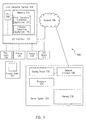
- FIG. 5 is a diagram of a client-server system 500 that includes a host signature extraction application 102 executing on a host computer system 104, e.g., a first computer system, in accordance with one embodiment of the present invention.
- host computer system 104 is representative of host computer systems 104 of FIG. 1 in one embodiment.
- client-server system 500 is part of client network 120 in one embodiment.
- Host computer system 104 typically includes a central processing unit (CPU) 508, hereinafter processor 508, an input output (I/O) interface 510, and a memory 514.
- Host computer system 104 may further include standard devices like a keyboard 516, a mouse 518, a printer 520, and a display device 522, as well as, one or more standard input/output (I/O) devices 523, such as a compact disk (CD) or DVD drive, floppy disk drive, or other digital or waveform port for inputting data to and outputting data from host computer system 104.
- I/O input/output
- host signature extraction application 102 is loaded into host computer system 104 via I/O device 523, such as from a CD, DVD or floppy disk containing host signature extraction application 102.
- Host computer system 104 is coupled to a server system 530 of client-server system 500 by a network 106.
- Server system 530 typically includes a display device 532, a processor 534, a memory 536, and a network interface 538.
- local analysis center computer system 112 is similar to host computer system 102 and/or server system 530, for example, includes a central processing unit, an input output (I/O) interface, and a memory. Local analysis center computer system 112 may further include standard devices like a keyboard, a mouse, a printer, a display device and an I/O device(s). The various hardware components of local analysis center computer system 112 are not illustrated to avoid detracting from the principals of the invention.
- Network 106 can be any network or network system that is of interest to a user.
- network interface 538 and I/O interface 510 include analog modems, digital modems, or a network interface card.
- Host signature extraction application 102 and intrusion prevention application 126 are stored in memory 514 of host computer system 104 and executed on host computer system 104.
- Local analysis center signature extraction application 114 of local analysis center computer system 112 is similarly stored in a memory of local analysis center computer system 112 and executed on local analysis center computer system 112 in one embodiment.
- the particular type of and configuration of host computer system 104, server system 530, and local analysis center computer system 112 are not essential to this embodiment of the present invention.
- Host signature extraction application 102 is in computer memory 514.
- a computer memory refers to a volatile memory, a non-volatile memory, or a combination of the two.
- host signature extraction application 102 and local analysis center signature extraction application 114 are referred to as applications, this is illustrative only. Host signature extraction application 102 and local analysis center signature extraction application 114 should be capable of being called from an application or the operating system. In one embodiment, an application is generally defined to be any executable code. Moreover, those of skill in the art will understand that when it is said that an application or an operation takes some action, the action is the result of executing one or more instructions by a processor. In one embodiment, host signature extraction application 102 and/or local analysis center signature extraction application 114 is implemented as a system level, e.g., kernel mode driver.
- kernel mode driver e.g., kernel mode driver
- an embodiment of the present invention may be carried out using any suitable hardware configuration involving a personal computer, a workstation, a portable device, or a network of computer devices.
- Other network configurations other than client-server configurations, e.g., peer-to-peer, web-based, intranet, internet network configurations, are used in other embodiments.
- a computer program product comprises a medium configured to store or transport computer readable code in accordance with an embodiment of the present invention.
- Some examples of computer program products are CD-ROM discs, DVDs, ROM cards, floppy discs, magnetic tapes, computer hard drives, servers on a network and signals transmitted over a network representing computer readable code.
- this medium may belong to the computer system itself. However, the medium also may be removed from the computer system.
- host signature extraction application 102 may be stored in memory 536 that is physically located in a location different from processor 108.
- Processor 108 should be coupled to the memory 536. This could be accomplished in a client-server system, or alternatively via a connection to another computer via modems and analog lines, or digital interfaces and a digital carrier line.
- host computer system 104, local analysis center computer system 112 and/or server system 530 is a portable computer, a workstation, a two-way pager, a cellular telephone, a digital wireless telephone, a personal digital assistant, a server computer, an Internet appliance, or any other device that includes components that can execute the signature extraction functionality in accordance with at least one of the embodiments as described herein.
- host computer system 104, local analysis center computer system 112 and/or server system 530 is comprised of multiple different computers, wireless devices, cellular telephones, digital telephones, two-way pagers, or personal digital assistants, server computers, or any desired combination of these devices that are interconnected to perform, the methods as described herein.
- the signature extraction functionality in accordance with one embodiment of present invention can be implemented in a wide variety of computer system configurations.
- the signature extraction functionality could be stored as different modules in memories of different devices.
- signature extraction application 102 could initially be stored in server system 530, and then as necessary, a portion of signature extraction application 102 could be transferred to host computer system 104 and executed on host computer system 104. Consequently, part of the signature extraction functionality would be executed on processor 534 of server system 530, and another part would be executed on processor 108 of host computer system 104.
- those of skill in the art can implement various embodiments of the present invention in a wide-variety of physical hardware configurations using an operating system and computer programming language of interest to the user.
- signature extraction application 102 is stored in memory 536 of server system 530. Signature extraction application 102 is transferred over network 106 to memory 514 in host computer system 104.
- network interface 538 and I/O interface 510 would include analog modems, digital modems, or a network interface card. If modems are used, network 106 includes a communications network, and signature extraction application 102 is downloaded via the communications network.
Landscapes
- Engineering & Computer Science (AREA)
- Computer Security & Cryptography (AREA)
- Signal Processing (AREA)
- Computing Systems (AREA)
- General Engineering & Computer Science (AREA)
- Computer Networks & Wireless Communication (AREA)
- Computer Hardware Design (AREA)
- Health & Medical Sciences (AREA)
- General Health & Medical Sciences (AREA)
- Virology (AREA)
- Computer And Data Communications (AREA)
- Data Exchanges In Wide-Area Networks (AREA)
- Extraction Or Liquid Replacement (AREA)
Applications Claiming Priority (2)
| Application Number | Priority Date | Filing Date | Title |
|---|---|---|---|
| US611472 | 2003-06-30 | ||
| US10/611,472 US7392543B2 (en) | 2003-06-30 | 2003-06-30 | Signature extraction system and method |
Publications (3)
| Publication Number | Publication Date |
|---|---|
| EP1494427A2 true EP1494427A2 (de) | 2005-01-05 |
| EP1494427A3 EP1494427A3 (de) | 2007-08-29 |
| EP1494427B1 EP1494427B1 (de) | 2009-11-25 |
Family
ID=33435434
Family Applications (1)
| Application Number | Title | Priority Date | Filing Date |
|---|---|---|---|
| EP04252893A Expired - Lifetime EP1494427B1 (de) | 2003-06-30 | 2004-05-19 | Vorrichtung und Verfahren zur Kennzeichnungsgewinnung |
Country Status (4)
| Country | Link |
|---|---|
| US (1) | US7392543B2 (de) |
| EP (1) | EP1494427B1 (de) |
| AT (1) | ATE450110T1 (de) |
| DE (1) | DE602004024270D1 (de) |
Cited By (2)
| Publication number | Priority date | Publication date | Assignee | Title |
|---|---|---|---|---|
| EP1959367A3 (de) * | 2007-02-19 | 2008-12-31 | Deutsche Telekom AG | Automatische Extraktion von Signaturen für Schadprogramme |
| US8171554B2 (en) * | 2008-02-04 | 2012-05-01 | Yuval Elovici | System that provides early detection, alert, and response to electronic threats |
Families Citing this family (129)
| Publication number | Priority date | Publication date | Assignee | Title |
|---|---|---|---|---|
| US7657935B2 (en) | 2001-08-16 | 2010-02-02 | The Trustees Of Columbia University In The City Of New York | System and methods for detecting malicious email transmission |
| US9306966B2 (en) | 2001-12-14 | 2016-04-05 | The Trustees Of Columbia University In The City Of New York | Methods of unsupervised anomaly detection using a geometric framework |
| US7225343B1 (en) | 2002-01-25 | 2007-05-29 | The Trustees Of Columbia University In The City Of New York | System and methods for adaptive model generation for detecting intrusions in computer systems |
| US7519996B2 (en) * | 2003-08-25 | 2009-04-14 | Hewlett-Packard Development Company, L.P. | Security intrusion mitigation system and method |
| US7519726B2 (en) * | 2003-12-12 | 2009-04-14 | International Business Machines Corporation | Methods, apparatus and computer programs for enhanced access to resources within a network |
| US7475427B2 (en) * | 2003-12-12 | 2009-01-06 | International Business Machines Corporation | Apparatus, methods and computer programs for identifying or managing vulnerabilities within a data processing network |
| US7398399B2 (en) * | 2003-12-12 | 2008-07-08 | International Business Machines Corporation | Apparatus, methods and computer programs for controlling performance of operations within a data processing system or network |
| US20050132205A1 (en) * | 2003-12-12 | 2005-06-16 | International Business Machines Corporation | Apparatus, methods and computer programs for identifying matching resources within a data processing network |
| US7555777B2 (en) * | 2004-01-13 | 2009-06-30 | International Business Machines Corporation | Preventing attacks in a data processing system |
| US7966658B2 (en) * | 2004-04-08 | 2011-06-21 | The Regents Of The University Of California | Detecting public network attacks using signatures and fast content analysis |
| US7971255B1 (en) | 2004-07-15 | 2011-06-28 | The Trustees Of Columbia University In The City Of New York | Detecting and preventing malcode execution |
| US7562389B1 (en) | 2004-07-30 | 2009-07-14 | Cisco Technology, Inc. | Method and system for network security |
| US7555774B2 (en) * | 2004-08-02 | 2009-06-30 | Cisco Technology, Inc. | Inline intrusion detection using a single physical port |
| US7549158B2 (en) * | 2004-08-31 | 2009-06-16 | Microsoft Corporation | Method and system for customizing a security policy |
| WO2006101549A2 (en) * | 2004-12-03 | 2006-09-28 | Whitecell Software, Inc. | Secure system for allowing the execution of authorized computer program code |
| US7591010B2 (en) * | 2005-01-19 | 2009-09-15 | Microsoft Corporation | Method and system for separating rules of a security policy from detection criteria |
| US7725938B2 (en) | 2005-01-20 | 2010-05-25 | Cisco Technology, Inc. | Inline intrusion detection |
| US7707619B2 (en) * | 2005-01-28 | 2010-04-27 | Microsoft Corporation | Method and system for troubleshooting when a program is adversely impacted by a security policy |
| US7765481B2 (en) * | 2005-05-03 | 2010-07-27 | Mcafee, Inc. | Indicating website reputations during an electronic commerce transaction |
| US8566726B2 (en) | 2005-05-03 | 2013-10-22 | Mcafee, Inc. | Indicating website reputations based on website handling of personal information |
| US8438499B2 (en) * | 2005-05-03 | 2013-05-07 | Mcafee, Inc. | Indicating website reputations during user interactions |
| US9384345B2 (en) * | 2005-05-03 | 2016-07-05 | Mcafee, Inc. | Providing alternative web content based on website reputation assessment |
| US20060253582A1 (en) * | 2005-05-03 | 2006-11-09 | Dixon Christopher J | Indicating website reputations within search results |
| US7562304B2 (en) | 2005-05-03 | 2009-07-14 | Mcafee, Inc. | Indicating website reputations during website manipulation of user information |
| US20060253584A1 (en) * | 2005-05-03 | 2006-11-09 | Dixon Christopher J | Reputation of an entity associated with a content item |
| US7822620B2 (en) * | 2005-05-03 | 2010-10-26 | Mcafee, Inc. | Determining website reputations using automatic testing |
| US20060256730A1 (en) * | 2005-05-12 | 2006-11-16 | Compton Richard A | Intelligent quarantine device |
| US20060255978A1 (en) * | 2005-05-16 | 2006-11-16 | Manisha Agarwala | Enabling Trace and Event Selection Procedures Independent of the Processor and Memory Variations |
| US8028160B1 (en) * | 2005-05-27 | 2011-09-27 | Marvell International Ltd. | Data link layer switch with protection against internet protocol spoofing attacks |
| US20070022315A1 (en) * | 2005-06-29 | 2007-01-25 | University Of Washington | Detecting and reporting changes on networked computers |
| US7681234B2 (en) * | 2005-06-30 | 2010-03-16 | Microsoft Corporation | Preventing phishing attacks |
| GB0513375D0 (en) | 2005-06-30 | 2005-08-03 | Retento Ltd | Computer security |
| US7962789B2 (en) * | 2005-07-04 | 2011-06-14 | Hewlett-Packard Development Company, L.P. | Method and apparatus for automated testing of a utility computing system |
| US20070028291A1 (en) * | 2005-07-29 | 2007-02-01 | Bit 9, Inc. | Parametric content control in a network security system |
| US8272058B2 (en) * | 2005-07-29 | 2012-09-18 | Bit 9, Inc. | Centralized timed analysis in a network security system |
| US8984636B2 (en) * | 2005-07-29 | 2015-03-17 | Bit9, Inc. | Content extractor and analysis system |
| US7895651B2 (en) * | 2005-07-29 | 2011-02-22 | Bit 9, Inc. | Content tracking in a network security system |
| WO2007022454A2 (en) | 2005-08-18 | 2007-02-22 | The Trustees Of Columbia University In The City Of New York | Systems, methods, and media protecting a digital data processing device from attack |
| US7814548B2 (en) | 2005-09-13 | 2010-10-12 | Honeywell International Inc. | Instance based learning framework for effective behavior profiling and anomaly intrusion detection |
| US8443442B2 (en) * | 2006-01-31 | 2013-05-14 | The Penn State Research Foundation | Signature-free buffer overflow attack blocker |
| US8701196B2 (en) | 2006-03-31 | 2014-04-15 | Mcafee, Inc. | System, method and computer program product for obtaining a reputation associated with a file |
| US7793094B2 (en) * | 2006-04-18 | 2010-09-07 | Cisco Technology, Inc. | HTTP cookie protection by a network security device |
| US8429746B2 (en) * | 2006-05-22 | 2013-04-23 | Neuraliq, Inc. | Decoy network technology with automatic signature generation for intrusion detection and intrusion prevention systems |
| US20140373144A9 (en) | 2006-05-22 | 2014-12-18 | Alen Capalik | System and method for analyzing unauthorized intrusion into a computer network |
| US20130276109A1 (en) * | 2006-07-11 | 2013-10-17 | Mcafee, Inc. | System, method and computer program product for detecting activity in association with program resources that has at least a potential of an unwanted effect on the program |
| US8065664B2 (en) * | 2006-08-07 | 2011-11-22 | Webroot Software, Inc. | System and method for defining and detecting pestware |
| US8135994B2 (en) | 2006-10-30 | 2012-03-13 | The Trustees Of Columbia University In The City Of New York | Methods, media, and systems for detecting an anomalous sequence of function calls |
| US20080162397A1 (en) * | 2007-01-03 | 2008-07-03 | Ori Zaltzman | Method for Analyzing Activities Over Information Networks |
| US8806629B1 (en) * | 2008-01-02 | 2014-08-12 | Cisco Technology, Inc. | Automatic generation of policy-driven anti-malware signatures and mitigation of DoS (denial-of-service) attacks |
| US8650648B2 (en) * | 2008-03-26 | 2014-02-11 | Sophos Limited | Method and system for detecting restricted content associated with retrieved content |
| US8220050B2 (en) * | 2008-03-31 | 2012-07-10 | Sophos Plc | Method and system for detecting restricted content associated with retrieved content |
| US9609015B2 (en) * | 2008-05-28 | 2017-03-28 | Zscaler, Inc. | Systems and methods for dynamic cloud-based malware behavior analysis |
| US9152789B2 (en) * | 2008-05-28 | 2015-10-06 | Zscaler, Inc. | Systems and methods for dynamic cloud-based malware behavior analysis |
| US8009559B1 (en) * | 2008-08-28 | 2011-08-30 | Juniper Networks, Inc. | Global flow tracking system |
| US20100058474A1 (en) * | 2008-08-29 | 2010-03-04 | Avg Technologies Cz, S.R.O. | System and method for the detection of malware |
| US8667583B2 (en) * | 2008-09-22 | 2014-03-04 | Microsoft Corporation | Collecting and analyzing malware data |
| US20100095348A1 (en) * | 2008-10-10 | 2010-04-15 | Ciphent, Inc. | System and method for management and translation of technical security policies and configurations |
| US8984628B2 (en) * | 2008-10-21 | 2015-03-17 | Lookout, Inc. | System and method for adverse mobile application identification |
| US8108933B2 (en) * | 2008-10-21 | 2012-01-31 | Lookout, Inc. | System and method for attack and malware prevention |
| US8347386B2 (en) | 2008-10-21 | 2013-01-01 | Lookout, Inc. | System and method for server-coupled malware prevention |
| US9235704B2 (en) | 2008-10-21 | 2016-01-12 | Lookout, Inc. | System and method for a scanning API |
| US8533844B2 (en) * | 2008-10-21 | 2013-09-10 | Lookout, Inc. | System and method for security data collection and analysis |
| US8099472B2 (en) * | 2008-10-21 | 2012-01-17 | Lookout, Inc. | System and method for a mobile cross-platform software system |
| US9367680B2 (en) * | 2008-10-21 | 2016-06-14 | Lookout, Inc. | System and method for mobile communication device application advisement |
| US9043919B2 (en) | 2008-10-21 | 2015-05-26 | Lookout, Inc. | Crawling multiple markets and correlating |
| US9781148B2 (en) | 2008-10-21 | 2017-10-03 | Lookout, Inc. | Methods and systems for sharing risk responses between collections of mobile communications devices |
| US8051480B2 (en) * | 2008-10-21 | 2011-11-01 | Lookout, Inc. | System and method for monitoring and analyzing multiple interfaces and multiple protocols |
| US8060936B2 (en) | 2008-10-21 | 2011-11-15 | Lookout, Inc. | Security status and information display system |
| US8087067B2 (en) | 2008-10-21 | 2011-12-27 | Lookout, Inc. | Secure mobile platform system |
| US8467768B2 (en) | 2009-02-17 | 2013-06-18 | Lookout, Inc. | System and method for remotely securing or recovering a mobile device |
| US9042876B2 (en) | 2009-02-17 | 2015-05-26 | Lookout, Inc. | System and method for uploading location information based on device movement |
| US8538815B2 (en) | 2009-02-17 | 2013-09-17 | Lookout, Inc. | System and method for mobile device replacement |
| US9955352B2 (en) | 2009-02-17 | 2018-04-24 | Lookout, Inc. | Methods and systems for addressing mobile communications devices that are lost or stolen but not yet reported as such |
| US8855601B2 (en) | 2009-02-17 | 2014-10-07 | Lookout, Inc. | System and method for remotely-initiated audio communication |
| US8291497B1 (en) * | 2009-03-20 | 2012-10-16 | Symantec Corporation | Systems and methods for byte-level context diversity-based automatic malware signature generation |
| US7743419B1 (en) * | 2009-10-01 | 2010-06-22 | Kaspersky Lab, Zao | Method and system for detection and prediction of computer virus-related epidemics |
| US8397301B2 (en) * | 2009-11-18 | 2013-03-12 | Lookout, Inc. | System and method for identifying and assessing vulnerabilities on a mobile communication device |
| US8555393B2 (en) * | 2009-12-03 | 2013-10-08 | Verizon Patent And Licensing Inc. | Automated testing for security vulnerabilities of devices |
| US10210162B1 (en) | 2010-03-29 | 2019-02-19 | Carbonite, Inc. | Log file management |
| US8789189B2 (en) | 2010-06-24 | 2014-07-22 | NeurallQ, Inc. | System and method for sampling forensic data of unauthorized activities using executability states |
| US9106697B2 (en) | 2010-06-24 | 2015-08-11 | NeurallQ, Inc. | System and method for identifying unauthorized activities on a computer system using a data structure model |
| US8839433B2 (en) * | 2010-11-18 | 2014-09-16 | Comcast Cable Communications, Llc | Secure notification on networked devices |
| US8738765B2 (en) | 2011-06-14 | 2014-05-27 | Lookout, Inc. | Mobile device DNS optimization |
| US8788881B2 (en) | 2011-08-17 | 2014-07-22 | Lookout, Inc. | System and method for mobile device push communications |
| RU2014112261A (ru) | 2011-09-15 | 2015-10-20 | Зе Трастис Оф Коламбия Юниверсити Ин Зе Сити Оф Нью-Йорк | Системы, способы и носители информации для обнаружения полезных нагрузок возвратно-ориентированного программирования |
| US20150020203A1 (en) * | 2011-09-19 | 2015-01-15 | Beijing Qihoo Technology Company Limited | Method and device for processing computer viruses |
| CN102523223B (zh) * | 2011-12-20 | 2014-08-27 | 北京神州绿盟信息安全科技股份有限公司 | 一种木马检测的方法及装置 |
| US10474811B2 (en) | 2012-03-30 | 2019-11-12 | Verisign, Inc. | Systems and methods for detecting malicious code |
| US9407443B2 (en) | 2012-06-05 | 2016-08-02 | Lookout, Inc. | Component analysis of software applications on computing devices |
| US9589129B2 (en) | 2012-06-05 | 2017-03-07 | Lookout, Inc. | Determining source of side-loaded software |
| US9715325B1 (en) | 2012-06-21 | 2017-07-25 | Open Text Corporation | Activity stream based interaction |
| WO2014046974A2 (en) | 2012-09-20 | 2014-03-27 | Case Paul Sr | Case secure computer architecture |
| US8655307B1 (en) | 2012-10-26 | 2014-02-18 | Lookout, Inc. | System and method for developing, updating, and using user device behavioral context models to modify user, device, and application state, settings and behavior for enhanced user security |
| US9208215B2 (en) | 2012-12-27 | 2015-12-08 | Lookout, Inc. | User classification based on data gathered from a computing device |
| US9374369B2 (en) | 2012-12-28 | 2016-06-21 | Lookout, Inc. | Multi-factor authentication and comprehensive login system for client-server networks |
| US8855599B2 (en) | 2012-12-31 | 2014-10-07 | Lookout, Inc. | Method and apparatus for auxiliary communications with mobile communications device |
| US9424409B2 (en) | 2013-01-10 | 2016-08-23 | Lookout, Inc. | Method and system for protecting privacy and enhancing security on an electronic device |
| US9642008B2 (en) | 2013-10-25 | 2017-05-02 | Lookout, Inc. | System and method for creating and assigning a policy for a mobile communications device based on personal data |
| US9417893B2 (en) | 2013-11-20 | 2016-08-16 | International Business Machines Corporation | Triggered controlled event listener learner |
| US9753796B2 (en) | 2013-12-06 | 2017-09-05 | Lookout, Inc. | Distributed monitoring, evaluation, and response for multiple devices |
| US10122747B2 (en) | 2013-12-06 | 2018-11-06 | Lookout, Inc. | Response generation after distributed monitoring and evaluation of multiple devices |
| US9591015B1 (en) | 2014-03-28 | 2017-03-07 | Fireeye, Inc. | System and method for offloading packet processing and static analysis operations |
| WO2015200211A1 (en) | 2014-06-22 | 2015-12-30 | Webroot Inc. | Network threat prediction and blocking |
| US10805340B1 (en) | 2014-06-26 | 2020-10-13 | Fireeye, Inc. | Infection vector and malware tracking with an interactive user display |
| US9591005B2 (en) * | 2014-08-20 | 2017-03-07 | Ge Aviation Systems Llc | Avionics intrusion detection system and method of determining intrusion of an avionics component or system |
| US9690933B1 (en) | 2014-12-22 | 2017-06-27 | Fireeye, Inc. | Framework for classifying an object as malicious with machine learning for deploying updated predictive models |
| US9838417B1 (en) | 2014-12-30 | 2017-12-05 | Fireeye, Inc. | Intelligent context aware user interaction for malware detection |
| CA2973367A1 (en) | 2015-01-07 | 2016-07-14 | Gosecure Inc. | System and method for monitoring a computer system using machine interpretable code |
| US10148693B2 (en) | 2015-03-25 | 2018-12-04 | Fireeye, Inc. | Exploit detection system |
| CA2982463C (en) | 2015-05-01 | 2019-03-05 | Lookout, Inc. | Determining source of side-loaded software |
| US10395133B1 (en) | 2015-05-08 | 2019-08-27 | Open Text Corporation | Image box filtering for optical character recognition |
| US10599844B2 (en) | 2015-05-12 | 2020-03-24 | Webroot, Inc. | Automatic threat detection of executable files based on static data analysis |
| US9971624B2 (en) | 2015-05-17 | 2018-05-15 | Nicira, Inc. | Logical processing for containers |
| US10289686B1 (en) | 2015-06-30 | 2019-05-14 | Open Text Corporation | Method and system for using dynamic content types |
| RU2617654C2 (ru) * | 2015-09-30 | 2017-04-25 | Акционерное общество "Лаборатория Касперского" | Система и способ формирования набора антивирусных записей, используемых для обнаружения вредоносных файлов на компьютере пользователя |
| US10078526B2 (en) * | 2015-11-01 | 2018-09-18 | Nicira, Inc. | Securing a managed forwarding element that operates within a data compute node |
| US10063469B2 (en) | 2015-12-16 | 2018-08-28 | Nicira, Inc. | Forwarding element implementation for containers |
| US12153674B2 (en) | 2016-04-15 | 2024-11-26 | Sophos Limited | Tracking malware root causes with an event graph |
| US9967267B2 (en) | 2016-04-15 | 2018-05-08 | Sophos Limited | Forensic analysis of computing activity |
| US10218697B2 (en) | 2017-06-09 | 2019-02-26 | Lookout, Inc. | Use of device risk evaluation to manage access to services |
| US11204788B2 (en) * | 2017-12-11 | 2021-12-21 | Comodo Security Solutions, Inc. | Method to protect against fileless infection from command line interpreters or documents |
| US10728034B2 (en) | 2018-02-23 | 2020-07-28 | Webroot Inc. | Security privilege escalation exploit detection and mitigation |
| US11159553B2 (en) | 2018-04-13 | 2021-10-26 | Webroot Inc. | Determining exploit prevention using machine learning |
| US11204998B2 (en) * | 2018-08-07 | 2021-12-21 | Mcafee, Llc | Detection and mitigation of fileless security threats |
| US11314863B2 (en) | 2019-03-27 | 2022-04-26 | Webroot, Inc. | Behavioral threat detection definition and compilation |
| US11829467B2 (en) | 2019-12-18 | 2023-11-28 | Zscaler, Inc. | Dynamic rules engine in a cloud-based sandbox |
| US12483565B2 (en) | 2019-12-18 | 2025-11-25 | Zscaler, Inc. | URL risk analysis using heuristics and scanning |
| US12602467B2 (en) | 2020-01-30 | 2026-04-14 | Zscaler, Inc. | In-memory scan for threat detection with binary instrumentation backed generic unpacking, decryption, and deobfuscation |
| TWI755278B (zh) | 2021-02-09 | 2022-02-11 | 國立中央大學 | 偵測無檔案惡意軟體的系統及方法 |
Family Cites Families (16)
| Publication number | Priority date | Publication date | Assignee | Title |
|---|---|---|---|---|
| EP0586427A4 (en) * | 1991-05-13 | 1997-01-29 | Hill William Stanley | Method and apparatus for preventing "disease" damage in computer systems |
| US5696822A (en) | 1995-09-28 | 1997-12-09 | Symantec Corporation | Polymorphic virus detection module |
| US5822517A (en) | 1996-04-15 | 1998-10-13 | Dotan; Eyal | Method for detecting infection of software programs by memory resident software viruses |
| US5802178A (en) * | 1996-07-30 | 1998-09-01 | Itt Industries, Inc. | Stand alone device for providing security within computer networks |
| US6357008B1 (en) | 1997-09-23 | 2002-03-12 | Symantec Corporation | Dynamic heuristic method for detecting computer viruses using decryption exploration and evaluation phases |
| US6301699B1 (en) | 1999-03-18 | 2001-10-09 | Corekt Security Systems, Inc. | Method for detecting buffer overflow for computer security |
| IL132915A (en) * | 1999-11-14 | 2004-05-12 | Networks Assoc Tech Inc | Method for secure function execution by calling address validation |
| US6728886B1 (en) * | 1999-12-01 | 2004-04-27 | Trend Micro Incorporated | Distributed virus scanning arrangements and methods therefor |
| US7058821B1 (en) * | 2001-01-17 | 2006-06-06 | Ipolicy Networks, Inc. | System and method for detection of intrusion attacks on packets transmitted on a network |
| US7409714B2 (en) | 2001-06-13 | 2008-08-05 | Mcafee, Inc. | Virtual intrusion detection system and method of using same |
| US7308714B2 (en) | 2001-09-27 | 2007-12-11 | International Business Machines Corporation | Limiting the output of alerts generated by an intrusion detection sensor during a denial of service attack |
| EP1315066A1 (de) | 2001-11-21 | 2003-05-28 | BRITISH TELECOMMUNICATIONS public limited company | Rechnersicherheitssystem |
| US7080408B1 (en) * | 2001-11-30 | 2006-07-18 | Mcafee, Inc. | Delayed-delivery quarantining of network communications having suspicious contents |
| US6546493B1 (en) * | 2001-11-30 | 2003-04-08 | Networks Associates Technology, Inc. | System, method and computer program product for risk assessment scanning based on detected anomalous events |
| US7832011B2 (en) * | 2002-08-30 | 2010-11-09 | Symantec Corporation | Method and apparatus for detecting malicious code in an information handling system |
| US7681235B2 (en) * | 2003-05-19 | 2010-03-16 | Radware Ltd. | Dynamic network protection |
-
2003
- 2003-06-30 US US10/611,472 patent/US7392543B2/en not_active Expired - Lifetime
-
2004
- 2004-05-19 EP EP04252893A patent/EP1494427B1/de not_active Expired - Lifetime
- 2004-05-19 AT AT04252893T patent/ATE450110T1/de not_active IP Right Cessation
- 2004-05-19 DE DE602004024270T patent/DE602004024270D1/de not_active Expired - Lifetime
Non-Patent Citations (3)
| Title |
|---|
| KEPHART J O: "A Biologically Inspired Immune System For Computers", PROCEEDINGS OF THE INTERNATIONAL WORKSHOP ON THE SYNTHESIS AND SIMULATION OF LIVING SYSTEMS, 1994, pages 130 - 139 |
| KEPHART: "Blueprint for a computer immune system", INTERNET CITATION, 1 October 1997 (1997-10-01) |
| STEVE R WHITE ET AL.: "Anatomy of a Commercial-Grade Immune System", INTERNET CITATION, June 1999 (1999-06-01) |
Cited By (3)
| Publication number | Priority date | Publication date | Assignee | Title |
|---|---|---|---|---|
| EP1959367A3 (de) * | 2007-02-19 | 2008-12-31 | Deutsche Telekom AG | Automatische Extraktion von Signaturen für Schadprogramme |
| US8353040B2 (en) | 2007-02-19 | 2013-01-08 | Gil Tahan | Automatic extraction of signatures for malware |
| US8171554B2 (en) * | 2008-02-04 | 2012-05-01 | Yuval Elovici | System that provides early detection, alert, and response to electronic threats |
Also Published As
| Publication number | Publication date |
|---|---|
| EP1494427A3 (de) | 2007-08-29 |
| ATE450110T1 (de) | 2009-12-15 |
| DE602004024270D1 (de) | 2010-01-07 |
| US7392543B2 (en) | 2008-06-24 |
| US20050022018A1 (en) | 2005-01-27 |
| EP1494427B1 (de) | 2009-11-25 |
Similar Documents
| Publication | Publication Date | Title |
|---|---|---|
| US7392543B2 (en) | Signature extraction system and method | |
| US9542556B2 (en) | Malware family identification using profile signatures | |
| EP2106085B1 (de) | System und Verfahren zum Sichern eines Netzes vor Zero-Day-Sicherheitslücken | |
| US7080408B1 (en) | Delayed-delivery quarantining of network communications having suspicious contents | |
| Wang et al. | Shield: Vulnerability-driven network filters for preventing known vulnerability exploits | |
| AU2014318585B2 (en) | Automated runtime detection of malware | |
| US8931099B2 (en) | System, method and program for identifying and preventing malicious intrusions | |
| US10505975B2 (en) | Automatic repair of corrupt files for a detonation engine | |
| US11381578B1 (en) | Network-based binary file extraction and analysis for malware detection | |
| US8510839B2 (en) | Detecting malware carried by an E-mail message | |
| US7398399B2 (en) | Apparatus, methods and computer programs for controlling performance of operations within a data processing system or network | |
| US8195953B1 (en) | Computer program with built-in malware protection | |
| US20120324575A1 (en) | System, Method, Program, and Recording Medium for Detecting and Blocking Unwanted Programs in Real Time Based on Process Behavior Analysis and Recording Medium for Storing Program | |
| US20050172337A1 (en) | System and method for unpacking packed executables for malware evaluation | |
| US20090328210A1 (en) | Chain of events tracking with data tainting for automated security feedback | |
| EP3509001B1 (de) | Verfahren und vorrichtung zur detektion eines zombiemerkmals | |
| Zimba | Malware-free intrusion: a novel approach to ransomware infection vectors | |
| US20080201722A1 (en) | Method and System For Unsafe Content Tracking | |
| US20040117641A1 (en) | Blocking replication of e-mail worms | |
| CN110602044A (zh) | 一种网络威胁分析方法和系统 | |
| US7523501B2 (en) | Adaptive computer worm filter and methods of use thereof | |
| US20090282482A1 (en) | Active Computer System Defense Technology | |
| US7325185B1 (en) | Host-based detection and prevention of malicious code propagation | |
| Machie et al. | Nimda worm analysis | |
| US20050086512A1 (en) | Worm blocking system and method using hardware-based pattern matching |
Legal Events
| Date | Code | Title | Description |
|---|---|---|---|
| PUAI | Public reference made under article 153(3) epc to a published international application that has entered the european phase |
Free format text: ORIGINAL CODE: 0009012 |
|
| AK | Designated contracting states |
Kind code of ref document: A2 Designated state(s): AT BE BG CH CY CZ DE DK EE ES FI FR GB GR HU IE IT LI LU MC NL PL PT RO SE SI SK TR |
|
| AX | Request for extension of the european patent |
Extension state: AL HR LT LV MK |
|
| RIN1 | Information on inventor provided before grant (corrected) |
Inventor name: SZOR, PETER |
|
| PUAL | Search report despatched |
Free format text: ORIGINAL CODE: 0009013 |
|
| AK | Designated contracting states |
Kind code of ref document: A3 Designated state(s): AT BE BG CH CY CZ DE DK EE ES FI FR GB GR HU IE IT LI LU MC NL PL PT RO SE SI SK TR |
|
| AX | Request for extension of the european patent |
Extension state: AL HR LT LV MK |
|
| 17P | Request for examination filed |
Effective date: 20080219 |
|
| 17Q | First examination report despatched |
Effective date: 20080325 |
|
| AKX | Designation fees paid |
Designated state(s): AT BE BG CH CY CZ DE DK EE ES FI FR GB GR HU IE IT LI LU MC NL PL PT RO SE SI SK TR |
|
| GRAP | Despatch of communication of intention to grant a patent |
Free format text: ORIGINAL CODE: EPIDOSNIGR1 |
|
| GRAS | Grant fee paid |
Free format text: ORIGINAL CODE: EPIDOSNIGR3 |
|
| GRAA | (expected) grant |
Free format text: ORIGINAL CODE: 0009210 |
|
| AK | Designated contracting states |
Kind code of ref document: B1 Designated state(s): AT BE BG CH CY CZ DE DK EE ES FI FR GB GR HU IE IT LI LU MC NL PL PT RO SE SI SK TR |
|
| REG | Reference to a national code |
Ref country code: GB Ref legal event code: FG4D |
|
| REG | Reference to a national code |
Ref country code: CH Ref legal event code: EP |
|
| REG | Reference to a national code |
Ref country code: IE Ref legal event code: FG4D |
|
| REF | Corresponds to: |
Ref document number: 602004024270 Country of ref document: DE Date of ref document: 20100107 Kind code of ref document: P |
|
| REG | Reference to a national code |
Ref country code: NL Ref legal event code: VDEP Effective date: 20091125 |
|
| PG25 | Lapsed in a contracting state [announced via postgrant information from national office to epo] |
Ref country code: SE Free format text: LAPSE BECAUSE OF FAILURE TO SUBMIT A TRANSLATION OF THE DESCRIPTION OR TO PAY THE FEE WITHIN THE PRESCRIBED TIME-LIMIT Effective date: 20091125 Ref country code: PT Free format text: LAPSE BECAUSE OF FAILURE TO SUBMIT A TRANSLATION OF THE DESCRIPTION OR TO PAY THE FEE WITHIN THE PRESCRIBED TIME-LIMIT Effective date: 20100325 Ref country code: FI Free format text: LAPSE BECAUSE OF FAILURE TO SUBMIT A TRANSLATION OF THE DESCRIPTION OR TO PAY THE FEE WITHIN THE PRESCRIBED TIME-LIMIT Effective date: 20091125 |
|
| PG25 | Lapsed in a contracting state [announced via postgrant information from national office to epo] |
Ref country code: CY Free format text: LAPSE BECAUSE OF FAILURE TO SUBMIT A TRANSLATION OF THE DESCRIPTION OR TO PAY THE FEE WITHIN THE PRESCRIBED TIME-LIMIT Effective date: 20091125 Ref country code: PL Free format text: LAPSE BECAUSE OF FAILURE TO SUBMIT A TRANSLATION OF THE DESCRIPTION OR TO PAY THE FEE WITHIN THE PRESCRIBED TIME-LIMIT Effective date: 20091125 Ref country code: SI Free format text: LAPSE BECAUSE OF FAILURE TO SUBMIT A TRANSLATION OF THE DESCRIPTION OR TO PAY THE FEE WITHIN THE PRESCRIBED TIME-LIMIT Effective date: 20091125 |
|
| PG25 | Lapsed in a contracting state [announced via postgrant information from national office to epo] |
Ref country code: BE Free format text: LAPSE BECAUSE OF FAILURE TO SUBMIT A TRANSLATION OF THE DESCRIPTION OR TO PAY THE FEE WITHIN THE PRESCRIBED TIME-LIMIT Effective date: 20091125 Ref country code: AT Free format text: LAPSE BECAUSE OF FAILURE TO SUBMIT A TRANSLATION OF THE DESCRIPTION OR TO PAY THE FEE WITHIN THE PRESCRIBED TIME-LIMIT Effective date: 20091125 |
|
| PG25 | Lapsed in a contracting state [announced via postgrant information from national office to epo] |
Ref country code: NL Free format text: LAPSE BECAUSE OF FAILURE TO SUBMIT A TRANSLATION OF THE DESCRIPTION OR TO PAY THE FEE WITHIN THE PRESCRIBED TIME-LIMIT Effective date: 20091125 Ref country code: DK Free format text: LAPSE BECAUSE OF FAILURE TO SUBMIT A TRANSLATION OF THE DESCRIPTION OR TO PAY THE FEE WITHIN THE PRESCRIBED TIME-LIMIT Effective date: 20091125 Ref country code: RO Free format text: LAPSE BECAUSE OF FAILURE TO SUBMIT A TRANSLATION OF THE DESCRIPTION OR TO PAY THE FEE WITHIN THE PRESCRIBED TIME-LIMIT Effective date: 20091125 Ref country code: EE Free format text: LAPSE BECAUSE OF FAILURE TO SUBMIT A TRANSLATION OF THE DESCRIPTION OR TO PAY THE FEE WITHIN THE PRESCRIBED TIME-LIMIT Effective date: 20091125 Ref country code: BG Free format text: LAPSE BECAUSE OF FAILURE TO SUBMIT A TRANSLATION OF THE DESCRIPTION OR TO PAY THE FEE WITHIN THE PRESCRIBED TIME-LIMIT Effective date: 20100225 Ref country code: ES Free format text: LAPSE BECAUSE OF FAILURE TO SUBMIT A TRANSLATION OF THE DESCRIPTION OR TO PAY THE FEE WITHIN THE PRESCRIBED TIME-LIMIT Effective date: 20100308 |
|
| PG25 | Lapsed in a contracting state [announced via postgrant information from national office to epo] |
Ref country code: SK Free format text: LAPSE BECAUSE OF FAILURE TO SUBMIT A TRANSLATION OF THE DESCRIPTION OR TO PAY THE FEE WITHIN THE PRESCRIBED TIME-LIMIT Effective date: 20091125 Ref country code: CZ Free format text: LAPSE BECAUSE OF FAILURE TO SUBMIT A TRANSLATION OF THE DESCRIPTION OR TO PAY THE FEE WITHIN THE PRESCRIBED TIME-LIMIT Effective date: 20091125 |
|
| PLBE | No opposition filed within time limit |
Free format text: ORIGINAL CODE: 0009261 |
|
| STAA | Information on the status of an ep patent application or granted ep patent |
Free format text: STATUS: NO OPPOSITION FILED WITHIN TIME LIMIT |
|
| PG25 | Lapsed in a contracting state [announced via postgrant information from national office to epo] |
Ref country code: GR Free format text: LAPSE BECAUSE OF FAILURE TO SUBMIT A TRANSLATION OF THE DESCRIPTION OR TO PAY THE FEE WITHIN THE PRESCRIBED TIME-LIMIT Effective date: 20100226 |
|
| 26N | No opposition filed |
Effective date: 20100826 |
|
| PG25 | Lapsed in a contracting state [announced via postgrant information from national office to epo] |
Ref country code: MC Free format text: LAPSE BECAUSE OF NON-PAYMENT OF DUE FEES Effective date: 20100531 |
|
| REG | Reference to a national code |
Ref country code: CH Ref legal event code: PL |
|
| PG25 | Lapsed in a contracting state [announced via postgrant information from national office to epo] |
Ref country code: LI Free format text: LAPSE BECAUSE OF NON-PAYMENT OF DUE FEES Effective date: 20100531 Ref country code: CH Free format text: LAPSE BECAUSE OF NON-PAYMENT OF DUE FEES Effective date: 20100531 |
|
| PG25 | Lapsed in a contracting state [announced via postgrant information from national office to epo] |
Ref country code: IT Free format text: LAPSE BECAUSE OF FAILURE TO SUBMIT A TRANSLATION OF THE DESCRIPTION OR TO PAY THE FEE WITHIN THE PRESCRIBED TIME-LIMIT Effective date: 20091125 |
|
| PG25 | Lapsed in a contracting state [announced via postgrant information from national office to epo] |
Ref country code: IE Free format text: LAPSE BECAUSE OF NON-PAYMENT OF DUE FEES Effective date: 20100519 |
|
| PG25 | Lapsed in a contracting state [announced via postgrant information from national office to epo] |
Ref country code: LU Free format text: LAPSE BECAUSE OF NON-PAYMENT OF DUE FEES Effective date: 20100519 Ref country code: HU Free format text: LAPSE BECAUSE OF FAILURE TO SUBMIT A TRANSLATION OF THE DESCRIPTION OR TO PAY THE FEE WITHIN THE PRESCRIBED TIME-LIMIT Effective date: 20100526 |
|
| PG25 | Lapsed in a contracting state [announced via postgrant information from national office to epo] |
Ref country code: TR Free format text: LAPSE BECAUSE OF FAILURE TO SUBMIT A TRANSLATION OF THE DESCRIPTION OR TO PAY THE FEE WITHIN THE PRESCRIBED TIME-LIMIT Effective date: 20091125 |
|
| REG | Reference to a national code |
Ref country code: FR Ref legal event code: PLFP Year of fee payment: 13 |
|
| REG | Reference to a national code |
Ref country code: FR Ref legal event code: PLFP Year of fee payment: 14 |
|
| REG | Reference to a national code |
Ref country code: FR Ref legal event code: PLFP Year of fee payment: 15 |
|
| REG | Reference to a national code |
Ref country code: DE Ref legal event code: R082 Ref document number: 602004024270 Country of ref document: DE Representative=s name: PATENTANWAELTE EINSEL & KOLLEGEN, DE Ref country code: DE Ref legal event code: R081 Ref document number: 602004024270 Country of ref document: DE Owner name: CA, INC., SAN JOSE, US Free format text: FORMER OWNER: SYMANTEC CORP., CUPERTINO, CALIF., US Ref country code: DE Ref legal event code: R082 Ref document number: 602004024270 Country of ref document: DE Representative=s name: BOSCH JEHLE PATENTANWALTSGESELLSCHAFT MBH, DE |
|
| REG | Reference to a national code |
Ref country code: DE Ref legal event code: R082 Ref document number: 602004024270 Country of ref document: DE Representative=s name: BOSCH JEHLE PATENTANWALTSGESELLSCHAFT MBH, DE |
|
| REG | Reference to a national code |
Ref country code: GB Ref legal event code: 732E Free format text: REGISTERED BETWEEN 20200730 AND 20200805 |
|
| REG | Reference to a national code |
Ref country code: DE Ref legal event code: R079 Ref document number: 602004024270 Country of ref document: DE Free format text: PREVIOUS MAIN CLASS: H04L0029060000 Ipc: H04L0065000000 |
|
| PGFP | Annual fee paid to national office [announced via postgrant information from national office to epo] |
Ref country code: GB Payment date: 20220426 Year of fee payment: 19 Ref country code: FR Payment date: 20220421 Year of fee payment: 19 Ref country code: DE Payment date: 20220510 Year of fee payment: 19 |
|
| REG | Reference to a national code |
Ref country code: DE Ref legal event code: R119 Ref document number: 602004024270 Country of ref document: DE |
|
| GBPC | Gb: european patent ceased through non-payment of renewal fee |
Effective date: 20230519 |
|
| PG25 | Lapsed in a contracting state [announced via postgrant information from national office to epo] |
Ref country code: DE Free format text: LAPSE BECAUSE OF NON-PAYMENT OF DUE FEES Effective date: 20231201 Ref country code: GB Free format text: LAPSE BECAUSE OF NON-PAYMENT OF DUE FEES Effective date: 20230519 |
|
| PG25 | Lapsed in a contracting state [announced via postgrant information from national office to epo] |
Ref country code: FR Free format text: LAPSE BECAUSE OF NON-PAYMENT OF DUE FEES Effective date: 20230531 |