EP1495750B1 - Composition comprenant une huile, un polymère structurant, et un elastomère siliconé enrobé, et ses methodes de production et d'utilisation - Google Patents
Composition comprenant une huile, un polymère structurant, et un elastomère siliconé enrobé, et ses methodes de production et d'utilisation Download PDFInfo
- Publication number
- EP1495750B1 EP1495750B1 EP04291762A EP04291762A EP1495750B1 EP 1495750 B1 EP1495750 B1 EP 1495750B1 EP 04291762 A EP04291762 A EP 04291762A EP 04291762 A EP04291762 A EP 04291762A EP 1495750 B1 EP1495750 B1 EP 1495750B1
- Authority
- EP
- European Patent Office
- Prior art keywords
- groups
- group
- composition according
- formula
- anyone
- Prior art date
- Legal status (The legal status is an assumption and is not a legal conclusion. Google has not performed a legal analysis and makes no representation as to the accuracy of the status listed.)
- Expired - Lifetime
Links
- 0 CI(*CCCC[N+]([O-])OOI(C)=O)=O Chemical compound CI(*CCCC[N+]([O-])OOI(C)=O)=O 0.000 description 3
- UYXGDZUDCPCVLN-UHFFFAOYSA-N COC(NC(OC)=O)=O Chemical compound COC(NC(OC)=O)=O UYXGDZUDCPCVLN-UHFFFAOYSA-N 0.000 description 1
Classifications
-
- A—HUMAN NECESSITIES
- A61—MEDICAL OR VETERINARY SCIENCE; HYGIENE
- A61K—PREPARATIONS FOR MEDICAL, DENTAL OR TOILETRY PURPOSES
- A61K8/00—Cosmetics or similar toiletry preparations
- A61K8/18—Cosmetics or similar toiletry preparations characterised by the composition
- A61K8/72—Cosmetics or similar toiletry preparations characterised by the composition containing organic macromolecular compounds
- A61K8/84—Cosmetics or similar toiletry preparations characterised by the composition containing organic macromolecular compounds obtained by reactions otherwise than those involving only carbon-carbon unsaturated bonds
- A61K8/89—Polysiloxanes
-
- A—HUMAN NECESSITIES
- A61—MEDICAL OR VETERINARY SCIENCE; HYGIENE
- A61K—PREPARATIONS FOR MEDICAL, DENTAL OR TOILETRY PURPOSES
- A61K8/00—Cosmetics or similar toiletry preparations
- A61K8/18—Cosmetics or similar toiletry preparations characterised by the composition
- A61K8/72—Cosmetics or similar toiletry preparations characterised by the composition containing organic macromolecular compounds
- A61K8/84—Cosmetics or similar toiletry preparations characterised by the composition containing organic macromolecular compounds obtained by reactions otherwise than those involving only carbon-carbon unsaturated bonds
- A61K8/89—Polysiloxanes
- A61K8/891—Polysiloxanes saturated, e.g. dimethicone, phenyl trimethicone, C24-C28 methicone or stearyl dimethicone
- A61K8/894—Polysiloxanes saturated, e.g. dimethicone, phenyl trimethicone, C24-C28 methicone or stearyl dimethicone modified by a polyoxyalkylene group, e.g. cetyl dimethicone copolyol
-
- A—HUMAN NECESSITIES
- A61—MEDICAL OR VETERINARY SCIENCE; HYGIENE
- A61K—PREPARATIONS FOR MEDICAL, DENTAL OR TOILETRY PURPOSES
- A61K8/00—Cosmetics or similar toiletry preparations
- A61K8/02—Cosmetics or similar toiletry preparations characterised by special physical form
- A61K8/04—Dispersions; Emulsions
- A61K8/042—Gels
-
- A—HUMAN NECESSITIES
- A61—MEDICAL OR VETERINARY SCIENCE; HYGIENE
- A61K—PREPARATIONS FOR MEDICAL, DENTAL OR TOILETRY PURPOSES
- A61K8/00—Cosmetics or similar toiletry preparations
- A61K8/18—Cosmetics or similar toiletry preparations characterised by the composition
- A61K8/19—Cosmetics or similar toiletry preparations characterised by the composition containing inorganic ingredients
- A61K8/26—Aluminium; Compounds thereof
-
- A—HUMAN NECESSITIES
- A61—MEDICAL OR VETERINARY SCIENCE; HYGIENE
- A61K—PREPARATIONS FOR MEDICAL, DENTAL OR TOILETRY PURPOSES
- A61K8/00—Cosmetics or similar toiletry preparations
- A61K8/18—Cosmetics or similar toiletry preparations characterised by the composition
- A61K8/72—Cosmetics or similar toiletry preparations characterised by the composition containing organic macromolecular compounds
- A61K8/84—Cosmetics or similar toiletry preparations characterised by the composition containing organic macromolecular compounds obtained by reactions otherwise than those involving only carbon-carbon unsaturated bonds
- A61K8/89—Polysiloxanes
- A61K8/891—Polysiloxanes saturated, e.g. dimethicone, phenyl trimethicone, C24-C28 methicone or stearyl dimethicone
- A61K8/892—Polysiloxanes saturated, e.g. dimethicone, phenyl trimethicone, C24-C28 methicone or stearyl dimethicone modified by a hydroxy group, e.g. dimethiconol
-
- A—HUMAN NECESSITIES
- A61—MEDICAL OR VETERINARY SCIENCE; HYGIENE
- A61K—PREPARATIONS FOR MEDICAL, DENTAL OR TOILETRY PURPOSES
- A61K8/00—Cosmetics or similar toiletry preparations
- A61K8/18—Cosmetics or similar toiletry preparations characterised by the composition
- A61K8/72—Cosmetics or similar toiletry preparations characterised by the composition containing organic macromolecular compounds
- A61K8/84—Cosmetics or similar toiletry preparations characterised by the composition containing organic macromolecular compounds obtained by reactions otherwise than those involving only carbon-carbon unsaturated bonds
- A61K8/89—Polysiloxanes
- A61K8/896—Polysiloxanes containing atoms other than silicon, carbon, oxygen and hydrogen, e.g. dimethicone copolyol phosphate
- A61K8/898—Polysiloxanes containing atoms other than silicon, carbon, oxygen and hydrogen, e.g. dimethicone copolyol phosphate containing nitrogen, e.g. amodimethicone, trimethyl silyl amodimethicone or dimethicone propyl PG-betaine
-
- A—HUMAN NECESSITIES
- A61—MEDICAL OR VETERINARY SCIENCE; HYGIENE
- A61K—PREPARATIONS FOR MEDICAL, DENTAL OR TOILETRY PURPOSES
- A61K8/00—Cosmetics or similar toiletry preparations
- A61K8/18—Cosmetics or similar toiletry preparations characterised by the composition
- A61K8/92—Oils, fats or waxes; Derivatives thereof, e.g. hydrogenation products thereof
-
- A—HUMAN NECESSITIES
- A61—MEDICAL OR VETERINARY SCIENCE; HYGIENE
- A61Q—SPECIFIC USE OF COSMETICS OR SIMILAR TOILETRY PREPARATIONS
- A61Q1/00—Make-up preparations; Body powders; Preparations for removing make-up
-
- A—HUMAN NECESSITIES
- A61—MEDICAL OR VETERINARY SCIENCE; HYGIENE
- A61Q—SPECIFIC USE OF COSMETICS OR SIMILAR TOILETRY PREPARATIONS
- A61Q1/00—Make-up preparations; Body powders; Preparations for removing make-up
- A61Q1/02—Preparations containing skin colorants, e.g. pigments
-
- A—HUMAN NECESSITIES
- A61—MEDICAL OR VETERINARY SCIENCE; HYGIENE
- A61Q—SPECIFIC USE OF COSMETICS OR SIMILAR TOILETRY PREPARATIONS
- A61Q19/00—Preparations for care of the skin
Definitions
- the present invention relates to a composition, preferably a care and/or treatment and/or make-up composition for keratin and keratinous materials (including the skin, hair, nails, scalp, and/ lips of human beings, keratinous fibers, etc.), the invention composition comprising an oil, a structuring polymer, and a coated silicone elastomer.
- the compositions of the invention are anhydrous. Methods of making and using this composition also make up a part of the invention.
- ком ⁇ онент means either one alone or both together.
- stable refers to a composition, in particular a stick, that is hard, and does not collapse over time at room temperature (25°C) and at 45°C for at least 1 month.
- at least one means one or more and thus includes individual components as well as mixtures/combinations.
- polymer means a compound having at least two repeating units, preferably at least three repeating unit, more preferably at least ten repeating units.
- the invention composition is stable, and may be in any form such as that of a tube or stick, a paste, etc.
- the invention composition is in the general form of a rigidified or solid gel that is reversible thermally and/or upon the application of shear.
- Such structured, e.g ., gelled and/or rigidified, oil-containing compositions are useful in cosmetic and/or dermatological products; this is especially the case in solid compositions such as deodorants, lip balms, lipsticks, concealer products, eye shadows and cast foundations.
- the structuring polymer structures the oil, making it possible in particular to limit its exudation (or syneresis) from solid compositions, particularly in hot and humid areas and, furthermore, after deposition on the skin or the lips, to limit the migration of this phase into wrinkles and fine lines, a characteristic particularly desirable in a lipstick or eye shadow.
- the reason for this is that considerable migration of the oil phase, particularly when it is charged with coloring agents, may lead to an unpleasant appearance around the lips and the eyes, making wrinkles and fine lines particularly prominent. Consumers often state this migration as being a major drawback of conventional lipsticks and eye shadows.
- the term "migration" means movement of the composition beyond its initial site of application.
- One preferred embodiment of the invention is a composition, more preferably a care and/or make-up and/or treatment composition for the skin and/or the lips of the face and/or for superficial body growths, i.e., keratinous materials, such as nails or keratinous fibers, which provides good properties such as good sensory qualities, good migration properties, etc.
- keratinous materials such as nails or keratinous fibers
- compositions comprising at least one structuring polymer, at least one oil (the oil making up some or all of a fatty phase sometimes referred to herein as a liquid fatty phase) and at least one coated silicone elastomer provides a product that is useful in, e.g., cosmetic and dermatological areas, for example providing a product with noteworthy cosmetic properties.
- the invention applies not only to make-up products for the lips, such as lipsticks, lip glosses and lip pencils, but also to care and/or treatment products for the skin, including the scalp, and for the lips, such as antisun care products for the human face, the body or the lips, such as in stick form, make-up removing products for the skin of the face and body, make-up products for the skin, both of the human face and body, such as foundations optionally cast in stick or dish form, concealer products, blushers, eyeshadows, face powders, transfer tattoos, body hygiene products ( i.e ., products which do not relate to the care, make-up, or treatment of keratin materials) such as deodorant, e.g ., in stick form, shampoos, conditioners and make-up products for the eyes such as eyeliners, eye pencils and mascaras, e.g ., in cake form, as well as make-up and care products for superficial body growths, for instance keratinous fibers such as the hair, the eyelashes
- the composition of the invention can also be in the form of a paste, a solid or a more or less viscous cream. It can be a single or multiple emulsion, such as an oil-in-water or water-in-oil emulsion or an oil-in-water-in-oil emulsion, or a water-in-oil-in-water emulsion, or a rigid or soft gel containing an oily continuous phase.
- the liquid fatty phase can be the continuous phase of the composition.
- the composition is anhydrous.
- the composition is in a form cast as a stick or in a dish, for example solid, and further example, in the form of an oily rigid gel, such as an anhydrous gel, e.g ., an anhydrous stick.
- the composition is in the form of an opaque or translucent rigid gel (depending on the presence or absence of pigments), and in a specific example, the liquid fatty phase forms the continuous phase.
- the composition is chosen from molded and poured sticks.
- the structuring polymer preferably represents 0.1 to 99% by weight, more likely 0.5 to 80 % by weight, more preferably 2 to 60 % by weight, even more preferably 5 to 40 % by weight, of the total weight of the composition. More or less may be used if desired, and these ranges include all values and subranges therebetween as if specifically written out.
- Preferred structuring polymers useful herein are referred to as DC 8178 and DC 8179 from Dow Coming, which are Nylon-611/Dimethicone Copolymers, which optionally may be present in or with PPG-3 Myristyl Ether.
- the molecular weight of these copolymers may vary from, e.g., about 60,000-150,000, 65,000 - 140,000, etc., Daltons.
- Preferred materials have molecular weights in the lower end of these ranges, for example 60,000-70,000, including 62,000, 68,000, etc.
- Dow Product Information regarding these copolymers is incorporated herein by reference.
- the structure is as follows: where x, y, and z are appropriate to meet the molecular weight.
- x which may be the same or different, is 1-200, preferably 1-100 including 10, 20, 30, 40, etc., including all values between all ranges, and the ratio y/z optionally varies from 0.01 to 100, more preferably 1-10, including all values between all ranges.
- Another preferred structuring polymer useful herein is a polymer (homopolymer or copolymer) preferably having a weight-average molecular weight ranging from 500 to 500 000, comprising at least one moiety comprising:
- Polymers useful as structuring agents in the composition of the invention include polymers of the polyorganosiloxane type such as those described in documents US5,874,069 , US5,919,441 , US6,051,216 , and US5,981,680 ,
- Useful structuring polymers further include polymers comprising at least one moiety corresponding to the formula: in which:
- 80% of the groups R 1 , R 2 , R 3 and R 4 of the polymer are preferably chosen from methyl, ethyl, phenyl and 3,3,3-trifluoropropyl groups.
- Y can represent various divalent groups, furthermore optionally comprising one or two free valencies to establish bonds with other moieties of the polymer or copolymer.
- Y represents a group chosen from:
- the polyorganosiloxanes of the second family may be polymers comprising at least one moiety corresponding to formula (II): in which
- the polymer used as structuring agent may be a homopolymer, that is to say a polymer comprising several identical moieties, in particular moieties of formula (I) or of formula (II).
- a copolymer comprising several different moieties of formula (I), that is to say a polymer in which at least one of the groups R 1 , R 2 , R 3 , R 4 , X, G, Y, m and n is different in one of the moieties.
- the copolymer may also be formed from several moieties of formula (II), in which at least one of the groups R 1 , R 3 , R 7 , R 8 , m 1 and m 2 is different in at least one of the moieties.
- a copolymer furthermore comprising at least one hydrocarbon-based moiety comprising two groups capable of establishing hydrogen interactions, chosen from ester, amide, sulphonamide, carbamate, thiocarbamate, urea, urethane, thiourea oxamido, guanamido and biguanidino groups, and combinations thereof.
- copolymers may be block copolymers or grafted copolymers.
- groups capable of establishing hydrogen interactions are amide groups of formulae -C(O)NH- and -HN-C(O)-.
- the structuring agent may be a polymer comprising at least one moiety of formula (III) or (IV): or in which R 1 , R 2 , R 3 , R 4 , X, Y, m and n are as defined above.
- the alkylene group representing X or Y can optionally contain in its alkylene portion at least one of the following elements:
- alkylene groups may also be substituted with at least one element chosen from the group consisting of:
- Y may also represent: in which R 5 represents a polyorganosiloxane chain and T represents a group of formula: in which a, b and c are, independently, integers ranging from 1 to 10, and R 10 is a hydrogen atom or a group such as those defined for R 1 , R 2 , R 3 and R 4 .
- R 1 , R 2 , R 3 and R 4 preferably represent, independently, a linear or branched C 1 to C 40 alkyl group, preferably a CH 3 , C 2 H 5 , n-C 3 H 7 or isopropyl group, a polyorganosiloxane chain or a phenyl group optionally substituted with one to three methyl or ethyl groups.
- the polymer may comprise identical or different moieties of formula (III) or (IV).
- the polymer may be a polyamide containing several moieties of formula (III) or (IV) of different lengths, i.e. a polyamide corresponding to the formula: in which X, Y, n and R 1 to R 4 have the meanings given above, m 1 and m 2 , which are different, are chosen in the range from 1 to 1 000, and p is an integer ranging from 2 to 300.
- the moieties may be structured to form either a block copolymer, or a random copolymer or an alternating copolymer.
- the moieties may be not only of different lengths, but also of different chemical structures, for example containing different groups Y.
- the copolymer may correspond to the formula: in which R 1 to R 4 , X, Y, m 1 , m 2 , n and p have the meanings given above and Y 1 is different from Y but chosen from the groups defined for Y.
- the various moieties may be structured to form either a block copolymer, or a random copolymer or an alternating copolymer.
- the structuring polymer may also consist of a grafted copolymer.
- the polyamide containing silicone units may be grafted and optionally crosslinked with silicone chains containing amide groups.
- Such polymers may be synthesized with trifunctional amines.
- the copolymer may comprise at least one moiety of formula: in which X 1 and X 2 , which may be identical or different, have the meaning given for X in formula (I), n is as defined in formula (I), Y and T are as defined in formula (I), R 11 to R 18 are groups chosen from the same group as R 1 to R 4 , m 1 and m 2 are numbers in the range from 1 to 1 000, and p is an integer ranging from 2 to 500.
- polyamides containing a grafted silicone moiety of formula (VII) may be copolymerized with polyamide-silicones of formula (II) to form block copolymers, alternating copolymers or random copolymers.
- the weight percentage of grafted silicone moieties (VII) in the copolymer may range from 0.5% to 30% by weight.
- the siloxane units may be in the main chain or backbone of the polymer, but they may also be present in grafted or pendent chains.
- the siloxane units may be in the form of segments as described above.
- the siloxane units may appear individually or in segments.
- the preferred siloxane-based polyamides are:
- the end groups of the polymer chain may end with:
- a copolymer of silicone polyamide and of hydrocarbon-based polyamide i.e. a copolymer comprising moieties of formula (III) or (IV) and hydrocarbon-based polyamide moieties.
- the polyamide-silicone moieties may be arranged at the ends of the hydrocarbon-based polyamide.
- Polyamide-based structuring agents containing silicones may be produced by silylic amidation of polyamides based on fatty acid dimer.
- This approach involves the reaction of free acid sites existing on a polyamide as end sites, with organosiloxane-monoamines and/or organosiloxane-diamines (amidation reaction), or alternatively with oligosiloxane alcohols or oligosiloxane diols (esterification reaction).
- the esterification reaction requires the presence of acid catalysts, as is known in the art. It is desirable for the polyamide containing free acid sites, used for the amidation or esterification reaction, to have a relatively high number of acid end groups (for example polyamides with high acid numbers, for example from 15 to 20).
- siloxane diamines with 1 to 300, more particularly 2 to 50 and better still 2, 6, 9.5, 12, 13.5, 23 or 31 siloxane groups, may be used for the reaction with hydrocarbon-based polyamides based on fatty acid dimers.
- Siloxane diamines containing 13.5 siloxane groups are preferred, and the best results are obtained with the siloxane diamine containing 13.5 siloxane groups and polyamides containing high numbers of carboxylic acid end groups.
- the reactions may be carried out in xylene to extract the water produced from the solution by azeotropic distillation, or at higher temperatures (about 180 to 200°C) without solvent.
- the efficacy of the amidation and the reaction rates decrease when the siloxane diamine is longer, that is to say when the number of siloxane groups is higher.
- Free amine sites may be blocked after the initial amidation reaction of the diaminosiloxanes by reacting them either with a siloxane acid, or with an organic acid such as benzoic acid.
- this may be performed in boiling xylene with about 1% by weight, relative to the total weight of the reagents, of para-toluenesulphonic acid as catalyst.
- a structuring polymer based on a copolymer between a hydrocarbon-based polyamide and a silicone polyamide by transamidation of a polyamide having, for example, an ethylene-diamine constituent, with an oligosiloxane- ⁇ , ⁇ -diamine, at high temperature (for example 200 to 300°C), to carry out a transamidation such that the ethylenediamine component of the original polyamide is replaced with the oligosiloxane diamine.
- the copolymer of hydrocarbon-based polyamide and of polyamide-silicone may also be a grafted copolymer comprising a hydrocarbon-based polyamide backbone with pendent oligosiloxane groups.
- the structuring polymer consists of a homopolymer or a copolymer comprising urethane or urea groups.
- the polymer may comprise polyorganosiloxane moieties containing two or more urethane and/or urea groups, either in the backbone of the polymer or on side chains or as pendent groups.
- the polymers comprising at least two urethane and/or urea groups in the backbone may be polymers comprising at least one moiety corresponding to the following formula: in which R 1 , R 2 , R 3 , R 4 , X, Y, m and n have the meanings given above for formula (I), and U represents -O- or -NH-, such that: corresponds to a urethane or urea group.
- Y may be a linear or branched C 1 to C 40 alkylene group, optionally substituted with a C 1 to C 15 alkyl group or a C 5 to C 10 aryl group.
- a -(CH 2 ) 6 - group is used.
- Y may also represent a C 5 to C 12 cycloaliphatic or aromatic group that may be substituted with a C 1 to C 15 alkyl group or a C 5 to C 10 aryl group, for example a radical chosen from the methylene-4,4-biscyclohexyl radical, the radical derived from isophorone diisocyanate, 2,4- and 2,6-tolylenes, 1,5-naphthylene, p-phenylene and 4,4'-biphenylenemethane.
- Y it is preferred for Y to represent a linear or branched C 1 to C 40 alkylene radical or a C 4 to C 12 cycloalkylene radical.
- Y may also represent a polyurethane or polyurea block corresponding to the condensation of several diisocyanate molecules with one or more molecules of coupling agents of the diol or diamine type.
- Y comprises several urethane or urea groups in the alkylene chain.
- B 1 is a group chosen from the groups given above for Y, U is -O- or -NH- and B 2 is chosen from:
- T can represent, for example: or with w being an integer ranging from 1 to 10 and R 5 being a polyorganosiloxane chain.
- Y is a linear or branched C 1 to C 40 alkylene group
- the -(CH 2 ) 2 - and -(CH 2 ) 6 - groups are preferred.
- d may be an integer ranging from 0 to 5, preferably from 0 to 3 and more preferably equal to 1 or 2.
- B 2 is a linear or branched C 1 to C 40 alkylene group, in particular -(CH 2 ) 2 - or -(CH 2 ) 6 - or a group: with R 5 being a polyorganosiloxane chain.
- the structuring polymer may be formed from silicone urethane and/or silicone urea moieties of different length and/or constitution, and may be in the form of block or random copolymers.
- the silicone may also comprise urethane and/or urea groups no longer in the backbone but as side branches.
- the polymer may comprise at least one moiety of formula: in which R 1 , R 2 , R 3 , m 1 and m 2 have the meanings given above for formula (I),
- the polymers comprising at least one moiety of formula (X) contain siloxane units and urea or urethane groups, and they may be used as structuring agents in the compositions of the invention.
- the siloxane polymers may have a single urea or urethane group by branching or may have branches containing two urea or urethane groups, or alternatively they may contain a mixture of branches containing one urea or urethane group and branches containing two urea or urethane groups.
- polysiloxanes may be obtained from branched polysiloxanes, comprising one or two amino groups by branching, by reacting these polysiloxanes with monoisocyanates.
- R represents a linear aliphatic group preferably containing 1 to 6 carbon atoms and better still 1 to 3 carbon atoms.
- Such polymers containing branching may be formed by reacting a siloxane polymer, containing at least three amino groups per polymer molecule, with a compound containing only one monofunctional group (for example an acid, an isocyanate or an isothiocyanate) to react this monofunctional group with one of the amino groups and to form groups capable of establishing hydrogen interactions.
- the amino groups may be on side chains extending from the main chain of the siloxane polymer, such that the groups capable of establishing hydrogen interactions are formed on these side chains, or alternatively the amino groups may be at the ends of the main chain, such that the groups capable of hydrogen interaction will be end groups of the polymer.
- a procedure for forming a polymer containing siloxane units and groups capable of establishing hydrogen interactions mention may be made of the reaction of a siloxane diamine and of a diisocyanate in a silicone solvent so as to provide a gel directly.
- the reaction may be performed in a silicone fluid, the resulting product being dissolved in the silicone fluid, at high temperature, the temperature of the system then being reduced to form the gel.
- the polymers that are preferred for incorporation into the compositions according to the present invention are siloxane-urea copolymers that are linear and that contain urea groups as groups capable of establishing hydrogen interactions in the backbone of the polymer.
- polysiloxane ending with four urea groups mention may be made of the polymer of formula: in which Ph is a phenyl group and n is a number from 0 to 300, in particular from 0 to 100, for example 50.
- This polymer is obtained by reacting the following polysiloxane containing amino groups: with phenyl isocyanate.
- the polymers of formula (VIII) comprising urea or urethane groups in the chain of the silicone polymer may be obtained by reaction between a silicone containing ⁇ , ⁇ -NH 2 or -OH end groups, of formula: in which m, R 1 , R 2 , R 3 , R 4 and X are as defined for formula (I) and a diisocyanate OCN-Y-NCO in which Y has the meaning given in formula (I); and optionally a diol or diamine coupling agent of formula H 2 N-B 2 -NH 2 or HO-B 2 -OH, in which B 2 is as defined in formula (IX).
- Y may have the formula (IX) with d equal to 0 or d equal to 1 to 5.
- the copolymer may correspond, for example, to the formula: in which R 1 , R 2 , R 3 , R 4 , X, Y and U are as defined for formula (VIII) and m 1 , m 2 , n and p are as defined for formula (V).
- Branched polyurethane or polyurea silicones may also be obtained using, instead of the diisocyanate OCN-Y-NCO, a triisocyanate of formula:
- a polyurethane or polyurea silicone containing branches comprising an organosiloxane chain with groups capable of establishing hydrogen interactions is thus obtained.
- Such a polymer comprises, for example, a moiety corresponding to the formula: in which X 1 and X 2 , which are identical or different, have the meaning given for X in formula (I), n is as defined in formula (I), Y and T are as defined in formula (I), R 11 to R 18 are groups chosen from the same group as R 1 to R 4 , m 1 and m 2 are numbers in the range from 1 to 1 000, and p is an integer ranging from 2 to 500.
- this copolymer can also comprise polyurethane silicone moieties without branching.
- siloxane-based polyureas and polyurethanes that are preferred are:
- copolymers of polyurethane or polyurea silicone and of hydrocarbon-based polyurethane or polyurea may be used in the invention by performing the reaction for synthesizing the polymer in the presence of an ⁇ , ⁇ -difunctional block of non-silicone nature, for example a polyester, a polyether or a polyolefin.
- the structuring polymer of the invention may contain siloxane moieties in the main chain of the polymer and groups capable of establishing hydrogen interactions, either in the main chain of the polymer or at the ends thereof, or on side chains or branches of the main chain. This may correspond to the following five arrangements: in which the continuous line is the main chain of the siloxane polymer and the squares represent the groups capable of establishing hydrogen interactions.
- the groups capable of establishing hydrogen interactions are arranged at the ends of the main chain.
- the groups capable of establishing hydrogen interactions are arranged within the main chain in repeating moieties.
- these are copolymers in which the groups capable of establishing hydrogen interactions are arranged on branches of the main chain of a first series of moieties that are copolymerized with moieties not comprising groups capable of establishing hydrogen interactions.
- the values n, x and y are such that the polymer has the desired properties in terms of an agent for gelling fatty phases based on silicone oil.
- the structuring of the liquid fatty phase can be obtained with the aid of one or more of the polymers mentioned above.
- polymers that may be used, mention may be made of the silicone polyamides obtained in accordance with Examples 1 and 2 of document US5,981,680 .
- the at least one structuring polymer in the compositions of the invention may have a softening point greater than 50°C, such as from 65°C to 190°C, and for example less than 150°C, and further such as from 70°C to 130°C, and even further such as from 80°C to 105°C.
- This softening point may be lower than that of structuring polymers used in the art which may facilitate the use of the at least one structuring polymer of the present invention and may limit the degradation of the liquid fatty phase.
- These polymers may be non waxy polymers.
- the softening point can be measured by a well known method as "Differential Scanning Calorimetry” (i.e. DSC method) with a temperature rise of 5 to 20°C/min.
- DSC method Different Scanning Calorimetry
- the at least one structuring polymer has good solubility in the silicone oils and produces macroscopically homogeneous compositions. Preferably, they have an average molecular weight from 500 to 300,000, for example from 1,000 to 160,000 and preferably from 40,000 to 120,000.
- Preferable structuring polymers useful herein are solids that may be dissolved beforehand in a solvent with hydrogen interaction capable of breaking the hydrogen interactions of the polymers, for instance C 2 to C 8 lower alcohols and especially ethanol, n-propanol or isopropanol, before being placed in the presence of the silicone oils according to the invention. It is also possible to use these hydrogen interaction "breaking" solvents as co-solvents. These solvents may then be stored in the composition or may be removed by selective evaporation, which is well known to those skilled in the art.
- compositions comprise at least one oil.
- compositions of the invention described as comprising a liquid fatty phase comprise this at least one oil at least partially in this phase.
- liquid fatty phase means a fatty phase which is liquid at room temperature (25°C) and atmospheric pressure (760 mmHg, i.e. 101 kPa), composed of one or more oils that are liquid at room temperature, that are generally mutually compatible, i.e. forming a homogeneous phase macroscopically.
- the oil is present is an amount of 0.01 - 99%, more preferably 1-75%, even more preferably 2-50%, 10-80%, 20-80%, 35-65%, etc., including of course 1-35% (and further including all values in each range stated) by weight with respect to the total weight of the composition.
- the at least one oil may preferably be chosen from hydrocarbon-based liquid oils (i.e., hydrocarbons, alkanes) and silicone oils such as dimethicones, for example DC200, SC 96, etc.
- silicone oil including the dimethicones, has a viscosity of up to 350 centistokes.
- liquid fatty phase of the composition when present, may contain more than 30%, for example, more than 40%, of liquid oil(s).
- hydrocarbon-based oil means an oil essentially comprising carbon and hydrogen atoms, optionally with at least one group chosen from hydroxyl, ester, carboxyl and ether groups.
- this fatty phase may contain more than 30%, for example, more than 40%, relative to the total weight of the liquid fatty phase and, for example, from 50% to 100%, of at least one silicone-based liquid oil, relative to the total weight of the liquid fatty phase.
- Useful silicone oils may be chosen from volatile and non-volatile, linear and cyclic polydimethylsiloxanes (PDMSs) that are liquid at room temperature; polydimethylsiloxanes comprising alkyl or alkoxy groups which are pendant and/or at the end of the silicone chain, the groups each containing from 2 to 24 carbon atoms, phenylsilicones such as phenyl trimethicones, phenyl dimethicones, phenyl trimethylsiloxy diphenylsiloxanes, diphenyl dimethicones, diphenyl methyldiphenyl trisiloxanes and 2-phenylethyl trimethylsiloxysilicates.
- PDMSs volatile and non-volatile, linear and cyclic polydimethylsiloxanes
- Hydrocarbon-based liquid oils include those chosen from linear and branched, volatile and non-volatile hydrocarbons of synthetic and mineral origin, such as volatile liquid paraffins (such as isoparaffins and isododecane) or non-volatile liquid paraffins and derivatives thereof, liquid petrolatum, liquid lanolin, polydecenes, hydrogenated polyisobutene such as Parleam®, and squalane; and mixtures thereof.
- volatile liquid paraffins such as isoparaffins and isododecane
- non-volatile liquid paraffins and derivatives thereof liquid petrolatum, liquid lanolin, polydecenes, hydrogenated polyisobutene such as Parleam®, and squalane; and mixtures thereof.
- the total liquid fatty phase can be, for example, present in an amount ranging from 1% to 99% by weight relative to the total weight of the composition, for example from 5 % to 99 %, 5% to 95.5 %, from 10 % to 80 % or from 20 % to 75 %.
- volatile solvent or oil means any non-aqueous medium capable of evaporating on contact with the skin or the lips in less than one hour at room temperature and atmospheric pressure.
- the volatile solvent(s) of the invention is(are) organic solvents, such as volatile cosmetic oils that are liquid at room temperature, having a non-zero vapor pressure, at room temperature and atmospheric pressure, ranging in particular from 10 -2 to 300 mmHg (1.33 to 40 000 Pa) and, for example, greater than 0.03 mmHg (4 Pa) and further example greater than 0.3 mmHg (40 Pa).
- non-volatile oil means an oil which remains on the skin or the lips at room temperature and atmospheric pressure for at least several hours, such as those having a vapor pressure of less than 10 -2 mmHg (1.33 Pa).
- these volatile solvents may facilitate the staying power or long wearing properties of the composition on the skin, the lips or superficial body growths such as nails and keratinous fibers.
- the solvents can be chosen from hydrocarbon-based solvents, silicone solvents optionally comprising alkyl or alkoxy groups that are pendant or at the end of a silicone chain, and a mixture of these solvents.
- the volatile oil(s), in one embodiment, can be present in an amount ranging from 0% to 95.5% relative to the total weight of the composition, such as from 2% to 75% or, for example, from 10% to 45%. This amount will be adapted by a person skilled in the art according to the desired staying power or long wearing properties.
- the invention composition comprises at least one coated silicone elastomer, also referred to as a hybrid silicone particle or powder.
- This coated silicone elastomer is constituted by a silicone rubber coated with silicone resin, where the resin structure is preferably bonded to the rubber structure. These materials may be further functionalized with, e.g., fluoroalkyl, phenyl, etc. groups.
- Preferred coated silicone elastomers used according to the invention are the KSP series of hybrid silicone powders (e.g., KSP 100, 101, 102, 103, 104, 105, 200 and 300) from Shin Etsu, Also useful herein are the materials described in U.S.
- 5,538,793 for example particles having a composite structure consisting of a spherical or globular particle of a cured silicone rubber having an average particle diameter in the range from 0.1 to 100 um and a coating layer of a polyorganosilsesquioxane resin, the coating amount of the polyorganosilsesquioxane resin being in the range from 1 to 500 parts by weight per 100 parts by weight of the silicone rubber particles without coating.
- Useful materials are also described in US 6,376,078 ,
- the coated silicone elastomer is preferably present in the invention compositions in an amount of from 0.01-99%, more likely 0.1-75%, preferably 1-50%, 0.5-25%, etc., all values between each range being specifically included as if written out, based on total weight of the composition.
- the particle size of the coated silicone elastomer ranges from 2-30 um, and their hardness varies from 30-75 (Durometer Type A).
- composition of the invention can also comprise any additive or ingredient used in the field under consideration, chosen for example from dispersants such as poly(2-hydroxystearic acid), antioxidants, essential oils, preserving agents, fragrances, waxes, liposoluble polymers that are dispersible in the medium, fillers, neutralizing agents, cosmetic and dermatological active agents such as, for example, emollients, moisturizers, vitamins, essential fatty acids, sunscreens, colorants and mixtures thereof.
- additives may be present in the composition in a proportion of from 0% to 20% (such as from 0.01% to 20%) relative to the total weight of the composition and further such as from 0.01 % to 10% (if present).
- composition of the invention can also contain, as an additive, an aqueous phase containing water that is optionally thickened or gelled with an aqueous-phase thickener or gelling agent and/or containing ingredients soluble in water.
- the water can represent from 0.01 to 50 %, for example from 0.5 to 30 % relative to the total weight of the composition.
- anhydrous compositions are preferred. Particularly preferred are anhydrous compositions in the form of creams and pastes.
- useful waxes are those generally used in cosmetics and dermatology; they include, for example, waxes of natural origin, for instance beeswax, carnauba wax, candelilla wax, ouricury wax, Japan wax, cork fibre wax, sugar cane wax, paraffin wax, lignite wax, microcrystalline waxes, lanolin wax, montan wax, ozokerites and hydrogenated oils such as hydrogenated jojoba oil as well as waxes of synthetic origin, for instance polyethylene waxes derived from the polymerization of ethylene, waxes obtained by Fischer-Tropsch synthesis, fatty acid esters and glycerides that are solid at 40°C, for example, at above 55°C, silicone waxes such as alkyl- and alkoxy-poly(di)methylsiloxanes and/or poly(di)methyl-siloxane esters that are solid at 40°C, for example, at above 55°C.
- a crystalline silicone compound is a compound comprising silicone in its molecule, which is solid at room temperature, and has a crystalline character.
- Particularly useful crystalline silicone compounds belong to a class of alkyl siloxane waxes corresponding to the formulae below: [(CH 3 ) 3 SiO] 2 (CH 3 )SiR (CH 3 ) 3 SiO[(CH 3 ) 2 SiO] x (RCH 3 SiO)ySi(CH 3 ) 3 This could also be written as R 3 SiO[(CH 3 ) 2 SiO] x (RCH 3 SiO) y SiR 3 where R is an alkyl chain.
- x may be 0 - 200 and y may be 0-200.
- the substituent R denotes an alkyl chain that may be as low as 1 or as high as 50 or more carbons as long as this silicone compound crystallizes at room temperature.
- Examples of crystalline silicone compounds include, but are not limited to, C20-24 Alkyl Methicone, C24-28 Alkyl Dimethicone, C20-24 Alkyl Dimethicone, C24-28 Alkyl Dimethicone commercially available from Archimica Fine Chemicals, Gainesville, FL under the designation of SilCare 41M40, SilCare 41M50, SilCare 41M70 and SilCare 41M80.
- stearoxytrimethylsilane sold as SilCare 1M71 or DC-580 may be used in an embodiment of this invention.
- similar crystalline compounds are available from Degussa Care Specialties, Hopewell, VA under the designation ABIL Wax 9810, 9800, or 2440, or Wacker-Chemie GmbH, Burghausen, Germany, under the designation BelSil SDM 5055, or OSi Specialties, Greenwich, CT under the designation Silsoft.
- Other crystalline silicone compounds include C30-45 Alkyl Methicone available from Dow Coming as AMS-C30 Wax, as well as GE's SF1642, or SF-1632 available from General Electric, Fairfield, CT.
- the composition according to the invention can be in any form including the form of a tinted or non tinted dermatological composition or a care composition for keratin materials such as the skin, the lips and/or superficial body growths, in the form of an antisun composition or body hygiene composition in particular in the form of a deodorant product or make-up-removing product in stick form. It can be used in particular as a care base for the skin, superficial body growths or the lips (lip balms, for protecting the lips against cold and/or sunlight and/or the wind, or care cream for the skin, the nails or the hair).
- a deodorant product is personal hygiene product and does not relate to care, make-up or treatment of keratin materials, including keratinous fibers.
- composition of the invention may also be in the form of a colored make-up product for the skin, in particular a foundation, optionally having care or treating properties, a blusher, a face powder, an eye shadow, a concealer product, an eyeliner, a make-up product for the body; a make-up product for the lips such as a lipstick, optionally having care or treating properties; a make-up product for superficial body growths such as the nails or the eyelashes, in particular in the form of a mascara cake, or for the eyebrows and the hair, in particular in the form of a pencil.
- a colored make-up product for the skin in particular a foundation, optionally having care or treating properties, a blusher, a face powder, an eye shadow, a concealer product, an eyeliner, a make-up product for the body
- a make-up product for the lips such as a lipstick, optionally having care or treating properties
- a make-up product for superficial body growths such as the nails or the eyelashes, in particular in the
- composition of the invention should be cosmetically or dermatologically acceptable, i.e. it should contain a non-toxic physiologically acceptable medium and should be able to be applied to the skin, superficial body growths or the lips of human beings.
- cosmetically acceptable means a composition of pleasant appearance, odor, feel and taste.
- composition advantageously contains at least one cosmetic active agent and/or at least one dermatological active agent, i.e., an agent having a beneficial effect on the skin, lips or body growths and/or at least one coloring agent.
- the composition may further comprise at least one coloring agent (colorant).
- the coloring agent according to the invention may be chosen from the lipophilic dyes, hydrophilic dyes, pigments and nacreous pigments (i.e., nacres) usually used in cosmetic or dermatological compositions, and mixtures thereof. This coloring agent is generally present in a proportion of from 0.01% to 50% relative to the total weight of the composition, such as from 0.5% to 40% and further such as from 5% to 30%, if it is present.
- the amount of coloring agent in the form of solid particles that are insoluble in the medium may be up to 90% relative to the total weight of the composition.
- the liposoluble dyes are, for example, Sudan Red, D&C Red 17, D&C Green 6, ⁇ -carotene, soybean oil, Sudan Brown, D&C Yellow 11, D&C Violet 2, D&C Orange 5, quinoline yellow or annatto. They can represent from 0.1% to 20% of the weight of the composition, for example, from 0.1 % to 6% (if present).
- the water-soluble dyes are, for example, beetroot juice or methylene blue, and can represent up to 6% of the total weight of the composition.
- the pigments may be white or colored, goniochromatic or not, mineral and/or organic, and coated or uncoated.
- mineral pigments which may be mentioned are titanium dioxide, optionally surface-treated, zirconium oxide, zinc oxide or cerium oxide, as well as iron oxide, chromium oxide, manganese violet, ultramarine blue, chromium hydrate and ferric blue.
- organic pigments which may be mentioned are carbon black, pigments of D & C type, and lakes based on cochineal carmine or on barium, strontium, calcium or aluminum.
- the pigments can represent from 0.1% to 50%, such as from 0.5% to 40% and further such as from 2% to 30% relative to the total weight of the composition, if they are present.
- the nacreous pigments may be chosen from white nacreous pigments such as mica coated with titanium or with bismuth oxychloride, colored nacreous pigments such as titanium mica with iron oxides, titanium mica with, in particular, ferric blue or chromium oxide, titanium mica with an organic pigment of the type mentioned above, as well as nacreous pigments based on bismuth oxychloride. They can represent, for example, from 0.1% to 20% relative to the total weight of the composition, and further such as from 0.1% to 15%, if they are present.
- the coloring agent is a pigment (nacreous or not).
- composition according to the invention may be manufactured by adapting known processes that are generally used in cosmetics or dermatology. It may be manufactured by a process which comprises mixing the necessary ingredients, optionally divided into phases. The mixture obtained can then be cast in a suitable mould such as a lipstick mould or directly into the packaging articles (case or dish in particular). Such processes are well within the ordinary skill of the artisan in view of this disclosure.
- the hardness of the invention composition may also be considered.
- the hardness of a composition may, for example, be expressed in gramforce (gf).
- the composition of the present invention may, for example, have a hardness ranging from 20 gf to 2000 gf, such as from 20 gf to 900 gf, and further such as from 20 gf to 600 gf.
- a first test for hardness is according to a method of penetrating a probe into the composition and in particular using a texture analyzer (for example TA-XT2 from Rheo) equipped with an ebonite cylinder of height 25 mm and diameter 8 mm.
- the hardness measurement is carried out at 20°C at the center of 5 samples of the composition.
- the cylinder is introduced into each sample of composition at a pre-speed of 2 mm/s and then at a speed of 0.5 mm/s and finally at a post-speed of 2 mm/s, the total displacement being 1 mm.
- the recorded hardness value is that of the maximum peak observed.
- the measurement error is ⁇ 50gf.
- the second test for hardness is the "cheese wire” method, which involves cutting an 8.1 mm or preferably 12.7 mm in diameter stick composition and measuring its hardness at 20°C using a DFGHS 2 tensile testing machine from Indelco-Chatillon Co. at a speed of 100 mm/minute.
- the hardness value from this method is expressed in grams as the shear force required to cut a stick under the above conditions.
- the hardness of compositions according to the present invention which may be in stick form may, for example, range from 30 gf to 300 gf, such as from 30 gf to 250 gf, and further such as from 30 gf to 200 gf.
- the hardness of the composition of the present invention may be such that the compositions are self-supporting and can easily disintegrate to form a satisfactory deposit on a keratinous material.
- this hardness may impart good impact strength to the inventive compositions which may be molded or cast, for example, in stick or dish form.
- composition may be evaluated using at least one of the tests for hardness outlined above based on the application envisaged and the hardness desired. If one obtains an acceptable hardness value, in view of the intended application, from at least one of these hardness tests, the composition falls within the scope of the invention.
- the hardness of the composition according to the invention may, for example, be such that the composition is advantageously self-supporting and can disintegrate easily to form a satisfactory deposit on the skin and/or the lips and/or superficial body growths, such as keratinous fibers.
- the composition of the invention may have good impact strength.
- the composition in stick form may have the behavior of a deformable, flexible elastic solid, giving noteworthy elastic softness on application.
- the compositions in stick form of the prior art do not have these properties of elasticity and flexibility.
Landscapes
- Health & Medical Sciences (AREA)
- Life Sciences & Earth Sciences (AREA)
- Animal Behavior & Ethology (AREA)
- General Health & Medical Sciences (AREA)
- Public Health (AREA)
- Veterinary Medicine (AREA)
- Birds (AREA)
- Epidemiology (AREA)
- Chemical & Material Sciences (AREA)
- Inorganic Chemistry (AREA)
- Dispersion Chemistry (AREA)
- Oil, Petroleum & Natural Gas (AREA)
- Dermatology (AREA)
- Cosmetics (AREA)
- Compositions Of Macromolecular Compounds (AREA)
- Laminated Bodies (AREA)
Claims (34)
- Composition, comprenant :(i) au moins un polymère structurant ayant un poids moléculaire moyen en poids de 500 à 500 000 et comprenant au moins un fragment comprenant :- au moins un groupe polyorganosiloxane, comprenant de 1 à 1 000 motifs organosiloxanes dans la chaîne du fragment ou sous la forme d'une greffe, et- au moins deux groupes, qui peuvent être identiques ou différents, choisis dans le groupe constitué par les groupes ester, amide, sulfonamide, carbamate, thiocarbamate, urée, uréthane, thio-urée, oxamido, guanamido et biguanidino, et des combinaisons de ceux-ci,
le polymère structurant étant solide à 25 °C ;(ii) au moins une huile choisie dans le groupe constitué par les huiles liquides à base d'hydrocarbure et les huiles de silicone, et(iii) des particules d'élastomère de silicone ayant une structure composite consistant en des particules sphériques ou globulaires d'un caoutchouc de silicone durci ayant un diamètre moyen de particule de 0,1 à 100 µm et une couche de revêtement d'une résine de polyorganosilsesquioxane, dans lesquelles la quantité de revêtement de la résine de polyorganozilsesquioxane est présente en une quantité de 1 à 500 parties en poids pour 100 parties en poids des particules de caoutchouc de silicone durci sans revêtement. - Composition selon la revendication 1, dans laquelle le polymère structurant comprend au moins un fragment correspondant à la formule :
 1) R1, R2, R3 et R4, qui peuvent être identiques ou différents, représentent un groupe choisi parmi :- les groupes à base d'hydrocarbure en C1 à C40 linéaires, ramifiés ou cycliques, saturés ou insaturés, contenant éventuellement dans leur chaîne un ou plusieurs atomes d'oxygène, de soufre et/ou d'azote, et qui sont éventuellement partiellement ou totalement substitués par des atomes de fluor,- les groupes aryles en C6 à C10, facultativement substitués par un ou plusieurs groupes alkyles en C1 à C4,- les chaînes de polyorganosiloxanes contenant éventuellement un ou plusieurs atomes d'oxygène, de soufre et/ou d'azote ;2) les groupes X, qui peuvent être identiques ou différents, représentent un groupe alkylènediyle en C1 à C30 linéaire ou ramifié, contenant éventuellement dans sa chaîne un ou plusieurs atomes d'oxygène et/ou d'azote ;3) Y est un groupe alkylène en C1 à C50 divalent linéaire ou ramifié, saturé ou insaturé, arylène, cycloalkylène, alkylarylène ou arylalkylène, comprenant éventuellement un ou plusieurs atomes d'oxygène, de soufre et/ou d'azote, et/ou portant en tant que substituant l'un des atomes ou groupes d'atomes suivants :fluor, hydroxyle, cycloalkyle en C3 à C8, alkyle en C1 à C40, aryle en C5 à C10, phényle facultativement substitué par 1 à 3 groupes alkyles en C1 à C3, hydroxyalkyle en C1 à C3 et aminoalkyl en C1 à C6, ou4) Y représente un groupe correspondant à la formule :
 - T représente un groupe à base d'hydrocarbure en C3 à C24 trivalent ou tétravalent, linéaire ou ramifié, saturé ou insaturé, facultativement substitué par une chaîne polyorganosiloxane, et contenant éventuellement un ou plusieurs atomes choisis parmi O, N et S, ou T représente un atome trivalent choisi parmi N, P et Al, et- R5 représente un groupe alkyle en C1 à C50 linéaire ou ramifié ou une chaîne polyorganosiloxane, comprenant éventuellement un ou plusieurs groupes ester, amide, uréthane, thiocarbamate, urée, uréthane, thio-urée et/ou sulfonamide, qui peuvent éventuellement être liés à une autre chaîne du polymère ;5) les groupés G, qui peuvent être identiques ou différents, représentent des groupes divalents choisis parmi :


 6) n est un entier allant de 2 à 500 et de préférence de 2 à 200, et m est un entier allant de 1 à 1 000, de préférence de 1 à 700 et mieux encore de 6 à 200.
 - Composition selon la revendication 2, dans laquelle Y représente un groupe choisi dans le groupe constitué par :a) les groupes alkylènes linéaires en C1 à C20 et de préférence en C1 à C10,b) les groupes alkylènes en C30 à C56 ramifiés comprenant éventuellement des noyaux et des insaturations non conjuguées,c) les groupes cycloalkylènes en C5-C6,d) les groupes phénylènes facultativement substitués par un ou plusieurs groupes allyles en C1 à C40,e) les groupes alkylènes en C1 à C20 comprenant de 1 à 5 groupes amides,f) les groupes alkylènes en C1 à C20 comprenant un ou plusieurs substituants choisis parmi les groupes hydroxyle, cycloalcane en C3 à C8, hydroxyalkyle en C1 à C3 et alkylamine en C1 à C6,g) les chaînes de polyorganosiloxanes de formule :
 h) les chaînes de polyorganosiloxanes de formule :
- Composition selon l'une quelconque des revendications 1 à 3, dans laquelle le polymère structurant comprend au moins un fragment correspondant à la formule (II) :
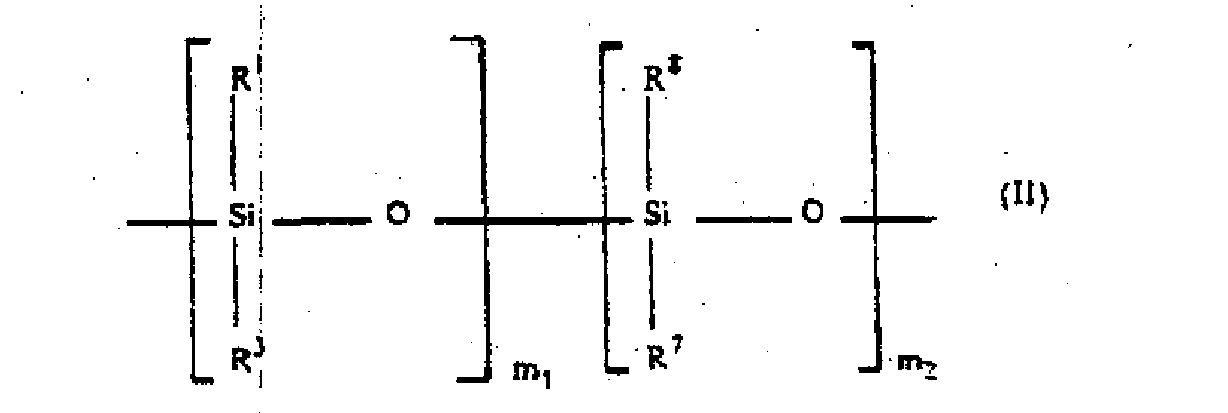 - R1 et R3, qui peuvent être identiques ou différents, sont tels que définis ci-dessus pour la formule (I),- R7 représente un groupe tel que défini ci-dessus pour R1 et R3, ou représente un groupe de formule -X-G-R9 dans lequel X et G sont tels que définis ci-dessus pour la formule (I), et- R9 représente un atome d'hydrogène ou un groupe à base d'hydrocarbure en C1 à C50 linéaire, ramifié ou cyclique, saturé ou insaturé, comprenant éventuellement dans sa chaîne un ou plusieurs atomes choisis parmi O, S et N, facultativement substitué par un ou plusieurs atomes de fluore et/ou un ou plusieurs groupes hydroxyles, ou un groupe phényle facultativement substitué par un ou plusieurs groupes alkyles en C1 à C4,- R6 représenté un groupe de formule -X-G-R9 dans lequel X, G et R9 sont tels que définis ci-dessus,- m1 est un entier allant de 1 à 998, et- m2 est un entier allant de 2 à 500.
 - Composition selon lune quelconque des revendications 1 à 4, dans laquelle le polymère structurant comprend au moins un fragment de formule (III) ou (IV) :


- Composition selon la revendication 5, dans laquelle X et/ou Y représentent un groupe alkylène contenant dans sa partie alkylène au moins l'un des éléments suivants :1°) 1 à 5 groupes amide, urée ou carbamate,2°) un groupe cycloalkyle en C5 ou C6, et3°) un groupe phénylène facultativement substitué par 1 à 3 groupes alkyles en C1 à C3 identiques ou différents, et/ou substitué par au moins un élément choisi dans le groupe constitué par :- un groupe hydroxyle,- un groupe cycloalkyle en C3 à C8,- un à trois groupes alkyles en C1 à C40,- un groupe phényle facultativement substitué par un à trois, groupes alkyles en C1 à C3,- un groupe hydroxyalkyle en C1 à C3, et- un groupe aminoalkyl en C1 à C6.
- Composition selon la revendication 5, dans laquelle Y représente :


- Composition selon l'une quelconque des revendications 5 à 7, dans laquelle R1, R2, R3 et R4 représentent, indépendamment, un groupe alkyle en C1 à C40 linéaire ou ramifié, de préférence un groupe CH3, C2H5, n-C3H7 ou isopropyle, une chaîne polyorganosiloxane ou un groupe phényle facultativement substitué par un à trois groupes méthyle ou éthyle.
- Composition selon l'une quelconque des revendications 1 à 8, dans laquelle le polymère structurant comprend au moins un fragment de formule :

- Composition selon la revendication 9, dans laquelle :- p est dans!la gamme de 1 à 25 et mieux encore de 1 à 7,- R11 à R18 sont des groupes méthyles,- T correspond à l'une des formules suivantes :

 - m1 et m2 sont dans la gamme de 15 à 500 et mieux encore de 15 à 45,- X1 et X2 représentent (CH2)10-, et- Y représente -CH2-.
 - Composition selon l'une quelconque des revendications 1 à 10, dans laquelle le polymère comprend au moins un fragment correspondant à la formule suivante :


ou
Y représente un groupe cycloaliphatique ou aromatique en C5 à C12 qui peut être substitué par un groupe alkyle en C1 à C15 ou un groupe aryle en C5 à C10, par exemple un radical choisi parmi le radical méthylène-4,4-biscyclohexyle, le radical dérivé de diisocyanate d'isophorone, les 2,4- et 2,6-tolylènles, le 1,5-naphtylène, le p-phénylène et le 4,4'-biphénylèneméthane
ou
Y représente un radical alkylène en C1 à C40 linéaire ou ramifié ou un radical cycloalkylène en C4 à C12,
ou
Y représente une séquence polyuréthane ou polyurée correspondant à la condensation de plusieurs molécules de diisocyanate avec un ou plusieurs agents de couplage de la sorte diol ou diamine, correspondant à la formule :
les groupes alkylènes en C1 à C40 linéaires ou ramifiés, qui peuvent éventuellement porter un groupe ionisable tel qu'un groupe acide carboxylique ou acide sulfonique, ou un groupe amine tertiaire neutralisable ou quaternisable,
les groupes cycloalkylènes en C5 à C12, portant éventuellement des substituants alkyles, par exemple un à trois groupes méthyle ou éthyle, ou alkylène, par exemple le radical diol : cyclohexanediméthanol,
les groupes phénylènes qui peuvent facultativement porter des substituants alkyles en C1 à C3, et
les groupes de formule :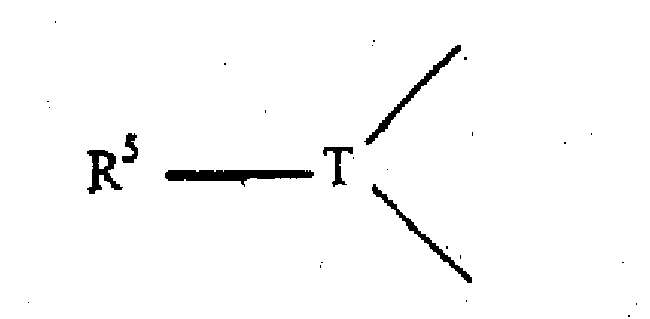
- Composition selon l'une quelconque des revendications 1 à 11, dans laquelle le polymère structurant comprend au moins un fragment de formule :
 - U représente O ou NH,- R23 représente un groupe alkylène en -C1 à C40, comprenant éventuellement un ou plusieurs hétéro-atomes choisis parmi O et N, ou un groupe phénylène, et- R24 est choisi parmi les groupes alkyles en C1 à C50 linéaires, ramifiés ou cycliques, saturés ou insaturés, et les groupes phényles facultativement substitués par un à trois groupes alkyles en C1 à C3.
 - Composition selon l'une quelconque des revendications 1 à 11, dans laquelle le polymère structurant comprend au moins un fragment de formule :

- Composition selon l'une quelconque des revendications précédentes, dans laquelle le polymère structurant comprend en outre un fragment à base d'hydrocarbure comprenant deux groupes capables d'établir des interactions hydrogènes, choisis parmi les groupes ester, amide, sulfonamide, carbamate, thiocarbamate, urée, uréthane, thio-urée, oxamido, guanamido et biguanidino, et des combinaisons de ceux-ci.
- Composition selon la revendication 14, dans laquelle les groupes capables d'établir des interactions hydrogènes sont des groupes amides des formules -C(O)NH- et -HN-C(O)-.
- Composition selon l'une quelconque des revendications précédentes, dans laquelle ledit polymère structurant a la formule suivante :

- Composition selon l'une quelconque des revendications précédentes, dans laquelle ledit au moins un polymère structurant représente de 0,5 % à 80 % par rapport au poids total de la composition.
- Composition selon l'une quelconque des revendications précédentes, dans laquelle ledit au moins un polymère structurant a un point de ramollissement supérieur à 50 °C.
- Composition selon l'une quelconque des revendications précédentes, dans laquelle ledit au moins un polymère structurant a un point de ramollissement inférieur à 150 °C.
- Composition selon l'une quelconque des revendications précédentes, dans laquelle ledit au moins un polymère structurant a un point de ramollissement allant de 70 °C à 130 °C.
- Composition selon l'une quelconque des revendications précédentes, dans laquelle ledit au moins un polymère structurant un poids moléculaire moyen en poids allant de 500 à 300 000.
- Composition selon l'une quelconque des revendications précédentes, ladite composition ayant une dureté de 30 à 300 gf (0,294 à 2,94 newtons).
- Composition selon l'une quelconque des revendications précédentes, ladite composition ayant une dureté de 30 à 200 gf (0,294 à 1,97 newtons)
- Composition selon l'une quelconque des revendications précédentes, dans laquelle ladite au moins une huile est un hydrocarbure choisi parmi les hydrocarbures linéaires et ramifiés, volatils et non volatils, d'origine synthétique et minérale.
- Composition selon la revendication 1 ou 24, dans laquelle ladite huile est une huile siliconée.
- Composition selon la revendication 25, dans laquelle ladite huile siliconée est une diméthicone.
- Composition selon l'une quelconque des revendications précédentes, ladite composition étant sous la forme d'un gel rigide.
- Composition selon l'une quelconque des revendications précédentes, ladite composition étant anhydre.
- Composition selon la revendication 25 ou 26, ladite composition étant! sous la forme d'un gel rigidifié ou solide qui est réversible thermiquement et/ou par l'application d'un cisaillement.
- Composition selon l'une quelconque des revendications précédentes, comprenant en outre un colorant.
- Composition selon l'une quelconque des revendications précédentes, comprenant en outre une cire.
- Composition selon l'une quelconque des revendications précédentes, comprenant en outre un polyéthylène.
- Composition selon l'une quelconque des revendications précédentes, ladite composition étant sous la forme d'une émulsion.
- Procédé de traitement cosmétique, comprenant l'application, sur un matériau de kératine, d'au moins une composition selon l'une quelconque des revendications 1 à 33 précédentes.
Applications Claiming Priority (2)
| Application Number | Priority Date | Filing Date | Title |
|---|---|---|---|
| US617048 | 1996-03-18 | ||
| US10/617,048 US7329699B2 (en) | 2003-07-11 | 2003-07-11 | Composition containing oil, structuring polymer, and coated silicone elastomer, and methods of making and using the same |
Publications (2)
| Publication Number | Publication Date |
|---|---|
| EP1495750A1 EP1495750A1 (fr) | 2005-01-12 |
| EP1495750B1 true EP1495750B1 (fr) | 2011-01-19 |
Family
ID=33452691
Family Applications (1)
| Application Number | Title | Priority Date | Filing Date |
|---|---|---|---|
| EP04291762A Expired - Lifetime EP1495750B1 (fr) | 2003-07-11 | 2004-07-09 | Composition comprenant une huile, un polymère structurant, et un elastomère siliconé enrobé, et ses methodes de production et d'utilisation |
Country Status (8)
| Country | Link |
|---|---|
| US (1) | US7329699B2 (fr) |
| EP (1) | EP1495750B1 (fr) |
| JP (1) | JP4679089B2 (fr) |
| KR (1) | KR100650957B1 (fr) |
| CN (1) | CN100431521C (fr) |
| AT (1) | ATE495729T1 (fr) |
| DE (1) | DE602004031069D1 (fr) |
| ES (1) | ES2359632T3 (fr) |
Families Citing this family (49)
| Publication number | Priority date | Publication date | Assignee | Title |
|---|---|---|---|---|
| FR2825915B1 (fr) * | 2001-06-14 | 2006-02-03 | Oreal | Composition a base d'huile siliconee structuree sous forme rigide, notamment pour une utilisation cosmetique |
| FR2825916B1 (fr) * | 2001-06-14 | 2004-07-23 | Oreal | Composition a base d'huile siliconee structuree sous forme rigide, notamment pour une utilisation cosmetique |
| FR2840807B1 (fr) * | 2002-06-12 | 2005-03-11 | Composition cosmetique de soin et/ou de maquillage, structuree par des polymeres silicones et des organogelateurs, sous forme rigide | |
| US7329699B2 (en) | 2003-07-11 | 2008-02-12 | L'oreal | Composition containing oil, structuring polymer, and coated silicone elastomer, and methods of making and using the same |
| US20040115153A1 (en) * | 2002-12-17 | 2004-06-17 | L'oreal | Compositions containing at least one oil structured with at least one silicone-polyamide polymer, and at least one silicone gum and methods of using the same |
| US7879316B2 (en) * | 2002-06-12 | 2011-02-01 | L'oreal | Cosmetic composition containing a polyorganosiloxane polymer |
| US20040115154A1 (en) * | 2002-12-17 | 2004-06-17 | L'oreal | Compositions containing at least one oil structured with at least one silicone-polyamide polymer, and at least one short chain ester and methods of using the same |
| ES2346304T3 (es) * | 2002-06-12 | 2010-10-14 | L'oreal | Composicion cosmetica de cuidado y/o maquillaje estructurada con polimeros de silicona y agentes organogelificantes, en forma rigida. |
| US20040120912A1 (en) * | 2002-12-17 | 2004-06-24 | L'oreal | Compositions containing at least one oil structured with at least one silicone-polyamide polymer, and at least one crystalline silicone compound and methods of using the same |
| AU2003290128A1 (en) * | 2002-12-17 | 2004-07-09 | L'oreal | Care and/or make-up cosmetic composition structured with silicone polymers |
| AU2003303032A1 (en) * | 2002-12-17 | 2004-07-09 | L'oreal | Transparent or translucent care and/or make-up cosmetic composition structured with silicone polymers |
| US8728500B2 (en) | 2002-12-17 | 2014-05-20 | L'oreal | Composition containing a polyorganosiloxane polymer, a thickening agent and at least one volatile alcohol |
| US20050158260A1 (en) * | 2003-12-12 | 2005-07-21 | L'oreal | Cosmetic composition containing a polyorganosiloxane polymer |
| ES2380626T3 (es) * | 2004-10-22 | 2012-05-16 | L'oreal | Composiciones cosmética que contiene un polímero de poliorganosiloxano |
| US8241617B2 (en) * | 2005-08-01 | 2012-08-14 | L'oréal | Methods for removing make-up compositions from keratin materials |
| US7790148B2 (en) * | 2005-09-02 | 2010-09-07 | L'oreal | Compositions containing silicone polymer, wax and volatile solvent |
| US20070071700A1 (en) * | 2005-09-23 | 2007-03-29 | Anjali Abhimanyu Patil | Cosmetic compositions containing silicone/organic copolymers |
| FR2892901B1 (fr) * | 2005-11-09 | 2007-12-28 | Oreal | Dispositif de conditionnement et d'application d'un produit sur des fibres keratiniques |
| US8388940B2 (en) * | 2006-03-13 | 2013-03-05 | L'oreal | Mascara compositions |
| US8673284B2 (en) | 2006-05-03 | 2014-03-18 | L'oreal | Cosmetic compositions containing block copolymers, tackifiers and a selective solvent for hard blocks |
| US8758739B2 (en) | 2006-05-03 | 2014-06-24 | L'oreal | Cosmetic compositions containing block copolymers, tackifiers and gelling agents |
| US8673283B2 (en) | 2006-05-03 | 2014-03-18 | L'oreal | Cosmetic compositions containing block copolymers, tackifiers and a solvent mixture |
| US8778323B2 (en) | 2006-05-03 | 2014-07-15 | L'oréal | Cosmetic compositions containing block copolymers, tackifiers and modified silicones |
| US8673282B2 (en) | 2006-05-03 | 2014-03-18 | L'oreal | Cosmetic compositions containing block copolymers, tackifiers and a selective solvent for soft blocks |
| US8557230B2 (en) | 2006-05-03 | 2013-10-15 | L'oreal | Cosmetic compositions containing block copolymers, tackifiers and shine enhancing agents |
| US8603444B2 (en) * | 2007-01-12 | 2013-12-10 | L'oréal | Cosmetic compositions containing a block copolymer, a tackifier and a high viscosity ester |
| US8658141B2 (en) | 2007-01-12 | 2014-02-25 | L'oreal | Cosmetic composition containing a block copolymer, a tackifier, a silsesquioxane wax and/or resin |
| US20080171008A1 (en) * | 2007-01-17 | 2008-07-17 | L'oreal S.A. | Composition containing a polyorganosiloxane polymer, a tackifier, a wax and a block copolymer |
| US20080181956A1 (en) * | 2007-01-31 | 2008-07-31 | The Procter & Gamble Company | Oil-in-water personal care composition |
| US20080317958A1 (en) * | 2007-06-20 | 2008-12-25 | Bhatt Jayprakash C | Pigmented ink-jet ink with improved highlighter smear |
| WO2009053635A1 (fr) * | 2007-10-11 | 2009-04-30 | L'oreal | Composition cosmetique structuree |
| FR2922100B1 (fr) * | 2007-10-11 | 2009-12-11 | Oreal | Procede de preparation de particules semi-solides a interet cosmetique |
| KR101438369B1 (ko) | 2007-11-27 | 2014-09-16 | (주)아모레퍼시픽 | 가교 고분자를 이용한 아이섀도 화장료 조성물 |
| DE102008054434A1 (de) * | 2008-12-09 | 2010-06-10 | Wacker Chemie Ag | Siloxancopolymere und Verfahren zu deren Herstellung |
| US20100272658A1 (en) | 2009-04-27 | 2010-10-28 | Akzo Nobel Chemicals International B.V. | Enhanced efficiency of sunscreen compositions |
| FR2954153B1 (fr) * | 2009-12-18 | 2012-01-06 | Oreal | Composition comprenant au moins un alcane lineaire volatil et une poudre d'organopolysiloxane enrobee d'une resine de silicone |
| FR2970413B1 (fr) * | 2011-01-17 | 2013-01-11 | Oreal | Composition cosmetique anhydre comprenant un elastomere de silicone reticule et un alcane lineaire volatil |
| US20120219516A1 (en) | 2011-02-25 | 2012-08-30 | L'oreal S.A. | Cosmetic compositions having long lasting shine |
| FR3002448B1 (fr) * | 2013-02-25 | 2015-04-03 | Oreal | Composition cosmetique de type gel |
| FR3025100B1 (fr) | 2014-08-28 | 2016-12-09 | Oreal | Composition cosmetique de type gel a tenue amelioree |
| WO2016100830A1 (fr) | 2014-12-19 | 2016-06-23 | Dow Corning Corporation | Procédé de préparation de particules fonctionnalisées |
| US10688034B2 (en) * | 2016-07-29 | 2020-06-23 | L'oreal | Long-wearing, transfer-resistant cosmetic composition having improved tackiness |
| US10687601B2 (en) * | 2016-07-29 | 2020-06-23 | L'oreal | Cosmetic care system |
| JP6754346B2 (ja) | 2017-10-16 | 2020-09-09 | 信越化学工業株式会社 | 化粧料 |
| FR3075013B1 (fr) * | 2017-12-14 | 2021-09-17 | Lvmh Rech | Article pour decorer la peau, les levres ou un ongle d'un individu, fixateur pour un tel article et procede de decoration de la peau, des levre ou d'un ongle |
| CN111201268B (zh) * | 2018-08-10 | 2022-04-19 | 瓦克化学股份公司 | 草酰胺基酯官能化的有机聚硅氧烷的水性乳液 |
| JP7305767B2 (ja) * | 2018-12-27 | 2023-07-10 | ロレアル | ケラチン物質をケア及び/又はメイクアップするための無水組成物 |
| JP7221108B2 (ja) * | 2019-03-28 | 2023-02-13 | 株式会社ナリス化粧品 | 化粧料用組成物 |
| EP4061876A1 (fr) | 2019-11-19 | 2022-09-28 | Dow Silicones Corporation | Composition aqueuse de revêtement de cuir |
Family Cites Families (68)
| Publication number | Priority date | Publication date | Assignee | Title |
|---|---|---|---|---|
| US2823195A (en) | 1955-02-21 | 1958-02-11 | Dow Corning | Organosilicon polyamide compositions and method of making same |
| BE553159A (fr) | 1955-12-05 | |||
| CA937698A (en) | 1970-05-04 | 1973-11-27 | Dow Corning Limited | Organosiloxane polyamide block copolymers |
| US3723566A (en) | 1970-05-04 | 1973-03-27 | Midland Silicones Ltd | Organosiloxane polyamide block copolymers |
| US4322400A (en) | 1978-12-19 | 1982-03-30 | Dragoco Inc. | Cosmetic stick composition |
| DE3637677A1 (de) | 1986-11-05 | 1988-05-19 | Bayer Ag | Schlagzaehe, dimensionsstabile polyamid-formmassen |
| CA2005161A1 (fr) | 1989-01-03 | 1990-07-03 | Gary T. Decker | Copolymeres sequences a base de polysiloxane et de polyamide |
| JP2660884B2 (ja) | 1991-07-30 | 1997-10-08 | 東レ・ダウコーニング・シリコーン株式会社 | シリコーン変性ポリイミド樹脂およびその製造方法 |
| EP0545002A1 (fr) | 1991-11-21 | 1993-06-09 | Kose Corporation | Polymère de silicone, composition pâteuse et composition cosmétique du type eau-dans-l'huile le contenant |
| US5468477A (en) | 1992-05-12 | 1995-11-21 | Minnesota Mining And Manufacturing Company | Vinyl-silicone polymers in cosmetics and personal care products |
| JP3302729B2 (ja) | 1992-07-30 | 2002-07-15 | 東レ・ダウコーニング・シリコーン株式会社 | ポリアミド樹脂組成物 |
| US5272241A (en) | 1992-08-21 | 1993-12-21 | General Electric Company | Amino acid functionalized silicones and method for preparation |
| US5473041A (en) | 1993-05-25 | 1995-12-05 | Dow Corning Corporation | Polyimide having organopolysiloxane side chain |
| CA2168876C (fr) | 1993-08-27 | 1999-10-26 | Kendrick Jon Hughes | Composition topique pour hygiene personnelle, renfermant un polymere adhesif greffe sur un polysiloxane et un agent facilitant le sechage |
| JPH0834852A (ja) | 1994-07-21 | 1996-02-06 | Toray Dow Corning Silicone Co Ltd | シリコーン変性ポリアミド溶液組成物 |
| FR2725129B1 (fr) | 1994-09-30 | 1997-06-13 | Oreal | Composition cosmetique anhydre resistante a l'eau |
| US5725845A (en) | 1995-11-03 | 1998-03-10 | Revlon Consumer Products Corporation | Transfer resistant cosmetic stick compositions with semi-matte finish |
| US5874069A (en) | 1997-01-24 | 1999-02-23 | Colgate-Palmolive Company | Cosmetic composition containing silicon-modified amides as thickening agents and method of forming same |
| ATE225644T1 (de) | 1996-04-01 | 2002-10-15 | Colgate Palmolive Co | Amide- und silizium-modifizierte wachse enthaltende kosmetische zusammensetzung |
| US5919441A (en) | 1996-04-01 | 1999-07-06 | Colgate-Palmolive Company | Cosmetic composition containing thickening agent of siloxane polymer with hydrogen-bonding groups |
| US5837223A (en) | 1996-08-12 | 1998-11-17 | Revlon Consumer Products Corporation | Transfer resistant high lustre cosmetic stick compositions |
| FR2757381B1 (fr) | 1996-12-24 | 1999-01-15 | Oreal | Composition de maquillage ou de soin ne migrant pas, contenant un organopolysiloxane et une phase grasse |
| FR2765800B1 (fr) | 1997-07-11 | 2003-04-25 | Oreal | Produit cosmetique coule comprenant des huiles volatiles hydrocarbonees |
| US6051216A (en) | 1997-08-01 | 2000-04-18 | Colgate-Palmolive Company | Cosmetic composition containing siloxane based polyamides as thickening agents |
| US5959009A (en) | 1997-10-31 | 1999-09-28 | E-L Management Corp | Mascara waterproofing composition |
| FR2772602B1 (fr) | 1997-12-22 | 2000-01-28 | Oreal | Composition cosmetique sans transfert comprenant une dispersion de particules de polymere dans une phase grasse liquide et un polymere liposoluble |
| FR2776183B1 (fr) | 1998-03-17 | 2004-05-28 | Oreal | Utilisation d'un tensio-actif silicone du type alkyldimethicone copolyol pour la preparation d'emulsions cosmetiques solides eau-dans-huile et emulsions solides eau-dans-huile ainsi obtenues |
| US5969172C1 (en) | 1998-06-12 | 2002-06-18 | Gen Electric | Silicone solvents for antiperspirant salts |
| FR2780282B1 (fr) | 1998-06-25 | 2001-04-13 | Oreal | Composition anhydre, utilisation en cosmetique, pharmacie ou hygiene |
| US5981680A (en) | 1998-07-13 | 1999-11-09 | Dow Corning Corporation | Method of making siloxane-based polyamides |
| JP4547806B2 (ja) | 1998-08-14 | 2010-09-22 | 日油株式会社 | ポリシロキサン−ポリアミド共重合体、その製造方法及び各種材料 |
| US6200581B1 (en) | 1999-04-28 | 2001-03-13 | Dow Corning Corporation | Elastomeric silicone terpolymer |
| JP3932155B2 (ja) * | 1999-06-03 | 2007-06-20 | 信越化学工業株式会社 | 球状シリコーン樹脂微粒子 |
| US6103250A (en) | 1999-07-06 | 2000-08-15 | Revlon Consumer Products Corporation | Anhydrous cosmetic compositions containing emulsifying siloxane elastomer |
| FR2796272B1 (fr) | 1999-07-15 | 2003-09-19 | Oreal | Composition sans cire structuree sous forme rigide par un polymere |
| MY133783A (en) | 1999-07-28 | 2007-11-30 | Dow Global Technologies Inc | Hydrogenated block polymers having elasticity and articles made therefrom |
| US6362287B1 (en) | 2000-03-27 | 2002-03-26 | Dow Corning Corportion | Thermoplastic silicone elastomers formed from nylon resins |
| JP3414386B2 (ja) * | 2000-04-12 | 2003-06-09 | 株式会社村田製作所 | 表面実装型スイッチング電源装置 |
| US6423324B1 (en) | 2000-06-20 | 2002-07-23 | Cosmolab, Inc. | Temperature-stable polyamide resin-based composition, and products |
| US6524598B2 (en) | 2000-07-10 | 2003-02-25 | The Procter & Gamble Company | Cosmetic compositions |
| US6475500B2 (en) * | 2000-07-10 | 2002-11-05 | The Procter & Gamble Company | Anhydrous cosmetic compositions |
| US6362288B1 (en) | 2000-07-26 | 2002-03-26 | Dow Corning Corporation | Thermoplastic silicone elastomers from compatibilized polyamide resins |
| US20020048557A1 (en) | 2000-08-31 | 2002-04-25 | Heng Cai | Antiperspirants and deodorants with low white residue on skin and fabric |
| US6451295B1 (en) * | 2000-08-31 | 2002-09-17 | Colgate-Palmolive Company | Clear antiperspirants and deodorants made with siloxane-based polyamides |
| US20030039620A1 (en) | 2001-05-04 | 2003-02-27 | Rodriguez Victor Ruben | Transfer resistant, non-tacky, liquid cosmetic compositions for covering skin discolorations and imperfections |
| FR2825915B1 (fr) * | 2001-06-14 | 2006-02-03 | Oreal | Composition a base d'huile siliconee structuree sous forme rigide, notamment pour une utilisation cosmetique |
| FR2825914B1 (fr) * | 2001-06-14 | 2003-09-19 | Oreal | Composition a base d'huile siliconee structuree sous forme rigide, notamment pour une utilisation cosmetique |
| FR2825916B1 (fr) | 2001-06-14 | 2004-07-23 | Oreal | Composition a base d'huile siliconee structuree sous forme rigide, notamment pour une utilisation cosmetique |
| AU2002331001A1 (en) | 2001-08-07 | 2003-02-24 | Dow Corning Corporation | Hair and skin care compositions containing siloxane-based polyamide copolymers |
| US6426062B1 (en) | 2001-10-05 | 2002-07-30 | Colgate-Palmolive Company | Underarm gel products with water lock component |
| US6569955B1 (en) | 2001-10-19 | 2003-05-27 | Dow Corning Corporation | Thermoplastic silicone elastomers from compatibilized polyamide resins |
| US20030228333A1 (en) | 2002-05-28 | 2003-12-11 | Fecht Cassandre Michelle | Substituted hydrocarbyl functional siloxanes for household, health, and personal care applications |
| US20030235552A1 (en) * | 2002-06-12 | 2003-12-25 | L'oreal | Cosmetic composition for care and/or makeup, structured with silicone polymers and film-forming silicone resins |
| US20030232030A1 (en) | 2002-06-12 | 2003-12-18 | L'oreal | Compositions containing at least one oil structured with at least one silicone-polyamide polymer, and at least one gelling agent and methods of using the same |
| US6916464B2 (en) * | 2002-12-20 | 2005-07-12 | L'oreal | Sunscreen compositions |
| US7879316B2 (en) * | 2002-06-12 | 2011-02-01 | L'oreal | Cosmetic composition containing a polyorganosiloxane polymer |
| US20040115153A1 (en) * | 2002-12-17 | 2004-06-17 | L'oreal | Compositions containing at least one oil structured with at least one silicone-polyamide polymer, and at least one silicone gum and methods of using the same |
| US7329699B2 (en) | 2003-07-11 | 2008-02-12 | L'oreal | Composition containing oil, structuring polymer, and coated silicone elastomer, and methods of making and using the same |
| US20040115154A1 (en) * | 2002-12-17 | 2004-06-17 | L'oreal | Compositions containing at least one oil structured with at least one silicone-polyamide polymer, and at least one short chain ester and methods of using the same |
| US20040120912A1 (en) * | 2002-12-17 | 2004-06-24 | L'oreal | Compositions containing at least one oil structured with at least one silicone-polyamide polymer, and at least one crystalline silicone compound and methods of using the same |
| US20030235553A1 (en) * | 2002-06-12 | 2003-12-25 | L'oreal | Cosmetic compositions containing at least one silicone-polyamide polymer, at least one oil and at least one film-forming agent and methods of using the same |
| FR2840807B1 (fr) | 2002-06-12 | 2005-03-11 | Composition cosmetique de soin et/ou de maquillage, structuree par des polymeres silicones et des organogelateurs, sous forme rigide | |
| US6958155B2 (en) * | 2002-06-12 | 2005-10-25 | L'oreal | Cosmetic compositions comprising at least one polysiloxane based polyamide |
| US20030235548A1 (en) * | 2002-06-12 | 2003-12-25 | L'oreal | Cosmetic composition for care and/or treatment and/or makeup of the emulsion type structured with silicone polymers |
| AU2003290128A1 (en) | 2002-12-17 | 2004-07-09 | L'oreal | Care and/or make-up cosmetic composition structured with silicone polymers |
| AU2003303032A1 (en) | 2002-12-17 | 2004-07-09 | L'oreal | Transparent or translucent care and/or make-up cosmetic composition structured with silicone polymers |
| US20040180032A1 (en) | 2003-03-15 | 2004-09-16 | Manelski Jean Marie | Long wearing cosmetic composition |
| US20050158260A1 (en) | 2003-12-12 | 2005-07-21 | L'oreal | Cosmetic composition containing a polyorganosiloxane polymer |
-
2003
- 2003-07-11 US US10/617,048 patent/US7329699B2/en not_active Expired - Fee Related
-
2004
- 2004-07-09 KR KR1020040053249A patent/KR100650957B1/ko not_active Expired - Fee Related
- 2004-07-09 EP EP04291762A patent/EP1495750B1/fr not_active Expired - Lifetime
- 2004-07-09 DE DE602004031069T patent/DE602004031069D1/de not_active Expired - Lifetime
- 2004-07-09 AT AT04291762T patent/ATE495729T1/de not_active IP Right Cessation
- 2004-07-09 ES ES04291762T patent/ES2359632T3/es not_active Expired - Lifetime
- 2004-07-12 JP JP2004205315A patent/JP4679089B2/ja not_active Expired - Fee Related
- 2004-07-12 CN CNB200410069801XA patent/CN100431521C/zh not_active Expired - Fee Related
Also Published As
| Publication number | Publication date |
|---|---|
| ATE495729T1 (de) | 2011-02-15 |
| JP4679089B2 (ja) | 2011-04-27 |
| ES2359632T3 (es) | 2011-05-25 |
| KR100650957B1 (ko) | 2006-11-29 |
| KR20050007169A (ko) | 2005-01-17 |
| US20050009989A1 (en) | 2005-01-13 |
| CN1576320A (zh) | 2005-02-09 |
| US7329699B2 (en) | 2008-02-12 |
| CN100431521C (zh) | 2008-11-12 |
| EP1495750A1 (fr) | 2005-01-12 |
| DE602004031069D1 (de) | 2011-03-03 |
| JP2005029575A (ja) | 2005-02-03 |
Similar Documents
| Publication | Publication Date | Title |
|---|---|---|
| EP1495750B1 (fr) | Composition comprenant une huile, un polymère structurant, et un elastomère siliconé enrobé, et ses methodes de production et d'utilisation | |
| US7078026B2 (en) | Structured composition based on silicone oil, especially for cosmetic use | |
| EP1531790B1 (fr) | Composition cosmetique structuree avec des polymeres de silicone et des resines filmogenes | |
| EP1524961B1 (fr) | Composition cosmetique de soin et/ou de traitement et/ou de maquillage de type emulsion structuree a l'aide de polymeres de silicone | |
| US8697039B2 (en) | Compositions containing silicone polymer, wax and volatile solvent | |
| US20080254076A1 (en) | Composition based on silicone oil structured in rigid form, especially for cosmetic use | |
| US20040115153A1 (en) | Compositions containing at least one oil structured with at least one silicone-polyamide polymer, and at least one silicone gum and methods of using the same | |
| US20040115154A1 (en) | Compositions containing at least one oil structured with at least one silicone-polyamide polymer, and at least one short chain ester and methods of using the same | |
| US20040120912A1 (en) | Compositions containing at least one oil structured with at least one silicone-polyamide polymer, and at least one crystalline silicone compound and methods of using the same | |
| US20050089492A1 (en) | Compositions containing at least one oil structured with at least one silicone-polyamide polymer, and at least one gelling agent and methods of using the same | |
| US20030072730A1 (en) | Composition based on silicone oil structured in rigid form, especially for cosmetic use | |
| EP1661549A1 (fr) | Compositions cosmétiques et méthodes d'utilisation |
Legal Events
| Date | Code | Title | Description |
|---|---|---|---|
| PUAI | Public reference made under article 153(3) epc to a published international application that has entered the european phase |
Free format text: ORIGINAL CODE: 0009012 |
|
| 17P | Request for examination filed |
Effective date: 20040716 |
|
| AK | Designated contracting states |
Kind code of ref document: A1 Designated state(s): AT BE BG CH CY CZ DE DK EE ES FI FR GB GR HU IE IT LI LU MC NL PL PT RO SE SI SK TR |
|
| AX | Request for extension of the european patent |
Extension state: AL HR LT LV MK |
|
| AKX | Designation fees paid |
Designated state(s): AT BE BG CH CY CZ DE DK EE ES FI FR GB GR HU IE IT LI LU MC NL PL PT RO SE SI SK TR |
|
| GRAP | Despatch of communication of intention to grant a patent |
Free format text: ORIGINAL CODE: EPIDOSNIGR1 |
|
| RIC1 | Information provided on ipc code assigned before grant |
Ipc: A61K 8/04 20060101ALI20100708BHEP Ipc: A61K 8/26 20060101ALI20100708BHEP Ipc: A61K 8/894 20060101ALI20100708BHEP Ipc: A61Q 1/02 20060101ALI20100708BHEP Ipc: A61K 8/898 20060101ALI20100708BHEP Ipc: A61K 8/892 20060101AFI20100708BHEP |
|
| GRAS | Grant fee paid |
Free format text: ORIGINAL CODE: EPIDOSNIGR3 |
|
| GRAA | (expected) grant |
Free format text: ORIGINAL CODE: 0009210 |
|
| AK | Designated contracting states |
Kind code of ref document: B1 Designated state(s): AT BE BG CH CY CZ DE DK EE ES FI FR GB GR HU IE IT LI LU MC NL PL PT RO SE SI SK TR |
|
| REG | Reference to a national code |
Ref country code: GB Ref legal event code: FG4D |
|
| REG | Reference to a national code |
Ref country code: CH Ref legal event code: EP |
|
| REG | Reference to a national code |
Ref country code: IE Ref legal event code: FG4D |
|
| REF | Corresponds to: |
Ref document number: 602004031069 Country of ref document: DE Date of ref document: 20110303 Kind code of ref document: P |
|
| REG | Reference to a national code |
Ref country code: DE Ref legal event code: R096 Ref document number: 602004031069 Country of ref document: DE Effective date: 20110303 |
|
| REG | Reference to a national code |
Ref country code: ES Ref legal event code: FG2A Ref document number: 2359632 Country of ref document: ES Kind code of ref document: T3 Effective date: 20110525 |
|
| REG | Reference to a national code |
Ref country code: NL Ref legal event code: VDEP Effective date: 20110119 |
|
| PG25 | Lapsed in a contracting state [announced via postgrant information from national office to epo] |
Ref country code: GR Free format text: LAPSE BECAUSE OF FAILURE TO SUBMIT A TRANSLATION OF THE DESCRIPTION OR TO PAY THE FEE WITHIN THE PRESCRIBED TIME-LIMIT Effective date: 20110420 Ref country code: SE Free format text: LAPSE BECAUSE OF FAILURE TO SUBMIT A TRANSLATION OF THE DESCRIPTION OR TO PAY THE FEE WITHIN THE PRESCRIBED TIME-LIMIT Effective date: 20110119 Ref country code: PT Free format text: LAPSE BECAUSE OF FAILURE TO SUBMIT A TRANSLATION OF THE DESCRIPTION OR TO PAY THE FEE WITHIN THE PRESCRIBED TIME-LIMIT Effective date: 20110519 |
|
| PG25 | Lapsed in a contracting state [announced via postgrant information from national office to epo] |
Ref country code: NL Free format text: LAPSE BECAUSE OF FAILURE TO SUBMIT A TRANSLATION OF THE DESCRIPTION OR TO PAY THE FEE WITHIN THE PRESCRIBED TIME-LIMIT Effective date: 20110119 Ref country code: AT Free format text: LAPSE BECAUSE OF FAILURE TO SUBMIT A TRANSLATION OF THE DESCRIPTION OR TO PAY THE FEE WITHIN THE PRESCRIBED TIME-LIMIT Effective date: 20110119 Ref country code: FI Free format text: LAPSE BECAUSE OF FAILURE TO SUBMIT A TRANSLATION OF THE DESCRIPTION OR TO PAY THE FEE WITHIN THE PRESCRIBED TIME-LIMIT Effective date: 20110119 Ref country code: BE Free format text: LAPSE BECAUSE OF FAILURE TO SUBMIT A TRANSLATION OF THE DESCRIPTION OR TO PAY THE FEE WITHIN THE PRESCRIBED TIME-LIMIT Effective date: 20110119 Ref country code: BG Free format text: LAPSE BECAUSE OF FAILURE TO SUBMIT A TRANSLATION OF THE DESCRIPTION OR TO PAY THE FEE WITHIN THE PRESCRIBED TIME-LIMIT Effective date: 20110419 Ref country code: SI Free format text: LAPSE BECAUSE OF FAILURE TO SUBMIT A TRANSLATION OF THE DESCRIPTION OR TO PAY THE FEE WITHIN THE PRESCRIBED TIME-LIMIT Effective date: 20110119 Ref country code: CY Free format text: LAPSE BECAUSE OF FAILURE TO SUBMIT A TRANSLATION OF THE DESCRIPTION OR TO PAY THE FEE WITHIN THE PRESCRIBED TIME-LIMIT Effective date: 20110119 Ref country code: PL Free format text: LAPSE BECAUSE OF FAILURE TO SUBMIT A TRANSLATION OF THE DESCRIPTION OR TO PAY THE FEE WITHIN THE PRESCRIBED TIME-LIMIT Effective date: 20110119 |
|
| PG25 | Lapsed in a contracting state [announced via postgrant information from national office to epo] |
Ref country code: EE Free format text: LAPSE BECAUSE OF FAILURE TO SUBMIT A TRANSLATION OF THE DESCRIPTION OR TO PAY THE FEE WITHIN THE PRESCRIBED TIME-LIMIT Effective date: 20110119 Ref country code: DK Free format text: LAPSE BECAUSE OF FAILURE TO SUBMIT A TRANSLATION OF THE DESCRIPTION OR TO PAY THE FEE WITHIN THE PRESCRIBED TIME-LIMIT Effective date: 20110119 |
|
| PLBE | No opposition filed within time limit |
Free format text: ORIGINAL CODE: 0009261 |
|
| STAA | Information on the status of an ep patent application or granted ep patent |
Free format text: STATUS: NO OPPOSITION FILED WITHIN TIME LIMIT |
|
| PG25 | Lapsed in a contracting state [announced via postgrant information from national office to epo] |
Ref country code: SK Free format text: LAPSE BECAUSE OF FAILURE TO SUBMIT A TRANSLATION OF THE DESCRIPTION OR TO PAY THE FEE WITHIN THE PRESCRIBED TIME-LIMIT Effective date: 20110119 Ref country code: RO Free format text: LAPSE BECAUSE OF FAILURE TO SUBMIT A TRANSLATION OF THE DESCRIPTION OR TO PAY THE FEE WITHIN THE PRESCRIBED TIME-LIMIT Effective date: 20110119 Ref country code: CZ Free format text: LAPSE BECAUSE OF FAILURE TO SUBMIT A TRANSLATION OF THE DESCRIPTION OR TO PAY THE FEE WITHIN THE PRESCRIBED TIME-LIMIT Effective date: 20110119 |
|
| 26N | No opposition filed |
Effective date: 20111020 |
|
| REG | Reference to a national code |
Ref country code: DE Ref legal event code: R097 Ref document number: 602004031069 Country of ref document: DE Effective date: 20111020 |
|
| PG25 | Lapsed in a contracting state [announced via postgrant information from national office to epo] |
Ref country code: MC Free format text: LAPSE BECAUSE OF NON-PAYMENT OF DUE FEES Effective date: 20110731 |
|
| REG | Reference to a national code |
Ref country code: CH Ref legal event code: PL |
|
| REG | Reference to a national code |
Ref country code: IE Ref legal event code: MM4A |
|
| PG25 | Lapsed in a contracting state [announced via postgrant information from national office to epo] |
Ref country code: LI Free format text: LAPSE BECAUSE OF NON-PAYMENT OF DUE FEES Effective date: 20110731 Ref country code: CH Free format text: LAPSE BECAUSE OF NON-PAYMENT OF DUE FEES Effective date: 20110731 |
|
| PG25 | Lapsed in a contracting state [announced via postgrant information from national office to epo] |
Ref country code: IE Free format text: LAPSE BECAUSE OF NON-PAYMENT OF DUE FEES Effective date: 20110709 |
|
| REG | Reference to a national code |
Ref country code: AT Ref legal event code: MK05 Ref document number: 495729 Country of ref document: AT Kind code of ref document: T Effective date: 20110119 |
|
| PG25 | Lapsed in a contracting state [announced via postgrant information from national office to epo] |
Ref country code: LU Free format text: LAPSE BECAUSE OF NON-PAYMENT OF DUE FEES Effective date: 20110709 |
|
| PG25 | Lapsed in a contracting state [announced via postgrant information from national office to epo] |
Ref country code: TR Free format text: LAPSE BECAUSE OF FAILURE TO SUBMIT A TRANSLATION OF THE DESCRIPTION OR TO PAY THE FEE WITHIN THE PRESCRIBED TIME-LIMIT Effective date: 20110119 |
|
| PG25 | Lapsed in a contracting state [announced via postgrant information from national office to epo] |
Ref country code: HU Free format text: LAPSE BECAUSE OF FAILURE TO SUBMIT A TRANSLATION OF THE DESCRIPTION OR TO PAY THE FEE WITHIN THE PRESCRIBED TIME-LIMIT Effective date: 20110119 |
|
| PGFP | Annual fee paid to national office [announced via postgrant information from national office to epo] |
Ref country code: ES Payment date: 20130628 Year of fee payment: 10 Ref country code: DE Payment date: 20130703 Year of fee payment: 10 |
|
| PGFP | Annual fee paid to national office [announced via postgrant information from national office to epo] |
Ref country code: FR Payment date: 20130724 Year of fee payment: 10 Ref country code: GB Payment date: 20130703 Year of fee payment: 10 |
|
| PGFP | Annual fee paid to national office [announced via postgrant information from national office to epo] |
Ref country code: IT Payment date: 20130718 Year of fee payment: 10 |
|
| REG | Reference to a national code |
Ref country code: DE Ref legal event code: R119 Ref document number: 602004031069 Country of ref document: DE |
|
| GBPC | Gb: european patent ceased through non-payment of renewal fee |
Effective date: 20140709 |
|
| REG | Reference to a national code |
Ref country code: FR Ref legal event code: ST Effective date: 20150331 |
|
| PG25 | Lapsed in a contracting state [announced via postgrant information from national office to epo] |
Ref country code: IT Free format text: LAPSE BECAUSE OF NON-PAYMENT OF DUE FEES Effective date: 20140709 Ref country code: DE Free format text: LAPSE BECAUSE OF NON-PAYMENT OF DUE FEES Effective date: 20150203 |
|
| REG | Reference to a national code |
Ref country code: DE Ref legal event code: R119 Ref document number: 602004031069 Country of ref document: DE Effective date: 20150203 |
|
| PG25 | Lapsed in a contracting state [announced via postgrant information from national office to epo] |
Ref country code: GB Free format text: LAPSE BECAUSE OF NON-PAYMENT OF DUE FEES Effective date: 20140709 Ref country code: FR Free format text: LAPSE BECAUSE OF NON-PAYMENT OF DUE FEES Effective date: 20140731 |
|
| REG | Reference to a national code |
Ref country code: ES Ref legal event code: FD2A Effective date: 20160105 |
|
| PG25 | Lapsed in a contracting state [announced via postgrant information from national office to epo] |
Ref country code: ES Free format text: LAPSE BECAUSE OF NON-PAYMENT OF DUE FEES Effective date: 20140710 |