EP1496652B1 - Verarbeitung von Datenpaketen unter Verwendung von Markierungen - Google Patents
Verarbeitung von Datenpaketen unter Verwendung von Markierungen Download PDFInfo
- Publication number
- EP1496652B1 EP1496652B1 EP04016110A EP04016110A EP1496652B1 EP 1496652 B1 EP1496652 B1 EP 1496652B1 EP 04016110 A EP04016110 A EP 04016110A EP 04016110 A EP04016110 A EP 04016110A EP 1496652 B1 EP1496652 B1 EP 1496652B1
- Authority
- EP
- European Patent Office
- Prior art keywords
- time
- data packet
- node
- time stamp
- marker
- Prior art date
- Legal status (The legal status is an assumption and is not a legal conclusion. Google has not performed a legal analysis and makes no representation as to the accuracy of the status listed.)
- Expired - Lifetime
Links
Images

Classifications
-
- H—ELECTRICITY
- H04—ELECTRIC COMMUNICATION TECHNIQUE
- H04Q—SELECTING
- H04Q3/00—Selecting arrangements
- H04Q3/0016—Arrangements providing connection between exchanges
- H04Q3/0025—Provisions for signalling
-
- H—ELECTRICITY
- H04—ELECTRIC COMMUNICATION TECHNIQUE
- H04L—TRANSMISSION OF DIGITAL INFORMATION, e.g. TELEGRAPHIC COMMUNICATION
- H04L43/00—Arrangements for monitoring or testing data switching networks
- H04L43/08—Monitoring or testing based on specific metrics, e.g. QoS, energy consumption or environmental parameters
- H04L43/0852—Delays
- H04L43/0858—One way delays
-
- H—ELECTRICITY
- H04—ELECTRIC COMMUNICATION TECHNIQUE
- H04L—TRANSMISSION OF DIGITAL INFORMATION, e.g. TELEGRAPHIC COMMUNICATION
- H04L43/00—Arrangements for monitoring or testing data switching networks
- H04L43/10—Active monitoring, e.g. heartbeat, ping or trace-route
- H04L43/106—Active monitoring, e.g. heartbeat, ping or trace-route using time related information in packets, e.g. by adding timestamps
Definitions
- This invention relates generally to the field of data communications and more specifically to processing data packets using markers.
- Processing data packets at a node generally requires monitoring the age of the data packets. Monitoring of data packets is necessary to prevent aged data packets from occupying queue space and to prevent stale data from being received by unintended users.
- Known techniques for monitoring the age of data packets involve time stamping the data packets. Traditional time stamping, however, may result in aliasing or rollover because, due to the small number of bits used for time stamping, the stored time may be interpreted as representing a different time than the age of the packet. Increasing the number of bits used for data packet time stamping may alleviate rollover, but may increase the bandwidth needed.
- a network device that includes time stamping of packets received from a first network can be found in US 6247058 .
- a method for use in processing data packets includes inserting a plurality of marker packets into a data stream at time intervals. Each marker packet includes a respective first time stamp indicative of the time the marker packet is inserted. The method also includes calculating for at least one data packet an estimate of the age of a data packet based on a current system time and the respective first time stamp of the last marker packet that was inserted into the data stream before the data packet.
- Certain embodiments of the invention may provide one or more technical advantages.
- a technical advantage of one embodiment may be that by using a long time stamp at a marker packet, rollover of data packets may be avoided.
- Another technical advantage of one embodiment may be that inserting marker packets into a data stream may provide for reliable monitoring of data packet age while maintaining the effective increase in bandwidth to a minimum.
- FIGURES 1 through 4 of the drawings like numerals being used for like and corresponding parts of the various drawings.
- FIGURE 1 is a block diagram of one embodiment of a system 10 that may be used in accordance with the present invention.
- a marker packet 50 is inserted in a data stream 15, and the ages of data packets 40 entering a node 20 are monitored.
- Node 20 includes, in this example, a bounded time region 22, an unbounded region 24, and a processor 30 coupled as shown in FIGURE 1.
- Processor 30 generates marker packets 50 used to calculate the age of each data packet in data stream 15.
- “each” refers to each member of a set or each member of subset of a set.
- node 20 receives a data stream 15 comprising data packets 40.
- each data packet 40 is time stamped.
- Processor 30 generates a marker packet 50 that includes a marker time stamp and inserts a marker packet 50 in data stream 15 as data stream 15 enters an unbounded time region 24.
- Processor 30 monitors the age of each data packet using the marker time stamps, as described in greater detail below.
- Bounded time region 22 receives data stream 15 and forwards the data stream 15 to unbounded time region 24.
- data packets 40 spend a fixed amount of time within bounded time region 22 that is often substantially smaller than a maximum allowed time T A that a data packet 40 is allowed to live at node 20.
- Unbounded time region 24 receives data packets 40 from data stream 15.
- unbounded time region 24 includes deep data storage such as a First-in-First-Out (FIFO) queue (not explicitly shown); however, any other suitable data storage region may be used without departing from the scope of the invention.
- FIFO First-in-First-Out
- Processor 30 generates short time stamps and long time stamps. Short time stamps are inserted into data packets 40 and long time stamps are inserted into marker packets 50. Processor 30 generates an n bit short time stamp for each data packet.
- the short time stamp includes a snap shot of the n least significant bits of a system clock.
- the short time stamp may comprise 4 bits, 8 bits, 12 bits, or any other number of bits suitable for conveying a short time stamp packet.
- the data packet time stamp comprises 4 bits.
- T A represents the maximum allowed time corresponding to the time that a data packet is allowed to remain at node 20
- Res represents a system resolution defined as the period of time at which a counter increments.
- a short time stamp bit size may be chosen such that it can contain at least twice the maximum allowed time T A using a predetermined resolution Res such as a one quarter of a second.
- a short time stamp of 4 bits results from Equation (1) by using a maximum allowed time T A of two seconds and a resolution Res of 250 milliseconds. Any other suitable maximum allowed time T A and resolution Res values may be used without departing from the scope of the invention.
- Processor 30 also generates long time stamps having sufficient number of bits to reflect the time at which the marker packet was created and inserted in data stream 15.
- each marker packet 50 comprises a long time stamp carrying a forty bit time stamp that reflects the current system time corresponding to the time at which marker packet 50 was created and inserted in data stream 15.
- the long time stamp may comprise more than forty bits or less than forty bits without departing from the scope of the invention.
- Processor 30 inserts marker packets 50 in data stream 15 at time intervals. Processor 30 determines the time intervals sufficient to ensure that marker packets 50 inserted may be detected at least once per cycle.
- a cycle in data stream 15 may be defined as the maximum time that a data packet 40 is expected to remain at node 20, not to exceed the maximum allowed time T A .
- Processor 30 may insert at least one marker packet 50 per cycle. For example, processor 30 may insert one marker packet 50 at least every two seconds if the maximum allowed time T A is two seconds. Cycles may be shorter, however, without departing from the scope of the invention. Marker packet insertion is more particularly described with reference to figures 2A and 2B.
- unbounded time region 24 may receive data stream 15 to process data packets 40 comprised therein according to their priority.
- unbounded time region 24 may comprise a FIFO queue that handles packets in priority of entry.
- Another embodiment of a FIFO queue that may be used is a restrictive reordering FIFO, which will be more particularly described with reference to FIGURE 3.
- Processor 30 may be coupled to unbounded time region 24 to detect marker packets 50, to store the time stamp of marker packet 50 detected, and to calculate the age of data packets 40 at egress of unbounded time region 24.
- Processor 30 detects marker packets 50 inserted in data stream 15 as data stream 15 exits unbounded time region 24. According to the illustrated embodiment, processor 30 detects marker packets 50 using a marker packet header that includes marker packet identification bits. Any other suitable technique for detecting marker packets 50 may be performed by processor 30 without departing from the scope of the invention.
- Processor 30 may instruct unbounded time region 24 to store the time stamp of the detected marker packet 50.
- the marker packet time stamp may be stored at a data storage of unbounded time region 24, a memory region of node 20, or any other suitable data storage at node 20.
- Processor 30 calculates the age of each data packet 40 of data stream 15 using the stored marker packet time stamp of the marker packet 50 that most recently exited unbounded time region 24, the data packet time stamp, and a current system time. According to the illustrated embodiment, processor 30 calculates the age of each data packet 40 by determining the length of time marker packet 50 has spent at node 20 and the length of time the data packet 40 has been at node 20 relative to the marker time stamp of the previously detected marker packet 50. Using these determinations, processor 30 effectively calculates how long a data packet 40 has been at node 20.
- processor 30 may determine whether data packet 40 should be discarded.
- Processor 30 compares the calculated age of each data packet 40 to maximum allowed time T A to determine if data packet 40 should be allowed at output data stream 55 or if the data packet 40 should be discarded. For example, if the age of data packet 40 is lower than the maximum allowed time T A , processor 30 determines that data packet 40 may be allowed at output data stream 55. As another example, if the calculated age is equal to or exceeds the maximum allowed time T A , processor 30 determines that data packet 40 may be discarded. Discarded data packets 40 are not forwarded to output data stream 55. According to one embodiment, the discarded data packets 40 may be stored anywhere at node 20 without departing from the scope of the invention.
- processor 30 may insert marker packets 50 in an asynchronous manner. For example, a queue at unbounded time region 24 may be congested so that generated marker packets 50 may not be inserted in data stream 15. Processor 30 may drop incoming data packets 40 until the congestion status improves. If the congestion status improves, such as when the queue has capacity to insert marker packets 50, processor 30 may first insert a marker packet 50 with the current system time before inserting new data packets 40 into the stream 15. Any other suitable technique may be used to handle congestion at unbounded time region 24. For example, processor 30 may overwrite a previously received marker packet 50 with a new marker packet 50 during the congestion period in addition to discarding data packets 40 until the congestion status improves.
- bounded time region 22 may be omitted.
- more than one unbounded time region 24 may be used at node 20 to receive any number of data stream 15 and output any number of output data streams 55.
- processor 30 may be coupled to bounded time region 22, unbounded time region 24, and any other module, memory, and application layer that may be included at node 20.
- functions may be performed using suitable logic comprising software, hardware, other logic, or any other suitable combination of the preceding.
- FIGURES 2A and 2B Diagrams of embodiments of data stream 15 incorporating marker packets 50 in accordance with the present invention are described with reference to FIGURES 2A and 2B.
- a diagram of an embodiment of a First-in-First-Out (FIFO) queue and a corresponding data stream 15 that may be used in accordance with the present invention are described with reference to FIGURE 3.
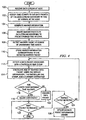
- a flowchart demonstrating one embodiment of a method for using processing data packets 40 that may be used in accordance with the present invention is described with reference to FIGURE 4.
- FIGURES 2A and 2B are embodiments of data streams 15 into which marker packets 50 are inserted in accordance with the present invention.
- Processor 30 determines the time interval at which to insert marker packets 50 in data stream 15. Variations of data stream 15 including any suitable number of marker packets 50 may be used without departing from the scope of the invention.
- FIGURE 2A is a diagram of an embodiment of data stream 15 illustrating at least one marker packet 50 per cycle 45.
- processor 30 may insert marker packets 50 at least once per cycle 45.
- cycle 45 includes four data packets 40 and one marker packet 50.
- Cycle 45 may be modified to include more or fewer data packets 40 and more marker packets 50.
- cycle 45 may be modified to include fewer data packets 40 and more marker packets 50 without departing from the scope of the invention.
- FIGURE 2B illustrates an embodiment of data stream 15 comprising cycles 45a and 45b, marker packets 50a, 50b and 50c, and data packets 40.
- processor 30 may insert multiple marker packets 50 in data stream 15.
- processor 30 inserts two packets per cycle 45, for example, marker packets 50a and 50b are inserted at cycle 45a of data stream 15.
- Cycle 45 may comprise the maximum allowed time T A .
- the maximum time allowed T A is two seconds
- at least one marker packet 50 may be inserted every two seconds.
- the time interval of cycle 45 may be lower than the maximum allowed time. Any suitable time interval may be used by processor 30 without departing from the scope of the invention.
- data stream 15 of FIGURE 2B may be modified to increase the number of data packets 40 per cycle 45, increase the number of marker packets 50 at cycle 45, and alter the length of cycle 45 depending on the design and application.
- cycle 45 may be adjusted to account for a synchronization error T sync .
- Synchronization error T sync defines the time difference between the time stamp values processor 30 uses to calculate the age of the data packets 40.
- System 10 may be designed such that synchronization error T sync is accounted for as described by Equation (2) : T in - T stamp ⁇ ⁇ R / 2 - T sync where T in describes the ingress time of data packet 40 at unbounded time region 24, T stamp represents the data packet time stamp, and ⁇ R is a rollover time of the short time stamp.
- T in describes the ingress time of data packet 40 at unbounded time region 24
- T stamp represents the data packet time stamp
- ⁇ R is a rollover time of the short time stamp.
- Cycles 45a and 45b may be substantially similar. Cycles 45a and 45b may, however, vary in length from each other. For example, cycle 45a may be a specific length, while cycle 45b may be another length.
- FIGURE 3 is a diagram of an embodiment of an unbounded time region 24 comprising a restrictive reordering FIFO queue 60 and a corresponding data stream 62 that may be used in accordance with the present invention.
- a restrictive reordering FIFO queue 60 is shown including data stream 15 and output threads 65.
- unbounded time region 24 may comprise a restrictive reordering FIFO queue 60 where data packets 40 may be reordered making the egress ordering of data packets 40 different from the ingress ordering of data packets 40.
- data stream 65 includes inserted marker packets 50a, 50b, and 50c, and data packet sets 40a and 40b comprising one or more data packets.
- Restrictive reordering FIFO queue 60 generally operates substantially similar to a basic FIFO queue. Packets from threads 65 of queue 60, however, may be processed in a different order. For example, data packet set 40a from a thread A may be processed, after which a data packet set 40a from a thread B may be processed in sequence. The unprocessed data packet sets and the corresponding data packets 40 remain in the order they entered the queue. That is, for example, data packets 40 and data packet set 40b are not reordered.
- each thread of data threads 65 may comprise an embodiment of data stream 62.
- the illustrated data stream 62 may be forwarded to thread A of data threads 65, while another data stream 62 (not shown) may be forwarded to thread B.
- Any other suitable arrangement of data streams 62 at data threads 65 may be used without departing from the scope of the invention.
- the reordering may be accomplished according to any suitable criteria, such as priority, as long as the data packets and data packet sets are maintained at the same FIFO order.
- marker packet 50a is used to calculate the age of data packets 40 of data packet set 40a
- marker packet 50b is used to calculate the age of the data packets of data packet set 40b.
- Any number of data packets 40 may be part of a data packet set and any number of data packet sets may be included in modified data stream 62 without departing from the scope of the invention.
- restrictive reordering FIFO queue 60 may include any suitable number of data threads 65 without departing from the scope of the invention.
- modified data stream 62 may be generated using any number of data packets 40, any number of marker packets 50 and according to any length of cycle 45.
- restrictive reordering FIFO queue 60 may use any suitable criteria to reorder data packet sets such as priority.
- functions may be performed using any suitable logic comprising software, hardware, other logic, or any suitable combination of the preceding.
- FIGURE 4 is a flowchart demonstrating one embodiment of a method for use in processing data packets 40 that may be used in accordance with the present invention.
- a data stream 15 comprising data packets 40 is received at node 20.
- Data packets 40 are time stamped to indicate a time at which the data packets 40 enter node 20.
- Processor 30 inserts marker packets 50 in data stream 15, where marker packets 50 comprise a marker time stamp indicating a time at which a marker packet 50 enters unbounded time region 24.
- Data stream 15 is processed to determine the age of data packets 40 using the marker time stamp, the data packet time stamp and the current system time.
- the calculated age of data packets 40 is used to determine if data packets 40 should be discarded or allowed to be routed to an output data stream 55. By inserting long time stamps as marker packets 50 in data stream 15, rollover may be avoided while maintaining an effective bandwidth.
- the method begins at step 100 where a node receives a data stream 15.
- the method proceeds to step 102 where processor 30 assigns time stamps to data packets 40 of data stream 15 according to a time of arrival.
- the time stamp assigned to each data packet 40 may comprise a short time stamp indicative of a time at which a data packet 40 enters a region.
- the time stamp may indicate the time at which data packet 40 enters the node, bounded time region 22, unbounded time region 24, or some, none, or all of the preceding.
- the short time stamp assigned to data packet 40 may comprise any suitable number of bits without departing from the scope of the invention.
- the marker information comprises a long time stamp indicating the time at which marker packet 50 enters a region.
- the marker time stamp indicates the time at which marker packet 50 is inserted at node 20, bounded region 22, unbounded time region 24, or some, none, or all of the preceding.
- the long time stamp of marker packet 50 carries a larger number of bits than the short time stamp.
- the long time stamp may comprise forty bits, while the short time stamp may comprise four bits.
- marker packet 50 comprises a twenty-four byte packet that includes a header, error correction information, end of packet information, and a 40 bit time stamp. Any other suitable number of bits may be included at marker packet 50 without departing from the scope of the invention.
- step 106 processor 30 inserts the generated marker packets 50 in data stream 15 according to a time interval.
- the time interval comprises a time period substantially equal to the maximum allowed time, T A .
- the time interval may be lower than the maximum allowed time T A to increase the number of marker packets that may be included per cycle 45 of data stream 15, as was more particularly described with reference to FIGURES 2A and 2B.
- processor 30 detects marker packet 50 at egress of unbounded time region 24. The method then proceeds to step 110 where the marker information corresponding to the detected marker packet 50 is stored.
- processor 30 detects a data packet 40 associated with a particular time stamp. For example, after detecting marker packet 50, processor 30 may detect subsequent data packets 40 each associated with a particular time stamp.
- Processor 30 calculates the age of the received data packet 40 using the marker information and the current system time at step 114. According to the illustrated embodiment, the data packet age is calculated by first performing a N -bit subtraction, such as a 40 bit subtraction. The N -bit subtraction of the current system time T c minus the marker time stamp value T m may yield the time indicating how long marker packet 50 has been at node 20. According to one embodiment, the N -bit subtraction described by Equation (4) below may effectively yield an estimate of the age of data packet 40.
- processor 30 determines the age of data packet 40 relative to the last detected marker packet 50 by performing an n -bit subtraction of the marker packet time stamp value T m minus the data packet time stamp T stamp .
- the result of the n -bit subtraction is sign extended to N bits to determine the total time the frame or data packet 40 has been at node 20 according to Equation (4): T C - T m ⁇
- step 116 processor 30 determines if the calculated age is lower than the maximum allowed time T A . From Equation (4), processor 30 determines if the calculated age is lower than the maximum allowed time T A . If the calculated age is lower than the maximum allowed time T A , processor 30 allows the data packet 40 at step 118, and forwards the data packet 40 to an output data stream 55.
- processor 30 instructs unbounded time region 24 to discard data packet 40 at step 120.
- Data packet 40 may be discarded when the age calculated at step 114 is equal to or exceeds the maximum time allowed T A . For example, for a maximum allowed time T A of two seconds, if the age calculated is equal to or is greater than two seconds, processor 30 instructs unbounded time region 24 to discard data packet 40.
- step 122 the method proceeds to determine if there is a next packet that needs to be processed. If there are subsequent packets to process at step 122, the method proceeds to step 124, where processor 30 determines if the next packet to be processed is a marker packet 50. If a next marker packet 50 is detected at step 124, the method proceeds to step 126 where the marker information stored at step 110 is updated with the marker information corresponding to the next marker packet 50 detected. If the next packet to process is not a marker packet 50 at step 124, the method returns to step 112, where processor 30 detects a next data packet 40. If there are no next packets to process at step 122, the method terminates.
- Steps may be added, omitted, modified, or performed in any suitable order without departing from the scope of the invention.
- generating marker information at ingress of unbounded time region 24 at step 104 may be performed simultaneously with inserting marker packets 50 in data stream 15 according to a time interval at step 106.
- storing marker information corresponding to the detected marker packet 50 at step 110 may be omitted.
- a step may be added to determine if there is congestion at unbounded time region 24 so that processor 30 may prevent data packets 40 from entering the queue as was described with reference to FIGURE 1.
- functions may be performed using any suitable logic comprising software, hardware, other logic, or any suitable combination of the preceding.
- Certain embodiments of the invention may provide one or more technical advantages.
- a technical advantage of one embodiment may be that by using a long time stamp at a marker packet, rollover of data packets may be avoided.
- Another technical advantage of one embodiment may be that inserting marker packets into a data stream may provide for reliable monitoring of data packet age while maintaining the effective increase in bandwidth to a minimum.
Landscapes
- Engineering & Computer Science (AREA)
- Computer Networks & Wireless Communication (AREA)
- Signal Processing (AREA)
- Environmental & Geological Engineering (AREA)
- Health & Medical Sciences (AREA)
- Cardiology (AREA)
- General Health & Medical Sciences (AREA)
- Data Exchanges In Wide-Area Networks (AREA)
- Maintenance And Management Of Digital Transmission (AREA)
Claims (31)
- Ein Verfahren zur Verwendung beim Verarbeiten von Datenpaketen, umfassend:Einfügen einer Vielzahl von Markiererpaketen in einen Datenstrom bei Zeitintervallen, wobei jedes Markierpaket einen jeweiligen ersten Zeitstempel umfasst, kennzeichnend für die Zeit, bei der das Markiererpaket eingefügt wird; undBerechnen für mindestens ein Datenpaket eine Schätzung eines Alters des Datenpakets, basierend auf einer gegenwärtigen Systemzeit und dem jeweiligen ersten Zeitstempel des letzten Markiererpakets, das in den Datenstrom eingefügt wurde vor dem Datenpaket.
- Das Verfahren nach Anspruch 1, ferner umfassend:Markieren einer Vielzahl von Datenpaketen in einem Datenstrom mit einem jeweiligen zweiten Zeitstempel, der kennzeichnend ist für eine Zeit, bei der die Datenpakete eintreten in einen Bereich, ausgewählt von einer Gruppe bestehend aus dem Knoten, einem begrenzten Bereich des Knotens, und einem unbegrenzten Bereich des Knotens, wobei der zweite Zeitstempel eine zweite Anzahl von Bits umfasst;Verwerfen des Datenpakets, falls das berechnete Alter gleich ist zu oder eine maximal erlaubte Zeit überschreitet; undZulassen des Datenpakets, falls das berechnete Alter geringer ist als eine maximal erlaubte Zeit;wobei Berechnen für mindestens ein Datenpaket einer Schätzung eines Alters des Datenpakets ferner auf dem jeweiligen zweiten Zeitstempel basiert, die Berechnung des Alters des Datenpakets wird erhalten durch die folgende Gleichung:
 wobei Tc die gegenwärtige Systemzeit ist, Tm der jeweilige erste Zeitstempel ist, Tstamp der jeweilige zweite Zeitstempel ist, N der ersten Anzahl der Bits entspricht, und n der zweiten Anzahl der Bits entspricht, Tm N Bits aufweist, Tstamp n Bits aufweist, N-Bit Subtraktion dem Subtrahieren von Tm mit N Bits von Tc entspricht, n-Bit Subtraktion dem Subtrahieren von Tstamp mit n Bits von Tm entspricht; undwobei das Markiererpaket eingefügt wird in einen Bereich, ausgewählt von einer Gruppe bestehend aus dem Knoten, einem begrenzten Bereich des Knotens, und einem unbegrenzten Bereich des Knotens, wobei der erste Zeitstempel eine erste Anzahl der Bits umfasst, und die erste Anzahl der Bits größer ist als die zweite Anzahl der Bits, wobei die Zeitintervalle Zeitperioden umfassen, die ausgewählt werden von einer Gruppe bestehend aus im Wesentlichen gleich zu einer maximal erlaubten Zeit und geringer als die maximal erlaubte Zeit, wobei das Markiererpaket ferner eine Vielzahl von Fehlerkorrektur-Bits umfasst.
 - Das Verfahren nach Anspruch 1, ferner umfassend Markieren einer Vielzahl von Datenpaketen in dem Datenstrom mit einem jeweiligen zweiten Zeitstempel, der kennzeichnend ist für eine Zeit, bei der das Datenpaket in einen Knoten eintritt; wobei der erste Zeitstempel eine größere Anzahl von Bits als der zweite Zeitstempel aufweist;
wobei ein Berechnen für mindestens ein Datenpaket der Schätzung des Alters des Datenpakets ferner umfasst ein Berechnen der Schätzung des Alters des Datenpakets, basierend auf der gegenwärtigen Systemzeit, dem jeweiligen ersten Zeitstempel, und dem jeweiligen zweiten Zeitstempel. - Das Verfahren nach Anspruch 1, ferner umfassend Verwerfen des Datenpakets, falls die berechnete Schätzung des Alters gleich ist zu oder eine maximal erlaubte Zeit überschreitet.
- Das Verfahren nach Anspruch 1, ferner umfassend Zulassen des Datenpakets, falls die berechnete Schätzung des Alters niedriger ist als eine maximal erlaubte Zeit.
- Das Verfahren nach Anspruch 3, wobei der jeweilige zweite Zeitstempel, der kennzeichnend ist für eine Zeit, bei der das Datenpaket in den Knoten eintritt, die Zeit ist, bei der das Datenpaket in einen Bereich eintritt, ausgewählt von einer Gruppe bestehend aus dem Knoten, einem begrenzten Bereich des Knotens, und einem unbegrenzten Bereich des Knotens.
- Das Verfahren nach Anspruch 1, wobei der jeweilige erste Zeitstempel, der kennzeichnend ist für die Zeit, bei der das Markiererpaket eingefügt wird, die Zeit ist, bei der das Markiererpaket in einen Bereich eintritt, ausgewählt von einer Gruppe bestehend aus dem Knoten, einem begrenzten Bereich des Knotens, und einem unbegrenzten Bereich des Knotens.
- Das Verfahren nach Anspruch 3, wobei ein Berechnen der Abschätzung des Alters des Datenpakets ferner umfasst:Berechnen eines ersten Unterschieds zwischen der gegenwärtigen Systemzeit und dem jeweiligen ersten Zeitstempel;Berechnen eines zweiten Unterschieds zwischen dem jeweiligen ersten Zeitstempel und dem jeweiligen zweiten Zeitstempel; undHinzufügen des ersten Unterschieds und des zweiten Unterschieds.
- Das Verfahren nach Anspruch 1, wobei das Zeitintervall ein Intervall der Zeit umfasst, im Wesentlichen gleich zu einer maximal erlaubten Zeit.
- Das Verfahren nach Anspruch 1, wobei das Zeitintervall ein Intervall der Zeit geringer als eine maximal erlaubte Zeit umfasst.
- Das Verfahren nach Anspruch 1, wobei das Markiererpaket ferner eine Vielzahl von Fehlerkorrektur-Bits umfasst.
- Ein System zum Verarbeiten von Datenpaketen, umfassend:einen Knoten, betriebsfähig zum Empfangen eines Datenstroms; undeinen Prozessor, der gekoppelt ist mit dem Knoten und betriebsfähig zum:Einfügen einer Vielzahl von Markiererpaketen in den Datenstrom bei Zeitintervallen, wobei jedes Markiererpaket einen jeweiligen ersten Zeitstempel umfasst, der kennzeichnend ist für die Zeit, bei der das Markiererpaket eingefügt wird; undBerechnen für mindestens ein Datenpaket einer Schätzung eines Alters des Datenpakets, basierend auf einer gegenwärtigen Systemzeit und dem jeweiligen ersten Zeitstempel des letzten Markiererpakets, das eingefügt wurde in den Datenstrom vor dem Datenpaket.
- Das System nach Anspruch 12, wobei der Prozessor ferner betriebsfähig ist zum:Markieren einer Vielzahl von Datenpaketen in einem Datenstrom mit einem jeweiligen zweiten Zeitstempel, der kennzeichnend ist für eine Zeit, bei der das Datenpaket in einen Knoten eintritt; wobei der erste Zeitstempel eine größere Anzahl von Bits als der zweite Zeitstempel aufweist; undBerechnen der Schätzung des Alters des Datenpakets, basierend auf der gegenwärtigen Systemzeit, dem jeweiligen ersten Zeitstempel, und dem jeweiligen zweiten Zeitstempel.
- Das System nach Anspruch 12, wobei der Prozessor ferner betriebsfähig ist zum Verwerfen des Datenpakets, falls die berechnete Schätzung des Alters gleich ist, oder eine maximal erlaubte Zeit überschreitet.
- Das System nach Anspruch 12, wobei der Prozessor ferner betriebsfähig ist zum Zulassen des Datenpakets, falls die berechnete Schätzung des Alters geringer ist als eine maximal erlaubte Zeit.
- Das System nach Anspruch 13, wobei der jeweilige zweite Zeitstempel, der kennzeichnend ist für eine Zeit, bei der das Datenpaket in den Knoten eintritt, die Zeit ist, bei der das Datenpaket eintritt in einen Bereich, ausgewählt von einer Gruppe bestehend aus dem Knoten, einem begrenzten Bereich des Knotens, und einem unbegrenzten Bereich des Knotens.
- Das System nach Anspruch 12, wobei der jeweilige erste Zeitstempel, der kennzeichnend ist für die Zeit, bei der das Markiererpaket eingefügt wird, die Zeit ist, bei der das Markiererpaket eintritt in einen Bereich, ausgewählt von einer Gruppe bestehend aus dem Knoten, einem begrenzten Bereich des Knotens, und einem unbegrenzten Bereich des Knotens.
- Das System nach Anspruch 13, wobei der Prozessor ferner betriebsfähig ist zum Berechnen der Schätzung des Alters des Datenpakets durch:Berechnen eines ersten Unterschieds zwischen der gegenwärtigen Systemzeit und dem jeweiligen ersten Zeitstempel;Berechnen eines zweiten Unterschieds zwischen dem jeweiligen ersten Zeitstempel und dem jeweiligen zweiten Zeitstempel; undHinzufügen des ersten Unterschieds und des zweiten Unterschieds.
- Das System nach Anspruch 12, wobei das Zeitintervall ein Intervall der Zeit, im Wesentlichen gleich zu einer maximal erlaubten Zeit, umfasst.
- Das System nach Anspruch 12, wobei das Zeitintervall ein Intervall der Zeit geringer als eine maximal erlaubte Zeit umfasst.
- Das System nach Anspruch 12, wobei das Markiererpaket ferner eine Vielzahl von Fehlerkorrektur-Bits umfasst.
- Ein computerlesbares Medium, enthaltend Code für eine Verarbeitung von Datenpaketen, wobei der Code betriebsfähig ist zum:Einfügen einer Vielzahl von Markiererpaketen in einen Datenstrom bei Zeitintervallen, wobei jedes Markiererpaket einen jeweiligen ersten Zeitstempel umfasst, der kennzeichnend ist für die Zeit, bei der das Markiererpaket eingefügt wird; undBerechnen für mindestens ein Datenpaket einer Schätzung eines Alters des Datenpakets, basierend auf einer gegenwärtigen Systemzeit und dem jeweiligen ersten Zeitstempel des letzten Markiererpakets, das eingefügt wurde in den Datenstrom vor dem Datenpaket.
- Das computerlesbare Medium, enthaltend Code nach Anspruch 22, wobei der Code ferner betriebsfähig ist zum:Markieren einer Vielzahl von Datenpaketen in einem Datenstrom mit einem jeweiligen zweiten Zeitstempel, der kennzeichnend ist für eine Zeit, bei der das Datenpaket in einen Knoten eintritt; wobei der erste Zeitstempel eine größere Anzahl von Bits als der zweite Zeitstempel aufweist; undBerechnen der Schätzung des Alters des Datenpakets, basierend auf der gegenwärtigen Systemzeit, dem jeweiligen Zeitstempel, und dem jeweiligen zweiten Zeitstempel.
- Das computerlesbare Medium, enthaltend Code nach Anspruch 22, wobei der Code ferner betriebsfähig ist zum Verwerfen des Datenpakets, falls die berechnete Schätzung des Alters gleich ist, oder eine maximal erlaubte Zeit überschreitet.
- Das computerlesbare Medium, enthaltend Code nach Anspruch 22, wobei der Code ferner betriebsfähig ist zum Zulassen des Datenpakets, falls die berechnete Schätzung des Alters geringer ist als eine maximal erlaubte Zeit.
- Das computerlesbare Medium, enthaltend Code nach Anspruch 23, wobei der jeweilige zweite Zeitstempel, der kennzeichnend ist für eine Zeit, bei der das Datenpaket in den Knoten eintritt, die Zeit ist, bei der das Datenpaket eintritt in einen Bereich, ausgewählt von einer Gruppe bestehend aus dem Knoten, einem begrenzten Bereich des Knotens, und einem unbegrenzten Bereich des Knotens.
- Das computerlesbare Medium, enthaltend Code nach Anspruch 22, wobei der jeweilige erste Zeitstempel, der kennzeichnend ist für die Zeit, bei der das Markiererpaket eingefügt wird, die Zeit ist, bei der das Markiererpaket eintritt in einen Bereich, ausgewählt von einer Gruppe bestehend aus dem Knoten, einen begrenzten Bereich des Knotens, und einen unbegrenzten Bereich des Knotens.
- Das computerlesbare Medium, enthaltend Code nach Anspruch 23, wobei der Code ferner betriebsfähig ist zum Berechnen der Schätzung des Alters des Datenpakets durch:Berechnen eines ersten Unterschieds zwischen der gegenwärtigen Systemzeit und dem jeweiligen ersten Zeitstempel;Berechnen eines zweiten Unterschieds zwischen dem jeweiligen ersten Zeitstempel und dem jeweiligen zweiten Zeitstempel; undHinzufügen des ersten Unterschieds und des zweiten Unterschieds.
- Das computerlesbare Medium, enthaltend Code nach Anspruch 22, wobei das Zeitintervall ein Intervall der Zeit, im Wesentlichen gleich zu einer maximal erlaubten Zeit, umfasst.
- Das computerlesbare Medium, enthaltend Code nach Anspruch 22, wobei das Zeitintervall ein Intervall der Zeit geringer als eine maximal erlaubte Zeit umfasst.
- Das computerlesbare Medium, enthaltend Code nach Anspruch 22, wobei das Markiererpaket ferner eine Vielzahl von Fehlerkorrektur-Bits umfasst.
Applications Claiming Priority (2)
| Application Number | Priority Date | Filing Date | Title |
|---|---|---|---|
| US10/616,130 US7372865B2 (en) | 2003-07-09 | 2003-07-09 | Processing data packets using time stamped marker packets |
| US616130 | 2003-07-09 |
Publications (3)
| Publication Number | Publication Date |
|---|---|
| EP1496652A2 EP1496652A2 (de) | 2005-01-12 |
| EP1496652A3 EP1496652A3 (de) | 2006-05-24 |
| EP1496652B1 true EP1496652B1 (de) | 2007-09-12 |
Family
ID=33452673
Family Applications (1)
| Application Number | Title | Priority Date | Filing Date |
|---|---|---|---|
| EP04016110A Expired - Lifetime EP1496652B1 (de) | 2003-07-09 | 2004-07-08 | Verarbeitung von Datenpaketen unter Verwendung von Markierungen |
Country Status (4)
| Country | Link |
|---|---|
| US (1) | US7372865B2 (de) |
| EP (1) | EP1496652B1 (de) |
| JP (1) | JP4634079B2 (de) |
| DE (1) | DE602004008836T2 (de) |
Families Citing this family (46)
| Publication number | Priority date | Publication date | Assignee | Title |
|---|---|---|---|---|
| US7536723B1 (en) * | 2004-02-11 | 2009-05-19 | Airtight Networks, Inc. | Automated method and system for monitoring local area computer networks for unauthorized wireless access |
| WO2007044326A2 (en) * | 2005-10-04 | 2007-04-19 | Adaptive Spectrum And Signal Alignment, Inc. | Dsl system |
| JP4606338B2 (ja) * | 2006-01-30 | 2011-01-05 | 富士通株式会社 | 検出方法及び検出装置 |
| US7768923B2 (en) * | 2007-02-09 | 2010-08-03 | Cisco Technology, Inc. | Packet aging in a wireless network |
| JP5146548B2 (ja) * | 2009-02-06 | 2013-02-20 | 富士通株式会社 | パケットバッファ装置及びパケット廃棄方法 |
| US8755393B2 (en) * | 2010-04-02 | 2014-06-17 | Cisco Technology, Inc. | Facilitating communication of routing information |
| BR112013010739B1 (pt) * | 2010-11-05 | 2021-08-17 | Telecom Italia S.P.A. | Método para realizar uma medição em um fluxo de dados, e, rede de comunicação |
| US8565539B2 (en) * | 2011-05-31 | 2013-10-22 | Hewlett-Packard Development Company, L.P. | System and method for determining estimated age using an image collection |
| US9461777B2 (en) | 2011-11-21 | 2016-10-04 | Qualcomm Incorporated | Hybrid networking system with seamless path switching of streams |
| US20140092756A1 (en) * | 2012-09-28 | 2014-04-03 | Fluke Corporation | Methods and apparatuses to provide time markers for a packet stream |
| US9722943B2 (en) | 2012-12-17 | 2017-08-01 | Qualcomm Incorporated | Seamless switching for multihop hybrid networks |
| WO2014155043A1 (en) * | 2013-03-28 | 2014-10-02 | British Telecommunications Public Limited Company | Re-marking of packets for queue control |
| US9502111B2 (en) | 2013-11-05 | 2016-11-22 | Cisco Technology, Inc. | Weighted equal cost multipath routing |
| US10951522B2 (en) | 2013-11-05 | 2021-03-16 | Cisco Technology, Inc. | IP-based forwarding of bridged and routed IP packets and unicast ARP |
| US9397946B1 (en) | 2013-11-05 | 2016-07-19 | Cisco Technology, Inc. | Forwarding to clusters of service nodes |
| US9374294B1 (en) | 2013-11-05 | 2016-06-21 | Cisco Technology, Inc. | On-demand learning in overlay networks |
| US9674086B2 (en) | 2013-11-05 | 2017-06-06 | Cisco Technology, Inc. | Work conserving schedular based on ranking |
| US10778584B2 (en) | 2013-11-05 | 2020-09-15 | Cisco Technology, Inc. | System and method for multi-path load balancing in network fabrics |
| US9769078B2 (en) | 2013-11-05 | 2017-09-19 | Cisco Technology, Inc. | Dynamic flowlet prioritization |
| US20150124824A1 (en) * | 2013-11-05 | 2015-05-07 | Cisco Technology, Inc. | Incast drop cause telemetry |
| US9825857B2 (en) | 2013-11-05 | 2017-11-21 | Cisco Technology, Inc. | Method for increasing Layer-3 longest prefix match scale |
| US9876711B2 (en) | 2013-11-05 | 2018-01-23 | Cisco Technology, Inc. | Source address translation in overlay networks |
| US9655232B2 (en) | 2013-11-05 | 2017-05-16 | Cisco Technology, Inc. | Spanning tree protocol (STP) optimization techniques |
| US9509092B2 (en) | 2013-11-06 | 2016-11-29 | Cisco Technology, Inc. | System and apparatus for network device heat management |
| US10116493B2 (en) | 2014-11-21 | 2018-10-30 | Cisco Technology, Inc. | Recovering from virtual port channel peer failure |
| US10645016B2 (en) | 2015-08-06 | 2020-05-05 | British Telecommunications Public Limited Company | Data packet network |
| EP3332522B8 (de) | 2015-08-06 | 2019-07-31 | British Telecommunications public limited company | Datenpaketnetzwerk |
| US10541946B1 (en) | 2016-01-30 | 2020-01-21 | Innovium, Inc. | Programmable visibility engines |
| US10574577B1 (en) | 2016-03-02 | 2020-02-25 | Innovium, Inc. | Load balancing path assignments techniques |
| US10142163B2 (en) | 2016-03-07 | 2018-11-27 | Cisco Technology, Inc | BFD over VxLAN on vPC uplinks |
| US10333828B2 (en) | 2016-05-31 | 2019-06-25 | Cisco Technology, Inc. | Bidirectional multicasting over virtual port channel |
| US11509501B2 (en) | 2016-07-20 | 2022-11-22 | Cisco Technology, Inc. | Automatic port verification and policy application for rogue devices |
| US10193750B2 (en) | 2016-09-07 | 2019-01-29 | Cisco Technology, Inc. | Managing virtual port channel switch peers from software-defined network controller |
| US11075847B1 (en) | 2017-01-16 | 2021-07-27 | Innovium, Inc. | Visibility sampling |
| US12537776B1 (en) | 2017-01-16 | 2026-01-27 | Innovium, Inc. | Enhanced visibility sampling |
| US10735339B1 (en) * | 2017-01-16 | 2020-08-04 | Innovium, Inc. | Intelligent packet queues with efficient delay tracking |
| US10277518B1 (en) | 2017-01-16 | 2019-04-30 | Innovium, Inc. | Intelligent packet queues with delay-based actions |
| US10313255B1 (en) | 2017-01-16 | 2019-06-04 | Innovium, Inc. | Intelligent packet queues with enqueue drop visibility and forensics |
| DE102017112208A1 (de) | 2017-06-02 | 2018-12-06 | Dspace Digital Signal Processing And Control Engineering Gmbh | Verfahren zur Übertragung von messtechnisch erfassten und digitalisierten Messdaten und zur Ausführung des Verfahrens geeignete Testvorrichtung |
| US10547509B2 (en) | 2017-06-19 | 2020-01-28 | Cisco Technology, Inc. | Validation of a virtual port channel (VPC) endpoint in the network fabric |
| EP3734919A1 (de) * | 2019-04-30 | 2020-11-04 | Mitsubishi Electric R&D Centre Europe B.V. | Bandinterne signalisierung zur dynamischen übertragungszeitfenstersteuerung |
| US11621904B1 (en) | 2020-11-06 | 2023-04-04 | Innovium, Inc. | Path telemetry data collection |
| US11784932B2 (en) | 2020-11-06 | 2023-10-10 | Innovium, Inc. | Delay-based automatic queue management and tail drop |
| EP4256769A1 (de) | 2020-12-01 | 2023-10-11 | Cisco Technology, Inc. | Telemetriedatenoptimierung für pfadverfolgung und verzögerungsmessung |
| US11716268B2 (en) | 2020-12-01 | 2023-08-01 | Cisco Technology, Inc. | Telemetry data optimization for path tracing and delay measurement |
| EP4393132A1 (de) * | 2022-02-25 | 2024-07-03 | Google LLC | Robuster alterssättigungsmechanismus für altersbasierte arbitrierung in paketnetzwerken |
Family Cites Families (18)
| Publication number | Priority date | Publication date | Assignee | Title |
|---|---|---|---|---|
| US194343A (en) * | 1877-08-21 | Improvement in stamp-canceling devices | ||
| US21717A (en) * | 1858-10-05 | Executor of | ||
| US5040111A (en) * | 1988-04-11 | 1991-08-13 | At&T Bell Laboratories | Personal computer based non-interactive monitoring of communication links |
| US5260935A (en) * | 1991-03-01 | 1993-11-09 | Washington University | Data packet resequencer for a high speed data switch |
| JP2606073B2 (ja) * | 1993-06-11 | 1997-04-30 | 日本電気株式会社 | コンピュータネットワークのブロードキャスト方式 |
| JPH07191816A (ja) * | 1993-12-27 | 1995-07-28 | Canon Inc | 印刷装置及びその制御方法 |
| GB2298951B (en) * | 1995-03-17 | 1999-10-27 | Olivetti Res Ltd | Addition of time information |
| JPH09191314A (ja) * | 1996-01-10 | 1997-07-22 | Mitsubishi Electric Corp | 連続データ伝送方法および連続データ伝送装置 |
| US6041345A (en) * | 1996-03-08 | 2000-03-21 | Microsoft Corporation | Active stream format for holding multiple media streams |
| US6247058B1 (en) * | 1998-03-30 | 2001-06-12 | Hewlett-Packard Company | Method and apparatus for processing network packets using time stamps |
| GB2342527A (en) | 1998-10-02 | 2000-04-12 | Gen Datacomm Adv Res | Data swtich performance monitoring |
| US6288862B1 (en) * | 1999-07-30 | 2001-09-11 | Storage Technology Corporation | Method and mechanism to distinguish valid from outdated recording blocks in a tape drive |
| JP4414065B2 (ja) * | 1999-08-06 | 2010-02-10 | パナソニック株式会社 | データ伝送方式,データ送信装置,及びデータ受信装置 |
| US6765571B2 (en) | 1999-09-24 | 2004-07-20 | Sun Microsystems, Inc. | Using a master controller to manage threads and resources for scene-based rendering |
| US7362331B2 (en) * | 2000-01-05 | 2008-04-22 | Apple Inc. | Time-based, non-constant translation of user interface objects between states |
| US6907041B1 (en) * | 2000-03-07 | 2005-06-14 | Cisco Technology, Inc. | Communications interconnection network with distributed resequencing |
| WO2001088746A1 (en) * | 2000-05-18 | 2001-11-22 | Brix Networks, Inc. | Method and system for transmit time stamp insertion in a hardware time stamp system for packetized data networks |
| US20020194343A1 (en) * | 2001-02-28 | 2002-12-19 | Kishan Shenoi | Measurement of time-delay, time-delay-variation, and cell transfer rate in ATM networks |
-
2003
- 2003-07-09 US US10/616,130 patent/US7372865B2/en active Active
-
2004
- 2004-07-08 DE DE602004008836T patent/DE602004008836T2/de not_active Expired - Lifetime
- 2004-07-08 JP JP2004201582A patent/JP4634079B2/ja not_active Expired - Fee Related
- 2004-07-08 EP EP04016110A patent/EP1496652B1/de not_active Expired - Lifetime
Also Published As
| Publication number | Publication date |
|---|---|
| EP1496652A3 (de) | 2006-05-24 |
| JP4634079B2 (ja) | 2011-02-16 |
| EP1496652A2 (de) | 2005-01-12 |
| DE602004008836T2 (de) | 2008-06-12 |
| US7372865B2 (en) | 2008-05-13 |
| US20050007961A1 (en) | 2005-01-13 |
| DE602004008836D1 (de) | 2007-10-25 |
| JP2005033804A (ja) | 2005-02-03 |
Similar Documents
| Publication | Publication Date | Title |
|---|---|---|
| EP1496652B1 (de) | Verarbeitung von Datenpaketen unter Verwendung von Markierungen | |
| US9106577B2 (en) | Systems and methods for dropping data using a drop profile | |
| US7885281B2 (en) | Systems and methods for determining the bandwidth used by a queue | |
| EP2115963B1 (de) | Verfahren und vorrichtungen zu latenzvariationsregelung in einem pakettransfernetz | |
| US8036117B1 (en) | Dequeuing and congestion control systems and methods | |
| US8681681B2 (en) | Dequeuing and congestion control systems and methods for single stream multicast | |
| JP5157577B2 (ja) | 到着パケット廃棄決定を行うパケットバッファ管理装置及びその廃棄決定方法 | |
| US8072998B2 (en) | Systems and methods for congestion control using random early drop at head of buffer | |
| EP1083709A2 (de) | Verfahren und Vorrichtung zur Verkehrablaufsteuerung um die Dienstqualität in einem Kommunikationsnetzwerk zu erfüllen | |
| CN112804157A (zh) | 可编程的拥塞控制 | |
| US20120327948A1 (en) | Adjustment of negative weights in weighted round robin scheduling | |
| JP2002223240A (ja) | 重み付きランダムアーリディテクションバッファアドミッタンスアルゴリズムの近似方法 | |
| GB2349312A (en) | Ageing of data packets using queue pointers | |
| US20080205287A1 (en) | Apparatus and method for controlling the transfer of communication traffic to multiple links of a multi-link system | |
| EP3425862A1 (de) | Automatisches durchwechseln zwischen paketverkehrsströmen, indem sie variierenden verlustwahrscheinlichkeiten in einem paketnetzwerk ausgesetzt sind | |
| US7961744B2 (en) | Frame multiplexing device | |
| Landman | Design and analysis of CAN networks for vehicles | |
| CN107995053B (zh) | 一种基于软件定义网络侦测网路封包丢失方法及装置 | |
| US20060242338A1 (en) | Item queue management | |
| Min et al. | A dynamic IEEE 802.11 e txop scheme in wlans under self-similar traffic: Performance enhancement and analysis | |
| JP4662485B2 (ja) | パケットサンプルを用いた大量バースト生成フロー特定方法およびそのシステム | |
| CN120979541B (zh) | 适用于dvb卫星传输系统的gse报文乱序处理的方法 | |
| De Vuyst et al. | Analysis of Stop-and-Wait ARQ for a wireless channel | |
| CN116032852A (zh) | 基于会话的流量控制方法、装置、系统、设备及存储介质 | |
| WO1999037065A1 (en) | Cell compliance decision method and apparatus |
Legal Events
| Date | Code | Title | Description |
|---|---|---|---|
| PUAI | Public reference made under article 153(3) epc to a published international application that has entered the european phase |
Free format text: ORIGINAL CODE: 0009012 |
|
| AK | Designated contracting states |
Kind code of ref document: A2 Designated state(s): AT BE BG CH CY CZ DE DK EE ES FI FR GB GR HU IE IT LI LU MC NL PL PT RO SE SI SK TR |
|
| AX | Request for extension of the european patent |
Extension state: AL HR LT LV MK |
|
| RIN1 | Information on inventor provided before grant (corrected) |
Inventor name: SCOTT, KYL W. Inventor name: RAY, SAIKAT Inventor name: ZHOU, XUNXIANG |
|
| PUAL | Search report despatched |
Free format text: ORIGINAL CODE: 0009013 |
|
| AK | Designated contracting states |
Kind code of ref document: A3 Designated state(s): AT BE BG CH CY CZ DE DK EE ES FI FR GB GR HU IE IT LI LU MC NL PL PT RO SE SI SK TR |
|
| AX | Request for extension of the european patent |
Extension state: AL HR LT LV MK |
|
| RIC1 | Information provided on ipc code assigned before grant |
Ipc: H04L 12/56 20060101AFI20041105BHEP Ipc: H04L 12/26 20060101ALI20060403BHEP Ipc: H04L 12/24 20060101ALI20060403BHEP |
|
| 17P | Request for examination filed |
Effective date: 20060531 |
|
| 17Q | First examination report despatched |
Effective date: 20060803 |
|
| AKX | Designation fees paid |
Designated state(s): DE FR GB |
|
| GRAP | Despatch of communication of intention to grant a patent |
Free format text: ORIGINAL CODE: EPIDOSNIGR1 |
|
| GRAS | Grant fee paid |
Free format text: ORIGINAL CODE: EPIDOSNIGR3 |
|
| GRAA | (expected) grant |
Free format text: ORIGINAL CODE: 0009210 |
|
| AK | Designated contracting states |
Kind code of ref document: B1 Designated state(s): DE FR GB |
|
| REG | Reference to a national code |
Ref country code: GB Ref legal event code: FG4D |
|
| REF | Corresponds to: |
Ref document number: 602004008836 Country of ref document: DE Date of ref document: 20071025 Kind code of ref document: P |
|
| ET | Fr: translation filed | ||
| PLBE | No opposition filed within time limit |
Free format text: ORIGINAL CODE: 0009261 |
|
| STAA | Information on the status of an ep patent application or granted ep patent |
Free format text: STATUS: NO OPPOSITION FILED WITHIN TIME LIMIT |
|
| 26N | No opposition filed |
Effective date: 20080613 |
|
| REG | Reference to a national code |
Ref country code: FR Ref legal event code: PLFP Year of fee payment: 13 |
|
| REG | Reference to a national code |
Ref country code: FR Ref legal event code: PLFP Year of fee payment: 14 |
|
| REG | Reference to a national code |
Ref country code: FR Ref legal event code: PLFP Year of fee payment: 15 |
|
| PGFP | Annual fee paid to national office [announced via postgrant information from national office to epo] |
Ref country code: FR Payment date: 20190619 Year of fee payment: 16 |
|
| PGFP | Annual fee paid to national office [announced via postgrant information from national office to epo] |
Ref country code: DE Payment date: 20190625 Year of fee payment: 16 |
|
| PGFP | Annual fee paid to national office [announced via postgrant information from national office to epo] |
Ref country code: GB Payment date: 20190703 Year of fee payment: 16 |
|
| REG | Reference to a national code |
Ref country code: DE Ref legal event code: R119 Ref document number: 602004008836 Country of ref document: DE |
|
| GBPC | Gb: european patent ceased through non-payment of renewal fee |
Effective date: 20200708 |
|
| PG25 | Lapsed in a contracting state [announced via postgrant information from national office to epo] |
Ref country code: GB Free format text: LAPSE BECAUSE OF NON-PAYMENT OF DUE FEES Effective date: 20200708 Ref country code: FR Free format text: LAPSE BECAUSE OF NON-PAYMENT OF DUE FEES Effective date: 20200731 |
|
| PG25 | Lapsed in a contracting state [announced via postgrant information from national office to epo] |
Ref country code: DE Free format text: LAPSE BECAUSE OF NON-PAYMENT OF DUE FEES Effective date: 20210202 |