EP1498482A2 - Structure cristalline de la cyclase de oxidosqualene - Google Patents
Structure cristalline de la cyclase de oxidosqualene Download PDFInfo
- Publication number
- EP1498482A2 EP1498482A2 EP04015106A EP04015106A EP1498482A2 EP 1498482 A2 EP1498482 A2 EP 1498482A2 EP 04015106 A EP04015106 A EP 04015106A EP 04015106 A EP04015106 A EP 04015106A EP 1498482 A2 EP1498482 A2 EP 1498482A2
- Authority
- EP
- European Patent Office
- Prior art keywords
- osc
- mammalian
- crystal form
- crystal
- compound
- Prior art date
- Legal status (The legal status is an assumption and is not a legal conclusion. Google has not performed a legal analysis and makes no representation as to the accuracy of the status listed.)
- Withdrawn
Links
Images


Classifications
-
- C—CHEMISTRY; METALLURGY
- C12—BIOCHEMISTRY; BEER; SPIRITS; WINE; VINEGAR; MICROBIOLOGY; ENZYMOLOGY; MUTATION OR GENETIC ENGINEERING
- C12Y—ENZYMES
- C12Y504/00—Intramolecular transferases (5.4)
- C12Y504/99—Intramolecular transferases (5.4) transferring other groups (5.4.99)
- C12Y504/99007—Lanosterol synthase (5.4.99.7), i.e. oxidosqualene-lanosterol cyclase
-
- C—CHEMISTRY; METALLURGY
- C07—ORGANIC CHEMISTRY
- C07K—PEPTIDES
- C07K16/00—Immunoglobulins [IG], e.g. monoclonal or polyclonal antibodies
- C07K16/40—Immunoglobulins [IG], e.g. monoclonal or polyclonal antibodies against enzymes
-
- C—CHEMISTRY; METALLURGY
- C12—BIOCHEMISTRY; BEER; SPIRITS; WINE; VINEGAR; MICROBIOLOGY; ENZYMOLOGY; MUTATION OR GENETIC ENGINEERING
- C12N—MICROORGANISMS OR ENZYMES; COMPOSITIONS THEREOF; PROPAGATING, PRESERVING, OR MAINTAINING MICROORGANISMS; MUTATION OR GENETIC ENGINEERING; CULTURE MEDIA
- C12N9/00—Enzymes; Proenzymes; Compositions thereof; Processes for preparing, activating, inhibiting, separating or purifying enzymes
- C12N9/90—Isomerases (5.)
-
- C—CHEMISTRY; METALLURGY
- C30—CRYSTAL GROWTH
- C30B—SINGLE-CRYSTAL GROWTH; UNIDIRECTIONAL SOLIDIFICATION OF EUTECTIC MATERIAL OR UNIDIRECTIONAL DEMIXING OF EUTECTOID MATERIAL; REFINING BY ZONE-MELTING OF MATERIAL; PRODUCTION OF A HOMOGENEOUS POLYCRYSTALLINE MATERIAL WITH DEFINED STRUCTURE; SINGLE CRYSTALS OR HOMOGENEOUS POLYCRYSTALLINE MATERIAL WITH DEFINED STRUCTURE; AFTER-TREATMENT OF SINGLE CRYSTALS OR A HOMOGENEOUS POLYCRYSTALLINE MATERIAL WITH DEFINED STRUCTURE; APPARATUS THEREFOR
- C30B7/00—Single-crystal growth from solutions using solvents which are liquid at normal temperature, e.g. aqueous solutions
-
- C—CHEMISTRY; METALLURGY
- C07—ORGANIC CHEMISTRY
- C07K—PEPTIDES
- C07K2299/00—Coordinates from 3D structures of peptides, e.g. proteins or enzymes
Definitions
- the present invention relates to methods for recombinant expression of sufficient amounts of mammalian oxidosqualene synthase (OSC), to crystal forms of mammalian OSC and the three-dimensional X-ray crystal structure derived thereof, the modeling of new structures, the binding mode of a OSC ligand, as well as methods for rational drug design based on the use of such data.
- OSC mammalian oxidosqualene synthase
- 2,3-Oxidosqualene:lanosterol cyclase (OSC, E.C.5.4.99.7) is a monotopic integral membrane protein associated with the endoplasmaic reticulum in eucaryotic cells. It catalyzes the key step in the conversion of the linear triterpene (3S)-2,3-oxidosqualene into fused ring compounds such as lanosterol in mammals and fungi or cycloartol in plants.
- Lanosterol is the precursor of cholesterol and numerous steriodal hormones.
- OSC is downstream of farnesyl-pyrophosphate, beyond the synthesis of isoprenoids and coenzyme Q.
- pharmacologically active doses of an OSC inhibitor showed no adverse side-effects, in contrast to a statin which reduced food-intake and body weight, and increased plasma bilirubin, liver weight and liver triglyceride content (Morand et al., J. Lipid Res. 38, 1997, 373-390).
- OSC inhibition does not trigger the overexpression of HMGR because of an indirect, negative feed-back regulatory mechanism involving the production of 24(S),25-epoxycholesterol (Peffley et al., Biochem. Pharmacol. 56, 1998, 439-449; Nelson et al., J. Biol. Chem. 256, 1981, 1067-1068; Spencer et al., J. Biol. Chem. 260, 1985, 13391-13394; Panini et al., J. Lipid Res. 27 , 1986, 1190-1204; Ness et al., Arch. Biochem. Biophys. 308, 1994, 420-425).
- This negative feed-back regulatory mechanism is fundamental to the concept of OSC inhibition because (i) it potentiates synergistically the primary inhibitory effect with an indirect down-regulation of HMGR, and (ii) it prevents the massive accumulation of the precursor monooxidosqualene in the liver.
- 24(S),25-epoxycholesterol was found to be one of the most potent agonists of the nuclear receptor LXR (Janowski et al., Proc. Natl. Acad. Sci. USA 96, 1999, 266-271).
- these compounds can therefore be used in the therapy and prophylaxis of hypercholesterolemia, hyperlipemia, arteriosclerosis and vascular diseases in general. Furthermore, they can be used in the therapy and/or prevention of mycoses, parasite infections, gallstones, cholestatic liver disorders, tumors and hyperproliferative disorders, e.g. hyperproliferative skin and vascular disorders. In addition, these compounds can also be of therapeutical use to improve glucose tolerance in order to treat and/or prevent related diseases such as diabetes.
- the bacterial squalene hopene cyclase (SHC) is dimeric (Wendt, K.U., Poralla, K., Schulz, G.E., (1997) Structure and function of a squalene cyclase, Science, 277, 1811-1815) and is catalyzing a reaction with different educts and products as compared to OSC. Therefore, there are marked differences between mammalian OSC and SHC in the active site region and the substrate binding pocket that need to be considered in the design of OSC ligands.
- the present invention provides a solution to the problem of identifying and/or designing inhibitors of OSC activity by providing methods for recombinant expression of sufficient amounts of OSC, crystal forms of OSC and their crystal structure information, methods of preparing such crystals, and methods of identifying and/or designing inhibitors of OSC with these crystals by structure based drug design.
- the present invention relates to crystal forms of mammmalian OSC and the crystal structure information obtained from them, to methods for recombinant expression of sufficient amounts of OSC and to methods of preparing such crystal forms, and to their use for the identification and/or design of inhibitors of OSC activity.
- a further subject matter of the invention are methods for the identification and/or design of inhibitor compounds of OSC activity, the inhibitor compounds of OSC activity identified by these methods and their use in pharmaceutical compositions for the treatment and/or prevention of diseases which are associated with OSC comprising hypercholesterolemia, hyperlipemia, arteriosclerosis, vascular diseases, mycoses, parasite infections and gallstones, and/or treatment and/or prophylaxis of impaired glucose tolerance, diabetes, tumors and/or hyperproliferative disorders, preferably for the treatment and/or prophylaxis of hypercholesterolemia and/or hyperlipemia.
- diseases which are associated with OSC comprising hypercholesterolemia, hyperlipemia, arteriosclerosis, vascular diseases, mycoses, parasite infections and gallstones, and/or treatment and/or prophylaxis of impaired glucose tolerance, diabetes, tumors and/or hyperproliferative disorders, preferably for the treatment and/or prophylaxis of hypercholesterolemia and/or hyperlipemia.
- the present invention provides methods for expressing, purifying and crystallizing mammalian OSC to form a crystal which diffracts x-rays with sufficiently high resolution to allow determination of the three-dimensional structure of the OSC, or a portion or subdomain thereof.
- the three-dimensional structure is useful for rational design of ligands of OSC.
- the crystals may be used for determining the binding mode of potential ligands (e.g., inhibitors) by soaking the compounds into the crystals and then determining the structure of the complex.
- the present invention provides a crystal form of mammalian OSC, preferably having the space group symmetry C222 1 (space group No. 20) and one monomer of OSC in the asymmetric unit.
- the crystal includes atoms arranged in a spatial relationship represented by the atomic structure coordinates as listed in Table 3 and any three-dimensional structure thereof having an overall fold as illustrated in Figure 2 and is of a protein containing at least about 80% of the amino acids in SEQ ID NO: 5.
- the atomic coordinates of OSC, or a fragment, analog, or variant thereof may be used to model a OSC protein, or a OSC -related protein.
- a model may also be developed based on a binding site identified herein.
- the crystal includes OSC comprising the amino acid sequence of the native protein of SEQ ID NO: 5 as well as shorter variants thereof comprising all amino acids necessary for forming the active site.
- the crystal of the invention may also be a crystal of mammalian OSC with a C-terminal addition of amino acids, e.g., a C-terminal tag, as a crystal of mammalian OSC with a His-tag comprising the amino acid sequence of SEQ ID NO: 6.
- the crystals of the invention include apo crystals and co-crystals.
- the apo crystals of the invention refer to crystals of mammalian OSC formed without a bound active site or allosteric ligand but could include bound detergents and/or lipids.
- the co-crystals generally comprise OSC with a ligand bound to the active site or to an allosteric site.
- the "active site” refers in general to the site where the enzymatic reaction catalyzed by the enzyme takes place.
- An active site ligand refers to any compound, which specifically binds to the active site of a mammalian OSC.
- the co-crystal form of the present invention is characterized as having a space group of C222 1 (space group No. 20) and one monomer of OSC in the asymmetric unit.
- the co-crystal forms of the invention generally comprise a crystalline OSC polypeptide in association with one or more compounds at an active or allosteric binding site of the polypeptide.
- the association may be covalent or non-covalent.
- the OSC (2,3-Oxidosqualene:lanosterol cyclase (E.C.5.4.99.7)) of the present invention may be a mammalian OSC.
- the OSC of the present invention is a human OSC (hOSC).
- OSC comprises the amino acid sequence as set forth in SEQ. ID NO: 5 as well as shorter variants thereof comprising all amino acids necessary for forming the active site or longer variants comprising C-terminal amino acid additions as set forth in SEQ ID NO: 6.
- the crystal forms of OSC of the invention are not limited to crystal forms of naturally occurring or native OSC including recombinantly produced OSC.
- the crystals of the invention include mutants of the native OSC. Mutants of native OSC are obtained by replacing at least one amino acid residue in the native OSC with a different amino acid residue, or by adding or deleting amino acid residues within the native polypeptide or at the N- or C- terminus of the native polypeptide, and have substantially the same three-dimensional structure as the native OSC from which the mutant is derived.
- having substantially the same three-dimensional structure is meant having a set of atomic structure coordinates from an apo- or co-crystal that have a root mean square deviation of less than or equal to about 1.5 ⁇ when superimposed with the atomic structure coordinates of the native OSC when at least 50% of the alpha carbon atoms of OSC are included in the superposition.
- mutants contemplated herein need not exhibit OSC activity. Indeed, amino acid substitutions, additions or deletions that interfere with the enzymatic activity of the OSC but which do not significantly alter the three-dimensional structure of the domain are specifically contemplated by the invention. Such crystalline polypeptides, or the atomic structure coordinates obtained therefrom, can be used to identify compounds that bind to the native enzyme. These compounds may affect the activity of the native enzyme.
- the native and mutated OSC polypeptides described herein may be isolated from natural sources or produced by methods well known to those skilled in the art of molecular biology.
- Expression vectors to be used may contain a native or mutated OSC polypeptide coding sequence and appropriate transcriptional and/or translational control signals. These methods include in vitro recombinant DNA techniques, synthetic techniques and in vivo recombination/genetic recombination. See, for example, the techniques described in Maniatis et al. (1989) Molecular Cloning: A Laboratory Manual, Cold Spring Harbor Laboratory, NY and Ausubel et al. (1989) Current Protocols in Molecular Biology, Greene Publishing Associates and Wiley Interscience, NY.
- a variety of host-expression vector systems may be utilized to express the OSC coding sequence. These include but are not limited to microorganisms such as bacteria transformed with recombinant bacteriophage DNA, plasmid DNA or cosmid DNA expression vectors containing the OSC coding sequence; yeast transformed with recombinant yeast expression vectors containing the OSC coding sequence; insect cell systems infected with recombinant virus expression vectors (e.g.
- baculovirus containing the OSC coding sequence
- plant cell systems infected with recombinant virus expression vectors e.g., cauliflower mosaic virus, CaMV; tobacco mosiac virus, TMV
- recombinant plasmid expression vectors e.g., Ti plasmid
- any of a number of suitable transcription and translation elements including constitutive and inducible promoters such as pL of bacteriophage ⁇ , plac, ptrp, ptac (ptrp-lac hybrid promoter) and the like may be used; when cloning in insect cell systems, promoters such as the baculovirus polyhedrin promoter may be used; when cloning in plant cell systems, promoters derived from the genome of plant cells (e.g., heat shock promoters; the promoter for the small subunit of RUBISCO; the promoter for the chlorophyll a/b binding protein) or from plant viruses (e.g., the 35 S RNA promoter of CaMV; the coat protein promoter of TMV) may be used; when cloning in mammalian cell systems, promoters derived from the genome of mammalian cells (e.g., metallothionein promoter) or from mammalian viruses (
- an isolated nucleic acid sequence encoding hOSC comprising the nucleotide sequence of SEQ ID NO: 4 is provided.
- an expression vector containing an isolated nucleic acid sequence encoding hOSC comprising the nucleotide sequence of SEQ ID NO: 4 is provided.
- the expression vector is an expression vector for the expression of proteins in Pichia pastoris .
- a host cell transformed with the said expression vector is provided.
- the host cell is Pichia pastoris .
- a further aspect of the present invention relates to a method of producing the hOSC comprising culturing the host cell with the said expression vector under conditions permitting the expression of hOSC by the host cell.
- the host cell is P. pastoris.
- the present invention also provides hOSC produced by this method.
- hOSC is produced in amounts sufficient for obtaining crystal forms of OSC in a quality appropriate for high-resolution structure determination.
- the apo-, derivative and co-crystals of the invention can be obtained by techniques well-known in the art of protein crystallography, including batch, liquid bridge, free interface diffusion, dialysis, vapor diffusion and hanging drop methods (see e.g. McPherson (1982), Preparation and Analysis of Protein Crystals, John Wiley, NY; McPherson (1990), Eur. J. Biochem. 189 :1-23; Webber (1991) Adv. Protein Chem. 41 :1- 36; Crystallization of Nucleic Acids and Proteins, Edited by Arnaud Ducruix and Richard Giege, Oxford University Press; Protein Crystallization Techniques, Strategies, and Tips, Edited by Terese Bergfors, International University Line, 1999).
- the apo- or co-crystals of the invention are grown by placing a soluble and substantially pure OSC polypeptide in an aqueous buffer containing a precipitant at a concentration just below that necessary to precipitate the protein. Water is then removed from the solution by controlled evaporation to produce crystallizing conditions, which are maintained until crystal growth ceases.
- the crystal forms of OSC are produced by a method for crystallizing mammalian OSC, the method comprising providing a buffered, aqueous solution of pH 7.5 to 9.5 with a concentration of 2 mg/ml to 40 mg/ml of monodisperse mammalian OSC.
- mammalian OSC is provided in micelles of a detergent selected from the group comprising nonionic detergents comprising alkyl glucosides, e.g., n-octyl- ⁇ -D-glucopyranoside ( ⁇ -OG), alkyl maltosides, e.g., DDM (dodecyl maltoside), alkyl oligooxyethylenes, e.g., C 8 E 5 , and polydisperse polyoxyethylenes, e.g.
- a detergent selected from the group comprising nonionic detergents comprising alkyl glucosides, e.g., n-octyl- ⁇ -D-glucopyranoside ( ⁇ -OG), alkyl maltosides, e.g., DDM (dodecyl maltoside), alkyl oligooxyethylenes, e.g., C 8 E 5 , and polydisperse polyoxyethylenes, e.g.
- Triton, and zwitterionic detergents comprising sulfobetaines, e.g., zwittergent, and betaines, and cationic detergents comprising alkyldimethylamine oxides, e.g., lauryldimethylamine oxide (LDAO), and the CHAPS series, e.g., CHAPS.
- the detergent is a non-ionic detergent or a cationic detergent. More preferably, the detergent is an alkyl glucoside, e.g., ⁇ -OG present in a concentration between 0.3% w/v to 3% w/v.
- the crystal forms of OSC are produced by a method for crystallizing mammalian OSC comprising (a) providing a buffered, aqueous solution of pH 7.5 to 9.5 with a concentration of 2 mg/ml to 40 mg/ml of mammalian OSC in ⁇ -OG micelles and (b) growing crystal forms using a buffered precipitant solution comprising between 2% and 25% of a small organic amphiphilic molecule, and between 10% and 35% of PEG (polyethylene glycol).
- a buffered precipitant solution comprising between 2% and 25% of a small organic amphiphilic molecule, and between 10% and 35% of PEG (polyethylene glycol).
- the small organic amphiphilic molecule is selected from the group comprising glycerol, ethylen glycol, butyl ether, benzamidine, dioxane, ethanol, isopropanol, butanol, pentanol, methyl pentanediol, pentanediol, hexanediol, heptanetriol and sucrose.
- mammalian OSC is produced in the yeast Pichia pastoris (P. pastoris).
- co-crystals are produced by a method for co-crystallizing mammalian OSC and an active site ligand, the method comprising providing a buffered, aqueous solution of pH 7.5 to 9.5 with a concentration of 2 mg/ml to 40 mg/ml of monodisperse mammalian OSC and adding the active site ligand to the aqueous solution of mammalian OSC.
- mammalian OSC is provided in micelles of a detergent selected from the group comprising nonionic detergents comprising alkyl glucosides, e.g., n-octyl- ⁇ -D-glucopyranoside ( ⁇ -OG), alkyl maltosides, e.g., DDM (dodecyl maltoside), alkyl oligooxyethylenes, e.g., C 8 E 5 , and polydisperse polyoxyethylenes, e.g.
- a detergent selected from the group comprising nonionic detergents comprising alkyl glucosides, e.g., n-octyl- ⁇ -D-glucopyranoside ( ⁇ -OG), alkyl maltosides, e.g., DDM (dodecyl maltoside), alkyl oligooxyethylenes, e.g., C 8 E 5 , and polydisperse polyoxyethylenes, e.g.
- Triton, and zwitterionic detergents comprising sulfobetaines, e.g., zwittergent, and betaines, and cationic detergents comprising alkyldimethylamine oxides, e.g., lauryldimethylamine oxide (LDAO), and the CHAPS series, e.g., CHAPS.
- the detergent is a non-ionic detergent or a cationic detergent. More preferably, the detergent is an alkyl glucoside, e.g., ⁇ -OG present in a concentration of 0.3% w/v to 3% w/v.
- the crystal forms of OSC are produced by a method for crystallizing mammalian OSC comprising (a) providing a buffered, aqueous solution of pH 7.5 to 9.5 with a concentration of 2 mg/ml to 40 mg/ml of mammalian OSC in ⁇ -OG micelles, (b) adding the active site ligand to the aqueous solution of mammalian OSC, and (c) growing crystal forms using a buffered precipitant solution comprising between 2% and 25% of a small organic amphiphilic molecule, and between 10% and 35% of PEG (polyethylene glycol).
- a buffered precipitant solution comprising between 2% and 25% of a small organic amphiphilic molecule, and between 10% and 35% of PEG (polyethylene glycol).
- the small organic amphiphilic molecule is selected from the group comprising glycerol, ethylen glycol, butyl ether, benzamidine, dioxane, ethanol, isopropanol, butanol, pentanol, methyl pentanediol, pentanediol, hexanediol, heptanetriol and sucrose.
- mammalian OSC is produced in the yeast Pichia pastoris (P. pastoris).
- the active site ligand is added in a molar excess.
- the present invention relates to a crystal or co-crystal form of OSC produced by the methods for crystallizing or co-crystallizing OSC of the present invention.
- the present invention provides a crystal form of OSC or a co-crystal form of OSC with a bound ligand for the determination of the three-dimensional structure of mammalian OSC.
- the atomic coordinate/x-ray diffraction data may be used to create a physical model which can then be used to design molecular models of compounds that may interact with the determined active sites, binding sites or other structural or functional domains or subdomains of OSC.
- the atomic coordinate/x-ray diffraction data of the complex may be represented as atomic model output data on computer readable media which can be used in a computer modeling system to calculate different molecules expected to interact with the determined active sites, binding sites, or other structural or functional domains or subdomains of the OSC.
- computer analysis of the data allows one to calculate the three-dimensional interaction of the OSC and the ligand to confirm that the ligand binds to, or changes the conformation of, particular domain(s) or subdomain(s) of OSC.
- Ligands identified from the analysis of the physical or computer model can then be synthesized and tested for biological activity with an appropriate assay.
- the atomic coordinate/x-ray diffraction data of the present invention are generally provided on computer readable media.
- a skilled artisan can then access the data and analyze it for structure determination and/or rational ligand (e.g., inhibitor) design using a computer-based system.
- a typical computer system includes hardware means, software means, and data storage means.
- the hardware means typically includes a central processing unit (CPU), input means, output means and data storage means.
- CPU central processing unit
- a target structural motif or target motif refers to any rationally selected sequence or combination of sequences in which the sequence(s) are chosen based on a three-dimensional configuration or electron density map which is formed upon the folding of the target motif.
- target motifs include, but are not limited to, enzymatic active sites, structural subdomains, epitopes, functional domains and signal sequences.
- a variety of structural formats for the input and output means can be used to input and output the information in the computer-based systems of the present invention.
- comparing means can be used to compare a target sequence or target motif with the data storage means to identify structural motifs or interpret electron density maps derived in part from the atomic coordinate/x-ray diffraction data.
- One skilled in the art can readily recognize any one of the publicly available computer modeling programs that can be used.
- Suitable software that can be used to view, analyze, design, and/or model a protein comprise MOLOC (Roche, 1985), FRED, MAIN, FlexX, Gold, XtalView, Alchemy TM , LabVision TM , Sybyl TM , Molcadd TM , Leapfrog TM , Matchmaker TM , Genefold TM and Sitel TM (available from Tripos Inc., St.
- Crystals may be frozen prior to data collection.
- the mosaic spread of the frozen crystals could sometimes be reduced by annealing, wherein the stream of cold nitrogen gas is briefly blocked, allowing the frozen crystal to thaw momentarily before re-freezing in the nitrogen gas stream.
- Diffraction data typically extending to 2.2 A was collected from the frozen crystals at the synchrotron beam line PX6A at the Swiss light source (SLS, Villigen, Switzerland). Under optimum conditions, data extending to 1.8 ⁇ was recorded. Preferably, data is collected to a resolution of 3.5 ⁇ or better. More preferably, data is collected to a resolution of 2.7 ⁇ or better.
- Derivative crystals of the invention can be obtained by soaking apo or co-crystals in mother liquor containing salts of heavy metal atoms, according to procedures known to those of skill in the art of X-ray crystallography.
- Co-crystals of the invention can be obtained by soaking an apo crystal in mother liquor containing a ligand that binds to the active site, or can be obtained by co-crystallizing the OSC polypeptide in the presence of one or more ligands that bind to the active site or to an allosteric site.
- co-crystals are formed with an active site OSC ligand, which is not converted by the enzyme.
- an active site ligand is [4-[6-(allyl-methyl-amino)-hexyloxy]-2-fluoro-phenyl]-(4-bromo-phenyl)-methanone fumarate.
- a method for determining the three-dimensional structure of a crystal form of mammalian OSC to a resolution of 3.5 ⁇ or better comprising
- the present invention further relates to a machine-readable data storage medium comprising a data storage material encoded with machine readable data which, when using a machine programmed with instructions for using said data, displays a graphical three-dimensional representation of a molecule or molecular complex comprising at least a portion of mammalian OSC comprising the amino acids of SEQ ID NO:5 comprising the ligand binding active site being defined by a set of points having a root mean square deviation of less than about 1.5 ⁇ from points representing the backbone alpha carbon atoms of said amino acids as represented by structure coordinates as listed in Table 3.
- the crystals of the invention and particularly the atomic structure coordinates obtained therefrom, have a wide variety of uses.
- the crystals and structure coordinates described herein are particularly useful for identifying compounds that interact with OSC as an approach towards developing new therapeutic agents.
- Pharmaceutical compositions of said compounds can be developed, and said compounds can be used for the manufacture of a medicament comprising said compound for the treatment and/or prevention of diseases which are associated with OSC comprising hypercholesterolemia, hyperlipemia, arteriosclerosis, vascular diseases, mycoses, parasite infections and gallstones, and/or treatment and/or prophylaxis of impaired glucose tolerance, diabetes, tumors and/or hyperproliferative disorders, preferably for the treatment and/or prophylaxis of hypercholesterolemia and/or hyperlipemia.
- Hyperproliferative skin and vascular disorders particularly come into consideration as hyperproliferative disorders.
- the present invention also relates to the use of a crystal form or a co-crystal form of the invention for the identification and/or design of inhibitors of OSC activity.
- the present invention relates to a method for identifying a compound that interacts with OSC, comprising the steps of
- the compound in these methods may be a compound that interacts with the active site of OSC or may be a compound that interacts with an allosteric site of OSC.
- Preferred are compounds, which interact with the active site of OSC. Even more preferred are compounds, which show an inhibitory effect on OSC activity in step (d) of the methods of the present invention.
- the method for identifying a compound that interacts with OSC is a computer-assisted method.
- determining whether the compound is expected to bind to or interfere with the molecule or molecular complex includes performing a fitting operation between the compound and a binding site or substrate binding surface of the molecule or molecular complex, followed by computationally analyzing the results of the fitting operation to quantify the association between, or the interference with, the compound and the binding site.
- the method further includes screening a library of compounds.
- the method further includes supplying or synthesizing the compound, then assaying the compound to determine whether it interacts with and has an effect on mammalian OSC activity.
- the present invention also relates to the compounds identified by the said methods for identifying a compound that interacts with OSC.
- the structure coordinates described herein can be used as phasing models in determining the crystal structures of additional native or mutated OSC, as well as the structures of co-crystals of such OSC with active site inhibitors or activators bound.
- the structure coordinates, as well as models of the three-dimensional structures obtained therefrom, can also be used to aid the elucidation of solution-based structures of native or mutated OSCs, such as those obtained via NMR.
- the crystals and atomic structure coordinates of the invention provide a convenient means for elucidating the structures and functions of OSC or other cyclases.
- a pharmaceutical composition comprising the compound identified by the methods of the present invention as having an effect on OSC activity, or pharmaceutically acceptable salts thereof, and a pharmaceutically acceptable carrier is provided.
- phrases "pharmaceutically acceptable” is employed herein to refer to those compounds, materials, compositions, and/or dosage forms which are, within the scope of sound medical judgment, suitable for use in contact with the tissues of human beings and animals without excessive toxicity, irritation, allergic response, or other problem or complication, commensurate with a reasonable benefit/risk ratio.
- pharmaceutically acceptable salts refer to derivatives of the disclosed compounds wherein the parent compound is modified by making acid or base salts thereof.
- pharmaceutically acceptable salts include, but are not limited to, mineral or organic acid salts of basic residues such as amines; alkali or organic salts of acidic residues such as carboxylic acids; and the like.
- the pharmaceutically acceptable salts include the conventional non-toxic salts or the quaternary ammonium salts of the parent compound formed, for example, from non-toxic inorganic or organic acids.
- such conventional non-toxic salts include those derived from inorganic acids such as hydrochloric, hydrobromic, sulfuric, sulfamic, phosphoric, nitric and the like; and the salts prepared from organic acids such as acetic, propionic, succinic, glycolic, stearic, lactic, malic, tartaric, citric, ascorbic, pamoic, maleic, hydroxymaleic, phenylacetic, glutamic, benzoic, salicylic, sulfanilic, 2-acetoxybenzoic, fumaric, benzenesulfonic, toluenesulfonic, methanesulfonic, ethane disulfonic, oxalic, isethionic, and the like.
- inorganic acids such as hydrochloric, hydrobromic, sulfuric, sulfamic, phosphoric, nitric and the like
- organic acids such as acetic, propionic, succinic, glycolic
- the pharmaceutically acceptable salts of the present invention can be synthesized from the parent compound which contains a basic or acidic moiety by conventional chemical methods.
- such salts can be prepared by reacting the free acid or base forms of these compounds with a stoichiometric amount of the appropriate base or acid in water or in an organic solvent, or in a mixture of the two; generally, nonaqueous media like ether, ethyl acetate, ethanol, isopropanol, or acetonitrile are preferred.
- Lists of suitable salts are found in Remington's Pharmaceutical Sciences, 17th ed., Mack Publishing Company, Easton, PA, 1985, p. 1418, the disclosure of which is hereby incorporated by reference.
- Solid compound and “stable structure” are meant to indicate a compound that is sufficiently robust to survive isolation to a useful degree of purity from a reaction mixture, and formulation into an efficacious therapeutic agent.
- Hyperproliferative skin and vascular disorders particularly come into consideration as hyperproliferative disorders.
- a further aspect of the present invention relates to the use of a compound identified by the methods of the present invention as having an effect on OSC activity for the manufacture of a medicament for the treatment and/or prevention of diseases which are associated with OSC comprising hypercholesterolemia, hyperlipemia, arteriosclerosis, vascular diseases, mycoses, parasite infections and gallstones, and/or treatment and/or prophylaxis of impaired glucose tolerance, diabetes, tumors and/or hyperproliferative disorders, preferably for the treatment and/or prophylaxis of hypercholesterolemia and/or hyperlipemia.
- Hyperproliferative skin and vascular disorders particularly come into consideration as hyperproliferative disorders.
- Figure 1 SDS-PAGE of hOSC after purification.
- Lane 1 purified hOSC-tag after gel filtration step;
- Lane M standard proteins with molecular weights given in kDa;
- Lane 2 corresponding Western blot of the same protein sample with antibody directed against the myc-epitope.
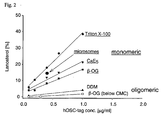
- Figure 2 Influence of the detergent on the activity.
- the amount of MOS converted to Lanosterol in one hour was determined by a radioactive assay as described.
- the percentage of lanosterol was plotted against the protein concentration of hOSC-tag (0.1-1 ⁇ g/ml) used in the assay.
- the influence of different detergents was tested by supplementing the assay buffer (50mM sodium phosphate buffer (pH 7.4), 1mM EDTA, 1mM dithiothreitol) with the appropriate detergent (0.2% TritonX-100 ( ⁇ ), 0.6% C8E5 ( ⁇ ), 0.8% ⁇ -OG ( ⁇ ), 0.2% ⁇ -OG (o) and 0.02% DDM ( ⁇ ).
- Detergents at the certain concentration giving monodispers protein in the analytical ultracentrifugation experiments were underlined.
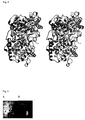
- Figure 3 Stereo ribbon diagram of hOSC.
- Helix 8 white
- Helix 8 carries part of the non-polar plateau that inserts into the membrane.
- the bound inhibitor black indicates the location of the central active site cavity.
- Figure 4 A) Crystals found in the crystallization screen (condition 22, Crystal Screen 1, Hampton Research). Phase separation and small detergent crystals are visible. B) Optimized crystals grown in hanging drops with 25% PEG 3350, 0.4M sodium acetate, 0.1M Tris, pH8.5, 10% (w/v) glycerol in the reservoir. No phase separation occurred, although a protein solution saturated with ⁇ -OG was used for crystallization.
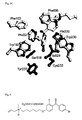
- Figure 5 A) Stereo view of OSC bound inhibitor [4-[6-(allyl-methyl-amino)-hexyloxy]-2-fluoro-phenyl]-(4-bromo-phenyl)-methanone fumarate together with selected interacting side chains.
- the grey side chains form the constriction site that separates the active site pocket from the non-polar substrate uptake channel.
- the tryptophanes Trp387 and Trp581 can stabilize a positive charge at the position of the amino N-atom by cation- ⁇ interactions.
- the inhibitor amino group is hydrogen bonded to the catalytic asartic acid Asp455.
- the terminal bromo phenyl group has edge-to-face on interactions with Trp192 (3.6 ⁇ ) and Trp230 (3.7 ⁇ ) and a face-to-face interaction with Phe521 (4.6 ⁇ ).
- the fluoro phenylgroup is stacked between the Phe696 (3.7 ⁇ ) and the His232 imidazole ring (3.1 ⁇ ).
- a conformational change of the Tyr237 side chain in the construction site can connect the active site cavity with the substrate entrance channel.
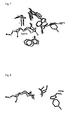
- FIG. 7 Superposition of the catalytic residue region: OSC - grey, SHC - black.
- Aromatic residues at the top of the hydrophobic tunnel are highly conserved between members of the cyclase family to which OSC and SHC are belonging. The side chains of these residues are supposed to be important for stabilization of cations via ⁇ -cation-interactions in the cyclization cascade of squalene (SHC) and 2,3-oxidosqualene (OSC).
- SHC squalene
- OSC 2,3-oxidosqualene
- Abbreviations used comprise ⁇ -OG (n-Octyl- ⁇ -D-glucopyranoside); DDM (Dodecyl maltopyranoside); C 8 E 5 (n-Octyl-pentaoxyethylene); LDAO (Lauryldimethylamine oxide).
- hOSC Human OSC
- the oligonucleotides used for PCR were 5'-GTACCTTTCGAAACAATGACGGAGGGCACGTGTCTGCGG-3' (SEQ ID NO: 1) with a Sfu I site (in bold) and 5'-GCCTCTAGATCAGGGGTGGCCAGCAAGGG-3' (SEQ ID NO: 2) for hOSC with His-tag or 5'-GGCTCTAGATCAGGGGTGGCCAGCAAGGG-3' (SEQ ID NO: 3) for wildtype hOSC (SEQ ID NO: 4) both with a Xba I site (in bold).
- both amplified DNA fragment were cloned into pPICZB vector (Invitrogen) leading to a fusion with the myc-epitope and the 6xHis-tag at the C-terminus for the construct with tag.
- the sequence was confirmed by sequencing.
- pPICZB-hOSC was linearized with Pme I, transformed by electroporation in P. pastoris strain GS115 and the phenotype of the colonies obtained was checked as recommended by the distributor Invitrogen.
- the monotopic membrane protein hOSC was cloned into the pPICZB vector resulting in a construct with and without a tag.
- a proline was changed to a leucine followed by the myc-epitope and the 6xHis-tag (EQKLISEEDLNSAVDHHHHHH). Sequencing of the whole gene shows one mutation L642V in comparison to the reported sequence (Sung, C.K., et al.
- Transformation into GS115 with Pme I linearized hOSCtag-pPICZB and hOSC-pPICZB results for both constructs in numerous colonies on the selection plate with 100 ⁇ g/ml Zeocin.
- pastoris cells were separated by SDS-PAGE and immobilized on a PDVF-membrane (Invitrogen) by transfer electrophoresis at 25V for 120min using as transfer buffer12 mM Tris base, 96 mM Glycine and 10% methanol.
- transfer buffer12 mM Tris base 96 mM Glycine
- 10% methanol 96 mM Glycine
- Cells expressing hOSC 6xHis-tag (SEQ ID NO: 6) harvested from one liter culture (40g) were resuspended in 50 mM Tris-HCl pH 7.5, 5% glycerol, 2 mM TCEP and 2mM Mg 2 Cl 2 (buffer A) supplemented with 1mM DNAse (Roche Diagnostics) and two tablets Complete protease inhibitor (Roche Diagnostics) per 50 ml.
- the cell suspension was disrupted with 1.9 kbar in the Basic Z Model Cell homogenizer (Constant Systems LTD), sonicated for 3 minutes (50%, level 5 and 0°C) and was passed a second round through the cell homogenizer.
- Triton X-100 (Fluka) was added to the crude extract with a final concentration of 0.2% and incubated for one hour at 4°C. After centrifugation with 31000xg (JA20, Beckman) for half an hour the supernatant was loaded on a Ni-NTA-agarose column (10 x 2.5cm) equilibrated with buffer A plus 0.2% Triton X-100. The column was washed with 1 column volumes (CV) of the same buffer and 5 CV of buffer A plus 0.2% N-Octyl-beta-D-Glucopyranoside ( ⁇ -OG, Applichem). The His-tag bound protein was then eluted with a linear gradient to 0.5M imidazole in buffer A.
- the OSC eluted directly in the detergent exchange has only five histidines at the C-terminus and may bind less tightly as the one with six histidines.
- the solubilized hOSC was stable enough for one or two days with a detergent concentration under the CMC (0.2% for ⁇ -OG). The two pools were worked off separately. After size exclusion chromatography for both pools the protein had a purity to 95% as judged by SDS-PAGE (Fig. 1). The protein was stable in the gelfiltration buffer supplemented with 10% Glycerol and could be stored at -80°C without any significant loss of activity for at least half a year. The total amount of protein obtained for both pools together was 105 mg, which corresponds to 2 mg hOSC per gram biomass.
- Cells expressing hOSC wildtype (SEQ ID NO: 5) harvested from one liter culture (45g) were resuspended in buffer A and disrupted as described for the variant with 6xHis-tag. After centrifugation at 31000xg (JA20, Beckman) for 30 min, the supernatant was further centrifuged at 40000xrpm for 60 min in the ultracentrifuge (Centrikon T-2070, Kontron) to isolate the membrane fraction. The pellet was resuspended in buffer A supplemented with 0.2% Triton X-100 and centrifuged again at 40000xrpm for 60 min.
- TMAE-Fractogel 1.6 cm x 13 cm, Merck
- the column was washed with six column volumes (CV) of buffer A supplemented with 0.2% ⁇ -OG and eluted with a linear gradient to 0.5 M sodium chloride in the same buffer. Collected fractions were screened on SDS-PAGE. Fractions containing hOSC were pooled. As a last step a gel filtration run was performed as described for the variant with His-tag.
- hOSC was followed by electrophoresis on 10-20% Tricine SDS polyacrylamide gradient gels. Protein concentrations were determined according to Bradford (Bradford, M. M. (1976). A rapid and sensitive method for the quantitation of microgram quantities of protein utilizing the principle of protein-dye binding, Anal Biochem 72, 248-2541976) or for pure protein by absorption spectroscopy (Pace, C.N., Vajdos, F., Fee, L., Grimsley, G. & Gray, T. (1995). How to measure and predict the molar absorption coefficient of a protein. Protein Sci. 4, 2411-2423.) using the calculated molecular extinction coefficient at 280 nm of 181240 M -1 cm -1 .
- the final conditions for IC 50 measurements were 30 ⁇ M of [ 14 C] R,S-MOS in reaction buffer (50mM sodium phosphate buffer (pH 7.4), 1mM EDTA, 1mM dithiothreitol and 0.8% ⁇ -OG), containing 0.5% albumin, and ethanol ⁇ 2%, in a total volume of 80 ⁇ l.
- the protein concentration of recombinant hOSC was 0.4 ⁇ g/ml.
- the protein concentration was varied between 0.1 and 10 ⁇ g/ml in the presence of 0.2% ⁇ -OG, 0.6% C 8 E 5 , 0.1% Triton X-100 or 0.016% DDM.
- Ro 48-8.071 a new 2,3-oxidosqualene:lanosterol cyclase inhibitor lowering plasma cholesterol in hamsters, squirrel monkeys, and minipigs: comparison to simvastatin, J Lipid Res 38, 373-90 was determined in the presence of 0.8% ⁇ -OG.
- the recombinant human OSC shows an IC 50 -value of 8.0 nM in comparison to an IC 50 -value of 6.5 nM for OSC from liver microsomes.
- Sedimentation equilibrium (SE) runs were performed at various speeds at 20°C with sample volume of 100 ⁇ l using an Optima XL-I analytical ultracentrifuge (Beckman-Coulter, Palo Alto).
- the initial protein concentrations were 0.2 - 0.6 mg/ml in 20 mM Tris-HCl pH 7.5, 5% glycerol, 1 mM TCEP, 0.8% ⁇ -OG and 1 mM MgCl 2 (buffer B).
- the equilibrium absorbance profiles were recorded after 20 hours at 280 nm. A further record taken 2 hours later proved the equilibrium was reached.
- the purified OSC on SDS-PAGE showed a protein band, corresponding to a molecular mass of 80kDa, which is a little bit lower than the predicted molecular mass of 85'690 Da.
- Mass spectral analysis of the protein resulted in a mass of 85'700 Da. This result was nearly identical to the theoretical predicted mass for hOSC-tag without the N-terminal methionin indicating that the protein is not glycosylated or posttranlational modified.
- the purified hOSC-tag was characterized by a sedimentation equilibrium experiment with the analytical ultracentrifuge.
- the solvent density was adjusted to the density of the detergent according to the approach established by Lustig et al. (Lustig, A., Engel, A., Tsiotis, G., Landau, E.M. & Baschong, W. (2000).
- a ⁇ -OG concentration of 0.8% the protein was monomeric with a moelcular weight of 86 kDA.
- hOSC was concentrated to approximately 10 mg/ml in a buffer containing 0.3% (w/v) ⁇ -OG. Detergent was added prior to crystallization to concentrations above the CMC.
- inhibitor complex co-crystals the protein was incubated with 5mM [4-[6-(allyl-methyl-amino)-hexyloxy]-2-fluoro-phenyl]-(4-bromo-phenyl)-methanone fumarate (Fig. 6) over night prior to the crystallization.
- Crystals were grown at room temperature in hanging drops by mixing equal volumes of protein solution with the reservoir solution consisting of 25%PEG 3350, 0.4M ammonium acetate, 0.1M Tris, pH8.5, 10% (w/v) ethylene glycol. Once the initial crystallization conditions were established crystals were grown using seeding methods.
- hOSC Crystallization of hOSC can be achieved at numerous conditions, as long as the pH is around pH 8.5 and the precipitant is PEG.
- hOSC was crystallized at PEG concentrations varying from 20% to 30% (w/v) PEG 3350 and PEG 4000.
- hOSC could be crystallized in the absence of salt and in the presence of all of the following salts: ammonium acetate, sodium acetate, sodium and potassium tartrate, sodium malonate, sodium succinate and sodium citrate, magnesium chloride, ammonium sulfate, sodium chloride, lithium sulfate.
- Big and untwinned hOSC crystals suitable for structure determination could be grown in the presence of the small amphiphilic organic molecules glycerol, ethylene glycol or sucrose at concentrations ranging from 5% to 15%(w/v). These molecules have an amphiphilic characteristic that influences the phase behavior of ⁇ -OG, avoiding phase separation in the crystallization drops. These molecules also increase viscosity of the solution and therefore slow down crystal growth. Moreover they act as cryo protectants.
- Crystals were mounted in a loop and fast cooled in liquid nitrogen. Diffraction images in several crystal orientations were collected with CuK ⁇ radiation at the home source in order to detect crystal disorder that was not readily visible under the microscope alone. Untwinned crystals were selected for the collection of full data sets with synchrotron radiation at the beamline PX6A at the Swiss Light Source (Villigen, Switzerland) at 120K. The crystals diffracted at the beam line X06A up to 1.8 ⁇ resolution. The crystals belong to space group C222 1 with cell dimensions of about 190 ⁇ , 202 ⁇ and 62 ⁇ . Data was processed with DENZO (Otwinowski, Z. & Minor, W.M. Processing of X-ray diffraction data collected in oscillation mode.
- DENZO Oletwinowski, Z. & Minor, W.M. Processing of X-ray diffraction data collected in oscillation mode.
- the structure was solved by molecular replacement with the CCP4 (Collaborative Computational Project, Number 4, The CCP4 Suite: Programs for Protein Crystallography Acta Cryst. D 50, 760-763(1994)) program MOLREP (A.Vagin,A.Teplyakov, MOLREP: an automated program for molecular replacement., J. Appl. Cryst. 30 , 1022-1025. (1997)) using squalene hopene cyclase (Wendt, K.U., Lenhart A., Schulz, G.E. The structure of the membrane protein squalene hopene cyclase at 2.0 ⁇ resolution , J.Mol. Biol.
- hOSC As a typical membrane protein hOSC is not soluble in the absence of detergents and detergents had to be added to obtain stable and active enzyme. Crystals of hOSC were grown in the presence of ⁇ -OG micelles and the structure was solved by molecular replacement. In agreement with our gel filtartion results and the analytical ultra centrifuge data on detergent solubilized hOSC (Table 2) hOSC is monomeric in the crystal. This is in contradiction to the dimeric behavior of OSC from rat liver preparations observed in gelfiltration experiments (Kusano et al. (1991) Chem Pharm Bull 39 , 239-241). The pairs of hOSC molecules that are created by applying the crystallographic twofold axes of space group C222 1 have membrane portions that point into different directions.
- OSC consists of two ( ⁇ / ⁇ ) barrel domains that are connected by loops and four smaller ⁇ -structures.
- Domain 1 is a ( ⁇ / ⁇ ) 6 barrel
- domain 2, that is inserted into domain 1 contains an ( ⁇ / ⁇ ) barrel that appears to be an evolved form of the ( ⁇ / ⁇ ) 6 barrel of domain 1 with some helices missing (Wendt, K.U., Poralla, K., Schulz, G.E., Structure and function of a squalene cyclase, Science 277 , 1811-1815(1997)).
- the amino ends of all inner helices of both barrel domains point to the center of the molecule.
- the five QW-sequence motifs that are located C-terminal of some helices of the outer barrel ring (Poralla et al. (1994) Trends Biochem. Sci. 19 , 157) assume a conformation with stacked side chains of Q and W that was also observed in the structure of the archeal homologue squalene hopen cyclase. They connect the outer helices with the inner helices by hydrogen bonds and are thought to contribute to thermodynamic stability of cyclases (Wendt, K.U., Poralla, K., Schulz, G.E. (1997), Structure and function of a squalene cyclase, Science 277 , 1811-1815).
- the large active site cavity is located between the two ( ⁇ / ⁇ ) barrel domains at the center of the OSC molecule. It is enclosed by loops and several ⁇ -sheets . It is lined mostly by hydrophobic and aromatic residues.
- the cavity extends from the catalytic Asp455 at the "top” down towards a channel that reaches the enzyme surface at the hydrophobic plateau. This channel is separated from the cavity by a constriction that is created by the side chains of residues Trp192, Cys233, Tyr237, Ile524 and M525 ( Figure 5).
- the channel blocking side chain of Tyr237 in this constriction can permit the passage of a substrate to the active site cavity by adopting another conformation.
- This channel is thought to be the substrate uptake channel, allowing the hydrophobic substrate to reach the catalytic residues of hOSC in a non-polar environment (Wendt & Schulz, Science 1998).
- the co-crystallized inhibitor was completely defined in the initial 2.2 ⁇ (Fo-Fc)-electron density map at the 3 ⁇ contour level. It binds in the active site cavity.
- the allyl-amino group of the inhibitor is hydrogen bound to the catalytic aspartate Asp455 that is responsible for initiating the cyclization reaction by protonating oxido-squalene.
- the amino group also interacts with several aromatic residues that are thought to initiate the cyclization reaction by stabilizing the positively charged early high-energy intermediates (Figure 5B).
- the amino N has cation- ⁇ interactions with Trp387 and Trp581 at distances of 4.7 ⁇ to 5.4 ⁇ .
- the distance to the hydroxyl. groups of Tyr98 and Tyr704 (7.7 ⁇ and 6.4A) are too big for dielectric stabilization of the positive charge.
- the alkyl spacer between the allyl-amino and the benzphenone groups is not fully extended showing a distance of only 6.3 ⁇ from the amino-N-atom to the ether-O-atom.
- the distance between amine nitrogen and the benzophenone carbonyl has a influence on the potency of the inhibitor, with lowest IC50 values for a distance of 10.7A (Jolidon, S., Polak-Wyss, A., Hartmann, P.G., and Guerry, P. (1993).
- 2,3-Oxidosqualene-lanosterol cyclase an attractive target for antifungal drug design. In: Recent Advances in the Chemistry of Anti-infective Agents, P.H. Bentley, ed.
- the phenyl groups of the benzophenone portion of the inhibitor make several aromatic interactions to the protein.
- the terminal bromo phenyl group has edge-to-face on interactions with Trp192 (3.6 ⁇ ) and Trp230 (3.7 ⁇ ) and a face-to-face interaction with Phe521 (4.6 ⁇ ).
- the fluoro phenylgroup is stacked between the Phe696 (3.7 ⁇ ) and the His232 imidazole ring (3.1 ⁇ ) ( Figure 5C). His232 is not within hydrogen bond distance to the benzophenone carbonyl group.
- the benzophenone carbonyl is hydrogen bonded to a water molecule which in turn is bound to the amid N of Ile338.
- the inhibitor adapts to the geometry of the cavity assuming a conformation different from that in the complex with the homologue SHC (Lenhart, A.; Weihofen, W.A.; Pleschke, A. E. and Schulz, G.E.; Chemistry & Biology, 2002, Vol. 9, 639-645, 2002).
- the bacterial squalene hopene cyclase (SHC) is dimeric (Wendt, K.U., Poralla, K., Schulz, G.E. (1997), Structure and function of a squalene cyclase, Science, 277 , 1811-1815).
- OSC and SHC have a common cyclase chain fold.
- the superposition of the structures yields 550 pairs of ⁇ -carbon atoms with a rmsd of 1.76 ⁇ when a 4.5 ⁇ cutoff was applied (pdb entry 2sqc).
- the rmsd-C ⁇ is 0.85 ⁇ , when only the 94 residues are superimposed that are conserved spatially and in sequence.
- OSC When compared to SHC, OSC has 70 additional N-terminal amino acid residues that form a small structural motif that folds into the region between the two ( ⁇ / ⁇ ) barrel domains opposite to the membrane attachment site. Together with the extended loop 427-431 this N-terminal structural motif could solidify the loops between the domains that form most of the ligand binding pocket.
- the relative orientation of the two ( ⁇ / ⁇ ) barrel domains in hOSC differs slightly from that in SHC.
- the ( ⁇ / ⁇ ) barrel in domain 1 of hOSC is wider than that in SHC, with the C ⁇ distance across the inner ring of helices increased by 1.2 ⁇ to 15.8 ⁇ (distance between A536 C ⁇ to W714 C ⁇ ).
- This barrel widening might be a consequence of the more bulky OSC side chains that are pointing into the barrel center at the C-terminal side of the barrel (eg. F391, W590 and W714).
- the first stage in the docking procedure is a shape fitting routine (docking algorithm), which takes a set of ligand conformers as input and tests them against a "bump map" (a Boolean grid with true values where ligand atoms can potentially be place). Orientations that clash with the protein or are distant from the active site are rejected. The crude docking solutions are further tested against a specified pharmacophore feature, and any poses that do not satisfy the pharmacophore are rejected. Poses surviving the shape fitting routine are then passed through a scoring function filter. In the docking procedure for OSC, docking was performed twice with two different scoring function filters, ChemScore and PLP.
- the OSC inhibitor trans-Methyl- ⁇ 4-[5-(methyl-propyl-amino)-pent-1-ynyl]-cyclohexyl ⁇ -carbamic acid 4-chloro-phenyl ester was used for the binding site definition in FRED.
- FRED builds a rectangular box around a given (x-ray, manually modeled) ligand and allows to increase the box size by the '-addbox' flag.
- the box around trans-Methyl- ⁇ 4-[5-(methyl-propyl-amino)-pent-1-ynyl]-cyclohexyl ⁇ -carbamic acid 4-chloro-phenyl ester was increased by 0.5 Angstrom.
- OMEGA OpenEye Scientific Software
- Modifications applied to the default settings of OMEGA were (i) rejection of conformers with an energy difference to the global minimum of >5.0 kcal/mol (GP_ENERGY_WINDOW), (ii) maximum number of output conformers 400 (GP_NUM_OUTPUT_CONFS) and (iii) low energy selection (no random selection) of conformers from the final ensemble (GP_SELECT_RANDOM false).
- Aromatic residues (indicated by an asterisk in Fig. 7) at the top of the hydrophobic tunnel are highly conserved between members of the cyclase family to which OSC and SHC are belonging.
- the aromatic side chains are supposed to be important for stabilization of cations via ⁇ -cation-interactions in the cyclization cascade of squalene (SHC) and 2,3-oxidosqualene (OSC).
- SHC squalene
- OSC 2,3-oxidosqualene
- the side-chain of catalytic Asp in contrast directs both oxygen atoms toward the hydrophobic tunnel.
- inhibitors are shifted backwards in the binding site (position of nitrogen atoms differ by 1.9 ⁇ ) and effect the length of inhibitors to optimally fill the hydrophobic tunnel.
- the possibility to attach to catalytic Asp via direct hydrogen bonding offers possibilities for the structure-based design of new structural classes to efficiently inhibit OSC and to avoid having a basic amine function in the inhibitors that often come along with metabolic instability.
- OSC inhibitor substituents p -C 4 H 4 -Cl in [4-[6-(allyl-methyl-amino)-hexyloxy]-2-fluoro-phenyl]-(4-bromo-phenyl)-methanone fumarate) to improve binding properties.
Landscapes
- Chemical & Material Sciences (AREA)
- Organic Chemistry (AREA)
- Health & Medical Sciences (AREA)
- Life Sciences & Earth Sciences (AREA)
- Genetics & Genomics (AREA)
- Engineering & Computer Science (AREA)
- Zoology (AREA)
- Wood Science & Technology (AREA)
- Biochemistry (AREA)
- Bioinformatics & Cheminformatics (AREA)
- General Health & Medical Sciences (AREA)
- Molecular Biology (AREA)
- General Engineering & Computer Science (AREA)
- Medicinal Chemistry (AREA)
- Biophysics (AREA)
- Proteomics, Peptides & Aminoacids (AREA)
- Metallurgy (AREA)
- Biomedical Technology (AREA)
- Biotechnology (AREA)
- Microbiology (AREA)
- Crystallography & Structural Chemistry (AREA)
- Immunology (AREA)
- Materials Engineering (AREA)
- Medicines That Contain Protein Lipid Enzymes And Other Medicines (AREA)
- Enzymes And Modification Thereof (AREA)
- Acyclic And Carbocyclic Compounds In Medicinal Compositions (AREA)
- Steroid Compounds (AREA)
Priority Applications (1)
| Application Number | Priority Date | Filing Date | Title |
|---|---|---|---|
| EP04015106A EP1498482A3 (fr) | 2003-07-07 | 2004-06-28 | Structure cristalline de la cyclase de oxidosqualene |
Applications Claiming Priority (3)
| Application Number | Priority Date | Filing Date | Title |
|---|---|---|---|
| EP03014558 | 2003-07-07 | ||
| EP03014558 | 2003-07-07 | ||
| EP04015106A EP1498482A3 (fr) | 2003-07-07 | 2004-06-28 | Structure cristalline de la cyclase de oxidosqualene |
Publications (2)
| Publication Number | Publication Date |
|---|---|
| EP1498482A2 true EP1498482A2 (fr) | 2005-01-19 |
| EP1498482A3 EP1498482A3 (fr) | 2005-01-26 |
Family
ID=33477621
Family Applications (1)
| Application Number | Title | Priority Date | Filing Date |
|---|---|---|---|
| EP04015106A Withdrawn EP1498482A3 (fr) | 2003-07-07 | 2004-06-28 | Structure cristalline de la cyclase de oxidosqualene |
Country Status (1)
| Country | Link |
|---|---|
| EP (1) | EP1498482A3 (fr) |
Cited By (3)
| Publication number | Priority date | Publication date | Assignee | Title |
|---|---|---|---|---|
| WO2008057605A3 (fr) * | 2006-11-10 | 2008-07-17 | Quidel Corp | Milieu d'extraction de nucléoprotéines et sa méthode d'utilisation |
| WO2012092114A2 (fr) | 2010-12-27 | 2012-07-05 | The Curators Of The University Of Missouri | Oxydosqualène cyclase en tant que cible protéique pour des produits thérapeutiques anticancéreux |
| CN111647589A (zh) * | 2020-06-08 | 2020-09-11 | 上海大学 | 大戟二烯醇合酶及其编码基因与应用 |
-
2004
- 2004-06-28 EP EP04015106A patent/EP1498482A3/fr not_active Withdrawn
Non-Patent Citations (7)
| Title |
|---|
| CHAYEN N E ET AL: "PROTEIN CRYSTALLIZATION FOR GENOMICS: TOWARDS HIGH-THROUGHPUT OPTIMIZATION TECHNIQUES" ACTA CRYSTALLOGRAPHICA SECTION D: BIOLOGICAL CRYSTALLOGRAPHY, MUNKSGAARD PUBLISHERS LTD. COPENHAGEN, DK, vol. D58, no. 6, PART 2, June 2002 (2002-06), pages 921-927, XP009013224 ISSN: 0907-4449 * |
| CHAYEN N E: "Tackling the bottleneck of protein crystallization in the post-genomic era" TRENDS IN BIOTECHNOLOGY, ELSEVIER PUBLICATIONS, CAMBRIDGE, GB, vol. 20, no. 3, 1 March 2002 (2002-03-01), page 98, XP004335890 ISSN: 0167-7799 * |
| KUHN P ET AL: "The genesis of high-throughput structure-based drug discovery using protein crystallography" CURRENT OPINION IN CHEMICAL BIOLOGY, CURRENT BIOLOGY LTD, LONDON, GB, vol. 6, no. 5, October 2002 (2002-10), pages 704-710, XP002287759 ISSN: 1367-5931 * |
| LENHART ALEXANDER ET AL: "Crystal structure of a squalene cyclase in complex with the potential anticholesteremic drug Ro48-8071." CHEMISTRY & BIOLOGY. MAY 2002, vol. 9, no. 5, May 2002 (2002-05), pages 639-645, XP002307693 ISSN: 1074-5521 * |
| RUF A ET AL: "The monotopic membrane protein human oxidosqualene cyclase is active as monomer" BIOCHEMICAL AND BIOPHYSICAL RESEARCH COMMUNICATIONS, ACADEMIC PRESS INC. ORLANDO, FL, US, vol. 315, no. 2, 5 March 2004 (2004-03-05), pages 247-254, XP004487271 ISSN: 0006-291X * |
| SCHULZ-GASCH TANJA ET AL: "Mechanistic insights into oxidosqualene cyclizations through homology modeling." JOURNAL OF COMPUTATIONAL CHEMISTRY. 30 APR 2003, vol. 24, no. 6, 30 April 2003 (2003-04-30), pages 741-753, XP002307694 ISSN: 0192-8651 * |
| THOMA RALF ET AL: "Insight into steroid scaffold formation from the structure of human oxidosqualene cyclase." NATURE. 4 NOV 2004, vol. 432, no. 7013, 4 November 2004 (2004-11-04), pages 118-122, XP002307695 ISSN: 1476-4687 * |
Cited By (5)
| Publication number | Priority date | Publication date | Assignee | Title |
|---|---|---|---|---|
| WO2008057605A3 (fr) * | 2006-11-10 | 2008-07-17 | Quidel Corp | Milieu d'extraction de nucléoprotéines et sa méthode d'utilisation |
| WO2012092114A2 (fr) | 2010-12-27 | 2012-07-05 | The Curators Of The University Of Missouri | Oxydosqualène cyclase en tant que cible protéique pour des produits thérapeutiques anticancéreux |
| EP2658544A4 (fr) * | 2010-12-27 | 2014-05-28 | Univ Missouri | Oxydosqualène cyclase en tant que cible protéique pour des produits thérapeutiques anticancéreux |
| US10143686B2 (en) | 2010-12-27 | 2018-12-04 | The Curators Of The University Of Missouri | Oxidosqualene cyclase as a protein target for anticancer therapeutics |
| CN111647589A (zh) * | 2020-06-08 | 2020-09-11 | 上海大学 | 大戟二烯醇合酶及其编码基因与应用 |
Also Published As
| Publication number | Publication date |
|---|---|
| EP1498482A3 (fr) | 2005-01-26 |
Similar Documents
| Publication | Publication Date | Title |
|---|---|---|
| US6795776B1 (en) | Crystallographic structure of the androgen receptor ligand binding domain | |
| US20050143402A1 (en) | Crystal structure of aurora-2 protein and binding pockets thereof | |
| US20090062286A1 (en) | Crystal Structure of SMYD3 Protein | |
| US20080312298A1 (en) | Methods for Identification of Modulators of Carm1 Methyl Transferase Activity | |
| CA2490023A1 (fr) | Cristal de la proteine de glucokinase et procede d'elaboration de medicament au moyen dudit cristal | |
| JP2017205107A (ja) | エンドヌクレアーゼ活性を有するポリペプチド断片、及びそれらの使用 | |
| US20090270506A1 (en) | Crystalline structure of oxidosqualene synthase | |
| EP1498482A2 (fr) | Structure cristalline de la cyclase de oxidosqualene | |
| US7217556B1 (en) | Crystallization and structure determination of glycosylated human beta secretase, an enzyme implicated in Alzheimer's disease | |
| Dai et al. | Crystal structure of the histone heterodimer containing histone variant H2A. Bbd | |
| CN102803288B (zh) | 来自甲型流感2009大流行h1n1病毒的rna依赖性rna聚合酶的pa亚基片段及其用途 | |
| US8409837B2 (en) | Crystal structure of glutaminyl cyclase | |
| US20050165218A1 (en) | Crystal structure of the ligand binding domain of the retinoic acid-related orphan receptor alpha (ror-alpha) | |
| US20080167385A1 (en) | Crystal Structure of Human Proliferating Cell Nuclear Antigen (Pcna) and Uses Thereof | |
| WO2004094591A2 (fr) | Structures tridimensionnelles de hdac9 et cabin1 et structures de composes et procedes connexes | |
| US8309340B2 (en) | Insulin degrading enzyme crystals | |
| CN1924011B (zh) | Cpt-2晶体 | |
| US20090275047A1 (en) | Crystal structure of human soluble adenylate cyclase | |
| US20100216113A1 (en) | Methods | |
| US20040226502A1 (en) | Crystal structure of 2c-methyl-d-erythritol 2,4-cyclodiphosphate synthase | |
| JP2006521791A (ja) | プロテインキナーゼCθの触媒ドメインの立体構造、その方法および使用 | |
| US7507552B1 (en) | Crystallization of histone deacetylase 2 | |
| US9957494B2 (en) | Crystal structure of human four-phosphate adaptor protein 2 glycolipid transfer protein like domain | |
| KR100509902B1 (ko) | 핵수용체리간드및리간드결합도메인 | |
| US20050131209A1 (en) | Crystallized hnf4 gamma ligand binding domain polypeptide and screening methods employing same |
Legal Events
| Date | Code | Title | Description |
|---|---|---|---|
| PUAI | Public reference made under article 153(3) epc to a published international application that has entered the european phase |
Free format text: ORIGINAL CODE: 0009012 |
|
| PUAL | Search report despatched |
Free format text: ORIGINAL CODE: 0009013 |
|
| AK | Designated contracting states |
Kind code of ref document: A2 Designated state(s): AT BE BG CH CY CZ DE DK EE ES FI FR GB GR HU IE IT LI LU MC NL PL PT RO SE SI SK TR |
|
| AX | Request for extension of the european patent |
Extension state: AL HR LT LV MK |
|
| AK | Designated contracting states |
Kind code of ref document: A3 Designated state(s): AT BE BG CH CY CZ DE DK EE ES FI FR GB GR HU IE IT LI LU MC NL PL PT RO SE SI SK TR |
|
| AX | Request for extension of the european patent |
Extension state: AL HR LT LV MK |
|
| 17P | Request for examination filed |
Effective date: 20050726 |
|
| AKX | Designation fees paid |
Designated state(s): CH DE ES FR GB IT LI |
|
| AXX | Extension fees paid |
Extension state: LV Payment date: 20050726 Extension state: LT Payment date: 20050726 |
|
| 17Q | First examination report despatched |
Effective date: 20081013 |
|
| STAA | Information on the status of an ep patent application or granted ep patent |
Free format text: STATUS: THE APPLICATION IS DEEMED TO BE WITHDRAWN |
|
| 18D | Application deemed to be withdrawn |
Effective date: 20100108 |