EP1498888A2 - Träger für optische Datenaufzeichnung - Google Patents
Träger für optische Datenaufzeichnung Download PDFInfo
- Publication number
- EP1498888A2 EP1498888A2 EP04254241A EP04254241A EP1498888A2 EP 1498888 A2 EP1498888 A2 EP 1498888A2 EP 04254241 A EP04254241 A EP 04254241A EP 04254241 A EP04254241 A EP 04254241A EP 1498888 A2 EP1498888 A2 EP 1498888A2
- Authority
- EP
- European Patent Office
- Prior art keywords
- dye
- group
- substituted
- formula
- unsubstituted
- Prior art date
- Legal status (The legal status is an assumption and is not a legal conclusion. Google has not performed a legal analysis and makes no representation as to the accuracy of the status listed.)
- Granted
Links
- 0 Cc1c(*)c(*)c2[n]1c(C)n[n]2 Chemical compound Cc1c(*)c(*)c2[n]1c(C)n[n]2 0.000 description 8
Images
Classifications
-
- G—PHYSICS
- G11—INFORMATION STORAGE
- G11B—INFORMATION STORAGE BASED ON RELATIVE MOVEMENT BETWEEN RECORD CARRIER AND TRANSDUCER
- G11B7/00—Recording or reproducing by optical means, e.g. recording using a thermal beam of optical radiation by modifying optical properties or the physical structure, reproducing using an optical beam at lower power by sensing optical properties; Record carriers therefor
- G11B7/24—Record carriers characterised by shape, structure or physical properties, or by the selection of the material
- G11B7/241—Record carriers characterised by shape, structure or physical properties, or by the selection of the material characterised by the selection of the material
- G11B7/242—Record carriers characterised by shape, structure or physical properties, or by the selection of the material characterised by the selection of the material of recording layers
- G11B7/244—Record carriers characterised by shape, structure or physical properties, or by the selection of the material characterised by the selection of the material of recording layers comprising organic materials only
- G11B7/246—Record carriers characterised by shape, structure or physical properties, or by the selection of the material characterised by the selection of the material of recording layers comprising organic materials only containing dyes
- G11B7/247—Record carriers characterised by shape, structure or physical properties, or by the selection of the material characterised by the selection of the material of recording layers comprising organic materials only containing dyes methine or polymethine dyes
-
- G—PHYSICS
- G11—INFORMATION STORAGE
- G11B—INFORMATION STORAGE BASED ON RELATIVE MOVEMENT BETWEEN RECORD CARRIER AND TRANSDUCER
- G11B7/00—Recording or reproducing by optical means, e.g. recording using a thermal beam of optical radiation by modifying optical properties or the physical structure, reproducing using an optical beam at lower power by sensing optical properties; Record carriers therefor
- G11B7/24—Record carriers characterised by shape, structure or physical properties, or by the selection of the material
- G11B7/241—Record carriers characterised by shape, structure or physical properties, or by the selection of the material characterised by the selection of the material
- G11B7/242—Record carriers characterised by shape, structure or physical properties, or by the selection of the material characterised by the selection of the material of recording layers
- G11B7/244—Record carriers characterised by shape, structure or physical properties, or by the selection of the material characterised by the selection of the material of recording layers comprising organic materials only
- G11B7/246—Record carriers characterised by shape, structure or physical properties, or by the selection of the material characterised by the selection of the material of recording layers comprising organic materials only containing dyes
-
- G—PHYSICS
- G11—INFORMATION STORAGE
- G11B—INFORMATION STORAGE BASED ON RELATIVE MOVEMENT BETWEEN RECORD CARRIER AND TRANSDUCER
- G11B7/00—Recording or reproducing by optical means, e.g. recording using a thermal beam of optical radiation by modifying optical properties or the physical structure, reproducing using an optical beam at lower power by sensing optical properties; Record carriers therefor
- G11B7/24—Record carriers characterised by shape, structure or physical properties, or by the selection of the material
- G11B7/241—Record carriers characterised by shape, structure or physical properties, or by the selection of the material characterised by the selection of the material
- G11B7/242—Record carriers characterised by shape, structure or physical properties, or by the selection of the material characterised by the selection of the material of recording layers
- G11B7/244—Record carriers characterised by shape, structure or physical properties, or by the selection of the material characterised by the selection of the material of recording layers comprising organic materials only
- G11B7/246—Record carriers characterised by shape, structure or physical properties, or by the selection of the material characterised by the selection of the material of recording layers comprising organic materials only containing dyes
- G11B7/2467—Record carriers characterised by shape, structure or physical properties, or by the selection of the material characterised by the selection of the material of recording layers comprising organic materials only containing dyes azo-dyes
-
- G—PHYSICS
- G11—INFORMATION STORAGE
- G11B—INFORMATION STORAGE BASED ON RELATIVE MOVEMENT BETWEEN RECORD CARRIER AND TRANSDUCER
- G11B7/00—Recording or reproducing by optical means, e.g. recording using a thermal beam of optical radiation by modifying optical properties or the physical structure, reproducing using an optical beam at lower power by sensing optical properties; Record carriers therefor
- G11B7/24—Record carriers characterised by shape, structure or physical properties, or by the selection of the material
- G11B7/241—Record carriers characterised by shape, structure or physical properties, or by the selection of the material characterised by the selection of the material
- G11B7/252—Record carriers characterised by shape, structure or physical properties, or by the selection of the material characterised by the selection of the material of layers other than recording layers
- G11B7/257—Record carriers characterised by shape, structure or physical properties, or by the selection of the material characterised by the selection of the material of layers other than recording layers of layers having properties involved in recording or reproduction, e.g. optical interference layers or sensitising layers or dielectric layers, which are protecting the recording layers
- G11B2007/25705—Record carriers characterised by shape, structure or physical properties, or by the selection of the material characterised by the selection of the material of layers other than recording layers of layers having properties involved in recording or reproduction, e.g. optical interference layers or sensitising layers or dielectric layers, which are protecting the recording layers consisting essentially of inorganic materials
- G11B2007/25706—Record carriers characterised by shape, structure or physical properties, or by the selection of the material characterised by the selection of the material of layers other than recording layers of layers having properties involved in recording or reproduction, e.g. optical interference layers or sensitising layers or dielectric layers, which are protecting the recording layers consisting essentially of inorganic materials containing transition metal elements (Zn, Fe, Co, Ni, Pt)
-
- G—PHYSICS
- G11—INFORMATION STORAGE
- G11B—INFORMATION STORAGE BASED ON RELATIVE MOVEMENT BETWEEN RECORD CARRIER AND TRANSDUCER
- G11B7/00—Recording or reproducing by optical means, e.g. recording using a thermal beam of optical radiation by modifying optical properties or the physical structure, reproducing using an optical beam at lower power by sensing optical properties; Record carriers therefor
- G11B7/24—Record carriers characterised by shape, structure or physical properties, or by the selection of the material
- G11B7/241—Record carriers characterised by shape, structure or physical properties, or by the selection of the material characterised by the selection of the material
- G11B7/252—Record carriers characterised by shape, structure or physical properties, or by the selection of the material characterised by the selection of the material of layers other than recording layers
- G11B7/257—Record carriers characterised by shape, structure or physical properties, or by the selection of the material characterised by the selection of the material of layers other than recording layers of layers having properties involved in recording or reproduction, e.g. optical interference layers or sensitising layers or dielectric layers, which are protecting the recording layers
- G11B2007/25705—Record carriers characterised by shape, structure or physical properties, or by the selection of the material characterised by the selection of the material of layers other than recording layers of layers having properties involved in recording or reproduction, e.g. optical interference layers or sensitising layers or dielectric layers, which are protecting the recording layers consisting essentially of inorganic materials
- G11B2007/2571—Record carriers characterised by shape, structure or physical properties, or by the selection of the material characterised by the selection of the material of layers other than recording layers of layers having properties involved in recording or reproduction, e.g. optical interference layers or sensitising layers or dielectric layers, which are protecting the recording layers consisting essentially of inorganic materials containing group 14 elements except carbon (Si, Ge, Sn, Pb)
-
- G—PHYSICS
- G11—INFORMATION STORAGE
- G11B—INFORMATION STORAGE BASED ON RELATIVE MOVEMENT BETWEEN RECORD CARRIER AND TRANSDUCER
- G11B7/00—Recording or reproducing by optical means, e.g. recording using a thermal beam of optical radiation by modifying optical properties or the physical structure, reproducing using an optical beam at lower power by sensing optical properties; Record carriers therefor
- G11B7/24—Record carriers characterised by shape, structure or physical properties, or by the selection of the material
- G11B7/241—Record carriers characterised by shape, structure or physical properties, or by the selection of the material characterised by the selection of the material
- G11B7/252—Record carriers characterised by shape, structure or physical properties, or by the selection of the material characterised by the selection of the material of layers other than recording layers
- G11B7/257—Record carriers characterised by shape, structure or physical properties, or by the selection of the material characterised by the selection of the material of layers other than recording layers of layers having properties involved in recording or reproduction, e.g. optical interference layers or sensitising layers or dielectric layers, which are protecting the recording layers
- G11B2007/25705—Record carriers characterised by shape, structure or physical properties, or by the selection of the material characterised by the selection of the material of layers other than recording layers of layers having properties involved in recording or reproduction, e.g. optical interference layers or sensitising layers or dielectric layers, which are protecting the recording layers consisting essentially of inorganic materials
- G11B2007/25715—Record carriers characterised by shape, structure or physical properties, or by the selection of the material characterised by the selection of the material of layers other than recording layers of layers having properties involved in recording or reproduction, e.g. optical interference layers or sensitising layers or dielectric layers, which are protecting the recording layers consisting essentially of inorganic materials containing oxygen
-
- G—PHYSICS
- G11—INFORMATION STORAGE
- G11B—INFORMATION STORAGE BASED ON RELATIVE MOVEMENT BETWEEN RECORD CARRIER AND TRANSDUCER
- G11B7/00—Recording or reproducing by optical means, e.g. recording using a thermal beam of optical radiation by modifying optical properties or the physical structure, reproducing using an optical beam at lower power by sensing optical properties; Record carriers therefor
- G11B7/24—Record carriers characterised by shape, structure or physical properties, or by the selection of the material
- G11B7/241—Record carriers characterised by shape, structure or physical properties, or by the selection of the material characterised by the selection of the material
- G11B7/252—Record carriers characterised by shape, structure or physical properties, or by the selection of the material characterised by the selection of the material of layers other than recording layers
- G11B7/257—Record carriers characterised by shape, structure or physical properties, or by the selection of the material characterised by the selection of the material of layers other than recording layers of layers having properties involved in recording or reproduction, e.g. optical interference layers or sensitising layers or dielectric layers, which are protecting the recording layers
- G11B2007/25705—Record carriers characterised by shape, structure or physical properties, or by the selection of the material characterised by the selection of the material of layers other than recording layers of layers having properties involved in recording or reproduction, e.g. optical interference layers or sensitising layers or dielectric layers, which are protecting the recording layers consisting essentially of inorganic materials
- G11B2007/25716—Record carriers characterised by shape, structure or physical properties, or by the selection of the material characterised by the selection of the material of layers other than recording layers of layers having properties involved in recording or reproduction, e.g. optical interference layers or sensitising layers or dielectric layers, which are protecting the recording layers consisting essentially of inorganic materials containing sulfur
-
- G—PHYSICS
- G11—INFORMATION STORAGE
- G11B—INFORMATION STORAGE BASED ON RELATIVE MOVEMENT BETWEEN RECORD CARRIER AND TRANSDUCER
- G11B7/00—Recording or reproducing by optical means, e.g. recording using a thermal beam of optical radiation by modifying optical properties or the physical structure, reproducing using an optical beam at lower power by sensing optical properties; Record carriers therefor
- G11B7/24—Record carriers characterised by shape, structure or physical properties, or by the selection of the material
- G11B7/241—Record carriers characterised by shape, structure or physical properties, or by the selection of the material characterised by the selection of the material
- G11B7/242—Record carriers characterised by shape, structure or physical properties, or by the selection of the material characterised by the selection of the material of recording layers
- G11B7/244—Record carriers characterised by shape, structure or physical properties, or by the selection of the material characterised by the selection of the material of recording layers comprising organic materials only
- G11B7/245—Record carriers characterised by shape, structure or physical properties, or by the selection of the material characterised by the selection of the material of recording layers comprising organic materials only containing a polymeric component
-
- G—PHYSICS
- G11—INFORMATION STORAGE
- G11B—INFORMATION STORAGE BASED ON RELATIVE MOVEMENT BETWEEN RECORD CARRIER AND TRANSDUCER
- G11B7/00—Recording or reproducing by optical means, e.g. recording using a thermal beam of optical radiation by modifying optical properties or the physical structure, reproducing using an optical beam at lower power by sensing optical properties; Record carriers therefor
- G11B7/24—Record carriers characterised by shape, structure or physical properties, or by the selection of the material
- G11B7/241—Record carriers characterised by shape, structure or physical properties, or by the selection of the material characterised by the selection of the material
- G11B7/242—Record carriers characterised by shape, structure or physical properties, or by the selection of the material characterised by the selection of the material of recording layers
- G11B7/244—Record carriers characterised by shape, structure or physical properties, or by the selection of the material characterised by the selection of the material of recording layers comprising organic materials only
- G11B7/246—Record carriers characterised by shape, structure or physical properties, or by the selection of the material characterised by the selection of the material of recording layers comprising organic materials only containing dyes
- G11B7/247—Record carriers characterised by shape, structure or physical properties, or by the selection of the material characterised by the selection of the material of recording layers comprising organic materials only containing dyes methine or polymethine dyes
- G11B7/2472—Record carriers characterised by shape, structure or physical properties, or by the selection of the material characterised by the selection of the material of recording layers comprising organic materials only containing dyes methine or polymethine dyes cyanine
-
- G—PHYSICS
- G11—INFORMATION STORAGE
- G11B—INFORMATION STORAGE BASED ON RELATIVE MOVEMENT BETWEEN RECORD CARRIER AND TRANSDUCER
- G11B7/00—Recording or reproducing by optical means, e.g. recording using a thermal beam of optical radiation by modifying optical properties or the physical structure, reproducing using an optical beam at lower power by sensing optical properties; Record carriers therefor
- G11B7/24—Record carriers characterised by shape, structure or physical properties, or by the selection of the material
- G11B7/241—Record carriers characterised by shape, structure or physical properties, or by the selection of the material characterised by the selection of the material
- G11B7/242—Record carriers characterised by shape, structure or physical properties, or by the selection of the material characterised by the selection of the material of recording layers
- G11B7/244—Record carriers characterised by shape, structure or physical properties, or by the selection of the material characterised by the selection of the material of recording layers comprising organic materials only
- G11B7/246—Record carriers characterised by shape, structure or physical properties, or by the selection of the material characterised by the selection of the material of recording layers comprising organic materials only containing dyes
- G11B7/247—Record carriers characterised by shape, structure or physical properties, or by the selection of the material characterised by the selection of the material of recording layers comprising organic materials only containing dyes methine or polymethine dyes
- G11B7/2475—Record carriers characterised by shape, structure or physical properties, or by the selection of the material characterised by the selection of the material of recording layers comprising organic materials only containing dyes methine or polymethine dyes merocyanine
-
- G—PHYSICS
- G11—INFORMATION STORAGE
- G11B—INFORMATION STORAGE BASED ON RELATIVE MOVEMENT BETWEEN RECORD CARRIER AND TRANSDUCER
- G11B7/00—Recording or reproducing by optical means, e.g. recording using a thermal beam of optical radiation by modifying optical properties or the physical structure, reproducing using an optical beam at lower power by sensing optical properties; Record carriers therefor
- G11B7/24—Record carriers characterised by shape, structure or physical properties, or by the selection of the material
- G11B7/241—Record carriers characterised by shape, structure or physical properties, or by the selection of the material characterised by the selection of the material
- G11B7/242—Record carriers characterised by shape, structure or physical properties, or by the selection of the material characterised by the selection of the material of recording layers
- G11B7/244—Record carriers characterised by shape, structure or physical properties, or by the selection of the material characterised by the selection of the material of recording layers comprising organic materials only
- G11B7/246—Record carriers characterised by shape, structure or physical properties, or by the selection of the material characterised by the selection of the material of recording layers comprising organic materials only containing dyes
- G11B7/247—Record carriers characterised by shape, structure or physical properties, or by the selection of the material characterised by the selection of the material of recording layers comprising organic materials only containing dyes methine or polymethine dyes
- G11B7/2478—Record carriers characterised by shape, structure or physical properties, or by the selection of the material characterised by the selection of the material of recording layers comprising organic materials only containing dyes methine or polymethine dyes oxonol
-
- G—PHYSICS
- G11—INFORMATION STORAGE
- G11B—INFORMATION STORAGE BASED ON RELATIVE MOVEMENT BETWEEN RECORD CARRIER AND TRANSDUCER
- G11B7/00—Recording or reproducing by optical means, e.g. recording using a thermal beam of optical radiation by modifying optical properties or the physical structure, reproducing using an optical beam at lower power by sensing optical properties; Record carriers therefor
- G11B7/24—Record carriers characterised by shape, structure or physical properties, or by the selection of the material
- G11B7/241—Record carriers characterised by shape, structure or physical properties, or by the selection of the material characterised by the selection of the material
- G11B7/242—Record carriers characterised by shape, structure or physical properties, or by the selection of the material characterised by the selection of the material of recording layers
- G11B7/244—Record carriers characterised by shape, structure or physical properties, or by the selection of the material characterised by the selection of the material of recording layers comprising organic materials only
- G11B7/246—Record carriers characterised by shape, structure or physical properties, or by the selection of the material characterised by the selection of the material of recording layers comprising organic materials only containing dyes
- G11B7/248—Record carriers characterised by shape, structure or physical properties, or by the selection of the material characterised by the selection of the material of recording layers comprising organic materials only containing dyes porphines; azaporphines, e.g. phthalocyanines
-
- G—PHYSICS
- G11—INFORMATION STORAGE
- G11B—INFORMATION STORAGE BASED ON RELATIVE MOVEMENT BETWEEN RECORD CARRIER AND TRANSDUCER
- G11B7/00—Recording or reproducing by optical means, e.g. recording using a thermal beam of optical radiation by modifying optical properties or the physical structure, reproducing using an optical beam at lower power by sensing optical properties; Record carriers therefor
- G11B7/24—Record carriers characterised by shape, structure or physical properties, or by the selection of the material
- G11B7/241—Record carriers characterised by shape, structure or physical properties, or by the selection of the material characterised by the selection of the material
- G11B7/242—Record carriers characterised by shape, structure or physical properties, or by the selection of the material characterised by the selection of the material of recording layers
- G11B7/244—Record carriers characterised by shape, structure or physical properties, or by the selection of the material characterised by the selection of the material of recording layers comprising organic materials only
- G11B7/249—Record carriers characterised by shape, structure or physical properties, or by the selection of the material characterised by the selection of the material of recording layers comprising organic materials only containing organometallic compounds
-
- G—PHYSICS
- G11—INFORMATION STORAGE
- G11B—INFORMATION STORAGE BASED ON RELATIVE MOVEMENT BETWEEN RECORD CARRIER AND TRANSDUCER
- G11B7/00—Recording or reproducing by optical means, e.g. recording using a thermal beam of optical radiation by modifying optical properties or the physical structure, reproducing using an optical beam at lower power by sensing optical properties; Record carriers therefor
- G11B7/24—Record carriers characterised by shape, structure or physical properties, or by the selection of the material
- G11B7/241—Record carriers characterised by shape, structure or physical properties, or by the selection of the material characterised by the selection of the material
- G11B7/252—Record carriers characterised by shape, structure or physical properties, or by the selection of the material characterised by the selection of the material of layers other than recording layers
- G11B7/253—Record carriers characterised by shape, structure or physical properties, or by the selection of the material characterised by the selection of the material of layers other than recording layers of substrates
- G11B7/2531—Record carriers characterised by shape, structure or physical properties, or by the selection of the material characterised by the selection of the material of layers other than recording layers of substrates comprising glass
-
- G—PHYSICS
- G11—INFORMATION STORAGE
- G11B—INFORMATION STORAGE BASED ON RELATIVE MOVEMENT BETWEEN RECORD CARRIER AND TRANSDUCER
- G11B7/00—Recording or reproducing by optical means, e.g. recording using a thermal beam of optical radiation by modifying optical properties or the physical structure, reproducing using an optical beam at lower power by sensing optical properties; Record carriers therefor
- G11B7/24—Record carriers characterised by shape, structure or physical properties, or by the selection of the material
- G11B7/241—Record carriers characterised by shape, structure or physical properties, or by the selection of the material characterised by the selection of the material
- G11B7/252—Record carriers characterised by shape, structure or physical properties, or by the selection of the material characterised by the selection of the material of layers other than recording layers
- G11B7/253—Record carriers characterised by shape, structure or physical properties, or by the selection of the material characterised by the selection of the material of layers other than recording layers of substrates
- G11B7/2533—Record carriers characterised by shape, structure or physical properties, or by the selection of the material characterised by the selection of the material of layers other than recording layers of substrates comprising resins
-
- G—PHYSICS
- G11—INFORMATION STORAGE
- G11B—INFORMATION STORAGE BASED ON RELATIVE MOVEMENT BETWEEN RECORD CARRIER AND TRANSDUCER
- G11B7/00—Recording or reproducing by optical means, e.g. recording using a thermal beam of optical radiation by modifying optical properties or the physical structure, reproducing using an optical beam at lower power by sensing optical properties; Record carriers therefor
- G11B7/24—Record carriers characterised by shape, structure or physical properties, or by the selection of the material
- G11B7/241—Record carriers characterised by shape, structure or physical properties, or by the selection of the material characterised by the selection of the material
- G11B7/252—Record carriers characterised by shape, structure or physical properties, or by the selection of the material characterised by the selection of the material of layers other than recording layers
- G11B7/253—Record carriers characterised by shape, structure or physical properties, or by the selection of the material characterised by the selection of the material of layers other than recording layers of substrates
- G11B7/2533—Record carriers characterised by shape, structure or physical properties, or by the selection of the material characterised by the selection of the material of layers other than recording layers of substrates comprising resins
- G11B7/2534—Record carriers characterised by shape, structure or physical properties, or by the selection of the material characterised by the selection of the material of layers other than recording layers of substrates comprising resins polycarbonates [PC]
-
- G—PHYSICS
- G11—INFORMATION STORAGE
- G11B—INFORMATION STORAGE BASED ON RELATIVE MOVEMENT BETWEEN RECORD CARRIER AND TRANSDUCER
- G11B7/00—Recording or reproducing by optical means, e.g. recording using a thermal beam of optical radiation by modifying optical properties or the physical structure, reproducing using an optical beam at lower power by sensing optical properties; Record carriers therefor
- G11B7/24—Record carriers characterised by shape, structure or physical properties, or by the selection of the material
- G11B7/241—Record carriers characterised by shape, structure or physical properties, or by the selection of the material characterised by the selection of the material
- G11B7/252—Record carriers characterised by shape, structure or physical properties, or by the selection of the material characterised by the selection of the material of layers other than recording layers
- G11B7/253—Record carriers characterised by shape, structure or physical properties, or by the selection of the material characterised by the selection of the material of layers other than recording layers of substrates
- G11B7/2533—Record carriers characterised by shape, structure or physical properties, or by the selection of the material characterised by the selection of the material of layers other than recording layers of substrates comprising resins
- G11B7/2535—Record carriers characterised by shape, structure or physical properties, or by the selection of the material characterised by the selection of the material of layers other than recording layers of substrates comprising resins polyesters, e.g. PET, PETG or PEN
-
- G—PHYSICS
- G11—INFORMATION STORAGE
- G11B—INFORMATION STORAGE BASED ON RELATIVE MOVEMENT BETWEEN RECORD CARRIER AND TRANSDUCER
- G11B7/00—Recording or reproducing by optical means, e.g. recording using a thermal beam of optical radiation by modifying optical properties or the physical structure, reproducing using an optical beam at lower power by sensing optical properties; Record carriers therefor
- G11B7/24—Record carriers characterised by shape, structure or physical properties, or by the selection of the material
- G11B7/241—Record carriers characterised by shape, structure or physical properties, or by the selection of the material characterised by the selection of the material
- G11B7/252—Record carriers characterised by shape, structure or physical properties, or by the selection of the material characterised by the selection of the material of layers other than recording layers
- G11B7/256—Record carriers characterised by shape, structure or physical properties, or by the selection of the material characterised by the selection of the material of layers other than recording layers of layers improving adhesion between layers
-
- G—PHYSICS
- G11—INFORMATION STORAGE
- G11B—INFORMATION STORAGE BASED ON RELATIVE MOVEMENT BETWEEN RECORD CARRIER AND TRANSDUCER
- G11B7/00—Recording or reproducing by optical means, e.g. recording using a thermal beam of optical radiation by modifying optical properties or the physical structure, reproducing using an optical beam at lower power by sensing optical properties; Record carriers therefor
- G11B7/24—Record carriers characterised by shape, structure or physical properties, or by the selection of the material
- G11B7/241—Record carriers characterised by shape, structure or physical properties, or by the selection of the material characterised by the selection of the material
- G11B7/252—Record carriers characterised by shape, structure or physical properties, or by the selection of the material characterised by the selection of the material of layers other than recording layers
- G11B7/258—Record carriers characterised by shape, structure or physical properties, or by the selection of the material characterised by the selection of the material of layers other than recording layers of reflective layers
- G11B7/259—Record carriers characterised by shape, structure or physical properties, or by the selection of the material characterised by the selection of the material of layers other than recording layers of reflective layers based on silver
Definitions
- the present invention relates to an optical information recording medium, which can record and reproduce information by using laser light.
- the invention particularly relates to a heat-mode type optical information recording medium which contains an azo dye having a specific structure and is suitable for recording information with laser light.
- optical information recording media capable of recording information only once with laser light have been known.
- These optical disks are also called write-once CDs (so-called CD-Rs) and are typically structured to have a recording layer made of an organic dye, a light reflecting layer made of a metal such as gold, and a protective layer made of a resin. These are laminated in this order on a transparent disk substrate.
- Information is recorded by irradiating the CD-R with near-infrared laser light (usually laser light having a wavelength in the vicinity of 780 nm).
- the irradiated portions of the recording layer absorb the light, and the temperature in those portions rises, causing a physical or chemical change (for example, generation of pits).
- the reading (i.e., reproduction) of information is carried out by irradiating the CD-R with laser light having the same wavelength as the laser light used for recording, and the information is reproduced by detecting the difference between reflectance in the recorded portions where the optical characteristics have been changed and the unrecorded portions where the optical characteristics have not been changed in the recording layer.
- DVD-Rs write once digital versatile disks
- These disks are usually obtained by disposing a recording layer made of a dye, a light reflecting layer, and, if necessary, a protective layer in this order on a transparent disk substrate having a guide groove (pre-groove) for laser light irradiated to track having a width (0.74 to 0.8 ⁇ m) of less than half of the width of the guide groove of a CD-R.
- the disks are bonded to each other such that the recording layers face inside.
- DVD-Rs have another structure in which the disk and a disk-shaped protective substrate having the same shape as the disk are bonded to each other with an adhesive such that the recording layer faces inside. Information is recorded and reproduced by irradiating the DVD-R with visible light (usually laser light having a wavelength range of 630 nm to 680 nm). DVD-Rs make it possible to record at higher densities than CD-Rs.
- a recording and reproducing method in which an optical information recording medium provided with a recording layer having an organic dye is irradiated from the recording layer side to the optical reflecting layer side with laser light having a wavelength of 530 nm or less to thereby record and reproduce information.
- an information recording and reproducing method has been proposed in which an optical disk using a porphyrin compound, an azo dye, a metal azo dye, a quinophthalone dye, a trimethinecyanine dye, a dicyanovinylphenyl skeleton dye, a cumarin compound, or a naphthalocyanine compound as the dye of the recording layer is irradiated with blue (wavelength: 400 to 430 nm or 488 nm) or bluish green (wavelength: 515 nm) laser light to record and reproduce information.
- optical disks using the known dyes described in the above Patent References require further improvement. This is due to the fact that these disks do not reach the level at which recording characteristics such as reflectance and degree of modulation are satisfactory and also, these disks have unsatisfactory storage stability.
- the dye necessary to read and write information with light having a wavelength of 450 nm or less must have absorption in the ultraviolet region and a large refractive index at the wavelength of writing light.
- many such dyes have a low molar extinction coefficient and low solubility in a solvent for coating solutions, and none of these dyes satisfy requirements for optical disks. If the structure of the dye is modified to introduce a substituent improving solubility in a dye molecule, the molecular weight of the dye increases, which resultantly drops the refractive index of the dye film. Conventionally, it is difficult to satisfy the demand for both high solubility and high refractive index.
- optical information recording medium that has excellent recording characteristics and can record and reproduce information at high density by laser irradiation, particularly with laser light having a wavelength of 450 nm or less.
- optical information recording medium that is stable in high-temperature and high-humidity conditions, and can store recorded information for a long period of time.
- the inventors of the present invention have found that the above demand can be met by using a dye which has a specific structure and have completed the invention. Specifically, the inventors have made earnest studies. As a result, the inventors have found that a dye in which a UV absorbing dye which has low solubility and which absorbs light having a wavelength of 280 nm to 450 nm and a dye which absorbs light having a wavelength of 450 nm to 900 nm are bonded to each other with a covalent bond has improved solubility and can form a uniform dye film without local generation of crystals. Also, the inventors have found that the dye has improved fastness to light, humidity and temperature.
- the invention provides an optical information recording medium comprising a substrate having provided thereon a recording layer in which information can be recorded by laser light irradiation, wherein the recording layer contains a dye represented by the following formula (I): Formula (I) wherein Dye represents a dye residue having an absorption as high as 10000 (cm -1 ⁇ mol -1 ) or more as a molar extinction coefficient for light having a wavelength of 450 nm to 900 nm; L represents a divalent connecting group or a single bond; UV represents a dye residue having an absorption as high as 10000 (cm -1 ⁇ mol -1 ) or more as a molar extinction coefficient for light having a wavelength of 280 nm to 450 nm; and m denotes an integer from 1 to 8.
- the invention can provide an optical information recording medium in which information can be recorded at high density and from which the information can be reproduced by irradiating laser light, particularly laser light having a wavelength of 450 nm or less and which has excellent recording characteristics.
- the invention can provide an optical information recording medium which is stable with respect to a high temperature and high humidity and which can store recorded information for a long period of time.
- the invention can provide an optical information recording medium having improved dye solubility, coatability, and drying load which are problematic when producing disks.
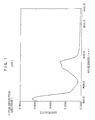
- Fig. 1 is a graph showing absorption spectra of a film made of dye 1.
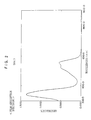
- Fig. 2 is a graph showing absorption spectra of a film made of dye 2.
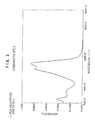
- Fig. 3 is a graph showing absorption spectra of a film made of comparative dye A.
- optical information recording medium of the invention will be hereinafter explained in detail.
- the optical information recording medium of the invention has, on a substrate, a recording layer in which information can be recorded by laser light irradiation, and the recording layer contains a dye represented by the following formula (I).
- Dye represents a dye residue having an absorption of 10000 (cm -1 ⁇ mol -1 ) or more as a molar extinction coefficient for light having a wavelength of 450 nm to 900 nm; L represents a divalent connecting group or a single bond; UV represents a dye residue having an absorption of 10000 (cm -1 ⁇ mol -1 ) or more as a molar extinction coefficient for light having a wavelength of 280 nm to 450 nm; and m denotes an integer of from 1 to 8.
- Dye represents a dye residue having absorption of 10000 (cm -1 ⁇ mol -1 ) or more as a molar extinction coefficient for light having a wavelength of 450 nm to 900 nm.
- the dye residue preferably has a maximum absorption wavelength of 450 nm to 900 nm and more preferably 500 nm to 900 nm. If the maximum absorption wavelength is less than 450 nm, the dye has large absorption in the wavelength range of about 400 to about 420 nm. Therefore, when blue laser light is used to record information, the reflectance of the dye at the recording wavelength is low, leading to deteriorated recording performance. If the maximum absorption wavelength exceeds 900 nm, such Dye has a complicated and huge structure, and therefore the dye is unstable and production cost of the dye is high.
- the molar extinction coefficient of Dye is preferably 10000 (cm -1 ⁇ mol -1 ) to 200000 (cm -1 ⁇ mol -1 ), more preferably 10000 (cm -1 ⁇ mol -1 ) to 100000 (cm -1 ⁇ mol -1 ) and most preferably 30000 (cm -1 ⁇ mol -1 ) to 100000 (cm -1 ⁇ mol -1 ).
- Dye is preferably selected from the group consisting of azo dyes, large ring dyes, anthraquinone dyes, methine dyes and azomethine dyes.
- phthalocyanine As the large ring dyes, phthalocyanine, naphthalocyanine, porphyrin, azaporphyrin and porphyrazine are preferable. Among these compounds, phthalocyanine is the most preferable.
- methine dyes cyanine, merocyanine, oxonol and hemicyanine are preferable.
- the azo dye may be either a so-called azo chelating dye containing a metal ion, or a non-chelating dye.
- a chelating dye is preferable.
- the metal ion which is concerned in chelating is preferably Ni, Cu, Zn, Al, Ti, Fe, B, Cr, or Co.
- a molecule or molecules other than a dye are preferably added to the complex as a ligand to form a stable chelating dye.
- the ligand added separately is preferably a compound containing at least one of nitrogen, oxygen and sulfur atoms. Among such compounds, amine (aniline) compounds and heterocyclic compounds containing at least one nitrogen atom are preferable.
- Dye preferably has a structure represented by the following formula (II).
- Formula (II) A-N N-B
- a and B independently represent an aromatic ring or a hetero ring.
- A is preferably a so-called coupler component which reacts with a diazonium salt to be converted to A in the dye of formula (II) after the diazo coupling reaction.
- the coupler component include hydrocarbon type aromatic rings such as a benzene ring and a naphthalene ring, and hetero rings.
- the aromatic ring those having a hydroxyl group, or a substituted or unsubstituted amino group is preferable from the viewpoint of high reactivity with a diazonium salt.
- hetero ring a five-membered hetero ring having a nitrogen atom and 1 to 20 carbon atoms or a six-membered ring having a nitrogen atom and 2 to 20 carbon atoms is preferable.
- the structure represented by A is preferably any of those represented by the following formulae (IV) to (XVIII).
- R 11 , R 12 , R 13 , R 14 , R 15 , R 16 , R 17 , R 18 , R 19 , R 20 , R 21 , R 22 , R 23 , R 24 , R 25 , R 26 , R 27 and R 28 independently represent a hydrogen atom or a substituent. The substituent will be explained below in detail.
- R 11 to R 28 are substituents
- substituents include halogen atoms, alkyl groups (including cycloalkyl groups and bicycloalkyl groups), alkenyl groups (including cycloalkenyl groups and bicycloalkenyl groups), alkynyl groups, aryl groups, heterocyclic groups, a cyano group, a hydroxyl group, a nitro group, a carboxyl group, alkoxy groups, aryloxy groups, silyloxy groups, heterocyclic oxy groups, acyloxy groups, carbamoyloxy groups, alkoxycarbonyloxy groups, aryloxycarbonyloxy groups, amino groups (including anilino groups), acylamino groups, aminocarbonylamino groups, alkoxycarbonylamino groups, aryloxycarbonylamino groups, sulfamoylamino groups, alkylsulfonylamino groups, arylsulfonylamino groups
- R 11 to R 28 independently represent a halogen atom (for example, a chlorine atom, a bromine atom or an iodine atom); an alkyl group (e.g. a linear, branched or cyclic substituted or unsubstituted alkyl group, which includes alkyl groups (preferably, alkyl groups having 1 to 30 carbon atoms, for example, methyl, ethyl, n-propyl, isopropyl, t-butyl, n-octyl, eicosyl, 2-chloroethyl, 2-cyanoethyl and 2-ethylhexyl groups), cycloalkyl groups (preferably substituted or unsubstituted cycloalkyl groups having 3 to 30 carbon atoms, for example, cyclohexyl, cyclopentyl and 4-n-dodecylcyclohexyl groups), bicycloalkyl groups (preferably, substituted al
- those having a hydrogen atom may be further substituted by substituting any of the aforementioned groups for the hydrogen atom.
- a functional group include an alkylcarbonylaminosulfonyl group, an arylcarbonylaminosulfonyl group, an alkylsulfonylaminocarbonyl group and an arylsulfonylaminocarbonyl group.
- Specific examples of the functional group include a methylsulfonylaminocarbonyl group, a p-methylphenylsulfonylaminocarbonyl group, an acetylaminosulfonyl group and a benzoylaminosulfonyl group.
- R 11 and R 12 are independently preferably a substituted or unsubstituted alkyl group or a substituted or unsubstituted aryl group.
- R 13 and R 14 are preferably an electron-attractive group and more preferably a substituent having a Hammett substituent constant ⁇ p of 0.3 or more.
- R 13 and R 14 are independently preferably a cyano group or a substituted or unsubstituted alkoxycarbonyl group. It is more preferable that R 13 be a cyano group and that R 14 be an alkoxycarbonyl group.
- R 15 is preferably a substituted or unsubstituted alkyl group or a substituted or unsubstituted aryl group.
- R 13 and R 14 are preferably an electron-attractive group and more preferably a substituent having a Hammett substituent constant ⁇ p of 0.3 or more.
- R 13 and R 14 are preferably a cyano group or a substituted or unsubstituted alkoxycarbonyl group. It is more preferable that R 13 be a cyano group and that R 14 be a substituted or unsubstituted alkoxycarbonyl group.
- R 15 and R 16 are independently preferably a substituted or unsubstituted alkoxy group, a substituted or unsubstituted amino group, a substituted or unsubstituted alkoxycarbonyl group, a substituted or unsubstituted carbamoyl group, a substituted or unsubstituted alkyl group or a substituted or unsubstituted aryl group.
- R 13 and R 14 are preferably an electron-attractive group and more preferably a substituent having a Hammett substituent constant ⁇ p of 0.3 or more.
- R 13 and R 14 are preferably a cyano group, or a substituted or unsubstituted alkoxycarbonyl group. It is more preferable that R 13 be a cyano group and that R 14 be a substituted or unsubstituted alkoxycarbonyl group.
- R 15 is preferably a hydrogen atom, a substituted or unsubstituted alkoxy group, a substituted or unsubstituted amino group, a substituted or unsubstituted alkoxycarbonyl group, a substituted or unsubstituted carbamoyl group, a substituted or unsubstituted alkyl group, or a substituted or unsubstituted aryl group.
- R 17 and R 18 are independently a substituted or unsubstituted aryl group, a substituted or unsubstituted alkyl group, a substituted or unsubstituted acylamino group, a substituted or unsubstituted carbamoyl group, or a substituted or unsubstituted alkoxycarbonyl group.
- R 19 is preferably a hydrogen atom, a substituted or unsubstituted alkyl group, or a substituted or unsubstituted aryl group
- R 20 represents a hydrogen atom, a cyano group, a substituted or unsubstituted carbamoyl group, or a substituted or unsubstituted alkoxycarbonyl group
- R 21 and R 22 are independently preferably a hydrogen atom, a substituted or unsubstituted amino group (including an anilino group), or a substituted or unsubstituted alkoxy group.
- R 21 and R 22 are preferably a hydroxyl group or a substituted or unsubstituted amino group (including an anilino group), and R 19 is preferably a substituted or unsubstituted alkyl group, or a substituted or unsubstituted aryl group.
- R 20 is preferably a cyano group, a hydrogen atom, an alkoxycarbonyl group or a carbamoyl group.
- R 23 and R 24 are preferably a hydrogen atom or a substituted or unsubstituted alkyl group.
- R 25 , R 26 , R 27 and R 28 are independently preferably a hydrogen atom, a substituted or unsubstituted alkyl group, a substituted or unsubstituted alkoxy group, a substituted or unsubstituted acylamino group, a halogen atom, or a substituted or unsubstituted carbamoyl group.
- the structures represented by formula (XVII) or (XVIII) are preferable.
- the structure represented by formula (XVII) is the most preferable.
- B represents a substituted or unsubstituted aryl group or a substituted or unsubstituted heterocyclic group which can be derived from diazonium salts.
- B is a so-called diazo component.
- the diazo component means a partial structure which can be introduced by converting a heterocyclic compound or a benzene derivative both having an amino group as a substituent into a diazo compound (diazonium salt) and by conducting diazo coupling reaction between the diazo compound and a coupler and which is frequently used in the field of azo dyes.
- B is a substituent, which is a monovalent group by eliminating an amino group from an amino-substituted heterocyclic compound or benzene derivative which can be involved with diazotization reaction.
- Examples of the monovalent heterocyclic group include the following compounds (A-1) to (A-25).
- R 121 to R 150 independently represent a hydrogen atom or a substituent. Examples of the substituent are the same as those explained for R 11 , R 12 , R 13 , R 14 , R 15 , R 16 , R 17 , R 18 , R 19 , R 20 , R 21 , R 22 , R 23 , R 24 , R 25 , R 26 , R 27 and R 28 .
- b and c are an integer of from 0 to 6.
- a, p, q, r and s are an integer of from 0 to 4.
- d, e, f, g, t and u are an integer of from 0 to 3.
- h, i, j, k, l and o are an integer of from 0 to 2.
- two or more substituents represented by R 121 to R 150 in one compound may be the same or different.
- B is preferably represented by any of the following structures (a)-1, (a)-2 and (b) to (l).
- R 61 , R 62 , R 63 , R 64 , R 65 , R 66 , R 71 , R 72 , R 201 , R 202 , R 203 , R 204 and R 205 independently represent a hydrogen atom or a substituent.
- substituents are the same as those explained for R 11 , R 12 , R 13 , R 14 , R 15 , R 16 , R 17 , R 18 , R 19 , R 20 , R 21 , R 22 , R 23 , R 24 , R 25 , R 26 , R 27 and R 28 .
- Dye is preferably a structure represented by the following formula ( ⁇ ).
- R 19 is preferably a substituted or unsubstituted alkyl group, or a substituted or unsubstituted aryl group.
- R 20 is preferably a cyano group, a hydrogen atom, a substituted or unsubstituted alkoxycarbonyl group, or a substituted or unsubstituted carbamoyl group.
- R 21a , R 21b , R 22a and R 22b independently represent a hydrogen atom, a substituted or unsubstituted alkyl group, a substituted or unsubstituted aryl group, or a substituted or unsubstituted heterocyclic group.
- the hetero ring formed by D is preferably a substituted or unsubstituted five-membered or six-membered hetero ring having 1 to 20 carbon atoms and at least one nitrogen atom.
- R 19 is preferably a substituted or unsubstituted alkyl group, and R 20 is preferably a cyano group, a hydrogen atom, a substituted or unsubstituted alkoxycarbonyl group, or a substituted or unsubstituted carbamoyl group.
- R 21a , R 21b , R 22a and R 22b independently represent a hydrogen atom, a substituted or unsubstituted alkyl group, a substituted or unsubstituted aryl group, or a substituted or unsubstituted heterocyclic group.
- R 101 , R 102 , R 103 and R 104 independently represent a substituent.
- a', b', c' and d' independently denote an integer of from 0 to 4.
- R 101 s, R 102 s, R 103 s and R 104 s may be the same or different.
- Examples of the substituent represented by R 101 , R 102 , R 103 and R 104 include the same groups as those explained as R 11 to R 28 .
- substituents a substituted or unsubstituted alkoxy group, a substituted or unsubstituted alkyl group, a substituted or unsubstituted aryl group, a substituted or unsubstituted sulfamoyl group, a substituted or unsubstituted alkylsulfonyl group, and a substituted or unsubstituted arylsulfonyl group are preferable.
- L represents a divalent connecting group or a single bond.
- n 2 or more, multiple Ls may be the same or different.
- L examples include a single bond, the following divalent groups (alkylene, arylene, -CO-, -N(R 105 )-, -O-, -S-, -SO-, -SO 2 - and divalent groups derived from hetero rings) and groups formed by bonding a plurality of the above divalent groups (-CO-O-, -CON(R 105 ))-, -O-CO-O-, -N(R 105 )-CO-O-, -N(R 105 )-CO-N(R 105 )-, -SO 2 -O- and -SO 2 -N(R 105 )-).
- R 105 represents a substituted or unsubstituted alkyl group, or a substituted or unsubstituted aryl group.
- a single bond, -O-, -CO-O-, -CO-N(R 105 )-, -SO 2 -O- and -SO 2 -N(R 105 )- are preferable and -CO-O-, -CO-N(R 105 )-, -SO 2 -O- and -SO 2 -N(R 105 )- are more preferable.
- UV is a dye residue having absorption of 10000 (cm -1 ⁇ mol -1 ) or more as a molar extinction coefficient for light having a wavelength of 280 nm to 450 nm.
- UV has a maximum absorption wavelength of preferably 280 nm to 450 nm and more preferably 350 nm to 380 nm.
- a maximum absorption wavelength of less than 280 nm results in a low refractive index of the dye at a recording wavelength when blue laser light is used to record information. This results in deteriorated recording ability.
- a maximum absorption wavelength of more than 450 nm leads to a low reflectance of the dye at a recording wavelength when blue laser light is used to record. This results in deteriorated recording ability.
- the molar extinction coefficient of UV is preferably 10000 (cm -1 ⁇ mol -1 ) to 200000 (cm -1 ⁇ mol -1 ), more preferably 20000 (cm -1 ⁇ mol -1 ) to 150000 (cm -1 ⁇ mol -1 ) and most preferably 40000 (cm -1 ⁇ mol -1 ) to 150000 (cm -1 ⁇ mol -1 ).
- UV in formula (I) is preferably a dye residue selected from a methine dye, a benzotriazole dye, a benzophenone dye and a triazine dye.
- the structure represented by UV is preferably that represented by the following formula (A).
- R 1 represents a substituent.
- R 2 and R 3 independently represent a cyano group, a substituted or unsubstituted alkoxycarbonyl group, a substituted or unsubstituted carbamoyl group, or a substituted or unsubstituted acyl group.
- R 2 , R 3 and the carbon atom bonding to R 2 and R 3 may bond to each other to form a five-membered or six-membered ring.
- R 4 represents a substituted or unsubstituted aryl group, a cyano group, a substituted or unsubstituted alkoxycarbonyl group, a substituted or unsubstituted carbamoyl group, or a substituted or unsubstituted acyl group.
- n' denotes an integer of from 0 to 5. When n' is 2 or more, multiple R 1 s may be the same or different.
- R 1 is preferably an alkoxy group which is disposed at the para position with respect to the vinyl group.
- R 5 and R 6 are respectively a hydrogen atom or a substituent. p' and o' are respectively an integer from 0 to 4.
- R 5 is preferably a substituted or unsubstituted alkyl group, or a substituted or unsubstituted aryl group.
- R 6 is a substituted or unsubstituted alkoxycarbonyl group, a halogen atom, a substituted or unsubstituted alkoxy group, or a substituted or unsubstituted alkylthio group.
- R 7 and R 8 are respectively a hydrogen atom or a substituent. r' and q' are respectively an integer from 0 to 4.
- R 7 is preferably a substituted or unsubstituted alkyl group, or a substituted or unsubstituted aryl group.
- R 8 is a substituted or unsubstituted alkoxycarbonyl group, a halogen atom, a substituted or unsubstituted alkoxy group, or a substituted or unsubstituted alkylthio group.
- R 305 and R 306 respectively represent a cyano group, a substituted or unsubstituted alkoxycarbonyl group, a substituted or unsubstituted carbamoyl group, or a substituted or unsubstituted acyl group.
- R 307 represents a substituent. s' denotes an integer from 0 to 4.
- R 308 , R 309 and R 310 respectively represent a hydrogen atom, a cyano group, a substituted or unsubstituted alkoxycarbonyl group, a substituted or unsubstituted carbamoyl group, or a substituted or unsubstituted acyl group.
- Ar represents a substituted or unsubstituted heterocyclic group, or a substituted or unsubstituted aryl group.
- t ' / - denotes an integer from 0 to 4.
- X 1 represents an oxygen atom, a sulfur atom or -N(R 321 )-.
- R 321 represents a substituted or unsubstituted alkyl group, or a substituted or unsubstituted aryl group.
- R 311 and R 312 respectively represent a hydrogen atom or a substituent.
- X 2 represents a substituted or unsubstituted alkoxy group, a substituted or unsubstituted aryloxy group, or a substituted or unsubstituted amino group (including an anilino group).
- R 313 is a hydrogen atom or a substituent.
- u ' / - is an integer from 0 to 4.
- R 311 and R 312 are respectively preferably a substituted or unsubstituted alkyl group, a substituted or unsubstituted aryl group, a halogen atom, or a substituted or unsubstituted alkoxy group.
- R 313 is preferably a halogen atom, a substituted or unsubstituted alkoxy group, or a substituted or unsubstituted alkoxycarbonyl group.
- R 314 and R 315 are respectively a substituent.
- v' is an integer from 0 to 4 and x' is an integer from 0 to 2.
- R 314 is preferably a substituted or unsubstituted alkyl group, or a substituted or unsubstituted aryl group
- R 6 is preferably a substituted or unsubstituted amino group, a substituted or unsubstituted alkyl group, a substituted or unsubstituted aryl group, a substituted or unsubstituted alkoxy group, or a substituted or unsubstituted alkylthio group.
- v' is preferably 2.
- x' is preferably 2.
- the recording layer When a recording layer containing the dye represented by formula (I) is formed, it is preferable that the recording layer has a refractive index (n) of higher than 1.50 and lower than 2.50 and an extinction coefficient (k) of higher than 0.03 and lower than 0.30 at the frequency of recording light.
- the refractive index and the extinction coefficient can be easily measured by a rotary photon method (ellipsometer).
- the measuring device include Model V-VASE-S manufactured by J.A. WOOLLAM Co., Ltd.
- the dye to be used in the recording layer preferably has high solubility in an organic solvent.
- the mass solubility of the dye in tetrafluoropropanol is preferably 0.1% to 50%, more preferably 0.5% to 20% and most preferably 1% to 10%.
- the melting point of the dye of formula (I) is preferably 100°C to 500°C, more preferably 150°C to 400°C and particularly preferably 200°C to 300°C.
- the rate of reduction in the weight of the dye of formula (I) at a thermal decomposition point is 10% to 90% and more preferably 20% to 70%.
- dyes 1 to 47 of the dye represented by formula (I) are shown below, however, this invention is not limited to those examples.
- Dye 1 was synthesized according to pamphlets of International Patent Application Laid-Open Nos. 02/83795 and 02/83662.
- dye 1 was confirmed with mass spectra and 1 HNMR spectra.
- the aforementioned azo chelating dye may be used together with a conventionally known optical disk dye.
- the dye include azo chelating dyes, oxonol dyes, cyanine dyes and phthalocyanine dyes.
- the optical information recording medium of the invention has, on a substrate, a recording layer containing an azo chelating dye which has a specific structure described above.
- the optical information recording medium of the invention includes those having various structures.
- the optical information recording medium preferably has a structure in which a recording layer, a light-reflecting layer and a protective layer are disposed in this order on a disk substrate on which pre-grooves are formed at a fixed track pitch, or a structure in which a light-reflecting layer, a recording layer and a protective layer are disposed in this order on the substrate.
- a structure is also preferable in which two stratified products each having a recording layer and a light-reflecting layer on a transparent disk substrate on which pre-grooves are formed at a fixed track pitch are joined with each other such that each recording layer faces inside.
- the optical information recording medium of the invention can be applied to DVD-Rs if the absorption waveform of the Dye part of the dye is optimally controlled.
- two stratified products each of which has a transparent disk substrate having a thickness of 0.6 ⁇ 0.1 mm and pre-grooves which has a track pitch of 0.6 to 0.9 ⁇ m and, on the pre-groove side of the substrate, a recording layer, are joined with each other such that each recording layer faces inside.
- the depth of the pre-grooves is in the range of from 0.05 to 100 ⁇ m and preferably in the range of from 0.1 to 50 ⁇ m.
- the track pitch is preferably in the range of 0.2 to 0.8 ⁇ m, more preferably in the range of 0.25 to 0.6 ⁇ m and still more preferably in the range of 0.27 to 0.4 ⁇ m.
- the depth of the pre-grooves is in the range of preferably 0.03 to 0.18 ⁇ m, more preferably in the range of 0.05 to 0.15 ⁇ m and particularly preferably in the range of 0.06 to 0.1 ⁇ m.
- a method of producing the optical information recording medium of the invention will be explained by way of an optical information recording medium having a structure in which a recording layer, a light-reflecting layer and a protective layer are formed in this order on a disk substrate.
- the substrate of the optical information recording medium of the invention may be made of any material used for the substrates of conventional optical information recording media.
- the substrate material include glass, polycarbonates, acrylic resins such as polymethyl methacrylate, vinyl chloride resins such as polyvinyl chloride and a vinyl chloride copolymer, epoxy resins, amorphous polyolefins, and polyesters. These materials may be combined, if necessary. These materials may be used in the form of a film or in the form of a rigid substrate. Among the above materials, polycarbonates are preferable in view of moisture resistance, dimensional stability, and cost.
- An undercoat layer may be formed on the surface of the substrate on which surface a recording layer is disposed in order to improve flatness and adhesive strength and prevent deterioration of a recording layer.
- the material used for the undercoat layer include polymeric materials such as polymethyl methacrylate, an acrylic acid/methacrylic acid copolymer, a styrene/maleic anhydride copolymer, polyvinyl alcohol, N-methylolacrylamide, a styrene/vinyltoluene copolymer, chlorosulfonated polyethylene, nitrocellulose, polyvinyl chloride, chlorinated polyolefin, polyester, polyimide, a vinyl acetate/vinyl chloride copolymer, an ethylene/vinyl acetate copolymer, polyethylene, polypropylene and polycarbonate; and surface modifiers such as a silane coupling agent.
- the undercoat layer may be formed in the following manner: the above material is dissolved or dispersed in a proper solvent to prepare a coating solution, and the coating solution is then applied to the surface of a substrate by a coating method such as spin coating, dip coating or extrusion coating.
- the thickness of the undercoat layer is generally in the range of 0.005 to 20 ⁇ m and preferably in the range of 0.01 to 10 ⁇ m.
- the recording layer is formed in the following manner: the above dye and optionally, a quencher and a binder are dissolved in a solvent to prepare a coating solution, and the coating solution is then applied to the surface of a substrate to form a coating layer, and the coating layer is then dried.
- the solvent in the coating solution examples include organic solvents including esters such as butyl acetate, ethyl lactate and cellosolve acetate; ketones such as methyl ethyl ketone, cyclohexanone and methyl isobutyl ketone; chlorinated hydrocarbons such as dichloromethane, 1,2-dichloroethane and chloroform; amides such as dimethylformamide; hydrocarbons such as methylcyclohexane; ethers such as dibutyl ether, diethyl ether, tetrahydrofuran and dioxane; alcohols such as ethanol, n-propanol, isopropanol, n-butanol and diacetone alcohol; fluorinated solvents such as 2,2,3,3-tetrafluoropropanol; and glycol ethers such as ethylene glycol monomethyl ether, ethylene glycol monoethyl ether and propylene glycol monomethyl
- binder examples include natural organic polymeric materials such as gelatin, cellulose derivatives, dextran, rosin and rubbers; and synthetic organic polymers such as hydrocarbon resins such as polyethylene, polypropylene, polystyrene and polyisobutylene, vinyl resins such as polyvinyl chloride, polyvinylidene chloride and a polyvinyl chloride/polyvinyl acetate copolymer, acrylic resins such as polymethyl acrylate and polymethyl methacrylate, polyvinyl alcohol, chlorinated polyethylene, epoxy resins, butyral resins, rubber derivatives and initial condensates of thermosetting resins such as a phenol/formaldehyde resin.
- natural organic polymeric materials such as gelatin, cellulose derivatives, dextran, rosin and rubbers
- synthetic organic polymers such as hydrocarbon resins such as polyethylene, polypropylene, polystyrene and polyisobutylene, vinyl resins such as polyvinyl chloride, polyvin
- the amount of the binder to be used is generally 0.01 to 50 times and preferably 0.1 to 5 times as much as the mass of the dye.
- the concentration of the dye in the coating solution prepared in this manner is generally 0.01 to 10% by mass and preferably 0.1 to 5% by mass.
- the coating method examples include a spray method, a spin coating method, a dipping method, a roll coating method, a blade coating method, a doctor roll method and a screen printing method. Among these methods, it is preferable to use a spin coating method.
- the recording layer may be either a single layer or multi layers.
- the thickness of the recording layer is generally in the range of from 20 to 500 nm, preferably in the range of 30 to 300 nm and more preferably in the range of 50 to 100 nm.
- the recording layer may contain any anti-fading agent to improve light resistance of the recording layer.
- a singlet oxygen quencher is usually used.
- the singlet oxygen quencher those already described in known publications such as patent specifications may be utilized. Specific examples of the singlet oxygen quencher include those described in each JP-A Nos. 58-175693, 59-81194, 60-18387, 60-19586, 60-19587, 60-35054, 60-36190, 60-36191, 60-44554, 60-44555, 60-44389, 60-44390, 60-54892, 60-47069, 63-209995 and 4-25492, Japanese Patent Application Publication (JP-B) Nos. 1-38680 and 6-26028, German Patent No. 350399 and Journal of Japan Chemical Society, October issue, 1992, page 1141.
- the amount of the anti-fading agent such as the singlet oxygen quencher is generally in the range of from 0.1 to 50% by mass, preferably in the range of 0.5 to 45% by mass, more preferably in the range of 3 to 40% by mass and particularly preferably in the range of 5 to 25% by mass based on the amount of the dye.
- a light reflecting material which is the material of the light reflecting layer has high reflectance to laser light.
- the light-reflecting material include metals or semimetals such as Mg, Se, Y, Ti, Zr, Hf, V, Nb, Ta, Cr, Mo, W, Mn, Re, Fe, Co, Ni, Ru, Rh, Pd, Ir, Pt, Cu, Ag, Au, Zn, Cd, Al, Ga, In, Si, Ge, Te, Pb, Po, Sn and Bi, and stainless steel. These materials may be used alone or as mixtures or as alloys.
- the light reflecting layer may be formed on the substrate or the recording layer by vapor-depositing, sputtering or ion-plating the light-reflecting material.
- the thickness of the light-reflecting layer is generally in the range of from 10 to 300 nm and preferably in the range of 50 to 200 nm.
- a protective layer is preferably formed on the light reflecting layer or recording layer for the purpose of physically and chemically protecting the recording layer and the like.
- a structure in which two substrates on each of which a recording is disposed are bonded to each other such that each recording layer faces inside is adopted, it is not always necessary to provide the protective layer.
- the material used in the protective layer include inorganic materials such as SiO, SiO 2 , MgF 2 , SnO 2 and Si 3 N 4 and organic materials such as thermoplastic resins, thermosetting resins and UV-curable resins.
- the protective layer may be formed on the light-reflecting layer, for example, by laminating a film obtained by extrusion processing of a plastic on the light-reflecting layer with an adhesive.
- the protective layer may be formed by a method such as vacuum deposition, sputtering or application.
- the protective layer can be formed by dissolving the resin in a proper solvent to prepare a coating solution, applying the coating solution and drying the resultant coating.
- the protective layer can be formed by applying the UV-curable resin as it does or a coating solution in which the UV-curable resin is dissolved in a proper solvent and irradiating the resultant coating with UV light to cure the coating.
- Various additives such as an antistatic agent, an antioxidant and a UV absorbent may be further added to the coating solution according to the object.
- the thickness of the protective layer is generally in the range of from 0.1 ⁇ m to 1 mm.
- a method of recording information in the optical information recording medium of the invention is performed, for example, in the following manner.
- recording light for example, from a semiconductor laser is irradiated onto the optical information recording medium, which is being rotated at a constant linear velocity or constant angular velocity, from the substrate side or from the protective layer side thereof. It is thought that this light irradiation causes the recording layer to absorb the light, and that thereby the temperature of the recording layer locally raises, and that physical or chemical change of the recording layer (for example, generation of pits) is caused to change the optical characteristics of the recording layer and that, as a result, the information is recorded.
- a semiconductor laser having an oscillation wavelength ranging from 600 to 700 nm, preferably 620 to 680 nm and more preferably 630 to 670 nm is used as a light source for the recording light.
- the optical information recording medium of the invention is preferably applied to an optical recording disk using a semiconductor laser which has an oscillation wavelength range of from 390 to 550 nm as the recording light.
- a light source in this case include a bluish violet light-emitting semiconductor laser having an oscillation wavelength range of from 390 to 415 nm, a bluish green light-emitting semiconductor laser having a center oscillation wavelength of 515 nm and a bluish violet light-emitting SHG laser having a center oscillation wavelength of 425 nm obtained by halving the center oscillation wavelength (850 nm) of an infrared semiconductor laser by using an optical waveguide element.
- lasers it is particularly preferable to use a bluish violet light-emitting semiconductor or a SHG laser from the viewpoint of recording density.
- a 400 to 440 nm blue light-emitting semiconductor laser is the most preferable.
- the reproduction of the information recorded in the above manner may be carried out by irradiating light from a semiconductor laser onto the optical information recording medium, which is being rotated at the same constant linear velocity as above, from the substrate side or the protective layer side thereof and by detecting the reflected light.
- each of dyes 1 and 2 described above and the following comparative dye A was dissolved in tetrafluoropropanol to prepare a coating solution, and the coating solution was then applied to a glass substrate by spin coating to form a dye amorphous film.
- the absorption spectra of each of the resultant films are shown in Figs. 1 to 3.
- the maximum absorption wavelength and molar extinction coefficient of Dye and UV in dyes 1, 2 and the following comparative dye A are shown in Table 1.
- the dyes of formula (I) have large absorption in the wavelength range of from 280 to 450 nm and are therefore preferable as a dye for an optical information recording medium using blue laser light for information recording.
- Dye 2 44300 549 113000 346 Comparative dye A 48000 552 - -
- optical disk optical information recording medium
- a substrate having a thickness of 1.1 mm was made from a polycarbonate resin (Panlight AD5503) manufactured by Teijin Chemicals Ltd. by injection molding.
- the track pitch of grooves on the substrate was 320 nm, the half width of the portions on the grooves was 110 nm and the depth of the grooves was 35 nm.
- a reflecting layer having a thickness of 100 nm was formed on the substrate by using a target containing Ag (98.1 parts), Pd (0.9 parts) and Cu (1.0 part) by a vacuum filming method.
- dye 1 was weighed such that the amount of the dye was 2.5 g with respect to 100 ml of TFP and the weighed dye 1 was mixed with TFP.
- Ultrasonic wave was applied onto the resultant mixture for 2 hours to dissolve the dye in the solvent and then the resultant solution was allowed to stand under an environment of 23°C and 50% humidity for at least 0.5 hours.
- the solution was filtered with a filter having a pore size of 0.2 ⁇ m and a coating solution was thus obtained.
- a coating solution a recording layer having a thickness of 110 nm was formed on the reflecting layer by a spin coating method.
- the resultant sample on which the recording layer was formed was heated in a clean oven at 80°C for one hour.
- a film having a thickness of 5 nm was formed on this heat-treated sample by using a target consisting of ZnS (8 parts) and SiO 2 (2 parts) by a vacuum filming method and then a polycarbonate film having a thickness of 80 ⁇ m was bonded to the sample via an adhesive layer having a thickness of 20 ⁇ m to obtain an optical information recording medium of Example 1.
- the produced optical information recording medium was set to DDU-1000 (manufactured by Pulstech Industrial Co., Ltd.) including a laser optical system which could emit light having a wavelength of 403 nm and which had NA of 0.85. Random signals (2T to 8T) 1-7-modulated by 10 mW power were recorded on and reproduced from the optical information recording medium to evaluate jitter. At this time, the linear velocity was 5.28 m/ s and the emission pattern of the laser during recording was optimized. The value of the jitter measured with a conventional equalizer was 10.7%.
- Optical information recording media of Examples 2 to 11 and Comparative Examples 1, 3, 5 and 6 were manufactured or attempts to manufacture optical information recording media of Comparative Examples 2 and 4 were conducted and evaluated in the same manner as in Example 1 except that dyes described in Table 2 were used in place of dye 1 of Example 1, respectively.
- Compound 1-1 described in JP-A No. 2001-253171 (Dye (12) described in JP-A No. 2002-2117) (Dye (I-1) described in JP-A No. 2002-301870)
- a light-fading test was conducted for the manufactured optical information recording media by using a 100000 Lux Merry-go-round type light-fading tester.
- the optical information recording medium was irradiated with light for 3 days without using a UV filter.
- the residual rate was obtained from the transmission concentration of the dye before the test and that after the test. The results are shown in Table 2.
- Example 1 Dye in recording layer Jitter(%) Light-fading (residual rate)
- Example 1 Dye 1 10.7 93
- Example 2 Dye 2 8.1
- Example 3 Dye 3 11.1 89
- Example 4 Dye 12 12.1 90
- Example 5 Dye 20 10.7 91
- Example 6 Dye 21 10.9 92
- Example 7 Dye 28 12.3 89
- Example 8 Dye 32 11.5
- Example 9 Dye 33 9.9
- Example 10 Dye 38 10.2 97
- Example 11 Dye 40 10.3 98 Comparative Example 1 Comparative dye A 98 Comparative Example 2 Comparative dye B Crystals precipitated and evaluation was impossible.
- Comparative Example 3 Comparative dye C 21 Comparative Example 4 Comparative dye D Crystals precipitated and evaluation was impossible.
- Comparative Example 5 Comparative dye E 34 Comparative Example 6 Comparative dye F 98
- the dye represented by formula (I) has high solubility and can be used to manufacture an optical information recording medium. It is found from Table 2 that Examples 1 to 11 including the dye represented by formula (I) in a recording layer have reduced jitter in optical recording and have high light fastness. It is also found that the light fastness is improved by incorporating Dye into the molecule of the dye.
- Comparative Example 1 including comparative dye A which has no dye residue corresponding to the UV part of the dye represented by formula (I), the optical information recording medium could be manufactured by a spin coating method, however, the optical information recording medium had high jitter in the optical recording test.
- Comparative Example 2 using comparative dye B which has no dye residue corresponding to Dye in the dye represented by formula (I) tends to be crystallized and optical information recording medium could not be made from comparative dye B.
- Comparative Example 3 using comparative dye C into which a substituent improving solubility is introduced, an optical information recording medium could be manufactured. However, because the molecular weight of the dye is increased, jitter is high in the optical recording test. The light fastness is very low.
Landscapes
- Thermal Transfer Or Thermal Recording In General (AREA)
- Optical Record Carriers And Manufacture Thereof (AREA)
Applications Claiming Priority (2)
| Application Number | Priority Date | Filing Date | Title |
|---|---|---|---|
| JP2003275125 | 2003-07-16 | ||
| JP2003275125A JP4136834B2 (ja) | 2003-07-16 | 2003-07-16 | 光情報記録媒体 |
Publications (3)
| Publication Number | Publication Date |
|---|---|
| EP1498888A2 true EP1498888A2 (de) | 2005-01-19 |
| EP1498888A3 EP1498888A3 (de) | 2007-09-26 |
| EP1498888B1 EP1498888B1 (de) | 2011-01-19 |
Family
ID=33475559
Family Applications (1)
| Application Number | Title | Priority Date | Filing Date |
|---|---|---|---|
| EP04254241A Expired - Lifetime EP1498888B1 (de) | 2003-07-16 | 2004-07-15 | Träger für optische Datenaufzeichnung |
Country Status (4)
| Country | Link |
|---|---|
| US (1) | US7491486B2 (de) |
| EP (1) | EP1498888B1 (de) |
| JP (1) | JP4136834B2 (de) |
| DE (1) | DE602004031072D1 (de) |
Cited By (1)
| Publication number | Priority date | Publication date | Assignee | Title |
|---|---|---|---|---|
| WO2010070312A3 (en) * | 2008-12-20 | 2010-08-26 | Fujifilm Imaging Colorants Limited | Magenta dyes and inks for use in ink-jet printing |
Families Citing this family (6)
| Publication number | Priority date | Publication date | Assignee | Title |
|---|---|---|---|---|
| JP2005141809A (ja) * | 2003-11-05 | 2005-06-02 | Fuji Photo Film Co Ltd | 光記録媒体および情報記録方法 |
| CN101151164B (zh) * | 2005-03-29 | 2010-12-29 | 三菱化学媒体株式会社 | 光学记录介质、金属络合物及有机色素化合物 |
| US8859184B2 (en) * | 2005-07-28 | 2014-10-14 | Ricoh Company, Ltd. | Write-once-read-many optical disk having low-to-high recording property accommodating short wavelength recording |
| JP5215538B2 (ja) * | 2006-06-30 | 2013-06-19 | 富士フイルム株式会社 | アゾ色素、着色組成物、感熱転写記録用インクシート、感熱転写記録方法、カラートナー、インクジェット用インクおよびカラーフィルタ |
| JP2009117019A (ja) * | 2007-10-15 | 2009-05-28 | Fujifilm Corp | ヒートモード型記録材料層の洗浄方法、凹凸製品の製造方法、発光素子の製造方法および光学素子の製造方法 |
| US8968877B2 (en) | 2011-02-16 | 2015-03-03 | Honeywell International Inc. | Barrier materials for mirror assemblies |
Family Cites Families (35)
| Publication number | Priority date | Publication date | Assignee | Title |
|---|---|---|---|---|
| JPS5856239A (ja) * | 1981-09-28 | 1983-04-02 | Tdk Corp | 光記録媒体 |
| JPH0899467A (ja) * | 1994-09-30 | 1996-04-16 | Mitsui Toatsu Chem Inc | 光記録媒体 |
| JP2000113504A (ja) | 1998-10-05 | 2000-04-21 | Mitsui Chemicals Inc | 光記録媒体 |
| JP2000108513A (ja) | 1998-10-05 | 2000-04-18 | Mitsui Chemicals Inc | 光記録媒体 |
| JP3820037B2 (ja) | 1998-11-05 | 2006-09-13 | 三井化学株式会社 | 光記録媒体 |
| JP2000163800A (ja) | 1998-11-30 | 2000-06-16 | Ricoh Co Ltd | 光記録媒体 |
| JP2000158818A (ja) | 1998-12-01 | 2000-06-13 | Mitsui Chemicals Inc | 光記録媒体 |
| JP2000218940A (ja) | 1999-02-02 | 2000-08-08 | Mitsui Chemicals Inc | 光記録媒体 |
| JP2000222771A (ja) | 1999-02-02 | 2000-08-11 | Mitsui Chemicals Inc | 光記録媒体 |
| JP3820050B2 (ja) | 1999-02-02 | 2006-09-13 | 三井化学株式会社 | 光記録媒体 |
| JP2000263939A (ja) | 1999-03-16 | 2000-09-26 | Mitsui Chemicals Inc | 光記録媒体 |
| JP2000280620A (ja) | 1999-03-30 | 2000-10-10 | Mitsui Chemicals Inc | 光記録媒体 |
| JP2000280621A (ja) | 1999-03-30 | 2000-10-10 | Mitsui Chemicals Inc | 光記録媒体 |
| JP2000318312A (ja) | 1999-05-07 | 2000-11-21 | Mitsui Chemicals Inc | 光記録媒体 |
| JP2000318313A (ja) | 1999-05-07 | 2000-11-21 | Mitsui Chemicals Inc | 光記録媒体 |
| US6307671B1 (en) | 1999-05-31 | 2001-10-23 | Fuji Photo Film Co., Ltd. | Optical filter comprising transparent support and filter layer containing dye and binder polymer |
| JP2001147319A (ja) * | 1999-05-31 | 2001-05-29 | Fuji Photo Film Co Ltd | 光学フィルターおよび反射防止膜 |
| JP2001039034A (ja) | 1999-08-03 | 2001-02-13 | Mitsui Chemicals Inc | 光記録媒体 |
| DE60027325T2 (de) | 1999-12-28 | 2007-03-29 | Mitsui Chemicals, Inc. | Optisches Aufzeichnungsmedium und neue Azaporphyrinverbindung |
| JP2001253171A (ja) | 2000-01-07 | 2001-09-18 | Mitsui Chemicals Inc | ベンズビスアゾール系化合物、及び該化合物を用いた光記録媒体 |
| JP2001287465A (ja) * | 2000-01-31 | 2001-10-16 | Mitsui Chemicals Inc | 光記録媒体 |
| JP2001287460A (ja) | 2000-04-07 | 2001-10-16 | Mitsui Chemicals Inc | 光記録媒体 |
| EP1323160A1 (de) | 2000-09-21 | 2003-07-02 | Bayer Aktiengesellschaft | Optischer datenträger enthaltend in der informationsschicht einen phthalocyaninfarbstoff als lichtabsorbierende verbindung |
| JP4284025B2 (ja) | 2001-01-23 | 2009-06-24 | 富士フイルム株式会社 | 光情報記録媒体 |
| JP2002307826A (ja) * | 2001-02-07 | 2002-10-23 | Ricoh Co Ltd | 光記録媒体 |
| JP2002269821A (ja) * | 2001-03-06 | 2002-09-20 | Fuji Photo Film Co Ltd | 光情報記録媒体 |
| JP4119099B2 (ja) * | 2001-03-21 | 2008-07-16 | 株式会社リコー | 光記録媒体 |
| KR100601774B1 (ko) * | 2001-04-09 | 2006-07-19 | 후지 샤신 필름 가부시기가이샤 | 화상 형성용 착색 조성물 및 칼라 화상의 내오존성 개선방법 |
| AU2002243036A1 (en) | 2001-04-09 | 2002-10-28 | Fuji Photo Film Co., Ltd. | Azo compounds and process of producing the same and novel intermediate compounds used in the process of producing azo compounds |
| TW559678B (en) | 2001-05-17 | 2003-11-01 | Ind Tech Res Inst | Novel cyanine-TCNQ dye for high density data storage media |
| JP2003064277A (ja) * | 2001-08-27 | 2003-03-05 | Konica Corp | ポリマー粒子の水分散体、インクジェット記録用水系インク、インクジェット記録用水系インクの製造方法 |
| JP2003171571A (ja) * | 2001-09-28 | 2003-06-20 | Tamura Kaken Co Ltd | シアニン系化合物、その中間体、シアニン系色素、光学記録材料及び光情報記録媒体 |
| TWI295681B (de) * | 2001-12-19 | 2008-04-11 | Ritek Corp | |
| JP2004209771A (ja) * | 2002-12-27 | 2004-07-29 | Fuji Photo Film Co Ltd | 光情報記録媒体 |
| JP4163561B2 (ja) * | 2003-06-17 | 2008-10-08 | 富士フイルム株式会社 | 色素化合物 |
-
2003
- 2003-07-16 JP JP2003275125A patent/JP4136834B2/ja not_active Expired - Fee Related
-
2004
- 2004-07-15 DE DE602004031072T patent/DE602004031072D1/de not_active Expired - Lifetime
- 2004-07-15 US US11/297,817 patent/US7491486B2/en not_active Expired - Fee Related
- 2004-07-15 EP EP04254241A patent/EP1498888B1/de not_active Expired - Lifetime
Cited By (1)
| Publication number | Priority date | Publication date | Assignee | Title |
|---|---|---|---|---|
| WO2010070312A3 (en) * | 2008-12-20 | 2010-08-26 | Fujifilm Imaging Colorants Limited | Magenta dyes and inks for use in ink-jet printing |
Also Published As
| Publication number | Publication date |
|---|---|
| DE602004031072D1 (de) | 2011-03-03 |
| US7491486B2 (en) | 2009-02-17 |
| US20060068326A1 (en) | 2006-03-30 |
| EP1498888B1 (de) | 2011-01-19 |
| EP1498888A3 (de) | 2007-09-26 |
| JP2005035182A (ja) | 2005-02-10 |
| JP4136834B2 (ja) | 2008-08-20 |
Similar Documents
| Publication | Publication Date | Title |
|---|---|---|
| JP5139708B2 (ja) | 光情報記録媒体及びアゾ金属錯体色素 | |
| US7537881B2 (en) | Optical information recording medium | |
| US20100002569A1 (en) | Optical information recording medium, method of recording and reproducing information, and azo metal complex dye | |
| EP1498888B1 (de) | Träger für optische Datenaufzeichnung | |
| KR100771079B1 (ko) | 광정보 기록매체, 정보기록방법 및 색소화합물 | |
| JP4276877B2 (ja) | 光情報記録媒体および色素 | |
| KR20070093321A (ko) | 신규 옥소놀 색소 화합물 및 광정보기록매체 | |
| US20080199808A1 (en) | Optical information recording medium and method of recording information | |
| JP2004291244A (ja) | 光情報記録媒体および新規化合物 | |
| EP1542221B1 (de) | Optisches Hochgeschwindigkeitsaufzeichnungsmedium | |
| US20080199809A1 (en) | Optical information recording medium and method of recording information | |
| JP5121537B2 (ja) | 光情報記録媒体および情報記録方法 | |
| JP2009248543A (ja) | 光情報記録媒体および情報記録方法 | |
| US20070298219A1 (en) | Optical Information Recording Medium and Information Recording Method | |
| JP2009241307A (ja) | 光情報記録媒体および情報記録方法 | |
| JP2009255563A (ja) | 光情報記録媒体、情報記録方法および新規アゾ色素 | |
| JP2006289961A (ja) | 光情報記録媒体および情報記録方法 | |
| JP2006321230A (ja) | 光情報記録媒体、情報記録方法及び化合物 | |
| JP2005288953A (ja) | 光情報記録媒体および情報記録方法、及び化合物 | |
| JP2010023384A (ja) | 光情報記録媒体、情報記録方法、および、アゾ金属錯体色素 | |
| US20080199807A1 (en) | Optical information recording medium, method of recording information and method of using compound | |
| JP2005196945A (ja) | 光情報記録媒体 |
Legal Events
| Date | Code | Title | Description |
|---|---|---|---|
| PUAI | Public reference made under article 153(3) epc to a published international application that has entered the european phase |
Free format text: ORIGINAL CODE: 0009012 |
|
| AK | Designated contracting states |
Kind code of ref document: A2 Designated state(s): AT BE BG CH CY CZ DE DK EE ES FI FR GB GR HU IE IT LI LU MC NL PL PT RO SE SI SK TR |
|
| AX | Request for extension of the european patent |
Extension state: AL HR LT LV MK |
|
| RAP1 | Party data changed (applicant data changed or rights of an application transferred) |
Owner name: FUJIFILM CORPORATION |
|
| PUAL | Search report despatched |
Free format text: ORIGINAL CODE: 0009013 |
|
| AK | Designated contracting states |
Kind code of ref document: A3 Designated state(s): AT BE BG CH CY CZ DE DK EE ES FI FR GB GR HU IE IT LI LU MC NL PL PT RO SE SI SK TR |
|
| AX | Request for extension of the european patent |
Extension state: AL HR LT LV MK |
|
| 17P | Request for examination filed |
Effective date: 20071119 |
|
| AKX | Designation fees paid |
Designated state(s): DE FR GB |
|
| GRAP | Despatch of communication of intention to grant a patent |
Free format text: ORIGINAL CODE: EPIDOSNIGR1 |
|
| RIN1 | Information on inventor provided before grant (corrected) |
Inventor name: WATANABE, TETSUYA Inventor name: KATAYAMA, KAZUTOSHI Inventor name: MIKOSHIBA, HISASHI |
|
| GRAS | Grant fee paid |
Free format text: ORIGINAL CODE: EPIDOSNIGR3 |
|
| GRAA | (expected) grant |
Free format text: ORIGINAL CODE: 0009210 |
|
| AK | Designated contracting states |
Kind code of ref document: B1 Designated state(s): DE FR GB |
|
| REG | Reference to a national code |
Ref country code: GB Ref legal event code: FG4D |
|
| REF | Corresponds to: |
Ref document number: 602004031072 Country of ref document: DE Date of ref document: 20110303 Kind code of ref document: P |
|
| REG | Reference to a national code |
Ref country code: DE Ref legal event code: R096 Ref document number: 602004031072 Country of ref document: DE Effective date: 20110303 |
|
| PGFP | Annual fee paid to national office [announced via postgrant information from national office to epo] |
Ref country code: FR Payment date: 20110727 Year of fee payment: 8 |
|
| PLBE | No opposition filed within time limit |
Free format text: ORIGINAL CODE: 0009261 |
|
| STAA | Information on the status of an ep patent application or granted ep patent |
Free format text: STATUS: NO OPPOSITION FILED WITHIN TIME LIMIT |
|
| PGFP | Annual fee paid to national office [announced via postgrant information from national office to epo] |
Ref country code: GB Payment date: 20110713 Year of fee payment: 8 Ref country code: DE Payment date: 20110622 Year of fee payment: 8 |
|
| 26N | No opposition filed |
Effective date: 20111020 |
|
| REG | Reference to a national code |
Ref country code: DE Ref legal event code: R097 Ref document number: 602004031072 Country of ref document: DE Effective date: 20111020 |
|
| GBPC | Gb: european patent ceased through non-payment of renewal fee |
Effective date: 20120715 |
|
| REG | Reference to a national code |
Ref country code: FR Ref legal event code: ST Effective date: 20130329 |
|
| PG25 | Lapsed in a contracting state [announced via postgrant information from national office to epo] |
Ref country code: GB Free format text: LAPSE BECAUSE OF NON-PAYMENT OF DUE FEES Effective date: 20120715 Ref country code: FR Free format text: LAPSE BECAUSE OF NON-PAYMENT OF DUE FEES Effective date: 20120731 Ref country code: DE Free format text: LAPSE BECAUSE OF NON-PAYMENT OF DUE FEES Effective date: 20130201 |
|
| REG | Reference to a national code |
Ref country code: DE Ref legal event code: R119 Ref document number: 602004031072 Country of ref document: DE Effective date: 20130201 |