EP1501103A1 - Isolierter draht für kraftfahrzeuge - Google Patents
Isolierter draht für kraftfahrzeuge Download PDFInfo
- Publication number
- EP1501103A1 EP1501103A1 EP03725643A EP03725643A EP1501103A1 EP 1501103 A1 EP1501103 A1 EP 1501103A1 EP 03725643 A EP03725643 A EP 03725643A EP 03725643 A EP03725643 A EP 03725643A EP 1501103 A1 EP1501103 A1 EP 1501103A1
- Authority
- EP
- European Patent Office
- Prior art keywords
- fire retardant
- based resin
- weight
- polypropylene
- component
- Prior art date
- Legal status (The legal status is an assumption and is not a legal conclusion. Google has not performed a legal analysis and makes no representation as to the accuracy of the status listed.)
- Ceased
Links
Images



Classifications
-
- C—CHEMISTRY; METALLURGY
- C08—ORGANIC MACROMOLECULAR COMPOUNDS; THEIR PREPARATION OR CHEMICAL WORKING-UP; COMPOSITIONS BASED THEREON
- C08L—COMPOSITIONS OF MACROMOLECULAR COMPOUNDS
- C08L23/00—Compositions of homopolymers or copolymers of unsaturated aliphatic hydrocarbons having only one carbon-to-carbon double bond; Compositions of derivatives of such polymers
- C08L23/02—Compositions of homopolymers or copolymers of unsaturated aliphatic hydrocarbons having only one carbon-to-carbon double bond; Compositions of derivatives of such polymers not modified by chemical after-treatment
- C08L23/10—Homopolymers or copolymers of propene
-
- C—CHEMISTRY; METALLURGY
- C08—ORGANIC MACROMOLECULAR COMPOUNDS; THEIR PREPARATION OR CHEMICAL WORKING-UP; COMPOSITIONS BASED THEREON
- C08K—Use of inorganic or non-macromolecular organic substances as compounding ingredients
- C08K3/00—Use of inorganic substances as compounding ingredients
- C08K3/01—Use of inorganic substances as compounding ingredients characterized by their specific function
- C08K3/016—Flame-proofing or flame-retarding additives
-
- C—CHEMISTRY; METALLURGY
- C08—ORGANIC MACROMOLECULAR COMPOUNDS; THEIR PREPARATION OR CHEMICAL WORKING-UP; COMPOSITIONS BASED THEREON
- C08L—COMPOSITIONS OF MACROMOLECULAR COMPOUNDS
- C08L23/00—Compositions of homopolymers or copolymers of unsaturated aliphatic hydrocarbons having only one carbon-to-carbon double bond; Compositions of derivatives of such polymers
- C08L23/02—Compositions of homopolymers or copolymers of unsaturated aliphatic hydrocarbons having only one carbon-to-carbon double bond; Compositions of derivatives of such polymers not modified by chemical after-treatment
- C08L23/10—Homopolymers or copolymers of propene
- C08L23/12—Polypropene
-
- H—ELECTRICITY
- H01—ELECTRIC ELEMENTS
- H01B—CABLES; CONDUCTORS; INSULATORS; SELECTION OF MATERIALS FOR THEIR CONDUCTIVE, INSULATING OR DIELECTRIC PROPERTIES
- H01B3/00—Insulators or insulating bodies characterised by the insulating materials; Selection of materials for their insulating or dielectric properties
- H01B3/18—Insulators or insulating bodies characterised by the insulating materials; Selection of materials for their insulating or dielectric properties mainly consisting of organic substances
- H01B3/30—Insulators or insulating bodies characterised by the insulating materials; Selection of materials for their insulating or dielectric properties mainly consisting of organic substances plastics; resins; waxes
- H01B3/44—Insulators or insulating bodies characterised by the insulating materials; Selection of materials for their insulating or dielectric properties mainly consisting of organic substances plastics; resins; waxes vinyl resins; acrylic resins
- H01B3/441—Insulators or insulating bodies characterised by the insulating materials; Selection of materials for their insulating or dielectric properties mainly consisting of organic substances plastics; resins; waxes vinyl resins; acrylic resins from alkenes
-
- H—ELECTRICITY
- H01—ELECTRIC ELEMENTS
- H01B—CABLES; CONDUCTORS; INSULATORS; SELECTION OF MATERIALS FOR THEIR CONDUCTIVE, INSULATING OR DIELECTRIC PROPERTIES
- H01B7/00—Insulated conductors or cables characterised by their form
- H01B7/17—Protection against damage caused by external factors, e.g. sheaths or armouring
- H01B7/29—Protection against damage caused by extremes of temperature or by flame
- H01B7/295—Protection against damage caused by extremes of temperature or by flame using material resistant to flame
-
- C—CHEMISTRY; METALLURGY
- C08—ORGANIC MACROMOLECULAR COMPOUNDS; THEIR PREPARATION OR CHEMICAL WORKING-UP; COMPOSITIONS BASED THEREON
- C08L—COMPOSITIONS OF MACROMOLECULAR COMPOUNDS
- C08L2205/00—Polymer mixtures characterised by other features
- C08L2205/02—Polymer mixtures characterised by other features containing two or more polymers of the same C08L -group
-
- C—CHEMISTRY; METALLURGY
- C08—ORGANIC MACROMOLECULAR COMPOUNDS; THEIR PREPARATION OR CHEMICAL WORKING-UP; COMPOSITIONS BASED THEREON
- C08L—COMPOSITIONS OF MACROMOLECULAR COMPOUNDS
- C08L53/00—Compositions of block copolymers containing at least one sequence of a polymer obtained by reactions only involving carbon-to-carbon unsaturated bonds; Compositions of derivatives of such polymers
- C08L53/02—Compositions of block copolymers containing at least one sequence of a polymer obtained by reactions only involving carbon-to-carbon unsaturated bonds; Compositions of derivatives of such polymers of vinyl-aromatic monomers and conjugated dienes
-
- Y—GENERAL TAGGING OF NEW TECHNOLOGICAL DEVELOPMENTS; GENERAL TAGGING OF CROSS-SECTIONAL TECHNOLOGIES SPANNING OVER SEVERAL SECTIONS OF THE IPC; TECHNICAL SUBJECTS COVERED BY FORMER USPC CROSS-REFERENCE ART COLLECTIONS [XRACs] AND DIGESTS
- Y10—TECHNICAL SUBJECTS COVERED BY FORMER USPC
- Y10T—TECHNICAL SUBJECTS COVERED BY FORMER US CLASSIFICATION
- Y10T428/00—Stock material or miscellaneous articles
- Y10T428/12—All metal or with adjacent metals
- Y10T428/12493—Composite; i.e., plural, adjacent, spatially distinct metal components [e.g., layers, joint, etc.]
- Y10T428/12535—Composite; i.e., plural, adjacent, spatially distinct metal components [e.g., layers, joint, etc.] with additional, spatially distinct nonmetal component
- Y10T428/12556—Organic component
- Y10T428/12562—Elastomer
-
- Y—GENERAL TAGGING OF NEW TECHNOLOGICAL DEVELOPMENTS; GENERAL TAGGING OF CROSS-SECTIONAL TECHNOLOGIES SPANNING OVER SEVERAL SECTIONS OF THE IPC; TECHNICAL SUBJECTS COVERED BY FORMER USPC CROSS-REFERENCE ART COLLECTIONS [XRACs] AND DIGESTS
- Y10—TECHNICAL SUBJECTS COVERED BY FORMER USPC
- Y10T—TECHNICAL SUBJECTS COVERED BY FORMER US CLASSIFICATION
- Y10T428/00—Stock material or miscellaneous articles
- Y10T428/12—All metal or with adjacent metals
- Y10T428/12493—Composite; i.e., plural, adjacent, spatially distinct metal components [e.g., layers, joint, etc.]
- Y10T428/12535—Composite; i.e., plural, adjacent, spatially distinct metal components [e.g., layers, joint, etc.] with additional, spatially distinct nonmetal component
- Y10T428/12556—Organic component
- Y10T428/12569—Synthetic resin
-
- Y—GENERAL TAGGING OF NEW TECHNOLOGICAL DEVELOPMENTS; GENERAL TAGGING OF CROSS-SECTIONAL TECHNOLOGIES SPANNING OVER SEVERAL SECTIONS OF THE IPC; TECHNICAL SUBJECTS COVERED BY FORMER USPC CROSS-REFERENCE ART COLLECTIONS [XRACs] AND DIGESTS
- Y10—TECHNICAL SUBJECTS COVERED BY FORMER USPC
- Y10T—TECHNICAL SUBJECTS COVERED BY FORMER US CLASSIFICATION
- Y10T428/00—Stock material or miscellaneous articles
- Y10T428/249921—Web or sheet containing structurally defined element or component
- Y10T428/249953—Composite having voids in a component [e.g., porous, cellular, etc.]
- Y10T428/249987—With nonvoid component of specified composition
- Y10T428/249991—Synthetic resin or natural rubbers
- Y10T428/249992—Linear or thermoplastic
- Y10T428/249993—Hydrocarbon polymer
-
- Y—GENERAL TAGGING OF NEW TECHNOLOGICAL DEVELOPMENTS; GENERAL TAGGING OF CROSS-SECTIONAL TECHNOLOGIES SPANNING OVER SEVERAL SECTIONS OF THE IPC; TECHNICAL SUBJECTS COVERED BY FORMER USPC CROSS-REFERENCE ART COLLECTIONS [XRACs] AND DIGESTS
- Y10—TECHNICAL SUBJECTS COVERED BY FORMER USPC
- Y10T—TECHNICAL SUBJECTS COVERED BY FORMER US CLASSIFICATION
- Y10T428/00—Stock material or miscellaneous articles
- Y10T428/29—Coated or structually defined flake, particle, cell, strand, strand portion, rod, filament, macroscopic fiber or mass thereof
- Y10T428/2982—Particulate matter [e.g., sphere, flake, etc.]
- Y10T428/2991—Coated
- Y10T428/2998—Coated including synthetic resin or polymer
-
- Y—GENERAL TAGGING OF NEW TECHNOLOGICAL DEVELOPMENTS; GENERAL TAGGING OF CROSS-SECTIONAL TECHNOLOGIES SPANNING OVER SEVERAL SECTIONS OF THE IPC; TECHNICAL SUBJECTS COVERED BY FORMER USPC CROSS-REFERENCE ART COLLECTIONS [XRACs] AND DIGESTS
- Y10—TECHNICAL SUBJECTS COVERED BY FORMER USPC
- Y10T—TECHNICAL SUBJECTS COVERED BY FORMER US CLASSIFICATION
- Y10T428/00—Stock material or miscellaneous articles
- Y10T428/31504—Composite [nonstructural laminate]
- Y10T428/31855—Of addition polymer from unsaturated monomers
- Y10T428/31909—Next to second addition polymer from unsaturated monomers
- Y10T428/31913—Monoolefin polymer
-
- Y—GENERAL TAGGING OF NEW TECHNOLOGICAL DEVELOPMENTS; GENERAL TAGGING OF CROSS-SECTIONAL TECHNOLOGIES SPANNING OVER SEVERAL SECTIONS OF THE IPC; TECHNICAL SUBJECTS COVERED BY FORMER USPC CROSS-REFERENCE ART COLLECTIONS [XRACs] AND DIGESTS
- Y10—TECHNICAL SUBJECTS COVERED BY FORMER USPC
- Y10T—TECHNICAL SUBJECTS COVERED BY FORMER US CLASSIFICATION
- Y10T428/00—Stock material or miscellaneous articles
- Y10T428/31504—Composite [nonstructural laminate]
- Y10T428/31855—Of addition polymer from unsaturated monomers
- Y10T428/31938—Polymer of monoethylenically unsaturated hydrocarbon
Definitions
- the present invention relates to an insulated wire for an automobile comprising the polypropylene-based fire retardant resin composition as an insulating layer excellent in mechanical properties such as abrasion resistance and tensile properties, flexibility, low-temperature flexing, chemical resistance, heat resistance, etc. which generates no poisonous gases such as halogen-based gas during combustion.
- non-halogen-based resin composition having a metal hydrate incorporated in a polyolefin-based resin as an insulating material.
- this non-halogen-based resin composition comprises a large amount of a metal anhydride incorporated therein to have the same fire retardancy as halogenic fire retardant materials.
- This arrangement results in the deterioration of flexibility, abrasion resistance, low temperature properties and mechanical strength of tensile strength and tensile elongation at break. It has thus been required that the fire retardancy and the mechanical strength of the fire retardant material be well balanced.
- fire retardant olefinic resin compositions comprising a low crystallinity flexible ⁇ -olefinic homopolymer or copolymer and magnesium hydroxide have been proposed as in JP-A-62-167339.
- This approach is intended to fill the homopolymer or copolymer with magnesium hydroxide in a high packing, thereby producing a composition having a high fire retardancy as well as excellent flexibility, low temperature properties and workability.
- this composition leaves something to be desired in abrasion resistance and heat resistance and thus is still disadvantageous in practicability.
- JP-A-5-239281 proposes an abrasion-resistant fire retardant composition made of a polymer comprising an ⁇ -olefin (co)polymer, ethylene (co)copolymer or rubber, an inorganic fire retardant, a carboxylic acid group, etc.
- this composition exhibits an excellent fire retardancy and flexibility but leaves something to be desired in heat resistance and abrasion resistance because it comprises an ethylene (co)polymer or rubber as an essential component.
- JP-2000-26696 proposes a fire retardant resin composition comprising a propylene-ethylene block copolymer, a thermoplastic polyolefin-rubber elastomer and a metal hydroxide.
- this composition leaves something to be desired in abrasion resistance because it comprises a thermoplastic polyolefin-rubber elastomer as an essential component.
- An object of the invention is to provide a wire for an automobile comprising an insulating layer made of a polypropylene-based resin composition, wherein a fire retardancy comparable to that of the related halogen-based fire retardant materials is obtained, and the mechanical properties such as abrasion resistance, tensile strength and elongation, flexibility, low-temperature flexing, heat resistance and chemical resistance are improved.
- a propylene-based resin composition filled with an inorganic material undergoes exfoliation on the interface of the inorganic material with the polypropylene resin that causes remarkable whitening resulting in the deterioration of tensile break strength, tensile elongation at break and abrasion resistance. It is thought that the exfoliation on the interface becomes maximum at the yield point in the tensile test. It is also thought that the greater the elongation up to the yield point is, the greater is the strength of the interface of the propylene-based resin with the inorganic material and the better can be attained the dispersion of the inorganic material in the propylene-based resin. Consequently, a composition excellent in mechanical properties such as abrasion resistance and tensile properties and whitening resistance can be obtained.
- the invention provides an insulated wire for an automobile as follows in order to accomplish the aforementioned object.
- low temperature durability as used herein is meant to indicate that when a wire which has been allowed to stand in a low temperature tank kept at -40°C or lower for 4 hours or more is wound round a mandrel having the same diameter as that of the wire which has been allowed to stand under the same conditions as in the wire by one turn per second, totaling three or more turns, and then returned to room temperature for examination of external appearance, it shows no cracking and undergoes no dielectric breakdown at 1 kV.
- sign 10 is a testing wire
- sign 20 is a bunsen burner
- sign 101 is a pressing member
- sign 103 is a plunge
- sign 104 is a clamp
- sign 105 is a sample holder
- sign 106 is a conductor
- sign 108 is a piano wire
- sign 111 is a testing wire.
- the fire retardant polypropylene-based resin composition of the invention which is an insulated material of an insulated wire for an automobile, is a resin composition comprising a polypropylene-based resin and an inorganic fire retardant at a ratio of from 80 to 20% by weight and from 20 to 80% by weight, respectively.
- V is the volume fraction of the inorganic fire retardant, that is, the content (W) of the inorganic fire retardant.
- the specimen for the tensile test is obtained by producing a sheet having a thickness of about 0.2 mm at a screw rotary speed of 50 rpm, an extruder dice temperature of 230°C, a cooling roll temperature of 30°C and a take-off speed of 2.0 m/min using a T-die having a width of 200 mm mounted on a single-screw extruder having a screw diameter of 20 mm, and then punching a dumbbell specimen out of the sheet.
- the distance between chucks is 60 mm
- the crosshead speed is 200 mm/min
- the temperature is 23°C.
- the elongation percentage at a yield point of propylene-based resin is substantially the same from the resin alone to the fire retardant polypropylene-based resin composition, demonstrating that no exfoliation occurs on the interface of the polypropylene-based resin with the inorganic fire retardant.
- ⁇ depends on the content (W) of the inorganic fire retardant as well as on ⁇ , and the smaller ⁇ is, the smaller is the drop of ⁇ .
- ⁇ is 0.6 or less, preferably 0.55 or less, more preferably 0.5 or less.
- a propylene- ⁇ -olefin copolymer containing a xylene-soluble content of from 40% by weight to 80% by weight , preferably from 50% by weight to 70% by weight polymerized by a multi-stage polymerization method comprising a component (a-1) having a ⁇ Xs/ ⁇ Xis ratio of not smaller than 2.5, preferably not smaller than 3.0, more preferably not smaller than 3.3 in which ⁇ Xs and ⁇ Xis are the intrinsic viscosity of xylene-soluble content (Xs) and xylene-insoluble content (Xis) measured with tetralin at 135°C, respectively, a propylene homopolymer and/or propylene- ⁇ -olefin random copolymer component (a-2) and a propylene homopolymer and/or propylene- ⁇ -olefin copolymer (a-3) containing not smaller than 0.5% by weight
- the xylene-soluble content is measured as follows. Firstly, 2.5 g of the resin is dissolved in 250 ml of 135°C xylene with stirring. After 20 minutes, the solution is then cooled to 25°C with stirring. Subsequently, the solution is allowed to undergo sedimentation for 30 minutes. The precipitate is filtered. The filtrate is then evaporated in a stream of nitrogen. The residue is then vacuum-dried at 80°C until the weight thereof reaches constant. The weight of the residue is then measured to determine the xylene-soluble content at 25°C.
- the resulting fire retardant polypropylene-based resin composition exhibits insufficient flexibility and low temperature properties.
- the xylene-soluble content (Xs) in the component (a-1) exceeds 80% by weight, the resulting fire retardant polypropylene-based resin composition exhibits a deteriorated mechanical strength. Further, the deterioration of the powder properties of this component causes malhandling during the compounding of the fire retardant polypropylene-based resin composition.
- the resulting fire retardant propylene-based resin composition exhibits a deteriorated abrasion resistance.
- the intrinsic viscosity ( ⁇ Xs) of the xylene-soluble content (Xs) is preferably not smaller than 3.0 dl/g similarly from the standpoint of provision of abrasion resistance.
- ⁇ -olefin as used herein is meant to indicate a ⁇ -olefin having 2 to 12 carbon atoms (C 2 -C 12 ) other than propylene. Examples of these include ethylene, butene-1, 4-methylpentene-1, hexene-1 and octene-1, and the like.
- propylene- ⁇ -olefin copolymer as component (a-1) include resins produced by the multi-stage polymerization method as disclosed in JP-A-6-25367, but the invention is not limited thereto.
- This multi-stage polymerization method involves two or more polymerization steps, i.e., step of producing a propylene homopolymer or a crystalline random copolymer of propylene with 5% by weight or less of ⁇ -olefin other than propylene and step of producing a random copolymer elastomer of ethylene with one or more ⁇ -olefins having three or more carbon atoms.
- the resin obtained by this multi-stage polymerization method exhibits a good dispersibility as compared with those obtained by mechanically blending the resin components produced separately at various steps because the resin components produced at the various steps are blended in the reactor during polymerization to cause the ethylene- ⁇ -olefin random copolymer elastomer component finely dispersed in the crystalline propylene resin.
- an ethylene- ⁇ -olefin random copolymer elastomer component (xylene-soluble content) having an average particle diameter of 10 ⁇ m or less, preferably from 1 to 5 ⁇ m, be uniformly dispersed in the resin obtained by this multi-stage polymerization method, and has a sea-island dispersion structure. It is thus necessary from the standpoint of enhancement of abrasion resistance that an elastomer component having a great molecular weight be dispersed to a fineness of the order of micrometer.
- ethylene- ⁇ -olefin random copolymer elastomer components an ethylene-propylene random copolymer or ethylene-butene random copolymer is preferred. Further, from the standpoint of low temperature flexing and flexibility of the fire retardant polypropylene-based resin composition, an ethylene- ⁇ -olefin random copolymer elastomer component having a low glass transition temperature is desirable.
- the ethylene content and/or butene content in the ethylene- ⁇ -olefin random copolymer elastomer component is preferably from about 30 to 65% by weight, particularly from 45 to 60% by weight.
- the resulting fire retardant polypropylene-based resin composition is disadvantageous in low temperature flexing or flexibility.
- the aforementioned component (a-2) is preferably a propylene- ⁇ -olefin random copolymer containing a crystalline polypropylene homopolymer and 5% by weight or less of one or more C 2 -C 12 ⁇ -olefins other than propylene.
- a propylene- ⁇ -olefin random copolymer examples include propylene-ethylene random copolymer, propylene-butene random copolymer, and propylene-butene random copolymer.
- Commercially available products may be preferably used.
- Preferred among these propylene- ⁇ -olefin random copolymers is polypropylene homopolymer from the standpoint of heat resistance and abrasion resistance.
- the aforementioned component (a-3) is preferably an elastomer component-free crystalline polypropoylene such as homopolypropylene and the aforementioned propylene- ⁇ -olefin random copolymer, e.g., propylene-ethylene random copolymer, propylene-butene random copolymer and propylene-ethylene-butene ternary copolymer comprising not smaller than 0.5% by weight of carboxylic acid group or acid anhydride group incorporated therein.
- a-3 is preferably an elastomer component-free crystalline polypropoylene such as homopolypropylene and the aforementioned propylene- ⁇ -olefin random copolymer, e.g., propylene-ethylene random copolymer, propylene-butene random copolymer and propylene-ethylene-butene ternary copolymer comprising not smaller than 0.5% by weight of carboxylic acid group or acid anhydride group incorporated therein
- carboxylic acid to be used herein examples include ⁇ , ⁇ -unsaturated dicarboxylic acids such as maleic acid, fumaric acid, citraconic acid and itaconic acid, anhydride thereof, and unsaturated monocarboxylic acids such as acrylic acid, methacrylic acid, furoic acid, crotonic acid, vinylacetic acid and pentenic acid. Usually preferred among these compounds is homopolypropylene having maleic anhydride attached thereto.
- the reaction of the propylene homopolymer or propylene- ⁇ -olefin random copolymer with the carboxylic acid or anhydride thereof can be carried out by any known method.
- the propylene homopolymer or propylene- ⁇ -olefin random copolymer may be mixed with the carboxylic acid or acid anhydride and a reaction initiator such as organic peroxide, and the mixture may be then melt-kneaded.
- the amount of the carboxylic acid or acid anhydride to be added to the propylene homopolymer or propylene- ⁇ -olefin random copolymer needs to be not smaller than 0.5% by weight.
- the amount of carboxylic acid or acid anhydride falls below 0.5% by weight, the resulting fire retardant polypropylene-based resin composition exhibits a drastic deterioration of abrasion resistance and mechanical strength such as tensile break strength and elongation.
- the amount of carboxylic acid or acid anhydride group to be added is preferably not smaller than 0.7% by weight.
- the amount of the component (a-3) is from 10 to 50% by weight, preferably from 15 to 45% by weight, more preferably from 20 to 40% by weight based on 50 to 90% of the sum of the amount of the components (a-1) and (a-2).
- the fire retardant polypropylene-based resin composition can be provided with an improvement in abrasion resistance and mechanical strength such as tensile break strength and elongation.
- the fire retardant polypropylene-based resin composition cannot be sufficiently provided with abrasion resistance and mechanical strength such as tensile break strength and elongation.
- the amount of the component (a-3) exceeds 50% by weight, the resulting fire retardant polypropylene-based resin composition exhibits a remarkably deteriorated fluidity that impairs moldability thereof.
- the fire retardant polypropylene-based resin composition containing an inorganic fire retardant in an amount of not smaller than 40% by weight preferably comprises the component (a-3) incorporated therein in an amount of from 20 to 40% by weight to attain both desired abrasion resistance or mechanical strength such as tensile break strength and elongation and desired fluidity.
- the flexibility or low temperature flexing of the fire retardant polypropylene-based resin composition can be adjusted.
- the component (a-1) is used as a main component, a better flexibility or low temperature flexing can be obtained.
- the inorganic fire retardant to be packed in the aforementioned polypropylene-based resin there may be used any of oxide, hydroxide and carbonate of various metals such as magnesium, aluminum, calcium, potassium and zinc.
- the average particle diameter of these inorganic fire retardants is preferably 20 ⁇ m or less.
- magnesium hydroxide or aluminum hydroxide having an average particle diameter of 20 ⁇ m or less, preferably 10 ⁇ m or less is preferably used taking into account fire retardancy and economy.
- these inorganic fire retardants are subjected to surface treatment with an aliphatic acid such as stearic acid, oleic acid and palmitic acid, metal salt thereof, wax, organic titanate or organic silane.
- an aliphatic acid such as stearic acid, oleic acid and palmitic acid, metal salt thereof, wax, organic titanate or organic silane.
- the content of the inorganic fire retardant is from 20 to 80% by weight of the amount of the fire retardant polypropylene-based resin composition.
- the amount of the inorganic fire retardant to be incorporated in the fire retardant polypropylene-based resin composition can vary with the fire retardancy of the final use required.
- the resulting polypropylene-based resin exhibits an insufficient fire retardancy.
- the content of the inorganic fire retardant exceeds 80% by weight, the resulting fire retardant polypropylene-based resin composition becomes too hard for practical use.
- the fire retardant polypropylene-based resin composition comprises an inorganic fire retardant incorporated therein in a packing as high as from 40 to 65% by weight, the effect of the invention can be exerted more effectively.
- the content of the inorganic fire retardant in the fire retardant polypropylene-based resin composition is from 50 to 60% by weight, the effect of the invention can be exerted most effectively.
- the method for obtaining the fire retardant polypropylene-based resin composition of the invention is not specifically limited. In practice, however, a method may be employed which comprises pre-blending a propylene-based resin and an inorganic fire retardant using a high speed mixing machine such as Henschel mixer, and then kneading the blend using a known kneading machine such as single-screw extruder, twin-screw extruder, Banbury mixer, kneader and roll mill.
- a high speed mixing machine such as Henschel mixer
- kneading machine such as single-screw extruder, twin-screw extruder, Banbury mixer, kneader and roll mill.
- the fire retardant polypropylene-based resin composition of the invention may comprise various commonly used auxiliaries such as oxidation inhibitor, e.g., phenolic oxidation inhibitor, phosphorus-based oxidation inhibitor and sulfur-based oxidation inhibitor, coloring agent, nucleating agent, antistat, metal salt of aliphatic acid, lubricant, e.g., amide-based lubricant, silicon-based lubricant and teflon-based lubricant, slip agent, working assistant, metal deactivator and ultraviolet inhibitor incorporated therein so far as the effect of the invention is not impaired.
- auxiliaries such as oxidation inhibitor, e.g., phenolic oxidation inhibitor, phosphorus-based oxidation inhibitor and sulfur-based oxidation inhibitor, coloring agent, nucleating agent, antistat, metal salt of aliphatic acid, lubricant, e.g., amide-based lubricant, silicon-based lubricant and teflon-based lub
- the kind and structure of the insulated wire for an automobile are not limited.
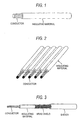
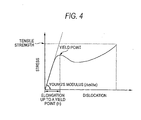
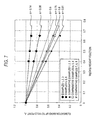
- the aforementioned fire retardant polypropylene-based resin composition as the insulating material for the single wire shown in Fig. 1, the flat wire shown in Fig. 2, the shielded wire shown in Fig. 3, improvements particularly in abrasion resistance and low temperature durability can be attained while maintaining sufficient insulation characteristics and fire retardancy.
- the method for applying the fire retardant polypropylene-based resin composition of the invention to a wire as an insulating material is not limited.
- Various known methods can be employed.
- an extruder there may be used a single-screw extruder having a cylinder diameter ⁇ of from 20 to 90 mm and L/D of from 10 to 40 having a screw, a crosshead, a breaker plate, a distributor, a nipple and a dice.
- the fire retardant polypropylene-based resin composition is charged into a single-screw extruder the temperature of which has been predetermined to a temperature at which the aforementioned fire retardant polypropylene-based resin composition can be thoroughly melted.
- the fire retardant polypropylene-based resin composition is melted and kneaded by the screw. A predetermined amount of the fire retardant polypropylene-based resin composition thus kneaded is then supplied into the crosshead via the breaker plate. The fire retardant polypropylene-based resin composition thus melted is then flown onto the periphery of the nipple through the distributor. The molten fire retardant polypropylene-based resin composition which has been thus supplied is then extruded covering the periphery of a conductor by the dice to obtain a wire provided with an insulating material.
- Multi-stage polymerization processes were effected using a 1001 autoclave under the same conditions of catalyst system and polymerization according to the method described in JP-A-57-61012 so that a homopolypropylene and an ethylene-propylene random copolymer were produced at the first and second polymerization stages, respectively.
- polypropylene copolymers (1) and (2) were prepared as shown in Table 1.
- Multi-stage polymerization process polypropylene
- MFR g/10 min
- Xylene-soluble content Xs wt%
- Xylene-insoluble content Xis wt%)
- ⁇ Xs/ ⁇ Xis 3.3 2.4
- the xylene-soluble content (Xs) and xylene-insoluble content (Xis) were measured as follows. Firstly, 2.5 g of the resin was dissolved in 250 ml of 135°C xylene. After 20 minutes, the solution was then cooled to 25°C with stirring. Subsequently, the solution was allowed to undergo sedimentation for 30 minutes. The precipitate was then filtered. The filtrate was then evaporated in a stream of nitrogen. The residue was then vacuum-dried at 80°C until the weight thereof reached constant. The weight of the residue was then measured to determine the xylene-soluble content (As) at 25°C.
- Homopolypropylene PS201A (MFR: 0.5 g/10 min), produced by Sun Allomer Co., Ltd., was prepared.
- Acid-modified polypropylene (1) Maleic anhydride content: 0.8% by weight; MFR: 90 g/10 min
- Acid-modified polypropylene (2) Maleic anhydride content: 0.3% by weight; MFR: 30 g/10 min
- Magnesium hydroxide KISUMA 5A (average particle diameter: about 0.8 ⁇ m), produced by Kyowa Chemical Industry Co., Ltd.
- JIS K6251 No. 3 dumbbell specimens were punched out of the various sheets. These test specimens were each then subjected to tensile test at ordinary temperature, a pulling rate of 200 mm/min, a distance of 60 mm between chucks and a distance Lo of 20 mm between two gage marks. The tensile strength was determined by dividing the strength of the test specimen at break by the minimum section area. The tensile elongation was determined from the distance (L) between two gage marks at break as [(L - L 0 ) /L 0 ] x 100.
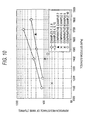
- the elongation (l 1 ) up to a yield point was read from the dislocation-stress curve (Fig. 4) obtained in the aforementioned tensile test.
- the results were then corrected by the content (weight fraction) of magnesium hydroxide to calculate the elongation ( ⁇ ) of the test specimen up to a yield point of polypropylene-based resin.
- a test specimen which had been separately prepared from a resin component alone was then subjected to tensile test in the same manner as mentioned above to determine the elongation ( ⁇ a) up to a yield point.
- test specimen was subjected to abrasion test at a load of 3 N using a piano wire having a diameter ⁇ of 0.45 mm as a blade according to the blade reciprocation method defined in JASO D611-12-(2).
- the sheets were each wound round and firmly fixed to a metal rod having a diameter ⁇ of 1.4 mm.
- the number of reciprocations made until the blade came in contact with the metal rod was then measured at 20 points per sample. These measurements were then averaged to determine abrasion resistance.
- the aforementioned pelletized materials were each processed under a 230°C press (pre-heated for 3 minutes, pressed for 1 minute) to prepare sheets having a thickness of 3 mm.
- An A-1 sample defined in JIS K7201 was then cut out of these sheets. These samples were each then measured according to JIS K7201.
- testing wires of Examples 2, 5, 7, 8, 9 and 10 and Comparative Examples 2, 5, 8 and 10 were prepared from the same testing fire retardant polypropylene-based resin compositions.
- the weight fraction of magnesium hydroxide in these testing wires were all 50% by weight, which is the packing density necessary for fire retardancy of actual insulated wire for an automobile.
- the various testing fire retardant polypropylene-based resin compositions were each charged into a wire extruder ( ⁇ : 60 mm; L/D: 24.5; FF screw) where it was then extruded onto a conductor having an area of 0.3395 mm 2 (wire formed by twisting 7 filaments having a diameter of 0.2485 mm) at an extrusion speed of 600 mm/min and an extrusion temperature of 230 °C to prepare an insulated wire having a finished outer diameter of 1.20 mm.
- a wire extruder ⁇ : 60 mm; L/D: 24.5; FF screw
- the testing wire having a length of about 150 mm was provided with gage marks at a regular interval of 50 mm in the central part thereof.
- the testing wire was then attached to the chucks of a testing machine defined in JIS B7721.
- the testing wire was then pulled at a pulling rate of from 25 to 500 mm/min.
- the tensile elongation was determined from the length of the testing wire at the maximum tensile load and at break.
- a testing wire 10 having a length of 600 mm or more was fixed at an inclination angle of 45° in a windless tank.
- a reducing flame from a Bunsen burner 20 was then applied to the portion of the testing wire positioned at 500 mm ⁇ 5 mm from the upper end thereof for 15 seconds. The time required until extinction was then measured.
- a scrape abrasion testing machine shown in Fig. 6 was used for the abrasion resistance test.
- a testing wire 111 having a length of about 1 m was placed on a sample holder 105 to which it was then fixed by a clamp 104.
- a plunge 103 provided with a piano wire 108 at the forward end thereof was then pressed against the testing wire 111 at a total load of 7 N using a pressing member 101 while moving back and forth (over a range of 14 mm).
- the number of reciprocations made until the insulating material on the testing wire 111 was worn to an extend such that the piano wire 108 of the plunge 103 came in contact with the conductor 106 of the testing wire 111 was then measured.
- the testing wire having a length of about 600 mm having its insulating material stripped off over 25 mm at both ends thereof and a mandrel having the same diameter as that of the testing wire were allowed to stand in a low temperature tank the temperature of which had been kept at a predetermined value for 4 hours or more.
- the testing wire was wound round the mandrel by one turn per second, totaling three turns or more, and then returned to room temperature for examination of external appearance.
- the testing wire was then visually examined for occurrence of cracking.
- the testing wire showing no cracking was further subjected to dielectric breakdown test at 1 kV. The same procedure was effected at various temperatures. Thus, critical temperature at which the testing wire undergoes no cracking or dielectric breakdown was determined.
- Fig. 7 is a graph obtained by plotting the A value vs. the weight fraction of magnesium hydroxide of Examples 1 to 6 and Comparative Examples 1 to 9. The results show that all the examples show a A value that decreases with the rise of magnesium hydroxide content as a substantially linear function.
- the gradient of the various straight lines corresponds to ⁇ .
- Fig. 8 is a graph obtained by plotting the abrasion resistance vs. the weight fraction of magnesium hydroxide of Examples 1 to 6 and Comparative Examples 1 to 9. The results show that all the examples and comparative examples show abrasion resistance that decreases exponentially with the rise of magnesium hydroxide content.
- Fig. 9 is a graph obtained by plotting the A value vs. the weight fraction of magnesium hydroxide of the insulated wires prepared on trial basis (Examples 2, 5, 7, 8, 9 and 10, Comparative Examples 2, 5, 8 and 10). The results show that all these examples show a A value that is above the straight line satisfying the equation (1).
- Fig. 10 is a graph obtained by plotting the abrasion resistance vs. the Young modulus of the various testing wires. The results show that the straight lines passing through the values of the examples are above the plots of the values of the comparative examples.
- Figs. 9 and 10 show that a wire comprising as an insulating material a fire retardant polypropylene-based resin composition satisfying the equation (1) is excellent in abrasion resistance as well as in tensile properties.
- an insulated wire for an automobile coated with an insulated material which is a fire retardant polypropylene-based resin composition excellent in abrasion resistance, tensile strength, tensile elongation, heat resistance, flexibility and low temperature durability can be obtained.
Landscapes
- Chemical & Material Sciences (AREA)
- Health & Medical Sciences (AREA)
- Chemical Kinetics & Catalysis (AREA)
- Medicinal Chemistry (AREA)
- Polymers & Plastics (AREA)
- Organic Chemistry (AREA)
- Physics & Mathematics (AREA)
- Spectroscopy & Molecular Physics (AREA)
- Compositions Of Macromolecular Compounds (AREA)
- Insulated Conductors (AREA)
- Organic Insulating Materials (AREA)
- Inorganic Insulating Materials (AREA)
Applications Claiming Priority (3)
| Application Number | Priority Date | Filing Date | Title |
|---|---|---|---|
| JP2002126133 | 2002-04-26 | ||
| JP2002126133A JP2003313377A (ja) | 2002-04-26 | 2002-04-26 | 難燃性ポリプロピレン系樹脂組成物及び自動車用絶縁電線 |
| PCT/JP2003/005209 WO2003092018A1 (en) | 2002-04-26 | 2003-04-23 | Automobile insulated wire |
Publications (2)
| Publication Number | Publication Date |
|---|---|
| EP1501103A1 true EP1501103A1 (de) | 2005-01-26 |
| EP1501103A4 EP1501103A4 (de) | 2005-07-13 |
Family
ID=29267585
Family Applications (1)
| Application Number | Title | Priority Date | Filing Date |
|---|---|---|---|
| EP03725643A Ceased EP1501103A4 (de) | 2002-04-26 | 2003-04-23 | Isolierter draht für kraftfahrzeuge |
Country Status (6)
| Country | Link |
|---|---|
| US (1) | US7201970B2 (de) |
| EP (1) | EP1501103A4 (de) |
| JP (1) | JP2003313377A (de) |
| CN (1) | CN100342459C (de) |
| AU (1) | AU2003231453A1 (de) |
| WO (1) | WO2003092018A1 (de) |
Cited By (3)
| Publication number | Priority date | Publication date | Assignee | Title |
|---|---|---|---|---|
| EP2080784A4 (de) * | 2006-11-17 | 2009-10-28 | Mitsui Chemicals Inc | Propylenharzzusammensetzung, verfahren zur herstellung der propylenharzzusammensetzung, propylenpolymerzusammensetzung, aus der propylenharzzusammensetzung hergestellter formkörper und elektrischer draht |
| DE112005003234B4 (de) * | 2004-12-22 | 2014-06-18 | The Furukawa Electric Co., Ltd. | Flammhemmende Harz-Zusammensetzung und geformter Artikel unter Verwendung derselben |
| US9530537B2 (en) | 2011-09-30 | 2016-12-27 | Dow Global Technologies Llc | Halogen-free propylene-based insulation and conductor coated with same |
Families Citing this family (23)
| Publication number | Priority date | Publication date | Assignee | Title |
|---|---|---|---|---|
| JP2006052287A (ja) * | 2004-08-11 | 2006-02-23 | Sunallomer Ltd | 難燃性ポリオレフィン系樹脂組成物 |
| EP2402392B1 (de) | 2004-11-25 | 2013-09-18 | Mitsui Chemicals, Inc. | Propylenharzzusammensetzung und verwendung davon |
| JP4875848B2 (ja) * | 2005-01-24 | 2012-02-15 | 株式会社五洋電子 | 同軸ケーブル |
| JP4638256B2 (ja) * | 2005-03-02 | 2011-02-23 | 株式会社プライムポリマー | ポリプロピレン系樹脂組成物及びその成形品 |
| US7825180B2 (en) * | 2005-10-21 | 2010-11-02 | Chemtura Corporation | Thermoplastic blend compositions as soft coupling agents |
| CN101379096B (zh) * | 2006-02-03 | 2012-11-21 | 胜亚诺盟股份有限公司 | 改性聚丙烯系聚合物和其组合物 |
| EP2006327B1 (de) * | 2006-03-31 | 2013-01-09 | Mitsui Chemicals, Inc. | Thermoplastische polymerzusammensetzung, herstellungsverfahren dafür; daraus erhaltener formkörper und elektrischer draht |
| JP2008169273A (ja) | 2007-01-10 | 2008-07-24 | Yazaki Corp | 難燃性ポリプロピレン系樹脂組成物、及び、絶縁電線 |
| JP4855945B2 (ja) * | 2007-01-10 | 2012-01-18 | 三井化学株式会社 | プロピレン系樹脂組成物、並びに該組成物からなる成形体および電線 |
| KR101148624B1 (ko) | 2007-05-08 | 2012-05-25 | 미쓰이 가가쿠 가부시키가이샤 | 프로필렌계 수지 조성물의 가교체 및 상기 가교체의 제조방법, 및 상기 가교체로 이루어지는 가교 성형체 |
| JP5146718B2 (ja) * | 2007-05-31 | 2013-02-20 | 日立電線株式会社 | ノンハロゲン難燃電線及びノンハロゲン難燃ケーブル |
| JP5015740B2 (ja) | 2007-11-28 | 2012-08-29 | 矢崎総業株式会社 | ハロゲンフリー樹脂組成物、絶縁電線及びワイヤハーネス |
| JP5336110B2 (ja) | 2008-06-09 | 2013-11-06 | 矢崎総業株式会社 | ワイヤーハーネス用被覆電線 |
| CN102762653B (zh) | 2009-12-31 | 2015-11-25 | 陶氏环球技术有限责任公司 | 用于电线和电缆应用的无卤素阻燃热塑性组合物 |
| CN102844372B (zh) | 2010-04-20 | 2015-02-18 | 三井化学株式会社 | 热塑性聚合物组合物、由其形成的成型体以及电线 |
| JP6010810B2 (ja) | 2010-09-16 | 2016-10-19 | 矢崎総業株式会社 | 導電路構造及びワイヤハーネス |
| JP2011149026A (ja) * | 2011-02-28 | 2011-08-04 | Furukawa Electric Co Ltd:The | 樹脂組成物及びそれを被覆した絶縁電線 |
| WO2013108919A1 (ja) | 2012-01-20 | 2013-07-25 | 三井化学株式会社 | 難燃性樹脂組成物及びその製造方法、並びにその成形体及び電線 |
| JP2012229426A (ja) * | 2012-06-21 | 2012-11-22 | Furukawa Electric Co Ltd:The | 難燃性樹脂組成物およびそれを用いた成形物品 |
| US11336058B2 (en) * | 2013-03-14 | 2022-05-17 | Aptiv Technologies Limited | Shielded cable assembly |
| JP7782447B2 (ja) * | 2020-08-04 | 2025-12-09 | 住友電気工業株式会社 | 絶縁電線 |
| CN116964690A (zh) * | 2021-03-19 | 2023-10-27 | 住友电气工业株式会社 | 多芯线缆 |
| CA3229191A1 (en) * | 2022-12-26 | 2024-06-26 | Jincheng Song | Halogen-free flame-retardant polypropylene (pp) rigid flooring and preparation method thereof |
Family Cites Families (11)
| Publication number | Priority date | Publication date | Assignee | Title |
|---|---|---|---|---|
| JPS5761012A (en) * | 1980-09-30 | 1982-04-13 | Showa Denko Kk | Production of thermoplastic elastic elastomer |
| IT1243188B (it) * | 1990-08-01 | 1994-05-24 | Himont Inc | Composizioni poliolefiniche elastoplastiche |
| DE69225749T2 (de) * | 1991-08-08 | 1998-10-01 | Rexene Corp | Harzzusammensetzung aus amorphem Polyolefin und crystallinem Polypropylen |
| US5561185A (en) * | 1993-11-12 | 1996-10-01 | The Furukawa Electric Co., Ltd. | Fire-retardant resin composition and a covered electric wire |
| US5952427A (en) * | 1996-12-10 | 1999-09-14 | Exxon Chemical Patents Inc. | Electrical devices including ethylene, α-olefin, vinyl norbornene elastomers and ethylene α-olefin polymers |
| FR2763073B1 (fr) | 1997-05-07 | 2000-03-03 | Appryl Snc | Polymere charge par des particules solides passees par un etat de suspension |
| JP2000026696A (ja) * | 1998-07-14 | 2000-01-25 | Sumitomo Wiring Syst Ltd | 難燃性耐摩耗性樹脂組成物 |
| JP4205786B2 (ja) * | 1998-10-05 | 2009-01-07 | 住友化学株式会社 | ポリプロピレン系樹脂組成物およびその射出成形体 |
| ATE274746T1 (de) * | 1999-04-03 | 2004-09-15 | Pirelli & C Spa | Raucharmes selbstlöschendes elektrisches kabel und flammwidrige zusammensetzung |
| JP4808840B2 (ja) * | 2000-12-01 | 2011-11-02 | 住友電装株式会社 | オレフィン系樹脂組成物および被覆電線 |
| ATE370193T1 (de) * | 2002-09-17 | 2007-09-15 | Basell Poliolefine Srl | Hochgefüllte weiche polyolefinzusammensetzungen |
-
2002
- 2002-04-26 JP JP2002126133A patent/JP2003313377A/ja not_active Abandoned
-
2003
- 2003-04-23 US US10/512,473 patent/US7201970B2/en not_active Expired - Lifetime
- 2003-04-23 CN CNB038093936A patent/CN100342459C/zh not_active Expired - Fee Related
- 2003-04-23 EP EP03725643A patent/EP1501103A4/de not_active Ceased
- 2003-04-23 AU AU2003231453A patent/AU2003231453A1/en not_active Abandoned
- 2003-04-23 WO PCT/JP2003/005209 patent/WO2003092018A1/ja not_active Ceased
Cited By (4)
| Publication number | Priority date | Publication date | Assignee | Title |
|---|---|---|---|---|
| DE112005003234B4 (de) * | 2004-12-22 | 2014-06-18 | The Furukawa Electric Co., Ltd. | Flammhemmende Harz-Zusammensetzung und geformter Artikel unter Verwendung derselben |
| EP2080784A4 (de) * | 2006-11-17 | 2009-10-28 | Mitsui Chemicals Inc | Propylenharzzusammensetzung, verfahren zur herstellung der propylenharzzusammensetzung, propylenpolymerzusammensetzung, aus der propylenharzzusammensetzung hergestellter formkörper und elektrischer draht |
| US7863368B2 (en) | 2006-11-17 | 2011-01-04 | Mitsui Chemicals, Inc. | Propylene resin composition, process for producing propylene resin composition, propylene polymer composition, shaped article produced of the propylene resin composition, and electric wire |
| US9530537B2 (en) | 2011-09-30 | 2016-12-27 | Dow Global Technologies Llc | Halogen-free propylene-based insulation and conductor coated with same |
Also Published As
| Publication number | Publication date |
|---|---|
| EP1501103A4 (de) | 2005-07-13 |
| US20050171263A1 (en) | 2005-08-04 |
| JP2003313377A (ja) | 2003-11-06 |
| WO2003092018A1 (en) | 2003-11-06 |
| AU2003231453A1 (en) | 2003-11-10 |
| CN100342459C (zh) | 2007-10-10 |
| US7201970B2 (en) | 2007-04-10 |
| CN1650373A (zh) | 2005-08-03 |
Similar Documents
| Publication | Publication Date | Title |
|---|---|---|
| US7201970B2 (en) | Automobile insulated wire | |
| DE60109563T2 (de) | Harzzusammensetzung auf Olefinbasis | |
| EP2315798B1 (de) | Hochflexible, halogenfreie und flammgeschützte thermoplastische kabelmischungen | |
| US6462121B2 (en) | Olefin-based resin composition | |
| KR20170124550A (ko) | 케이블 코팅물을 위한 폴리올레핀 화합물 | |
| AU2011258840B2 (en) | Halogen-free flame retardant polyolefin | |
| JP7673067B2 (ja) | ハロゲンフリー難燃性ポリマー組成物 | |
| EP1777261B1 (de) | Flammwidrige polyolefinharzzusammensetzung | |
| JP5367732B2 (ja) | 難燃性樹脂組成物およびそれを用いた光ファイバコード | |
| JP2002284884A (ja) | フィラー、それを含む樹脂組成物および樹脂組成物の製造方法 | |
| DE112011100433T5 (de) | Flammhemmendes Mittel, flammhemmende Harzzusammensetzung und isolierte Leitung | |
| US6414068B1 (en) | Olefin-based resin composition | |
| CN114350071B (zh) | 一种高均匀度聚丙烯改性母粒及其制备方法 | |
| EP4237488A1 (de) | Halogenfreie flammhemmende polymerzusammensetzungen | |
| KR100688993B1 (ko) | 자동차 전선용 폴리프로필렌 수지 조성물 | |
| JP5564850B2 (ja) | 難燃剤、難燃性組成物および絶縁電線 | |
| DE112011100431T5 (de) | Flammhemmendes Mittel, flammhemmende Harzzusammensetzung und isolierte Leitung | |
| KR100194286B1 (ko) | 다공성 필름의 수지조성물 |
Legal Events
| Date | Code | Title | Description |
|---|---|---|---|
| PUAI | Public reference made under article 153(3) epc to a published international application that has entered the european phase |
Free format text: ORIGINAL CODE: 0009012 |
|
| 17P | Request for examination filed |
Effective date: 20041026 |
|
| AK | Designated contracting states |
Kind code of ref document: A1 Designated state(s): AT BE BG CH CY CZ DE DK EE ES FI FR GB GR HU IE IT LI LU MC NL PT RO SE SI SK TR |
|
| AX | Request for extension of the european patent |
Extension state: AL LT LV MK |
|
| A4 | Supplementary search report drawn up and despatched |
Effective date: 20050530 |
|
| RIC1 | Information provided on ipc code assigned before grant |
Ipc: 7C 08L 23/12 B Ipc: 7C 08K 3/00 B Ipc: 7H 01B 3/44 B Ipc: 7C 08F 297/08 B Ipc: 7C 08K 3/22 B Ipc: 7C 08L 23/10 B Ipc: 7H 01B 7/28 B Ipc: 7H 01B 7/24 A |
|
| 17Q | First examination report despatched |
Effective date: 20060110 |
|
| REG | Reference to a national code |
Ref country code: DE Ref legal event code: R003 |
|
| STAA | Information on the status of an ep patent application or granted ep patent |
Free format text: STATUS: THE APPLICATION HAS BEEN REFUSED |
|
| 18R | Application refused |
Effective date: 20130621 |