EP1501508B1 - Histondeacetylase-hemmer - Google Patents
Histondeacetylase-hemmer Download PDFInfo
- Publication number
- EP1501508B1 EP1501508B1 EP03747499A EP03747499A EP1501508B1 EP 1501508 B1 EP1501508 B1 EP 1501508B1 EP 03747499 A EP03747499 A EP 03747499A EP 03747499 A EP03747499 A EP 03747499A EP 1501508 B1 EP1501508 B1 EP 1501508B1
- Authority
- EP
- European Patent Office
- Prior art keywords
- alkyl
- group
- amino
- carbamoyl
- optionally substituted
- Prior art date
- Legal status (The legal status is an assumption and is not a legal conclusion. Google has not performed a legal analysis and makes no representation as to the accuracy of the status listed.)
- Expired - Lifetime
Links
- 0 C*Cc1cc(C(OC)=O)ccc1 Chemical compound C*Cc1cc(C(OC)=O)ccc1 0.000 description 9
- QIGBRXMKCJKVMJ-UHFFFAOYSA-N Oc(cc1)ccc1O Chemical compound Oc(cc1)ccc1O QIGBRXMKCJKVMJ-UHFFFAOYSA-N 0.000 description 1
Classifications
-
- C—CHEMISTRY; METALLURGY
- C07—ORGANIC CHEMISTRY
- C07D—HETEROCYCLIC COMPOUNDS
- C07D213/00—Heterocyclic compounds containing six-membered rings, not condensed with other rings, with one nitrogen atom as the only ring hetero atom and three or more double bonds between ring members or between ring members and non-ring members
- C07D213/02—Heterocyclic compounds containing six-membered rings, not condensed with other rings, with one nitrogen atom as the only ring hetero atom and three or more double bonds between ring members or between ring members and non-ring members having three double bonds between ring members or between ring members and non-ring members
- C07D213/04—Heterocyclic compounds containing six-membered rings, not condensed with other rings, with one nitrogen atom as the only ring hetero atom and three or more double bonds between ring members or between ring members and non-ring members having three double bonds between ring members or between ring members and non-ring members having no bond between the ring nitrogen atom and a non-ring member or having only hydrogen or carbon atoms directly attached to the ring nitrogen atom
- C07D213/60—Heterocyclic compounds containing six-membered rings, not condensed with other rings, with one nitrogen atom as the only ring hetero atom and three or more double bonds between ring members or between ring members and non-ring members having three double bonds between ring members or between ring members and non-ring members having no bond between the ring nitrogen atom and a non-ring member or having only hydrogen or carbon atoms directly attached to the ring nitrogen atom with hetero atoms or with carbon atoms having three bonds to hetero atoms with at the most one bond to halogen, e.g. ester or nitrile radicals, directly attached to ring carbon atoms
- C07D213/78—Carbon atoms having three bonds to hetero atoms, with at the most one bond to halogen, e.g. ester or nitrile radicals
- C07D213/81—Amides; Imides
-
- A—HUMAN NECESSITIES
- A61—MEDICAL OR VETERINARY SCIENCE; HYGIENE
- A61P—SPECIFIC THERAPEUTIC ACTIVITY OF CHEMICAL COMPOUNDS OR MEDICINAL PREPARATIONS
- A61P1/00—Drugs for disorders of the alimentary tract or the digestive system
- A61P1/04—Drugs for disorders of the alimentary tract or the digestive system for ulcers, gastritis or reflux esophagitis, e.g. antacids, inhibitors of acid secretion, mucosal protectants
-
- A—HUMAN NECESSITIES
- A61—MEDICAL OR VETERINARY SCIENCE; HYGIENE
- A61P—SPECIFIC THERAPEUTIC ACTIVITY OF CHEMICAL COMPOUNDS OR MEDICINAL PREPARATIONS
- A61P1/00—Drugs for disorders of the alimentary tract or the digestive system
- A61P1/16—Drugs for disorders of the alimentary tract or the digestive system for liver or gallbladder disorders, e.g. hepatoprotective agents, cholagogues, litholytics
-
- A—HUMAN NECESSITIES
- A61—MEDICAL OR VETERINARY SCIENCE; HYGIENE
- A61P—SPECIFIC THERAPEUTIC ACTIVITY OF CHEMICAL COMPOUNDS OR MEDICINAL PREPARATIONS
- A61P11/00—Drugs for disorders of the respiratory system
-
- A—HUMAN NECESSITIES
- A61—MEDICAL OR VETERINARY SCIENCE; HYGIENE
- A61P—SPECIFIC THERAPEUTIC ACTIVITY OF CHEMICAL COMPOUNDS OR MEDICINAL PREPARATIONS
- A61P11/00—Drugs for disorders of the respiratory system
- A61P11/06—Antiasthmatics
-
- A—HUMAN NECESSITIES
- A61—MEDICAL OR VETERINARY SCIENCE; HYGIENE
- A61P—SPECIFIC THERAPEUTIC ACTIVITY OF CHEMICAL COMPOUNDS OR MEDICINAL PREPARATIONS
- A61P11/00—Drugs for disorders of the respiratory system
- A61P11/16—Central respiratory analeptics
-
- A—HUMAN NECESSITIES
- A61—MEDICAL OR VETERINARY SCIENCE; HYGIENE
- A61P—SPECIFIC THERAPEUTIC ACTIVITY OF CHEMICAL COMPOUNDS OR MEDICINAL PREPARATIONS
- A61P13/00—Drugs for disorders of the urinary system
-
- A—HUMAN NECESSITIES
- A61—MEDICAL OR VETERINARY SCIENCE; HYGIENE
- A61P—SPECIFIC THERAPEUTIC ACTIVITY OF CHEMICAL COMPOUNDS OR MEDICINAL PREPARATIONS
- A61P13/00—Drugs for disorders of the urinary system
- A61P13/12—Drugs for disorders of the urinary system of the kidneys
-
- A—HUMAN NECESSITIES
- A61—MEDICAL OR VETERINARY SCIENCE; HYGIENE
- A61P—SPECIFIC THERAPEUTIC ACTIVITY OF CHEMICAL COMPOUNDS OR MEDICINAL PREPARATIONS
- A61P17/00—Drugs for dermatological disorders
-
- A—HUMAN NECESSITIES
- A61—MEDICAL OR VETERINARY SCIENCE; HYGIENE
- A61P—SPECIFIC THERAPEUTIC ACTIVITY OF CHEMICAL COMPOUNDS OR MEDICINAL PREPARATIONS
- A61P17/00—Drugs for dermatological disorders
- A61P17/02—Drugs for dermatological disorders for treating wounds, ulcers, burns, scars, keloids, or the like
-
- A—HUMAN NECESSITIES
- A61—MEDICAL OR VETERINARY SCIENCE; HYGIENE
- A61P—SPECIFIC THERAPEUTIC ACTIVITY OF CHEMICAL COMPOUNDS OR MEDICINAL PREPARATIONS
- A61P17/00—Drugs for dermatological disorders
- A61P17/06—Antipsoriatics
-
- A—HUMAN NECESSITIES
- A61—MEDICAL OR VETERINARY SCIENCE; HYGIENE
- A61P—SPECIFIC THERAPEUTIC ACTIVITY OF CHEMICAL COMPOUNDS OR MEDICINAL PREPARATIONS
- A61P19/00—Drugs for skeletal disorders
-
- A—HUMAN NECESSITIES
- A61—MEDICAL OR VETERINARY SCIENCE; HYGIENE
- A61P—SPECIFIC THERAPEUTIC ACTIVITY OF CHEMICAL COMPOUNDS OR MEDICINAL PREPARATIONS
- A61P19/00—Drugs for skeletal disorders
- A61P19/02—Drugs for skeletal disorders for joint disorders, e.g. arthritis, arthrosis
-
- A—HUMAN NECESSITIES
- A61—MEDICAL OR VETERINARY SCIENCE; HYGIENE
- A61P—SPECIFIC THERAPEUTIC ACTIVITY OF CHEMICAL COMPOUNDS OR MEDICINAL PREPARATIONS
- A61P19/00—Drugs for skeletal disorders
- A61P19/08—Drugs for skeletal disorders for bone diseases, e.g. rachitism, Paget's disease
-
- A—HUMAN NECESSITIES
- A61—MEDICAL OR VETERINARY SCIENCE; HYGIENE
- A61P—SPECIFIC THERAPEUTIC ACTIVITY OF CHEMICAL COMPOUNDS OR MEDICINAL PREPARATIONS
- A61P25/00—Drugs for disorders of the nervous system
-
- A—HUMAN NECESSITIES
- A61—MEDICAL OR VETERINARY SCIENCE; HYGIENE
- A61P—SPECIFIC THERAPEUTIC ACTIVITY OF CHEMICAL COMPOUNDS OR MEDICINAL PREPARATIONS
- A61P27/00—Drugs for disorders of the senses
- A61P27/02—Ophthalmic agents
-
- A—HUMAN NECESSITIES
- A61—MEDICAL OR VETERINARY SCIENCE; HYGIENE
- A61P—SPECIFIC THERAPEUTIC ACTIVITY OF CHEMICAL COMPOUNDS OR MEDICINAL PREPARATIONS
- A61P29/00—Non-central analgesic, antipyretic or antiinflammatory agents, e.g. antirheumatic agents; Non-steroidal antiinflammatory drugs [NSAID]
-
- A—HUMAN NECESSITIES
- A61—MEDICAL OR VETERINARY SCIENCE; HYGIENE
- A61P—SPECIFIC THERAPEUTIC ACTIVITY OF CHEMICAL COMPOUNDS OR MEDICINAL PREPARATIONS
- A61P31/00—Antiinfectives, i.e. antibiotics, antiseptics, chemotherapeutics
- A61P31/04—Antibacterial agents
-
- A—HUMAN NECESSITIES
- A61—MEDICAL OR VETERINARY SCIENCE; HYGIENE
- A61P—SPECIFIC THERAPEUTIC ACTIVITY OF CHEMICAL COMPOUNDS OR MEDICINAL PREPARATIONS
- A61P31/00—Antiinfectives, i.e. antibiotics, antiseptics, chemotherapeutics
- A61P31/12—Antivirals
- A61P31/14—Antivirals for RNA viruses
- A61P31/18—Antivirals for RNA viruses for HIV
-
- A—HUMAN NECESSITIES
- A61—MEDICAL OR VETERINARY SCIENCE; HYGIENE
- A61P—SPECIFIC THERAPEUTIC ACTIVITY OF CHEMICAL COMPOUNDS OR MEDICINAL PREPARATIONS
- A61P35/00—Antineoplastic agents
-
- A—HUMAN NECESSITIES
- A61—MEDICAL OR VETERINARY SCIENCE; HYGIENE
- A61P—SPECIFIC THERAPEUTIC ACTIVITY OF CHEMICAL COMPOUNDS OR MEDICINAL PREPARATIONS
- A61P35/00—Antineoplastic agents
- A61P35/02—Antineoplastic agents specific for leukemia
-
- A—HUMAN NECESSITIES
- A61—MEDICAL OR VETERINARY SCIENCE; HYGIENE
- A61P—SPECIFIC THERAPEUTIC ACTIVITY OF CHEMICAL COMPOUNDS OR MEDICINAL PREPARATIONS
- A61P37/00—Drugs for immunological or allergic disorders
-
- A—HUMAN NECESSITIES
- A61—MEDICAL OR VETERINARY SCIENCE; HYGIENE
- A61P—SPECIFIC THERAPEUTIC ACTIVITY OF CHEMICAL COMPOUNDS OR MEDICINAL PREPARATIONS
- A61P37/00—Drugs for immunological or allergic disorders
- A61P37/08—Antiallergic agents
-
- A—HUMAN NECESSITIES
- A61—MEDICAL OR VETERINARY SCIENCE; HYGIENE
- A61P—SPECIFIC THERAPEUTIC ACTIVITY OF CHEMICAL COMPOUNDS OR MEDICINAL PREPARATIONS
- A61P43/00—Drugs for specific purposes, not provided for in groups A61P1/00-A61P41/00
-
- A—HUMAN NECESSITIES
- A61—MEDICAL OR VETERINARY SCIENCE; HYGIENE
- A61P—SPECIFIC THERAPEUTIC ACTIVITY OF CHEMICAL COMPOUNDS OR MEDICINAL PREPARATIONS
- A61P9/00—Drugs for disorders of the cardiovascular system
- A61P9/10—Drugs for disorders of the cardiovascular system for treating ischaemic or atherosclerotic diseases, e.g. antianginal drugs, coronary vasodilators, drugs for myocardial infarction, retinopathy, cerebrovascula insufficiency, renal arteriosclerosis
-
- C—CHEMISTRY; METALLURGY
- C07—ORGANIC CHEMISTRY
- C07D—HETEROCYCLIC COMPOUNDS
- C07D239/00—Heterocyclic compounds containing 1,3-diazine or hydrogenated 1,3-diazine rings
- C07D239/02—Heterocyclic compounds containing 1,3-diazine or hydrogenated 1,3-diazine rings not condensed with other rings
- C07D239/24—Heterocyclic compounds containing 1,3-diazine or hydrogenated 1,3-diazine rings not condensed with other rings having three or more double bonds between ring members or between ring members and non-ring members
- C07D239/28—Heterocyclic compounds containing 1,3-diazine or hydrogenated 1,3-diazine rings not condensed with other rings having three or more double bonds between ring members or between ring members and non-ring members with hetero atoms or with carbon atoms having three bonds to hetero atoms with at the most one bond to halogen, directly attached to ring carbon atoms
- C07D239/32—One oxygen, sulfur or nitrogen atom
- C07D239/42—One nitrogen atom
-
- C—CHEMISTRY; METALLURGY
- C07—ORGANIC CHEMISTRY
- C07D—HETEROCYCLIC COMPOUNDS
- C07D241/00—Heterocyclic compounds containing 1,4-diazine or hydrogenated 1,4-diazine rings
- C07D241/02—Heterocyclic compounds containing 1,4-diazine or hydrogenated 1,4-diazine rings not condensed with other rings
- C07D241/10—Heterocyclic compounds containing 1,4-diazine or hydrogenated 1,4-diazine rings not condensed with other rings having three double bonds between ring members or between ring members and non-ring members
- C07D241/14—Heterocyclic compounds containing 1,4-diazine or hydrogenated 1,4-diazine rings not condensed with other rings having three double bonds between ring members or between ring members and non-ring members with hetero atoms or with carbon atoms having three bonds to hetero atoms with at the most one bond to halogen, e.g. ester or nitrile radicals, directly attached to ring carbon atoms
- C07D241/24—Carbon atoms having three bonds to hetero atoms with at the most one bond to halogen, e.g. ester or nitrile radicals
- C07D241/26—Carbon atoms having three bonds to hetero atoms with at the most one bond to halogen, e.g. ester or nitrile radicals with nitrogen atoms directly attached to ring carbon atoms
-
- C—CHEMISTRY; METALLURGY
- C07—ORGANIC CHEMISTRY
- C07D—HETEROCYCLIC COMPOUNDS
- C07D333/00—Heterocyclic compounds containing five-membered rings having one sulfur atom as the only ring hetero atom
- C07D333/02—Heterocyclic compounds containing five-membered rings having one sulfur atom as the only ring hetero atom not condensed with other rings
- C07D333/04—Heterocyclic compounds containing five-membered rings having one sulfur atom as the only ring hetero atom not condensed with other rings not substituted on the ring sulphur atom
- C07D333/26—Heterocyclic compounds containing five-membered rings having one sulfur atom as the only ring hetero atom not condensed with other rings not substituted on the ring sulphur atom with hetero atoms or with carbon atoms having three bonds to hetero atoms with at the most one bond to halogen, e.g. ester or nitrile radicals, directly attached to ring carbon atoms
- C07D333/38—Carbon atoms having three bonds to hetero atoms with at the most one bond to halogen, e.g. ester or nitrile radicals
-
- C—CHEMISTRY; METALLURGY
- C07—ORGANIC CHEMISTRY
- C07D—HETEROCYCLIC COMPOUNDS
- C07D401/00—Heterocyclic compounds containing two or more hetero rings, having nitrogen atoms as the only ring hetero atoms, at least one ring being a six-membered ring with only one nitrogen atom
- C07D401/02—Heterocyclic compounds containing two or more hetero rings, having nitrogen atoms as the only ring hetero atoms, at least one ring being a six-membered ring with only one nitrogen atom containing two hetero rings
- C07D401/04—Heterocyclic compounds containing two or more hetero rings, having nitrogen atoms as the only ring hetero atoms, at least one ring being a six-membered ring with only one nitrogen atom containing two hetero rings directly linked by a ring-member-to-ring-member bond
-
- C—CHEMISTRY; METALLURGY
- C07—ORGANIC CHEMISTRY
- C07D—HETEROCYCLIC COMPOUNDS
- C07D401/00—Heterocyclic compounds containing two or more hetero rings, having nitrogen atoms as the only ring hetero atoms, at least one ring being a six-membered ring with only one nitrogen atom
- C07D401/02—Heterocyclic compounds containing two or more hetero rings, having nitrogen atoms as the only ring hetero atoms, at least one ring being a six-membered ring with only one nitrogen atom containing two hetero rings
- C07D401/12—Heterocyclic compounds containing two or more hetero rings, having nitrogen atoms as the only ring hetero atoms, at least one ring being a six-membered ring with only one nitrogen atom containing two hetero rings linked by a chain containing hetero atoms as chain links
-
- C—CHEMISTRY; METALLURGY
- C07—ORGANIC CHEMISTRY
- C07D—HETEROCYCLIC COMPOUNDS
- C07D401/00—Heterocyclic compounds containing two or more hetero rings, having nitrogen atoms as the only ring hetero atoms, at least one ring being a six-membered ring with only one nitrogen atom
- C07D401/14—Heterocyclic compounds containing two or more hetero rings, having nitrogen atoms as the only ring hetero atoms, at least one ring being a six-membered ring with only one nitrogen atom containing three or more hetero rings
-
- C—CHEMISTRY; METALLURGY
- C07—ORGANIC CHEMISTRY
- C07D—HETEROCYCLIC COMPOUNDS
- C07D409/00—Heterocyclic compounds containing two or more hetero rings, at least one ring having sulfur atoms as the only ring hetero atoms
- C07D409/02—Heterocyclic compounds containing two or more hetero rings, at least one ring having sulfur atoms as the only ring hetero atoms containing two hetero rings
- C07D409/04—Heterocyclic compounds containing two or more hetero rings, at least one ring having sulfur atoms as the only ring hetero atoms containing two hetero rings directly linked by a ring-member-to-ring-member bond
-
- C—CHEMISTRY; METALLURGY
- C07—ORGANIC CHEMISTRY
- C07D—HETEROCYCLIC COMPOUNDS
- C07D409/00—Heterocyclic compounds containing two or more hetero rings, at least one ring having sulfur atoms as the only ring hetero atoms
- C07D409/02—Heterocyclic compounds containing two or more hetero rings, at least one ring having sulfur atoms as the only ring hetero atoms containing two hetero rings
- C07D409/12—Heterocyclic compounds containing two or more hetero rings, at least one ring having sulfur atoms as the only ring hetero atoms containing two hetero rings linked by a chain containing hetero atoms as chain links
-
- C—CHEMISTRY; METALLURGY
- C07—ORGANIC CHEMISTRY
- C07D—HETEROCYCLIC COMPOUNDS
- C07D409/00—Heterocyclic compounds containing two or more hetero rings, at least one ring having sulfur atoms as the only ring hetero atoms
- C07D409/14—Heterocyclic compounds containing two or more hetero rings, at least one ring having sulfur atoms as the only ring hetero atoms containing three or more hetero rings
-
- C—CHEMISTRY; METALLURGY
- C07—ORGANIC CHEMISTRY
- C07D—HETEROCYCLIC COMPOUNDS
- C07D417/00—Heterocyclic compounds containing two or more hetero rings, at least one ring having nitrogen and sulfur atoms as the only ring hetero atoms, not provided for by group C07D415/00
- C07D417/02—Heterocyclic compounds containing two or more hetero rings, at least one ring having nitrogen and sulfur atoms as the only ring hetero atoms, not provided for by group C07D415/00 containing two hetero rings
- C07D417/12—Heterocyclic compounds containing two or more hetero rings, at least one ring having nitrogen and sulfur atoms as the only ring hetero atoms, not provided for by group C07D415/00 containing two hetero rings linked by a chain containing hetero atoms as chain links
-
- C—CHEMISTRY; METALLURGY
- C07—ORGANIC CHEMISTRY
- C07D—HETEROCYCLIC COMPOUNDS
- C07D417/00—Heterocyclic compounds containing two or more hetero rings, at least one ring having nitrogen and sulfur atoms as the only ring hetero atoms, not provided for by group C07D415/00
- C07D417/14—Heterocyclic compounds containing two or more hetero rings, at least one ring having nitrogen and sulfur atoms as the only ring hetero atoms, not provided for by group C07D415/00 containing three or more hetero rings
Definitions
- This invention relates to benzamide derivatives, or pharmaceutically acceptable salts or in vivo hydrolysable esters or amides thereof.
- These benzamide derivatives possess histone deacetylase (HDAC) inhibitory activity and accordingly have value in the treatment of disease states associated with cancer (Marks et al., Nature Reviews , 1, 194-202, (2001)), cystic fibrosis (Li, S. et al, J. Biol. Chem ., 274, 7803-7815, (1999)), Huntingdons chorea (Steffan, J. S. et. al., Nature , 413, 739-743, (2001)) and sickle cell anaemia (Gabbianelli, M.
- HDAC histone deacetylase
- the invention also relates to processes for the manufacture of said benzamide derivatives, to pharmaceutical compositions containing them and to their use in the manufacture of medicaments to inhibit HDAC in a warm-blooded animal, such as man.
- DNA is compacted to prevent transcription factor accessibility.
- this compact DNA is made available to DNA-binding proteins, thereby allowing the induction of gene transcription (Beato, M., J . Med. Chem ., 74, 711-724 (1996); Wolffe, A. P., Nature , 387, 16-17 (1997)).
- Nuclear DNA associates with histones to form a complex known as chromatin.
- the core histones termed H2A, H2B, H3 and H4 surrounded by 146 base pairs of DNA form the fundamental unit of chromatin, the nucleosome.
- the N-terminal tails of the core histones contain lysines that are sites for post-transcriptional acetylation. Acetylation neutralizes the potential of the side chain to form a positive charge on the lysine side chain, and is thought to impact chromatin structure.
- Histone Deacetylases are zinc-containing enzymes which catalyse the removal of acetyl groups from the ⁇ -amino termini of lysine residues clustered near the amino terminus of nucleosomal histones.
- HDACs may be divided into two classes, the first (HDAC 1, 2, 3 and 8) represented by yeast Rpd3-like proteins, and the second (HDAC 4, 5, 6, 7, 9 and 10) represented by yeast Hdal-like proteins.
- the reversible process of acetylation is important in transcriptional regulation and cell-cycle progression.
- HDAC deregulation has been associated with several cancers and HDAC inhibitors, such as Trichostatin A (a natural product isolated from Streptomyces hygroscopicus ), have been shown to exhibit significant anti-tumour effects and inhibition of cell-growth (Meinke, P. T., Current Medicinal Chemistry , 8, 211-235 (2001)).
- Trichostatin A causes arrest of rat fibroblasts at the G1 and G2 phases of the cell cycle, thereby implicating HDAC in cell cycle regulation.
- Trichostatin A has been shown to induce terminal differentiation, inhibit cell growth, and prevent the formation of tumours in mice (Finnin et al., Nature , 401, 188-193 (1999)).
- alkyl includes both straight and branched chain alkyl groups.
- C 1-8 alkyl and “C 1-6 alkyl” includes methyl, ethyl, propyl, isopropyl, pentyl, hexyl, heptyl and t -butyl.
- references to individual alkyl groups such as 'propyl' arc specific for the straight-chained version only and references to individual branched chain alkyl groups such as 'isopropyl' are specific for the branched chain version only.
- halo refers to fluoro, chloro, bromo and iodo.
- a “heterocyclyl” is a saturated, partially saturated or unsaturated, mono or bicyclic ring containing 3-12 atoms of which at least one atom is chosen from nitrogen, sulphur or oxygen, which may, unless otherwise specified, be carbon or nitrogen linked, wherein a ring sulphur atom may be optionally oxidised to form the S-oxide(s).
- a “heterocyclyl” is a saturated, partially saturated or unsaturated, monocyclic ring containing 5 or 6 atoms of which at least one atom is chosen from nitrogen, sulphur or oxygen which may, unless otherwise specified, be carbon or nitrogen linked, wherein a ring sulphur atom may be optionally oxidised to form S-oxide(s).
- heterocyclyl examples and suitable values of the term "heterocyclyl” are thiazolidinyl, pyrrolidinyl, 1,3-benzodioxolyl, 1,2,4-oxadiazolyl, 2-azabicyclo[2.2.1]heptyl, morpholinoyl, tetrahydrofuranyl, furanyl, tetrahydropyranyl, piperidinyl, piperazinyl, thiomorpholinyl, 1,3-dioxolanyl, homopiperazinyl, thienyl, pyrrolyl, pyrazolyl, oxadiazolyl, tetrazolyl, oxazolyl, thienopyrimidinyl, thienopylidinyl, thieno[3,2d]pyrimidinyl, 1,3,5-triazinyl, purinyl, 1,2,3,4-tetrahydroquinolinyl, 1'
- a “heterocyclic group” is a saturated, partially saturated or unsaturated, mono or bicyclic ring containing 3-12 atoms of which at least one atom is chosen from nitrogen, sulphur or oxygen, which may, unless otherwise specified, be carbon or nitrogen linked, wherein a CH 2 group can optionally be replaced by a C(O), and wherein a ring sulphur atom may be optionally oxidised to form the S-oxide(s).
- a “heterocyclic group” is a saturated, partially saturated or unsaturated, monocyclic ring containing 5 or 6 atoms of which at least one atom is chosen from nitrogen, sulphur or oxygen or a 9 or 10 membered bicyclic ring which may, unless otherwise specified, be carbon or nitrogen linked, wherein a CH 2 group can optionally be replaced by a C(O), and wherein a ring sulphur atom may be optionally oxidised to form S-oxide(s).
- heterocyclic group examples and suitable values of the term "heterocyclic group" are pyrrolidinyl, 2-pyrrolidonyl 2,5-dioxopyrrolidinyl, 2,4-dioxoimidazolidinyl, 2-oxo-1,3,4-triazolinyl, oxazolidinyl, 2-oxazolidonyl, 5,6-dihydro-uracilyl, 1,3-benzodioxolyl, 1,2,4-oxadiazolyl, 2-azabicyclo[2.2.1]heptyl, morpholinyl, 2-oxotetrahydrofuranyl, tetrahydrofuranyl, furanyl, tetrahydropyranyl, piperidinyl, piperazinyl, thiomorpholinyl, 1,1-dioxothiomorpholinyl, 1,3-dioxolanyl, homopiperazinyl, thiophenyl
- aryl is, for example, phenyl, indenyl, indanyl, naphthyl, tetrahydronaphthyl or fluorenyl, preferably phenyl.
- C 1-6 alkanoyloxy is acetoxy.
- Examples of of “C 1-8 alkoxycarbonyl", “C 1-6 alkoxycarbonyl” and C 1-4 alkoxycarbonyl include methoxycarbonyl, ethoxycarbonyl, n-and t -butoxycarbonyl.
- Examples of C 2-6 alkynyl are ethynyl and 2-propynyl.
- Examples of "C 1-6 alkoxy” include methoxy, ethoxy, propoxy and t -butoxy.
- Examples of “C 1-6 alkanoylamino” and C 1-3 alkanoylamino include formamido, acetamido and propionylamino.
- C 1-6 alkylS(O) a wherein a is 0 to 2 include C 1-4 alkylsulphonyl, C 1-3 alkylS(O) a , methylthio, ethylthio, methylsulphinyl, ethylsulphinyl, mesyl and ethylsulphonyl.
- Examples of "C 1-6 alkanoyl”, “C 1-6 alkanoyl” and C 1-4 alkanoyl include C 1-3 alkanoyl, propionyl and acetyl.
- N -(C 1-6 alkyl)amino and N -(C 1-3 alkyl)amino include methylamino, ethylamino, propylamino and butylamino.
- N,N -(C 1-6 alkyl) 2 amino and N,N -(C 1-2 alkyl) 2 amino include di- N -methylamino, di-( N -ethyl)amino, di-( N -butyl)amino and N -ethyl- N -methylamino.
- Examples of “C 2-8 alkenyl”and “C 2-6 alkenyl” are C 2-3 alkenyl and include vinyl, allyl and 1-propenyl.
- Examples of " N -(C 1-6 alkyl)sulphamoyl” are N -(C 1-3 alkyl)sulphamoyl, N -(methyl)sulphamoyl and N -(ethyl)sulphamoyl.
- N -(C 1-8 alkyl) 2 sulphamoyl and " N -(C 1-6 alkyl) 2 sulphamoyl” are N,N -(C 1-3 alkyl) 2 sulphamoyl, N,N -(dimethyl)sulphamoyl and N -(methyl)- N -(ethyl)sulphamoyl.
- N -(C 1-8 alkyl)carbamoyl and " N -(C 1-6 alkyl)carbamoyl” are N -(C 1-4 alkyl)carbamoyl, N -(C 1-3 alkyl)carbamoyl, methylaminocarbonyl and ethylaminocarbonyl.
- N,N -(C 1-6 alkyl) 2 carbamoyl are N,N -(C 1-4 alkyl)carbamoyl, N,N -(C 1-2 alkyl) 2 carbamoyl, dimethylaminocarbonyl and methylethylaminocarbonyl.
- Examples of “(heterocyclic group)C 1-6 alkyl” include piperidin-1-ylmethyl, piperidin-1-ylethyl, piperdin-1-ylpropyl, pyridylmethyl, 3-morpholinopropyl, 2-morpholinoethyl and 2-pyrimid-2-ylethyl.
- Examples of “(heterocyclic group)C 1-6 alkoxy” include (heterocyclic group)methoxy, (heterocyclic group)ethoxy and (heterocyclic group)propoxy.
- Examples of “arylC 1-6 alkyl” include benzyl, 2-phenylethyl, 2-phenylpropyl and 3-phenylpropyl
- Examples of “aryloxy” include phenoxy and naphthyloxy.
- Examples of “C 3-8 cycloalkyl” include cyclopropyl and cyclohexyl.
- Examples of “C 3-8 cycloalkylC 1-6 alkyl” include cyclopropylmethyl and 2-cyclohexylpropyl.
- Examples of “C 1-6 alkoxycarbonylamino” include methoxycarbonylamino and t -butoxycarbonylamino.
- arylC 1-6 alkyl comprises C 1-6 alkyl substituted by aryl and such a group includes benzyl, 2-phenylethyl, 2-phenylpropyl and 3-phenylpropyl.
- a suitable pharmaceutically acceptable salt of a compound of the invention is, for example, an acid-addition salt of a compound of the invention which is sufficiently basic, for example, an acid-addition salt with, for example, an inorganic or organic acid, for example acetic, hydrochloric, hydrobromic, sulphuric, phosphoric, trifluoroacetic, citric or maleic acid.
- a suitable pharmaceutically acceptable salt of a compound of the invention which is sufficiently acidic is an alkali metal salt, for example a sodium or potassium salt, an alkaline earth metal salt, for example a calcium or magnesium salt, an ammonium salt or a salt with an organic base which affords a physiologically-acceptable cation, for example a salt with methylamine, dimethylamine, trimethylamine, piperidine, morpholine or tris-(2-hydroxyethyl)amine.
- an alkali metal salt for example a sodium or potassium salt
- an alkaline earth metal salt for example a calcium or magnesium salt
- an ammonium salt or a salt with an organic base which affords a physiologically-acceptable cation
- a salt with methylamine, dimethylamine, trimethylamine, piperidine, morpholine or tris-(2-hydroxyethyl)amine for example a salt with methylamine, dimethylamine, trimethylamine, piperidine, morpholine or tris-(2-hydroxye
- the compounds of the formula ( I ) may be administered in the form of an in vivo hydrolysable ester or in vivo hydrolysable amide of a compound of the formula ( I ).
- An in vivo hydrolysable ester of a compound of the formula ( I ) containing carboxy or hydroxy group is, for example, a pharmaceutically acceptable ester which is hydrolysed in the human or animal body to produce the parent acid or alcohol.
- Suitable pharmaceutically acceptable esters for carboxy include C 1-6 alkoxymethyl esters for example methoxymethyl, C 1-6 alkanoyloxymethyl esters for example pivaloyloxymethyl, phthalidyl esters, C 3-8 cycloalkoxycarbonyloxyC 1-6 alkyl esters for example 1-cyclohexylcarbonyloxyethyl; 1,3-dioxolen-2-onylmethyl esters for example 5-methyl-1,3-dioxolen-2-onylmethyl; and C 1-6 alkoxycarbonyloxyethyl esters for example 1-methoxycarbonyloxyethyl and may be formed at any carboxy group in the compounds of this invention.
- An in vivo hydrolysable ester of a compound of the formula (I) containing a hydroxy group includes inorganic esters such as phosphate esters and ⁇ -acyloxyalkyl ethers and related compounds which as a result of the in vivo hydrolysis of the ester breakdown to give the parent hydroxy group.
- inorganic esters such as phosphate esters and ⁇ -acyloxyalkyl ethers and related compounds which as a result of the in vivo hydrolysis of the ester breakdown to give the parent hydroxy group.
- ⁇ -acyloxyalkyl ethers include acetoxymethoxy and 2,2-dimethylpropionyloxy-methoxy.
- a selection of in vivo hydrolysable ester forming groups for hydroxy include alkanoyl, benzoyl, phenylacetyl and substituted benzoyl and phenylacetyl, alkoxycarbonyl (to give alkyl carbonate esters), dialkylcarbamoyl and N -( N,N- dialkylaminoethyl)-N-alkylcarbamoyl (to give carbamates), N,N -dialkylaminoacetyl and carboxyacetyl.
- substituents on benzoyl include morpholino and piperazino linked from a ring nitrogen atom via a methylene group to the 3- or 4- position of the benzoyl ring.
- a suitable value for an in vivo hydrolysable amide of a compound of the formula (I) containing a carboxy group is, for example, a N -C 1-6 alkyl or N,N -di-C 1-6 alkyl amide such as N -methyl, N -ethyl, N -propyl, N,N -dimethyl, N -ethyl- N -methyl or N,N -diethyl amide.
- Some compounds of the formula (I) may have chiral centres and/or geometric isomeric centres (E- and Z- isomers), and it is to be understood that the invention encompasses all such optical, diastereoisomers and geometric isomers that possess HDAC inhibitory activity.
- the invention relates to any and all tautomeric forms of the compounds of the formula ( I ) that possess HDAC inhibitory activity.
- Ring A, Ring B, R 1 , R 2 , R 3 , R 4 , m, n and p are as follows. Such values may be used where appropriate with any of the definitions, claims or embodiments defined hereinbefore or hereinafter.
- Ring A is a pyridyl, quinolyl, indolyl, pyrimidinyl, morpholinyl, piperidinyl, piperazinyl, pyridazinyl, pyrazinyl, thiazolyl, thienyl, thienopyrimidinyl, thienopyridinyl, purinyl, 1',2',3',6'-tetrahydropyridinyl, triazinyl, oxazolyl, pyrazolyl, or furanyl; wherein if Ring A contains an -NH- moiety that nitrogen may be optionally substituted by a group selected from G.
- Ring A is pyridin-4-yl, pyridin-3-yl, pyridin-2-yl, quinolin-8-yl, pyrimidin-6-yl, pyrimidin-5-yl, pyrimidin-4-yl, morpholin-4-yl, piperidin-4-yl, piperidin-3-yl, piperdin-2-yl, piperazin-4-yl, pyridazin-5-yl, pyrazin-6-yl, thiazol-2-yl, thien-2-yl, thieno[3,2d]pyrimidinyl, thieno[3,2b]pyrimidinyl, thieno[3,2b]pyridinyl, purin-6-yl, 1',2',3',6'-tetrahydropyridin-4-yl or triazin-6-yl; wherein if Ring A contains an -NH- moiety that nitrogen may be optionally substituted by a group selected
- Ring A is pyridin-4-yl, pyridin-3-yl, pyridin-2-yl, morpholin-4-yl, piperidin-4-yl, piperidin-3-yl, piperdin-2-yl, piperazin-4-yl, thiazol-2-yl, thien-2-yl, furan-3-yl, pyrrolidin-1-yl, piperidin-1-yl, triazol-1-yl or 1',2',3',6'-tetrahydropyridin-4-yl wherein if Ring A contains an -NH- moiety that nitrogen may be optionally substituted by a group selected from G.
- Ring A is a pyridyl, pyrimidyl, morpholinyl, piperidinyl, piperazinyl, pyridazinyl, thienyl, pyrazinyl, thiazolyl, 1,2,4-triazolyl or furanyl.
- Ring A is pyridin-4-yl, pyridin-3-yl, pyridin-2-yl or 1,2,4-triazolyl.
- Ring B is thienyl, thiadiazolyl, thiazolyl, pyrimidyl, pyrazinyl, pyridazinyl or pyridyl.
- Ring B is thienyl, thiazolyl, pyrimidyl, pyrazinyl, pyridazinyl or pyridyl.
- Ring B is thienyl or pyridyl.
- Ring B is thienyl or pyridyl wherein both the thienyl and the pyridyl are attached to Ring A in the 2-position of the thienyl or pyridyl ring and to the amide group of formula (I) in the 5-position of the thienyl or pyridyl ring.
- R 1 is halo, amino, C 1-6 alkyl, C 1-6 alkoxy, C 1-3 alkanoyloxy, N -(C 1-3 alkyl)amino, N,N -(C 1-3 alkyl) 2 amino, C 1-3 alkanoylamino, N -(C 1-3 alkyl)carbamoyl, N,N -(C 1-3 alkyl) 2 carbamoyl.
- R 1 is halo, amino, C 1-6 alkyl or C 1-6 alkoxy.
- R 1 is halo, amino, methyl or methoxy.
- R 1 is a substituent on carbon and is selected from halo, nitro, cyano, hydroxy, trifluoromethyl, trifluoromethoxy, amino, carboxy, carbamoyl, mercapto, sulphamoyl, C 1-6 alkyl, C 2-6 alkenyl, C 2-6 alkynyl, C 1-6 alkoxy, C 1-6 alkanoyl, C 1-6 alkanoyloxy, N -(C 1-6 alkyl)amino, N,N -(C 1-6 alkyl) 2 amino, C 1-6 alkanoylamino, N -(C 1-6 alkyl)carbamoyl, N,N -(C 1-6 alkyl) 2 carbamoyl, C 1-6 alkylS(O) a wherein a is 0 to 2, C 1-6 alkoxycarbonyl, N -(C 1-6 alkyl)sulphamoyl, N,N -(C 1-6 alky
- V is halo, nitro, cyano, hydroxy, oxo, trifluoromethyl, trifluoromethoxy, amino, carboxy, carbamoyl, mercapto, sulphamoyl, C 1-6 alkyl, C 2-6 alkenyl, C 2-6 alkynyl, C 1-6 alkoxy, C 1-6 alkanoyl, C 1-6 alkanoyloxy, N -(C 1-6 alkyl)amino, N,N -(C 1-6 alkyl) 2 amino, C 1-6 alkanoylamino, N -(C 1-6 alkyl)carbamoyl, N,N -(C 1-6 alkyl) 2 carbamoyl, C 1-6 alkylS(O) a wherein a is 0 to 2, C 1-6 alkoxycarbonyl, N -(C 1-6 alkyl)sulphamoyl, N,N -(C 1-6 alkyl) 2 sulph
- W and Z are independently selected from halo, nitro, cyano, hydroxy, oxo, trifluoromethyl, trifluoromethoxy, amino, carboxy, carbamoyl, mercapto, sulphamoyl, C 1-6 alkyl, C 2-6 alkenyl, C 2-6 alkynyl, C 1-6 alkoxy, C 1-6 alkanoyl, C 1-6 alkanoyloxy, N -(C 1-6 alkyl)amino, N,N -(C 1-6 alkyl) 2 amino, C 1-6 alkanoylamino, N -(C 1-6 alkyl)carbamoyl, N,N -(C 1-6 alkyl) 2 carbamoyl, C 1-6 alkylS(O) a wherein a is 0 to 2, C 1-6 alkoxycarbonyl, N -(C 1-6 alkyl)sulphamoyl or N,N -(C 1-6 alkyl
- G, J and K are independently selected from C 1-8 alkyl, C 2-8 alkenyl, C 2-8 alkynyl, C 1-8 alkanoyl, C 1-8 alkylsulphonyl, C 1-8 alkoxycarbonyl, carbamoyl, N -(C 1-8 alkyl)carbamoyl, N,N -(C 1-8 alkyl)carbamoyl, benzyloxycarbonyl, benzoyl and phenylsulphonyl, aryl, arylC 1-6 alkyl or (heterocyclic group)C 1-6 alkyl; wherein G, J and K may be optionally substituted on carbon by one or more Q; and wherein if said heterocyclic group contains an - NH- moiety that nitrogen may be optionally substituted by a group selected from hydrogen or C 1-6 alkyl;
- Q is halo, nitro, cyano, hydroxy, oxo, trifluoromethyl, trifluoromethoxy, amino, carboxy, carbamoyl, mercapto, sulphamoyl, C 1-6 alkyl, C 2-6 alkenyl, C 2-6 alkynyl, C 1-6 alkoxy, C 1-6 alkanoyl, C 1-6 alkanoyloxy, N -(C 1-6 alkyl)amino, N , N -(C 1-6 alkyl) 2 amino, C 1-6 alkanoylamino, N -(C 1-6 alkyl)carbamoyl, N , N -(C 1-6 alkyl) 2 carbamoyl, C 1-6 alkylS(O) a wherein a is 0 to 2, C 1-6 alkoxycarbonyl, C 1-6 alkoxycarbonylamino, N -(C 1-6 alkyl)sulphamoyl, N ,
- D, D' and D" are independently selected from C 1-6 alkyl, C 2-6 alkenyl, C 2-6 alkynyl, C 3-8 cycloalkyl, C 3-8 cycloalkylC 1-6 alkyl, aryl, arylC 1-6 alkyl, heterocyclic group, (heterocyclic group)C 1-6 alkyl; wherein D, D' and D" may be optionally substituted on carbon by one or more F'; and wherein if said heterocyclic group contains an -NH- moiety that nitrogen may be optionally substituted by a group selected from K;
- E, E' and E" are independently selected from -N(R a )-, -O-, -C(O)O-, -OC(O)-, -C(O)-, -N(R a )C(O)-, -N(R a )C(O)N(R b )-, -N(R a )C(O)O-, -OC(O)N(R a )-, -C(O)N(R a )-, -S(O) r -, -SO 2 N(R a )-, -N(R a )SO 2 -; wherein R a and R b are independently selected from hydrogen or C 1-6 alkyl optionally substituted by one or more F and r is 0-2; and
- F and F' are independently selected from halo, nitro, cyano, hydroxy, trifluoromethyl, trifluoromethoxy, amino, carboxy, carbamoyl, mercapto, sulphamoyl, C 1-6 alkyl, C 2-6 alkenyl, C 2-6 alkynyl, C 1-6 alkoxy, C 1-6 alkanoyl, C 1-6 alkanoyloxy, N -(C 1-6 alkyl)amino, N,N -(C 1-6 alkyl) 2 amino, C 1-6 alkanoylamino, N -(C 1-6 alkyl)carbamoyl, N,N -(C 1-6 alkyl) 2 carbamoyl, C 1-6 alkylS(O) a wherein a is 0 to 2, C 1-6 alkoxycarbonyl, N -(C 1-6 alkyl)sulphamoyl and N,N -(C 1-6 alkyl) 2 s
- R 1 is a substituent on carbon and is selected from cyano, hydroxy, C 1-6 alkyl or a group (D-E-); wherein R 1 , including group (D-E-), may be optionally substituted on carbon by one or more V;
- V is cyano, hydroxy or a group (D'-E'-); wherein V, including group (D'-E'-), may be optionally substituted on carbon by one or more W;
- W and Z are independently selected from cyano, C 1-6 alkyl or C 1-6 alkoxy;
- G and K are independently selected from C 1-8 alkyl, C 2-8 alkenyl, C 2-8 alkynyl, arylC 1-6 alkyl or (heterocyclic group)C 1-6 alkyl; wherein G and K may be optionally substituted on carbon by one or more Q;
- Q is cyano, hydroxy, oxo, C 1-6 alkyl, C 2-6 alkenyl, C 1-6 alkoxy, C 1-6 alkanoyl, C 1-6 alkanoyloxy, N -(C 1-6 alkyl)carbamoyl, N,N -(C 1-6 alkyl) 2 carbamoyl, C 1-6 alkoxycarbonyl, C 1-6 alkoxycarbonylamino, aryl, aryloxy or a group (D"-E"-); wherein Q, including group (D"-E"-), may be optionally substituted on carbon by one or more Z;
- D, D' and D" are independently selected from aryl, arylC 1-6 alkyl or heterocyclic group; wherein D, D' and D" may be optionally substituted on carbon by one or more F'; and wherein if said heterocyclic group contains an -NH- moiety that nitrogen may be optionally substituted by a group selected from K;
- E, E' and E" are independently selected from -O-, -C(O)O-, -OC(O)-, -C(O)-, -N(R a )C(O)-, -C(O)N(R a )-, -S(O) r -; wherein R a is selected from hydrogen or C 1-6 alkyl optionally substituted by one or more F and r is 0-2; and
- F and F' are independently selected from nitro, hydroxy, C 1-6 alkyl, C 1-6 alkoxy, C 1-6 alkanoyl, N -(C 1-6 alkyl)amino, N,N -(C 1-6 alkyl) 2 amino, C 1-6 alkanoylamino or C 1-6 alkoxycarbonyl.
- n 0, 1, 2, 3 or 4; wherein the values of R 1 may be the same or different.
- n 0, 1, or 2; wherein the values of R 1 may be the same or different.
- m 0 or 1.
- R 2 is halo
- R 2 is fluoro or chloro.
- R 2 is fluoro
- n 0, 1 or 2
- R 2 may be the same or different.
- n 0 or 1.
- n 0.
- n 1.
- R 3 is amino or hydroxy.
- R 3 is amino
- R 3 is hydroxy
- R 4 is halo, nitro, cyano, hydroxy, trifluoromethyl, trifluoromethoxy, amino, carboxy or carbamoyl.
- R 4 is halo, cyano, trifluoromethyl or trifluoromethoxy.
- R 4 is halo
- R 4 is 0, 1 or 2
- R 4 may be the same or different.
- p 0 or 1.
- preferred compounds of the invention are any one of the Examples or a pharmaceutically acceptable salt or an in vivo hydrolysable ester or amide thereof.
- preferred compounds of the invention are any one of the Examples or a pharmaceutically acceptable salt thereof.
- Another aspect of the present invention provides a process for preparing a compound of formula ( I ) or a pharmaceutically acceptable salt or an in vivo hydrolysable ester thereof which process (wherein Ring A, Ring B, R 1 , R 2 , R 3 , R 4 , m, n and p are, unless otherwise specified, as defined in formula ( I )) comprises of:
- a suitable base for process (a), (b) or (c) is, for example, an organic amine base such as, for example, pyridine, 2,6-lutidine, collidine, 4-dimethylaminopyridine, triethylamine, morpholine, N- methylmorpholine or diazabicyclo[5.4.0]undec-7-ene, or, for example, an alkali or alkaline earth metal carbonate or hydroxide, for example sodium carbonate, potassium carbonate, calcium carbonate, sodium hydroxide or potassium hydroxide, or, for example, an alkali metal hydride, for example sodium hydride, or a metal alkoxide such as sodium ethoxide;
- an organic amine base such as, for example, pyridine, 2,6-lutidine, collidine, 4-dimethylaminopyridine, triethylamine, morpholine, N- methylmorpholine or diazabicyclo[5.4.0]undec-7-ene
- a suitable reactive group X is, for example, a halogeno, alkoxy, aryloxy or sulphonyloxy group, for example a chloro, bromo, methoxy, phenoxy, methanesulphonyloxy, trifluromethanesulphonyloxy or toluene-4-sulphonyloxy group.
- the reactions are conveniently carried out in the presence of a suitable inert solvent or diluent, for example an alkanol or ester such as methanol, ethanol, isopropanol or ethyl acetate, a halogenated solvent such as methylene chloride, chloroform or carbon tetrachloride, an ether such as tetrahydrofuran, 1,2-dimethoxyethane or 1,4-dioxan, an aromatic solvent such as toluene, or a dipolar aprotic solvent such as N , N -dimethylformamide, N , N -dimethylacetamide, N- methylpyrrolidin-2-one or dimethylsulphoxide.
- a suitable inert solvent or diluent for example an alkanol or ester such as methanol, ethanol, isopropanol or ethyl acetate, a halogenated solvent such as methylene chloride, chloro
- a suitable value for the ligands L 1 and L 2 which are present on the boron atom include, for example, a hydroxy, C 1-4 alkoxy or C 1-6 alkyl ligand, for example a hydroxy, methoxy, ethoxy, propoxy, isopropoxy, butoxy, methyl, ethyl, propyl, isopropyl or butyl ligand.
- the ligands L 1 and L 2 may be linked such that, together with the boron atom to which they are attached, they form a ring.
- L 1 and L 2 together may define an oxy-(C 2-4 )alkylene-oxy group, for example an oxyethyleneoxy or oxytrimethyleneoxy group such that, together with the boron atom to which they are attached, they form a cyclic boronic acid ester group;
- a suitable catalyst for process (a) or (b) includes, for example, a metallic catalyst such as a palladium(0), palladium(II), nickel(0) or nickel(II) catalyst, for example tetrakis(triphenylphosphine)palladium(0), palladium(II) chloride, palladium(II) bromide, bis(triphenylphosphine)palladium(II) chloride, tetrakis(triphenylphosphine)nickel(0), nickel(II) chloride, nickel(II) bromide or bis(triphenylphosphine)nickel(II) chloride.
- a free radical initiator may conveniently be added, for example an azo compound such as azo(bisisobutyronitrile);
- aromatic substitution reactions include the introduction of a nitro group using concentrated nitric acid, the introduction of an acyl group using, for example, an acyl halide and Lewis acid (such as aluminium trichloride) under Friedel Crafts conditions; the introduction of an alkyl group using an alkyl halide and Lewis acid (such as aluminium trichloride) under Friedel Crafts conditions; and the introduction of a halogeno group.
- modifications include the reduction of a nitro group to an amino group by for example, catalytic hydrogenation with a nickel catalyst or treatment with iron in the presence of hydrochloric acid with heating; oxidation of alkylthio to alkylsulphinyl or alkylsulphonyl.
- a suitable protecting group for an amino or alkylamino group is, for example, an acyl group, for example an alkanoyl group such as acetyl, an alkoxycarbonyl group, for example a methoxycarbonyl, ethoxycarbonyl or t -butoxycarbonyl group, an arylmethoxycarbonyl group, for example benzyloxycarbonyl, or an aroyl group, for example benzoyl.
- the deprotection conditions for the above protecting groups necessarily vary with the choice of protecting group.
- an acyl group such as an alkanoyl or alkoxycarbonyl group or an aroyl group may be removed for example, by hydrolysis with a suitable base such as an alkali metal hydroxide, for example lithium or sodium hydroxide.
- a suitable base such as an alkali metal hydroxide, for example lithium or sodium hydroxide.
- an acyl group such as a t -butoxycarbonyl group may be removed, for example, by treatment with a suitable acid as hydrochloric, sulphuric or phosphoric acid or trifluoroacetic acid and an arylmethoxycarbonyl group such as a benzyloxycarbonyl group may be removed, for example, by hydrogenation over a catalyst such as palladium-on-carbon, or by treatment with a Lewis acid for example boron tris(trifluoroacetate).
- a suitable alternative protecting group for a primary amino group is, for example, a phthaloyl group which may be removed by treatment with an alkylamine, for example dimethylaminopropylamine, or with hydrazine.
- a suitable protecting group for a hydroxy group is, for example, an acyl group, for example an alkanoyl group such as acetyl, an aroyl group, for example benzoyl, or an arylmethyl group, for example benzyl.
- the deprotection conditions for the above protecting groups will necessarily vary with the choice of protecting group.
- an acyl group such as an alkanoyl or an aroyl group may be removed, for example, by hydrolysis with a suitable base such as an alkali metal hydroxide, for example lithium or sodium hydroxide.
- a suitable base such as an alkali metal hydroxide, for example lithium or sodium hydroxide.
- an arylmethyl group such as a benzyl group may be removed, for example, by hydrogenation over a catalyst such as palladium-on-carbon.
- a suitable protecting group for a carboxy group is, for example, an esterifying group, for example a methyl or an ethyl group which may be removed, for example, by hydrolysis with a base such as sodium hydroxide, or for example a t-butyl group which may be removed, for example, by treatment with an acid, for example an organic acid such as trifluoroacetic acid, or for example a benzyl group which may be removed, for example, by hydrogenation over a catalyst such as palladium-on-carbon.
- a base such as sodium hydroxide
- a t-butyl group which may be removed, for example, by treatment with an acid, for example an organic acid such as trifluoroacetic acid, or for example a benzyl group which may be removed, for example, by hydrogenation over a catalyst such as palladium-on-carbon.
- the protecting groups may be removed at any convenient stage in the synthesis using conventional techniques well known in the chemical art.
- the following assays can be used to measure the effects of the compounds of the present invention as HDAC inhibitors, as inhibitors in vitro of pooled histone deacetylases from nuclear extracts prepared from the human cervical cancer cell line HeLa, as inhibitors in vitro of recombinant human HDAC1 produced in Hi5 insect cells, and as inducers in vitro of Histone H3 acetylation in whole cells
- HDAC inhibitors were screened against pooled histone deacetylases from nuclear extracts prepared from the human cervical cancer cell line HeLa.
- the deacetylase assays were carried out in a 40 ⁇ l reaction.
- 2.5 ⁇ g of nuclear extract diluted in 15 ⁇ l of reaction buffer 25 mM TrisHCl (pH 8), 137 mM NaCl, 2.7 mM KCl,1 mM MgCl 2
- reaction buffer 25 mM TrisHCl (pH 8), 137 mM NaCl, 2.7 mM KCl,1 mM MgCl 2
- 25 ⁇ M fluor-de-lys substrate (Biomol) diluted in 20 ⁇ l of buffer was then added to the reaction and incubated for one hour at ambient temperature.
- the reaction was stopped by addition of an equal volume (40 ⁇ l) fluor de lys developer (Biomol) containing Trichostatin A at 2 ⁇ M.
- IC 50 values for HDAC enzyme inhibitors were determined by performing dose response curves with individual compounds and determining the concentration of inhibitor producing fifty percent decrease in the maximal signal (no inhibitor control).
- HDAC inhibitors were screened against recombinant human HDAC1 produced in Hi5 insect cells.
- the enzyme was cloned with a FLAG tag at the C-terminal of the gene and affinity purified using Anti-FLAG M2 agarose from SIGMA (A2220).
- the deacetylase assays were carried out in a 50 ⁇ l reaction. 75ng of enzyme diluted in 15 ⁇ l of reaction buffer (25 mM TrisHCl (pH 8), 137 mM NaCl, 2.7 mM KCl,1 mM MgCl 2 ) was mixed with either buffer alone (5 ⁇ l) or buffer containing compound (10 ⁇ l) for 30 minutes at ambient temperature. 50 ⁇ M fluor-de-lys substrate (Biomol) diluted in 25 ⁇ l of buffer was then added to the reaction and incubated for one hour at ambient temperature. The reaction was stopped by addition of an equal volume (50 ⁇ l) fluor de lys developer (Biomol) containing Trichostatin A at 2 ⁇ M.
- reaction buffer 25 mM TrisHCl (pH 8), 137 mM NaCl, 2.7 mM KCl,1 mM MgCl 2
- IC 50 values for HDAC enzyme inhibitors were determined by performing dose response curves with individual compounds and determining the concentration of inhibitor producing fifty percent decrease in the maximal signal (no inhibitor control).
- Histone H3 acetylation in whole cells using immunohistochemistry and analysis using the Cellomics arrayscan were seeded in 96 well plates at 1x10 4 cells/well, and allowed to adhere overnight. They were treated with inhibitors for 24 hours and then fixed in 1.8% formaldehyde in tris buffered saline (TBS) for one hour. Cells were permeabilized with ice-cold methanol for 5 minutes, rinsed in TBS and then blocked in TBS 3% low-fat dried milk for 90 minutes. Cells were then incubated with polyclonal antibodies specific for the acetylated histone H3 (Upstate #06-599) diluted 1 in 500 in TBS 3% milk for one hour.
- TBS tris buffered saline
- EC 50 values for HDAC inhibitors were determined by performing dose response curves with individual compounds and then determining the concentration of inhibitor producing fifty percent of the maximal signal (reference compound control - Trichostatin A (Sigma)).
- a pharmaceutical composition which comprises a compound of the formula (I), or a pharmaceutically acceptable salt or in vivo hydrolysable ester or amide thereof, as defined hereinbefore in association with a pharmaceutically-acceptable diluent or carrier.
- composition may be in a form suitable for oral administration, for example as a tablet or capsule, for parenteral injection (including intravenous, subcutaneous, intramuscular, intravascular or infusion) as a sterile solution, suspension or emulsion, for topical administration as an ointment or cream or for rectal administration as a suppository.
- parenteral injection including intravenous, subcutaneous, intramuscular, intravascular or infusion
- sterile solution emulsion
- topical administration as an ointment or cream or for rectal administration as a suppository.
- compositions may be prepared in a conventional manner using conventional excipients.
- the compound of formula (I) will normally be administered to a warm-blooded animal at a unit dose within the range 5-5000 mg per square meter body area of the animal, i.e. approximately 0.1-100 mg/kg, and this normally provides a therapeutically-effective dose.
- a unit dose form such as a tablet or capsule will usually contain, for example 1-250 mg of active ingredient.
- Preferably a daily dose in the range of 1-50 mg/kg is employed.
- the daily dose will necessarily be varied depending upon the host treated, the particular route of administration, and the severity of the illness being treated. Accordingly the optimum dosage may be determined by the practitioner who is treating any particular patient.
- the compounds defined in the present invention are effective cell cycle inhibitors (anti-cell proliferation agents), which property is believed to arise from their HDAC inhibitory properties.
- the compounds of the present invention may be involved in the inhibition of angiogenesis, activation of apoptosis and differentiation. Accordingly the compounds of the present invention are expected to be useful in the treatment of diseases or medical conditions mediated alone or in part by HDAC enzymes, i.e. the compounds may be used to produce a HDAC inhibitory effect in a warm-blooded animal in need of such treatment.
- the compounds of the present invention provide a method for treating the proliferation of malignant cells characterised by inhibition of HDAC enzymes, i.e. the compounds may be used to produce an anti-proliferative effect mediated alone or in part by the inhibition of HDACs.
- a method for producing a HDAC inhibitory effect in a warm-blooded animal, such as man, in need of such treatment which comprises administering to said animal an effective amount of a compound of the formula (I), or a pharmaceutically acceptable salt or in vivo hydrolysable ester or amide thereof, as defined hereinbefore.
- a compound of the formula (I), or a pharmaceutically acceptable salt or in vivo hydrolysable ester or amide thereof, as defined hereinbefore in the manufacture of a medicament for use in the production of a cell cycle inhibitory (anti-cell-proliferation) effect in a warm-blooded animal such as man.
- a method for producing a cell cycle inhibitory (anti-cell-proliferation) effect in a warm-blooded animal, such as man, in need of such treatment which comprises administering to said animal an effective amount of a compound of the formula (I), or a pharmaceutically acceptable salt or in vivo hydrolysable ester or amide thereof, as defined hereinbefore.
- a method of treating cancer in a warm-blooded animal, such as man, in need of such treatment which comprises administering to said animal an effective amount of a compound of the formula (I), or a pharmaceutically acceptable salt or in vivo hydrolysable ester or amide thereof, as defined hereinbefore.
- the is provided a method of treating lung cancer, colorectal cancer, breast cancer, prostate cancer, lymphoma or leukaemia, in a warm-blooded animal, such as man, in need of such treatment which comprises administering to said animal an effective amount of a compound of the formula (I), or a pharmaceutically acceptable salt or in vivo hydrolysable ester or amide thereof, as defined hereinbefore.
- Cancers that are amenable to treatment with the present invention include oesophageal cancer, myeloma, hepatocellular, pancreatic and cervical cancer, Ewings tumour, neuroblastoma, kaposis sarcoma, ovarian cancer, breast cancer, colorectal cancer, prostate cancer, bladder cancer, melanoma, lung cancer [including non small cell lung cancer (NSCLC) and small cell lung cancer (SCLC)], gastric cancer, head and neck cancer, brain cancer, renal cancer, lymphoma and leukaemia.
- NSCLC non small cell lung cancer
- SCLC small cell lung cancer
- a compound of the present invention will possess activity against other cell-proliferation diseases in a wide range of other disease states including leukaemias, fibroproliferative and differentiative disorders, psoriasis, rheumatoid arthritis, Kaposi's sarcoma, haemangioma, acute and chronic nephropathies, atheroma, atherosclerosis, arterial restenosis, autoimmune diseases, acute and chronic inflammation, bone diseases and ocular diseases with retinal vessel proliferation.
- a compound of the formula (I), or a pharmaceutically acceptable salt or in vivo hydrolysable ester or amide thereof, as defined hereinbefore, is provided for use in a method of treating inflammation of the joint (especially rheumatoid arthritis, osteoarthritis and gout), inflammation of the gastro-intestinal tract (especially inflammatory bowel disease, ulcerative colitis and gastritis), inflammation of the skin (especially psoriasis, eczema, dermatitis), multiple sclerosis, atherosclerosis, spondyloarthropathies (ankylosing spondylitis, psoriatic arthritis, arthritis connected to ulcerative colitis), AIDS-related neuropathies, systemic lupus erythematosus, asthma, chronic obstructive lung diseases, bronchitis, pleuritis, adult respiratory distress syndrome, sepsis, and acute and chronic hepatitis (either viral, bacterial or toxic).
- inflammation of the joint especially r
- a compound of the formula (I), or a pharmaceutically acceptable salt or in vivo hydrolysable ester or amide thereof, as defined hereinbefore, is provided for use as a medicament in the treatment of inflammation of the joint (especially rheumatoid arthritis, osteoarthritis and gout), inflammation of the gastro-intestinal tract (especially inflammatory bowel disease, ulcerative colitis and gastritis), inflammation of the skin (especially psoriasis, eczema, dermatitis), multiple sclerosis, atherosclerosis, spondyloarthropathies (ankylosing spondylitis, psoriatic arthritis, arthritis connected to ulcerative colitis), AIDS-related neuropathies, systemic lupus erythematosus, asthma, chronic obstructive lung diseases, bronchitis, pleuritis, adult respiratory distress syndrome, sepsis, and acute and chronic hepatitis (either viral, bacterial or toxic).
- inflammation of the joint especially
- the size of the dose required for the therapeutic or prophylactic treatment of a particular cell-proliferation disease will necessarily be varied depending on the host treated, the route of administration and the severity of the illness being treated.
- a unit dose in the range, for example, 1-100 mg/kg, preferably 1-50 mg/kg is envisaged.
- the HDAC inhibitory activity defined hereinbefore may be applied as a sole therapy or may involve, in addition to a compound of the invention, one or more other substances and/or treatments. Such conjoint treatment may be achieved by way of the simultaneous, sequential or separate administration of the individual components of the treatment.
- the other component(s) of such conjoint treatment in addition to the cell cycle inhibitory treatment defined hereinbefore may be: surgery, radiotherapy or chemotherapy.
- Such chemotherapy may include one or more of the following categories of anti-tumour agents:
- a pharmaceutical product comprising a compound of the formula (I) as defined hereinbefore and an additional anti-tumour substance as defined hereinbefore for the conjoint treatment of cancer.
- the compounds of formula (I) and their pharmaceutically acceptable salts or in vivo hydrolysable esters or amides thereof are also useful as pharmacological tools in the development and standardisation of in vitro and in vivo test systems for the evaluation of the effects of inhibitors of cell cycle activity in laboratory animals such as cats, dogs, rabbits, monkeys, rats and mice, as part of the search for new therapeutic agents.
- N2-(2-t-Butoxycarbonylaminophenyl)-5-(pyridin-3-yl)thiophene-2-carboxamide (Method 1; 70 mg, 0.177 mmol), 1,4-dioxane (0.67 ml) and a 4M solution of hydrochloric acid in dioxane (0.67 ml) were stirred at ambient temperature for 18 hours.
- N2-(2-t-Butoxycarbonylaminophenyl)-5-(pyridin-4-yl)thiophene-2-carboxamide (Method 2; 118 mg, 0.298 mmol)
- 1,4-dioxane (1.1 ml) and a 4M solution of hydrochloric acid in dioxane (1.1 ml) were stirred at ambient temperature for 18 hours.
- N3-(2-t-Butoxycarbonylaminophenyl)-6-(pyridin-4-yl)nicotinamide (Method 4; 65 mg, 0.17 mmol), 1,4-dioxane (0.63 ml) and a 4M solution of hydrochloric acid in dioxane (0.63 ml) were stirred at ambient temperature for 1 hour. The resultant precipitate was collected by filtration and washed with iso-hexane. The resulting solid was dissolved in aqueous sodium hydroxide solution (2M, 10 ml) and the solution was extracted with ethyl acetate.
- N-(2-t-Butoxycarbonylaminophenyl)-3,3'-bipyridine-6-carboxamide (Method 9; 40 mg, 0.10 mmol), 1,4-dioxane (1 ml) and a 4M solution of hydrochloric acid in 1,4-dioxane (1 ml) were stirred at ambient temperature for 18 hours.
- N-(2-t-Butoxycarbonylaminophenyl)-2,3'-bipyridine-5-carboxamide (Method 10; 145 mg, 0.37 mmol), 1,4-dioxane (3 ml) and a 4M solution of hydrochloric acid in 1,4-dioxane (3 ml) were stirred at ambient temperature for 18 hours. The resultant precipitate was collected by filtration and washed with diethyl ether. The solid was then dissolved in water and basified to pH 10 using 28% aqueous ammonium hydroxide.
- N-(2-t-Butoxycarbonylaminophenyl)-6-(3-furyl)nicotinamide (Method 12; 200 mg, 0.5 mmol), 1,4-dioxane (4 ml) and a 4M solution of hydrochloric acid in 1,4-dioxane (4 ml) were stirred at ambient temperature for 18 hours. The resultant precipitate was collected by filtration and washed with diethyl ether. The solid was then dissolved in water and basified to pH 10 using 28% aqueous ammonium hydroxide.
- N-(2-t-Butoxycarbonylaminophenyl)-6-(4-benzylpiperazin-1-yl)nicotinamide (Method 41; 70 mg, 0.14 mmol) was stirred with a 2M solution of hydrochloric acid in 1,4-dioxane (4 ml) for 24 hours. The resulting precipitate was filtered off, washed with ether and dissolved in water. The solution was basified to pH 10 using 28% aqueous ammonium hydroxide.
- N-(2-t-Butoxycarbonylaminophenyl)-6-(piperazin-1-yl)nicotinamide (Method 42; 226 mg, 0.45 mmol) was stirred with a 2M solution of hydrochloric acid in 1,4-dioxane (8 ml) for 2 hours. The resulting precipitate was filtered off, washed with ether and basified using a 2M solution of sodium hydroxide in water.
- N-(2-t-Butoxycarbonylaminophenyl)-5-(pyrrolidin-1-yl)thiophene-2-carboxamide (Method 21; 62 mg, 0.160 mmol), 1,4-dioxane (0.6 ml) and a 4M solution of hydrochloric acid in 1,4-dioxane (0.6 ml) were stirred at ambient temperature for18 hours. The resultant precipitate was collected by filtration and washed with diethyl ether. A solution of the resulting solid in water (10 ml) was basified to pH 14 with 2M aqueous sodium hydroxide solution, and the product was extracted with ethyl acetate.
- N-(2-t-Butoxycarbonylaminophenyl)-5-(piperidin-l-yl)thiophene-2-carboxamide (Method 24, 103 mg, 0.257 mmol), 1,4-dioxane (2.0 ml) and a 4M solution of hydrochloric acid in 1,4-dioxane (2.0 ml) were stirred at ambient temperature for 70 hours. The resultant precipitate was collected by filtration and washed with diethyl ether. A suspension of the resulting solid in water (20 ml) was basified to pH 14 with 2M aqueous sodium hydroxide solution and the product was extracted with ethyl acetate.
- N-(2-aminophenyl)-5-(piperidin-4-yl)thiophene-2-carboxamide (Example 24) was reacted with the appropriate alkylating agent at the appropriate temperature.
- the crude products were purified using an SCX-2 column, eluting with a 2M solution of ammonia in methanol.
- Nickel (II) acetate 70 mg, 0.28 mmol was added to a stirred suspension of N-(2-nitrophenyl)-2-(4-methylpiperazin-1-yl)-1,3-thiazole-5-carboxamide (Method 32; 50 mg, 0.14 mmol) in methanol (4 ml) at 0°C.
- Sodium borohydride 53 mg, 1.4 mmol was added over 15 minutes and the resulting mixture stirred at ambient temperature for 4 hours.
- N-(2-aminophenyl)-2-piperazin-1-yl-1,3-thiazole-5-carboxamide (Method 34; 100 mg, 0.33 mmol) in N,N-dimethylformamide (5 ml) was added potassium iodide (82 mg, 0.49 mmol), benzyl bromide (62 mg, 0.36 mmol) and triethylamine (0.46 ml, 3.3 mmol) and the resulting solution stirred at ambient temperature for 48 hours.
- the product was isolated using an SCX-2 column, eluting with a 2M solution of ammonia in methanol. The resultant residue was purified by reverse phase preparative.
- the starting materials for the above examples are either commercially available or are readily prepared by standard methods from known materials.
- the following reactions are illustrations but not limitations of the preparation of some of the starting materials used in the above reactions.
- N2-(2-t-Butoxycarboylaminophenyl)-5-bromothiophene-2-carboxamide (Method 3; 200 mg, 0.50 mmol), pyridine-3-boronic acid (74 mg, 0.60 mmol), tetrakis (triphenylphosphine) palladium (5 mg, 0.005 mmol), 1,2-dimethoxyethane (3 ml) and a saturated aqueous solution of sodium hydrogen carbonate (3 ml) were stirred at 80°C under an atmosphere of argon for 72 hours. The cooled mixture was partitioned between ethyl acetate and water. The organics were washed with brine, dried over magnesium sulfate and evaporated.
- N2-(2-t-Butoxycarboylaminophenyl)-5-bromothiophene-2-carboxamide (Method 3; 200 mg, 0.50 mmol), pyridine-4-boronic acid (74 mg, 0.60 mmol), tetrakis (triphenylphosphine) palladium (5 mg, 0.005 mmol), 1,2-dimethoxyethane (3 ml) and a saturated aqueous solution of sodium hydrogen carbonate (3 ml) were stirred at 80°C under an atmosphere of argon for 72 hours. The cooled mixture was partitioned between ethyl acetate and water. The organics were washed with brine dried over magnesium sulfate and evaporated.
- N3-(2-t-Butoxycarbonylaminophenyl)-6-bromonicotinamide (Method 5; 100 mg, 0.26 mmol), pyridine-4-boronic acid (38 mg, 0.31 mmol), tetrakis (triphenylphosphine) palladium (10 mg), saturated sodium carbonate solution (2 ml) and dimethoxyethane (2 ml) was stirred at 80°C for 48 hours under an atmosphere of argon. The mixture was poured into brine (20 ml) and extracted with ethyl acetate. The combined organic extracts were dried over magnesium sulfate and evaporated.
- 4-(4,6-Dimethoxy-1,3,5-triazinyl-2-yl)-4-methylmorpholinium chloride was prepared according to the literature procedure described in Kunishima, M., Kawachi, C., Morita, J., Terao, K., Iwasaki, F., Tani, S., Tetrahedron , 1999, 55 , 13159-13170.
- N-(2-t-Butoxycarbonylaminophenyl)-6-chloronicotinamide (Method 14; 123 mg, 0.35 mmol), 3-pyridine boronic acid trimer (Method 11; 37 mg, 0.12 mmol), tetrakis (triphenylphosphine) palladium (74 mg, 0.06 mmol), 1,2-dimethoxyethane (2 ml) and a saturated aqueous solution of sodium hydrogen carbonate (2 ml) were stirred at 80°C under an atmosphere of argon for 2.5 hours. The cooled mixture was diluted with ethyl acetate and water, then the aqueous layer was removed by passage through a diatomaceous earth column. The organics were evaporated and the resultant residue was purified by flash chromatography eluting with methanol/dichloromethane (0-10%) to give the title compound (145 mg, 106%); Mass Spectrum: M+H + 391.
- 3-Pyridine Boronic acid trimer was prepared according to the method of W. Li et al., J. Org. Chem . 2002, 67, 5394.
- N-(2-t-Butoxycarbonylaminophenyl)-6-chloronicotinamide (Method 14; 174 mg, 0.5 mmol), 3-furan boronic acid (56 mg, 0.5 mmol), tetrakis (triphenylphosphine) palladium (104 mg, 0.09 mmol), 1,2-dimethoxyethane (2.5 ml) and a saturated aqueous solution of sodium hydrogen carbonate (2.5 ml) were stirred at 80°C, under an atmosphere of argon, for 1.5 hours. The cooled mixture was concentrated and stirred vigorously with ethyl acetate and water, then the aqueous layer was removed by passage through a diatomaceous earth column. The organics were evaporated to give the title compound which was used without purification; Mass Spectrum: M+H + 380.
- N-(2-t-Butoxycarbonylaminophenyl)-6-chloronicotinamide (Method 14; 174 mg, 0.5 mmol), N-(t-butoxycarbonyl-3,4-dehydropiperidinyl)-4-pinacolatoboron (Method 38; 155 mg, 0.5 mmol), tetrakis (triphenylphosphine) palladium (104 mg, 0.09 mmol), 1,2-dimethoxyethane (2.5 ml) and a saturated aqueous solution of sodium hydrogen carbonate (2.5 ml) were stirred at 80°C, under an atmosphere of argon, for 36 hours.
- reaction mixture was stirred for 5 minutes before addition of a solution of 1-(N-t-butyloxycarbonylamino)-2-aminobenzene (Method 6; 2.69 g, 12.9 mmol) in dichloromethane (50 ml) and stirring continued at ambient temperature for 16 hours.
- the reaction was then carefully poured onto a saturated aqueous solution of sodium bicarbonate (120 ml). The organic layer was separated, washed with water and brine, dried over magnesium sulfate and evaporated to dryness.
- Aqueous lithium hydroxide (5.6 ml, 2.80 mmol) was added to a solution of ethyl 5-pyrrolidin-1-ylthiophene-2-carboxylate (Method 23; 450 mg, 2.00 mmol) in methanol (16 ml) and the reaction stirred at 80°C under nitrogen for 24 hours. The methanol was evaporated and the aqueous solution was washed with ether. The aqueous solution was acidified to pH 5 with 2M hydrochloric acid and extracted with ethyl acetate containing a small quantity of methanol.
- Nickel (II) acetate (3.04 g, 12.2 mmol) was added to a stirred suspension of t-butyl 4-(5- ⁇ [(2-nitrophenyl)amino]carbonyl ⁇ -1,3-thiazol-2-yl)piperazine-1-carboxylate (Method 36; 2.64 g, 6.1 mmol) in methanol (200 ml) at 0°C.
- Sodium borohydride (2.31 g, 61 mmol) was added over 15 minutes and the resulting mixture stirred at ambient temperature for 2 hours.
- 1,2,3,4-Tetrahydroquinoline (10 g, 75 mmol) was dissolved in benzene (40 ml) and cooled to 10 °C.
- a solution of bromoacetyl bromide (16 g, 80 mmol) in benzene (40 ml) was added dropwise over 1 hour. The mixture was stirred for a further 15 minutes.
- Sodium hydroxide solution (2M, 500 ml) was added. The organic layer was separated, washed with water (100 ml), dried over magnesium sulfate, filtered then evaporated to afford the crude product. This was purified by distillation under reduced pressure followed by recrystallisation from 60 - 80 petroleum ether to afford the title compound (12.5 g, 66%).
- Anal. calc for C 11 H 12 ONBr gives C 52.0%, H 4.8%, N 5.5%, Br 31.4%; found C 51.9%, 4.8%, N 5.6%, Br 30.9%.
- N-(2-t-Butoxycarbonylaminophenyl)-6-chloronicotinamide (Method 14; 100 mg, 0.29 mmol) was heated to 80°C with N-benzyl piperazine (0.15 ml, 0.87 mmol) in DMA (5 ml) for 24 hours. The cooled mixture was partitioned between ethyl acetate and water. The organics were washed with brine, dried over magnesium sulfate and evaporated. The resultant residue was purified by flash chromatography eluting with ethyl acetate/iso-hexane (25-75%) to give the title compound (70 mg, 50%); Mass Spectrum : M+H + 488.
- N-(2-t-Butoxycarbonylaminophenyl)-6-chloronicotinamide (Method 14; 1.8 g, 5.17 mmol) was heated to 80°C with N-boc-piperazine (2.9 g, 15.5 mmol) in DMA (100 ml) for 72 hours. The cooled mixture was partitioned between ethyl acetate and water. The organics were washed with brine, dried over magnesium sulfate, filtered and evaporated. The resultant residue was purified by flash chromatography eluting with ethyl acetate/iso-hexane (25-75%) to give the title compound (1.13 g, 44%); Mass Spectrum: M+H + 442.
Landscapes
- Chemical & Material Sciences (AREA)
- Organic Chemistry (AREA)
- Health & Medical Sciences (AREA)
- Life Sciences & Earth Sciences (AREA)
- Nuclear Medicine, Radiotherapy & Molecular Imaging (AREA)
- Veterinary Medicine (AREA)
- Public Health (AREA)
- Chemical Kinetics & Catalysis (AREA)
- General Chemical & Material Sciences (AREA)
- Medicinal Chemistry (AREA)
- General Health & Medical Sciences (AREA)
- Pharmacology & Pharmacy (AREA)
- Animal Behavior & Ethology (AREA)
- Engineering & Computer Science (AREA)
- Bioinformatics & Cheminformatics (AREA)
- Pulmonology (AREA)
- Physical Education & Sports Medicine (AREA)
- Rheumatology (AREA)
- Immunology (AREA)
- Urology & Nephrology (AREA)
- Dermatology (AREA)
- Oncology (AREA)
- Communicable Diseases (AREA)
- Virology (AREA)
- Orthopedic Medicine & Surgery (AREA)
- Biomedical Technology (AREA)
- AIDS & HIV (AREA)
- Hematology (AREA)
- Ophthalmology & Optometry (AREA)
- Pain & Pain Management (AREA)
- Heart & Thoracic Surgery (AREA)
- Cardiology (AREA)
- Neurology (AREA)
- Neurosurgery (AREA)
- Vascular Medicine (AREA)
- Molecular Biology (AREA)
- Tropical Medicine & Parasitology (AREA)
- Gastroenterology & Hepatology (AREA)
- Pharmaceuticals Containing Other Organic And Inorganic Compounds (AREA)
- Plural Heterocyclic Compounds (AREA)
Claims (14)
- Verbindungen der Formel (I):
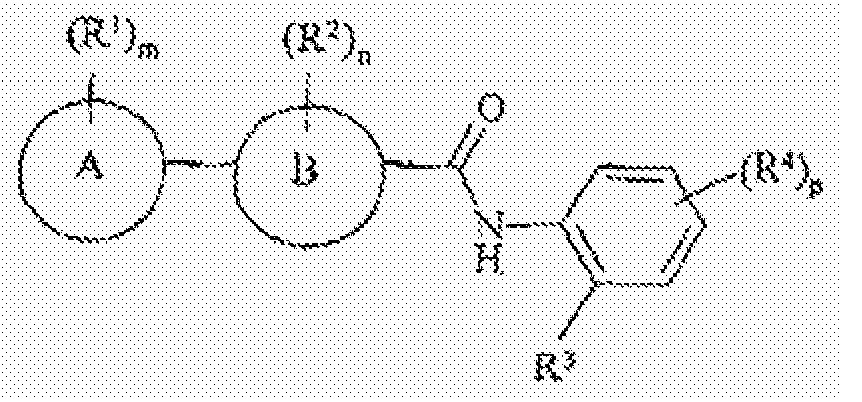 Ring A für Pyridyl, Chinolyl, Indolyl, Pyrimidinyl, Morpholinyl, Piperidinyl, Piperazinyl, Pyridazinyl, Pyrazinyl, Thiazolyl, Thienyl, Thienopyrimidinyl, Thienopyridinyl, Purinyl, 1',2',3',6'-Tetrahydropyridinyl, Triazinyl, Oxazolyl, Pyrazolyl oder Furanyl steht; wobei, wenn Ring A eine -NH-Einheit enthält, der Stickstoff gegebenenfalls durch eine Gruppe ausgewählt aus G substituiert sein kann;Ring B für Thienyl, Thiadiazolyl, Thiazolyl, Pyrimidyl, Pyrazinyl, Pyridazinyl oder Pyridyl steht;R1 für einen Substituenten an Kohlenstoff steht und ausgewählt ist aus Halogen, Nitro, Cyano, Hydroxy, Trifluormethyl, Trifluormethoxy, Amino, Carboxy, Carbamoyl, Mercapto, Sulfamoyl, C1-6-Alkyl, C2-6-Alkenyl C2-6-Alkynyl, C1-6-Alkoxy, C1-6-Alkanoyl, C1-6-Alkanoyloxy, N-(C1-6-Alkyl) amino, N, N-(C1-6-Alkyl)2-amino, C1-6-Alkanoylamino, N-(C1-6-Alkyl) carbamoyl, N, N-(C1-6-Alkyl)2carbamoyl, C1-6-Alkyl-S(O)a, wobei a für 0 bis 2 steht, C1-6-Alkoxycarbonyl, N-(C1-6-Alkyl) sulfamoyl, N,N-(C1-6Alkyl)2sulfamoyl, Aryl, Aryloxy, Aryl-C1-6-Alkyl, einer heterozyklischen Gruppe, (heterozyklische Gruppe)-C1-6-Alkyl oder einer Gruppe (D-E-), wobei R1 einschließlich der Gruppe (D-E-) gegebenenfalls an Kohlenstoff durch ein oder mehrere V substituiert sein kann; und wobei, wenn die heterozyklische Gruppe eine -NH-Einheit enthält, der Stickstoff gegebenenfalls durch eine Gruppe ausgewählt aus J substituiert sein kann;wobei V für Halogen, Nitro, Cyano, Hydroxy, Oxo, Trifluormethyl, Trifluormethoxy, Amino, Carboxy, Carbamoyl, Mercapto, Sulfamoyl, C1-6-Alkyl, C2-6-Alkenyl, C2-6-Alkynyl, C1-6-Alkoxy, C1-6-Alkanoyl, C1-6-Alkanoyloxy, N-(C1-6-Alkyl) amino, N, N-(C1-6-Alkyl)2-amino, C1-6-Alkanoylamino, N- (C1-6-Alkyl)-carbamoyl, N,N-(C1-6-Alkyl)2-carbamoyl, C1-6-AlkylS(O)a, wobei a für 0 bis 2 steht, C1-6-Alcoxycarbonyl; N-(C1-6-Alkyl) sulfamoyl, N, N-(C1-6-Alkyl)2 sulfamoyl oder eine Gruppe (D'-E'-) steht, wobei V einschließlich der Gruppe (D'-E'-) gegebenenfalls an Kohlenstoff durch ein oder mehrere W substituiert sein kann;W und Z unabhängig voneinander ausgewählt sind aus Halogen, Nitro, Cyano, Hydroxy, Oxo, Trifluormethyl, Trifluormethoxy, Amino, Carboxy, Carbamoyl, Mercapto, Sulfamoyl, C1-6-Alkyl, C2-6-Alkenyl, C2-6-Alkynyl, C1-6-Alkoxy, C1-6-Alkanoyl, C1-6-Alkanoyloxy, N-(C1-6-Alkyl) amino, N, N-(C1-6-Alkyl)2-amino, C1-6-Alkanoylamino, N-(C1-6-Alkyl) carbamoyl, N,N-(C1-6-Alkyl)2-carbamoyl, C1-6Alkyl-S(O)a, wobei a für 0 bis 2 steht, C1-6Alcoxycarbonyl, N-(C1-6Alkyl)sulfamoyl, oder N,N-(C1-6Alkyl)2-sulfamoyl;G, J und K unabhängig voneinander ausgewählt sind aus C1-8-Alkyl, C2-8-Alkenyl, C2-8-Alkynyl, C1-8-Alkanoyl, C1-8-Alkylsulfonyl, C1-8-Alkoxycarbonyl, Carbamoyl, N-(C1-8-Alkyl)carbamoyl, N,N- (C1-8-Alkyl)carbamoyl, Benzyloxycarbonyl, Benzoyl und Phenylsulfonyl, Aryl, Aryl-C1-6-Alkyl oder (heterozyklische Gruppe)-C1-6Alkyl; wobei G, J und K gegebenenfalls an Kohlenstoff durch ein oder mehrere Q substituiert sein können; und wobei, wenn die heterozyklische Gruppe eine -NH-Einheit enthält, der Stickstoff gegebenenfalls durch eine Gruppe ausgewählt aus Wasserstoff oder C1-6-Alkyl substituiert sein kann;Q für Halogen, Nitro, Cyano, Hydroxy, Oxo, Trifluormethyl, Trifluormethoxy, Amino, Carboxy, Carbamoyl, Mercapto, Sulfamoyl, C1-6-Alkyl, C2-6-Alkenyl, C2-6-Alkynyl, C1-6-Alkoxy, C1-6-Alkanoyl, C1-6-Alkanoyloxy, N-(C1-6-Alkyl) amino, N, N-(C1-6-Alkyl)2-amino, C1-6-Alkanoylamino, N-(C1-6-Alkyl) carbamoyl, N,N-(C1-6-Alkyl)2carbamoyl, C1-6Alkyl-S(O)a, wobei a für 0 bis 2 steht, C1-6Alkoxycarbonyl, C1-6-Alkoxycarbonylamino, N-(C1-6-Alkyl) sulfamoyl, N, N-(C1-6-Alkyl)2sulfamoyl, Aryl, Aryloxy, Aryl-C1-6-Alkyl, Aryl-C1-6-Alkoxy, eine heterozyklische Gruppe, (heterozyklische Gruppe-)-C1-6-Alkyl, (heterozyklische Gruppe-)-C1-6Alkoxy, oder eine Gruppe (D"-E"-) steht; wobei Q einschließlich der Gruppe (D"-E"-) gegebenenfalls an Kohlenstoff durch ein oder mehrere Z substituiert sein kann;D, D' und D" unabhängig voneinander ausgewählt sind aus C1-6-Alkyl, C2-6-Alkenyl, C2-6-Alkynyl, C3-8-Zykloalkyl, C3-8-Zykloalkyl-C1-6-Alkyl, Aryl, Aryl-C1-6Alkyl, einer heterozyklischen Gruppe, (heterozyklische Gruppe-)-C1-6-Alkyl; wobei D, D' und D''gegebenenfalls an Kohlenstoff durch ein oder mehrere F' substituiert sein können; und wobei, wenn die heterozyklische Gruppe eine -NH-Einheit enthält, der Stickstoff gegebenenfalls durch eine Gruppe ausgewählt aus K substituiert sein kann;E, E' und E" unabhängig voneinander ausgewählt sind aus -N(Ra)-, -O-, -C(O)O-, -OC(O)-, -C(O)-, -N(Ra)C(O)-, -N(Ra)C(O)N(Rb)-, -N(Ra)C(O)O-, -OC(O)N(Ra)-, -C(O)N(Ra)-, -S(O)r-, -SO2N(Ra)-, -N(Ra)SO2-; wobei Ra und Rb unabhängig voneinander ausgewählt sind aus Wasserstoff oder C1-6-Alkyl, gegebenenfalls substituiert durch ein oder mehrere F, und r für 0-2 steht;F und F' unabhängig voneinander ausgewählt sind aus Halogen, Nitro, Cyano, Hydroxy, Trifluormethyl, Trifluormethoxy, Amino, Carboxy, Carbamoyl, Mercapto, Sulfamoyl, C1-6-Alkyl, C2-6-Alkenyl, C2-6-Alkynyl, C1-6-Alkoxy, C1-6-Alkanoyl, C1-6-Alkanoyloxy, N-(C1-6Alkyl)amino, N, N-(C1-6-Alkyl)2-amino, C1-6-Alkanoylamino, N-(C1-6-Alkyl) carbamoyl, N, N-(C1-6-Alkyl)2-carbamoyl, C1-6-Alkyl-S(O)a, wobei a für 0 bis 2 steht, C1-6Alcoxycarbonyl, N-(C1-6Alkyl)sulfamoyl und N, N-(C1-6-Alkyl)2-sulfamoyl;m für 0, 1, 2, 3 oder 4 steht; wobei die Werte von R1 gleich oder verschieden sein können;R2 für Fluor oder Chlor steht;n für 0, 1 oder 2 steht, wobei die Werte von R2 gleich oder verschieden sein können;R3 für Amino oder Hydroxy steht;R4 für Halogen, Nitro, Cyano, Hydroxy, Trifluormethyl, Trifluormethoxy, Amino, Carboxy oder Carbamoyl steht; undp für 0,1 oder 2 steht, wobei die Werte von R4 gleich oder verschieden sein können; und wobei:oder deren pharmazeutisch annehmbare Salze oder in vivo hydrolisierbare Ester oder Amide.es sich bei einer Arylgruppe um eine Gruppe ausgewählt aus Phenyl, Indenyl, Indanyl, Naphthyl, Tetrahydronaphthyl und Fluorenyl handelt,und es sich bei einer heterozyklischen Gruppe um einen gesättigten, teilweise gesättigten oder ungesättigten, mono- oder bizyklischen Ring handelt, der 3-12 Atome enthält, von denen wenigstens ein Atom aus Stickstoff, Schwefel oder Sauerstoff ausgewählt ist und der, wenn nicht anders angegeben, über Kohlenstoff oder Stickstoff gebunden sein kann, und worin CH2-Gruppen gegebenenfalls durch C(O) ersetzt sein können, und worin Ring-Schwefelatome gegebenenfalls zum S-Oxid oxidiert sein können;
 - Verbindungen der Formel (I) nach Anspruch 1, worin:Ring A für Pyridin-4-yl, Pyridin-3-yl, Pyridin-2-yl, Morpholin-4-yl, Piperidin-4-yl, Piperidin-3-yl, Piperidin-2-yl, Piperazin-4-yl, Thiazol-2-yl, Thien-2-yl, Furan-3-yl, Pyrrolidin-1-yl, Piperidin-1-yl, Triazol-1-yl oder 1',2',3',6'-Tetrahydropyridin-4-yl steht, wobei, wenn Ring A eine -NH-Einheit enthält, der Stickstoff gegebenenfalls durch eine Gruppe ausgewählt aus G substituiert sein kann; oder deren pharmazeutisch annehmbare Salze oder in vivo hydrolisierbare Ester oder Amide.
- Verbindungen der Formel (I) nach Anspruch 1, worin:R1 für einen Substituenten an Kohlenstoff steht und ausgewählt ist aus Cyano, Hydroxy, C1-6-Alkyl oder einer Gruppe (D-E-); wobei R1 einschließlich der Gruppe (D-E-) gegebenenfalls an Kohlenstoff durch ein oder mehrere V substituiert sein kann;V für Cyano, Hydroxy oder eine Gruppe (D'-E'-) steht; wobei V einschließlich der Gruppe (D'-E'-) gegebenenfalls an Kohlenstoff durch ein oder mehrere W substituiert sein kann;W und Z unabhängig voneinander ausgewählt sind aus Cyano, C1-6-Alkyl oder C1-6-Alkoxy;G und K unabhängig voneinander ausgewählt sind aus C1-8-Alkyl, C2-8-Alkenyl, C2-8-Alkynyl, Aryl-C1-6-alkyl oder (heterozyklische Gruppe)- C1-6-Alkyl; wobei G und K gegebenenfalls an Kohlenstoff durch ein oder mehrere Q substituiert sein können;Q für Cyano, Hydroxy, Oxo, C1-6-Alkyl, C2-6-Alkenyl, C1-6-Alkoxy, C1-6-Alkanoyl, C1-6-Alkanoyloxy, N-(C1-6-Alkyl) carbamoyl, N,N-(C1-6Alkyl)2carbamoyl, , C1-6-Alkoxycarbonyl, C1-6-Alkoxycarbonylamino, Aryl, Aryloxy oder eine Gruppe (D"-E"-) steht; wobei Q einschließlich der Gruppe (D"-E"-) gegebenenfalls an Kohlenstoff durch ein oder mehrere Z substituiert sein kann;D, D' und D" unabhängig voneinander ausgewählt sind aus Aryl, Aryl-C1-6-Alkyl oder einer heterozyklischen Gruppe, wobei D, D' und D" gegebenenfalls an Kohlenstoff durch ein oder mehrere F' substituiert sein können; und wobei, wenn die heterozyklische Gruppe eine -NH-Einheit enthält, der Stickstoff gegebenenfalls durch eine Gruppe ausgewählt aus K substituiert sein kann;E, E' und E" unabhängig voneinander ausgewählt sind aus -O-, -C(O)O-, -OC(O)-, -C(O)-, -N(Ra)C(O)-, -C(O)N(Ra)-, -S(O)r- ; wobei Ra ausgewählt ist aus Wasserstoff oder C1-6-Alkyl, gegebenenfalls substituiert durch ein oder mehrere F, und r für 0-2 steht; undF und F' unabhängig voneinander ausgewählt sind aus Nitro, Hydroxy, C1-6-Alkyl, C1-6-Alkoxy, C1-6-Alkanoyl, N-(C1-6-Alkyl) amino, N,N-(C1-6-Alkyl)2amino, C1-6-Alkanoylamino oder C1-6-Alkoxycarbonyl; oder deren pharmazeutisch annehmbare Salze oder in vivo hydrolisierbare Ester oder Amide.
- Verbindungen der Formel (I) nach Anspruch 1, worin m für 1 steht.
- Verbindungen der Formel (I) nach Anspruch 1, worin R2 für Fluor steht und n für 0 oder 1 steht.
- Verbindungen der Formel (I) nach Anspruch 1, worin R3 für Amino steht.
- Verbindungen der Formel (I) nach Anspruch 1, worin p für 0 steht.
- Verbindungen der Formel (I) nach Anspruch 1, worin :Ring A für Pyridin-4-yl, Pyridin-3-yl, Pyridin-2-yl, Morpholin-4-yl, Piperidin-4-yl, Piperidin-3-yl, Piperidin-2-yl, Piperazin-4-yl, Thiazol-2-yl, Thien-2-yl, Furan-3-yl, Pyrrolidin-1-yl, Piperidin-1-yl, Triazol-1-yl oder 1',2',3',6'-Tetrahydropyridin-4-yl steht, wobei, wenn Ring A eine -NH-Einheit enthält, der Stickstoff gegebenenfalls durch eine Gruppe ausgewählt aus G substituiert sein kann ;Ring B für Thienyl, Thiazolyl, Pyrimidyl, Pyrazinyl, Pyridazinyl oder Pyridyl steht;R1 für einen Substituenten an Kohlenstoff steht und ausgewählt ist aus Cyano, Hydroxy, C1-6-Alkyl oder einer Gruppe (D-E-); wobei R1 einschließlich der Gruppe (D-E-) gegebenenfalls an Kohlenstoff durch ein oder mehrere V substituiert sein kann ;V für Cyano, Hydroxy oder eine Gruppe (D'-E'-) steht; wobei V einschließlich der Gruppe (D'-E'-) gegebenenfalls an Kohlenstoff durch ein oder mehrere W substituiert sein kann ;W und Z unabhängig voneinander ausgewählt sind aus Cyano, C1-6-Alkyl oder C1-6-Alkoxy;G und K unabhängig voneinander ausgewählt sind aus C1-8-Alkyl, C2-8-Alkenyl, C2-8-Alkynyl, Aryl-C1-6-alkyl oder (heterozyklische Gruppe)- C1-6-Alkyl; wobei G und K gegebenenfalls an Kohlenstoff durch ein oder mehrere Q substituiert sein können;Q für Cyano, Hydroxy, Oxo, C1-6-Alkyl, C2-6-Alkenyl, C1-6-Alkoxy, C1-6-Alkanoyl, C1-6-Alkanoyloxy, N-(C1-6-Alkyl) carbamoyl, N,N-(C1-6Alkyl)2carbamoyl, , C1-6-Alkoxycarbonyl, C1-6- Alkoxycarbonylamino, Aryl, Aryloxy oder eine Gruppe (D"-E"-) steht; wobei Q einschließlich der Gruppe (D"-E"-) gegebenenfalls an Kohlenstoff durch ein oder mehrere Z substituiert sein kann;D, D' und D" unabhängig voneinander ausgewählt sind aus Aryl, Aryl-C1-6-Alkyl oder einer heterozyklischen Gruppe, wobei D, D' und D" gegebenenfalls an Kohlenstoff durch ein oder mehrere F' substituiert sein können ; und wobei, wenn die heterozyklische Gruppe eine -NH-Einheit enthält, der Stickstoff gegebenenfalls durch eine Gruppe ausgewählt aus K substituiert sein kann;E, E' und E" unabhängig voneinander ausgewählt sind aus -O-, -C(O)O-, -OC(O)-, -C(O)-, -N(Ra)C(O)-, -C(O)N(Ra)-, -S(O)r- ; wobei Ra ausgewählt ist aus Wasserstoff oder C1-6-Alkyl, gegebenenfalls substituiert durch ein oder mehrere F, und r für 0-2 steht ; undF und F' unabhängig voneinander ausgewählt sind aus Nitro, Hydroxy, C1-6-Alkyl, C1-6-Alkoxy, C1-6-Alkanoyl, N-(C1-6-Alkyl) amino, N,N-(C1-6-Alkyl)2amino, C1-6-Alkanoylamino oder C1-6-Alkoxycarbonyl; undm für 0, 1 oder 2 steht ; wobei die Werte von R1 gleich oder verschieden sein können;R2 für Fluor steht;n für 0 oder 1 steht;R3 für Amino steht;R4 für Halogen steht; undp für 0, 1 oder 2 steht, wobei die Werte von R4 gleich oder verschieden sein können;oder deren pharmazeutisch annehmbare Salze oder in vivo hydrolisierbare Ester oder Amide davon.
- Verfahrensherstellung einer Verbindung der Formel (I) eines pharmazeutisch annehmbaren Salzes oder eines in vivo hydrolisierbaren Esters davon nach Anspruch 1, bei dem man:(a) eine Verbindung der Formel (II)

 (b) eine Verbindung der Formel (IV)
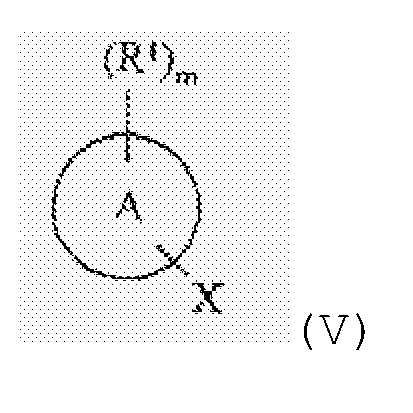 (c) in Gegenwart von 4-(4,6-Dimethoxy-1,3,5-triazin-2-yl)-4-methylmorpholiniumchlorid eine Verbindung der Formel (VI)umsetzt und anschließend, falls erforderlich :
 i) eine Verbindung der Formel (I) in eine andere Verbindung der Formel (I) umwandelt; und/oderii) gegebenenfalls vorhandene Schutzgruppen entfernt.
 - Pharmazeutische Zusammensetzung, enthaltend eine Verbindung nach Formel (I) oder ein pharmazeutisch annehmbares Salz oder einen in vivo hydrolisierbaren Ester oder ein in vivo hydrolisierbares Amid davon nach einem der Ansprüche 1 bis 8 zusammen mit einem pharmazeutisch annehmbaren Verdünnungsmittel oder Träger.
- Verbindungen der Formel (I) nach Anspruch 1, oder deren pharmazeutisch annehmbare Salze oder in vivo hydrolisierbare Ester oder Amide davon nach einem der Ansprüche 1 bis 8 zur Verwendung als Medikament.
- Verwendung einer Verbindung der Formel (I) oder eines pharmazeutisch annehmbaren Salzes oder eines in vivo hydrolisierbaren Esters oder Amids davon nach einem der Ansprüche 1 bis 8 bei der Herstellung eines Medikaments zur Verwendung beim Hervorrufen einer HDAC-hemmenden Wirkung in einem Warmblüter wie dem Menschen.
- Verwendung einer Verbindung der Formel (I) oder eines pharmazeutisch annehmbaren Salzes oder eines in vivo hydrolisierbaren Esters oder Amids davon nach einem der Ansprüche 1 bis 8 bei der Herstellung eines Medikaments zur Verwendung bei der Behandlung von Krebs.
- Verbindungen der Formel (I) und deren pharmazeutisch annehmbare Salze und in vivo hydrolisierbare Ester und Amide nach einem der Ansprüche 1 bis 8 zur Verwendung bei der Behandlung von Krebs.
Priority Applications (1)
| Application Number | Priority Date | Filing Date | Title |
|---|---|---|---|
| SI200330737T SI1501508T1 (sl) | 2002-04-27 | 2003-04-17 | Inhibitorji histon-deacetilaze |
Applications Claiming Priority (3)
| Application Number | Priority Date | Filing Date | Title |
|---|---|---|---|
| GB0209715 | 2002-04-27 | ||
| GBGB0209715.2A GB0209715D0 (en) | 2002-04-27 | 2002-04-27 | Chemical compounds |
| PCT/GB2003/001703 WO2003092686A1 (en) | 2002-04-27 | 2003-04-17 | Inhibitors of histone deacetylase |
Publications (2)
| Publication Number | Publication Date |
|---|---|
| EP1501508A1 EP1501508A1 (de) | 2005-02-02 |
| EP1501508B1 true EP1501508B1 (de) | 2007-02-21 |
Family
ID=9935672
Family Applications (1)
| Application Number | Title | Priority Date | Filing Date |
|---|---|---|---|
| EP03747499A Expired - Lifetime EP1501508B1 (de) | 2002-04-27 | 2003-04-17 | Histondeacetylase-hemmer |
Country Status (27)
| Country | Link |
|---|---|
| US (1) | US20050222410A1 (de) |
| EP (1) | EP1501508B1 (de) |
| JP (1) | JP2005530748A (de) |
| KR (1) | KR20040104638A (de) |
| CN (1) | CN1662236A (de) |
| AR (1) | AR040409A1 (de) |
| AT (1) | ATE354366T1 (de) |
| AU (1) | AU2003226553A1 (de) |
| BR (1) | BR0309553A (de) |
| CA (1) | CA2484065A1 (de) |
| CO (1) | CO5611111A2 (de) |
| DE (1) | DE60311980T2 (de) |
| DK (1) | DK1501508T3 (de) |
| ES (1) | ES2280768T3 (de) |
| GB (1) | GB0209715D0 (de) |
| IL (1) | IL164659A0 (de) |
| IS (1) | IS7524A (de) |
| MX (1) | MXPA04010686A (de) |
| NO (1) | NO20044557L (de) |
| PL (1) | PL373298A1 (de) |
| PT (1) | PT1501508E (de) |
| RU (1) | RU2004135066A (de) |
| SI (1) | SI1501508T1 (de) |
| TW (1) | TW200402294A (de) |
| UY (1) | UY27781A1 (de) |
| WO (1) | WO2003092686A1 (de) |
| ZA (1) | ZA200408666B (de) |
Cited By (6)
| Publication number | Priority date | Publication date | Assignee | Title |
|---|---|---|---|---|
| US8071615B2 (en) | 2002-03-13 | 2011-12-06 | Janssen Pharmaceutica N.V. | Carbonylamino-derivatives as novel inhibitors of histone deacetylase |
| US8114876B2 (en) | 2006-01-19 | 2012-02-14 | Janssen Pharmaceutica N.V. | Pyridine and pyrimidine derivatives as inhibitors of histone deacetylase |
| US8114999B2 (en) | 2002-03-13 | 2012-02-14 | Janssen Pharmaceutica N.V. | Aminocarbonyl-derivatives as novel inhibitors of histone deacetylase |
| US8138198B2 (en) | 2005-05-18 | 2012-03-20 | Angibaud Patrick Rene | Substituted aminopropenyl piperidine or morpholine derivatives as novel inhibitors of histone deacetylase |
| US8163733B2 (en) | 2002-03-13 | 2012-04-24 | Janssen Pharmaceutica N.V. | Sulfonylamino-derivatives as novel inhibitors of histone deacetylase |
| US8163765B2 (en) | 2006-01-19 | 2012-04-24 | Janssen Pharmaceutica N.V. | Substituted indolyl-alkyl-amino-derivatives as inhibitors of histone deacetylase |
Families Citing this family (133)
| Publication number | Priority date | Publication date | Assignee | Title |
|---|---|---|---|---|
| CA2391952C (en) | 1999-11-23 | 2012-01-31 | Methylgene Inc. | Inhibitors of histone deacetylase |
| WO2003024448A2 (en) | 2001-09-14 | 2003-03-27 | Methylgene, Inc. | Inhibitors of histone deacetylase |
| US6897220B2 (en) | 2001-09-14 | 2005-05-24 | Methylgene, Inc. | Inhibitors of histone deacetylase |
| US7868204B2 (en) | 2001-09-14 | 2011-01-11 | Methylgene Inc. | Inhibitors of histone deacetylase |
| EA007270B1 (ru) | 2002-03-13 | 2006-08-25 | Янссен Фармацевтика Н.В. | Пиперазинил-, пиперидинил- и морфолинилпроизводные как новые ингибиторы гистондеацетилазы |
| CA2486564A1 (en) * | 2002-05-23 | 2003-12-04 | Abbott Laboratories | Acetamides and benzamides that are useful in treating sexual dysfunction |
| US7154002B1 (en) | 2002-10-08 | 2006-12-26 | Takeda San Diego, Inc. | Histone deacetylase inhibitors |
| US7250514B1 (en) | 2002-10-21 | 2007-07-31 | Takeda San Diego, Inc. | Histone deacetylase inhibitors |
| KR20050122210A (ko) | 2003-03-17 | 2005-12-28 | 다케다 샌디에고, 인코포레이티드 | 히스톤 탈아세틸화 효소 억제제 |
| JP2005029517A (ja) * | 2003-07-07 | 2005-02-03 | Sankio Chemical Co Ltd | 新規ビピリジン誘導体 |
| EP2080757A1 (de) * | 2003-07-24 | 2009-07-22 | Euro-Celtique S.A. | Zur Behandlung oder Vorbeugung von Schmerzen geeignete Heteroaryl-Tetrahydropiperidyl-Verbindungen |
| BRPI0412808A (pt) * | 2003-07-24 | 2006-09-26 | Euro Celtique Sa | compostos de piperidina e composições farmacêuticas contendo os mesmos |
| US7456180B2 (en) * | 2003-07-30 | 2008-11-25 | Xenon Pharmaceuticals Inc. | Piperazine derivatives and their use as therapeutic agents |
| US7632950B2 (en) * | 2003-08-18 | 2009-12-15 | Fujifilm Finechemicals Co., Ltd | Pyridyltetrahydropyridines and pyridylpiperidines and method of manufacturing them |
| PT2017276E (pt) | 2003-09-22 | 2011-04-05 | Euro Celtique Sa | Compostos de fenilcarboxamida úteis para o tratamento da dor |
| DE602004017481D1 (de) * | 2003-09-22 | 2008-12-11 | Euro Celtique Sa | Zur behandlung von schmerzen geeignete therapeutische mittel |
| CA2539117A1 (en) | 2003-09-24 | 2005-04-07 | Methylgene Inc. | Inhibitors of histone deacetylase |
| US8747881B2 (en) | 2003-12-19 | 2014-06-10 | Cordis Corporation | Intraluminal medical devices in combination with therapeutic agents |
| US8652502B2 (en) * | 2003-12-19 | 2014-02-18 | Cordis Corporation | Local vascular delivery of trichostatin A alone or in combination with sirolimus to prevent restenosis following vascular injury |
| WO2005074642A2 (en) * | 2004-01-30 | 2005-08-18 | Smithkline Beecham Corporation | Chemical compounds |
| US7253204B2 (en) | 2004-03-26 | 2007-08-07 | Methylgene Inc. | Inhibitors of histone deacetylase |
| EP1735319B1 (de) * | 2004-03-26 | 2017-05-03 | MethylGene Inc. | Histondeacetylase-hemmer |
| CN1989131A (zh) * | 2004-03-30 | 2007-06-27 | 希龙公司 | 取代的噻吩衍生物用作抗癌药 |
| CN1972914A (zh) | 2004-03-31 | 2007-05-30 | 詹森药业有限公司 | 作为组胺h3受体配合体的非咪唑杂环化合物 |
| PL1781639T3 (pl) | 2004-07-28 | 2012-07-31 | Janssen Pharmaceutica Nv | Podstawione pochodne indolilo-alkiloaminowe jako nowe inhibitory deacetylazy histonowej |
| AR050926A1 (es) | 2004-09-03 | 2006-12-06 | Astrazeneca Ab | Derivados de benzamida como inhibidores de la histonadesacetilasa(hdac) |
| MX2007003319A (es) | 2004-09-20 | 2007-06-05 | Xenon Pharmaceuticals Inc | Derivados heterociclicos y su uso como agentes terapeuticos. |
| MX2007003327A (es) | 2004-09-20 | 2007-06-05 | Xenon Pharmaceuticals Inc | Derivados heterociclicos, y su uso como mediadores de estearoil-coa desaturasa. |
| EP2289510A1 (de) | 2004-09-20 | 2011-03-02 | Xenon Pharmaceuticals Inc. | Heterozyklische Derivate zur Behandlung von durch Stearoyl-Coa-Desaturase-Enzyme verursachten Krankheiten |
| EP2269610A3 (de) | 2004-09-20 | 2011-03-09 | Xenon Pharmaceuticals Inc. | Heterozyklische Derivate und ihre Verwendung als Stearoyl-Coa-Desaturase-Inhibitoren |
| EP1799667B1 (de) * | 2004-09-20 | 2013-03-20 | Xenon Pharmaceuticals Inc. | Heterozyklische derivate und ihre verwendung als therapeutische wirkstoffe |
| MX2007003332A (es) | 2004-09-20 | 2007-06-05 | Xenon Pharmaceuticals Inc | Derivados heterociclicos y su uso como inhibidores de estearoil-coa-desaturasa. |
| US7855205B2 (en) | 2004-10-29 | 2010-12-21 | Janssen Pharmaceutica Nv | Pyrimidinyl substituted fused-pyrrolyl compounds useful in treating kinase disorders |
| JP2008524246A (ja) * | 2004-12-16 | 2008-07-10 | タケダ サン ディエゴ インコーポレイテッド | ヒストンデアセチラーゼ阻害剤 |
| WO2006081389A1 (en) | 2005-01-25 | 2006-08-03 | Synta Pharmaceuticals Corp. | Thiophene compounds for inflammation and immune-related uses |
| EP2946810A1 (de) | 2005-02-03 | 2015-11-25 | TopoTarget UK Limited | Kombinationstherapie mit einem HDAC-Hemmer und Vincristin zur Behandlung von Krebs |
| EP1874294A4 (de) | 2005-04-20 | 2010-12-01 | Merck Sharp & Dohme | Benzothiophen-hydroxamidsäurederivate mit carbamat-, harnstoff-, amid- und sulfonamidsubstitutionen |
| CN101163690A (zh) | 2005-04-20 | 2008-04-16 | 默克公司 | 苯并噻吩异羟肟酸衍生物 |
| EP1874295A4 (de) | 2005-04-20 | 2009-08-12 | Merck & Co Inc | Benzothiophenderivate |
| GB0509223D0 (en) | 2005-05-05 | 2005-06-15 | Chroma Therapeutics Ltd | Enzyme inhibitors |
| GB0509225D0 (en) | 2005-05-05 | 2005-06-15 | Chroma Therapeutics Ltd | Inhibitors of enzymatic activity |
| WO2006122319A2 (en) | 2005-05-11 | 2006-11-16 | Takeda San Diego, Inc. | Histone deacetylase inhibitors |
| JP2008540575A (ja) * | 2005-05-13 | 2008-11-20 | レキシコン・ファーマシューティカルズ・インコーポレーテッド | 多環系化合物とその使用の方法 |
| CN102579417B (zh) | 2005-05-13 | 2014-11-26 | 托波塔吉特英国有限公司 | Hdac抑制剂的药物制剂 |
| BRPI0611187A2 (pt) | 2005-06-03 | 2010-08-24 | Xenon Pharmaceuticals Inc | derivados aminotiazàis como inibidores da estearoil-coa desaturase humana |
| WO2006136553A1 (en) * | 2005-06-23 | 2006-12-28 | Janssen Pharmaceutica N.V. | Imidazolinone and hydantoine derivatives as novel inhibitors of histone deacetylase |
| JP2008546793A (ja) | 2005-06-24 | 2008-12-25 | メルク エンド カムパニー インコーポレーテッド | 修飾マロン酸誘導体 |
| ZA200800901B (en) | 2005-07-14 | 2010-05-26 | Takeda San Diego Inc | Histone deacetylase inhibitors |
| US8097610B2 (en) * | 2005-08-26 | 2012-01-17 | Shionogi & Co., Ltd. | Derivative having PPAR agonistic activity |
| GB0521244D0 (en) | 2005-10-19 | 2005-11-30 | Astrazeneca Ab | Benzamide compounds |
| WO2007055942A2 (en) * | 2005-11-03 | 2007-05-18 | Merck & Co., Inc. | Substituted nicotinamide compounds |
| US8026260B2 (en) | 2005-11-03 | 2011-09-27 | Merck Sharp & Dohme Corp. | Histone deacetylase inhibitors with aryl-pyrazolyl-motifs |
| EP2361619A1 (de) | 2005-11-10 | 2011-08-31 | TopoTarget UK Limited | Histone Deacetylase (hdac) Inhibitoren (pxd-101) zur Behandlung von hämatologischen Krebserkrankungen |
| AR057579A1 (es) | 2005-11-23 | 2007-12-05 | Merck & Co Inc | Compuestos espirociclicos como inhibidores de histona de acetilasa (hdac) |
| DE602007001190D1 (de) * | 2006-01-19 | 2009-07-09 | Janssen Pharmaceutica Nv | Aminophenylderivate als neue inhibitoren von histondeacetylase |
| DK1979328T3 (da) * | 2006-01-19 | 2013-03-25 | Janssen Pharmaceutica Nv | Pyridin- og pyrimidinderivater i deres egenskab af histondeacetylasehæmmere |
| US8101616B2 (en) | 2006-01-19 | 2012-01-24 | Janssen Pharmaceutica N.V. | Pyridine and pyrimidine derivatives as inhibitors of histone deacetylase |
| US7834011B2 (en) | 2006-01-19 | 2010-11-16 | Janssen Pharmaceutica N.V. | Heterocyclylalkyl derivatives as novel inhibitors of histone deacetylase |
| CA2642813A1 (en) | 2006-02-28 | 2007-09-07 | Merck & Co., Inc. | Inhibitors of histone deacetylase |
| ES2452820T3 (es) | 2006-04-07 | 2014-04-02 | Methylgene, Inc. | Derivados de benzamida como inhibidores de histona desacetilasa |
| CA2649861A1 (en) | 2006-04-26 | 2007-11-08 | Merck & Co., Inc. | Disubstituted aniline compounds |
| JP2009537529A (ja) | 2006-05-18 | 2009-10-29 | メルク エンド カムパニー インコーポレーテッド | アリール縮合スピロ環化合物 |
| KR101372941B1 (ko) | 2006-05-30 | 2014-03-14 | 얀센 파마슈티카 엔.브이. | 히스타민 h3 수용체 조절제로서의 치환된 피리딜 아미드 화합물 |
| JP2009544611A (ja) | 2006-07-20 | 2009-12-17 | メルク エンド カムパニー インコーポレーテッド | ヒストン脱アセチル化酵素阻害剤としてのリン誘導体 |
| GB0619753D0 (en) | 2006-10-06 | 2006-11-15 | Chroma Therapeutics Ltd | Enzyme inhibitors |
| JP5043120B2 (ja) | 2006-10-30 | 2012-10-10 | クロマ セラピューティクス リミテッド | ヒストンデアセチラーゼの阻害剤としてのヒドロキサメート |
| US20110015168A1 (en) * | 2007-01-19 | 2011-01-20 | Mitchell Keegan | Methods for increasing levels of human fetal hemoglobin |
| AU2012202993B2 (en) * | 2007-03-01 | 2015-06-25 | Novartis Ag | Pim kinase inhibitors and methods of their use |
| ES2431163T3 (es) | 2007-03-01 | 2013-11-25 | Novartis Ag | Inhibidores de PIM quinasa y métodos para su uso |
| US8030344B2 (en) * | 2007-03-13 | 2011-10-04 | Methylgene Inc. | Inhibitors of histone deacetylase |
| KR20090125209A (ko) | 2007-03-28 | 2009-12-03 | 산텐 세이야꾸 가부시키가이샤 | 히스톤 탈아세틸화 효소 저해 작용을 갖는 화합물을 유효 성분으로서 함유하는 안압 하강제 |
| EP2604599A1 (de) | 2007-04-27 | 2013-06-19 | Purdue Pharma LP | TRPV1-Antagonisten und ihre Verwendung |
| AU2008269154B2 (en) | 2007-06-27 | 2014-06-12 | Merck Sharp & Dohme Llc | 4-carboxybenzylamino derivatives as histone deacetylase inhibitors |
| US8461189B2 (en) | 2007-06-27 | 2013-06-11 | Merck Sharp & Dohme Corp. | Pyridyl derivatives as histone deacetylase inhibitors |
| WO2009014637A2 (en) * | 2007-07-19 | 2009-01-29 | Schering Corporation | Heterocyclic amide compounds as protein kinase inhibitors |
| CA2700058A1 (en) * | 2007-09-19 | 2009-03-26 | 4Sc Ag | Novel tetrahydrofusedpyridines |
| JP5469604B2 (ja) * | 2007-09-19 | 2014-04-16 | 4エスツェー アクチェンゲゼルシャフト | 新規テトラヒドロ融合ピリジン |
| CA2700173C (en) | 2007-09-25 | 2016-10-11 | Topotarget Uk Limited | Methods of synthesis of certain hydroxamic acid compounds |
| BRPI0820481A2 (pt) | 2007-11-20 | 2015-06-16 | Janssen Pharmaceutica Nv | Composotos cicloalquilóxi e heterocicloalquilóxi piridina como moduladores do receptor de h3 de histamina |
| WO2009137081A2 (en) * | 2008-05-07 | 2009-11-12 | Massachusetts Institute Of Technology | Small molecule inhibitors of plasmodium falciparum dihydroorotate dehydrogenase |
| GB0813436D0 (en) * | 2008-07-22 | 2008-08-27 | Syngenta Participations Ag | Insecticidal compounds |
| WO2010014257A2 (en) * | 2008-08-01 | 2010-02-04 | Purdue Pharma L.P. | Tetrahydropyridinyl and dihydropyrrolyl compounds and the use thereof |
| AU2009289649B2 (en) | 2008-09-03 | 2016-05-05 | Biomarin Pharmaceutical Inc. | Compositions including 6-aminohexanoic acid derivatives as HDAC inhibitors |
| US8324385B2 (en) * | 2008-10-30 | 2012-12-04 | Madrigal Pharmaceuticals, Inc. | Diacylglycerol acyltransferase inhibitors |
| JP5702293B2 (ja) | 2008-11-10 | 2015-04-15 | バーテックス ファーマシューティカルズ インコーポレイテッドVertex Pharmaceuticals Incorporated | Atrキナーゼの阻害剤として有用な化合物 |
| BRPI0924084B1 (pt) | 2008-12-19 | 2021-12-21 | Vertex Pharmaceuticals Incorporated | Derivados de pirazina e composição farmacêutica que os compreende |
| GB0903480D0 (en) | 2009-02-27 | 2009-04-08 | Chroma Therapeutics Ltd | Enzyme Inhibitors |
| EP2569287B1 (de) | 2010-05-12 | 2014-07-09 | Vertex Pharmaceuticals Inc. | Verbindungen als hemmer der atr-kinase |
| JP2013526538A (ja) | 2010-05-12 | 2013-06-24 | バーテックス ファーマシューティカルズ インコーポレイテッド | Atrキナーゼ阻害剤として有用な化合物 |
| US9062008B2 (en) | 2010-05-12 | 2015-06-23 | Vertex Pharmaceuticals Incorporated | Compounds useful as inhibitors of ATR kinase |
| US8962631B2 (en) | 2010-05-12 | 2015-02-24 | Vertex Pharmaceuticals Incorporated | Compounds useful as inhibitors of ATR kinase |
| WO2011143422A1 (en) | 2010-05-12 | 2011-11-17 | Vertex Pharmaceuticals Incorporated | 2 -aminopyridine derivatives useful as inhibitors of atr kinase |
| AU2011253025A1 (en) | 2010-05-12 | 2012-11-29 | Vertex Pharmaceuticals Incorporated | Compounds useful as inhibitors of ATR kinase |
| WO2011163527A1 (en) | 2010-06-23 | 2011-12-29 | Vertex Pharmaceuticals Incorporated | Pyrrolo- pyrazine derivatives useful as inhibitors of atr kinase |
| BR112013000925A2 (pt) | 2010-07-15 | 2020-12-01 | Bayer Intellectual Property Gmbh | compostos heterocíclicos como pesticidas |
| US10059723B2 (en) | 2011-02-28 | 2018-08-28 | Biomarin Pharmaceutical Inc. | Histone deacetylase inhibitors |
| JP6250403B2 (ja) | 2011-02-28 | 2017-12-20 | バイオマリン ファーマシューティカル インク | ヒストン脱アセチル化酵素阻害剤 |
| US8957066B2 (en) | 2011-02-28 | 2015-02-17 | Biomarin Pharmaceutical Inc. | Histone deacetylase inhibitors |
| WO2012138938A1 (en) | 2011-04-05 | 2012-10-11 | Vertex Pharmaceuticals Incorporated | Aminopyrazine compounds useful as inhibitors of tra kinase |
| EP2723745A1 (de) | 2011-06-22 | 2014-04-30 | Vertex Pharmaceuticals Inc. | Als art-kinasehemmer nützliche verbindungen |
| JP2014517079A (ja) | 2011-06-22 | 2014-07-17 | バーテックス ファーマシューティカルズ インコーポレイテッド | Atrキナーゼ阻害剤として有用な化合物 |
| JP2014522818A (ja) | 2011-06-22 | 2014-09-08 | バーテックス ファーマシューティカルズ インコーポレイテッド | Atrキナーゼ阻害剤として有用な化合物 |
| US9273043B2 (en) | 2011-06-22 | 2016-03-01 | Purdue Pharma L.P. | TRPV1 antagonists including dihydroxy substituent and uses thereof |
| WO2013049720A1 (en) | 2011-09-30 | 2013-04-04 | Vertex Pharmaceuticals Incorporated | Compounds useful as inhibitors of atr kinase |
| SG10201606774UA (en) | 2011-09-30 | 2016-10-28 | Vertex Pharma | Processes for making compounds useful as inhibitors of atr kinase |
| MX2014003796A (es) | 2011-09-30 | 2015-01-16 | Vertex Pharma | Compuestos utiles como inhibidores de la cinasa ataxia telangiectasia mutada y rad3 relacionados (atr). |
| IN2014CN02501A (de) | 2011-09-30 | 2015-06-26 | Vertex Pharma | |
| WO2013049719A1 (en) | 2011-09-30 | 2013-04-04 | Vertex Pharmaceuticals Incorporated | Compounds useful as inhibitors of atr kinase |
| EP2776422A1 (de) | 2011-11-09 | 2014-09-17 | Vertex Pharmaceuticals Incorporated | Als atr-kinasehemmer nützliche verbindungen |
| US8841449B2 (en) | 2011-11-09 | 2014-09-23 | Vertex Pharmaceuticals Incorporated | Compounds useful as inhibitors of ATR kinase |
| WO2013071093A1 (en) | 2011-11-09 | 2013-05-16 | Vertex Pharmaceuticals Incorporated | Pyrazine compounds useful as inhibitors of atr kinase |
| EP2776421A1 (de) | 2011-11-09 | 2014-09-17 | Vertex Pharmaceuticals Incorporated | Als atr-kinasehemmer nützliche verbindungen |
| EP2776429A1 (de) | 2011-11-09 | 2014-09-17 | Vertex Pharmaceuticals Incorporated | Als atr-kinaseinhibitoren nützliche verbindungen |
| CN102633668B (zh) * | 2012-01-20 | 2015-05-06 | 天舒生物技术有限公司 | 化合物在转录因子失调相关疾病的治疗药物中的应用 |
| JP5881460B2 (ja) * | 2012-02-23 | 2016-03-09 | 公立大学法人名古屋市立大学 | 新規アミド化合物及びその用途 |
| US20140044802A1 (en) | 2012-04-05 | 2014-02-13 | Vertex Pharmaceuticals Incorporated | Compounds useful as inhibitors of atr kinase and combination therapies thereof |
| DK2904406T3 (en) | 2012-10-04 | 2018-06-18 | Vertex Pharma | METHOD OF DETERMINING THE ATR INHIBITION, INCREASED DNA DAMAGE |
| US8912198B2 (en) | 2012-10-16 | 2014-12-16 | Vertex Pharmaceuticals Incorporated | Compounds useful as inhibitors of ATR kinase |
| SMT202000713T1 (it) | 2012-12-07 | 2021-03-15 | Vertex Pharma | Pirazolo [1,5-a] pirimidine utili come inibitori dell'atr chinasi per il trattamento di malattie del cancro |
| JP2016512815A (ja) | 2013-03-15 | 2016-05-09 | バーテックス ファーマシューティカルズ インコーポレイテッドVertex Pharmaceuticals Incorporated | Atrキナーゼの阻害剤として有用な縮合ピラゾロピリミジン誘導体 |
| PT2970139T (pt) | 2013-03-15 | 2018-08-01 | Biomarin Pharm Inc | Inibidores de hdac |
| HUE046727T2 (hu) | 2013-12-06 | 2020-03-30 | Vertex Pharma | Az ATR-kináz inhibitoraként használható vegyület, 2-amino-6-fluoro-N-[5-fluoro-piridin-3-IL]-pirazolo-[1,5-A]-pirimidin-3-karboxamid, ennek elõállítása, különbözõ szilárd formái és ezek radioaktív nyomjelzett származékai |
| US9636298B2 (en) | 2014-01-17 | 2017-05-02 | Methylgene Inc. | Prodrugs of compounds that enhance antifungal activity and compositions of said prodrugs |
| CA2940237C (en) * | 2014-02-21 | 2023-03-07 | Frost Biologic, Inc. | Antimitotic amides for the treatment of cancer and proliferative disorders |
| CN107074863B (zh) | 2014-06-05 | 2019-12-03 | 沃泰克斯药物股份有限公司 | Atr激酶抑制剂的制备方法及其不同的固体形式 |
| PL3157566T3 (pl) | 2014-06-17 | 2019-10-31 | Vertex Pharma | Metoda leczenia nowotworu przy użyciu kombinacji inhibitorów chk1 i atr |
| KR102678021B1 (ko) | 2015-09-30 | 2024-06-26 | 버텍스 파마슈티칼스 인코포레이티드 | Dna 손상제와 병용되는, atr 저해제를 포함하는 암 치료용 약제학적 조성물 |
| CA3043618A1 (en) | 2016-11-23 | 2018-05-31 | Regenacy Pharmaceuticals, Llc | Piperazine derivatives as selective hdac1,2 inhibitors |
| CN107857758B (zh) * | 2017-12-31 | 2018-08-24 | 广东莱恩医药研究院有限公司 | 一种酰胺类化合物及其作为hsp90抑制剂和抗肿瘤药物的应用 |
| CN107987063A (zh) * | 2017-12-31 | 2018-05-04 | 窦玉玲 | 一种hsp90抑制剂及其在抗肿瘤药物的应用 |
| CN111635400A (zh) | 2019-03-02 | 2020-09-08 | 察略盛医药科技(上海)有限公司 | 吡唑并[1,5-a]吡啶类衍生物、及其制备方法和用途 |
| CA3169697A1 (en) * | 2020-02-28 | 2021-09-02 | Dominic Reynolds | Thiophenyl derivatives useful for modulating nucleic acid splicing |
| CN113929591A (zh) * | 2021-10-09 | 2022-01-14 | 中国科学技术大学 | 具有抗增殖活性的抑制剂 |
Family Cites Families (11)
| Publication number | Priority date | Publication date | Assignee | Title |
|---|---|---|---|---|
| CH475301A (de) * | 1964-10-27 | 1969-07-15 | Ciba Geigy | Verfahren zur Herstellung von mit Oxazolverbindungen optisch aufgehellten Formkörpern |
| CA2258093A1 (en) * | 1996-06-28 | 1998-01-08 | Mark E. Duggan | Fibrinogen receptor antagonists |
| ES2196396T3 (es) * | 1996-12-23 | 2003-12-16 | Bristol Myers Squibb Pharma Co | Compuestos heteroaromaticos de 5 miembros conteniendo oxigeno o azufre como inhibidores del factor xa. |
| AU751139B2 (en) * | 1997-10-13 | 2002-08-08 | Astellas Pharma Inc. | Amide derivative |
| JPH11209350A (ja) * | 1998-01-26 | 1999-08-03 | Eisai Co Ltd | 含窒素複素環誘導体およびその医薬 |
| JP2002528533A (ja) * | 1998-10-29 | 2002-09-03 | ブリストル−マイヤーズ スクイブ カンパニー | 酵素impdhの新規なインヒビター |
| JP2000256358A (ja) * | 1999-03-10 | 2000-09-19 | Yamanouchi Pharmaceut Co Ltd | ピラゾール誘導体 |
| JP2001081031A (ja) * | 1999-08-30 | 2001-03-27 | Schering Ag | 溶解性および経口吸収性を改善したベンズアミド誘導体含有製剤 |
| CA2391952C (en) * | 1999-11-23 | 2012-01-31 | Methylgene Inc. | Inhibitors of histone deacetylase |
| WO2003024448A2 (en) * | 2001-09-14 | 2003-03-27 | Methylgene, Inc. | Inhibitors of histone deacetylase |
| US7253204B2 (en) * | 2004-03-26 | 2007-08-07 | Methylgene Inc. | Inhibitors of histone deacetylase |
-
2002
- 2002-04-27 GB GBGB0209715.2A patent/GB0209715D0/en not_active Ceased
-
2003
- 2003-04-17 JP JP2004500870A patent/JP2005530748A/ja active Pending
- 2003-04-17 US US10/512,808 patent/US20050222410A1/en not_active Abandoned
- 2003-04-17 CA CA002484065A patent/CA2484065A1/en not_active Abandoned
- 2003-04-17 SI SI200330737T patent/SI1501508T1/sl unknown
- 2003-04-17 PL PL03373298A patent/PL373298A1/xx not_active Application Discontinuation
- 2003-04-17 WO PCT/GB2003/001703 patent/WO2003092686A1/en not_active Ceased
- 2003-04-17 DK DK03747499T patent/DK1501508T3/da active
- 2003-04-17 ES ES03747499T patent/ES2280768T3/es not_active Expired - Lifetime
- 2003-04-17 KR KR10-2004-7017235A patent/KR20040104638A/ko not_active Withdrawn
- 2003-04-17 MX MXPA04010686A patent/MXPA04010686A/es unknown
- 2003-04-17 AT AT03747499T patent/ATE354366T1/de not_active IP Right Cessation
- 2003-04-17 AU AU2003226553A patent/AU2003226553A1/en not_active Abandoned
- 2003-04-17 DE DE60311980T patent/DE60311980T2/de not_active Expired - Fee Related
- 2003-04-17 RU RU2004135066/04A patent/RU2004135066A/ru not_active Application Discontinuation
- 2003-04-17 EP EP03747499A patent/EP1501508B1/de not_active Expired - Lifetime
- 2003-04-17 CN CN038148285A patent/CN1662236A/zh active Pending
- 2003-04-17 BR BR0309553-3A patent/BR0309553A/pt not_active IP Right Cessation
- 2003-04-17 TW TW092108919A patent/TW200402294A/zh unknown
- 2003-04-17 PT PT03747499T patent/PT1501508E/pt unknown
- 2003-04-25 AR AR20030101449A patent/AR040409A1/es not_active Application Discontinuation
- 2003-04-28 UY UY27781A patent/UY27781A1/es not_active Application Discontinuation
-
2004
- 2004-10-22 NO NO20044557A patent/NO20044557L/no not_active Application Discontinuation
- 2004-10-26 CO CO04107466A patent/CO5611111A2/es not_active Application Discontinuation
- 2004-10-26 ZA ZA200408666A patent/ZA200408666B/en unknown
- 2004-11-11 IS IS7524A patent/IS7524A/is unknown
- 2004-11-18 IL IL16465904A patent/IL164659A0/xx unknown
Cited By (12)
| Publication number | Priority date | Publication date | Assignee | Title |
|---|---|---|---|---|
| US8071615B2 (en) | 2002-03-13 | 2011-12-06 | Janssen Pharmaceutica N.V. | Carbonylamino-derivatives as novel inhibitors of histone deacetylase |
| US8114999B2 (en) | 2002-03-13 | 2012-02-14 | Janssen Pharmaceutica N.V. | Aminocarbonyl-derivatives as novel inhibitors of histone deacetylase |
| US8163733B2 (en) | 2002-03-13 | 2012-04-24 | Janssen Pharmaceutica N.V. | Sulfonylamino-derivatives as novel inhibitors of histone deacetylase |
| US8268833B2 (en) | 2002-03-13 | 2012-09-18 | Janssen Pharmaceutica, N.V. | Inhibitors of histone deacetylase |
| US8343988B2 (en) | 2002-03-13 | 2013-01-01 | Janssen Pharmaceutica, N.V | Inhibitors of histone deacetylase |
| US8455498B2 (en) | 2002-03-13 | 2013-06-04 | Janssen Pharmaceutica N.V. | Inhibitors of histone deacetylase |
| US8524711B2 (en) | 2002-03-13 | 2013-09-03 | Janssen Pharmaceutica N.V. | Amino-derivatives as novel inhibitors of histone deacetylase |
| US9556161B2 (en) | 2002-03-13 | 2017-01-31 | Janssen Pharmaceutica Nv | Inhibitors of histone deacetylase |
| US8138198B2 (en) | 2005-05-18 | 2012-03-20 | Angibaud Patrick Rene | Substituted aminopropenyl piperidine or morpholine derivatives as novel inhibitors of histone deacetylase |
| US8114876B2 (en) | 2006-01-19 | 2012-02-14 | Janssen Pharmaceutica N.V. | Pyridine and pyrimidine derivatives as inhibitors of histone deacetylase |
| US8163765B2 (en) | 2006-01-19 | 2012-04-24 | Janssen Pharmaceutica N.V. | Substituted indolyl-alkyl-amino-derivatives as inhibitors of histone deacetylase |
| US8664223B2 (en) | 2006-01-19 | 2014-03-04 | Janssen Pharmaceutica N.V | Pyridine and pyrimidine derivatives as inhibitors of histone deacetylase |
Also Published As
| Publication number | Publication date |
|---|---|
| WO2003092686A1 (en) | 2003-11-13 |
| ZA200408666B (en) | 2006-10-25 |
| IL164659A0 (en) | 2005-12-18 |
| EP1501508A1 (de) | 2005-02-02 |
| PL373298A1 (en) | 2005-08-22 |
| GB0209715D0 (en) | 2002-06-05 |
| NO20044557L (no) | 2004-10-22 |
| RU2004135066A (ru) | 2005-06-10 |
| KR20040104638A (ko) | 2004-12-10 |
| SI1501508T1 (sl) | 2007-08-31 |
| AR040409A1 (es) | 2005-04-06 |
| UY27781A1 (es) | 2003-11-28 |
| CO5611111A2 (es) | 2006-02-28 |
| TW200402294A (en) | 2004-02-16 |
| MXPA04010686A (es) | 2004-12-13 |
| AU2003226553A1 (en) | 2003-11-17 |
| ES2280768T3 (es) | 2007-09-16 |
| DE60311980T2 (de) | 2007-10-31 |
| US20050222410A1 (en) | 2005-10-06 |
| JP2005530748A (ja) | 2005-10-13 |
| CN1662236A (zh) | 2005-08-31 |
| BR0309553A (pt) | 2005-02-09 |
| CA2484065A1 (en) | 2003-11-13 |
| ATE354366T1 (de) | 2007-03-15 |
| HK1072365A1 (en) | 2005-08-26 |
| DK1501508T3 (da) | 2007-05-21 |
| PT1501508E (pt) | 2007-04-30 |
| IS7524A (is) | 2004-11-11 |
| DE60311980D1 (en) | 2007-04-05 |
Similar Documents
| Publication | Publication Date | Title |
|---|---|---|
| EP1495002B1 (de) | Benzamid-derivate verwendbar als histon-deacetylase-inhibitoren | |
| US20050222410A1 (en) | Inhibitors of histone deacetylase | |
| ES2303565T3 (es) | Derivados de aminobenzamida como inhibidores de la glucogeno sintasa cinasa 3beta. | |
| US7115741B2 (en) | 4-thieno[2,3-D]pyrimidin-4-YL piperazine compounds | |
| US20090099160A1 (en) | 4-(4-(Imidazol-4-Yl) Pyrimidin-2-Ylamino) Benzamides as CDK Inhibitors | |
| CN102036961B (zh) | 作为pi3k抑制剂的吡啶和吡嗪类化合物 | |
| EP2935272B1 (de) | Pyrazole substituierte imidazopyrazine als casein kinase 1 d/e inhibitoren | |
| US7897778B2 (en) | Benzamide compounds | |
| HK1072365B (en) | Inhibitors of histone deacetylase | |
| US20080119451A1 (en) | Novel Benzamide Derivatives | |
| US20100075942A1 (en) | N-phenyl-4-pyridin-2-yl-benzamide derivatives as histone deacylase (hdac) inhibitors for the treatment of cancer | |
| HK1071359B (en) | Benzamide derivatives useful as histone deacetylase inhibitors | |
| SA03240136B1 (ar) | مثبطات انزيم) | |
| ZA200407502B (en) | Benzamide derivatives useful as histone deacetylase inhibitors |
Legal Events
| Date | Code | Title | Description |
|---|---|---|---|
| PUAI | Public reference made under article 153(3) epc to a published international application that has entered the european phase |
Free format text: ORIGINAL CODE: 0009012 |
|
| 17P | Request for examination filed |
Effective date: 20041129 |
|
| AK | Designated contracting states |
Kind code of ref document: A1 Designated state(s): AT BE BG CH CY CZ DE DK EE ES FI FR GB GR HU IE IT LI LU MC NL PT RO SE SI SK TR |
|
| AX | Request for extension of the european patent |
Extension state: AL LT LV MK |
|
| 17Q | First examination report despatched |
Effective date: 20050317 |
|
| REG | Reference to a national code |
Ref country code: HK Ref legal event code: DE Ref document number: 1072365 Country of ref document: HK |
|
| GRAP | Despatch of communication of intention to grant a patent |
Free format text: ORIGINAL CODE: EPIDOSNIGR1 |
|
| GRAS | Grant fee paid |
Free format text: ORIGINAL CODE: EPIDOSNIGR3 |
|
| GRAA | (expected) grant |
Free format text: ORIGINAL CODE: 0009210 |
|
| AK | Designated contracting states |
Kind code of ref document: B1 Designated state(s): AT BE BG CH CY CZ DE DK EE ES FI FR GB GR HU IE IT LI LU MC NL PT RO SE SI SK TR |
|
| AX | Request for extension of the european patent |
Extension state: AL LT LV MK |
|
| REG | Reference to a national code |
Ref country code: GB Ref legal event code: FG4D |
|
| REG | Reference to a national code |
Ref country code: CH Ref legal event code: EP |
|
| REF | Corresponds to: |
Ref document number: 60311980 Country of ref document: DE Date of ref document: 20070405 Kind code of ref document: P |
|
| REG | Reference to a national code |
Ref country code: RO Ref legal event code: EPE |
|
| REG | Reference to a national code |
Ref country code: IE Ref legal event code: FG4D |
|
| REG | Reference to a national code |
Ref country code: PT Ref legal event code: SC4A Free format text: AVAILABILITY OF NATIONAL TRANSLATION Effective date: 20070412 |
|
| REG | Reference to a national code |
Ref country code: SE Ref legal event code: TRGR |
|
| REG | Reference to a national code |
Ref country code: DK Ref legal event code: T3 |
|
| REG | Reference to a national code |
Ref country code: GR Ref legal event code: EP Ref document number: 20070401183 Country of ref document: GR |
|
| REG | Reference to a national code |
Ref country code: EE Ref legal event code: FG4A Ref document number: E001023 Country of ref document: EE Effective date: 20070409 |
|
| REG | Reference to a national code |
Ref country code: HK Ref legal event code: GR Ref document number: 1072365 Country of ref document: HK |
|
| REG | Reference to a national code |
Ref country code: HU Ref legal event code: AG4A Ref document number: E001671 Country of ref document: HU |
|
| ET | Fr: translation filed | ||
| REG | Reference to a national code |
Ref country code: ES Ref legal event code: FG2A Ref document number: 2280768 Country of ref document: ES Kind code of ref document: T3 |
|
| PLBE | No opposition filed within time limit |
Free format text: ORIGINAL CODE: 0009261 |
|
| STAA | Information on the status of an ep patent application or granted ep patent |
Free format text: STATUS: NO OPPOSITION FILED WITHIN TIME LIMIT |
|
| 26N | No opposition filed |
Effective date: 20071122 |
|
| PGFP | Annual fee paid to national office [announced via postgrant information from national office to epo] |
Ref country code: DK Payment date: 20080319 Year of fee payment: 6 |
|
| PGFP | Annual fee paid to national office [announced via postgrant information from national office to epo] |
Ref country code: EE Payment date: 20080325 Year of fee payment: 6 Ref country code: GB Payment date: 20080317 Year of fee payment: 6 Ref country code: MC Payment date: 20080328 Year of fee payment: 6 Ref country code: SK Payment date: 20080325 Year of fee payment: 6 |
|
| PGFP | Annual fee paid to national office [announced via postgrant information from national office to epo] |
Ref country code: CH Payment date: 20080425 Year of fee payment: 6 Ref country code: CZ Payment date: 20080409 Year of fee payment: 6 Ref country code: DE Payment date: 20080430 Year of fee payment: 6 Ref country code: ES Payment date: 20080414 Year of fee payment: 6 Ref country code: HU Payment date: 20080331 Year of fee payment: 6 Ref country code: LU Payment date: 20080508 Year of fee payment: 6 |
|
| PGFP | Annual fee paid to national office [announced via postgrant information from national office to epo] |
Ref country code: RO Payment date: 20080402 Year of fee payment: 6 Ref country code: AT Payment date: 20080318 Year of fee payment: 6 |
|
| PGFP | Annual fee paid to national office [announced via postgrant information from national office to epo] |
Ref country code: IT Payment date: 20080419 Year of fee payment: 6 Ref country code: BE Payment date: 20080507 Year of fee payment: 6 Ref country code: SI Payment date: 20080416 Year of fee payment: 6 Ref country code: TR Payment date: 20080326 Year of fee payment: 6 Ref country code: PT Payment date: 20080414 Year of fee payment: 6 Ref country code: FI Payment date: 20080404 Year of fee payment: 6 Ref country code: BG Payment date: 20080403 Year of fee payment: 6 |
|
| PGFP | Annual fee paid to national office [announced via postgrant information from national office to epo] |
Ref country code: IE Payment date: 20080424 Year of fee payment: 6 Ref country code: NL Payment date: 20080325 Year of fee payment: 6 Ref country code: SE Payment date: 20080404 Year of fee payment: 6 |
|
| PGFP | Annual fee paid to national office [announced via postgrant information from national office to epo] |
Ref country code: FR Payment date: 20080403 Year of fee payment: 6 |
|
| PGFP | Annual fee paid to national office [announced via postgrant information from national office to epo] |
Ref country code: GR Payment date: 20080411 Year of fee payment: 6 |
|
| PGFP | Annual fee paid to national office [announced via postgrant information from national office to epo] |
Ref country code: CY Payment date: 20080508 Year of fee payment: 6 |
|
| REG | Reference to a national code |
Ref country code: PT Ref legal event code: MM4A Free format text: LAPSE DUE TO NON-PAYMENT OF FEES Effective date: 20091019 |
|
| BERE | Be: lapsed |
Owner name: ASTRAZENECA A.B. Effective date: 20090430 |
|
| LTLA | Lt: lapse of european patent or patent extension |
Effective date: 20090417 |
|
| REG | Reference to a national code |
Ref country code: CH Ref legal event code: PL |
|
| REG | Reference to a national code |
Ref country code: DK Ref legal event code: EBP |
|
| EUG | Se: european patent has lapsed | ||
| REG | Reference to a national code |
Ref country code: EE Ref legal event code: MM4A Ref document number: E001023 Country of ref document: EE Effective date: 20090430 |
|
| GBPC | Gb: european patent ceased through non-payment of renewal fee |
Effective date: 20090417 |
|
| NLV4 | Nl: lapsed or anulled due to non-payment of the annual fee |
Effective date: 20091101 |
|
| REG | Reference to a national code |
Ref country code: SK Ref legal event code: MM4A Ref document number: E 1808 Country of ref document: SK Effective date: 20090417 |
|
| REG | Reference to a national code |
Ref country code: FR Ref legal event code: ST Effective date: 20091231 |
|
| PG25 | Lapsed in a contracting state [announced via postgrant information from national office to epo] |
Ref country code: HU Free format text: LAPSE BECAUSE OF NON-PAYMENT OF DUE FEES Effective date: 20090418 Ref country code: DE Free format text: LAPSE BECAUSE OF NON-PAYMENT OF DUE FEES Effective date: 20091103 Ref country code: AT Free format text: LAPSE BECAUSE OF NON-PAYMENT OF DUE FEES Effective date: 20090417 Ref country code: EE Free format text: LAPSE BECAUSE OF NON-PAYMENT OF DUE FEES Effective date: 20090430 Ref country code: CH Free format text: LAPSE BECAUSE OF NON-PAYMENT OF DUE FEES Effective date: 20090430 Ref country code: RO Free format text: LAPSE BECAUSE OF NON-PAYMENT OF DUE FEES Effective date: 20090417 Ref country code: FI Free format text: LAPSE BECAUSE OF NON-PAYMENT OF DUE FEES Effective date: 20090417 Ref country code: CZ Free format text: LAPSE BECAUSE OF NON-PAYMENT OF DUE FEES Effective date: 20090417 Ref country code: LI Free format text: LAPSE BECAUSE OF NON-PAYMENT OF DUE FEES Effective date: 20090430 |
|
| PG25 | Lapsed in a contracting state [announced via postgrant information from national office to epo] |
Ref country code: NL Free format text: LAPSE BECAUSE OF NON-PAYMENT OF DUE FEES Effective date: 20091101 Ref country code: SK Free format text: LAPSE BECAUSE OF NON-PAYMENT OF DUE FEES Effective date: 20090417 |
|
| REG | Reference to a national code |
Ref country code: SI Ref legal event code: KO00 Effective date: 20100120 |
|
| PG25 | Lapsed in a contracting state [announced via postgrant information from national office to epo] |
Ref country code: CY Free format text: LAPSE BECAUSE OF NON-PAYMENT OF DUE FEES Effective date: 20090417 Ref country code: PT Free format text: LAPSE BECAUSE OF NON-PAYMENT OF DUE FEES Effective date: 20091019 |
|
| PG25 | Lapsed in a contracting state [announced via postgrant information from national office to epo] |
Ref country code: DK Free format text: LAPSE BECAUSE OF NON-PAYMENT OF DUE FEES Effective date: 20090430 Ref country code: FR Free format text: LAPSE BECAUSE OF NON-PAYMENT OF DUE FEES Effective date: 20091222 Ref country code: GB Free format text: LAPSE BECAUSE OF NON-PAYMENT OF DUE FEES Effective date: 20090417 Ref country code: MC Free format text: LAPSE BECAUSE OF NON-PAYMENT OF DUE FEES Effective date: 20090430 Ref country code: IE Free format text: LAPSE BECAUSE OF NON-PAYMENT OF DUE FEES Effective date: 20090417 |
|
| PG25 | Lapsed in a contracting state [announced via postgrant information from national office to epo] |
Ref country code: BE Free format text: LAPSE BECAUSE OF NON-PAYMENT OF DUE FEES Effective date: 20090430 Ref country code: SI Free format text: LAPSE BECAUSE OF NON-PAYMENT OF DUE FEES Effective date: 20090418 |
|
| REG | Reference to a national code |
Ref country code: ES Ref legal event code: FD2A Effective date: 20090418 |
|
| PG25 | Lapsed in a contracting state [announced via postgrant information from national office to epo] |
Ref country code: GR Free format text: LAPSE BECAUSE OF NON-PAYMENT OF DUE FEES Effective date: 20091104 |
|
| PG25 | Lapsed in a contracting state [announced via postgrant information from national office to epo] |
Ref country code: ES Free format text: LAPSE BECAUSE OF NON-PAYMENT OF DUE FEES Effective date: 20090418 |
|
| PG25 | Lapsed in a contracting state [announced via postgrant information from national office to epo] |
Ref country code: IT Free format text: LAPSE BECAUSE OF NON-PAYMENT OF DUE FEES Effective date: 20090417 Ref country code: BG Free format text: LAPSE BECAUSE OF FAILURE TO SUBMIT A TRANSLATION OF THE DESCRIPTION OR TO PAY THE FEE WITHIN THE PRESCRIBED TIME-LIMIT Effective date: 20090430 |
|
| PG25 | Lapsed in a contracting state [announced via postgrant information from national office to epo] |
Ref country code: LU Free format text: LAPSE BECAUSE OF NON-PAYMENT OF DUE FEES Effective date: 20090417 |
|
| PG25 | Lapsed in a contracting state [announced via postgrant information from national office to epo] |
Ref country code: SE Free format text: LAPSE BECAUSE OF NON-PAYMENT OF DUE FEES Effective date: 20090418 |
|
| PG25 | Lapsed in a contracting state [announced via postgrant information from national office to epo] |
Ref country code: TR Free format text: LAPSE BECAUSE OF NON-PAYMENT OF DUE FEES Effective date: 20090417 |