EP1502103B1 - Prozess für die kontrolle der kontaminationsbeseitigung während des reinigungsprozesses eines durch eine wirtszelle produzierten arzneimittels - Google Patents
Prozess für die kontrolle der kontaminationsbeseitigung während des reinigungsprozesses eines durch eine wirtszelle produzierten arzneimittels Download PDFInfo
- Publication number
- EP1502103B1 EP1502103B1 EP03721168A EP03721168A EP1502103B1 EP 1502103 B1 EP1502103 B1 EP 1502103B1 EP 03721168 A EP03721168 A EP 03721168A EP 03721168 A EP03721168 A EP 03721168A EP 1502103 B1 EP1502103 B1 EP 1502103B1
- Authority
- EP
- European Patent Office
- Prior art keywords
- flow
- spa
- clarified harvest
- clarified
- medium
- Prior art date
- Legal status (The legal status is an assumption and is not a legal conclusion. Google has not performed a legal analysis and makes no representation as to the accuracy of the status listed.)
- Expired - Lifetime
Links
Images




Classifications
-
- G—PHYSICS
- G01—MEASURING; TESTING
- G01N—INVESTIGATING OR ANALYSING MATERIALS BY DETERMINING THEIR CHEMICAL OR PHYSICAL PROPERTIES
- G01N33/00—Investigating or analysing materials by specific methods not covered by groups G01N1/00 - G01N31/00
- G01N33/48—Biological material, e.g. blood, urine; Haemocytometers
- G01N33/50—Chemical analysis of biological material, e.g. blood, urine; Testing involving biospecific ligand binding methods; Immunological testing
- G01N33/68—Chemical analysis of biological material, e.g. blood, urine; Testing involving biospecific ligand binding methods; Immunological testing involving proteins, peptides or amino acids
- G01N33/6803—General methods of protein analysis not limited to specific proteins or families of proteins
- G01N33/6848—Methods of protein analysis involving mass spectrometry
- G01N33/6851—Methods of protein analysis involving laser desorption ionisation mass spectrometry
-
- G—PHYSICS
- G01—MEASURING; TESTING
- G01N—INVESTIGATING OR ANALYSING MATERIALS BY DETERMINING THEIR CHEMICAL OR PHYSICAL PROPERTIES
- G01N33/00—Investigating or analysing materials by specific methods not covered by groups G01N1/00 - G01N31/00
- G01N33/48—Biological material, e.g. blood, urine; Haemocytometers
- G01N33/50—Chemical analysis of biological material, e.g. blood, urine; Testing involving biospecific ligand binding methods; Immunological testing
- G01N33/68—Chemical analysis of biological material, e.g. blood, urine; Testing involving biospecific ligand binding methods; Immunological testing involving proteins, peptides or amino acids
Definitions
- the invention relates to a process for the monitoring of contaminant removal during the purification process of a pharmaceutical product produced by a host cell.
- Detection methods used for the monitoring of contaminant removal during the purification process of a pharmaceutical product produced by a host cell are known in the art.
- the known methods make use of immunological methods, for example ELISA or Western blot mostly combined with other known methods not based on immunology, for example 1- and 2D-gelelectrophoresis or (reversed phase) HPLC (see for instance Bioresponse, vol 8, 1988, p137).
- a disadvantage of the known immunological methods is that the used antibodies are raised against certain proteins only. Typically, antibodies are only raised against immunogenic host cell proteins. Therefore, contaminants other than said immunogenic host cell proteins cannot be detected by immunological methods.
- polyclonal antibodies raised against (host cell) proteins in a host animal are usually used. Therefore, immunological methods can only detect the (host cell) proteins that are capable of inducing an immunological response in the host animal. Typically, this accounts for the detection of only 20-30% of the total (host cell) proteins. As polyclonal antibodies are usually not raised in humans, the remaining non-detected host cell proteins may well cause an immunological reaction in humans. In addition, other contaminants besides (host cell) proteins are not detected either.
- the disadvantage of both the immunological and the other known detection methods not based on immunological detection is that they do not have a high sensitivity combined with the ability to detect individual proteins; the known methods either detect individual proteins with a relatively low sensitivity (Western blot, HPLC, 1- and 2-D gelelectrophoresis) or detect a total protein signal with a higher sensitivity (e.g. ELISA).
- This object is achieved by the invention by incubating at least two different samples taken during the purification process of the pharmaceutical product with at least one protein biochip array and by subsequent detection of the contaminants bound to the protein biochip array.
- Protein biochip arrays are known in the art (US2001/0053535) and are commercially available from for example Biacore(Upsala, Sweden) and Ciphergen Biosystems (Fremont, California, USA). Uptil now, protein biochip arrays have been used for isolation of a product and for the analysis of cell components (e.g. for differential gene expression studies) (US 6,225,047).
- protein biochip arrays are extremely capable of monitoring the contaminant removal during the purification process of a pharmaceutical product produced by a host cell and that the detection of individual proteins occurs with a relatively high sensitivity.
- protein biochip arrays are capable of binding both proteins and other contaminants, whereas the known immunological methods can only detect proteins and whereas the other known methods not based on immunology can detect either proteins only or contaminants only.
- 'pharmaceutical product means, proteins (e.g. antibodies, receptors, enzymes, fusion proteins etc.), which can be used as an active ingredient in pharmaceutical preparations, (plasmid) DNAs with a medical application, for example, for use in gene therapy, or vaccines.
- proteins e.g. antibodies, receptors, enzymes, fusion proteins etc.
- plasmid DNAs with a medical application, for example, for use in gene therapy, or vaccines.
- 'contaminant means all compounds present in the pharmaceutical product other than the desired pharmaceutical product itself. Contaminants are for example, (host cell) proteins, contaminants from the cell culture medium wherein the pharmaceutical product is produced by the host cell, additives added during the purification process, for example column leechables, stabilizing agents, virus inactivating agents, small organic molecules etc.
- Purification processes for a pharmaceutical product produced by a host cell generally comprise several purification steps in varying combinations and order. Examples of purification steps are separation steps (e.g. by affinity chromatography and/or ion exchange chromatography), whereas other steps are for example needed to concentrate the pharmaceutical product (e.g. by ultrafiltration or diafiltration), steps to exchange buffers or steps to remove or inactivate viruses (e.g. by virusfiltration, pH shift or solvent detergent treatment).
- separation steps e.g. by affinity chromatography and/or ion exchange chromatography
- other steps are for example needed to concentrate the pharmaceutical product (e.g. by ultrafiltration or diafiltration), steps to exchange buffers or steps to remove or inactivate viruses (e.g. by virusfiltration, pH shift or solvent detergent treatment).
- Monitoring the purification of a pharmaceutical product according to the invention is done by incubating at least two different samples taken during the purification process of the pharmaceutical product with at least one protein biochip array and subsequent detection of the contaminants bound to the protein biochip array. Comparison of the obtained detection results shows the effect of the purification.
- samples are taken between two purification steps. More preferably, samples are taken at least before the first purification step and after the last purification step. Most preferably, samples are taken before the first purification step and after each subsequent purification step.
- Protein biochip arrays have an interactive surface to which proteins can bind.
- the interactive surface may be for example of a chemical nature, for example a ligand of a certain receptor or a chromatographic surface or a biological surface.
- Chromatographic surfaces include, but are not limited to aliphatic hydrophobic surfaces; aromatic hydrophobic surfaces; negatively-charged, cation exchange surfaces; positively-charged, anion exchange surfaces; immobilized metal affinity chromatographic surfaces; and mixed mode surfaces, comprising for example a negatively-charged, cation exchange surface and a positively-charged, anion exchange surface.
- Chromatographic surfaces are for example also described in US 6,225,047.
- Biological surfaces include, but are not limited to covalently linked antibodies, DNA, enzymes, receptors, ligands and single chain variable antibodies or antibody like ligands (the latter two of which can be obtained from a phage display library).
- the nature of the interactive surface determines which contaminants are bound. If, for example, the protein biochip array has an interactive surface comprising single chain variable antibodies or antibody like ligands obtained from a phage display library against host cell proteins, most of the host cell proteins will be detected (and not only those host cell proteins capable of inducing an immunological response in a host animal).
- a sample obtained after a given purification step is incubated with at least two, more preferably at least three, most preferably at least four different protein biochip arrays with different interactive surfaces in the process according to the invention.
- the use of more different protein biochip arrays alongside each other has the advantage that more different contaminants can be detected.
- Contaminants bound to the protein biochip array surface can be detected directly.
- techniques suitable for direct detection include photometric approaches monitoring refractive index change, for instance approaches using surface plasmon resonance (SPR), fluorescence or polarization change; and mass spectrometric approaches, for instance SELDI (surface enhanced laser desorption ionization).
- contaminants may also be detected indirectly; in this case contaminants bound to the protein biochip array are eluted from the array and carried to a detector in a stream of eluent.
- techniques suitable for indirect detection include electrospray ionisation (ESI) or matrix-assisted laser desorption/ionization (MALDI).
- the contaminants are detected directly, preferably using a mass spectrometric approach.
- a direct detection method more preferably mass spectrometry is used for the detection of the contaminants bound to the protein biochip array in the process according to the invention.
- the process according to the invention is preferably used for the monitoring of protein removal, more preferably host cell protein removal from the pharmaceutical product.
- Host cells which can be used to produce pharmaceutical products are in principle all cells known to the person skilled in the art, which have the ability to produce a pharmaceutical protein, (plasmid) DNA or vaccine.
- host cells are eukaryotic cells, for instance philamentus fungi, for example Aspergillu niger, Aspergillus oryzae, Trichoderma reesei, Penicillium chrysogenum, yeasts, for example Saccharomyces cerevisiae, Phaffia rhodozyma, Pichia pastoris, mammalian cells, for example CHO (Chinese Hamster Ovary) cells, hybridomas, BHK (Baby Hamster Kidney) cells, myeloma cells, human cells, for example HEK-293 cells, human lymphoblastoid cells and prokaryotic cells, for instance Escherichia coli, Bacillus sp, for example B.
- philamentus fungi for example
- eukaryotic cells are for example also described in Chu, L., Robinson, D. K., (2001) Curr. Opinion Biotechn., vol. 12, p. 180-187.
- proteins that can be used as an active ingredient in pharmaceutical preparations (with the brand name of the corresponding pharmaceutical between brackets) are for example Tenecteplase (TN KaseTM), (recombinant) antihemophilic factor (ReFactoTM), lymphoblastoid Interferon ⁇ -n1 (WellferonTM), (recombinant) Coagulation factor (NovoSevenTM), Etanercept, (EnbrelTM), Trastuzumab (HerceptinTM), Infliximab (RemicadeTM), Palivizumab (SynagisTM), Basiliximab (SimulectTM), Daclizumab (ZenapazTM), Rituximab (RituxanTM), (recombinant) Coagulation factor IX (BenefixTM) and Interferon ⁇ -1a (AvonexTM).
- Tenecteplase TN KaseTM
- ReFactoTM antihemophilic factor
- WellferonTM lymphoblastoid
- DNAs with a possible medical application are gene therapeutic plasmid DNAs. Some gene therapeutic plasmid DNAs are presently tested in clinical trials for their medical application.
- vaccines are live, oral, tetravalent Rotavirus vaccine (RotaShieldTM), rabies vaccine (RanAvertTM) and inactivated hepatitis A vaccine (VAQTATM).
- the invention also relates to the use of one or more protein biochip arrays for the monitoring of contaminant removal during the purification process of a pharmaceutical product produced by a host cell.
- a host cell Preferably to the use of at least two, more preferably at least three, most preferably at least four different protein biochip arrays with different interactive surfaces.
- the contaminants are proteins, more preferably host cell proteins.
- the IgG1 is expressed in the PER.C6 cell line which was generated from retina-derived primary human cells.
- the PER.C6 cell line is able to generate completely human monoclonal antibodies (including the glycans) (1, 2).
- the contaminants present in the samples collected during the purification process were analyzed by using ProteinChips.
- the ProteinChips (Ciphergen) have an interactive surface to which proteins can bind.
- NP20 normal phase ProteinChip
- SAX2 strong anion exchange ProteinChip
- WCX2 weak cation exchange ProteinChip
- H4 hydrophobic interaction PorteinChip
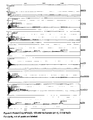
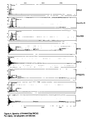
- the PER.C6 cells expressing human IgG1 (2) were grown in 2 L EX-CELL VPRO medium (JRH Biosciences, Inc., USA) in a batch culture for 13 days at 37°C with an agitation speed of 75 rpm using two empellers. The cells and supernatant were separated by centrifugation for 5 min at 300 g at room temperature (R.T.), the supernatant was subsequently filtered over a 22 ⁇ m filter (Millipak 20, Millipore). Of this clarified material a sample was taken for analysis by SELDI-TOF-MS (Sample 1, Table 1).
- a volume of 100 ml clarified and filtrated harvest was applied on a recombinant protein A column (13.8 cm bed height and a volume of 13.1 mL, Pharmacia Biotech) which was connected to an Akta Explorer chromatography system (Pharmacia Biotech). Before the application of the clarified harvest the column was equilibrated with 3 column volumes of 20 mM Tris (pH 7.5), 150 mM NaCl at 1.67 mL/min. While the clarified harvest was applied at 1.67 mL/min a sample was taken from the flow through (Sample 2, Table 1).
- Spectra were analyzed using the peak detection software supplied by the manufacturer (Ciphergen, Fremont, CA, USA) in the software package Ciphergen ProteinChip Software 3.0.1. Peaks with a signal/noise ratio (S./N) of 2 or more were included in the comparison studies. The area for shoulder peaks is given as zero.
- Samples 1-4 were applied on a SAX2, WCX2, NP20 and H4 ProteinChip. Sample 1 and 4 were used in the same dilution as indicated for the first NP20. The samples were analyzed according the experimental procedure described in 2.3.1 with the instrument settings of 2.3.2. Table 2. The first equilibration and two different buffers.
- NP20 ProteinChip
- SPA spot E - H
- LI 230 LI 270
- the percentage of impurities can only be calculated when a product peak is present, thus only for the clarified harvest (sample 2) and the eluate (sample 3).
- the following formula (1) was used. 100 % * ( 1 - total Area IgG peaks / total Area ) Table 3. % Impurities calculated for clarified harvest (sample 2)and the eluate (sample 3) found for the different ProteinChips.
- ProteinChip NP20(2) Spectrum Tag Peak# Substance Mass Signal/Noise MZArea Medium-A,3 1 5860.39 364.88 6633.61 Medium-A,3 2 9193.41 84.32 6687.72 total area 13321.32 % impurities N.A.
- ProteinChip H4 Spectrum Tag Peak# Substance.Mass Signal/Noise MZArea Medium-A,3 1 5887.435 154.8729 2307.542 Medium-A,3 2 6095.129 23.0743 253.8904 Medium-A,3 3 9181.094 10.98542 146.8193 Medium-A,3 4 12128.92 3.009221 14.26603 total area 2722.52 % impurities n.a.
Landscapes
- Life Sciences & Earth Sciences (AREA)
- Health & Medical Sciences (AREA)
- Engineering & Computer Science (AREA)
- Molecular Biology (AREA)
- Physics & Mathematics (AREA)
- Hematology (AREA)
- Chemical & Material Sciences (AREA)
- Urology & Nephrology (AREA)
- Immunology (AREA)
- Biomedical Technology (AREA)
- Bioinformatics & Cheminformatics (AREA)
- Bioinformatics & Computational Biology (AREA)
- Microbiology (AREA)
- Analytical Chemistry (AREA)
- Biotechnology (AREA)
- Proteomics, Peptides & Aminoacids (AREA)
- Pathology (AREA)
- Spectroscopy & Molecular Physics (AREA)
- General Physics & Mathematics (AREA)
- Food Science & Technology (AREA)
- Medicinal Chemistry (AREA)
- Cell Biology (AREA)
- Biochemistry (AREA)
- General Health & Medical Sciences (AREA)
- Optics & Photonics (AREA)
- Biophysics (AREA)
- Peptides Or Proteins (AREA)
- External Artificial Organs (AREA)
- Investigating Or Analysing Biological Materials (AREA)
- Measuring Or Testing Involving Enzymes Or Micro-Organisms (AREA)
- Elimination Of Static Electricity (AREA)
- Confectionery (AREA)
Claims (10)
- Verfahren zur Kontrolle der Kontaminationsbeseitigung während des Reinigungsprozesses eines durch eine Wirtszelle produzierten Arzneimittels, dadurch gekennzeichnet, daß wenigstens zwei verschiedene, während des Reinigungsprozesses des produzierten Arzneimittels entnommene Proben mit wenigstens einem Protein-Biochiparray inkubiert werden und daß die an den Protein-Biochiparray gebundenen Kontaminationen anschließend nachgewiesen werden.
- Verfahren nach Anspruch 1, dadurch gekennzeichnet, daß Proben vor dem ersten Reinigungsschritt sowie nach jedem nachfolgenden Reinigungsschritt entnommen werden.
- Verfahren nach Anspruch 1 oder 2, dadurch gekennzeichnet, daß eine nach einem gegebenen Reinigungsschritt erhaltene Probe mit wenigstens zwei, stärker bevorzugt wenigstens drei, am stärksten bevorzugt wenigstens vier, verschiedenen Protein-Biochiparrays mit unterschiedlichen interaktiven Oberflächen inkubiert wird.
- Verfahren nach einem der Ansprüche 1-3, dadurch gekennzeichnet, daß die an den Protein-Biochiparray gebundenen Kontaminationen direkt nachgewiesen werden.
- Verfahren nach Anspruch 4, dadurch gekennzeichnet, daß zum direkten Nachweis der Kontaminationen ein massenspektrometrischer Ansatz verwendet wird.
- Verfahren nach einem der Ansprüche 1-5, dadurch gekennzeichnet, daß es sich bei den nachgewiesenen Kontaminationen um Proteine handelt.
- Verfahren nach einem der Ansprüche 1-6, dadurch gekennzeichnet, daß es sich bei den nachgewiesenen Kontaminationen um Wirtszellenproteine handelt.
- Verwendung eines oder mehrerer Protein-Biochiparrays zur Kontrolle der Kontaminationsbeseitigung während des Reinigungsprozesses eines durch eine Wirtszelle produzierten Arzneimittels.
- Verwendung nach Anspruch 8, dadurch gekennzeichnet, daß wenigstens zwei verschiedene Protein-Biochiparrays mit unterschiedlichen interaktiven Oberflächen verwendet werden.
- Verwendung nach Anspruch 8 oder 9, dadurch gekennzeichnet, daß die Beseitigung von Wirtszellenproteinen kontrolliert wird.
Priority Applications (1)
| Application Number | Priority Date | Filing Date | Title |
|---|---|---|---|
| EP03721168A EP1502103B1 (de) | 2002-05-03 | 2003-05-01 | Prozess für die kontrolle der kontaminationsbeseitigung während des reinigungsprozesses eines durch eine wirtszelle produzierten arzneimittels |
Applications Claiming Priority (4)
| Application Number | Priority Date | Filing Date | Title |
|---|---|---|---|
| EP02076739 | 2002-05-03 | ||
| EP02076739 | 2002-05-03 | ||
| PCT/NL2003/000319 WO2003093814A1 (en) | 2002-05-03 | 2003-05-01 | Process for the monitoring of contaminant removal during the purification process of a pharmaceutical product produced by a host cell |
| EP03721168A EP1502103B1 (de) | 2002-05-03 | 2003-05-01 | Prozess für die kontrolle der kontaminationsbeseitigung während des reinigungsprozesses eines durch eine wirtszelle produzierten arzneimittels |
Publications (2)
| Publication Number | Publication Date |
|---|---|
| EP1502103A1 EP1502103A1 (de) | 2005-02-02 |
| EP1502103B1 true EP1502103B1 (de) | 2006-09-13 |
Family
ID=29286177
Family Applications (1)
| Application Number | Title | Priority Date | Filing Date |
|---|---|---|---|
| EP03721168A Expired - Lifetime EP1502103B1 (de) | 2002-05-03 | 2003-05-01 | Prozess für die kontrolle der kontaminationsbeseitigung während des reinigungsprozesses eines durch eine wirtszelle produzierten arzneimittels |
Country Status (10)
| Country | Link |
|---|---|
| US (1) | US7371581B2 (de) |
| EP (1) | EP1502103B1 (de) |
| JP (1) | JP2005524835A (de) |
| AT (1) | ATE339685T1 (de) |
| AU (1) | AU2003224515A1 (de) |
| CA (1) | CA2484529A1 (de) |
| DE (1) | DE60308354T2 (de) |
| DK (1) | DK1502103T3 (de) |
| ES (1) | ES2271565T3 (de) |
| WO (1) | WO2003093814A1 (de) |
Families Citing this family (2)
| Publication number | Priority date | Publication date | Assignee | Title |
|---|---|---|---|---|
| US7473916B2 (en) * | 2005-12-16 | 2009-01-06 | Asml Netherlands B.V. | Apparatus and method for detecting contamination within a lithographic apparatus |
| CN103517981B (zh) * | 2011-04-22 | 2017-02-15 | 丹尼斯科美国公司 | 具有粘度改变表型的丝状真菌 |
Family Cites Families (3)
| Publication number | Priority date | Publication date | Assignee | Title |
|---|---|---|---|---|
| NZ516848A (en) * | 1997-06-20 | 2004-03-26 | Ciphergen Biosystems Inc | Retentate chromatography apparatus with applications in biology and medicine |
| WO2001079529A1 (en) * | 2000-04-17 | 2001-10-25 | Purdue Research Foundation | Biosensor and related method |
| AU2001259512B2 (en) * | 2000-05-04 | 2007-03-01 | Yale University | High density protein arrays for screening of protein activity |
-
2003
- 2003-05-01 EP EP03721168A patent/EP1502103B1/de not_active Expired - Lifetime
- 2003-05-01 ES ES03721168T patent/ES2271565T3/es not_active Expired - Lifetime
- 2003-05-01 DK DK03721168T patent/DK1502103T3/da active
- 2003-05-01 AU AU2003224515A patent/AU2003224515A1/en not_active Abandoned
- 2003-05-01 US US10/513,575 patent/US7371581B2/en not_active Expired - Fee Related
- 2003-05-01 WO PCT/NL2003/000319 patent/WO2003093814A1/en not_active Ceased
- 2003-05-01 AT AT03721168T patent/ATE339685T1/de not_active IP Right Cessation
- 2003-05-01 CA CA002484529A patent/CA2484529A1/en not_active Abandoned
- 2003-05-01 JP JP2004501930A patent/JP2005524835A/ja active Pending
- 2003-05-01 DE DE60308354T patent/DE60308354T2/de not_active Expired - Fee Related
Also Published As
| Publication number | Publication date |
|---|---|
| DK1502103T3 (da) | 2006-12-11 |
| WO2003093814A1 (en) | 2003-11-13 |
| ATE339685T1 (de) | 2006-10-15 |
| EP1502103A1 (de) | 2005-02-02 |
| DE60308354D1 (de) | 2006-10-26 |
| CA2484529A1 (en) | 2003-11-13 |
| ES2271565T3 (es) | 2007-04-16 |
| DE60308354T2 (de) | 2007-09-06 |
| US7371581B2 (en) | 2008-05-13 |
| US20050170328A1 (en) | 2005-08-04 |
| AU2003224515A1 (en) | 2003-11-17 |
| JP2005524835A (ja) | 2005-08-18 |
Similar Documents
| Publication | Publication Date | Title |
|---|---|---|
| Damen et al. | Electrospray ionization quadrupole ion-mobility time-of-flight mass spectrometry as a tool to distinguish the lot-to-lot heterogeneity in N-glycosylation profile of the therapeutic monoclonal antibody trastuzumab | |
| Krokhin et al. | Deamidation of-Asn-Gly-sequences during sample preparation for proteomics: Consequences for MALDI and HPLC-MALDI analysis | |
| Perkins et al. | Determination of the origin of charge heterogeneity in a murine monoclonal antibody | |
| EP2394173B1 (de) | Immunglobulin-glycosylationsmusteranalyse | |
| RU2476886C2 (ru) | Способ характеризации рекомбинантного поликлонального белка | |
| EP2975401B1 (de) | Verbessertes verfahren zur kartierung von glycoproteinen in serumsproben | |
| EP2225273B1 (de) | Stabilitätsprüfung von antikörpern | |
| HK1211948A1 (en) | Pertuzumab variants and evaluation thereof | |
| Zhu et al. | Integrating intact mass analysis and middle-down mass spectrometry approaches to effectively characterize trastuzumab and adalimumab structural heterogeneity | |
| US12600747B2 (en) | Process of purification of protein | |
| Tartaglia et al. | Trends in the analysis of biopharmaceuticals by HPLC | |
| CA3099163A1 (en) | Antibodies with modulated glycan profiles | |
| CN116324420A (zh) | 用于通过胰蛋白酶消化、色谱梯度和BoxCar质谱联用检测治疗性抗体中宿主细胞蛋白的方法 | |
| EP1502103B1 (de) | Prozess für die kontrolle der kontaminationsbeseitigung während des reinigungsprozesses eines durch eine wirtszelle produzierten arzneimittels | |
| Perdomo-Abúndez et al. | Development and validation of a mass spectrometric method to determine the identity of rituximab based on its microheterogeneity profile | |
| WO2023120561A1 (ja) | 生物活性が低下した抗体バリアント | |
| Lee et al. | Biochemical characterization of a new recombinant TNF receptor-hyFc fusion protein expressed in CHO cells | |
| Woodall et al. | Native SEC and Reversed-Phase LC–MS Reveal Impact of Fab Glycosylation of Anti-SARS-COV-2 Antibodies on Binding to the Receptor Binding Domain | |
| US20240053359A1 (en) | Native microfluidic ce-ms analysis of antibody charge heterogeneity | |
| Atmanene et al. | Noncovalent mass spectrometry for the characterization of antibody/antigen complexes | |
| Samonig et al. | LC/MS analysis of the monoclonal antibody rituximab using the Q Exactive Benchtop Orbitrap Mass Spectrometer | |
| US20260116917A1 (en) | Process of purification of protein | |
| US20240352061A1 (en) | Process for separation and quantification of non-ionic surfactant | |
| Dakshinamurthy et al. | Comprehensive Analytical Characterization of the Proposed Biosimilar Trastuzumab | |
| Yan et al. | Analysis of human antibody IgG2 domains by reversed-phase liquid chromatography and mass spectrometry |
Legal Events
| Date | Code | Title | Description |
|---|---|---|---|
| PUAI | Public reference made under article 153(3) epc to a published international application that has entered the european phase |
Free format text: ORIGINAL CODE: 0009012 |
|
| 17P | Request for examination filed |
Effective date: 20041015 |
|
| AK | Designated contracting states |
Kind code of ref document: A1 Designated state(s): AT BE BG CH CY CZ DE DK EE ES FI FR GB GR HU IE IT LI LU MC NL PT RO SE SI SK TR |
|
| AX | Request for extension of the european patent |
Extension state: AL LT LV MK |
|
| 17Q | First examination report despatched |
Effective date: 20050419 |
|
| DAX | Request for extension of the european patent (deleted) | ||
| GRAP | Despatch of communication of intention to grant a patent |
Free format text: ORIGINAL CODE: EPIDOSNIGR1 |
|
| GRAS | Grant fee paid |
Free format text: ORIGINAL CODE: EPIDOSNIGR3 |
|
| GRAA | (expected) grant |
Free format text: ORIGINAL CODE: 0009210 |
|
| AK | Designated contracting states |
Kind code of ref document: B1 Designated state(s): AT BE BG CH CY CZ DE DK EE ES FI FR GB GR HU IE IT LI LU MC NL PT RO SE SI SK TR |
|
| PG25 | Lapsed in a contracting state [announced via postgrant information from national office to epo] |
Ref country code: IT Free format text: LAPSE BECAUSE OF FAILURE TO SUBMIT A TRANSLATION OF THE DESCRIPTION OR TO PAY THE FEE WITHIN THE PRESCRIBED TIME-LIMIT;WARNING: LAPSES OF ITALIAN PATENTS WITH EFFECTIVE DATE BEFORE 2007 MAY HAVE OCCURRED AT ANY TIME BEFORE 2007. THE CORRECT EFFECTIVE DATE MAY BE DIFFERENT FROM THE ONE RECORDED. Effective date: 20060913 Ref country code: SI Free format text: LAPSE BECAUSE OF FAILURE TO SUBMIT A TRANSLATION OF THE DESCRIPTION OR TO PAY THE FEE WITHIN THE PRESCRIBED TIME-LIMIT Effective date: 20060913 Ref country code: SK Free format text: LAPSE BECAUSE OF FAILURE TO SUBMIT A TRANSLATION OF THE DESCRIPTION OR TO PAY THE FEE WITHIN THE PRESCRIBED TIME-LIMIT Effective date: 20060913 Ref country code: RO Free format text: LAPSE BECAUSE OF FAILURE TO SUBMIT A TRANSLATION OF THE DESCRIPTION OR TO PAY THE FEE WITHIN THE PRESCRIBED TIME-LIMIT Effective date: 20060913 Ref country code: FI Free format text: LAPSE BECAUSE OF FAILURE TO SUBMIT A TRANSLATION OF THE DESCRIPTION OR TO PAY THE FEE WITHIN THE PRESCRIBED TIME-LIMIT Effective date: 20060913 |
|
| REG | Reference to a national code |
Ref country code: GB Ref legal event code: FG4D |
|
| REG | Reference to a national code |
Ref country code: CH Ref legal event code: EP |
|
| REG | Reference to a national code |
Ref country code: IE Ref legal event code: FG4D |
|
| REF | Corresponds to: |
Ref document number: 60308354 Country of ref document: DE Date of ref document: 20061026 Kind code of ref document: P |
|
| REG | Reference to a national code |
Ref country code: DK Ref legal event code: T3 |
|
| PG25 | Lapsed in a contracting state [announced via postgrant information from national office to epo] |
Ref country code: BG Free format text: LAPSE BECAUSE OF FAILURE TO SUBMIT A TRANSLATION OF THE DESCRIPTION OR TO PAY THE FEE WITHIN THE PRESCRIBED TIME-LIMIT Effective date: 20061213 |
|
| REG | Reference to a national code |
Ref country code: SE Ref legal event code: TRGR |
|
| PG25 | Lapsed in a contracting state [announced via postgrant information from national office to epo] |
Ref country code: PT Free format text: LAPSE BECAUSE OF FAILURE TO SUBMIT A TRANSLATION OF THE DESCRIPTION OR TO PAY THE FEE WITHIN THE PRESCRIBED TIME-LIMIT Effective date: 20070226 |
|
| ET | Fr: translation filed | ||
| REG | Reference to a national code |
Ref country code: ES Ref legal event code: FG2A Ref document number: 2271565 Country of ref document: ES Kind code of ref document: T3 |
|
| PLBE | No opposition filed within time limit |
Free format text: ORIGINAL CODE: 0009261 |
|
| STAA | Information on the status of an ep patent application or granted ep patent |
Free format text: STATUS: NO OPPOSITION FILED WITHIN TIME LIMIT |
|
| 26N | No opposition filed |
Effective date: 20070614 |
|
| PG25 | Lapsed in a contracting state [announced via postgrant information from national office to epo] |
Ref country code: MC Free format text: LAPSE BECAUSE OF NON-PAYMENT OF DUE FEES Effective date: 20070531 |
|
| PG25 | Lapsed in a contracting state [announced via postgrant information from national office to epo] |
Ref country code: GR Free format text: LAPSE BECAUSE OF FAILURE TO SUBMIT A TRANSLATION OF THE DESCRIPTION OR TO PAY THE FEE WITHIN THE PRESCRIBED TIME-LIMIT Effective date: 20061214 |
|
| PG25 | Lapsed in a contracting state [announced via postgrant information from national office to epo] |
Ref country code: EE Free format text: LAPSE BECAUSE OF FAILURE TO SUBMIT A TRANSLATION OF THE DESCRIPTION OR TO PAY THE FEE WITHIN THE PRESCRIBED TIME-LIMIT Effective date: 20060913 |
|
| PGFP | Annual fee paid to national office [announced via postgrant information from national office to epo] |
Ref country code: DK Payment date: 20090528 Year of fee payment: 7 Ref country code: ES Payment date: 20090526 Year of fee payment: 7 Ref country code: IE Payment date: 20090527 Year of fee payment: 7 Ref country code: NL Payment date: 20090524 Year of fee payment: 7 |
|
| PG25 | Lapsed in a contracting state [announced via postgrant information from national office to epo] |
Ref country code: LU Free format text: LAPSE BECAUSE OF NON-PAYMENT OF DUE FEES Effective date: 20070501 Ref country code: CY Free format text: LAPSE BECAUSE OF FAILURE TO SUBMIT A TRANSLATION OF THE DESCRIPTION OR TO PAY THE FEE WITHIN THE PRESCRIBED TIME-LIMIT Effective date: 20060913 |
|
| PGFP | Annual fee paid to national office [announced via postgrant information from national office to epo] |
Ref country code: AT Payment date: 20090421 Year of fee payment: 7 Ref country code: CZ Payment date: 20090427 Year of fee payment: 7 Ref country code: DE Payment date: 20090528 Year of fee payment: 7 Ref country code: FR Payment date: 20090518 Year of fee payment: 7 Ref country code: IT Payment date: 20090526 Year of fee payment: 7 Ref country code: SE Payment date: 20090528 Year of fee payment: 7 |
|
| PG25 | Lapsed in a contracting state [announced via postgrant information from national office to epo] |
Ref country code: TR Free format text: LAPSE BECAUSE OF FAILURE TO SUBMIT A TRANSLATION OF THE DESCRIPTION OR TO PAY THE FEE WITHIN THE PRESCRIBED TIME-LIMIT Effective date: 20060913 Ref country code: HU Free format text: LAPSE BECAUSE OF FAILURE TO SUBMIT A TRANSLATION OF THE DESCRIPTION OR TO PAY THE FEE WITHIN THE PRESCRIBED TIME-LIMIT Effective date: 20070314 |
|
| PGFP | Annual fee paid to national office [announced via postgrant information from national office to epo] |
Ref country code: BE Payment date: 20090624 Year of fee payment: 7 |
|
| PGFP | Annual fee paid to national office [announced via postgrant information from national office to epo] |
Ref country code: CH Payment date: 20090526 Year of fee payment: 7 |
|
| PGFP | Annual fee paid to national office [announced via postgrant information from national office to epo] |
Ref country code: GB Payment date: 20090528 Year of fee payment: 7 |
|
| BERE | Be: lapsed |
Owner name: *DSM IP ASSETS B.V. Effective date: 20100531 |
|
| REG | Reference to a national code |
Ref country code: NL Ref legal event code: V1 Effective date: 20101201 |
|
| REG | Reference to a national code |
Ref country code: CH Ref legal event code: PL |
|
| REG | Reference to a national code |
Ref country code: DK Ref legal event code: EBP |
|
| GBPC | Gb: european patent ceased through non-payment of renewal fee |
Effective date: 20100501 |
|
| PG25 | Lapsed in a contracting state [announced via postgrant information from national office to epo] |
Ref country code: AT Free format text: LAPSE BECAUSE OF NON-PAYMENT OF DUE FEES Effective date: 20100501 |
|
| EUG | Se: european patent has lapsed | ||
| REG | Reference to a national code |
Ref country code: FR Ref legal event code: ST Effective date: 20110131 |
|
| PG25 | Lapsed in a contracting state [announced via postgrant information from national office to epo] |
Ref country code: LI Free format text: LAPSE BECAUSE OF NON-PAYMENT OF DUE FEES Effective date: 20100531 Ref country code: CZ Free format text: LAPSE BECAUSE OF NON-PAYMENT OF DUE FEES Effective date: 20100501 Ref country code: CH Free format text: LAPSE BECAUSE OF NON-PAYMENT OF DUE FEES Effective date: 20100531 |
|
| PG25 | Lapsed in a contracting state [announced via postgrant information from national office to epo] |
Ref country code: NL Free format text: LAPSE BECAUSE OF NON-PAYMENT OF DUE FEES Effective date: 20101201 Ref country code: BE Free format text: LAPSE BECAUSE OF NON-PAYMENT OF DUE FEES Effective date: 20100531 Ref country code: SE Free format text: LAPSE BECAUSE OF NON-PAYMENT OF DUE FEES Effective date: 20100502 Ref country code: IT Free format text: LAPSE BECAUSE OF NON-PAYMENT OF DUE FEES Effective date: 20100501 |
|
| PG25 | Lapsed in a contracting state [announced via postgrant information from national office to epo] |
Ref country code: DK Free format text: LAPSE BECAUSE OF NON-PAYMENT OF DUE FEES Effective date: 20100531 Ref country code: DE Free format text: LAPSE BECAUSE OF NON-PAYMENT OF DUE FEES Effective date: 20101201 Ref country code: IE Free format text: LAPSE BECAUSE OF NON-PAYMENT OF DUE FEES Effective date: 20100503 |
|
| PG25 | Lapsed in a contracting state [announced via postgrant information from national office to epo] |
Ref country code: FR Free format text: LAPSE BECAUSE OF NON-PAYMENT OF DUE FEES Effective date: 20100531 |
|
| REG | Reference to a national code |
Ref country code: ES Ref legal event code: FD2A Effective date: 20110711 |
|
| PG25 | Lapsed in a contracting state [announced via postgrant information from national office to epo] |
Ref country code: GB Free format text: LAPSE BECAUSE OF NON-PAYMENT OF DUE FEES Effective date: 20100501 Ref country code: ES Free format text: LAPSE BECAUSE OF NON-PAYMENT OF DUE FEES Effective date: 20110629 |
|
| PG25 | Lapsed in a contracting state [announced via postgrant information from national office to epo] |
Ref country code: ES Free format text: LAPSE BECAUSE OF NON-PAYMENT OF DUE FEES Effective date: 20100502 |