EP1502467B1 - Verbundene sim-kartenfunktion - Google Patents
Verbundene sim-kartenfunktion Download PDFInfo
- Publication number
- EP1502467B1 EP1502467B1 EP03729947A EP03729947A EP1502467B1 EP 1502467 B1 EP1502467 B1 EP 1502467B1 EP 03729947 A EP03729947 A EP 03729947A EP 03729947 A EP03729947 A EP 03729947A EP 1502467 B1 EP1502467 B1 EP 1502467B1
- Authority
- EP
- European Patent Office
- Prior art keywords
- key
- mobile device
- smart card
- algorithm
- generated
- Prior art date
- Legal status (The legal status is an assumption and is not a legal conclusion. Google has not performed a legal analysis and makes no representation as to the accuracy of the status listed.)
- Expired - Lifetime
Links
- 238000000034 method Methods 0.000 claims abstract description 28
- 238000010586 diagram Methods 0.000 description 6
- 238000004519 manufacturing process Methods 0.000 description 3
- 230000000717 retained effect Effects 0.000 description 2
- 238000013475 authorization Methods 0.000 description 1
- 238000004891 communication Methods 0.000 description 1
- 238000010295 mobile communication Methods 0.000 description 1
- 230000035515 penetration Effects 0.000 description 1
- XOOUIPVCVHRTMJ-UHFFFAOYSA-L zinc stearate Chemical compound [Zn+2].CCCCCCCCCCCCCCCCCC([O-])=O.CCCCCCCCCCCCCCCCCC([O-])=O XOOUIPVCVHRTMJ-UHFFFAOYSA-L 0.000 description 1
Images


Classifications
-
- H—ELECTRICITY
- H04—ELECTRIC COMMUNICATION TECHNIQUE
- H04W—WIRELESS COMMUNICATION NETWORKS
- H04W12/00—Security arrangements; Authentication; Protecting privacy or anonymity
- H04W12/06—Authentication
-
- H—ELECTRICITY
- H04—ELECTRIC COMMUNICATION TECHNIQUE
- H04W—WIRELESS COMMUNICATION NETWORKS
- H04W12/00—Security arrangements; Authentication; Protecting privacy or anonymity
- H04W12/04—Key management, e.g. using generic bootstrapping architecture [GBA]
- H04W12/043—Key management, e.g. using generic bootstrapping architecture [GBA] using a trusted network node as an anchor
- H04W12/0433—Key management protocols
-
- H—ELECTRICITY
- H04—ELECTRIC COMMUNICATION TECHNIQUE
- H04W—WIRELESS COMMUNICATION NETWORKS
- H04W12/00—Security arrangements; Authentication; Protecting privacy or anonymity
- H04W12/04—Key management, e.g. using generic bootstrapping architecture [GBA]
- H04W12/041—Key generation or derivation
-
- H—ELECTRICITY
- H04—ELECTRIC COMMUNICATION TECHNIQUE
- H04W—WIRELESS COMMUNICATION NETWORKS
- H04W12/00—Security arrangements; Authentication; Protecting privacy or anonymity
- H04W12/12—Detection or prevention of fraud
- H04W12/126—Anti-theft arrangements, e.g. protection against subscriber identity module [SIM] cloning
-
- H—ELECTRICITY
- H04—ELECTRIC COMMUNICATION TECHNIQUE
- H04L—TRANSMISSION OF DIGITAL INFORMATION, e.g. TELEGRAPHIC COMMUNICATION
- H04L63/00—Network architectures or network communication protocols for network security
- H04L63/08—Network architectures or network communication protocols for network security for authentication of entities
- H04L63/0853—Network architectures or network communication protocols for network security for authentication of entities using an additional device, e.g. smartcard, SIM or a different communication terminal
-
- H—ELECTRICITY
- H04—ELECTRIC COMMUNICATION TECHNIQUE
- H04W—WIRELESS COMMUNICATION NETWORKS
- H04W88/00—Devices specially adapted for wireless communication networks, e.g. terminals, base stations or access point devices
- H04W88/02—Terminal devices
Definitions
- the present invention relates generally to the mobile telecommunications field; and, more particularly, to a method and system for protecting the integrity of the interface between a mobile device, and a "smart" card provided in the mobile device.
- a smart card provides the mechanism by which a Mobile Station (MS), such as a mobile telephone or other mobile device, can be "locked" to a particular telecommunications network.
- MS Mobile Station
- the smart card is mounted in a mobile device and provides a network subscriber with authorization to use the mobile device in the network; and, in addition, provides the network operator with the ability to control the manner in which the mobile device is used in the network.
- SIM Subscriber Information Module
- the SIM card is the main secure carrier of private/secret (key) information to authorize network access to and to provide, via SAT (SIM Application Toolkit), control over a mobile device.
- the SIM card carries network parameters (in, for example, so-called GID fields) that control the SIM lock functionality by which a network operator can lock a mobile device to its network.
- the mobile device obtains the SIM lock-related parameters that enable the mobile device to operate in the network from the SIM card via a card reader in the mobile device.
- the current electrical interface (standard) that describes how SIM cards and their associated card readers should function realizes an open physical channel between the SIM card and the card reader in the mobile device that is unprotected. As a result, the interface is susceptible to being penetrated by an active wiretapper. Attacks that have been reported, for example, include those that "spoof" the SIM lock system by inserting a micro chip between the electrical interface of the SIM card and the SIM card reader in the mobile device. The micro chip provides bogus data when the mobile device requests the SIM lock-related parameters from the SIM card, and can enable unauthorized use of the mobile device.
- an authorized user of a mobile device may find it advantageous to function as an active wiretapper in certain situations.
- a user may obtain a subsidized mobile phone from one network operator in return for agreeing to utilize that operator's network. The user can then actively wiretap the open channel between the phone and the SIM card to enable the user to use the phone in another network. As a result, the operator that provided the subsidized phone to the user can lose its investment in the subsidized phone.
- EP 1001640 discloses a number of methods for securing mobile user devices by providing a user- controlled blocking-mechanism for the user device as to prevent fraudulent misuse.
- EP 0932 317 discloses a method for preventing fraudulent misuse of a mobile terminal by encrypting the messages sent between the mobile device and the SIM card.
- the present invention provides a method and system for protecting an interface between a mobile device and a smart card provided in the mobile device against active wiretapping as disclosed in claim 1.
- a method for protecting an interface between a mobile device for a wireless telecommunications system and a smart card comprises generating a first key in the mobile device and a second key in the smart card, generating a first message authentication code in the mobile device using the first key and generating a second message authentication code in the smart card using the second key, wherein the first and second message authentication codes protect the data communicated between the smart coad and the mobile device, and comparing the generated first and second message authentication codes, wherein use of the mobile device is enabled based on a result of the comparison.
- the present invention recognizes that the electrical and logical interface between a mobile telecommunications device and a smart card provided in the device is open and not protected; and, thus, is susceptible to being penetrated by an active wiretapper.
- the present invention prevents such penetration by enabling use of the mobile device only as a result of a comparison of authentication values that are separately generated in the mobile device and the smart card, making it highly unlikely that an active wiretapper can utilize the mobile device in an unauthorized manner.
- systems are provided for generating a secret key that will be known to only the mobile device and the smart card so as to prevent even a normal user of the mobile device from using the device in an unauthorized manner.
- the systems can include the support of the network that issued the smart card or be entirely incorporated within the mobile device.
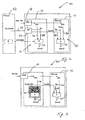
- FIGURE 1 is a block diagram that schematically illustrates a system for protecting an interface between a mobile device for a wireless telecommunications system and a smart card according to an exemplary embodiment of the present invention.
- the system is generally designated by reference number 10 and includes a mobile device 12, such as a mobile telephone, and a smart card 14 provided in the mobile device.
- a mobile device 12 such as a mobile telephone
- smart card 14 provided in the mobile device.
- system 10 is utilized in GSM
- smart card 14 comprises a SIM card.
- a PIN (Personal Identification Number) 16 is first entered into system 10 via a man-machine interface (MMI) 18 (methods by which PIN 16 may be entered will be described hereinafter).
- MMI man-machine interface
- PIN 16 is retained in mobile device 12 and is also passed to SIM card 14, and is used to establish/generate a secret key in both mobile device 12 and SIM card 14.
- PIN 16 is used to generate a first secret key 23 (also referred to herein as secret key K1) via Ksimif generation software 22.
- PIN 16 is used to generate a second secret key 25 (also referred to herein as secret key K2) via Ksimif generation software 24.
- Secret keys 23 and 25 are then used to generate Message Authentication Codes (MACs) 26 and 28 in mobile device 12 and in SIM card 14, respectively, via MAC generation software 32 and 34 in the mobile device and the SIM card, respectively.
- MAC 26 and MAC 28 are then compared as shown at 36, and if the comparison results in a match, mobile device 12 will be enabled so that it may be used in a normal manner by a user. If the comparison does not result in a match, the mobile device will not be enabled and cannot be used. Clearly, by reversing the data flow, the use of MACs can also protect data going from the mobile device into the SIM card.
- a user will be able to operate mobile device 12 in a normal manner only if MAC 26 generated in the mobile device matches MAC 28 generated in the SIM card.
- An active wiretapper that wishes to use the mobile device in an unauthorized manner by, for example, inserting bogus data in the interface between the mobile device and the SIM card, will have to be able to generate a MAC that matches MAC 26 in the mobile device in order to be able to use the mobile device.
- MACs 26 and 28 are each generated from MAC fields provided in the mobile device and the SIM card, and by making the MAC fields sufficiently large, the probability of an active wiretapper succeeding without knowing the secret key can be made arbitrarily small.
- the protection system illustrated in FIGURE 1 requires the establishment of a secret shared key, Ksimif, that is shared by the mobile device and the SIM card.
- Ksimif a secret shared key
- even the owner (user) of the mobile device is a potential attacker, and should not have easy access to the key.
- FIGURE 2 is a block diagram that illustrates a system 40 by which a matching secret key, Ksimif, that is known by only the mobile device and the SIM card can be generated by the mobile device and the SIM card via Ksimif generation software 51 and 52, respectively.
- Ksimif a matching secret key
- the operator of a network 42 (the operator that originally distributes the SIM card to a user) stores an algorithm A in SIM card 14 and gives an algorithm B to the mobile device manufacturer to be included in the software of mobile device 12 as part of the mobile device customization process during production.
- Algorithm A generates secret key 45 (K2) using input PIN 16, a key 46 (Ksim) provided in the SIM card, and an input, randomly generated RAND 44.
- the mobile device When the mobile device enters a network, it will contact the operator. The operator will send (using standard protected communication channels) the values of a randomly chosen RAND and the matching Ko via Network Services Interface (NSI) 50. Ko is retained in the mobile device, and the value of RAND is passed to the SIM card.
- the mobile device runs algorithm B on the PIN 16 that was entered and the received value of Ko 48 to provide secret key 43 (K1).
- the operator can also use Subscriber Access Termination (SAT) to send the value of RAND with a protected/encrypted channel to the SIM.
- SAT Subscriber Access Termination
- the operator of network 42 can download algorithm B into the mobile device as illustrated in dotted line in FIGURE 2 .
- the download procedures support the secure download of software as, for example, through digital signed SW jar files in JAVA.
- the network-assisted generation of the shared secret key Ksimif can be replaced by a technique that uses only resources in the mobile device. This can be achieved by also implementing algorithm A, used by the SIM card, in the mobile device.
- algorithm A and the key Ksim are implemented in a tamper-resistant unit of the mobile device that was programmed with algorithm A and Ksim during manufacture of the mobile device.
- FIGURE 3 is a block diagram that schematically illustrates a system 60 by which a matching secret key, Ksimif, that is known by only the mobile device and the SIM card, can be generated by the mobile device and the SIM card in a manner that does not require network assistance, according to another exemplary embodiment of the invention.
- Ksimif a matching secret key
- mobile device 12 includes a tamper resistant unit 62 that has been programmed with Algorithm A and Ksim during manufacture of the mobile device.
- a random value RAND 44, the value Ksim 46 and the PIN 16 are used in both the mobile device and the SIM card to generate the secret keys 63 (K1) and 65 (K2) from which the MACs are generated.
- FIGURE 4 is a flow chart that schematically illustrates steps of a method for protecting an interface between a mobile telecommunications device and a smart card provided in the device in accordance with another exemplary embodiment of the present invention.
- the method is generally designated by reference number 80, and begins by inputting a PIN value to both a mobile device and a SIM card for the mobile device (step 82).
- Secret keys are then generated in both the mobile device and the SIM card using a PIN (step 84), and the generated keys are then used to generate MAC values in both the mobile device and the SIM card (step 86).
- the MAC values generated in the mobile device and the SIM card are then compared (step 88).
- step 92 If the result of the comparison is a match (Y output of block 90) use of the mobile device and/or SIM card is enabled (step 92). If the result of the comparison is not a match (N output from block 90), use of the mobile device is not enabled (step 94).
Landscapes
- Engineering & Computer Science (AREA)
- Computer Security & Cryptography (AREA)
- Computer Networks & Wireless Communication (AREA)
- Signal Processing (AREA)
- Telephone Function (AREA)
- Mobile Radio Communication Systems (AREA)
- Coupling Device And Connection With Printed Circuit (AREA)
- Diaphragms For Electromechanical Transducers (AREA)
- Credit Cards Or The Like (AREA)
- Compositions Of Oxide Ceramics (AREA)
Claims (19)
- Verfahren zum Schützen einer Schnittstelle zwischen einer mobilen Gerät (12) für ein drahtloses Telekommunikationssystem und einer Chipkarte (14), umfassend:- Erzeugen eines ersten Schlüssels (23) in dem mobilen Gerät und eines zweiten Schlüssels (25) in der Chipkarte;
dadurch gekennzeichnet, dass das Verfahren weiterhin umfasst:- Erzeugen eines ersten Nachrichtenauthentifizierungscodes (26) in dem mobilen Gerät unter Einsatz des ersten Schlüssels und Erzeugen eines zweiten Nachrichtenauthentifizierungscodes (28) in der Chipkarte unter Einsatz des zweiten Schlüssels,
wobei die ersten und zweiten Nachrichtenauthentifizierungscodes die Daten schützen, die zwischen der Chipkarte und dem mobilen Gerät kommuniziert werden; und- Vergleichen der erzeugten ersten und zweiten Nachrichtenauthentifizierungscodes;wobei die Verwendung von mindestens einem von dem mobilen Gerät und der Chipkarte basierend auf einem Ergebnis des Vergleichs ermöglicht wird. - Verfahren nach Anspruch 1, bei dem der Schritt des Erzeugens des ersten Schlüssels in dem mobilen Gerät und des zweiten Schlüssels in der Chipkarte das Erzeugen des ersten Schlüssels und des zweiten Schlüssels aus einer Persönlichen Identifikationsnummer umfasst, die in das mobile Endgerät und die Chipkarte eingegeben wird.
- Verfahren nach Anspruch 1, bei dem die Verwendung des mobilen Geräts ermöglicht wird, falls der erste Nachrichtenauthentifizierungscode gleich ist zu dem zweiten Nachrichtenauthentifizierungscode.
- Verfahren nach Anspruch 1, bei dem das mobile Gerät einen ersten Algorithmus und die Chipkarte einen zweiten Algorithmus umfasst, und wobei der erste Schlüssel in dem mobilen Gerät unter Einsatz des ersten Algorithmus erzeugt wird, und wobei der zweite Schlüssel in der Chipkarte unter Einsatz des zweiten Algorithmus erzeugt wird.
- Verfahren nach Anspruch 4, bei dem der erste Schlüssel aus dem ersten Algorithmus unter Einsatz einer eingegebenen Persönlichen Identifikationsnummer und einem Eingabeschlüssel erzeugt wird, der aus einem zufällig erzeugten Wert erzeugt wird, und bei dem der zweite Schlüssel aus dem zweiten Algorithmus unter Einsatz der eingegebenen Persönlichen Identifikationsnummer, einem Schlüssel, der in der Chipkarte vorgesehen ist, und dem zufällig erzeugten Wert erzeugt wird.
- Verfahren nach Anspruch 5, bei dem der zufällig erzeugte Wert und der eingegebene Schlüssel durch einen Betreiber eines drahtlosen Telekommunikationsnetzwerkes geliefert werden.
- Verfahren nach Anspruch 5, bei dem der zweite Algorithmus in der Chipkarte durch einen Hersteller der Chipkarte installiert wird.
- Verfahren nach Anspruch 5, bei dem der zweite Algorithmus in die Chipkarte durch einen Betreiber eines drahtlosen Kommunikationsnetzwerkes heruntergeladen wird.
- Verfahren nach Anspruch 1, bei dem das drahtlose Kommunikationssystem ein GSM-System umfasst und die Chipkarte eine SIM-Karte umfasst.
- Verfahren nach Anspruch 1, bei dem das drahtlose Telekommunikationssystem ein UMTS-System umfasst und die Chipkarte eine UICC-Karte umfasst.
- System zum Schutz einer Schnittstelle zwischen einer mobilen Einrichtung (12) für ein drahtloses Telekommunikationssystem mit einer Chipkarte (14), umfassend:- einen ersten Schlüsselgenerator (22) zum Erzeugen eines ersten Schlüssels in dem mobilen Gerät und einen zweiten Schlüsselgenerator (24) zum Erzeugen eines zweiten Schlüssels in der Chipkarte;
dadurch gekennzeichnet, dass das System weiterhin umfasst:- einen ersten Nachrichtenauthentifizierungscodegenerator (32) in dem mobilen Gerät zum Erzeugen eines ersten Nachrichtenauthentifizierungscodes in dem mobilen Gerät unter Einsatz des ersten Schlüssels, und einen zweiten Nachrichtenauthentifizierungscodegenerator (34) zum Erzeugen eines zweiten Nachrichtenauthentifizierungscodes in der Chipkarte unter Einsatz des zweiten Schlüssels, wobei die ersten und zweiten Nachrichtenauthentifizierungscodes die Daten schützen, die zwischen der Chipkarte und dem mobilen Gerät kommuniziert werden; und- einen Komparator zum Vergleichen des erzeugten ersten und zweiten Nachrichtenauthentifizierungscodes, wobei die Verwendung von mindestens einem von dem mobilen Gerät und der Chipkarte basierend auf einem Ergebnis des Vergleichs ermöglicht wird. - System nach Anspruch 1, wobei die ersten und zweiten Schlüsselgeneratoren den ersten Schlüssel und den zweiten Schlüssel aus einer Persönlichen Identifikationsnummer erzeugen, welche in das mobile Gerät und die Chipkarte eingegeben wird.
- System nach Anspruch 11, wobei die Verwendung des mobilen Gerätes ermöglicht wird, falls der erste Nachrichtenauthentifizierungscode und der zweite Nachrichtenauthentifizierungscode, die durch den Komparator verglichen werden, gleich sind.
- System nach Anspruch 11, bei dem der erste Schlüsselgenerator einen ersten Algorithmus und der zweite Schlüsselgenerator einen zweiten Algorithmus umfasst, und wobei der erste Schlüssel in dem mobilen Gerät unter Einsatz des ersten Algorithmus und der zweite Schlüssel in der Chipkarte unter Einsatz des zweiten Algorithmus erzeugt wird.
- System nach Anspruch 14, bei dem erste Schlüssel aus einem ersten Algorithmus unter Einsatz einer eingegebenen Persönlichen Identifikationsnummer und einem eingegebenen Schlüssel erzeugt wird, der aus einem zufällig erzeugten Wert erzeugt wird, und wobei der zweite Schlüssel aus dem zweiten Algorithmus unter Einsatz der eingegebenen Persönlichen Identifikationsnummer, einem in der Chipkarte vorgesehenen Schlüssel und dem zufällig erzeugten Wert erzeugt wird.
- System nach Anspruch 14, bei dem der zweite Algorithmus in der Chipkarte durch einen Hersteller der Chipkarte installiert wird.
- System nach Anspruch 14, bei dem der zweite Algorithmus in die Chipkarte durch einen Betreiber eines drahtlosen Telekommunikationsnetzwerkes heruntergeladen wird.
- System nach Anspruch 11, bei dem das drahtlose Telekommunikationssystem ein GSM-System umfasst und wobei die Chipkarte eine SIM-Karte umfasst.
- System nach Anspruch 11, bei dem das drahtlose Telekommunikationssystem ein UMTS-System umfasst und bei dem die Chipkarte eine UICC-Karte umfasst.
Applications Claiming Priority (5)
| Application Number | Priority Date | Filing Date | Title |
|---|---|---|---|
| US37773802P | 2002-05-03 | 2002-05-03 | |
| US377738P | 2002-05-03 | ||
| US10/406,048 US7054613B2 (en) | 2002-05-03 | 2003-04-02 | SIM card to mobile device interface protection method and system |
| US406048 | 2003-04-02 | ||
| PCT/EP2003/004421 WO2003094557A1 (en) | 2002-05-03 | 2003-04-28 | Paired sim card function |
Publications (2)
| Publication Number | Publication Date |
|---|---|
| EP1502467A1 EP1502467A1 (de) | 2005-02-02 |
| EP1502467B1 true EP1502467B1 (de) | 2009-06-24 |
Family
ID=29406808
Family Applications (1)
| Application Number | Title | Priority Date | Filing Date |
|---|---|---|---|
| EP03729947A Expired - Lifetime EP1502467B1 (de) | 2002-05-03 | 2003-04-28 | Verbundene sim-kartenfunktion |
Country Status (6)
| Country | Link |
|---|---|
| US (1) | US7054613B2 (de) |
| EP (1) | EP1502467B1 (de) |
| AT (1) | ATE434914T1 (de) |
| AU (1) | AU2003240471A1 (de) |
| DE (1) | DE60328095D1 (de) |
| WO (1) | WO2003094557A1 (de) |
Families Citing this family (30)
| Publication number | Priority date | Publication date | Assignee | Title |
|---|---|---|---|---|
| IL133584A (en) * | 1999-12-19 | 2010-02-17 | Enco Tone Ltd | Method for the acoustic encodification of dynamic identification codes |
| FR2821225B1 (fr) * | 2001-02-20 | 2005-02-04 | Mobileway | Systeme de paiement electronique a distance |
| FI20011417A7 (fi) * | 2001-06-29 | 2002-12-30 | Nokia Corp | Menetelmä suojata elektroninen laite ja elektroninen laite |
| WO2004098219A1 (en) * | 2003-04-29 | 2004-11-11 | Sony Ericsson Mobile Communications Ab | Mobile apparatus with remote lock and control function |
| KR100575767B1 (ko) * | 2004-03-05 | 2006-05-03 | 엘지전자 주식회사 | 이동 통신 단말기의 장치번호 저장 방법 |
| BRPI0418877B1 (pt) * | 2004-05-31 | 2020-03-17 | Telecom Italia S.P.A. | Método e sistema para habilitar um usuário a se comunicar em uma rede privada virtual através de uma rede de comunicação pública, e, rede de comunicação pública |
| JP4304376B2 (ja) * | 2004-09-09 | 2009-07-29 | 日本電気株式会社 | 携帯電話端末およびそれを含む携帯電話システム |
| KR100670784B1 (ko) | 2004-11-29 | 2007-01-17 | 한국전자통신연구원 | 인증용 스마트 카드를 통하여 usim 카드가 장착된휴대용 단말기를 인증하는 방법 및 장치 |
| US7773552B2 (en) * | 2005-03-09 | 2010-08-10 | Yokogawa Electric Corporation | Mobile communication system and mobile communication method |
| US20060206710A1 (en) * | 2005-03-11 | 2006-09-14 | Christian Gehrmann | Network assisted terminal to SIM/UICC key establishment |
| JP3845106B2 (ja) | 2005-03-14 | 2006-11-15 | 株式会社エヌ・ティ・ティ・ドコモ | 携帯端末、及び、認証方法 |
| KR100652125B1 (ko) * | 2005-06-03 | 2006-12-01 | 삼성전자주식회사 | 서비스 제공자, 단말기 및 사용자 식별 모듈 간을총괄적으로 인증하여 관리할 수 있도록 하는 상호 인증방법 및 이를 이용한 시스템과 단말 장치 |
| US20070067245A1 (en) * | 2005-09-21 | 2007-03-22 | Fathy Yassa | Method and apparatus for content protection on hand held devices |
| US8511547B2 (en) * | 2005-12-22 | 2013-08-20 | Mastercard International Incorporated | Methods and systems for two-factor authentication using contactless chip cards or devices and mobile devices or dedicated personal readers |
| US9060267B2 (en) | 2006-12-29 | 2015-06-16 | Belkin International, Inc. | Secure pairing of networked devices |
| US20080161050A1 (en) * | 2006-12-29 | 2008-07-03 | Shudark Jeffrey B | Method for configuring a wireless communication device to operate in a wireless communication system through automatic SIM pairing and associated wireless communication device |
| US8209550B2 (en) * | 2007-04-20 | 2012-06-26 | Telefonaktiebolaget Lm Ericsson (Publ) | Method and apparatus for protecting SIMLock information in an electronic device |
| JP4302168B2 (ja) * | 2007-12-21 | 2009-07-22 | 株式会社東芝 | 情報処理装置および識別制御方法 |
| KR101467365B1 (ko) * | 2007-12-28 | 2014-12-01 | 삼성전자주식회사 | 이동 통신 시스템에서 심 어플리케이션 툴킷을 제공하는장치 및 방법 |
| WO2009111522A1 (en) | 2008-03-04 | 2009-09-11 | Alcatel-Lucent Usa Inc. | System and method for securing a base station using sim cards |
| US8533466B2 (en) * | 2008-12-23 | 2013-09-10 | Nbcuniversal Media, Llc | Electronic file access control system and method |
| FR2945162A1 (fr) * | 2009-04-30 | 2010-11-05 | Pascal Metivier | Systeme d'alimentation externe d'une serrure comportant des moyens de communication sans contact de type nfc |
| US8296580B2 (en) * | 2010-01-27 | 2012-10-23 | Research In Motion Limited | System and method for protecting data on a mobile device |
| US8362507B2 (en) | 2010-11-01 | 2013-01-29 | Tyco Electronics Corporation | Optic assembly utilizing quantum dots |
| US8660533B2 (en) | 2011-03-01 | 2014-02-25 | Tracfone Wireless, Inc. | System, method and apparatus for pairing SIM or UICC cards with authorized wireless devices |
| US9014092B2 (en) | 2012-04-30 | 2015-04-21 | Apple Inc. | Extension of location status event |
| US8995658B2 (en) * | 2013-02-13 | 2015-03-31 | Honeywell International Inc. | Physics-based key generation |
| GB2517732A (en) * | 2013-08-29 | 2015-03-04 | Sim & Pin Ltd | System for accessing data from multiple devices |
| EP3860077A1 (de) * | 2020-01-31 | 2021-08-04 | Nagravision SA | Gesicherte kommunikation zwischen einer vorrichtung und einem entfernten server |
| US11861046B2 (en) * | 2021-04-29 | 2024-01-02 | Infineon Technologies Ag | System for an improved safety and security check |
Family Cites Families (15)
| Publication number | Priority date | Publication date | Assignee | Title |
|---|---|---|---|---|
| US5796832A (en) * | 1995-11-13 | 1998-08-18 | Transaction Technology, Inc. | Wireless transaction and information system |
| US5864757A (en) * | 1995-12-12 | 1999-01-26 | Bellsouth Corporation | Methods and apparatus for locking communications devices |
| SE506584C2 (sv) * | 1996-05-13 | 1998-01-19 | Ericsson Telefon Ab L M | Förfarande och anordning vid övervakning av mobilkommunikationsenhet |
| US6026293A (en) * | 1996-09-05 | 2000-02-15 | Ericsson Inc. | System for preventing electronic memory tampering |
| US6557104B2 (en) * | 1997-05-02 | 2003-04-29 | Phoenix Technologies Ltd. | Method and apparatus for secure processing of cryptographic keys |
| FR2774238B1 (fr) | 1998-01-26 | 2000-02-11 | Alsthom Cge Alcatel | Procede de transfert d'information entre un module d'identification d'abonne et un terminal mobile de radiocommunication, module d'identification d'abonne et terminal mobile correspondants |
| US6198823B1 (en) * | 1998-03-24 | 2001-03-06 | Dsc Telecom, L.P. | Method for improved authentication for cellular phone transmissions |
| DE19823532C2 (de) * | 1998-05-26 | 2003-08-21 | T Mobile Deutschland Gmbh | Verfahren zur Steuerung eines Teilnehmeridentitätsmoduls (SIM) in Mobilfunksystemen |
| US6374355B1 (en) * | 1998-07-31 | 2002-04-16 | Lucent Technologies Inc. | Method for securing over-the-air communication in a wireless system |
| EP1001640A1 (de) | 1998-11-16 | 2000-05-17 | Siemens Aktiengesellschaft | Sicherung von Mobilstationen eines Funk-Kommunikationssystems |
| FR2788914B1 (fr) * | 1999-01-22 | 2001-03-23 | Sfr Sa | Procede d'authentification, avec etablissement d'un canal securise, entre un abonne et un fournisseur de services accessible via un operateur de telecommunication |
| US6886095B1 (en) * | 1999-05-21 | 2005-04-26 | International Business Machines Corporation | Method and apparatus for efficiently initializing secure communications among wireless devices |
| FI109169B (fi) * | 1999-07-02 | 2002-05-31 | Nokia Corp | Kontrollisignalointien järjestäminen tietoliikennejärjestelmässä |
| FR2797138B1 (fr) | 1999-07-30 | 2001-09-21 | Sagem | Procede de mise en service d'un telephone mobile |
| FR2812510B1 (fr) | 2000-07-28 | 2004-03-19 | Sagem | Procede d'exploitation d'un terminal de telephonie cellulaire et terminal pour la mise en oeuvre du procede |
-
2003
- 2003-04-02 US US10/406,048 patent/US7054613B2/en not_active Expired - Fee Related
- 2003-04-28 AU AU2003240471A patent/AU2003240471A1/en not_active Abandoned
- 2003-04-28 AT AT03729947T patent/ATE434914T1/de not_active IP Right Cessation
- 2003-04-28 EP EP03729947A patent/EP1502467B1/de not_active Expired - Lifetime
- 2003-04-28 DE DE60328095T patent/DE60328095D1/de not_active Expired - Fee Related
- 2003-04-28 WO PCT/EP2003/004421 patent/WO2003094557A1/en not_active Ceased
Also Published As
| Publication number | Publication date |
|---|---|
| AU2003240471A1 (en) | 2003-11-17 |
| DE60328095D1 (de) | 2009-08-06 |
| US20030220096A1 (en) | 2003-11-27 |
| EP1502467A1 (de) | 2005-02-02 |
| WO2003094557A1 (en) | 2003-11-13 |
| US7054613B2 (en) | 2006-05-30 |
| ATE434914T1 (de) | 2009-07-15 |
Similar Documents
| Publication | Publication Date | Title |
|---|---|---|
| US7054613B2 (en) | SIM card to mobile device interface protection method and system | |
| US5689563A (en) | Method and apparatus for efficient real-time authentication and encryption in a communication system | |
| EP0976278B1 (de) | Verhinderung des missbrauchs einer kodierten teilnehmeridentität in einem mobilfunksystem | |
| EP0998080B1 (de) | Verfahren zur Sicherung einer Funkverbindung in einem drahtlosen System | |
| US6950521B1 (en) | Method for repeated authentication of a user subscription identity module | |
| US7630495B2 (en) | Method for protecting electronic device, and electronic device | |
| US5799084A (en) | System and method for authenticating cellular telephonic communication | |
| US5572193A (en) | Method for authentication and protection of subscribers in telecommunications systems | |
| CN101511083B (zh) | 电信智能卡的认证鉴权方法和终端 | |
| GB2308279A (en) | Secure communication method and device | |
| HK1043848B (zh) | 把移动电话机用户自动登录到计算机网络的方法和系统 | |
| EP0940057A1 (de) | Auffinden von kopierten sim-karten | |
| AU6760996A (en) | Method and apparatus for authentication in a communication system | |
| EP1190526A1 (de) | Verfahren und anordnungen zur sicheren verknüpfung der authentifizierung von entitäten mit chiffrierschlüsselgenerierung | |
| CA2063447C (en) | Method for authentication and protection of subscribers in telecommunication systems | |
| US8121580B2 (en) | Method of securing a mobile telephone identifier and corresponding mobile telephone | |
| US7394901B2 (en) | Method for exchanging authentication information between a communication entity and an operator server | |
| EP1001641A2 (de) | Sicheres Verfahren zur Herstellung von Verschlüsselungsfunktions-Ausgängen | |
| CN119011289B (zh) | 基于多用户智能电表的数据访问控制方法及系统 | |
| KR20250179062A (ko) | 자동차용 디지털 액세스 키를 생성하기 위한 방법 및 장치 | |
| Brookson | Mobile secure telephones |
Legal Events
| Date | Code | Title | Description |
|---|---|---|---|
| PUAI | Public reference made under article 153(3) epc to a published international application that has entered the european phase |
Free format text: ORIGINAL CODE: 0009012 |
|
| 17P | Request for examination filed |
Effective date: 20041105 |
|
| AK | Designated contracting states |
Kind code of ref document: A1 Designated state(s): AT BE BG CH CY CZ DE DK EE ES FI FR GB GR HU IE IT LI LU MC NL PT RO SE SI SK TR |
|
| AX | Request for extension of the european patent |
Extension state: AL LT LV MK |
|
| 17Q | First examination report despatched |
Effective date: 20050513 |
|
| DAX | Request for extension of the european patent (deleted) | ||
| 17Q | First examination report despatched |
Effective date: 20050513 |
|
| GRAP | Despatch of communication of intention to grant a patent |
Free format text: ORIGINAL CODE: EPIDOSNIGR1 |
|
| GRAS | Grant fee paid |
Free format text: ORIGINAL CODE: EPIDOSNIGR3 |
|
| RIC1 | Information provided on ipc code assigned before grant |
Ipc: H04W 88/02 20090101AFI20090406BHEP |
|
| GRAA | (expected) grant |
Free format text: ORIGINAL CODE: 0009210 |
|
| AK | Designated contracting states |
Kind code of ref document: B1 Designated state(s): AT BE BG CH CY CZ DE DK EE ES FI FR GB GR HU IE IT LI LU MC NL PT RO SE SI SK TR |
|
| REG | Reference to a national code |
Ref country code: GB Ref legal event code: FG4D |
|
| REG | Reference to a national code |
Ref country code: CH Ref legal event code: EP |
|
| REG | Reference to a national code |
Ref country code: IE Ref legal event code: FG4D |
|
| REF | Corresponds to: |
Ref document number: 60328095 Country of ref document: DE Date of ref document: 20090806 Kind code of ref document: P |
|
| PG25 | Lapsed in a contracting state [announced via postgrant information from national office to epo] |
Ref country code: FI Free format text: LAPSE BECAUSE OF FAILURE TO SUBMIT A TRANSLATION OF THE DESCRIPTION OR TO PAY THE FEE WITHIN THE PRESCRIBED TIME-LIMIT Effective date: 20090624 Ref country code: AT Free format text: LAPSE BECAUSE OF FAILURE TO SUBMIT A TRANSLATION OF THE DESCRIPTION OR TO PAY THE FEE WITHIN THE PRESCRIBED TIME-LIMIT Effective date: 20090624 |
|
| PG25 | Lapsed in a contracting state [announced via postgrant information from national office to epo] |
Ref country code: SI Free format text: LAPSE BECAUSE OF FAILURE TO SUBMIT A TRANSLATION OF THE DESCRIPTION OR TO PAY THE FEE WITHIN THE PRESCRIBED TIME-LIMIT Effective date: 20090624 Ref country code: SE Free format text: LAPSE BECAUSE OF FAILURE TO SUBMIT A TRANSLATION OF THE DESCRIPTION OR TO PAY THE FEE WITHIN THE PRESCRIBED TIME-LIMIT Effective date: 20090924 |
|
| NLV1 | Nl: lapsed or annulled due to failure to fulfill the requirements of art. 29p and 29m of the patents act | ||
| PG25 | Lapsed in a contracting state [announced via postgrant information from national office to epo] |
Ref country code: ES Free format text: LAPSE BECAUSE OF FAILURE TO SUBMIT A TRANSLATION OF THE DESCRIPTION OR TO PAY THE FEE WITHIN THE PRESCRIBED TIME-LIMIT Effective date: 20091005 Ref country code: CZ Free format text: LAPSE BECAUSE OF FAILURE TO SUBMIT A TRANSLATION OF THE DESCRIPTION OR TO PAY THE FEE WITHIN THE PRESCRIBED TIME-LIMIT Effective date: 20090624 Ref country code: EE Free format text: LAPSE BECAUSE OF FAILURE TO SUBMIT A TRANSLATION OF THE DESCRIPTION OR TO PAY THE FEE WITHIN THE PRESCRIBED TIME-LIMIT Effective date: 20090624 |
|
| PG25 | Lapsed in a contracting state [announced via postgrant information from national office to epo] |
Ref country code: NL Free format text: LAPSE BECAUSE OF FAILURE TO SUBMIT A TRANSLATION OF THE DESCRIPTION OR TO PAY THE FEE WITHIN THE PRESCRIBED TIME-LIMIT Effective date: 20090624 Ref country code: SK Free format text: LAPSE BECAUSE OF FAILURE TO SUBMIT A TRANSLATION OF THE DESCRIPTION OR TO PAY THE FEE WITHIN THE PRESCRIBED TIME-LIMIT Effective date: 20090624 Ref country code: BE Free format text: LAPSE BECAUSE OF FAILURE TO SUBMIT A TRANSLATION OF THE DESCRIPTION OR TO PAY THE FEE WITHIN THE PRESCRIBED TIME-LIMIT Effective date: 20090624 |
|
| PG25 | Lapsed in a contracting state [announced via postgrant information from national office to epo] |
Ref country code: BG Free format text: LAPSE BECAUSE OF FAILURE TO SUBMIT A TRANSLATION OF THE DESCRIPTION OR TO PAY THE FEE WITHIN THE PRESCRIBED TIME-LIMIT Effective date: 20090924 Ref country code: PT Free format text: LAPSE BECAUSE OF FAILURE TO SUBMIT A TRANSLATION OF THE DESCRIPTION OR TO PAY THE FEE WITHIN THE PRESCRIBED TIME-LIMIT Effective date: 20091024 |
|
| PG25 | Lapsed in a contracting state [announced via postgrant information from national office to epo] |
Ref country code: DK Free format text: LAPSE BECAUSE OF FAILURE TO SUBMIT A TRANSLATION OF THE DESCRIPTION OR TO PAY THE FEE WITHIN THE PRESCRIBED TIME-LIMIT Effective date: 20090624 |
|
| PLBE | No opposition filed within time limit |
Free format text: ORIGINAL CODE: 0009261 |
|
| STAA | Information on the status of an ep patent application or granted ep patent |
Free format text: STATUS: NO OPPOSITION FILED WITHIN TIME LIMIT |
|
| 26N | No opposition filed |
Effective date: 20100325 |
|
| PG25 | Lapsed in a contracting state [announced via postgrant information from national office to epo] |
Ref country code: GR Free format text: LAPSE BECAUSE OF FAILURE TO SUBMIT A TRANSLATION OF THE DESCRIPTION OR TO PAY THE FEE WITHIN THE PRESCRIBED TIME-LIMIT Effective date: 20090925 |
|
| PG25 | Lapsed in a contracting state [announced via postgrant information from national office to epo] |
Ref country code: MC Free format text: LAPSE BECAUSE OF NON-PAYMENT OF DUE FEES Effective date: 20100430 |
|
| REG | Reference to a national code |
Ref country code: CH Ref legal event code: PL |
|
| REG | Reference to a national code |
Ref country code: FR Ref legal event code: ST Effective date: 20101230 |
|
| PG25 | Lapsed in a contracting state [announced via postgrant information from national office to epo] |
Ref country code: FR Free format text: LAPSE BECAUSE OF NON-PAYMENT OF DUE FEES Effective date: 20100430 Ref country code: IE Free format text: LAPSE BECAUSE OF NON-PAYMENT OF DUE FEES Effective date: 20100428 |
|
| PG25 | Lapsed in a contracting state [announced via postgrant information from national office to epo] |
Ref country code: CH Free format text: LAPSE BECAUSE OF NON-PAYMENT OF DUE FEES Effective date: 20100430 Ref country code: LI Free format text: LAPSE BECAUSE OF NON-PAYMENT OF DUE FEES Effective date: 20100430 Ref country code: DE Free format text: LAPSE BECAUSE OF NON-PAYMENT OF DUE FEES Effective date: 20101103 |
|
| PG25 | Lapsed in a contracting state [announced via postgrant information from national office to epo] |
Ref country code: IT Free format text: LAPSE BECAUSE OF FAILURE TO SUBMIT A TRANSLATION OF THE DESCRIPTION OR TO PAY THE FEE WITHIN THE PRESCRIBED TIME-LIMIT Effective date: 20090624 |
|
| PG25 | Lapsed in a contracting state [announced via postgrant information from national office to epo] |
Ref country code: CY Free format text: LAPSE BECAUSE OF FAILURE TO SUBMIT A TRANSLATION OF THE DESCRIPTION OR TO PAY THE FEE WITHIN THE PRESCRIBED TIME-LIMIT Effective date: 20090624 |
|
| PG25 | Lapsed in a contracting state [announced via postgrant information from national office to epo] |
Ref country code: LU Free format text: LAPSE BECAUSE OF NON-PAYMENT OF DUE FEES Effective date: 20100428 Ref country code: HU Free format text: LAPSE BECAUSE OF FAILURE TO SUBMIT A TRANSLATION OF THE DESCRIPTION OR TO PAY THE FEE WITHIN THE PRESCRIBED TIME-LIMIT Effective date: 20091225 |
|
| PG25 | Lapsed in a contracting state [announced via postgrant information from national office to epo] |
Ref country code: TR Free format text: LAPSE BECAUSE OF FAILURE TO SUBMIT A TRANSLATION OF THE DESCRIPTION OR TO PAY THE FEE WITHIN THE PRESCRIBED TIME-LIMIT Effective date: 20090624 |
|
| PGFP | Annual fee paid to national office [announced via postgrant information from national office to epo] |
Ref country code: GB Payment date: 20130429 Year of fee payment: 11 |
|
| PG25 | Lapsed in a contracting state [announced via postgrant information from national office to epo] |
Ref country code: RO Free format text: LAPSE BECAUSE OF FAILURE TO SUBMIT A TRANSLATION OF THE DESCRIPTION OR TO PAY THE FEE WITHIN THE PRESCRIBED TIME-LIMIT Effective date: 20090624 |
|
| GBPC | Gb: european patent ceased through non-payment of renewal fee |
Effective date: 20140428 |
|
| PG25 | Lapsed in a contracting state [announced via postgrant information from national office to epo] |
Ref country code: GB Free format text: LAPSE BECAUSE OF NON-PAYMENT OF DUE FEES Effective date: 20140428 |