EP1503376A2 - Inhaltswiedergabe - Google Patents
Inhaltswiedergabe Download PDFInfo
- Publication number
- EP1503376A2 EP1503376A2 EP04254481A EP04254481A EP1503376A2 EP 1503376 A2 EP1503376 A2 EP 1503376A2 EP 04254481 A EP04254481 A EP 04254481A EP 04254481 A EP04254481 A EP 04254481A EP 1503376 A2 EP1503376 A2 EP 1503376A2
- Authority
- EP
- European Patent Office
- Prior art keywords
- content
- cut
- playback
- listener
- viewer
- Prior art date
- Legal status (The legal status is an assumption and is not a legal conclusion. Google has not performed a legal analysis and makes no representation as to the accuracy of the status listed.)
- Ceased
Links
Images



Classifications
-
- A—HUMAN NECESSITIES
- A61—MEDICAL OR VETERINARY SCIENCE; HYGIENE
- A61B—DIAGNOSIS; SURGERY; IDENTIFICATION
- A61B5/00—Measuring for diagnostic purposes; Identification of persons
- A61B5/48—Other medical applications
- A61B5/486—Biofeedback
-
- G—PHYSICS
- G11—INFORMATION STORAGE
- G11B—INFORMATION STORAGE BASED ON RELATIVE MOVEMENT BETWEEN RECORD CARRIER AND TRANSDUCER
- G11B19/00—Driving, starting, stopping record carriers not specifically of filamentary or web form, or of supports therefor; Control thereof; Control of operating function ; Driving both disc and head
-
- G—PHYSICS
- G11—INFORMATION STORAGE
- G11B—INFORMATION STORAGE BASED ON RELATIVE MOVEMENT BETWEEN RECORD CARRIER AND TRANSDUCER
- G11B27/00—Editing; Indexing; Addressing; Timing or synchronising; Monitoring; Measuring tape travel
- G11B27/10—Indexing; Addressing; Timing or synchronising; Measuring tape travel
- G11B27/102—Programmed access in sequence to addressed parts of tracks of operating record carriers
- G11B27/105—Programmed access in sequence to addressed parts of tracks of operating record carriers of operating discs
-
- G—PHYSICS
- G11—INFORMATION STORAGE
- G11B—INFORMATION STORAGE BASED ON RELATIVE MOVEMENT BETWEEN RECORD CARRIER AND TRANSDUCER
- G11B27/00—Editing; Indexing; Addressing; Timing or synchronising; Monitoring; Measuring tape travel
- G11B27/10—Indexing; Addressing; Timing or synchronising; Measuring tape travel
- G11B27/19—Indexing; Addressing; Timing or synchronising; Measuring tape travel by using information detectable on the record carrier
- G11B27/28—Indexing; Addressing; Timing or synchronising; Measuring tape travel by using information detectable on the record carrier by using information signals recorded by the same method as the main recording
- G11B27/32—Indexing; Addressing; Timing or synchronising; Measuring tape travel by using information detectable on the record carrier by using information signals recorded by the same method as the main recording on separate auxiliary tracks of the same or an auxiliary record carrier
- G11B27/326—Indexing; Addressing; Timing or synchronising; Measuring tape travel by using information detectable on the record carrier by using information signals recorded by the same method as the main recording on separate auxiliary tracks of the same or an auxiliary record carrier used signal is a video-frame or a video-field (P.I.P.)
-
- A—HUMAN NECESSITIES
- A61—MEDICAL OR VETERINARY SCIENCE; HYGIENE
- A61B—DIAGNOSIS; SURGERY; IDENTIFICATION
- A61B3/00—Apparatus for testing the eyes; Instruments for examining the eyes
- A61B3/10—Objective types, i.e. instruments for examining the eyes independent of the patients' perceptions or reactions
- A61B3/11—Objective types, i.e. instruments for examining the eyes independent of the patients' perceptions or reactions for measuring interpupillary distance or diameter of pupils
- A61B3/112—Objective types, i.e. instruments for examining the eyes independent of the patients' perceptions or reactions for measuring interpupillary distance or diameter of pupils for measuring diameter of pupils
-
- A—HUMAN NECESSITIES
- A61—MEDICAL OR VETERINARY SCIENCE; HYGIENE
- A61B—DIAGNOSIS; SURGERY; IDENTIFICATION
- A61B5/00—Measuring for diagnostic purposes; Identification of persons
- A61B5/103—Measuring devices for testing the shape, pattern, colour, size or movement of the body or parts thereof, for diagnostic purposes
- A61B5/11—Measuring movement of the entire body or parts thereof, e.g. head or hand tremor or mobility of a limb
- A61B5/1103—Detecting muscular movement of the eye, e.g. eyelid movement
Definitions
- the present invention relates to a content playback method and apparatus for playing back video images, for example, of dramas, still images, for example, of photographs and illustrations, audio, for example, of dramas and music, and content, for example, of documents (text) such as novels; a content recording method for use with the content playback method; and a content recording medium for use with the content playback method.
- Content is that which can be recognized visually and auditorily by people, and is represented by signals.
- the playback of content presents the content to people (viewers/listeners).
- an appropriate cut change timing depends on the content of the whole drama and the content of each cut, and is also influenced by the personality of the viewer/listener and the degree of concentration at that time. Thus, it is difficult to produce a drama in such a manner that the cut is changed at a timing appropriate for any viewer/listener.
- partial content elements which correspond to cuts in a drama, which are portions of content, and which constitute the whole content as a result of being played back in sequence, are referred to as "partial content".
- partial content corresponds to each photo of a photograph collection, one page of a book, one piece or one movement of music, etc.
- the present invention provides a content playback method of sequentially playing back content formed of a plurality of partial contents, the content playback method comprising the steps of: detecting bio-information of a viewer/listener who is playing back partial content; and determining whether or not the detected bio-information satisfies predetermined conditions, and starting the playback of the next partial content when the conditions are satisfied.
- playback control means of a content playback apparatus determines whether or not the reaction or the state of a viewer/listener who is playing back partial content, the reaction or the state being detected by detection means such as a video camera or a biometric sensor, satisfies predetermined conditions, such as blinking occurring two or more times, the pupil diameter becoming 8 mm or more, and the state in which the body motion is not in tune with the rhythm of the music being played back continuing for a fixed time. When the conditions are satisfied, the playback of the next partial content is started.
- a change can be made from certain partial content to the next partial content at an appropriate timing corresponding to the respective times of the individual viewers/listeners without requiring the operation by the viewer/listener.
- Fig. 1 shows an example of a content playback apparatus according to the present invention, and also shows a case in which video-audio content recorded on a content recording medium is to be played back.
- a viewer/listener while, for example, sitting on a chair 1, views a video image displayed on a display unit 2 and listens to audio output from the left and right speakers 3L and 3R, the video image and the audio being played back from a content recording medium 9 in a content playback apparatus 10.
- a video camera 5 is provided on the display unit 2, and a biometric sensor 6 is provided on the chair 1.
- the bio-information generally refers to physiological, biochemical, or physical reaction or state of a person, such as the heart beat, the pulse, the blood pressure, the respiration, the brain waves, the skin perspiration, the skin resistance, the myoelectric potential, the bodily surface temperature, blinking (nictitating), the pupil diameter, the produced vocal sound, the facial expression, the posture (face direction and bodily direction), and the body motion (motion of body).
- the biometric sensor 6 is, for example, a body motion sensor or a respiration sensor, which detects the body motion or the respiration of the viewer/listener who is playing back partial content.
- the content playback apparatus 10 of this example includes a CPU 11. Connected to the bus 12 of the CPU 11 are a ROM 13 in which programs executed by the CPU 11 and fixed data are written, a RAM 14 in which a program and data are expanded, an image processing section 16 for processing image data obtained from the video camera 5 in order to analyze the image recorded by the video camera 5, an interface 17 for connecting the image processing section 16 to the video camera 5, and an A/D converter 19 for converting the bio-information of an analog signal obtained from the biometric sensor 6 into digital data.
- a CPU 11 Connected to the bus 12 of the CPU 11 are a ROM 13 in which programs executed by the CPU 11 and fixed data are written, a RAM 14 in which a program and data are expanded, an image processing section 16 for processing image data obtained from the video camera 5 in order to analyze the image recorded by the video camera 5, an interface 17 for connecting the image processing section 16 to the video camera 5, and an A/D converter 19 for converting the bio-information of an analog signal obtained from the biometric sensor 6 into digital data.
- the content recording medium 9 loaded into the content playback apparatus 10 is driven by a media drive 21, and data composed of content data and control data (to be described later), which are recorded on the content recording medium 9, is read by a data reading section 22.
- the control data within the read data is analyzed by the CPU 11 and is used for content playback control.
- the content data within the read data that is, video-audio data, is separated into video data and audio data at a playback processing section 24.
- processing such as expansion decoding and conversion into an analog signal
- processing is performed thereon at a video processing section 25, and thereafter, the video data is output to the display unit 2, whereby a video image is displayed.
- processing such as expansion decoding and conversion into an analog signal
- audio processing section 26 and thereafter, the audio data is output to the speakers 3L and 3R, from which audio is output.
- Operations such as the starting and stoppage of the video camera 5, are performed by the CPU 11 of the content playback apparatus 10 via the image processing section 16 and the interface 17, for example, by the operation of the viewer/listener at the content playback apparatus 10.
- video-audio data of a drama is recorded as content.
- the drama is produced so that a plurality of cuts (divisions) are played back in a predetermined sequence. Furthermore, in the video-audio data of this drama, control data is added for each cut.
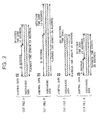
- Fig. 2 shows the situation.
- the cut files A, B, C, and D are such that video-audio data and control data of each cut are combined.
- the playback time length of the video-audio data of the cut differs from cut to cut.
- the playback time length is 25 seconds; in the cut file B, it is 35 seconds; in the cut file C, it is 20 seconds; and in the cut file D, it is 20 seconds.
- the playback time length is a time length when the cut in question is played back from the beginning up to the end.
- the control data of each cut file is such that conditions, which are related to the reaction or state of the viewer/listener who is playing back the current cut, for starting the playback of the next cut in the middle of the current cut are described. More specifically, in this example, the conditions (the conditions in a broad sense) are the time zone in which the reaction or state of the viewer/listener who is playing back the content is detected, the reaction or state to be detected in this detection time zone, and the cut change conditions (the conditions in a narrow sense) regarding the reaction or state.
- the detection time zone is set at the end portion of the cut for the reasons to be described later.
- the detection time zone is set as "after 15 seconds elapses", that is, is set as the 10 seconds from the time after 15 seconds elapses from when the current cut is started up to the completion time of the current cut.
- the reaction or state of the detection target is set as "blinking”, and the cut change conditions are set as "two or more times”.
- the detection time zone is set as "after 20 seconds elapses", that is, is set as the 15 seconds from the time after 20 seconds elapses from when the current cut is started up to the completion time of the current cut.
- the reaction or state of the detection target is set as the "pupil diameter”
- the cut change conditions are set as "8 mm or more”.
- the playback of the next third cut should be started at the time the detection is made even in the middle of the current cut.
- the time at which the pupil diameter of the viewer/listener becomes 8 mm or more is when the viewer/listener is paying attention to the current cut.
- Fig. 2 shows that, for the cut file C of the third cut, the detection time zone is not shown, and the reaction or state of the detection target and the cut change conditions are also not shown. This means that, regarding the third cut, after the current cut is played back up to the end, the playback of the next fourth cut should be started regardless of the reaction or state of the viewer/listener.
- the detection time zone is set as "after 8 seconds elapses", that is, it is set as the 12 seconds from the time after 8 seconds elapses from when the current cut is started up to the completion time of the current cut.
- control data is added to the video-audio data.
- the detection time zone is not shown, and it is assumed that the current cut is played back up to the end.
- the drama producer produces a drama, and when recording the drama as content on the content recording medium 9, the drama producer determines whether or not the cut change for each cut in the middle of the current playback should be permitted according to the content of the current cut, the content of the next cut, and further the content of the whole drama. Furthermore, regarding the cut for which a cut change in the middle of the playback is permitted, as described above, the detection time zone, the reaction or state of the detection target, and the cut change conditions for the reaction or state are determined.
- the reason why the detection time zone is set at the end portion of the cut in the manner described above is as follows. In any time zone of the cut, when a certain reaction or state is detected under fixed conditions, if the playback of the current cut is stopped and the playback of the next cut is started, even when the viewer/listener shows a fixed reaction not because the viewer/listener reacts to the drama but for some other reasons, the playback of the current cut is stopped, and the viewer/listener might miss seeing the essential portion of the first half of the cut.
- the detection time zone when the detection time zone is set at the end portion of the cut, the viewer/listener does not miss seeing the first half of the cut. For this reason, video and audio corresponding to the lingering moment of the first half such as that which does not adversely affect the understanding of the content of the drama even if it is not necessarily viewed should be recorded at the end portion where the detection time zone of the cut for which the cut change in the middle of the playback is permitted is set.
- the end portion where the detection time zone is set is a portion which acts as a kind of "allowance". From this viewpoint, the cut for which a cut change in the middle of the playback is permitted is produced a little longer than the length required to convey the content of the drama.
- control data is added to the header part of the video-audio data of the cut, or is recorded, together with the video-audio data of the cut, on the content recording medium 9 in such a manner as to be time-divided in the beginning portion of the video-audio data of the cut.
- the control data may be recorded in a recording area differing from the recording area of the video-audio data of the content recording medium 9.
- the CPU 11 of the content playback apparatus 10 analyzes the control data so as to control the playback of the cut.
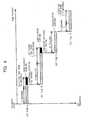
- the control data of the cut file A is set to change the cut if "blinking" is detected two times in the specified detection time zone, in the 10 seconds from the time after 15 seconds elapses from when the first cut is started up to the completion time of the current cut, the output of the image processing section 16, that is, the analysis result of the image recorded by the video camera 5, is received to determine whether or not blinking is detected two times.
- the control data of the cut file B is set to change the cut if it is detected that the "pupil diameter" has become 8 mm or more in the specified detection time zone, in the 15 seconds from the time after 20 seconds elapses from when the second cut is started up to the completion time of the current cut, the output of the image processing section 16, that is, the analysis result of the image recorded by the video camera 5, is received to determine whether or not the fact that the "pupil diameter" has become 8 mm or more is detected.
- the current third cut is played back up to the end, after which the playback of the next fourth cut is started.
- the CPU 11 controls the playback of the cuts according to the content of the control data.
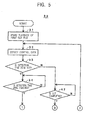
- Figs. 5 and 6 show an example of the above-described content playback control process performed by the CPU 11.
- step 31 the playback of the first cut file is started.
- step 32 the control data of the cut file in question is detected.
- step 33 it is determined whether or not a detection time zone is set in the control data.
- step 34 the process proceeds from step 33 to step 34, where it is determined whether or not the detection time zone is reached.
- step 35 the process proceeds to step 35, where it is determined whether or not the reaction or state of the detection target, which is indicated in the control data, is detected.
- reaction or state is "blinking" for the first cut, and it is the “pupil diameter" for the second cut.
- step 35 When it is determined in step 35 that the reaction or state of the detection target is detected, the process proceeds to step 36, where it is determined whether or not the cut change conditions are satisfied. When the cut change conditions are not satisfied, the process proceeds to step 37, where it is determined whether or not the current cut (in the detection time zone) is to be completed. When the current cut is not to be completed, the process returns to step 35, where it is determined whether or not the reaction or state of the detection target is detected.
- step 35 When it is determined in step 35 that the reaction or state of the detection target is not detected, the process proceeds directly from step 35 to step 37, where it is determined whether or not the current cut (in the detection time zone) is to be completed. When the current cut is not to be completed, the process returns to step 35, where it is determined whether or not the reaction or state of the detection target is detected.
- steps 35, 36, and 37 it is determined whether or not the reaction or state of the detection target is detected every fixed time period until the cut change conditions are satisfied or until the current cut (in the detection time zone) is completed.
- the first cut when the first "blinking" is detected, it is counted as one time in step S35. Thereafter, when the second "blinking" is detected, it is counted as a total of two times in step S35, and it is determined in step 36 that the cut change conditions are satisfied.
- the second cut when it is determined in step 35 that the "pupil diameter" is detected, it is determined in step 36 whether or not the "pupil diameter is 8 mm or more". When the pupil diameter is 8 mm or more, it is determined that the cut change conditions are satisfied.
- step 36 When it is determined in step 36 that the cut change conditions are satisfied, the process proceeds to step 38, where the cut is changed and the playback of the next cut file is started. The process then returns to step 32, where processing of step 32 and subsequent steps is repeated for the next cut.
- step 37 when it is determined in step 37 that the current cut (in the detection time zone) is to be completed without detecting the reaction or state of the detection target or without satisfying the cut change conditions, the process proceeds to step 39, where it is determined whether or not the current cut is the final cut. If it is not the final cut, the process further proceeds to step 41, where the playback of the next cut file is started and thereafter, the process returns to step 32, where processing of step 32 and subsequent steps is repeated for the next cut.
- step 42 determines whether or not the current cut is to be completed.
- step 39 determines whether or not the current cut is the final cut. If it is not the final cut, the process further proceeds to step 41, where the playback of the next cut file is started and thereafter, the process returns to step 32, where processing of step 32 and subsequent steps is repeated for the next cut.
- step 39 When it is determined in step 39 that the current cut is the final cut, the content playback control process is completed.
- the above example shows a case in which, when the reaction or state that satisfies the cut change conditions, such as the "blinking being two or more times" or the "pupil diameter being 8 mm or more", is detected, the cut is changed immediately, and the playback of the next cut is started.
- the construction may be formed in such a way that the cut is changed after a fixed time, such as one second or several seconds from the time when the reaction or state that satisfies the cut change conditions is detected, and the playback of the next cut is started.
- the above example shows a case in which video-audio content recorded on a content recording medium is played back.
- the above content playback method can also be applied to a case in which video-audio content transmitted from a transmission source such as a distribution source server or a broadcasting station over a network or in the form of radio waves is received and played back.
- the transmission source transmits the above-described control data together with video-audio content, for example, video-audio data of a drama.
- the content playback apparatus on the viewer/listener side receives the control data and the video-audio content, and plays back the video-audio content.
- the content playback apparatus in order to start the playback of the next partial content in the middle of the partial content, for example, in order to start the playback of the next cut in the middle of the current cut, is configured in such a way that, at the above-described playback start time in a portion of the detection time zone, at least the beginning portion of the next partial content, for example, the beginning portion of the next cut, is prestored in the storage section of the content playback apparatus.
- the content playback method of the present invention can also be applied to a case in which only audio content is to be played back.
- Audio content is, for example, music such that a plurality of pieces of music are played back in a predetermined sequence.
- the above-described control data is added for each piece of music to the music data, or conditions for starting the playback of the next music in the middle of the music are set commonly to each music.
- the rhythm of the respiration of the viewer/listener is in tune with the rhythm of the music and the motion of the body is also in tune with the rhythm of the music; or the viewer/listener sits still.
- the rhythm of the respiration of the viewer/listener is not in tune with the rhythm of the music, and the motion of the body is also not in tune with the beat of the music.
- the conditions for starting the playback of the next music in the middle of the music are assumed to be such that, for example, the fact that the rhythm of the respiration of the viewer/listener or the motion of the body is not in tune with the rhythm of the music over a particular time is detected.
- Such reaction or state of the viewer/listener can be detected by the respiration sensor and the body motion sensor shown as the biometric sensor 6 in Fig. 1.
- the conditions for starting the playback of the next music in the middle of the music are set commonly for each music in this manner, the conditions can be set in advance within the content playback apparatus.
- the content playback apparatus is configured in such a way that, when the CPU of the content playback apparatus determines that the conditions are satisfied, the playback of the next music is started.
- the content playback method of the present invention can be applied.
- control data may be transmitted from the transmission source.
- the conditions for starting the playback of the next music in the middle of the music are set commonly for each music in the manner described above, the conditions can be set in advance within the content playback apparatus.
- the content playback apparatus is configured in such a way that, at the time when the playback in a portion of the detection time zone is started, at least the beginning portion of the next music is prestored in the storage section of the content playback apparatus.
- the content playback method of the present invention can also be applied to a case in which an electronic document, such as a so-called electronic novel, formed of text data, diagrams, photographs, etc., which is transmitted from the transmission source or which is recorded on a recording medium, is played back in a PDA (Personal Digital Assistant) or a cellular phone terminal.
- an electronic document such as a so-called electronic novel, formed of text data, diagrams, photographs, etc., which is transmitted from the transmission source or which is recorded on a recording medium, is played back in a PDA (Personal Digital Assistant) or a cellular phone terminal.
- PDA Personal Digital Assistant
- an electronic document such as an electronic novel is played back and displayed for each page.
- an electronic document such as an electronic novel is played back and displayed for each page.
- the operator performing an operation of turning a page at the operation section, the next page is played back and displayed.
- conditions for stopping the playback and display of a particular page and for playing back and displaying the next page are set in the content playback apparatus of the present invention, such as a PDA or a cellular phone terminal.
- the viewer/listener when the viewer/listener (reader) is concentrating on the page and gazes at the page, the viewer/listener sees the display from the front, but when the viewer/listener is not concentrating on the page, the viewer/listener turns away his/her eyes from the display.
- the conditions for stopping the playback and display of a particular page and for playing back and displaying the next page in this case are assumed to be such that, for example, the fact that the state in which the face direction of the viewer/listener is averted from the display continues over a particular time is detected.
- Such reaction or state of the viewer/listener can be detected by a camera provided in a content playback apparatus such as a PDA or a cellular phone terminal.
- a camera the camera of a cellular phone terminal with a camera can also be used.
- the content playback apparatus is configured in such a way that, when the CPU of the content playback apparatus determines that the conditions are satisfied, the next page is played back and displayed.
- the conditions for stopping the playback and display of a particular page and for playing back and displaying the next page may also be assumed to be such that the fact that the viewer/listener takes a big breadth or utters sound is detected.
- Such reaction or state of the viewer/listener can be detected by a respiration sensor or a microphone provided in the content playback apparatus.
- the viewer/listener when the viewer/listener wants to turn a page, the viewer/listener can turn a page by taking a big breadth or uttering sound without the intervention of manual operation at the content playback apparatus.
Landscapes
- Life Sciences & Earth Sciences (AREA)
- Health & Medical Sciences (AREA)
- Engineering & Computer Science (AREA)
- Molecular Biology (AREA)
- Animal Behavior & Ethology (AREA)
- Pathology (AREA)
- Physics & Mathematics (AREA)
- Biomedical Technology (AREA)
- Heart & Thoracic Surgery (AREA)
- Medical Informatics (AREA)
- Biodiversity & Conservation Biology (AREA)
- Surgery (AREA)
- Biophysics (AREA)
- General Health & Medical Sciences (AREA)
- Public Health (AREA)
- Veterinary Medicine (AREA)
- Multimedia (AREA)
- Television Signal Processing For Recording (AREA)
- Measurement Of The Respiration, Hearing Ability, Form, And Blood Characteristics Of Living Organisms (AREA)
- Indexing, Searching, Synchronizing, And The Amount Of Synchronization Travel Of Record Carriers (AREA)
Applications Claiming Priority (2)
| Application Number | Priority Date | Filing Date | Title |
|---|---|---|---|
| JP2003283417A JP2005051654A (ja) | 2003-07-31 | 2003-07-31 | コンテンツ再生方法、コンテンツ再生装置、コンテンツ記録方法、コンテンツ記録メディア |
| JP2003283417 | 2003-07-31 |
Publications (2)
| Publication Number | Publication Date |
|---|---|
| EP1503376A2 true EP1503376A2 (de) | 2005-02-02 |
| EP1503376A3 EP1503376A3 (de) | 2006-11-22 |
Family
ID=33535697
Family Applications (1)
| Application Number | Title | Priority Date | Filing Date |
|---|---|---|---|
| EP04254481A Ceased EP1503376A3 (de) | 2003-07-31 | 2004-07-27 | Inhaltswiedergabe |
Country Status (4)
| Country | Link |
|---|---|
| US (1) | US7460761B2 (de) |
| EP (1) | EP1503376A3 (de) |
| JP (1) | JP2005051654A (de) |
| CN (1) | CN1581348A (de) |
Cited By (17)
| Publication number | Priority date | Publication date | Assignee | Title |
|---|---|---|---|---|
| EP1764937A1 (de) * | 2005-09-20 | 2007-03-21 | Sony Corporation | Verfahren zur Bestimmung von Benutzerpräferenzen |
| EP1920715A3 (de) * | 2006-11-07 | 2008-09-03 | Sony Corporation | Bildgebung- und Anzeigegerät |
| US20090138332A1 (en) * | 2007-11-23 | 2009-05-28 | Dimitri Kanevsky | System and method for dynamically adapting a user slide show presentation to audience behavior |
| US7876374B2 (en) | 2006-12-07 | 2011-01-25 | Sony Corporation | Image display system, display apparatus, and display method |
| US8027965B2 (en) | 2005-07-04 | 2011-09-27 | Sony Corporation | Content providing system, content providing apparatus and method, content distribution server, and content receiving terminal |
| US8079962B2 (en) | 2005-01-20 | 2011-12-20 | Sony Corporation | Method and apparatus for reproducing content data |
| US8135736B2 (en) | 2005-07-21 | 2012-03-13 | Sony Corporation | Content providing system, content providing apparatus and method, content distribution server, and content receiving terminal |
| US8170003B2 (en) | 2005-03-28 | 2012-05-01 | Sony Corporation | Content recommendation system and method, and communication terminal device |
| US8311654B2 (en) | 2006-02-17 | 2012-11-13 | Sony Corporation | Content reproducing apparatus, audio reproducing apparatus and content reproducing method |
| US8451832B2 (en) | 2004-10-26 | 2013-05-28 | Sony Corporation | Content using apparatus, content using method, distribution server apparatus, information distribution method, and recording medium |
| US8687925B2 (en) | 2007-04-10 | 2014-04-01 | Sony Corporation | Image storage processing apparatus, image search apparatus, image storage processing method, image search method and program |
| EP2063767A4 (de) * | 2006-09-05 | 2014-05-21 | Innerscope Res Inc | Verfahren und system zur bestimmung der publikumsreaktion auf einen sensorischen stimulus |
| US8797331B2 (en) | 2007-08-06 | 2014-08-05 | Sony Corporation | Information processing apparatus, system, and method thereof |
| US8872941B2 (en) | 2006-11-07 | 2014-10-28 | Sony Corporation | Imaging apparatus and imaging method |
| EP3385865A4 (de) * | 2015-11-30 | 2018-12-05 | Sony Corporation | Informationsverarbeitungsvorrichtung, informationsverarbeitungsverfahren und programm |
| US10198713B2 (en) | 2006-09-05 | 2019-02-05 | The Nielsen Company (Us), Llc | Method and system for predicting audience viewing behavior |
| US11200964B2 (en) | 2010-04-19 | 2021-12-14 | Nielsen Consumer Llc | Short imagery task (SIT) research method |
Families Citing this family (31)
| Publication number | Priority date | Publication date | Assignee | Title |
|---|---|---|---|---|
| US20050232580A1 (en) * | 2004-03-11 | 2005-10-20 | Interdigital Technology Corporation | Control of device operation within an area |
| US20060227640A1 (en) * | 2004-12-06 | 2006-10-12 | Interdigital Technology Corporation | Sensing device with activation and sensing alert functions |
| TW200730836A (en) * | 2004-12-06 | 2007-08-16 | Interdigital Tech Corp | Method and apparatus for detecting portable electronic device functionality |
| JP4247626B2 (ja) * | 2005-01-20 | 2009-04-02 | ソニー株式会社 | 再生装置および再生方法 |
| JP2006287749A (ja) * | 2005-04-01 | 2006-10-19 | Canon Inc | 撮像装置、及びその制御方法 |
| JP4736586B2 (ja) * | 2005-07-19 | 2011-07-27 | ソニー株式会社 | 情報処理装置、情報処理方法、及びプログラム |
| KR101044587B1 (ko) * | 2005-09-13 | 2011-06-29 | 테이저 인터내셔널 아이앤씨 | 다중 기능 전자식 무기류에 관한 시스템 및 방법 |
| US8825482B2 (en) | 2005-09-15 | 2014-09-02 | Sony Computer Entertainment Inc. | Audio, video, simulation, and user interface paradigms |
| WO2007034442A2 (en) * | 2005-09-26 | 2007-03-29 | Koninklijke Philips Electronics N.V. | Method and apparatus for analysing an emotional state of a user being provided with content information |
| US8290341B2 (en) * | 2006-05-15 | 2012-10-16 | Nec Corporation | Video playing device, video playing method, and video playing program having automatic video selections based upon user concentration |
| US8484081B2 (en) | 2007-03-29 | 2013-07-09 | The Nielsen Company (Us), Llc | Analysis of marketing and entertainment effectiveness using central nervous system, autonomic nervous system, and effector data |
| US8392253B2 (en) | 2007-05-16 | 2013-03-05 | The Nielsen Company (Us), Llc | Neuro-physiology and neuro-behavioral based stimulus targeting system |
| EP2170161B1 (de) | 2007-07-30 | 2018-12-05 | The Nielsen Company (US), LLC. | Nervenreaktionsstimulus und vorrichtung zum einschätzen von stimulusattribut-resonanzen |
| US8386313B2 (en) | 2007-08-28 | 2013-02-26 | The Nielsen Company (Us), Llc | Stimulus placement system using subject neuro-response measurements |
| US8392255B2 (en) | 2007-08-29 | 2013-03-05 | The Nielsen Company (Us), Llc | Content based selection and meta tagging of advertisement breaks |
| US20090083129A1 (en) | 2007-09-20 | 2009-03-26 | Neurofocus, Inc. | Personalized content delivery using neuro-response priming data |
| US8151292B2 (en) | 2007-10-02 | 2012-04-03 | Emsense Corporation | System for remote access to media, and reaction and survey data from viewers of the media |
| WO2009059248A1 (en) | 2007-10-31 | 2009-05-07 | Emsense Corporation | Systems and methods providing distributed collection and centralized processing of physiological responses from viewers |
| JP4986827B2 (ja) * | 2007-12-04 | 2012-07-25 | キヤノン株式会社 | 画像再生装置およびその制御方法、プログラム |
| US7890623B2 (en) * | 2007-12-27 | 2011-02-15 | International Business Machines Corporation | Generating data for media playlist construction in virtual environments |
| US7886045B2 (en) | 2007-12-26 | 2011-02-08 | International Business Machines Corporation | Media playlist construction for virtual environments |
| EP2099198A1 (de) * | 2008-03-05 | 2009-09-09 | Sony Corporation | Verfahren und System zur Personalisierung einer Multimedia-Anwendung |
| US20100250325A1 (en) | 2009-03-24 | 2010-09-30 | Neurofocus, Inc. | Neurological profiles for market matching and stimulus presentation |
| US10987015B2 (en) | 2009-08-24 | 2021-04-27 | Nielsen Consumer Llc | Dry electrodes for electroencephalography |
| US9560984B2 (en) | 2009-10-29 | 2017-02-07 | The Nielsen Company (Us), Llc | Analysis of controlled and automatic attention for introduction of stimulus material |
| US20110106750A1 (en) | 2009-10-29 | 2011-05-05 | Neurofocus, Inc. | Generating ratings predictions using neuro-response data |
| US9292858B2 (en) | 2012-02-27 | 2016-03-22 | The Nielsen Company (Us), Llc | Data collection system for aggregating biologically based measures in asynchronous geographically distributed public environments |
| US9451303B2 (en) | 2012-02-27 | 2016-09-20 | The Nielsen Company (Us), Llc | Method and system for gathering and computing an audience's neurologically-based reactions in a distributed framework involving remote storage and computing |
| US9569986B2 (en) | 2012-02-27 | 2017-02-14 | The Nielsen Company (Us), Llc | System and method for gathering and analyzing biometric user feedback for use in social media and advertising applications |
| US9936250B2 (en) | 2015-05-19 | 2018-04-03 | The Nielsen Company (Us), Llc | Methods and apparatus to adjust content presented to an individual |
| CN104994409A (zh) * | 2015-06-30 | 2015-10-21 | 北京奇艺世纪科技有限公司 | 一种媒体数据的剪辑方法和装置 |
Citations (2)
| Publication number | Priority date | Publication date | Assignee | Title |
|---|---|---|---|---|
| JPH11250629A (ja) | 1998-03-02 | 1999-09-17 | Toshiba Corp | オーディオ用データ構造とその記録媒体及び再生装置 |
| US20030060728A1 (en) | 2001-09-25 | 2003-03-27 | Mandigo Lonnie D. | Biofeedback based personal entertainment system |
Family Cites Families (7)
| Publication number | Priority date | Publication date | Assignee | Title |
|---|---|---|---|---|
| US5434678A (en) * | 1993-01-11 | 1995-07-18 | Abecassis; Max | Seamless transmission of non-sequential video segments |
| JP3329069B2 (ja) * | 1994-05-02 | 2002-09-30 | ソニー株式会社 | 画像音声信号記録再生装置及び画像音声信号記録装置 |
| JP3629047B2 (ja) | 1994-09-16 | 2005-03-16 | 株式会社東芝 | 情報処理装置 |
| US20020044757A1 (en) | 1995-08-04 | 2002-04-18 | Sony Corporation | Information carrier, device for reading and device for providing the information carrier and method of transmitting picture information |
| WO1997007511A1 (en) * | 1995-08-21 | 1997-02-27 | Matsushita Electric Industrial Co., Ltd. | Multimedia optical disk for which producer coordinates viewing/listening mode including special reproduction at will and reproducing device and reproducing method for the disk |
| KR100584280B1 (ko) * | 2000-03-13 | 2006-05-26 | 엘지전자 주식회사 | 멀티미디어 컨텐트의 재생 제어 방법 및 시스템 |
| JP2003101949A (ja) * | 2001-09-20 | 2003-04-04 | Matsushita Electric Ind Co Ltd | 放送受信機およびコンテンツを放送する方法 |
-
2003
- 2003-07-31 JP JP2003283417A patent/JP2005051654A/ja active Pending
-
2004
- 2004-07-16 US US10/893,170 patent/US7460761B2/en not_active Expired - Fee Related
- 2004-07-27 EP EP04254481A patent/EP1503376A3/de not_active Ceased
- 2004-07-30 CN CN200410055797.1A patent/CN1581348A/zh active Pending
Patent Citations (2)
| Publication number | Priority date | Publication date | Assignee | Title |
|---|---|---|---|---|
| JPH11250629A (ja) | 1998-03-02 | 1999-09-17 | Toshiba Corp | オーディオ用データ構造とその記録媒体及び再生装置 |
| US20030060728A1 (en) | 2001-09-25 | 2003-03-27 | Mandigo Lonnie D. | Biofeedback based personal entertainment system |
Cited By (30)
| Publication number | Priority date | Publication date | Assignee | Title |
|---|---|---|---|---|
| US8451832B2 (en) | 2004-10-26 | 2013-05-28 | Sony Corporation | Content using apparatus, content using method, distribution server apparatus, information distribution method, and recording medium |
| US8079962B2 (en) | 2005-01-20 | 2011-12-20 | Sony Corporation | Method and apparatus for reproducing content data |
| US8170003B2 (en) | 2005-03-28 | 2012-05-01 | Sony Corporation | Content recommendation system and method, and communication terminal device |
| US8027965B2 (en) | 2005-07-04 | 2011-09-27 | Sony Corporation | Content providing system, content providing apparatus and method, content distribution server, and content receiving terminal |
| US8135700B2 (en) | 2005-07-21 | 2012-03-13 | Sony Corporation | Content providing system, content providing apparatus and method, content distribution server, and content receiving terminal |
| US8135736B2 (en) | 2005-07-21 | 2012-03-13 | Sony Corporation | Content providing system, content providing apparatus and method, content distribution server, and content receiving terminal |
| EP1764937A1 (de) * | 2005-09-20 | 2007-03-21 | Sony Corporation | Verfahren zur Bestimmung von Benutzerpräferenzen |
| US7930385B2 (en) | 2005-09-20 | 2011-04-19 | Sony Corporation | Determining content-preference score for controlling subsequent playback |
| US8311654B2 (en) | 2006-02-17 | 2012-11-13 | Sony Corporation | Content reproducing apparatus, audio reproducing apparatus and content reproducing method |
| USRE46481E1 (en) | 2006-02-17 | 2017-07-18 | Sony Corporation | Content reproducing apparatus, audio reproducing apparatus and content reproducing method |
| EP2063767A4 (de) * | 2006-09-05 | 2014-05-21 | Innerscope Res Inc | Verfahren und system zur bestimmung der publikumsreaktion auf einen sensorischen stimulus |
| US10839350B2 (en) | 2006-09-05 | 2020-11-17 | The Nielsen Company (Us), Llc | Method and system for predicting audience viewing behavior |
| US10198713B2 (en) | 2006-09-05 | 2019-02-05 | The Nielsen Company (Us), Llc | Method and system for predicting audience viewing behavior |
| EP2060231A2 (de) | 2006-11-07 | 2009-05-20 | Sony Corporation | Bildgebung und Anzeige |
| EP1920715A3 (de) * | 2006-11-07 | 2008-09-03 | Sony Corporation | Bildgebung- und Anzeigegerät |
| EP2060231A3 (de) * | 2006-11-07 | 2009-05-27 | Sony Corporation | Anzeigeeinrichtung mit Biosensor |
| US8872941B2 (en) | 2006-11-07 | 2014-10-28 | Sony Corporation | Imaging apparatus and imaging method |
| US8009219B2 (en) | 2006-12-07 | 2011-08-30 | Sony Corporation | Image display system, display apparatus, and display method |
| US7876374B2 (en) | 2006-12-07 | 2011-01-25 | Sony Corporation | Image display system, display apparatus, and display method |
| US8687925B2 (en) | 2007-04-10 | 2014-04-01 | Sony Corporation | Image storage processing apparatus, image search apparatus, image storage processing method, image search method and program |
| US9972116B2 (en) | 2007-08-06 | 2018-05-15 | Sony Corporation | Information processing apparatus, system, and method for displaying bio-information or kinetic information |
| US9568998B2 (en) | 2007-08-06 | 2017-02-14 | Sony Corporation | Information processing apparatus, system, and method for displaying bio-information or kinetic information |
| US10262449B2 (en) | 2007-08-06 | 2019-04-16 | Sony Corporation | Information processing apparatus, system, and method for displaying bio-information or kinetic information |
| US10529114B2 (en) | 2007-08-06 | 2020-01-07 | Sony Corporation | Information processing apparatus, system, and method for displaying bio-information or kinetic information |
| US8797331B2 (en) | 2007-08-06 | 2014-08-05 | Sony Corporation | Information processing apparatus, system, and method thereof |
| US10937221B2 (en) | 2007-08-06 | 2021-03-02 | Sony Corporation | Information processing apparatus, system, and method for displaying bio-information or kinetic information |
| US20090138332A1 (en) * | 2007-11-23 | 2009-05-28 | Dimitri Kanevsky | System and method for dynamically adapting a user slide show presentation to audience behavior |
| WO2009065702A1 (en) * | 2007-11-23 | 2009-05-28 | International Business Machines Corporation | System and method for dynamically adapting a slide show presentation to an audience behaviour |
| US11200964B2 (en) | 2010-04-19 | 2021-12-14 | Nielsen Consumer Llc | Short imagery task (SIT) research method |
| EP3385865A4 (de) * | 2015-11-30 | 2018-12-05 | Sony Corporation | Informationsverarbeitungsvorrichtung, informationsverarbeitungsverfahren und programm |
Also Published As
| Publication number | Publication date |
|---|---|
| CN1581348A (zh) | 2005-02-16 |
| EP1503376A3 (de) | 2006-11-22 |
| US7460761B2 (en) | 2008-12-02 |
| US20050041951A1 (en) | 2005-02-24 |
| JP2005051654A (ja) | 2005-02-24 |
Similar Documents
| Publication | Publication Date | Title |
|---|---|---|
| US7460761B2 (en) | Content playback method, content playback apparatus, content recording method, and content recording medium | |
| KR100913865B1 (ko) | 콘텐츠에 대한 시청자 평가를 수집하는 장치 및 방법 | |
| Chandrasekaran et al. | Individual variability in cue-weighting and lexical tone learning | |
| US7698238B2 (en) | Emotion controlled system for processing multimedia data | |
| US7450821B2 (en) | Moving image playback apparatus, moving image playback method, and computer program thereof with determining of first voice period which represents a human utterance period and second voice period other than the first voice period | |
| JP2007534235A (ja) | ユーザに対する特定の感情的影響を有するコンテンツアイテムを生成する方法 | |
| US20090144071A1 (en) | Information processing terminal, method for information processing, and program | |
| CN101543086A (zh) | 视听质量判定装置、视听质量判定方法、视听质量判定程序和记录媒体 | |
| CN101495942A (zh) | 用于分析正被提供内容信息的用户的情绪状态的方法和设备 | |
| CN100387192C (zh) | 生体信号利用机器及其控制方法 | |
| JP2014053672A (ja) | 再生システム | |
| JP4407198B2 (ja) | 記録再生装置、再生装置、記録再生方法および再生方法 | |
| CN121808153A (zh) | 基于人工智能的教育资源推荐方法及系统 | |
| JP2005250322A (ja) | 表示装置 | |
| JP3629047B2 (ja) | 情報処理装置 | |
| JP4284504B2 (ja) | コンテンツ再生方法、コンテンツ再生装置、コンテンツ配信方法およびコンテンツ配信装置 | |
| JP2008136210A (ja) | コンテンツ再生装置、コンテンツ受信装置、コンテンツ評価収集解析方法、コンテンツ評価収集解析装置、コンテンツ評価集計管理方法およびコンテンツ評価集計管理装置 | |
| JP2003309814A (ja) | 動画再生装置、動画再生方法及びそのコンピュータ・プログラム | |
| JP4455644B2 (ja) | 動画再生装置、動画再生方法及びそのコンピュータ・プログラム | |
| JP4359755B2 (ja) | コンテンツ再生方法、コンテンツ再生装置、コンテンツ配信方法およびコンテンツ配信装置 | |
| JP5039020B2 (ja) | 電子機器および映像コンテンツ情報表示方法 | |
| JP4509188B2 (ja) | 動画再生装置、動画再生方法及びそのコンピュータ・プログラム | |
| JP4086886B2 (ja) | 動画再生装置、動画再生方法及びそのコンピュータ・プログラム | |
| JP2009260824A (ja) | 映像音声出力装置 | |
| JP3978465B2 (ja) | 録音再生装置 |
Legal Events
| Date | Code | Title | Description |
|---|---|---|---|
| PUAI | Public reference made under article 153(3) epc to a published international application that has entered the european phase |
Free format text: ORIGINAL CODE: 0009012 |
|
| AK | Designated contracting states |
Kind code of ref document: A2 Designated state(s): AT BE BG CH CY CZ DE DK EE ES FI FR GB GR HU IE IT LI LU MC NL PL PT RO SE SI SK TR |
|
| AX | Request for extension of the european patent |
Extension state: AL HR LT LV MK |
|
| PUAL | Search report despatched |
Free format text: ORIGINAL CODE: 0009013 |
|
| AK | Designated contracting states |
Kind code of ref document: A3 Designated state(s): AT BE BG CH CY CZ DE DK EE ES FI FR GB GR HU IE IT LI LU MC NL PL PT RO SE SI SK TR |
|
| AX | Request for extension of the european patent |
Extension state: AL HR LT LV MK |
|
| 17P | Request for examination filed |
Effective date: 20070426 |
|
| AKX | Designation fees paid |
Designated state(s): DE FR GB NL |
|
| 17Q | First examination report despatched |
Effective date: 20070629 |
|
| STAA | Information on the status of an ep patent application or granted ep patent |
Free format text: STATUS: THE APPLICATION HAS BEEN REFUSED |
|
| 18R | Application refused |
Effective date: 20100611 |