EP1505780B1 - Verfahren zur validierten Kommunikation - Google Patents
Verfahren zur validierten Kommunikation Download PDFInfo
- Publication number
- EP1505780B1 EP1505780B1 EP03291964A EP03291964A EP1505780B1 EP 1505780 B1 EP1505780 B1 EP 1505780B1 EP 03291964 A EP03291964 A EP 03291964A EP 03291964 A EP03291964 A EP 03291964A EP 1505780 B1 EP1505780 B1 EP 1505780B1
- Authority
- EP
- European Patent Office
- Prior art keywords
- mnn
- address
- coa
- communication according
- mobile router
- Prior art date
- Legal status (The legal status is an assumption and is not a legal conclusion. Google has not performed a legal analysis and makes no representation as to the accuracy of the status listed.)
- Expired - Lifetime
Links
- 238000000034 method Methods 0.000 title claims abstract description 73
- 230000006854 communication Effects 0.000 title claims abstract description 49
- 238000004891 communication Methods 0.000 title claims abstract description 49
- 230000027455 binding Effects 0.000 claims abstract description 40
- 238000009739 binding Methods 0.000 claims abstract description 40
- 238000010200 validation analysis Methods 0.000 claims abstract description 35
- 230000000977 initiatory effect Effects 0.000 claims abstract description 29
- 235000014510 cooky Nutrition 0.000 claims description 26
- 239000000284 extract Substances 0.000 claims description 6
- 238000012795 verification Methods 0.000 claims description 2
- 238000011473 radical retropubic prostatectomy Methods 0.000 abstract description 3
- 230000008569 process Effects 0.000 description 6
- 238000010586 diagram Methods 0.000 description 5
- 230000007246 mechanism Effects 0.000 description 5
- 230000008901 benefit Effects 0.000 description 3
- 230000008859 change Effects 0.000 description 2
- 230000007175 bidirectional communication Effects 0.000 description 1
- 230000005540 biological transmission Effects 0.000 description 1
- 230000000052 comparative effect Effects 0.000 description 1
- 230000001419 dependent effect Effects 0.000 description 1
- 230000000694 effects Effects 0.000 description 1
- 238000013467 fragmentation Methods 0.000 description 1
- 238000006062 fragmentation reaction Methods 0.000 description 1
- 230000004044 response Effects 0.000 description 1
- 230000036962 time dependent Effects 0.000 description 1
Images

Classifications
-
- H—ELECTRICITY
- H04—ELECTRIC COMMUNICATION TECHNIQUE
- H04W—WIRELESS COMMUNICATION NETWORKS
- H04W8/00—Network data management
- H04W8/02—Processing of mobility data, e.g. registration information at HLR [Home Location Register] or VLR [Visitor Location Register]; Transfer of mobility data, e.g. between HLR, VLR or external networks
- H04W8/08—Mobility data transfer
- H04W8/082—Mobility data transfer for traffic bypassing of mobility servers, e.g. location registers, home PLMNs or home agents
-
- H—ELECTRICITY
- H04—ELECTRIC COMMUNICATION TECHNIQUE
- H04L—TRANSMISSION OF DIGITAL INFORMATION, e.g. TELEGRAPHIC COMMUNICATION
- H04L41/00—Arrangements for maintenance, administration or management of data switching networks, e.g. of packet switching networks
- H04L41/08—Configuration management of networks or network elements
- H04L41/0866—Checking the configuration
-
- H—ELECTRICITY
- H04—ELECTRIC COMMUNICATION TECHNIQUE
- H04L—TRANSMISSION OF DIGITAL INFORMATION, e.g. TELEGRAPHIC COMMUNICATION
- H04L43/00—Arrangements for monitoring or testing data switching networks
- H04L43/50—Testing arrangements
-
- H—ELECTRICITY
- H04—ELECTRIC COMMUNICATION TECHNIQUE
- H04L—TRANSMISSION OF DIGITAL INFORMATION, e.g. TELEGRAPHIC COMMUNICATION
- H04L45/00—Routing or path finding of packets in data switching networks
-
- H—ELECTRICITY
- H04—ELECTRIC COMMUNICATION TECHNIQUE
- H04L—TRANSMISSION OF DIGITAL INFORMATION, e.g. TELEGRAPHIC COMMUNICATION
- H04L63/00—Network architectures or network communication protocols for network security
- H04L63/12—Applying verification of the received information
- H04L63/126—Applying verification of the received information the source of the received data
-
- H—ELECTRICITY
- H04—ELECTRIC COMMUNICATION TECHNIQUE
- H04L—TRANSMISSION OF DIGITAL INFORMATION, e.g. TELEGRAPHIC COMMUNICATION
- H04L9/00—Cryptographic mechanisms or cryptographic arrangements for secret or secure communications; Network security protocols
- H04L9/40—Network security protocols
-
- H—ELECTRICITY
- H04—ELECTRIC COMMUNICATION TECHNIQUE
- H04W—WIRELESS COMMUNICATION NETWORKS
- H04W12/00—Security arrangements; Authentication; Protecting privacy or anonymity
- H04W12/02—Protecting privacy or anonymity, e.g. protecting personally identifiable information [PII]
-
- H—ELECTRICITY
- H04—ELECTRIC COMMUNICATION TECHNIQUE
- H04L—TRANSMISSION OF DIGITAL INFORMATION, e.g. TELEGRAPHIC COMMUNICATION
- H04L2101/00—Indexing scheme associated with group H04L61/00
- H04L2101/60—Types of network addresses
- H04L2101/604—Address structures or formats
-
- H—ELECTRICITY
- H04—ELECTRIC COMMUNICATION TECHNIQUE
- H04L—TRANSMISSION OF DIGITAL INFORMATION, e.g. TELEGRAPHIC COMMUNICATION
- H04L63/00—Network architectures or network communication protocols for network security
- H04L63/02—Network architectures or network communication protocols for network security for separating internal from external traffic, e.g. firewalls
- H04L63/0272—Virtual private networks
-
- H—ELECTRICITY
- H04—ELECTRIC COMMUNICATION TECHNIQUE
- H04W—WIRELESS COMMUNICATION NETWORKS
- H04W12/00—Security arrangements; Authentication; Protecting privacy or anonymity
- H04W12/10—Integrity
-
- H—ELECTRICITY
- H04—ELECTRIC COMMUNICATION TECHNIQUE
- H04W—WIRELESS COMMUNICATION NETWORKS
- H04W40/00—Communication routing or communication path finding
- H04W40/02—Communication route or path selection, e.g. power-based or shortest path routing
-
- H—ELECTRICITY
- H04—ELECTRIC COMMUNICATION TECHNIQUE
- H04W—WIRELESS COMMUNICATION NETWORKS
- H04W40/00—Communication routing or communication path finding
- H04W40/24—Connectivity information management, e.g. connectivity discovery or connectivity update
- H04W40/28—Connectivity information management, e.g. connectivity discovery or connectivity update for reactive routing
-
- H—ELECTRICITY
- H04—ELECTRIC COMMUNICATION TECHNIQUE
- H04W—WIRELESS COMMUNICATION NETWORKS
- H04W40/00—Communication routing or communication path finding
- H04W40/34—Modification of an existing route
- H04W40/36—Modification of an existing route due to handover
-
- H—ELECTRICITY
- H04—ELECTRIC COMMUNICATION TECHNIQUE
- H04W—WIRELESS COMMUNICATION NETWORKS
- H04W8/00—Network data management
- H04W8/26—Network addressing or numbering for mobility support
-
- H—ELECTRICITY
- H04—ELECTRIC COMMUNICATION TECHNIQUE
- H04W—WIRELESS COMMUNICATION NETWORKS
- H04W80/00—Wireless network protocols or protocol adaptations to wireless operation
- H04W80/04—Network layer protocols, e.g. mobile IP [Internet Protocol]
-
- H—ELECTRICITY
- H04—ELECTRIC COMMUNICATION TECHNIQUE
- H04W—WIRELESS COMMUNICATION NETWORKS
- H04W84/00—Network topologies
- H04W84/005—Moving wireless networks
Definitions
- the invention relates to a method of validated communication, in particular, it relates to a method of validated communication between a mobile network node and a correspondent node via at least a first mobile router.
- Network mobility support aims to provide continuous Internet connectivity to mobile hosts, such as for example a laptop computer with wireless connectivity.
- network mobility support is concerned with situations where an entire network comprising potentially many hosts changes its point of attachment to the Internet topology and thus the route to reach it in the topology.
- Such a network in movement can be called a Mobile Network.
- a Mobile Network can therefore be defined as a set of nodes, part of one or more IP-subnets attached to a Mobile Router (MR), that are mobile as a unit, with respect to the rest of the Internet.
- MR Mobile Router
- MNNs Mobile Network Nodes
- An MNN itself may be a local fixed node (LFN) permanently associated with a given mobile network, a local mobile node (LMN) capable of altering its point of network attachment within the current mobile network and of leaving the current mobile network to attach elsewhere, or a visiting mobile node (VMN), whose home link is not on the current mobile network and has changed its point of attachment from somewhere outside the current mobile network.
- LDN local fixed node
- MNN visiting mobile node
- the MNN can be a simple mobile host or another mobile router, resulting in nested mobility.
- the Mobility Support in the IPv6 ('mobile IPv6' or MIPv6) specification (see http://www.ietf.org/) proposes means to enable Route Optimisation (bi-directional communication using the shortest path) between an MN and a correspondent node (CN), but no mechanism has been proposed as yet to enable route optimisation between an MNN and a CN.
- the basic network mobility support (“NEMO Basic Support Protocol” at http://www.ietf.org/) for communication between an MNN and a CN relies on bi-directional tunnelling between the mobile router (MR) and its home agent (HA):
- BU prefix scope binding update
- the classical MIPv6 BU only informs the CN of where to send data addressed to a single mobile node (e.g. the mobile routers home address (HoA) coupled to a roving care-of address (CoA)).
- the proposed PSBU does not bind an MR HoA to an MR CoA but the MR prefix to the MR CoA, thus informing the HA receiving the PSBU to send data addressed to any MNN attached to the MR on to the MR CoA.
- the Home Agent Upon reception of a packet whose destination address matches with the MR prefix (e.g. the destination is an MNN), the Home Agent (HA) must then tunnel the packet to the MR CoA that will deliver it to the actual recipient.
- the Home Agent Upon reception of a packet whose destination address matches with the MR prefix (e.g. the destination is an MNN), the Home Agent (HA) must then tunnel the packet to the MR CoA that will deliver it to the actual recipient.
- the MR may send PSBUs to the correspondent nodes of the MNNs, which would achieve CN / MNN route optimisation.
- a home address (HoA) is bound to a public key that is part of a public/private key pair. This ensures that a malicious node cannot assume the mantle of the home address, as it does not own the corresponding private key.
- RRPs are now incorporated within the MIPv6 specification, and consist of a check by the correspondent node (CN) to verify that the specified home address (HoA) can actually be reached at the specified care-of address (CoA), before accepting the binding update (BU).
- CN correspondent node
- HoA specified home address
- CoA care-of address
- BU binding update
- the MN thus needs to successfully receive both the HoT and the CoT to be able to generate a valid BU. This is considered by the CN as a sufficient proof that the home and care-of addresses are valid for that MN.
- Prefix ownership is much more than address ownership: to obtain a similar level of security, it would be necessary for the CN to check using RRP all possible addresses that can be derived from that network prefix.
- PSBU cannot provide validated route optimisation to the mobile network, i.e. it cannot provide validated route optimisation to any mobile network node attached therein.
- the purpose of the present invention is to address the above need.
- the present invention provides a method of validated communication between a mobile network node (MNN) and a correspondent node (CN) via at least a first mobile router (MR) as described in the accompanying claims.
- MNN mobile network node
- CN correspondent node
- MR first mobile router
- the present invention provides a method of validated communication, as claimed in claim 1.
- the present invention provides apparatus for validated communication, as claimed in claim 32.
- the present invention provides a mobile router operable to perform validated communication, as claimed in claim 33.
- the present invention provides a correspondent node operable to perform validated communication, as claimed in claim 34.
- a method of validated communication is presented, between a mobile network node (MNN) 110 and a correspondent node (CN) 150 via at least a first mobile router (MR) 120.
- MNN mobile network node
- CN correspondent node
- MR mobile router
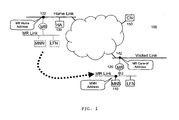
- FIG. 1 illustrates a mobile router (MR) 120 and its network that has moved from its home address 132 to an address 142 on a visited link, thus creating the need for a method of validated route optimisation for a mobile network node (MNN) (110).
- MNN mobile network node
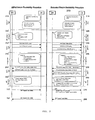
- the method employs an extended return routability checking procedure (XRRP) 200, wherein an MNN test initiation (MNNTI) message is sent 236 by the MR 120, and wherein a MNN test (MNNT) message is sent 256 by the CN 150.
- XRRP extended return routability checking procedure
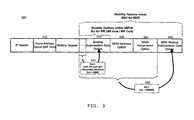
- the method of this embodiment of the invention also includes sending from the MR 120 an extended binding update (XBU) 300 comprising 320 the MNN's address (MNNA) 112.
- XBU extended binding update
- MNNA MNN's address
- validated CN / MNN route optimisation can be achieved.
- the validated CN / MNN route optimisation can be achieved without the need for a preestablished security context.
- the extended return routability checking procedure 200 is detailed as follows:
- the MR 120 detects that route optimisation is not being used for the MNN 110 whenever it receives a tunnelled packet from its home agent for that MNN 110.
- the validation process 200 between the MR 120 and correspondent node CN 150 is initiated upon receipt by the MR 120 of a tunnelled packet from the home agent HA 130 of the MR 120 addressed to the mobile network node MNN 110.
- the MR 120 Upon initiation of a validation process 200, the MR 120 generates random values (hereinafter 'cookies') for a home address test initiation (HoTI) message and a care-of address test initiation (CoTI) message, as known in the art.
- HoTI home address test initiation
- CoTI care-of address test initiation
- the inventors of the present invention chose the second mechanism: the MR 120 is to prove, upon request of the CN 150, that it is actually serving the MNN 110.
- MIPv6 specifies that the proof of home address ownership be performed through HoTI (Home Test Init) and HoT (Home Test) messages respectively sent from MR HoA 132 to CN 150 and from CN 150 to MR HoA 132.
- the proof of care-of address ownership is performed through CoTI (Care-of Test Init) and CoT (Care-of Test) messages respectively sent from MR CoA 142 to CN 150 and from CN 150 to MR CoA 142.
- the validation process (200) comprises the step (236) of the MR 120 sending a HoTI comprising the MR home address (HoA) 132 and a HoTI cookie to the CN 150; and the MR 120 sending a CoTI comprising the MR care-of address (CoA) 142 and a CoTI cookie to the CN 150 as known in the art, and additionally involves the MR 120 sending an MNNTI comprising the MNN address (MNNA) 112 and a MNNTI cookie to the CN 150.
- HoTI comprising the MR home address (HoA) 132 and a HoTI cookie
- CoA MR care-of address
- MNNA MNN address
- the HoTI is sent via the MR home address (HoA) 132 and the CoTI is sent via the MR care-of address (CoA) 142.
- HoA MR home address
- CoA MR care-of address
- the MNNTI message comprises a mobility option (as defined in MIPv6) that in turn comprises MNN address 112.
- the MNNTI is sent via the MR HoA 132.
- the MNNTI is sent via the MR care-of address (CoA) 142.
- the MNNTI message then additionally comprises the MR home address (HoA) 132.
- the CN 150 upon receipt of the relevant test initiation message, performs the step 246 of computing a home token from an HoA 132 extracted from a HoTI, together with a random key (KCN) and a nonce (a time-dependent value), and computing a care-of token from a CoA 142 extracted from a CoTI, KCN and a nonce, as known in the art.
- KCN random key
- nonce a time-dependent value
- the CN 150 computes an MNN token from an MNNA 112 extracted from the MNNTI, together with KCN and a nonce.
- the CN 150 performs the step 256 of sending a home address test (HoT) comprising a HoTI cookie, home nonce index and home token to the MR 120, and sending a care-of address test (CoT) comprising a CoTI cookie, care-of nonce index and care-of token to the MR 120, as known in the art.
- HoT home address test
- CoT care-of address test
- a nonce index allows the CN to retrieve the nonce used to generate a token, without sending the nonce itself as this would compromise security.
- the CN 150 sends a mobile network node address test (MNNT) comprising an MNNTI cookie, MNN nonce index and MNN token to the MNN 110, the MNNT further comprising; a mobile router presence option (MRPO) that comprises the MR home address (HoA) 132.
- MNNT mobile network node address test
- MRPO mobile router presence option
- the HoT is sent to the MR HoA 132, and the CoT is sent to the MR CoA 142.
- the MNNT is sent to the MNN address (MNNA) 112.
- the intent is for the HoT and CoT to both reach the MR, and for the MNNT to reach the MNN.
- a home agent (HA) 130 may encrypt an MNNT when tunnelling said MNNT to an MR 120 if the CN 150 does not encrypt it.
- the mobile router presence option is an IP hop-by-hop option that instructs every router on the path to the recipient to examine it, although in practice only mobile routers will typically examine this option.
- the inventors of the present invention have appreciated that this is necessary because the CN 150 addresses the MNNT to the MNN 110 to ensure it is routed to the correct place, but it is desired that the MR 120 - if it is the valid MR in the correct place - is able to intercept the MNNT, in order to generate a validation key with it.
- This requires the facility for the MR 120 to be able to examine some characterising portion of the MNNT, such as an MR HoA 132 within the MRPO.
- the MR 120 compares its own home address 132 to an MR home address that it extracts from MNNTs that it receives for routing to the MNN 110.
- the MRPO carries an MR care-of address (CoA) rather than an MR HoA, and the MR compares its own CoA 142 to an MR CoA that it extracts from MNNTs that it receives for routing to the MNN 110.
- CoA MR care-of address
- the MR 120 does not forward the MNNT further to the MNN. Instead, it verifies that the MNNTI cookie extracted from the MNNT matches that sent by the MR 120 in the MNNTI, and upon verification of a match, extracts the MNN nonce index and MNN token from the MNNT.
- the cookie thus provides a failsafe against maliciously constructed MNNTs.
- the MR 120 is now in a position to generate a valid XBU.
- the MR 120 having received the MNNT, HoT and CoT, now possesses a home token, care-of token and MNN token generated by the CN 150.
- the MR is then able to generate a binding update validation key (KBM) 314 from the home token and care-of token that the CN 150 will recognise as belonging to the valid MR 120, as known in the art.
- KBM binding update validation key
- the MR 120 is also able to generate 266 an extended binding update (XBU) validation key (KBMNN) 324 from the MNN token.
- XBU extended binding update
- KBMNN validation key
- the XBU is structured with the intent of being interpreted as a standard BU if received by a CN 150 incapable of understanding the extension.
- the XBU is thus obtained by adding new options to the MIPv6 BU.
- the extended binding update thus comprises at least the following two options:
- An optional, yet preferred additional option iii. is the MNN nonce index 321.
- the MNN address option 320 comprises the address of the MNN 112 for which the XBU is sent, whilst the XBU signature option 322 is generated 276 preferably based on a Message Authentication Code (MAC) that uses the KBMNN key 324, performed over the whole of the XBU.
- MAC Message Authentication Code
- the MR then sends the XBU to its recipient, typically the CN 150.
- the CN 150 can validate a KBMNN based signature 322 extracted from an XBU 300 received by the CN 150 from the MR 120.
- the CN 150 adds two entries to its binding cache (BC) derived from the validated XBU 300;
- the MR HoA 132 is first returned; due to recursive parsing of the BC, the MR HoA 132 is then searched in the BC, returning the MR CoA 142.
- the two entries added to the binding cache of the CN 150 are;
- the CN parses its BC with the MNN address 112 as the point of entry, the MR CoA 142 is first returned.
- the CN 150 can then construct a packet with a single IP header whose destination is the first intermediate address, e.g. the MR CoA 142, followed by a routing header comprising other intermediate addresses such as the MR HoA 132 and the MNNA 112, and followed finally by the payload.
- the first intermediate address e.g. the MR CoA 142
- a routing header comprising other intermediate addresses such as the MR HoA 132 and the MNNA 112
- the CN 150 will route packets for the MNN 110 with an IP header destination of the top-level mobile router care-of address, and with a routing header comprising at least the care-of addresses of subsequent mobile routers and the MNNA 112, followed finally by the payload.
- the CN 150 needs to refresh an expired MNN BC entry that was created in its binding cache (BC) by an XBU 300, then the CN 150 has to send a modified version of classical MIPv6 Binding Request message. That extended binding request (XBR) is sent to the MR and comprises the address 112 of the MNN 110 for which it is issued. Note that for purposes such as expiry and refreshment of data in the BC, one may distinguish the MNN BC entry ("MNN address is reachable at MR HoA") from the MR BC entry ("MR HoA is reachable at MR CoA") although both are created when CN 150 receives a validated XBU 300: typically, these two entries should not have the same lifetime (the lifetime of MNN BC entry is much longer). To enable the CN 150 to make this distinction, the structure of the CN BC should be slightly modified (for example by adding a flag for each entry specifying whether it is a MNN entry or not).
- a mobile router upon receiving a tunnelled packet from its home agent, sends an XBU to the source address of the inner packet for the destination address of the inner packet.
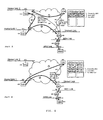
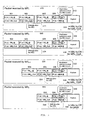
- a network of a first mobile router (MR1) 420 comprises a second mobile router (MR2) 460, and a network of MR2 460 comprises an MNN 410.
- the validation process 200 is instigated twice, first upon receipt of a first packet ( FIG. 4A ) by MR2 460 (tunnelled by MR2's HA 470), and second by receipt of a second packet ( FIG. 4B ) by MR1 420 (sent directly to the MR2 CoA 482 and tunnelled by MR1's HA 430).
- the encircled numbers in the FIGs 4A and 4B show the respective routes of the two packets.
- MR1 420 upon receiving a first tunnelled packet MR1 420 sends an XBU 401 to the MR2's home agent (HA2) 470 for MR2 CoA 482, since HA2 address and MR2 CoA are respectively in the source and destination fields of the inner packet.
- the inner packet being defined as beginning with the next IP header in a series within the packet; referring to FIG. 5 , packet 510 commences with IP header 501, and its inner packet, also shown separately as 520, commences with header 502);
- HA2 470 will typically ignore XBU 401; its purpose is to 'unwrap' the inner packet in a manner consistent with the validation process.
- MR1 420 forwards the inner packet to MR2 460;
- MR2 460 upon receiving the packet, detunnels a (second) inner packet and sends an XBU 402 to CN 450 for MNNA 412, since CN and MNN addresses are respectively in the source and destination fields of the inner packet;
- MR2 460 finally forwards the inner packet to MNN 110.
- CN updates its binding cache to indirectly link the MNNA 112 with the MR2 CoA 482.
- HA1 430 intercepts it and tunnels it to MR1 CoA 442.
- MR1 420 Upon its receipt, MR1 420 sends an XBU 403 to CN 450 for MR2 CoA 482, since CN and MR2 Care-of addresses are respectively in the source and destination fields of the inner packet.
- CN updates its binding cache to indirectly link the MR2 CoA 482 with the MR1 CoA 442.
- a mobile router upon receiving a tunnelled packet from its home agent, sends an XBU to the source address of the innermost packet for the destination address of the inner packet.
- tunnelled packet 510 depicts a payload prepended with IP headers for each step of the route to the MNN.
- each IP header in packet 510 can be considered the header of a packet that comprises any subsequent packets and thus also the payload.
- the first packet 501 is addressed to MR1 CoA 442, whilst the innermost packet 506 is addressed to MNNA 112.
- MR1 420 Upon receiving a first tunnelled packet 510, MR1 420 sends an XBU 516 to the source address of the innermost packet (CN) 512 for destination 514 of the second (or 'inner') packet 502, namely MR2 CoA 482.
- BC binding cache
- MR2 460 receives second packet 520.
- MR2 460 sends an XBU 526 to the source address of the innermost packet (CN) 522 for destination 524; an MR3 CoA, should it exist.
- the process repeats until and including MRn, to which the MNN 410 is attached, is reached, when MRn sends an XBU 556 to the source address of the innermost packet CN 552 for the MNN 410.
- a network of a first mobile router (MR1) 420 comprises a second mobile router (MR2) 460, a network of MR2 460 comprising an MNN 410.
- a home address test initiation (HoTI) and mobile network node test initiation (MNNTI) may be combined, the resulting test initiation comprising a home/MNN TI cookie, MR HoA 132 and MNN address. It will be clear to a person skilled in the art that the processes described herein may readily be adapted to such a combined test initiation.
- the MNNTI message is sent via the MR CoA 142.
- a care-of address test initiation (CoTI) and mobile network node test initiation (MNNTI) may be combined, the resulting test initiation comprising a care-of/MNN TI cookie, MR CoA 142 and MNN address.
- CoTI care-of address test initiation
- MNNTI mobile network node test initiation
- the MNNTI message sent via the MR CoA 142 may additionally comprise the MR HoA 132.
- Apparatus for the role of correspondent node 150 may be any IP networkable appliance operable for use according to the methods described herein.
- Apparatus for the role of mobile router 120 may be any IP networkable appliance capable of connecting a further IP networkable appliance operable for use according to the methods described herein.
Landscapes
- Engineering & Computer Science (AREA)
- Computer Networks & Wireless Communication (AREA)
- Signal Processing (AREA)
- Computer Security & Cryptography (AREA)
- Databases & Information Systems (AREA)
- Computer Hardware Design (AREA)
- Computing Systems (AREA)
- General Engineering & Computer Science (AREA)
- Data Exchanges In Wide-Area Networks (AREA)
- Mobile Radio Communication Systems (AREA)
- Transition And Organic Metals Composition Catalysts For Addition Polymerization (AREA)
- Developing Agents For Electrophotography (AREA)
Claims (34)
- Verfahren zur validierten Kommunikation zwischen einem mobilen Netzknoten, MNN, (110) und einem entsprechenden bzw. Korrespondenz-Knoten, CN, (150) über zumindest einen ersten mobilen Router, MR, (120), wobei das Verfahren durch die folgenden Schritte gekennzeichnet ist:i. Verwendung eines Validierungsprozesses (200), wobei eine MNN-Testeinleitungs-, MNNTI, -Nachricht von dem mobilen Router MR (120) gesendet wird, und wobei eine MNN-Test-, MNNT, -Nachricht von dem Korrespondenz-Knoten CN (150) gesendet wird; undii. Sendung von dem mobilen Router (120) einer erweiterten Binding Update bzw. Bindungsaktualisierung, XBU, welche die MNN-Adresse, MNNA, (112) aufweist.
- Verfahren zur validierten Kommunikation gemäß Anspruch 1, dadurch gekennzeichnet, dass
nach Empfang eines an den mobilen Netzwerkknoten, MNN, (110) adressierten getunneltes Datenpakets von einem Heimat-Agenten, HA, (130) des mobilen Routers (110), der mobile Router MR (120) den Validierungsprozess (200) zwischen dem MR (120) und dem Korrespondenz-Knoten, CN, (150) einleitet. - Verfahren zur validierten Kommunikation nach einem der vorhergehenden Ansprüche, dadurch gekennzeichnet, dass der Validierungsprozess (200) zwischen dem mobilen Router, MR, (120) und dem Korrespondenz-Knoten CN (150) den folgenden Schritt aufweist:der MR (120) erzeugt Zufallswerte, nachfolgend "Cookies" genannt, für eine Heimatadressen-Testeinleitungs-, HoTI, -Nachricht sowie für eine Care-of- Adressen-Testeinleitungs-, Co-TI, -Nachricht, wobei das Verfahren des Weiteren den folgenden Schritt aufweist:Erzeugung eines Cookies für die mobile Netzknoten-Testeinleitungs-, MNNTI, -Nachricht.
- Verfahren zur validierten Kommunikation nach einem der vorhergehenden Ansprüche, dadurch gekennzeichnet, dass der Validierungsprozess (200) zwischen dem mobilen Router, MR, (120) und dem Korrespondenz-Knoten, CN, (150) den folgenden Schritt (236) aufweist:der MR (120) sendet eine HoTI, welche die MR-Heitmatadresse, HoA, (132) sowie ein HoTI-Cookie aufweist, an den Korrespondenz-Knoten CN (150); undder MR (120) sendet eine CoTI, welche die MR-Care-of-Adresse, CoA, (142) sowie ein CoTI-Cookie aufweist, an den CN (150); undder MR (120) sendet die MNNTI, welche die MNN-Adresse, MNNA, (112) sowie ein MNNTI-Cookie aufweist, an den CN (150).
- Verfahren zur validierten Kommunikation nach Anspruch 4, dadurch gekennzeichnet, dass die HoTI über die MR-Heimatadresse, HoA, (132), die CoTI über die MR-Care-of-Adresse, CoA, (142) und die MNNTI über entweder die HoA (132) oder die CoA (142) gesendet wird.
- Verfahren zur validierten Kommunikation nach Anspruch 5, dadurch gekennzeichnet, dass wenn die MNNTI über die MR-Care-of-Adresse, CoA, (142) gesendet wird, die MNNTI-Adresse zusätzlich die MR-Heimatadresse, HoA, (132) aufweist.
- Verfahren zur validierten Kommunikation nach einem der vorhergehenden Ansprüche, dadurch gekennzeichnet, dass der Validierungsprozess (200) zwischen dem mobilen Router, MR, (120) und dem Korrespondenz-Knoten, CN, (150) den folgenden Schritt (246) aufweist:der CN (150) berechnet ein Heimatmerkmal aus einer aus einer HoTI extrahierten HoA (132), einem Zufallsschlüssel, KCN, und einer Nonce; undder CN (150) berechnet ein Care-of-Merkmal aus einer aus einer CoTI extrahierten CoA (142), dem KCN und einer Nonce; undder CN (150) berechnet ein MNN-Merkmal aus der aus der MNNTI extrahierten MNNA (112), dem KCN und einer Nonce.
- Verfahren zur validierten Kommunikation nach einem der vorhergehenden Ansprüche, dadurch gekennzeichnet, dass der Validierungsprozess (200) zwischen dem mobilen Router, MR, (120) und dem Korrespondenz-Knoten, CN, (150) den folgenden Schritt (256) aufweist:der CN (150) sendet einen Heimatadressen-Test, HoT, welcher ein HoTI-Cookie, einen Heimat Nonce Index sowie ein Heimatmerkmal aufweist, an den MR (120); undder CN (150) sendet einen Care-of-Adressen-Test, CoT, welcher ein CoTI-Cookie, einen Care-of-Nonce Index sowie ein Care-of-Merkmal aufweist, an den MR (120); undder CN (150) sendet den mobilen Netzknotenadressen-Test MNNT, welcher ein MNNTI-Cookie, einen MNN-Nonceindex sowie ein MNN-Merkmal aufweist, an den MNN (110), wobei der MNNT des Weiteren Folgendes aufweist:eine Anwesenheitsoption für den mobilen Router, MRPO, welche die MR-Heimatadresse HOA (132) aufweist.
- Verfahren zur validierten Kommunikation nach einem der Ansprüche 1 bis 7, dadurch gekennzeichnet, dass der Validierungsprozess (200) zwischen dem mobilen Router, MR, (120) und dem Korrespondenz-Knoten, CN, (150) den folgenden Schritt (256) aufweist:der CN (150) sendet einen Heimatadressen-Test, HoT, welcher ein HoTI-Cookie, einen Heimat Nonce Index sowie ein Heimatmerkmal aufweist, an den MR (120); undder CN (150) sendet einen Care-of-Adressen-Test, CoT, welcher ein CoTI-Cookie, einen Care-of-Nonce Index sowie ein Care-of-Merkmal aufweist, an den MR (120); undder CN (150) sendet den mobilen Netzknotenadressen-Test, MNNT, welcher ein MNNTI-Cookie, einen MNN-Nonce Index sowie ein MNN-Merkmal aufweist, an den MNN (110), wobei der MNNT des Weiteren Folgendes aufweist:eine Anwesenheitsoption für den mobilen Router, MRPO, welche die Care-of-Adresse, CoA, (142) aufweist.
- Verfahren zur validierten Kommunikation gemäß einem der Ansprüche 8 und 9, dadurch gekennzeichnet, dass der HoT an die MR-Heimatadresse, HoA, (132), der CoT an die MR-Care-of-Adresse, CoA, (142) und der MNNT an die MNN-Adresse, MNNA, (112) gesendet wird.
- Verfahren zur validierten Kommunikation gemäß einem der vorhergehenden Ansprüche, dadurch gekennzeichnet, dass der Validierungsprozess (200) zwischen dem mobilen Router, MR, (120) und dem Korrespondenzknoten, CN, (150) den folgenden Schritt aufweist:ein Heimat-Agent,HA, (130) verschlüsselt den MNNT, wenn der MNNT an einen MR (120) getunnelt wird.
- Verfahren zur validierten Kommunikation nach einem der vorhergehenden Ansprüche, dadurch gekennzeichnet, dass der Validierungsprozess (200) zwischen dem mobilen Router, MR, (120) und dem Korrespondenz-Knoten, CN, (150) den folgenden Schritt aufweist:der MR (120) vergleicht seine eigene Heimat-Adresse (132) mit jeder beliebigen MR-Heimatadresse, welche der MR (120) aus MNNTs, welche er zum Routen bzw. Weiterleiten der MNN (110) empfängt, extrahieren kann.
- Verfahren zur validierten Kommunikation gemäß einem der vorhergehenden Ansprüche, dadurch gekennzeichnet, dass der Validierungsprozess (200) zwischen dem mobilen Router, MR, (120) und dem Korrespondenz-Knoten ,CN, (150) den folgenden Schritt aufweist:der MR (120) vergleicht seine eigene Care-of-Adresse (142) mit jeder beliebigen CoA, welche der MR (120) aus MNNTs, welche er zum Routen bzw. Steuern des MNN (110) empfängt, extrahieren kann.
- Verfahren zur validierten Kommunikation gemäß einem der Ansprüche 12 und 13, dadurch gekennzeichnet, dass wenn die Adressen übereinstimmen,
der MR (120) den MNNT nicht weiterleitet;
prüft bzw. bestätigt, dass ein MNNTI-Cookie, welches aus dem MNNT extrahiert wird, mit dem von dem MR (120) in der MNNTI gesendeten Cookie übereinstimmt; und
nach der Verifizierung einer Übereinstimmung den MNN-Nonce Index und das MNN-Merkmal aus dem MMNT extrahiert. - Verfahren zur validierten Kommunikation gemäß einem der vorhergehenden Ansprüche, dadurch gekennzeichnet, dass der Validierungsprozess (200) zwischen dem mobilen Router, MR, (120) und dem Korrespondenz-Knoten, CN, (150) den folgenden Schritt aufweist:der MR (120) erzeugt einen erweiterten Binding Update- bzw. Bindungsaktualisierungs-,XBU,-Validierungsschlüssel, KBMNN, (324) aus dem MNN-Merkmal.
- Verfahren zur validierten Kommunikation gemäß einem der vorhergehenden Ansprüche, dadurch gekennzeichnet, dass der Validierungsprozess (200) zwischen dem mobilen Router, MR, (120) und dem Korrespondenz-Knoten, CN, (150) den folgenden Schritt (276) aufweist:der MR (120) erzeugt eine erweiterte Binding Update- bzw. Bindungsaktualisierungs-,XBU,-Signatur (322) unter Verwendung des KBMNN-Schlüssels (324).
- Verfahren nach Anspruch 16, dadurch gekennzeichnet, dass die Signatur auf einem Nachrichten-Authentifizierungscode beruht, welcher den KBMNN-Schlüssel (324) verwendet.
- Verfahren zur validierten Kommunikation gemäß einem der vorhergehenden Ansprüche, dadurch gekennzeichnet, dass die erweiterte Bindungsaktualisierung mindestens zwei Optionen aufweist:i. eine MNN-Adresse (320); undii. eine XBU-Signatur (322).
- Verfahren zur validierten Kommunikation gemäß Anspruch 18, dadurch gekennzeichnet, dass die erweiterte Bindungsaktualisierung des Weiteren eine MNN-NonceIndex-Option (321) aufweist.
- Verfahren zur validierten Kommunikation nach einem der vorhergehenden Ansprüche, dadurch gekennzeichnet, dass der Validierungsprozess (200) zwischen dem mobilen Router MR (120) und dem Korrespondenz-Knoten, CN, (150) den folgenden Schritt aufweist:der CN (150) validiert eine von einer XBU (300) extrahierte KBMNNbasierende Signatur (322), wobei die XBU (300) durch den CN (150) von dem MR (120) empfangen wird.
- Verfahren zur validierten Kommunikation gemäß einem der vorhergehenen Ansprüche, dadurch gekennzeichnet, dass der Validierungsprozess (200) zwischen dem mobilen Router, MR, (120) und dem Korrespondenz-Knoten ,CN, (150) den folgenden Schritt aufweist:der CN (150) addiert zwei Eingänge bzw. Einträge in seinen Bindungs-Zwischenspeicher (BC), welche von zur validierten XBU (300) erhalten bzw. abgeleitet werden;i. die MR-HoA (132) wird durch die MR-CoA (142) als erreichbar markiert; undii. die MNNA (112) wird durch die MR-HoA (132) als erreichbar markiert.
- Verfahren zur validierten Kommunikation gemäß einem der vorhergehenden Ansprüche, dadurch gekennzeichnet, dass der Validierungsprozess (200) zwischen dem mobilen Router, MR, (120) und dem Korrespondenz-Knoten, CN, (150) den folgenden Schritt aufweist:der CN (150) addiert zwei Eingänge bzw. Einträge in seinen Bindungs-Zwischenspeicher (BC), welche sich von einer validierten XBU (300) ableiten;i. die MR-HoA (132) wird durch die MR-CoA (142) als erreichbar markiert; undii. die MNNA (112) wird durch die MR-CoA (142) als erreichbar markiert.
- Verfahren zur validierten Kommunikation gemäß einem der Ansprüche 21 und 22, dadurch gekennzeichnet, dass der MNN (110) der Adressat bzw. Empfänger ist, der CN (150) seinen Bindungs-Zwischenspeicher BC rekursiv parst bzw. analysiert,
und so dass der CN (150) Datenpakete für den MNN (110) mit einem IP-Datenkopfziel MR-CoA (142) sowie mit einem Routing-Datenkopf, welcher zumindest die MNNA (412) aufweist, routet bzw. weiterleitet. - Verfahren zur validierten Kommunikation gemäß einem der Ansprüche 21 und 22, dadurch gekennzeichnet, dass falls der MNN (110) der Adressat unter mindestens zwei verschachtelten Routern ist, der CN (150) dann seinen Bindungs-Zwischenspeicher BC rekursiv parst bzw. analysiert,
und so dass der CN (150) Datenpakete für den MNN 110 mit einem IP-Datenkopfziel der mobilen Router-Spitzen-Care-of-Adresse und mit einem Routing-Datenkopf, welcher zumindest die Care-of-Adressen nachfolgender mobiler Router und die MNNA (112) aufweist, routet bzw. weiterleitet. - Verfahren zur validierten Kommunikation gemäß einem der Ansprüche 2 bis 23, dadurch gekennzeichnet, dass der mobile Router, MR, (120) nur den Validierungsprozess (200) zwischen dem MR (120) und dem Korrespondenz-Knoten, CN, (150) einleitet, falls mindestens eine der nachfolgenden Gruppen von Bedingungen erfüllt wird;i. der MNN (110) nimmt an einem spezifischen Dienst teil;ii. der CN (150) hat keine Schwellenanzahl früherer XBUs (300) missachtet;iii. der CN (150) hat keine Schwellenanzahl von Validierungsprozessen missachtet; undiv. der MNN (110) erfüllt eine Nutzungs-Richtlinie.
- Verfahren zur validierten Kommunikation gemäß einem der Ansprüche 3 bis 25, dadurch gekennzeichnet, dass die Heimatadressen-Testeinleitung, HoTI, und die mobile Netzknoten-Testeinleitung, MNNTI, kombiniert werden, wobei die resultierende Testeinleitung ein Heimat/MNN TI-Cookie, eine MR-HoA (132) sowie eine MNN-Adresse (112) aufweist.
- Verfahren zur validierten Kommunikation gemäß einem der Ansprüche 3 bis 25, dadurch gekennzeichnet, dass die Care-of-Adressen-Testeinleitung, CoTI, und die mobile Netzknoten-Testeinleitung, MNNTI, kombiniert werden, wobei die resultierende Testeinleitung ein Care-of/MNN TI-Cookie, eine MR-CoA (142) sowie eine MNN-Adresse (112) aufweist.
- Verfahren zur validierten Kommunikation gemäß einem der vorhergehenden Ansprüche, wobei das Verfahren des Weiteren den folgenden Schritt aufweist:der mobile Router, MR, (120) sendet nach Empfang eines getunnelten Datenpakets von seinem Heimat-Agenten, HA, (130) eine XBU 300 an die Ursprungsadresse eines inneren Datenpakets für eine Zieladresse des inneren Datenpakets.
- Verfahren zur validierten Kommunikation gemäß Anspruch 28, dadurch gekennzeichnet, dass ein Netzwerk eines ersten mobilen Routers, MR1, (420) einen zweiten mobilen Router MR2 (460) aufweist, wobei das Netzwerk des MR2 (460) einen MMN (410) aufweist, wobei das Verfahren die folgenden Schritte einschließt:nach Empfang eines ersten getunnelten Datenpakets, sendet MR1 (420) eine XBU (401) an den MR2-Heimat-Agenten, HA2, (470) für MR2-CoA (482);MR1 (420) leitet ein inneres Datenpaket weiter an MR2 (460);MR2 (460) sendet nach Empfang des Datenpakets eine XBU (402) an den CN (450) für eine MNNA (412);nach Empfang eines zweiten getunnelten Datenpakets, welches direkt an die MR2-CoA (482) mit einem Routing-Datenkopf gesendet wird, welcher die MR2-HoA (472) und die MNNA (412) aufweist, fängt der HA1 (430) dieses ab und tunnelt ein inneres Datenpaket an die MR1-CoA (442); undMR1 (420) sendet nach Empfang des Datenpakets eine XBU (403) an den CN (450) für eine MR2-CoA (482),und so dass die vier auf diese Weise in dem CN-Bindungs-Zwischenspeicher CN-BC erzeugten Einträge bzw. Eingänge bei rekursivem Analysieren bzw. Parsen, Datenpakete für den MNN (410) mit einem IP-Datenkopf-Ziel von MR1-CoA (442), und mit einem Routing-Datenkopf von MR1-HoA (432), MR2-CoA (482), MR-HoA (472), MNNA (412) routen bzw. weiterleiten.
- Verfahren zur validierten Kommunikation gemäß einem der Ansprüche 1 bis 27, wobei das Verfahren des Weiteren durch den folgenden Schritt gekennzeichnet ist:der mobile Router, MR, (120) sendet nach Empfang eines getunnelten Datenpakets von seinem Heimat-Agenten HA (130) eine XBU 300 an eine Ursprungsadresse eines innersten Datenpakets für eine Zieladresse des inneren Datenpakets.
- Verfahren zur validierten Kommunikation gemäß Anspruch 30, dadurch gekennzeichnet, dass ein Netzwerk eines ersten mobilen Routers, MR1, (420) einen zweiten mobilen Router MR2 (460) aufweist, wobei das Netzwerk von MR2 (460) einen MNN (410) aufweist, wobei das Verfahren die folgenden Schritte einschließt:nach Empfang eines ersten getunnelten Datenpakets sendet MR1 (420) eine XBU (601) an die Ursprungsadresse des innersten Datenpakets CN für MR2-CoA (482);MR1 (520) leitet das innere Datenpaket zu MR2 (460) weiter;nach Empfang des inneren Datenpakets sendet MR2 (460) eine XBU (602) an die Ursprungsadresse des innersten Datenpakets CN für den MNN,und so dass die vier auf diese Weise in dem CN-BC erzeugten Einträge bzw. Eingaben bei rekursivem Analysieren bzw. Parsen Datenpakete für den MNN (510) mit einem IP-Datenkopfziel der MR1-CoA (542) und mit einem Routing-Datenkopf der MR1-HoA (532), der MR2-CoA (582), der MR2-HoA (572), der MNNA (512) routen.
- Verfahren zur Verwendung in einer validierten Kommunikation gemäß einem Verfahren nach einem der Ansprüche 1 bis 31 zwischen einem mobilen Netzknoten, MNN, (110) und einem Korrespondenz-Knoten, CN, (150) über mindestens einen ersten mobilen Router, MR, (120), und wobei wobei das Verfahren Folgendes aufweist:i. eine Prüfeinrichtung zur Ausführung eines Validierungsprozesses (200), wobei die MNN-Testeinleitungs-, MMNTI, -Nachricht durch den MR (120) gesendet wird, und wobei eine MNN-Test-, MNNT, -Nachricht von dem CN (150) gesendet wird; undii. eine Einrichtung zur erweiterten Bindungsaktualisierung zum Senden (276) einer erweiterten Bindungsaktualisierung (XBU), welche die MNN-Adresse, MNNA, (112) aufweist, von dem MR (120).
- Mobiler Router, MR, (120) zur Verbindung mit mindestens einem weiteren IP-netzwerkfähigen Gerät, welches durch ein Verfahren gemäß einem der Ansprüche 1 bis 31 in Kommunikation steht, wobei der MR (120) eine mobile Netzknoten-,MNN, -Testeinleitungs-,MNNTI,-Nachrichten-Einrichtung zum Erzeugen und Senden einer MNNTI-Nachricht sowie eine Bindungaktualisierungs-Einrichtung zum Erzeugen und Senden einer erweiterten Bindungsaktualisierung, XBU, (300), welche die MNN-Adresse, MNNA, aufweist, aufweist.
- Korrespondenz-Knoten, CN, (150) zur Verbindung mit mindestens einem IP-netzwerkfähigen Gerät, welches durch ein Verfahren gemäß einem der Ansprüche 1 bis 31 in Kommunikation steht, wobei der CN (150) eine mobile Netzknoten-,MNN,-Test-, MNNT-Nachrichten-Einrichtung zum Erzeugen und Senden einer MNNT-Nachricht sowie eine Validierungseinrichtung zur Validierung einer aus einer erweiterten Bindungsaktualisierung XBU (300) extrahierten Signatur (322) auf der Basis eines erweitereten Bindungsaktualisierungs-Validierungsschlüssels KBMNN.
Priority Applications (8)
| Application Number | Priority Date | Filing Date | Title |
|---|---|---|---|
| AT03291964T ATE503357T1 (de) | 2003-08-06 | 2003-08-06 | Verfahren zur validierten kommunikation |
| EP03291964A EP1505780B1 (de) | 2003-08-06 | 2003-08-06 | Verfahren zur validierten Kommunikation |
| DE60336464T DE60336464D1 (de) | 2003-08-06 | 2003-08-06 | Verfahren zur validierten Kommunikation |
| KR1020067002517A KR100759727B1 (ko) | 2003-08-06 | 2004-06-25 | 승인된 통신 방법 |
| CNA2004800225372A CN1833412A (zh) | 2003-08-06 | 2004-06-25 | 验证通信方法 |
| JP2006522339A JP4299860B2 (ja) | 2003-08-06 | 2004-06-25 | 認証済みの通信を行うための方法 |
| PCT/EP2004/051257 WO2005015853A1 (en) | 2003-08-06 | 2004-06-25 | A method of validated communication |
| US11/338,189 US7564825B2 (en) | 2003-08-06 | 2006-01-24 | Method of validated communication |
Applications Claiming Priority (1)
| Application Number | Priority Date | Filing Date | Title |
|---|---|---|---|
| EP03291964A EP1505780B1 (de) | 2003-08-06 | 2003-08-06 | Verfahren zur validierten Kommunikation |
Publications (2)
| Publication Number | Publication Date |
|---|---|
| EP1505780A1 EP1505780A1 (de) | 2005-02-09 |
| EP1505780B1 true EP1505780B1 (de) | 2011-03-23 |
Family
ID=33547795
Family Applications (1)
| Application Number | Title | Priority Date | Filing Date |
|---|---|---|---|
| EP03291964A Expired - Lifetime EP1505780B1 (de) | 2003-08-06 | 2003-08-06 | Verfahren zur validierten Kommunikation |
Country Status (8)
| Country | Link |
|---|---|
| US (1) | US7564825B2 (de) |
| EP (1) | EP1505780B1 (de) |
| JP (1) | JP4299860B2 (de) |
| KR (1) | KR100759727B1 (de) |
| CN (1) | CN1833412A (de) |
| AT (1) | ATE503357T1 (de) |
| DE (1) | DE60336464D1 (de) |
| WO (1) | WO2005015853A1 (de) |
Families Citing this family (33)
| Publication number | Priority date | Publication date | Assignee | Title |
|---|---|---|---|---|
| US8139538B1 (en) * | 2004-06-22 | 2012-03-20 | Cisco Technology, Inc. | Methods and apparatus for achieving route optimization between mobile networks and a correspondent node using a mobile router as a proxy node |
| CN101138199A (zh) * | 2005-03-08 | 2008-03-05 | 松下电器产业株式会社 | 网络管理方法和网络管理设备 |
| WO2006118342A1 (en) * | 2005-04-28 | 2006-11-09 | Matsushita Electric Industrial Co., Ltd. | System, associated methods and apparatus for securing prefix-scoped binding updates |
| US7554929B1 (en) * | 2005-11-02 | 2009-06-30 | Verizon Services Corp. | Mobility aware performance evaluation |
| CN101001261B (zh) * | 2006-01-09 | 2010-09-29 | 华为技术有限公司 | 一种MIPv6移动节点的通信方法 |
| US7551915B1 (en) * | 2006-04-24 | 2009-06-23 | Sprint Spectrum L.P. | Method of establishing route optimized communication in mobile IPv6 by securing messages sent between a mobile node and home agent |
| US8151116B2 (en) * | 2006-06-09 | 2012-04-03 | Brigham Young University | Multi-channel user authentication apparatus system and method |
| US8750303B2 (en) * | 2006-06-12 | 2014-06-10 | Telefonaktiebolaget Lm Ericsson (Publ) | Mobility signaling delegation |
| ATE538581T1 (de) * | 2006-06-20 | 2012-01-15 | Ericsson Telefon Ab L M | Verfahren und anordnung zum sicherstellen von präfix-einheitlichkeit zwischen mehreren mobil- routern |
| KR100743082B1 (ko) | 2006-06-30 | 2007-07-27 | 주식회사 케이티프리텔 | 이동 라우터를 통한 이동 노드로의 패킷 전달을 위한터널링 프로토콜의 터널링 장치, 위치 등록 방법 및 터널링방법 |
| CN101119297B (zh) * | 2006-08-04 | 2010-05-12 | 华为技术有限公司 | 一种移动网络中的路由优化方法 |
| WO2008023845A1 (en) * | 2006-08-25 | 2008-02-28 | Panasonic Corporation | Method and apparatus for address verification during multiple addresses registration |
| CN101150849B (zh) * | 2006-09-18 | 2010-09-08 | 华为技术有限公司 | 生成绑定管理密钥的方法、系统、移动节点及通信节点 |
| CN101150572B (zh) * | 2006-09-22 | 2011-08-10 | 华为技术有限公司 | 移动节点和通信对端绑定更新的方法及装置 |
| US8171120B1 (en) * | 2006-11-22 | 2012-05-01 | Rockstar Bidco Lp | Mobile IPv6 route optimization authorization |
| US8640215B2 (en) * | 2007-03-23 | 2014-01-28 | Microsoft Corporation | Secure isolation of application pools |
| US20100189000A1 (en) * | 2007-06-20 | 2010-07-29 | Panasonic Corporation | Prefix information check device and communication device |
| JPWO2009011120A1 (ja) * | 2007-07-18 | 2010-09-16 | パナソニック株式会社 | アドレス生成方法、アドレス生成システム、通信装置、通信方法、通信システム及び相手先通信装置 |
| GB2454645B (en) * | 2007-08-31 | 2012-05-09 | Ericsson Telefon Ab L M | Location update of a mobile node |
| US7916721B1 (en) * | 2007-11-05 | 2011-03-29 | Sprint Spectrum L.P. | Home address subnet assignment for IPv6 bootstrapping |
| US8509439B2 (en) * | 2007-12-31 | 2013-08-13 | Intel Corporation | Assigning nonces for security keys |
| US20100278112A1 (en) * | 2008-01-18 | 2010-11-04 | Panasonic Corporation | Binding update method and mobile terminal device used for same |
| EP2241074A1 (de) * | 2008-02-08 | 2010-10-20 | Telefonaktiebolaget LM Ericsson (publ) | Verfahren und vorrichtung zur verwendung in einem kommunikationsnetz |
| CN101594339B (zh) * | 2008-05-29 | 2012-07-04 | 华为技术有限公司 | 管理和查询映射信息的方法、设备及通信系统 |
| JPWO2010067569A1 (ja) * | 2008-12-08 | 2012-05-17 | パナソニック株式会社 | 経路最適化方法、経路最適化システム、移動通信装置、移動管理装置及び相手先通信装置並びにホーム基地局 |
| US8521821B2 (en) * | 2009-03-17 | 2013-08-27 | Brigham Young University | Encrypted email based upon trusted overlays |
| US8625529B2 (en) * | 2010-03-30 | 2014-01-07 | Verizon Patent And Licensing Inc. | System for and method of dynamic home agent allocation |
| US8953798B2 (en) * | 2010-10-29 | 2015-02-10 | Telefonaktiebolaget L M Ericsson (Publ) | Enhanced cryptographically generated addresses for secure route optimization in mobile internet protocol |
| CN102404220B (zh) * | 2011-11-25 | 2014-10-01 | 周明云 | 一种基于私有协议的安全路由器的设备及实现方法 |
| CN104316735A (zh) * | 2014-10-31 | 2015-01-28 | 工业和信息化部电信研究院 | 移动终端连接器 |
| FR3048573B1 (fr) * | 2016-03-01 | 2019-05-31 | Hager-Electro Sas | Procede d'initialisation et de securisation de communication bidirectionnelle d'un appareil avec un reseau domotique |
| US12034707B2 (en) | 2021-11-18 | 2024-07-09 | Cisco Technology, Inc. | Randomizing server-side addresses |
| US11683286B2 (en) * | 2021-11-18 | 2023-06-20 | Cisco Technology, Inc. | Anonymizing server-side addresses |
Family Cites Families (12)
| Publication number | Priority date | Publication date | Assignee | Title |
|---|---|---|---|---|
| EP1158742A1 (de) * | 2000-05-24 | 2001-11-28 | Motorola, Inc. | Kommunikationssystem und Verfahren dafür |
| JP3636637B2 (ja) * | 2000-05-30 | 2005-04-06 | 三菱電機株式会社 | 経路最適化方法 |
| DE60142243D1 (de) * | 2000-10-18 | 2010-07-08 | Ericsson Telefon Ab L M | Nahtlose weiterreichung bei mobile ip |
| US7333482B2 (en) * | 2000-12-22 | 2008-02-19 | Interactive People Unplugged Ab | Route optimization technique for mobile IP |
| KR100383587B1 (ko) * | 2001-08-16 | 2003-05-14 | 삼성전자주식회사 | 이동 인터넷 프로토콜 시스템 및 그의 경로 최적화 방법 |
| JP4034729B2 (ja) * | 2001-09-12 | 2008-01-16 | テレフオンアクチーボラゲット エル エム エリクソン(パブル) | モバイルインターネット通信装置及び方法 |
| US6721297B2 (en) * | 2001-11-19 | 2004-04-13 | Motorola, Inc. | Method and apparatus for providing IP mobility for mobile networks |
| ATE349120T1 (de) * | 2001-11-27 | 2007-01-15 | Nokia Corp | SENDEN EINER ßBINDING UPDATEß-NACHRICHT, DIE EINE ßCARE OF ADDRESSß AUFWEIST, UM DATENPAKETE ÜBER EINE UNIDIREKTIONALE SCHNITTSTELLE ZU EINEM MOBILEN KNOTEN ZU ÜBERTRAGEN |
| US7409549B1 (en) * | 2001-12-11 | 2008-08-05 | Cisco Technology, Inc. | Methods and apparatus for dynamic home agent assignment in mobile IP |
| US7756073B2 (en) * | 2002-09-20 | 2010-07-13 | Franck Le | Method for updating a routing entry |
| US20040095913A1 (en) * | 2002-11-20 | 2004-05-20 | Nokia, Inc. | Routing optimization proxy in IP networks |
| US7793098B2 (en) * | 2003-05-20 | 2010-09-07 | Nokia Corporation | Providing privacy to nodes using mobile IPv6 with route optimization |
-
2003
- 2003-08-06 DE DE60336464T patent/DE60336464D1/de not_active Expired - Lifetime
- 2003-08-06 EP EP03291964A patent/EP1505780B1/de not_active Expired - Lifetime
- 2003-08-06 AT AT03291964T patent/ATE503357T1/de not_active IP Right Cessation
-
2004
- 2004-06-25 WO PCT/EP2004/051257 patent/WO2005015853A1/en not_active Ceased
- 2004-06-25 CN CNA2004800225372A patent/CN1833412A/zh active Pending
- 2004-06-25 JP JP2006522339A patent/JP4299860B2/ja not_active Expired - Fee Related
- 2004-06-25 KR KR1020067002517A patent/KR100759727B1/ko not_active Expired - Fee Related
-
2006
- 2006-01-24 US US11/338,189 patent/US7564825B2/en active Active
Also Published As
| Publication number | Publication date |
|---|---|
| EP1505780A1 (de) | 2005-02-09 |
| KR20060052969A (ko) | 2006-05-19 |
| KR100759727B1 (ko) | 2007-09-20 |
| CN1833412A (zh) | 2006-09-13 |
| JP4299860B2 (ja) | 2009-07-22 |
| US20060120315A1 (en) | 2006-06-08 |
| WO2005015853A1 (en) | 2005-02-17 |
| JP2007501554A (ja) | 2007-01-25 |
| US7564825B2 (en) | 2009-07-21 |
| ATE503357T1 (de) | 2011-04-15 |
| DE60336464D1 (de) | 2011-05-05 |
Similar Documents
| Publication | Publication Date | Title |
|---|---|---|
| EP1505780B1 (de) | Verfahren zur validierten Kommunikation | |
| EP2074799B1 (de) | Verfahren und vorrichtung zur mobil-ip-routenoptimierung | |
| US8514851B2 (en) | Mobile IPv6 authentication and authorization baseline | |
| EP2127249B1 (de) | Routenoptimierung zwischen einem mobilen router und einem korrespondierenden knoten mithilfe einer netzwerkpräfix-option für umgekehrte routbarkeit | |
| EP2633719B1 (de) | Kryptografisch generierte adressen anhand einer rückwärtsschlüsselkette zur sicheren routenoptimierung in einem mobilen internetprotokoll | |
| WO2012056430A1 (en) | Secure route optimization in mobile internet protocol using trusted domain name servers | |
| Lee et al. | HOTA: Handover optimized ticket-based authentication in network-based mobility management | |
| JP2008539603A (ja) | プレフィックススコープバインディング更新をセキュアにするためのシステム及び関連方法並びに装置 | |
| US7895339B2 (en) | Network managing method and network managing apparatus | |
| EP2471247B1 (de) | Verfahren und Netzwerkknoten zur Erzeugung von kryptografisch generierten Adressen in mobilen IP-Netzen | |
| US20100175109A1 (en) | Route optimisation for proxy mobile ip | |
| Le et al. | A new decentralized mobility management service architecture for ipv6-based networks | |
| Ahmed et al. | Binding update authentication scheme for mobile IPv6 | |
| Sornlertlamvanich et al. | Route optimization in nested mobile networks using binding update for top-level MR |
Legal Events
| Date | Code | Title | Description |
|---|---|---|---|
| PUAI | Public reference made under article 153(3) epc to a published international application that has entered the european phase |
Free format text: ORIGINAL CODE: 0009012 |
|
| AK | Designated contracting states |
Kind code of ref document: A1 Designated state(s): AT BE BG CH CY CZ DE DK EE ES FI FR GB GR HU IE IT LI LU MC NL PT RO SE SI SK TR |
|
| AX | Request for extension of the european patent |
Extension state: AL LT LV MK |
|
| 17P | Request for examination filed |
Effective date: 20050317 |
|
| AKX | Designation fees paid |
Designated state(s): AT BE BG CH CY CZ DE DK EE ES FI FR GB GR HU IE IT LI LU MC NL PT RO SE SI SK TR |
|
| GRAP | Despatch of communication of intention to grant a patent |
Free format text: ORIGINAL CODE: EPIDOSNIGR1 |
|
| RIC1 | Information provided on ipc code assigned before grant |
Ipc: H04W 8/08 20090101AFI20100910BHEP |
|
| GRAS | Grant fee paid |
Free format text: ORIGINAL CODE: EPIDOSNIGR3 |
|
| GRAA | (expected) grant |
Free format text: ORIGINAL CODE: 0009210 |
|
| AK | Designated contracting states |
Kind code of ref document: B1 Designated state(s): AT BE BG CH CY CZ DE DK EE ES FI FR GB GR HU IE IT LI LU MC NL PT RO SE SI SK TR |
|
| REG | Reference to a national code |
Ref country code: GB Ref legal event code: FG4D |
|
| REG | Reference to a national code |
Ref country code: CH Ref legal event code: EP |
|
| RAP2 | Party data changed (patent owner data changed or rights of a patent transferred) |
Owner name: MOTOROLA SOLUTIONS, INC. |
|
| REG | Reference to a national code |
Ref country code: IE Ref legal event code: FG4D |
|
| REF | Corresponds to: |
Ref document number: 60336464 Country of ref document: DE Date of ref document: 20110505 Kind code of ref document: P |
|
| REG | Reference to a national code |
Ref country code: DE Ref legal event code: R096 Ref document number: 60336464 Country of ref document: DE Effective date: 20110505 |
|
| REG | Reference to a national code |
Ref country code: DE Ref legal event code: R081 Ref document number: 60336464 Country of ref document: DE Owner name: MOTOROLA SOLUTIONS, INC., SCHAUMBURG, US Free format text: FORMER OWNER: MOTOROLA, INC., SCHAUMBURG, ILL., US Effective date: 20110329 Ref country code: DE Ref legal event code: R081 Ref document number: 60336464 Country of ref document: DE Owner name: MOTOROLA SOLUTIONS, INC., CHICAGO, US Free format text: FORMER OWNER: MOTOROLA, INC., SCHAUMBURG, ILL., US Effective date: 20110329 |
|
| REG | Reference to a national code |
Ref country code: NL Ref legal event code: VDEP Effective date: 20110323 |
|
| PG25 | Lapsed in a contracting state [announced via postgrant information from national office to epo] |
Ref country code: SE Free format text: LAPSE BECAUSE OF FAILURE TO SUBMIT A TRANSLATION OF THE DESCRIPTION OR TO PAY THE FEE WITHIN THE PRESCRIBED TIME-LIMIT Effective date: 20110323 Ref country code: GR Free format text: LAPSE BECAUSE OF FAILURE TO SUBMIT A TRANSLATION OF THE DESCRIPTION OR TO PAY THE FEE WITHIN THE PRESCRIBED TIME-LIMIT Effective date: 20110624 |
|
| PG25 | Lapsed in a contracting state [announced via postgrant information from national office to epo] |
Ref country code: AT Free format text: LAPSE BECAUSE OF FAILURE TO SUBMIT A TRANSLATION OF THE DESCRIPTION OR TO PAY THE FEE WITHIN THE PRESCRIBED TIME-LIMIT Effective date: 20110323 Ref country code: BG Free format text: LAPSE BECAUSE OF FAILURE TO SUBMIT A TRANSLATION OF THE DESCRIPTION OR TO PAY THE FEE WITHIN THE PRESCRIBED TIME-LIMIT Effective date: 20110623 Ref country code: SI Free format text: LAPSE BECAUSE OF FAILURE TO SUBMIT A TRANSLATION OF THE DESCRIPTION OR TO PAY THE FEE WITHIN THE PRESCRIBED TIME-LIMIT Effective date: 20110323 Ref country code: FI Free format text: LAPSE BECAUSE OF FAILURE TO SUBMIT A TRANSLATION OF THE DESCRIPTION OR TO PAY THE FEE WITHIN THE PRESCRIBED TIME-LIMIT Effective date: 20110323 Ref country code: CY Free format text: LAPSE BECAUSE OF FAILURE TO SUBMIT A TRANSLATION OF THE DESCRIPTION OR TO PAY THE FEE WITHIN THE PRESCRIBED TIME-LIMIT Effective date: 20110323 |
|
| PG25 | Lapsed in a contracting state [announced via postgrant information from national office to epo] |
Ref country code: BE Free format text: LAPSE BECAUSE OF FAILURE TO SUBMIT A TRANSLATION OF THE DESCRIPTION OR TO PAY THE FEE WITHIN THE PRESCRIBED TIME-LIMIT Effective date: 20110323 |
|
| PG25 | Lapsed in a contracting state [announced via postgrant information from national office to epo] |
Ref country code: EE Free format text: LAPSE BECAUSE OF FAILURE TO SUBMIT A TRANSLATION OF THE DESCRIPTION OR TO PAY THE FEE WITHIN THE PRESCRIBED TIME-LIMIT Effective date: 20110323 Ref country code: PT Free format text: LAPSE BECAUSE OF FAILURE TO SUBMIT A TRANSLATION OF THE DESCRIPTION OR TO PAY THE FEE WITHIN THE PRESCRIBED TIME-LIMIT Effective date: 20110725 |
|
| PG25 | Lapsed in a contracting state [announced via postgrant information from national office to epo] |
Ref country code: SK Free format text: LAPSE BECAUSE OF FAILURE TO SUBMIT A TRANSLATION OF THE DESCRIPTION OR TO PAY THE FEE WITHIN THE PRESCRIBED TIME-LIMIT Effective date: 20110323 Ref country code: RO Free format text: LAPSE BECAUSE OF FAILURE TO SUBMIT A TRANSLATION OF THE DESCRIPTION OR TO PAY THE FEE WITHIN THE PRESCRIBED TIME-LIMIT Effective date: 20110323 Ref country code: CZ Free format text: LAPSE BECAUSE OF FAILURE TO SUBMIT A TRANSLATION OF THE DESCRIPTION OR TO PAY THE FEE WITHIN THE PRESCRIBED TIME-LIMIT Effective date: 20110323 Ref country code: ES Free format text: LAPSE BECAUSE OF FAILURE TO SUBMIT A TRANSLATION OF THE DESCRIPTION OR TO PAY THE FEE WITHIN THE PRESCRIBED TIME-LIMIT Effective date: 20110704 |
|
| PG25 | Lapsed in a contracting state [announced via postgrant information from national office to epo] |
Ref country code: NL Free format text: LAPSE BECAUSE OF FAILURE TO SUBMIT A TRANSLATION OF THE DESCRIPTION OR TO PAY THE FEE WITHIN THE PRESCRIBED TIME-LIMIT Effective date: 20110323 |
|
| PLBE | No opposition filed within time limit |
Free format text: ORIGINAL CODE: 0009261 |
|
| STAA | Information on the status of an ep patent application or granted ep patent |
Free format text: STATUS: NO OPPOSITION FILED WITHIN TIME LIMIT |
|
| 26N | No opposition filed |
Effective date: 20111227 |
|
| PG25 | Lapsed in a contracting state [announced via postgrant information from national office to epo] |
Ref country code: DK Free format text: LAPSE BECAUSE OF FAILURE TO SUBMIT A TRANSLATION OF THE DESCRIPTION OR TO PAY THE FEE WITHIN THE PRESCRIBED TIME-LIMIT Effective date: 20110323 |
|
| PG25 | Lapsed in a contracting state [announced via postgrant information from national office to epo] |
Ref country code: MC Free format text: LAPSE BECAUSE OF NON-PAYMENT OF DUE FEES Effective date: 20110831 |
|
| REG | Reference to a national code |
Ref country code: CH Ref legal event code: PL |
|
| REG | Reference to a national code |
Ref country code: DE Ref legal event code: R097 Ref document number: 60336464 Country of ref document: DE Effective date: 20111227 |
|
| PG25 | Lapsed in a contracting state [announced via postgrant information from national office to epo] |
Ref country code: LI Free format text: LAPSE BECAUSE OF NON-PAYMENT OF DUE FEES Effective date: 20110831 Ref country code: CH Free format text: LAPSE BECAUSE OF NON-PAYMENT OF DUE FEES Effective date: 20110831 |
|
| REG | Reference to a national code |
Ref country code: IE Ref legal event code: MM4A |
|
| PG25 | Lapsed in a contracting state [announced via postgrant information from national office to epo] |
Ref country code: IT Free format text: LAPSE BECAUSE OF FAILURE TO SUBMIT A TRANSLATION OF THE DESCRIPTION OR TO PAY THE FEE WITHIN THE PRESCRIBED TIME-LIMIT Effective date: 20110323 |
|
| REG | Reference to a national code |
Ref country code: DE Ref legal event code: R082 Ref document number: 60336464 Country of ref document: DE Representative=s name: SCHUMACHER & WILLSAU PATENTANWALTSGESELLSCHAFT, DE |
|
| PG25 | Lapsed in a contracting state [announced via postgrant information from national office to epo] |
Ref country code: IE Free format text: LAPSE BECAUSE OF NON-PAYMENT OF DUE FEES Effective date: 20110806 |
|
| REG | Reference to a national code |
Ref country code: DE Ref legal event code: R082 Ref document number: 60336464 Country of ref document: DE Representative=s name: SCHUMACHER & WILLSAU PATENTANWALTSGESELLSCHAFT, DE |
|
| REG | Reference to a national code |
Ref country code: DE Ref legal event code: R082 Ref document number: 60336464 Country of ref document: DE Representative=s name: SCHUMACHER & WILLSAU PATENTANWALTSGESELLSCHAFT, DE |
|
| PG25 | Lapsed in a contracting state [announced via postgrant information from national office to epo] |
Ref country code: LU Free format text: LAPSE BECAUSE OF NON-PAYMENT OF DUE FEES Effective date: 20110806 |
|
| PG25 | Lapsed in a contracting state [announced via postgrant information from national office to epo] |
Ref country code: TR Free format text: LAPSE BECAUSE OF FAILURE TO SUBMIT A TRANSLATION OF THE DESCRIPTION OR TO PAY THE FEE WITHIN THE PRESCRIBED TIME-LIMIT Effective date: 20110323 |
|
| PG25 | Lapsed in a contracting state [announced via postgrant information from national office to epo] |
Ref country code: HU Free format text: LAPSE BECAUSE OF FAILURE TO SUBMIT A TRANSLATION OF THE DESCRIPTION OR TO PAY THE FEE WITHIN THE PRESCRIBED TIME-LIMIT Effective date: 20110323 |
|
| REG | Reference to a national code |
Ref country code: FR Ref legal event code: PLFP Year of fee payment: 14 |
|
| REG | Reference to a national code |
Ref country code: DE Ref legal event code: R082 Ref document number: 60336464 Country of ref document: DE Representative=s name: SCHUMACHER & WILLSAU PATENTANWALTSGESELLSCHAFT, DE Ref country code: DE Ref legal event code: R081 Ref document number: 60336464 Country of ref document: DE Owner name: MOTOROLA SOLUTIONS, INC., CHICAGO, US Free format text: FORMER OWNER: MOTOROLA SOLUTIONS, INC., SCHAUMBURG, ILL., US |
|
| PGFP | Annual fee paid to national office [announced via postgrant information from national office to epo] |
Ref country code: FR Payment date: 20160719 Year of fee payment: 14 |
|
| REG | Reference to a national code |
Ref country code: FR Ref legal event code: CA Effective date: 20180105 |
|
| REG | Reference to a national code |
Ref country code: FR Ref legal event code: ST Effective date: 20180430 |
|
| PG25 | Lapsed in a contracting state [announced via postgrant information from national office to epo] |
Ref country code: FR Free format text: LAPSE BECAUSE OF NON-PAYMENT OF DUE FEES Effective date: 20170831 |
|
| PGFP | Annual fee paid to national office [announced via postgrant information from national office to epo] |
Ref country code: GB Payment date: 20190829 Year of fee payment: 17 |
|
| PGFP | Annual fee paid to national office [announced via postgrant information from national office to epo] |
Ref country code: DE Payment date: 20191031 Year of fee payment: 17 |
|
| REG | Reference to a national code |
Ref country code: DE Ref legal event code: R119 Ref document number: 60336464 Country of ref document: DE |
|
| GBPC | Gb: european patent ceased through non-payment of renewal fee |
Effective date: 20200806 |
|
| PG25 | Lapsed in a contracting state [announced via postgrant information from national office to epo] |
Ref country code: DE Free format text: LAPSE BECAUSE OF NON-PAYMENT OF DUE FEES Effective date: 20210302 |
|
| PG25 | Lapsed in a contracting state [announced via postgrant information from national office to epo] |
Ref country code: GB Free format text: LAPSE BECAUSE OF NON-PAYMENT OF DUE FEES Effective date: 20200806 |