EP1507389A1 - Téléphone portable avec un dispositif de commande à distance pour arrêter la sonnerie - Google Patents
Téléphone portable avec un dispositif de commande à distance pour arrêter la sonnerie Download PDFInfo
- Publication number
- EP1507389A1 EP1507389A1 EP03018373A EP03018373A EP1507389A1 EP 1507389 A1 EP1507389 A1 EP 1507389A1 EP 03018373 A EP03018373 A EP 03018373A EP 03018373 A EP03018373 A EP 03018373A EP 1507389 A1 EP1507389 A1 EP 1507389A1
- Authority
- EP
- European Patent Office
- Prior art keywords
- mobile phone
- phone according
- alert
- detecting
- detecting means
- Prior art date
- Legal status (The legal status is an assumption and is not a legal conclusion. Google has not performed a legal analysis and makes no representation as to the accuracy of the status listed.)
- Withdrawn
Links
- 238000013500 data storage Methods 0.000 claims abstract description 15
- 230000033001 locomotion Effects 0.000 claims description 23
- 230000000694 effects Effects 0.000 claims description 5
- 238000001514 detection method Methods 0.000 description 8
- 238000000034 method Methods 0.000 description 4
- 239000011159 matrix material Substances 0.000 description 3
- 238000010586 diagram Methods 0.000 description 2
- 230000035945 sensitivity Effects 0.000 description 2
- 230000003213 activating effect Effects 0.000 description 1
- 230000005540 biological transmission Effects 0.000 description 1
- 238000004364 calculation method Methods 0.000 description 1
Images


Classifications
-
- H—ELECTRICITY
- H04—ELECTRIC COMMUNICATION TECHNIQUE
- H04M—TELEPHONIC COMMUNICATION
- H04M19/00—Current supply arrangements for telephone systems
- H04M19/02—Current supply arrangements for telephone systems providing ringing current or supervisory tones, e.g. dialling tone or busy tone
- H04M19/04—Current supply arrangements for telephone systems providing ringing current or supervisory tones, e.g. dialling tone or busy tone the ringing-current being generated at the substations
-
- H—ELECTRICITY
- H04—ELECTRIC COMMUNICATION TECHNIQUE
- H04M—TELEPHONIC COMMUNICATION
- H04M1/00—Substation equipment, e.g. for use by subscribers
- H04M1/72—Mobile telephones; Cordless telephones, i.e. devices for establishing wireless links to base stations without route selection
- H04M1/724—User interfaces specially adapted for cordless or mobile telephones
- H04M1/72448—User interfaces specially adapted for cordless or mobile telephones with means for adapting the functionality of the device according to specific conditions
- H04M1/72451—User interfaces specially adapted for cordless or mobile telephones with means for adapting the functionality of the device according to specific conditions according to schedules, e.g. using calendar applications
-
- H—ELECTRICITY
- H04—ELECTRIC COMMUNICATION TECHNIQUE
- H04M—TELEPHONIC COMMUNICATION
- H04M2250/00—Details of telephonic subscriber devices
- H04M2250/12—Details of telephonic subscriber devices including a sensor for measuring a physical value, e.g. temperature or motion
-
- H—ELECTRICITY
- H04—ELECTRIC COMMUNICATION TECHNIQUE
- H04M—TELEPHONIC COMMUNICATION
- H04M2250/00—Details of telephonic subscriber devices
- H04M2250/52—Details of telephonic subscriber devices including functional features of a camera
Definitions
- the invention relates to a mobile phone with a remote alarm control according to claim 1 and to a mobile phone with a remote alarm control according to claim 13.
- an alarm clock that is that the phone outputs an audible, visible or mechanical alert signal when the time of the day has reached a predefined time. Further, the phone outputs an alarm when a call is coming in. Once the alarm has started, it must be shut down by pressing one or more keys or buttons of the phone. This means that the user has to touch the phone and to localise the keys or buttons which have to be pressed, which is quite inconvenient.
- a mobile phone with a remote alarm control comprising a clock for generating a time information, a data storage means for storing an alert time, an output means for outputting an alert signal when the time information generated by the clock reaches the alert time stored in the data storage means and a detecting means for detecting remote signals by the user in order to stop the outputting of the alert signal by the output means.
- a mobile phone with a remote alarm control comprising an output means for outputting an alert signal when a call is coming in and a detecting means for detecting remote signals by the user in order to stop the outputting of the alert signal by the output means.
- the detecting means may be either a camera for the detection of movements or a microphone for voice recognition.
- a camera and/or a microphone is already comprised, the implementation of the present invention is very simple.
- the mobile phone comprises an input means for inputting the alert time.
- a processing unit detects the matching between the time information generated by the clock and the alert time stored in the data storage means.
- the processing unit upon matching between the time information generated by the clock and the alert time stored in the data storage means causes the output means to output an alert signal and activates the detecting means.
- the processing unit deactivates the detecting means after the detecting means has detected a remote signal.
- the processing unit stops the outputting of the signal of the output means after deactivating the detecting means.
- the detecting means can be a camera.
- the camera detects motion.
- the camera detects movement of a predefined shape.
- the detecting means can be a voice recognition means.
- the voice recognition means detects voice activity.
- the voice recognition means can detect a predefined word.
- Fig. 1 shows a block diagram of a mobile phone according to the present invention.
- the mobile phone 1 is adapted to transmit and receive information in a wireless telecommunication system, such as the GSM, UMTS or any other system for the wireless communication of information and data.
- the mobile phone 1 comprises an input means 3 for inputting an alert time and date, which may be a keypad, a touch pad or an interface for transmission with different means, e.g. a serial cable.
- the mobile phone 1 further comprises an output means 4 for outputting an alert signal when the time of the day has reached the alert time input by the user or when a call is coming in, the output means hereby may be a display, a loudspeaker or means for vibration of the mobile phone 1.
- a clock 5 integrated in the mobile phone 1 generates a time and date information.
- a data storage means 6 serves for the permanent or volatile storage of data or information. If, for example, the user inputs an alert time via the input means 3, then this alert time is stored in the data storage means 6.
- the mobile phone 1 further comprises a detecting means 2, which is able to detect remote signals caused by the user e.g. movements or voice.
- the detecting means 2 may be a voice recognition means or a camera.
- a processing unit 7 receives, processes and transmits data between the input means 3, the output means 4, the clock 5, the data storage means 6 and the detecting means 2.
- the steps for switching off the alarm of the mobile phone 1 are the following:
- a first step S1 the user via the input means 3 inputs an alert time, which is stored in the data storage means 6.
- the clock is to ring at 6 a.m.
- the time passes which means that the clock 5 continuously generates new time and date information and submits them to the processing unit 7.
- the processing unit 7 detects, that the time information generated by the clock 5 and the alert time stored in the data storage means 6 match or that a call is coming in, then the processing unit 7 causes the output means 4 to output an alarm which may be ringing or vibration of the mobile phone 1.
- a step S4 the input means 3 and/or the detecting means 2 are activated, i.e. switched in a detection mode enabling the detection of a signal, which means that the camera or the microphone for voice recognition are activated or that the mobile phone 1 is listening for key presses. If the mobile phone 1 during this process has reached the state indicated with B, then there are four possibilities to continue.
- a key may be pressed, a voice input may be detected by the detecting means 2 (if it is a voice recognition means), a movement may be detected by the detecting means 2 (if it is a camera) or the maximum duration of the alarm may be reached.
- the detecting means 2 i.e. the voice recognition means and the camera are switched off and the mobile phone stops listening for key presses.
- the alarm is switched off, which means that the output means 4 stops outputting the signal.
- the detecting means 2 may be a voice recognition means for detecting voice input.
- a part of the GSM standard is voice activity detection (VAD).
- VAD voice activity detection
- VAD voice activity detection
- VAD voice activity detection
- the task of voice recognition can be reduced to a task to detect voice activity. That is because the meaning of the detected speech input is not considered relevant to switch off the alarm.
- the existence of speech in the proximity is enough.
- the processing needed to control voice input is minimal and available e.g. in any chip-set implementing GSM AMR speech codecs.
- a predefined word is detected, which may either be stored in the mobile phone 1 automatically or input by the user via the input means 3 or a microphone and stored in the storage means 6.
- the processing unit 7 compares the stored word with the detected word and in case of match stops the outputting of the alert signal.
- the detecting means 2 is a camera for detecting movements in order to switch off the alarm.
- the input to the movement detection comes from video or a still camera of a mobile phone. If the source is a video or still camera does not matter, in either case an image/frame is stored at the time the alarm starts. That image/frame is used as a base-reference to detect a change, i.e. movement.
- Some requirements are set for the sensitivity of a camera used, namely its sensitivity to light must be good enough to allow the camera to operate in a typical situation of an alarm clock, i.e. in a fairly dark room.
- the detection may not only be limited to movement of every kind, but may comprise also the detection of a predefined movement, e.g. the waving of a hand or an approaching hand.
- a predefined movement e.g. the waving of a hand or an approaching hand.
- not only movement is detected, but also the velocity of the movement and the shape of the moving object.
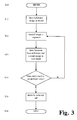
- the steps of detecting movement and of switching the alarm off are the following:
- the sequence begins, e.g. with starting the alert and therefore activating the camera.
- the actual image is stored as a base-reference image either in grey-scale format or as a colour image.
- a step S12 a second image is captured. The capturing of the second image may happen every 1 ⁇ 4 of a second.
- the processing unit 7 in the step S13 calculates the delta between the base-reference image and the second image as a difference between each pixels grey-scale value. Hence, for each pixel, XOR of the two images is calculated. The resulting matrix of the calculation is analysed in step S14 by the processing unit 7.
- step S 14 decides whether the movement is considered to be happened in step S 14. In the case of a movement detection in the step S15 the alarm is switched off and the processing ends in the step S 16 e.g. with deactivating the camera. If the delta value in step S 14 does not reach the predefined value, that means that less than 50 per cent of the pixels in the matrix have a value different from zero, then a movement is not considered to be happened and the processing continues with step S 12, which is the capturing of a second image.
Landscapes
- Engineering & Computer Science (AREA)
- Signal Processing (AREA)
- Human Computer Interaction (AREA)
- Computer Networks & Wireless Communication (AREA)
- Telephone Function (AREA)
Priority Applications (1)
| Application Number | Priority Date | Filing Date | Title |
|---|---|---|---|
| EP03018373A EP1507389A1 (fr) | 2003-08-13 | 2003-08-13 | Téléphone portable avec un dispositif de commande à distance pour arrêter la sonnerie |
Applications Claiming Priority (1)
| Application Number | Priority Date | Filing Date | Title |
|---|---|---|---|
| EP03018373A EP1507389A1 (fr) | 2003-08-13 | 2003-08-13 | Téléphone portable avec un dispositif de commande à distance pour arrêter la sonnerie |
Publications (1)
| Publication Number | Publication Date |
|---|---|
| EP1507389A1 true EP1507389A1 (fr) | 2005-02-16 |
Family
ID=33560789
Family Applications (1)
| Application Number | Title | Priority Date | Filing Date |
|---|---|---|---|
| EP03018373A Withdrawn EP1507389A1 (fr) | 2003-08-13 | 2003-08-13 | Téléphone portable avec un dispositif de commande à distance pour arrêter la sonnerie |
Country Status (1)
| Country | Link |
|---|---|
| EP (1) | EP1507389A1 (fr) |
Cited By (3)
| Publication number | Priority date | Publication date | Assignee | Title |
|---|---|---|---|---|
| CN103365419A (zh) * | 2013-07-11 | 2013-10-23 | 北京小米科技有限责任公司 | 一种触发闹钟控制指令的方法和装置 |
| CN104954577A (zh) * | 2015-06-26 | 2015-09-30 | 上海卓易科技股份有限公司 | 一种移动终端关闭闹钟提醒的方法和装置 |
| WO2016197715A1 (fr) * | 2016-01-22 | 2016-12-15 | 中兴通讯股份有限公司 | Procédé et dispositif pour annuler à l'avance un réveil |
Citations (8)
| Publication number | Priority date | Publication date | Assignee | Title |
|---|---|---|---|---|
| US4670864A (en) * | 1984-02-07 | 1987-06-02 | Braun Aktiengesellschaft | Voice interruptible alarm device |
| US4894813A (en) * | 1987-06-06 | 1990-01-16 | Braun Aktiengesellschaft | Alarm shut-off device, with a wake up signal delivering integrated circuit and a receiving and signal shaping network |
| WO2000021023A1 (fr) * | 1998-10-07 | 2000-04-13 | Intel Corporation | Commande de pointeur par video numerique |
| US6111580A (en) * | 1995-09-13 | 2000-08-29 | Kabushiki Kaisha Toshiba | Apparatus and method for controlling an electronic device with user action |
| WO2001088681A1 (fr) * | 2000-05-17 | 2001-11-22 | Koninklijke Philips Electronics N.V. | Dispositif et procede servant a indiquer une cible par traitement d'image sans modelisation tridimensionnelle |
| WO2002009393A2 (fr) * | 2000-07-14 | 2002-01-31 | Koninklijke Philips Electronics N.V. | Systeme de silence telephonique |
| WO2003045066A2 (fr) * | 2001-11-22 | 2003-05-30 | Siemens Aktiengesellschaft | Procede et dispositif de production de signaux acoustiques a partir d'un flux de donnees video |
| US20030138130A1 (en) * | 1998-08-10 | 2003-07-24 | Charles J. Cohen | Gesture-controlled interfaces for self-service machines and other applications |
-
2003
- 2003-08-13 EP EP03018373A patent/EP1507389A1/fr not_active Withdrawn
Patent Citations (8)
| Publication number | Priority date | Publication date | Assignee | Title |
|---|---|---|---|---|
| US4670864A (en) * | 1984-02-07 | 1987-06-02 | Braun Aktiengesellschaft | Voice interruptible alarm device |
| US4894813A (en) * | 1987-06-06 | 1990-01-16 | Braun Aktiengesellschaft | Alarm shut-off device, with a wake up signal delivering integrated circuit and a receiving and signal shaping network |
| US6111580A (en) * | 1995-09-13 | 2000-08-29 | Kabushiki Kaisha Toshiba | Apparatus and method for controlling an electronic device with user action |
| US20030138130A1 (en) * | 1998-08-10 | 2003-07-24 | Charles J. Cohen | Gesture-controlled interfaces for self-service machines and other applications |
| WO2000021023A1 (fr) * | 1998-10-07 | 2000-04-13 | Intel Corporation | Commande de pointeur par video numerique |
| WO2001088681A1 (fr) * | 2000-05-17 | 2001-11-22 | Koninklijke Philips Electronics N.V. | Dispositif et procede servant a indiquer une cible par traitement d'image sans modelisation tridimensionnelle |
| WO2002009393A2 (fr) * | 2000-07-14 | 2002-01-31 | Koninklijke Philips Electronics N.V. | Systeme de silence telephonique |
| WO2003045066A2 (fr) * | 2001-11-22 | 2003-05-30 | Siemens Aktiengesellschaft | Procede et dispositif de production de signaux acoustiques a partir d'un flux de donnees video |
Non-Patent Citations (1)
| Title |
|---|
| SONY ERICSSON MOBILE COMMUNICATIONS AB: "SONY ERICSSON MOBILE TELEPHONE T610 USER MANUAL", SONY ERICSSON MOBILE TELEPHONE T610 USER MANUAL, 31 May 2003 (2003-05-31), pages 1 - 93, XP002264212, Retrieved from the Internet <URL:http://www.sonyericsson.com/downloads/T610_UG_R5a_AE_Default.pdf> [retrieved on 20031203] * |
Cited By (6)
| Publication number | Priority date | Publication date | Assignee | Title |
|---|---|---|---|---|
| CN103365419A (zh) * | 2013-07-11 | 2013-10-23 | 北京小米科技有限责任公司 | 一种触发闹钟控制指令的方法和装置 |
| CN103365419B (zh) * | 2013-07-11 | 2016-07-06 | 小米科技有限责任公司 | 一种触发闹钟控制指令的方法和装置 |
| CN104954577A (zh) * | 2015-06-26 | 2015-09-30 | 上海卓易科技股份有限公司 | 一种移动终端关闭闹钟提醒的方法和装置 |
| CN104954577B (zh) * | 2015-06-26 | 2017-12-22 | 上海卓易科技股份有限公司 | 一种移动终端关闭闹钟提醒的方法和装置 |
| WO2016197715A1 (fr) * | 2016-01-22 | 2016-12-15 | 中兴通讯股份有限公司 | Procédé et dispositif pour annuler à l'avance un réveil |
| CN106998387A (zh) * | 2016-01-22 | 2017-08-01 | 中兴通讯股份有限公司 | 一种闹钟提前取消的方法及装置 |
Similar Documents
| Publication | Publication Date | Title |
|---|---|---|
| US10191717B2 (en) | Method and apparatus for triggering execution of operation instruction | |
| US20060105801A1 (en) | Apparatus and method for automatically changing communication mode in mobile communication terminal | |
| US20050288063A1 (en) | Method for initiating voice recognition mode on mobile terminal | |
| KR101042796B1 (ko) | 카메라를 구비하는 휴대단말기의 착신호 처리 방법 | |
| WO2003001773A1 (fr) | Appareil telephonique a fonctionnalite de visiophone | |
| EP1507389A1 (fr) | Téléphone portable avec un dispositif de commande à distance pour arrêter la sonnerie | |
| US20050088513A1 (en) | Open-to-view video telephony call in a wireless communication device | |
| KR100678248B1 (ko) | 이동 통신 단말기의 문자 입력 방법 | |
| JP4469265B2 (ja) | テレビドアホン装置 | |
| JP2004015250A (ja) | 携帯端末装置 | |
| WO2001003457A1 (fr) | Procede et appareil de reponse automatique a un appel entrant sur un telephone sans cordon ou sans fil | |
| KR100557096B1 (ko) | 양방향 카메라를 구비한 휴대 단말기에서 영상데이터표시방법 | |
| KR100800689B1 (ko) | 휴대단말기의 알람제어 방법 | |
| JPWO2005050308A1 (ja) | カメラ付き携帯電話機 | |
| JP2015111935A (ja) | インターホンシステム、インターホン子機及びインターホン親機 | |
| KR100678027B1 (ko) | 카메라 기능을 구비한 휴대용 단말기 및 그의 영상처리방법 | |
| KR100606045B1 (ko) | 카메라 모듈을 가진 이동 통신 단말기의 카메라 모드 전환방법 | |
| KR100713438B1 (ko) | 휴대단말기와 헤드 셋 간의 통화수행방법 | |
| KR100557094B1 (ko) | 영상표시장치의 역상조정 방법 | |
| KR100678030B1 (ko) | 이동 통신 단말기의 자동 응답 기능 수행 방법 | |
| KR100605936B1 (ko) | 휴대 단말기의 키 소리음 자동변환 방법 | |
| KR100605956B1 (ko) | 휴대 단말기의 메시지 전송방법 | |
| JP2005184546A (ja) | テレビドアホン装置 | |
| KR20050052863A (ko) | 보안 기능을 갖는 휴대용 단말기 및 이를 이용한 보안시스템 | |
| JP2003198915A (ja) | カメラ付き携帯電話機 |
Legal Events
| Date | Code | Title | Description |
|---|---|---|---|
| PUAI | Public reference made under article 153(3) epc to a published international application that has entered the european phase |
Free format text: ORIGINAL CODE: 0009012 |
|
| AK | Designated contracting states |
Kind code of ref document: A1 Designated state(s): AT BE BG CH CY CZ DE DK EE ES FI FR GB GR HU IE IT LI LU MC NL PT RO SE SI SK TR |
|
| AX | Request for extension of the european patent |
Extension state: AL LT LV MK |
|
| 17P | Request for examination filed |
Effective date: 20050810 |
|
| AKX | Designation fees paid |
Designated state(s): AT BE BG CH CY CZ DE DK EE ES FI FR GB GR HU IE IT LI LU MC NL PT RO SE SI SK TR |
|
| R17P | Request for examination filed (corrected) |
Effective date: 20050810 |
|
| R17P | Request for examination filed (corrected) |
Effective date: 20050810 |
|
| 17Q | First examination report despatched |
Effective date: 20060920 |
|
| STAA | Information on the status of an ep patent application or granted ep patent |
Free format text: STATUS: THE APPLICATION IS DEEMED TO BE WITHDRAWN |
|
| 18D | Application deemed to be withdrawn |
Effective date: 20151202 |