EP1508227B1 - Reservation de memoire tampon - Google Patents
Reservation de memoire tampon Download PDFInfo
- Publication number
- EP1508227B1 EP1508227B1 EP03731245A EP03731245A EP1508227B1 EP 1508227 B1 EP1508227 B1 EP 1508227B1 EP 03731245 A EP03731245 A EP 03731245A EP 03731245 A EP03731245 A EP 03731245A EP 1508227 B1 EP1508227 B1 EP 1508227B1
- Authority
- EP
- European Patent Office
- Prior art keywords
- queue
- shared
- packet
- flow
- size
- Prior art date
- Legal status (The legal status is an assumption and is not a legal conclusion. Google has not performed a legal analysis and makes no representation as to the accuracy of the status listed.)
- Expired - Lifetime
Links
Images

Classifications
-
- H—ELECTRICITY
- H04—ELECTRIC COMMUNICATION TECHNIQUE
- H04L—TRANSMISSION OF DIGITAL INFORMATION, e.g. TELEGRAPHIC COMMUNICATION
- H04L47/00—Traffic control in data switching networks
- H04L47/10—Flow control; Congestion control
- H04L47/32—Flow control; Congestion control by discarding or delaying data units, e.g. packets or frames
-
- H—ELECTRICITY
- H04—ELECTRIC COMMUNICATION TECHNIQUE
- H04L—TRANSMISSION OF DIGITAL INFORMATION, e.g. TELEGRAPHIC COMMUNICATION
- H04L47/00—Traffic control in data switching networks
- H04L47/10—Flow control; Congestion control
-
- H—ELECTRICITY
- H04—ELECTRIC COMMUNICATION TECHNIQUE
- H04L—TRANSMISSION OF DIGITAL INFORMATION, e.g. TELEGRAPHIC COMMUNICATION
- H04L47/00—Traffic control in data switching networks
- H04L47/10—Flow control; Congestion control
- H04L47/24—Traffic characterised by specific attributes, e.g. priority or QoS
- H04L47/2441—Traffic characterised by specific attributes, e.g. priority or QoS relying on flow classification, e.g. using integrated services [IntServ]
-
- H—ELECTRICITY
- H04—ELECTRIC COMMUNICATION TECHNIQUE
- H04L—TRANSMISSION OF DIGITAL INFORMATION, e.g. TELEGRAPHIC COMMUNICATION
- H04L47/00—Traffic control in data switching networks
- H04L47/10—Flow control; Congestion control
- H04L47/30—Flow control; Congestion control in combination with information about buffer occupancy at either end or at transit nodes
-
- H—ELECTRICITY
- H04—ELECTRIC COMMUNICATION TECHNIQUE
- H04L—TRANSMISSION OF DIGITAL INFORMATION, e.g. TELEGRAPHIC COMMUNICATION
- H04L49/00—Packet switching elements
- H04L49/30—Peripheral units, e.g. input or output ports
-
- H—ELECTRICITY
- H04—ELECTRIC COMMUNICATION TECHNIQUE
- H04L—TRANSMISSION OF DIGITAL INFORMATION, e.g. TELEGRAPHIC COMMUNICATION
- H04L49/00—Packet switching elements
- H04L49/90—Buffering arrangements
-
- H—ELECTRICITY
- H04—ELECTRIC COMMUNICATION TECHNIQUE
- H04L—TRANSMISSION OF DIGITAL INFORMATION, e.g. TELEGRAPHIC COMMUNICATION
- H04L49/00—Packet switching elements
- H04L49/90—Buffering arrangements
- H04L49/9026—Single buffer per packet
-
- H—ELECTRICITY
- H04—ELECTRIC COMMUNICATION TECHNIQUE
- H04L—TRANSMISSION OF DIGITAL INFORMATION, e.g. TELEGRAPHIC COMMUNICATION
- H04L49/00—Packet switching elements
- H04L49/20—Support for services
Definitions
- High speed packet-switching networks such as Asynchronous Transfer Mode (ATM), Internet Protocol (IP), and Gigabit Ethernet, support a multitude of connections to different sessions in which incoming packets compete for space in a buffer memory.
- ATM Asynchronous Transfer Mode
- IP Internet Protocol
- Gigabit Ethernet Gigabit Ethernet
- Digital communication systems typically employ packet-switching systems that transmit blocks of data called packets.
- packets typically, a message or other set of data to be sent is larger than the size of a packet and must be broken into a series of packets.
- Each packet consists of portion of the data being transmitted and control information in a header used to route the packet through the network to its destination.
- US 5,867,663 discusses a method and apparatus for controlling network service parameters in a cell based communications network.
- a plurality of input signals are received on input ports of a communications device and a plurality of output signals are sourced from output ports, wherein at least one input signal and at least one output signal comprise, respectively, at least one virtual connection.
- a first virtual connection is assigned to an input queue of an input port and an output queue of an output port.
- Each queue is associated with a first buffer space dedicated to the respective queue.
- Each queue is also associated with a second buffer space that is shared between the respective queue and other queues. The second buffer space is utilized after the first buffer space becomes full. Bandwidth into a switching fabric is allocated by the input port, and bandwidth out of the device is allocated by the output port.
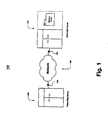
- Fig. 1 shows a typical packet-switching system that includes a transmitting server 110 connected through a communication pathway 115 to a packet-switching network 120 that is connected through a communication pathway 125 to a destination server 130.
- the transmitting server 110 sends a message through the packet-switching network 120 to the destination server 130 as a series of packets.
- the packets typically pass through a series of servers. As each packet arrives at a server, the server stores the packet briefly in buffer memory before transmitting the packet to the next server. The packet proceeds through the network until it arrives at the destination server 130, which stores the packet briefly in buffer memory 135 as the packet is received.
- High-speed packet-switching networks are capable of supporting a vast number of connections (also called flows).
- Some broadband networks may support in each line card 256,000 connections through 64 logical ports.
- Each incoming packet from a flow may be stored in a data queue in buffer memory upon receipt. If no buffer memory space is available to store a particular packet, the incoming packet is dropped.
- Network applications may require a guaranteed rate of throughput, which may be accomplished by using buffer memory reservation to manage a data queue used to store incoming packets.
- Buffer memory reservation reserves a portion of a data queue as a dedicated queue for each flow, reserves another portion of a data queue as a shared queue, and associates a portion of the shared queue with each flow.
- the dedicated queue size provided to each flow provides a guaranteed rate of throughput for incoming packets, and the shared queue provides space to buffer packets during periods having peak rates that exceed the guaranteed rate of throughput.
- the dedicated queue may have one or more reserved memory addresses assigned to it or may be assigned memory space without reference to a particular reserved memory address.
- the shared queue may have one or more reserved memory addresses assigned to it or may be assigned memory space without reference to a particular reserved memory address.
- the amount of the buffer memory reserved by the dedicated queue portions and the shared queue portion for all of the flows may exceed the amount of physical memory available to buffer incoming packets. However, the amount of buffer memory reserved by the dedicated queue portions may not exceed the amount of physical memory available to buffer incoming packets.
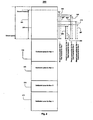
- the buffer memory for a data queue 200 used to store incoming packets is apportioned into queues 210, 215, 220, and 225 dedicated to each flow and a shared queue 250.
- Fig. 2 illustrates only a small portion of data queue 200.
- the portion of the shared queue 250 associated with each flow is shown by arrows 260, 265, 270, 275.
- Eighty percent of the shared queue size is associated with a first flow in portion 260
- forty eighty percent of the shared queue size is associated with a second flow in portion 265, seventy-five percent of the shared queue size is associated with a third flow in portion 270
- fifty-five percent of the shared queue size is associated with a fourth flow in portion 275.
- the sum of the sizes of the dedicated queues 210, 215, 220, 225 and the sizes of the shared queue portions 260, 265, 270, 275 exceeds the amount of physical memory available to store incoming packets.
- the unused portion of the data queue 200 may decrease during the time period from when the determination is made that space is available in the data queue to store a particular incoming packet to when the particular incoming packet is stored. Such a decrease in the unused portion of the data queue may prevent the particular incoming packet from being stored, and may result in the incoming packet being dropped.
- a shared threshold 280 that is less than the size of the shared queue may reduce the number of incoming packets that are dropped because of such a data queue increase.
- the shared threshold 280 may be set to a value that is less than or equal to the size of the shared queue 250, with the actual value of the threshold being selected based on a balance between the likelihood of dropping packets (which increases as the shared threshold increases) and the efficiency with which the shared queue is used (which decreases as the shared threshold decreases).
- a flow threshold 284-287 that is less than or equal to the size of the shared queue portion 260, 265, 270, 275 associated with the flow may be set for each flow.
- the size of the dedicated queues used in buffer memory reservation implementations may be the same for all flows or may vary between flows.
- An implementation may use the same flow threshold values for all flows, may vary the flow threshold values between flows, or may use no flow thresholds.
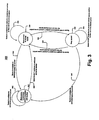
- Fig. 3 illustrates a state diagram 300 for execution of buffer memory reservation on a processor.
- the processor may store the incoming packet from a flow in the dedicated queue associated with the flow (state 310), may store the incoming packet in the shared queue (state 320), or may drop the packet (state 330).
- the processor stores the incoming packet from a flow in the dedicated queue associated with the flow (state 310) if space is available in the dedicated queue for the packet (transitions 342, 344, 346). For a particular flow, the processor remains in state 310 (transition 342) until the dedicated queue for the flow is full.
- the incoming packet may be stored in the shared queue (state 320) if space is available in the shared queue portion for the flow and in the shared queue (transition 350). Space must be available both in the shared queue portion for the flow and the shared queue because the physical memory available to the shared queue may be less than the amount of space allocated to the sum of the shared queue portions for all of the flows.
- the incoming packet is dropped from the flow of packets (state 330). The processor continues to drop incoming packets until space becomes available in the shared queue (transition 352) or the dedicated queue (transition 346).
- a process 400 uses the size of the incoming packet to determine whether space is available in the shared queue portion for a flow.
- the implementation of the process 400 in Fig. 4 uses a shared threshold for the shared queue that is equal to the size of the shared queue and does not associate a flow threshold with the flow from which the incoming packets are received.
- the process 400 begins when a processor receives an incoming packet from a flow (410).
- the processor determines whether the unused portion of the dedicated queue size for the flow is greater than or equal to the packet size (420). If so, the processor stores the packet in the dedicated queue for the flow (430) and waits to receive another incoming packet from a flow (410).
- the processor determines whether the size.of the unused portion of the shared queue portion for the flow is greater than or equal to the packet (440), and, if not, drops the packet (450). The packet is dropped because neither the dedicated queue for the flow nor the shared queue portion for the flow has sufficient space available to store the packet. After dropping the packet, the processor waits to receive another incoming packet (410).
- the processor determines whether the used portion of the shared queue is less than or equal to the shared threshold (460). If so, the processor stores the packet in the shared queue (470) and waits to receive another incoming packet from a flow (410). If the processor determines that the used portion of the shared queue size is greater than the shared threshold, the processor drops the packet (450) and waits to receive an incoming packet from a flow (410) .
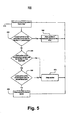
- a process 500 uses a flow threshold to determine whether space is available in the shared queue portion for a flow.
- the process 500 uses a shared threshold for the shared queue that is less than the size of the shared queue and associates with each flow a flow threshold that is less than the size of the shared queue portion associated with the flow.
- the process 500 begins when a processor receives an incoming packet from a flow (510), determines whether the dedicated queue for the flow has space available for the packet (520), and, when space is available, stores the incoming packet in the dedicated queue for the flow (530). If space is not available in the dedicated queue for the flow (520), the processor determines whether the used portion of the shared queue portion is less than or equal to the flow threshold (540). This is in contrast to the implementation described with respect to Fig. 4 , where the processor determines whether the shared queue portion has space available based on the size of the incoming packet and does not use a flow threshold.
- the processor determines whether the used portion of the shared queue is less than or equal to the shared threshold (550). The processor stores the packet in the shared queue (560) only if the used portions of the shared queue portion and the shared queue are less than or equal to their respective thresholds. Otherwise, the processor drops the incoming packet (570). The processor then waits for an incoming packet (510) and proceeds as described above.
- a process 600 assigns a probability of being accepted into the shared queue to a particular received packet and accepts the received packet into the shared queue when the particular packet has a higher probability of being accepted than the probabilities assigned to other incoming packets that are competing for buffer memory space.
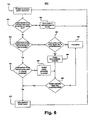
- the process 600 begins when a processor receives an incoming packet from a flow (610), determines whether the dedicated queue for the flow has space available for the packet (620), and, when space is available, stores the incoming packet in the dedicated queue for the flow (630). If space to store the packet is not available in the dedicated queue for the flow, the processor determines whether the used portion of the shared queue portion for the flow is less than or equal to the flow threshold (640) and determines whether the used portion of the shared queue is less than or equal to the shared threshold (650). Based on those determinations, the processor may drop the packet or store the packet in the shared queue as set forth in the table below.
- the packet is dropped (660) when the used portion of the shared queue portion is greater than the flow threshold and the used portion of the shared queue is greater than the shared threshold.
- the packet is stored in the shared queue (670) when the used portion of the shared queue portion is less than or equal to the flow threshold and the used portion of the shared queue size is less than or equal to the shared threshold.
- the processor assigns the packet a higher probability of being stored in the shared queue (680) when the used portion of the shared queue portion is less than or equal to the flow threshold and the used portion of the shared queue is greater than the shared threshold.
- the processor assigns the packet a lower probability of being stored in the shared queue (685) when the used portion of the shared queue portion is greater than the flow threshold and the used portion of the shared queue is less than or equal to the shared threshold.
- the processor determines whether the probability assigned to the packet is greater than the probability assigned to other incoming packets that are competing for buffer memory space (690). If so, the processor stores the packet in the shared queue (670; otherwise, the packet is dropped (660).
- Buffer memory reservation helps to provide a guaranteed rate of throughput for incoming packets and to avoid buffer congestion.
- Buffer memory reservation techniques provide a variety of parameters that can be used to manage the network application, including a shared threshold, a flow threshold for each flow, a dedicated queue for each flow, a shared queue, and a shared queue portion for each flow. Some implementations may predesignate parameters, while other implementations may vary the parameters based on current network conditions.
- buffer memory reservation for packet applications are applicable to other implementations of packet-switching networks that use fixed-length or variable-length packets.
- Implementations may include a method or process, an apparatus or system, or computer software on a computer medium.
Landscapes
- Engineering & Computer Science (AREA)
- Computer Networks & Wireless Communication (AREA)
- Signal Processing (AREA)
- Data Exchanges In Wide-Area Networks (AREA)
- Vehicle Body Suspensions (AREA)
- Memory System Of A Hierarchy Structure (AREA)
- Read Only Memory (AREA)
- Sorption Type Refrigeration Machines (AREA)
Claims (12)
- Procédé de gestion de mémoire tampon pour une application de commutation de paquet, le procédé comprenant :une association de chacun d'une pluralité de flux de paquets à une file dédiée (210, 215, 220, 225) et une partie particulière (260, 265, 270, 275) d'une file partagée (250),caractérisé en ce que :chaque file dédiée a une taille de file dédiée et chaque partie particulière de la file partagée a une taille et un seuil de flux,la file partagée a un seuil partagé, etune somme des tailles de file dédiée et des tailles de file partagée pour tous les flux dépasse une quantité do mémoire physique disponible pour mettre en mémoire tampon des paquets ;et en ce que le procédé comprend les étapes suivantes :une acceptation (430 ; 530 ; 630) d'un paquet particulier à partir d'un flux particulier de paquets dans la file dédiée associée au flux particulier si une taille d'une partie inutilisée de la file dédiée associée au flux particulier est plus grande ou égale à une taille du paquet particulier ;une acceptation (470 ; 560; 670) du paquet particulier à partir du flux particulier de paquets dans la partie particulière associée de la file partagée si le paquet particulier n'est pas accepté par la file dédiée associée au flux particulier, une taille d'une partie inutilisée de la partie particulière associée de la file partagée est plus grande ou égale à la taille du paquet particulier, et une taille d'une partie inutilisée de la file partagée est inférieure ou égale au seuil partagé; etun rejet (450 ; 570 ; 660) d'un paquet particulier à partir du flux particulier de paquet si :a) le paquet particulier n'est pas accepté par la file dédiée associée au flux particulier, etb) soit la taille de la partie utilisée de la partie particulière de la file partagée associée au flux particulier est plus grande que le seuil de flux pour cette partie particulière de la taille partagée soit la taille de toutes les parties particulières utilisées de la file partagée dépasse le seuil partagé.
- Procédé selon la revendication 1, dans lequel la taille de la file dédiée (210, 215, 220, 225) varie pour différents flux.
- Procédé selon la revendication 1, dans lequel la taille de la file dédiée ((210, 215, 220. 225) est la même pour tous les flux.
- Procédé selon la revendication 1, comprenant en outre: une association (680, 688) de chaque paquet reçu avec une probabilité d'être accepté dans la file partagée, l'acceptation (670) d'un paquet particulier à partir d'un flux particulier de paquets dans la file partagée si le paquet particulier n'est pas accepté par la file dédiée associée au flux particulier et la probabilité associée au paquet particulier est plus grande que la probabilité associée à un ou plusieurs autres paquets reçus qui n'ont pas été acceptés par les files dédiées associées aux flux de paquets reçus, et
Un rejet (660) d'un paquet particulier à partir d'un flux particulier de paquets si le paquet particulier n'est pas accepté dans la file dédiée associée au flux particulier et le paquet particulier n'est pas accepté dans la file partagée. - Procédé selon la revendication 4, dans lequel le seuil partagé est inférieur à la taille de la file partagée, le procédé comprenant en outre :une association (685) d'un paquet particulier à partir d'un flux particulier de paquets avec une première probabilité si :dans lequel la première probabilité est inférieure à la seconde probabilité.le paquet particulier n'est pas accepté par la file dédiée associée au flux particulier,la taille de la partie utilisée de la file partagée est plus grande que le seuil partagé, etla taille de la partie utilisée de la partie particulière de la file partagée associée au flux particulier est inférieure ou égale au seuil de flux pour cette partie particulière, etune association (680) du paquet particulier à partir du flux particulier de paquets avec une seconde probabilité si :le paquet particulier n'est pas accepté par la file dédiée associée au flux particulier,la taille de la partie utilisée de la file partagée est inférieure ou égale au seuil partagé, etla taille de la partie utilisée de la partie particulière de la file partagée est plus grande que le seuil de flux pour cette partie particulière ;
- Support lisible informatique stockant un programme informatique configuré pour conduire un processeur à implémenter une gestion de mémoire tampon pour une application de commutation de paquet, le programme informatique comprenant des segments de code pour conduire un processeur à réaliser le procède selon l'une quelconque des revendications 1 à 5.
- Appareil pour la gestion de mémoire tampon dans une application de commutation de paquet, l'appareil comprenant un processeur et une mémoire raccordée au processeur, dans lequel le processeur comprend un ou plusieurs composants pour :associer chacun d'une pluralité des flux de paquets à une file dédiée (210, 215, 220, 225), et une partie particulière (260, 265, 270, 275) d'une file partagée (250),caractérisé en ce que :chaque file dédiée a une taille de file dédiée et chaque partie particulière de la file partagée a un seuil de taille et un seuil de flux,la file partagée a un seuil partagé, etune somme des tailles de file dédiée et des tailles de file partagée pour tous les flux dépasse une quantité de mémoire physique disponible pour mettre en tampon des paquets,et dans lequel le processeur est utilisable pour :accepter (430 ; 530 ; 630) un paquet particulier à partir d'un flux particulier de paquets dans la file dédiée associée au flux particulier si une taille d'une partie inutilisée de la file dédiée associée au flux particulier est plus grande ou égale à une taille du paquet particulier;accepter (470 ; 560; 670) le paquet particulier à partir du flux particulier de paquets dans la partie particulière associée de la file partagée si le paquet particulier n'est pas accepté par la file dédiée associée au flux particulier, une taille d'une partie inutilisée de la partie particulière associée de la file partagée est plus grande ou égale à la taille du paquet particulier, et une taille d'une partie inutilisée de la file partagée est inférieure ou égale au seuil partagé ; etrejeter (450 ; 570 ; 660) un paquet particulier à partir du flux particulier de paquets si :a) le paquet particulier n'est pas accepté par la file dédiée associée au flux particulier, etb) soit la taille de la partie utilisée de la partie particulière de la file partagée associée au flux particulier est plus grande que le seuil de flux pour cette partie particulière de la file partagée soit la taille de toutes les parties particulières utilisées do la file partagée dépasse le seuil partagée.
- Appareil selon la revendication 7, dans lequel la taille de la file dédiée (240, 215, 220, 225) varie pour différents flux.
- Appareil selon la revendication 7, dans lequel la taille de la file dédiée (210, 215, 220, 225) est la même pour tous les flux.
- Appareil selon la revendication 7, le processeur comprenant en outre un ou plusieurs composants pour :associer (680, 685) chaque paquet reçu à une probabilité d'être accepté dans la file partagée,accepter (670) un paquet particulier à partir du flux particulier de paquets dans la file partagée si le paquet particulier n'est pas accepté par la file dédiée associée au flux particulier et la probabilité associée avec le paquet particulier est plus grande que la probabilité associée avec un ou plusieurs autres paquets reçus qui n'ont pas été acceptés par les files dédiées associées aux flux des paquets reçus, etrejeter (660) un paquet particulier à partir d'un flux particulier de paquets si le paquet particulier n'est pas accepté dans la file dédiée associée au flux particulier et le paquet particulier n'est pas accepté dans la file partagée.
- Appareil selon la revendication 10, dans lequel le seuil partagé est inférieur à la taille de la file partagée, le processeur comprenant en outre un ou plusieurs composants pour :associer (685) un paquet particulier à partir d'un flux particulier do paquets avec une première probabilité si :le paquet particulier n'est pas accepté par la file dédiée associée au flux particulier.la taille de la partie utilisée de la file partagée est plus grande que le seuil partagé, etla taille de la partie utilisée de la partie particulière de la file partagée associée au flux particulier est inférieure ou égale au seuil de flux pour cette partie particulière ; etassocier (680) le paquet particulier à partir du flux particulier de paquets avec une seconde probabilité si :le flux particulier n'est pas accepté par la file dédiée associée au flux particulier,la taille de la partie utilisée de la file partagée est inférieure ou égale au seuil partagé, etla taille de la partie utilisée de la partie particulière de la file partagée est plus grande que le seuil de flux pour cette partie particulière ;dans lequel la première probabilité est inférieure à la seconde probabilité.
- Système pour une gestion de mémoire tampon dans une application de commutation de paquet, le système comprenant :un dispositif de gestion de trafic ;un port couplé à un canal de transmission ; etune liaison entre le dispositif de gestion de trafic et le port,dans lequel le dispositif de gestion de trafic est composé d'un ou plusieurs composants adaptés et disposés pour réaliser le procédé d'une quelconque des revendications 1 à 5.
Applications Claiming Priority (3)
| Application Number | Priority Date | Filing Date | Title |
|---|---|---|---|
| US158291 | 1988-02-19 | ||
| US10/158,291 US20030223442A1 (en) | 2002-05-29 | 2002-05-29 | Buffer memory reservation |
| PCT/US2003/015729 WO2003103236A1 (fr) | 2002-05-29 | 2003-05-08 | Reservation de memoire tampon |
Publications (2)
| Publication Number | Publication Date |
|---|---|
| EP1508227A1 EP1508227A1 (fr) | 2005-02-23 |
| EP1508227B1 true EP1508227B1 (fr) | 2008-08-06 |
Family
ID=29582636
Family Applications (1)
| Application Number | Title | Priority Date | Filing Date |
|---|---|---|---|
| EP03731245A Expired - Lifetime EP1508227B1 (fr) | 2002-05-29 | 2003-05-08 | Reservation de memoire tampon |
Country Status (8)
| Country | Link |
|---|---|
| US (1) | US20030223442A1 (fr) |
| EP (1) | EP1508227B1 (fr) |
| CN (1) | CN1316802C (fr) |
| AT (1) | ATE404002T1 (fr) |
| AU (1) | AU2003241508A1 (fr) |
| DE (1) | DE60322696D1 (fr) |
| TW (1) | TWI258948B (fr) |
| WO (1) | WO2003103236A1 (fr) |
Families Citing this family (26)
| Publication number | Priority date | Publication date | Assignee | Title |
|---|---|---|---|---|
| WO2004023323A1 (fr) * | 2002-09-03 | 2004-03-18 | Thomson Licensing S.A. | Mecanisme de mise en oeuvre de qualite de service dans un reseau utilisant des protocoles de priorite et de largeurs de bande reservees |
| US7295564B2 (en) * | 2003-01-06 | 2007-11-13 | Intel Corporation | Virtual output queue (VoQ) management method and apparatus |
| US7627654B2 (en) | 2003-06-09 | 2009-12-01 | Foundry Networks, Inc. | System and method for multiple spanning tree protocol domains in a virtual local area network |
| US7558205B1 (en) | 2003-08-01 | 2009-07-07 | Foundry Networks, Inc. | System and method for detecting and isolating a remote loop |
| US7564858B1 (en) * | 2003-08-01 | 2009-07-21 | Foundry Networks, Inc. | System and method for enabling a remote instance of a loop avoidance protocol |
| US7518996B2 (en) * | 2004-09-16 | 2009-04-14 | Jinsalas Solutions, Llc | Fast credit system |
| US8547843B2 (en) * | 2006-01-20 | 2013-10-01 | Saisei Networks Pte Ltd | System, method, and computer program product for controlling output port utilization |
| US8149708B2 (en) * | 2006-04-20 | 2012-04-03 | Cisco Technology, Inc. | Dynamically switching streams of packets among dedicated and shared queues |
| TWI330964B (en) * | 2007-01-29 | 2010-09-21 | Via Tech Inc | Packet processing method and a network device using the method |
| CN103401805A (zh) * | 2007-03-29 | 2013-11-20 | 威盛电子股份有限公司 | 网络装置 |
| US9112818B1 (en) * | 2010-02-05 | 2015-08-18 | Marvell Isreal (M.I.S.L) Ltd. | Enhanced tail dropping in a switch |
| US20110286386A1 (en) * | 2010-05-19 | 2011-11-24 | Kellam Jeffrey J | Reliable Transfer of Time Stamped Multichannel Data Over A Lossy Mesh Network |
| US8566532B2 (en) | 2010-06-23 | 2013-10-22 | International Business Machines Corporation | Management of multipurpose command queues in a multilevel cache hierarchy |
| US8745237B2 (en) * | 2011-10-21 | 2014-06-03 | Red Hat Israel, Ltd. | Mapping of queues for virtual machines |
| US9286118B2 (en) * | 2012-06-15 | 2016-03-15 | Freescale Semiconductor, Inc. | System and method for improved job processing to reduce contention for shared resources |
| US9104478B2 (en) | 2012-06-15 | 2015-08-11 | Freescale Semiconductor, Inc. | System and method for improved job processing of a number of jobs belonging to communication streams within a data processor |
| US9632977B2 (en) | 2013-03-13 | 2017-04-25 | Nxp Usa, Inc. | System and method for ordering packet transfers in a data processor |
| US9306876B1 (en) | 2013-04-01 | 2016-04-05 | Marvell Israel (M.I.S.L) Ltd. | Multibank egress queuing system in a network device |
| US9485326B1 (en) | 2013-04-01 | 2016-11-01 | Marvell Israel (M.I.S.L) Ltd. | Scalable multi-client scheduling |
| US9361240B2 (en) * | 2013-04-12 | 2016-06-07 | International Business Machines Corporation | Dynamic reservations in a unified request queue |
| US9838341B1 (en) * | 2014-01-07 | 2017-12-05 | Marvell Israel (M.I.S.L) Ltd. | Methods and apparatus for memory resource management in a network device |
| US10050896B2 (en) * | 2014-11-14 | 2018-08-14 | Cavium, Inc. | Management of an over-subscribed shared buffer |
| EP3076616B1 (fr) * | 2015-03-31 | 2017-04-12 | Mitsubishi Electric R&D Centre Europe B.V. | Procédé de gestion de trafic de données et noeud de réseau pour la mise en oeuvre de ce procédé |
| US10346177B2 (en) | 2016-12-14 | 2019-07-09 | Intel Corporation | Boot process with parallel memory initialization |
| US10587536B1 (en) * | 2018-06-01 | 2020-03-10 | Innovium, Inc. | Buffer assignment balancing in a network device |
| CN109922015A (zh) * | 2019-01-23 | 2019-06-21 | 珠海亿智电子科技有限公司 | 一种多路数据流共享缓冲器方法和系统 |
Family Cites Families (15)
| Publication number | Priority date | Publication date | Assignee | Title |
|---|---|---|---|---|
| US5995486A (en) * | 1994-09-17 | 1999-11-30 | International Business Machines Corporation | Flow control method and apparatus for cell-based communication networks |
| US5541912A (en) * | 1994-10-04 | 1996-07-30 | At&T Corp. | Dynamic queue length thresholds in a shared memory ATM switch |
| US5983260A (en) * | 1995-07-19 | 1999-11-09 | Fujitsu Network Communications, Inc. | Serial control and data interconnects for coupling an I/O module with a switch fabric in a switch |
| JP2001519973A (ja) * | 1995-07-19 | 2001-10-23 | フジツウ ネットワーク コミュニケーションズ,インコーポレイテッド | 共用バッファへの優先度付きアクセス |
| US6219728B1 (en) * | 1996-04-22 | 2001-04-17 | Nortel Networks Limited | Method and apparatus for allocating shared memory resources among a plurality of queues each having a threshold value therefor |
| CN1052597C (zh) * | 1996-08-02 | 2000-05-17 | 深圳市华为技术有限公司 | 一种共享存储式atm交换网络 |
| TW463092B (en) * | 1998-03-20 | 2001-11-11 | Accton Technology Corp | Quasi-pushout method with upper layer packet discarding discipline and packet communication system implementing the method |
| US6282589B1 (en) * | 1998-07-30 | 2001-08-28 | Micron Technology, Inc. | System for sharing data buffers from a buffer pool |
| CA2253729A1 (fr) * | 1998-11-10 | 2000-05-10 | Newbridge Networks Corporation | Systeme de mise en tampon a seuil flexible pour dispositifs numeriques de communication |
| US6515963B1 (en) * | 1999-01-27 | 2003-02-04 | Cisco Technology, Inc. | Per-flow dynamic buffer management |
| US6788697B1 (en) * | 1999-12-06 | 2004-09-07 | Nortel Networks Limited | Buffer management scheme employing dynamic thresholds |
| US6671258B1 (en) * | 2000-02-01 | 2003-12-30 | Alcatel Canada Inc. | Dynamic buffering system having integrated random early detection |
| EP1258115A1 (fr) * | 2000-02-24 | 2002-11-20 | Zarlink Semiconductor V.N. Inc. | Algorithme unifie destine a l'ordonnancement de trames et a la gestion de memoires tampons dans des reseaux a services differencies |
| US6901593B2 (en) * | 2001-05-08 | 2005-05-31 | Nortel Networks Limited | Active queue management with flow proportional buffering |
| KR100429897B1 (ko) * | 2001-12-13 | 2004-05-03 | 한국전자통신연구원 | 공유 버퍼형 스위치의 적응 버퍼 배분 방법 및 이에사용되는 스위치 |
-
2002
- 2002-05-29 US US10/158,291 patent/US20030223442A1/en not_active Abandoned
-
2003
- 2003-05-08 AT AT03731245T patent/ATE404002T1/de not_active IP Right Cessation
- 2003-05-08 CN CNB038158663A patent/CN1316802C/zh not_active Expired - Fee Related
- 2003-05-08 WO PCT/US2003/015729 patent/WO2003103236A1/fr not_active Ceased
- 2003-05-08 EP EP03731245A patent/EP1508227B1/fr not_active Expired - Lifetime
- 2003-05-08 DE DE60322696T patent/DE60322696D1/de not_active Expired - Fee Related
- 2003-05-08 AU AU2003241508A patent/AU2003241508A1/en not_active Abandoned
- 2003-05-23 TW TW092113993A patent/TWI258948B/zh not_active IP Right Cessation
Also Published As
| Publication number | Publication date |
|---|---|
| HK1071821A1 (en) | 2005-07-29 |
| TW200409495A (en) | 2004-06-01 |
| EP1508227A1 (fr) | 2005-02-23 |
| CN1316802C (zh) | 2007-05-16 |
| TWI258948B (en) | 2006-07-21 |
| AU2003241508A1 (en) | 2003-12-19 |
| CN1666475A (zh) | 2005-09-07 |
| ATE404002T1 (de) | 2008-08-15 |
| WO2003103236A1 (fr) | 2003-12-11 |
| US20030223442A1 (en) | 2003-12-04 |
| DE60322696D1 (de) | 2008-09-18 |
Similar Documents
| Publication | Publication Date | Title |
|---|---|---|
| US20030223442A1 (en) | Buffer memory reservation | |
| US6438135B1 (en) | Dynamic weighted round robin queuing | |
| JP3733784B2 (ja) | パケット中継装置 | |
| EP0473330B1 (fr) | Etablissement de traffic à débit binaire constant dans un commutateur de données à large bande | |
| EP0872988B1 (fr) | Procédé pour effectuer une mise en file d'attente par connexion pour un trafic commandé par rétroaction | |
| AU2002359740B2 (en) | Methods and apparatus for network congestion control | |
| US5970048A (en) | Control of overload situations in frame relay network | |
| US5787071A (en) | Hop-by-hop flow control in an ATM network | |
| US5633867A (en) | Local memory buffers management for an ATM adapter implementing credit based flow control | |
| JP3321043B2 (ja) | Tcpネットワーク内のデータ端末 | |
| EP1810466B1 (fr) | Commande du flux entre noeuds, fondee sur les directions et les priorites | |
| US20030058880A1 (en) | Multi-service queuing method and apparatus that provides exhaustive arbitration, load balancing, and support for rapid port failover | |
| US6636510B1 (en) | Multicast methodology and apparatus for backpressure-based switching fabric | |
| JPWO1995003657A1 (ja) | Atm交換機 | |
| CN1137717A (zh) | 对于以分组为基础的网络的业务量管理和拥挤控制 | |
| US20050281282A1 (en) | Internal messaging within a switch | |
| US7203171B1 (en) | Ingress discard in output buffered switching devices | |
| EP1322079A2 (fr) | Système et procédé fournissant des lacunes entre éléments de données a l'entrée d'un element de réseau | |
| JPH09319671A (ja) | データ伝送装置 | |
| WO2001067672A2 (fr) | Regulation du debit dans un canal virtuel | |
| US9143453B2 (en) | Relay apparatus and buffer control method | |
| GB2181926A (en) | Network data flow control | |
| HK1071821B (en) | Buffer memory reservation | |
| US7376140B1 (en) | System and method for assignment of ATM virtual circuits to queues in a DSLAM | |
| JP4135007B2 (ja) | Atmセル転送装置 |
Legal Events
| Date | Code | Title | Description |
|---|---|---|---|
| PUAI | Public reference made under article 153(3) epc to a published international application that has entered the european phase |
Free format text: ORIGINAL CODE: 0009012 |
|
| 17P | Request for examination filed |
Effective date: 20041215 |
|
| AK | Designated contracting states |
Kind code of ref document: A1 Designated state(s): AT BE BG CH CY CZ DE DK EE ES FI FR GB GR HU IE IT LI LU MC NL PT RO SE SI SK TR |
|
| AX | Request for extension of the european patent |
Extension state: AL LT LV MK |
|
| REG | Reference to a national code |
Ref country code: HK Ref legal event code: DE Ref document number: 1071821 Country of ref document: HK |
|
| DAX | Request for extension of the european patent (deleted) | ||
| GRAP | Despatch of communication of intention to grant a patent |
Free format text: ORIGINAL CODE: EPIDOSNIGR1 |
|
| GRAS | Grant fee paid |
Free format text: ORIGINAL CODE: EPIDOSNIGR3 |
|
| GRAA | (expected) grant |
Free format text: ORIGINAL CODE: 0009210 |
|
| AK | Designated contracting states |
Kind code of ref document: B1 Designated state(s): AT BE BG CH CY CZ DE DK EE ES FI FR GB GR HU IE IT LI LU MC NL PT RO SE SI SK TR |
|
| REG | Reference to a national code |
Ref country code: GB Ref legal event code: FG4D |
|
| REG | Reference to a national code |
Ref country code: CH Ref legal event code: EP |
|
| REG | Reference to a national code |
Ref country code: IE Ref legal event code: FG4D |
|
| REF | Corresponds to: |
Ref document number: 60322696 Country of ref document: DE Date of ref document: 20080918 Kind code of ref document: P |
|
| PG25 | Lapsed in a contracting state [announced via postgrant information from national office to epo] |
Ref country code: ES Free format text: LAPSE BECAUSE OF FAILURE TO SUBMIT A TRANSLATION OF THE DESCRIPTION OR TO PAY THE FEE WITHIN THE PRESCRIBED TIME-LIMIT Effective date: 20081117 Ref country code: NL Free format text: LAPSE BECAUSE OF FAILURE TO SUBMIT A TRANSLATION OF THE DESCRIPTION OR TO PAY THE FEE WITHIN THE PRESCRIBED TIME-LIMIT Effective date: 20080806 |
|
| PG25 | Lapsed in a contracting state [announced via postgrant information from national office to epo] |
Ref country code: FI Free format text: LAPSE BECAUSE OF FAILURE TO SUBMIT A TRANSLATION OF THE DESCRIPTION OR TO PAY THE FEE WITHIN THE PRESCRIBED TIME-LIMIT Effective date: 20080806 Ref country code: AT Free format text: LAPSE BECAUSE OF FAILURE TO SUBMIT A TRANSLATION OF THE DESCRIPTION OR TO PAY THE FEE WITHIN THE PRESCRIBED TIME-LIMIT Effective date: 20080806 Ref country code: SI Free format text: LAPSE BECAUSE OF FAILURE TO SUBMIT A TRANSLATION OF THE DESCRIPTION OR TO PAY THE FEE WITHIN THE PRESCRIBED TIME-LIMIT Effective date: 20080806 |
|
| PG25 | Lapsed in a contracting state [announced via postgrant information from national office to epo] |
Ref country code: BE Free format text: LAPSE BECAUSE OF FAILURE TO SUBMIT A TRANSLATION OF THE DESCRIPTION OR TO PAY THE FEE WITHIN THE PRESCRIBED TIME-LIMIT Effective date: 20080806 |
|
| PG25 | Lapsed in a contracting state [announced via postgrant information from national office to epo] |
Ref country code: BG Free format text: LAPSE BECAUSE OF FAILURE TO SUBMIT A TRANSLATION OF THE DESCRIPTION OR TO PAY THE FEE WITHIN THE PRESCRIBED TIME-LIMIT Effective date: 20081106 Ref country code: DK Free format text: LAPSE BECAUSE OF FAILURE TO SUBMIT A TRANSLATION OF THE DESCRIPTION OR TO PAY THE FEE WITHIN THE PRESCRIBED TIME-LIMIT Effective date: 20080806 |
|
| PG25 | Lapsed in a contracting state [announced via postgrant information from national office to epo] |
Ref country code: PT Free format text: LAPSE BECAUSE OF FAILURE TO SUBMIT A TRANSLATION OF THE DESCRIPTION OR TO PAY THE FEE WITHIN THE PRESCRIBED TIME-LIMIT Effective date: 20090106 Ref country code: RO Free format text: LAPSE BECAUSE OF FAILURE TO SUBMIT A TRANSLATION OF THE DESCRIPTION OR TO PAY THE FEE WITHIN THE PRESCRIBED TIME-LIMIT Effective date: 20080806 Ref country code: CZ Free format text: LAPSE BECAUSE OF FAILURE TO SUBMIT A TRANSLATION OF THE DESCRIPTION OR TO PAY THE FEE WITHIN THE PRESCRIBED TIME-LIMIT Effective date: 20080806 Ref country code: SK Free format text: LAPSE BECAUSE OF FAILURE TO SUBMIT A TRANSLATION OF THE DESCRIPTION OR TO PAY THE FEE WITHIN THE PRESCRIBED TIME-LIMIT Effective date: 20080806 |
|
| PLBE | No opposition filed within time limit |
Free format text: ORIGINAL CODE: 0009261 |
|
| REG | Reference to a national code |
Ref country code: HK Ref legal event code: GR Ref document number: 1071821 Country of ref document: HK |
|
| STAA | Information on the status of an ep patent application or granted ep patent |
Free format text: STATUS: NO OPPOSITION FILED WITHIN TIME LIMIT |
|
| 26N | No opposition filed |
Effective date: 20090507 |
|
| PG25 | Lapsed in a contracting state [announced via postgrant information from national office to epo] |
Ref country code: EE Free format text: LAPSE BECAUSE OF FAILURE TO SUBMIT A TRANSLATION OF THE DESCRIPTION OR TO PAY THE FEE WITHIN THE PRESCRIBED TIME-LIMIT Effective date: 20080806 |
|
| PG25 | Lapsed in a contracting state [announced via postgrant information from national office to epo] |
Ref country code: IT Free format text: LAPSE BECAUSE OF FAILURE TO SUBMIT A TRANSLATION OF THE DESCRIPTION OR TO PAY THE FEE WITHIN THE PRESCRIBED TIME-LIMIT Effective date: 20080806 |
|
| PGFP | Annual fee paid to national office [announced via postgrant information from national office to epo] |
Ref country code: DE Payment date: 20090429 Year of fee payment: 7 |
|
| PG25 | Lapsed in a contracting state [announced via postgrant information from national office to epo] |
Ref country code: MC Free format text: LAPSE BECAUSE OF NON-PAYMENT OF DUE FEES Effective date: 20090531 |
|
| REG | Reference to a national code |
Ref country code: CH Ref legal event code: PL |
|
| GBPC | Gb: european patent ceased through non-payment of renewal fee |
Effective date: 20090508 |
|
| PG25 | Lapsed in a contracting state [announced via postgrant information from national office to epo] |
Ref country code: SE Free format text: LAPSE BECAUSE OF FAILURE TO SUBMIT A TRANSLATION OF THE DESCRIPTION OR TO PAY THE FEE WITHIN THE PRESCRIBED TIME-LIMIT Effective date: 20081106 Ref country code: LI Free format text: LAPSE BECAUSE OF NON-PAYMENT OF DUE FEES Effective date: 20090531 Ref country code: CH Free format text: LAPSE BECAUSE OF NON-PAYMENT OF DUE FEES Effective date: 20090531 |
|
| REG | Reference to a national code |
Ref country code: FR Ref legal event code: ST Effective date: 20100129 |
|
| PG25 | Lapsed in a contracting state [announced via postgrant information from national office to epo] |
Ref country code: FR Free format text: LAPSE BECAUSE OF NON-PAYMENT OF DUE FEES Effective date: 20090602 Ref country code: IE Free format text: LAPSE BECAUSE OF NON-PAYMENT OF DUE FEES Effective date: 20090508 |
|
| PG25 | Lapsed in a contracting state [announced via postgrant information from national office to epo] |
Ref country code: GB Free format text: LAPSE BECAUSE OF NON-PAYMENT OF DUE FEES Effective date: 20090508 |
|
| PG25 | Lapsed in a contracting state [announced via postgrant information from national office to epo] |
Ref country code: GR Free format text: LAPSE BECAUSE OF FAILURE TO SUBMIT A TRANSLATION OF THE DESCRIPTION OR TO PAY THE FEE WITHIN THE PRESCRIBED TIME-LIMIT Effective date: 20081107 |
|
| PG25 | Lapsed in a contracting state [announced via postgrant information from national office to epo] |
Ref country code: LU Free format text: LAPSE BECAUSE OF NON-PAYMENT OF DUE FEES Effective date: 20090508 Ref country code: DE Free format text: LAPSE BECAUSE OF NON-PAYMENT OF DUE FEES Effective date: 20101201 |
|
| PG25 | Lapsed in a contracting state [announced via postgrant information from national office to epo] |
Ref country code: HU Free format text: LAPSE BECAUSE OF FAILURE TO SUBMIT A TRANSLATION OF THE DESCRIPTION OR TO PAY THE FEE WITHIN THE PRESCRIBED TIME-LIMIT Effective date: 20090207 |
|
| PG25 | Lapsed in a contracting state [announced via postgrant information from national office to epo] |
Ref country code: TR Free format text: LAPSE BECAUSE OF FAILURE TO SUBMIT A TRANSLATION OF THE DESCRIPTION OR TO PAY THE FEE WITHIN THE PRESCRIBED TIME-LIMIT Effective date: 20080806 |
|
| PG25 | Lapsed in a contracting state [announced via postgrant information from national office to epo] |
Ref country code: CY Free format text: LAPSE BECAUSE OF FAILURE TO SUBMIT A TRANSLATION OF THE DESCRIPTION OR TO PAY THE FEE WITHIN THE PRESCRIBED TIME-LIMIT Effective date: 20080806 |