EP1508977A1 - Téléphone mobile et procédé de contrôle de la puissance d'émission - Google Patents
Téléphone mobile et procédé de contrôle de la puissance d'émission Download PDFInfo
- Publication number
- EP1508977A1 EP1508977A1 EP04019491A EP04019491A EP1508977A1 EP 1508977 A1 EP1508977 A1 EP 1508977A1 EP 04019491 A EP04019491 A EP 04019491A EP 04019491 A EP04019491 A EP 04019491A EP 1508977 A1 EP1508977 A1 EP 1508977A1
- Authority
- EP
- European Patent Office
- Prior art keywords
- power control
- mobile phone
- base stations
- signals
- transmission power
- Prior art date
- Legal status (The legal status is an assumption and is not a legal conclusion. Google has not performed a legal analysis and makes no representation as to the accuracy of the status listed.)
- Granted
Links
Images



Classifications
-
- H—ELECTRICITY
- H04—ELECTRIC COMMUNICATION TECHNIQUE
- H04W—WIRELESS COMMUNICATION NETWORKS
- H04W52/00—Power management, e.g. Transmission Power Control [TPC] or power classes
- H04W52/04—Transmission power control [TPC]
- H04W52/38—TPC being performed in particular situations
- H04W52/40—TPC being performed in particular situations during macro-diversity or soft handoff
Definitions
- the present invention relates in general to a mobile telephone system using a wideband-code division multiple access (W-CDMA) system or the like, and more particularly to a method of controlling a transmission power of a mobile phone.
- W-CDMA wideband-code division multiple access
- the control for an transmission power is required in order to transmit data between a base station (when it is assumed that one base station is constituted by one sector) and a mobile phone at a minimum electric power.
- the base station calculates a receiving power from a power control signal contained in transmission data from each of the mobile phones individually connected to the base station, and decides based on the calculation results whether a power of a signal transmitted from the mobile phone should be increased or decreased.
- the decision results are issued to the mobile phone through a power control signal (TPC) contained in the transmission data from the base station.
- TPC power control signal
- a signal frame #i of a separate down physical channel transmitted from a base station to amobile phone of a code division multiple access (CDMA) system, as shown in FIG. 1, is composed of fifteen slots #0 to #14.
- Each slot #i includes data of a transport format combination indicator (TFCI), Data 1, transmit power control (TPC), Data 2 and Pilot.
- TFCI transport format combination indicator
- TPC transmit power control
- Data 2 Pilot
- the mobile phone is controlled in accordance with TPC bits sent from the base station to which the mobile phone is being connected so that its transmission power is either increased or decreased.
- the mobile phone judges a transmission power when data is transmitted next time by using the TPC bits sent from the base station as a power control signal.
- the base station is connected in one-to-one correspondence to the mobile phone, it is judged based on only the power control signal from the base station whether the transmission power from the mobile phone should be increased or decreased.
- a plurality of base stations may be connected to a mobile phone in some cases.
- the power control signals are respectively transmitted from a plurality of base stations to the mobile phone.
- the mobile phone judges based on the power control signals from a plurality of base stations whether a power of a transmission signal outputted next time should be increased or decreased.
- 3GPP 3rd generation partnership project
- the regulation are made such that in a case where a mobile phone is connected to a plurality of base stations, a transmission power is increased only when a request to increase the transmission power is made from all the base stations, and a transmission power is decreased when a request to decrease the transmission power is made from at least one base station.
- both the base stations 10 and 11 make a request to increase a transmission power from the mobile phone 12, the mobile phone 12 must increase its transmission power.
- the mobile phone 12 can recognize that the transmission power should be increased in accordance with a power control signal from the base station 10, the mobile phone 12 can not properly detect a power control signal from the base station 11; because the receiving state of the power control signal from the base station 11 is poor. For this reason, there is a possibility that the mobile phone 12 may recognize that it must decrease its transmission power by mistake.
- both the base stations 10 and 11 make a request to increase the transmission power for the mobile phone 12
- JP 2003-163630 A such a problem is solved in a manner as will be described below.
- the CDMA terminal equipment judges based on soft decision values of the power control signals from all the base stations whether its transmission power should be increased or decreased.
- SHO soft hand over
- the soft decision processing is executed for deciding that the transmission power should be increased or decreased only when the power control signal from one base station among a plurality of base stations instructs the CDMA terminal equipment to decrease the power, and the power control signals from the remaining base stations instruct the CDMA terminal equipment to increase the power.
- the power control signals from two or more base stations instruct the CDMA terminal equipment to decrease the transmission power
- no soft decision processing is executed and thus, the transmission power is decreased.
- the CDMA terminal equipment automatically decreases its transmission power. For this reason, there is also encountered a problem that the quality of the communication between the CDMA terminal equipment and the base station having the best communication state is deteriorated.
- the object of the present invention is to solve the above-mentioned problems and provide a mobile phone which prevents the processing for decreasing a transmission power due to misrecognition of the power control signal and avoids deterioration of communication quality; the mobile phone evaluates power control signals from respective base stations which are worse in communication state by using a power control signal from a base station best in communication state as a reference.
- a maximum level of a received signal is decided from among levels of received signals transmitted from the plurality of base stations as a reference, and judgment for transmission power control is carried out based on the power control signal lying within a range of a predetermined level from the maximum receiving signal level.
- the power control signal from the base station which is lower than the maximum receiving signal level not less than the predetermined level is excluded from an object of the judgment.
- a transmission power controlling method for a mobile phone rates of accordance between reference signals having known signal patterns transmitted from the plurality of base stations and a received reference signal are checked, and judgment for transmission power control is carried out based on the power control signal from the base station for which the rate of accordance is obtained at a level not less than a predetermined rate.
- the power control signal from the base station for which the rate of accordance between the received reference signal and the known signal pattern does not reach the predetermined rate is excluded from an object of the judgment.
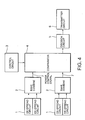
- FIG. 4 is a block diagram showing a configuration of a mobile phone according to a first embodiment of the present invention. Note that in FIG. 4, blocks of constituent elements, which a mobile phone normally has, other than blocks of constituent elements directly related to the control for a transmission power of the present invention are not illustrated here because they are not directly related to the present invention.
- a mobile phone shown in FIG. 4 includes de-spread circuits 1, rake combines 2, a control circuit 3, a comparator 4, a decision circuit 5, and a transmitter circuit 6. Note that power control signals 7 from respective base stations, which are obtained through the composition processing in respective rake combines 2, are outputted to the comparator 4.
- the same number of sets of de-spread circuits 1 and rake combines 2 are prepared as the number of base stations which can be simultaneously connected to the mobile phone concerned.
- two sets of de-spread circuits 1 and rake combines 2 are provided in correspondence to FIG. 2 so that the mobile phone can be simultaneously connected to the two base stations 10 and 11.
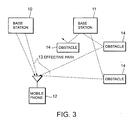
- the de-spread circuit 1 executes the de-spread processing for receiving signals allocated to a plurality of effective paths (the two effective paths 13 in FIG. 2) in order to receive signals in'the form of radio waves from the base station connected to the mobile phone. Since the two effective paths 13 are provided through which the mobile phone 12 receives the radio waves from each of the base stations 10 and 11 shown in FIG. 2, the two de-spread circuits 1 are prepared for the respective base stations. Note that the number of effective paths is not limited to two for one base station.
- the rake combines 2 output the power control signals 7 in correspondence to the base stations, respectively; the power control signals 7 is the composite signals obtained by composing the received powers of the power control signals which are sent from a plurality of base stations through the individual channels. That is to say, the rake combines 2 collectively process the output signals from a plurality of de-spread circuits 1 in correspondence to the base stations; thereby add up the received powers of the power control signals 7 obtained from a plurality of sets of effective paths 13 to output the composite signals. Consequently, each power control signal 7 outputted to the comparator 4 contains the power control signal and information of a receiving level.
- the comparator 4 searches for a value of the highest received power from a plurality of receiving level information contained in the power control signals 7 supplied from the respective rake combines 2 corresponding to the respective base stations.
- the comparator 4 compares the received powers (receiving levels) corresponding to the respective base stations with a reference value obtained by subtracting a predetermined decision. threshold value inputted thereto from the control circuit 3 from the value of the highest received power thus searched. Then, the comparator 4 selects only the power control signal (first TPC) from the base station that has the received power larger than the reference value as an obj ect of the decision; thus selected power control signal (first TPC) is sent to the decision circuit 5.
- the decision circuit 5 decides based on the power control signals selected by the comparison results from the comparator 4, whether the transmission electric power from the mobile phone 12 should be increased or decreased.
- the transmitter circuit 6 controls such that the transmission power from the mobile phone 12 is increased or decreased by the decision results from the decision circuit 5.
- FIGS. 2 and 3 show the examples in each of which the mobile phone 12 of the present invention is connected to the two base stations 10 and 11 in order to carry out communication.
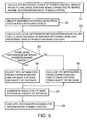
- FIG. 5 is a flow chart showing operations of the rake combines 2, the comparator 4 and the decision circuit 5 shown in FIG. 4.
- an operation of the mobile phone 12 of the present invention will be described with reference to FIGS. 2 to 5.
- the de-spread circuits 1 execute the de-spread processing for the receiving signals using codes (channelization codes and scramble codes) which are sent or detected from the base stations in advance.
- codes channelization codes and scramble codes
- the rake combines 2, from the necessity of reflecting the power control for every slot, calculate the receiving levels of the power control signals inserted into the individual channels and obtained through a plurality of sets of effective paths from the base stations, and add up the receiving levels to output the resultant signals in the form of the power control signals 7 to the comparator 4, respectively (S1).
- the comparator 4 selects the power control signal 7 having the highest receiving level from among the power control signals 7 supplied thereto (S2). Then, the comparator 4 sets a reference value which is obtained by subtracting a predetermined decision threshold value inputted from the control circuit 3 from the maximum receiving level value. Then, the comparator 4 compares the receiving levels corresponding to the base stations with the reference value to thereby decide whether the receiving levels corresponding to the base stations are larger or smaller than the reference value (i.e., whether or not differences between the receiving levels corresponding to the base stations and the reference value fall within a predetermined range) (S3 and S4).
- the power control signal (first TPC) received from the corresponding one of the base stations is adopted for decision of the control for the transmission power (S5).
- the power control signal (second TPC) received from the corresponding one of the base stations is excluded from an object of the decision of the control for the transmission power (S6).
- the power control signals each selected as an object of the decision are outputted to the decision circuit 5.
- the decision circuit 5 carries out the decision, based on the power control signals supplied thereto from the comparator 4, whether the transmission power from the mobile phone 12 should be increased or decreased, in accordance with the regulations of the 3rd generation partnership project (3GPP) specification (S8).
- 3GPP 3rd generation partnership project
- the comparator 4 compares the receiving level obtained from a set of effective paths 13 of the base station 10 with the receiving level obtained from a set of effective paths 13 of the base station 11.
- the comparator 4 decides the higher receiving level as a reference, and also decides whether or not the lower receiving level is lower than the reference by a value (12 to 13 dB) specified from the control circuit 3. That is to say, the comparator 4 sets the higher receiving level as a maximum receiving level, and also sets a value which is obtained by subtracting the value (12 to 13 dB) specified from the control circuit 3 from the maximum receiving level as a reference value. Then, the comparator 4 compares the lower receiving level with the reference value.
- the power control signal received from the base station providing the lower receiving level is not sent to the decision circuit 5.
- the lower receiving level is higher than the reference value, i.e., when the lower receiving level lies within the value (12 to 13 dB) specified from the control circuit 3, the power control signals received from both the base stations 10 and 11 are sent to the decision circuit 5.
- the decision circuit 5 decides based on the power control signals transmitted thereto from the comparator 4 whether the transmission power from the mobile phone 12 should be increased or decreased, and then sends the decision results to the transmitter circuit 6 to thereby decide the transmission power from the mobile phone 12.
- FIG. 6 is a block diagram showing a configuration of a mobile phone according to a second embodiment of the present invention.
- blocks of constituent elements which the mobile phone normally has other than the blocks of the constituent elements related to the control for the transmission power of the present invention are omitted here in its illustration.
- a mobile phone 12 includes de-spread circuits 1, rake combines 2, a control circuit. 3, a decision comparator 20, a decision circuit 5, and a transmitter circuit 6. Note that each rake combine 2 outputs a power control signal 7 and a reference signal (Pilot signal) 21 to the decision comparator 20.
- each rake combine 2 outputs a reference signal (Pilot signal) 21 contained in the power control signal transmitted from the corresponding one of the base stations to the decision comparator 20.
- the mobile phone 12 of this embodiment includes the decision comparator 20 for deciding whether or not the reference signal (Pilot signal) 21 within the same slot as that of the power control signal is obtained at a value not less than the value specified by the control circuit 3.
- the de-spread circuits 1 execute the de-spread processing using codes (channelization codes and scramble codes) which are sent or detected from the respective base stations in advance.
- codes channelization codes and scramble codes
- FIG. 6 there is supposed a case where the two effective paths 13 are provided for each of the two base stations 10 and 11.
- a plurality of information sent from the same base stations as the outputs from the respective de-spread circuits 1 is composed in the respective rake combines 2.
- the rake combines 2, from the necessity of reflecting the power control for every slot, add up the receiving levels of the reference signals and the power control signals, which are inserted into the individual channels and obtained from a plurality of sets of effective paths of the respective base stations; the resultant signals in the form of the reference signals 21 and the power control signals 7 are outputted to the decision comparator 20 in correspondence to the base stations.
- the decision comparator 20 decides whether or not the reference signals 21, in the individual channels from the respective base stations, received from the respective rake combines 2 are received at a level not less than a value (a rate, e.g., 70%) specified from the control circuit 3, i.e., whether or not accordance rates are obtained at a level not less than a predetermined value for every base station. Then, the decision comparator 20 outputs only the power control signals thus obtained corresponding to the respective base stations in the form of the power control signals to the decision circuit 5 in the after stage. Since a pattern of the reference signal (Pilot signal) 21 is already known, the actually obtained results are compared with the essentially obtained signal pattern, whereby the reference signal 21 becomes a criteria when judging to what degree the signal from the base station can be accurately received.
- a rate e.g. 70%
- the decision circuit 5 decides, based on the power control signals corresponding to the two base stations sent from the decision comparator 20, whether the transmission power from the mobile phone 12 should be increased or decreased. Then, the decision circuit 5 sends the decision results to the transmitter circuit 6 to thereby decide the transmission power from the mobile phone 12.
- the power control signal having the highest receiving level of the power control signals received from a plurality of base stations is decided as the reference, and any of the power control signals from the base stations which do not reach a certain fixed receiving level is not used. Consequently, the control different from that to be carried out by the base station from which the best communication state is provided is prevented from being carried out due to the power control signal insufficient in receiving level. Hence, the enhancement of the communication quality, and the enhancement of the connection maintenance rate can be realized.
- the misjudgment of the transmission power control signal from the base station can be prevented from being made.
- the communication can be usually carried out at the optimal power, and the wasteful power consumption can be suppressed.
- the present invention is not intended to be limited to the above-mentioned configurations.
- the comparator 4 and the decision comparator 20 may be software-controlled by the control circuit 3 without being configured in the form of the hardware.
Landscapes
- Engineering & Computer Science (AREA)
- Computer Networks & Wireless Communication (AREA)
- Signal Processing (AREA)
- Mobile Radio Communication Systems (AREA)
Applications Claiming Priority (2)
| Application Number | Priority Date | Filing Date | Title |
|---|---|---|---|
| JP2003294652 | 2003-08-18 | ||
| JP2003294652A JP2005123658A (ja) | 2003-08-18 | 2003-08-18 | 送信電力制御情報の判定方法 |
Publications (2)
| Publication Number | Publication Date |
|---|---|
| EP1508977A1 true EP1508977A1 (fr) | 2005-02-23 |
| EP1508977B1 EP1508977B1 (fr) | 2009-12-16 |
Family
ID=34056213
Family Applications (1)
| Application Number | Title | Priority Date | Filing Date |
|---|---|---|---|
| EP20040019491 Expired - Lifetime EP1508977B1 (fr) | 2003-08-18 | 2004-08-17 | Téléphone mobile et procédé de contrôle de la puissance d'émission |
Country Status (5)
| Country | Link |
|---|---|
| US (1) | US7715860B2 (fr) |
| EP (1) | EP1508977B1 (fr) |
| JP (1) | JP2005123658A (fr) |
| CN (1) | CN1324819C (fr) |
| DE (1) | DE602004024621D1 (fr) |
Families Citing this family (4)
| Publication number | Priority date | Publication date | Assignee | Title |
|---|---|---|---|---|
| JP4867988B2 (ja) * | 2006-03-01 | 2012-02-01 | 日本電気株式会社 | 無線通信システム、通信端末装置、その送信電力制御方法およびプログラム |
| US8385969B2 (en) | 2008-01-29 | 2013-02-26 | Telefonaktiebolaget Lm Ericsson (Publ) | Method of transmitting TPC commands |
| EP2217027B1 (fr) * | 2009-02-05 | 2012-06-20 | Mitsubishi Electric R&D Centre Europe B.V. | Procédé et dispositif pour le réglage de la puissance de transmission de signaux |
| JP5269925B2 (ja) * | 2011-01-31 | 2013-08-21 | 株式会社東芝 | 無線通信装置及び無線通信方法 |
Citations (4)
| Publication number | Priority date | Publication date | Assignee | Title |
|---|---|---|---|---|
| EP0936751A2 (fr) * | 1998-02-16 | 1999-08-18 | Nec Corporation | Contrôle de la puissance de transmission de la station de base pendant la commutation douce, la station mobile et la station de base |
| EP0991204A2 (fr) * | 1998-09-29 | 2000-04-05 | Nec Corporation | Procédé de commande de la puissance de transmission avec une configuration de symboles pilotes |
| US6396867B1 (en) * | 1997-04-25 | 2002-05-28 | Qualcomm Incorporated | Method and apparatus for forward link power control |
| US6442155B1 (en) * | 1999-12-03 | 2002-08-27 | Samsung Electronics, Co., Ltd. | Device and method for controlling transmission power of a mobile station in a multi-carrier CDMA mobile communication system |
Family Cites Families (9)
| Publication number | Priority date | Publication date | Assignee | Title |
|---|---|---|---|---|
| JP3212019B2 (ja) | 1996-05-20 | 2001-09-25 | 株式会社エヌ・ティ・ティ・ドコモ | Cdma移動通信システムにおける送信電力制御方法およびcdma移動通信システム |
| JP3386098B2 (ja) | 1996-06-20 | 2003-03-10 | 株式会社エヌ・ティ・ティ・ドコモ | Cdma移動通信システムにおける信号伝送方法、移動局装置および基地局装置 |
| US6185431B1 (en) * | 1997-06-18 | 2001-02-06 | Oki Telecom, Inc. | Mobile station closed loop output power stability system for weak signal conditions |
| JP4240726B2 (ja) | 2000-02-04 | 2009-03-18 | 株式会社日立コミュニケーションテクノロジー | 無線通信システム、基地局制御局、基地局及び送信電力制御方法 |
| JP2003008507A (ja) | 2001-06-25 | 2003-01-10 | Denso Corp | 無線通信システム |
| JP3723121B2 (ja) | 2001-11-22 | 2005-12-07 | 株式会社東芝 | Cdma端末装置及びその送信電力制御方法 |
| JP4005796B2 (ja) | 2001-11-30 | 2007-11-14 | 富士通株式会社 | 電力制御回路および無線送信装置 |
| GB2384660B (en) * | 2002-01-25 | 2004-11-17 | Toshiba Res Europ Ltd | Reciever processing systems |
| US7340268B2 (en) * | 2003-02-26 | 2008-03-04 | Qualcomm Incorporated | Reliability determination and combining of power control commands received in a wireless communication system |
-
2003
- 2003-08-18 JP JP2003294652A patent/JP2005123658A/ja active Pending
-
2004
- 2004-08-05 US US10/911,607 patent/US7715860B2/en not_active Expired - Fee Related
- 2004-08-17 DE DE200460024621 patent/DE602004024621D1/de not_active Expired - Lifetime
- 2004-08-17 EP EP20040019491 patent/EP1508977B1/fr not_active Expired - Lifetime
- 2004-08-18 CN CNB2004100585632A patent/CN1324819C/zh not_active Expired - Fee Related
Patent Citations (4)
| Publication number | Priority date | Publication date | Assignee | Title |
|---|---|---|---|---|
| US6396867B1 (en) * | 1997-04-25 | 2002-05-28 | Qualcomm Incorporated | Method and apparatus for forward link power control |
| EP0936751A2 (fr) * | 1998-02-16 | 1999-08-18 | Nec Corporation | Contrôle de la puissance de transmission de la station de base pendant la commutation douce, la station mobile et la station de base |
| EP0991204A2 (fr) * | 1998-09-29 | 2000-04-05 | Nec Corporation | Procédé de commande de la puissance de transmission avec une configuration de symboles pilotes |
| US6442155B1 (en) * | 1999-12-03 | 2002-08-27 | Samsung Electronics, Co., Ltd. | Device and method for controlling transmission power of a mobile station in a multi-carrier CDMA mobile communication system |
Also Published As
| Publication number | Publication date |
|---|---|
| EP1508977B1 (fr) | 2009-12-16 |
| JP2005123658A (ja) | 2005-05-12 |
| US20050043054A1 (en) | 2005-02-24 |
| CN1585294A (zh) | 2005-02-23 |
| CN1324819C (zh) | 2007-07-04 |
| US7715860B2 (en) | 2010-05-11 |
| DE602004024621D1 (de) | 2010-01-28 |
Similar Documents
| Publication | Publication Date | Title |
|---|---|---|
| US5930242A (en) | Transmitting power control method and apparatus | |
| US6408039B1 (en) | Radio communication apparatus employing a rake receiver | |
| CA2283501C (fr) | Procede de regulation de puissance de transmission, station mobile, station de base et support d'enregistrement | |
| EP1503516B1 (fr) | Système de communication mobile, terminal de communication mobile, procédé de contrôle de puissance associé et programme associé | |
| EP1762017B1 (fr) | Procedes et appareil pour la detection de synchronisation et la commande de puissance lors de transfert intercellulaire sans coupure | |
| US7218945B2 (en) | Transmission power controlling method and base station apparatus | |
| KR100734452B1 (ko) | 셀룰러 시스템, 기지국 제어 장치, 이동국 및 이들에이용하는 송신 전력 제어 방법 | |
| US7417975B2 (en) | Cellular system and base station specification method in CDMA mode | |
| US20030153272A1 (en) | Quality threshold setting method and communication controller using the method | |
| US6760597B2 (en) | Power control method for CDMA wireless communication networks | |
| KR100627769B1 (ko) | 셀룰러 이동통신 네트워크에서의 다운링크 송신 선택 | |
| US7496373B2 (en) | Method for controlling transmission power | |
| US20040176126A1 (en) | Mobile communications system, radio controller, base station, and method of controlling transmission power | |
| EP1508977B1 (fr) | Téléphone mobile et procédé de contrôle de la puissance d'émission | |
| US7508796B2 (en) | Wireless base station, wireless frames synchronization detection method used therein, and recording medium on which program therefor is recorded | |
| US20060040669A1 (en) | Mobile communication system and downlink transmission power control method thereof | |
| EP0878973B1 (fr) | Système de communication radio et procédé pour la mise en oeuvre d'un transfert des terminals mobiles par évaluation des signaux TPC | |
| JP3723121B2 (ja) | Cdma端末装置及びその送信電力制御方法 | |
| EP1459583B1 (fr) | Procede et systeme pour assurer une liaison descendante dans un reseau cellulaire | |
| EP1392010B1 (fr) | Circuit de regulation de la puissance de transmission au moyen d'un procede w-cdma | |
| US20020160797A1 (en) | Base station apparatus and transmission power control method | |
| KR20020093461A (ko) | 이동통신 단말기에서의 다이나믹 핸드오프 임계치 결정 방법 |
Legal Events
| Date | Code | Title | Description |
|---|---|---|---|
| PUAI | Public reference made under article 153(3) epc to a published international application that has entered the european phase |
Free format text: ORIGINAL CODE: 0009012 |
|
| 17P | Request for examination filed |
Effective date: 20041112 |
|
| AK | Designated contracting states |
Kind code of ref document: A1 Designated state(s): AT BE BG CH CY CZ DE DK EE ES FI FR GB GR HU IE IT LI LU MC NL PL PT RO SE SI SK TR |
|
| AX | Request for extension of the european patent |
Extension state: AL HR LT LV MK |
|
| AKX | Designation fees paid |
Designated state(s): DE FR GB IT |
|
| GRAP | Despatch of communication of intention to grant a patent |
Free format text: ORIGINAL CODE: EPIDOSNIGR1 |
|
| GRAS | Grant fee paid |
Free format text: ORIGINAL CODE: EPIDOSNIGR3 |
|
| GRAA | (expected) grant |
Free format text: ORIGINAL CODE: 0009210 |
|
| AK | Designated contracting states |
Kind code of ref document: B1 Designated state(s): DE FR GB IT |
|
| REG | Reference to a national code |
Ref country code: GB Ref legal event code: FG4D |
|
| REF | Corresponds to: |
Ref document number: 602004024621 Country of ref document: DE Date of ref document: 20100128 Kind code of ref document: P |
|
| PLBE | No opposition filed within time limit |
Free format text: ORIGINAL CODE: 0009261 |
|
| STAA | Information on the status of an ep patent application or granted ep patent |
Free format text: STATUS: NO OPPOSITION FILED WITHIN TIME LIMIT |
|
| 26N | No opposition filed |
Effective date: 20100917 |
|
| PGFP | Annual fee paid to national office [announced via postgrant information from national office to epo] |
Ref country code: GB Payment date: 20120815 Year of fee payment: 9 |
|
| PGFP | Annual fee paid to national office [announced via postgrant information from national office to epo] |
Ref country code: DE Payment date: 20120816 Year of fee payment: 9 Ref country code: IT Payment date: 20120810 Year of fee payment: 9 Ref country code: FR Payment date: 20120823 Year of fee payment: 9 |
|
| REG | Reference to a national code |
Ref country code: FR Ref legal event code: TP Owner name: WARREN & LEWIS INVESTMENT CORPORATION, US Effective date: 20130102 |
|
| REG | Reference to a national code |
Ref country code: GB Ref legal event code: 732E Free format text: REGISTERED BETWEEN 20130110 AND 20130116 |
|
| REG | Reference to a national code |
Ref country code: DE Ref legal event code: R082 Ref document number: 602004024621 Country of ref document: DE Representative=s name: GLAWE DELFS MOLL - PARTNERSCHAFT VON PATENT- U, DE Effective date: 20130912 Ref country code: DE Ref legal event code: R081 Ref document number: 602004024621 Country of ref document: DE Owner name: WARREN & LEWIS INVESTMENT CORPORATION, US Free format text: FORMER OWNER: NEC CORP., TOKYO, JP Effective date: 20130912 Ref country code: DE Ref legal event code: R082 Ref document number: 602004024621 Country of ref document: DE Representative=s name: GLAWE DELFS MOLL PARTNERSCHAFT MBB VON PATENT-, DE Effective date: 20130912 |
|
| GBPC | Gb: european patent ceased through non-payment of renewal fee |
Effective date: 20130817 |
|
| PG25 | Lapsed in a contracting state [announced via postgrant information from national office to epo] |
Ref country code: DE Free format text: LAPSE BECAUSE OF NON-PAYMENT OF DUE FEES Effective date: 20140301 |
|
| REG | Reference to a national code |
Ref country code: DE Ref legal event code: R119 Ref document number: 602004024621 Country of ref document: DE Effective date: 20140301 |
|
| REG | Reference to a national code |
Ref country code: FR Ref legal event code: ST Effective date: 20140430 |
|
| PG25 | Lapsed in a contracting state [announced via postgrant information from national office to epo] |
Ref country code: IT Free format text: LAPSE BECAUSE OF NON-PAYMENT OF DUE FEES Effective date: 20130817 |
|
| PG25 | Lapsed in a contracting state [announced via postgrant information from national office to epo] |
Ref country code: GB Free format text: LAPSE BECAUSE OF NON-PAYMENT OF DUE FEES Effective date: 20130817 |
|
| PG25 | Lapsed in a contracting state [announced via postgrant information from national office to epo] |
Ref country code: FR Free format text: LAPSE BECAUSE OF NON-PAYMENT OF DUE FEES Effective date: 20130902 |