EP1509018A1 - Méthode, produit logiciel et dispositifs pour signaler la modification des canaux porteurs utilisant le protocole SIP - Google Patents
Méthode, produit logiciel et dispositifs pour signaler la modification des canaux porteurs utilisant le protocole SIP Download PDFInfo
- Publication number
- EP1509018A1 EP1509018A1 EP03018586A EP03018586A EP1509018A1 EP 1509018 A1 EP1509018 A1 EP 1509018A1 EP 03018586 A EP03018586 A EP 03018586A EP 03018586 A EP03018586 A EP 03018586A EP 1509018 A1 EP1509018 A1 EP 1509018A1
- Authority
- EP
- European Patent Office
- Prior art keywords
- sip
- call
- com
- bearer
- client
- Prior art date
- Legal status (The legal status is an assumption and is not a legal conclusion. Google has not performed a legal analysis and makes no representation as to the accuracy of the status listed.)
- Withdrawn
Links
- 238000012986 modification Methods 0.000 title claims abstract description 23
- 230000004048 modification Effects 0.000 title claims abstract description 20
- 238000000034 method Methods 0.000 title claims description 11
- 230000011664 signaling Effects 0.000 title description 30
- 230000009471 action Effects 0.000 claims abstract description 26
- 238000004891 communication Methods 0.000 claims description 15
- 238000004590 computer program Methods 0.000 claims description 3
- 230000008929 regeneration Effects 0.000 abstract description 3
- 238000011069 regeneration method Methods 0.000 abstract description 3
- 230000005540 biological transmission Effects 0.000 description 26
- 238000007726 management method Methods 0.000 description 11
- 230000006870 function Effects 0.000 description 9
- 229920002776 polycyclohexyl methacrylate Polymers 0.000 description 6
- 238000013519 translation Methods 0.000 description 5
- 230000008901 benefit Effects 0.000 description 4
- 238000006243 chemical reaction Methods 0.000 description 4
- 241001136792 Alle Species 0.000 description 3
- 238000013475 authorization Methods 0.000 description 3
- 230000000977 initiatory effect Effects 0.000 description 3
- 238000012546 transfer Methods 0.000 description 3
- 230000004913 activation Effects 0.000 description 2
- 238000012790 confirmation Methods 0.000 description 2
- 230000001934 delay Effects 0.000 description 2
- 238000005516 engineering process Methods 0.000 description 2
- 150000001875 compounds Chemical class 0.000 description 1
- 238000009434 installation Methods 0.000 description 1
- 230000007246 mechanism Effects 0.000 description 1
- 230000008569 process Effects 0.000 description 1
- 238000012545 processing Methods 0.000 description 1
- 230000004044 response Effects 0.000 description 1
- 230000007723 transport mechanism Effects 0.000 description 1
Images

Classifications
-
- H—ELECTRICITY
- H04—ELECTRIC COMMUNICATION TECHNIQUE
- H04L—TRANSMISSION OF DIGITAL INFORMATION, e.g. TELEGRAPHIC COMMUNICATION
- H04L65/00—Network arrangements, protocols or services for supporting real-time applications in data packet communication
- H04L65/10—Architectures or entities
- H04L65/102—Gateways
- H04L65/1033—Signalling gateways
- H04L65/104—Signalling gateways in the network
-
- H—ELECTRICITY
- H04—ELECTRIC COMMUNICATION TECHNIQUE
- H04L—TRANSMISSION OF DIGITAL INFORMATION, e.g. TELEGRAPHIC COMMUNICATION
- H04L65/00—Network arrangements, protocols or services for supporting real-time applications in data packet communication
- H04L65/10—Architectures or entities
- H04L65/102—Gateways
- H04L65/1023—Media gateways
- H04L65/103—Media gateways in the network
-
- H—ELECTRICITY
- H04—ELECTRIC COMMUNICATION TECHNIQUE
- H04L—TRANSMISSION OF DIGITAL INFORMATION, e.g. TELEGRAPHIC COMMUNICATION
- H04L65/00—Network arrangements, protocols or services for supporting real-time applications in data packet communication
- H04L65/10—Architectures or entities
- H04L65/102—Gateways
- H04L65/1043—Gateway controllers, e.g. media gateway control protocol [MGCP] controllers
-
- H—ELECTRICITY
- H04—ELECTRIC COMMUNICATION TECHNIQUE
- H04L—TRANSMISSION OF DIGITAL INFORMATION, e.g. TELEGRAPHIC COMMUNICATION
- H04L65/00—Network arrangements, protocols or services for supporting real-time applications in data packet communication
- H04L65/1066—Session management
- H04L65/1101—Session protocols
-
- H—ELECTRICITY
- H04—ELECTRIC COMMUNICATION TECHNIQUE
- H04L—TRANSMISSION OF DIGITAL INFORMATION, e.g. TELEGRAPHIC COMMUNICATION
- H04L65/00—Network arrangements, protocols or services for supporting real-time applications in data packet communication
- H04L65/1066—Session management
- H04L65/1101—Session protocols
- H04L65/1104—Session initiation protocol [SIP]
-
- H—ELECTRICITY
- H04—ELECTRIC COMMUNICATION TECHNIQUE
- H04L—TRANSMISSION OF DIGITAL INFORMATION, e.g. TELEGRAPHIC COMMUNICATION
- H04L65/00—Network arrangements, protocols or services for supporting real-time applications in data packet communication
- H04L65/60—Network streaming of media packets
- H04L65/65—Network streaming protocols, e.g. real-time transport protocol [RTP] or real-time control protocol [RTCP]
-
- H—ELECTRICITY
- H04—ELECTRIC COMMUNICATION TECHNIQUE
- H04M—TELEPHONIC COMMUNICATION
- H04M7/00—Arrangements for interconnection between switching centres
- H04M7/12—Arrangements for interconnection between switching centres for working between exchanges having different types of switching equipment, e.g. power-driven and step by step or decimal and non-decimal
- H04M7/1205—Arrangements for interconnection between switching centres for working between exchanges having different types of switching equipment, e.g. power-driven and step by step or decimal and non-decimal where the types of switching equipement comprises PSTN/ISDN equipment and switching equipment of networks other than PSTN/ISDN, e.g. Internet Protocol networks
- H04M7/126—Interworking of session control protocols
- H04M7/127—Interworking of session control protocols where the session control protocols comprise SIP and SS7
Definitions
- Line-oriented networks - also voice networks or telephone networks called - are on the transmission of in the professional world also referred to as a conversation, call or session continuously streaming (voice) information.
- the transmission The information is usually provided with high quality of service and safety. For example, for language a minimum - e.g. ⁇ 200 ms - Delay without Variations in delay time (delay jitter) important because Language when playing in the receiving device a continuous Information flow requires. A loss of information can not therefore by a retransmission of the undelivered information is balanced and leads usually acoustically perceptible in the receiver Disturbances (e.g., crackling, distortion, echo, silence). In the Experts generalize the transmission of language also as a real-time (delivery) service or as a 'real-time service' designated.
- Packet-oriented networks - also called data networks - are on the transmission of in the professional world as 'data packet streams' or 'Flow' designated packet streams designed. This usually does not guarantee a high quality of service become. Without guaranteed quality of service, the transmission takes place the data packet streams e.g. with time-varying delays, since the individual data packets of the data packet streams usually transmitted in the order of their network access are, i. the time delays are all the more greater, the more packets from a data network to submit are. In the professional world, the transmission of data is therefore also as a transmission service without real-time conditions or referred to as a 'non-realtime service'.
- the packages usually differ depending on the type of packet-oriented network. For example, as an Internet, X.25 or Frame Relay packets, but also as ATM cells be educated. They are sometimes also called news designated, v. then when a message in a package is transmitted.
- IP internet protocol
- IP network A well-known data network is the Internet. This is because of of the internet protocol used there IP sometimes also called IP network, this term basically is to be understood broadly and includes all networks in which the IP Protocol is used.
- IP internet protocol
- the internet is as open (Wide area) data network with open interfaces to Connection of (mostly local and regional) data networks designed by different manufacturers. It represents one of the Manufacturer independent transport platform available.
- Connections are communication relationships between at least two participants for the purpose of a - mostly mutual, i.e. bi-directional - information transmission.
- the call initiating subscriber is commonly referred to as 'A-subscriber'.
- One through a connection with An A-subscriber is called a subscriber 'B-subscribers'.
- a connection-oriented network represents connections Moreover, on the physical level, clear paths through the Network along which the information is transmitted.
- Voice mail services and increasingly broadband Services such as Transmission of video information also realized in packet-oriented networks, i. the Transmission of the previously usually line-oriented transmitted real-time services takes place in a convergent Network - also called voice data network - packet-oriented, i. in packet streams. These are also called real-time packet streams.
- the transmission of voice information via a packet-oriented IP network is also using 'VoIP' (Voice over IP).
- call controllers are those of the ITU in the H.323 standard family proposed 'gatekeeper' or the proposed by the IETF 'SIP Proxy' is a larger Communication network in multiple domains - also 'zones' called - structured, can in each domain a separate call Controller be provided.
- a domain can work without it operate a call controller.
- a call controller is logical View separated from the facilities to see.
- An alternative example is a media gateway controller, usually the optional Call Control functions Signaling and Call Management are assigned.
- the optional Call Control functions Signaling and Call Management are assigned.
- Farther is the assignment of a Signaling Conversion function to Implementation of different (signaling) protocols conceivable what e.g. on the border of two different ones Networks linked to a hybrid network, may be required.
- the resource controller is also called Policy Decision Point (PDP) 'denotes. He is for example within so-called.
- PDP Policy Decision Point
- Edge routers including edge devices, access nodes or when assigned to an Internet Service Provider (ISP) also Provider Edge Router (PER) called - realized.
- ISP Internet Service Provider
- PER Provider Edge Router
- This edge router can also be used as a media gateway to other networks be connected to the voice data networks. These media gateway are then both with a voice data network as connected to the other networks and serve internally the implementation between the different (transmission) Logs of the different networks.
- the resource controller can also be configured only as a proxy and resource controller relevant information to a separate facility forward on the relevant information accordingly a function of the resource controller edited become.
- the "actual Information" is used to distinguish it from the Signaling also payload, payload, media information, Media data or simply called media.
- Communication relationships, the transmission of the signaling serve, are also referred to as signaling links designated.
- the for the transmission of the payload used communication relationships are e.g. Voice communication, Traffic channel connection or - simplified - traffic channel, Bearer channel or simply called a bearer.
- out-of-band or outband the transmission of information in a different way / medium than in the communication network for the transmission of signaling and payloads provided.
- a local configuration of on-site facilities comprising e.g. made with a local control device becomes.
- in-band information on the same way / medium if necessary logically separated from the considered signaling and payload information transmitted.
- the actual call setup usually starts with that in a first step, the participants' terminals their Exchange capabilities (e.g., list of supported CODECs), the required resources (e.g., bandwidth) and the required To determine QoS (e.g., delay, jitter).
- the terminals are in voice telephony e.g. as an IP Telephone or VoIP Client software trained in online video could be one the terminals are a content or application server, e.g. in the network of the Internet Service Provider (ISP).
- ISP Internet Service Provider
- the exchange of signaling messages takes place either directly between the terminals or under the mediation of a Call controllers. This is for every call for each device and determined individually for each transmission direction, which variant is used.
- the first variant will be in the H.323 Terminology as 'Direct Endpoint Call Signaling' and the second as 'Gatekeeper Routed Call Signaling' designated.
- Direct Endpoint Call Signaling can a call controller, if necessary copies of selected signaling messages be transmitted, leaving a call controller
- this variant often knowledge of the between resource and QoS requirements matched to the terminals Has. However, these requirements are made by him not actively influenced or verified.
- the so-tuned Resource and QoS request directly from the terminals the participant in their assigned resource controller be transmitted. After checking the resource and QoS request is acknowledged by the resource controller (or rejection) sent back to the terminal.
- a third, also optional step is in the Edge Router and possibly other routers in the network a policy enabled, with which these routers check and ensure that the traffic caused by the terminal is within the limits that was specified in the request.
- RSVP resource ReSerVation Protocol
- the function split between the two Levels are described as being the resource control level only the functions assigned to the transmission are assigned of payloads are required while from the Call control level the intelligence to control the resource Control level is included.
- the facilities The resource control level should have none Network control intelligence and can be economical in the sequel especially advantageous on separate hardware platforms will be realized. This is because of compared to Call Control level higher installation numbers in this level especially nice advantage.
- action Parameter is formed with the following values: connect-backward, connect-forward, connect-forward-no-notification, connect-forward-plus-notification, connect-forward-no notification-plus-selected codec, connect forward-plus-notification-plus-selected codec, connected, switched, selected-codec, modify-codec, successful-codec-modification, codec-modification-failure, mid-call-codec-negotiation, modify-to-selected-codec-information, mid-call codecnegotiation-failure, redirect-backwards-request, redirect-forwards-request, redirect-bearer-release-request, redirect-bearer-release-proceed, redirect-bearer-release-complete, redirect
- Figure 1 is an exemplary arrangement for carrying out of the method according to the invention. It includes a line-oriented network PSTN and a communication network IN, which is preferably designed as an integrated voice-data network SDN is.
- the two networks PSTN, IN are hybrid Network joined together.
- the network IN is preferably as an IP network (e.g., the Internet) as Call Controller a SIP Proxy SP.
- the merger of the line-oriented bearer TDM with the packet-oriented bearer RTP / RTCP is performed by an intermediate media gateway MG for conversion between different, network-specific user channel technologies RTP / RTCP (Real Time [Control] Protocol) and TDM (Time Devision Multiplex), the combination of signaling SS7 of the network PSTN with the signaling SIP of the network IN through intermediary Media Gateway Controller MGC 1-3 for conversion between different network-specific signaling protocols SIP (Session Initiation Protocol) causes.
- a protocol BICC CS2 / ISUP + is used between the controllers MGC 1 and MGC 3 and a protocol SIP_T (SIP for telephones) is used between the controllers MGC 3 and MGC 2 .
- the gateway MG is controlled by its assigned controller MGC 1 by a - preferably internationally standardized - protocol, eg MGCP (Media Gateway Control Protocol) or H.248. It is usually implemented as a separate unit running on a different physical device / hardware platform than the controllers MGC.
- MGCP Media Gateway Control Protocol
- H.248 Media Gateway Control Protocol
- a subscriber A is connected to the network PSTN A by means of a conventional telephone T, to the network IN, a subscriber B is connected to that of a SIP-capable telephone, eg a SIP client SC realized in software, between which a bearer is an end-to- end user connection TDM, RTP / RTCP is established.
- a SIP-capable telephone eg a SIP client SC realized in software
- the SIP protocol and its derivative SIP_T are used in a complex, hybrid network scenario in which the network signaling is repeatedly implemented between the protocols SIP, SIP_T, BICC CS2 / ISUP +, SS7 (ISUP).
- the controller MGC 3 causes a conversion between the protocol BICC CS2 / ISUP + and the at least one protocol element according to the invention - in particular parameter action - for indicating the cause of modifications of the bearer TDM, RTP / RTCP SIP_T protocol.
- SIP_T messages in the message body transmit an SDP session in addition to an ISUP MIME content (mixed content; See RFC2046 "Multipurpose Internet Mail Extensions (MIME) Part Two: Media Types, and RFC3204 MIME Media types for ISUP and QSIG Objects "), in their SDP Body Content Disposition Header Field embedded as per RFC2183 is, in each case at least one inventive protocol element for transmitting the cause (s) of a bearer modification includes.
- the "disposition-type" of this header field is set to "session".
- a new "disposition-parameter” named "action” for Indication of the cause of the bearer modification introduced and in embedded the "Content-Disposition” header field.
- the value range of the "action” includes parameters the following values: connect-backward, connect-forward, connect-forward-no-notification, connect-forward-plus-notification, connect-forward-no notification-plus-selected codec, connect forward-plus-notification-plus-selected codec, connected, switched, selected-codec, modify-codec, successful-codec-modification, codec-modification-failure, mid-call-codec-negotiation, modify-to-selected-codec-information, midcall-codec-negotiation-failure, redirect-backwards-request, redirect-forwards-request, redirect-bearer-release-request, redirect-bearer-release-proceed, redirect-bearer-release-complete, redirect-cut-through-request, redirect-bearerconnected-indication, redirect-failure, remote-hold, remote-hold-ack, remote-retrieval, remote-retrieval
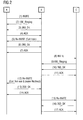
- a connection / call is initially made built up the SIP clients A and B - Messages (1) - (4). Then the SIP client B sets the call to Hold - Messages (5) - (7) - and then calls the SIP client C - News (8) - (11). After this call sends the SIP Client B a "re-INVITE" message (12) to SIP client A, with which he simultaneously lifts the call hold (Call Retrieve) and outgoing from the SIP client A call stream on the SIP Client C (Bearer Redirect) redirects - messages (12) - (14).
- SIP Client B sends a "Re-INVITE" Message (15) to the SIP client C, with which he from the SIP Client C outgoing call stream on SIP Client A (Bearer Redirect) is deflected.
- the end result is a call transfer from SIP client B to SIP client C.
- SIP client A can Now talk to the SIP client C.
- An exemplary "Content-Disposition" header field which is sent because of a Bearer Redirection, therefore looks like in the above message SIP: Re-INVITE, embedded in an SDP protocol, as follows (the protocol element according to the invention is highlighted in bold):
Landscapes
- Engineering & Computer Science (AREA)
- Multimedia (AREA)
- Computer Networks & Wireless Communication (AREA)
- Signal Processing (AREA)
- Business, Economics & Management (AREA)
- General Business, Economics & Management (AREA)
- Telephonic Communication Services (AREA)
- Data Exchanges In Wide-Area Networks (AREA)
Priority Applications (5)
| Application Number | Priority Date | Filing Date | Title |
|---|---|---|---|
| EP03018586A EP1509018A1 (fr) | 2003-08-18 | 2003-08-18 | Méthode, produit logiciel et dispositifs pour signaler la modification des canaux porteurs utilisant le protocole SIP |
| PCT/EP2004/051028 WO2005020535A1 (fr) | 2003-08-18 | 2004-06-04 | Procede, produit logiciel et dispositifs pour signaler la modification de liaisons sur voie porteuse au moyen du protocole sip |
| EP04766032A EP1656781A1 (fr) | 2003-08-18 | 2004-06-04 | Procede, produit logiciel et dispositifs pour signaler la modification de liaisons sur voie porteuse au moyen du protocole sip |
| CN200480030641.6A CN1868197A (zh) | 2003-08-18 | 2004-06-04 | 借助于sip协议的荷载信道变更的信令方法、软件产品和装置 |
| US10/568,734 US20060227728A1 (en) | 2003-08-18 | 2004-06-04 | Method software product and device for signalling bearer channel modifications by means of a sip protocol |
Applications Claiming Priority (1)
| Application Number | Priority Date | Filing Date | Title |
|---|---|---|---|
| EP03018586A EP1509018A1 (fr) | 2003-08-18 | 2003-08-18 | Méthode, produit logiciel et dispositifs pour signaler la modification des canaux porteurs utilisant le protocole SIP |
Publications (1)
| Publication Number | Publication Date |
|---|---|
| EP1509018A1 true EP1509018A1 (fr) | 2005-02-23 |
Family
ID=34042862
Family Applications (2)
| Application Number | Title | Priority Date | Filing Date |
|---|---|---|---|
| EP03018586A Withdrawn EP1509018A1 (fr) | 2003-08-18 | 2003-08-18 | Méthode, produit logiciel et dispositifs pour signaler la modification des canaux porteurs utilisant le protocole SIP |
| EP04766032A Withdrawn EP1656781A1 (fr) | 2003-08-18 | 2004-06-04 | Procede, produit logiciel et dispositifs pour signaler la modification de liaisons sur voie porteuse au moyen du protocole sip |
Family Applications After (1)
| Application Number | Title | Priority Date | Filing Date |
|---|---|---|---|
| EP04766032A Withdrawn EP1656781A1 (fr) | 2003-08-18 | 2004-06-04 | Procede, produit logiciel et dispositifs pour signaler la modification de liaisons sur voie porteuse au moyen du protocole sip |
Country Status (4)
| Country | Link |
|---|---|
| US (1) | US20060227728A1 (fr) |
| EP (2) | EP1509018A1 (fr) |
| CN (1) | CN1868197A (fr) |
| WO (1) | WO2005020535A1 (fr) |
Cited By (4)
| Publication number | Priority date | Publication date | Assignee | Title |
|---|---|---|---|---|
| DE102005045121A1 (de) * | 2005-09-21 | 2007-03-29 | Siemens Ag | Vorrichtung zur Unterstützung des Leistungsmerkmals "Fall-back" in SIP-Netzen |
| JP2009512379A (ja) * | 2005-10-21 | 2009-03-19 | シーメンス アクチエンゲゼルシヤフト | データネットワークにおいてビデオ電話コネクションおよび/またはマルチメディア電話コネクションを確立する方法 |
| CN101222540B (zh) * | 2007-01-08 | 2010-09-29 | 中兴通讯股份有限公司 | 用于ip多媒体子系统的多媒体业务实现方法 |
| EP2092704A4 (fr) * | 2006-12-07 | 2012-10-03 | Nortel Networks Ltd | Techniques permettant de mettre en oeuvre des faisceaux de circuits logiques à l'aide du protocole d'ouverture de session (sip) |
Families Citing this family (19)
| Publication number | Priority date | Publication date | Assignee | Title |
|---|---|---|---|---|
| JP4343626B2 (ja) * | 2003-09-02 | 2009-10-14 | キヤノン株式会社 | 画像通信制御方法、画像通信制御プログラム、および画像通信装置 |
| DE102005013544B3 (de) * | 2005-03-23 | 2006-07-13 | Siemens Ag | Verfahren zum Aufbauen einer Nutzdatenverbindung zwischen Endeinrichtungen |
| CN100544388C (zh) * | 2005-07-01 | 2009-09-23 | 华为技术有限公司 | 一种控制业务多次前转套打的方法 |
| US20070140116A1 (en) * | 2005-12-16 | 2007-06-21 | Microsoft Corporation | Interactive Codec Selection |
| KR20080037950A (ko) * | 2006-10-27 | 2008-05-02 | 삼성전자주식회사 | 데이터를 송수신하는 방법 및 장치 |
| EP2020795B1 (fr) * | 2007-08-03 | 2017-11-22 | Nokia Solutions and Networks Oy | Procédé et équipement de réseau pour le maintien d'un flux de média par un autre équipement de réseau tout en suspendant une connexion de flux de média associé dans un réseau de communication |
| WO2009033179A2 (fr) * | 2007-09-06 | 2009-03-12 | Tekelec | Procédés, systèmes et supports lisibles par ordinateur permettant de fournir des services dans un réseau de télécommunications par l'utilisation d'un adaptateur de spécification d'interopérabilité/protocole d'ouverture de session (ios/sip) |
| US8527656B2 (en) | 2008-03-26 | 2013-09-03 | Avaya Inc. | Registering an endpoint with a sliding window of controllers in a list of controllers of a survivable network |
| US7995466B2 (en) * | 2008-03-26 | 2011-08-09 | Avaya Inc. | Failover/failback trigger using SIP messages in a SIP survivable configuration |
| US8107361B2 (en) * | 2008-03-26 | 2012-01-31 | Avaya Inc. | Simultaneous active registration in a SIP survivable network configuration |
| US8018848B2 (en) * | 2008-03-26 | 2011-09-13 | Avaya Inc. | Survivable phone behavior using SIP signaling in a SIP network configuration |
| CN101605038B (zh) * | 2008-06-12 | 2012-03-28 | 朗讯科技公司 | 基于sip消息体的计费方法和系统 |
| US8170006B2 (en) * | 2008-07-17 | 2012-05-01 | Siemens Enterprise Communications, Inc. | Digital telecommunications system, program product for, and method of managing such a system |
| CN101577884B (zh) * | 2008-09-19 | 2012-06-13 | 中兴通讯股份有限公司 | 一种ip多媒体链路的媒体协商方法 |
| US8711857B2 (en) * | 2008-09-30 | 2014-04-29 | At&T Intellectual Property I, L.P. | Dynamic facsimile transcoding in a unified messaging platform |
| EP3029964B1 (fr) * | 2014-12-05 | 2016-09-28 | Axis AB | Procédé pour améliorer l'expérience audio pour un utilisateur d'un dispositif audio |
| CN104506745B (zh) * | 2014-12-19 | 2018-02-13 | 上海斐讯数据通信技术有限公司 | 一种网关设备及通话监听处理方法 |
| CN111279744B (zh) | 2017-10-26 | 2023-07-18 | 华为技术有限公司 | 服务质量协商技术 |
| US11611909B2 (en) * | 2018-09-07 | 2023-03-21 | Apple Inc. | Apparatus and method for signaling ran-assisted codec adaptation capabilities in IMS multimedia telephony sessions |
Family Cites Families (1)
| Publication number | Priority date | Publication date | Assignee | Title |
|---|---|---|---|---|
| DE60024499T2 (de) * | 2000-12-22 | 2006-08-03 | Nokia Corp. | Verfahren, Endgeräte und Netzwerkeinrichtung zur Änderung eines Verbindungsparameters |
-
2003
- 2003-08-18 EP EP03018586A patent/EP1509018A1/fr not_active Withdrawn
-
2004
- 2004-06-04 EP EP04766032A patent/EP1656781A1/fr not_active Withdrawn
- 2004-06-04 US US10/568,734 patent/US20060227728A1/en not_active Abandoned
- 2004-06-04 WO PCT/EP2004/051028 patent/WO2005020535A1/fr not_active Ceased
- 2004-06-04 CN CN200480030641.6A patent/CN1868197A/zh active Pending
Non-Patent Citations (7)
| Title |
|---|
| CAMARILLO G,ROACH A B,PETERSON J, ONG L: "Integrated Services Digital Network (ISDN) User Part (ISUP) to Session Initiation Protocol (SIP) Mapping, Paragraphs 1-5", IETF REQUEST FOR COMMENTS: RFC 3398, December 2002 (2002-12-01), pages 1 - 10, XP002263263, Retrieved from the Internet <URL:www.ietf.org> [retrieved on 20031128] * |
| HEIDERMARK A: "SIP-ISUP/BICC Interworking and Profile A", ITU-T DRAFT RECOMMENDATION Q.1912.SIP, 11 November 2002 (2002-11-11) - 22 November 2002 (2002-11-22), pages 1 - 81, XP002263264, Retrieved from the Internet <URL:http://www.3gpp.org/ftp/tsg_cn/TSG_CN/TSGN_18/Docs/PDF/NP-020632.pdf> [retrieved on 20031128] * |
| ITU-T: "SIGNALLING SYSTEM NO. 7 - APPLICATION TRANSPORT MECHANISM: BEARER INDEPENDENT CALL CONTROL (BICC) AMENDMENT 1: BEARER INDEPENDENT CALL CONTROL CAPABILITY SET 2", ITU-T RECOMMENDATION Q.765.5, XX, XX, July 2001 (2001-07-01), pages A - B,I-III,1-11, XP001150671 * |
| KNIGHT R R ET AL: "BEARER-INDEPENDENT CALL CONTROL", BT TECHNOLOGY JOURNAL, BT LABORATORIES, GB, vol. 19, no. 2, 1 April 2001 (2001-04-01), pages 77 - 88, XP001034590, ISSN: 1358-3948 * |
| TAYLOR T: "Profile of the Session Initiation Protocol (SIP) and the Session Description Protocol (SDP) for interworking between SIP/SDP and BICC/ISUP", DRAFT NEW ITU-T RECOMMENDATION Q.SIPPROF, 17 June 2002 (2002-06-17) - 21 June 2002 (2002-06-21), pages 1 - 7, XP002263261, Retrieved from the Internet <URL:www.itu.int> [retrieved on 20031128] * |
| TROOST R,DORNER S,MOORE K: "Communication Presentation Information in Internet Messages: The Content-Disposition Header Field", IETF REQUEST FOR COMMENTS: RFC 2183, - August 1997 (1997-08-01), pages 1 - 12, XP002263265, Retrieved from the Internet <URL:www.ietf.org> [retrieved on 20031128] * |
| VEMURI A,PETERSON J: "Session Initiation Protocol for Telephones (SIP-T): Context and Architecture", IETF REQUEST FOR COMMENTS: RFC 3372, September 2002 (2002-09-01), pages 1 - 23, XP002263262, Retrieved from the Internet <URL:www.ietf.org> [retrieved on 20031128] * |
Cited By (6)
| Publication number | Priority date | Publication date | Assignee | Title |
|---|---|---|---|---|
| DE102005045121A1 (de) * | 2005-09-21 | 2007-03-29 | Siemens Ag | Vorrichtung zur Unterstützung des Leistungsmerkmals "Fall-back" in SIP-Netzen |
| DE102005045121B4 (de) * | 2005-09-21 | 2007-11-08 | Siemens Ag | Vorrichtung zur Unterstützung des Leistungsmerkmals "Fall-back" in SIP-Netzen |
| JP2009512379A (ja) * | 2005-10-21 | 2009-03-19 | シーメンス アクチエンゲゼルシヤフト | データネットワークにおいてビデオ電話コネクションおよび/またはマルチメディア電話コネクションを確立する方法 |
| US10075479B2 (en) | 2005-10-21 | 2018-09-11 | Siemens Aktiengesellschaft | Method for establishing a video telephone connection and/or a multimedia telephone connection in a data network |
| EP2092704A4 (fr) * | 2006-12-07 | 2012-10-03 | Nortel Networks Ltd | Techniques permettant de mettre en oeuvre des faisceaux de circuits logiques à l'aide du protocole d'ouverture de session (sip) |
| CN101222540B (zh) * | 2007-01-08 | 2010-09-29 | 中兴通讯股份有限公司 | 用于ip多媒体子系统的多媒体业务实现方法 |
Also Published As
| Publication number | Publication date |
|---|---|
| CN1868197A (zh) | 2006-11-22 |
| US20060227728A1 (en) | 2006-10-12 |
| EP1656781A1 (fr) | 2006-05-17 |
| WO2005020535A1 (fr) | 2005-03-03 |
Similar Documents
| Publication | Publication Date | Title |
|---|---|---|
| EP1509018A1 (fr) | Méthode, produit logiciel et dispositifs pour signaler la modification des canaux porteurs utilisant le protocole SIP | |
| DE60025080T2 (de) | Gateway und Netzwerk für Identifizierungsmarke vermittelt Medien | |
| DE10158822A1 (de) | Verfahren zum Bereitstellen von Leistungsmerkmalen für Alternativ-Verbindungen von Primär-Verbindungen | |
| DE10329084A1 (de) | Verfahren und Anordnung zum Zugriff auf ein erstes Endgerät eines ersten Kommunikationsnetzwerkes durch einen Kommunikationsknoten in einem zweiten Kommunikationsnetzwerk | |
| EP1649659B1 (fr) | Liaison entre abonnes dans des reseaux de communication hybrides | |
| DE60128745T2 (de) | Verfahren und Vorrichtung zur Bereitstellung einer Zwischenschicht für den VOIP-Verbindungsaufbau | |
| DE60212988T2 (de) | Verfahren, Einrichtung und Computerprogramm zur Auswahl einer Medienübergangskontrollfunktion basierend auf der Überwachung von Resourcen von Medienübergangsfunktionen | |
| DE60225457T2 (de) | Aufgeteilter vermittlungsknoten und verfahren zu dessen betrieb | |
| EP1656789B1 (fr) | Desactivation de liaisons dans des reseaux de communication | |
| WO2003084203A1 (fr) | Commande d'une liaison de communication vocale dans un reseau de communication a commutation par paquets entre differents dispositifs de communication associes a des domaines | |
| EP1665756A1 (fr) | Interfonctionnement de protocoles dans des reseaux multimedia hybrides | |
| EP1282280B1 (fr) | Methode, dispositif de commande et un module de logiciel pour commande et guidage de flux de données de connexion de communication entre deux utilisateurs de réseau de donnée par paquet | |
| DE102005036298B3 (de) | Verfahren und Kommunikationssystem zur Auswahl eines Übertragungsmodus' für eine Übermittlung von Nutzdaten | |
| DE102004006756B4 (de) | Aufbau einer paketorientierten Multimediaverbindung unter Mitwirkung eines Interactive Voice Response Systems | |
| WO2003015350A1 (fr) | Caracterisation de la qualite de service d'une transmission d'informations dans un reseau de communication | |
| DE60029105T2 (de) | Ip - basiertes fernsprechsystem | |
| EP1430730A2 (fr) | Procede pour determiner le retard de temps de propagation d'une communication avec transmission par l'intermediaire d'un reseau a commutation par paquets | |
| DE602005002351T2 (de) | Verfahren zur herstellung einer verbindung in einem telekommunikationsnetz, telekommunikationsnetz, und steuereinrichtung für paketnetze | |
| DE102005013544B3 (de) | Verfahren zum Aufbauen einer Nutzdatenverbindung zwischen Endeinrichtungen | |
| DE10147148A1 (de) | Netzübergangseinrichtung und Kommunikationssystem für Echtzeitkommunikationsverbindungen | |
| EP1513312B1 (fr) | Téléphonie Vidéo multimédia | |
| EP1493285A1 (fr) | Mise en attente/portabilite de terminal dans des reseaux h.323/isup-bicc-sip | |
| DE19914744A1 (de) | Verfahren zum Vermitteln von Sprach-Verkehrsbeziehungen zwischen einem Telefon-Kommunikationsnetz und einem Internet | |
| EP1902560A1 (fr) | Procede pour etablir une liaison multimedia en cas de transfert de liaison en cascade | |
| WO2006035050A1 (fr) | Procede permettant d'etablir une connexion multimedia |
Legal Events
| Date | Code | Title | Description |
|---|---|---|---|
| PUAI | Public reference made under article 153(3) epc to a published international application that has entered the european phase |
Free format text: ORIGINAL CODE: 0009012 |
|
| AK | Designated contracting states |
Kind code of ref document: A1 Designated state(s): AT BE BG CH CY CZ DE DK EE ES FI FR GB GR HU IE IT LI LU MC NL PT RO SE SI SK TR |
|
| AX | Request for extension of the european patent |
Extension state: AL LT LV MK |
|
| AKX | Designation fees paid | ||
| REG | Reference to a national code |
Ref country code: DE Ref legal event code: 8566 |
|
| STAA | Information on the status of an ep patent application or granted ep patent |
Free format text: STATUS: THE APPLICATION IS DEEMED TO BE WITHDRAWN |
|
| 18D | Application deemed to be withdrawn |
Effective date: 20050824 |