EP1513355A2 - Système concentrateur d accès pour services téléphonique fixe et mobile - Google Patents
Système concentrateur d accès pour services téléphonique fixe et mobile Download PDFInfo
- Publication number
- EP1513355A2 EP1513355A2 EP04077403A EP04077403A EP1513355A2 EP 1513355 A2 EP1513355 A2 EP 1513355A2 EP 04077403 A EP04077403 A EP 04077403A EP 04077403 A EP04077403 A EP 04077403A EP 1513355 A2 EP1513355 A2 EP 1513355A2
- Authority
- EP
- European Patent Office
- Prior art keywords
- access
- mobile
- network
- fixed
- concentrator
- Prior art date
- Legal status (The legal status is an assumption and is not a legal conclusion. Google has not performed a legal analysis and makes no representation as to the accuracy of the status listed.)
- Withdrawn
Links
Images


Classifications
-
- H—ELECTRICITY
- H04—ELECTRIC COMMUNICATION TECHNIQUE
- H04L—TRANSMISSION OF DIGITAL INFORMATION, e.g. TELEGRAPHIC COMMUNICATION
- H04L65/00—Network arrangements, protocols or services for supporting real-time applications in data packet communication
- H04L65/10—Architectures or entities
- H04L65/102—Gateways
- H04L65/1033—Signalling gateways
- H04L65/104—Signalling gateways in the network
-
- H—ELECTRICITY
- H04—ELECTRIC COMMUNICATION TECHNIQUE
- H04L—TRANSMISSION OF DIGITAL INFORMATION, e.g. TELEGRAPHIC COMMUNICATION
- H04L65/00—Network arrangements, protocols or services for supporting real-time applications in data packet communication
- H04L65/10—Architectures or entities
- H04L65/102—Gateways
- H04L65/1023—Media gateways
- H04L65/103—Media gateways in the network
-
- H—ELECTRICITY
- H04—ELECTRIC COMMUNICATION TECHNIQUE
- H04L—TRANSMISSION OF DIGITAL INFORMATION, e.g. TELEGRAPHIC COMMUNICATION
- H04L65/00—Network arrangements, protocols or services for supporting real-time applications in data packet communication
- H04L65/1066—Session management
- H04L65/1069—Session establishment or de-establishment
-
- H—ELECTRICITY
- H04—ELECTRIC COMMUNICATION TECHNIQUE
- H04L—TRANSMISSION OF DIGITAL INFORMATION, e.g. TELEGRAPHIC COMMUNICATION
- H04L65/00—Network arrangements, protocols or services for supporting real-time applications in data packet communication
- H04L65/1066—Session management
- H04L65/1101—Session protocols
-
- H—ELECTRICITY
- H04—ELECTRIC COMMUNICATION TECHNIQUE
- H04L—TRANSMISSION OF DIGITAL INFORMATION, e.g. TELEGRAPHIC COMMUNICATION
- H04L65/00—Network arrangements, protocols or services for supporting real-time applications in data packet communication
- H04L65/1066—Session management
- H04L65/1101—Session protocols
- H04L65/1104—Session initiation protocol [SIP]
-
- H—ELECTRICITY
- H04—ELECTRIC COMMUNICATION TECHNIQUE
- H04M—TELEPHONIC COMMUNICATION
- H04M3/00—Automatic or semi-automatic exchanges
- H04M3/42—Systems providing special services or facilities to subscribers
- H04M3/42229—Personal communication services, i.e. services related to one subscriber independent of his terminal and/or location
- H04M3/42246—Personal communication services, i.e. services related to one subscriber independent of his terminal and/or location where the subscriber uses a multi-mode terminal which moves and accesses different networks with at least one network having a wireline access including cordless PBX
- H04M3/42255—Personal communication services, i.e. services related to one subscriber independent of his terminal and/or location where the subscriber uses a multi-mode terminal which moves and accesses different networks with at least one network having a wireline access including cordless PBX with the subscriber having a personal network-independent number
-
- H—ELECTRICITY
- H04—ELECTRIC COMMUNICATION TECHNIQUE
- H04M—TELEPHONIC COMMUNICATION
- H04M7/00—Arrangements for interconnection between switching centres
- H04M7/12—Arrangements for interconnection between switching centres for working between exchanges having different types of switching equipment, e.g. power-driven and step by step or decimal and non-decimal
- H04M7/1205—Arrangements for interconnection between switching centres for working between exchanges having different types of switching equipment, e.g. power-driven and step by step or decimal and non-decimal where the types of switching equipement comprises PSTN/ISDN equipment and switching equipment of networks other than PSTN/ISDN, e.g. Internet Protocol networks
- H04M7/1225—Details of core network interconnection arrangements
- H04M7/1235—Details of core network interconnection arrangements where one of the core networks is a wireless network
-
- H—ELECTRICITY
- H04—ELECTRIC COMMUNICATION TECHNIQUE
- H04W—WIRELESS COMMUNICATION NETWORKS
- H04W84/00—Network topologies
- H04W84/02—Hierarchically pre-organised networks, e.g. paging networks, cellular networks, WLAN [Wireless Local Area Network] or WLL [Wireless Local Loop]
- H04W84/10—Small scale networks; Flat hierarchical networks
- H04W84/14—WLL [Wireless Local Loop]; RLL [Radio Local Loop]
-
- H—ELECTRICITY
- H04—ELECTRIC COMMUNICATION TECHNIQUE
- H04M—TELEPHONIC COMMUNICATION
- H04M2203/00—Aspects of automatic or semi-automatic exchanges
- H04M2203/20—Aspects of automatic or semi-automatic exchanges related to features of supplementary services
- H04M2203/2094—Proximity
-
- H—ELECTRICITY
- H04—ELECTRIC COMMUNICATION TECHNIQUE
- H04M—TELEPHONIC COMMUNICATION
- H04M2242/00—Special services or facilities
- H04M2242/30—Determination of the location of a subscriber
-
- H—ELECTRICITY
- H04—ELECTRIC COMMUNICATION TECHNIQUE
- H04M—TELEPHONIC COMMUNICATION
- H04M3/00—Automatic or semi-automatic exchanges
- H04M3/42—Systems providing special services or facilities to subscribers
- H04M3/42348—Location-based services which utilize the location information of a target
Definitions
- the present invention is associated with communications systems. Specifically, it is related to a system that makes the public fixed telephony network available to a cellular mobile system user operating a mobile device through a fixed access.
- the convergence of fixed and mobile systems has been discussed for some time under several different evolution conceptions of telecommunications systems. However, so far, none of the proposed systems has presented the required technology and commercial viability to gain the mass market.
- the fixed and mobile systems convergence is part of the ITU (International Telecommunication Union) IMT-2000 project's conception and it can be referenced either through the corresponding Internet site: http://www.imt-2000.org/portal/index.asp , which contains it's ideas and links to other related sites, or by using the ITU site: http://www.itu.org .
- a solution based on the use of Intelligent Networks for the convergence of the fixed and mobile services can also be adopted.
- the foundations of the structure of intelligent networks have been laid upon the signaling network of telecommunications networks, based on the protocol stack called ANSI SS7 (Signaling System 7), standardized at ITU. It is composed by an SSP (Service Switching Point) at which Detection Points are constructed for signaling transfer to an SCP (Service Control Point) that possesses the service's logic. This logic is established through a so called Service Creation Environment (SCE).
- SCE Service Creation Environment
- the service of intelligent network for management of the mobility of the CMT is used, considering its private number (PN).
- the WO Gateway (Wireless Office GW) possess the functionality of VLR and capacity to interrogate the HLR. All the calls involving CMTs are coursed through the PTN.
- the CMTs office can make to handover between cells of the wireless system and the cellular mobile system.
- the radio access network (RAN) of the system Wireless Office includes functional entities to carry through all required functions for the control and routing/coursing of the Wireless Office system.
- 6.526.033 B1 does not consider a convergence of the mobile and fixed systems, the invention proposed in the patent mentions a system that substitutes the cellular infrastructure through InterNet for users in roaming and the possibility of accomplishment of roaming user out of its service area. Also, the possibility is mentioned to it to make roaming of an CDMA user for a - GSM network and on the contrary, using signalling through the InterNet. The voice service in the visited net would be provided with the H.323 protocol. The GSM user could, in this case, prevent agreements of roaming and the fixed network usage, making the payment through credit card and using Mobile IP to support mobility and, in this form to have access to a CDMA network. For security solution, it suggests the use of the algorithm Diffie Hellman.
- the invention is a method of inter-operation between used protocols of cellular voice in TDMA wireless networks and InterNet protocols used for a terminal System InterNet (InterNet End-System; ES).
- it is a method of inter-operation between used protocols of cellular fax in TDMA mobile network and InterNet protocols.
- a problem in the fixed and mobile system convergence presented in the initial vision based on systems of type FWA is that, appears the necessity of specification of a new radio interface standardization for the fixed access. In This way, the convergence in the terminal, so that it occurs, needs production in scale of terminals in dual mode, or either, that it integrates in its production the two radio interfaces in one same device. The technologies for the two radio interfaces are different and the production cost finishes being higher.
- the access to the two networks is possible through specific terminals and access for each one.
- the services of the fixed network are provided to the subscriber through a terminal of the fixed network and the services of the mobile network are provided through a terminal of the mobile network.
- the solution proposed in this invention presents protocols of mobile radio access and solutions provided for the InterNet that allow an only mobile terminal to have access to fixed and mobile services.
- the American patent No. 5.890.064 provide, also, an integration of a service developed for fixed network, a PBX, that integrates the mobile network.
- the patent in question adds to the PBX, functionalities of management of mobility and module of mobile radio access integrated to the PBX.
- its corporative mobile terminals CMTs
- CMTs corporative mobile terminals
- the corporative user When the corporative user will be out of its corporative system area of covering, it has access the cellular mobile network, in its area of service, and its call is directed to the PBX of its corporation and consequently, to the fixed network.
- the solution proposed in this invention is different for being simpler than the considered PBX, and it does need no functionality of management of mobility.
- the solution of the concentrator is a -more comprehensive solution, therefore it includes the integration of the access to the fixed network.
- mobility through the InterNet can be managed, the concentrator can be implemented with no extra functionality of management of mobility.
- the American patent No. 6.385.195 B2 has a specific application in TDMA mobile network ,in which it considers an expansion of the functionalities of a specific network entity, the IWF. In this way, it considers a inter-operation of the TDMA acess network with the InterNet, using, the InterNet VoIP.
- the concentrator described in this report is more comprehensive, including alterations in the access form, allowing the integration of the fixed network and the cellular mobile network, for all the mobile terminals.
- the present invention mentions a system that allows an user of the cellular mobile system to have access the network of fixed telephony, using its mobile device, through a fixed access.
- This solution presents an innovative form of integration of the fixed and mobile network, using the mobile device for the two services, using the standardized radio interface for mobile cellular system and being able to concentrate the access to the fixed network.
- the acces to the fixed network can be done by analogical subscriber line or by some broadband access. In this case, reaching the local network in the domain of the fixed operator , the voice signal and the signalling are converted by a gateway to the fixed public switched telephone network.
- the access to the cellular mobile network or to the fixed one is carried through, automaticaly, using the mobile radio interface properties.
- the invention of the fixed and mobile concentrator of access does not depend on an evolution of the network.
- the solution proposal will be able to evolve, not using gateways for interconnection with the fixed and mobile circuit switched network, and in this way will be adherent to the network evolution, however, using the mobile terminal for access to fixed and mobile networks.
- the system was conceived for voice communication, or either, service of telephony, being able to concentrate the services of data, including access to InterNet. Concentrating the services of data in packages based on IP (Internet Protocol), including Voice on IP (VoIP), the mobile device must possess additional capacity of support for packet data transmission.
- IP Internet Protocol
- VoIP Voice on IP
- the use of any type of mobile terminal is allowed for access to the voice service.
- the system uses a Broadband access to the PSTN, as for example, the access through a modem ADSL.
- the access to the fixed network will be done through the analogical line.
- the concentrator system is composed of:
- VoIP Voice services over IP
- Gateways (4 and 5) make the conversion of the voice signal with codes used for the mobile systems for codes used for digital transmission in the fixed network of telephony.
- gateways (4 and 5) makes the conversion of the signalling used in the network based on IP for the used signalling for the PSTN.
- These gateways allow the use of the current PSTN networks. With the evolution of the core of the network for next generation network, based in packages with quality of service (QoS) these gateways will not be more necessary for this solution.
- QoS quality of service
- the signal of voice and the signalling will be carried through voice over IP, using SIP and the protocols for transport of the coded signal of voice, with control of the delays, as, for example, the protocol of the IETF, Real Time Transfer Protocol, RTP and, the Real Time Control Protocol, RTCP, through this next generation network.
- the user does need to make no configuration, a time that all necessary configuration is carried through by the operator who is providing the service.
- the user has access to the service through an operator of cellular mobile telephony or an operator of fixed telephony, through the broadband access or analogical line.
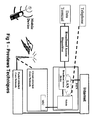
- the PSTN and the wireless mobile network are shown, which the wireless mobile network is composed by a circuit switched and a packet switched core network, as indicated in the figure .
- the current PSTN also, present possibility of access to the InterNet, using Brodband access. This access is composed for a modem that it transmits the signal of a terminal, through an analog telephone line.
- the side of the PSTN there is a modem that interconnects the line of the subscriber to the InterNet, called , in the figure, Terminal Equipment of the BroadBand Access.
- the mobile device is used, in this case, only for access to the wireless mobile network, being able to have access to the circuit switched Core Network or Packet Switched Core Network, using specific interfaces for each one.
- Figure 2 presents the traffic plan of the present invention.
- the considered traffic includes data and voice.
- the invention is composed by a mobile terminal (9) which access the wireless mobile network through the mobile radio interface of the wireless mobile system.
- the access to the wireless mobile network will be possible through the packet switched component, using Voice over IP.
- Voice over IP In case of this access were made using Voice over IP, it must have a SIP Server in the Packet Core Network (7), as in figure 3.
- the packet switched component of the aerial interface must implement mechanisms to provide Quality of Service (QoS).
- QoS Quality of Service
- the concentrator is composed of an adapter for wireless access (2), which is constituted of a point of access with mobile radio interface to connect the signal of voice over IP to the Broadband access used to have access to fixed network, as represented in figure 2, for the full line.
- a server SIP (6) in figure 3.
- one gateway (4) represented in figure 2 as GW. This gateway is used to make the conversion of the signal coded for transmission over IP for the transmission in circuit switched network.
- the adequate solution to the conventional terminals 2G, to have access to the PSTN is carried through the conversion of the signal of the aerial interface of the wireless mobile system for an interface of analogical line, represented in figure 2 for the dotted line.
- the adapter of the wireless access converts the voice traffic in such a way how much the signalling.
- the plan of signalling to provide this convergent system includes signalling SIP in the Broadband Access.
- FIG 3 it is represented the signalling used in the PSTN and the interfaces of signalling used through the InterNet.
- the dotted line is used to present the solution for the conventional terminals 2G access to the analogical subscriber line of the PSTN.
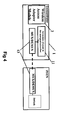
- the equipment includes a mobile device (9), a modular concentrator (1) which includes a module adapting of wireless access (2) to a module of access to fixed network that includes a submodule of access to analogical line (11) being able to be connected to a Multiplexer/Demultiplexer (13) (as in figure 4) to a better exploitation of the analogical line of access, an submodule Broadband access (10) and, in the use of VoIP, it includes one gateway (4) and the servers for signalling (6, 7).
- Mobile device Here a great amount of existing equipment in the market is included.
- the 2,5G and 3G devices allow the shipment of programs and, in this way, the necessary agents to the service of data.
- one another group of mobile terminals can be used, that is represented by the PDAs (Personal Assistance Date) with access to wireless mobile systems through modems available in the market.
- PDAs Personal Assistance Date
- modem cards can be used, that can have access to the wireless mobile system.
- the voice service using of the capacity of the applicatory ones for telephony can, also, be used.
- these solutions to other types of devices can be applied, as for example, the Handheld PCs.
- the mobile terminal utilisation for access to the fixed network An important aspect so that the handset, developed for the wireless mobile network, being adjusted to the solution proposed, are the utilisation possibilities of the mobile radio wireless interfaces for the access to the fixed network, through the Broadband access as well as the analogical subscriber line.
- the fundamental kind of access, foreseen in this solution, involves the use of a common handset for the fixed network access, through a common analogical line, to allow the service of basic telephony (voice), being able to concentrate more than one user in the analogical line of access.
- the adaptation of the mobile radio interface of the cellular mobile system for an analogical signal, is necessary.
- the conversion of the coded voice signal in the cellular system to an analogical voice signal and signalling made in the mobile radio interface for the signalling of the analogical subscriber line in fixed telephony is done.
- the solution applies itself to any handset.
- Devices of Broadband access The solution of Broadband access, as, for example, based in ADSL (Assimetrical Digital Subscriber Line) is a solution that, today, wide is used for applications of broadband access to the InterNet for small offices and home office and consists of an adequate solution to the proposal.
- Gateways allows that it makes the inter-operation of the solution based on voice on IP, on the local PSTN operator, for the circuit switched network.
- SIP for the signalling between the terminals is used.
- protocol RTP is used over IP over a specific transport, normally Ethernet.
- E1 E1
- T1 E1
- Gateway will be located, in the network,on the points next to the fixed accesses as possible.
- the solution does not depend on the evolution of the InterNet for the provisions of Quality of service.
- the mobile call origination through the the fixed network will be done through the mobile radio interface; therefore, one layer 3 software module for Call Control inside the module of access to fixed network will exist in order to forward the call through the the fixed PSTN network.
- This module will implement the conversion of mobile signaling to the PSTN subscriber line signaling. After the connection is stablished, the module is responsible for tha coded voice signal conversion to the analogical voice signal in a case of analogical subscriber line or to the Fixed network VoIP, in the case of digital subscriber line.
- the following prossess must ocurr:
- the calling user calls the mobile called user.
- the cellular mobile system of the called user pages the user on the last cell it hás made the registration. Since the user is in the control channel of the concentrative device, it does not respond the paging to the mobile system and, then, a message returns to the MSC which forwards the call to the fixed network. To do this, one switch feature must be activated.
- the technician in the area will understand that the some illustrative logical blocks, modules, circuits and stages of described algorithms in connection with the modalities here described, can be implemented as the electronic hardware, software of computer, or a combination of these. To clearly illustrate this interchageability between hardware and software, several illustrative components, blocks, modules, circuits, and stages had been described generally in terms of its functionality. If such functionality is implemented in the hardware or software all depends on its specific application and project limits imposed in the system. The technician in the area can implement the functionalities described in several forms for each specific application, however such decisions of implementation do not have to be interpreted as out of the target of the present invention.
- a generic digital processor can be a microprocessor, however alternatively, the processor can be any conventional processor, a controller, a micro controller or a state machine.
- a processor can also be implemented as a combination of computational devices as a DSP and a microprocessor, a plurality of microprocessors, one or more microprocessors in set with a DSP nucleus, or any of such configurations.
- the stages of a described method or algorithm in connection with the modalities here disclosed can directly be constructed in the hardware, in a module of software executed by a processor, or in a combination of both.
- a software module can exist in a memory RAM, memory flash, memory ROM, memory EPROM, memory EEPROM, recorders, hard disks, removable records, a CD-ROM or any another known form of storage of the technique.
- a way of exemplary storage is connected to the processor in a way that the processor can read and record information in the half of storage. Alternatively, the way of storage can be integrant part of the processor.
- the processor and the way of storage can exist in a ASIC.
- the ASIC can exist in the user terminal.
- the processor and the way of storage can inhabit as component discret
Landscapes
- Engineering & Computer Science (AREA)
- Computer Networks & Wireless Communication (AREA)
- Signal Processing (AREA)
- Multimedia (AREA)
- Business, Economics & Management (AREA)
- General Business, Economics & Management (AREA)
- Mobile Radio Communication Systems (AREA)
Applications Claiming Priority (2)
| Application Number | Priority Date | Filing Date | Title |
|---|---|---|---|
| BR0302755 | 2003-08-25 | ||
| BR0302755-4A BR0302755A (pt) | 2003-08-25 | 2003-08-25 | Sistema concentrador de acesso aos serviços de telefonia fixa e móvel |
Publications (2)
| Publication Number | Publication Date |
|---|---|
| EP1513355A2 true EP1513355A2 (fr) | 2005-03-09 |
| EP1513355A3 EP1513355A3 (fr) | 2006-01-25 |
Family
ID=30774085
Family Applications (1)
| Application Number | Title | Priority Date | Filing Date |
|---|---|---|---|
| EP04077403A Withdrawn EP1513355A3 (fr) | 2003-08-25 | 2004-08-25 | Système concentrateur d accès pour services téléphonique fixe et mobile |
Country Status (3)
| Country | Link |
|---|---|
| US (1) | US20050058093A1 (fr) |
| EP (1) | EP1513355A3 (fr) |
| BR (1) | BR0302755A (fr) |
Families Citing this family (4)
| Publication number | Priority date | Publication date | Assignee | Title |
|---|---|---|---|---|
| EP1758334A1 (fr) * | 2005-08-26 | 2007-02-28 | Matsushita Electric Industrial Co., Ltd. | Établissement des sessions média avec adaptation de média |
| WO2007060502A1 (fr) * | 2005-11-28 | 2007-05-31 | Orient Management Ltd. | Système de téléphonie destiné à acheminer des appels téléphoniques au travers d'un réseau fondé sur le protocole ip |
| WO2012028038A1 (fr) * | 2010-08-30 | 2012-03-08 | Deng Fangbo | Union sans fil |
| ES2425297B1 (es) * | 2012-04-10 | 2014-12-04 | Joan Navarro Freixas | Dispositivo electrónico para comunicar teléfonos móviles inteligentes a través de una línea telefónica convencional |
Family Cites Families (9)
| Publication number | Priority date | Publication date | Assignee | Title |
|---|---|---|---|---|
| FI105746B (fi) * | 1995-09-29 | 2000-09-29 | Nokia Mobile Phones Ltd | Integroitu radioviestintäjärjestelmä |
| JP2000504192A (ja) * | 1996-04-30 | 2000-04-04 | ベル コミュニケーションズ リサーチ,インコーポレイテッド | Pacs無線技術を特徴とする無線および有線アクセスのための統合電気通信システム・アーキテクチャ |
| US6141341A (en) * | 1998-09-09 | 2000-10-31 | Motorola, Inc. | Voice over internet protocol telephone system and method |
| EP1138137B1 (fr) * | 1998-12-07 | 2004-10-13 | Airspan Networks (Israel) Ltd. | Systeme en boucle, local et sans fil, et procede associe |
| DE10056087B4 (de) * | 2000-11-07 | 2005-03-17 | IQ wireless GmbH, Entwicklungsgesellschaft für Systeme und Technologien der Telekommunikation | Funkkommunikationssystem |
| WO2002102019A2 (fr) * | 2001-04-20 | 2002-12-19 | 3Com Corporation | Procede et dispositif de gestion de reseau |
| US7002995B2 (en) * | 2001-06-14 | 2006-02-21 | At&T Corp. | Broadband network with enterprise wireless communication system for residential and business environment |
| WO2003079649A1 (fr) * | 2002-03-15 | 2003-09-25 | Lynk Labs, Inc. | Procede et appareil d'acces public sans fil a internet |
| US7492873B2 (en) * | 2002-04-25 | 2009-02-17 | Azurn Networks, Inc. | Voice/data session switching in a converged application delivery environment |
-
2003
- 2003-08-25 BR BR0302755-4A patent/BR0302755A/pt not_active IP Right Cessation
-
2004
- 2004-08-24 US US10/924,571 patent/US20050058093A1/en not_active Abandoned
- 2004-08-25 EP EP04077403A patent/EP1513355A3/fr not_active Withdrawn
Non-Patent Citations (1)
| Title |
|---|
| None * |
Also Published As
| Publication number | Publication date |
|---|---|
| BR0302755A (pt) | 2003-11-25 |
| US20050058093A1 (en) | 2005-03-17 |
| EP1513355A3 (fr) | 2006-01-25 |
Similar Documents
| Publication | Publication Date | Title |
|---|---|---|
| US7818008B2 (en) | Mobile services control platform providing a converged voice service | |
| EP0800749B1 (fr) | Systeme et procede de communication cellulaire | |
| US8005070B2 (en) | Extension of a local area phone system to a wide area network with handoff features | |
| US7742768B2 (en) | Extension of a local area phone system to a wide area network | |
| US9936435B2 (en) | Call flow system and method for use in a VoIP telecommunication system | |
| US20040240430A1 (en) | IP gateway for hybrid circuit switched and IP based mobile wireless telephone system | |
| EP1675413A2 (fr) | Procédé et système de reconfiguration d'une voie d'appel | |
| CA2368474C (fr) | Traitement d'appels effectues a partir de portables dans des reseaux de communication fonde sur un protocole de commutation de paquets | |
| TW200428884A (en) | Wireless communication components and methods for multiple system communications | |
| KR20080057208A (ko) | 네트워크 장치 및 네트워크 장치 동작 방법 | |
| CN102197666A (zh) | 用于语音呼叫连续性的装置和方法 | |
| US7068644B1 (en) | Wireless access gateway to packet switched network | |
| EP1252783B1 (fr) | Procede de connexions de donnees dans un reseau de telecommunication mobile cellulaire | |
| JP2007142610A (ja) | 移動通信システム、呼制御サーバ及び呼制御方法並びにプログラム | |
| US20050058093A1 (en) | Access concentrating system of fixed and mobile telephony services | |
| Roos et al. | Critical issues for roaming in 3G | |
| WO2001082551A2 (fr) | Procede et passerelle permettant d'assurer le transfert des appels de communication sans fil | |
| US8311534B2 (en) | Roaming in telecommunication networks | |
| US20080159292A1 (en) | Method of routing data packets in a communication system | |
| CN101027887A (zh) | 操作和支持双模式用户设备 | |
| US8396510B1 (en) | Method and system for establishing communication services | |
| CN100438639C (zh) | 一种在通信移动电信系统中实现传真业务的方法 | |
| US20100296468A1 (en) | Device and method for setting up call switching connections for real time services in wide area mobile networks | |
| KR100805585B1 (ko) | 광대역통합망에서 음성전화 연동장치 소요용량 산출방법및 시스템 | |
| KR20030070882A (ko) | 광대역 이동통신망과 초고속 인터넷망과의 영상통화 연동시스템 및 방법 |
Legal Events
| Date | Code | Title | Description |
|---|---|---|---|
| PUAI | Public reference made under article 153(3) epc to a published international application that has entered the european phase |
Free format text: ORIGINAL CODE: 0009012 |
|
| AK | Designated contracting states |
Kind code of ref document: A2 Designated state(s): AT BE BG CH CY CZ DE DK EE ES FI FR GB GR HU IE IT LI LU MC NL PL PT RO SE SI SK TR |
|
| AX | Request for extension of the european patent |
Extension state: AL HR LT LV MK |
|
| PUAL | Search report despatched |
Free format text: ORIGINAL CODE: 0009013 |
|
| RIN1 | Information on inventor provided before grant (corrected) |
Inventor name: LUIS BATISTA, CASSIO Inventor name: MORENO MARQUES, EDUARDO |
|
| AK | Designated contracting states |
Kind code of ref document: A3 Designated state(s): AT BE BG CH CY CZ DE DK EE ES FI FR GB GR HU IE IT LI LU MC NL PL PT RO SE SI SK TR |
|
| AX | Request for extension of the european patent |
Extension state: AL HR LT LV MK |
|
| RIC1 | Information provided on ipc code assigned before grant |
Ipc: H04L 12/28 19900101ALI20051207BHEP Ipc: H04Q 7/22 19950101ALI20051207BHEP Ipc: H04Q 7/20 19950101AFI20051207BHEP |
|
| AKX | Designation fees paid |
Designated state(s): AT BE BG CH CY CZ DE DK EE ES FI FR GB GR HU IE IT LI LU MC NL PL PT RO SE SI SK TR |
|
| 17P | Request for examination filed |
Effective date: 20060721 |
|
| 17Q | First examination report despatched |
Effective date: 20061229 |
|
| STAA | Information on the status of an ep patent application or granted ep patent |
Free format text: STATUS: THE APPLICATION IS DEEMED TO BE WITHDRAWN |
|
| 18D | Application deemed to be withdrawn |
Effective date: 20070710 |