EP1514935A1 - DIE PFLANZENBLÜTE FÖRDERNDES GEN Ehd1 UND SEINE NUTZUNG - Google Patents
DIE PFLANZENBLÜTE FÖRDERNDES GEN Ehd1 UND SEINE NUTZUNG Download PDFInfo
- Publication number
- EP1514935A1 EP1514935A1 EP03733019A EP03733019A EP1514935A1 EP 1514935 A1 EP1514935 A1 EP 1514935A1 EP 03733019 A EP03733019 A EP 03733019A EP 03733019 A EP03733019 A EP 03733019A EP 1514935 A1 EP1514935 A1 EP 1514935A1
- Authority
- EP
- European Patent Office
- Prior art keywords
- dna
- plant
- ehd1
- gene
- flowering
- Prior art date
- Legal status (The legal status is an assumption and is not a legal conclusion. Google has not performed a legal analysis and makes no representation as to the accuracy of the status listed.)
- Withdrawn
Links
Images




Classifications
-
- C—CHEMISTRY; METALLURGY
- C12—BIOCHEMISTRY; BEER; SPIRITS; WINE; VINEGAR; MICROBIOLOGY; ENZYMOLOGY; MUTATION OR GENETIC ENGINEERING
- C12N—MICROORGANISMS OR ENZYMES; COMPOSITIONS THEREOF; PROPAGATING, PRESERVING, OR MAINTAINING MICROORGANISMS; MUTATION OR GENETIC ENGINEERING; CULTURE MEDIA
- C12N15/00—Mutation or genetic engineering; DNA or RNA concerning genetic engineering, vectors, e.g. plasmids, or their isolation, preparation or purification; Use of hosts therefor
- C12N15/09—Recombinant DNA-technology
- C12N15/63—Introduction of foreign genetic material using vectors; Vectors; Use of hosts therefor; Regulation of expression
- C12N15/79—Vectors or expression systems specially adapted for eukaryotic hosts
- C12N15/82—Vectors or expression systems specially adapted for eukaryotic hosts for plant cells, e.g. plant artificial chromosomes (PACs)
- C12N15/8241—Phenotypically and genetically modified plants via recombinant DNA technology
- C12N15/8261—Phenotypically and genetically modified plants via recombinant DNA technology with agronomic (input) traits, e.g. crop yield
- C12N15/8262—Phenotypically and genetically modified plants via recombinant DNA technology with agronomic (input) traits, e.g. crop yield involving plant development
- C12N15/827—Flower development or morphology, e.g. flowering promoting factor [FPF]
-
- C—CHEMISTRY; METALLURGY
- C07—ORGANIC CHEMISTRY
- C07K—PEPTIDES
- C07K14/00—Peptides having more than 20 amino acids; Gastrins; Somatostatins; Melanotropins; Derivatives thereof
- C07K14/415—Peptides having more than 20 amino acids; Gastrins; Somatostatins; Melanotropins; Derivatives thereof from plants
Definitions
- the present invention relates to Ehd1 genes that promote plant flowering, and utilization thereof.
- Rice heading time (flowering time) is mainly determined by photoperiod sensitivity that depends on day length and other factors (basal vegetative growth or temperature sensitivity). Genetic analysis of heading time has been performed for some time, and to date, heading time-associated genes such as Se1 locus (chromosome 6), E1 locus (chromosome 7), E2 locus (unknown), E3 locus (chromosome 3), or Ef1 locus (chromosome 10) (Kinoshita, Rice Genetics Newsletter 15: 13-74, 1998; Nishida et al., Ann. Bot. 88: 527-536, 2001) have been discovered using mutations and variations inherent to rice cultivars.
- Se1 locus chromosome 6
- E1 locus chromosome 7
- E2 locus unknown
- E3 locus chromosome 3
- Ef1 locus chromosome 10
- the present invention was made under these circumstances.
- An objective of the present invention is to provide novel genes that regulate plant flowering.
- Another objective of this invention is to modify plant flowering time using these genes.
- the Ehd1 locus is a quantitative trait locus (QTL) associated with heading time. It was detected using the progeny of a cross between japonica rice cultivar “ Taichung 65 " and West African region rice cultivar " O. glaberrima Steud. " (IRGC 104038). The Ehd1 locus has been proven to be located on the long arm of chromosome 10. Furthermore, analysis using a nearly isogenic line of the Ehd1 region (the IRGC 104038 allele), which comprises a " Taichung 65 " genetic background, proved that the Ehd1 locus is associated with heading promotion.
- QTL quantitative trait locus
- Ehd1 locus was mapped as a single Mendelian locus (formally called Ef( t )) in the interval between RFLP markers C234 and G37, and co-segregated with C1369.
- Ef( t ) Mendelian locus
- the present inventors carried out a detailed linkage analysis of the Ehd1 region with a large segregating population essential for map-based cloning.
- a generation of progenies derived from backcrossing Taichung 65 and IRGC 104038 was used as the segregating population for linkage analysis. From these backcrossed progenies, those whose Ehd1 region was heterologous, and whose other genomic regions were mostly substituted with the Taichung 65 type genome were selected. From the 2500 progeny plants (F2 generation) produced by these selected plants by self-fertilization, plant having a chromosome with a recombination near the Ehd1 locus were selected using CAPS markers C1286 and G37, which flank the Ehd1 .
- Genotype of Ehd1 locus was determined by a progeny test of the F3 generation. As a result of linkage analysis, it was demonstrated that the Ehd1 was mapped between RFLP markers C814A and C234, and identified markers and eight and two recombinant individuals.
- the nucleotide sequence of the Ehd1 candidate genomic region was obtained from the published nucleotide sequence data. Using information on the nucleotide sequence of the candidate genomic region, novel CAPS markers were created to narrow down the candidate gene region. As a result, the Ehd1 candidate region was proved to be about 16 kb, flanked by CAPS markers 26-28 and 12-14. Gene predictions and similarity searches were carried out against the nucleotide sequence of this candidate region proved the presence of three types of predicted genes.
- ARR two-component response regulator
- a BAC library was constructed from genomic DNAs derived from the indica rice cultivar Kasalath assumed to comprise a functional Ehd1 allele.
- a BAC clone KBM128G10 comprising the Ehd1 candidate gene was selected for use from the library. From the BAC clone KBM128G10, an 11.5 kb Bam HI fragment comprising the ARR-like candidate gene and one of the predicted genes having a high similarity to the rice EST, and a 7.6 kb Kpn I fragment comprising two predicted genes other than the ARR-like candidate gene, were excised.
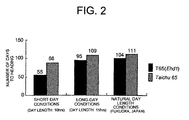
- each of these fragments was incorporated into a Ti-plasmid vector pPZP2H-lac, and introduced into Taichung 65 via Agrobacterium . Regenerated plants were immediately transferred into growth chambers and cultivated under short-day conditions to measure the number of days until their heading. Almost all of the transgenic plants (T 0 ) that were introduced with the 11.5 kb Bam HI fragment headed earlier than those with the vector alone. On the other hand, the number of days to heading in plants introduced with the 7.6 kb Kpn I fragment was about the same as for plants with the vector alone. Furthermore, transcription of the ARR-like Kasalath -derived candidate gene was observed in almost all of the plants introduced with the 11.5 kb Bam HI fragment. From these results the Ehd1 candidates could thus be narrowed down to the ARR-like candidate gene comprised in the 11.5 kb Bam HI fragment.
- Ehd1 gene can be utilized to promote plant flowering (heading), and that DNAs which elicit a reduced function of the Ehd1 gene can be used to delay plant flowering.
- the present invention relates to the Ehd1 gene, which promotes plant flowering (heading), and to utilization thereof. More specifically, the present invention provides the following:
- the present invention provides DNAs encoding plant-derived Ehd1 proteins comprising the function of promoting plant flowering.
- the plants from which DNAs encoding the Ehd1 protein are derived include, but are not limited to, rice, Arabidopsis thaliana, soybean, maize, barley, wheat and morning glory, for example.
- plants whose flowering is promoted on transforming the above-described DNA include useful crops and ornamental plants.
- useful crops include monocotyledons such as rice, and dicotyledons such as soybean.
- Ornamental plants include flowering plants such as chrysanthemum, morning glory, poinsettia, and cosmos.
- flowering usually means the blooming of flowers, but refers to heading in gramineous plants such as rice.
- promotion of flowering refers to accelerating flowering time, while delay of flowering refers to delaying flowering time.
- day-length (photoperiod) conditions under which the DNAs of this invention promoted the flowering of the above-described plants are, for example, natural day-length conditions, long-day conditions, short-day conditions, and so on.
- Short-day conditions are preferred.
- long-day conditions are conditions in which there are 14 or more daylight hours per day.
- the light period was set at 15 hours, while the dark period was set at nine hours; however, long-day conditions are not limited to this example.
- Short-day conditions are those conditions in which there are 11 or fewer daylight hours per day.
- the light period was set at ten hours and the dark period at 14 hours; however, short-day conditions are not limited to this example.
- examples of DNAs encoding Ehd1 proteins are those DNAs comprising the coding region of the nucleotide sequences set forth in SEQ ID NO: 1, 2, 4, 5, 7, or 8, and DNAs encoding proteins comprising the amino acid sequences set forth in SEQ ID NO: 3, 6, or 9.
- the present invention also comprises DNAs encoding proteins which are structurally analogous to an Ehd1 protein comprising an amino acid sequence set forth in SEQ ID NO: 3, 6, or 9, and comprising the function of promoting plant flowering. Whether or not a DNA encodes a protein that comprises the function of promoting plant flowering can be determined by, for example, observing whether or not the flowering of plants introduced with the DNA is promoted; or whether or not the flowering of plants is delayed when they are introduced with a DNA that suppresses the expression of the DNA.
- DNAs examples include mutants, derivatives, alleles, variants, and homologues that encode proteins comprising an amino acid sequence of SEQ ID NO: 3, 6, or 9, in which one or more of the amino acids are substituted, deleted, added, and/or inserted.
- Examples of methods for preparing DNAs that encode proteins comprising altered amino acid sequences are well known to those skilled in the art, and include site-directed mutagenesis (Kramer, W. and Fritz, H. -J., (1987) "Oligonucleotide-directed construction of mutagenesis via gapped duplex DNA.” Methods in Enzymology, 154: 350-367).
- a protein's amino acid sequence may also mutate naturally due to a nucleotide sequence mutation.
- DNAs encoding proteins comprising an amino acid sequence of an Ehd1 protein wherein one or more amino acids are substituted, deleted, added, and/or inserted are also included in the DNAs encoding Ehd1 proteins of the present invention, so long as they encode a protein functionally equivalent to a naturally occurring type of Ehd1 protein (SEQ ID NO.: 3, 6, or 9).
- nucleotide sequence mutations that do not give rise to changes in the amino acid sequence of the protein are also included in the DNAs encoding Ehd1 proteins of the present invention.
- DNAs encoding proteins functionally equivalent to Ehd1 proteins which comprise an amino acid sequence described in SEQ ID NO: 3, 6, or 9, can be produced, for example, by methods well known to those skilled in the art, including hybridization techniques (Southern, E.M. (1975) Journal of Molecular Biology 98: 503.); and polymerase chain reaction (PCR) techniques (Saiki, R. K. et al. (1985) Science 230: 1350-1354; Saiki, R. K. et al. (1988) Science 239: 487-491).
- hybridization techniques Southern, E.M. (1975) Journal of Molecular Biology 98: 503.
- PCR polymerase chain reaction
- DNAs with high homology to a DNA encoding Ehd1 protein from rice and other plants, using the genomic sequence of an Ehd1 region (SEQ ID NO: 1, 4, or 7), an Ehd1 cDNA sequence (SEQ ID NO: 2, 5, or 8) or parts thereof as a probe, and oligonucleotides hybridizing specifically to the genomic sequence of the Ehd1 region and the Ehd1 cDNA sequence as a primer.
- DNAs encoding proteins functionally equivalent to an Ehd1 protein are also included in the DNAs encoding Ehd1 proteins of this invention.
- Hybridization reactions to isolate such DNAs are preferably conducted under stringent conditions.
- Stringent hybridization conditions of the present invention include conditions such as 6 M urea, 0.4% SDS, and 0.5x SSC, and those conditions yielding similar stringencies to these.
- DNAs with higher homology are expected to be isolated when hybridization is performed under more stringent conditions, for example, 6 M urea, 0.4% SDS, and 0.1x SSC.
- high homology means identity over the entire amino acid sequence of at least 50% or above, more preferably 70% or above, much more preferably 90% or above, and most preferably 95% or above.
- the degree of homology of one amino acid sequence or nucleotide sequence to another can be determined using the BLAST algorithm by Karlin and Altschul (Proc. Natl. Acad. Sci. USA 87: 2264-2268, 1990; Proc. Natl. Acad. Sci. USA 90: 5873-5877, 1993).
- Programs such as BLASTN and BLASTX, developed based on the BLAST algorithm (Altschul et al. (1990) J. Mol. Biol. 215: 403-410), are also being used.
- word length 3.
- the default parameters for each program are used when using the BLAST and Gapped BLAST programs. Specific techniques for such analysis are known in the art (see http://www.ncbi.nlm.nih.gov .)
- Genomic DNAs of the present invention include genomic DNAs, cDNAs, and chemically synthesized DNAs.
- Genomic DNAs and cDNAs can be prepared according to conventional methods known to those skilled in the art. More specifically, genomic DNAs can be prepared, for example, by (1) extracting genomic DNAs from rice cultivars that comprise a DNA encoding an Ehd1 protein; (2) constructing a genomic library (utilizing a vector, such as a plasmid, phage, cosmid, BAC, PAC, and so on); (3) expanding the library; and (4) conducting colony hybridization or plaque hybridization using a probe prepared based on a DNA that encodes an Ehd1 protein of the present invention (e.g. SEQ ID NO.: 1, 2, 4, 5, 7, or 8).
- genomic DNAs can be prepared by PCR, using primers specific to a DNA encoding an Ehd1 protein of the present invention (e.g. SEQ ID NO.: 1, 2, 4, 5, 7, or 8).
- cDNAs can be prepared, for example, by (1) synthesizing cDNAs based on mRNAs extracted from rice cultivars that comprise a DNA encoding an Ehd1 protein; (2) preparing a cDNA library by inserting the synthesized cDNA into vectors, such as ⁇ ZAP; (3) expanding the cDNA library; and (4) conducting colony hybridization or plaque hybridization as described above.
- cDNAs can be also prepared by PCR.
- DNAs encoding an Ehd1 protein of the present invention can be used to promote plant flowering, for example.
- the above-described DNAs are inserted into appropriate vectors and introduced into plant cells using a method described below.
- Transgenic plants are regenerated from the transformed plant cells thus obtained.
- the present invention provides such methods for promoting plant flowering.
- the present invention also provides methods for delaying plant flowering.
- Transgenic plants with delayed flowering can be obtained, for example, by inserting a DNA which suppresses the expression of an Ehd1 protein-encoding DNA into an appropriate vector; transforming the DNA construct into a plant cell using a method described below; and regenerating a plant from the resulting transformed plant cell.
- the step of suppressing the expression of Ehd1 protein-encoding DNAs includes suppressing the transcription of these DNAs, as well as their translation into proteins. In addition, it includes not only complete halting of DNA expression but also its reduction. It also includes the loss of an in vivo function of the translated proteins in plant cells.
- Antisense techniques are the most commonly used methods in the art to suppress the expression of a specific endogenous gene in plants. Ecker et al. were the first to demonstrate the antisense effect of an antisense RNA introduced into plant cells by electroporation (J. R. Ecker and R. W. Davis (1986) Proc. Natl. Acad. Sci. USA 83: 5372). After that, expression of antisense RNAs reportedly reduced target gene expression in tobacco and petunias (A. R. van der Krol et al. (1988) Nature 333: 866). Antisense techniques have now been established as a means for suppressing target gene expression in plants.
- antisense nucleic acids suppress target gene expression by inhibiting various processes such as transcription, splicing, or translation (Hirashima and Inoue, "Shin Seikagaku Jikken Koza (New Biochemistry Experimentation Lectures) 2, Kakusan (Nucleic Acids) IV, Idenshi No Fukusei To Hatsugen (Replication and Expression of Genes),” Nihon Seikagakukai Hen (The Japanese Biochemical Society), Tokyo Kagaku Dozin, pp. 319-347, (1993)).
- the antisense sequences of the present invention can suppress target gene expression by any of the above mechanisms.
- an antisense sequence designed to be complementary to an untranslated region near the 5' end of the mRNA of a gene is thought to effectively inhibit translation of that gene.
- Sequences complementary to coding regions or to an untranslated region on the 3' side can also be used.
- the antisense DNAs used in the present invention include both DNAs comprising antisense sequences against untranslated regions and against translated regions of the gene.
- the antisense DNAs to be used are conjugated downstream of an appropriate promoter, and are preferably conjugated to sequences containing the transcription termination signal on the 3' side. DNAs thus prepared can be transformed into a desired plant by known methods.
- the sequences of the antisense DNAs are preferably sequences complementary to an endogenous gene of the plant to be transformed, or a part thereof, but need not be perfectly complementary so long as they can effectively suppress the gene's expression.
- the transcribed RNAs are preferably at least 90%, and more preferably at least 95% complementary to the transcribed product of the target gene.
- antisense DNAs should be at least 15 nucleotides long, more preferably at least 100 nucleotides long, and still more preferably at least 500 nucleotides long.
- the antisense DNAs to be used are generally shorter than 5 kb, and preferably shorter than 2.5 kb.
- DNAs encoding ribozymes can also be used to suppress the expression of endogenous genes.
- a ribozyme is an RNA molecule comprising catalytic activity. There are many ribozymes comprising various activities, and among them, research focusing on ribozymes as RNA-cleaving enzymes has enabled the design of ribozymes that cleave RNAs site-specifically.
- ribozymes of the group I intron type or the M1 RNA contained in RNaseP consist of 400 nucleotides or more
- others belonging to the hammerhead-type or the hairpin-type comprise an activity domain of about 40 nucleotides (Makoto Koizumi and Eiko Ohtsuka (1990) Tanpakushitsu Kakusan Kohso (Nucleic acid, Protein, and Enzyme) 35: 2191).
- the self-cleavage domain of a hammerhead-type ribozyme cleaves at the 3' side of C15 of the G13U14C15 sequence, and formation of a nucleotide pair between U14 and A9 at the ninth position is considered to be important for this ribozyme activity. It has been shown that cleavage may also occur when the 15th nucleotide is A15 or U15 instead of C15 (M. Koizumi et al. (1988) FEBS Lett. 228: 225).
- a ribozyme is designed to comprise a substrate-binding site complementary to the RNA sequences adjacent to the target site, one can create a restriction-enzyme-like RNA-cleaving ribozyme which recognizes the UC, UU, or UA sequence within a target RNA (M. Koizumi et al. (1988) FEBS Lett. 239: 285; M. Koizumi et al. (1989) Nucleic Acids Res. 17: 7059).
- DNAs that encode Edh1 proteins SEQ ID NO.: 2, 5, or 8
- there are a number of sites that can be used as ribozyme targets there are a number of sites that can be used as ribozyme targets.
- Hairpin-type ribozymes are also useful in the present invention. These ribozymes can be found, for example, in the minus strand of satellite RNA in tobacco ringspot virus (J. M. Buzayan (1986) Nature 323: 349). Ribozymes that cleave RNAs target-specifically have also been shown to be produced from hairpin-type ribozymes (Y. Kikuchi and N. Sasaki (1992) Nucleic Acids Res. 19: 6751; Yo Kikuchi (1992) Kagaku To Seibutsu (Chemistry and Biology) 30: 112).
- Transcription is enabled in plant cells by fusing a ribozyme, designed to cleave a target, with a promoter such as the cauliflower mosaic virus 35S promoter, and with a transcription termination sequence. If extra sequences have been added to the 5' end or the 3' end of the transcribed RNA, ribozyme activity can be lost. In such cases, one can place an additional trimming ribozyme, which functions in cis , on the 5' or the 3' side of the ribozyme portion, in order to precisely cut the ribozyme portion from the transcribed RNA containing the ribozyme (K. Taira et al. (1990) Protein Eng. 3: 733; A. M. Dzaianott and J.
- RNAi RNA interference
- Endogenous gene expression can also be suppressed by RNA interference (RNAi), using double-stranded RNAs that comprise a sequence identical or similar to a target gene.
- RNAi refers to the phenomenon in which a double-stranded RNA comprising a sequence identical or similar to a target gene sequence is introduced into cells, thereby suppressing expression of both the exogenous gene introduced and the target endogenous gene.
- the details of the RNAi mechanism are unclear, but it is thought that an introduced double-stranded RNA is first degraded into small pieces, which somehow serve as a target gene indicator, resulting in degradation of the target gene.
- RNAi is known to be effective in plants as well (Chuang CF, Meyerowitz EM, Proc Natl Acad Sci USA 97: 4985, 2000).
- Ehd1 protein-encoding DNAs SEQ ID: 2, 5, or 8
- double-stranded RNAs comprising a sequence similar to these DNAs
- RNAi RNAi sequence identity
- Sequence identity can be determined by an above-described method.
- Co-suppression refers to the phenomenon wherein transformation is used to introduce plants with a gene comprising a sequence identical or similar to a target endogenous gene sequence, thereby suppressing expression of both the exogenous gene introduced and the target endogenous gene. Although the details of the co-suppression mechanism are unclear, at least a part is thought to overlap with the RNAi mechanism. Co-suppression is also observed in plants (Smyth DR, Curr. Biol. 7: R793, 1997; Martienssen R Curr. Biol. 6: 810, 1996).
- the plant in question can be transformed with a vector DNA designed to express the DNA encoding the Ehd1 protein, or a DNA comprising a similar sequence. Plants whose flowering is delayed compared to a wild-type plant are then selected from the resultant plants.
- Genes for use in co-suppression do not need to be completely identical to a target gene, but should comprise sequence identity of at least 70% or above, preferably 80% or above, more preferably 90% or above, and most preferably 95% or above. Sequence identity may be determined by an above-described method.
- the present invention provides methods for producing transgenic plants, wherein said methods comprise the steps of introducing a DNA of the present invention into plant cells, and regenerating plants from these cells.
- cells can be derived from any plant, without limitation.
- Vectors used for the transformation of plant cells are not limited as long as they can express the inserted gene in the plant cells.
- Vectors that can be used include, for example, vectors comprising promoters (e.g., cauliflower mosaic virus 35S promoter) for constitutive gene expression in plant cells, and vectors comprising promoters that are inducibly activated by external stimuli.
- the term "plant cell” as used herein includes various forms of plant cells, such as culture cell suspensions, protoplasts, leaf sections, and calluses.
- a vector can be introduced into plant cells by known methods, such as by using polyethylene glycol, electroporation, Agrobacterium -mediated transfer, and particle bombardment.
- Agrobacterium (for example, EHA101) mediated transfer can be carried out by, for example, the ultraspeed transformation of monocotyledon (Japanese Patent No.3141084).
- Particle bombardment can be carried out by, for example, using equipment available from Bio-Rad. Plants can be regenerated from transformed plant cells by known methods and according to the type of the plant cell (see Toki et al., (1995) Plant Physiol. 100:1503-1507).
- methods for producing a transformed rice plant include: (1) introducing genes into protoplasts using polyethylene glycol, then regenerating the plant (suitable for indica rice cultivars) (Datta,S.K. (1995) in "Gene Transfer To Plants", Potrykus I and Spangenberg Eds., pp66-74); (2) introducing genes into protoplasts using electric pulses, then regenerating the plant (suitable for japonica rice cultivars)(Toki et al. (1992) Plant Physiol. 100: 1503-1507); (3) introducing genes directly into cells by particle bombardment, then regenerating the plant (Christou et al.
- progenies can be derived from that plant by sexual or vegetative propagation.
- plants can be mass-produced from breeding materials obtained from the plant (for example, from seeds, fruits, ears, tubers, tubercles, tubs, calluses, protoplasts, etc.), as well as from progenies or clones thereof.
- the Ehd1 locus is a QTL associated with heading time and detected using the progeny of a cross between japonica rice cultivar " Taichung 65 " and West African region rice cultivar O . glaberrima Steud. (IRGC 104038).
- the Ehd1 locus has been proved to be located on the long arm of chromosome 10 (Doi et al., Breeding Science 49: 395-399, 1999) (Fig. 1).
- the Ehd1 gene of O . glaberrima (IRGC 104038) has been shown to comprise a heading-promoting action, and acts dominantly over the allele of Taichung 65 .
- a generation of progenies derived from backcrossing Taichung 65 and IRGC 104038 was used as the segregating population for linkage analysis. From these backcrossed progeny, plants were selected whose Ehd1 region was heterologous, and whose other genomic regions were mostly substituted with Taichung 65 type genome. These selected plants underwent self-fertilization, producing 2500 progeny plants (the F2 population).
- Those plants that comprise a chromosome with a recombination near the Ehd1 locus were selected using Ehd1-flanking CAPS (Cleaved Amplified Polymorphic Sequence) markers C1286 (primers [SEQ ID NO: 13/5'-CCAATGAAGGGTAAGTATCG-3'] and [SEQ ID NO: 14/5'-TGTGCTTAAGATACACGGTAGTTCA-3'], restriction enzyme Nru I) ; and G37 (primers [SEQ ID NO: 15/5'-CTGCAGCTTCCACCATGGCA-3'] and [SEQ ID NO: 16/5'-CAAGGGTGCATTCATTGCACCTCCTCTAGCCATGGCCTAATGATGCA-3'], restriction enzyme Eco T22I).
- the genotype of the Ehd1 locus was determined by a progeny test of the F3 generation. That is, 48 inbred progeny plants from the selected plants (F2) were cultivated in an experimental farm at Kyushu University to determine their Ehd1 genotype based on variations in the number of days until the heading of each line.
- the linkage analysis results located the Ehd1 locus between RFLP markers C814A and C234, identifying eight and two recombinant individuals between Ehd1 and these markers respectively (Fig. 3).
- nucleotide sequences of the RFLP markers flanking the Ehd1 gene were found to be comprised in published genomic nucleotide sequences, such that the nucleotide sequence of Ehd1 candidate genomic region was obtained from published nucleotide sequence data (GenBank Accession No. AC027038). Using information on the nucleotide sequences of this candidate genomic region, novel CAPS markers were prepared for narrowing down the candidate genomic region.
- Ehd1 was found to have two recombinations with CAPS marker 26-28 (primers [SEQ ID NO: 17/5'-ACGCTGCAACAAAGAGCAGA-3'] and [SEQ ID NO: 18/5'-TTGTTGACGAAAGCCCATTG-3'], restriction enzyme Msp I); and one recombination with 12-14 (primers [SEQ ID NO: 19/5'-GGAGATCATGCTCACGGATG-3'] and [SEQ ID NO: 20/5'-CAAGCAAACACGGAGCGACT-3'], restriction enzyme Bam HI).
- the Ehd1 gene was co-segregated with CAPS markers 13-15 (primers [SEQ ID NO: 21/5'-CCTTGCATCCGTCTTGATTG-3'] and [SEQ ID NO: 22/5'-GGGCAAATTCCCTCCAGAGT-3'], restriction enzyme Msp I); 19-21 (primers [SEQ ID NO: 23/5'-TTTGGATACGTACCCCTGCAT-3'] and [SEQ ID NO: 24/5'-GCGCAATCGCATACACAATAA-3'], restriction enzyme Msp I); and 23-25 (primers [SEQ ID NO: 25/5'-GAGCCCGAGCCCATGTATAG-3'] and [SEQ ID NO: 26/5'-TGGCTAAGATGGAGGGACGA-3'], restriction enzyme Mbo I).
- the Ehd1 candidate region was narrowed down to a region of about 16 kb, flanked by CAPS markers 26-28 and 12-14.
- Gene predictions and similarity searches carried out against the nucleotide sequence of this candidate region using GENSCAN proved the presence of three types of predicted genes.
- One type showed similarity to the two-component response regulator ( ARR ) gene of Arabidopsis.
- ARR two-component response regulator
- the other two types showed high similarity to rice EST, but no resemblance to known genes whose functions had been established.
- transformation of these three types of predicted genes was used to verify function as Ehd1 candidates.
- the expression of the Kasalath -derived ARR-like candidate gene in plants introduced with the 11.5 kb Bam HI fragment was also confirmed by RT-PCR using a gene-specific marker (primers [SEQ ID NO: 29/5'-GAGATCAACGGCCACCGAAG-3'] and [SEQ ID NO: 30/5'-GTCGAGAGCGGTGGATGACA-3'], restriction enzyme Dde I). Transcription of the Kasalath -derived ARR-like candidate gene was observed in almost all of the plants (Fig. 5). Thus, the Ehd1 candidate could be narrowed down to the ARR-like candidate gene contained in the 11.5 kb Bam HI fragment.
- the ARR-like candidate gene was shown to comprise heading-promotion function under short-day conditions, and to be the Ehd1 gene.
- Progeny population Number of days to heading (days) Total 41-45 46-50 51-55 56-60 61-65 66-70 71-75 76-80 >81 Population 1 4 21 2 - - - - 5 32 Population 2 - 1 7 - 7 4 - - 8 27 Population 3 - 2 17 - 1 - - - 5 25 Taichung 65 - - - - - - - - 5 5 T65 (Ehd1) - 1 2 - - - - - - - 3
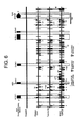
- the full-length cDNA of IRGC 104038 was also determined, and as a result of comparing the genomic nucleotide sequences, Ehd1 was predicted to comprise six exons, with a full-length transcriptional region of 1316 bp and encoding a protein comprising 341 amino acids (Fig. 7).
- the genomic nucleotide sequences of the Ehd1 regions of O . glaberrima (IRGC 104038), Kasalath, Nipponbare, and Taichung 65 are set forth in SEQ ID NOs: 1, 4, 7, and 10 respectively; the nucleotide sequences of cDNAs thereof are set out in SEQ ID NOs: 2, 5, 8, and 11 respectively; and the amino acid sequences of the proteins encoded by these DNAs are set out in SEQ ID NOs: 3, 6, 9, and 12, respectively.
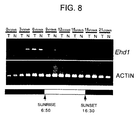
- T65 ( Ehd1 ) Variations of the Ehd1 gene expression level over a one-day period were examined for T65 ( Ehd1 ) in which the Ehd1 region of Taichung 65 had been substituted with a chromosomal fragment derived from IRGC 104038.
- T65 ( Ehd1 ) and Taichung 65 were sowed in experimental greenhouses (at Tsukuba City, Ibaraki Prefecture) during the last ten days of December (sunrise: 6:50AM, sunset: 4: 30PM; short-day conditions), cultivated for four weeks, and then the leaves were collected from both rice lines every three hours over 24 hours for analysis.
- sense strand [SEQ ID NO: 31/5'-TGGATCACCGAGAGCTGTGG-3']
- antisense strand SEQ ID NO: 32/5'-ATTTCCTTGCATCCGTCTTG-3'
- flowering (heading) time has been altered by (1) selection of early-maturing and late-maturing varieties by crossing, (2) mutagenesis by radiation and chemicals, and so on.
- these procedures posed problems such as the requirement of long periods of time for successful breeding, and the inability to control the degree or direction of variation.
- the present invention has enabled the establishment of a novel method for modifying plant flowering time by utilizing the isolated Ehd1 gene. Therefore, by transforming a sense strand of Ehd1 gene into a plant cultivar in which the function of this gene has been lost, for example, into Taichung 65 rice, rice heading (flowering) can be promoted under short-day conditions.
- the Ehd1 gene in the antisense direction into a plant cultivar in which the function of the Ehd1 gene is retained, for example, into Nipponbare or Kasalath rice, expression of the endogenous Ehd1 gene can be suppressed to delay heading (flowering). Since this alteration can be expected to occur not only under short-day conditions but also under long-day or natural day-length conditions, the present invention is effective in controlling heading time (flowering time) under various cultivation conditions. Since the period of time required for transformation is extremely short compared to that required for gene transfer by crossing, flowering time can be modified without altering other characteristics.
- the use of the isolated Ehd1 gene to promote flowering is expected to be useful in simple alteration of the flowering time of plants such as rice, and to contribute to the breeding of plants adapted to different locations.
Landscapes
- Health & Medical Sciences (AREA)
- Life Sciences & Earth Sciences (AREA)
- Genetics & Genomics (AREA)
- Chemical & Material Sciences (AREA)
- Organic Chemistry (AREA)
- Engineering & Computer Science (AREA)
- Molecular Biology (AREA)
- Biomedical Technology (AREA)
- Zoology (AREA)
- Biophysics (AREA)
- Biotechnology (AREA)
- General Engineering & Computer Science (AREA)
- Biochemistry (AREA)
- Bioinformatics & Cheminformatics (AREA)
- General Health & Medical Sciences (AREA)
- Wood Science & Technology (AREA)
- Physics & Mathematics (AREA)
- Microbiology (AREA)
- Plant Pathology (AREA)
- Cell Biology (AREA)
- Physiology (AREA)
- Botany (AREA)
- Gastroenterology & Hepatology (AREA)
- Medicinal Chemistry (AREA)
- Proteomics, Peptides & Aminoacids (AREA)
- Breeding Of Plants And Reproduction By Means Of Culturing (AREA)
- Micro-Organisms Or Cultivation Processes Thereof (AREA)
Applications Claiming Priority (3)
| Application Number | Priority Date | Filing Date | Title |
|---|---|---|---|
| JP2002153807 | 2002-05-28 | ||
| JP2002153807A JP3911202B2 (ja) | 2002-05-28 | 2002-05-28 | 植物の開花時期を促進するEhd1遺伝子およびその利用 |
| PCT/JP2003/006273 WO2003100062A1 (en) | 2002-05-28 | 2003-05-20 | Ehd1 GENE PROMOTING PLANT FLOEWERING AND UTILIZATION THEREOF |
Publications (2)
| Publication Number | Publication Date |
|---|---|
| EP1514935A1 true EP1514935A1 (de) | 2005-03-16 |
| EP1514935A4 EP1514935A4 (de) | 2007-05-30 |
Family
ID=29561323
Family Applications (1)
| Application Number | Title | Priority Date | Filing Date |
|---|---|---|---|
| EP03733019A Withdrawn EP1514935A4 (de) | 2002-05-28 | 2003-05-20 | DIE PFLANZENBLÜTE FÖRDERNDES GEN Ehd1 UND SEINE NUTZUNG |
Country Status (6)
| Country | Link |
|---|---|
| US (1) | US7361805B2 (de) |
| EP (1) | EP1514935A4 (de) |
| JP (1) | JP3911202B2 (de) |
| AU (1) | AU2003242341B2 (de) |
| CA (1) | CA2487290C (de) |
| WO (1) | WO2003100062A1 (de) |
Cited By (1)
| Publication number | Priority date | Publication date | Assignee | Title |
|---|---|---|---|---|
| CN108841855A (zh) * | 2018-06-12 | 2018-11-20 | 福建省农业科学院生物技术研究所 | 一种编辑水稻Ehd1基因培育长生育期粳稻品种的方法 |
Families Citing this family (6)
| Publication number | Priority date | Publication date | Assignee | Title |
|---|---|---|---|---|
| JP3660966B2 (ja) | 1999-11-02 | 2005-06-15 | 独立行政法人農業生物資源研究所 | 植物の感光性遺伝子およびその利用 |
| CA2389921A1 (en) | 1999-11-04 | 2001-05-10 | National Institute Of Agrobiological Sciences | Plant photoperiod sensitivity gene hd1 and use of the same |
| JP5791049B2 (ja) | 2009-12-24 | 2015-10-07 | 国立研究開発法人農業生物資源研究所 | 植物の深根性を制御する遺伝子Dro1とその利用 |
| JP7074326B2 (ja) * | 2018-04-06 | 2022-05-24 | 国立大学法人東海国立大学機構 | 植物形質調節剤 |
| CN114600765B (zh) * | 2022-03-21 | 2022-11-25 | 江苏丘陵地区镇江农业科学研究所 | 一种弱感光粳稻种质的创制方法 |
| CN118638812B (zh) * | 2024-07-09 | 2026-02-06 | 广西壮族自治区农业科学院 | 一种提早水稻开花的核酸分子dr340及其应用 |
Family Cites Families (8)
| Publication number | Priority date | Publication date | Assignee | Title |
|---|---|---|---|---|
| US6225530B1 (en) * | 1998-04-15 | 2001-05-01 | The Salk Institute For Biological Studies | Flowering locus T (FT) and genetically modified plants having modulated flower development |
| US6359198B1 (en) * | 1999-01-12 | 2002-03-19 | Genesis Research & Development Corporation Ltd. | Compositions isolated from plant cells and their use in the modification |
| JP3660966B2 (ja) | 1999-11-02 | 2005-06-15 | 独立行政法人農業生物資源研究所 | 植物の感光性遺伝子およびその利用 |
| CA2389921A1 (en) | 1999-11-04 | 2001-05-10 | National Institute Of Agrobiological Sciences | Plant photoperiod sensitivity gene hd1 and use of the same |
| JP2002153283A (ja) | 2000-11-24 | 2002-05-28 | National Institute Of Agrobiological Sciences | 植物の開花を誘導する遺伝子Hd3aおよびその利用 |
| AR037699A1 (es) * | 2001-12-04 | 2004-12-01 | Monsanto Technology Llc | Maiz transgenico con fenotipo mejorado |
| JP3823137B2 (ja) | 2002-08-30 | 2006-09-20 | 独立行政法人農業生物資源研究所 | 植物の開花促進遺伝子rft1および植物の開花時期を予測する方法 |
| JP4504049B2 (ja) | 2003-03-10 | 2010-07-14 | 独立行政法人農業生物資源研究所 | 植物の開花を制御する遺伝子Lhd4とその利用 |
-
2002
- 2002-05-28 JP JP2002153807A patent/JP3911202B2/ja not_active Expired - Fee Related
-
2003
- 2003-05-20 AU AU2003242341A patent/AU2003242341B2/en not_active Ceased
- 2003-05-20 CA CA2487290A patent/CA2487290C/en not_active Expired - Fee Related
- 2003-05-20 EP EP03733019A patent/EP1514935A4/de not_active Withdrawn
- 2003-05-20 WO PCT/JP2003/006273 patent/WO2003100062A1/ja not_active Ceased
- 2003-05-20 US US10/515,481 patent/US7361805B2/en not_active Expired - Fee Related
Non-Patent Citations (6)
| Title |
|---|
| DATABASE EMBL [Online] 27 March 2000 (2000-03-27), "Oryza sativa chromosome 10 BAC OSJNBa0071K18 genomic sequence, complete sequence." XP002428804 retrieved from EBI accession no. EMBL:AC027038 Database accession no. AC027038 * |
| DOI KAZUYUKI ET AL: "Ehd1, a B-type response regulator in rice, confers short-day promotion of flowering and controls FT-Iike gene expression independently of Hd1l" GENES & DEVELOPMENT, vol. 18, no. 8, 15 April 2004 (2004-04-15), pages 926-936, XP002428662 ISSN: 0890-9369 * |
| NISHIDA HIDETAKA ET AL: "Analysis of tester lines for rice (Oryza sativa L.) heading-time genes using reciprocal photoperiodic transfer treatments" ANNALS OF BOTANY (LONDON), vol. 88, no. 4, October 2001 (2001-10), pages 527-536, XP002428661 ISSN: 0305-7364 * |
| See also references of WO03100062A1 * |
| YANO M ET AL: "Genetic control of flowering time in rice, a Short-day plant" PLANT PHYSIOLOGY, AMERICAN SOCIETY OF PLANT PHYSIOLOGISTS, ROCKVILLE, MD, US, vol. 127, 2001, pages 1425-1429, XP002904474 ISSN: 0032-0889 * |
| YANO M ET AL: "HD1, A MAJOR PHOTOPERIOD SENTIVITY QUANTITATIVE TRAIT LOCUS IN RICE, IS CLOSELY RELATED TO THE ARABIDOPSIS FLOWERING TIME GENE CONSTANS" PLANT CELL, AMERICAN SOCIETY OF PLANT PHYSIOLOGISTS, ROCKVILLE, MD, US, vol. 12, December 2000 (2000-12), pages 2473-2483, XP002941717 ISSN: 1040-4651 * |
Cited By (1)
| Publication number | Priority date | Publication date | Assignee | Title |
|---|---|---|---|---|
| CN108841855A (zh) * | 2018-06-12 | 2018-11-20 | 福建省农业科学院生物技术研究所 | 一种编辑水稻Ehd1基因培育长生育期粳稻品种的方法 |
Also Published As
| Publication number | Publication date |
|---|---|
| JP3911202B2 (ja) | 2007-05-09 |
| WO2003100062A1 (en) | 2003-12-04 |
| CA2487290C (en) | 2010-07-20 |
| CA2487290A1 (en) | 2003-12-04 |
| US20050257292A1 (en) | 2005-11-17 |
| AU2003242341A1 (en) | 2003-12-12 |
| EP1514935A4 (de) | 2007-05-30 |
| US7361805B2 (en) | 2008-04-22 |
| JP2003339382A (ja) | 2003-12-02 |
| AU2003242341B2 (en) | 2007-01-25 |
Similar Documents
| Publication | Publication Date | Title |
|---|---|---|
| Sorefan et al. | MAX4 and RMS1 are orthologous dioxygenase-like genes that regulate shoot branching in Arabidopsis and pea | |
| Schomburg et al. | FPA, a gene involved in floral induction in Arabidopsis, encodes a protein containing RNA-recognition motifs | |
| EP1342785B1 (de) | Das pflanzenblüte-induzierende gen hd3a und seine nutzung | |
| US7253339B1 (en) | Plant photoperiod sensitivity gene Hd1 and use of the same | |
| KR20040019016A (ko) | 식물의 반왜성화에 관여하는 sd1 유전자 및 그의 이용 | |
| JPWO2001032881A1 (ja) | 植物の感光性遺伝子Hd1およびその利用 | |
| WO2019129145A1 (en) | Flowering time-regulating gene cmp1 and related constructs and applications thereof | |
| US7361805B2 (en) | Ehd1 gene promoting plant flowering, and utilization thereof | |
| Morimoto et al. | Intragenic diversity and functional conservation of the three homoeologous loci of the KN1-type homeobox gene Wknox1 in common wheat | |
| JP4165881B2 (ja) | フィトクロムcの発現制御による植物の開花時期の調節 | |
| US6501007B1 (en) | Method of dwarfing plants | |
| US7038110B1 (en) | Photosensitivity gene of plant and utilization thereof | |
| JPWO2001032880A1 (ja) | 植物の感光性遺伝子およびその利用 | |
| EP1055729A1 (de) | Transgene pflanzen, die eine veränderte erblühzeit zeigen | |
| JP3823137B2 (ja) | 植物の開花促進遺伝子rft1および植物の開花時期を予測する方法 | |
| US20030079252A1 (en) | Floral induction gene |
Legal Events
| Date | Code | Title | Description |
|---|---|---|---|
| PUAI | Public reference made under article 153(3) epc to a published international application that has entered the european phase |
Free format text: ORIGINAL CODE: 0009012 |
|
| 17P | Request for examination filed |
Effective date: 20041228 |
|
| AK | Designated contracting states |
Kind code of ref document: A1 Designated state(s): CH DE FR GB IT LI NL |
|
| A4 | Supplementary search report drawn up and despatched |
Effective date: 20070427 |
|
| 17Q | First examination report despatched |
Effective date: 20090206 |
|
| STAA | Information on the status of an ep patent application or granted ep patent |
Free format text: STATUS: THE APPLICATION IS DEEMED TO BE WITHDRAWN |
|
| 18D | Application deemed to be withdrawn |
Effective date: 20111201 |