EP1515520B1 - Construction de réseaux superposés prenant en compte la notion de localité et fondée sur des mesures - Google Patents
Construction de réseaux superposés prenant en compte la notion de localité et fondée sur des mesures Download PDFInfo
- Publication number
- EP1515520B1 EP1515520B1 EP04020324A EP04020324A EP1515520B1 EP 1515520 B1 EP1515520 B1 EP 1515520B1 EP 04020324 A EP04020324 A EP 04020324A EP 04020324 A EP04020324 A EP 04020324A EP 1515520 B1 EP1515520 B1 EP 1515520B1
- Authority
- EP
- European Patent Office
- Prior art keywords
- peer
- peer group
- network
- transport network
- group
- Prior art date
- Legal status (The legal status is an assumption and is not a legal conclusion. Google has not performed a legal analysis and makes no representation as to the accuracy of the status listed.)
- Expired - Lifetime
Links
- 238000010276 construction Methods 0.000 title description 2
- 238000005259 measurement Methods 0.000 title description 2
- 238000000034 method Methods 0.000 claims description 36
- 238000004891 communication Methods 0.000 claims description 15
- 238000012423 maintenance Methods 0.000 claims description 10
- 238000012360 testing method Methods 0.000 claims description 10
- 235000008694 Humulus lupulus Nutrition 0.000 claims description 5
- 230000032258 transport Effects 0.000 description 108
- 238000010586 diagram Methods 0.000 description 9
- 238000012545 processing Methods 0.000 description 6
- 230000008901 benefit Effects 0.000 description 5
- 230000006855 networking Effects 0.000 description 5
- 230000003287 optical effect Effects 0.000 description 2
- 235000014594 pastries Nutrition 0.000 description 2
- 230000008569 process Effects 0.000 description 2
- 230000009056 active transport Effects 0.000 description 1
- 230000001934 delay Effects 0.000 description 1
- 230000001419 dependent effect Effects 0.000 description 1
- 238000013461 design Methods 0.000 description 1
- 238000005516 engineering process Methods 0.000 description 1
- 230000006872 improvement Effects 0.000 description 1
- 230000002452 interceptive effect Effects 0.000 description 1
- 230000007246 mechanism Effects 0.000 description 1
- 230000005055 memory storage Effects 0.000 description 1
- 238000012986 modification Methods 0.000 description 1
- 230000004048 modification Effects 0.000 description 1
- 238000005192 partition Methods 0.000 description 1
- 238000012552 review Methods 0.000 description 1
- 230000007723 transport mechanism Effects 0.000 description 1
Images





Classifications
-
- H—ELECTRICITY
- H04—ELECTRIC COMMUNICATION TECHNIQUE
- H04L—TRANSMISSION OF DIGITAL INFORMATION, e.g. TELEGRAPHIC COMMUNICATION
- H04L67/00—Network arrangements or protocols for supporting network services or applications
- H04L67/01—Protocols
- H04L67/10—Protocols in which an application is distributed across nodes in the network
- H04L67/104—Peer-to-peer [P2P] networks
-
- H—ELECTRICITY
- H04—ELECTRIC COMMUNICATION TECHNIQUE
- H04L—TRANSMISSION OF DIGITAL INFORMATION, e.g. TELEGRAPHIC COMMUNICATION
- H04L12/00—Data switching networks
- H04L12/28—Data switching networks characterised by path configuration, e.g. LAN [Local Area Networks] or WAN [Wide Area Networks]
-
- H—ELECTRICITY
- H04—ELECTRIC COMMUNICATION TECHNIQUE
- H04L—TRANSMISSION OF DIGITAL INFORMATION, e.g. TELEGRAPHIC COMMUNICATION
- H04L41/00—Arrangements for maintenance, administration or management of data switching networks, e.g. of packet switching networks
- H04L41/08—Configuration management of networks or network elements
- H04L41/0893—Assignment of logical groups to network elements
-
- H—ELECTRICITY
- H04—ELECTRIC COMMUNICATION TECHNIQUE
- H04L—TRANSMISSION OF DIGITAL INFORMATION, e.g. TELEGRAPHIC COMMUNICATION
- H04L43/00—Arrangements for monitoring or testing data switching networks
-
- H—ELECTRICITY
- H04—ELECTRIC COMMUNICATION TECHNIQUE
- H04L—TRANSMISSION OF DIGITAL INFORMATION, e.g. TELEGRAPHIC COMMUNICATION
- H04L43/00—Arrangements for monitoring or testing data switching networks
- H04L43/50—Testing arrangements
-
- H—ELECTRICITY
- H04—ELECTRIC COMMUNICATION TECHNIQUE
- H04L—TRANSMISSION OF DIGITAL INFORMATION, e.g. TELEGRAPHIC COMMUNICATION
- H04L45/00—Routing or path finding of packets in data switching networks
- H04L45/02—Topology update or discovery
- H04L45/04—Interdomain routing, e.g. hierarchical routing
-
- H—ELECTRICITY
- H04—ELECTRIC COMMUNICATION TECHNIQUE
- H04L—TRANSMISSION OF DIGITAL INFORMATION, e.g. TELEGRAPHIC COMMUNICATION
- H04L45/00—Routing or path finding of packets in data switching networks
- H04L45/12—Shortest path evaluation
- H04L45/121—Shortest path evaluation by minimising delays
-
- H—ELECTRICITY
- H04—ELECTRIC COMMUNICATION TECHNIQUE
- H04L—TRANSMISSION OF DIGITAL INFORMATION, e.g. TELEGRAPHIC COMMUNICATION
- H04L45/00—Routing or path finding of packets in data switching networks
- H04L45/12—Shortest path evaluation
- H04L45/122—Shortest path evaluation by minimising distances, e.g. by selecting a route with minimum of number of hops
-
- H—ELECTRICITY
- H04—ELECTRIC COMMUNICATION TECHNIQUE
- H04L—TRANSMISSION OF DIGITAL INFORMATION, e.g. TELEGRAPHIC COMMUNICATION
- H04L45/00—Routing or path finding of packets in data switching networks
- H04L45/46—Cluster building
-
- H—ELECTRICITY
- H04—ELECTRIC COMMUNICATION TECHNIQUE
- H04L—TRANSMISSION OF DIGITAL INFORMATION, e.g. TELEGRAPHIC COMMUNICATION
- H04L67/00—Network arrangements or protocols for supporting network services or applications
- H04L67/01—Protocols
- H04L67/10—Protocols in which an application is distributed across nodes in the network
- H04L67/104—Peer-to-peer [P2P] networks
- H04L67/1059—Inter-group management mechanisms, e.g. splitting, merging or interconnection of groups
-
- H—ELECTRICITY
- H04—ELECTRIC COMMUNICATION TECHNIQUE
- H04L—TRANSMISSION OF DIGITAL INFORMATION, e.g. TELEGRAPHIC COMMUNICATION
- H04L67/00—Network arrangements or protocols for supporting network services or applications
- H04L67/01—Protocols
- H04L67/10—Protocols in which an application is distributed across nodes in the network
- H04L67/104—Peer-to-peer [P2P] networks
- H04L67/1061—Peer-to-peer [P2P] networks using node-based peer discovery mechanisms
- H04L67/1072—Discovery involving ranked list compilation of candidate peers
-
- H—ELECTRICITY
- H04—ELECTRIC COMMUNICATION TECHNIQUE
- H04L—TRANSMISSION OF DIGITAL INFORMATION, e.g. TELEGRAPHIC COMMUNICATION
- H04L69/00—Network arrangements, protocols or services independent of the application payload and not provided for in the other groups of this subclass
- H04L69/30—Definitions, standards or architectural aspects of layered protocol stacks
- H04L69/32—Architecture of open systems interconnection [OSI] 7-layer type protocol stacks, e.g. the interfaces between the data link level and the physical level
- H04L69/322—Intralayer communication protocols among peer entities or protocol data unit [PDU] definitions
- H04L69/329—Intralayer communication protocols among peer entities or protocol data unit [PDU] definitions in the application layer [OSI layer 7]
-
- H—ELECTRICITY
- H04—ELECTRIC COMMUNICATION TECHNIQUE
- H04L—TRANSMISSION OF DIGITAL INFORMATION, e.g. TELEGRAPHIC COMMUNICATION
- H04L67/00—Network arrangements or protocols for supporting network services or applications
- H04L67/01—Protocols
- H04L67/10—Protocols in which an application is distributed across nodes in the network
- H04L67/104—Peer-to-peer [P2P] networks
- H04L67/1044—Group management mechanisms
- H04L67/1046—Joining mechanisms
Definitions
- This invention pertains generally to computer networks and, more particularly, to computer networks capable of supporting one or more overlay networks.
- a basic service typically provided by a modem computer network is the ability for each computer in the network to establish a communication connection with any other computer in the network. Particularly in large computer networks, it is common for this service to be provided by sophisticated routing rather than, for example, brute each-to-each (NxN) connectivity.
- NxN brute each-to-each
- a client-server architecture may have a centralized server component and a number of client components, located throughout the transport network, that establish more or less temporary communication connections with the server as required.
- P2P peer-to-peer
- Peer-to-peer architectures typically avoid centralized elements, instead relying on peers with roughly equivalent functionality to provide the backbone of the application. The benefits of such decentralization may include avoiding single points of failure and vulnerability to attack, as well as good theoretical scalability.
- a problem with constructing the overlay network of a peer-to-peer architecture independently of the transport network is that peers that are neighbors in the overlay network may be far from each other in the underlying transport network and so, for example, may experience long delays when communicating with each other. This discord between the overlay network and the transport network is not wholly undesirable because, for example, it may enable the overlay network, and thus an application utilizing it, to tolerate failures in the transport network.
- many applications that desire the advantages of overlay networks, particularly those with high quality of service (QoS) requirements would benefit from a system and method for constructing overlay networks that make efficient use of the underlying transport network.
- CAN Content Addressable Network
- Each CAN node maintains a coordinate routing table that holds the IP address and virtual coordinates of each of its immediate neighbors in the coordinates base.
- the entire CAN coordinate space which is designed as a virtual d-dimensional Cartesian coordinate space based on a d-torus, is divided amongst the nodes currently in the system.
- topologically sensitive construction of the CAN overlay network is described.
- the described scheme assumes the existence of a well-known set of machines (for example, the DNS route name service) that act as landmarks on the internet
- a form of "distributed binning" of CAN nodes based on their relative distances from the set of landmarks is achieved. Every CAN node measures its round-trip-time (RTT) to each of these landmarks and orders the landmarks in order of increasing RTT.
- RTT round-trip-time
- the coordinate space is partitioned into m! equal sized portions, each corresponding to a single such ordering.
- a new node joins the CAN at a random point in that portion of the coordinate space associated with its landmark ordering.
- the rationale behind this scheme is that topologically close nodes are likely to have the same ordering and consequently will reside in the same portion of the coordinates space and hence neighbors in the coordinates space are likely to be topologically close on the internet.
- overlay network peers are grouped so that each peer in a peer group has a similar transport network proximity measure with respect to the peers in other peer groups.
- a first set of transport network distances may include transport network distances between an overlay network peer group and peer group neighbors of the overlay network peer group.
- a second set of transport network distances may include transport network distances between a peer and the peer group neighbors of the overlay network peer group.
- the peer decides to join the overlay network peer group if the first set of transport network distances is near to the second set of transport network distances.
- a join locality-aware overlay module is configured to determine if the first set of transport network distances is near to the second set of transport network distances.
- a first overlay network peer group queries a second overlay network peer group for the second peer group's neighboring peer groups.
- Each overlay network peer group has at least one neighboring peer group unless it is the first peer group in an overlay network.
- the transport network distance between the first overlay network peer group and each of the second peer group's neighbors is measured.
- At least one overlay network connection is established between the first overlay network peer group and the closest of the second peer group's neighbors.
- FIG. 1 is a schematic diagram illustrating computers connected by a transport network.
- FIG. 2 is a schematic diagram generally illustrating an example computer system usable to implement an embodiment of the invention
- FIG. 3 is a schematic diagram of an example overlay network constructed independently of its underlying transport network
- FIG. 4 is a schematic diagram of the example overlay network of FIG. 3 in which the illustrated distances between the peers are representative of the transport network distances between the peers;
- FIG. 5 is a schematic diagram of an example locality-aware overlay network in accordance with an embodiment of the invention.
- FIG. 6 is a block diagram of an example modular software architecture suitable for implementing a locality-aware peer in accordance with an embodiment of the invention
- FIG. 7 is a schematic diagram of peer group network aspects of an example locality-aware overlay network in accordance with an embodiment of the invention.
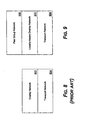
- FIG. 8 is a schematic diagram of network layers associated with a conventional overlay network
- FIG. 9 is a schematic diagram of network layers associated with a locality-aware overlay network in accordance with an embodiment of the invention.
- FIG. 10 is a flowchart depicting example steps performed by a locality-aware peer when joining a locality-aware overlay network in accordance with an embodiment of the invention.
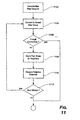
- FIG. 11 is a flowchart depicting example steps performed by a locality-aware peer when establishing a new peer group in a locality-aware overlay network in accordance with an embodiment of the invention.
- program As used herein may connote a single program module or multiple program modules acting in concert.
- computer and “computing device” as used herein include any device that electronically executes one or more programs, such as personal computers (PCs), hand-held devices, multi-processor systems, microprocessor-based programmable consumer electronics, network PCs, minicomputers, tablet PCs, laptop computers, consumer appliances having a microprocessor or microcontroller, routers, gateways, hubs and the like.
- PCs personal computers
- the invention may also be employed in distributed computing environments, where tasks are performed by remote processing devices that are linked through a communications network.
- programs may be located in both local and remote memory storage devices.
- the example computer networking environment 100 includes several computers 102 communicating with one another over a network 104, represented by a cloud.
- Network 104 may include many well-known components, such as routers, gateways, hubs, etc. and allows the computers 102 to communicate via wired and/or wireless media.
- one or more of the computers 102 may act as clients, servers or peers with respect to other computers 102. Accordingly, the various embodiments of the invention may be practiced on clients, servers, peers or combinations thereof, even though specific examples contained herein may not refer to all of these types of computers.
- Computer networking environment 100 is an example of a transport network.
- the computer 102 typically includes at least one processing unit 202 and memory 204.
- the processing unit 202 executes instructions to carry out tasks in accordance with various embodiments of the invention. In carrying out such tasks, the processing unit 202 may transmit electronic signals to other parts of the computer 102 and to devices outside of the computer 102 to cause some result.
- the memory 204 may be volatile (such as RAM), non-volatile (such as ROM or flash memory) or some combination of the two. This most basic configuration is illustrated in FIG. 3 by dashed line 206.
- the computer 102 may also have additional features/functionality.
- computer 102 may also include additional storage (removable 208 and/or non-removable 210) including, but not limited to, magnetic or optical disks or tape.
- Computer storage media includes volatile and non-volatile, removable and non-removable media implemented in any method or technology for storage of information, including computer-executable instructions, data structures, program modules, or other data.
- Computer storage media includes, but is not limited to, RAM, ROM, EEPROM, flash memory, CD-ROM, digital versatile disk (DVD) or other optical storage, magnetic cassettes, magnetic tape, magnetic disk storage or other magnetic storage devices, or any other medium which can be used to stored the desired information and which can be accessed by the computer 102. Any such computer storage media may be part of computer 102.
- the computer 102 preferably also contains communications connections 212 that allow the device to communicate with other devices such as remote computer(s) 214.
- a communication connection is an example of a communication medium.
- Communication media typically embody computer readable instructions, data structures, program modules or other data in a modulated data signal such as a carrier wave or other transport mechanism and includes any information delivery media.
- the term "communication media” includes wireless media such as acoustic, RF, infrared and other wireless media.
- computer-readable medium as used herein includes both computer storage media and communication media.
- the computer 102 may also have input devices 216 such as a keyboard/keypad, mouse, pen, voice input device, touch input device, etc.
- input devices 216 such as a keyboard/keypad, mouse, pen, voice input device, touch input device, etc.
- Output devices 218 such as a display, speakers, a printer, etc. may also be included. All these devices are well known in the art and need not be described at length here.
- Proximity in a communications network may be measured in terms of time. Suitable proximity metrics/measures include send-receive latency, round trip time and network routing hops, so that, for example, two points in the network may be said to be close if the round trip time between them is low or far if the number of hops is high. There are at least two such distances associated with each pair of peers in an overlay network: a first distance as measured through the overlay network and a second distance as measured through the underlying transport network.
- the metrics may have the same value, for example, if each metric is round trip time, or they may differ, for example, a direct connection may exist between two peers in the overlay network when five routing hops are required through the transport network.
- the overlay network is constructed so as to minimize the average transport network distance between neighboring peers.
- FIG. 3 illustrates an example overlay network 300 constructed independently of its underlying transport network. Accordingly, the illustrated distances between peers in FIG. 3 are independent of the underlying transport network distances between the peers.
- Such overlay networks are known in the art, so only some of their details are described here.
- the computer networking environment 100 discussed with reference to FIG. 1 is an example of a suitable transport network.
- the computers 102 of the transport network host the peers 302, 304, 306, 308, 310, 312, 314, 316 of the overlay network 300. Both computers and peers may be considered as nodes in the transport network.
- the relationship between a peer (e.g., the peer 302) and a computer (e.g., the computer 102) is not necessarily one-to-one.
- a single computer may host a plurality of peers, for example, peer 302 and peer 316 may be hosted by a single computer 102.
- a single peer (e.g., peer 306) may be hosted by a plurality of computers 102.
- Peer 302 is directly connected to (is a neighbor in the overlay network of) peers 304, 306 and 316.
- Peer 304 is connected to peers 302 and 306.
- Peer 306 is connected to peers 302, 304, 308 and 310.
- Peer 308 is connected to peers 306 and 310.
- Peer 310 is connected to peers 306, 308 and 312.
- Peer 312 is connected to peers 310, 314 and 316.
- Peer 314 is connected to peers 312 and 316.
- Peer 316 is connected to peers 302, 312 and 314.
- Peers connected in this sense need not have an associated active transport network communication connection (e.g., communication connection 212 of FIG. 3 ), but each such connection typically does have some transport network and/or overlay network resources allocated to it.
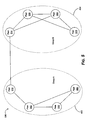
- FIG. 4 shows the same overlay network 300 as FIG. 3 except that the illustrated distances between peers in FIG. 4 are representative of the distances (i.e., the proximity metrics) between the peers in the underlying transport network.
- Peers 302, 306, 312 and 316 are close together in the transport network. They are within a first transport network locality delimited by dashed line 402 and together form peer group A.
- Peers 304, 308, 310 and 314 are also close together in the transport network. They are within a second transport network locality delimited by dashed line 404 and form peer group B.
- Peer group A and peer group B are relatively far from each other in the transport network, that is, in this example, connections between peers in different groups are assumed to be long distance connections.
- Peer 302 and peer 316 are neighbors in the overlay network 300.
- FIG. 4 shows that peer 302 and peer 316 are also close together in the transport network.
- Peer 304 and peer 314 are close together in the transport network, but overlay network messages from peer 304 to peer 314 routed through even the shortest path in the overlay network 300 are first sent from peer 304 to peer 302, and then from peer 302 to peer 316, and finally from peer 316 to peer 314.
- the overlay network 300 connections from peer 304 to peer 302 and from peer 316 to peer 314 are long distance connections. Even though peer 304 and peer 314 are close together in the transport network, overlay network messages routed between them incur the cost of two long distance connections. This is an example of an inefficiency targeted by an embodiment of the invention.
- FIG. 5 shows the same peers and transport network localities as FIG. 4 , but in FIG. 5 , the example peer-to-peer overlay network 500 has been constructed with an awareness of the underlying transport network localities 402 and 404, that is, the overlay network 500 is locality-aware in accordance with an embodiment of the invention.
- the overlay network 500 has fewer long distance (i.e., inter-group) connections.
- the average transport network distance between neighboring peers in the overlay network is reduced by grouping the peers of the overlay network in transport network localities and minimizing the number of inter-group connections.
- FIG. 6 illustrates an example modular software architecture for a locality-aware peer 600.
- the locality-aware peer 600 has a join locality-aware overlay module 602 which enables the locality-aware peer 600 to join a locality-aware overlay network peer group in its transport network locality.
- An intra-group maintenance module 604 maintains an intra-group cache 606.
- the intra-group cache 606 includes information regarding the peer group in which the locality-aware peer 600 participates.
- An inter-group maintenance module 608 maintains an inter-group cache 610.
- the inter-group cache 610 includes information regarding peer groups other than the peer group in which the locality-aware peer 600 participates.
- a rendezvous point module 612 maintains and provides access to a boot peer cache 614.
- the boot peer cache 614 includes a list of one or more peers in the overlay network that may be utilized as starting points for the locality-aware peer 600 when it is searching for a peer group in its transport network locality.
- the dashed line 616 indicates that, in various embodiments of the invention, the rendezvous point module 612 and the boot peer cache 614 may be incorporated by all, some or none of the peers in the locality-aware overlay network.
- the rendezvous point module 612 and the boot peer cache 614 may be incorporated into a peer (not necessarily the locality-aware peer 600) at a well-known (or easily discoverable) transport network location that is dedicated to providing rendezvous point functionality.
- LAP Lightweight Directory Access Protocol
- DHCP Dynamic Host Configuration Protocol
- Distributing multiple boot peers (i.e., peers incorporating the rendezvous point module 612 and the boot peer cache 614) throughout the overlay network may enhance the robustness and fault-tolerance of the overlay network.
- the locality-aware peer 600 joining the locality-aware overlay network either joins a peer group in the transport network locality of the peer 600 or, if the peer 600 fails to find a peer group in its locality, the peer 600 establishes a new peer group.
- the locality-aware peer 600 may initiate overlay network connections to peers that are members of that peer group.
- the locality-aware peer 600 may initiate overlay network connections to peers in existing peer groups that are nearby in the transport network. The establishment of new peer groups may be more common when the locality-aware overlay network is smaller, that is, when the locality-aware overlay network incorporates fewer locality-aware peers 600.
- FIG. 7 illustrates an example of a locality-aware overlay network 700 with multiple peer groups in accordance with an embodiment of the invention.
- Each peer group 702, 704, 706, 708, 710, 712, 714, 716, 718, 720 includes at least one locality-aware peer.
- the locality-aware overlay network 700 has a rendezvous point 722.
- Locality-aware peer 724 of FIG. 7 has not yet joined overlay network 700.
- Each peer group has at least one overlay network connection to another peer group, that is, at least one of the peers in each peer group has an overlay network connection to a peer in another peer group.
- each peer group has at least one connection with another peer group that is nearby in the transport network.
- peer groups 704, 706 and 708 are relatively nearby peer group 702 in the transport network and peer group 702 has a direct overlay network connection to each of those peer groups, that is, peer groups 704, 706 and 708 are peer group neighbors of peer group 702.
- peer group 718 is relatively distant from peer group 702 in the transport network and peer group 702 does not have a direct overlay network connection to peer group 718.
- Peer group 702 and peer group 718 are not neighbors in overlay network 700.
- a peer group may have an overlay network connection to a random other peer group, as well as nearby peer groups, in order to, for example, reduce the risk of overlay network partition due to localized transport network failure.
- FIG. 8 is a schematic representation of network layers associated with a conventional overlay network.
- conventional overlay network 802 is supported by transport network 804.
- FIG. 9 is a suitable schematic representation of network layers associated with a locality-aware overlay network.
- a locality-aware overlay network 902 e.g., the locality-aware overlay network 700
- transport network 904 which may be the same as transport network 804 of FIG. 8 .
- the locality-aware overlay network 902 maintains a peer group network 906.
- Each peer group may include a peer that is a leader of the peer group (a "peer group leader").
- the peer establishing a new peer group is typically the first leader of the new peer group.
- Each locality-aware peer 600 in a peer group may become the leader of the peer group.
- inter-group overlay network connections are between peer group leaders.
- peer 312 is the leader of peer group A
- peer 314 is the leader of the peer group B.
- the peer group network 906 of FIG. 9 may be a network of those peers in the locality-aware overlay network 902 that are leaders of peer groups.
- each peer in a peer group is sufficiently close together in the transport network that a measurement of the transport network distance between a peer and the peer group leader is a good approximation of the transport network distance between the peer and each peer in the peer group containing the peer group leader.
- This peer group coherency may enable a peer searching for a peer group in its transport network locality to rapidly traverse the locality-aware overlay network (e.g., from a random starting point) by querying the network's peer group leaders for transport network locality data.
- each peer group leader may maintain a list of neighboring peer groups (i.e., peer groups nearby in the transport network) and the transport network distances to those neighboring peer groups. For example, in FIG. 7 , the leader of peer group 702 maintains a list containing references to the leaders of peer groups 704, 706 and 708, as well as the measured transport network distance to those peer groups.
- the locality-aware peer 600 searching for a peer group in its transport network locality, having found at least one peer group, may check if the peer group is in its locality by querying the candidate peer group (e.g., by querying the peer group leader) for references to the candidate peer group's neighboring peer groups as well as the transport network distances to those neighboring peer groups as measured from the candidate peer group.
- the peer 600 may then measure the transport network distances from itself to the peer groups neighboring the candidate peer group.
- the peer 600 has found a peer group in its transport network locality.
- the peer groups in the peer group network act as dynamic landmarks for the searching peer 600.
- the peer 600 may join the peer group by, for example, further querying the leader of the peer group for a list of peers in the peer group with which to establish overlay network connections.
- the peer 600 has a list of new candidate peer groups (i.e., the neighbors of the rejected candidate peer group) to check and may, for example, select the candidate peer group with the minimum measured transport network distance to try next.
- new candidate peer groups i.e., the neighbors of the rejected candidate peer group
- FIG. 10 depicts an example procedure performed by the locality-aware peer 724 ( FIG. 7 ) that employs this strategy when joining the locality-aware overlay network 700 in accordance with an embodiment of the invention.
- the join locality-aware overlay module 602 of FIG. 6 may perform the procedure depicted by FIG. 10 .
- the locality-aware peer 724 joining the locality-aware overlay network 700 may obtain initial reference to at least one peer group in the locality-aware overlay network 700 in a number of ways.
- a computer user may input the transport network address of a peer group leader directly, for example, an Internet protocol (IP) address, a transport network domain name, or a uniform resource locator (URL).
- IP Internet protocol
- URL uniform resource locator
- each locality-aware peer 724 may have reference to a rendezvous point (RP) (e.g., the rendezvous point 722) for the locality-aware overlay network 700 which may be obtained, for example, via DHCP or its overlay network analog.
- RP rendezvous point
- a boot list of one or more candidate peer groups is obtained from the rendezvous point 722 for the locality-aware overlay network 700 at step 1002.
- the peer 724 measures the transport network distance between itself and each of the candidate peer groups in the boot list. For example, the peer 724 may send an explicit Measure message to the leader of each peer group and, upon receiving a reply to the Measure message, calculate the round trip time.
- the inter-group maintenance module 608 ( FIG. 6 ) is responsible for responding to Measure messages and the like. Other suitable methods of measuring transport network distance may be employed as will be appreciated by one of skill in the art.
- the peer group in the current set of candidate peer groups with the minimum measured transport network distance from the peer 724 is selected as the next peer group to check. If the peer 724 has an initial reference directly to a peer group in the overlay network (e.g., other than from the rendezvous point) then the peer 724 may bypass steps 1002, 1004 and 1006 and begin at step 1008.
- the peer 724 queries the selected peer group for references to the selected peer group's neighboring peer groups. For example, the peer 724 may send the leader of the selected peer group an explicit Get Neighboring Peer Groups message and receive references to the neighboring peer groups in reply. For example, if the peer 724 sends the Get Neighboring Peer Groups message to the leader of peer group 702 then, in an embodiment of the invention, the peer 724 receives a list of the leaders of peer groups 704, 706 and 708 in reply.
- the inter-group maintenance module 608 ( FIG. 6 ) is responsible for responding to Get Neighboring Peer Groups messages and the like.
- the peer 724 queries the selected peer group for the transport network distances to the selected peer group's neighboring peer groups as measured by the selected peer group. For example, the peer 724 may send the leader of the selected peer group an explicit Get Neighboring Peer Group Distances message and receive the transport network distance for each neighboring peer group in reply. For example, if the peer 724 sends the Get Neighboring Peer Group Distances message to the leader of peer group 702 then, in an embodiment of the invention, the peer receives the transport network distances from peer group 702 to peer group 704, from peer group 702 to peer group 706 and from peer group 702 to peer group 708 in reply.
- the inter-group maintenance module 608 ( FIG. 6 ) is responsible for responding to Get Neighboring Peer Group Distances messages and the like.
- each peer group leader maintains, in its inter-group cache 610 ( FIG. 6 ), a list of peer group leaders in neighboring peer groups as well as the transport network distances to each neighboring peer group leader. Establishing and maintaining the list of neighboring peer groups is described below in more detail with reference to FIG. 11 .
- the inter-group maintenance module 608 may regularly update the transport network distances by, for example, regularly sending Measure messages to each peer group leader in the list.
- requesting a copy of the inter-group cache 610 of the leader of the selected peer group provides at least the same information as the messages of steps 1008 and 1010 described above.
- Cache synchronization between peers of an overlay network may be supported by conventional overlay network protocols.
- the peer 724 measures the transport network distances between itself and each of the neighboring peer groups of the selected peer group. For example, the peer 724 may send Measure messages to the leaders of each of the neighboring peer groups. For example, if the peer 724 is considering peer group 702 of FIG. 7 then the peer 724 may send Measure messages to the leaders of peer groups 704, 706 and 708.
- the peer 724 has: a list of the neighboring peer groups of the selected peer group, the transport network distance from the selected peer group to each of those neighboring peer groups (the supplied distances), and the transport network distance from the peer to each of those neighboring peer groups (the measured distances).
- the peer 724 compares each of the supplied distances to its corresponding measured distance. For example, if the peer 724 is considering peer group 702, the peer 724 first compares the transport network distance between peer group 702 and peer group 704, as supplied by peer group 702, to the transport network distance between the peer 724 and peer group 704, as measured by the peer 724. Next the peer 724 compares the transport network distance between peer group 702 and peer group 706, as supplied by peer group 702, to the transport network distance that the peer 724 measures between itself and peer group 706. Then the peer 724 compares the transport network distance between peer group 702 and peer group 708, as supplied by peer group 702, to the transport network distance between the peer and peer group 708, as measured by the peer 724.
- the selected peer group is determined to be in the transport network locality of the peer 724 and the procedure progresses to step 1016 where the peer 724 joins the selected peer group. Otherwise, the currently selected peer group is determined not to be in the transport network locality of the peer 724 and the procedure progresses to step 1018.
- a threshold value e.g. 10 milliseconds
- the peer 724 examines the remaining set of candidate peer groups to determine if any are suitable for locality testing. It may be that all suitable candidates have already been tested or that too many (e.g., 10) peer groups have already been tested without finding a peer group in the peer's 724 locality. If there are no suitable candidate peer groups remaining, then the procedure progresses to step 1020 where the peer 724 establishes a new peer group with itself as the first member. If the set of candidate peer groups does still include suitable candidates then the procedure returns to step 1006 where the suitable candidate with the minimum measured transport network distance from the peer 724 is selected for the next round of locality testing.
- peer 724 For example, if the peer 724 is seeking to join overlay network 700 and the rendezvous point 722 provides peer group 702 as the starting point for the locality search then the peer 724 queries peer group 702 for the neighboring peer groups of peer group 702 and receives peer groups 704, 706 and 708 in reply. In an embodiment of the invention, these peer groups 704, 706 and 708 become the set of candidate peer groups for the next round of locality testing. If peer group 702 fails the locality test of step 1014 then the peer 724 selects the peer group in the set of candidate peer groups that is closest to the peer in the transport network as measured by the peer 724 in step 1012.
- peer group 708 is the closest of the peer groups 704, 706 and 708.
- the peer 724 selects peer group 708 to be tested and queries peer group 708 for its neighbors.
- the neighboring peer groups of peer group 708 are peer groups 702 and 710.
- peer group 702 has already been tested and rejected, so it is not a suitable candidate, but peer group 710 is added to the set of candidate peer groups.
- the transport network distance to peer group 710 is measured as part of the procedure of testing peer group 708. If peer group 708 fails the locality test of step 1014 then, in an embodiment of the invention, the peer 724 selects the closest of peer groups 704, 706 and 710 to be tested next.
- peer group network search proceeds to peer group 710.
- peer groups 712, 714 and 716 are added to the set of candidate peer groups and so on until one of the peer groups passes the locality test, each of the peer groups in the locality-aware overlay network fails the locality test, or the peer 724 reaches a peer group network search limit in terms of time (e.g., 10 seconds), number of peer groups tested (e.g., 10) or the like.
- peer groups already tested are not excluded from the set of candidate peer groups and if one of the peer groups that has already been tested is determined to be the best (i.e., minimum distance) candidate then the peer 724 establishes a new peer group with that peer group as the first neighbor of the new peer group.
- establishing a new peer group includes generating a new peer group identifier (ID) and establishing overlay network connections to a number of the new peer group's nearest neighbors.
- ID peer group identifier
- the nearest peer groups to the new peer group may be found with a variation of the method described above with reference to FIG. 10 .
- the peer 600 may have reference to the closest existing peer group (e.g., the last tested peer group). This closest existing peer group may become the new peer group's first neighbor.
- the new peer group may then query this first neighbor for its neighbors, measure their distances from the new peer group and select the closest of them for the new peer group's second neighbor.
- the new peer group may then query this second neighbor for its neighbors and so on until, for example, the new peer group has a suitable number of connected neighbors (e.g., 6 neighbors), the new peer group has connected to each of the peer groups in the locality-aware overlay network, or the peer group has connected to each peer group within a transport network distance boundary (e.g., 1000 milliseconds or 7 transport network hops).
- a suitable number of connected neighbors e.g., 6 neighbors
- the new peer group has connected to each of the peer groups in the locality-aware overlay network
- a transport network distance boundary e.g. 1000 milliseconds or 7 transport network hops.
- FIG. 11 depicts an example procedure for establishing a new peer group in a locality-aware overlay network in accordance with an embodiment of the invention.
- the join locality-aware overlay module 602 of FIG. 6 may perform the procedure depicted by FIG. 11 .
- the peer 724 ( FIG. 7 ) establishing the new peer group generates a new peer group identifier with a method similar to the conventional generation of peer identifiers, for example, the peer group identifier may be a globally unique identifier (GUID) generated with methods known in the art.
- the peer 724 establishes an overlay network connection to the leader of the closest known existing peer group in the overlay network.
- the peer 724 may have utilized the method described with reference to FIG.
- the peer 724 may have considered each of peer groups 708, 710, 714, 718 and 720 in turn, but each peer group having failed the peer's 724 locality test, the peer 724 determines to establish a new peer group with itself as the first member.
- peer group 720 is the closest known existing peer group in the overlay network 700, so the peer 724 establishes its first overlay network connection to peer group 720, for example, to the leader of peer group 720.
- the peer 724 checks if it has reached its target number of inter-group connections.
- the target number of inter-group connections may vary depending on the requirements of an application utilizing the locality-aware overlay network but, in an embodiment of the invention, it is at least 2 and often higher. If the target has been met then this aspect of establishing the new peer group is complete. Otherwise the procedure progresses to step 1108 to obtain candidate neighbors. If, at some time in the future, one or more of the established connections to neighboring peer groups is lost, the peer 724 may re-enter this procedure, for example, at step 1106, in order to restore the number of inter-group connections to the target number.
- the peer 724 queries its new neighbor for a list of the new neighbor's neighbors in a manner similar to step 1008 of FIG. 10 . For example, if peer group 720 of FIG. 7 is the new peer group's first neighbor then the new peer group queries peer group 720 for a list of its neighbors and receives a reference to peer group 718 and to the new peer group itself in reply. In an embodiment of the invention, these neighbors of the first neighboring peer group become candidate neighbors for the new peer group. In subsequent iterations, the results of neighbor queries may be added to the list of candidate neighbors.
- the peer 724 measures the transport network distance from itself to each of the new candidate neighbors in a manner similar to step 1012 of FIG. 10 . For example, having queried peer group 720 of FIG. 7 for its neighbors, the peer 724 measures the transport network distance to peer group 718.
- the peer 724 checks its list of candidate neighbors to determine if any are suitable candidates. It may be that the new peer group has established overlay network connections to each of the peer groups of the locality-aware overlay network without reaching its target number of inter-group connections. It may be that the new peer group has established peer group level connections to each of the peer groups within a transport network distance limit. If there are no suitable neighbor candidates then the peer 724 may exit the procedure depicted in FIG. 11 . Otherwise, the procedure returns to step 1104 where the peer 724 selects the closest of the candidate peer groups as a new neighbor for the new peer group. If the procedure exits without establishing the target number of inter-group connections, the leader of the new peer group may periodically re-enter this procedure, for example, at step 1104, to search for new neighbors.
- the peer that establishes a new peer group becomes the first leader of that peer group.
- the establishing peer may remain the leader of the peer group indefinitely, but if the establishing peer leaves the locality-aware overlay network (e.g., by disconnecting from the transport network) then, in an embodiment of the invention, another peer group member takes on the role. If there are no other peer group members then the peer group may cease to exist.
- the peer group leader establishes and maintains a leadership list.
- the leadership list may include a number of references to peers that are members of the peer group.
- the leadership list need not include each member of the peer group.
- the leadership list is stored in the intra-group cache 606 ( FIG. 6 ) of the locality-aware peer 600.
- the peer establishing the peer group may add itself as the first member of the leadership list as part of the process of establishing the peer group.
- the new peer may query the peer group leader for a list of candidate peers with which to establish intra-group overlay network connections or, at least, to query for additional candidates if the candidate peers have reached their connection maximums. For example, the new peer may send a Get Peer Group Members message to the peer group leader and receive the current leadership list in reply.
- the intra-group maintenance module 604 is responsible for responding to Get Peer Group Members messages and the like. If the overlay network incorporates a peer cache synchronization protocol, the new peer may obtain the list of candidate intra-group peers by synchronizing its intra-group cache 606 with the intra-group cache 606 of the peer group leader. If the leadership list includes less than a target number of peers (e.g., 10) then the new peer may be added to the leadership list as a result of querying the peer group leader for the list of candidate intra-group peers.
- a target number of peers e.g. 10
- Each peer in the peer group may have a copy of the leadership list. If the current peer group leader leaves the peer group (e.g., leaves the overlay network) then, in an embodiment of the invention, the peer that is next in the leadership list becomes the peer group leader. The new peer group leader may remove the old peer group leader from the leadership list and add a new peer to the bottom of the leadership list.
- the peer group leader periodically (e.g., every 5 seconds) sends an Alive message to each peer in the peer group, for example, by utilizing conventional overlay network flooding-style message propagation within the peer group. If the Alive message is not received within a time period (e.g., 10 seconds) then, in an embodiment of the invention, the current group leader is determined to have left the peer group.
- each of the peers in the leadership list leaves the peer group so that the peer group is left leaderless and without clear succession.
- each peer remaining in the peer group may attempt to become the new peer group leader. For example, once the situation has been detected through lack of Alive messages, each peer may wait a random amount of time (e.g., 0 to 10 seconds) and then send a New Leader message if such a message has not already been received from another peer in the peer group.
- the peer that sends out the New Leader message with the earliest timestamp is the new leader.
- a number of rounds may be required because two or more peers in the peer group may send out the New Leader message within a time period (e.g., 1 second).
- the intra-group maintenance module 604 is responsible for the processing of Alive messages and the like.
- Each peer in the peer group may have a copy of the list of peer group leaders in neighboring peer groups.
- the new peer group leader may re-establish the inter-group overlay network connections to the leaders of neighboring peer groups in the list.
- the new peer group leader may perform the procedure discussed above with reference to FIG. 11 to re-establish inter-group connections.
- peer 314 is the leader of the peer group in transport network locality 404.
- Peer 314 was the first member of the peer group and, as part of the process of establishing the new group, peer 314 added itself to the leadership list stored in its intra-group cache.
- peer 308 joined the peer group, it queried peer 314 for a list of candidate intra-group peers.
- peer 314 added peer 308 to second place in the leadership list and returned itself as a candidate peer with which to establish an intra-group overlay network connection.
- Peer 308 did establish an overlay network connection with peer 314.
- Peer 304 was next to join the peer group and then peer 310. Each time a similar sequence of actions occurred. If peer 314 left the peer group, peer 308 would become the peer group leader and would re-establish the inter-group connection to peer 312.
Landscapes
- Engineering & Computer Science (AREA)
- Computer Networks & Wireless Communication (AREA)
- Signal Processing (AREA)
- Computer Security & Cryptography (AREA)
- Computer And Data Communications (AREA)
- Data Exchanges In Wide-Area Networks (AREA)
- Radar Systems Or Details Thereof (AREA)
- Measurement Of Velocity Or Position Using Acoustic Or Ultrasonic Waves (AREA)
- Information Transfer Between Computers (AREA)
- Mobile Radio Communication Systems (AREA)
- Two-Way Televisions, Distribution Of Moving Picture Or The Like (AREA)
- Compression Or Coding Systems Of Tv Signals (AREA)
Claims (26)
- Support lisible par ordinateur comportant des instructions exécutables par ordinateur pour mettre en oeuvre un procédé comprenant la détermination (1014), au niveau d'un homologue (600 ; 724), d'un rattachement à un groupe d'homologues de réseau superposé (702, ..., 720) si un premier ensemble de distances de réseau de transport est proche d'un second ensemble de distances de réseau de transport, le premier ensemble de distances de réseau de transport comprenant au moins une distance de réseau de transport entre le groupe d'homologues de réseau superposé et au moins un groupe d'homologues de réseau superposé voisin du groupe d'homologues de réseau superposé, et le second ensemble de distances de réseau de transport comprenant au moins une distance de réseau de transport entre l'homologue et ledit groupe d'homologues de réseau superposé voisin du groupe d'homologues de réseau superposé.
- Support lisible par ordinateur selon la revendication 1, dans lequel le premier ensemble de distances de réseau de transport est proche du second ensemble de distances de réseau de transport si, pour chaque distance de réseau de transport du premier ensemble de distances de réseau de transport, une valeur absolue d'une différence entre la distance de réseau de transport du premier ensemble de distances de réseau de transport et une distance de réseau de transport correspondante du second ensemble de distances de réseau de transport est inférieure à une valeur de seuil.
- Support lisible par ordinateur selon la revendication 1, dans lequel une distance de réseau de transport entre un premier noeud et un second noeud d'un réseau de transport comprend un temps d'aller-retour pour un message entre le premier noeud et le second noeud.
- Support lisible par ordinateur selon la revendication 1, dans lequel une distance de réseau de transport entre un premier noeud et un second noeud d'un réseau de transport comprend une latence de réseau de transport entre le premier noeud et le second noeud.
- Support lisible par ordinateur selon la revendication 1, dans lequel une distance de réseau de transport entre un premier noeud et un second noeud d'un réseau de transport comprend un comptage des sauts de routage de réseau de transport entre le premier noeud et le second noeud.
- Support lisible par ordinateur selon la revendication 1, dans lequel :chaque groupe d'homologues de réseau superposé (402, 404) comprend un chef de groupe d'homologues (312, 314) ;la distance de réseau de transport entre l'homologue et un groupe d'homologues de réseau superposé comprend la distance de réseau de transport entre l'homologue et le chef de groupe d'homologues du groupe d'homologues de réseau superposé ; etla distance de réseau de transport entre un premier groupe d'homologues de réseau superposé et un second groupe d'homologues de réseau superposé comprend la distance de réseau de transport entre le chef de groupe d'homologues du premier groupe d'homologues de réseau superposé et le chef de groupe d'homologues du second groupe d'homologues de réseau superposé.
- Support lisible par ordinateur selon la revendication 1, dans lequel le procédé comprend en outre :l'interrogation (1010) du groupe d'homologues de réseau superposé au sujet du premier ensemble de distances de réseau de transport ; etla mesure (1012) de chaque distance de réseau de transport du second ensemble de distances de réseau de transport.
- Support lisible par ordinateur selon la revendication 1, dans lequel le procédé comprend en outre :si l'homologue ne se rattache pas au groupe d'homologues de réseau superposé, l'ajout dudit groupe d'homologues de réseau superposé voisin du groupe d'homologues de réseau superposé à une liste de candidats ; etla sélection (1006) du groupe d'homologues de réseau superposé le plus proche dans la liste de candidats en tant que groupe suivant à prendre en considération pour le rattachement.
- Support lisible par ordinateur selon la revendication 8, dans lequel le procédé comprend en outre la détermination pour établir un nouveau groupe d'homologues de réseau superposé si, une fois que chaque candidat sélectionné a été testé, l'homologue ne s'est pas rattaché à un groupe d'homologues de réseau superposé existant.
- Support lisible par ordinateur selon la revendication 1, dans lequel le procédé comprend en outre le groupement d'homologues de réseau superposé de telle sorte que chaque homologue d'un groupe d'homologues ait une mesure de proximité de réseau de transport similaire par rapport à des homologues d'autres groupes d'homologues.
- Support lisible par ordinateur selon la revendication 10, dans lequel la mesure de proximité de réseau de transport comprend un temps d'aller-retour de communication entre homologues.
- Support lisible par ordinateur selon la revendication 10, dans lequel des mesures de proximité de réseau de transport similaires ont une différence absolue inférieure à une valeur de seuil.
- Support lisible par ordinateur selon la revendication 10, dans lequel le groupement d'homologues de réseau superposé est effectué par les homologues de réseau superposé.
- Support lisible par ordinateur selon la revendication 10, dans lequel le groupement d'homologues de réseau superposé comprend :l'ajout d'un nouvel homologue de réseau superposé (724) à un groupe d'homologues existant (702, 704, ..., 720) si des mesures de proximité de réseau de transport entre le groupe d'homologues existant et des groupes d'homologues voisins du groupe d'homologues existant sont similaires à des mesures de proximité de réseau de transport entre le nouvel homologue de réseau superposé et les groupes d'homologues voisins du groupe d'homologues existant ; etsi le nouvel homologue de réseau superposé n'est pas ajouté à un groupe d'homologues existant, l'établissement (1020) d'un nouveau groupe d'homologues comprenant le nouvel homologue de réseau superposé.
- Support lisible par ordinateur selon la revendication 14, dans lequel l'établissement d'un nouveau groupe d'homologues comprend :la génération (1102) d'un nouvel identifiant de groupe d'homologues ; etl'établissement d'au moins une connexion de réseau superposé vers au moins un groupe d'homologues qui se trouve proche dans le réseau de transport.
- Support lisible par ordinateur selon la revendication 15, dans lequel :chaque groupe d'homologues (402, 404) comprend un chef de groupe d'homologues (312, 314) ; etl'établissement d'une connexion de réseau superposé entre un premier groupe d'homologues et un second groupe d'homologues comprend l'établissement de la connexion de réseau superposé entre le chef du premier groupe d'homologues et le chef du second groupe d'homologues.
- Support lisible par ordinateur selon la revendication 14, dans lequel :chaque groupe d'homologues a au moins un groupe d'homologues voisin ; etavant l'établissement d'un nouveau groupe d'homologues, le nouvel homologue de réseau superposé traverse des groupes d'homologues existants en utilisant un procédé comprenant :l'ajout dudit groupe d'homologues voisin du groupe d'homologues actuel à une liste de groupes d'homologues candidats ; etla sélection (1006) d'un groupe d'homologues suivant dans la liste de groupes d'homologues candidats qui se trouve à une distance de réseau de transport minimale du nouvel homologue de réseau superposé.
- Système informatisé, comprenant un module superposé sensible à l'emplacement (602) configuré pour, au moins, déterminer qu'un homologue (600) devrait se rattacher à un groupe d'homologues de réseau superposé si un premier ensemble de distances de réseau de transport est proche d'un second ensemble de distances de réseau de transport, le premier ensemble de distances de réseau de transport comprenant au moins une distance de réseau de transport entre le groupe d'homologues de réseau superposé et au moins un groupe d'homologues de réseau superposé voisin du groupe d'homologues de réseau superposé, et le second ensemble de distances de réseau de transport comprenant au moins une distance de réseau de transport entre l'homologue et ledit groupe d'homologues de réseau superposé voisin du groupe d'homologues de réseau superposé.
- Système informatisé selon la revendication 18, dans lequel le premier ensemble de distances de réseau de transport est proche du second ensemble de distances de réseau de transport si, pour chaque distance de réseau de transport du premier ensemble de distances de réseau de transport, une valeur arithmétique absolue d'une différence entre la distance de réseau de transport du premier ensemble de distances de réseau de transport et une distance de réseau de transport correspondante du second ensemble de distances de réseau de transport est inférieure à une valeur de seuil.
- Système informatisé selon la revendication 18, dans lequel le module superposé sensible à l'emplacement (602) est en outre configuré pour, au moins :interroger le groupe d'homologues de réseau superposé au sujet du premier ensemble de distances de réseau de transport ; etmesurer chaque distance de réseau de transport du second ensemble de distances de réseau de transport.
- Système informatisé selon la revendication 18, comprenant en outre une mémoire cache intra-groupe (606) comprenant une liste ordonnée de chefs énumérant au moins un homologue de réseau superposé d'un groupe d'homologues de réseau superposé qui deviendra, dans l'ordre de la liste, un chef du groupe d'homologues de réseau superposé.
- Système informatisé selon la revendication 18, comprenant en outre un module de maintenance intra-groupe (604) configuré pour au moins déterminer si un chef actuel d'un groupe d'homologues de réseau superposé a quitté le groupe d'homologues de réseau superposé.
- Système informatisé selon la revendication 18, comprenant en outre une mémoire cache inter-groupes (610) comprenant:une liste d'au moins un groupe d'homologues de réseau superposé voisin d'un groupe d'homologues de réseau superposé ; etpour chaque groupe d'homologues de réseau superposé voisin contenu dans la liste, une distance de réseau de transport mesurée entre le groupe d'homologues de réseau superposé et le groupe d'homologues de réseau superposé voisin.
- Système informatisé selon la revendication 18, comprenant en outre un module de maintenance inter-groupes (608) configuré pour au moins mesurer périodiquement une distance de réseau de transport entre un groupe d'homologues de réseau superposé et chaque groupe d'homologues de réseau superposé voisin du groupe d'homologues de réseau superposé.
- Procédé mis en oeuvre par ordinateur, comprenant la détermination (1014), au niveau d'un homologue (600 ; 724), d'un rattachement à un groupe d'homologues de réseau superposé (702, 704 ..., 720), si un premier ensemble de distances de réseau de transport est proche d'un second ensemble de distances de réseau de transport, le premier ensemble de distances de réseau de transport comprenant au moins une distance de réseau de transport entre le groupe d'homologues de réseau superposé et au moins un groupe d'homologues de réseau superposé voisin du groupe d'homologues de réseau superposé, et le second ensemble de distances de réseau de transport comprenant au moins une distance de réseau de transport entre l'homologue et ledit groupe d'homologues de réseau superposé voisin du groupe d'homologues de réseau superposé.
- Procédé selon la revendication 25, comprenant en outre :l'interrogation (1010) du groupe d'homologues de réseau superposé au sujet du premier ensemble de distances de réseau de transport ; etla mesure (1012) de chaque distance de réseau de transport du second ensemble de distances de réseau de transport.
Applications Claiming Priority (2)
| Application Number | Priority Date | Filing Date | Title |
|---|---|---|---|
| US10/662,574 US7558875B2 (en) | 2003-09-15 | 2003-09-15 | Measurement-based construction of locality-aware overlay networks |
| US662574 | 2003-09-15 |
Publications (3)
| Publication Number | Publication Date |
|---|---|
| EP1515520A2 EP1515520A2 (fr) | 2005-03-16 |
| EP1515520A3 EP1515520A3 (fr) | 2005-10-19 |
| EP1515520B1 true EP1515520B1 (fr) | 2009-09-23 |
Family
ID=34136806
Family Applications (1)
| Application Number | Title | Priority Date | Filing Date |
|---|---|---|---|
| EP04020324A Expired - Lifetime EP1515520B1 (fr) | 2003-09-15 | 2004-08-26 | Construction de réseaux superposés prenant en compte la notion de localité et fondée sur des mesures |
Country Status (7)
| Country | Link |
|---|---|
| US (1) | US7558875B2 (fr) |
| EP (1) | EP1515520B1 (fr) |
| JP (1) | JP4634108B2 (fr) |
| KR (1) | KR101015311B1 (fr) |
| CN (1) | CN1620027B (fr) |
| AT (1) | ATE443966T1 (fr) |
| DE (1) | DE602004023261D1 (fr) |
Families Citing this family (49)
| Publication number | Priority date | Publication date | Assignee | Title |
|---|---|---|---|---|
| US7761569B2 (en) | 2004-01-23 | 2010-07-20 | Tiversa, Inc. | Method for monitoring and providing information over a peer to peer network |
| US8677017B2 (en) * | 2004-01-30 | 2014-03-18 | Hewlett-Packard Development Company, L.P. | Determining location information for a node in a network using at least one local landmark node |
| US7702756B2 (en) * | 2004-02-27 | 2010-04-20 | Microsoft Corporation | Numerousity and latency driven dynamic computer grouping |
| WO2005084132A2 (fr) * | 2004-03-08 | 2005-09-15 | First Oversi Ltd | Procede et dispositif pour partage de fichier point a point |
| US7870426B2 (en) * | 2004-04-14 | 2011-01-11 | International Business Machines Corporation | Apparatus, system, and method for transactional peer recovery in a data sharing clustering computer system |
| US7281153B2 (en) * | 2004-04-14 | 2007-10-09 | International Business Machines Corporation | Apparatus, system, and method for transactional peer recovery in a data sharing clustering computer system |
| US20060004714A1 (en) * | 2004-06-30 | 2006-01-05 | Ibm Corporation | Transposition search method for optimal topology construction |
| JP4371056B2 (ja) * | 2005-01-07 | 2009-11-25 | ブラザー工業株式会社 | ノード装置、ネットワーク参加処理プログラム、及びネットワーク参加処理方法等 |
| US7543020B2 (en) * | 2005-02-10 | 2009-06-02 | Cisco Technology, Inc. | Distributed client services based on execution of service attributes and data attributes by multiple nodes in resource groups |
| US8051170B2 (en) * | 2005-02-10 | 2011-11-01 | Cisco Technology, Inc. | Distributed computing based on multiple nodes with determined capacity selectively joining resource groups having resource requirements |
| JP4604830B2 (ja) * | 2005-05-16 | 2011-01-05 | コニカミノルタホールディングス株式会社 | 情報処理装置、プログラム、情報処理システム、および孤立状態回避方法 |
| US20070011171A1 (en) * | 2005-07-08 | 2007-01-11 | Nurminen Jukka K | System and method for operation control functionality |
| US7512943B2 (en) * | 2005-08-30 | 2009-03-31 | Microsoft Corporation | Distributed caching of files in a network |
| DE602006013405D1 (de) * | 2006-02-21 | 2010-05-20 | Microsoft Corp | Topologieverwaltung in Peer-to-peer Datenverteilungswolken |
| WO2007121608A1 (fr) * | 2006-04-20 | 2007-11-01 | Yongmin Zhang | Procédé et dispositif d'accès rapide côté client dans un réseau poste à poste |
| JP4670726B2 (ja) * | 2006-04-28 | 2011-04-13 | ブラザー工業株式会社 | ノード装置、情報処理方法及びノード装置用プログラム |
| JP4281925B2 (ja) * | 2006-06-19 | 2009-06-17 | 株式会社スクウェア・エニックス | ネットワークシステム |
| US20100281165A1 (en) * | 2006-11-14 | 2010-11-04 | Christoph Gerdes | Method for the load distribution in a peer-to-peer-overlay network |
| EP2100407A1 (fr) * | 2006-12-21 | 2009-09-16 | Telefonaktiebolaget LM Ericsson (PUBL) | Topologies d'administration de réseau se formant automatiquement |
| US8463927B2 (en) | 2006-12-29 | 2013-06-11 | Ebay Inc. | Video mail through peer to peer network |
| US20100085915A1 (en) * | 2007-02-27 | 2010-04-08 | Panasonic Corporation | Overlay Network Node |
| US7630370B2 (en) * | 2007-02-28 | 2009-12-08 | Sharp Laboratories Of America, Inc. | Overlay join latency reduction using preferred peer list |
| KR101409991B1 (ko) | 2007-04-16 | 2014-06-20 | 삼성전자주식회사 | P2p 통신 환경에서의 데이터 전송 방법 및 장치 |
| US8997206B2 (en) * | 2007-06-06 | 2015-03-31 | Avaya Inc. | Peer-to-peer network over a virtual private network |
| EP2160882A1 (fr) * | 2007-06-27 | 2010-03-10 | France Telecom | Procede et dispositif de mise en relation de pairs dans un reseau |
| CN101505262B (zh) * | 2008-02-05 | 2011-07-20 | 华为技术有限公司 | 一种构造节点Id的方法和装置 |
| US8996726B2 (en) * | 2008-06-19 | 2015-03-31 | Qualcomm Incorporated | Methods and apparatus for event distribution and routing in peer-to-peer overlay networks |
| WO2010067457A1 (fr) * | 2008-12-12 | 2010-06-17 | 富士通株式会社 | Dispositif de gestion de groupe |
| US8484382B2 (en) * | 2009-03-11 | 2013-07-09 | Qualcomm Incorporated | Methods and apparatus for merging peer-to-peer overlay networks |
| US20110153737A1 (en) * | 2009-12-17 | 2011-06-23 | Chu Thomas P | Method and apparatus for decomposing a peer-to-peer network and using a decomposed peer-to-peer network |
| US10084856B2 (en) * | 2009-12-17 | 2018-09-25 | Wsou Investments, Llc | Method and apparatus for locating services within peer-to-peer networks |
| JP5428834B2 (ja) * | 2009-12-21 | 2014-02-26 | 富士通株式会社 | ネットワークグループ判定装置、ネットワークグループ判定方法、およびネットワークグループ判定プログラム |
| US20120314644A1 (en) * | 2010-03-01 | 2012-12-13 | Telefonaktiebolaget Lm Ericsson (Publ) | Multicast mobile user |
| US8661080B2 (en) * | 2010-07-15 | 2014-02-25 | International Business Machines Corporation | Propagating changes in topic subscription status of processes in an overlay network |
| JP5473827B2 (ja) * | 2010-08-20 | 2014-04-16 | パナソニック株式会社 | ネットワーク遅延推定装置およびネットワーク遅延推定方法 |
| EP2612487B1 (fr) * | 2010-08-31 | 2020-01-22 | Telefonaktiebolaget LM Ericsson (publ) | Procédé et agencement dans un réseau poste à poste |
| US8892708B2 (en) | 2011-07-11 | 2014-11-18 | Cisco Technology, Inc. | Placement of service delivery locations of a distributed computing service based on logical topology |
| KR101333272B1 (ko) * | 2012-05-17 | 2013-11-27 | 목포대학교산학협력단 | 이웃 노드 홉 수의 평균을 이용한 무선 센서 네트워크에서의 위치 인식 방법 |
| US9219782B2 (en) * | 2012-12-11 | 2015-12-22 | Microsoft Technology Licensing, Llc | Identifying seed computing devices using estimates in peer-to-peer networks |
| WO2014108356A2 (fr) * | 2013-01-10 | 2014-07-17 | Telefonaktiebolaget L M Ericsson (Publ) | Mécanisme de connexion pour réseaux poste à poste efficaces en énergie |
| US9853826B2 (en) * | 2013-02-25 | 2017-12-26 | Qualcomm Incorporated | Establishing groups of internet of things (IOT) devices and enabling communication among the groups of IOT devices |
| KR101534555B1 (ko) * | 2013-06-25 | 2015-07-08 | 숭실대학교산학협력단 | 원형 메시 오버레이 생성 및 유지 방법 |
| US9716641B2 (en) * | 2013-09-19 | 2017-07-25 | Avago Technologies General Ip (Singapore) Pte. Ltd. | Adaptive industrial ethernet |
| US20160232191A1 (en) * | 2013-09-30 | 2016-08-11 | Hewlett Packard Enterprise Development Lp | Overlays to modify data objects of source data |
| US9560129B2 (en) * | 2014-07-28 | 2017-01-31 | Google Technology Holdings LLC | Peer-to-peer group re-formation |
| CN116436927A (zh) * | 2017-06-30 | 2023-07-14 | 区块链控股有限公司 | 用于区块链网络中的高效传播的概率中继 |
| US11146415B2 (en) * | 2019-11-16 | 2021-10-12 | Microsoft Technology Licensing, Llc | Message-limited self-organizing network groups for computing device peer matching |
| GR20210100586A (el) * | 2021-09-07 | 2023-04-10 | Ανωνυμη Εταιρεια Ερευνας Και Αναπτυξης Συστηματων Και Υπηρεσιων, | Συστημα ταυτοποιησης και ταξινομησης ομοτιμων κομβων εκθεσης κινδυνου σε ασθενειες / επειγουσες καταστασεις |
| CN114500359B (zh) * | 2022-04-15 | 2022-07-12 | 深圳市永达电子信息股份有限公司 | 集群动态组网方法和集群动态系统 |
Family Cites Families (10)
| Publication number | Priority date | Publication date | Assignee | Title |
|---|---|---|---|---|
| US5832514A (en) | 1996-06-26 | 1998-11-03 | Microsoft Corporation | System and method for discovery based data recovery in a store and forward replication process |
| US5987376A (en) | 1997-07-16 | 1999-11-16 | Microsoft Corporation | System and method for the distribution and synchronization of data and state information between clients in a distributed processing system |
| WO2000001115A1 (fr) | 1998-06-30 | 2000-01-06 | Sun Microsystems, Inc. | Optimisation dynamique dans un protocole de multidiffusion fiable |
| AU2002234258A1 (en) * | 2001-01-22 | 2002-07-30 | Sun Microsystems, Inc. | Peer-to-peer network computing platform |
| US7194002B2 (en) * | 2002-02-01 | 2007-03-20 | Microsoft Corporation | Peer-to-peer based network performance measurement and analysis system and method for large scale networks |
| US7554988B2 (en) * | 2002-09-10 | 2009-06-30 | Hewlett-Packard Development Company, L.P. | Creating expressway for overlay routing |
| US7266125B2 (en) * | 2002-10-31 | 2007-09-04 | Hewlett-Packard Development Company, L.P. | Landmark numbering based auxiliary network for peer-to-peer overlay network |
| US7289520B2 (en) | 2002-11-20 | 2007-10-30 | Hewlett-Packard Development Company, L.P. | Method, apparatus, and system for expressway routing among peers |
| US7774495B2 (en) * | 2003-02-13 | 2010-08-10 | Oracle America, Inc, | Infrastructure for accessing a peer-to-peer network environment |
| US7304994B2 (en) | 2003-04-09 | 2007-12-04 | Nec Laboratories America, Inc. | Peer-to-peer system and method with prefix-based distributed hash table |
-
2003
- 2003-09-15 US US10/662,574 patent/US7558875B2/en not_active Expired - Fee Related
-
2004
- 2004-08-26 AT AT04020324T patent/ATE443966T1/de not_active IP Right Cessation
- 2004-08-26 DE DE602004023261T patent/DE602004023261D1/de not_active Expired - Lifetime
- 2004-08-26 EP EP04020324A patent/EP1515520B1/fr not_active Expired - Lifetime
- 2004-09-14 KR KR1020040073427A patent/KR101015311B1/ko not_active Expired - Fee Related
- 2004-09-15 CN CN2004100903156A patent/CN1620027B/zh not_active Expired - Fee Related
- 2004-09-15 JP JP2004269037A patent/JP4634108B2/ja not_active Expired - Fee Related
Also Published As
| Publication number | Publication date |
|---|---|
| JP4634108B2 (ja) | 2011-02-16 |
| ATE443966T1 (de) | 2009-10-15 |
| DE602004023261D1 (de) | 2009-11-05 |
| CN1620027B (zh) | 2011-05-18 |
| US20050060406A1 (en) | 2005-03-17 |
| KR20050027932A (ko) | 2005-03-21 |
| JP2005094773A (ja) | 2005-04-07 |
| EP1515520A3 (fr) | 2005-10-19 |
| EP1515520A2 (fr) | 2005-03-16 |
| US7558875B2 (en) | 2009-07-07 |
| CN1620027A (zh) | 2005-05-25 |
| KR101015311B1 (ko) | 2011-02-15 |
Similar Documents
| Publication | Publication Date | Title |
|---|---|---|
| EP1515520B1 (fr) | Construction de réseaux superposés prenant en compte la notion de localité et fondée sur des mesures | |
| EP2308213B1 (fr) | Maintenance de réseaux dédiés | |
| EP2031816B1 (fr) | Fonctionnement optimal de réseaux hiérarchiques poste à poste | |
| Castro et al. | Exploiting network proximity in peer-to-peer overlay networks | |
| Garces-Erice et al. | Hierarchical peer-to-peer systems | |
| JP4358581B2 (ja) | 効率的な分散データ構造を備えた改良されたオーバレイネットワークを生成するシステムおよび方法 | |
| Ren et al. | SAT-Match: a self-adaptive topology matching method to achieve low lookup latency in structured P2P overlay networks | |
| US7660320B2 (en) | Communication network, a method of routing data packets in such communication network and a method of locating and securing data of a desired resource in such communication network | |
| Maenpaa et al. | Self-tuning distributed hash table (DHT) for REsource LOcation And Discovery (RELOAD) | |
| Kummer et al. | Distributed lookup in structured peer-to-peer ad-hoc networks | |
| JP4533923B2 (ja) | 階層型ピアツーピアシステムにおける負荷バランシング機能を有するスーパーピア及び該スーパーピアを動作させる方法 | |
| Al-Oqily et al. | SORD: A fault-resilient service overlay for mediaport resource discovery | |
| JP5287500B2 (ja) | ノード装置およびノード装置用プログラム | |
| Ali et al. | HPRDG: A scalable framework hypercube-P2P-based for resource discovery in computational Grid | |
| Popescu et al. | Routing in content addressable networks: Algorithms and performance | |
| Popescu et al. | On the implementation of a content-addressable network | |
| Milić et al. | Fisheye: Topology aware choice of peers for overlay networks | |
| Fantar et al. | Improving chord network performance using geographic coordinates | |
| Benshoof et al. | A distributed greedy heuristic for computing voronoi tessellations with applications towards peer-to-peer networks | |
| Shin et al. | A proximity-based self-organizing hierarchical overlay framework for distributed hash tables | |
| Lloret et al. | A group-based protocol for large wireless AD-HOC and sensor networks | |
| Onbilger et al. | A peer-to-peer network positioning architecture | |
| Furness et al. | A survey of blind search techniques in structured p2p networks | |
| Zghaibeh et al. | d-SHAM: An O (d) Scalable Routing Algorithm | |
| Pappas et al. | Coordinate-based routing for overlay networks |
Legal Events
| Date | Code | Title | Description |
|---|---|---|---|
| PUAI | Public reference made under article 153(3) epc to a published international application that has entered the european phase |
Free format text: ORIGINAL CODE: 0009012 |
|
| AK | Designated contracting states |
Kind code of ref document: A2 Designated state(s): AT BE BG CH CY CZ DE DK EE ES FI FR GB GR HU IE IT LI LU MC NL PL PT RO SE SI SK TR |
|
| AX | Request for extension of the european patent |
Extension state: AL HR LT LV MK |
|
| PUAL | Search report despatched |
Free format text: ORIGINAL CODE: 0009013 |
|
| AK | Designated contracting states |
Kind code of ref document: A3 Designated state(s): AT BE BG CH CY CZ DE DK EE ES FI FR GB GR HU IE IT LI LU MC NL PL PT RO SE SI SK TR |
|
| AX | Request for extension of the european patent |
Extension state: AL HR LT LV MK |
|
| 17P | Request for examination filed |
Effective date: 20060315 |
|
| AKX | Designation fees paid |
Designated state(s): AT BE BG CH CY CZ DE DK EE ES FI FR GB GR HU IE IT LI LU MC NL PL PT RO SE SI SK TR |
|
| 17Q | First examination report despatched |
Effective date: 20070328 |
|
| GRAP | Despatch of communication of intention to grant a patent |
Free format text: ORIGINAL CODE: EPIDOSNIGR1 |
|
| GRAS | Grant fee paid |
Free format text: ORIGINAL CODE: EPIDOSNIGR3 |
|
| GRAA | (expected) grant |
Free format text: ORIGINAL CODE: 0009210 |
|
| AK | Designated contracting states |
Kind code of ref document: B1 Designated state(s): AT BE BG CH CY CZ DE DK EE ES FI FR GB GR HU IE IT LI LU MC NL PL PT RO SE SI SK TR |
|
| REG | Reference to a national code |
Ref country code: GB Ref legal event code: FG4D |
|
| REG | Reference to a national code |
Ref country code: CH Ref legal event code: EP |
|
| REG | Reference to a national code |
Ref country code: IE Ref legal event code: FG4D |
|
| REF | Corresponds to: |
Ref document number: 602004023261 Country of ref document: DE Date of ref document: 20091105 Kind code of ref document: P |
|
| PG25 | Lapsed in a contracting state [announced via postgrant information from national office to epo] |
Ref country code: FI Free format text: LAPSE BECAUSE OF FAILURE TO SUBMIT A TRANSLATION OF THE DESCRIPTION OR TO PAY THE FEE WITHIN THE PRESCRIBED TIME-LIMIT Effective date: 20090923 Ref country code: SE Free format text: LAPSE BECAUSE OF FAILURE TO SUBMIT A TRANSLATION OF THE DESCRIPTION OR TO PAY THE FEE WITHIN THE PRESCRIBED TIME-LIMIT Effective date: 20090923 |
|
| PG25 | Lapsed in a contracting state [announced via postgrant information from national office to epo] |
Ref country code: PL Free format text: LAPSE BECAUSE OF FAILURE TO SUBMIT A TRANSLATION OF THE DESCRIPTION OR TO PAY THE FEE WITHIN THE PRESCRIBED TIME-LIMIT Effective date: 20090923 Ref country code: SI Free format text: LAPSE BECAUSE OF FAILURE TO SUBMIT A TRANSLATION OF THE DESCRIPTION OR TO PAY THE FEE WITHIN THE PRESCRIBED TIME-LIMIT Effective date: 20090923 |
|
| NLV1 | Nl: lapsed or annulled due to failure to fulfill the requirements of art. 29p and 29m of the patents act | ||
| PG25 | Lapsed in a contracting state [announced via postgrant information from national office to epo] |
Ref country code: CY Free format text: LAPSE BECAUSE OF FAILURE TO SUBMIT A TRANSLATION OF THE DESCRIPTION OR TO PAY THE FEE WITHIN THE PRESCRIBED TIME-LIMIT Effective date: 20090923 |
|
| PG25 | Lapsed in a contracting state [announced via postgrant information from national office to epo] |
Ref country code: PT Free format text: LAPSE BECAUSE OF FAILURE TO SUBMIT A TRANSLATION OF THE DESCRIPTION OR TO PAY THE FEE WITHIN THE PRESCRIBED TIME-LIMIT Effective date: 20100125 Ref country code: CZ Free format text: LAPSE BECAUSE OF FAILURE TO SUBMIT A TRANSLATION OF THE DESCRIPTION OR TO PAY THE FEE WITHIN THE PRESCRIBED TIME-LIMIT Effective date: 20090923 Ref country code: EE Free format text: LAPSE BECAUSE OF FAILURE TO SUBMIT A TRANSLATION OF THE DESCRIPTION OR TO PAY THE FEE WITHIN THE PRESCRIBED TIME-LIMIT Effective date: 20090923 Ref country code: ES Free format text: LAPSE BECAUSE OF FAILURE TO SUBMIT A TRANSLATION OF THE DESCRIPTION OR TO PAY THE FEE WITHIN THE PRESCRIBED TIME-LIMIT Effective date: 20100103 Ref country code: RO Free format text: LAPSE BECAUSE OF FAILURE TO SUBMIT A TRANSLATION OF THE DESCRIPTION OR TO PAY THE FEE WITHIN THE PRESCRIBED TIME-LIMIT Effective date: 20090923 |
|
| PG25 | Lapsed in a contracting state [announced via postgrant information from national office to epo] |
Ref country code: SK Free format text: LAPSE BECAUSE OF FAILURE TO SUBMIT A TRANSLATION OF THE DESCRIPTION OR TO PAY THE FEE WITHIN THE PRESCRIBED TIME-LIMIT Effective date: 20090923 |
|
| PG25 | Lapsed in a contracting state [announced via postgrant information from national office to epo] |
Ref country code: AT Free format text: LAPSE BECAUSE OF FAILURE TO SUBMIT A TRANSLATION OF THE DESCRIPTION OR TO PAY THE FEE WITHIN THE PRESCRIBED TIME-LIMIT Effective date: 20090923 Ref country code: BE Free format text: LAPSE BECAUSE OF FAILURE TO SUBMIT A TRANSLATION OF THE DESCRIPTION OR TO PAY THE FEE WITHIN THE PRESCRIBED TIME-LIMIT Effective date: 20090923 |
|
| PG25 | Lapsed in a contracting state [announced via postgrant information from national office to epo] |
Ref country code: NL Free format text: LAPSE BECAUSE OF FAILURE TO SUBMIT A TRANSLATION OF THE DESCRIPTION OR TO PAY THE FEE WITHIN THE PRESCRIBED TIME-LIMIT Effective date: 20090923 Ref country code: DK Free format text: LAPSE BECAUSE OF FAILURE TO SUBMIT A TRANSLATION OF THE DESCRIPTION OR TO PAY THE FEE WITHIN THE PRESCRIBED TIME-LIMIT Effective date: 20090923 |
|
| PLBE | No opposition filed within time limit |
Free format text: ORIGINAL CODE: 0009261 |
|
| STAA | Information on the status of an ep patent application or granted ep patent |
Free format text: STATUS: NO OPPOSITION FILED WITHIN TIME LIMIT |
|
| 26N | No opposition filed |
Effective date: 20100624 |
|
| PG25 | Lapsed in a contracting state [announced via postgrant information from national office to epo] |
Ref country code: GR Free format text: LAPSE BECAUSE OF FAILURE TO SUBMIT A TRANSLATION OF THE DESCRIPTION OR TO PAY THE FEE WITHIN THE PRESCRIBED TIME-LIMIT Effective date: 20091224 |
|
| PGFP | Annual fee paid to national office [announced via postgrant information from national office to epo] |
Ref country code: CH Payment date: 20100812 Year of fee payment: 7 Ref country code: IE Payment date: 20100812 Year of fee payment: 7 Ref country code: MC Payment date: 20100728 Year of fee payment: 7 |
|
| PGFP | Annual fee paid to national office [announced via postgrant information from national office to epo] |
Ref country code: LU Payment date: 20100915 Year of fee payment: 7 |
|
| PGFP | Annual fee paid to national office [announced via postgrant information from national office to epo] |
Ref country code: IT Payment date: 20110822 Year of fee payment: 8 |
|
| PG25 | Lapsed in a contracting state [announced via postgrant information from national office to epo] |
Ref country code: MC Free format text: LAPSE BECAUSE OF NON-PAYMENT OF DUE FEES Effective date: 20110831 |
|
| REG | Reference to a national code |
Ref country code: CH Ref legal event code: PL |
|
| PG25 | Lapsed in a contracting state [announced via postgrant information from national office to epo] |
Ref country code: LI Free format text: LAPSE BECAUSE OF NON-PAYMENT OF DUE FEES Effective date: 20110831 Ref country code: CH Free format text: LAPSE BECAUSE OF NON-PAYMENT OF DUE FEES Effective date: 20110831 |
|
| REG | Reference to a national code |
Ref country code: IE Ref legal event code: MM4A |
|
| PG25 | Lapsed in a contracting state [announced via postgrant information from national office to epo] |
Ref country code: IE Free format text: LAPSE BECAUSE OF NON-PAYMENT OF DUE FEES Effective date: 20110826 |
|
| PG25 | Lapsed in a contracting state [announced via postgrant information from national office to epo] |
Ref country code: BG Free format text: LAPSE BECAUSE OF FAILURE TO SUBMIT A TRANSLATION OF THE DESCRIPTION OR TO PAY THE FEE WITHIN THE PRESCRIBED TIME-LIMIT Effective date: 20090923 Ref country code: HU Free format text: LAPSE BECAUSE OF FAILURE TO SUBMIT A TRANSLATION OF THE DESCRIPTION OR TO PAY THE FEE WITHIN THE PRESCRIBED TIME-LIMIT Effective date: 20100324 |
|
| PG25 | Lapsed in a contracting state [announced via postgrant information from national office to epo] |
Ref country code: TR Free format text: LAPSE BECAUSE OF FAILURE TO SUBMIT A TRANSLATION OF THE DESCRIPTION OR TO PAY THE FEE WITHIN THE PRESCRIBED TIME-LIMIT Effective date: 20090923 |
|
| PG25 | Lapsed in a contracting state [announced via postgrant information from national office to epo] |
Ref country code: LU Free format text: LAPSE BECAUSE OF NON-PAYMENT OF DUE FEES Effective date: 20110826 Ref country code: IT Free format text: LAPSE BECAUSE OF NON-PAYMENT OF DUE FEES Effective date: 20120826 |
|
| REG | Reference to a national code |
Ref country code: DE Ref legal event code: R082 Ref document number: 602004023261 Country of ref document: DE Representative=s name: GRUENECKER, KINKELDEY, STOCKMAIR & SCHWANHAEUS, DE |
|
| REG | Reference to a national code |
Ref country code: GB Ref legal event code: 732E Free format text: REGISTERED BETWEEN 20150115 AND 20150121 |
|
| REG | Reference to a national code |
Ref country code: DE Ref legal event code: R082 Ref document number: 602004023261 Country of ref document: DE Representative=s name: GRUENECKER PATENT- UND RECHTSANWAELTE PARTG MB, DE Effective date: 20150126 Ref country code: DE Ref legal event code: R081 Ref document number: 602004023261 Country of ref document: DE Owner name: MICROSOFT TECHNOLOGY LICENSING, LLC, REDMOND, US Free format text: FORMER OWNER: MICROSOFT CORP., REDMOND, WASH., US Effective date: 20150126 |
|
| REG | Reference to a national code |
Ref country code: FR Ref legal event code: TP Owner name: MICROSOFT TECHNOLOGY LICENSING, LLC, US Effective date: 20150724 |
|
| REG | Reference to a national code |
Ref country code: FR Ref legal event code: PLFP Year of fee payment: 13 |
|
| REG | Reference to a national code |
Ref country code: FR Ref legal event code: PLFP Year of fee payment: 14 |
|
| REG | Reference to a national code |
Ref country code: FR Ref legal event code: PLFP Year of fee payment: 15 |
|
| PGFP | Annual fee paid to national office [announced via postgrant information from national office to epo] |
Ref country code: FR Payment date: 20200715 Year of fee payment: 17 Ref country code: GB Payment date: 20200819 Year of fee payment: 17 Ref country code: DE Payment date: 20200812 Year of fee payment: 17 |
|
| REG | Reference to a national code |
Ref country code: DE Ref legal event code: R079 Ref document number: 602004023261 Country of ref document: DE Free format text: PREVIOUS MAIN CLASS: H04L0029080000 Ipc: H04L0065000000 |
|
| REG | Reference to a national code |
Ref country code: DE Ref legal event code: R119 Ref document number: 602004023261 Country of ref document: DE |
|
| GBPC | Gb: european patent ceased through non-payment of renewal fee |
Effective date: 20210826 |
|
| PG25 | Lapsed in a contracting state [announced via postgrant information from national office to epo] |
Ref country code: GB Free format text: LAPSE BECAUSE OF NON-PAYMENT OF DUE FEES Effective date: 20210826 Ref country code: FR Free format text: LAPSE BECAUSE OF NON-PAYMENT OF DUE FEES Effective date: 20210831 Ref country code: DE Free format text: LAPSE BECAUSE OF NON-PAYMENT OF DUE FEES Effective date: 20220301 |