EP1517498A2 - Verfahren zur drahtlosen Signalübertragung mit Entzerrungsmassnahmen - Google Patents
Verfahren zur drahtlosen Signalübertragung mit Entzerrungsmassnahmen Download PDFInfo
- Publication number
- EP1517498A2 EP1517498A2 EP04020826A EP04020826A EP1517498A2 EP 1517498 A2 EP1517498 A2 EP 1517498A2 EP 04020826 A EP04020826 A EP 04020826A EP 04020826 A EP04020826 A EP 04020826A EP 1517498 A2 EP1517498 A2 EP 1517498A2
- Authority
- EP
- European Patent Office
- Prior art keywords
- transmission
- equalization
- predistortion
- measures
- signal
- Prior art date
- Legal status (The legal status is an assumption and is not a legal conclusion. Google has not performed a legal analysis and makes no representation as to the accuracy of the status listed.)
- Ceased
Links
Images



Classifications
-
- H—ELECTRICITY
- H04—ELECTRIC COMMUNICATION TECHNIQUE
- H04L—TRANSMISSION OF DIGITAL INFORMATION, e.g. TELEGRAPHIC COMMUNICATION
- H04L5/00—Arrangements affording multiple use of the transmission path
- H04L5/14—Two-way operation using the same type of signal, i.e. duplex
- H04L5/1469—Two-way operation using the same type of signal, i.e. duplex using time-sharing
-
- H—ELECTRICITY
- H04—ELECTRIC COMMUNICATION TECHNIQUE
- H04L—TRANSMISSION OF DIGITAL INFORMATION, e.g. TELEGRAPHIC COMMUNICATION
- H04L25/00—Baseband systems
- H04L25/02—Details ; arrangements for supplying electrical power along data transmission lines
- H04L25/03—Shaping networks in transmitter or receiver, e.g. adaptive shaping networks
- H04L25/03006—Arrangements for removing intersymbol interference
- H04L25/03012—Arrangements for removing intersymbol interference operating in the time domain
- H04L25/03019—Arrangements for removing intersymbol interference operating in the time domain adaptive, i.e. capable of adjustment during data reception
- H04L25/03038—Arrangements for removing intersymbol interference operating in the time domain adaptive, i.e. capable of adjustment during data reception with a non-recursive structure
-
- H—ELECTRICITY
- H04—ELECTRIC COMMUNICATION TECHNIQUE
- H04L—TRANSMISSION OF DIGITAL INFORMATION, e.g. TELEGRAPHIC COMMUNICATION
- H04L25/00—Baseband systems
- H04L25/02—Details ; arrangements for supplying electrical power along data transmission lines
- H04L25/03—Shaping networks in transmitter or receiver, e.g. adaptive shaping networks
- H04L25/03006—Arrangements for removing intersymbol interference
- H04L25/03343—Arrangements at the transmitter end
-
- H—ELECTRICITY
- H04—ELECTRIC COMMUNICATION TECHNIQUE
- H04L—TRANSMISSION OF DIGITAL INFORMATION, e.g. TELEGRAPHIC COMMUNICATION
- H04L25/00—Baseband systems
- H04L25/02—Details ; arrangements for supplying electrical power along data transmission lines
- H04L25/03—Shaping networks in transmitter or receiver, e.g. adaptive shaping networks
- H04L25/03006—Arrangements for removing intersymbol interference
- H04L2025/0335—Arrangements for removing intersymbol interference characterised by the type of transmission
- H04L2025/03375—Passband transmission
- H04L2025/03414—Multicarrier
-
- H—ELECTRICITY
- H04—ELECTRIC COMMUNICATION TECHNIQUE
- H04L—TRANSMISSION OF DIGITAL INFORMATION, e.g. TELEGRAPHIC COMMUNICATION
- H04L25/00—Baseband systems
- H04L25/02—Details ; arrangements for supplying electrical power along data transmission lines
- H04L25/03—Shaping networks in transmitter or receiver, e.g. adaptive shaping networks
- H04L25/03006—Arrangements for removing intersymbol interference
- H04L2025/0335—Arrangements for removing intersymbol interference characterised by the type of transmission
- H04L2025/03426—Arrangements for removing intersymbol interference characterised by the type of transmission transmission using multiple-input and multiple-output channels
-
- H—ELECTRICITY
- H04—ELECTRIC COMMUNICATION TECHNIQUE
- H04L—TRANSMISSION OF DIGITAL INFORMATION, e.g. TELEGRAPHIC COMMUNICATION
- H04L25/00—Baseband systems
- H04L25/02—Details ; arrangements for supplying electrical power along data transmission lines
- H04L25/0202—Channel estimation
- H04L25/0224—Channel estimation using sounding signals
- H04L25/0228—Channel estimation using sounding signals with direct estimation from sounding signals
-
- H—ELECTRICITY
- H04—ELECTRIC COMMUNICATION TECHNIQUE
- H04L—TRANSMISSION OF DIGITAL INFORMATION, e.g. TELEGRAPHIC COMMUNICATION
- H04L5/00—Arrangements affording multiple use of the transmission path
- H04L5/0001—Arrangements for dividing the transmission path
- H04L5/0014—Three-dimensional division
- H04L5/0016—Time-frequency-code
- H04L5/0021—Time-frequency-code in which codes are applied as a frequency-domain sequences, e.g. MC-CDMA
Definitions
- the invention relates to a method for wireless transmission digital signals using equalization measures, which take into account the current influence of the transmission channel.
- AWGN additive White Gaussian Noise
- multi-carrier transmission e.g. learns every single carrier of the multicarrier transmission signal through the transmission channel amplitude and phase distortions, which are usually through describe a multiplicative, complex-valued factor to let.
- CDMA code division multiple access
- CDM code division Multiplexing
- MAI multiple access interference
- ISI intersymbol interference
- the orthogonality of the used Codes destroyed by the transmission channel.
- one Multi-carrier transmission system with CDMA or CDM is in the transmitter the energy of an information symbol on several individual carriers distributed.
- the signal components of the corresponding Single carrier before detection in a suitable manner combined again.
- the receiver-side equalization is known, which in Often the literature as “post-equalization” or only briefly is referred to as “equalization” (S. Kaiser: “Multi-Carrier CDMA Mobile Radio Systems - Analysis and Optimization of Detection, Decoding and Channel Estimation ", progress reports VDI, Dusseldorf: VDI Verlag, Erasmus 10, Nr.531, 1998.
- each is used for equalization Single carrier in the receiver with a complex factor multiplied. The choice of this factor depends on the respective used equalization algorithm and the current influence of the transmission behavior.
- the transmitter-side predistortion is performed known (M. Schnell: “System-inherent interference in” spread spectrum ”) - Multiple Access Methods for Mobile Radio Transmission ", Progress Reports VDI, Düsseldorf: VDI Verlag, Series 10, No. 505, 1997), often referred to in the literature as "pre-equalization” referred to as.
- pre-equalization referred to as.
- multi-carrier transmission systems is used for predistortion of each single carrier in the transmitter multiplied by a complex factor. The choice of this Factor depends on the particular predistortion algorithm used and the current influence of the transmission channel.
- the "Multi-Carrier Code Division Multiple Access" (MC CDMA) method ie a multicarrier transmission method, the code division multiple access with orthogonal Codes (Hadamard codes) used.
- MC-CDMA as Transmission method used in mobile communications, so causes the Transmission channel both amplitude and phase distortions as well as MAI, since the orthogonality of the codes through the transmission channel gets destroyed.
- To the performance of the To improve transmission method can be a predistortion be applied in the transmitter. On the one hand, the predistortion at least partially restoring the orthogonality of the codes, to keep the MAI as low as possible.
- the invention is based on the object, wireless digital Signal transmission method in terms of their performance to improve so that the influence of in the transmission channel caused amplitude and phase distortions and possibly further reduced by MAI or ISI and conflicting results, as used alone from transmitter-side predistortion or receiver-side Equalization can arise, be avoided.
- this object is achieved in advantageous Way through the combination of arbitrary transmit side performed Predistortion measures with arbitrary reception solved rectification measures.
- Predistortion and equalization concepts are used in multicarrier transmission methods for example MRC-MMSE or MMSE-MRC or MRC-ML.
- the method according to the invention also differs from the article by Wang, Z; Giannakis, G.B .: "Wireless Multicarrier Communications - Where Fourier Meets Shannon, IEEE Signal Processing Magazine, May 2000, p 29-48, known multicarrier transmission system with "Balanced Equalization "fundamentally, as in the known system a Combination of different predistortion and equalization techniques or the combination of optimal energy distribution in the transmitter with equalization techniques in the receiver, like them proposed by the invention, considered in any way or indicated.
- the invention is for an "uplink time division duplex MC-CDMA. "However, the invention is not limited to this Embodiment limited, but can be based on the following Generalize cases.
- the invention is not just for the "uplink” transmission between mobile, portable or fixed transmitting stations and the base station relevant, but also for the "Downlink” - transmission between the base station and the mobile, portable or fixed receiving stations.
- the invention is not limited to time-division duplexing ("Time Division Duplex "), but also for frequency and Code duplexing.
- the method according to the invention is not only for MC-CDMA relevant, but also for all multi-carrier transmission methods, where a pre-emphasis in the transmitter and an equalization in the receiver based on a manipulation of the individual carriers can be done.
- the invention is not limited to multi-carrier transmission methods usable, but also in single-carrier transmission methods, when predistortion and equalization are performed in the frequency domain become.
- the invention is not limited to the combination of predistortion and equalization measures relevant, but also for the combination of energy sharing concepts in the transmitter with Equalization concepts in the receiver.
- the method is according to Invention not only valid for equalization concepts, the one consider individual information symbol, but also for Equalization concepts that multiplex or multiple Include information symbols in the detection. Examples of such equalization concepts are the ML criterion or "interference cancellation".
- the method according to the invention can moreover be advantageous Way with any standard method of communications technology be linked, such as with different modulation methods, with different ones Coding method, with “Space-Time Coding”, with “Multiple-Input Multiple Output "(MIMO) concepts, etc.
- MIMO Multiple-Input Multiple Output
- the method according to the invention can in principle use in the air interface existing digital signal transmission method find ways to improve it. Indeed This requires the air interface of both the Transmitter as well as the receiver. For already standardized Transmission method is usually to to change the existing standard.
- WLAN Wireless Local Area Network
- Multicarrier transmission method are also in aviation communication of great interest, since the conditions of dispersion in the Aviation communication, especially in the airport area, with comparable to the propagation conditions in mobile communications.
- the method according to the invention can advantageously in the development and subsequent standardization process for future aeronautical communication methods be introduced.
- the timeframe for the introduction of new aeronautical communication method is known from experience take more than 10 years. However, at the time of it assumed that in the period from 2015 to 2020 the capacity limit existing aeronautical communication systems reached in Europe. This means that until then new aeronautical communication systems can be used reliably must be present.
- Uplink Time Division Multiple Carrier CDMA Uplink Time Division Duplex Multi-Carrier Code Division Multiple Access; TDD / MC-CDMA
- TDD / MC-CDMA Uplink Time Division Duplex Multi-Carrier Code Division Multiple Access
- TDD / MC-CDMA works on condition that a strong Correlation between the uplink and downlink transmission channel conditions consists.
- the main advantage of TDD / MC-CDMA is that the effects of the channel on the Uplink signal in the mobile station based on the channel estimate can be predistorted from the downlink signal.
- the complex-valued data symbols d ( k ) obtained from the symbol mapper are spread by a user-specific orthogonal code, eg the Walsh-Hadamard code.
- the diagonal elements of G (k) / pre, l, l Vorverzerrungsmatrix of G (k) / pre be calculated from the channel state information that is derived from the downlink channel estimation.
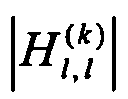
- a pilot symbol based downlink channel estimate provides the channel state information represented as L x L diagonal matrix H and (k) with diagonal elements H and ( k ) / 1, l .
- the elements H and ( k ) / 1, 1 represent the estimated fading on the L subcarriers and are detected from the pilot symbols of the previous MC-CDMA frame.
- An MC-CDMA frame is a block of consecutive MC-CDMA symbols. In the following, an ideal downlink channel estimation is assumed.
- the sequence s ( k ) / pre is modulated onto the L subcarriers via the Inverse Fast Fourier Transform (IFFT) and finally a guard interval in the form of a cyclic extension is added.
- IFFT Inverse Fast Fourier Transform
- Multipath channel During propagation over the frequency-selective time variants Multipath channel is the transmission signal through the Multipath channel itself through the so-called AWGN noise (Additive White Gaussian Noise) and by the disturbing Influences influenced by other users.
- AWGN noise Additional White Gaussian Noise
- the received signal is after removal of the guard interval and after a Fast Fourier Transformation (FFT) where the L x L diagonal matrix H (k) represents the channel matrix with the diagonal elements H ( k ) / l, l .
- FFT Fast Fourier Transformation
- the received signal is then equalized and finally decoded.
- Fig. 2 shows a block diagram a generalized TDD / MC CDMA uplink receiver, the various single-user-detection (SUD) and multi-user-detection (MUD) equalization measures and concepts, which will be described below.
- the main weight of the investigations made here lies on transmission power predistortion techniques, where the total transmission power is just as big like the transmission power without predistortion. It will be here noted that by applying the predistortion with transmit power limitation the available transmission power redistributed to the subcarriers used and no additional power is entered into the transmission becomes. Solutions that have no performance restriction lead to the uncontrolled transmission of power at the transmitter and therefore can not be realized in practice become.
- the predistortion with transmit power restriction is from the essay by M. Schnell already mentioned: “System inherent Disturbances in spread spectrum - multiple access methods for mobile communications ", progress reports VDI, Duesseldorf: VDI publishing house, row 10, No. 505, 1997 known.
- Equation (4) reduces to where G ( k ) / l, l is the no-power distortion coefficient and W ( k ) is the normalization factor that keeps the emitted power constant.
- W ( k ) is given by
- Pre-Eq MRC Maximum Ratio Combining Pre-Equalization
- MRC predistortion The disadvantage of MRC predistortion is that they the orthogonality of spreading codes further impaired or even destroyed and therefore the multiple access errors (MAI; Multiple Access Interference) increases.
- MAI Multiple Access Interference
- ECG Equal Gain Combining
- Zero Forcing restores orthogonality between users and eliminates MAI by inverting channel characteristics.
- ZF Zero Forcing
- the resulting predistortion coefficient is:
- Controlled Equalization combines a modified version of EGC and IF predistortion. If the amount of the channel coefficient is below a threshold a thresh , only the EGC is used to prevent large amounts of power from being applied to high fading subcarriers. Otherwise ZF will be executed.
- the assigned predistortion coefficient is: where the normalization factor W ( k ) is the same is.
- the disadvantage of CE is that the optimal threshold must be determined by preliminary examinations. The optimum depends on both the instantaneous signal-to-noise ratio (SNR) and the number K of active users.
- Quadrature-Minimum Mean Square Error Pre-Equalization Is Not a Real Uplink MMSE Predistortion Technique This solution is called quasi-MMSE because of its similarity to downlink "MMSE per-Subcarrier Equalization” (MMSE-PS).
- the assigned predistortion coefficient is:
- MMSE-PS is the best known single user detection (SUD) technology represents, it can be assumed that the quasi-MMSE predistortion works similarly well. It is already proven have been that the quasi-MMSE predistortion is a suboptimal Solution of OMSP predistortion.
- the quasi-MMSE predistortion requires knowledge of both the number K of active users and the interference variance ⁇ 2 . This introduces additional computational complexity at the transmitter.
- Mod-quasi-MMSE Mod-quasi-MMSE reduces the computational complexity of quasi-MMSE by choosing a fixed value ⁇ that replaces K and ⁇ 2 .
- the coefficient ⁇ is optimized for a given value of the signal-to-noise ratio SNR which corresponds to the maximum acceptable bit error rate (BER) for the transmission system. This is done assuming the worst case, which corresponds to a fully loaded system.
- the mod-quasi-MMSE predistortion provides the coefficients:
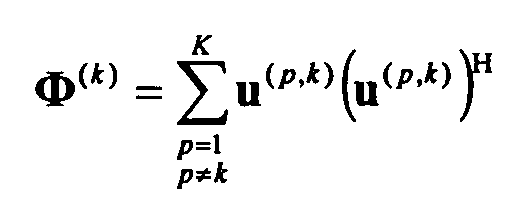
- Pre-equalization based on signal-over-interference-to-noise ratio optimization that is predistortion based on maximizing the signal / "noise plus noise” distance, provides the predistortion matrix: where the LxL matrix is.
- I L represents the L ⁇ L unit matrix.
- OMSP predistortion requires a lot of computational complexity which makes this technique difficult to implement in practice.
- the receiving-side equalization of the channel can in various Be carried out manner, as from the already mentioned Literature by S. Kaiser: “Multi-Carrier CDMA Mobile Radio Systems - Analysis and Optimization of Detection, Decoding and Channel Estimation ", Progress Reports VDI, Düsseldorf: VDI Verlag, Series 10, No.531, 1998.
- the main difference between these two Techniques is that the MUD techniques information take advantage of other users to fight MAI while the SUD techniques do not. Below are just general comments on the different equalization techniques made.
- the "Single User Detection” (SUD) techniques are basically much simpler than performing the “Multi User Detection” (MUD) techniques.
- the "Multi User Detection" (MUD) techniques can be divided into linear and non-linear techniques.
- linear techniques consider the MUD Minimum Mean Square Error Equalization (MMSE-MUD).
- the received signal r is multiplied by the equalization matrix G post and decoded.
- PIC Parallel Interference Cancellation
- the method according to the invention of the combined channel predistortion / equalization technique consists in, transmission-side predistortion and to combine receive-side equalization. Thereby can greatly improve the performance become.
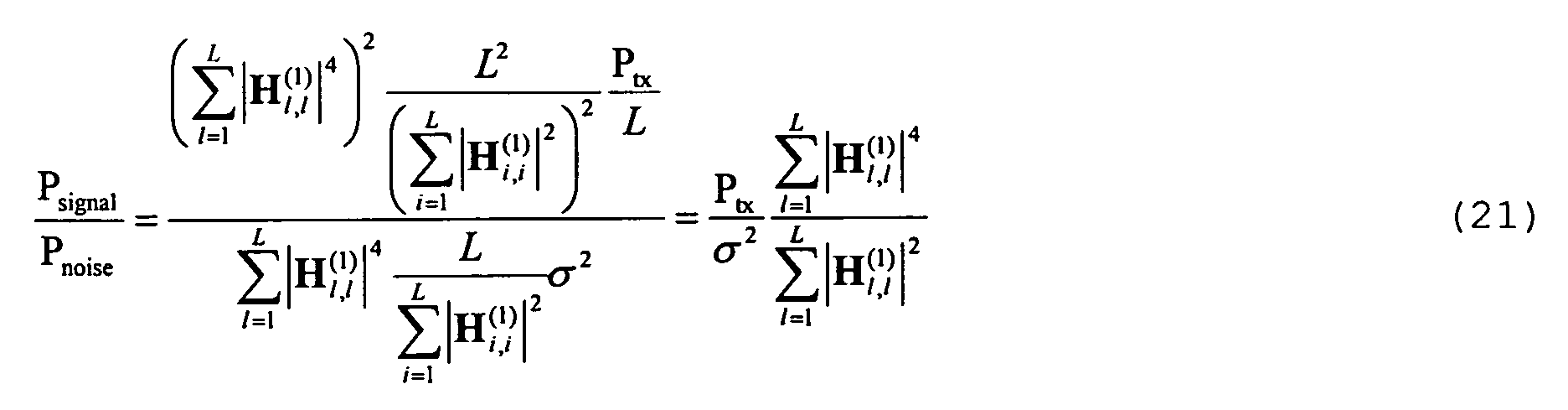
- the ratio of signal power to noise power at the receiver after despreading is considered. It can be considered as represent where P tx the transmission power, P signal represent the useful signal power at the receiver after despreading and P noise the interference power at the receiver after despreading.
- the basis of these simulations mobile radio channel is an independent Rayleigh fading channel.
- the spreading code length, the number of users and the used predistortion and Equalization techniques are variable.
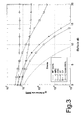
- CE and quasi-MMSE exceed the other predistortion techniques.
- FIG. 4 shows the performance gains which with the combined predistortion / equalization technique according to the method according to the invention in comparison to the transmitting side Predistortion or the receiving-side equalization, respectively be achieved alone. It can be seen that the combined predistortion / equalization both the predistortion alone as well as the equalization alone surpasses.
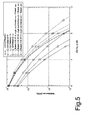
- Fig. 5 shows the advantages of combined predistortion / equalization in the single user case.
- the Predistortion and equalization is the efficiency in the single user case about the same size and corresponds to the Matched Filter (MF) boundary.
- MF Matched Filter
Landscapes
- Engineering & Computer Science (AREA)
- Signal Processing (AREA)
- Computer Networks & Wireless Communication (AREA)
- Power Engineering (AREA)
- Mobile Radio Communication Systems (AREA)
- Cable Transmission Systems, Equalization Of Radio And Reduction Of Echo (AREA)
Abstract
Description
- "Maximum Ratio Combining" (MRC);
- "Equal Gain Combining" (EGC);
- "Zero Forcing"(ZF)-Kriterium;
- "Minimum Mean Square Error"(MMSE)-Kriterium;
- "Maximum Likelihood"(ML)-Kriterium;
- "Interference Cancellation".
- Fig.1
- das Blockschaltbild eines TDD/MC-CDMA-Uplink-Senders eines mobilen Nutzers k,
- Fig.2
- das verallgemeinerte Blockschaltbild eines TDD/MC-CDMA-Uplink-Empfängers,
- Fig.3
- in einem Abhängigkeitsdiagramm (Bitfehlerrate in Abhängigkeit vom Signal/Rausch-Abstand Eb/N0 in dB) die Leistungsfähigkeit verschiedener grundsätzlicher TDD/MC-CDMA-Vorverzerrungstechniken mit einer Spreizcodelänge L=16 und K=16 aktiven Nutzern,
- Fig.4
- in einem Abhängigkeitsdiagramm (Bitfehlerrate in Abhängigkeit vom Signal/Rausch-Abstand Eb/N0 in dB) Leistungsfähigkeitsgewinne, die mit dem kombinierten Vorverzerrungs-/Entzerrungsverfahren nach der Erfindung für eine Vollbelastung von K=8 aktiven Nutzern und eine Spreizcodelänge L=8 erreicht werden, und
- Fig.5
- in einem Abhängigkeitsdiagramm (Bitfehlerrate in Abhängigkeit vom Signal/Rausch-Abstand Eb/N0 in dB) die Single-User-Grenzen von Entzerrung, Vorverzerrung jeweils allein und kombinierter Vorverzerrung/Entzerrung gemäß dem Verfahren nach der Erfindung.












Claims (17)
- Verfahren zur drahtlosen Übertragung digitaler Signale unter Anwendung von Entzerrungsmaßnahmen, welche den aktuellen Einfluss des Übertragungskanals berücksichtigen, gekennzeichnet durch die Kombination beliebiger sendeseitig durchgeführter Vorverzerrungsmaßnahmen mit beliebigen empfangsseitig durchgeführten Entzerrungsmaßnahmen.
- Verfahren nach Anspruch 1, dadurch gekennzeichnet, dass die durchgeführten Vorverzerrungs- bzw. Entzerrungsmaßnahmen auf dem an sich bekannten Konzept des "Maximum Ratio Combining" (MRC) oder des "Equal Gain Combining" (EGC) oder des "Zero Forcing"(ZF)-Kriteriums oder des "Minimum Mean Square Error"(MMSE)-Kriteriums oder des "Maximum Likelihood"(ML)-Kriteriums oder der "Interference Cancellation" beruhen.
- Verfahren nach Anspruch 1, dadurch gekennzeichnet, dass bei Anwendung in einem Mehrträgerübertragungsverfahren die sendeseitige Vorverzerrung und die empfangsseitige Entzerrung anhand einer Manipulation der Einzelträger vorgenommen werden.
- Verfahren nach Anspruch 3, dadurch gekennzeichnet, dass eine sendeseitig durchgeführte Vorverzerrungsmaßnahme darin besteht, die vorhandene Signalenergie in geeigneter Weise auf die verschiedenen Träger aufzuteilen.
- Verfahren nach Anspruch 1, dadurch gekennzeichnet, dass bei Anwendung in einem Einträgerübertragungsverfahren die senderseitige Vorverzerrung und die empfangsseitige Entzerrung im Frequenzbereich vorgenommen werden.
- Verfahren nach Anspruch 1, dadurch gekennzeichnet, dass bei Anwendung in einem Vielfachzugriff-System die empfangsseitige Entzerrungsmaßnahme nur vom Empfangssignal des betrachteten Nutzers bei der Detektion abgeleitet wird, also ein sogenanntes "Single User Detection"(SUD)-Verfahren vorgenommen wird.
- Verfahren nach Anspruch 1, dadurch gekennzeichnet, dass bei Anwendung in einem Vielfachzugriff-System die empfangsseitige Entzerrungsmaßnahme von den Empfangssignalen mehrerer oder aller Nutzer bei der Detektion abgeleitet wird, also ein sogenanntes "Multi User Detection"(MUD)-Verfahren vorgenommen wird.
- Verfahren nach Anspruch 1, dadurch gekennzeichnet, dass bei Anwendung in einem Multiplexsystem die empfangsseitige Entzerrungsmaßnahme von einem einzelnen Informationssymbol bei der Detektion abgeleitet wird.
- Verfahren nach Anspruch 1, dadurch gekennzeichnet, dass bei Anwendung in einem Multiplexsystem die empfangsseitige Entzerrungsmaßnahme von mehreren oder allen im Multiplex übertragenen Informationssymbolen bei der Detektion abgeleitet wird.
- Verfahren nach Anspruch 1, gekennzeichnet durch eine Kombination mit beliebigen Standardverfahren der Nachrichtenübertragung, wie unterschiedlichen Modulationsverfahren, verschiedenen Codierungsverfahren, "Space-Time Coding" und "Multiple-Input Multiple-Output"(MIMO)-Verfahren.
- Verfahren nach einem der vorhergehenden Ansprüche, dadurch gekennzeichnet, dass die Signalübertragung in einem Zeitduplex-System betrieben wird.
- Verfahren nach Anspruch 11, dadurch gekennzeichnet, dass die sendeseitige Vorverzerrung jeweils auf der Grundlage der Ergebnisse einer Kanalschätzung des vorher am Ort des Senders empfangenen Signals eingestellt wird.
- Verfahren nach einem der Ansprüche 1 bis 10, dadurch gekennzeichnet, dass die Signalübertragung in einem Frequenzduplex-System oder Codeduplex-System betrieben wird.
- Verfahren nach Anspruch 1 und 3, dadurch gekennzeichnet, dass das verwendete Mehrträgerübertragungsverfahren das sogenannte MC-CDMA-Verfahren, d.h. das "Multi-Carrier Code-Division Multiple-Access"-Verfahren ist.
- Verfahren nach einem der vorhergehenden Ansprüche, dadurch gekennzeichnet, dass die sendeseitigen Vorverzerrungsmaßnahmen und die empfangsseitigen Entzerrungsmaßnahmen bei der Signalübertragung in einem Funknetz zwischen den Sendern von mobilen, portablen oder festen Sende/Empfangsstationen und einer Basisstation im sogenannten "Uplink"-Betrieb vorgenommen werden.
- Verfahren nach einem der Ansprüche 1 bis 14, dadurch gekennzeichnet, dass die sendeseitigen Vorverzerrungsmaßnahmen und die empfangsseitigen Entzerrungsmaßnahmen bei der Signalübertragung in einem Funknetz zwischen einer Basisstation und den Empfängern von mobilen, portablen oder festen Sende/Empfangsstationen im sogenannten "Downlink"-Betrieb vorgenommen werden.
- Verfahren nach Anspruch 15 oder 16, dadurch gekennzeichnet, dass die Signalübertragung mit dem Zeitduplex-Mehrträger-CDMA-Verfahren vorgenommen wird, also mit "Time Division Duplex Multi-Carrier Code-Division Multiple-Access" (TDD/MC-CDMA).
Applications Claiming Priority (2)
| Application Number | Priority Date | Filing Date | Title |
|---|---|---|---|
| DE10343018 | 2003-09-16 | ||
| DE2003143018 DE10343018A1 (de) | 2003-09-16 | 2003-09-16 | Verfahren zur drahtlosen Signalübertragung mit Entzerrungsmaßnahmen |
Publications (2)
| Publication Number | Publication Date |
|---|---|
| EP1517498A2 true EP1517498A2 (de) | 2005-03-23 |
| EP1517498A3 EP1517498A3 (de) | 2005-08-31 |
Family
ID=34177797
Family Applications (1)
| Application Number | Title | Priority Date | Filing Date |
|---|---|---|---|
| EP04020826A Ceased EP1517498A3 (de) | 2003-09-16 | 2004-09-02 | Verfahren zur drahtlosen Signalübertragung mit Entzerrungsmassnahmen |
Country Status (2)
| Country | Link |
|---|---|
| EP (1) | EP1517498A3 (de) |
| DE (1) | DE10343018A1 (de) |
Cited By (1)
| Publication number | Priority date | Publication date | Assignee | Title |
|---|---|---|---|---|
| WO2022174841A1 (zh) * | 2021-09-30 | 2022-08-25 | 杭州万高科技股份有限公司 | G3-plc电力载波线系统的非线性预均衡装置和方法 |
Family Cites Families (2)
| Publication number | Priority date | Publication date | Assignee | Title |
|---|---|---|---|---|
| US7054375B2 (en) * | 2000-12-22 | 2006-05-30 | Nokia Corporation | Method and apparatus for error reduction in an orthogonal modulation system |
| CA2375823A1 (en) * | 2002-03-11 | 2003-09-11 | Catena Networks Canada Inc. | Improved equalization scheme for adsl receivers in presence of an under-sampled or over-sampled transmit ifft |
-
2003
- 2003-09-16 DE DE2003143018 patent/DE10343018A1/de not_active Withdrawn
-
2004
- 2004-09-02 EP EP04020826A patent/EP1517498A3/de not_active Ceased
Cited By (1)
| Publication number | Priority date | Publication date | Assignee | Title |
|---|---|---|---|---|
| WO2022174841A1 (zh) * | 2021-09-30 | 2022-08-25 | 杭州万高科技股份有限公司 | G3-plc电力载波线系统的非线性预均衡装置和方法 |
Also Published As
| Publication number | Publication date |
|---|---|
| DE10343018A1 (de) | 2005-05-04 |
| EP1517498A3 (de) | 2005-08-31 |
Similar Documents
| Publication | Publication Date | Title |
|---|---|---|
| DE60217706T2 (de) | Stfbc-kodierungs-/-dekodierungsvorrichtung und -verfahren in einem ofdm-mobilkommunikationssystem | |
| DE69929788T2 (de) | Verfahren und vorrichtung zur diversitätsübertragung | |
| DE60303598T2 (de) | Verfahren und system für multikanalsender und empfänger mit amplituden und phasenkalibrierung | |
| DE60223367T2 (de) | Verfahren zur Übertragung von einer Basisstation eines MC-CDMA-Telekommunikationssystems zu einer Vielzahl von Benutzern | |
| DE602004006583T2 (de) | Vorrichtung und Verfahren zur Unterdrückung von Interferenzsignalen in einem System mit mehreren Antennen | |
| DE60213193T2 (de) | Verfahren für eine Aufwärtsstrecken-Vorverzerrung für ein MC-CDMA-Telekommunnikationssystem | |
| DE102013113536A1 (de) | Empfänger, Empfängerschaltungen und Verfahren zum Bereitstellen eines interferenzreduzierten Signals | |
| DE60215608T2 (de) | Vorverzerrungsverfahren für einen Mehrträger-CDMA-Aufwärtskanal | |
| DE60123282T2 (de) | Übertragen eines digitalen signals | |
| DE60316477T2 (de) | Vorrichtung und verfahren zur vorkodierung eines mehrträgersignals | |
| DE202004021936U1 (de) | Frequenzselektive Sendesignalgewichtung fürMehrfachantennen-Kommunikationssysteme | |
| DE60207773T2 (de) | Entzerrung mit globaler minimierung des mittleren quadratischen Fehlers | |
| EP1517498A2 (de) | Verfahren zur drahtlosen Signalübertragung mit Entzerrungsmassnahmen | |
| CN101335551A (zh) | 基于dft-s-gmc系统多天线分集方案的sinr估计方法 | |
| Bahri et al. | Performance of adaptive beamforming algorithm for LMS-MCCDMA MIMO smart antennas. | |
| EP1605653B1 (de) | Verfahren zur drahtlosen Signalübertragung mit Entzerrungsmassnahmen | |
| Yeh et al. | Space-Time Interleaved OFDM Systems in Impulsive Noise and Mobile Fading Channels | |
| Srinivasulu et al. | Analysis of multiple input multiple output-orthogonal frequency division multiplexing with dynamic optimal power allocation | |
| Anitha et al. | MIMO system performance using various modulations under different channels with STBC, ZF and MRC | |
| Chang et al. | On the performance of a widely linear SC-FDE system under multiple independent interferences | |
| Babu et al. | Quality of service aware inter carrier interference mitigation and antenna selection schemes for beyond 4G systems | |
| Silva et al. | Performance and analysis of pre-filtering techniques for MISO downlink TDD MC-CDMA systems | |
| Al-Fuhaidi et al. | Interference cancellation with space diversity for downlink MC-CDMA systems | |
| DE19827514A1 (de) | Adaptive Subträgerselektion zur optimierten Übertragung eines Multiträger-Signals | |
| DE102005044963B4 (de) | Verfahren zur Übertragung digitaler Nachrichtensignale |
Legal Events
| Date | Code | Title | Description |
|---|---|---|---|
| PUAI | Public reference made under article 153(3) epc to a published international application that has entered the european phase |
Free format text: ORIGINAL CODE: 0009012 |
|
| AK | Designated contracting states |
Kind code of ref document: A2 Designated state(s): AT BE BG CH CY CZ DE DK EE ES FI FR GB GR HU IE IT LI LU MC NL PL PT RO SE SI SK TR |
|
| AX | Request for extension of the european patent |
Extension state: AL HR LT LV MK |
|
| PUAL | Search report despatched |
Free format text: ORIGINAL CODE: 0009013 |
|
| AK | Designated contracting states |
Kind code of ref document: A3 Designated state(s): AT BE BG CH CY CZ DE DK EE ES FI FR GB GR HU IE IT LI LU MC NL PL PT RO SE SI SK TR |
|
| AX | Request for extension of the european patent |
Extension state: AL HR LT LV MK |
|
| 17P | Request for examination filed |
Effective date: 20060118 |
|
| AKX | Designation fees paid |
Designated state(s): AT BE BG CH CY LI |
|
| RBV | Designated contracting states (corrected) |
Designated state(s): AT DE ES FR GB |
|
| RAP1 | Party data changed (applicant data changed or rights of an application transferred) |
Owner name: DEUTSCHES ZENTRUM FUER LUFT- UND RAUMFAHRT E.V. |
|
| REG | Reference to a national code |
Ref country code: DE Ref legal event code: 8566 |
|
| 17Q | First examination report despatched |
Effective date: 20060524 |
|
| APBK | Appeal reference recorded |
Free format text: ORIGINAL CODE: EPIDOSNREFNE |
|
| APBN | Date of receipt of notice of appeal recorded |
Free format text: ORIGINAL CODE: EPIDOSNNOA2E |
|
| APAV | Appeal reference deleted |
Free format text: ORIGINAL CODE: EPIDOSDREFNE |
|
| APBT | Appeal procedure closed |
Free format text: ORIGINAL CODE: EPIDOSNNOA9E |
|
| STAA | Information on the status of an ep patent application or granted ep patent |
Free format text: STATUS: THE APPLICATION HAS BEEN REFUSED |
|
| 18R | Application refused |
Effective date: 20111104 |