EP1517574B1 - Procédé, dispositif de contôle et noeud de réseau pour maintenir une connection en cas d'une demande en attente - Google Patents
Procédé, dispositif de contôle et noeud de réseau pour maintenir une connection en cas d'une demande en attente Download PDFInfo
- Publication number
- EP1517574B1 EP1517574B1 EP03077966A EP03077966A EP1517574B1 EP 1517574 B1 EP1517574 B1 EP 1517574B1 EP 03077966 A EP03077966 A EP 03077966A EP 03077966 A EP03077966 A EP 03077966A EP 1517574 B1 EP1517574 B1 EP 1517574B1
- Authority
- EP
- European Patent Office
- Prior art keywords
- request
- connection
- maintaining
- message
- communication apparatus
- Prior art date
- Legal status (The legal status is an assumption and is not a legal conclusion. Google has not performed a legal analysis and makes no representation as to the accuracy of the status listed.)
- Expired - Lifetime
Links
- 238000000034 method Methods 0.000 title claims abstract description 131
- 238000004891 communication Methods 0.000 claims abstract description 62
- 230000004044 response Effects 0.000 claims abstract description 35
- 230000011664 signaling Effects 0.000 claims description 30
- 230000015654 memory Effects 0.000 claims description 19
- 238000010295 mobile communication Methods 0.000 claims description 6
- 238000004590 computer program Methods 0.000 claims description 4
- 102000047724 Member 2 Solute Carrier Family 12 Human genes 0.000 claims 4
- 101150081027 RNC1 gene Proteins 0.000 claims 4
- 108091006621 SLC12A1 Proteins 0.000 claims 4
- 108091006620 SLC12A2 Proteins 0.000 claims 4
- 101100426111 Saccharomyces cerevisiae (strain ATCC 204508 / S288c) TRM2 gene Proteins 0.000 claims 4
- 101150015070 rnc2 gene Proteins 0.000 claims 4
- 102000018059 CS domains Human genes 0.000 description 9
- 108050007176 CS domains Proteins 0.000 description 9
- 230000006870 function Effects 0.000 description 5
- 238000010586 diagram Methods 0.000 description 4
- 230000008901 benefit Effects 0.000 description 3
- 230000000977 initiatory effect Effects 0.000 description 3
- 230000001960 triggered effect Effects 0.000 description 3
- 238000012790 confirmation Methods 0.000 description 2
- 230000007423 decrease Effects 0.000 description 2
- 230000003247 decreasing effect Effects 0.000 description 2
- 230000002123 temporal effect Effects 0.000 description 2
- 230000001419 dependent effect Effects 0.000 description 1
- 230000007704 transition Effects 0.000 description 1
Images



Classifications
-
- H—ELECTRICITY
- H04—ELECTRIC COMMUNICATION TECHNIQUE
- H04W—WIRELESS COMMUNICATION NETWORKS
- H04W76/00—Connection management
- H04W76/20—Manipulation of established connections
- H04W76/25—Maintenance of established connections
-
- H—ELECTRICITY
- H04—ELECTRIC COMMUNICATION TECHNIQUE
- H04W—WIRELESS COMMUNICATION NETWORKS
- H04W4/00—Services specially adapted for wireless communication networks; Facilities therefor
- H04W4/16—Communication-related supplementary services, e.g. call-transfer or call-hold
-
- H—ELECTRICITY
- H04—ELECTRIC COMMUNICATION TECHNIQUE
- H04W—WIRELESS COMMUNICATION NETWORKS
- H04W8/00—Network data management
- H04W8/02—Processing of mobility data, e.g. registration information at HLR [Home Location Register] or VLR [Visitor Location Register]; Transfer of mobility data, e.g. between HLR, VLR or external networks
- H04W8/08—Mobility data transfer
Definitions
- the present invention relates to the field of communication, and more specifically to the field of establishing and maintaining a connection between a communication device and a network.
- a communication device such as a mobile radio terminal, a mobile telephone, a pager, a communicator, a smartphone, an electronic organizer, etc. communicates with a core network (CN) via a radio access network, such as the UTRAN (UMTS Terrestrial Radio Access Network) of the UMTS system or the BSS (Base Station Sub-system) of the GSM/GPRS system.
- the UTRAN comprises one or several nodes B (base stations), which are controlled by a radio network controller (RNC).
- the BSS comprises one or several base transceiver stations (base stations) controlled by a base station controller (BSC).
- each portable communication device is assigned an identity, which the system has knowledge of (see below).
- the mobility management protocol is responsible for updating the location area when a transition from a first to a second area occurs.
- the core network may comprise two service domains, the CS (circuit switched) domain and the PS (packet switched) domain.
- the communication device may be identified by an international mobile subscriber identity (IMSI) or a temporary mobile subscriber identity (TMSI), which is a temporary identity within the LA/RA and which is non-mandatory in the CS domain.
- IMSI international mobile subscriber identity
- TMSI temporary mobile subscriber identity
- P-TMSI packet temporary mobile subscriber identity
- the CS domain of the core network may comprise three network nodes, the MSC/VLR (Mobile Switching Center/Visitor Location Register), the GMSC (Gateway Mobile Switching Center) and HLR (Home Location Register).
- the PS domain of the core network may comprise three network nodes, the SGSN (Serving GPRS Support Node) a GGSN (Gateway GPRS Support Node) and a HLR.
- Procedures such as attach, paging, and location update are defined separately for CS and PS.
- Location area (LA) update may be performed for CS, whereas routing area (RA) update may be performed for PS.
- LA Location area
- RA routing area
- the mobility management (MM) protocol is responsible for mobility management in the CS domain
- the GPRS mobility management (GMM) protocol is responsible in the PS domain.
- the MM and GMM protocols facilitate mobility management communication that is logically provided between the core network and the communication device, and which is not interpreted by the UTRAN or the BSS. These procedures comprises e.g. location management for keeping track of the present location and/or routing area of the communication device, authentication, temporary identity management and equipment check.
- the MM and GMM protocols obtain and manage signaling connections for the layers above them in the protocol stack.
- a point-to-point CS signaling connection between the MM unit in the communication device and the MM unit in the CN may be provided.
- a virtual point-to-point PS signaling connection between the GMM unit in the communication device and the GMM unit in the CN may be provided.
- Upper layers requesting such channels may comprise the CC (Call Control) protocol for control of voice calls, SM (Session Management) protocol for control of data sessions, and control of additional messaging services, such as SMS (Short Message Service), MMS (Multimedia Messaging Service).
- the upper layers are requesting the channels by transmitting a connection establishment to the MM/GMM unit, which will obtain the channel by triggering an establishment of a signal connection.
- the signal connection is set up by lower layers, such as the radio resource (RR) or radio resource control (RRC) layers.
- RR radio resource
- RRC radio resource control
- a PS signaling connection is triggered by transmitting a connection establishment request followed by a message for requesting a certain MM/GMM procedure. If the GMM wishes to maintain the established connection after the MM/GMM procedure is finished, it may indicate a Follow-On Request (FOR) in a first message for requesting a certain MM/GMM procedure, which is transmitted to the CN.
- a maintained connection is e.g. desired if the GMM unit from the upper layers has received a connection establishment request, or if it has additional procedures to perform.
- Maintaining a connection instead of establishing a new connection decreases service response time, reduces power consumption, saves radio resources, and enhances quality of services to the upper layers.
- the FOR has to be incorporated into the first message for establishing the connection.
- the GMM unit receives an establishment request from an upper layer after the request for a certain MM/GMM procedure has been transmitted and before the established connection has been terminated, the connection might be terminated although a procedure is pending and awaiting service. If the connection could be maintained although the request for the MM/GMM procedure has been transmitted, service time and power consumption could be decreased.
- the same problem occurs in the CS domain if the MM unit receives a connection establishment request or a request for a certain MM procedure from the upper layer when a connection establishment request has been transmitted to the network MM unit.
- WO-01/91382 discloses a system for provided routing area update message in a UMTS-based network.
- An attach and routing area update request is transmitted from a mobile station to a network node.
- Follow-on request is sent in the message if there is pending uplink traffic (signaling or user data).
- an acceptance message is transmitted to the mobile station, which may finish the procedure by returning a completion message.
- WO 95/33353 discloses that in a telephone network after a transaction, such as a telephone call, has ended, the connection is not fully released. If a connection is to be set up upon ending of a current call, a flag is set in a connection management system. Depending on the status of the flag, different actions are taken in the network. The connection may be maintained for a predetermined interval.
- a method in a communication apparatus achieves the object of the invention.
- a connection between the communication apparatus and a network node is established in response to issuing a request relating to a first procedure, such as a mobility management procedure, issued by a MM/GMM unit within the communication apparatus.
- a request relating to a first procedure such as a mobility management procedure
- a MM/GMM unit within the communication apparatus.
- an acceptance message is received in response to the transmitting of the request.
- the transmitting of the maintaining request may be executed if the pending request relating to the second procedure is received after the request relating to the first procedure is transmitted and before the acceptance message is received. Furthermore, the maintaining request may be transmitted separately or be incorporated into a response or acknowledgement message transmitted in response to the acceptance message. The established connection may be terminated when it is no longer in use.
- the connection may be a circuit switched or a packet switched signaling connection.
- the method may be incorporated into a mobility management protocol, wherein e.g. a MM or GMM unit executes the method.
- the procedure initiating the request may be a location updating procedure requiring a signaling connection.
- a second method achieves the object of the invention.
- the second method being implemented in a network node will maintain an established connection to a communication apparatus.
- a request relating to a specific procedure is received from the communication apparatus.
- an acceptance message is transmitted, which may comprise any data relating to the request.
- the connection is maintained a predetermined period of time after the acceptance message is transmitted.
- the connection is maintained if a maintaining request is received within the predetermined period of time.
- the established connection may be maintained until the maintaining request for maintaining the connection is received, or until the time period has lapsed.
- the transmitted acceptance message may require an acknowledgement message in return, in which the maintaining message may be incorporated.
- the network node maintains the connection the predetermined period of time such that the communication apparatus will have time to prepare and transmit the acknowledgement message.
- a control device for maintaining an established connection to a communication node of a communication network achieves the object of the invention.
- the control device is adapted to receive an acceptance message and issue, if any request relating to a second procedure is pending, a maintaining request.
- a communication apparatus comprising the control device achieves the object of the invention.
- the apparatus may be a mobile radio terminal, a mobile telephone, a pager, a communicator, a personal digital assistant, a smartphone, or an electronic organizer.
- a control device of a network node for maintaining an established connection to a communication apparatus achieves the object of the invention.
- the control device is adapted to transmit an acceptance message in response to receiving a request relating to a specific procedure and to maintain said connection at least a predetermined period of time after the acceptance message is transmitted, and to further wait if a maintaining request is received from the communication apparatus within the predetermined period of time.
- a network node comprising the network node control device for maintaining an established connection to a communication apparatus achieves the object of the invention.
- the network node may be a serving GPRS support node (SGSN), a gateway GPRS support node (GGSN), a mobile switching center/visitor location register (MSC/VLR), a home location register (HLR) or a gateway mobile switching center (GMSC).
- SGSN serving GPRS support node
- GGSN gateway GPRS support node
- MSC/VLR mobile switching center/visitor location register
- HLR home location register
- GMSC gateway mobile switching center
- a computer program product embodied on a computer readable medium comprising computer readable instructions for carrying out the method of the invention when run by an electronic device of the communication apparatus having digital computer capabilities achieves the object of the invention.
- a computer program product embodied on a computer readable medium comprising computer readable instructions for carrying out the method of the invention when run by an electronic device of the network node having digital computer capabilities achieves the object of the invention
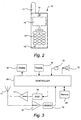
- Figs. 1 and 2 illustrate a mobile telecommunication network and a mobile terminal 10, which may operate in said network.
- the mobile terminal 10 comprises an antenna 11 for transmitting signals to and for receiving signals from a base transceiver station (base stations) B1-B12 serving the area wherein the mobile terminal 10 is located.
- Each base station B1-B12 is part of a radio access network, such as a UTRAN and/or a BSS.
- Each base station B1-B12 is controlled by a controller, such as a radio network controller (RNC) RNC1-RNC2 of a UMTS system or a base station controller (BSC) BSC1-BSC2 of a GSM/GPRS system.
- RNC radio network controller
- BSC base station controller
- Each BSC/RNC may control one or several base stations.
- the radio access network is connected to the core network (CN), which typically comprises network nodes for providing connections to landline communication networks when the mobile terminal 10 is involved in communicating speech or data.
- a mobile switching center/visitor location register (MSC/VLR) a gateway mobile switching center (GMSC) and a home location register (HLR) may provide a connection in the CS domain, and a serving GPRS support node (SGSN) SGSN1-SGSN2, a HLR, and a gateway GPRS support node (GGSN) in the PS domain.
- MSC/VLR and SGSN may serve one or several RNC/BSC, which may be different.
- Each base station B1-B12 is part of a user registration area (URA) URA1-URA5, which comprises one or several base stations.
- URA URA1-URA5 is part of a registration area (RA) RA1-RA3, which comprises one or several URA.
- RA registration area
- LA location area
- a user interface of the mobile terminal 10 comprises an earphone or loudspeaker 12, a microphone 13, a display 14, and a user input means, such as a keypad 15.
- Fig. 3 illustrates some components, which the mobile terminal 10 may comprise.
- the mobile terminal 10 is adapted to wirelessly communicating speech and data, such as according to the UMTS or GSM/GPRS mobile telecommunication standards.
- the mobile terminal 10 comprises e.g. a modulator 16 connected to a transmitter 17 for transmitting signals via the antenna 11.
- the antenna 11 is connected to a receiver 18, which is connected to a demodulator 19 for receiving signals.
- the interface for communicating with the communication network may comprise several other components not shown here.
- the signals include signaling information in accordance with the air interface standard of the applicable wireless network or system in which the mobile terminal 10 operates.
- the modulator 16 and the demodulator 19 are connected to a controller 30.
- the controller 30 comprises circuitry required for implementing the audio and logic functions of the mobile terminal 10.
- the controller 30 may be comprised of a digital signal processor, a microprocessor, various analog and digital converters, an ASIC (Application Specific Integrated Circuit) and other components.
- the control and signal processing functions of the mobile terminal 10 are allocated between these components and devices according to their respective capabilities.
- the controller 30 also comprises receiver means and issuing means or transmitting means, such as input and output terminals, on which messages according to the invention may be received from/transmitted to the receiver 18 and the transmitter 17, respectively.
- the controller 30 together with the output terminal may form the issuing means for issuing messages according to the invention.
- the mobile terminal 10 further comprises various memories shown collectively as the memory 31.
- the memory may comprise a RAM (Random Access Memory), a ROM (Read Only Memory), and a SIM/USIM (Subscriber Identity Module/UMTS SIM) card.
- RAM Random Access Memory
- ROM Read Only Memory
- SIM/USIM Subscriber Identity Module/UMTS SIM
- IMSI and P-TMSI system parameters and mobile terminal specific information
- Computer readable instructions may be stored in the memory, which may carry out the method according to the invention when run by the controller 30 having digital computer capabilities.
- the controller 30 may comprise a register for storing data and/or instructions for carrying out the method of the invention.
- Fig. 4 schematically illustrates the network node, which is adapted according to the present invention.
- the network node may be the SGSN node or the MSC/VLR node, or any other node in the network.
- the network node comprises a node controller 50, which is responsible for controlling and executing network communication and protocol based procedures, such as according to the MM/GMM protocol.
- the node controller 50 comprises circuitry required for implementing the logical functions of the network node.
- the node controller 50 may be comprised of one or several digital signal processors, microprocessors, various analog and digital converters, ASICs (Application Specific Integrated Circuit) and other components for communicating with the mobile terminal 10 by means of one or several access nodes of the communication system, such as the base stations B1-B12.
- ASICs Application Specific Integrated Circuit
- the node controller 50 is connected to a receiver unit 51 and a transmitter unit 52 for receiving or transmitting e.g. data from/to the mobile terminal 10. Furthermore, the node controller 50 may obtain data required according to the mobility management aspects according to the invention, such as an identifier of a new LA or RA in which the mobile terminal has entered, or obtain a new P-TMSI.
- the node controller 50 also comprises receiver means and issuing means or transmitting means, such as input and output terminals, on which messages according to the invention may be received from/transmitted to the receiver unit 51 and the transmitter unit 52, respectively.
- the node controller 50 together with the output terminal may form the issuing means for issuing messages according to the invention.
- the network node comprises a counter or a clock 54 for keeping track of when a specific message was sent to the mobile terminal 10.
- the counter or the clock 54 may be reset when the message is transmitted.
- the node controller 50 will be notified.
- the clock 54 together with the node controller 50 may form a waiting device, which is arranged to wait the predetermined period of time, during which the connection is maintained. If an acknowledgement message, such as the COMPLETE message in Fig. 5, is not received from the mobile terminal in response to the transmitted message when the notification is issued, the connection between the mobile terminal 10 and the network node may be terminated if no procedure is utilizing said connection.
- the network node further comprises various memories shown collectively as the memory 53.
- the network node memory 53 may comprise a RAM (Read Only Memory), and a ROM (Read Only Memory).
- RAM Read Only Memory
- ROM Read Only Memory
- the network node memory 53 may store permanent and temporal values of various system parameters and mobile terminal specific information, such as IMSI and P-TMSI relating to one or several mobile terminals.
- the network node memory 53 may also comprise several protocols for initiating and controlling the communication.
- Computer readable instructions may be stored in the memory, which may carry out the method according to the invention when run by the node controller 50.
- the node controller 50 may also comprise a register for storing data and/or instructions for carrying out the method of the invention.
- Fig. 5 is a signaling diagram illustrating the signaling scheme according to the invention.
- the mobile terminal 10 comprises a stack of protocols.
- the MM protocol is provided for supporting different procedures, e.g. location management, security management, mobile equipment management, and authentication procedures for executing security steps, such as network authentication, of a CS service.
- the GMM protocol supports PS services.
- GMM is a mobility management protocol for supporting procedures such as location management, authentication, temporary identity management, and equipment check.
- the MM and GMM protocols serve upper layers and initiate, establish and manage signaling connections for the layers above them (upper layers) in the protocol stack.
- the MM and GMM protocols obtain signaling connections, over which the upper layers may transmit information.
- Requests for obtaining the connections are triggered by the GMM/MM unit.
- the request to establish or initiate a connection may be provided by a RRC (Radio Resource Control) message, which may carry a message, such as a layer 3 (L3) message, e.g. attach request, routing/location area update request, or a service request initiated by the MM/GMM unit.
- RRC Radio Resource Control
- the MM/GMM unit of the mobile terminal 10 may transmit to the network node a request for a specific MM/GMM procedure over said connection.
- the request may e.g. be incorporated into a RRC message.
- a request for a specific MM/GMM procedure is referred to as a REQUEST.
- the mobile terminal 10 When the mobile terminal 10 e.g. enters from a first to a second location area in the CS domain, or from a first to a second routing area in the PS domain, the mobile terminal 10 must perform a location updating. Procedures for downloading e.g. parameters for the new LA/RA have to be provided when the mobile terminal 10 enters the new LA/RA. Such requests for mobility management are handled by the MM/GMM.
- the signaling between the mobile terminal 10 and the network will be explained with regard to a GMM implementation.
- the signaling may equally be implemented with regard to a MM implementation.
- a mobility service that needs a connection to the network i.e. the SGSN or MSC/VLR
- a connection establishment request is transmitted to the GMM unit in the mobile terminal 10.
- the GMM will generate and transmit a REQUEST to lower layers, which will transmit the REQUEST to the GMM unit of the network when an signaling connection is established.
- the REQUEST may comprise a request for a certain service, such as a request according to the session management (SM) protocol to obtain a signaling channel to transmit data over.
- SM session management
- the GMM unit may already have an ongoing procedure running when the connection establishment request is received from the upper layers.
- Such GMM procedures may comprise a routing area update request, a security check request, etc.
- the signaling connection, a PS signaling connection in this case may be maintained and used by the upper layers.
- the REQUEST may comprise any other information relating to the specific request, such as mobile terminal access capability, routing area identifier, current P-TMSI, etc., which is implementation specific.
- the GMM unit receives the connection establishment request relating to a second procedure from the upper layers before the REQUEST relating to a first procedure is transmitted, a Follow-On Request (FOR) may be attached to the REQUEST relating to the first procedure. Then, the established connection will be maintained when the procedure relating to the first procedure is finished, wherein the connection does not have to be established again.
- the second procedure may relate to the same procedure as the first procedure. This is e.g. the case if a PS session is turned off at the same time as a RA update is ongoing, wherein the GMM should execute a detach procedure.
- a FOR may be indicated if an event within the MM/GMM layer itself requires that a second procedure needs to be performed after a first procedure, such as an ongoing attach or RA update procedure, is completed.
- the GMM unit of the network will generate an acceptance message, referred to as ACCEPT in the following, for indicating that the REQUEST is received and handled.
- the ACCEPT may comprise any information relating to the specific REQUEST, such as a new P-TMSI, routing area identifier etc.
- COMPLETE completion message
- the upper layers may issue a connection establishment request relating to a second GMM procedure after the REQUEST message relating to the first GMM procedure has been transmitted to the network GMM unit.
- the FOR request may according to the invention be incorporated into the COMPLETE message finishing the procedure relating to first GMM procedure.
- a single bit in the COMPLETE message may implement the FOR request, wherein "1" indicates that FOR is valid, and "0" indicates that FOR is not valid. If FOR in the COMPLETE message is valid, the network GMM unit will maintain the connection, otherwise the connection is terminated when the procedure relating to the first GMM procedure is terminated.
- the network GMM unit may always wait for a COMPLETE message a predetermined period of time or until the message is received before the connection may be terminated.
- the time period may range from seconds to minutes, and may be tested in each particular case. If no COMPLETE message is received within the time period, the connection may be terminated whenever the connection is not utilized.
- the network GMM unit does not expect a COMPLETE message, it is arranged to not wait for any COMPLETE message. However, the mobile terminal may anyway issue the COMPLETE message, although the network will discard the message without any further processing.
- the mobile terminal 10 When the mobile terminal 10 has transmitted the COMPLETE message, it will transmit a connection establishment confirmation to the appropriate requesting protocol of the upper layer. The confirmation indicates that a signaling connection is available.
- Fig. 6 illustrates the steps of one embodiment of the method according to the invention, which may be executed in the mobile terminal 10.
- the GMM initiates a GMM procedure.
- the signal connection establishment procedure is initiated in step 101.
- the REQUEST with regard to the GMM procedure is transmitted to the network GMM.
- Step 101 and 102 may be executed in a single step as described above.
- the ACCEPT message is received from the network GMM.
- the COMPLETE message has not yet been transmitted, in step 104 it is determined whether the GMM has a pending request for a connection establishment, i.e.
- step 104 determines whether a connection establishment request relating to a second GMM procedure is received from the upper layers (or triggered by an internal GMM event) after the REQUEST was transmitted. If the answer in step 104 is yes, the FOR bit in the COMPLETE message is set to "valid" in step 105. However, if the answer in step 104 is no, it is determined in step 106 whether the procedure relating to the received ACCEPT message required a COMPLETE message. If the answer in step 106 is no, the procedure is ended. However, if the answer in step 106 is yes, the FOR bit in the complete message is set to "not valid" in step 107. The procedure continues from step 105 and 107 in step 108, wherein the COMPLETE message is transmitted to the network GMM. The signaling procedure may be ended when the connection is no longer in use.
- a response or acknowledgement message may alternatively always be sent regardless of whether it was requested by the network node or not. Then, the FOR bit of the COMPLETE message may be set to "valid" or "not valid”. If the network node was not expecting the response message, it does not have to pay any attention to the message, which may be discarded without any further processing.
- Fig. 7 illustrates one embodiment of the steps carried out in the network node according to the method of the invention.
- a first step 200 the signaling connection is established, and the REQUEST relating to the GMM procedure is received in step 201.
- Step 200 and 201 may be executed in a single step if the REQUEST is received together with the request to establish the signal connection.
- the specific procedure relating to the REQUEST such as a routing area update request, is identified.
- the network GMM performs any function required according to the procedure specified by the REQUEST, such as identifying a new RA and allocating a new P-TMSI. Any data that should be transmitted to the mobile terminal GMM is incorporated into the ACCEPT message, which is transmitted in step 202.
- the network GMM may then wait in step 203 a predetermined period of time for receiving a COMPLETE message in response to the transmitted ACCEPT message, during which the connection is maintained. Alternatively, if the COMPLETE message is required according to the ACCEPT message, the GMM waits until the COMPLETE message actually is received. In step 204 it is determined whether the COMPLETE message was received within the predetermined period of time. If the answer in step 204 is yes, the procedure continues in step 205, wherein it is determined whether FOR of the COMPLETE message is "valid". If the answer in step 205 is yes, the procedure continues in step 206, wherein the established connection is maintained. When the connection maintained in step 206 is no longer in use, the connection may be terminated, wherein the procedure is ended. However, if the answer in step 204 or 205 is no, the procedure continues in step 207, wherein the connection is disconnected when the signaling connection is no longer in use by the GMM procedure.
- the procedure in Fig. 7 may proceed directly from step 202 to step 207.
- the FOR request may have to be acknowledged by the network node by transmitting a Follow-On Proceed (FOP). If the FOR request is incorporated into the REQUEST message, the FOP may be incorporated into the ACCEPT message. However, if the FOR request is incorporated in the COMPLETE message, the FOP acknowledgement may be transmitted separately, or incorporated into another message transmitted between the network MM and the mobile terminal MM.
- FOP Follow-On Proceed
Landscapes
- Engineering & Computer Science (AREA)
- Computer Networks & Wireless Communication (AREA)
- Signal Processing (AREA)
- Mobile Radio Communication Systems (AREA)
- Telephonic Communication Services (AREA)
- Small-Scale Networks (AREA)
Claims (33)
- Procédé, dans un appareil de communication (10), pour maintenir une connexion établie entre ledit appareil de communication et un noeud de réseau (SGSN1, SGSN2, MSC/VLR, HLR, GGSN, GMSC, BSC1/RNC1, BSC2/RNC2) d'un réseau de communication de desserte, comprenant l'étape consistant à :caractérisé par les étapes consistant à :recevoir un message d'acceptation dudit noeud de réseau en réponse à un message de demande concernant une première procédure envoyée audit noeud de réseau ;déterminer si une demande quelconque, concernant une seconde procédure, est en attente ; etenvoyer audit noeud de réseau, si une demande quelconque est en attente lorsque ledit message d'acceptation est reçu, une demande de maintien afin de maintenir ladite connexion.
- Procédé selon la revendication 1, dans lequel l'étape d'envoi de ladite demande de maintien est exécutée si la demande en attente est reçue après l'émission de la demande concernant la première procédure et avant la réception dudit message d'acceptation.
- Procédé selon la revendication 1, dans lequel la demande de maintien est incorporée à un message de réponse qui est envoyé en réponse à la réception dudit message d'acceptation.
- Procédé selon la revendication 3, dans lequel le message de réponse est un message d'acquit.
- Procédé selon l'une quelconque des revendications précédentes, comprenant en outre l'étape consistant à maintenir ladite connexion établie jusqu'à ce que la connexion ne soit plus utilisée.
- Procédé selon l'une quelconque des revendications précédentes, dans lequel la connexion établie est une connexion de signalisation avec commutation de paquets ou commutation de circuits.
- Procédé selon l'une quelconque des revendications précédentes, dans lequel le procédé est compris dans un protocole de gestion de la mobilité d'une interface de communication sans fil de l'appareil de communication électronique (10) et dans lequel une unité de gestion de la mobilité gère la signalisation vers le noeud de réseau (SGSN1, SGSN2, MSC/VLR, HLR, GGSN, GMSC, BSC1/RNC1, BSC2/RNC2).
- Procédé selon l'une quelconque des revendications précédentes, dans lequel la première et la seconde procédures sont des procédures de gestion de la mobilité.
- Procédé selon l'une quelconque des revendications 1 à 8, dans lequel la demande de maintien est une demande FOR (pour « Follow-On Request » - Demande de suivi).
- Procédé, dans un noeud de réseau (SGSN1, SGSN2, MSC/VLR, HLR, GGSN, GMSC, BSC1/RNC1, BSC2/RNC2), pour maintenir une connexion entre ledit noeud de réseau et un appareil de communication (10) qui est desservi, le procédé comprenant les étapes consistant à :caractérisé par l'étape consistant à :émettre vers ledit appareil de communication un message d'acceptation en réponse à la réception, en provenance dudit appareil de communication, d'une demande concernant une procédure spécifique ;maintenir la connexion pendant une période de temps prédéterminée après l'émission du message d'acceptation,continuer de maintenir la connexion si une demande de maintien est reçue dudit appareil de communication dans ladite période de temps prédéterminée.
- Procédé selon la revendication 10, comprenant en outre les étapes consistant à :recevoir la demande de maintien et, en réponse à celle-ci, maintenir la connexion établie jusqu'à ce que la connexion ne soit plus utilisée.
- Procédé selon la revendication 10 ou 11, dans lequel le message d'acceptation comprend des informations nécessitant un message d'acquit, le procédé comprenant en outre l'étape consistant à recevoir le message d'acquit et à déterminer si ledit message d'acquit comprend la demande de maintien.
- Procédé selon l'une quelconque des revendications 10 à 12, dans lequel la connexion établie est une connexion de signalisation avec commutation de paquets ou commutation de circuits.
- Procédé selon l'une quelconque des revendications 10 à 13, dans lequel le procédé est compris dans un protocole de gestion de la mobilité d'une interface sans fil du réseau de communication et dans lequel une unité de gestion de la mobilité gère la signalisation vers l'appareil de communication.
- Procédé selon l'une quelconque des revendications 10 à 14, dans lequel la procédure spécifique est une procédure de gestion de la mobilité.
- Procédé selon l'une quelconque des revendications 10 à 15, dans lequel la demande de maintien est une demande FOR (pour « Follow-On Request »).
- Dispositif de commande pour un appareil de communication (10), destiné à maintenir une connexion établie avec un réseau de communication, le dispositif de commande étant adapté pour envoyer une demande de maintien de ladite connexion, comprenant :un moyen de réception (18) conçu pour recevoir un message d'acceptation en réponse à l'émission d'une demande concernant une première procédure, caractérisé par :un moyen d'émission (30) conçu pour émettre, si une demande quelconque concernant une seconde procédure est en attente lors de la réception dudit message d'acceptation, une demande de maintien afin de maintenir ladite connexion.
- Dispositif de commande selon la revendication 17, dans lequel ledit moyen d'émission (30) est conçu pour émettre ladite demande de maintien lorsque la demande en attente est reçue après l'émission de la demande concernant la première procédure et avant la réception dudit message d'acceptation.
- Dispositif de commande selon la revendication 17 ou 18, dans lequel ledit moyen d'émission (30) est conçu pour intégrer la demande de maintien dans un message de réponse et conçu pour émettre ledit message de réponse en réponse à la réception dudit message d'acceptation.
- Dispositif de commande selon la revendication 19, dans lequel le message de réponse est un message d'acquit.
- Dispositif de commande selon l'une quelconque des revendications 17 à 20, comprenant une mémoire (31) destinée à stocker un protocole de gestion de mobilité d'une interface de communication sans fil, dans le cadre duquel les demandes sont émises et le message d'acceptation reçu.
- Appareil de communication mobile (10) comprenant un récepteur (18) et un émetteur (17), pour communiquer avec un réseau, caractérisé par un dispositif de commande selon l'une quelconque des revendications 16 à 21.
- Appareil de communication mobile selon la revendication 22, dans lequel l'appareil (10) est un terminal radio mobile, un terminal de recherche de personnes, un communicateur, un téléphone intelligent ou un organisateur électronique.
- Appareil de communication mobile selon la revendication 22, dans lequel l'appareil est un téléphone mobile (10).
- Dispositif de commande pour noeud de réseau (SGSN1, SGSN2, MSC/VLR, HLR, GGSN, GMSC, BSC1/RNC1, BSC2/RNC2), destiné à maintenir une connexion avec un appareil de communication (10), le dispositif de commande étant adapté pour émettre un message d'acceptation en réponse à une demande concernant une procédure spécifique, le dispositif de commande comprenant :caractérisé en ce que :un moyen d'émission (50) conçu pour émettre le message d'acceptation en réponse à la réception de la demande de l'appareil de communication ; etun moyen d'attente (50, 54) conçu pour attendre une période de temps prédéterminée après l'émission du message d'acceptation vers l'appareil de communication ;le moyen d'attente est conçu pour continuer à attendre si une demande de maintien est reçue de l'appareil de communication pendant ladite période de temps prédéterminée.
- Dispositif de commande selon la revendication 25, dans lequel ledit moyen d'attente (50, 54) est conçu pour attendre jusqu'à la fin de la seconde période, qui constitue l'instant auquel la connexion n'est plus utilisée.
- Dispositif de commande selon la revendication 25 ou 26, dans lequel ledit moyen d'émission (50) est conçu pour intégrer dans le message d'acceptation des informations qui nécessitent un message d'acquit.
- Dispositif de commande selon l'une quelconque des revendications 25 à 27, dans lequel ledit moyen d'attente (50, 54) est conçu pour déterminer si un message de réponse reçu comprend une demande de maintien de la connexion et, dans ce cas, pour maintenir la connexion.
- Dispositif de commande selon l'une quelconque des revendications 25 à 28, comprenant une mémoire (53) destinée à stocker un protocole de gestion de mobilité d'une interface de communication sans fil, dans le cadre duquel les demandes et les messages sont traités.
- Noeud de réseau comprenant une unité d'émission (52) et une unité de réception (51) destinées à communiquer avec un appareil de communication mobile (10), caractérisé par un dispositif de commande selon l'une quelconque des revendications 23 à 29.
- Noeud de réseau selon la revendication 30, dans lequel ledit noeud est un noeud de support GPRS de desserte (SGSN, pour « Serving GPRS Support Node »), un noeud de support GPRS de transit (GGSN, pour « Gateway GPRS Support Node »), un centre de commutation mobile/registre de localisation de visiteurs (MSC/VLR, pour « Mobile Switching Center/Visitor Location Register »), un centre de commutation mobile de transit (GMSC, pour « Gateway Mobile Switching Center ») ou un registre de localisation de rattachement (HLR, pour « Home Location Register »).
- Progiciel d'ordinateur incorporé sur un support lisible par ordinateur, comprenant des instructions lisibles par ordinateur pour exécuter le procédé selon l'une quelconque des revendications 1 à 9 lorsqu'il est exécuté par un dispositif électronique ayant des capacités d'ordinateur numérique.
- Progiciel d'ordinateur incorporé sur un support lisible par ordinateur, comprenant des instructions lisibles par ordinateur pour exécuter le procédé selon l'une quelconque des revendications 10 à 16 lorsqu'il est exécuté par un dispositif électronique ayant des capacités d'ordinateur numérique.
Priority Applications (9)
| Application Number | Priority Date | Filing Date | Title |
|---|---|---|---|
| EP03077966A EP1517574B1 (fr) | 2003-09-19 | 2003-09-19 | Procédé, dispositif de contôle et noeud de réseau pour maintenir une connection en cas d'une demande en attente |
| DE60301071T DE60301071T2 (de) | 2003-09-19 | 2003-09-19 | Verfahren, Steuergerät und Netzwerkknoten zur Aufrechterhaltung einer Verbindung im Falle einer anstehenden Anfrage |
| AT03077966T ATE300162T1 (de) | 2003-09-19 | 2003-09-19 | Verfahren, steuergerät und netzwerkknoten zur aufrechterhaltung einer verbindung im falle einer anstehenden anfrage |
| JP2006526576A JP4579918B2 (ja) | 2003-09-19 | 2004-09-15 | 要求が保留中である時に接続を維持する方法 |
| KR1020067005496A KR101020472B1 (ko) | 2003-09-19 | 2004-09-15 | 요청이 보류중일 때 커넥션을 유지하기 위한 방법 |
| US10/595,165 US8069249B2 (en) | 2003-09-19 | 2004-09-15 | Method, control device and network node for maintaining a connection when a request is pending |
| PCT/EP2004/010277 WO2005029898A1 (fr) | 2003-09-19 | 2004-09-15 | Procede permettant de maintenir une connexion lorsqu'une demande est en attente |
| CNB200480026819XA CN100482004C (zh) | 2003-09-19 | 2004-09-15 | 在请求未决时保持连接的方法 |
| JP2010162173A JP2010283853A (ja) | 2003-09-19 | 2010-07-16 | 要求が保留中である時に接続を維持する方法 |
Applications Claiming Priority (1)
| Application Number | Priority Date | Filing Date | Title |
|---|---|---|---|
| EP03077966A EP1517574B1 (fr) | 2003-09-19 | 2003-09-19 | Procédé, dispositif de contôle et noeud de réseau pour maintenir une connection en cas d'une demande en attente |
Publications (2)
| Publication Number | Publication Date |
|---|---|
| EP1517574A1 EP1517574A1 (fr) | 2005-03-23 |
| EP1517574B1 true EP1517574B1 (fr) | 2005-07-20 |
Family
ID=34178543
Family Applications (1)
| Application Number | Title | Priority Date | Filing Date |
|---|---|---|---|
| EP03077966A Expired - Lifetime EP1517574B1 (fr) | 2003-09-19 | 2003-09-19 | Procédé, dispositif de contôle et noeud de réseau pour maintenir une connection en cas d'une demande en attente |
Country Status (8)
| Country | Link |
|---|---|
| US (1) | US8069249B2 (fr) |
| EP (1) | EP1517574B1 (fr) |
| JP (2) | JP4579918B2 (fr) |
| KR (1) | KR101020472B1 (fr) |
| CN (1) | CN100482004C (fr) |
| AT (1) | ATE300162T1 (fr) |
| DE (1) | DE60301071T2 (fr) |
| WO (1) | WO2005029898A1 (fr) |
Families Citing this family (11)
| Publication number | Priority date | Publication date | Assignee | Title |
|---|---|---|---|---|
| PT2139272E (pt) | 2000-10-13 | 2014-07-15 | Sisvel Internat S A | Método e sistema para conexão de um equipamento móvel a uma rede de comunicações sem fios |
| US8412207B2 (en) * | 2006-12-21 | 2013-04-02 | Core Wireless Licensing S.A.R.L. | Method of providing a mobility service |
| WO2008112191A1 (fr) * | 2007-03-09 | 2008-09-18 | Secure64 Software | Procédé et système pour protéger un système informatique contre des attaques par déni de service et d'autres phénomènes préjudiciables qui épuisent les ressources liées aux communications |
| US9030989B2 (en) * | 2007-10-30 | 2015-05-12 | Google Technology Holdings LLC | Method and apparatus for broadcasting/multicasting content from mobile user equipment over an MBMS network |
| US8515436B2 (en) * | 2008-03-27 | 2013-08-20 | Qualcomm Incorporated | Management of wireless connections |
| KR101493713B1 (ko) * | 2008-07-31 | 2015-02-16 | 에스케이텔레콤 주식회사 | 이동통신망에서 라우팅 영역을 관리하는 방법 및 그 시스템 |
| US8582561B2 (en) * | 2009-07-31 | 2013-11-12 | Htc Corporation | Method of handling P-TMSI change in a wireless communication system and related communication device |
| GB2477962A (en) | 2010-02-22 | 2011-08-24 | Nec Corp | Connection-maintaining request during a mobile terminated procedure |
| CN102469446B (zh) | 2010-11-19 | 2014-08-20 | 华为技术有限公司 | 一种业务处理的方法和装置 |
| WO2014041718A1 (fr) * | 2012-09-12 | 2014-03-20 | 日本電気株式会社 | Terminal de communications mobiles, procédé de commande de communication, et support lisible par ordinateur non transitoire de stockage de programme de commande de communication |
| US12131197B2 (en) * | 2019-11-25 | 2024-10-29 | Kyndryl, Inc. | Container load balancing and availability |
Family Cites Families (7)
| Publication number | Priority date | Publication date | Assignee | Title |
|---|---|---|---|---|
| SG46329A1 (en) * | 1994-05-27 | 1998-02-20 | British Telecomm | Telecommunications system |
| KR100365443B1 (ko) * | 1994-05-27 | 2003-03-10 | 브리티쉬 텔리커뮤니케이션즈 파블릭 리미티드 캄퍼니 | 통화접속복구방법을구비한전기통신시스템및그시스템운용방법 |
| FI103454B (fi) * | 1996-04-01 | 1999-06-30 | Nokia Telecommunications Oy | Matkaviestimen toimintatilojen ohjaus pakettiradiojärjestelmässä |
| FI106288B (fi) * | 1998-10-06 | 2000-12-29 | Nokia Networks Oy | Matkaviestimen yksilöiminen pakettiradioverkossa |
| FI109169B (fi) * | 1999-07-02 | 2002-05-31 | Nokia Corp | Kontrollisignalointien järjestäminen tietoliikennejärjestelmässä |
| WO2001091382A1 (fr) * | 2000-05-22 | 2001-11-29 | Nokia Corporation | Systeme et procede permettant d'obtenir une connexion dans un reseau de communication |
| NO20020667D0 (no) * | 2002-02-11 | 2002-02-11 | Ericsson Telefon Ab L M | Fremgangsmåte for å unngå unödig okkupering av ressurser i pakkesvitsjede mobilnett |
-
2003
- 2003-09-19 EP EP03077966A patent/EP1517574B1/fr not_active Expired - Lifetime
- 2003-09-19 DE DE60301071T patent/DE60301071T2/de not_active Expired - Lifetime
- 2003-09-19 AT AT03077966T patent/ATE300162T1/de not_active IP Right Cessation
-
2004
- 2004-09-15 CN CNB200480026819XA patent/CN100482004C/zh not_active Expired - Fee Related
- 2004-09-15 JP JP2006526576A patent/JP4579918B2/ja not_active Expired - Fee Related
- 2004-09-15 US US10/595,165 patent/US8069249B2/en not_active Expired - Fee Related
- 2004-09-15 KR KR1020067005496A patent/KR101020472B1/ko not_active Expired - Fee Related
- 2004-09-15 WO PCT/EP2004/010277 patent/WO2005029898A1/fr not_active Ceased
-
2010
- 2010-07-16 JP JP2010162173A patent/JP2010283853A/ja active Pending
Also Published As
| Publication number | Publication date |
|---|---|
| CN100482004C (zh) | 2009-04-22 |
| JP2010283853A (ja) | 2010-12-16 |
| JP2007506313A (ja) | 2007-03-15 |
| JP4579918B2 (ja) | 2010-11-10 |
| US8069249B2 (en) | 2011-11-29 |
| KR20060090808A (ko) | 2006-08-16 |
| DE60301071D1 (de) | 2005-08-25 |
| EP1517574A1 (fr) | 2005-03-23 |
| DE60301071T2 (de) | 2005-12-29 |
| US20070214269A1 (en) | 2007-09-13 |
| KR101020472B1 (ko) | 2011-03-08 |
| ATE300162T1 (de) | 2005-08-15 |
| CN1853435A (zh) | 2006-10-25 |
| WO2005029898A1 (fr) | 2005-03-31 |
Similar Documents
| Publication | Publication Date | Title |
|---|---|---|
| US20250126586A1 (en) | Ue, core network node, and control method for handling multiple user identities per ue | |
| US20240389049A1 (en) | Core network node, ue, access network node and controlling method | |
| EP1468582B1 (fr) | Procede, dispositif et systeme d'ajustage de management de mobilite | |
| KR101051189B1 (ko) | 가입자 식별을 가진 무선 가입자 장치, 그 무선 가입자 장치에 대해 한정된 망 접속을 구축하는 방법, 및 무선 통신 망에서의 방법 | |
| US7006844B2 (en) | Adaptive power control for multicast transmission | |
| JP4608830B2 (ja) | 移動通信システム及び通信制御方法並びにこれに用いる移動端末及びその制御方法 | |
| JP2010283853A (ja) | 要求が保留中である時に接続を維持する方法 | |
| JP4495157B2 (ja) | 移動体通信システムにおける急速呼設定システム及び方法 | |
| US20240323708A1 (en) | Network slice quotas in the presence of interworking | |
| US20070223409A1 (en) | System, Arrangement and Method Relating to Packet Switched Communication | |
| US7346348B1 (en) | Selective retry of attach and location update procedures | |
| WO2020171765A1 (fr) | Atténuation d'attaques dos | |
| HK1054137B (en) | Mobile communications system and communications control method and mobile terminal device used therefor, control method thereof, and recording medium |
Legal Events
| Date | Code | Title | Description |
|---|---|---|---|
| GRAP | Despatch of communication of intention to grant a patent |
Free format text: ORIGINAL CODE: EPIDOSNIGR1 |
|
| PUAI | Public reference made under article 153(3) epc to a published international application that has entered the european phase |
Free format text: ORIGINAL CODE: 0009012 |
|
| 17P | Request for examination filed |
Effective date: 20040716 |
|
| AK | Designated contracting states |
Kind code of ref document: A1 Designated state(s): AT BE BG CH CY CZ DE DK EE ES FI FR GB GR HU IE IT LI LU MC NL PT RO SE SI SK TR |
|
| AX | Request for extension of the european patent |
Extension state: AL LT LV MK |
|
| GRAS | Grant fee paid |
Free format text: ORIGINAL CODE: EPIDOSNIGR3 |
|
| GRAA | (expected) grant |
Free format text: ORIGINAL CODE: 0009210 |
|
| AK | Designated contracting states |
Kind code of ref document: B1 Designated state(s): AT BE BG CH CY CZ DE DK EE ES FI FR GB GR HU IE IT LI LU MC NL PT RO SE SI SK TR |
|
| AX | Request for extension of the european patent |
Extension state: AL LT LV MK |
|
| PG25 | Lapsed in a contracting state [announced via postgrant information from national office to epo] |
Ref country code: TR Free format text: LAPSE BECAUSE OF FAILURE TO SUBMIT A TRANSLATION OF THE DESCRIPTION OR TO PAY THE FEE WITHIN THE PRESCRIBED TIME-LIMIT Effective date: 20050720 Ref country code: NL Free format text: LAPSE BECAUSE OF FAILURE TO SUBMIT A TRANSLATION OF THE DESCRIPTION OR TO PAY THE FEE WITHIN THE PRESCRIBED TIME-LIMIT Effective date: 20050720 Ref country code: FI Free format text: LAPSE BECAUSE OF FAILURE TO SUBMIT A TRANSLATION OF THE DESCRIPTION OR TO PAY THE FEE WITHIN THE PRESCRIBED TIME-LIMIT Effective date: 20050720 Ref country code: CH Free format text: LAPSE BECAUSE OF FAILURE TO SUBMIT A TRANSLATION OF THE DESCRIPTION OR TO PAY THE FEE WITHIN THE PRESCRIBED TIME-LIMIT Effective date: 20050720 Ref country code: IT Free format text: LAPSE BECAUSE OF FAILURE TO SUBMIT A TRANSLATION OF THE DESCRIPTION OR TO PAY THE FEE WITHIN THE PRESCRIBED TIME-LIMIT;WARNING: LAPSES OF ITALIAN PATENTS WITH EFFECTIVE DATE BEFORE 2007 MAY HAVE OCCURRED AT ANY TIME BEFORE 2007. THE CORRECT EFFECTIVE DATE MAY BE DIFFERENT FROM THE ONE RECORDED. Effective date: 20050720 Ref country code: CZ Free format text: LAPSE BECAUSE OF FAILURE TO SUBMIT A TRANSLATION OF THE DESCRIPTION OR TO PAY THE FEE WITHIN THE PRESCRIBED TIME-LIMIT Effective date: 20050720 Ref country code: SI Free format text: LAPSE BECAUSE OF FAILURE TO SUBMIT A TRANSLATION OF THE DESCRIPTION OR TO PAY THE FEE WITHIN THE PRESCRIBED TIME-LIMIT Effective date: 20050720 Ref country code: EE Free format text: LAPSE BECAUSE OF FAILURE TO SUBMIT A TRANSLATION OF THE DESCRIPTION OR TO PAY THE FEE WITHIN THE PRESCRIBED TIME-LIMIT Effective date: 20050720 Ref country code: BE Free format text: LAPSE BECAUSE OF FAILURE TO SUBMIT A TRANSLATION OF THE DESCRIPTION OR TO PAY THE FEE WITHIN THE PRESCRIBED TIME-LIMIT Effective date: 20050720 Ref country code: SK Free format text: LAPSE BECAUSE OF FAILURE TO SUBMIT A TRANSLATION OF THE DESCRIPTION OR TO PAY THE FEE WITHIN THE PRESCRIBED TIME-LIMIT Effective date: 20050720 Ref country code: AT Free format text: LAPSE BECAUSE OF FAILURE TO SUBMIT A TRANSLATION OF THE DESCRIPTION OR TO PAY THE FEE WITHIN THE PRESCRIBED TIME-LIMIT Effective date: 20050720 Ref country code: LI Free format text: LAPSE BECAUSE OF FAILURE TO SUBMIT A TRANSLATION OF THE DESCRIPTION OR TO PAY THE FEE WITHIN THE PRESCRIBED TIME-LIMIT Effective date: 20050720 |
|
| REG | Reference to a national code |
Ref country code: GB Ref legal event code: FG4D |
|
| REG | Reference to a national code |
Ref country code: CH Ref legal event code: EP |
|
| REG | Reference to a national code |
Ref country code: IE Ref legal event code: FG4D |
|
| REF | Corresponds to: |
Ref document number: 60301071 Country of ref document: DE Date of ref document: 20050825 Kind code of ref document: P |
|
| PG25 | Lapsed in a contracting state [announced via postgrant information from national office to epo] |
Ref country code: IE Free format text: LAPSE BECAUSE OF NON-PAYMENT OF DUE FEES Effective date: 20050919 Ref country code: CY Free format text: LAPSE BECAUSE OF FAILURE TO SUBMIT A TRANSLATION OF THE DESCRIPTION OR TO PAY THE FEE WITHIN THE PRESCRIBED TIME-LIMIT Effective date: 20050919 |
|
| PG25 | Lapsed in a contracting state [announced via postgrant information from national office to epo] |
Ref country code: MC Free format text: LAPSE BECAUSE OF NON-PAYMENT OF DUE FEES Effective date: 20050930 Ref country code: LU Free format text: LAPSE BECAUSE OF NON-PAYMENT OF DUE FEES Effective date: 20050930 |
|
| PG25 | Lapsed in a contracting state [announced via postgrant information from national office to epo] |
Ref country code: DK Free format text: LAPSE BECAUSE OF FAILURE TO SUBMIT A TRANSLATION OF THE DESCRIPTION OR TO PAY THE FEE WITHIN THE PRESCRIBED TIME-LIMIT Effective date: 20051020 Ref country code: BG Free format text: LAPSE BECAUSE OF FAILURE TO SUBMIT A TRANSLATION OF THE DESCRIPTION OR TO PAY THE FEE WITHIN THE PRESCRIBED TIME-LIMIT Effective date: 20051020 Ref country code: SE Free format text: LAPSE BECAUSE OF FAILURE TO SUBMIT A TRANSLATION OF THE DESCRIPTION OR TO PAY THE FEE WITHIN THE PRESCRIBED TIME-LIMIT Effective date: 20051020 Ref country code: GR Free format text: LAPSE BECAUSE OF FAILURE TO SUBMIT A TRANSLATION OF THE DESCRIPTION OR TO PAY THE FEE WITHIN THE PRESCRIBED TIME-LIMIT Effective date: 20051020 |
|
| PG25 | Lapsed in a contracting state [announced via postgrant information from national office to epo] |
Ref country code: ES Free format text: LAPSE BECAUSE OF FAILURE TO SUBMIT A TRANSLATION OF THE DESCRIPTION OR TO PAY THE FEE WITHIN THE PRESCRIBED TIME-LIMIT Effective date: 20051031 |
|
| AKX | Designation fees paid |
Designated state(s): AT BE BG CH CY CZ DE DK EE ES FI FR GB GR HU IE IT LI LU MC NL PT RO SE SI SK TR |
|
| PG25 | Lapsed in a contracting state [announced via postgrant information from national office to epo] |
Ref country code: PT Free format text: LAPSE BECAUSE OF FAILURE TO SUBMIT A TRANSLATION OF THE DESCRIPTION OR TO PAY THE FEE WITHIN THE PRESCRIBED TIME-LIMIT Effective date: 20051221 |
|
| PG25 | Lapsed in a contracting state [announced via postgrant information from national office to epo] |
Ref country code: HU Free format text: LAPSE BECAUSE OF FAILURE TO SUBMIT A TRANSLATION OF THE DESCRIPTION OR TO PAY THE FEE WITHIN THE PRESCRIBED TIME-LIMIT Effective date: 20060121 |
|
| REG | Reference to a national code |
Ref country code: CH Ref legal event code: PL |
|
| NLV1 | Nl: lapsed or annulled due to failure to fulfill the requirements of art. 29p and 29m of the patents act | ||
| PLBE | No opposition filed within time limit |
Free format text: ORIGINAL CODE: 0009261 |
|
| STAA | Information on the status of an ep patent application or granted ep patent |
Free format text: STATUS: NO OPPOSITION FILED WITHIN TIME LIMIT |
|
| REG | Reference to a national code |
Ref country code: IE Ref legal event code: MM4A |
|
| 26N | No opposition filed |
Effective date: 20060421 |
|
| EN | Fr: translation not filed | ||
| PG25 | Lapsed in a contracting state [announced via postgrant information from national office to epo] |
Ref country code: FR Free format text: LAPSE BECAUSE OF FAILURE TO SUBMIT A TRANSLATION OF THE DESCRIPTION OR TO PAY THE FEE WITHIN THE PRESCRIBED TIME-LIMIT Effective date: 20060915 |
|
| PG25 | Lapsed in a contracting state [announced via postgrant information from national office to epo] |
Ref country code: FR Free format text: LAPSE BECAUSE OF FAILURE TO SUBMIT A TRANSLATION OF THE DESCRIPTION OR TO PAY THE FEE WITHIN THE PRESCRIBED TIME-LIMIT Effective date: 20050930 Ref country code: RO Free format text: LAPSE BECAUSE OF FAILURE TO SUBMIT A TRANSLATION OF THE DESCRIPTION OR TO PAY THE FEE WITHIN THE PRESCRIBED TIME-LIMIT Effective date: 20050720 |
|
| PG25 | Lapsed in a contracting state [announced via postgrant information from national office to epo] |
Ref country code: FR Free format text: LAPSE BECAUSE OF FAILURE TO SUBMIT A TRANSLATION OF THE DESCRIPTION OR TO PAY THE FEE WITHIN THE PRESCRIBED TIME-LIMIT Effective date: 20050720 |
|
| PGFP | Annual fee paid to national office [announced via postgrant information from national office to epo] |
Ref country code: GB Payment date: 20150928 Year of fee payment: 13 |
|
| PGFP | Annual fee paid to national office [announced via postgrant information from national office to epo] |
Ref country code: DE Payment date: 20150929 Year of fee payment: 13 |
|
| REG | Reference to a national code |
Ref country code: DE Ref legal event code: R119 Ref document number: 60301071 Country of ref document: DE |
|
| GBPC | Gb: european patent ceased through non-payment of renewal fee |
Effective date: 20160919 |
|
| PG25 | Lapsed in a contracting state [announced via postgrant information from national office to epo] |
Ref country code: DE Free format text: LAPSE BECAUSE OF NON-PAYMENT OF DUE FEES Effective date: 20170401 Ref country code: GB Free format text: LAPSE BECAUSE OF NON-PAYMENT OF DUE FEES Effective date: 20160919 |