EP1518326B1 - Verfahren zur iterativen decodierereinteilung - Google Patents
Verfahren zur iterativen decodierereinteilung Download PDFInfo
- Publication number
- EP1518326B1 EP1518326B1 EP03761534A EP03761534A EP1518326B1 EP 1518326 B1 EP1518326 B1 EP 1518326B1 EP 03761534 A EP03761534 A EP 03761534A EP 03761534 A EP03761534 A EP 03761534A EP 1518326 B1 EP1518326 B1 EP 1518326B1
- Authority
- EP
- European Patent Office
- Prior art keywords
- data block
- decoders
- cluster
- queue
- communication apparatus
- Prior art date
- Legal status (The legal status is an assumption and is not a legal conclusion. Google has not performed a legal analysis and makes no representation as to the accuracy of the status listed.)
- Expired - Lifetime
Links
- 238000000034 method Methods 0.000 title claims abstract description 63
- 238000004891 communication Methods 0.000 claims abstract description 63
- 230000005540 biological transmission Effects 0.000 claims description 7
- 238000010586 diagram Methods 0.000 description 5
- 101000741965 Homo sapiens Inactive tyrosine-protein kinase PRAG1 Proteins 0.000 description 4
- 102100038659 Inactive tyrosine-protein kinase PRAG1 Human genes 0.000 description 4
- 238000012545 processing Methods 0.000 description 4
- 230000006978 adaptation Effects 0.000 description 3
- 125000004122 cyclic group Chemical group 0.000 description 3
- 230000003247 decreasing effect Effects 0.000 description 3
- 238000010295 mobile communication Methods 0.000 description 3
- VWDWKYIASSYTQR-UHFFFAOYSA-N sodium nitrate Chemical compound [Na+].[O-][N+]([O-])=O VWDWKYIASSYTQR-UHFFFAOYSA-N 0.000 description 3
- 230000004913 activation Effects 0.000 description 2
- 238000013461 design Methods 0.000 description 2
- 238000012804 iterative process Methods 0.000 description 2
- 238000004088 simulation Methods 0.000 description 2
- 239000000654 additive Substances 0.000 description 1
- 230000000996 additive effect Effects 0.000 description 1
- 230000001413 cellular effect Effects 0.000 description 1
- 239000000470 constituent Substances 0.000 description 1
- 238000012937 correction Methods 0.000 description 1
- 230000009849 deactivation Effects 0.000 description 1
- 230000007423 decrease Effects 0.000 description 1
- 230000001419 dependent effect Effects 0.000 description 1
- 230000005693 optoelectronics Effects 0.000 description 1
- 239000012536 storage buffer Substances 0.000 description 1
Images



Classifications
-
- H—ELECTRICITY
- H04—ELECTRIC COMMUNICATION TECHNIQUE
- H04L—TRANSMISSION OF DIGITAL INFORMATION, e.g. TELEGRAPHIC COMMUNICATION
- H04L1/00—Arrangements for detecting or preventing errors in the information received
- H04L1/004—Arrangements for detecting or preventing errors in the information received by using forward error control
- H04L1/0045—Arrangements at the receiver end
- H04L1/0047—Decoding adapted to other signal detection operation
- H04L1/005—Iterative decoding, including iteration between signal detection and decoding operation
- H04L1/0051—Stopping criteria
-
- H—ELECTRICITY
- H03—ELECTRONIC CIRCUITRY
- H03M—CODING; DECODING; CODE CONVERSION IN GENERAL
- H03M13/00—Coding, decoding or code conversion, for error detection or error correction; Coding theory basic assumptions; Coding bounds; Error probability evaluation methods; Channel models; Simulation or testing of codes
- H03M13/29—Coding, decoding or code conversion, for error detection or error correction; Coding theory basic assumptions; Coding bounds; Error probability evaluation methods; Channel models; Simulation or testing of codes combining two or more codes or code structures, e.g. product codes, generalised product codes, concatenated codes, inner and outer codes
- H03M13/2957—Turbo codes and decoding
- H03M13/2975—Judging correct decoding, e.g. iteration stopping criteria
-
- H—ELECTRICITY
- H03—ELECTRONIC CIRCUITRY
- H03M—CODING; DECODING; CODE CONVERSION IN GENERAL
- H03M13/00—Coding, decoding or code conversion, for error detection or error correction; Coding theory basic assumptions; Coding bounds; Error probability evaluation methods; Channel models; Simulation or testing of codes
- H03M13/63—Joint error correction and other techniques
- H03M13/6306—Error control coding in combination with Automatic Repeat reQuest [ARQ] and diversity transmission, e.g. coding schemes for the multiple transmission of the same information or the transmission of incremental redundancy
-
- H—ELECTRICITY
- H04—ELECTRIC COMMUNICATION TECHNIQUE
- H04L—TRANSMISSION OF DIGITAL INFORMATION, e.g. TELEGRAPHIC COMMUNICATION
- H04L1/00—Arrangements for detecting or preventing errors in the information received
- H04L1/12—Arrangements for detecting or preventing errors in the information received by using return channel
- H04L1/16—Arrangements for detecting or preventing errors in the information received by using return channel in which the return channel carries supervisory signals, e.g. repetition request signals
- H04L1/1607—Details of the supervisory signal
-
- H—ELECTRICITY
- H04—ELECTRIC COMMUNICATION TECHNIQUE
- H04L—TRANSMISSION OF DIGITAL INFORMATION, e.g. TELEGRAPHIC COMMUNICATION
- H04L1/00—Arrangements for detecting or preventing errors in the information received
- H04L1/12—Arrangements for detecting or preventing errors in the information received by using return channel
- H04L1/16—Arrangements for detecting or preventing errors in the information received by using return channel in which the return channel carries supervisory signals, e.g. repetition request signals
- H04L1/18—Automatic repetition systems, e.g. Van Duuren systems
- H04L1/1812—Hybrid protocols; Hybrid automatic repeat request [HARQ]
-
- H—ELECTRICITY
- H04—ELECTRIC COMMUNICATION TECHNIQUE
- H04L—TRANSMISSION OF DIGITAL INFORMATION, e.g. TELEGRAPHIC COMMUNICATION
- H04L1/00—Arrangements for detecting or preventing errors in the information received
- H04L1/12—Arrangements for detecting or preventing errors in the information received by using return channel
- H04L1/16—Arrangements for detecting or preventing errors in the information received by using return channel in which the return channel carries supervisory signals, e.g. repetition request signals
- H04L1/18—Automatic repetition systems, e.g. Van Duuren systems
- H04L1/1812—Hybrid protocols; Hybrid automatic repeat request [HARQ]
- H04L1/1816—Hybrid protocols; Hybrid automatic repeat request [HARQ] with retransmission of the same, encoded, message
-
- H—ELECTRICITY
- H04—ELECTRIC COMMUNICATION TECHNIQUE
- H04L—TRANSMISSION OF DIGITAL INFORMATION, e.g. TELEGRAPHIC COMMUNICATION
- H04L1/00—Arrangements for detecting or preventing errors in the information received
- H04L1/12—Arrangements for detecting or preventing errors in the information received by using return channel
- H04L1/16—Arrangements for detecting or preventing errors in the information received by using return channel in which the return channel carries supervisory signals, e.g. repetition request signals
- H04L1/18—Automatic repetition systems, e.g. Van Duuren systems
- H04L1/1829—Arrangements specially adapted for the receiver end
- H04L1/1835—Buffer management
- H04L1/1845—Combining techniques, e.g. code combining
-
- H—ELECTRICITY
- H04—ELECTRIC COMMUNICATION TECHNIQUE
- H04L—TRANSMISSION OF DIGITAL INFORMATION, e.g. TELEGRAPHIC COMMUNICATION
- H04L1/00—Arrangements for detecting or preventing errors in the information received
- H04L1/12—Arrangements for detecting or preventing errors in the information received by using return channel
- H04L1/16—Arrangements for detecting or preventing errors in the information received by using return channel in which the return channel carries supervisory signals, e.g. repetition request signals
- H04L1/18—Automatic repetition systems, e.g. Van Duuren systems
- H04L1/1829—Arrangements specially adapted for the receiver end
- H04L1/1848—Time-out mechanisms
-
- H—ELECTRICITY
- H04—ELECTRIC COMMUNICATION TECHNIQUE
- H04L—TRANSMISSION OF DIGITAL INFORMATION, e.g. TELEGRAPHIC COMMUNICATION
- H04L1/00—Arrangements for detecting or preventing errors in the information received
- H04L1/12—Arrangements for detecting or preventing errors in the information received by using return channel
- H04L1/16—Arrangements for detecting or preventing errors in the information received by using return channel in which the return channel carries supervisory signals, e.g. repetition request signals
Definitions
- the present invention relates to communication systems where decoders are used to decode an incoming stream of data blocks. More specifically, the method according to the invention relates to a way of scheduling the data blocks to a number of iterative channel decoders in a cluster for minimizing the number of decoders needed for a certain bitstream. Also, the present invention relates to an electronic communication apparatus comprising a number of decoders, which is adapted to the method of the invention.
- An electronic communication apparatus as set out above can for instance be a mobile or cellular telephone i.e. for UMTS ("Universal Mobile Telecommunication System"), a communicator, an electronic organizer, or a smartphone.
- UMTS Universal Mobile Telecommunication System
- HSDPA High Speed Downlink Packet Access
- Layer 1, L1 physical layer
- RLC Radio Link Control
- the ARQ-protocol in HSDPA is introduced at L1 to avoid RLC retransmissions introducing considerable Round Trip Time (RTT).
- RTT Round Trip Time
- the RLC-induced RTT varies in length. The result is that higher-layer protocols, in particular TCP, degrades the end-to-end throughput of the transmission link as a result of the large and varying RTT.
- the new ARQ-protocol introduced on L1 is intended to correct the majority of the channel errors before they trigger RLC-retransmissions.
- the end-to-end throughput is then preserved since TCP experiences a less varying, and shorter, RTT.
- RTT Radio Transport Stream
- One large contributor to the RTT is the iterative decoding process in the electronic communication apparatus. Consequently, it is preferred that the decoding process is as fast as possible.
- the HSDPA mode features downlink bitrates up to 15 Mbps conveyed by turbo-coded data packets. This implies that more than one decoder may have to be employed in the electronic communication apparatus for decoding the high bitrate. However, an iterative decoder implementation is quite large and expensive. Every additional decoder adds complexity to the communication apparatus and demands a lot of chip area.
- each additional decoder may significantly increase the RTT of the decoding process. Also, each additional decoder will increase the cost and the power consumption of the communication apparatus.
- Zhao Suli "The Applications of Retransmission Schemes in the Radio Interface of Mobile Communication Systems", Fifth Asia-Pacific Conference on Communications and Forth Optoelectronics and Communications Conference - Vitality to the new Century (IEEE cat. no. 99EX379), Proceedings of APCC/OECC'99 - 5th Asia Pacific Confe, pp. 500-503, vol. 1, 1999, Beijing, China, Beijing Univ. Posts & Telecommun, China , presents an overview of the applications of retransmission schemes in several mobile communication systems and possible solutions for the 3 rd generation mobile communication systems.
- EP0973292 A2 discloses an array of turbo code decoders, each having an associated local storage buffer, and a scheduler means for scheduling demodulated message packets to each of the plurality of decoder processors.
- Another object of the invention is to provide an portable electronic communication apparatus adapted for decoding an incoming stream of data blocks, which are received with a high bitrate. Also, it is an object of the invention to provide an apparatus having low decoder complexity, low power consumption, and low cost, and which utilizes the decoders efficiently.
- the above objects have been achieved by a method, according to which it is possible to store an incoming data block in a queue, if all decoders of a cluster of iterative decoders are unavailable.
- the first decoder being available takes on the first data block in the queue.
- the data block is transmitted according to a HARQ-protocol, which provides the possibility to store unsuccessfully decoded data blocks. Therefore, an unsuccessfully decoded data block is moved to the end of the queue and combined with a retransmitted block of data before processed in any of the decoders of the cluster once again.
- the storing, combining, and decoding process proceeds until an ACK-report can be communicated to a transmitter of the coded data block.
- the highspeed bitrate associated with HSDPA can be received and decoded with fewer decoders, preferably two or three, than would be the case if the decoder-count was dimensioned for the worst case.
- the worst case is when all received blocks are iterated in the decoder a maximum number of iterations even if a CRC (cyclic redundancy check) checks after a few iterations.
- CRC cyclic redundancy check
- CRC is checked after each decoder iteration and further iterations are canceled as soon as the CRC checks. In this way, the decoder utilization is enhanced compared to if the maximum number of iterations is done. Consequently, the number of decoders that needs to be deployed for a certain bitrate can be minimized.
- an electronic communication apparatus capable of decoding data blocks received over a wireless link in a communication network.
- the inventive apparatus comprises a queue, which is adapted for temporarily storing the data blocks, and a cluster of decoders, which is adapted to decode the data blocks when any of the decoders of the cluster is available.
- Advantages of the apparatus according to the invention are low complexity, low cost, and low power consumption.
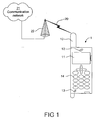
- FIG 1 is intended to illustrate a portable communication apparatus embodied as a mobile telephone 1, in which the present invention is incorporated.
- the mobile telephone 1 comprises an antenna 10, which in a conventional way is used for connecting the mobile telephone 1 to a communication network 21, over a wireless link 21, through a base station 22.
- the communication network 21 for instance a UMTS network, offers voice, data and fax call services to the user of the mobile telephone 1.
- the mobile telephone 1 may have access to additional applications such as internet/intranet, videoconference, news push, networked games and video telephone through the communication network 21.
- the mobile telephone 1 is adapted to receive (e.g.
- the received data blocks are put in a queue and then scheduled on a pool of decoders, as will be described in the following.
- the mobile telephone 1 comprises a display 11, a loudspeaker 12, a microphone 13 and a keypad 14, all in a well-known way for creating an interface for using the mobile telephone 1.
- the mobile telephone 1 comprises a receiver and a transmitter for exchanging data with the communication network 21 through the base station 22.
- the mobile telephone 1 and the communication network 21 support High Speed Downlink Packet Access (HSDPA), which features downlink bitrates up to 15 Mbps conveyed as turbo-coded packets.
- HSDPA High Speed Downlink Packet Access
- FIG 2 shows a simplified stack of protocols 31-35 for WCDMA, which are arranged in the mobile telephone 1.
- the communication network 20 comprises in a similar fashion a stack of protocols 41-46 corresponding to the protocols 31-36 of the mobile telephone 1.
- the protocols 31-36 and 41-46 facilitate the exchange of data with the high bitrate between the mobile telephone 1 and the communication network 21, as is well known and will not be further discussed herein.
- An RLC protocol 33, 43 provides, at least in acknowledged mode, ARQ-functionality 50 between peers, that is between the RLC layers 24, 44 of the mobile telephone 1 stack and the communication network 21 stack respectively, as is indicated by a first two-way arrow in FIG 2.
- a second ARQ-protocol 51 is provided between the physical layers (layer 1, L1) 36, 46 of the mobile telephone 1 and the communication network respectively, indicated by a second two-way arrow in FIG 2. More specifically, the physical layer of the communication network 21 is situated at the base station 22 in FIG 1. The second ARQ-protocol 51 controls the transmission of data between the base station 22 and the mobile telephone 1.
- This second ARQ-protocol provides Hybrid ARQ (HARQ) functionality.
- HARQ-protocol 51 allows the mobile telephone 1 a certain processing time, and the received coded data blocks 61, 63 can therefore be stored in a queue 71 while they await decoding in any of the decoders in a decoder pool 72.
- the data blocks 61, 63 represents various types of coded data, e.g. voice, video and data, which will be further disclosed in the following. Also, if the decoding fails, the HARQ-protocol 51 requires a NACK (Not ACKnowledged) report to be sent to a receiver in the base station 22. The NACK information is then conveyed to a HARQ-controller in the base station, which retransmits the failed blocks 62. Meanwhile, the data block 61, 63 that was unsuccessfully decoded can be stored in a memory of the mobile phone 1 for subsequent combining with a retransmitted data block 62 from the base station 22. This will be discussed further below.
- NACK Not ACKnowledged
- channel errors can be corrected without involving the ARQ-protocol 50 of the RLC-layer 34, 44. This stabilizes the RTT on the RLC-level.
- FIG 3 illustrates a decoder implementation according to the present invention.
- a local memory such as a RAM memory or a flash memory
- the queue 71 can be administrated and controlled by a central processing unit 75 (CPU) implemented by any commercially available microprocessor, or another type of programmable logic circuitry. Therefore, the CPU 75 is connected to the queue 75.
- CPU central processing unit 75
- the queue 71 is connected to a cluster 72 of decoders having a number (N td ) of individual decoders, which are arranged in a parallel configuration.
- N td a number of individual decoders
- each decoder can receive a complete coded data block 61, 63 and process it independently of all the other decoders of the cluster 72.
- preferably two or three turbo-decoders are utilized.
- any number of iterative decoders, which can be arranged in parallel can be provided in the cluster 72 and implemented according to the present invention.
- two feedback-loops 73, 74 provide the possibility to move the first data block 61, 63 of the queue 71 or a data block 61, 63 in the cluster 72 of decoders, respectively, to the queue 71 if either the HARQ protocol demands an ACK/NACK-report and the block 61, 63 has not been tried on the decoder, or if the block 61, 63, is in the process of decoding but it has not passed CRC (cyclic redundancy check) yet.
- CRC cyclic redundancy check
- the encoder architecture type used is referred to as Parallel Concatenated Convolutional Code.
- the encoder comprises two 8-state constituent encoders and one interleaver.
- Data coded according to this standard can be decoded using an iterative decoding technique, such as a turbo decoder implementation.
- the service time in an iterative decoder is random, which makes it advantageous to cluster a set of decoders.
- FIG 4 illustrates the coded data block 61, relating to a bit stream representing data such as voice, video, fax etc., which is input to a transmitter.
- the data block 61 will be decoded by any of the decoders of the cluster 72.
- a retransmitted coded data block 62, and a combined coded data block 63 which is also to be decoded by any of the decoders of the cluster 72, is illustrated.
- the lines of the blocks 61, 62, 63 correspond to coded bits of said blocks.
- the retransmitted data block 62 relates to the same information bits as the first data block 61.
- the combined data block 63 comprises the bits of the first and retransmitted data blocks 61, 62.
- the first data block 61 comprises certain coded bits, indicated by lines in the first data block 61 in FIG 3.
- the retransmitted data block 62 which relates to the same information bits as the first data block 61, may comprise other coded bits that are indicated by lines in the second data block 62 in FIG 4.
- the retransmitted data block 62 is combined with the stored first data block 61 upon reception by, e.g., summing the loglikelihood ratios of the received coded bits. As is understood, there may be more than one retransmission where each retransmitted block may necessarily not comprise the same coded bits.
- the combination forms the combined data block 63, which may contain more coded bits than data blocks 61 and 62, respectively. However, some coded bits may overlap between block 61 and 62, which is indicated by lines in the third data block of FIG 3.
- the combined data block 63 When the combined data block 63 is formed, it replaces the first data block 61 in the queue 71. Thereafter it is ready for decoding in any of the decoders of the cluster 72.
- a combined data block 63 being unsuccessfully decoded can once again be combined with a retransmitted data block for subsequent decoding.
- the combination of data blocks 61, 62, 63 has the advantage that the probability of correct decoding increases in many cases, depending on the radio channel conditions, with every retransmission and combination.
- the data block 61, 63 currently undergoing the decoding process can be checked after each iteration for errors by e.g. a CRC (Cyclic Redundancy Check) sequence.
- CRC Cyclic Redundancy Check
- CRC Cyclic Redundancy Check
- the probability that the data block is error-free increases fast with the number of iterations.
- the decoding of the data blocks 61, 63 is not successfully completed after about 3 iterations it is unlikely that the decoding will succeed without a retransmission.
- the iterative decoding process of the present invention can be aborted prematurely at any stage of the decoding.
- the processed data block 61, 63 can be stored in the queue 72 and a retransmission of the data block 61, 63 is requested by the mobile telephone 1 by transmitting a NACK-message to the base station 22.
- the iterative process of the decoder is unconditionally aborted and the data block 61, 63 presently undergoing decoding is moved to the back of the queue 72 and a retransmission of the data block 61, 63 is requested.
- the retransmitted data block can then be combined with the locally stored data block 61, 63, as set out above, before decoding of the combined block 63 commences, which increases the probability for correct decoding.
- the scheduling method according to the invention combine the possibility to retransmit data blocks 62 and the possibility to abort the iterative decoding process of a data block 61,63 undergoing processing. Also, it is possible to shut off some of the decoders of the cluster 72 as discussed above. This will make use of the iterative decoder resources of the mobile telephone 1 as efficiently as possible.
- FIG 3 shows a schematic block diagram of the queue 71 and the cluster 72 of decoders. A number of turbo decoder are utilized in this embodiment, preferably two or three decoders, for the 15 Mbs bitrate data stream.
- the HARQ-protocol 51 on L1 46 of the transmitter of the base station 22 requires the decoding to be finished within a predetermined time-period, after which said transmitter requires an ACK/NACK-report of the decoding process from the receiver of the mobile telephone 1.
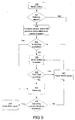
- the data block 61 is received at 100 by the receiver of the mobile telephone 1 and stored in the queue 1. Depending on the queuing time it is decided at 102 whether a retransmission is necessary. If so, a retransmission occurs, and the retransmitted block 62 and the queued block 61 are then combined at 102 to a combined block 63 and further processed at 103. If retransmission is not necessary, the coded data block 61 is transferred directly to 103, where it is determined whether any decoder is available. If so, the block 61, 63 is moved to any of the decoders being available for decoding at 104. Otherwise, the data block 61 is moved to the queue at 105.
- the data block 61, 63 is moved to the end of the queue 72, as is also indicated by the first feedback-loop 73 of FIG 3. Also, an NACK-report is sent at 107 to the transmitter of the base station 22, which triggers a transmission of the retransmitted data block 62.
- the data block 61 is moved to any of the decoders of the cluster 72 for decoding at 104. Then, it is determined whether the decoding is successful within the time limit at 108. A successful decoding will trigger an ACK-report at 109 to be transmitted from the mobile telephone 1 to the transmitter of the base station 22.
- a NACK-report is transmitted at 107 to the transmitter of the base station 22. Also, the data block 61 is moved to the end of the queue 71, which is indicated with the second feedback loop 74 in FIG 3.
- a data block 61 is moved to the end of, and stored in, the queue 71, the combination with the retransmitted block 62 to a combined block 63 occurs during the queuing. Then the combined block 63 is processed according to the steps 106, 107, 104, 108 until the decoding is successfully completed and the ACK report is transmitted at step 108.
- the retransmitted data block 62 can be combined with the data block 61 stored in the queue 71 and the combined data block 63 can be decoded instead.
- the scheduling method according to the invention exploit this possibility by automatically adapting, i.e. increasing or decreasing, the maximum number of iterations (N iter ) in the decoders depending on the bitrate received. Therefore, the scheduling of the decoding process according to the invention provides the possibility to support high bit rates with a limited number of decoders.
- the data blocks 61, 63 will be moved to the back of the queue 71 as set out above.
- the transmitter of the base station 22 receives the ACK/NACK-report it determines weather to retransmit a specific data block 61, 63 (NACK) or transmit a new block (ACK). If a NACK-report is received a data block 62 will be prepared and transmitted to the mobile telephone 1.
- the retransmitted data block 62 is received by the mobile telephone 1, the retransmitted data block 62 is combined with the stored data block 61, 63 to a combined data block as set forth above.
- This combined data block 63 has an improved probability of being successfully decoded, as the combined block 63 comprises more energy and/or parity bits.
- a data block 61, 63 can be combined several times, whereby the probability for successful decoding increases after each combination.
- An important feature of the present invention is if many data blocks 61, 63 fail to reach the cluster 72 of decoders before they are moved to the back of the queue 71.
- the maximum number of allowed iterations N iter of the decoders could be decreased automatically, e.g. by the CPU 75.
- the adaptation of the maximum number of iterations in each decoder is changed automatically by the CPU 75 when the number of blocks 61, 63 being moved from directly from the beginning of the queue 71 to the end of said queue 71 reaches predefined indices.
- the adaptation is not necessary at all or can be implemented differently.
- the optimum number of iterations N iter opt in each decoder of the cluster 72, and the indices, is a design parameter, which can be set differently depending on the current link 20 quality as well as on the mobile telecommunication network 21 operator's preferences.
- the maximum number of iterations of a certain decoder of the cluster of decoders 72 may also be automatically adapted in dependence on the type of coded data block that is received by said decoder for decoding. If the received data block is to be decoded for the first time, i.e. it is not a combined data block, the maximum number may be set to a first number of iterations, such as eight. However, if the received data block is a combined data block 63, the maximum number of iterations may be set to a second number of iterations, such as 1-4. A combined data block has increased probability of successful decoding. Thus, if the combined data block is not successfully decoded after the second number of iterations, it will probably not be decoded successfully.
- the first and second maximum number of iterations has the advantage that the throughput of the cluster of decoders will increase.
- the scheduling scheme for the decoding process according to the invention is utilized with one decoder.
- AWGN Additional White Gaussian Noise
- the decoding time which includes a number of iterations, is outlined by a line starting with a circle.
- the time limit when it is necessary to send the ACK/NACK-report to the transmitter is marked by a rhomb.
- a successful decoding is marked by a circle after the line, while an unsuccessful decoding is marked by a square.
- the receiver of the mobile phone 1 When the receiver of the mobile phone 1 receives the data blocks 61, they are stored in the queue 71 if no decoder is available. As can be seen in FIG 6, the first arriving data block 61 can be directly moved to the decoders without intermediate storing in the queue 71. The storing is symbolized by a gap between the starting circle and the completed reception of the data block 61, 63. However, at the time data blocks number 2-6 are received, the decoder is not available and consequently the data blocks 61 have to be stored in the queue 71. The data blocks 61 are then fed to the decoder according to an "oldest-first" rule.
- the decoding of the first data block 61 is finished within the time limit but is unsuccessful. Consequently, a NACK-report is transmitted to the transmitter of the base station 22, and the data block 61 is moved to the end of the queue 71. Said transmitter receives the NACK-report and prepares and retransmits the first data block as a retransmitted data block 62. This corresponds to the fourth case of FIG 5.
- the decoding of the third data block 62 is not finished within the time limit, and a NACK-report is sent to the transmitter. This corresponds to the third case of FIG 5.
- the sixth data block 61 is not present in FIG 6 during the first round of its intended decoding.
- a NACK-report is transmitted to the transmitter of the base station 22, which triggers a retransmission. Therefore, the first time the sixth data block appears it is a combined data block 63.
- the "oldest first" rule is used, i.e. priority is given to the data block 61, 63 in the queue having the longest waiting time. This result in that the sixth data block in FIG 6 is skipped in the first round, as discussed above.
- LIFO Last in First Out
- the scheduling method according to the invention optimizes the usage of the decoders, i.e a decoder is never idle as long as there are more data blocks 61, 63 in the queue 71 waiting for decoding.
- a controller such as CPU 75, automatically handles the activation of the decoders.
- any of the decoders can be activated/deactivated when the received bitrate reaches a certain predefined level.
- the level is a design parameter, which is based on e.g. in operator preferences in each particular case. However, as is realized by the man skilled in the art this activation/deactivation is not necessary or can be implemented differently.
- N iter 15 was chosen as an example, and as a result some data blocks will expire and be transmitted to the back of the queue 71 before they reach the decoder.
- any other reasonable number of iterations in the decoders is equally well possible within the scope of the invention.
- the overall operation of the mobile telephone and the exchanging of data blocks 61, 62 are well known in the art and therefore will not be further discussed in this document.
- the operation of the queue 71 and the cluster of the decoders, such as queue handling and adaptation of the number active decoders and their respective maximum number of iterations in the decoders can be provided by the same CPU 75, which can be any commercially available microprocessor or programmable logic circuitry.
Landscapes
- Engineering & Computer Science (AREA)
- Computer Networks & Wireless Communication (AREA)
- Signal Processing (AREA)
- Physics & Mathematics (AREA)
- Probability & Statistics with Applications (AREA)
- Theoretical Computer Science (AREA)
- Detection And Prevention Of Errors In Transmission (AREA)
- Mobile Radio Communication Systems (AREA)
- Error Detection And Correction (AREA)
- Compression, Expansion, Code Conversion, And Decoders (AREA)
Claims (42)
- Verfahren zur Einteilung eines Decodierprozesses von codierten Datenblöcken (61), welche über eine Drahtlosverbindung (20) in einem Kommunikationsnetzwerk (21) übertragen werden, wobei die Übertragung zwischen einer physikalischen Schicht (36) von einem Stapel von Protokollen in einer Kommunikationseinrichtung (1) und einer physikalischen Schicht (46) von einem Stapel von Protokollen in einem Kommunikationsnetzwerk (21) durch ein Protokoll (51) gesteuert wird, welches eine ACK/NACK-Meldung von der Übertragung innerhalb eines vorbestimmten Zeitlimits erfordert, wobei das Verfahren die Schritte enthält:Speichern eines codierten Datenblocks (61) in einer Warteschlange (71), wenn alle Decoder von einer Gruppe (72) von iterativen Decodern nicht verfügbar sind;Decodieren des codierten Datenblocks (61) in einem Decoder von der Gruppe; undwenn die Codierung des Blocks (61) in jeglichem der Decoder von der Gruppe (72) nicht innerhalb des Zeitlimits beendet ist:Übertragen einer NACK-Meldung an den Übertrager von dem Datenblock (61);Rückgeben des codierten Datenblocks an die Warteschlange; undZusammenfassen des codierten Datenblocks mit einem entsprechenden neu übertragenen codierten Datenblock (62).
- Verfahren nach Anspruch 1, bei welchem die iterativen Decoder von der Gruppe (72) parallel angeordnet werden.
- Verfahren nach einem der Ansprüche 1 bis 2, bei welchem eine NACK-Meldung an den Übertrager von dem Datenblock (61) übertragen wird, wenn das Zeitlimit erreicht ist, bevor der gespeicherte Datenblock (61) an jeglichen der Decoder von der Gruppe (72) bewegt wird.
- Verfahren nach einem der Ansprüche 1 bis 3, bei welchem eine ACK-Meldung an den Übertrager von dem Datenblock (61) übertragen wird, wenn der Block (61) erfolgreich in jeglichem der Decoder von der Gruppe (72) innerhalb des Zeitlimits decodiert wird.
- Verfahren nach einem der Ansprüche 1 bis 4, bei welchem eine NACK-Meldung an den Übertrager von dem Datenblock (61) übertragen wird, wenn der Block (61) nicht erfolgreich in jeglichem der Decoder von der Gruppe (72) innerhalb des Zeitlimits decodiert wird.
- Verfahren nach einem der Ansprüche 1 bis 5, bei welchem der Datenblock (61) in das Ende von der Warteschlange (71) bewegt wird.
- Verfahren nach Anspruch 6, bei welchem der Datenblock (61) mit einem neu übertragenen Datenblock (62) zu einem zusammengefassten Datenblock (63) zusammengefasst wird und in der Warteschlange (71) gespeichert wird.
- Verfahren nach Anspruch 7, bei welchem der zusammengefasste Datenblock (63) gemäß einem der Ansprüche 1 bis 6 verarbeitet wird.
- Verfahren nach einem der vorherigen Ansprüche, bei welchem die Datenblöcke (61, 63) von der Warteschlange (71) an jeglichen der Decoder von der Gruppe (72) gemäß einem First In First Out (FIFO)-Prinzip bewegt werden.
- Verfahren nach einem der Ansprüche 1 bis 8, bei welchem die Datenblöcke (61, 63) von der Warteschlange (71) an jeglichen der Decoder von der Gruppe (72) gemäß einem "Ältester Datenblock zuerst"-Prinzip bewegt werden.
- Verfahren nach einem der vorherigen Ansprüche, bei welchem die maximale Anzahl von Iterationen in einem bestimmten Decoder von der Gruppe automatisch durch eine CPU (75) adaptiert wird.
- Verfahren nach Anspruch 11, bei welchem die maximale Anzahl von Iterationen in Abhängigkeit von der Anzahl von Blöcken (61, 63), welche direkt von Anfang bis Ende von der Warteschlange (71) bewegt werden, adaptiert wird.
- Verfahren nach Anspruch 11, bei welchem die maximale Anzahl von Iterationen in Abhängigkeit davon adaptiert wird, ob ein codierter Datenblock (61) zum ersten Mal zu decodieren ist oder ein zusammengefasster Datenblock (63) durch den Decoder empfangen wird.
- Verfahren nach einem der vorherigen Ansprüche, bei welchem die Decoder automatisch durch eine CPU (75) aktiviert werden, wenn die Bitrate von dem empfangenen Strom von Datenblöcken (61, 62) bestimmte vorbestimmte Pegel erreicht.
- Verfahren nach einem der vorherigen Ansprüche, bei welchem der Decodierungsprozess von jeglichem der Decoder von der Gruppe (72) abgeschlossen wird, bevor eine maximale Anzahl von Iterationen erreicht wird.
- Verfahren nach einem der vorherigen Ansprüche, bei welchem codierte Datenblöcke (61) gemäß einem HARQ-(Hybrid ARQ)-Protokoll empfangen werden.
- Verfahren zur Einteilung eines Decodierprozesses von codierten Datenblöcken (61), welche über eine Drahtlosverbindung (20) in einem Kommunikationsnetzwerk (21) übertragen werden, wobei die Übertragung zwischen einer physikalischen Schicht (36) von einem Stapel von Protokollen in einer Kommunikationseinrichtung (1) und einer physikalischen Schicht (46) von einem Stapel von Protokollen in einem Kommunikationsnetzwerk (21) durch ein Protokoll (51) gesteuert wird, welches eine ACK/NACK-Meldung von der Übertragung innerhalb eines vorbestimmten Zeitlimits erfordert, wobei das Verfahren die Schritte enthält:Speichern eines codierten Datenblocks (61) in einer Warteschlange (71), wenn alle Decoder von einer Gruppe (72) von iterativen Decodern nicht verfügbar sind;wenn das Zeitlimit erreicht wird, bevor der gespeicherte Datenblock (61) an jeglichen der Decoder von der Gruppe (72) bewegt wird:Übertragen einer NACK-Meldung an den Übertrager von dem Datenblock (61);Rückgeben des codierten Datenblocks an die Warteschlange; undZusammenfassen des codierten Datenblocks mit einem entsprechenden neu übertragenen codierten Datenblock (62).
- Elektronische Kommunikationseinrichtung (1), welche dazu in der Lage ist, codierte Datenblöcke (61) zu decodieren, welche über eine Drahtlosverbindung (20) in einem Kommunikationsnetzwerk (21) empfangen werden, wobei die Einrichtung (1) dazu angepasst ist, die Datenblöcke (61, 62) gemäß einem Protokoll zu empfangen, welches eine ACK/NACK-Meldung innerhalb eines vorbestimmten Zeitlimits erfordert, wobei die Kommunikationseinrichtung (1) eine Warteschlange (71), welche zum temporären Speichern der codierten Datenblöcke (61) adaptiert ist, eine Gruppe (72) von Decodern, welche dazu adaptiert sind, die codierten Datenblöcke (61) zu decodieren, wenn jeglicher der Decoder von der Gruppe (72) verfügbar ist, und an die Warteschlange jeglichen codierten Datenblock zurückzugeben, welcher nicht erfolgreich durch jeglichen der Decoder decodiert wurde, und eine Steuerung (75), welche dazu adaptiert ist, einen codierten Datenblock (62), welcher nicht erfolgreich decodiert ist, mit einem entsprechenden neu übertragenen codierten Datenblock (63) zusammenzufassen, enthält,
dadurch gekennzeichnet, dass die Einrichtung (1) zur Übertragung einer NACK-Meldung an den Übertrager von dem Datenblock (61) adaptiert ist, wenn die Decodierung des Blockes (61) in jeglichen der Decoder von der Gruppe (72) innerhalb des Zeitlimits nicht beendet werden kann. - Elektronische Kommunikationseinrichtung nach Anspruch 18, bei welcher die Decoder von der Gruppe (72) parallel angeordnet sind.
- Elektronische Kommunikationseinrichtung nach einem der Ansprüche 18 bis 19, wobei die Einrichtung (1) einen Empfänger enthält, welcher dazu adaptiert ist, die Datenblöcke (61, 62) mit einer Bitrate von bis zu zumindest 15 Mbps zu empfangen.
- Elektronische Kommunikationseinrichtung nach einem der Ansprüche 18 bis 19, wobei die Einrichtung (1) einen Empfänger enthält, welcher dazu angeordnet ist, codierte Datenblöcke gemäß einem HARQ-Protokoll zu empfangen.
- Elektronische Kommunikationseinrichtung nach einem der Ansprüche 18 bis 21, wobei die Einrichtung (1) dazu angepasst ist, eine NACK-Meldung an einen Übertrager von dem Datenblock (61) zu übertragen, wenn der Block (61) nicht an jeglichen der Decoder von der Gruppe (72) innerhalb des Zeitlimits bewegt ist.
- Elektronische Kommunikationseinrichtung nach einem der Ansprüche 18 bis 22, wobei die Einrichtung (1) dazu adaptiert ist, eine ACK-Meldung an den Übertrager von dem Datenblock (61) zu übertragen, wenn der Block (61) erfolgreich in jeglichen der Decoder von der Gruppe (72) innerhalb des Zeitlimits decodiert ist.
- Elektronische Kommunikationseinrichtung nach einem der Ansprüche 18 bis 23, wobei die Einrichtung (1) dazu adaptiert ist, eine NACK-Meldung an den Übertrager von dem Datenblock (61) zu übertragen, wenn der Block (61) nicht erfolgreich in jeglichen der Decoder von der Gruppe (72) innerhalb des Zeitlimits decodiert ist.
- Elektronische Kommunikationseinrichtung nach einem der Ansprüche 18 bis 24, wobei die Einrichtung (1) ferner Rückführschleifen (73, 74) zwischen dem Anfang von der Warteschlange (71) und dem Ende von der Warteschlange (71) und zwischen der Gruppe von Decodern (72) und dem Ende von der Warteschlange (71) enthält, und wobei die Einrichtung (1) dazu adaptiert ist, um den Datenblock (61) an das Ende von der Warteschlange (71) zu bewegen, wenn der Decodierungsprozess nicht eingeleitet oder erfolgreich vollendet ist.
- Elektronische Kommunikationseinrichtung nach einem der Ansprüche 18 bis 25, wobei die Einrichtung (1) dazu angepasst ist, einen neu übertragenen Datenblock (62) zu empfangen, den neu übertragenen Datenblock (62) mit einem gespeicherten Datenblock (61) zu einem zusammengefassten Datenblock (63) zusammenzufassen, und den zusammengefassten Datenblock (63) zu speichern.
- Elektronische Kommunikationseinrichtung nach Anspruch 26, wobei die Einrichtung (1) dazu adaptiert ist, um den zusammengefassten Datenblock (63) gemäß einem der Ansprüche 18 bis 25 zu verarbeiten.
- Elektronische Kommunikationseinrichtung nach einem der Ansprüche 18 bis 27, bei welcher die Warteschlange (71) als ein überschreibbarer Speicher bereitgestellt ist.
- Elektronische Kommunikationseinrichtung nach einem der Ansprüche 18 bis 28, bei welcher eine Steuerung (75) von der Einrichtung (1) dazu angeordnet ist, um automatisch die Anzahl von aktiven Decodern zu adaptieren, wenn die Bitrate von dem empfangenen Strom von Datenblöcken (61, 62) bestimmte vorbestimmte Pegel erreicht.
- Elektronische Kommunikationseinrichtung nach einem der Ansprüche 18 bis 29, bei welcher eine Steuerung (75) von der Einrichtung (1) dazu angeordnet ist, um die maximale Anzahl von Iterationen von einem bestimmten Decoder in Abhängigkeit von der Anzahl von Blöcken (61, 63), welche direkt von Anfang bis Ende von der Warteschlange (71) bewegt werden, zu adaptieren.
- Elektronische Kommunikationseinrichtung nach einem der Ansprüche 18 bis 29, bei welcher eine Steuerung (75) von der Einrichtung (1) dazu angeordnet ist, um die maximale Anzahl von Iterationen von einem bestimmten Decoder in Abhängigkeit davon zu adaptieren, ob ein codierter Datenblock (61) zum ersten Mal zu decodieren ist oder ein zusammengefasster Datenblock (63) von dem Decoder empfangen ist.
- Elektronische Kommunikationseinrichtung nach einem der Ansprüche 18 bis 31, wobei die Einrichtung (1) ferner dazu adaptiert ist, um die Datenblöcke (61, 63) von der Warteschlange (71) an jeglichen der Decoder von der Gruppe (72) gemäß einem First In First Out-(FIFO)-Prinzip zu bewegen.
- Elektronische Kommunikationseinrichtung nach einem der Ansprüche 18 bis 31, wobei die Einrichtung (1) ferner dazu adaptiert ist, um die Datenblöcke (61, 63) von der Warteschlange (71) an jeglichen der Decoder von der Gruppe (72) gemäß einem "Ältester Datenblock zuerst"-Prinzip zu bewegen.
- Elektronische Kommunikationseinrichtung nach einem der Ansprüche 18 bis 33, bei welcher eine Steuerung (75) von der Einrichtung (1) dazu angeordnet ist, um den Decodierungsprozess von jeglichen der Decoder von der Gruppe (72) abzuschließen, bevor eine maximale Anzahl von Iterationen erreicht ist.
- Elektronische Kommunikationseinrichtung nach einem der Ansprüche 18 bis 34, wobei die Einrichtung ein Mobiltelefon (1) ist.
- Kommunikationseinrichtung nach einem der Ansprüche 18 bis 34, wobei die Einrichtung ein Kommunikationsgerät, ein elektronischer Organizer oder ein Smartphone ist.
- Elektronische Kommunikationseinrichtung (1), welche dazu in der Lage ist, codierte Datenblöcke (61) zu decodieren, welche über eine Drahtlosverbindung (20) in einem Kommunikationsnetzwerk (21) empfangen werden, wobei die Einrichtung (1) dazu adaptiert ist, die Datenblöcke (61, 62) gemäß einem Protokoll zu empfangen, welches eine ACK/NACK-Meldung innerhalb eines vorbestimmten Zeitlimits erfordert, wobei die Kommunikationseinrichtung (1) eine Warteschlange (71), welche zum temporären Speichern der codierten Datenblöcke (61) adaptiert ist, eine Gruppe (72) von Decodern, welche dazu adaptiert sind, die codierten Datenblöcke (61) zu decodieren, wenn jeglicher der Decoder von der Gruppe (72) verfügbar ist, und an die Warteschlange jeglichen codierten Datenblock zurückzugeben, welcher nicht erfolgreich durch jeglichen der Decoder decodiert wurde, und eine Steuerung (75), welche dazu adaptiert ist, einen codierten Datenblock (62), welcher nicht erfolgreich decodiert ist, mit einem entsprechenden neu übertragenen codierten Datenblock (63) zusammenzufassen, enthält,
dadurch gekennzeichnet, dass die Einrichtung (1) dazu adaptiert ist, um eine NACK-Meldung an einen Übertrager von dem Datenblock (61) zu übertragen, wenn der Block (61) nicht an jeglichen der Decoder von der Gruppe (72) innerhalb des Zeitlimits bewegt ist. - Elektronische Kommunikationseinrichtung nach Anspruch 37, wobei die Einrichtung (1) einen Empfänger enthält, welcher dazu angeordnet ist, um codierte Datenblöcke gemäß einem HARQ-Protokoll zu empfangen.
- Elektronische Kommunikationseinrichtung nach einem der Ansprüche 37 bis 38, wobei die Einrichtung (1) dazu adaptiert ist, um eine ACK-Meldung an den Übertrager von dem Datenblock (61) zu übertragen, wenn der Block (61) erfolgreich in jeglichen der Decoder von der Gruppe (72) innerhalb des Zeitlimits decodiert ist.
- Elektronische Kommunikationseinrichtung nach einem der Ansprüche 37 bis 39, wobei die Einrichtung (1) dazu adaptiert ist, um eine NACK-Meldung an den Übertrager von dem Datenblock (61) zu übertragen, wenn der Block (61) nicht erfolgreich in jeglichen der Decoder von der Gruppe (72) innerhalb des Zeitlimits decodiert ist.
- Elektronische Kommunikationseinrichtung nach einem der Ansprüche 37 bis 40, wobei die Einrichtung ein Mobiltelefon (1) ist.
- Kommunikationseinrichtung nach einem der Ansprüche 37 bis 40, wobei die Einrichtung ein Kommunikationsgerät, ein elektronischer Organizer oder ein Smartphone ist.
Applications Claiming Priority (5)
| Application Number | Priority Date | Filing Date | Title |
|---|---|---|---|
| SE0202035A SE0202035D0 (sv) | 2002-07-01 | 2002-07-01 | Method for iterative decoder scheduling |
| SE0202035 | 2002-07-01 | ||
| US39432002P | 2002-07-08 | 2002-07-08 | |
| US394320P | 2002-07-08 | ||
| PCT/EP2003/006798 WO2004004127A1 (en) | 2002-07-01 | 2003-06-27 | Method for iterative decoder scheduling |
Publications (2)
| Publication Number | Publication Date |
|---|---|
| EP1518326A1 EP1518326A1 (de) | 2005-03-30 |
| EP1518326B1 true EP1518326B1 (de) | 2007-11-14 |
Family
ID=30002448
Family Applications (1)
| Application Number | Title | Priority Date | Filing Date |
|---|---|---|---|
| EP03761534A Expired - Lifetime EP1518326B1 (de) | 2002-07-01 | 2003-06-27 | Verfahren zur iterativen decodierereinteilung |
Country Status (7)
| Country | Link |
|---|---|
| US (1) | US7213189B2 (de) |
| EP (1) | EP1518326B1 (de) |
| JP (1) | JP4351158B2 (de) |
| AT (1) | ATE378735T1 (de) |
| AU (1) | AU2003246610A1 (de) |
| DE (1) | DE60317511T2 (de) |
| WO (1) | WO2004004127A1 (de) |
Families Citing this family (22)
| Publication number | Priority date | Publication date | Assignee | Title |
|---|---|---|---|---|
| KR100703504B1 (ko) * | 2004-12-02 | 2007-04-03 | 삼성전자주식회사 | 무선 통신 시스템에서 자동 재전송 시스템 및 방법 |
| EP1821441A4 (de) * | 2004-12-10 | 2011-03-02 | Fujitsu Ltd | Sendeeinrichtung, empfangseinrichtung und sende-/empfangsverfahren dafür |
| US7571369B2 (en) * | 2005-02-17 | 2009-08-04 | Samsung Electronics Co., Ltd. | Turbo decoder architecture for use in software-defined radio systems |
| KR100703441B1 (ko) * | 2005-04-21 | 2007-04-03 | 삼성전자주식회사 | 통신 환경에 적응적인 라운드 트립 타임을 결정하는 데이터통신 시스템 및 방법 |
| US20070177630A1 (en) * | 2005-11-30 | 2007-08-02 | Nokia Corporation | Apparatus, method and computer program product providing retransmission utilizing multiple ARQ mechanisms |
| US20070189231A1 (en) * | 2006-02-14 | 2007-08-16 | Chang Li F | Method and system for implementing a bufferless HARQ processor |
| JP2008011460A (ja) * | 2006-06-30 | 2008-01-17 | Fujitsu Ltd | ターボ復号器 |
| US20090097431A1 (en) * | 2007-10-11 | 2009-04-16 | Profit Metalltd. | Automatic weather information downloading and displaying system |
| KR101531502B1 (ko) | 2007-12-11 | 2015-06-26 | 엘지전자 주식회사 | 오류제어방법 |
| KR101467788B1 (ko) * | 2007-12-11 | 2014-12-03 | 엘지전자 주식회사 | 랜덤 선형 부호화를 이용하는 통신방법 및 장치 |
| KR101490249B1 (ko) * | 2007-12-11 | 2015-02-05 | 엘지전자 주식회사 | 연판정을 이용한 통신방법 및 장치 |
| US8194588B2 (en) * | 2007-12-13 | 2012-06-05 | Qualcomm Incorporated | Coding block based HARQ combining scheme for OFDMA systems |
| WO2009104764A1 (ja) * | 2008-02-21 | 2009-08-27 | シャープ株式会社 | 通信装置、通信システム、受信方法およびプログラム |
| US20100329368A1 (en) * | 2008-02-21 | 2010-12-30 | Kazuyuki Shimezawa | Communication device, communication system, reception method, and communication method |
| JP5397367B2 (ja) * | 2008-02-26 | 2014-01-22 | 日本電気株式会社 | 復号装置、復号方法及びプログラム |
| JP2010157903A (ja) * | 2008-12-26 | 2010-07-15 | Fujitsu Ltd | 繰り返し復号器および無線通信機 |
| CN104796233B (zh) * | 2009-02-18 | 2019-04-26 | Idtp控股公司 | 一种重新传输方法及用于重新传输的通信设备 |
| MX2011007713A (es) * | 2009-02-18 | 2011-10-11 | Ericsson Telefon Ab L M | Esquema de retransmision de datos. |
| KR101631714B1 (ko) * | 2009-11-17 | 2016-06-17 | 삼성전자주식회사 | 터보 복호기를 위한 반복 복호의 제어 방법 및 장치 |
| CN107348910B (zh) | 2017-09-12 | 2019-10-08 | 珠海市一微半导体有限公司 | 机器人打滑的检测方法和建图方法及芯片 |
| CN110493302A (zh) * | 2019-07-01 | 2019-11-22 | 联想(北京)有限公司 | 一种文件传输方法、设备及计算机可读存储介质 |
| US12267173B2 (en) * | 2019-10-18 | 2025-04-01 | Samsung Electronics Co., Ltd. | Method and apparatus for enabling optimized decoding of data packet in HARQ based communication |
Family Cites Families (14)
| Publication number | Priority date | Publication date | Assignee | Title |
|---|---|---|---|---|
| US3676846A (en) * | 1968-10-08 | 1972-07-11 | Call A Computer Inc | Message buffering communication system |
| US3754211A (en) * | 1971-12-30 | 1973-08-21 | Ibm | Fast error recovery communication controller |
| DE2246826B2 (de) * | 1972-09-23 | 1974-08-08 | Licentia Patent-Verwaltungs-Gmbh, 6000 Frankfurt | System zur gesicherten blockweisen Übertragung von binär codierten Daten |
| US4521848A (en) * | 1978-10-31 | 1985-06-04 | Honeywell Information Systems Inc. | Intersystem fault detection and bus cycle completion logic system |
| GB8704920D0 (en) * | 1987-03-03 | 1987-04-08 | Hewlett Packard Co | Secure messaging system |
| US4979679A (en) * | 1989-09-29 | 1990-12-25 | Downs Ernest W | U.V. resistant zinc coated PVC or related plastic pipe |
| US6496481B1 (en) * | 1998-07-16 | 2002-12-17 | Industrial Technology Research Institute | Data transfer method for wire real-time communications |
| US6252917B1 (en) * | 1998-07-17 | 2001-06-26 | Nortel Networks Limited | Statistically multiplexed turbo code decoder |
| US6704898B1 (en) * | 1998-10-23 | 2004-03-09 | Telefonaktiebolaget Lm Ericsson (Publ) | Combined hybrid automatic retransmission request scheme |
| US6519731B1 (en) * | 1999-10-22 | 2003-02-11 | Ericsson Inc. | Assuring sequence number availability in an adaptive hybrid-ARQ coding system |
| US7072307B2 (en) * | 2000-01-20 | 2006-07-04 | Nortel Networks Limited | Hybrid ARQ schemes with soft combining in variable rate packet data applications |
| FI20001975L (fi) * | 2000-09-07 | 2002-03-08 | Nokia Corp | Ohjaustietojen signalointimenetelmä |
| US7203162B2 (en) * | 2001-10-30 | 2007-04-10 | Lucent Technologies Inc. | Link state retransmission mechanism |
| US7035258B2 (en) * | 2001-12-27 | 2006-04-25 | Microsoft Corporation | Method and system for dynamically adjusting transmit and receive parameters for handling negative acknowledgments in reliable multicast |
-
2003
- 2003-06-27 AU AU2003246610A patent/AU2003246610A1/en not_active Abandoned
- 2003-06-27 US US10/520,044 patent/US7213189B2/en not_active Expired - Lifetime
- 2003-06-27 AT AT03761534T patent/ATE378735T1/de not_active IP Right Cessation
- 2003-06-27 EP EP03761534A patent/EP1518326B1/de not_active Expired - Lifetime
- 2003-06-27 DE DE60317511T patent/DE60317511T2/de not_active Expired - Lifetime
- 2003-06-27 WO PCT/EP2003/006798 patent/WO2004004127A1/en not_active Ceased
- 2003-06-27 JP JP2004516713A patent/JP4351158B2/ja not_active Expired - Fee Related
Also Published As
| Publication number | Publication date |
|---|---|
| JP4351158B2 (ja) | 2009-10-28 |
| US7213189B2 (en) | 2007-05-01 |
| ATE378735T1 (de) | 2007-11-15 |
| WO2004004127A1 (en) | 2004-01-08 |
| DE60317511T2 (de) | 2008-03-06 |
| EP1518326A1 (de) | 2005-03-30 |
| JP2005531954A (ja) | 2005-10-20 |
| DE60317511D1 (de) | 2007-12-27 |
| US20060023815A1 (en) | 2006-02-02 |
| AU2003246610A1 (en) | 2004-01-19 |
Similar Documents
| Publication | Publication Date | Title |
|---|---|---|
| EP1518326B1 (de) | Verfahren zur iterativen decodierereinteilung | |
| RU2353063C2 (ru) | Способ и устройство для сокращения служебных сигналов в усовершенствованной восходящей линии связи в системе беспроводной связи | |
| CN1173515C (zh) | 在数据叠加语音通信系统中有效重发数据的方法和设备 | |
| JP4516076B2 (ja) | マルチキャストデータ送信のための方法、データ送信システム、送信局及び受信局 | |
| EP2093921B1 (de) | Verfahren und Produkt zur Speicherverwaltung in einem HARQ-Kommunikationssystem | |
| CN100417061C (zh) | 重传控制方法和无线通信终端设备 | |
| TWI455515B (zh) | 無線通訊系統改善混合式自動重發請求功能的方法及裝置 | |
| RU2469482C2 (ru) | Способ и система для передачи данных в сети передачи данных | |
| CN101267286A (zh) | 无线通讯系统改善多输入多输出功能的方法及其相关装置 | |
| JP2005506735A (ja) | 有効かつ信頼性のあるデータパケット送信のための方法及びシステム | |
| US8850283B2 (en) | HARQ procedure with processing of stored soft-bits | |
| CN1289484A (zh) | 传输信息的方法以及使用该方法的装置 | |
| US8873583B2 (en) | Method and apparatus for improving reset of evolved media access control protocol entity in a wireless communications system | |
| CN119094091A (zh) | 一种无线局域网中的通信方法及设备 | |
| EP2168294A1 (de) | Datenblockgrössenverwaltung in einem kommunikationssystem mit automatischen hybdrid-wiederholungsaufforderungen mit soft-combining | |
| WO2007129358A1 (ja) | データ伝送制御方法および送信装置 | |
| EP2122895B1 (de) | Weiterübertragungsverfahren mit inkrementeller redundanz für fragmentierte pakete | |
| CN111130718A (zh) | 一种基于dl-sch信道的通信方法、系统 | |
| CN1675871A (zh) | 基于信道条件和消息长度的传输机制选择的方法和设备 | |
| CN114629598A (zh) | 无线链路控制层确认模式数据重传方法及装置 | |
| Cooper | Limited Delay Convolutional Codes for HARQ feedback | |
| Jiao et al. | A MAC protocol with RCPT coded hybrid ARQ-II for CDMA networks |
Legal Events
| Date | Code | Title | Description |
|---|---|---|---|
| PUAI | Public reference made under article 153(3) epc to a published international application that has entered the european phase |
Free format text: ORIGINAL CODE: 0009012 |
|
| 17P | Request for examination filed |
Effective date: 20041214 |
|
| AK | Designated contracting states |
Kind code of ref document: A1 Designated state(s): AT BE BG CH CY CZ DE DK EE ES FI FR GB GR HU IE IT LI LU MC NL PT RO SE SI SK TR |
|
| AX | Request for extension of the european patent |
Extension state: AL LT LV MK |
|
| DAX | Request for extension of the european patent (deleted) | ||
| RIN1 | Information on inventor provided before grant (corrected) |
Inventor name: MALM, PETER |
|
| 17Q | First examination report despatched |
Effective date: 20061201 |
|
| GRAP | Despatch of communication of intention to grant a patent |
Free format text: ORIGINAL CODE: EPIDOSNIGR1 |
|
| GRAS | Grant fee paid |
Free format text: ORIGINAL CODE: EPIDOSNIGR3 |
|
| GRAA | (expected) grant |
Free format text: ORIGINAL CODE: 0009210 |
|
| AK | Designated contracting states |
Kind code of ref document: B1 Designated state(s): AT BE BG CH CY CZ DE DK EE ES FI FR GB GR HU IE IT LI LU MC NL PT RO SE SI SK TR |
|
| REG | Reference to a national code |
Ref country code: GB Ref legal event code: FG4D |
|
| REG | Reference to a national code |
Ref country code: CH Ref legal event code: EP |
|
| REG | Reference to a national code |
Ref country code: IE Ref legal event code: FG4D |
|
| REF | Corresponds to: |
Ref document number: 60317511 Country of ref document: DE Date of ref document: 20071227 Kind code of ref document: P |
|
| PG25 | Lapsed in a contracting state [announced via postgrant information from national office to epo] |
Ref country code: ES Free format text: LAPSE BECAUSE OF FAILURE TO SUBMIT A TRANSLATION OF THE DESCRIPTION OR TO PAY THE FEE WITHIN THE PRESCRIBED TIME-LIMIT Effective date: 20080225 Ref country code: LI Free format text: LAPSE BECAUSE OF FAILURE TO SUBMIT A TRANSLATION OF THE DESCRIPTION OR TO PAY THE FEE WITHIN THE PRESCRIBED TIME-LIMIT Effective date: 20071114 Ref country code: CH Free format text: LAPSE BECAUSE OF FAILURE TO SUBMIT A TRANSLATION OF THE DESCRIPTION OR TO PAY THE FEE WITHIN THE PRESCRIBED TIME-LIMIT Effective date: 20071114 Ref country code: NL Free format text: LAPSE BECAUSE OF FAILURE TO SUBMIT A TRANSLATION OF THE DESCRIPTION OR TO PAY THE FEE WITHIN THE PRESCRIBED TIME-LIMIT Effective date: 20071114 Ref country code: SE Free format text: LAPSE BECAUSE OF FAILURE TO SUBMIT A TRANSLATION OF THE DESCRIPTION OR TO PAY THE FEE WITHIN THE PRESCRIBED TIME-LIMIT Effective date: 20080214 |
|
| NLV1 | Nl: lapsed or annulled due to failure to fulfill the requirements of art. 29p and 29m of the patents act | ||
| PG25 | Lapsed in a contracting state [announced via postgrant information from national office to epo] |
Ref country code: FI Free format text: LAPSE BECAUSE OF FAILURE TO SUBMIT A TRANSLATION OF THE DESCRIPTION OR TO PAY THE FEE WITHIN THE PRESCRIBED TIME-LIMIT Effective date: 20071114 Ref country code: SI Free format text: LAPSE BECAUSE OF FAILURE TO SUBMIT A TRANSLATION OF THE DESCRIPTION OR TO PAY THE FEE WITHIN THE PRESCRIBED TIME-LIMIT Effective date: 20071114 Ref country code: BG Free format text: LAPSE BECAUSE OF FAILURE TO SUBMIT A TRANSLATION OF THE DESCRIPTION OR TO PAY THE FEE WITHIN THE PRESCRIBED TIME-LIMIT Effective date: 20080214 |
|
| REG | Reference to a national code |
Ref country code: CH Ref legal event code: PL |
|
| PG25 | Lapsed in a contracting state [announced via postgrant information from national office to epo] |
Ref country code: AT Free format text: LAPSE BECAUSE OF FAILURE TO SUBMIT A TRANSLATION OF THE DESCRIPTION OR TO PAY THE FEE WITHIN THE PRESCRIBED TIME-LIMIT Effective date: 20071114 |
|
| ET | Fr: translation filed | ||
| PG25 | Lapsed in a contracting state [announced via postgrant information from national office to epo] |
Ref country code: DK Free format text: LAPSE BECAUSE OF FAILURE TO SUBMIT A TRANSLATION OF THE DESCRIPTION OR TO PAY THE FEE WITHIN THE PRESCRIBED TIME-LIMIT Effective date: 20071114 Ref country code: CZ Free format text: LAPSE BECAUSE OF FAILURE TO SUBMIT A TRANSLATION OF THE DESCRIPTION OR TO PAY THE FEE WITHIN THE PRESCRIBED TIME-LIMIT Effective date: 20071114 |
|
| PG25 | Lapsed in a contracting state [announced via postgrant information from national office to epo] |
Ref country code: BE Free format text: LAPSE BECAUSE OF FAILURE TO SUBMIT A TRANSLATION OF THE DESCRIPTION OR TO PAY THE FEE WITHIN THE PRESCRIBED TIME-LIMIT Effective date: 20071114 Ref country code: SK Free format text: LAPSE BECAUSE OF FAILURE TO SUBMIT A TRANSLATION OF THE DESCRIPTION OR TO PAY THE FEE WITHIN THE PRESCRIBED TIME-LIMIT Effective date: 20071114 Ref country code: RO Free format text: LAPSE BECAUSE OF FAILURE TO SUBMIT A TRANSLATION OF THE DESCRIPTION OR TO PAY THE FEE WITHIN THE PRESCRIBED TIME-LIMIT Effective date: 20071114 |
|
| PLBE | No opposition filed within time limit |
Free format text: ORIGINAL CODE: 0009261 |
|
| STAA | Information on the status of an ep patent application or granted ep patent |
Free format text: STATUS: NO OPPOSITION FILED WITHIN TIME LIMIT |
|
| PG25 | Lapsed in a contracting state [announced via postgrant information from national office to epo] |
Ref country code: PT Free format text: LAPSE BECAUSE OF FAILURE TO SUBMIT A TRANSLATION OF THE DESCRIPTION OR TO PAY THE FEE WITHIN THE PRESCRIBED TIME-LIMIT Effective date: 20080414 |
|
| 26N | No opposition filed |
Effective date: 20080815 |
|
| PG25 | Lapsed in a contracting state [announced via postgrant information from national office to epo] |
Ref country code: GR Free format text: LAPSE BECAUSE OF FAILURE TO SUBMIT A TRANSLATION OF THE DESCRIPTION OR TO PAY THE FEE WITHIN THE PRESCRIBED TIME-LIMIT Effective date: 20080215 Ref country code: MC Free format text: LAPSE BECAUSE OF NON-PAYMENT OF DUE FEES Effective date: 20080630 |
|
| PG25 | Lapsed in a contracting state [announced via postgrant information from national office to epo] |
Ref country code: IE Free format text: LAPSE BECAUSE OF NON-PAYMENT OF DUE FEES Effective date: 20080627 Ref country code: EE Free format text: LAPSE BECAUSE OF FAILURE TO SUBMIT A TRANSLATION OF THE DESCRIPTION OR TO PAY THE FEE WITHIN THE PRESCRIBED TIME-LIMIT Effective date: 20071114 |
|
| PG25 | Lapsed in a contracting state [announced via postgrant information from national office to epo] |
Ref country code: CY Free format text: LAPSE BECAUSE OF FAILURE TO SUBMIT A TRANSLATION OF THE DESCRIPTION OR TO PAY THE FEE WITHIN THE PRESCRIBED TIME-LIMIT Effective date: 20071114 |
|
| PG25 | Lapsed in a contracting state [announced via postgrant information from national office to epo] |
Ref country code: HU Free format text: LAPSE BECAUSE OF FAILURE TO SUBMIT A TRANSLATION OF THE DESCRIPTION OR TO PAY THE FEE WITHIN THE PRESCRIBED TIME-LIMIT Effective date: 20080515 Ref country code: LU Free format text: LAPSE BECAUSE OF NON-PAYMENT OF DUE FEES Effective date: 20080627 |
|
| PG25 | Lapsed in a contracting state [announced via postgrant information from national office to epo] |
Ref country code: TR Free format text: LAPSE BECAUSE OF FAILURE TO SUBMIT A TRANSLATION OF THE DESCRIPTION OR TO PAY THE FEE WITHIN THE PRESCRIBED TIME-LIMIT Effective date: 20071114 |
|
| REG | Reference to a national code |
Ref country code: FR Ref legal event code: PLFP Year of fee payment: 14 |
|
| REG | Reference to a national code |
Ref country code: FR Ref legal event code: PLFP Year of fee payment: 15 |
|
| REG | Reference to a national code |
Ref country code: FR Ref legal event code: PLFP Year of fee payment: 16 |
|
| PGFP | Annual fee paid to national office [announced via postgrant information from national office to epo] |
Ref country code: FR Payment date: 20180626 Year of fee payment: 16 |
|
| PGFP | Annual fee paid to national office [announced via postgrant information from national office to epo] |
Ref country code: IT Payment date: 20180621 Year of fee payment: 16 Ref country code: GB Payment date: 20180627 Year of fee payment: 16 Ref country code: DE Payment date: 20180627 Year of fee payment: 16 |
|
| REG | Reference to a national code |
Ref country code: DE Ref legal event code: R119 Ref document number: 60317511 Country of ref document: DE |
|
| GBPC | Gb: european patent ceased through non-payment of renewal fee |
Effective date: 20190627 |
|
| PG25 | Lapsed in a contracting state [announced via postgrant information from national office to epo] |
Ref country code: DE Free format text: LAPSE BECAUSE OF NON-PAYMENT OF DUE FEES Effective date: 20200101 Ref country code: IT Free format text: LAPSE BECAUSE OF NON-PAYMENT OF DUE FEES Effective date: 20190627 Ref country code: GB Free format text: LAPSE BECAUSE OF NON-PAYMENT OF DUE FEES Effective date: 20190627 |
|
| PG25 | Lapsed in a contracting state [announced via postgrant information from national office to epo] |
Ref country code: FR Free format text: LAPSE BECAUSE OF NON-PAYMENT OF DUE FEES Effective date: 20190630 |