EP1519496A1 - Procede de regulation de puissance d'emission et dispositif de station de base - Google Patents
Procede de regulation de puissance d'emission et dispositif de station de base Download PDFInfo
- Publication number
- EP1519496A1 EP1519496A1 EP03761778A EP03761778A EP1519496A1 EP 1519496 A1 EP1519496 A1 EP 1519496A1 EP 03761778 A EP03761778 A EP 03761778A EP 03761778 A EP03761778 A EP 03761778A EP 1519496 A1 EP1519496 A1 EP 1519496A1
- Authority
- EP
- European Patent Office
- Prior art keywords
- transmission power
- section
- base station
- signal
- scch
- Prior art date
- Legal status (The legal status is an assumption and is not a legal conclusion. Google has not performed a legal analysis and makes no representation as to the accuracy of the status listed.)
- Withdrawn
Links
Images



Classifications
-
- H—ELECTRICITY
- H04—ELECTRIC COMMUNICATION TECHNIQUE
- H04W—WIRELESS COMMUNICATION NETWORKS
- H04W52/00—Power management, e.g. Transmission Power Control [TPC] or power classes
- H04W52/04—Transmission power control [TPC]
- H04W52/30—Transmission power control [TPC] using constraints in the total amount of available transmission power
- H04W52/34—TPC management, i.e. sharing limited amount of power among users or channels or data types, e.g. cell loading
- H04W52/346—TPC management, i.e. sharing limited amount of power among users or channels or data types, e.g. cell loading distributing total power among users or channels
-
- H—ELECTRICITY
- H04—ELECTRIC COMMUNICATION TECHNIQUE
- H04W—WIRELESS COMMUNICATION NETWORKS
- H04W52/00—Power management, e.g. Transmission Power Control [TPC] or power classes
- H04W52/04—Transmission power control [TPC]
- H04W52/18—TPC being performed according to specific parameters
- H04W52/22—TPC being performed according to specific parameters taking into account previous information or commands
-
- H—ELECTRICITY
- H04—ELECTRIC COMMUNICATION TECHNIQUE
- H04W—WIRELESS COMMUNICATION NETWORKS
- H04W52/00—Power management, e.g. Transmission Power Control [TPC] or power classes
- H04W52/04—Transmission power control [TPC]
- H04W52/38—TPC being performed in particular situations
- H04W52/40—TPC being performed in particular situations during macro-diversity or soft handoff
-
- H—ELECTRICITY
- H04—ELECTRIC COMMUNICATION TECHNIQUE
- H04W—WIRELESS COMMUNICATION NETWORKS
- H04W52/00—Power management, e.g. Transmission Power Control [TPC] or power classes
- H04W52/04—Transmission power control [TPC]
- H04W52/38—TPC being performed in particular situations
- H04W52/48—TPC being performed in particular situations during retransmission after error or non-acknowledgment
-
- H—ELECTRICITY
- H04—ELECTRIC COMMUNICATION TECHNIQUE
- H04W—WIRELESS COMMUNICATION NETWORKS
- H04W52/00—Power management, e.g. Transmission Power Control [TPC] or power classes
- H04W52/04—Transmission power control [TPC]
- H04W52/06—TPC algorithms
- H04W52/12—Outer and inner loops
-
- H—ELECTRICITY
- H04—ELECTRIC COMMUNICATION TECHNIQUE
- H04W—WIRELESS COMMUNICATION NETWORKS
- H04W52/00—Power management, e.g. Transmission Power Control [TPC] or power classes
- H04W52/04—Transmission power control [TPC]
- H04W52/18—TPC being performed according to specific parameters
- H04W52/28—TPC being performed according to specific parameters using user profile, e.g. mobile speed, priority or network state, e.g. standby, idle or non-transmission
- H04W52/282—TPC being performed according to specific parameters using user profile, e.g. mobile speed, priority or network state, e.g. standby, idle or non-transmission taking into account the speed of the mobile
-
- H—ELECTRICITY
- H04—ELECTRIC COMMUNICATION TECHNIQUE
- H04W—WIRELESS COMMUNICATION NETWORKS
- H04W52/00—Power management, e.g. Transmission Power Control [TPC] or power classes
- H04W52/04—Transmission power control [TPC]
- H04W52/18—TPC being performed according to specific parameters
- H04W52/28—TPC being performed according to specific parameters using user profile, e.g. mobile speed, priority or network state, e.g. standby, idle or non-transmission
- H04W52/286—TPC being performed according to specific parameters using user profile, e.g. mobile speed, priority or network state, e.g. standby, idle or non-transmission during data packet transmission, e.g. high speed packet access [HSPA]
Definitions
- the present invention relates to a transmission power control method and a base station apparatus for use in wireless communication systems for enabling high speed transmission of downlink packets. More particularly, the present invention is suitable for use in HSDPA based on W-CDMA technology.
- HSDPA High Speed Downlink Packet Access
- HSDPA High Speed Downlink Packet Access
- the HSDPA uses a plurality of channels including HS-PDSCH (High Speed - Physical Downlink Shared Channel), HS-SCCH (Shared Control Channel of HS-PDSCH) and A-DPCH (Associated-Dedicated Physical Channel for HS-PDSCH).
- HS-PDSCH High Speed - Physical Downlink Shared Channel
- HS-SCCH Shared Control Channel of HS-PDSCH
- A-DPCH Associated-Dedicated Physical Channel for HS-PDSCH.
- A-DPCH is a DPCH channel provided as an associated channel for use in HSDPA transmission, and the channel configuration and the hand over control scheme thereof are same as those of the DPCH.
- HS-PDSCH is a shared channel for use in transmitting packets in the downlink direction.
- HS-SCCH is also a shared channel in the downlink direction for transmitting information for controlling the resource allocation (TFRI : Transport-format and Resource related Information), information for controlling H-ARQ (Hybrid-Automatic Repeat Request) and so forth.
- TFRI Transport-format and Resource related Information
- H-ARQ Hybrid-Automatic Repeat Request
- A-DPCH is a dedicated associated channel in the downlink direction and the upstream direction for transmitting pilot signals, TPC commands, and, in addition to these, ACK signals or NACK signals, and CQI (Channel Quality Indicator) signals are transmitted in the uplink direction.
- An ACK signal is a signal to indicate that a high speed packet transmitted from a base station apparatus on the HS-PDSCH is decoded correctly by a communication terminal apparatus
- a NACK signal is a signal to indicate that a high speed packet transmitted from a base station apparatus on the HS-PDSCH is erroneously demodulated by a communication terminal apparatus.
- a CQI signal is a signal to indicate the modulation schemes of packet data and the encoding rates supported at the communication terminal apparatuses.
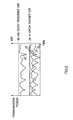
- FIG.1 shows a case where an HO (Hand Over) state does not occur
- FIG.2 shows a case where an HO state occurs.
- the HO state refers to the where a communication is established by concurrent connections with a plurality of base stations or sectors, i.e., a state generally known as the soft hand over (SHO).
- the transmission power of an A-DPCH is controlled by the known closed loop transmission power control scheme in order that the reception SIR 12 of the A-DPCH achieve the target SIR 13.
- the transmission power 21 of the HS-SCCH is determined by adding an offset to the transmission power 11 of the A-DPCH.
- the transmission power of the A-DPCH is controlled in order that the SIR obtained by combining a plurality of the received signals achieve the target SIR.
- the transmission power of the A-DPCH is controlled to achieve the required quality after a plurality of received signals are combined.
- HHO Hard Hand Over
- SHO Soft Hand Over
- the reception SIR of the HS-SCCH comes short of the required SIR to degrade the quality of the received signals when the HO state occurs, increasing the number of retransmissions and degrading the system throughput.
- the communication terminal apparatus if the communication terminal apparatus is communicating a base station apparatus A and a base station apparatus B, the communication terminal apparatus generates a TPC command in order that the SIR 33 obtained by combining the reception SIR 31 of the A-DPCH of the base station apparatus A and the reception SIR 32 of the A-DPCH of the base station apparatus B achieve the target SIR 34. Accordingly, the reception SIR 31 of the A-DPCH of the base station apparatus A becomes lower than the target SIR 34.
- the transmission power of the HS-SCCH is determined by adding an offset to the transmission power of the A-DPCH of the base station apparatus A and therefore the reception SIR 41 of the HS-SCCH falls short of the required SIR 42 when an HO state occurs.
- the above power offset value is determined to be sufficiently large so that the reception SIR of the HS-SCCH reaches the required SIR even when an HO state occurs, an excessive power is used to transmit signals on the HS-SCCH when an HO state does not occur on the A-DPCH, and there is a problem that the transmission power as a limited wireless resource is excessively consumed to decrease the system throughput.
- the HSDPA service refers to packet communication services implemented by HSDPA transmission.
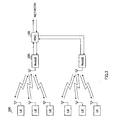
- FIG.3 is a system configuration diagram showing an embodiment of the present invention.
- a radio network control station (RNC) 100 is wire-connected to a plurality of base station apparatuses (Node B) 200, and each base station apparatus 200 provides wireless communication services for a plurality of communication terminal apparatuses (UE) 300.
- RNC radio network control station
- the radio network control station apparatus 100 is wire-connected with two base station apparatuses 200, each of which is in wireless communication with three communication terminal apparatuses 300.
- Signal processing sections 101 provided in the number of the base station apparatuses to communicate with, receive signals transmitted from the communication terminal apparatus 300 and decoded by the base station apparatuses 200, process these signals according to an appropriate format for transmission in the network, and output the processed signals to division sections 102.
- the division sections 102 provided in the number of the base station apparatuses to communicate with, divide the output signals of the signal processing section 101 into data and control signals.
- the data is outputted to the network.
- the control signals as separated from the data by the division section 102 include a signal (hereinafter referred to as a "reception power signal") indicative of the reception power of the shared control channel of a neighboring base station apparatuses as measured by a communication terminal apparatus 300.
- the hand over control section 103 determines whether or not the HO control is to be taken for the communication terminal apparatuses and outputs the signal indicative of the determination result (hereinafter referred to as an "HO terminal signal") to multiplexer sections (MUX) 104.
- HO terminal signal the signal indicative of the determination result
- the multiplexer sections 104 provided in the number of the base station apparatuses to communicate with, multiplex the input signals from the network and the HO terminal signals and output the multiplexed signal to the signal processing sections 105.
- the signal processing section 105 provided in the number of the base station apparatuses to communicate with, process the output signals of the multiplexer sections 104 in an appropriate format for transmission from the base station apparatuses, and output them to the multiplexer sections 106.
- the multiplexer sections 106 provided in the number of the base station apparatuses to communicate with multiplex, on the output signal of the signal processing section 105, packet transmission control signals and the offset signals indicative of the offset value of the transmission power of the HS-SCCH relative to the transmission power of the A-DPCH, and output them to the base station apparatuses 200.
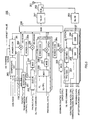
- the base station apparatus 200 receives individual data, packet data, HO terminal signals, packet transmission control signals, and offset signals from the control station apparatus 100. On the other hand, the base station apparatus 200 receives signals wireless transmitted from a communicating communication terminal apparatus.
- a duplexer 202 outputs the signals received by the antenna 201 to the reception RF section (RE-RF) 203. Also, the duplexer 202 wireless transmits the signals outputted from the transmission RF section (TR-RF) 267 through the antenna 201.
- the reception RF section 203 converts the received signals in radio frequency outputted from the duplexer 202 into digital signals in the baseband frequency, and output them to demodulating sections (DEM) 204.
- DEM demodulating sections
- the demodulating sections 204 provided in the number of the base station apparatuses to communicate with, demodulate the reception baseband signal through de-spreading, RAKE combination, error correction decoding and so forth, and output the demodulated signals to the division section (DIV) 205.
- the division section 205 divides the output signal of the demodulating section 204 into data and control signals.
- the control signals separated by the division section 205 include a DL (Down Link)-TPC command, a CQI signal, an ACK/NACK signal, a reception power signal and so forth.
- the CQI signal and the ACK/NACK signal are outputted to a scheduler 251, a compensation value setting section (COMPENSATE-EST) 260, and a transmission power control section (POWER-CON) 258.
- the DL-TPC command is outputted to the transmission power control section (POWER-CON) 258.
- the data and the reception power signals are outputted to the radio network control station apparatus 100.
- SIR measuring sections SIR-MEA
- TPC-GEN TPC command generating sections
- the TPC command generating sections 207 provided in the number of the base station apparatuses to communicate with, generate an UL (Up Link)-TPC command instructing the increase or decrease in the transmission power of an uplink channel based on the magnitude relation between the reception SIR and the target SIR of the uplink channel.
- the scheduler 251 determines a communication terminal apparatus as a destination of packets (hereinafter referred to as "destination apparatus") based on the CQI signals and the packet transmission control signals from the communication terminal apparatuses, and outputs the information indicative of the destination apparatus to a buffer (QUEUE) 252. At this time, the scheduler 251 instructs the buffer 252 to transmit next data when receiving an ACK signal, and instructs the buffer 252 to retransmit the previous data when receiving an NACK signal. Also, the scheduler 251 determines a modulation scheme and an encoding rate based on the CQI signal from the destination apparatus and provides a modulator section 253 with instructions.
- the scheduler 251 outputs a signal as a reference for use in determining the transmission power of packet data to a transmission power control section (POWER-CON) 254.
- POWER-CON transmission power control section
- the present invention sets no limitation on the transmission power control method and stands without a transmission power control of packet data.
- the scheduler 251 outputs, to an amplifying section 262, signals (referred to herein as "HS-SCCH signals" to be transmitted to the destination apparatus on the HS-SCCH.
- the HS-SCCH signals include the information (TFRI) indicative of the timing of transmitting packet data, and the encoding rate and modulation scheme for the packet data.
- the scheduler 251 outputs retransmission information indicative of retransmission to the compensation value setting section 260.
- the buffer 252 outputs the packet data for the destination apparatus as instructed by the scheduler 251 to the modulator section (MOD) 253.
- the modulator section 253 outputs the packet data after error correction coding, modulation, and spreading in accordance with the instruction by the scheduler 251 to the amplifying section 255.
- the transmission power control section 254 controls the transmission power of the output signals of the modulator section 253 by controlling the gain of the amplifying section 255.
- the output signal of the amplifying section 255 is a signal to be transmitted on the HS-PDSCH and is outputted to the multiplexer section (MUX) 266.
- Multiplexer sections (MUX) 256 provided in the number of the base station apparatuses to communicate with, multiplex a pilot signal and a UL-TPC command with the individual data (including control signals) to be transmitted to the communication terminal apparatus, and output the multiplexed signal to the modulator sections (MOD) 257.
- the modulator section 257 provided in the number of the base station apparatuses to communicate with, output the output signal of the multiplexer section 256 after error correction coding, modulation, and spreading to amplifying sections 259.
- the signal amplified by the amplifying section 259 is a signal to be transmitted on the DPCH (inclusive of A-DPCH), and is outputted to the multiplexer section 266.
- the compensation value setting section 260 determines the compensation value of the transmission power of an HS-SCCH based on the retransmission state and the ACK/NACK signal, and outputs the compensation value to the transmission power control section 261.
- the transmission power control section 261 controls the gain of the amplifying section 262 by adding an offset to the transmission power of the transmission power control section 258. Contrary to this, when the destination apparatus is in an HO state, the transmission power control section 261 controls the gain of the amplifying section 262 based on the CQI signal. In this case, it is thought that the transmission power control section 261 is designed to set the transmission power of the HS-SCCH for retransmission higher than that for the first time transmission by adding the compensation value of the compensation value setting section 260.
- the transmission power control section 261 performs an outer loop control by adding the compensation value inputted from the compensation value setting section 260 to the transmission power as set. Since the transmission power control section 261 controls the transmission power through the outer loop control, it is possible to compensate the transmission power of the HS-SCCH not only upon a retransmission but also upon the first transmission, and improve the throughput by reducing the number of retransmissions. Meanwhile, the details of the outer loop control will be described later.
- the transmission power of the HS-SCCH signal outputted from the scheduler 251 is controlled by controlling the gain of the amplifying section 262.
- the signal amplified by the amplifying section 262 is a signal to be transmitted on the HS-SCCH, and is outputted to the multiplexer section 266.
- the modulator section (MOD) 263 outputs shared control data to the amplifying section 265 after error correction coding, modulation, and spreading.
- the transmission power control section 264 controls the transmission power of the output signals of the modulator section 263 by controlling the gain of the amplifying section 265.
- the output signal of the amplifying section 265 is a signal to be transmitted on the CPICH and so forth, and is outputted to the multiplexer section 266.
- the multiplexer section 266 multiplexes the output signals of the amplifying section 255, the amplifying section 259, the amplifying section 262 and the amplifying section 265, and outputs the multiplexed signal to the transmission RF section 267.
- the transmission RF section 267 converts the digital signals in the baseband frequency outputted from the modulator section 263 into signals in radio frequency, and outputs the converted signals to the duplexer 202.
- the communication terminal apparatus 300 receives individual data, shared control data, packet data and an HS-SCCH signal from the base station apparatus 200.
- a duplexer 302 outputs the signals received by the antenna 301 to a reception RF section (RE-RF) 303. Also, the duplexer 302 wireless transmits the signals outputted from a transmission RF section (TR-RF) 358.
- RE-RF reception RF section
- TR-RF transmission RF section
- the reception RF section 303 converts the signals outputted from the duplexer 302 into digital signals in the baseband frequency, outputs the received signals to the buffer 304, outputs the HS-SCCH signal to an equalizer 305, and outputs the signals on the A-DPCH to a demodulating section 309.
- the buffer 304 temporarily stores the received signals and outputs them to the equalizer 305.
- the equalizer 305 also called an adaptive equalizer, is a measure against frequency selective fading and is effective to reduce the performance degradation of signal reception due to delayed waves in a multi-valued modulation waves such as by 16 QAM.
- the equalizer 305 outputs the HS-PDSCH signal after equalization to the demodulating section (DEM) 307, outputs the HS-SCCH signal to the demodulating section (DEM) 306, and outputs the signal on the shared control channel to CIR (Carrier to Interference Ratio) measuring section (CIR-MEA) 314 and a reception power measuring section 316.
- CIR Carrier to Interference Ratio
- the CQI signal is generated based on the result of measuring the CIR of the signal on the shared control channel after processing data by the equalizer. This is because the CQI signal is reported in consideration of the reception performance (reception gain) of the equalizer for receiving HS-PDSCH signals.
- the HS-SCCH signal is received by usual de-spreading and RAKE combination, it is difficult at the terminal to satisfy the required SIR of the HS-SCCH signal transmitted under the transmission power control based on the CQI signal taking into consideration the reception performance (reception gain) of the equalizer as described above.
- the communication terminal apparatus 300 when the base station apparatus 200 controls the transmission power of the HS-SCCH based on the CQI signal, the communication terminal apparatus 300 has to use the equalizer also for performing the reception processing of the HS-SCCH.
- the communication terminal apparatus 300 can correctly decode the HS-SCCH signal.
- the demodulating section 306 performs the demodulation process of the HS-SCCH signal such as error correction decoding, obtains the information required for decoding the packet data for the own station such as the incoming timing of the packet data, the encoding rate and modulation scheme of the packet data, and outputs the information to the demodulating section 307.
- the demodulating section 306 receives the HS-SCCH signal outputted from the reception RF section 303 by usual de-spreading and RAKE combination.
- the demodulating section 307 demodulates the HS-PDSCH signal stored in the buffer based on the information obtained by the demodulating section 306 by error correction decoding and the like, and outputs the demodulated packet data to the error detecting section 308.
- the error detecting section 308 performs error detection of the packet data outputted from the demodulating section 307, and outputs to a multiplexer section (MUX) 351 an ACK signal if no error is detected or a NACK signal if an error is detected.
- MUX multiplexer section
- the demodulating section (DEM) 309 demodulates the DPCH signal by de-spreading, RAKE combination, error correction decoding and so forth, and outputs the demodulated signal to a division section (DIV) 310.
- the division section 310 divides the output signal of the demodulating section 309 into data and control signals.
- the control signals separated by the division section 310 include an UP-TPC command and so forth.
- the UP-TPC command is outputted to a transmission power control section (POWER-CON) 357.
- the SIR measuring section (SIR-MEA) 311 measures, for each base station apparatus to communicate with, the reception SIR of the downlink channels with reference to the level of desired waves and the level of interference waves as measured during the demodulation, and outputs all the SIRS measured to an SIR combination section (SIR-COM) 312.
- the SIR combination section 312 combines the reception SIRs and outputs the combined value to a TPC command generating section 313.
- the TPC command generating section (TPC-GEN) 313 generates a DL-TPC command based on the magnitude relation between the target SIR and the reception SIR outputted from the SIR combination section 312, and outputs the DL-TPC command to the multiplexer section (MUX) 354.
- the CIR measuring section 314 measures the CIR by the use of the signal on the shared control channel from the primary base station apparatus, and outputs the measurement result to the CQI generating section (CQI-GEN) 315.
- the CQI generating section 315 generates a CQI signal based on the CIR signal as transmitted from the primary base station apparatus, and outputs the CQI signal to the multiplexer section 351.
- the reception power measuring section 316 measures the reception power corresponding to the reception power of the shared control channel from the neighboring base station apparatuses other than the primary base station apparatus, and outputs the reception power signal to the multiplexer section 351.
- the multiplexer section 351 multiplexes the CQI signal, the reception power signal and ACK/NACK signals, and outputs the multiplexed signal to the modulator section (MOD) 352.
- the modulator section 352 performs error correction coding, modulation, and spreading of the output signal of the multiplexer section 351, and outputs the signal to the multiplexer section (MUX) 356.
- the modulator section (MOD) 353 performs error correction coding, modulation, and spreading of the data to be transmitted to the base station apparatus 200, and outputs the data to the multiplexer section 356.
- the multiplexer section 354 multiplexes the DL-TPC command and the pilot signal, and outputs the multiplexed signal to the modulator section (MOD) 355.
- the modulator section 355 performs error correction coding, modulation, and spreading of the output signal of the multiplexer section 354, and outputs the signal to the multiplexer section 356.
- the multiplexer section 356 multiplexes the output signals of the modulator section 352, the modulator section 353 and the modulator section 355, and outputs the signals to the transmission RF section 358.
- the transmission power control section 357 controls the transmission power of the output signal of the multiplexer section 356 by controlling the gain of the transmission RF section 358 in accordance with the UL-TPC command.
- the transmission power control section 357 controls the transmission power to increase only when all the UL-TPC commands request the increase of the transmission power.
- the transmission RF section 358 amplifies and converts the digital signals in the baseband frequency as outputted fromthemultiplexer section 356 into a signal in radio frequency, and outputs the radio frequency signal to the duplexer 302.
- the transmission power control section 261 performs the outer loop control of the transmission power by adding the compensation value, which is set by the compensation value setting section 260, to the transmission power.
- the compensation value setting section 260 is unable to determine, whether the retransmission is requested by a NACK signal because, although the HS-SCCH signal is correctly received, the HS-PDSCH signal as packet data is not correctly received, or the retransmission occurs because the HS-SCCH signal is not correctly received and as a result the HS-PDSCH signal is not correctly received either. Accordingly, the retransmission information alone is insufficient for performing the outer loop control of the transmission power of the HS-SCCH inclusive of the transmission power of the first transmission.
- the compensation value setting section 260 increases the compensation value of the transmission power of the HS-SCCH which is set based on the CQI signal (reported value). By this configuration, it is possible to perform the outer loop control of the transmission power of the HS-SCCH inclusive of the transmission power of the first transmission. Also, the compensation value setting section 260 increases the compensation value as the number of retransmissions increases.
- a method of individually controlling the communication terminal apparatuses i.e., a method of individually controlling the communication terminal apparatuses and a method of collectively controlling all the communication terminal apparatuses.
- the method of individually controlling the communication terminal apparatuses it is possible to perform the control operation in accordance with the channel status (multipath, the moving speed and the like) of the communication terminal apparatuses, and maximize the improvement of the throughput with each terminal.
- the method of collectively controlling all the communication terminal apparatuses it is possible to perform the compensation based on the conditions of the channels (the number of multipath and the like) specific to the location of the base station apparatus and the like, and in addition to this, reduce the amount of processing required of the outer loop control as compared with the method of individually controlling the communication terminal apparatuses.
- the transmission power of the HS-SCCH is calculated by the transmission power control section 261 in accordance with equation (1) below:
- PHS-SCCH PA-DPCH + offset value + (adjustment value 1) + (adjustment value 2)
- the PHS-SCCH also varies from slot to slot.
- the compensation of the outer loop control (adjustment value 1) can be independently controlled.
- the reception power of the HS-SCCH is set at the base station apparatus based on the CQI signal so as to achieve the required SIR for the transmission power of the HS-SCCH, and therefore it is possible to improve the system throughput of the wireless communication system providing an HSDPA service without decreasing the frequency utilization.
- the communication terminal apparatus can operate in the conventional manner in controlling the transmission power of the downlink on the A-DPCH, and therefore there is no need for additional implementation to the communication terminal apparatus in this regard.
- the existing CQI signal is used for controlling the transmission power of the HS-SCCH, there is no need for a new control signal in the base station apparatus for communicating with terminals. Since the M-ary number of the CQI signal is small in general, it is possible to receive data with high quality and therefore perform the transmission power control with a high degree of precision by the use of the signal. Also, a CQI signal is transmitted to the base station apparatus from the communication terminal apparatus whenever an HS-SCCH signal is transmitted just before transmitting an HS-PDSCH signal.
- the measurement object of the CIR measurement of the shared control channel has a higher quality than that of the SIR measurement for controlling the TPC command of the A-DPCH and is measured with higher accuracy.
- the present invention is considered more suitable for controlling the transmission power for transmitting HS-SCCH signals having shorter frame lengths.
- the gain of the amplifying section 262 can be constantly controlled by the transmission power control section 261 based on the CQI signal regardless whether or not the communication terminal apparatus is in a hand over state.
- the method of controlling the transmission power of the HS-SCCH can be switched in response to the instruction as a switching signal directly transmitted from the radio network control station apparatus 100 which is an upper station.
- the base station apparatus 200 autonomously determines the method based on the HO terminal signal generated by the control station apparatus 100.
- the transmission power of the HS-SCCH can be controlled based on the last inputted CQI signal or based on a plurality of previously inputted CQI signals.
- the CQI signal for use can be selected circumstantially, e.g., a plurality of previously inputted CQI signals used for controlling in the case where the moving speed of the communication terminal apparatus is measured to be low, or the last inputted CQI signal used for controlling in the case where the moving speed is measured to be high.
- This can be implemented by providing a moving speed detecting section in the base station apparatus as illustrated for example in FIG.5, measuring the moving speed of the communication terminal apparatus based on the output signal of the demodulating section 204, and outputting speed information corresponding to the measurement result to the scheduler 251 and the transmission power control section 261.
- the propagation environment does not change substantially over a period of receiving and transmitting a plurality of CQI signals
- the present invention is not limited to W-CDMA systems and is applicable to other systems performing the packet transmission on downlink channels. Furthermore, the present invention is not limited to the above channels and is applicable to the systems simultaneously using SHO channels and HHO channels by switching the TPC command generating method of the SHO channels.
- the reception power of the HS-SCCH can be controlled to achieve the required SIR constantly, and therefore it is possible to improve the system throughput of the wireless communication system providing HSDPA services.
- the present invention is suitable for use in wireless communication systems enabling high speed transmission of downlink packets.
Landscapes
- Engineering & Computer Science (AREA)
- Computer Networks & Wireless Communication (AREA)
- Signal Processing (AREA)
- Mobile Radio Communication Systems (AREA)
- Detection And Prevention Of Errors In Transmission (AREA)
Applications Claiming Priority (3)
| Application Number | Priority Date | Filing Date | Title |
|---|---|---|---|
| JP2002189875 | 2002-06-28 | ||
| JP2002189875A JP2004032640A (ja) | 2002-06-28 | 2002-06-28 | 送信電力制御方法、通信端末装置及び基地局装置 |
| PCT/JP2003/007955 WO2004004164A1 (fr) | 2002-06-28 | 2003-06-24 | Procede de regulation de puissance d'emission et dispositif de station de base |
Publications (1)
| Publication Number | Publication Date |
|---|---|
| EP1519496A1 true EP1519496A1 (fr) | 2005-03-30 |
Family
ID=29996862
Family Applications (1)
| Application Number | Title | Priority Date | Filing Date |
|---|---|---|---|
| EP03761778A Withdrawn EP1519496A1 (fr) | 2002-06-28 | 2003-06-24 | Procede de regulation de puissance d'emission et dispositif de station de base |
Country Status (7)
| Country | Link |
|---|---|
| US (1) | US20040248606A1 (fr) |
| EP (1) | EP1519496A1 (fr) |
| JP (1) | JP2004032640A (fr) |
| KR (1) | KR20040037217A (fr) |
| CN (1) | CN1650547A (fr) |
| AU (1) | AU2003244162A1 (fr) |
| WO (1) | WO2004004164A1 (fr) |
Cited By (4)
| Publication number | Priority date | Publication date | Assignee | Title |
|---|---|---|---|---|
| GB2433383A (en) * | 2005-12-19 | 2007-06-20 | Motorola Inc | Uplink power control for HSDPA in a cellular communication system |
| EP2051398A4 (fr) * | 2006-07-24 | 2011-05-25 | Da Tang Mobile Comm Equipment | Procédé et dispositif de commande de puissance dans un hsdpa |
| EP2020765A4 (fr) * | 2006-05-24 | 2013-08-07 | Nec Corp | Système de communication mobile, station de base, et procédé de commande de puissance de transmission utilisé pour eux |
| EP2129140A4 (fr) * | 2007-03-01 | 2014-08-27 | Ntt Docomo Inc | Dispositif station de base et procédé de commande d'une communication |
Families Citing this family (43)
| Publication number | Priority date | Publication date | Assignee | Title |
|---|---|---|---|---|
| JP2004343524A (ja) * | 2003-05-16 | 2004-12-02 | Mitsubishi Electric Corp | 基地局、移動局、通信システムおよび通信方法 |
| GB2411078B (en) * | 2004-02-10 | 2009-02-04 | Samsung Electronics Co Ltd | Mobile communications |
| JP4623978B2 (ja) * | 2004-02-18 | 2011-02-02 | 日本電気株式会社 | 移動通信システム及びその通信制御方法並びにそれに用いる無線回線制御装置及び基地局 |
| FI20040652A0 (fi) * | 2004-05-07 | 2004-05-07 | Nokia Corp | Viestintämenetelmä, pakettiradiojärjestelmä, ohjain ja päätelaite |
| WO2005122263A1 (fr) * | 2004-06-14 | 2005-12-22 | Mitsubishi Denki Kabushiki Kaisha | Station de base et procédé de réception |
| KR100921272B1 (ko) * | 2004-06-17 | 2009-10-09 | 닛본 덴끼 가부시끼가이샤 | 업링크 패킷 데이터 전송의 전송 전력 제어 방법 |
| DE602004006624T2 (de) * | 2004-09-13 | 2008-01-31 | Alcatel Lucent | Abschätzung der Übertragungsqualität in einem Funknetz |
| KR100657511B1 (ko) * | 2004-12-11 | 2006-12-20 | 한국전자통신연구원 | 직교주파수 분할 다중 접속 방식의 기지국 복조 장치 |
| CN100384099C (zh) * | 2004-12-13 | 2008-04-23 | 华为技术有限公司 | 上行高速专用物理控制信道的功率控制方法 |
| JP4538366B2 (ja) * | 2005-03-29 | 2010-09-08 | 株式会社エヌ・ティ・ティ・ドコモ | 伝送速度制御方法、移動局及び無線基地局 |
| US7546136B2 (en) * | 2005-04-29 | 2009-06-09 | Telefonaktiebolaget L M Ericsson (Publ) | Variable transmit power control strategies for high-speed downlink packet access systems |
| US7817604B2 (en) * | 2005-06-13 | 2010-10-19 | Telefonaktiebolaget L M Ericsson (Publ) | Shared control channel detection strategies |
| US20070015508A1 (en) * | 2005-07-13 | 2007-01-18 | Gross Jonathan H | Method of adaptive power control |
| US8416745B2 (en) * | 2005-08-22 | 2013-04-09 | Qualcomm Incorporated | Open-loop power adjustment for CQI repointing based on RL quality indicators |
| JP4592547B2 (ja) * | 2005-08-24 | 2010-12-01 | 株式会社エヌ・ティ・ティ・ドコモ | 送信電力制御方法及び移動通信システム |
| JP4592545B2 (ja) * | 2005-08-24 | 2010-12-01 | 株式会社エヌ・ティ・ティ・ドコモ | 送信電力制御方法及び移動通信システム |
| CN100449959C (zh) * | 2005-09-13 | 2009-01-07 | 上海华为技术有限公司 | 一种高速下行分组接入资源的分配方法 |
| CN100466488C (zh) * | 2005-09-28 | 2009-03-04 | 华为技术有限公司 | 一种自适应调整高速共享控制信道功率的方法 |
| CN101083492B (zh) * | 2006-06-01 | 2010-12-01 | 中兴通讯股份有限公司 | 一种由信道质量指示进行功率控制的方法 |
| JP4858690B2 (ja) | 2006-06-14 | 2012-01-18 | 日本電気株式会社 | 移動体通信システムおよびハンドオーバ時のデータ伝送方法 |
| US8019373B2 (en) | 2006-06-16 | 2011-09-13 | Samsung Electronics Co., Ltd | System and method for controlling power in a communication system |
| US7917166B2 (en) | 2006-06-16 | 2011-03-29 | Samsung Electronics Co., Ltd. | System and method for controlling power in a communication system |
| KR100978787B1 (ko) * | 2006-06-16 | 2010-08-30 | 삼성전자주식회사 | 통신 시스템에서의 전력 제어 방법 및 장치 |
| JP2008028489A (ja) * | 2006-07-19 | 2008-02-07 | Nec Corp | 移動通信システムにおける送信電力制御システム及びその方法並びにそれに用いる基地局 |
| JP4984880B2 (ja) * | 2006-12-27 | 2012-07-25 | 日本電気株式会社 | 移動通信システムおよびその無線リソース割当方法ならびに基地局 |
| CN101212274B (zh) * | 2006-12-30 | 2011-02-16 | 华为技术有限公司 | 上行链路自适应通信方法、系统和装置 |
| US8369884B2 (en) | 2007-02-28 | 2013-02-05 | Ntt Docomo, Inc. | Base station apparatus and communication control method |
| BRPI0807689A2 (pt) * | 2007-02-28 | 2014-07-08 | Ntt Docomo Inc | Aparelho de estação base e método de controle de comunicação. |
| US8503388B2 (en) * | 2007-03-01 | 2013-08-06 | Ntt Docomo, Inc. | Base station apparatus, user equipment, and communication control method |
| CN101316126B (zh) * | 2007-06-01 | 2012-04-25 | 鼎桥通信技术有限公司 | Hsdpa系统功率、同步控制、波束成形方法及基站 |
| US20090131066A1 (en) * | 2007-11-20 | 2009-05-21 | Motorola, Inc. | Techniques for improving channel quality estimates in wireless communication systems |
| US8825101B2 (en) * | 2007-12-06 | 2014-09-02 | Telefonaktiebolaget Lm Ericsson (Publ) | Method and arrangement for power control during soft handover |
| CN101242664B (zh) * | 2007-12-27 | 2012-07-04 | 华为技术有限公司 | 一种多载波功率共享实现方法及设备 |
| US8195099B2 (en) * | 2007-12-28 | 2012-06-05 | Qualcomm Incorporated | Speed estimation and power control based on CQI reports |
| WO2009099287A1 (fr) | 2008-02-04 | 2009-08-13 | Samsung Electronics Co., Ltd. | Commande et multiplexage de données dans des systèmes de communications |
| WO2009116474A1 (fr) | 2008-03-17 | 2009-09-24 | 日本電気株式会社 | Système de communication, station de base, station mobile, procédé de commande de retransmission et programme de commande de retransmission |
| JP4937186B2 (ja) * | 2008-05-23 | 2012-05-23 | シャープ株式会社 | 無線通信システム、通信装置、無線通信方法、無線通信プログラム、及びプロセッサ |
| US20100074131A1 (en) * | 2008-09-22 | 2010-03-25 | Texas Instruments Incorporated | Power offset for cqi reporting |
| CN101594668B (zh) * | 2009-06-30 | 2011-11-23 | 中兴通讯股份有限公司 | Hs-scch功率控制方法及装置 |
| KR101135316B1 (ko) | 2010-03-12 | 2012-04-17 | 삼성전자주식회사 | 통신 시스템에서 전력 제어 방법 및 장치 |
| US8457002B2 (en) * | 2010-07-29 | 2013-06-04 | Telefonaktiebolaget Lm Ericsson (Publ) | Method and apparatus for grant loss detection and related processing in a wireless communication network |
| US9107091B2 (en) * | 2011-05-23 | 2015-08-11 | Mediatek Inc. | Method and apparatus reporting channel quality indicator of communication system |
| CN103108365B (zh) * | 2011-11-09 | 2015-12-16 | 华为技术有限公司 | 一种主公共导频信道发送控制方法、相关设备及系统 |
Family Cites Families (8)
| Publication number | Priority date | Publication date | Assignee | Title |
|---|---|---|---|---|
| US6259927B1 (en) * | 1997-06-06 | 2001-07-10 | Telefonaktiebolaget Lm Ericsson | Transmit power control in a radio communication system |
| US5999522A (en) * | 1997-11-26 | 1999-12-07 | Motorola, Inc. | Method and apparatus for determining hand-off candidates in a communication system |
| US6154659A (en) * | 1997-12-24 | 2000-11-28 | Nortel Networks Limited | Fast forward link power control in a code division multiple access system |
| US6275478B1 (en) * | 1998-07-10 | 2001-08-14 | Qualcomm Incorporated | Methods and apparatuses for fast power control of signals transmitted on a multiple access channel |
| CN1173492C (zh) * | 2000-03-10 | 2004-10-27 | 三星电子株式会社 | 无线通信系统中的功率控制设备和方法 |
| ES2281049T3 (es) * | 2000-10-24 | 2007-09-16 | Nortel Networks Limited | Metodos, sistemas y estructura de canal compartido. |
| US20020094833A1 (en) * | 2001-01-12 | 2002-07-18 | Telefonaktiebolaget Lm Ericsson (Publ). | Downlink power control of a common transport channel |
| JP3551937B2 (ja) * | 2001-02-28 | 2004-08-11 | 日本電気株式会社 | 移動通信システムにおける通信制御方法及びそれに使用する基地局 |
-
2002
- 2002-06-28 JP JP2002189875A patent/JP2004032640A/ja not_active Withdrawn
-
2003
- 2003-06-24 KR KR10-2004-7004705A patent/KR20040037217A/ko not_active Ceased
- 2003-06-24 AU AU2003244162A patent/AU2003244162A1/en not_active Abandoned
- 2003-06-24 US US10/489,110 patent/US20040248606A1/en not_active Abandoned
- 2003-06-24 EP EP03761778A patent/EP1519496A1/fr not_active Withdrawn
- 2003-06-24 WO PCT/JP2003/007955 patent/WO2004004164A1/fr not_active Ceased
- 2003-06-24 CN CNA038097680A patent/CN1650547A/zh active Pending
Non-Patent Citations (1)
| Title |
|---|
| See references of WO2004004164A1 * |
Cited By (6)
| Publication number | Priority date | Publication date | Assignee | Title |
|---|---|---|---|---|
| GB2433383A (en) * | 2005-12-19 | 2007-06-20 | Motorola Inc | Uplink power control for HSDPA in a cellular communication system |
| GB2433383B (en) * | 2005-12-19 | 2008-03-12 | Motorola Inc | Transmit power control in a cellular communication system |
| EP2020765A4 (fr) * | 2006-05-24 | 2013-08-07 | Nec Corp | Système de communication mobile, station de base, et procédé de commande de puissance de transmission utilisé pour eux |
| EP2051398A4 (fr) * | 2006-07-24 | 2011-05-25 | Da Tang Mobile Comm Equipment | Procédé et dispositif de commande de puissance dans un hsdpa |
| US8570882B2 (en) | 2006-07-24 | 2013-10-29 | Da Tang Mobile Communications Equipment Co., Ltd | Method and device for power control in HSDPA |
| EP2129140A4 (fr) * | 2007-03-01 | 2014-08-27 | Ntt Docomo Inc | Dispositif station de base et procédé de commande d'une communication |
Also Published As
| Publication number | Publication date |
|---|---|
| US20040248606A1 (en) | 2004-12-09 |
| CN1650547A (zh) | 2005-08-03 |
| KR20040037217A (ko) | 2004-05-04 |
| JP2004032640A (ja) | 2004-01-29 |
| AU2003244162A1 (en) | 2004-01-19 |
| WO2004004164A1 (fr) | 2004-01-08 |
Similar Documents
| Publication | Publication Date | Title |
|---|---|---|
| EP1519496A1 (fr) | Procede de regulation de puissance d'emission et dispositif de station de base | |
| US20050213505A1 (en) | Communication device and data retransmission control method | |
| EP1249951B1 (fr) | Appareil de communication | |
| KR100459573B1 (ko) | 고속 순방향 패킷 접속 방식을 사용하는 통신 시스템에서역방향 전송 전력 오프셋과 고속 순방향 공통 채널 전력레벨을 송수신하는 장치 및 방법 | |
| EP1492263B1 (fr) | Appareil de communication radio et méthode de contrôle du mode de communication dans un système de communications mobiles | |
| EP1511192A1 (fr) | Dispositif de station de base et procede de reglage de puissance de transmission par paquets | |
| US7328019B2 (en) | Communication environment measurement method for mobile station and the mobile station | |
| EP1565021A1 (fr) | Dispositif de terminal de communication et proc d de communication radio | |
| EP1519498A1 (fr) | Appareil de station de base et procede servant a controler la puissance de transmission de paquets retransmis | |
| JP4888245B2 (ja) | 受信品質測定方法及び送信電力制御方法ならびにそれらの装置 | |
| EP1513272A1 (fr) | Appareil de station de base et procede pour commander l'attribution de transmissions | |
| US20080004062A1 (en) | Radio communication system | |
| JP2005136773A (ja) | 無線伝送システム、送信側装置および受信側装置 | |
| US8073077B2 (en) | Reception quality calculation method, reception quality calculation apparatus, and communication apparatus | |
| EP1964280A2 (fr) | Systeme et procede de determination de la puissance de signalisation par liaison descendante dans un reseau de radiocommunication | |
| JP4022106B2 (ja) | シグナリング方法及び基地局装置 | |
| JP2004186969A (ja) | 制御局装置、基地局装置、通信端末装置及び報告値補正方法 | |
| JP4113417B2 (ja) | 基地局装置および送信方法 | |
| JP3662543B2 (ja) | 基地局装置及びパケット伝送方法 | |
| EP2282417A2 (fr) | Système et procédé utilisant la diversité de transmission | |
| WO2006095387A1 (fr) | Procede d'ordonnancement et dispositif station de base | |
| JP2004032561A (ja) | 送信電力制御方法、シグナリング方法、通信端末装置、基地局装置及び制御局装置 | |
| KR20050082659A (ko) | 스마트 안테나가 적용되는 이동통신 시스템에서 순방향패킷 데이터 전송률 결정 방법 및 이를 이용한 기지국 장치 |
Legal Events
| Date | Code | Title | Description |
|---|---|---|---|
| PUAI | Public reference made under article 153(3) epc to a published international application that has entered the european phase |
Free format text: ORIGINAL CODE: 0009012 |
|
| 17P | Request for examination filed |
Effective date: 20040325 |
|
| AK | Designated contracting states |
Kind code of ref document: A1 Designated state(s): AT BE BG CH CY CZ DE DK EE ES FI FR GB GR HU IE IT LI LU MC NL PT RO SE SI SK TR |
|
| AX | Request for extension of the european patent |
Extension state: AL LT LV MK |
|
| RIN1 | Information on inventor provided before grant (corrected) |
Inventor name: SUZUKI, HIDETOSHI Inventor name: MIYA, KAZUYUKI |
|
| DAX | Request for extension of the european patent (deleted) | ||
| RBV | Designated contracting states (corrected) |
Designated state(s): AT BE BG DE FR GB |
|
| STAA | Information on the status of an ep patent application or granted ep patent |
Free format text: STATUS: THE APPLICATION HAS BEEN WITHDRAWN |
|
| 18W | Application withdrawn |
Effective date: 20060628 |