EP1519932B1 - Bisarylsulfonamid-derivate und ihre verwendung für krebs therapie - Google Patents
Bisarylsulfonamid-derivate und ihre verwendung für krebs therapie Download PDFInfo
- Publication number
- EP1519932B1 EP1519932B1 EP03738323A EP03738323A EP1519932B1 EP 1519932 B1 EP1519932 B1 EP 1519932B1 EP 03738323 A EP03738323 A EP 03738323A EP 03738323 A EP03738323 A EP 03738323A EP 1519932 B1 EP1519932 B1 EP 1519932B1
- Authority
- EP
- European Patent Office
- Prior art keywords
- chloro
- sulfonic acid
- amide
- phenyl
- thiophene
- Prior art date
- Legal status (The legal status is an assumption and is not a legal conclusion. Google has not performed a legal analysis and makes no representation as to the accuracy of the status listed.)
- Expired - Lifetime
Links
- 0 CCCc1nc(c(*)c(*)c(*)c2*)c2[n]1 Chemical compound CCCc1nc(c(*)c(*)c(*)c2*)c2[n]1 0.000 description 26
- ZJQAFCDBOJDTDP-UHFFFAOYSA-N CC(C)CN(c(cc1)ccc1Cl)S(c([s]1)cc([N+]([O-])=O)c1Cl)(=O)=O Chemical compound CC(C)CN(c(cc1)ccc1Cl)S(c([s]1)cc([N+]([O-])=O)c1Cl)(=O)=O ZJQAFCDBOJDTDP-UHFFFAOYSA-N 0.000 description 1
- BIFIJCYCESNGLR-UHFFFAOYSA-N Cc([s]c(S(Nc(cc1)ccc1Cl)(=O)=O)c1)c1S(Nc(cc1)ccc1Cl)(=O)=O Chemical compound Cc([s]c(S(Nc(cc1)ccc1Cl)(=O)=O)c1)c1S(Nc(cc1)ccc1Cl)(=O)=O BIFIJCYCESNGLR-UHFFFAOYSA-N 0.000 description 1
- WQEDBHOULWGEDB-UHFFFAOYSA-N OS(c([s]1)cc(Br)c1Br)(Nc1cc(Cl)cc(Cl)c1)=O Chemical compound OS(c([s]1)cc(Br)c1Br)(Nc1cc(Cl)cc(Cl)c1)=O WQEDBHOULWGEDB-UHFFFAOYSA-N 0.000 description 1
Images





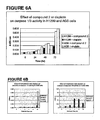

Classifications
-
- C—CHEMISTRY; METALLURGY
- C07—ORGANIC CHEMISTRY
- C07D—HETEROCYCLIC COMPOUNDS
- C07D213/00—Heterocyclic compounds containing six-membered rings, not condensed with other rings, with one nitrogen atom as the only ring hetero atom and three or more double bonds between ring members or between ring members and non-ring members
- C07D213/02—Heterocyclic compounds containing six-membered rings, not condensed with other rings, with one nitrogen atom as the only ring hetero atom and three or more double bonds between ring members or between ring members and non-ring members having three double bonds between ring members or between ring members and non-ring members
- C07D213/04—Heterocyclic compounds containing six-membered rings, not condensed with other rings, with one nitrogen atom as the only ring hetero atom and three or more double bonds between ring members or between ring members and non-ring members having three double bonds between ring members or between ring members and non-ring members having no bond between the ring nitrogen atom and a non-ring member or having only hydrogen or carbon atoms directly attached to the ring nitrogen atom
- C07D213/60—Heterocyclic compounds containing six-membered rings, not condensed with other rings, with one nitrogen atom as the only ring hetero atom and three or more double bonds between ring members or between ring members and non-ring members having three double bonds between ring members or between ring members and non-ring members having no bond between the ring nitrogen atom and a non-ring member or having only hydrogen or carbon atoms directly attached to the ring nitrogen atom with hetero atoms or with carbon atoms having three bonds to hetero atoms with at the most one bond to halogen, e.g. ester or nitrile radicals, directly attached to ring carbon atoms
- C07D213/62—Oxygen or sulfur atoms
- C07D213/70—Sulfur atoms
-
- A—HUMAN NECESSITIES
- A61—MEDICAL OR VETERINARY SCIENCE; HYGIENE
- A61K—PREPARATIONS FOR MEDICAL, DENTAL OR TOILETRY PURPOSES
- A61K31/00—Medicinal preparations containing organic active ingredients
- A61K31/33—Heterocyclic compounds
- A61K31/395—Heterocyclic compounds having nitrogen as a ring hetero atom, e.g. guanethidine or rifamycins
- A61K31/41—Heterocyclic compounds having nitrogen as a ring hetero atom, e.g. guanethidine or rifamycins having five-membered rings with two or more ring hetero atoms, at least one of which being nitrogen, e.g. tetrazole
- A61K31/425—Thiazoles
- A61K31/429—Thiazoles condensed with heterocyclic ring systems
- A61K31/43—Compounds containing 4-thia-1-azabicyclo [3.2.0] heptane ring systems, i.e. compounds containing a ring system of the formula, e.g. penicillins, penems
-
- A—HUMAN NECESSITIES
- A61—MEDICAL OR VETERINARY SCIENCE; HYGIENE
- A61K—PREPARATIONS FOR MEDICAL, DENTAL OR TOILETRY PURPOSES
- A61K31/00—Medicinal preparations containing organic active ingredients
- A61K31/33—Heterocyclic compounds
- A61K31/395—Heterocyclic compounds having nitrogen as a ring hetero atom, e.g. guanethidine or rifamycins
- A61K31/435—Heterocyclic compounds having nitrogen as a ring hetero atom, e.g. guanethidine or rifamycins having six-membered rings with one nitrogen as the only ring hetero atom
- A61K31/44—Non condensed pyridines; Hydrogenated derivatives thereof
- A61K31/4427—Non condensed pyridines; Hydrogenated derivatives thereof containing further heterocyclic ring systems
- A61K31/4439—Non condensed pyridines; Hydrogenated derivatives thereof containing further heterocyclic ring systems containing a five-membered ring with nitrogen as a ring hetero atom, e.g. omeprazole
-
- A—HUMAN NECESSITIES
- A61—MEDICAL OR VETERINARY SCIENCE; HYGIENE
- A61K—PREPARATIONS FOR MEDICAL, DENTAL OR TOILETRY PURPOSES
- A61K31/00—Medicinal preparations containing organic active ingredients
- A61K31/33—Heterocyclic compounds
- A61K31/395—Heterocyclic compounds having nitrogen as a ring hetero atom, e.g. guanethidine or rifamycins
- A61K31/435—Heterocyclic compounds having nitrogen as a ring hetero atom, e.g. guanethidine or rifamycins having six-membered rings with one nitrogen as the only ring hetero atom
- A61K31/44—Non condensed pyridines; Hydrogenated derivatives thereof
- A61K31/445—Non condensed piperidines, e.g. piperocaine
- A61K31/4523—Non condensed piperidines, e.g. piperocaine containing further heterocyclic ring systems
- A61K31/454—Non condensed piperidines, e.g. piperocaine containing further heterocyclic ring systems containing a five-membered ring with nitrogen as a ring hetero atom, e.g. pimozide, domperidone
-
- A—HUMAN NECESSITIES
- A61—MEDICAL OR VETERINARY SCIENCE; HYGIENE
- A61K—PREPARATIONS FOR MEDICAL, DENTAL OR TOILETRY PURPOSES
- A61K31/00—Medicinal preparations containing organic active ingredients
- A61K31/33—Heterocyclic compounds
- A61K31/395—Heterocyclic compounds having nitrogen as a ring hetero atom, e.g. guanethidine or rifamycins
- A61K31/535—Heterocyclic compounds having nitrogen as a ring hetero atom, e.g. guanethidine or rifamycins having six-membered rings with at least one nitrogen and one oxygen as the ring hetero atoms, e.g. 1,2-oxazines
- A61K31/5375—1,4-Oxazines, e.g. morpholine
- A61K31/5377—1,4-Oxazines, e.g. morpholine not condensed and containing further heterocyclic rings, e.g. timolol
-
- A—HUMAN NECESSITIES
- A61—MEDICAL OR VETERINARY SCIENCE; HYGIENE
- A61P—SPECIFIC THERAPEUTIC ACTIVITY OF CHEMICAL COMPOUNDS OR MEDICINAL PREPARATIONS
- A61P11/00—Drugs for disorders of the respiratory system
-
- A—HUMAN NECESSITIES
- A61—MEDICAL OR VETERINARY SCIENCE; HYGIENE
- A61P—SPECIFIC THERAPEUTIC ACTIVITY OF CHEMICAL COMPOUNDS OR MEDICINAL PREPARATIONS
- A61P13/00—Drugs for disorders of the urinary system
- A61P13/12—Drugs for disorders of the urinary system of the kidneys
-
- A—HUMAN NECESSITIES
- A61—MEDICAL OR VETERINARY SCIENCE; HYGIENE
- A61P—SPECIFIC THERAPEUTIC ACTIVITY OF CHEMICAL COMPOUNDS OR MEDICINAL PREPARATIONS
- A61P17/00—Drugs for dermatological disorders
- A61P17/06—Antipsoriatics
-
- A—HUMAN NECESSITIES
- A61—MEDICAL OR VETERINARY SCIENCE; HYGIENE
- A61P—SPECIFIC THERAPEUTIC ACTIVITY OF CHEMICAL COMPOUNDS OR MEDICINAL PREPARATIONS
- A61P17/00—Drugs for dermatological disorders
- A61P17/14—Drugs for dermatological disorders for baldness or alopecia
-
- A—HUMAN NECESSITIES
- A61—MEDICAL OR VETERINARY SCIENCE; HYGIENE
- A61P—SPECIFIC THERAPEUTIC ACTIVITY OF CHEMICAL COMPOUNDS OR MEDICINAL PREPARATIONS
- A61P29/00—Non-central analgesic, antipyretic or antiinflammatory agents, e.g. antirheumatic agents; Non-steroidal antiinflammatory drugs [NSAID]
-
- A—HUMAN NECESSITIES
- A61—MEDICAL OR VETERINARY SCIENCE; HYGIENE
- A61P—SPECIFIC THERAPEUTIC ACTIVITY OF CHEMICAL COMPOUNDS OR MEDICINAL PREPARATIONS
- A61P33/00—Antiparasitic agents
- A61P33/02—Antiprotozoals, e.g. for leishmaniasis, trichomoniasis, toxoplasmosis
- A61P33/06—Antimalarials
-
- A—HUMAN NECESSITIES
- A61—MEDICAL OR VETERINARY SCIENCE; HYGIENE
- A61P—SPECIFIC THERAPEUTIC ACTIVITY OF CHEMICAL COMPOUNDS OR MEDICINAL PREPARATIONS
- A61P35/00—Antineoplastic agents
-
- A—HUMAN NECESSITIES
- A61—MEDICAL OR VETERINARY SCIENCE; HYGIENE
- A61P—SPECIFIC THERAPEUTIC ACTIVITY OF CHEMICAL COMPOUNDS OR MEDICINAL PREPARATIONS
- A61P35/00—Antineoplastic agents
- A61P35/02—Antineoplastic agents specific for leukemia
-
- A—HUMAN NECESSITIES
- A61—MEDICAL OR VETERINARY SCIENCE; HYGIENE
- A61P—SPECIFIC THERAPEUTIC ACTIVITY OF CHEMICAL COMPOUNDS OR MEDICINAL PREPARATIONS
- A61P37/00—Drugs for immunological or allergic disorders
-
- A—HUMAN NECESSITIES
- A61—MEDICAL OR VETERINARY SCIENCE; HYGIENE
- A61P—SPECIFIC THERAPEUTIC ACTIVITY OF CHEMICAL COMPOUNDS OR MEDICINAL PREPARATIONS
- A61P43/00—Drugs for specific purposes, not provided for in groups A61P1/00-A61P41/00
-
- A—HUMAN NECESSITIES
- A61—MEDICAL OR VETERINARY SCIENCE; HYGIENE
- A61P—SPECIFIC THERAPEUTIC ACTIVITY OF CHEMICAL COMPOUNDS OR MEDICINAL PREPARATIONS
- A61P9/00—Drugs for disorders of the cardiovascular system
- A61P9/10—Drugs for disorders of the cardiovascular system for treating ischaemic or atherosclerotic diseases, e.g. antianginal drugs, coronary vasodilators, drugs for myocardial infarction, retinopathy, cerebrovascula insufficiency, renal arteriosclerosis
-
- C—CHEMISTRY; METALLURGY
- C07—ORGANIC CHEMISTRY
- C07C—ACYCLIC OR CARBOCYCLIC COMPOUNDS
- C07C311/00—Amides of sulfonic acids, i.e. compounds having singly-bound oxygen atoms of sulfo groups replaced by nitrogen atoms, not being part of nitro or nitroso groups
- C07C311/15—Sulfonamides having sulfur atoms of sulfonamide groups bound to carbon atoms of six-membered aromatic rings
- C07C311/21—Sulfonamides having sulfur atoms of sulfonamide groups bound to carbon atoms of six-membered aromatic rings having the nitrogen atom of at least one of the sulfonamide groups bound to a carbon atom of a six-membered aromatic ring
-
- C—CHEMISTRY; METALLURGY
- C07—ORGANIC CHEMISTRY
- C07C—ACYCLIC OR CARBOCYCLIC COMPOUNDS
- C07C311/00—Amides of sulfonic acids, i.e. compounds having singly-bound oxygen atoms of sulfo groups replaced by nitrogen atoms, not being part of nitro or nitroso groups
- C07C311/22—Sulfonamides, the carbon skeleton of the acid part being further substituted by singly-bound oxygen atoms
- C07C311/29—Sulfonamides, the carbon skeleton of the acid part being further substituted by singly-bound oxygen atoms having the sulfur atom of at least one of the sulfonamide groups bound to a carbon atom of a six-membered aromatic ring
-
- C—CHEMISTRY; METALLURGY
- C07—ORGANIC CHEMISTRY
- C07C—ACYCLIC OR CARBOCYCLIC COMPOUNDS
- C07C311/00—Amides of sulfonic acids, i.e. compounds having singly-bound oxygen atoms of sulfo groups replaced by nitrogen atoms, not being part of nitro or nitroso groups
- C07C311/30—Sulfonamides, the carbon skeleton of the acid part being further substituted by singly-bound nitrogen atoms, not being part of nitro or nitroso groups
- C07C311/37—Sulfonamides, the carbon skeleton of the acid part being further substituted by singly-bound nitrogen atoms, not being part of nitro or nitroso groups having the sulfur atom of at least one of the sulfonamide groups bound to a carbon atom of a six-membered aromatic ring
- C07C311/38—Sulfonamides, the carbon skeleton of the acid part being further substituted by singly-bound nitrogen atoms, not being part of nitro or nitroso groups having the sulfur atom of at least one of the sulfonamide groups bound to a carbon atom of a six-membered aromatic ring having sulfur atoms of sulfonamide groups and amino groups bound to carbon atoms of six-membered rings of the same carbon skeleton
- C07C311/44—Sulfonamides, the carbon skeleton of the acid part being further substituted by singly-bound nitrogen atoms, not being part of nitro or nitroso groups having the sulfur atom of at least one of the sulfonamide groups bound to a carbon atom of a six-membered aromatic ring having sulfur atoms of sulfonamide groups and amino groups bound to carbon atoms of six-membered rings of the same carbon skeleton having the nitrogen atom of at least one of the sulfonamide groups bound to a carbon atom of a six-membered aromatic ring
-
- C—CHEMISTRY; METALLURGY
- C07—ORGANIC CHEMISTRY
- C07D—HETEROCYCLIC COMPOUNDS
- C07D207/00—Heterocyclic compounds containing five-membered rings not condensed with other rings, with one nitrogen atom as the only ring hetero atom
- C07D207/02—Heterocyclic compounds containing five-membered rings not condensed with other rings, with one nitrogen atom as the only ring hetero atom with only hydrogen or carbon atoms directly attached to the ring nitrogen atom
- C07D207/30—Heterocyclic compounds containing five-membered rings not condensed with other rings, with one nitrogen atom as the only ring hetero atom with only hydrogen or carbon atoms directly attached to the ring nitrogen atom having two double bonds between ring members or between ring members and non-ring members
- C07D207/34—Heterocyclic compounds containing five-membered rings not condensed with other rings, with one nitrogen atom as the only ring hetero atom with only hydrogen or carbon atoms directly attached to the ring nitrogen atom having two double bonds between ring members or between ring members and non-ring members with hetero atoms or with carbon atoms having three bonds to hetero atoms with at the most one bond to halogen, e.g. ester or nitrile radicals, directly attached to ring carbon atoms
-
- C—CHEMISTRY; METALLURGY
- C07—ORGANIC CHEMISTRY
- C07D—HETEROCYCLIC COMPOUNDS
- C07D207/00—Heterocyclic compounds containing five-membered rings not condensed with other rings, with one nitrogen atom as the only ring hetero atom
- C07D207/02—Heterocyclic compounds containing five-membered rings not condensed with other rings, with one nitrogen atom as the only ring hetero atom with only hydrogen or carbon atoms directly attached to the ring nitrogen atom
- C07D207/30—Heterocyclic compounds containing five-membered rings not condensed with other rings, with one nitrogen atom as the only ring hetero atom with only hydrogen or carbon atoms directly attached to the ring nitrogen atom having two double bonds between ring members or between ring members and non-ring members
- C07D207/34—Heterocyclic compounds containing five-membered rings not condensed with other rings, with one nitrogen atom as the only ring hetero atom with only hydrogen or carbon atoms directly attached to the ring nitrogen atom having two double bonds between ring members or between ring members and non-ring members with hetero atoms or with carbon atoms having three bonds to hetero atoms with at the most one bond to halogen, e.g. ester or nitrile radicals, directly attached to ring carbon atoms
- C07D207/36—Oxygen or sulfur atoms
-
- C—CHEMISTRY; METALLURGY
- C07—ORGANIC CHEMISTRY
- C07D—HETEROCYCLIC COMPOUNDS
- C07D209/00—Heterocyclic compounds containing five-membered rings, condensed with other rings, with one nitrogen atom as the only ring hetero atom
- C07D209/02—Heterocyclic compounds containing five-membered rings, condensed with other rings, with one nitrogen atom as the only ring hetero atom condensed with one carbocyclic ring
- C07D209/04—Indoles; Hydrogenated indoles
- C07D209/10—Indoles; Hydrogenated indoles with substituted hydrocarbon radicals attached to carbon atoms of the hetero ring
- C07D209/14—Radicals substituted by nitrogen atoms, not forming part of a nitro radical
-
- C—CHEMISTRY; METALLURGY
- C07—ORGANIC CHEMISTRY
- C07D—HETEROCYCLIC COMPOUNDS
- C07D209/00—Heterocyclic compounds containing five-membered rings, condensed with other rings, with one nitrogen atom as the only ring hetero atom
- C07D209/02—Heterocyclic compounds containing five-membered rings, condensed with other rings, with one nitrogen atom as the only ring hetero atom condensed with one carbocyclic ring
- C07D209/04—Indoles; Hydrogenated indoles
- C07D209/10—Indoles; Hydrogenated indoles with substituted hydrocarbon radicals attached to carbon atoms of the hetero ring
- C07D209/14—Radicals substituted by nitrogen atoms, not forming part of a nitro radical
- C07D209/16—Tryptamines
-
- C—CHEMISTRY; METALLURGY
- C07—ORGANIC CHEMISTRY
- C07D—HETEROCYCLIC COMPOUNDS
- C07D213/00—Heterocyclic compounds containing six-membered rings, not condensed with other rings, with one nitrogen atom as the only ring hetero atom and three or more double bonds between ring members or between ring members and non-ring members
- C07D213/02—Heterocyclic compounds containing six-membered rings, not condensed with other rings, with one nitrogen atom as the only ring hetero atom and three or more double bonds between ring members or between ring members and non-ring members having three double bonds between ring members or between ring members and non-ring members
- C07D213/04—Heterocyclic compounds containing six-membered rings, not condensed with other rings, with one nitrogen atom as the only ring hetero atom and three or more double bonds between ring members or between ring members and non-ring members having three double bonds between ring members or between ring members and non-ring members having no bond between the ring nitrogen atom and a non-ring member or having only hydrogen or carbon atoms directly attached to the ring nitrogen atom
- C07D213/60—Heterocyclic compounds containing six-membered rings, not condensed with other rings, with one nitrogen atom as the only ring hetero atom and three or more double bonds between ring members or between ring members and non-ring members having three double bonds between ring members or between ring members and non-ring members having no bond between the ring nitrogen atom and a non-ring member or having only hydrogen or carbon atoms directly attached to the ring nitrogen atom with hetero atoms or with carbon atoms having three bonds to hetero atoms with at the most one bond to halogen, e.g. ester or nitrile radicals, directly attached to ring carbon atoms
- C07D213/62—Oxygen or sulfur atoms
- C07D213/70—Sulfur atoms
- C07D213/71—Sulfur atoms to which a second hetero atom is attached
-
- C—CHEMISTRY; METALLURGY
- C07—ORGANIC CHEMISTRY
- C07D—HETEROCYCLIC COMPOUNDS
- C07D231/00—Heterocyclic compounds containing 1,2-diazole or hydrogenated 1,2-diazole rings
- C07D231/02—Heterocyclic compounds containing 1,2-diazole or hydrogenated 1,2-diazole rings not condensed with other rings
- C07D231/10—Heterocyclic compounds containing 1,2-diazole or hydrogenated 1,2-diazole rings not condensed with other rings having two or three double bonds between ring members or between ring members and non-ring members
- C07D231/12—Heterocyclic compounds containing 1,2-diazole or hydrogenated 1,2-diazole rings not condensed with other rings having two or three double bonds between ring members or between ring members and non-ring members with only hydrogen atoms, hydrocarbon or substituted hydrocarbon radicals, directly attached to ring carbon atoms
-
- C—CHEMISTRY; METALLURGY
- C07—ORGANIC CHEMISTRY
- C07D—HETEROCYCLIC COMPOUNDS
- C07D235/00—Heterocyclic compounds containing 1,3-diazole or hydrogenated 1,3-diazole rings, condensed with other rings
- C07D235/02—Heterocyclic compounds containing 1,3-diazole or hydrogenated 1,3-diazole rings, condensed with other rings condensed with carbocyclic rings or ring systems
- C07D235/04—Benzimidazoles; Hydrogenated benzimidazoles
- C07D235/24—Benzimidazoles; Hydrogenated benzimidazoles with hetero atoms or with carbon atoms having three bonds to hetero atoms with at the most one bond to halogen, e.g. ester or nitrile radicals, directly attached in position 2
- C07D235/30—Nitrogen atoms not forming part of a nitro radical
-
- C—CHEMISTRY; METALLURGY
- C07—ORGANIC CHEMISTRY
- C07D—HETEROCYCLIC COMPOUNDS
- C07D263/00—Heterocyclic compounds containing 1,3-oxazole or hydrogenated 1,3-oxazole rings
- C07D263/02—Heterocyclic compounds containing 1,3-oxazole or hydrogenated 1,3-oxazole rings not condensed with other rings
- C07D263/30—Heterocyclic compounds containing 1,3-oxazole or hydrogenated 1,3-oxazole rings not condensed with other rings having two or three double bonds between ring members or between ring members and non-ring members
- C07D263/32—Heterocyclic compounds containing 1,3-oxazole or hydrogenated 1,3-oxazole rings not condensed with other rings having two or three double bonds between ring members or between ring members and non-ring members with only hydrogen atoms, hydrocarbon or substituted hydrocarbon radicals, directly attached to ring carbon atoms
-
- C—CHEMISTRY; METALLURGY
- C07—ORGANIC CHEMISTRY
- C07D—HETEROCYCLIC COMPOUNDS
- C07D277/00—Heterocyclic compounds containing 1,3-thiazole or hydrogenated 1,3-thiazole rings
- C07D277/02—Heterocyclic compounds containing 1,3-thiazole or hydrogenated 1,3-thiazole rings not condensed with other rings
- C07D277/20—Heterocyclic compounds containing 1,3-thiazole or hydrogenated 1,3-thiazole rings not condensed with other rings having two or three double bonds between ring members or between ring members and non-ring members
- C07D277/32—Heterocyclic compounds containing 1,3-thiazole or hydrogenated 1,3-thiazole rings not condensed with other rings having two or three double bonds between ring members or between ring members and non-ring members with hetero atoms or with carbon atoms having three bonds to hetero atoms with at the most one bond to halogen, e.g. ester or nitrile radicals, directly attached to ring carbon atoms
- C07D277/36—Sulfur atoms
-
- C—CHEMISTRY; METALLURGY
- C07—ORGANIC CHEMISTRY
- C07D—HETEROCYCLIC COMPOUNDS
- C07D277/00—Heterocyclic compounds containing 1,3-thiazole or hydrogenated 1,3-thiazole rings
- C07D277/02—Heterocyclic compounds containing 1,3-thiazole or hydrogenated 1,3-thiazole rings not condensed with other rings
- C07D277/20—Heterocyclic compounds containing 1,3-thiazole or hydrogenated 1,3-thiazole rings not condensed with other rings having two or three double bonds between ring members or between ring members and non-ring members
- C07D277/32—Heterocyclic compounds containing 1,3-thiazole or hydrogenated 1,3-thiazole rings not condensed with other rings having two or three double bonds between ring members or between ring members and non-ring members with hetero atoms or with carbon atoms having three bonds to hetero atoms with at the most one bond to halogen, e.g. ester or nitrile radicals, directly attached to ring carbon atoms
- C07D277/56—Carbon atoms having three bonds to hetero atoms with at the most one bond to halogen
-
- C—CHEMISTRY; METALLURGY
- C07—ORGANIC CHEMISTRY
- C07D—HETEROCYCLIC COMPOUNDS
- C07D285/00—Heterocyclic compounds containing rings having nitrogen and sulfur atoms as the only ring hetero atoms, not provided for by groups C07D275/00 - C07D283/00
- C07D285/01—Five-membered rings
- C07D285/02—Thiadiazoles; Hydrogenated thiadiazoles
- C07D285/04—Thiadiazoles; Hydrogenated thiadiazoles not condensed with other rings
- C07D285/06—1,2,3-Thiadiazoles; Hydrogenated 1,2,3-thiadiazoles
-
- C—CHEMISTRY; METALLURGY
- C07—ORGANIC CHEMISTRY
- C07D—HETEROCYCLIC COMPOUNDS
- C07D285/00—Heterocyclic compounds containing rings having nitrogen and sulfur atoms as the only ring hetero atoms, not provided for by groups C07D275/00 - C07D283/00
- C07D285/01—Five-membered rings
- C07D285/02—Thiadiazoles; Hydrogenated thiadiazoles
- C07D285/04—Thiadiazoles; Hydrogenated thiadiazoles not condensed with other rings
- C07D285/10—1,2,5-Thiadiazoles; Hydrogenated 1,2,5-thiadiazoles
-
- C—CHEMISTRY; METALLURGY
- C07—ORGANIC CHEMISTRY
- C07D—HETEROCYCLIC COMPOUNDS
- C07D295/00—Heterocyclic compounds containing polymethylene-imine rings with at least five ring members, 3-azabicyclo [3.2.2] nonane, piperazine, morpholine or thiomorpholine rings, having only hydrogen atoms directly attached to the ring carbon atoms
- C07D295/16—Heterocyclic compounds containing polymethylene-imine rings with at least five ring members, 3-azabicyclo [3.2.2] nonane, piperazine, morpholine or thiomorpholine rings, having only hydrogen atoms directly attached to the ring carbon atoms acylated on ring nitrogen atoms
- C07D295/18—Heterocyclic compounds containing polymethylene-imine rings with at least five ring members, 3-azabicyclo [3.2.2] nonane, piperazine, morpholine or thiomorpholine rings, having only hydrogen atoms directly attached to the ring carbon atoms acylated on ring nitrogen atoms by radicals derived from carboxylic acids, or sulfur or nitrogen analogues thereof
- C07D295/182—Radicals derived from carboxylic acids
- C07D295/185—Radicals derived from carboxylic acids from aliphatic carboxylic acids
-
- C—CHEMISTRY; METALLURGY
- C07—ORGANIC CHEMISTRY
- C07D—HETEROCYCLIC COMPOUNDS
- C07D319/00—Heterocyclic compounds containing six-membered rings having two oxygen atoms as the only ring hetero atoms
- C07D319/10—1,4-Dioxanes; Hydrogenated 1,4-dioxanes
- C07D319/14—1,4-Dioxanes; Hydrogenated 1,4-dioxanes condensed with carbocyclic rings or ring systems
- C07D319/16—1,4-Dioxanes; Hydrogenated 1,4-dioxanes condensed with carbocyclic rings or ring systems condensed with one six-membered ring
- C07D319/18—Ethylenedioxybenzenes, not substituted on the hetero ring
-
- C—CHEMISTRY; METALLURGY
- C07—ORGANIC CHEMISTRY
- C07D—HETEROCYCLIC COMPOUNDS
- C07D333/00—Heterocyclic compounds containing five-membered rings having one sulfur atom as the only ring hetero atom
- C07D333/02—Heterocyclic compounds containing five-membered rings having one sulfur atom as the only ring hetero atom not condensed with other rings
- C07D333/04—Heterocyclic compounds containing five-membered rings having one sulfur atom as the only ring hetero atom not condensed with other rings not substituted on the ring sulphur atom
- C07D333/26—Heterocyclic compounds containing five-membered rings having one sulfur atom as the only ring hetero atom not condensed with other rings not substituted on the ring sulphur atom with hetero atoms or with carbon atoms having three bonds to hetero atoms with at the most one bond to halogen, e.g. ester or nitrile radicals, directly attached to ring carbon atoms
- C07D333/30—Hetero atoms other than halogen
- C07D333/34—Sulfur atoms
-
- C—CHEMISTRY; METALLURGY
- C07—ORGANIC CHEMISTRY
- C07D—HETEROCYCLIC COMPOUNDS
- C07D333/00—Heterocyclic compounds containing five-membered rings having one sulfur atom as the only ring hetero atom
- C07D333/02—Heterocyclic compounds containing five-membered rings having one sulfur atom as the only ring hetero atom not condensed with other rings
- C07D333/04—Heterocyclic compounds containing five-membered rings having one sulfur atom as the only ring hetero atom not condensed with other rings not substituted on the ring sulphur atom
- C07D333/26—Heterocyclic compounds containing five-membered rings having one sulfur atom as the only ring hetero atom not condensed with other rings not substituted on the ring sulphur atom with hetero atoms or with carbon atoms having three bonds to hetero atoms with at the most one bond to halogen, e.g. ester or nitrile radicals, directly attached to ring carbon atoms
- C07D333/42—Heterocyclic compounds containing five-membered rings having one sulfur atom as the only ring hetero atom not condensed with other rings not substituted on the ring sulphur atom with hetero atoms or with carbon atoms having three bonds to hetero atoms with at the most one bond to halogen, e.g. ester or nitrile radicals, directly attached to ring carbon atoms with nitro or nitroso radicals directly attached to ring carbon atoms
-
- C—CHEMISTRY; METALLURGY
- C07—ORGANIC CHEMISTRY
- C07D—HETEROCYCLIC COMPOUNDS
- C07D333/00—Heterocyclic compounds containing five-membered rings having one sulfur atom as the only ring hetero atom
- C07D333/50—Heterocyclic compounds containing five-membered rings having one sulfur atom as the only ring hetero atom condensed with carbocyclic rings or ring systems
- C07D333/52—Benzo[b]thiophenes; Hydrogenated benzo[b]thiophenes
- C07D333/62—Benzo[b]thiophenes; Hydrogenated benzo[b]thiophenes with hetero atoms or with carbon atoms having three bonds to hetero atoms with at the most one bond to halogen, e.g. ester or nitrile radicals, directly attached to carbon atoms of the hetero ring
-
- C—CHEMISTRY; METALLURGY
- C07—ORGANIC CHEMISTRY
- C07D—HETEROCYCLIC COMPOUNDS
- C07D409/00—Heterocyclic compounds containing two or more hetero rings, at least one ring having sulfur atoms as the only ring hetero atoms
- C07D409/02—Heterocyclic compounds containing two or more hetero rings, at least one ring having sulfur atoms as the only ring hetero atoms containing two hetero rings
- C07D409/04—Heterocyclic compounds containing two or more hetero rings, at least one ring having sulfur atoms as the only ring hetero atoms containing two hetero rings directly linked by a ring-member-to-ring-member bond
-
- C—CHEMISTRY; METALLURGY
- C07—ORGANIC CHEMISTRY
- C07D—HETEROCYCLIC COMPOUNDS
- C07D409/00—Heterocyclic compounds containing two or more hetero rings, at least one ring having sulfur atoms as the only ring hetero atoms
- C07D409/02—Heterocyclic compounds containing two or more hetero rings, at least one ring having sulfur atoms as the only ring hetero atoms containing two hetero rings
- C07D409/12—Heterocyclic compounds containing two or more hetero rings, at least one ring having sulfur atoms as the only ring hetero atoms containing two hetero rings linked by a chain containing hetero atoms as chain links
-
- C—CHEMISTRY; METALLURGY
- C07—ORGANIC CHEMISTRY
- C07D—HETEROCYCLIC COMPOUNDS
- C07D413/00—Heterocyclic compounds containing two or more hetero rings, at least one ring having nitrogen and oxygen atoms as the only ring hetero atoms
- C07D413/02—Heterocyclic compounds containing two or more hetero rings, at least one ring having nitrogen and oxygen atoms as the only ring hetero atoms containing two hetero rings
- C07D413/04—Heterocyclic compounds containing two or more hetero rings, at least one ring having nitrogen and oxygen atoms as the only ring hetero atoms containing two hetero rings directly linked by a ring-member-to-ring-member bond
-
- C—CHEMISTRY; METALLURGY
- C07—ORGANIC CHEMISTRY
- C07D—HETEROCYCLIC COMPOUNDS
- C07D513/00—Heterocyclic compounds containing in the condensed system at least one hetero ring having nitrogen and sulfur atoms as the only ring hetero atoms, not provided for in groups C07D463/00, C07D477/00 or C07D499/00 - C07D507/00
- C07D513/02—Heterocyclic compounds containing in the condensed system at least one hetero ring having nitrogen and sulfur atoms as the only ring hetero atoms, not provided for in groups C07D463/00, C07D477/00 or C07D499/00 - C07D507/00 in which the condensed system contains two hetero rings
- C07D513/04—Ortho-condensed systems
Definitions
- the present invention relates to bisarylsulfonamide compounds.
- the invention relates to bisarylsulfonamide compounds that are capable of binding to the oncoprotein HDM2 and modulating the HDM2-dependent regulation of the tumour suppressor p53 and/or E2F transcription factors in living cells.
- Further aspects of the invention relate to pharmaceutical preparations comprising such compounds, and the use thereof, e.g. in the therapeutic treatment of humans or animals.
- the MDM2 oncogene was first cloned as an amplified gene on a m urine d ouble- m inute chromosome; the encoded proto-oncoprotein is designated MDM2 and the human equivalent protein is known as HDM2 [ Zhang, Wang H; Curr. Pharmaceut. Design 2000; 6: 393-416 ].
- the connection between HDM2 and human cancer is well established.
- HDM2 is overexpressed in a variety of tumours due to gene amplification or increased transcription or translation [ Momand J, Jung D, Wilczynski S, Niland J; Nucleic Acids Res. 1998; 26: 3453-3459 ].
- Inactivation of the p53 tumour suppressor protein is a frequent event in human neoplasia [ Lane DP, Lain S; Trends Molec. Med. 2002; 8: S38-S42 .]. Apart from inactivation due to mutational defects, this may result, for example, from the binding of HDM2. Interaction of HDM2 with p53 in vitro or in vivo results in inhibition of p53-mediated transactivation. Formation of HDM2/p53 complexes favours nucleoplasmic transformation because of the loss of the p53 tumour suppressor effects upon complexation.
- HDM2 forms a negative autoregulatory loop with p53 by binding to its N -terminal activation domain thereby inhibiting the functions of p53 and promoting the proteolytic degradation of p53. Interference with this regulatory loop can be used to increase the concentration of active p53 in cells.
- the HDM2-binding site on p53 was identified with the aid of a set of overlapping synthetic peptides [ Picksley SM, Voijtesek B, Sparks A, Lane DP; Oncogene 1994; 9: 2523-2529 ] and was mapped to the sequence 18 TFSDLW 23 . Although longer peptides encompassing this sequence were potent inhibitors of p53/HDM2 complex formation, the hexapeptide p53(18-23) itself had little affinity [ Böttger A, Böttger V, Garcia-Echeverria C, Chène P, Hochkeppel HK, Sampson W, Ang K, Howard SF, Picksley SM, Lane DP; J. Molec. Biol. 1997; 269: 744-756 ].
- Certain chalcone derivatives in particular a compound referred to as "B-1" ⁇ 4-[3-(3,4-dichloro-phenyl)-acryloyl]-phenoxy ⁇ -acetic acid, and some of its analogues, were shown to inhibit the p53/HDM2 complex with high micromolar affinity [ Stoll R, Renner C, Hansen S, Palme S, Klein C, Belling A, Zeslawski W, Kamionka M, Rehm T, Muehlhahn P, Schumacher R, Hesse F, Kaluza B, Voelter W, Engh RA, Holak TA; Biochemistry 2001; 40: 336-344 ]: Using multidimensional NMR techniques, evidence for direct binding of the chalcone derivatives to the Trp 23 -binding pocket sub-site of the p53 binding cleft of HDM2 was presented.
- WO 01/12593 discloses various N-phenyl-arylsulfonamides which are useful pharmacological agents for lowering plasma chlesterol and inhibiting abnormal cell proliferation.
- the present invention seeks to provide therapeutic agents that are useful in the treatment of cancer and other proliferative disorders.
- a first aspect of the invention relates to the use of a compound of formula I, wherein
- a second aspect of the invention relates to the use of a compound as defined hereinabove for treating a proliferative disorder.
- a third aspect of the invention relates to compounds of formula Ia, Ib, Ic and Id as outlined in more detail below.
- a fourth aspect of the invention relates to a pharmaceutical composition
- a pharmaceutical composition comprising a compound according to the invention admixed with one or more pharmaceutically acceptable diluents, excipients or carriers.
- a fifth aspect of the invention relates to the use of a compound of the invention in an assay for determining binding to HDM2.
- a sixth aspect of the invention provides a method of detecting the binding of a ligand to HDM2, said method comprising the steps of:
- a seventh aspect of the invention relates to a combination comprising at least one compound of the invention and at least one cytotoxic agent.
- An eighth aspect relates to a pharmaceutical composition
- a pharmaceutical composition comprising at least one compound of the invention, and one or more cytotoxic agents, admixed with a pharmaceutically acceptable diluent, excipient or carrier.
- a ninth aspect of the invention provides a method of treating a proliferative disorder, said method comprising administering to a subject at least one compound of the invention, consecutively, simultaneously or sequentially with one or more other cytotoxic agents.
- a tenth aspect of the invention relates to a method of treating a proliferative disorder, said method comprising administering to a subject at least one compound of the invention consecutively, simultaneously or sequentially with radiotherapy.
- a first aspect of the invention relates to the use of a compound of formula I as defined hereinabove in the preparation of a medicament form treating proliferative disorders.
- preparation of a medicament includes the use of a compound of the invention directly as the medicament in addition to its use in a screening programme for the identification of further agents or in any stage of the manufacture of such a medicament.
- a screening programme may for example include an assay for determining the binding to HDM2 and determining whether a candidate substance is capable of mimicking the activity of a compound of formula I.
- the present invention relates to bisarylsulfonamides as therapeutic agents in the treatment of proliferative disorders.
- Ar 1 is and Ar 2 is
- X is S and E is CR 4 , or X is S and E is N.
- Ar 1 is and Ar 2 is
- Z is N.
- Ar 1 is and Ar 2 is
- Ar 1 is and Ar 2 is
- Z is N.
- Ar 1 is and Ar 2 is
- R 14-16 are all H.
- Ar 1 is and Ar 2 is
- R 2 , R 3 and R 4 are each independently (A) p B, wherein A is C 1-5 alkyl, p is 0 or 1, and B is H, F, Cl, Br, I, C 1-5 alkyl, NO 2 , OH, NH 2 , NHR a , NR b R c , SO 3 H, SO 2 NH 2 , NHPh, SO 2 NHPh, SON 2 HR d , SO 2 Ph, SO 2 R e , CF 3 , CN, COOH, COOR f , CONH 2 , COONHPh, CONHR g , S(CO)R s , OR t , OAr f , COPh, COR h , pyridyl, pyrimidyl, 2-methylsulfanylpyrimid-5-yl, oxazol-2-yl, thiazol-2-yl, 1-methyl-5-trifluoromethyl-1 H -pyra
- R 2 , R 3 and R 4 are each independently H, halogen, NO 2 , SO 2 Ph, S(CO)Me, COOH, COOEt, OPh, OMe, NHCH 2 CH 2 OMe, 1-methyl-5-trifluoromethyl-1 H -pyrazol-4-yl, 2-methylsulfanyl pyrimid-5-yl, N-(4-fluorophenyl)sulfonamido, N-(4-trifluoromethylphenyl)-sulfonamido, oxazol-2-yl, C 1-5 alkyl, NH 2 , morpholin-4-yl, 4-acetyl-piperazin-1-yl, 3-hydroxy-piperidin-1-yl, or R 2 and R 3 together form OCH 2 CH 2 O- -N-S-N- or a phenyl group optionally substituted by one or more halogens.
- Ar 1 is N-(2-aminoethyl)-2-aminoethyl-N-(2-aminoethyl)-2-aminoethyl-N-(2-aminoethyl)-2-aminoethyl-N-(2-aminoethyl)-2-aminoethyl-N-(2-aminoethyl)-2-aminoethyl
- Ar 1 is N-(2-aminoethyl)-2-aminoethyl-N-(2-aminoethyl)-2-aminoethyl-N-(2-aminoethyl)-2-aminoethyl-N-(2-aminoethyl)-2-aminoethyl-N-(2-aminoethyl)-2-aminoethyl
- Ar 1 is N-(2-aminoethyl)-2-aminoethyl-N-(2-aminoethyl)-2-aminoethyl-N-(2-aminoethyl)-2-aminoethyl-N-(2-aminoethyl)-2-aminoethyl-N-(2-aminoethyl)-2-aminoethyl
- R 2 and R 4 are C 1-5 alkyl, and R 3 is COOH or COOEt.
- the compound of formula I is selected from the following:
- the compound of formula I is selected on the basis that it inhibits human tumour cell proliferation in vitro (using a standard 72-h MTT assay as described in Example 5) with an IC 50 value equal to or less than 20 ⁇ M.
- the compound of formula I is selected from the following:
- the compound of formula I is selected from the following: [2], [3], [5], [6], [7], [35], [39], [40], [44]-[46], [48], [49], [53]-[57], [61], [63], [65]-[67], [75] and [83].
- the compound of formula I is selected from the following: [2], [3], [5], [6], [39], [40], [46], [48], [49], [53], [56], [57], [61], [63], [66] and [83].
- the compound of formula I is selected from the following: [2], [3], [46], [49], [61], [63] and [83].
- the compound of formula I is selected on the basis that it inhibits p53-HDM2 interaction (using a competitive p53-derived peptide-HDM2 binding assay as described in Example 3) with an IC 50 value equal to or less than 200 ⁇ M.
- the compound of formula I is selected from the following:
- the compound of formula I is selected from the following: [2], [3], [6], [7], [33], [39], [40], [44]-[46], [48]-[57], [59]-[61], [63], [65]-[67], [72], [75], [130] and [131].
- the compound of formula I is selected from the following: [7], [45], [46], [50]-[53], [65]-[67], [72] and [75].
- the compound of formula I is selected from the following: [50], [51], [65], [67] and [75].
- Another preferred embodiment of the invention relates to the use of a compound of formula Ic, wherein
- Ar 1 is N-(2-aminoethyl)-2-aminoethyl-N-(2-aminoethyl)-2-aminoethyl-N-(2-aminoethyl)-2-aminoethyl-N-(2-aminoethyl)-2-aminoethyl-N-(2-aminoethyl)-2-aminoethyl
- Ar 1 is N-(2-aminoethyl)-2-aminoethyl-N-(2-aminoethyl)-2-aminoethyl-N-(2-aminoethyl)-2-aminoethyl-N-(2-aminoethyl)-2-aminoethyl-N-(2-aminoethyl)-2-aminoethyl
- Ar 2 is N-(2-aminoethyl)-2-aminoethyl-N-(2-aminoethyl)-2-aminoethyl-N-(2-aminoethyl)-2-aminoethyl-N-(2-aminoethyl)-2-aminoethyl-N-(2-aminoethyl)-2-aminoethyl
- Ar 2 is
- Ar 1 is and Ar 2 is
- R 2 , R 3 and R 4 are each independently (A) p B, wherein A is C 1-5 alkyl, p is 0 or 1, and B is H, F, Cl, Br, I, C 1-5 alkyl, NO 2 , OH, NH 2 , NHR a , NR b R c , SO 3 H, SO 2 NH 2 , NHPh, SO 2 NHPh, SO 2 NHR d , SO 2 Ph, SO 2 R e , CF 3 , CN, COOH, COOR f , CONH 2 , COONHPh, CONHR g , COPh, COR h , pyridyl, pyrimidyl, 2-methylsulfanylpyrimid-5-yl, oxazol-2-yl, thiazol-2-yl, or 1-methyl-5-trifluoromethyl-1 H -pyrazol-4-yl.
- R 2 , R 3 and R 4 are each independently H, halogen, NO 2 , SO 2 Ph, 1-methyl-5-trifluoromethyl-1 H -pyrazol-4-yl, 2-methylsulfanyl pyrimid-5-yl, N-(4-fluorophenyl)sulfonamido, N-(4-trifluoromethylphenyl)-sulfonamido, cxazol-2-yl, C 1-5 alkyl or NH 2 .
- Ar 1 is N-(2-aminoethyl)-2-aminoethyl-N-(2-aminoethyl)-2-aminoethyl-N-(2-aminoethyl)-2-aminoethyl-N-(2-aminoethyl)-2-aminoethyl-N-(2-aminoethyl)-2-aminoethyl
- Ar 1 is
- the compounds of the invention have been found to possess anti-proliferative activity and are therefore believed to be of use in the treatment of proliferative disorders, such as cancers, leukaemias or other disorders associated with uncontrolled cellular proliferation such as psoriasis and restenosis.
- an anti-proliferative effect within the scope of the present invention may be demonstrated by the ability to inhibit cell proliferation in an in vitro whole cell assay, for example using any of the cell lines AGS, H1299 or SJSA-1, or by showing inhibition of the interaction between HDM2 and p53 in an appropriate assay.
- assays including methods for their performance, are described in more detail in the accompanying Examples. Using such assays it may be determined whether a compound is anti-proliferative in the context of the present invention.
- One aspect of the present invention therefore relates to the use of one or more compounds of the invention in the treatment of proliferative disorders.
- proliferative disorder is used herein in a broad sense to include any disorder that requires control of the cell cycle, for example cardiovascular disorders such as restenosis and cardiomyopathy, auto-immune disorders such as glomerulonephritis and rheumatoid arthritis, dermatological disorders such as psoriasis, anti-inflammatory, anti-fungal, antiparasitic disorders such as malaria, emphysema and alopecia.
- the compounds of the present invention may induce apoptosis or maintain stasis within the desired cells as required.
- the proliferative disorder is a cancer or leukaemia.
- the compound of the invention is administered in an amount sufficient to modulate the interaction between HDM2 and p53.
- the compound of the invention is administered in an amount sufficient to inhibit the interaction between HDM2 and p53.
- HDM2 forms a negative autoregulatory loop with p53 by binding to its N -terminal activation domain thereby inhibiting the functions of p53 and promoting the proteolytic degradation of p53. Interference with this regulatory loop can be used to increase the concentration of active p53 in cells.
- the equilibrium concentration of active p53 can be increased by antagonising the interaction between HDM2 and p53. This will result in restoration of the p53-mediated pro-apoptotic and anti-proliferative effects in such tumour cells.
- tumour types sensitive to increases in functional p53 [ Hansen R, Reddel R, Braithwaite A; Oncogene 1995; 11: 2535-2545 ], it is expected that the compounds of the present invention will be sufficient to induce apoptosis.
- the negative regulation of p53 by HDM2 may limit the magnitude of p53 activation by DNA damaging agents currently used (chemotherapy and radiotherapy), thereby limiting their therapeutic effectiveness.
- HDM2 feed-back inhibition of p53 is interrupted, an increase in functional p53 levels will increase the therapeutic effectiveness of such agents by restoring the wild-type p53 function that leads to apoptosis and/or by reversing p53-associated drug resistance. It was thus demonstrated that combining HDM2 inhibition [ Wang H, Zeng X, Oliver P, Le LP, Chen J, Chen L, Zhou W, Agrawal S, Zhang R; Int. J. Oncol. 1999; 15: 653-660 ] and DNA-damaging treatments in vivo led to synergistic anti-tumour effects. Therefore, the compounds of the present invention also have therapeutic applications in sensitising tumour cells for chemotherapy and radiotherapy.
- the oncogenic potential of HDM2 is not only determined by its ability to suppress p53, but also by its ability to regulate other tumour suppressor proteins, in particular the retinoblastoma protein pRb and the closely associated E2F1 transcription factor.
- the compound of the invention is administered in an amount sufficient to modulate the interaction between HDM2 and E2F transcription factors.
- the compound of the invention is administered in an amount sufficient to inhibit the interaction between HDM2 and E2F transcription factors.
- HDM2 has been shown to interact directly with the pRb-regulated transcription factor E2F1/DP1 [ Martin K, Trouche D, Hagemeier C, Sorensen TS, La Thangue NB, Kouzarides T; Nature 1995; 375: 691-694 ], whose activation capacity it stimulates.
- E2F1-mediated transactivation [ Daujat S, Neel H, Piette J; Trends Genet. 2001; 17: 459-464 ].
- HDM2 inhibits the pro-apoptotic effect of E2F1/DP1 by favouring degradation of the heterodimer [ Kowalik TF, Degregori J, Leone G, Jakoi L, Nevins JR; Cell Growth Differ. 1998; 9: 113-118 ]. Simultaneously, however, HDM2 still stimulates DNA synthesis in co-operation with E2F1/DP1. These apparently contradictory observations were reconciled by the proposal that high E2F1/DP1 levels in tumour cells are reduced by HDM2 to appropriate levels for the G1-S phase transition [ Loughran 0, La Thangue NB; Mol. Cell. Biol. 2000; 20: 2186-2197 ].
- E2F1 A domain of E2F1 (amino acids 390 to 406) shows striking similarity to the HDM2-binding domain of p53. Since the interactions of HDM2 with both p53 and E2F1 locate to the same binding site on HDM2, it can be expected that HDM2/p53 antagonists, such as the compounds of the present invention, will not only activate cellular p53 but also suppress E2F1 activities, which are commonly deregulated in tumour cells. Furthermore, it can be expected that the compounds of the invention will exhibit anti-proliferative effects in tumour cells, even if such cells are devoid of functional p53.
- Another aspect of the invention relates to compounds of formula Ia, wherein
- Another aspect of the invention relates to compounds of formula Ib, wherein
- Another aspect of the invention relates to compounds of formula Id , wherein
- Another aspect of the invention relates to a compound selected from the following:
- the compound is selected from the following:
- the compound of formula I is selected from the following: [2], [3], [5], [6], [7], [35], [39], [40], [44]-[46], [48], [49], [53]-[57], [61], [63]-[67], [75] and [83].
- the compound of formula I is selected from the following: [2], [3], [5], [6], [39], [40], [46], [48], [49], [53], [56], [57], [61], [63], [64], [66] and [83].
- the compound of formula I is selected from the following: [2], [3], [46], [49], [61], [63] and [83].
- the compound is selected from the following:
- the compound is selected from the following: [2], [3], [6], [7], [33], [39], [40], [44]-[46], [48]-[57], [59]-[67], [72], [75], [130] and [131].
- the compound is selected from the following: [7], [45], [46], [50]-[53], [64]-[67], [72] and [75].
- the compound is selected from the following: [50], [51], [65], [67] and [75].
- the invention also relates to the use of the above-mentioned compounds in the preparation of a medicament for treating a proliferative disorder.
- a fourth aspect of the invention relates to a pharmaceutical composition
- a pharmaceutical composition comprising a compound of formula I as defined for said first and third aspects admixed with one or more pharmaceutically acceptable diluents, excipients or carriers.
- the compounds of the present invention can be administered alone, they will generally be administered in admixture with a pharmaceutical carrier, excipient or diluent, particularly for human therapy.
- the pharmaceutical compositions may be for human or animal usage in human and veterinary medicine.
- Acceptable carriers or diluents for therapeutic use are well known in the pharmaceutical art, and are described, for example, in Remington's Pharmaceutical Sciences, Mack Publishing Co. (A. R. Gennaro edit. 1985 ).
- suitable carriers include lactose, starch, glucose, methyl cellulose, magnesium stearate, mannitol, sorbitol and the like.
- suitable diluents include ethanol, glycerol and water.
- compositions may comprise as, or in addition to, the carrier, excipient or diluent any suitable binder(s), lubricant(s), suspending agent(s), coating agent(s), solubilising agent(s).
- Suitable binders include starch, gelatin, natural sugars such as glucose, anhydrous lactose, free-flow lactose, beta-lactose, corn sweeteners, natural and synthetic gums, such as acacia, tragacanth or sodium alginate, carboxymethyl cellulose and polyethylene glycol.
- Suitable lubricants include sodium oleate, sodium stearate, magnesium stearate, sodium benzoate, sodium acetate, sodium chloride and the like.
- Preservatives, stabilizers, dyes and even flavoring agents may be provided in the pharmaceutical composition.
- preservatives include sodium benzoate, sorbic acid and esters of p-hydroxybenzoic acid.
- Antioxidants and suspending agents may be also used.
- the compounds of the present invention can be present as salts or esters, in particular pharmaceutically acceptable salts or esters.
- salts of the compounds of the invention include suitable acid addition or base salts thereof.
- suitable pharmaceutical salts may be found in Berge et al, J Pharm Sci, 66, 1-19 (1977 ). Salts are formed, for example with strong inorganic acids such as mineral acids, e.g.
- sulphuric acid, phosphoric acid or hydrohalic acids with strong organic carboxylic acids, such as alkanecarboxylic acids of 1 to 4 carbon atoms which are unsubstituted or substituted (e.g., by halogen), such as acetic acid; with saturated or unsaturated dicarboxylic acids, for example oxalic, malonic, succinic, maleic, fumaric, phthalic or tetraphthalic; with hydroxycarboxylic acids, for example ascorbic, glycolic, lactic, malic, tartaric or citric acid; with aminoacids, for example aspartic or glutamic acid; with benzoic acid; or with organic sulfonic acids, such as (C 1 -C 4 )-alkyl- or aryl-sulfonic acids which are unsubstituted or substituted (for example, by a halogen) such as methane- or p-toluene sulfonic acid.
- Esters are formed either using organic acids or alcohols/hydroxides, depending on the functional group being esterified.
- Organic acids include carboxylic acids, such as alkanecarboxylic acids of 1 to 12 carbon atoms which are unsubstituted or substituted (e.g., by halogen), such as acetic acid; with saturated or unsaturated dicarboxylic acid, for example oxalic, malonic, succinic, maleic, fumaric, phthalic or tetraphthalic; with hydroxycarboxylic acids, for example ascorbic, glycolic, lactic, malic, tartaric or citric acid; with aminoacids, for example aspartic or glutamic acid; with benzoic acid; or with organic sulfonic acids, such as (C 1 -C 4 )-alkyl- or aryl-sulfonic acids which are unsubstituted or substituted (for example, by a halogen) such as methane- or p-to
- Suitable hydroxides include inorganic hydroxides, such as sodium hydroxide, potassium hydroxide, calcium hydroxide, aluminium hydroxide.
- Alcohols include alkanealcohols of 1-12 carbon atoms which may be unsubstituted or substituted, e.g. by a halogen).
- the invention includes, where appropriate all enantiomers and tautomers of compounds of the invention.
- the man skilled in the art will recognise compounds that possess an optical properties (one or more chiral carbon atoms) or tautomeric characteristics.
- the corresponding enantiomers and/or tautomers may be isolated/prepared by methods known in the art.
- Some of the compounds of the invention may exist as stereoisomers and/or geometric isomers - e.g. they may possess one or more asymmetric and/or geometric centres and so may exist in two or more stereoisomeric and/or geometric forms.
- the present invention contemplates the use of all the individual stereoisomers and geometric isomers of those agents, and mixtures thereof.
- the terms used in the claims encompass these forms, provided said forms retain the appropriate functional activity (though not necessarily to the same degree).
- the present invention also includes all suitable isotopic variations of the agent or a pharmaceutically acceptable salt thereof.
- An isotopic variation of an agent of the present invention or a pharmaceutically acceptable salt thereof is defined as one in which at least one atom is replaced by an atom having the same atomic number but an atomic mass different from the atomic mass usually found in nature.
- isotopes that can be incorporated into the agent and pharmaceutically acceptable salts thereof include isotopes of hydrogen, carbon, nitrogen, oxygen, phosphorus, sulphur, fluorine and chlorine such as 2 H, 3 H, 13 C, 14 C, 15 N, 17 O, 18 O, 31 P, 32 P, 35 S, 18 F and 36 Cl, respectively.
- isotopic variations of the agent and pharmaceutically acceptable salts thereof are useful in drug and/or substrate tissue distribution studies. Tritiated, i.e., 3 H, and carbon-14, i.e., 14 C, isotopes are particularly preferred for their ease of preparation and detectability. Further, substitution with isotopes such as deuterium, i.e., 2 H, may afford certain therapeutic advantages resulting from greater metabolic stability, for example, increased in vivo half-life or reduced dosage requirements and hence may be preferred in some circumstances. Isotopic variations of the agent of the present invention and pharmaceutically acceptable salts thereof of this invention can generally be prepared by conventional procedures using appropriate isotopic variations of suitable reagents.
- the present invention also includes the use of solvate forms of the compounds of the present invention.
- the terms used in the claims encompass these forms.
- the invention furthermore relates to the compounds of the present invention in their various crystalline forms, polymorphic forms and (an)hydrous forms. It is well established within the pharmaceutical industry that chemical compounds may be isolated in any of such forms by slightly varying the method of purification and or isolation form the solvents used in the synthetic preparation of such compounds.
- the invention further includes the compounds of the invention in prodrug form.
- prodrugs are generally compounds wherein one or more appropriate groups have been modified such that the modification may be reversed upon administration to a human or mammalian subject.
- Such reversion is usually performed by an enzyme naturally present in such subject, though it is possible for a second agent to be administered together with such a prodrug in order to perform the reversion in vivo.
- Examples of such modifications include ester (for example, any of those described above), wherein the reversion may be carried out be an esterase etc.
- Other such systems will be well known to those skilled in the art.
- compositions of the present invention may be adapted for oral, rectal, vaginal, parenteral, intramuscular, intraperitoneal, intraarterial, intrathecal, intrabronchial, subcutaneous, intradermal, intravenous, nasal, buccal or sublingual routes of administration.
- compositions For oral administration, particular use is made of compressed tablets, pills, tablets, gellules, drops, and capsules. Preferably, these compositions contain from 1 to 250 mg and more preferably from 10-100 mg, of active ingredient per dose.
- compositions of the present invention may also be in form of suppositories, pessaries, suspensions, emulsions, lotions, ointments, creams, gels, sprays, solutions or dusting powders.
- the active ingredient can be incorporated into a cream consisting of an aqueous emulsion of polyethylene glycols or liquid paraffin.
- the active ingredient can also be incorporated, at a concentration of between 1 and 10% by weight, into an ointment consisting of a white wax or white soft paraffin base together with such stabilisers and preservatives as may be required.
- Injectable forms may contain between 10 - 1000 mg, preferably between 10 - 250 mg, of active ingredient per dose.
- compositions may be formulated in unit dosage form, i.e., in the form of discrete portions containing a unit dose, or a multiple or sub-unit of a unit dose.
- a person of ordinary skill in the art can easily determine an appropriate dose of one of the instant compositions to administer to a subject without undue experimentation.
- a physician will determine the actual dosage which will be most suitable for an individual patient and it will depend on a variety of factors including the activity of the specific compound employed, the metabolic stability and length of action of that compound, the age, body weight, general health, sex, diet, mode and time of administration, rate of excretion, drug combination, the severity of the particular condition, and the individual undergoing therapy.
- the dosages disclosed herein are exemplary of the average case. There can of course be individual instances where higher or lower dosage ranges are merited, and such are within the scope of this invention.
- the agent may be administered at a dose of from 0.01 to 30 mg/kg body weight, such as from 0.1 to 10 mg/kg, more preferably from 0.1 to 1 mg/kg body weight.
- one or more doses of 10 to 150 mg/day will be administered to the patient for the treatment of malignancy.
- a further aspect of the present invention relates to a combination comprising at least one compound of the invention as defined above and at least one cytotoxic agent.
- the combination is a synergistic combination.
- the compound of the invention is capable of synergistically interacting with the one or more other cytotoxic agents, for example, to enhance the cytotoxic effect of the other agent.
- the cytotoxic agent is a chemotherapeutic agent.
- the chemotherapeutic agent is cisplatin or etoposide.
- the compound of the invention is capable of exhibiting a chemosensitisation effect, for example, by interacting synergistically to increase the cytotoxic effects of cisplatin and etoposide.
- the combined action of the compound of the invention and the cytotoxic agent produces a greater effect than would be expected from adding the individual effects of each component. Further details regarding the synergistic effect may be found in the accompanying examples.
- Another aspect of the invention relates to a pharmaceutical composition
- a pharmaceutical composition comprising at least one compound of the invention as defined above, and one or more cytotoxic agents, admixed with a pharmaceutically acceptable diluent, excipient or carrier.
- the one or more compounds of the invention are administered in combination with one or more other anticancer agents, for example, existing anticancer drugs available on the market.
- the compounds of the invention may be administered consecutively, simultaneously or sequentially with the one or more other anticancer agents.
- one aspect of the invention provides a method of treating a proliferative disorder, said method comprising administering to a subject at least one compound of the invention as defined above consecutively, simultaneously or sequentially with one or more other cytotoxic agents.
- Anticancer drugs in general are more effective when used in combination.
- combination therapy is desirable in order to avoid an overlap of major toxicities, mechanism of action and resistance mechanism(s).
- the major advantages of combining chemotherapeutic drugs are that it may promote additive or possible synergistic effects through biochemical interactions and also may decrease the emergence of resistance in early tumor cells which would have been otherwise responsive to initial chemotherapy with a single agent.
- An example of the use of biochemical interactions in selecting drug combinations is demonstrated by the administration of leucovorin to increase the binding of an active intracellular metabolite of 5-fluorouracil to its target, thymidylate synthase, thus increasing its cytotoxic effects.
- Beneficial combinations may be suggested by studying the activity of the test compounds with agents known or suspected of being valuable in the treatment of a particular cancer initially or cell lines derived from that cancer. This procedure can also be used to determine the order of administration of the agents, i.e. before, simultaneously, or after delivery. Such scheduling may be a feature of all the cycle acting agents identified herein.
- the compounds of the present invention may also be used in combination with radiotherapy treatment.
- another aspect of the invention provides a method of treating a proliferative disorder, said method comprising administering to a subject at least one compound of formula I as defined above consecutively, simultaneously or sequentially with radiotherapy.
- a fifth aspect of the invention relates to the use of a compound of formula I, as defined in the above-mentioned first aspect, in an assay for determining binding to HDM2.
- the assay is capable of identifying candidate compounds that influence the activity of HDM2 on p53 and/or E2F.
- the assay is capable of identifying candidate compounds that inhibit the interaction between HDM2 and p53 and/or E2F.
- the assay is a competitive binding assay.
- the competitive binding assay comprises contacting a compound of formula I as defined in the above-mentioned first aspect of the invention with HDM2 in the presence of a p53-derived peptide and detecting any change in the interaction between HDM2 and said p53-derived peptide.
- said p53-derived peptide is a fluorescently labelled or biotinylated p53-derived peptide.
- a sixth aspect of the invention provides a method of detecting the binding of a ligand to HDM2, said method comprising the steps of:
- One aspect of the invention relates to a process comprising the steps of:
- Another aspect of the invention provides a process comprising the steps of:
- Another aspect of the invention provides a process comprising the steps of:
- the invention also relates to a ligand identified by the method described hereinabove.
- Yet another aspect of the invention relates to a pharmaceutical composition
- a pharmaceutical composition comprising a ligand identified by the method described hereinabove.
- Another aspect of the invention relates to the use of a ligand identified by the method described hereinabove in the preparation of a pharmaceutical composition for use in the treatment of proliferative disorders.
- said candidate compound is generated by conventional SAR modification of a compound of the invention.
- conventional SAR modification refers to standard methods known in the art for varying a given compound by way of chemical derivatisation.
- the above methods may be used to screen for a ligand useful as an inhibitor of the interaction between HDM2 and p53.
- the compounds of the present invention can be prepared by methods known in the art.
- the condensation reaction between arylsulfonyl halides and arylamines can be applied.
- N-substituted bisarylsulfonamides can be obtained by using secondary arylamines in this reaction or through alkylation of primary bisarylsulfonamide precursors.
- Alkylation can be achieved with alkyl or aralkyl halides by sulfonylamino-de-halogenation or with alkyl or aralkyl alcohols by e.g. the Tsunoda reaction [ Tsunoda T, Otsuka J, Yamamiya Y, Ito S; Chem. Lett.
- a number of the bisarylsulfonamides of the present invention contain the thiophenesulfonyl function; appropriate thiophenesulfonyl halide precursors for the sulfonamide condensation reaction can be prepared as described [ Cremlyn RJ, Goulding KH, Swinboume FJ, Yung K-M; Phosphorus Sulfur 1951; 10: 111-119 ; Obafemi CA; Phosphorus Sulfur 1982; 13: 119-131 .].
- HPLC retention times were measured using Vydac 218TP54 columns (C 18 reversed-phase stationary phase; 4.5 x 250 mm columns), eluted at 1 mL/min with a linear gradient of acetonitrile in water (containing 0.1 % CF 3 COOH) as indicated, followed by isocratic elution.
- HPLC Method B refers to the following: Supercosil ABZ+Plus column (21.2 x 250 mm), eluted at 20 mL/min using a linear gradient of acetonitrile in water from 5 to 95 % over 10 min, followed by isocratic elution. UV monitors (254 nm) were used.
- a primary bisarylsulfonamide from Example 1 (1.0 mol eq) was dissolved in anhydrous acetone and the solution was cooled to 0 °C before triethylamine (5.0 mol eq) was added slowly. After 30 min, alkylating agent (alkyl or aralkyl halide; 5.0 mol eq) was added slowly and the solution was stirred until TLC [heptane : ethyl acetate (2:1)] indicated the reaction to be complete. The reaction mixture was then concentrated, diluted with water, and extracted with ethyl acetate.
- N -alkylated bisarylsulfonamide compounds of this invention were prepared in this manner. Analytical details for representative compounds are as follows:
- Fluorescently labelled p53-derived peptide (fluorescein-Met-Pro-Arg-Phe-Met-Asp-Tyr-Trp-Glu-Gly-Leu-Asn-NH 2 , 0.2 ⁇ M) was added to each well and the plate was incubated at room tempeature for 45 min. The fluorescence polarisation (excitation 485 nm, emission 520 nm) of the peptide was measured. IC 50 values were calculated from dose-response curves.
- Streptavidin-coated 96-well plates (Pierce Chemical Co., St. Louis, MO, USA) were washed with TBS/BSA (25 mM Tris-HCl pH 7.5, 150 mM NaCl, 0.05 % Tween 20, 0.1 % BSA).
- Biotinylated p53-derived peptide (biotin-Ahx-Met-Pro-Arg-Phe-Met-Asp-Tyr-Trp-Glu-Gly-Leu-Asn-NH 2 ) was diluted to 1 ⁇ M with 25 mM Tris-HCl, pH 7.5, and aliquots (0.1 mL/well) were added to each well.
- HDM2 50 uL/well of a 10 ⁇ g/mL stock solution in TBS/BSA buffer
- serially diluted test compound 50 ⁇ L/well
- the reaction mixtures were then transferred to the peptide-coated streptavidin plates and incubation was continued for 1 h at room temperature, with constant shaking.
- the plates were then again washed extensively with TBS/BSA buffer.
- Anti-HDM2 antibody (SMP14 mAb, Santa Cruz Biotechnology, Inc., Santa Cruz, CA, USA; 0.1 mL/well of a 0.125 ⁇ g/mL TBS/BSA buffer dilution) was added and incubated for 1 h at room temperature. After renewed washing, secondary antibody (anti-mouse Ab, Sigma Cat. No. A 4789; 0.1 mL/well of a 1:10,000 TBS/BSA buffer dilution) was added and incubated for 1 h at room temperature.
- TMB ELISA reagent (Pierce; 0.1 mL/well) was added, incubated for 1 min, and the colour reaction stopped by addition of 2 M aq H 2 SO 4 (0.1 mL/well). The absorbance at 450 nm was then measured. IC 50 values were calculated from dose-response curves.
- the cell lines used were as follows: AGS, gastric adenocarcinoma, wild-type p53; H1299, large cell lung carcinoma, p53 null, low HDM2; SJSA-1, primitive multipotential bone sarcoma, wild-type p53, overexpressed HDM2.
- HDM2 amplification is particularly common in soft tissue sarcomas and osteosarcomas [Momand J et al, ibid ; Bartel F, Meye A, Wurl P, Kappler M, Bache M, Lautenschlager C, Grunbaum U, Schmidt H, Taubert H; Int. J. Cancer 2001; 95: 168-175 ].
- a dual assay assessing both cell viability and p53 response was employed.
- a U20S-derived cell line stably transfected with a p53 response element and a luciferase reporter gene was created.
- the genetic expression cassette construct GC3p53tkaLuc used for this purpose has been described [ Zhu J, Gao B, Zhao J, Balmain A; Cancer Gene Ther. 2000; 7: 4-12 ].
- the cell proliferation reagent WST-1 (Roche Molecular Biochemicals) was used to determine cell viability.
- the Bright-Glo TM Luciferase Assay System (Promega) was used to measure luciferase activity.
- a similar system to the p53 reporter assay described above was used, with the exception that it was designed to be responsive to E2F transcription factors rather than p53.
- An A549-derived cell line stably transfected with an E2F response element and a luciferase reporter gene was created.
- the genetic expression cassette construct used was from Clontech (Mercury TM Cell Cycle Profiling System). Assays were carried out as described above.
- HDM2 as a transcriptional product and negative regulator pf p53, would destabilise p53 and diminish its pro-apoptotic function.
- Inhibitors of the p53-HDM2 negative feedback loop e.g . compounds disrupting the p53-HDM2 complex
- AGS gastric adenocarcinoma, wild type p53
- H1299 colon adenocarcinoma, p53 null
- SJSA-1 osteosarcoma, wild type p53, over-expressed HDM2
- cisplatin DNA alkylating agent
- etoposide topoisomerase inhibitor
- the combination treatment regimen included addition of 2 to the cells at the same time, 6 hours before, or 6 hours after cisplatin or etoposide. Both chemotherapeutic agents were used in the concentration range of 100 - 0.19 ⁇ M.
- the cytotoxic effect of etoposide and cisplatin in the presence and absence of the HDM2-p53 inhibitor was determined using a standard MTT assay after a total of 72 hours incubation time. The cytotoxicity results for cisplatin are shown in Table 5.
- Compound 2 increased the cytotoxic effect of cisplatin on all three cell lines used.
- the synergistic effect was highest when 2 was added prior to the treatment with cisplatin and the potency increase in AGS, H1299 and SJSA-1 cells was 18.5-, 16- and 357-fold, respectively.
- cytotoxicity of etoposide was significantly increased in the presence of 2, as the highest effect was registered when the inhibitor of the HDM2-p53 interaction was added 6 hours before etoposide.
- the IC 50 values calculated for etoposide in AGS, H1299 and SJSA-1 cells pre-treated with 2 were 3.5-, 25- and 726-fold lower than the ones not receiving 2.
- Hdm2 SJSA1 - osteosarcoma
- wild type p53 and normal levels of HDM2 AGS - gastric adenocarcinoma, MCF7 - breast adenocarcinoma
- p53 null, low levels of HDM2 H1299 - large cell lung carcinoma.
- the effects of bisarylsulfonamides were analysed at the cellular levels of key proteins in the HDM2 pathway and were compared with those induced by well-characterised anti-cancer drugs such as etoposide and cisplantinum.
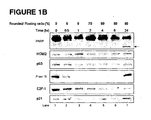
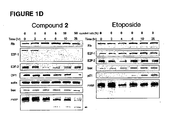
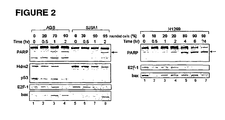
- AGS, H1299, MCF7 or SJSA1 cells were treated with five times the anti-proliferative IC 50 concentration of compound 2 or in some cases etoposide or cisplatinum ( Figure 1). Cells were collected at intervals and morphological changes were noted at the time of collection. Cells were lysed and equal amounts were analysed by SDS-polyacrylamide gel electrophoresis (SDS-PAGE) and immunoblotting. Treatment of AGS or MCF7 cells with etoposide or cisplatinum resulted in classical stress response (Figure 1B, 1C, and ID), inducing p53 phosphorylation of serine 15, as well as increasing the p53 and E2F-1 protein levels.
- Compound 2 induced rapid morphological changes that were most dramatic in SJSA1, cells that have a very prominent cytoplasmic component. Rapid cell rounding was detected in all cell types tested.
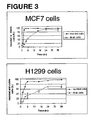
- MCF7 or H1299 cells were treated with cisplatin or compound 2 ( Figure 5). Both cisplatin and compound 2 induced sub-G1 cells, indicative of apoptosis, with no detectable arrest at any phase of the cell cycle.
- the cells were transfected with HDM2 or control siRNAs serially every 24 hours and collected 24 hours later.
- Cells were lysed and equal amounts of protein were separated by SDS-PAGE and analysed by Western blotting.
- Treatment with control siRNAs had no effect on the levels of HDM2 ( Figure 7A lanes 1-9).
- Treatment with HDM2 siRNA markedly reduced the levels of HDM2 protein at all time points ( Figure 7A, lanes 10-15). This corresponded to a decrease in E2F-1 levels but not E2F-4 levels and an induction of p53 protein levels. Actin was used as a loading control.
- HDMX has been shown to stabilise HDM2 levels.
- HDM2 levels were affected by HDMX levels in MCF7 cells and whether reducing HDMX levels could reduce E2F-1 levels.
- MCF7 cells were transfected with HDM2 siRNA and HDMX siRNA alone or together.
- HDM2 levels were reduced at all time points in the presence of HDM2 siRNA ( Figure 7B lanes 10-12).
- Treatment of cells with HDMX siRNA reduced cellular levels of HDMX as well as reducing the levels of HDM2 ( Figure 7B lanes 13-15). In both cases E2F-1 levels were also decreased.
- Combined treatment with HDM2 and HDMX siRNA had an additive effect greatly reducing the levels of E2F-1 at 48 hours. ( Figure 7B lane 17).
Landscapes
- Chemical & Material Sciences (AREA)
- Organic Chemistry (AREA)
- Health & Medical Sciences (AREA)
- Veterinary Medicine (AREA)
- General Health & Medical Sciences (AREA)
- Life Sciences & Earth Sciences (AREA)
- Medicinal Chemistry (AREA)
- Public Health (AREA)
- Animal Behavior & Ethology (AREA)
- Pharmacology & Pharmacy (AREA)
- Chemical Kinetics & Catalysis (AREA)
- General Chemical & Material Sciences (AREA)
- Nuclear Medicine, Radiotherapy & Molecular Imaging (AREA)
- Epidemiology (AREA)
- Engineering & Computer Science (AREA)
- Bioinformatics & Cheminformatics (AREA)
- Urology & Nephrology (AREA)
- Dermatology (AREA)
- Tropical Medicine & Parasitology (AREA)
- Heart & Thoracic Surgery (AREA)
- Cardiology (AREA)
- Immunology (AREA)
- Pain & Pain Management (AREA)
- Rheumatology (AREA)
- Oncology (AREA)
- Hematology (AREA)
- Pulmonology (AREA)
- Vascular Medicine (AREA)
- Pharmaceuticals Containing Other Organic And Inorganic Compounds (AREA)
- Acyclic And Carbocyclic Compounds In Medicinal Compositions (AREA)
- Plural Heterocyclic Compounds (AREA)
- Pyridine Compounds (AREA)
- Compositions Of Macromolecular Compounds (AREA)
- Macromolecular Compounds Obtained By Forming Nitrogen-Containing Linkages In General (AREA)
- Indole Compounds (AREA)
- Organic Low-Molecular-Weight Compounds And Preparation Thereof (AREA)
- Investigating Or Analysing Biological Materials (AREA)
- Thiazole And Isothizaole Compounds (AREA)
- Nitrogen- Or Sulfur-Containing Heterocyclic Ring Compounds With Rings Of Six Or More Members (AREA)
- Heterocyclic Carbon Compounds Containing A Hetero Ring Having Nitrogen And Oxygen As The Only Ring Hetero Atoms (AREA)
Claims (54)
- Verwendung einer Verbindung der Formel I
 W eine verzweigte oder unverzweigte C1-5-Alkylengruppe oder eine C2-5-Alkenylengruppe ist,n 0 oder 1 ist,R1 H, eine verzweigte oder unverzweigte C1-8-Alkylgruppe, eine C2-8-Alkenylgruppe oder eine Aryl- oder Aralkylgruppe ist, von denen jede optional mit einer oder mehreren Halogen- oder CF3-Gruppen substituiert sein kann,Ar1 folgendes ist
 X S, O, NH oder NR' ist, wobei R' eine C1-3-Alkylgruppe ist,Y CH oder N ist,E N oder CR4 istR2, R3, R4 und R14-16 jeweils unabhängig voneinander (A)pB sind, wobei A C1-3-Alkyl ist, p 0 oder 1 ist und B H, Halogen, C1-5-Alkyl, NO2, OH, NH2, NHRa, NRbRc, SO3H, SO2NH2, NHAra, SO2NHArb, SO2NHRd, SO2Arc, SO2Re, CF3, CN, COOH, COORf, CONH2, COON-HArd, CONHRg, COAre, CORh, S(CO)Re, ORt, OArr, eine alizyklische Gruppe, die optional ein oder mehrere Heteroatome enthält, optional substituiert mit einer oder mehreren OH-, CORu-, Halogen- oder CF3-Gruppen, oder eine Heteroarylgruppe, optional substituiert mit einer oder mehreren C1-5-Alkyl-, Halogen-, SR'- oder CF3-Gruppen, ist oderR2 und R3 miteinander verknüpft sind unter Bildung eines gesättigten oder ungesättigten Ringsystems, weiches optional ein oder mehrere Heteroatome enthält und optional mit einer oder mehreren Halogen-, OH- oder CF3-Gruppen substituiert ist,Ara-f jeweils unabhängig voneinander Arylgruppen, optional substituiert mit einer oder mehreren C1-5-Alkyl-, Halogen- oder CF3-Gruppen, sind,Ra-i, Rs, Rt und Ru jeweils unabhängig voneinander C1-5-Alkylgruppen, optional substituiert mit einer oder mehreren Alkoxy-, Halogen- oder CF3-Gruppen, sindund mit der Maßgabe, daß wenigstens einer von R2, R3 und R4 etwas anderes als H ist,Ar2 folgendes istbei der Herstellung eines Medikaments zur Behandlung einer proliferativen Störung.
 Z S, O, NH oder NR" ist, wobei R" C1-3-Alkyl ist,R5, R6, R7, R8 und R9 jeweils unabhängig voneinander (L)qM sind, wobei L C1-3-Alkyl ist, q 0 oder 1 ist, M H, C1-5-Alkyl, Halogen, NO2, OH, NH2, NHArg, NHRj, NRkRl, SO3H, SO2NH2, SO2NHArn, SO2NHRm, SO2Arj, SO2Rn, CF3, CN, COOH, COORp, CONH2, CONHArj, CONHRq, ORv, COArk oder CORr ist,Rj-r, Rv jeweils unabhängig voneinander C1-5-Alkylgruppen sind,Arg-k jeweils unabhängig voneinander Arylgruppen sind,und mit der Maßgabe, daß wenigstens einer der Substituenten R5, R6, R7, R8 und R9 etwas anderes als H ist,R10, R11, R12 und R13 jeweils unabhängig voneinander H, C1-5-Alkyl, Halogen, NO2, OH, NH2 oder CF3 sind,
 - Verwendung nach Anspruch 1, wobei Ar1 folgendes ist

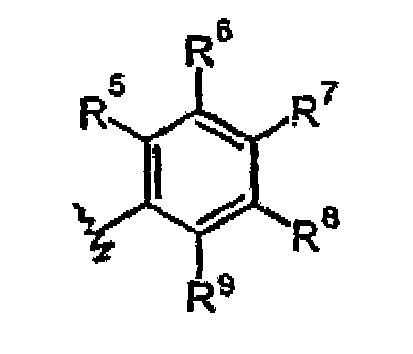
- Verwendung nach Anspruch 1, wobei Ar1 folgendes ist


- Verwendung nach Anspruch 1, wobei Ar1 folgendes ist


- Verwendung nach Anspruch 1, wobei Ar1 folgendes ist


- Verwendung nach Anspruch 1, wobei Ar1 folgendes ist


- Verwendung nach Anspruch 1, wobei Ar1 folgendes ist
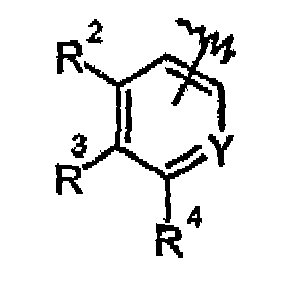

- Verwendung nach einem der vorangegangenen Ansprüche, wobei- R2, R3 und R4 jeweils unabhängig voneinander (A)pB sind, wobei A C1-5-Alkyl ist, p 0 oder 1 ist und B H, F, Cl, Br, l, C1-5-Alkyl, NO2, OH, NH2, NHRa, NRbRc, SO3H, SO2NH2, NHPh, SO2NHAb, SO2NHRd. SO2Ph, SO2Re, CF3, CN, COOH, COORf, CONH2, COONHPh, CONHRg, S(CO)Rs, ORt, OArf, COPh, CORh, eine Morpholino-, Piperazino- oder Piperidinogruppe, von denen jede optional mit einer oder mehreren OH- oder COR"-Gruppen substituiert sein kann, oder eine Heteroarylgruppe, ausgewählt unter Pyridyl, Pyrimidyl, Oxazolyl, Thiazolyl und Pyrazolyl, von denen jede optional mit einer oder mehreren C1-5-Alkyl-, Halogen-, SR'- oder CF3-Gruppen substituiert sein kann, ist, oder R2 und R3 zusammen einen gesättigten sechsgliedrigen Ring oder einen ungesättigten fünfgliedrigen Ring bilden, von denen jeder optional ein oder mehrere Heteroatome enthält, und- R5, R6, R7, R8 und R9 jeweils unabhängig voneinander (L)qM sind, wobei L C1-6-Alkyl ist, q 0 oder 1 ist, M H, C1-5-Alkyl, Halogen, NO2, OH, NH2, NHPh, NHRj, NRkRl, SO3H, SO2NH2, SO2NHPh, SO2NHRm, SO2Ph, SO2Rn, CF3, CN, COOH, COORp, CONH2, CONHPh, CONHRq, ORv, COPh oder CORr ist.
- Verwendung nach einem der vorangegangenen Ansprüche, wobei R2, R3 und R4 jeweils unabhängig voneinander (A)pB sind, wobei A C1-5-Alkyl ist, p 0 oder 1 ist und B H, F, Cl, Br, 1, C1-5-Alkyl, NO2, OH, NH2, NHRa, NRbRc, SO3H, SO2NH2, NHPh, SO2NHPh, SO2NHRd, SO2Ph, SO2-Re, CF3, CN, COOH, COORf, CONH2, COOHNPh, CONHRg, S(CO)Rs, ORt, OArf, COPh, CORh, Pyridyl, Pyrimidyl, 2-Methylsulfanylpyrimid-5-yl, Oxazol-2-yl, Thiazol-2-yl, 1-Methyl-5-trifluormethyl-1H-pyrazol-4-yl, Morpholin-4-yl, 4-Acetylpiperazin-1-yl, 3-Hydroxypiperidin-1-yl ist oder R2 und R3 zusammen
-OCH2CH2O-
-N-S-N- oder
eine Phenylgruppe, optional substituiert mit einem oder mehreren Halogenen, bilden. - Verwendung nach einem der vorangegangenen Ansprüche, wobei R2, R3 und R4 jeweils unabhängig voneinander H, Halogen, NO2, SO2Ph, S(CO)Me, COOH, COOEt, OPh, OMe, NHCH2CH2OMe, 1-Methyl-5-trifluormethyl-1H-pyrazol-4-yl, 2-Methylsulfanylpyrimid-5-yl, N-(4-Fluorphenyl)-sulfonamido, N-(4-Trifluormethylphenyl)-sulfonamido, Oxazol-2-yl, C1-5-Alkyl, NH2, Morpholin-4-yl, 4-Acetylpiperazin-1-yl, 3-Hydroxypiperidin-1-yl sind oder R2 und R3 zusammen
OCH2CH2O-
-N-S-N- oder
eine Phenylgruppe, optional substituiert mit einem oder mehreren Halogenen, bilden. - Verwendung nach einem der Ansprüche 1-3 oder 8-10, wobei Ar1 folgendes ist
 X S oder N ist,R2 R3 und R4 jeweils unabhängig voneinander C1-5-Alkyl, S(CO)Me, COOH, NHCH2CH2OMe, COOEt, H, Halogen, NO2, SO2Ph, SO2NH-(4-Chlorphenyl), 1-Methyl-5-trifluormethyl-1H-pyrazol-4-yl, Morpholin-4-yl, 2-Methylsulfanylpyrimid-5-yl, N-(4-Fluorphenyl)-sulfonamido, N-(4-Trifluormethylphenyl)-sulfonamido, 3-Hydroxypiperidin-1-yl, Pyridin-2-yl sind oder R2 und R3 eine Phenylgruppe, optional substituiert mit einem oder mehreren Halogenen, bilden.
 - Verwendung nach Anspruch 11, wobei- R2 Halogen, SO2Ph, NO2, Et, SOMe, Morpholin-4-yl, NHCH2CH2OMe, 3-Hydroxypiperidin-1-yl, 1-Methyl-5-trifluormethyl-1H-pyrazol-4-yl oder 2-Methylsulfanyl-pyrimid-5-yl ist,- R3 Halogen, SO2NH-(4-Chlorphenyl), H, NO2, N-(4-Fluorphenyl)-sulfonamido oder N-(4-Trifluormethylphenyl)-sulfonamido ist, und- R4 H ist.
- Verwendung nach einem der Ansprüche 1, 4, 5, 7-10, wobei Ar1 folgendes ist
 Y CH oder N ist undR2, R3 und R4 jeweils unabhängig voneinander H, OH, COOH, CF3, OPh, OMe, NO2, 4-Acetyl-piperazin-1-yl, NH2, Halogen, Pyrazol-1-yl, Oxazol-2-yl oder C1-5-Alkyl sind oder R2 und R3 zusammen -OCH2CH2O- oder N-S-N- bilden.
 - Verwendung nach Anspruch 13, wobei,
wenn Y CH ist,- R2 H, NO2 oder Cl ist,- R3 NO2, NH2, Cl, CF3, COOH, 4-Acetylpiperazin-1-yl ist und- R4 H, Cl, Oxazol-2-yl, OH, NO2, NH2, OMe oder Me ist, oder,wenn Y N ist,- R2 H ist,- R3 Br ist,- R4 Cl oder OPh ist. - Verwendung nach einem der Ansprüche 1, 2 oder 8-10, wobei Ar1 folgendes ist
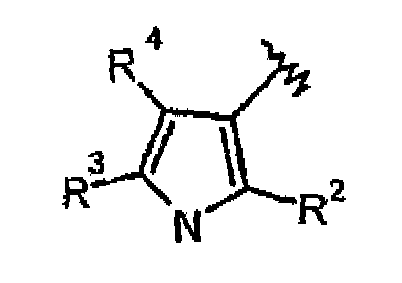 R2 und R4 C1-5-Alkyl sind und R3 COOH oder COOEt ist.
 - Verwendung nach einem der vorangegangenen Ansprüche, wobei- R5, R6, R7, R8 und R9 jeweils unabhängig voneinander H, Halogen, OMe, NO2, C1-5-Alkyl, CF3 oder OH sind und- R10, R11, R12 und R13 alle H sind.
- Verwendung nach Anspruch 16, wobei- R5 H, C1-5-Alkyl oder Halogen ist,- R6 H, Halogen, NO2 oder CF3 ist,- R7 H, Halogen, OMe, NO2, OH oder CF3 ist,- R8 H, Halogen oder CF3 ist,- R8 H ist.
- Verwendung nach einem der vorangegangenen Ansprüche, wobei- W CH2, CH2CH2 oder CH(CH3)CH2 ist und- R1 H, CH2Ph, CH2CH(Me)2, 3-(Trifluormethyl)-benzyl oder Me ist.
- Verwendung nach einem der vorangegangenen Ansprüche, wobei die Verbindung der Formel ausgewählt ist unter5-Chlor-4-nitrothiophen-2-sulfonsäure-(3-trifluormethylphenyl)-amid [1],5-Chlor-4-nitrothiophen-2-sulfonsäure-(4-chlorphenyl)-amid [2],5-Chlor-4-nitrothiophen-2-sulfonsäure-(4-fluorphenyl)-amid [3],4-Brom-5-chlorthiophen-2-sulfonsäure-(4-fluorphenyl)-amid [4],5-Chlor-4-nitrothiophen-2-sulfonsäure-(4-hydroxyphenyl)-amid [5],5-Chlor-4-nitrothiophen-2-sulfonsäure-(4-trifluormethylphenyl)-amid [6],5-Chlor-4-nitrothiophen-2-sulfonsäure-(4-fluorphenyl)-methylamid [7],4,5-Dibromthiophen-2-sulfonsäure-(3,5-bis-trifluormethylphenyl)-amid [8],5-Chlorthiophen-2-sulfonsäure-(4-trifluormethylphenyl)-amid [9],5-Chlorthiophen-2-sulfonsäure-(4-chlorphenyl)-amid [10],5-Chlorthiophen-2-sulfonsäure-(3,5-bis-trifluormethylphenyl)-amid [11],5-(2-Methylsulfanylpyrimidin-5-yl)-thiophen-2-sulfonsäure-(3,5-dichlorphenyl)-amid [12],4-Oxazol-2-yl-N-(4-trifluormethylphenyl)-benzensulfonamid [13],N-(3,5-Bis-trifluormethylphenyl)-4-oxazol-2-yl-benzensulfonamid [14],4-Brom-5-chlorthiophen-2-sulfonsäure-(4-trifluormethylphenyl)-amid [15],5-Bromthiophen-2-sulfonsäure-(4-chlorphenyl)-amid [16],5-Bromthiophen-2-sulfonsäure-(3,5-dichlorphenyl)-amid [17],5-Bromthiophen-2-sulfonsäure-(3,5-bis-trifluormethylphenyl)-amid [18],N-(4-Chlorphenyl)-3-nitrobenzensulfonamid [19],3-Nitro-N-(4-trifluormethylphenyl)-benzensulfonamid [20],N-(3,5-Bis-trifluormethylphenyl)-3-nitrobenzensulfonamid [21],N-(2,4-Dichlorphenyl)-3-nitrobenzensulfonamid [22],5-Benzensulfonylthiophen-2-sulfonsäure-(4-trifluormethylphenyl)-amid [23],5-Benzensulfonylthiophen-2-sulfonsäure-(4-chlorphenyl)-amid [24],5-Benzensulfonylthiophen-2-sulfonsäure-(3,5-dichlorphenyl)-amid [25],5-Chlorthiophen-2-sulfonsäure-(3,4-dichlorphenyl)-amid [26],4,5-Dibromthiophen-2-sulfonsäure-(3-trifluormethylphenyl)-amid [27],4,5-Dibromthiophen-2-sulfonsäure (3,4-dichlorphenyl)-amid [28],N-(3,5-Bis-trifluormethylphenyl)-4-chlor-3-nitrobenzensulfonamid [29],4-Chlor-N-(3,4-dichlorphenyl)-3-nitrobenzensulfonamid [30],5-(1-Methyl-5-trifluormethyl-1H-pyrazol-4-yl)-thiophen-2-sulfonsäure-(4-trifluormethylphenyl)-amid [31],5-Chlorthiophen,2,4-disulfonsäure-bis-[(4-fluorphenyl)-amid] [32],5-Chlorthiophen-2,4-disulfonsäure-bis-[(4-trifluormethylphenyl)-amid] [33],4-Methyl-3-nitro-N-(4-trifluormethylphenyl)-benzensulfonamid [34],4-Chlor-3-nitro-N-(4-trifluormethylphenyl)-behzensulfonamid [35],3-Amino-4-methyl-N-(4-trifluormethylphenyl)-benzensulfonamid [36],N-(4-Chlorphenyl)-4-methyl-3-nitrobenzensulfonamid [37],4-Chlor-N-(4-chlorphenyl)-3-nitrobenzensulfonamid [38],5-Chlor-4-nitrothiophen-2-sulfonsäure-(3,5-dichlorphenyl)-amid [39],5-Chlor-4-nitrothiophen-2-sulfonsäure-(3,5-difluorphenyl)-amid [40],5-Brom-6-chlorpyridin-3-sulfonsäure-(4-trifluormethylphenyl)-amid [41],5-Brom-6-chlorpyridin-3-sulfonsäure-(3,5-bis-trifluormethylphenyl)-amid [42],5-(1-Methyl-5-trifluormethyl-1H-pyrazol-4-yl)-thiophen-2-sulfonsäure-(3,5-bis-trifluormethylphenyl)-amid [43],5-Chlor-4-nitrothiophen-2-sulfonsäure-(3,5-bis-trifluormethylphenyl)-amid [44],5-Chlor -4-nitrothiophen-2 -sulfonsäure-4-fluorbenzylamid [45].5-Chlor-4-nitrothiophen-2-sulfonsäure-4-trifluormethylbenzylamid [46],4-Chlor-N-(3,5-dichlorphenyl)-3-nitrobenzensulfonamid [47],5-Chlor-4-nitrothlophen-2-sulfonsäure-[2-(1H-indol-3-yl)-ethyl]-amid [48],6-Chlor-4-nitrothiophen-2-sulfonsäure-[2-(1H-indol-3-yl)-1-methylethyl]-amid [49],5-Chlor-4-nitrothiophen-2-sulfonsäure-(4-trifluormethylphenyl)-amid [50],5-Chlor-4-nitrothiophen-2-sulfonsäure-(4-chlorphenyl)-methylamid [51] und5-Chlor-4-nitrothiophen-2-sulfonsäuremethyl-(4-trifluormethylbenzyl)-amid [52],5-Chlor-4-nitrothiophen-2-sulfonsäurebenzyl-(4-fluorbenzyl)-amid [53],5-Chlor-4-nitrothiophen-2-sulfonsäure-3,5-dichlorbenzylamid [54],5-Chlor-4-nitrothiophen-2-sulfonsäure-3,5-difluorbenzylamid [55],5-Chlor-4-nitrothiophen-2-sulfonsäure-4-chlorbenzylamid [56],5-Chlor-4-nitrothiophen-2-sulfonsäure-[1-(4-fluorphenyl)-ethyl]-amid [57],5-Chlor-4-nitrothiophen-2-sulfonsäure-(4-chlorphenyl)-isobutylamid [58],5-Chlor-4-nitrothiophen-2-sulfonsäure-(1H-benzoimidazol-2-yl)-amid [59],5-Chlor-4-nitrothiophen-2-sulfonsäure-[2-(6-chlor-1H-indol-3-yl)-ethyl]-amid [60],5-Chlor-4-nitrothiophen-2-sulfonsäure-(4-methoxyphenyl)-amid [61],5-Chlor-4-nitrothiophen-2-sulfonsäure-p-tolylamid [63],5-Chlor-4-nitrothiophen-2-sulfonsäurebenzyl-(4-chlorphenyl)-amid [65],5-Chlor-4-nitrothiophen-2-sulfonsäurebenzyl-(4-methoxyphenyl)-amid [66],5-Chlor-4-nitrothiophen-2-sulfonsäure-(4-chlorphenyl)-(3-trifluormethylbenzyl)-amid [67],5-Nitrothiophen-2-sUlfonsäure-(4-chlorphenyl)-amid [68],4-Nitrothiophen-2-sulfonsäure-(4-chlorphenyl)-amid [69],5-Chlorthiophen-2,4-disulfonsäure-bis-[(4-chlorphenyl)-amid] [70],5-Ethyl-4-nitrothiophen-2 -sulfonsäure-(4-chlorphenyl)-amid [71],Thioessigsäure-S-[5-(4-chlorphenylsulfamoyl)-3-nitrothiophen-2-yl]-ester [72],5-Methyl-4-nitrothiophen-2-sulfonsäure-(4-chlorphenyl)-amid [73],5-Methylthiophen-2,4-disulfonsäure-bis-[(4-chlorphenyl)-amid] [74],5-Chlor-4-nitrothiophen-2-sulfonsäuro-(3-trifluormethylbenzyl)-(4-trifluortnethylbenzyl)-amid [75],4-Nitrothiophen-2-sulfonsäure-(4-trifluorrnethylphenyl)-amid [76],4-Nitrothiophen-2-sulfonsäure-[2-(1H-indol-3-yl)-ethyl]-amid [77],5-(1-Methyl-5-trifluormethyl-1H-pyrazol-3-yl)-thiophen-2-sulfonsäure-(3,5-bis-trifluormethylphenyl)-(3-trifluormethylbenzyl)-amid [78],5-Morpholin-4-yl-4-nitrothiophen-2-sulfonsäure-(4-chlorphenyl)-amid [79],5-(2-Methoxyethylamino)-4-nitrothiophen-2-sulfonsäure-(4-chlorphenyl)-amid [80],4-Chlor-N-[2-(5-chlor-1H-indol-3-yl)-ethyl]-3-nitrobenzensulfonamid [81],N-[2-(5-Chlor-1 H-indol-3-yl)-ethyl]-4-methyl-3-nitrobenzensulfonamid [82],N-(1H-Benzoimidazol-2-yl)-4-chlor-3-nitrobenzensulfonamid [83],6-Chlorimidazo[2,1,b]thiazol-5-sulfonsäure-(3,5-bis-trifluormethylphenyl)amid [84],2,3-Dihydrobenzo[1,4]dioxin-6-sulfonsäure-(4-chlorphenyl)-amid [85],2,3-Dihydrobenzo[1,4]dioxin-6-sulfonsäure-(3,5-bis-trifluormethylphenyl)-amid [86],6-Phenoxypyridin-3-sulfonsäure-(4-chlorphenyl)-amid [87],5-Chlor-3-methylbenzo[b]thiophen-2-sulfonsäure-(4-chlor-3-nitrophenyl)-amid [88],N-(3,5-Bis-trifluormethylphenyl)-4-pyrazol-1-yl-benzensulfonamid [89],4-(4-Chlorphenylsulfamoyl)-3,5-dimethyl-1H-pyrrol-2-carbonsäureethylester [90],4-(3,5-Bis-trifluormethylphenylsulfamoyl)-3,5-dimethyl-1H-pyrrol-2-carbonsäure [91],4-(4-Chlorphenylsulfamoyl)-3,5-dimethyl-1H-pyrrol-2-carbonsäure [92],2-(4-Chlorphenylsulfamoyl)-4-methylthiazol-5-carbonsäureethylester [93],3,5-Dichlor-N-(4-chlorphenyl)-4-hydroxybenzensulfonamid [94],N-(3,5-Bis-trifluormethylphenyl)-3,5-dichlor-4-hydroxybenzensulfonamid [95],3,5-Dichlor-4-hydroxy-N-(4-trifluormethylphenyl)-benzensulfonamid [96],N-(4-Chlorphenyl)-4-nitrobenzensulfonamid [97],N-(3,5-Bis-trifluormethylphenyl)-4-nitrobenzensulfonamid [98],4-Amino-N-(3,5-Bis-trifluormethylphenyl)-3-chlorbenzensulfonamid [99],3-Nitro-N-(4-trifluormethylphenyl)-benzensulfonamid [100],3.5-Dichlor-N-(3,5-dichlorphenyl)-4-hydroxybenzensulfonamid [101],4-Amino-3-chlor-N-(4-chlorphenyl)-benzensulfonamid [102],3-Chlor-N-(4-chlorphenyl)-4-methoxybenzensulfonamid [103],N-(3,5-Bis-trifluormethylphenyl)-3-chlor-4-methoxybenzensulfonamid [104],N-(3-Chlor-4-nitrophenyl)-3,5-bis-trifluormethylbenzensulfonamid [105],3-(4-Acetylpiperazin-1-yl)-N-(3,5-bis-trifluormethylphenyl)-4-nitrobenzensulfonamid [106],N-(3,5-Bis-trifluormethylphenyl)-2-nitrobenzensulfonamid [107],3-(3,5-Bis-trifluormethylphenylsulfamoyl)-benzoesäure [108],3,5-Dichlor-N-(4-chlorbenzyl)-4-hydroxybenzensulfonamid [109],3,5-Dichlor-4-hydroxy-N-(4-trifluormethylbenzyl)-benzensulfonamid [110],3,6-Dichlor-4-hydroxy-N-[2-(1H-Indol-3-yl)-ethyl]-benzensulfonamid [111],4,5-Dibromthiophen-2-sulfonsäure-(3,5-dichlorphenyl)-amid [112],N-(3,5-Dichlorphenyl)-4-oxazol-2-yl-benzensulfonamid [113],4-Brom-5-chlorthiophen-2-sulfonsäure-(3,5-bis-trifluormethylphenyl)-amid [114],4-Brom-5-chlorthiophen-2-sulfonsäure-(3,5-dichlorphenyl)-amid [115],5-Bromthiophen-2-sulfonsäure-(4-trifluormethylphenyl)-amid [116],5-Benzensulfonylthiophen-2-sulfonsäure-(3,5-bis-trifluormethylphenyl)-amid [117],5-Benzensulfonylthiophen-2-sulfonsäure-(2,4-dichlorphenyl)-amid [118],5-Chlor-3-methylbenzo[b]thiophen-2-sulfonsäure-(3,5-bis-trifluormethylphenyl)-amid [119],Benzo[b]thiophen-2-sulfonsäure-(3,5-bis-trifluormethylphenyl)-amid [120],Benzo[1,2,5]thiadiazol-5-sulfonsäure-(4-chlorphenyl)-amid [121],Benzo[1,2,5]thiadiazol-5-sulfonsäure-(3,5-bis-trifluormethylphenyl)-amid [122],Benzo[1,2,5]thiadiazol-5-sulfonsäure-(4-trifluormethylphenyl)-amid [123],5-Pyridin-2-yl-thiophen-2-sulfonsäure-(3,5-bis-trifluormethylphenyl)-amid [124],4,5-Dibromthiophen-2-sulfonsäure-(4-chlorphenyl)-amid [125],4,5-Dibromthiophen-2-sulfonsäure-(4-trifluormethylphenyl)-amid [126],3,5-Dichlor-N-(4-fluorbenzyl)-4-hydroxybenzensulfonamid [127],N-(3,5-Bis-trifluormethylphenyl)-2,6-dichlorbenzensulfonamid [128],5-Chlor-4-nitrothiophen-2-sulfonsäure-(4-methoxy-2-methylphenyl)-amid [129],5-(3-Hydroxypiperidin-1-yl)-4-nitrothiophen-2-sulfonsäure-(4-chlorphenyl)-amid [130] und5-Chlor-4-nitrothiophen-2-sulfonsäure-(4-nitrophenyl)-amid [131].
- Verwendung nach Anspruch 19, wobei die Verbindung der Formel I unter den folgenden ausgewählt ist:5-Chlor-4-nitrothiophen-2-sulfonsäure-(4-chlorphenyl)-amid [2],5-Chlor-4-nitrothiophen-2-sulfonsäure-(4-fluorphenyl)-amid [3],5-Chlor-4-nitrothiophen-2-sulfonsäure-(4-hydroxyphenyl)-amid [5],5-Chlor-4-nitrothiophen-2-sulfonsäure-(4-trifluormethylphenyl)-amid [6],5-Chlor-4-nitrothiophen-2-sulfonsäure-(4-fluorphenyl)-methylamid [7],4-Chlor-3-nitro-N-(4-trifluormethylphenyl)-benzensulfonamid [35],4-Chlor-N-(4-chlorphenyl)-3-nitrobenzensulfonamid [38],5-Chlor-4-nitrothiophen-2-sulfonsäure-(3,5-dichlorphenyl)-amid [39],5-Chlor-4-nitrothiophen-2-sulfonsäure-(3,5-difluorphenyl)-amid [40],5-(1-Methyl-5-trifluormethyl-1H-pyrazol-4-yl)-thiophen-2-sulfonsäure-(3,5-bis-trifluormethylphenyl)-amid [43],5-Chlor-4-nitrothiophen-2-sulfonsäure-(3,5-bis-trifluormethylphenyl)-amid [44],5-Chlor-4-nitrothiophen-2-sulfonsäure-4-fluorbenzylamid [45],5-Chlor-4-nitrothiophen-2-sulfonsäure-4-trifluormethylbenzylamid [46],4-Chlor-N-(3,5-dichlorphenyl)-3-nitrobenzensulfonamid [47],5-Chlor-4-nitrothiophen-2-sulfonsäure-[2-(1H-indol-3-yl)-ethyl]-amid [48],5-Chlor-4-nitrothiophen-2-sulfonsäure-[2-(1H-indol-3-yl)-1-methylethyl]-amid [49],5-Chlor-4-nitrothiophen-2-sulfonsäure-(4-chlorphenyl)-methylamid [51]5-Chlor-4-nitrothiophen-2-sulfonsäurebenzyl-(4-fluorbenzyl)-amid [53],5-Chlor-4-nitrothiophen-2-sulfonsäure-3,5-dichlorbenzylamid [54],5-Chlor-4-nitrothiophen-2-sulfonsäure-3,5-difluorbenzylamid [55],5-Chlor-4-nitrothiophen-2-sulfonsäure-4-chlorbenzylamid [56],5-Chlor-4-nitrothiophen-2-sulfonsäure-[1-(4-fluorphenyl)-ethyl]-amid [57],5-Chlor-4-nitrothiophen-2-sulfonsäure-(4-methoxyphehyl)-amid [61],5-Chlor-4-nitrothiophen-2-sulfonsäure-p-tolylamid [63],5-Chlor-4-nitrothiophen-2-sulfonsäurebenzyl-(4-chlorphenyl)-amid [65],5-Chlor-4-nitrothiophen-2-sulfonsäurebenzyl-(4-methoxyphenyl)-amid [66],5-Chlor-4-nitrothiophen-2-sulfonsäure-(4-chlorphenyl)-(3-trifluormethylbenzyl)-amid [67],4-Nitrothiophen-2-sulfonsäure-(4-chlorphenyl)-amid [69],5-Chlor-4-nitrothiophen-2-sulfonsäure-(3-trifluormethylbenzyl)-(4-trifluormethylbenzyl)-amid [75] undN-(1H-Benzoimidazol-2-yl)-4-chlor-3-nitrobenzensulfonamid [83].
- Verwendung nach Anspruch 19, wobei die Verbindung der Formel I unter den folgenden ausgewählt ist:5-Chlor-4-nitrothiophen-2-sulfonsäure-(4-chlorphenyl)-amid [2],5-Chlor-4-nitrothiophen-2-sulfonsäure-(4-fluorphenyl)-amid [3],5-Chlor-4-nitrothiophen-2-sulfonsäure-(4-hydroxyphenyl)-amid [5],5-Chlor-4-nitrothiophen-2-sulfonsäure-(4-trifluormethylphenyl)-amid [6],5-Chlor-4-nitrothiophen-2-sulfonsäure-(4-fluorphenyl)-methylamid [7],5-Chlorthiophen-2-sulfonsäure-(4-trifluormethylphenyl)-amid [9],5-Bromthiaphen-2-sulfonsäure-(3,5-bis-trifluormethylphenyl)-amid [18],5-Benzensulfonylthiophen-2-sulfonsäure-(4-trifluormethylphenyl)-amid [23],4,5-Dibromthiophen-2-sulfonsäure-(3-trifluormethylphenyl)-amid [27],4,5-Dibromthiophen-2-sulfonsäure (3,4-dichlorphenyl)-amid [28],N-(3,5-Bis-trifluormethylphenyl)-4-chlor-3-nitrobenzensulfonamid [29],5-Chlorthiophen-2,4-disulfonsäure-bis-[(4-trifluormethylphenyl)-amid] [33],4-Chlor-3-nitro-N-(4-trifluormethylphenyl)-benzensulfonamid [35],5-Chlor-4-nitrothiophen-2-sulfonsäure-(3,5-dichlorphenyl)-amid [39],5-Chlor-4-nitrothiophen-2-sulfonsäure-(3,5-difluorphenyl)-amid [40],5-(1-Methyl-5-trifluormethyl-1H-pyrazol-4-yl)-thiophen-2-sulfonsäure-(3,5,bis-trifluormethylphenyl)-amid [43],5-Chlor-4-nitrothiophen-2-sulfonsäure-(3,5-bis-trifluormethylphenyl)-amid [44],5-Chlor-4-nitrothiophen-2-sulfonsäure-4-fluorbenzylamid [45],5-Chlor-4-nitrothiophen-2-sulfonsäure-4-trifluormethylbenzylamid [46],5-chlor-4-nitrothiophen-2-sulfonsäure-[2-(1H-indol-3-yl)-ethyl]-amid [48],5-Chlor-4-nitrothiophen-2-sulfonsäure-[2-(1H-indol-3-yl)-1-methylethyl]-amid [49],5-Chlor-4-nitrothiophen-2-sulfonsäure-(4-trifluormethylphenyl)-amid [50],5-Chlor-4-nitrothiophen-2-sulfonsäure-(4-chlorphenyl)-methylamid [51] und5-Chlor-4-nitrothiophen-2-sulfonsäuremethyl-(4-trifluormethylbenzyl)-amid [52],5-Chlor-4-nitrothiophen-2-sulfonsäurebenzyl-(4-fluorbenzyl)-amid [53],5-Chlor-4-nitrothiophen-2-sulfonsäure-3,5-dichlorbenzylamid [54],5-Chlor-4-nitrothiophen-2-sulfonsäure-3,5-difluorbenzylamid [55],5-Chlor-4-nitrothiophen-2-sulfonsäure-4-chlorbenzylamid [56],6-Chlor-4-nitrothiophen-2-sulfonsäure-[1-(4-fluorphenyl)-ethyl]-amid [57],5-Chlor-4-nitrothiophen-2-sulfonsäure-(1H-benzoimidazol-2-yl)-amid [59],5-Chlor-4-nitrothiophen-2-sulfonsäure-[2-(6-chlor-1H-indol-3-yl)-ethyl]-amid [60],5-Chlor-4-nitrothiophen-2-sulfonsäure-(4-methoxyphenyl)-amid [61],5-Chlor-4-nitrothiophen-2-sulfonsäure-p-tolylamid [63],5-Chlor-4-nitrothiophen-2-sulfonsäurebenzyl-(4-chlorphenyl)-amid [65],5-Chlor-4-nitrothiophen-2-sulfonsäurebenzyl-(4-methoxyphenyl)-amid [66].5-Chlor-4-nitrothiophen-2-sulfonsäure-(4-chlorphenyl)-(3-trifluormethylbenzyl)-amid [67],4-Nitrothiophen-2-sulfonsäure-(4-chlorphenyl)-amid [69],5-Chlorthiophen-2,4-disulfonsäure-bis-[(4-chlorphenyl)-amid] [70],Thioessigsäure-S-[5-(4-chlorphenylsulfamoyl)-3-nitrothiophen-2-yl]-ester [72],5-Methyl-4-nitrothiophen-2-sulfonsäure-(4-chlorphenyl)-amid [73],5-Methylthiophen-2,4-disulfonsäure-bis-[(4-chlorphenyl)-amid] [74],5-Chlor-4-nitrothiophen-2-sulfonsäure-(3-trifluormethylbenzyl)-(4-trifluormethylbenzyl)-amid [75],5-(2-Methoxyethylamino)-4-nitrothiophen-2-sulfonsäure-(4-chlorphenyl)-amid [80],N-(1H-Benzoimidazol-2-yl)-4-chlor-3-nitrobenzensulfonamid [83],5-Chlor-3-methylbenzo[b]thiophen-2-sulfonsäure-(4-chlor-3-nitrophenyl)-amid [88],N-(3,5-Bis-trifluormethylphenyl)-3-chlor-4-methoxybenzensulfonamid [104],N-(3-Chlor-4-nitrophenyl)-3,5-bis-trifluormethylbenzensulfonamid [105],4,5-Dibromthiophen-2-sulfonsäure-(3,5-dichlorphenyl)-amid [112],5-Bromthiophen-2-sulfonsäure-(4-trifluormethylphenyl)-amid [116],5-Benzensulfonylthiophen-2-sulfonsäure-(3,5-bis-trifluormethylphenyl)-amid [117],5-Chlor-3-methylbenzo[b]thiophen-2-sulfonsäure-(3,5-bis-trifluormethylphenyl)-amid [119],Benzo[b]thiophen-2-sulfonsäure-(3,5-bis-trifluormethylphenyl)-amid [120],Benzo[1,2,5]thiadiazol-5-sulfonsäure-(3,5-bis-trifluormethylphenyl)-amid [122],4,5-Dibromthiophen-2-sulfonsäure-(4-chlorphonyl)-amid [125],4,5-Dibromthiophen-2-sulfonsäure-(4-trifluormethylphenyl)-amid [126],N-(3,5-Bis-trifluormethylphenyl)-2,6-dichlorbenzensulfonamid [128],5-(3-Hydroxypiperidin-1-yl)-4-nitrothiophen-2-sulfonsäure-(4-chlorphenyl)-amid [130] und5-Chlor-4-nitrothiophen-2-sulfonsäure-(4-nitrophenyl)-amid [131],
- Verwendung nach einem der vorangegangenen Ansprüche, wobei die proliferative Störung Krebs ist.
- Verwendung nach einem der vorangegangenen Ansprüche, wobei die Verbindung in einer Menge verabreicht wird, die ausreichend ist, um die Wechselwirkung zwischen HDM2- und p53- und/oder HDM2- und E2F-Transkriptionsfaktoren zu hemmen.
- Verbindung der Formel Ic,
 W eine verzweigte oder unverzweigte C1-5-Alkylengruppe oder eine C2-5-Alkenylengruppe ist,n 0 oder 1 ist,R1 H, eine verzweigte oder unverzweigte C1-8-Alkylgruppe, eine C2-8-Alkenylgruppe oder eine Aryl- oder Aralkylgruppe ist, von denen jede optional mit einer oder mehreren Halogen- oder CF3-Gruppen substituiert sein kann,Ar1 folgendes ist
 X O, NH oder NR' ist, wobei R' eine C1-3-Alkylgruppe ist,E N oder CR4 ist,Y N ist,R2, R3 und R4 jeweils unabhängig voneinander (A)pB sind, wobei A C1-3-Alkyl ist, p 0 oder 1 ist und B H, Halogen, C1-5-Alkyl, NO2, OH, NH2, NHRa, NRbRc, SO3H, SO2NH2, NHAra, SO2NHArb, SO2NHRd, SO2Arc, SO2Re, CF3, CN, COOH, COORf, CONH2, COONHArd, CONHRg, COAre, CORh, S(CO)Rs, ORt, OArf, eine alizyklische Gruppe, die optional ein oder mehrere Heteroatome enthält, optional substituiert mit einer oder mehreren OH-, CORu-, Halogen- oder CF3-Gruppen, oder eine Heteroarylgruppe, optional substituiert mit einer oder mehreren C1-5-Alkyl-, Halogen-, SR'- oder CF3-Gruppen, ist oderR2 und R3 miteinander verknüpft sind unter Bildung eines gesättigten oder ungesättigten Ringsystems, welches optional ein oder mehrere Heteroatome enthält und optional mit einer oder mehreren Halogen-, OH- oder CF3-Gruppen substituiert ist,Ara-f jeweils unabhängig voneinander Arylgruppen, optional substituiert mit einer oder mehreren C1-5-Alkyl-, Halogen-oder CF3-Gruppen, sind,Ra-i, Rs, Rt und Ru jeweils unabhängig voneinander C1-5-Alkylgruppen, optional substituiert mit einer oder mehreren Alkoxy-, Halogen- oder CF3-Gruppen, sindund mit der Maßgabe, daß wenigstens einer von R2, R3 und R4 etwas anderes als H ist,Ar2 folgendes istmit der Maßgabe, daß die Verbindung nicht
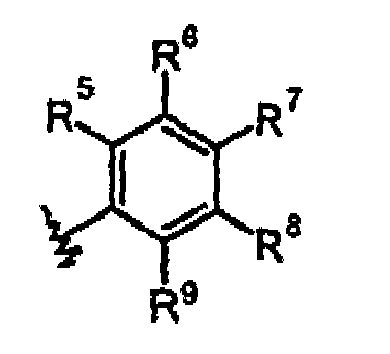 Z S, O, NH oder NR" ist, wobei R" C1-3-Alkyl ist,R5, R6, R7, R8 und R9 jeweils unabhängig voneinander (L)qM sind, wobei L C1-3-Alkyl ist, q 0 oder 1 ist, M H, C1-5-Alkyl, Halogen, NO2, OH, NH2, NHArg, NHRj, NRkRl, SO3H, SO2NH2, SO2NHArh, SO2NHRm, SO2Ari, SO2Rn, CF3, CN, COOH, COORp, CONH2- CONHArj, CONHRq, ORv, COArk oder CORr sind,Rj-r, Rv jeweils unabhängig voneinander C1-5-Alkylgruppen sind,Arg-k jeweils unabhängig voneinander Arylgruppen sind,und mit der Maßgabe, daß wenigstens einer der Substituenten R5, R6, R7, R8 und R9 etwas anderes als H ist,
5-[(4-Chlorphenyl)-amino]-sulfonyl-2-furancarbonsäure ist. - Verbindung der Formel Id
 W eine verzweigte oder unverzweigte C1-5-Alkylengruppe oder eine C2-5-Alkenylengruppe ist,n 0 oder 1 ist,R1 H, eine verzweigte oder unverzweigte C1-8-Alkylgruppe, eine C2-8-Alkenylgruppe oder eine Aryl- oder Aralkylgruppe ist, von denen jede optional mit einer oder mehreren Halogen- oder CF3-Gruppen substituiert sein kann,Ar1 folgendes ist
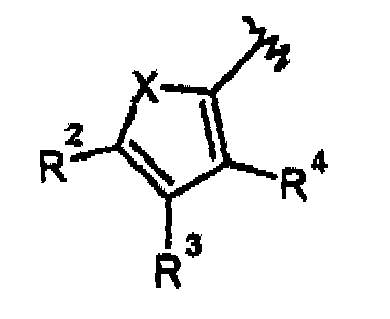 X O, NH oder NR' ist, wobei R' eine C1-3-Alkylgruppe ist,R2, R3 und R4 jeweils unabhängig voneinander (A)pB sind, wobei A C1-3-Alkyl ist, p 0 oder 1 ist und B H, Halogen, C1-5-Alkyl, NO2, OH, NH2, NHRa, NRbRc, SO3H, SO2NH2, NHAra, SO2NHArb, SO2NHRd, SO2Arc, SO2Re, CF3, CN, COOH, COORf, CONH2, COONHArd, CONHRg, COAre, CORh, S(CO)Rs, ORt, OArf, eine alizyklische Gruppe, die optional ein oder mehrere Heteroatome enthält, optional substituiert mit einer oder mehreren OH-, CORu-, Halogen- oder CF3-Gruppen, oder eine Heteroarylgruppe, optional substituiert mit einer oder mehreren C1-5-Alkyl-, Halogen-, SRl- oder CF3-Gruppen, ist oderR2 und R3 miteinander verknüpft sind unter Bildung eines gesättigten oder ungesättigten Ringsystems, welches optional ein oder mehrere Heteroatome enthält und optional mit einer oder mehreren Halogen-, OH- oder CF3-Gruppen substituiert ist,Ara-f jeweils unabhängig voneinander Arylgruppen, optional substituiert mit einer oder mehreren C1-5-Alkyl-, Halogen- oder CF3-Gruppen, sind,Ra-i, Rs, Rt und Ru jeweils unabhängig voneinander C1-5-Alkylgruppen, optional substituiert mit einer oder mehreren Alkoxy-, Halogen- oder CF3-Gruppen, sindund mit der Maßgabe, daß wenigstens einer von R2, R3 und R4 etwas anderes als H ist,und Ar2 folgendes ist
 wobei Z S, O, NH oder NR" ist, wobei R" C1-3-Alkyl ist, undR10, R11, R12 und R13 jeweils unabhängig voneinander H, C1-5-Alkyl, Halogen, NO2, OH, NH2 oder CF3 sind.
 - Verbindung der Formel le
 W eine verzweigte oder unverzweigte C1-5-Alkylengruppe oder eine C2-5-Alkenylengruppe ist,n 0 oder 1 ist,R1 H, eine verzweigte oder unverzweigte C1-8-Alkylgruppe, eine C2-8-Alkenylgruppe oder eine Aryl- oder Aralkylgruppe ist, von denen jede optional mit einer oder mehreren Halogen- oder CF3-Gruppen substituiert sein kann,Ar1 folgendes ist
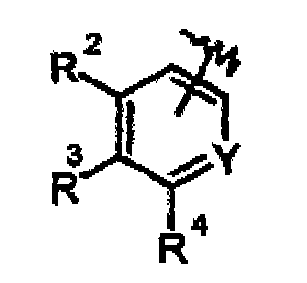 wobei Y N ist,R2, R3 und R4 jeweils unabhängig voneinander (A)pB sind, wobei A C1-3-Alkyl ist, p 0 oder 1 ist und B H, Halogen, C1-5-Alkyl, NO2 OH, NH2, NHRa, NRbRc, SO3H, SO2NH2, NHAra, SO2NHArb, SO2NHRd, SO2Arc, SO2Re, CF3, CN, COOH, COORf, CONH2, COONHArd, CONHRg, COAre, CORh, S(CO)Rs, ORt, OArf, eine alizyklische Gruppe, die optional ein oder mehrere Heteroatome enthält, optional substituiert mit einer oder mehreren OH-, CORu-, Halogen- oder CF3-Gruppen, oder eine Heteroarylgruppe, optional substituiert mit einer oder mehreren C1-5-Alkyl-, Halogen-, SRi- oder CF3-Gruppen, ist oderR2 und R3 miteinander verknüpft sind unter Bildung eines gesättigten oder ungesättigten Ringsystems, welches optional ein oder mehrere Heteroatome enthält und optional mit einer oder mehreren Halogen-, OH- oder CF3-Gruppen substituiert ist,Ara-f jeweils unabhängig voneinander Arylgruppen, optional substituiert mit einer oder mehreren C1-5-Alkyl-, Halogen- oder CF3-Gruppen, sind,Ra-i, Rs, Rt und Ru jeweils unabhängig voneinander C1-5-Alkylgruppen, optional substituiert mit einer oder mehreren Alkoxy-, Halogen- oder CF3-Gruppen, sindund mit der Maßgabe, daß wenigstens einer von R2, R3 und R4 etwas anderes als H ist,und Ar2 folgendes ist
 wobei Z S, O, NH oder NR" ist, wobei R" C1-3-Alkyl ist, undR10, R11, R12 und R13 jeweils unabhängig voneinander H, C1-5-Alkyl, Halogen, NO2, OH, NH2 oder CF3 sind.
 - Verbindung der Formel If
 W eine verzweigte oder unverzweigte C1-5-Alkylengruppe oder eine C2-5-Alkenylengruppe ist,n 0 oder 1 ist,R1 H, eine verzweigte oder unverzweigte C1-8-Alkylgruppe, eine C2-8-Alkenylgruppe oder eine Aryl- oder Aralkylgruppe ist, von denen jede optional mit einer oder mehreren Halogen- oder CF3-Gruppen substituiert sein kann,Ar1 folgendes ist
 wobei R14, R15 und R16 jeweils unabhängig voneinander (A)pB sind, wobei A C1-3-Alkyl ist, p 0 oder 1 ist und B H, Halogen, C1-5-Alkyl, NO2, OH, NH2. NHRa, NRbRc, SO3H, SO2NH2, NHra, SO2NHArb, SO2NHRd, SO2Arc, SO2Re, CF3. CN, COOH, COORf, CONH2, COON-HArd, CONHRg, COAre, CORh, S(CO)Rs, ORt, OArf, eine alizyklische Gruppe, die optional ein oder mehrere Heteroatome enthält, optional substituiert mit einer oder mehreren OH-, CORu-, Halogen- oder CF3-Gruppen, oder eine Heteroarylgruppe, optional substituiert mit einer oder mehreren C1-5-Alkyl-, Halogen-, SRl- oder CF3-Gruppen, ist oderR2 und R3 miteinander verknüpft sind unter Bildung eines gesättigten oder ungesättigten Ringsystems, welches optional ein oder mehrere Heteroatome enthält und optional mit einer oder mehreren Halogen-, OH- oder CF3-Gruppen substituiert ist,Ara-f jeweils unabhängig voneinander Arylgruppen, optional substituiert mit einer oder mehreren C1-5-Alkyl-, Halogen- oder CF3-Gruppen, sind,Ra-i, Rs Rt und Ru jeweils unabhängig voneinander C1-5-Alkylgruppen, optional substituiert mit einer oder mehreren Alkoxy-, Halogen- oder CF3-Gruppen, sind,und Ar2 folgendes ist
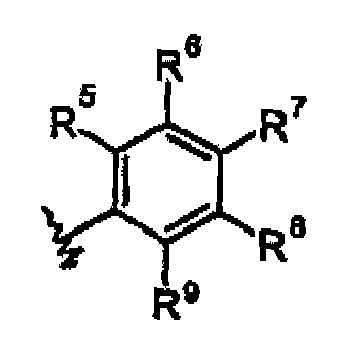 wobei R5, R6, R7, R8 und R9 jeweils unabhängig voneinander (L)qM sind, wobei L C1-3-Alkyl ist, q 0 oder 1 ist, M H, C1-5-Alkyl, Halogen, NO2, OH, NH2, NHArg, NHRj, NRkRl, SO3H, SO2NH2, SO2NHArh, SO2NHRm, SO2Arl, SO2Rn, CF3, CN, COOH, COORp, CONH2, CONHAj, CONHRq, ORv, COArk oder CORr sind,Rj-r, Rv jeweils unabhängig voneinander C1-5-Alkylgruppen sind,Arg-k jeweils unabhängig voneinander Arylgruppen sind,und mit der Maßgabe, daß wenigstens einer der Substituenten R5, R6, R7, R8 und R9 etwas anderes als H ist.
 - Verbindung der Formel Ig
 W eine verzweigte oder unverzweigte C1-5-Alkylengruppe oder eine C2-5-Alkenylengruppe ist,n 0 oder 1 ist,R1 H, eine verzweigte oder unverzweigte C1-8-Alkylgruppe, eine C2-8-Alkenylgruppe oder eine Aryl- oder Aralkylgruppe ist, von denen jede optional mit einer oder mehreren Halogen- oder CF3-Gruppen substituiert sein kann,Ar1 folgendes ist
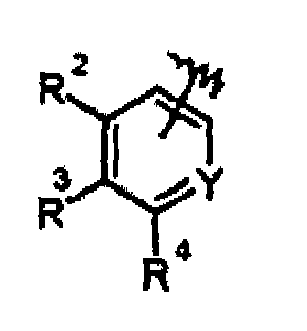 wobei Y N ist,R2, R3 und R4jeweils unabhängig voneinander (A)pB sind, wobei A C1-3-Alkyl ist, p 0 oder 1 ist und B H, Halogen, C1-5-Alkyl, NO2, OH, NH2, NHRa, NRbRc, SO3H, SO2NH2, NHAra, SO2NHArb, SO2NHRd, SO2Arc, SO2Re, CF3, CN, COOH, COORf, CONH2, COONHArd, CONHRg, COAre, CORh, S(CO)Rs, ORt, OArf, eine alizyklische Gruppe, die optional ein oder mehrere Heteroatome enthält, optional substituiert mit einer oder mehreren OH-, CORu-, Halogen- oder CF3-Gruppen, oder eine Heteroarylgruppe, optional substituiert mit einer oder mehreren C1-5-Alkyl-, Halogen-, SR'- oder CF3-Gruppen, ist oderR2 und R3 miteinander verknüpft sind unter Bildung eines gesättigten oder ungesättigten Ringsystems, welches optional ein oder mehrere Heteroatome enthält und optional mit einer oder mehreren Halogen-, OH- oder OF3-Gruppen substituiert ist,Ara-f jeweils unabhängig voneinander Arylgruppen, optional substituiert mit einer oder mehreren C1-6-Alkyl-, Halogen- oder CF3-Gruppen, sind,Ra-i, Rs, Rt und Ru jeweils unabhängig voneinander C1-5-Alkylgruppen, optional substituiert mit einer oder mehreren Alkoxy-, Halogen- oder CF3-Gruppen, sindund mit der Maßgabe, daß wenigstens einer von R2, R3 und R4 etwas anderes als H ist,und Ar2 folgendes ist
 wobei R10, R11, R12 und R13 jeweils unabhängig voneinander H, C1-5-Alkyl, Halogen, NO2, OH, NH2 oder CF3 sind.
 - Verbindung der Formel Ib
 W eine verzweigte oder unverzweigte C1-5-Alkylengruppe oder eine C2-5-Alkenylengruppe ist,n 0 oder 1 ist,R1 H, eine verzweigte oder unverzweigte C1-8-Alkylgruppe, eine C2-8-Alkenylgruppe oder eine Aryl- oder Aralkylgruppe ist, von denen jede optional mit einer oder mehreren Halogen- oder CF3-Gruppen substituiert sein kann,Ar1 folgendes ist
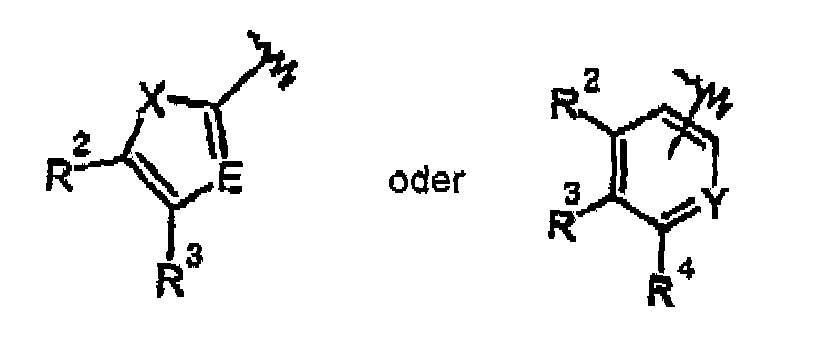 X S, O, NH oder NR' ist, wobei R' eine C1-3-Alkylgruppe ist,E N oder CR4 ist,Y CH oder N ist,R2, R3 und R4 jeweils unabhängig voneinander (A)pB sind, wobei A C1-3-Alkyl ist, p 0 oder 1 ist und B H, Halogen, C1-5-Alkyl, NO2, OH, NH2, NHRa, NRbRc, SO3H, SO2NH2, NHAra, SO2NHArb, SO2NHRd, SO2Arc, SO2Re, CF3, CN, COOH, COORf, CONH2, COONHArd, CONHRg, COAre, CORh, S(CO)Rs, ORt, OArf, eine alizyklische Gruppe, die optional ein oder mehrere Heteroatome enthält, optional substituiert mit einer oder mehreren OH-, CORu-, Halogen- oder CF3-Gruppen, oder eine Heteroarylgruppe, optional substituiert mit einer oder mehreren C1-5-Alkyl-, Halogen-, SRi- oder CF3-Gruppen, ist, oderR2 und R3 miteinander verknüpft sind unter Bildung eines gesättigten oder ungesättigten Ringsystems, welches optional ein oder mehrere Heteroatome enthält und optional mit einer oder mehreren Halogen-, OH- oder CF3-Gruppen substituiert ist,Ara-f jeweils unabhängig voneinander Arylgruppen, optional substituiert mit einer oder mehreren C1-5-Alkyl-, Halogen- oder CF3-Gruppen, sind,Ra-l, Rs, Rt und Ru jeweils unabhängig voneinander C1-5-Alkylgruppen, optional substituiert mit einer oder mehreren Alkoxy-, Halogen- oder CF3-Gruppen, sindund mit der Maßgabe, daß wenigstens einer von R2, R3 und R4 etwas anderes als H ist,Ar2 folgendes istwobei die Verbindung etwas anderes ist als 5-Methoxy-N-methyl-N-(p-toluensulfonyltryptamin), N-Methyl-p-toluensulfonyltryptamin, N-(p-Toluensulfonyl)-7-methoxytryptamin, p-Toluensulfonyltryptamin oder 3-Sulfanilamidoethylindol.
 Z S, O, NH oder NR" ist, wobei R" C1-3-Alkyl ist, undR10, R11, R12 und R13 jeweils unabhängig voneinander H, C1-5-Alkyl, Halogen, NO2, OH, NH2 oder CF3 sind,
 - Verbindung nach einem der Ansprüche 24 bis 29, wobei- R2 , R3 und R4 jeweils unabhängig voneinander (A)pB sind, wobei A C1-5-Alkyl ist, p 0 oder 1 ist und B H, F, Cl, Br, 1, C1-5-Alkyl, NO2, OH, NH2, NHRa, NRbRc, SO3H, SO2NH2, NHPh, SO2NHArb, SO2NHRd, SO2Ph, SO2Ra, CF3, CN, COOH, COORf, CONH2, COONHPa, CONHRg, S(CO)Rs, ORt, OArf, COPh, CORh, eine Morpholino-, Piperazino- oder Piperidinogruppe, von denen jede optional mit einer oder mehreren OH- oder CORu-Gruppen substituiert sein kann, oder eine Heteroarylgruppe, ausgewählt unter Pyridyl, Pyrimidyl, Oxazolyl, Thiazolyl und Pyrazolyl, von denen jede optional mit einer oder mehreren C1-5-Alkyl-, Halogen-, SR'- oder CF3-Gruppen substituiert sein kann, ist, oder R2 und R3 zusammen einen gesättigten sechsgliedrigen Ring oder einen ungesättigten fünfgliedrigen Ring bilden, von denen jeder optional ein oder mehrere Heteroatome enthält, und- R5, R6, R7, R8 und R9 jeweils unabhängig voneinander (L)qM sind, wobei L C1-5-Alkyl ist, q 0 oder 1 ist, M H, C1-5-Alkyl, Halogen, NO2, OH, NH2, NHPh, NHRj, NRkRl, SO3H, SO2NH2, SO2NHPh, SO2NHRm, SO2Ph, SO2Rn, CF3, CN, COOH, COORp, CONH2, CONHPh, CONHRq, ORv, COPh oder CORr ist.
- Verbindung nach einem der Ansprüche 24 bis 29, wobei R2, R3 und R4 jeweils unabhängig voneinander (A)pB sind, wobei A C1-5-Alkyl ist, p 0 oder 1 ist und B H, F, Cl, Br, l, C1-5-Alkyl, NO2, OH, NH2, NHRa, NRbRc, SO3H, SO2NH2, NHPh, SO2NHPh, SO2NHRd, SO2Ph, SO2Re, CF3, CN, COOH, COORf, CONH2, COOHNPh, CONHRg, S(CO)Rs, ORt, OArf, COPh, CORh, Pyridyl, Pyrimidyl, 2-Methylsulfanylpyrimid-5-yl, Oxazol-2-yl, Thiazol-2-yl, 1-Methyl-5-trifluormethyl-1H-pyrazol-4-yl, Morpholin-4-yl, 4-Acetylpiperazin-1-yl, 3-Hydroxypiperidin-1-yl ist, oder R2 und R3 zusammen
-OCH2CH2O-
-N-S-N- oder
eine Phenylgruppe, optional substituiert mit einem oder mehreren Halogenen, bilden. - Verbindung nach einem der Ansprüche 24 bis 29, wobei R2, R3 und R4 jeweils unabhängig voneinander H, Halogen. NO2, SO2Ph, S(CO)Me, COOH, COOEt, OPh, OMe, NHCH2CH2OMe, 1-Methyl-5-trifluormethyl-1H-pyrazol-4-yl, 2-Methylsulfanylpyrimid-5-yl, N-(4-Fluorphenyl)-sulfonamido, N-(4-Trifluormethylphenyl)-sulfonamido, Oxazol-2-yl, C1-5-Alkyl, NH2, Morpholin-4-yl, 4-Acetylpiperazin-1-yl, 3-Hydroxypiperidin-1-yl sind, oder R2 und R3 zusammen
OCH2CH2O-
-N-S-N- oder
eine Phenylgruppe, optional substituiert mit einem oder mehreren Halogenen, bilden. - Verbindung nach einem der Ansprüche 24, 25 oder 29-32, wobei Ar1 folgendes ist
 R2 und R4 C1-5-Alkyl sind und R3 COOH oder COOEt ist.
 - Verbindung nach einem der Ansprüche 26, 28 oder 29 bis 32, wobei Ar1 folgendes ist
 R2, R3 und R4 jeweils unabhängig voneinander H, OH, COOH, CF3, OPh, OMe, NO2, 4-Acetyl-piperazin-1-yl, NH2, Halogen, Pyrazol-1-yl, Oxazol-2-yl oder C1-6-Alkyl sind oder R2 und R3 zusammen -OCH2CH2O- oder N-S-N- bilden.
 - Verbindung nach Anspruch 34, wobei
wenn Y CH ist,- R2 H, NO2 oder Cl ist,- R3 NO2, NH2, Cl, CF3, COOH. 4-Acetylpiperazin-1-yl ist und- R4 H, Cl, Oxazol-2-yl, OH, NO2, NH2, OMe oder Me ist, oder,wenn Y N ist,- R2 H ist,- R3 Br ist,- R4 Cl oder OPh ist. - Verbindung nach einem der Ansprüche 24 bis 35, wobei- R5, R6, R7, R8 und R9 jeweils unabhängig voneinander H, Halogen, OMe, NO2, C1-5-Alkyl, CF3 oder OH sind und- R10, R11, R12 und R13 alle H sind.
- Verbindung nach Anspruch 36, wobei- R5 H, C1-5-Alkyl oder Halogen ist,- R6 Halogen, NO2 oder CF3 ist,- R7 H, Halogen, OMe, NO2, OH oder CF3 ist,- R6 H, Halogen oder CF3 ist,- R9 H ist.
- Verbindung nach einem der Ansprüche 24 bis 37, wobei- W CH2, CH2CH2 oder CH(CH3)CH2 ist und- R1 H, CH2Ph, CH2CH(Me)2, 3-(Trifluormethyl)-benzyl oder Me ist.
- Verbindung, ausgewählt unter den folgenden:5-Chlor-4-nitrothiophen-2-sulfonsäure-(3-trifluormethylphenyl)-amid [1],5-Chlor-4-nitrothiophen-2-sulfonsäure-(4-chlorphenyl)-amid [2],S-Chlor-4-nitrothiophen-2-sulfonsäure-(4-fluorphenyl)-amld [3],4-Brom-5-chlorthiophen-2-sulfonsäure-(4-fluorphenyl)-amid [4],S-Chlor-4-nitrothiophen-2-sulfonsäure-(4-hydroxyphenyl)-amid [5],5-Chlor-4-nitrothiophen-2-sulfonsäure-(4-trifluormethylphenyl)-amid [6],5-Chlor-4-nitrothiophen-2-sulfonsäure-(4-fluorphenyl)-methylamid [7],4,5-Dibromthiophen-2-sulfonsäure-(3,5-bis-trifluormethylphenyl)-amid [8],5-Chlorthiophen-2-sulfonsäure-(3,5-bis-trifluormethylphenyl)-amid [11],(5-(2-Methylsulfanylpyrimidin-5-yl)-thiophen-2-sulfonsäure-(3,5-dichlorphenyl)-amid [12],4-Oxazol-2-yl-N-(4-trifluormethylphenyl)-benzensulfonamid [13],N-(3,5-Bis-trifluormethylphenyl)-4-oxazol-2-yl-benzensulfonamid [14],4-Brom-5-chlorthiophen-2-sulfonsäure-(4-trifluormethylphenyl)-amid [15],5-Bromthiophen-2-sulfonsäure-(4-chlorphenyl)-amid [16],5-Bromthiophen-2-sulfonsäure-(3,5-dichlorphenyl)-amid [17],5-Bromthiophen-2-sulfonsäure-(3,5-bis-trifluormethylphenyl)-amid [18],3-Nitro-N-(4-trifluormethylphenyl)-benzensulfonamid [20],N-(3,5-Bis-trifluormethylphenyl)-3-nitrobenzensulfonamid [21],5-Benzensulfonylthiophen-2-sulfonsäure-(4-trifluormethylphenyl)-amid [23],5-Benzensulfonylthiophen-2-sulfonsäure-(4-chlorphenyl)-amid [24],5-Benzensulfonylthiophen-2-sulfonsäure-(3,5-dichlorphenyl)-amid [25],5-Chlorthiophen-2-sulfonsäure-(3,4-dichlorphenyl)-amid [26],4,5-Dibromthiophen-2-sulfonsäure-(3-trifluormethylphenyl)-amid [27],4,5-Dibromthiophen-2-sulfonsäure (3,4-dichlorphenyl)-amid [28],5-(1-Methyl-5-trifluormethyl-1H-pyrazol-4-yl)-thiophen-2-sulfonsäure-(4-trifluormethylphenyl)-amid [31].5-Chlorthiophen,2,4-disulfonsäure-bis-[(4-fluorphenyl)-amid] [32],5-Chlorthiophen-2,4-disulfonsäure-bis-[(4-trifluormethylphenyl)-amid] [33],4-Methyl-3-nitro-N-(4-trifluormethylphenyl)-benzensulfonamid [34],4-Chlor-3-nitro-N-(4-trifluormethylphenyl)-benzensulfonamid [35],3-Amino-4-methyl-N-(4-trifluormethylphenyl)-benzensulfonamid [36],N-(4-Chlorphenyl)-4-methyl-3-nitrobenzensulfonamid [37],4-Chlor-N-(4-chlorphenyl)-3-nitrobenzensulfonamid [38],5-Chlor-4-nitrothiophen-2-sulfonsäure-(3,5-dichlorphenyl)-amid [39],5-Chlor-4-nitrothiophen-2-sulfonsäure-(3,5-difluorphenyl)-amid [40],5-Brom-6-chlorpyridin-3-sulfonsäure-(4-trifluormethylphenyl)-amid [41],5-Brom-6-chlorpyridin-3-sulfonsäure-(3,5-bis-trifluormethylphenyl)-amid [42],5-(1-Methyl-5-trifluormethyl-1H-pyrazol-4-yl)-thiophen-2-sulfonsäure-(3,5-bis-trifluormethylphenyl)-amid [43],5-Chlor-4-nitrothiophen-2-sulfonsäure-(3,5-bis-trifluormethylphenyl)-amid [44],5-Chlor-4-nitrothiophen-2-sulfonsäure-4-fluorbenzylamid [45],5-Chlor-4-nitrothiophen-2-sulfonsäure-4-trifluormethylbenzylamid [46],4-Chlor-N-(3,5-dichlorphenyl)-3-nitrobenzensulfonamid [47],5-Chlor-4-nitrothiophen-2-sulfonsäure-[2-(1H-indol-3-yl)-ethyl]-amid [48],5-Chlor-4-nitrothiophen-2-sulfonsäure-[2-(1H-indol-3-yl)-1-methylethyl]-amid [49],5-Chlor-4-nitrothiophen-2-sulfonsäure-(4-trifluormethylphenyl)-amid [50],5-Chlor-4-nitrothiophen-2-sulfonsäure-(4-chlorphenyl)-methylamid [51] und5-Chlor-4-nitrothiophen-2-sulfonsäuremethyl-(4-trifluormethylbenzyl)-amid [52],5-Chlor-4-nitrothiophen-2-sulfonsäurebenzyl-(4-fluorbenzyl)-amid [53],5-Chlor-4-nitrothiophen-2-sulfonsäure-3,5-dichlorbenzylamid [54],5-Chlor-4-nitrothiophen-2-sulfonsäure-3,5-difluorbenzylamid [55],5-Chlor-4-nitrothiophen-2-sulfonsäure-4-chlorbenzylamid [56],5-Chlor-4-nitrothiophen-2-sulfonsäure-[1-(4-fluorphenyl)-ethyl]-amid [57],5-Chlor-4-nitrothiophen-2-sulfonsäure-(4-chlorphenyl)-isobutylamid [58],5-Chlor-4-nitrothiophen-2-sulfonsäure-(1H-benzoimidazol-2-yl)-amid [59],5-Chlor-4-nitrothiophen-2-sulfonsäure-[2-(6-chlor-1H-indol-3-yl)-ethyl]-amid [60],5-Chlor-4-nitrothiophen-2-sulfonsäure-(4-methoxyphenyl)-amid [61],5-Chlor-4-nitrothiophen-2-sulfonsäurephenylamid [62],5-Chlor-4-nitrothiophen-2-sulfonsäure-p-tolylamid [63],5-Chlor-4-nitrothiophen-2-sulfonsäurebenzylamid [64],5-Chlor-4-nitrothiophen-2-sulfonsäurebenzyl-(4-chlorphenyl)-amid [65],5-Chlor-4-nitrothiophen-2-sulfonsäurebenzyl-(4-methoxyphenyl)-amid [66],5-Chlor-4-nitrothiophen-2-sulfonsäure-(4-chlorphenyl)-(3-trifluormethylbenzyl)-amid [67],5-Nitrothiophen-2-sulfonsäure-(4-chlorphenyl)-amid [68],4-Nitrothiophen-2-sulfonsäure-(4-chlorphenyl)-amid [69],5-Chlorthiophen-2,4-disulfonsäure-bis-[(4-chlorphenyl)-amid] [70],5-Ethyl-4-nitrothiophen-2-sulfonsäure-(4-chlorphenyl)-amid [71],Thioessigsäure-S-[5-(4-chlorphenylsulfamoyl)-3-nitrothiophen-2-yl]-ester [72],5-Methyl-4-nitrothiophen-2-sulfonsäure-(4-chlorphenyl)-amid [73],5-Methylthiophen-2,4-disulfonsäure-bi5-[(4-chlorphenyl)-amid] [74],5-Chlor-4-nitrothiophen-2-sulfonsäure-(3-trifluormethylbenzyl)-(4-trifluomethylbenzyl)-amid [75],4-Nitrothiophen-2-sulfonsäure-(4-trifluomethylphenyl)-amid [76],4-Nitrothiophen-2-sulfonsäure-[2-(1H-indol-3-yl)-ethyl]-amid [77],5-(1-Methyl-5-trifluormethyl-1H-pyrazol-3-yl)-thiophen-2-sulfonsäure-(3,5-bis-trifluormethylphenyl)-(3-trifluormethylbenzyl)-amid [78],5-Morpholin-4-yl-4-nitrothiophen-2-sulfonsäure-(4-chlorphenyl)-amid [79],5-(2-Methoxyethylamino)-4-nitrothiophen-2-sulfonsäure-(4-chlorphenyl)-amid [80],4-Chlor-N-[2-(5-chlor-1H-indol-3-yl)-ethyl]-3-nitrobenzensulfonamid [81],N-[2-(5-Chlor-1H-indol-3-yl)-ethyl]-4-methyl-3-nitrobenzensulfonamid [82],N-(1H-Benzoimidazol-2-yl)-4-chlor-3-nitrobenzensulfonamid [83],6-Chlorimidazo[2,1-b]thiazol-5-sulfonsäure-(3,5-bis-trifluormethylphenyl)-amid [84],2,3-Dihydrobenzo[1,4]dioxin-6-sulfonsäure-(4-chlorphenyl)-amid [85],2,3-Dihydrobenzo[1,4]dioxin-6-sulfonsäure-(3,5-bis-trifluormethylphenyl)-amid [86],6-Phenoxypyridin-3-sulfonsäure-(4-chlorphenyl)-amid [87].5-Chlor-3-methylbenzo[b]thiophen-2-sulfonsäure-(4-chlor-3-nitrophenyl)-amid [88],N-(3,5-Bis-trifluormethylphenyl)-4-pyrazol-1-yl-benzensulfonamid [89].4-(4-Chlorphenylsulfamoyl)-3,5-dimethyl-1H-pyrrol-2-carbonsäureethylester [90],4-(3,5-Bis-trifluormethylphenylsulfamoyl)-3,5-dimethyl-1H-pyrrol-2-carbonsäure [91],4-(4-Chlorphenylsulfamoyl)-3,5-dimethyl-1H-pyrrol-2-carbonsäure [92],2-(4-Chlorphenylsulfamoyl)-4-methylthiazol-5-carbonsäureethylester [93],3,5-Dichlor-N-(4-chlorphenyl)-4-hydroxybenzensulfonamid [94],N-(3,5-Bis-trifluormethylphenyl)-3,5-dichlor-4-hydroxybenzensulfonamid [95],3,5-Dichlor-4-hydroxy-N-(4-trifluormethylphenyl)-benzensulfonamid [96],N-(3,6-Bis-trifluormethylphenyl)-4-nitrobenzensulfonamid [98],4-Amino-N-(3,5-bis-trifluormethylphenyl)-3-chlorbenzensulfonamid [99],3-Nitro-N-(4-trifluormethylphenyl)-benzensulfonamid [100],3,5-Dichlor-N-(3,5-dichlorphenyl)-4-hydroxybenzensulfonamid [101],4-Amino-3-chlor -N-(4-chlorphenyl)-benzensulfonamid [102],3-Chlor-N-(4-chlorphenyl)-4-methoxybenzensulfonamid [103],N-(3,5-Bis-trifluormethylphenyl)-3-chlor-4-methoxybenzensulfonamid [104],N-(3-Chlor-4-nitrophenyl)-3,5-bis-trifluormethylbenzensulfonamid [105],3-(4-Acetylpiperazin-1-yl)-N-(3,5-bis-trifluormethylphenyl)-4-nitrobenzensulfonamid [106].N-(3,5-Bis-trifluormethylphenyl)-2-nitrobenzensulfonamid [107],3-(3,5-Bis-trifluormethylphenylsulfamoyl)-benzoesäure [108],3,5-Dichlor-N-(4-chlorbenzyl)-4-hydroxybenzensulfonamid [109],3,5-Dichlor-4-hydroxy-N-(4-trifluormethylbenzyl)-benzensulfonamid [110],3,5-Dichlor-4-hydroxy-N-[2-(1H-indol-3-yl)-ethyl]-benzensulfonamid [111],4,5-Dibromthiophen-2-sulfonsäure-(3,5-dichlorphenyl)-amid [112],N-(3,5-Dichlorphenyl)-4-oxazol-2-yl-benzensulfonamid [113],4-Brom-5-chlorthiophen-2-sulfonsäure-(3 ,5-bis-trifluormethylphenyl)-amid [114],4-Brom-5-chlorthiophen-2-sulfonsäure-(3,5-dichlorphenyl)-amid [115],5-Benzensulfonylthiophen-2-sulfonsäure-(3,5-bis-trifluormethylphenyl)-amid [117],5-Benzensulfonylthiophen-2-sulfonsäure-(2,4-dichlorphenyl)-amid [118],5-Chlor-3-methylbenzo[b]thiophen-2-sulfonsäure-(3,5-bis-trifluormethylphenyl)-amid [119],Benzo[b]thiophen-2-sulfonsäure-(3,5-bis-trifluormethylphenyl)-amid [120],Benzo[1,2,5]thiadiazol-5-sulfonsäure-(4-chlorphenyl)-amid [121],Benzo[1,2,5]thiadiazol-5-sulfonsäure-(3,5-bis-trifluormethylphenyl)-amid [122],Benzo[1,2,5]thiadiazol-5-sulfonsäure-(4-trifluormethylphenyl)-amid [123],5-Pyridin-2-yl-thiophen-2-sulfonsäure-(3,5-bis-trifluormethylphenyl)-amid [124],4,5-Dibromthiophen-2-sulfonsäure-(4-chlorphenyl)-amid [125],4,5-Dibromthiophen-2-sulfonsäure-(4-trifluormethylphenyl)-amid [126],3,5-Dichlor-N-(4-fluorbenzyl)-4-hydroxybenzensulfonamid [127],N-(3,5-Bis-trifluormethylphenyl)-2,6-dichlorbenzensulfonamid [128],5-Chlor-4-nitrothiophen-2-sulfonsäure-(4-methoxy-2-methylphenyl)-amid [129],5-(3-Hydroxypiperidin-1-yl)-4-nitrothiophen-2-sulfonsäure-(4-chlorphenyl)-amid [130] und5-Chlor-4-nitrothiophen-2-sulfonsäure-(4-nitrophenyl)-amid [131].
- Verbindung nach Anspruch 39, welche unter den folgenden ausgewählt ist:5-Chlor-4-nitrothiophen-2-sulfonsäure-(4-chlorphenyl)-amid [2],5-Chlor-4-nitrothiophen-2-sulfonsäure-(4-fluorphenyl)-amid [3],5-Chlor-4-nitrothiophen-2-sulfonsäure-(4-hydroxyphenyl)-amid [5],5-Chlor-4-nitrothiophen-2-sulfonsäure-(4-trifluormethylphenyl)-amid [6],5-Chlor-4-nitrothiophen-2-sulfonsäure-(4-fluorphenyl)-methylamid [7],4-Chlor-3-nitro-N-(4-trifluormethylphenyl)-benzensulfonamid [35],4-Chlor-N-(4-chlorphenyl)-3-nitrobenzensulfonamid [38],5-Chlor-4-nitrothiophen-2-sulfonsäure-(3,5-dichlorphenyl)-amid [39],5-Chlor-4-nitrothiophen-2-sulfonsäure-(3,5-difluorphenyl)-amid [40],5-(1-Methyl-5-trifluormethyl-1H-pyrazol-4-yl)-thiophen-2-sulfonsäure-(3,5-bis-trifluormethylphenyl)-amid [43],5-Chlor-4-nitrothiophen-2-sulfonsäure-(3,5-bis-trifluormethylphenyl)-amid [44],5-Chlor-4-nitrothiophen-2-sulfonsäure-4-fluorbenzylamid [45],5-Chlor-4-nitrothiophen-2-sulfonsäure-4-trifluormethylbenzylamid [46],5-Chlor-4-nitrothiophen-2-sulfonsäure-[2-(1H-indol-3-yl)-ethyl]-amid [48],5-Chlor-4-nitrothiophen-2-sulfonsäure-[2-(1H-indol-3-yl)-1-methylethyl]-amid [49],5-Chlor-4-nitrothiophen-2-sulfonsäure-(4-chlorphenyl)-methylamid [51]5-Chlor-4-nitrothiophen-2-sulfonsäurebenzyl-(4-fluorbenzyl)-amid [53],5-Chlor-4-nitrothiophen-2-sulfonsäure-3,5-dichlorbenzylamid [54],5-Chlor-4-nitrothiophen-2-sulfonsäure-3,5-difluorbenzylamid [55],5-Chlor -4-nitrothiophen-2 -sulfonsäure-4-chlorbenzylamid [56],5-Chlor-4-nitrothiophen-2-sulfonsäure-[1-(4-fluorphenyl)-ethyl]-amid [57],5-Chlar-4-nitrothiophen-2-sulfonsäure-(4-methoxyphenyl)-amid [61],5-Chlor-4-nitrothiophen-2-sulfonsäure-p-tolylamid [63],5-Chlor-4-nitrothiophen-2-sulfonsäurebenzylamid [64],5-Chlor-4-nitrothiophen-2-sulfonsäurebenzyl-(4-chlorphenyl)-amid [65],5-Chlor-4-nitrothiophen-2-sulfonsäurebenzyl-(4-methoxyphenyl)-amid [66],5-Chlor-4-nitrothiophen-2-sulfonsäure-(4-chlorphenyl)-(3-trifluomlethylbenzyl)-amid [67],4-Nitrothiophen-2-sulfonsäure-(4-chlorphenyl)-amid [69],5-Chlor-4-nitrothiophen-2-sulfonsäure-(3-trifluormethylbenzyl)-(4-trifluormethylbenzyl)-amid [75] und N-(1H-Benzoimidazol-2-yl)-4-chlor-3-nitrobenzensulfonamid [83].
- Verbindung nach Anspruch 39, welche unter den folgenden ausgewählt ist:5-Chlor-4-nitrothiophen-2-sulfonsäure-(4-chlorphenyl)-amid [2],5-Chlor-4-nitrothiophen-2-sulfonsäure-(4-fluorphenyl)-amid [3],5-Chlor-4-nitrothiophen-2-sulfonsäure-(4-hydroxyphenyl)-amid [5],5-Chlor-4-nitrothiophen-2-sulfonsäure-(4-trifluormethylphenyl)-amid [6],5-Chlor-4-nitrothiophen-2-sulfonsäure-(4-fluorphenyl)-methylamid [7],5-Bromthiophen-2-sulfonsäure-(3,5-bis-trifluormethylphenyl)-amid [18],5-Benzensulfonylthiophen-2-sulfonsäure-(4-trifluormethylphenyl)-amid [23],4,5-Dibromthiophen-2-sulfonsäure-(3-trifluormethylphenyl)-amid [27],4,5-Dibromthiophen-2-sulfonsäure (3,4-dichlorphenyl)-amid [28],5-Chlorthiophen-2,4-disulfonsäure-bis-[(4-trifluormethylphenyl)-amid] [33],4-Chlor-3-nitro-N-(4-trifluormethylphenyl)-benzensulfonamid [35],5-Chlor-4-nitrothiophen-2-sulfonsäure-(3,5-dichlorphenyl)-amid [39],5-Chlor-4-nitrothiophen-2-sulfonsäure-(3,5-difluorphenyl)-amid [40],5-(1-Methyl-5-trifluormethyl-1 H-pyrazol-4-yl)-thiophen-2-sulfonsäure-(3,5-bis-trifluormethylphenyl)-amid [43],5-Chlor-4-nitrothiophen-2-sulfonsäure-(3,5-bis-trifluormethylphenyl)-amid [44],5-Chlor-4-nitrothiophen-2-sulfonsäure-4-fluorbenzylamid [45],5-Chlor-4-nitrothiophen-2-sulfonsäure-4-trifluormethylbenzylamid [46],5-Chlor-4-nitrothiophen-2-sulfonsäure-[2-(1H-indol-3-yl)-ethyl]-amid [48],5-Chlor-4-nitrothiophen-2-sulfonsäure-[2-(1H-indol-3-yl)-1-methylethyl]-amid [49],5-Chlor-4-nitrothiophen-2-sulfonsäure-(4-trifluormethylphenyl)-amid [50],5-Chlor-4-nitrothiophen-2-sulfonsäure-(4-chlorphenyl)-methylamid [51] und5-Chlor-4-nitrothiophen-2-sulfonsäuremethyl-(4-trifluormethylbenzyl)-amid [52],5-Chlor-4-nitrothiophen-2-sulfonsäurebenzyl-(4-fluorbenzyl)-amid [53],6-Chlor-4-nitrothiophen-2-sulfonsäure-3,5-dichlorbenzylamid [54],5-Chlor-4-nitrothiophen-2-sulfonsäure-3,5-difluorbenzylamid [55],5-Chlor-4-nitrothiophen-2-sulfonsäure-4-chlorbenzylamid [56],5-Chlor-4-nitrothiophen-2-sulfonsäure-[1-(4-fluorphenyl)-ethyl]-amid [57],5-Chlor-4-nitrothiophen-2-sulfonsäure-(1H-benzoimidazol-2-yl)-amid [59],5-Chlor-4-nitrothiophen-2-sulfonsäure-[2-(6-chlor-1H-indol-3-yl)-ethyl]-amid [60],5-Chlor-4-nitrothiophen-2-sulfonsäure-(4-methoxyphenyl)-amid [61],5-Chlor-4-nitrothiophen-2-sulfonsäurephenylamid [62],5-Chlor-4-nitrothiophen-2-sulfonsäure-p-tolylamid [63],5-Chlor-4-nitrothiophen-2-sulfonsäurebenzylamid [64],5-Chlor-4-nitrothiophen-2-sulfonsäurebenzyl-(4-chlorphenyl)-amid [65],5-Chlor-4-nitrothiophen-2-sulfonsäurebenzyl-(4-methoxyphenyl)-amid [66],5-Chlor-4-nitrothiophen-2-sulfonsäure-(4-chlorphenyl)-(3-trifluormethylbenzyl)-amid [67],4-Nitrothiophen-2-sulfonsäure-(4-chlorphenyl)-amid [69],5-Chlorthiophen-2,4-disulfonsäure-bis-[(4-chlorphenyl)-amid] [70],Thioessigsäure-5-[5-(4-chlorphenylsulfamoyl)-3-nitrothiophen-2-yl]-ester [72],5-Methyl-4-nitrothiophen-2-sulfonsäure-(4-chlorphenyl)-amid [73],5-Methylthiophen-2,4-disulfonsäure-bis-[(4-chlorphenyl)-amid] [74],5-Chlor-4-nitrothiophen-2-sulfonsäure-(3-trifluormethylbenzyl)-(4-trifluormethylbenzyl)-amid [75],5-(2-Methoxyethylamino)-4-nitrothiophen-2-sulfonsäure-(4-chlorphenyl)-amid [80],N-(1H-Benzoimidazol-2-yl)-4-chlor-3-nitrobenzensulfonamid [83],5-Chlor-3-methylbenzo[b]thiophen-2-sulfonsäure-(4-chlor-3-nitrophenyl)-amid [88],N-(3,5-Bis-trifluormethylphenyl)-3-chlor-4-methoxybenzensulfonamid [104],N-(3-Chlor-4-nitrophenyl)-3,5-bis-trifluormethylbenzensulfonamid [105],4,5-Dibromthiophen-2-sulfonsäure-(3,5-dichlorphenyl)-amid [112],5-Benzensulfonylthiophen-2-sulfonsäure-(3,5-bis-trifluormethylphenyl)-amid [117],5-Chlor-3-methylbenzo[b]thiophen-2-sulfonsäure-(3,5-bis-trifluormethylphenyl)-amid [119],Benzo[b]thiophen-2-sulfonsäure-(3,5-bis-trifluormethylphenyl)-amid [120],Benzo[1,2,5]thiadiazol-5-sulfonsäure-(3,5-bis-trifluormethylphenyl)-amid [122],4,5-Dibromthiophen-2-sulfonsäure-(4-chlorphenyl)-amid [125],4,5-Dibromthiophen-2-sulfonsäure-(4-trifluormethylphenyl)-amid [126],N-(3,5-Bis-trifluormethylphenyl)-2,6-dichlorbenzensulfonamid [128],5-(3-Hydroxypiperidin-1 -yl)-4-nitrathiophen-2-sulfonsäure-(4-chlorphenyl)-arnid [130] und 5-Chlor-4-nitrothiophen-2-sulfonsäure-(4-nitrophenyl)-amid [131].
- Pharmazeutische Zusammensetzung, welche eine Verbindung, wie sie in einem der Ansprüche 24 bis 41 definiert ist, im Gemisch mit einem oder mehreren pharmazeutisch verträglichen Verdünnungsmitteln, Hilfsstoffen oder Trägern umfaßt.
- Verwendung einer Verbindung, wie sie in einem der Ansprüche 1 bis 41 definiert ist, in einem Test zur Bestimmung der Bindung an HDM2.
- Verwendung nach Anspruch 43, wobei der Test Kandidatenverbindungen bestimmen kann, die in der Lage sind, die Wechselwirkung zwischen HDM2 und p53 und/oder E2F zu hemmen.
- Verwendung nach einem der Ansprüche 43 oder 44, wobei der Test ein kompetitiver Bindungstest ist.
- Verwendung nach Anspruch 45, wobei der kompetitive Bindungstest das Inkontaktbringen einer Verbindung der Formel I, wie sie in einem der Ansprüche 1 bis 22 definiert ist, mit HDM2 in der Gegenwart eines von p53 abgeleiteten Peptids und das Detektieren irgendeiner Veränderung in der Wechselwirkung zwischen HDM2 und dem von p53 abgeleiteten Peptid umfaßt.
- Verwendung nach Anspruch 46, wobei das von p53 abgeleitete Peptid ein fluoreszenzmarkiertes oder biotinyliertes von p53 abgeleitetes Peptid ist,
- Verfahren zum Detektieren der Bindung eines Liganden an HDM2, wobei das Verfahren die folgenden Stufen umfaßt.(i) Inkontaktbringen eines Liganden mit HDM2 in der Gegenwart eines von p53 abgeleiteten Peptids und(ii) Detektieren irgendeiner Veränderung in der Wechselwirkung zwischen HDM2 und dem von p53 abgeleiteten Peptid,und wobei der Ligand eine Verbindung ist, wie sie in einem der Ansprüche 1 bis 22 definiert ist.
- Kombination, welche wenigstens eine Verbindung, wie sie in einem der Ansprüche 1 bis 41 definiert ist, und wenigstens ein zytotoxisches Mittel umfaßt.
- Kombination nach Anspruch 49, wobei das zytotoxische Mittel ein chemotherapeutisches Mittel ist.
- Kombination nach Anspruch 50, wobei das chemotherapeutische Mittel Cisplatin oder Etoposid ist.
- Pharmazeutische Zusammensetzung, welche wenigstens eine Verbindung, wie sie in einem der Ansprüche 1 bis 41 definiert ist, und ein oder mehrere zytotoxische Mittel im Gemisch mit einem pharmazeutisch verträglichen Verdünnungsmittel, Hilfsstoff oder Träger umfaßt.
- Verwendung wenigstens einer Verbindung, wie sie in einem der Ansprüche 1 bis 41 definiert ist, bei der Herstellung eines Medikaments zur Behandlung einer proliferativen Störung, wobei die Verbindung für die aufeinanderfolgende, gleichzeitige oder sequentielle Verwendung mit einem oder mehreren anderen zytotoxischen Mitteln bestimmt ist.
- Verwendung wenigstens einer Verbindung, wie sie in einem der Ansprüche 1 bis 41 definiert ist, bei der Herstellung eines Medikaments zur Behandlung einer proliferativen Störung, wobei die Verbindung für die aufeinanderfolgende, gleichzeitige oder sequentielle Verwendung mit Radiotherapie bestimmt ist.
Applications Claiming Priority (3)
| Application Number | Priority Date | Filing Date | Title |
|---|---|---|---|
| GBGB0215650.3A GB0215650D0 (en) | 2002-07-05 | 2002-07-05 | Bisarylsufonamide compounds |
| GB0215650 | 2002-07-05 | ||
| PCT/GB2003/002923 WO2004005278A1 (en) | 2002-07-05 | 2003-07-07 | Bisarylsulfonamide compounds and their use in cancer therapy |
Publications (2)
| Publication Number | Publication Date |
|---|---|
| EP1519932A1 EP1519932A1 (de) | 2005-04-06 |
| EP1519932B1 true EP1519932B1 (de) | 2007-10-03 |
Family
ID=9939950
Family Applications (1)
| Application Number | Title | Priority Date | Filing Date |
|---|---|---|---|
| EP03738323A Expired - Lifetime EP1519932B1 (de) | 2002-07-05 | 2003-07-07 | Bisarylsulfonamid-derivate und ihre verwendung für krebs therapie |
Country Status (12)
| Country | Link |
|---|---|
| US (1) | US20050215548A1 (de) |
| EP (1) | EP1519932B1 (de) |
| JP (1) | JP2006508906A (de) |
| CN (1) | CN1665802A (de) |
| AT (1) | ATE374763T1 (de) |
| AU (1) | AU2003244847A1 (de) |
| CA (1) | CA2488816A1 (de) |
| DE (1) | DE60316686T2 (de) |
| GB (1) | GB0215650D0 (de) |
| IL (1) | IL166027A0 (de) |
| NZ (1) | NZ536494A (de) |
| WO (1) | WO2004005278A1 (de) |
Cited By (1)
| Publication number | Priority date | Publication date | Assignee | Title |
|---|---|---|---|---|
| US8541442B2 (en) | 2009-02-04 | 2013-09-24 | Janssen Pharmaceutica N.V. | Indole derivatives as anticancer agents |
Families Citing this family (46)
| Publication number | Priority date | Publication date | Assignee | Title |
|---|---|---|---|---|
| GB0012528D0 (en) * | 2000-05-23 | 2000-07-12 | Univ Palackeho | Triterpenoid derivatives |
| JP4324480B2 (ja) | 2002-03-26 | 2009-09-02 | ベーリンガー インゲルハイム ファーマシューティカルズ インコーポレイテッド | グルココルチコイドミメティクス、その製法、医薬組成物、及び使用 |
| NZ538932A (en) * | 2002-08-29 | 2007-04-27 | Boehringer Ingelheim Pharma | 3-(sulfonamidoethyl)-indole derivatives for use as glucocorticoid mimetics in the treatment of inflammatory, allergic and proliferative disease |
| EP1651595A2 (de) * | 2003-05-30 | 2006-05-03 | Rigel Pharmaceuticals, Inc. | Ubiquitinligaseinhibitoren |
| UY28526A1 (es) | 2003-09-24 | 2005-04-29 | Boehringer Ingelheim Pharma | Miméticos de glucocorticoides, métodos de preparación composiciones farmacéuticas y usos de los mismos |
| US7795272B2 (en) | 2004-03-13 | 2010-09-14 | Boehringer Ingelheim Pharmaceutical, Inc. | Glucocorticoid mimetics, methods of making them, pharmaceutical compositions and uses thereof |
| WO2005095386A1 (en) * | 2004-03-30 | 2005-10-13 | Chiron Corporation | Substituted thiophene derivatives as anti-cancer agents |
| US20050282818A1 (en) * | 2004-06-22 | 2005-12-22 | Rigel Pharmaceuticals, Inc. | Ubiquitin ligase inhibitors |
| MX2007003375A (es) | 2004-09-22 | 2007-05-07 | Janssen Pharmaceutica Nv | Inhibidores de la interaccion entre mdm2 y p53. |
| PE20060776A1 (es) | 2004-12-27 | 2006-09-26 | Boehringer Ingelheim Pharma | Mimeticos de glucocorticoides, metodos para prepararlos y composiciones farmaceuticas |
| EP1879881A2 (de) * | 2005-04-14 | 2008-01-23 | Bristol-Myers Squibb Company | Inhibitoren der 11-beta-hydroxysteroiddehydrogenase vom typ i |
| US20090156611A1 (en) * | 2005-11-11 | 2009-06-18 | Licentia Ltd. | Mammalian hedgehog signaling modulators |
| WO2007107543A1 (en) | 2006-03-22 | 2007-09-27 | Janssen Pharmaceutica N.V. | Inhibitors of the interaction between mdm2 and p53 |
| AU2007228784B2 (en) | 2006-03-22 | 2012-03-08 | Janssen Pharmaceutica N.V. | Cyclic-alkylaminederivatives as inhibitors of the interaction between MDM2 and p53 |
| CN101405285B (zh) * | 2006-03-22 | 2012-10-10 | 詹森药业有限公司 | 作为mdm2和p53间相互作用的抑制剂的环状-烷基胺衍生物 |
| WO2008014216A1 (en) | 2006-07-28 | 2008-01-31 | St. Jude Children's Research Hospital | Method for treating ocular cancer |
| US8470785B2 (en) | 2006-07-28 | 2013-06-25 | St. Jude Children's Research Hospital | Method for treating ocular cancer |
| MX2009005264A (es) | 2006-12-06 | 2009-05-28 | Boehringer Ingelheim Int | Mimeticos de glucocorticoides, metodos para su fabricacion, composiciones farmaceuticas y usos de los mismos. |
| CN101605798A (zh) * | 2006-12-14 | 2009-12-16 | 第一三共株式会社 | 咪唑并噻唑衍生物 |
| WO2008112164A2 (en) | 2007-03-08 | 2008-09-18 | The Board Of Trustees Of The Leland Stanford Junior University | Mitochondrial aldehyde dehydrogenase-2 modulators and methods of use thereof |
| MX2009010828A (es) | 2007-04-06 | 2009-10-29 | Neurocrine Biosciences Inc | Antagonistas del receptor de la hormona liberadora de gonadotropina y metodos relacionados con los mismos. |
| CL2008000986A1 (es) * | 2007-04-06 | 2008-10-17 | Neurocrine Biosciences Inc | COMPUESTO DERIVADO DE HETEROCICLOS DE NITROGENO, AGONISTAS DEL RECEPTOR GnRH; COMPOSICION FARMACEUTICA QUE COMPRENDE A DICHO COMPUESTO; Y USO PARA TRATAR UNA AFECCION RELACIONADA CON LAS HORMONAS SEXUALES, ENDOMETRIOSIS, DISMENORREA, ENFERMEDAD DE OV |
| AR067813A1 (es) | 2007-08-06 | 2009-10-21 | Janssen Pharmaceutica Nv | Fenilendiaminas sustituidas como inhibidores de l ainteraccion entre mdm2 y p53 |
| US8039493B2 (en) * | 2007-09-27 | 2011-10-18 | Hoffmann-La Roche Inc. | Biaryl sulfonamide derivatives |
| EP2224961A1 (de) * | 2007-11-26 | 2010-09-08 | The Research Foundation of the State University of New York | Kleinmolekülige krebsbehandlungen, die nekrose in krebszellen verursachen, aber normale zellen nicht angreifen |
| EP2116547A1 (de) * | 2008-05-09 | 2009-11-11 | Laboratorios Del. Dr. Esteve, S.A. | Substituierte n-Imidazo[2,1-b]thiazol-5-sulfonamid-Derivative als 5-TH6-Liganden |
| DK2300472T3 (da) | 2008-06-06 | 2012-04-10 | Boehringer Ingelheim Int | Glucocorticoidmimetika, fremgangsmåder til disses fremstilling, farmaceutiske sammensætninger samt anvendelser deraf |
| JPWO2009151069A1 (ja) * | 2008-06-12 | 2011-11-17 | 第一三共株式会社 | 4,7−ジアザスピロ[2.5]オクタン環構造を有するイミダゾチアゾール誘導体 |
| WO2010028175A1 (en) | 2008-09-08 | 2010-03-11 | The Board Of Trustees Of The Leland Stanford Junior University | Modulators of aldehyde dehydrogenase activity and methods of use thereof |
| JP2012506856A (ja) | 2008-10-28 | 2012-03-22 | ボード オブ トラスティーズ オブ ザ レランド スタンフォード ジュニア ユニバーシティ | アルデヒドデヒドロゲナーゼのモジュレーターおよびその使用方法 |
| ES2546294T7 (es) * | 2009-05-26 | 2024-06-06 | Abbvie Ireland Unlimited Co | Agentes inductores de la apoptosis para el tratamiento de cáncer y enfermedades inmunitarias y autoinmunitarias |
| US20130109672A1 (en) | 2010-04-29 | 2013-05-02 | The United States Of America,As Represented By The Secretary, Department Of Health And Human Service | Activators of human pyruvate kinase |
| WO2012149106A1 (en) | 2011-04-29 | 2012-11-01 | The Board Of Trustees Of The Leland Stanford Junior University | Compositions and methods for increasing proliferation of adult salivary stem cells |
| WO2014085633A1 (en) | 2012-11-30 | 2014-06-05 | Novomedix, Llc | Substituted biaryl sulfonamides and the use thereof |
| WO2014100065A1 (en) | 2012-12-20 | 2014-06-26 | Merck Sharp & Dohme Corp. | Substituted imidazopyridines as hdm2 inhibitors |
| KR20150135332A (ko) * | 2013-03-14 | 2015-12-02 | 더 보드 오브 트러스티스 오브 더 리랜드 스탠포드 쥬니어 유니버시티 | 미토콘드리아 알데히드 탈수소효소-2 조절인자들 및 이들의 사용 방법 |
| US10448637B2 (en) * | 2014-10-03 | 2019-10-22 | Arizona Board Of Regents On Behalf Of The University Of Arizona | Inhibitors of GRB2-associated binding protein 1 (GAB1) and methods of treating cancer using the same |
| WO2016112177A1 (en) * | 2015-01-08 | 2016-07-14 | Yale University | Novel Compositions Useful for Killing DNA Repair-Deficient Cancer Cells, and Methods Using Same |
| EP3412652A1 (de) | 2017-06-06 | 2018-12-12 | Institut National De La Sante Et De La Recherche Medicale (Inserm) | Inhibitoren von rac1 und verwendungen zur behandlung von krebs |
| AU2019207491A1 (en) | 2018-01-10 | 2020-07-30 | Cura Therapeutics, Llc | Pharmaceutical compositions comprising phenylsulfonamides, and their therapeutic applications |
| WO2019195851A1 (en) | 2018-04-06 | 2019-10-10 | Oncolyze, Inc. | Compositions for use in lysis of selective cancer cells |
| AU2019383721B2 (en) | 2018-11-23 | 2025-01-30 | Grey Wolf Therapeutics Limited | Compounds |
| WO2021007478A1 (en) | 2019-07-11 | 2021-01-14 | Cura Therapeutics, Llc | Sulfone compounds and pharmaceutical compositions thereof, and their therapeutic applications for the treatment of neurodegenerative diseases |
| US12692273B2 (en) | 2019-11-01 | 2026-07-28 | The Regents Of The University Of California | p53 modulators and uses thereof |
| CN117050053A (zh) * | 2023-08-11 | 2023-11-14 | 北京中医药大学 | 一种新型噻吩类抗肿瘤化合物及其制备方法与应用 |
| CN119462567B (zh) * | 2024-11-12 | 2025-11-07 | 中国药科大学 | N-苯基苯磺酰胺类化合物、制备方法和用途 |
Family Cites Families (8)
| Publication number | Priority date | Publication date | Assignee | Title |
|---|---|---|---|---|
| US2402623A (en) * | 1943-06-24 | 1946-06-25 | Rohm & Haas | Nu-nitroaryl haloarylsulphonamides |
| CH362688A (de) * | 1957-09-10 | 1962-06-30 | Geigy Ag J R | Verfahren zur Herstellung von neuen Arylsulfonarylamiden |
| US3991081A (en) * | 1975-05-19 | 1976-11-09 | Chevron Research Company | Fungicidal 2-(N-haloalkylthiosulfonamido)thiophenes |
| JP3545461B2 (ja) * | 1993-09-10 | 2004-07-21 | エーザイ株式会社 | 二環式ヘテロ環含有スルホンアミド誘導体 |
| GB9819860D0 (en) * | 1998-09-12 | 1998-11-04 | Zeneca Ltd | Chemical compounds |
| AU1806800A (en) * | 1999-08-17 | 2001-03-13 | Tularik Inc. | Arylsulfonanilide derivatives |
| DE60141889D1 (de) * | 2000-02-03 | 2010-06-02 | Eisai R&D Man Co Ltd | Inhibitoren der integrinexpression |
| US7491718B2 (en) * | 2002-10-08 | 2009-02-17 | Abbott Laboratories | Sulfonamides having antiangiogenic and anticancer activity |
-
2002
- 2002-07-05 GB GBGB0215650.3A patent/GB0215650D0/en not_active Ceased
-
2003
- 2003-07-07 AU AU2003244847A patent/AU2003244847A1/en not_active Abandoned
- 2003-07-07 CN CN038159481A patent/CN1665802A/zh active Pending
- 2003-07-07 EP EP03738323A patent/EP1519932B1/de not_active Expired - Lifetime
- 2003-07-07 WO PCT/GB2003/002923 patent/WO2004005278A1/en not_active Ceased
- 2003-07-07 NZ NZ536494A patent/NZ536494A/en unknown
- 2003-07-07 AT AT03738323T patent/ATE374763T1/de not_active IP Right Cessation
- 2003-07-07 DE DE60316686T patent/DE60316686T2/de not_active Expired - Fee Related
- 2003-07-07 CA CA002488816A patent/CA2488816A1/en not_active Abandoned
- 2003-07-07 JP JP2004518989A patent/JP2006508906A/ja not_active Withdrawn
-
2004
- 2004-11-12 US US10/988,388 patent/US20050215548A1/en not_active Abandoned
- 2004-12-02 IL IL16602704A patent/IL166027A0/xx unknown
Non-Patent Citations (1)
| Title |
|---|
| None * |
Cited By (1)
| Publication number | Priority date | Publication date | Assignee | Title |
|---|---|---|---|---|
| US8541442B2 (en) | 2009-02-04 | 2013-09-24 | Janssen Pharmaceutica N.V. | Indole derivatives as anticancer agents |
Also Published As
| Publication number | Publication date |
|---|---|
| WO2004005278A1 (en) | 2004-01-15 |
| NZ536494A (en) | 2006-10-27 |
| ATE374763T1 (de) | 2007-10-15 |
| EP1519932A1 (de) | 2005-04-06 |
| DE60316686D1 (de) | 2007-11-15 |
| CA2488816A1 (en) | 2004-01-15 |
| JP2006508906A (ja) | 2006-03-16 |
| US20050215548A1 (en) | 2005-09-29 |
| IL166027A0 (en) | 2006-01-15 |
| GB0215650D0 (en) | 2002-08-14 |
| AU2003244847A1 (en) | 2004-01-23 |
| CN1665802A (zh) | 2005-09-07 |
| DE60316686T2 (de) | 2008-01-24 |
Similar Documents
| Publication | Publication Date | Title |
|---|---|---|
| US20050215548A1 (en) | Bisarylsulfonamide compounds and their use in cancer therapy | |
| KR100622138B1 (ko) | 아릴 및 헤테로아릴 치환 헤테로고리형 우레아를 사용한라프 키나제의 저해 | |
| KR101696936B1 (ko) | 퀴놀린카르복사미드 유도체를 유효 성분으로 하는 stat3 저해제 | |
| AU2005278962B2 (en) | Isoindolin-1-one derivatives | |
| CN102574804B (zh) | 喹啉基氧基苯磺酰胺 | |
| BG64984B1 (bg) | Инхибиране на raf киназа при използване на заместени хетероциклени уреи | |
| CA2425416A1 (fr) | Derives d'aminophenyle piperazine ou d'amino phenyle piperidine inhibiteurs de proteines prenyl transferase | |
| JP6467059B2 (ja) | 新規fynキナーゼ阻害剤 | |
| Edupuganti et al. | Discovery of a potent inhibitor of MELK that inhibits expression of the anti-apoptotic protein Mcl-1 and TNBC cell growth | |
| Zhou et al. | Design and optimization of hybrid of 2, 4-diaminopyrimidine and arylthiazole scaffold as anticancer cell proliferation and migration agents | |
| CN106478606A (zh) | N‑取代吲哚类衍生物及其应用 | |
| Zhou et al. | N-Arylsulfonylsubstituted-1H indole derivatives as small molecule dual inhibitors of signal transducer and activator of transcription 3 (STAT3) and tubulin | |
| WO2008087514A2 (en) | Hdac inhibitors | |
| CN1807413B (zh) | 咔唑磺酰胺衍生物及其制备方法 | |
| AU2003230836A1 (en) | Compounds and methods for inducing apoptosis in proliferating cells | |
| Wang et al. | Design, synthesis and anticancer activity of 5-aryl-4-(4-arylpiperazine-1-carbonyl)-1, 2, 3-thiadiazoles as microtubule-destabilizing agents | |
| ES3028184T3 (en) | Substituted heterocycles as c-myc targeting agents | |
| KR20100132553A (ko) | 신규한 n-(2-아미노-페닐)-아크릴아미드 | |
| JP2004510772A (ja) | タンパク質Jun−キナーゼのインヒビターとしての医薬的活性親水性スルホンアミド誘導体 | |
| CN106008394A (zh) | 巯基苯并噻唑酰胺类化合物及其制备与作为药物的用途 | |
| Reddy et al. | Design, synthesis and evaluation of (E)-α-benzylthio chalcones as novel inhibitors of BCR-ABL kinase | |
| WO2004067480A2 (en) | Substituted phenylurea derivatives as hdac inhibitors | |
| WO2007045962A2 (en) | Novel hdac inhibitors | |
| Yao et al. | Design and identification of selective HER-2 sheddase inhibitors via P1′ manipulation and unconventional P2′ perturbations to induce a molecular metamorphosis | |
| CN106977508A (zh) | 具有靛红结构的吡唑衍生物用于防治肿瘤的药物及其制法 |
Legal Events
| Date | Code | Title | Description |
|---|---|---|---|
| PUAI | Public reference made under article 153(3) epc to a published international application that has entered the european phase |
Free format text: ORIGINAL CODE: 0009012 |
|
| 17P | Request for examination filed |
Effective date: 20050121 |
|
| AK | Designated contracting states |
Kind code of ref document: A1 Designated state(s): AT BE BG CH CY CZ DE DK EE ES FI FR GB GR HU IE IT LI LU MC NL PT RO SE SI SK TR |
|
| AX | Request for extension of the european patent |
Extension state: AL LT LV MK |
|
| RAP1 | Party data changed (applicant data changed or rights of an application transferred) |
Owner name: CYCLACEL LIMITED |
|
| DAX | Request for extension of the european patent (deleted) | ||
| 17Q | First examination report despatched |
Effective date: 20051206 |
|
| GRAP | Despatch of communication of intention to grant a patent |
Free format text: ORIGINAL CODE: EPIDOSNIGR1 |
|
| GRAS | Grant fee paid |
Free format text: ORIGINAL CODE: EPIDOSNIGR3 |
|
| GRAA | (expected) grant |
Free format text: ORIGINAL CODE: 0009210 |
|
| AK | Designated contracting states |
Kind code of ref document: B1 Designated state(s): AT BE BG CH CY CZ DE DK EE ES FI FR GB GR HU IE IT LI LU MC NL PT RO SE SI SK TR |
|
| REG | Reference to a national code |
Ref country code: GB Ref legal event code: FG4D |
|
| REG | Reference to a national code |
Ref country code: CH Ref legal event code: NV Representative=s name: MICHELI & CIE SA Ref country code: CH Ref legal event code: EP |
|
| REG | Reference to a national code |
Ref country code: IE Ref legal event code: FG4D |
|
| REF | Corresponds to: |
Ref document number: 60316686 Country of ref document: DE Date of ref document: 20071115 Kind code of ref document: P |
|
| NLV1 | Nl: lapsed or annulled due to failure to fulfill the requirements of art. 29p and 29m of the patents act | ||
| PG25 | Lapsed in a contracting state [announced via postgrant information from national office to epo] |
Ref country code: SE Free format text: LAPSE BECAUSE OF FAILURE TO SUBMIT A TRANSLATION OF THE DESCRIPTION OR TO PAY THE FEE WITHIN THE PRESCRIBED TIME-LIMIT Effective date: 20080103 Ref country code: NL Free format text: LAPSE BECAUSE OF FAILURE TO SUBMIT A TRANSLATION OF THE DESCRIPTION OR TO PAY THE FEE WITHIN THE PRESCRIBED TIME-LIMIT Effective date: 20071003 Ref country code: ES Free format text: LAPSE BECAUSE OF FAILURE TO SUBMIT A TRANSLATION OF THE DESCRIPTION OR TO PAY THE FEE WITHIN THE PRESCRIBED TIME-LIMIT Effective date: 20080114 |
|
| ET | Fr: translation filed | ||
| PG25 | Lapsed in a contracting state [announced via postgrant information from national office to epo] |
Ref country code: PT Free format text: LAPSE BECAUSE OF FAILURE TO SUBMIT A TRANSLATION OF THE DESCRIPTION OR TO PAY THE FEE WITHIN THE PRESCRIBED TIME-LIMIT Effective date: 20080303 Ref country code: BG Free format text: LAPSE BECAUSE OF FAILURE TO SUBMIT A TRANSLATION OF THE DESCRIPTION OR TO PAY THE FEE WITHIN THE PRESCRIBED TIME-LIMIT Effective date: 20080103 |
|
| PG25 | Lapsed in a contracting state [announced via postgrant information from national office to epo] |
Ref country code: DK Free format text: LAPSE BECAUSE OF FAILURE TO SUBMIT A TRANSLATION OF THE DESCRIPTION OR TO PAY THE FEE WITHIN THE PRESCRIBED TIME-LIMIT Effective date: 20071003 Ref country code: CZ Free format text: LAPSE BECAUSE OF FAILURE TO SUBMIT A TRANSLATION OF THE DESCRIPTION OR TO PAY THE FEE WITHIN THE PRESCRIBED TIME-LIMIT Effective date: 20071003 |
|
| PGFP | Annual fee paid to national office [announced via postgrant information from national office to epo] |
Ref country code: CH Payment date: 20080604 Year of fee payment: 6 |
|
| PLBE | No opposition filed within time limit |
Free format text: ORIGINAL CODE: 0009261 |
|
| STAA | Information on the status of an ep patent application or granted ep patent |
Free format text: STATUS: NO OPPOSITION FILED WITHIN TIME LIMIT |
|
| PG25 | Lapsed in a contracting state [announced via postgrant information from national office to epo] |
Ref country code: BE Free format text: LAPSE BECAUSE OF FAILURE TO SUBMIT A TRANSLATION OF THE DESCRIPTION OR TO PAY THE FEE WITHIN THE PRESCRIBED TIME-LIMIT Effective date: 20071003 Ref country code: RO Free format text: LAPSE BECAUSE OF FAILURE TO SUBMIT A TRANSLATION OF THE DESCRIPTION OR TO PAY THE FEE WITHIN THE PRESCRIBED TIME-LIMIT Effective date: 20071003 Ref country code: SK Free format text: LAPSE BECAUSE OF FAILURE TO SUBMIT A TRANSLATION OF THE DESCRIPTION OR TO PAY THE FEE WITHIN THE PRESCRIBED TIME-LIMIT Effective date: 20071003 |
|
| 26N | No opposition filed |
Effective date: 20080704 |
|
| PGFP | Annual fee paid to national office [announced via postgrant information from national office to epo] |
Ref country code: DE Payment date: 20080920 Year of fee payment: 6 Ref country code: IE Payment date: 20080527 Year of fee payment: 6 |
|
| PGFP | Annual fee paid to national office [announced via postgrant information from national office to epo] |
Ref country code: AT Payment date: 20080714 Year of fee payment: 6 Ref country code: FR Payment date: 20080529 Year of fee payment: 6 Ref country code: IT Payment date: 20080704 Year of fee payment: 6 |
|
| PGFP | Annual fee paid to national office [announced via postgrant information from national office to epo] |
Ref country code: GB Payment date: 20080716 Year of fee payment: 6 |
|
| PG25 | Lapsed in a contracting state [announced via postgrant information from national office to epo] |
Ref country code: GR Free format text: LAPSE BECAUSE OF FAILURE TO SUBMIT A TRANSLATION OF THE DESCRIPTION OR TO PAY THE FEE WITHIN THE PRESCRIBED TIME-LIMIT Effective date: 20080104 |
|
| PG25 | Lapsed in a contracting state [announced via postgrant information from national office to epo] |
Ref country code: MC Free format text: LAPSE BECAUSE OF NON-PAYMENT OF DUE FEES Effective date: 20080731 |
|
| PG25 | Lapsed in a contracting state [announced via postgrant information from national office to epo] |
Ref country code: EE Free format text: LAPSE BECAUSE OF FAILURE TO SUBMIT A TRANSLATION OF THE DESCRIPTION OR TO PAY THE FEE WITHIN THE PRESCRIBED TIME-LIMIT Effective date: 20071003 |
|
| PG25 | Lapsed in a contracting state [announced via postgrant information from national office to epo] |
Ref country code: SI Free format text: LAPSE BECAUSE OF FAILURE TO SUBMIT A TRANSLATION OF THE DESCRIPTION OR TO PAY THE FEE WITHIN THE PRESCRIBED TIME-LIMIT Effective date: 20071003 |
|
| PG25 | Lapsed in a contracting state [announced via postgrant information from national office to epo] |
Ref country code: CY Free format text: LAPSE BECAUSE OF FAILURE TO SUBMIT A TRANSLATION OF THE DESCRIPTION OR TO PAY THE FEE WITHIN THE PRESCRIBED TIME-LIMIT Effective date: 20071003 |
|
| PG25 | Lapsed in a contracting state [announced via postgrant information from national office to epo] |
Ref country code: FI Free format text: LAPSE BECAUSE OF FAILURE TO SUBMIT A TRANSLATION OF THE DESCRIPTION OR TO PAY THE FEE WITHIN THE PRESCRIBED TIME-LIMIT Effective date: 20071003 |
|
| REG | Reference to a national code |
Ref country code: CH Ref legal event code: PL |
|
| GBPC | Gb: european patent ceased through non-payment of renewal fee |
Effective date: 20090707 |
|
| REG | Reference to a national code |
Ref country code: FR Ref legal event code: ST Effective date: 20100331 |
|
| PG25 | Lapsed in a contracting state [announced via postgrant information from national office to epo] |
Ref country code: LI Free format text: LAPSE BECAUSE OF NON-PAYMENT OF DUE FEES Effective date: 20090731 Ref country code: CH Free format text: LAPSE BECAUSE OF NON-PAYMENT OF DUE FEES Effective date: 20090731 Ref country code: FR Free format text: LAPSE BECAUSE OF NON-PAYMENT OF DUE FEES Effective date: 20090731 |
|
| PG25 | Lapsed in a contracting state [announced via postgrant information from national office to epo] |
Ref country code: GB Free format text: LAPSE BECAUSE OF NON-PAYMENT OF DUE FEES Effective date: 20090707 |
|
| PG25 | Lapsed in a contracting state [announced via postgrant information from national office to epo] |
Ref country code: AT Free format text: LAPSE BECAUSE OF NON-PAYMENT OF DUE FEES Effective date: 20090707 Ref country code: DE Free format text: LAPSE BECAUSE OF NON-PAYMENT OF DUE FEES Effective date: 20100202 |
|
| PG25 | Lapsed in a contracting state [announced via postgrant information from national office to epo] |
Ref country code: IE Free format text: LAPSE BECAUSE OF NON-PAYMENT OF DUE FEES Effective date: 20090707 Ref country code: LU Free format text: LAPSE BECAUSE OF NON-PAYMENT OF DUE FEES Effective date: 20080707 Ref country code: HU Free format text: LAPSE BECAUSE OF FAILURE TO SUBMIT A TRANSLATION OF THE DESCRIPTION OR TO PAY THE FEE WITHIN THE PRESCRIBED TIME-LIMIT Effective date: 20080404 |
|
| PG25 | Lapsed in a contracting state [announced via postgrant information from national office to epo] |
Ref country code: TR Free format text: LAPSE BECAUSE OF FAILURE TO SUBMIT A TRANSLATION OF THE DESCRIPTION OR TO PAY THE FEE WITHIN THE PRESCRIBED TIME-LIMIT Effective date: 20071003 |
|
| PG25 | Lapsed in a contracting state [announced via postgrant information from national office to epo] |
Ref country code: IT Free format text: LAPSE BECAUSE OF NON-PAYMENT OF DUE FEES Effective date: 20090707 |