EP1520856A1 - Agoniste de recepteur androgene - Google Patents
Agoniste de recepteur androgene Download PDFInfo
- Publication number
- EP1520856A1 EP1520856A1 EP03760911A EP03760911A EP1520856A1 EP 1520856 A1 EP1520856 A1 EP 1520856A1 EP 03760911 A EP03760911 A EP 03760911A EP 03760911 A EP03760911 A EP 03760911A EP 1520856 A1 EP1520856 A1 EP 1520856A1
- Authority
- EP
- European Patent Office
- Prior art keywords
- group
- carbon atoms
- substituted
- alkyl group
- hydrogen atom
- Prior art date
- Legal status (The legal status is an assumption and is not a legal conclusion. Google has not performed a legal analysis and makes no representation as to the accuracy of the status listed.)
- Withdrawn
Links
- HDZGFRHTSQHUCB-UHFFFAOYSA-N CCOCC(NCCC(C)(C)C(C1C2C=CC1)Nc(cc1)c2cc1[N+]([O-])=O)=O Chemical compound CCOCC(NCCC(C)(C)C(C1C2C=CC1)Nc(cc1)c2cc1[N+]([O-])=O)=O HDZGFRHTSQHUCB-UHFFFAOYSA-N 0.000 description 1
Images





Classifications
-
- C—CHEMISTRY; METALLURGY
- C07—ORGANIC CHEMISTRY
- C07D—HETEROCYCLIC COMPOUNDS
- C07D263/00—Heterocyclic compounds containing 1,3-oxazole or hydrogenated 1,3-oxazole rings
- C07D263/52—Heterocyclic compounds containing 1,3-oxazole or hydrogenated 1,3-oxazole rings condensed with carbocyclic rings or ring systems
- C07D263/54—Benzoxazoles; Hydrogenated benzoxazoles
- C07D263/58—Benzoxazoles; Hydrogenated benzoxazoles with hetero atoms or with carbon atoms having three bonds to hetero atoms with at the most one bond to halogen, e.g. ester or nitrile radicals, directly attached in position 2
-
- A—HUMAN NECESSITIES
- A61—MEDICAL OR VETERINARY SCIENCE; HYGIENE
- A61K—PREPARATIONS FOR MEDICAL, DENTAL OR TOILETRY PURPOSES
- A61K31/00—Medicinal preparations containing organic active ingredients
- A61K31/33—Heterocyclic compounds
- A61K31/395—Heterocyclic compounds having nitrogen as a ring hetero atom, e.g. guanethidine or rifamycins
- A61K31/435—Heterocyclic compounds having nitrogen as a ring hetero atom, e.g. guanethidine or rifamycins having six-membered rings with one nitrogen as the only ring hetero atom
- A61K31/47—Quinolines; Isoquinolines
- A61K31/473—Quinolines; Isoquinolines ortho- or peri-condensed with carbocyclic ring systems, e.g. acridines, phenanthridines
-
- A—HUMAN NECESSITIES
- A61—MEDICAL OR VETERINARY SCIENCE; HYGIENE
- A61K—PREPARATIONS FOR MEDICAL, DENTAL OR TOILETRY PURPOSES
- A61K31/00—Medicinal preparations containing organic active ingredients
- A61K31/33—Heterocyclic compounds
- A61K31/395—Heterocyclic compounds having nitrogen as a ring hetero atom, e.g. guanethidine or rifamycins
- A61K31/435—Heterocyclic compounds having nitrogen as a ring hetero atom, e.g. guanethidine or rifamycins having six-membered rings with one nitrogen as the only ring hetero atom
- A61K31/47—Quinolines; Isoquinolines
- A61K31/4738—Quinolines; Isoquinolines ortho- or peri-condensed with heterocyclic ring systems
- A61K31/4741—Quinolines; Isoquinolines ortho- or peri-condensed with heterocyclic ring systems condensed with ring systems having oxygen as a ring hetero atom, e.g. tubocuraran derivatives, noscapine, bicuculline
-
- A—HUMAN NECESSITIES
- A61—MEDICAL OR VETERINARY SCIENCE; HYGIENE
- A61K—PREPARATIONS FOR MEDICAL, DENTAL OR TOILETRY PURPOSES
- A61K31/00—Medicinal preparations containing organic active ingredients
- A61K31/33—Heterocyclic compounds
- A61K31/395—Heterocyclic compounds having nitrogen as a ring hetero atom, e.g. guanethidine or rifamycins
- A61K31/495—Heterocyclic compounds having nitrogen as a ring hetero atom, e.g. guanethidine or rifamycins having six-membered rings with two or more nitrogen atoms as the only ring heteroatoms, e.g. piperazine or tetrazines
- A61K31/4965—Non-condensed pyrazines
- A61K31/497—Non-condensed pyrazines containing further heterocyclic rings
-
- A—HUMAN NECESSITIES
- A61—MEDICAL OR VETERINARY SCIENCE; HYGIENE
- A61P—SPECIFIC THERAPEUTIC ACTIVITY OF CHEMICAL COMPOUNDS OR MEDICINAL PREPARATIONS
- A61P15/00—Drugs for genital or sexual disorders; Contraceptives
-
- A—HUMAN NECESSITIES
- A61—MEDICAL OR VETERINARY SCIENCE; HYGIENE
- A61P—SPECIFIC THERAPEUTIC ACTIVITY OF CHEMICAL COMPOUNDS OR MEDICINAL PREPARATIONS
- A61P15/00—Drugs for genital or sexual disorders; Contraceptives
- A61P15/08—Drugs for genital or sexual disorders; Contraceptives for gonadal disorders or for enhancing fertility, e.g. inducers of ovulation or of spermatogenesis
-
- A—HUMAN NECESSITIES
- A61—MEDICAL OR VETERINARY SCIENCE; HYGIENE
- A61P—SPECIFIC THERAPEUTIC ACTIVITY OF CHEMICAL COMPOUNDS OR MEDICINAL PREPARATIONS
- A61P15/00—Drugs for genital or sexual disorders; Contraceptives
- A61P15/10—Drugs for genital or sexual disorders; Contraceptives for impotence
-
- A—HUMAN NECESSITIES
- A61—MEDICAL OR VETERINARY SCIENCE; HYGIENE
- A61P—SPECIFIC THERAPEUTIC ACTIVITY OF CHEMICAL COMPOUNDS OR MEDICINAL PREPARATIONS
- A61P15/00—Drugs for genital or sexual disorders; Contraceptives
- A61P15/14—Drugs for genital or sexual disorders; Contraceptives for lactation disorders, e.g. galactorrhoea
-
- A—HUMAN NECESSITIES
- A61—MEDICAL OR VETERINARY SCIENCE; HYGIENE
- A61P—SPECIFIC THERAPEUTIC ACTIVITY OF CHEMICAL COMPOUNDS OR MEDICINAL PREPARATIONS
- A61P19/00—Drugs for skeletal disorders
- A61P19/08—Drugs for skeletal disorders for bone diseases, e.g. rachitism, Paget's disease
- A61P19/10—Drugs for skeletal disorders for bone diseases, e.g. rachitism, Paget's disease for osteoporosis
-
- A—HUMAN NECESSITIES
- A61—MEDICAL OR VETERINARY SCIENCE; HYGIENE
- A61P—SPECIFIC THERAPEUTIC ACTIVITY OF CHEMICAL COMPOUNDS OR MEDICINAL PREPARATIONS
- A61P35/00—Antineoplastic agents
-
- A—HUMAN NECESSITIES
- A61—MEDICAL OR VETERINARY SCIENCE; HYGIENE
- A61P—SPECIFIC THERAPEUTIC ACTIVITY OF CHEMICAL COMPOUNDS OR MEDICINAL PREPARATIONS
- A61P43/00—Drugs for specific purposes, not provided for in groups A61P1/00-A61P41/00
-
- A—HUMAN NECESSITIES
- A61—MEDICAL OR VETERINARY SCIENCE; HYGIENE
- A61P—SPECIFIC THERAPEUTIC ACTIVITY OF CHEMICAL COMPOUNDS OR MEDICINAL PREPARATIONS
- A61P7/00—Drugs for disorders of the blood or the extracellular fluid
-
- A—HUMAN NECESSITIES
- A61—MEDICAL OR VETERINARY SCIENCE; HYGIENE
- A61P—SPECIFIC THERAPEUTIC ACTIVITY OF CHEMICAL COMPOUNDS OR MEDICINAL PREPARATIONS
- A61P7/00—Drugs for disorders of the blood or the extracellular fluid
- A61P7/06—Antianaemics
-
- C—CHEMISTRY; METALLURGY
- C07—ORGANIC CHEMISTRY
- C07D—HETEROCYCLIC COMPOUNDS
- C07D215/00—Heterocyclic compounds containing quinoline or hydrogenated quinoline ring systems
- C07D215/02—Heterocyclic compounds containing quinoline or hydrogenated quinoline ring systems having no bond between the ring nitrogen atom and a non-ring member or having only hydrogen atoms or carbon atoms directly attached to the ring nitrogen atom
- C07D215/16—Heterocyclic compounds containing quinoline or hydrogenated quinoline ring systems having no bond between the ring nitrogen atom and a non-ring member or having only hydrogen atoms or carbon atoms directly attached to the ring nitrogen atom with hetero atoms or with carbon atoms having three bonds to hetero atoms with at the most one bond to halogen, e.g. ester or nitrile radicals, directly attached to ring carbon atoms
- C07D215/18—Halogen atoms or nitro radicals
-
- C—CHEMISTRY; METALLURGY
- C07—ORGANIC CHEMISTRY
- C07D—HETEROCYCLIC COMPOUNDS
- C07D215/00—Heterocyclic compounds containing quinoline or hydrogenated quinoline ring systems
- C07D215/02—Heterocyclic compounds containing quinoline or hydrogenated quinoline ring systems having no bond between the ring nitrogen atom and a non-ring member or having only hydrogen atoms or carbon atoms directly attached to the ring nitrogen atom
- C07D215/16—Heterocyclic compounds containing quinoline or hydrogenated quinoline ring systems having no bond between the ring nitrogen atom and a non-ring member or having only hydrogen atoms or carbon atoms directly attached to the ring nitrogen atom with hetero atoms or with carbon atoms having three bonds to hetero atoms with at the most one bond to halogen, e.g. ester or nitrile radicals, directly attached to ring carbon atoms
- C07D215/48—Carbon atoms having three bonds to hetero atoms with at the most one bond to halogen
-
- C—CHEMISTRY; METALLURGY
- C07—ORGANIC CHEMISTRY
- C07D—HETEROCYCLIC COMPOUNDS
- C07D221/00—Heterocyclic compounds containing six-membered rings having one nitrogen atom as the only ring hetero atom, not provided for by groups C07D211/00 - C07D219/00
- C07D221/02—Heterocyclic compounds containing six-membered rings having one nitrogen atom as the only ring hetero atom, not provided for by groups C07D211/00 - C07D219/00 condensed with carbocyclic rings or ring systems
- C07D221/04—Ortho- or peri-condensed ring systems
- C07D221/06—Ring systems of three rings
- C07D221/16—Ring systems of three rings containing carbocyclic rings other than six-membered
-
- C—CHEMISTRY; METALLURGY
- C07—ORGANIC CHEMISTRY
- C07D—HETEROCYCLIC COMPOUNDS
- C07D401/00—Heterocyclic compounds containing two or more hetero rings, having nitrogen atoms as the only ring hetero atoms, at least one ring being a six-membered ring with only one nitrogen atom
- C07D401/02—Heterocyclic compounds containing two or more hetero rings, having nitrogen atoms as the only ring hetero atoms, at least one ring being a six-membered ring with only one nitrogen atom containing two hetero rings
- C07D401/04—Heterocyclic compounds containing two or more hetero rings, having nitrogen atoms as the only ring hetero atoms, at least one ring being a six-membered ring with only one nitrogen atom containing two hetero rings directly linked by a ring-member-to-ring-member bond
-
- C—CHEMISTRY; METALLURGY
- C07—ORGANIC CHEMISTRY
- C07D—HETEROCYCLIC COMPOUNDS
- C07D401/00—Heterocyclic compounds containing two or more hetero rings, having nitrogen atoms as the only ring hetero atoms, at least one ring being a six-membered ring with only one nitrogen atom
- C07D401/02—Heterocyclic compounds containing two or more hetero rings, having nitrogen atoms as the only ring hetero atoms, at least one ring being a six-membered ring with only one nitrogen atom containing two hetero rings
- C07D401/12—Heterocyclic compounds containing two or more hetero rings, having nitrogen atoms as the only ring hetero atoms, at least one ring being a six-membered ring with only one nitrogen atom containing two hetero rings linked by a chain containing hetero atoms as chain links
-
- C—CHEMISTRY; METALLURGY
- C07—ORGANIC CHEMISTRY
- C07D—HETEROCYCLIC COMPOUNDS
- C07D405/00—Heterocyclic compounds containing both one or more hetero rings having oxygen atoms as the only ring hetero atoms, and one or more rings having nitrogen as the only ring hetero atom
- C07D405/02—Heterocyclic compounds containing both one or more hetero rings having oxygen atoms as the only ring hetero atoms, and one or more rings having nitrogen as the only ring hetero atom containing two hetero rings
- C07D405/12—Heterocyclic compounds containing both one or more hetero rings having oxygen atoms as the only ring hetero atoms, and one or more rings having nitrogen as the only ring hetero atom containing two hetero rings linked by a chain containing hetero atoms as chain links
-
- C—CHEMISTRY; METALLURGY
- C07—ORGANIC CHEMISTRY
- C07D—HETEROCYCLIC COMPOUNDS
- C07D409/00—Heterocyclic compounds containing two or more hetero rings, at least one ring having sulfur atoms as the only ring hetero atoms
- C07D409/02—Heterocyclic compounds containing two or more hetero rings, at least one ring having sulfur atoms as the only ring hetero atoms containing two hetero rings
- C07D409/12—Heterocyclic compounds containing two or more hetero rings, at least one ring having sulfur atoms as the only ring hetero atoms containing two hetero rings linked by a chain containing hetero atoms as chain links
-
- C—CHEMISTRY; METALLURGY
- C07—ORGANIC CHEMISTRY
- C07D—HETEROCYCLIC COMPOUNDS
- C07D491/00—Heterocyclic compounds containing in the condensed ring system both one or more rings having oxygen atoms as the only ring hetero atoms and one or more rings having nitrogen atoms as the only ring hetero atoms, not provided for by groups C07D451/00 - C07D459/00, C07D463/00, C07D477/00 or C07D489/00
- C07D491/02—Heterocyclic compounds containing in the condensed ring system both one or more rings having oxygen atoms as the only ring hetero atoms and one or more rings having nitrogen atoms as the only ring hetero atoms, not provided for by groups C07D451/00 - C07D459/00, C07D463/00, C07D477/00 or C07D489/00 in which the condensed system contains two hetero rings
- C07D491/04—Ortho-condensed systems
Definitions
- This invention relates to tetrahydroquinoline derivatives or salts thereof which do not exhibit excessive action on the prostate but which exhibit particularly strong androgen receptor agonism on skeletal muscle tissue and bone tissue, and pharmaceuticals containing such derivatives or their salts.
- Androgens are a generic name for C19 steroids. They are sex hormones important for the normal sexual differentiation and growth of males, masculinization at puberty, activation of initial spermatogenesis in the testes, and maintenance of male function. About 90% of androgens are produced by Leydig cells of the testes, the remaining 10% by the adrenal gland, mainly as testosterone, and secreted into the blood. Testosterone is taken up into target cells, and converted by 5 ⁇ -reductase into dihydrotestosterone (DHT) with potent biological activity.
- DHT dihydrotestosterone
- DHT DHT
- testosterone plays an important role in the development of male secondary sex characteristics (growth of sebaceous glands, acne, development of body hair, voice deepening, development of beards), growth of external genitalia (penis, testis), growth of sex accessory organs (prostate, seminal vesicles), sexual impulse, and occurrence of erection.
- androgens have actions other than those on the reproductive system, such as protein anabolic action (e.g., increases in skeletal muscles and bone mass, and acceleration of erythropoiesis promoting action), and suppression of gonadotropin secretion.
- Target cells for androgens are not only localized in the tissues of external genitalia and sex accessory organs but are also widely distributed in the brain, pituitary gland, muscular tissues, bones, and kidneys (N. Engl. J. Med. 334, 707-714, 1996).
- AR androgen receptor
- Androgens with high liposolubility penetrate the target cell membrane by passive diffusion, and bind to the hormone-binding region of AR specifically and with high affinity to form dimers, which bind to an androgen responsive DNA region (androgen response element: ARE) localized upstream from a particular gene.
- ARE androgen response element
- androgen steroid preparations such as testosterone esters and other derivatives are currently used in the treatment of male hypogonadism, wasting diseases (derived from malignant tumor, trauma, chronic renal disease, or burns), and osteoporosis.
- these androgen steroid preparations can cause side effects inherent in steroid preparations, such as hepatic dysfunction and gastrointestinal disorder, and may develop androgen-dependent tumor (e.g. prostatic cancer) or prostatic hypertrophy, or aggravate symptoms of these diseases, because they act excessively on the prostate if administered to male patients, especially to elderly patients. If these preparations are administered to female patients, they pose major problems of virilizing actions, such as changes in the vocal cord (male-like hoarseness), hypertrichosis of the body trunk, alopecia and acne.
- nonsteroidal AR agonists which do not show excessive action on the prostate and are minimal in side effects are desired for the treatment of hypogonadism and have been the subject of ongoing R&D efforts.
- globally recognized compounds are yet to be created.
- the present invention has been accomplished in view of the research on the prevention and treatment of such AR mediated diseases.
- An object of the present invention is to provide novel nonsteroidal compounds or salts thereof that do not exhibit excessive action on the prostate as is often observed with androgen steroid preparations but which exhibit particularly strong AR agonism on skeletal tissue and bone tissue.
- Another object of the present invention is to provide pharmaceuticals comprising such compounds or salts thereof as an active ingredient.
- the present invention relates to a tetrahydroquinoline derivative represented by the following formula (I) or pharmacologically acceptable salts thereof:
- formula (I) or pharmacologically acceptable salts thereof:
- numbers 1 - 10 used in the above formula (I) assume the case where m is 1 and if m is 0, the position of number 3 is absent, so numbers 4 - 10 are replaced by numbers 3 - 9 to indicate the respective positions for the purpose of the following explanation
- R 1 represents a nitro group or a cyano group
- X represents CH or O, provided that when X is CH, the dashed line represents a double bond
- m represents 0 or 1
- Y represents an alkylene group having 1 - 5 carbon atoms which may be substituted by a substituent selected from the group consisting of an alkyl group having 1 - 5 carbon atoms and a cycloalkyl group having 3 - 7 carbon atoms
- R 2 represents a hydrogen atom, an alkyl
- alkyl group having 1 - 5 carbon atoms include straight chain or branched chain alkyl groups, such as a methyl group, an ethyl group, a n -propyl group, an isopropyl group, a n -butyl group, an isobutyl group, a tert -butyl group, a sec -butyl group, a n -pentyl group, a tert -amyl group, a 3-methylbutyl group, and a neopentyl group.
- straight chain or branched chain alkyl groups such as a methyl group, an ethyl group, a n -propyl group, an isopropyl group, a n -butyl group, an isobutyl group, a tert -butyl group, a sec -butyl group, a n -pentyl group, a tert
- cycloalkyl group having 3 - 7 carbon atoms examples include a cyclopropyl group, a cyclobutyl group, a cyclopentyl group, a cyclohexyl group, and a cycloheptyl group.
- alkylene group having 1 - 5 carbon atoms include a methylene group, an ethylene group, a tetramethylene group, and a pentamethylene group.
- aralkyl group having 7 - 9 carbon atoms examples include a benzyl group, a phenethyl group, and a phenylpropyl group.
- aryl group examples include a phenyl group and naphthyl groups (a 1-naphthyl group and a 2-naphthyl group).
- halogen atom examples include a fluorine atom, a chlorine atom, a bromine atom, and an iodine atom.
- heteroaryl group examples include a 2-pyridyl group, a 3-pyridyl group, a 4-pyridyl group, a 2-pyrazinyl group, a 2-pyrrolyl group, a 2-indolyl group, a 2-furyl group, a 3-furyl group, a 2-thienyl group, a 3-thienyl group, a 2-pyrrole group, and a 3-pyrrole group.
- alkoxy group having 1 - 5 carbon atoms include straight chain or branched chain alkoxy groups, such as a methoxy group, an ethoxy group, a n -propoxy group, an isopropoxy group, a n -butoxy group, an isobutoxy group, a tert -butoxy group, a sec -butoxy group, a n -pentyloxy group, a tert -amyloxy group, a 3-methylbutoxy group, and a neopentyloxy group.
- alkylacyloxy group having 2 - 5 carbon atoms include straight chain or branched chain alkylacyloxy groups, such as an acetoxy group, a propionyloxy group, a butyryloxy group, an isobutyryloxy group, a valeryloxy group, an isovaleryloxy group, and a pivaloyloxy group.
- alkoxycarbonyl group having 2 - 5 carbon atoms include straight chain or branched chain alkoxycarbonyl groups, such as a methoxycarbonyl group, an ethoxycarbonyl group, a n-propoxycarbonyl group, an isopropoxycarbonyl group, a n-butoxycarbonyl group, an isobutoxycarbonyl group, a tert-butoxycarbonyl group, and a sec-butoxycarbonyl group.
- alkyl group having 1 - 5 carbon atoms which may be substituted by a fluorine atom specific examples include a trifluoromethyl group, a 2,2,2-trifluoroethyl group, and a tetrafluoroethyl group.
- alkoxy group having 1 - 5 carbon atoms which may be substituted by a fluorine atom specific examples include a trifluoromethoxy group, a 2,2,2-trifluoroethoxy group, and a tetrafluoroethoxy group.
- Preferred modes for the compounds of the formula (I) include, for example, the following:
- X is preferably CH and B is preferably an alkylene group having 1 - 5 carbon atoms or an alkylene group having 1 - 5 carbon atoms which is substituted by 1 - 3 substituents (methyl or ethyl groups), with -CH 2 - being more preferred;
- Q is preferably an alkyl group having 1 - 5 carbon atoms; in this case, R 1 is preferably a nitro group;
- R 11 and R 9 independently represent a halogen atom, an alkyl group having 1 - 5 carbon atoms which may be substituted by a fluorine atom, a nitro group, a cyano group, -A-R 4 (wherein A is -CO-, -CO 2 -, -O-, -NHCO- or -NHCONH-, and R 4 is a hydrogen atom or an alkyl group having 1 - 5 carbon atoms which may be substituted by a fluorine atom) or -A'-(CH 2 ) n -R 4' (wherein A' is -CO-, -CO 2 -, -O-, -NHCO- or
- Preferred examples of the above heteroaryl group include a pyridyl group.
- R 9 and R 11 include a halogen atom, a methyl group, a trifluoromethyl group, a nitro group, a cyano group, -OCH 2 CH 2 Cl, -CO 2 Me, -OMe, -OEt, -OCF 3 , -OCH 2 OMe, -OCH 2 CH 2 OH, -OCH 2 CH 2 OCOMe, -NHCOMe, -NHCOCF 3 , -NHCOCH 2 OH, -NHCOCH 2 OCOMe, -NHCONHEt, and -NHCOH.
- R 9 and R 11 are a halogen atom, -O-R 4 or -NHCO-R 4 (wherein R 4 represents a hydrogen atom or an alkyl group having 1 - 5 carbon atoms which may be substituted by a fluorine atom), with -NHCO-R 4 (wherein R 4 represents a hydrogen atom or an alkyl group having 1 - 5 carbon atoms which may be substituted by a fluorine atom) being more preferred.
- -OMe, -OEt and -OCF 3 may be given as examples of -O-R 4 .
- -NHCOMe, -NHCOCF 3 and -NHCOH may be given as examples of -NHCO-R 4 .
- Preferred compounds of the present invention are as follows:
- asymmetric carbon is present in the compound of the present invention represented by the formula (I), its racemic forms, diastereomers, and individual optical isomers are all included in the present invention. If its geometrical isomers are present, (E) forms, (Z) forms, and mixtures of them are all included in the present invention.
- the tetrahydroquinoline ring in the compound of the present invention represented by the formula (I) has three asymmetric carbons, giving rise to diastereomers.
- the compound of the present invention has the following preferred isomers:
- the salts of the compounds of the present invention represented by the formula (I) are not limited to any particular types, as long as they are pharmacologically acceptable. Their examples include: hydrohalogenic acid salts, such as hydrofluorides, hydrochlorides, hydrobromides and hydroiodides; inorganic acid salts, such as nitrates, perchlorates, sulfates, phosphates and carbonates; lower alkylsulfonic acid salts, such as methanesulfonates, trifluoromethanesulfonates and ethanesulfonates; arylsulfonic acid salts, such as benzenesulfonates and p -toluenesulfonates; acetates, fumarates; amino acid salts, such as glycine salts, alanine salts, glutamates, and aspartates; and alkali metal salts, such as sodium salts and potassium salts.
- hydrohalogenic acid salts
- Solvates of the compounds of the present invention are also included in the present invention.
- the solvates are solvates with solvents, such as acetone, 2-butanol, 2-propanol, ethanol, ethyl acetate, tetrahydrofuran, and diethyl ether.
- the tetrahydroquinoline derivatives of the present invention can be produced by the following methods.
- Boc represents a tert -butoxycarbonyl group.
- the compound of the present invention expressed by the formula (I), can be produced by the reactions involved in the following steps 1, 2, and 3.
- Step 1 the compounds represented by the formulas (a), (b) and (c) are subjected to reaction in an inert solvent in the presence or absence of an acid, thereby producing the compound represented by the formula (II).
- the compounds represented by the formulas (a), (b) and (c) can be obtained as commercially available reagents, or by easy derivation therefrom by routine chemical reactions.
- the present reaction will be described concretely. Any type of acids, organic or inorganic, are preferred. For example, acetic acid, trifluoroacetic acid, p -toluenesulfonic acid, hydrochloric acid, sulfuric acid, tin tetrachloride, titanium tetrachloride, boron trifluoride diethyl etherate, diethylaluminum chloride, or ethylaluminum dichloride may be used.
- the acid is preferably used in an amount ranging from a catalytic amount to 10 equivalents with respect to the compound represented by the formula (a).
- the reaction solvent is not limited in any particular way as long as it does not markedly impede the present reaction.
- the preferred reaction solvent is dichloromethane, chloroform, 1,2-dichloroethane, hexane, benzene, toluene, dioxane, tetrahydrofuran, acetonitrile, methanol, ethanol, water or a mixture of these solvents.
- the reaction temperature is preferably -20 to 100°C, and the reaction time is preferably 5 minutes to 48 hours.
- the compound represented by the formula (II) may be deprotected by treatment with an acid to produce the compound represented by the formula (III).
- the present reaction will be described concretely. Any type of acids, organic or inorganic, are preferred. For example, acetic acid, trifluoroacetic acid, p -toluenesulfonic acid, hydrochloric acid or sulfuric acid may be used.
- the acid is preferably used in an amount ranging from 1 to 50 equivalents with respect to the compound represented by the formula (II).
- the reaction solvent is not limited to any particular type, as long as it does not markedly impede the present reaction.
- the preferred reaction solvent is dichloromethane, chloroform, 1,2-dichloroethane, hexane, benzene, toluene, dioxane, tetrahydrofuran, acetonitrile, methanol, ethanol, water or a mixture of these solvents.
- the reaction temperature is preferably 0 to 100°C, and the reaction time is preferably 30 minutes to 24 hours.
- the compound represented by the formula (III) may be reacted with the compound represented by the formula (d) or the formula (d') either without a solvent or in an inert solvent in the presence or absence of a base to form an amide bond, thereby producing the compound represented by the formula (I).
- the reactions for forming an amide bond are known and may be exemplified by a method involving the use of an acid halide and a method involving the use of a condensing agent.
- the method involving the use of an acid halide is such that an acid halide represented by the formula (d) is reacted with the compound represented by the formula (III) either without a solvent or in an inert solvent in the presence or absence of a base to form an amide.
- the base is preferably a tertiary amine, and its examples are triethylamine and pyridine.
- the acid halide represented by the formula (d) is preferably used in an amount ranging from 1 to 10 equivalents with respect to the compound represented by the formula (III).
- the base is preferably used in an amount ranging from 1 equivalent to a large excess with respect to the acid halide.
- the reaction solvent is not limited in any particular way, as long as it does not markedly impede the present reaction.
- Preferred reaction solvents are, for example, dichloromethane, chloroform, 1,2-dichloroethane, 1,1,2,2-tetrachloroethane, toluene and pyridine.
- the reaction temperature is preferably 0 to 80°C, and the reaction time is preferably 30 minutes to 24 hours.
- the method involving the use of a condensing agent is such that the compound represented by the formula (III) is reacted with the compound represented by the formula (d') using a condensing agent such as 2-chloro-1,3-dimethylimidazolinium chloride, dicyclohexylcarbodiimide or 1-ethyl-3-(3-dimethylaminopropyl)carbodiimide either without a solvent or in an inert solvent in the presence or absence of a base.
- the condensing agent is preferably used in an amount ranging from 1 to 2 equivalents with respect to the compound represented by the formula (d').
- the base is preferably a tertiary amine, and its examples are 4-methylmorpholine, triethylamine and pyridine.
- the base is preferably used in an amount ranging from 1 equivalent to a large excess with respect to the compound represented by the formula (d').
- the reaction solvent is not limited in any particular way, as long as it does not markedly impede the present reaction.
- Preferred reaction solvents are, for example, N , N -dimethylformamide, dimethyl sulfoxide, tetrahydrofuran, dioxane, dichloromethane, chloroform and 1,2-dichloroethane.
- the reaction temperature is preferably 0 to 150°C, and the reaction time is preferably 1 to 48 hours.
- the compounds of the present invention which are produced by the above-described methods, are isolated and purified as free compounds, their salts, various solvates thereof such as hydrates or ethanolates, or crystalline polymorphic substances.
- the pharmacologically acceptable salts of the compounds according to the present invention can be produced by the usual salt-forming reaction.
- the isolation and purification are performed by applying chemical operations, such as extractive fractionation, crystallization, and various fractional chromatographic techniques.
- the stereochemically pure optical isomers can be synthesized by using suitable starting compounds, or by optical resolution of racemic compounds.
- the tetrahydroquinoline derivatives or pharmacologically acceptable salts thereof according to the present invention have excellent AR agonism. These substances can be used as active ingredients to form pharmaceuticals or AR agonists and can widely be applied in the prevention or treatment of various AR-related diseases.
- the AR agonism is expected to provide treatment of the following diseases.
- Diseases which can potentially be treated by protein anabolic action may include the following examples: primary osteoporosis (senile, postmenopausal and juvenile osteoporosis) and secondary osteoporosis [osteoporosis ascribed to hyperthyroidism, Cushing syndrome (due to steroid treatment), acromegaly, hypogonadism, dysosteogenesis, hypophosphatasemia or diabetes, or disuse osteoporosis], in view of the potent action on bone tissue; wasting diseases that derive postoperatively or from malignant tumor, trauma, chronic renal disease, burns or AIDS infection, in view of the potent action on muscular tissues; hematopoietic dysfunction and diseases related thereto, such as aplastic anemia, hemolytic anemia, sickle cell anemia, idiopathic thrombocytopenic purpura, myelofibrosis and renal anemia, in view of the erythropoiesis promoting action.
- primary osteoporosis sen
- Diseases which can be potentially cured on account of sexual action may include, for example, male hypogonadism, male sexual dysfunction (impotence, male dysspermatogenic sterility), abnormal sex differentiation (male hermaphroditism), male delayed puberty, cancer in female genital organ (including the pain which accompanies cancer), breast cancer, mastopathy, endometriosis and female sexual dysfunction.
- the pharmaceuticals of the present invention can be applied widely to these AR-related diseases, and may also be applied to diseases which are not mentioned here, if they require modulation of the AR function either at present or in the future.
- the pharmaceuticals of the present invention can be prepared as pharmaceutical compositions by mixing the active ingredient with those carriers, excipients (both may be organic or inorganic in either a solid or liquid form), auxiliary substances, stabilizers, wetting agents, emulsifying agents, buffers and various other pharmacologically acceptable additives which are employed in the usual pharmaceutical formulation procedures, and they can be formulated in various dosage forms that may be chosen as appropriate for a particular route of administration.
- the pharmaceuticals of the present invention can be administered orally or parenterally, and may be of the systemic administration type or local administration type.
- Their dosage forms are not limited in any particular way and may include tablets, capsules, sugar-coated tablets, granules, subtilized granules, inhalants, suppositories, liquids and solutions, syrups, dry syrups, suspensions, emulsions, lotions, ointments, patches, sprays, gels, nasal drops, eye drops, and injections.
- the dose for administering the pharmaceuticals of the present invention to humans may be determined appropriately by various conditions, such as the purpose of treatment or prevention, the patient's sex, body weight, age, the state of his or her health, the type and severity of the disease, dosage form, the route of administration, and the duration of administration.
- the daily dose of the tetrahydroquinoline derivatives of the present invention generally ranges from 0.01 to 100 mg/kg.
- the pharmaceuticals of the present invention may also be used in the treatment of androgen receptor-mediated diseases in warm-blooded animals, such as domestic animals, pets, bred animals, or wild animals.
- the dosage forms and doses in this case can be determined by reference to the dosage forms and doses for humans.
- Me represents a methyl group
- Et an ethyl group Pr a propyl group
- Bu a butyl group
- Ph a phenyl group Ph a phenyl group
- Bn a benzyl group
- Ac an acetyl group
- rat AR fraction Prostates were harvested into ice-cooled ET buffer (10 mM Tris, 1 mM EDTA, 5 mM DTT, 10 mM sodium molybdate, pH 7.4) 3 days after orchiectomy in 11-week-old male SD rats. The prostate was finely cut, and ET buffer was added, whereafter the mixture was homogenized using a homogenizer. The homogenate was ultracentrifuged (100,000 ⁇ g, 60 min, 4°C), and the supernatant was used as a rat AR fraction (hereinafter referred to as ARF).
- ET buffer 10 mM Tris, 1 mM EDTA, 5 mM DTT, 10 mM sodium molybdate, pH 7.4
- 3 H-testosterone (hereinafter referred to as 3 H-T) was diluted with ET buffer.
- Dihydrotestosterone (DHT) was prepared so as to have a final concentration of 1 ⁇ M which was 400 times the maximum concentration of 3 H-T (2.5 nM).
- the 3 H-T solution was added to a 1.5 ml tube containing DHT, no DHT, or various concentrations of a test compound. Further, 200 ⁇ g ARF was added to adjust the final volume to 100 ⁇ l. The mixture was incubated for 2 hours at 4°C, and then 300 ⁇ l of a 0.05% dextran T70-1.0% activated carbon solution was added.
- the mixture was further incubated for 15 minutes in ice to remove the free 3 H-T by adsorption. After centrifugation (4°C, 2,500 rpm, 5 min), 275 ⁇ l of the supernatant was harvested into a liquid scintillation vial, and 2 ml of Clear Sol was added. The mixture was stirred, allowed to stand, and measured for 3 H radioactivity with a liquid scintillation counter.
- the binding inhibition rate (%) of the compound according to the present invention was calculated from the following equation, and the 50% inhibition concentration (IC 50 ) was calculated by the probit analysis of the concentration-binding inhibition curve.
- Binding inhibition rate (%) 100 ⁇ [1-(a-c)/(b-c)]
- RBA Relative Binding Affinity
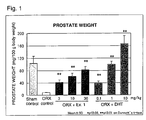
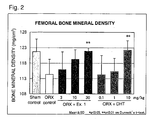
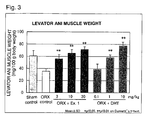
- Testes were removed from 12-week-old male SD rats. Starting on the next day, the compound of Example 1 (3, 10, 30 mg/kg) or DHT (0.1, 1, 10 mg/kg) was subcutaneously administered once daily for four consecutive weeks on a 5-day-a-week basis. The Example compound and DHT were dissolved in dimethyl sulfoxide and diluted 10-fold with olive oil to prepare solutions with various concentrations for use in the test. In an ORX control group, dimethyl sulfoxide as diluted 10-fold with olive oil was used for the test. Rats which had been falsely operated on without orchiectomy were used as a sham control group.
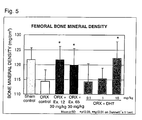
- Test compounds Weight of prostate (mg/100 g body weight) Femoral bone mineral density (mg/cm 2 ) Weight of levator ani muscle (mg/100 g body weight) Sham control 103 ⁇ 23 122 ⁇ 4 61 ⁇ 9 ORX control 8 ⁇ 1 114 ⁇ 5 35 ⁇ 4 ORX+Ex. 1 3 mg/kg 41 ⁇ 8** 116 ⁇ 6 56 ⁇ 7** ORX+Ex. 1 10 mg/kg 61 ⁇ 10** 119 ⁇ 3 65 ⁇ 6** ORX+Ex.
- the compound of Example 1 increased the femoral bone mineral density in a dose-dependent manner, exhibiting a significant effect of achieving a comparable level to the sham control group when administered at 30 mg/kg.
- the compound of Example 1 increased the weight of levator ani muscle in a dose-dependent manner, already exhibiting a significant effect at 3 mg/kg.
- the prostate weight was about 80% of the level of the sham control group at a dose of 30 mg/kg.
- Example 1 does not show an excessive action on the prostate as is observed with natural androgen and that it shows a particularly strong growth action on bone tissue and muscular tissue.
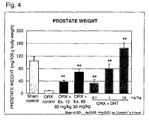
- Testes were removed from 12-week-old male SD rats. Starting on the next day, the compound of Example 12 or 65 (30 mg/kg) or DHT (0.1, 1, 10 mg/kg) was subcutaneously administered once daily for four consecutive weeks on a 5-day-a-week basis.
- the Example compounds and DHT were dissolved in dimethyl sulfoxide and diluted 10-fold with olive oil to prepare solutions with various concentrations for use in the test.
- dimethyl sulfoxide as diluted 10-fold with olive oil was used for the test. Rats which had been falsely operated on without orchiectomy were used as a sham control group.
- Test compounds Weight of prostate (mg/100 g body weight) Femoral bone mineral density (mg/cm 2 ) Weight of levator ani muscle (mg/100 g body weight) Sham control 104 ⁇ 14 121 ⁇ 4 61 ⁇ 4 ORX control 9 ⁇ 1 114 ⁇ 5 37 ⁇ 4 ORX+Ex. 12 30 mg/kg 36 ⁇ 6** 122 ⁇ 5* 54 ⁇ 5** ORX+Ex.
- the compound of Example 12 showed significant effects of increasing the femoral bone mineral density and the weight of levator ani muscle.
- the prostate weight was about 35% of the level of the sham control group.
- the compound of Example 65 also showed significant effects of increasing the femoral bone mineral density and the weight of levator ani muscle. In this case, the prostate weight was about 70% of the level of the sham control group.
- the femoral bone mineral density increased significantly when it was administered at 10 mg/kg and the weight of levator ani muscle increased significantly at 1 mg/kg; on the other hand, the prostate swelled and its weight increased to about 145% of the level of the sham control group when DHT was administered at 10 mg/kg.
- Testes were removed from 12-week-old male SD rats. Starting on the next day, the compound of Example 113 or 114 (30 mg/kg) or DHT (10 mg/kg) was subcutaneously administered once daily for four consecutive weeks on a 5-day-a-week basis. The Example compounds and DHT were dissolved in dimethyl sulfoxide and diluted 10-fold with olive oil to prepare solutions with various concentrations for use in the test. In an ORX control group, dimethyl sulfoxide as diluted 10-fold with olive oil was used for the test. Rats which had been falsely operated on without orchiectomy were used as a sham control group.
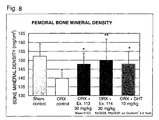
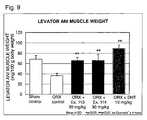
- Test compounds Weight of prostate (mg/100 g body weight) Femoral bone mineral density (mg/cm 2 ) Weight of levator ani muscle (mg/100 g body weight) Sham control 144 ⁇ 27 152 ⁇ 9 68 ⁇ 7 ORX control 14 ⁇ 4 139 ⁇ 7 37 ⁇ 5 ORX+Ex. 113 30 mg/kg 59 ⁇ 16** 148 ⁇ 3* 65 ⁇ 6** ORX+Ex.
- the compound of Example 113 showed significant effects of increasing the femoral bone mineral density and the weight of levator ani muscle.
- the prostate weight was about 40% of the level of the sham control group.
- the compound of Example 114 also showed significant effects of increasing the femoral bone mineral density and the weight of levator ani muscle. In this case, the prostate weight was about 60% of the level of the sham control group.
- Testes were removed from 12-week-old male SD rats. Starting on the next day, the compound of Example 1 (100 mg/10 ml/kg) was orally administered once daily for four consecutive weeks on a 5-day-a-week basis.
- testosterone propionate (TP) 10 mg/kg was subcutaneously administered once daily on a continuous 5-day-a-week basis.
- the test compound was suspended in a 0.5% methyl cellulose solution used as a solvent whereas TP was dissolved in dimethyl sulfoxide and diluted 10-fold with olive oil for use in the test.
- dimethyl sulfoxide as diluted 10-fold with olive oil was used for the test.
- Rats which had been falsely operated on without orchiectomy were used as a sham control group.
- the wet weights of the ventral prostate and levator ani muscle were measured and the right femoral bone mineral density was measured by DEXA (double energy X-ray absorption) to evaluate the in vivo efficacy of the compound of Example 1.
- DEXA double energy X-ray absorption
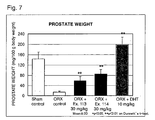
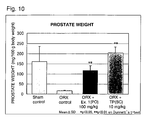
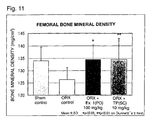
- Test compounds Weight of prostate (mg/100 g body weight) Femoral bone mineral density (mg/cm 2 ) Weight of levator ani muscle (mg/100 g body weight) Sham control 151 ⁇ 74 134 ⁇ 5 81 ⁇ 8 ORX control 17 ⁇ 3 126 ⁇ 5 51 ⁇ 5 ORX+Ex. 1(PO) 100 mg/kg 117 ⁇ 23** 135 ⁇ 6* 87 ⁇ 5** ORX+TP(sc) 10 mg/kg 204 ⁇ 29** 135 ⁇ 8** 88 ⁇ 9** Mean ⁇ SD * p ⁇ 0.05, ** p ⁇ 0.01 on Dunnett's t -test
- the compound of Example 1 significantly increased the femoral bone mineral density and the weight of levator ani muscle in the ORX rats, restoring them to levels comparable to those of the sham control group.
- the prostate weights of the rats administered the compound of Example 1 were about 75% of the level of the sham control group, whereas TP increased the prostate weight to about 125% of the level of the sham control group.
- Example 1 administered orally gives similar results to those obtained by the aforementioned subcutaneous administration, i.e., it does not show an excessive action on the prostate as is observed with TP but it shows a particularly strong growth action on bone tissue and muscular tissue.
- the nonsteroidal AR agonists in current R&D programs are poorly absorbed by the body when administered orally and must be applied as intravenous or intramuscular injection.
- the application of injections imposes burden on patients as by giving them pain or requiring them to see the doctor regularly; therefore, the compound of Example 1 is outstanding in that oral administration is possible without causing burden on the patient.
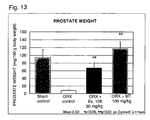
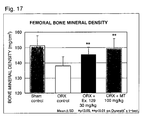
- Testes were removed from 12-week-old male SD rats. Starting on the next day, the compound of Example 108 (30 mg/5 ml/kg) was orally administered once daily for four consecutive weeks on a 7-day-a-week basis. As a positive control, methyl testosterone (MT) (100 mg/5 ml/kg) was orally administered once daily on a continuous 7-day-a-week basis. The test compound was suspended in a 0.5% methyl cellulose solution used as a solvent and the suspension was used in the test. In an ORX control group, a 0.5% methyl cellulose solution (5 ml/kg) was administered. Rats which had been falsely operated on without orchiectomy were used as a sham control group.
- MT methyl testosterone
- the compound of Example 108 significantly increased the femoral bone mineral density and the weight of levator ani muscle in the ORX rats, restoring them to levels comparable to those of the sham control group.
- the prostate weights of the rats administered the compound of Example 108 were about 70% of the level of the sham control group, whereas MT increased the prostate weight to about 120% of the level of the sham control group.
- Example 108 administered orally does not show an excessive action on the prostate as is observed with MT but that it shows a particularly strong growth action on bone tissue and muscular tissue.
- the nonsteroidal AR agonists in current R&D programs are poorly absorbed by the body when administered orally and must be applied as intravenous or intramuscular injection.
- the application of injections imposes burden on patients as by giving them pain or requiring them to see the doctor regularly; therefore, the compound of Example 108 is outstanding in that oral administration is possible without causing burden on the patient.
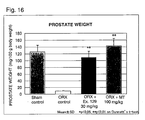
- Testes were removed from 12-week-old male SD rats. Starting on the next day, the compound of Example 129 (30 mg/5 ml/kg) was orally administered once daily for four consecutive weeks on a 7-day-a-week basis. As a positive control, methyl testosterone (MT) (100 mg/5 ml/kg) was orally administered once daily on a continuous 7-day-a-week basis. The test compound was suspended in a 0.5% methyl cellulose solution used as a solvent and the suspension was used in the test. In an ORX control group, a 0.5% methyl cellulose solution (5 ml/kg) was administered. Rats which had been falsely operated on without orchiectomy were used as a sham control group.
- MT methyl testosterone
- the compound of Example 129 significantly increased the femoral bone mineral density and the weight of levator ani muscle in the ORX rats, restoring them to levels comparable to those of the sham control group.
- the prostate weights of the rats administered the compound of Example 129 were about 85% of the level of the sham control group, whereas MT increased the prostate weight to about 115% of the level of the sham control group.
- Example 129 administered orally does not show an excessive action on the prostate as is observed with MT but it shows a particularly strong growth action on bone tissues and muscular tissues.
- the nonsteroidal AR agonists in current R&D programs are poorly absorbed by the body when administered orally and must be applied as intravenous or intramuscular injection.
- the application of injections imposes burden on patients as by giving them pain or requiring them to see the doctor regularly; therefore, the compound of Example 129 is outstanding in that oral administration is possible without causing burden on the patient.
- tablets containing 2 mg of an active ingredient per tablet were prepared: Compound of Example 1 2 mg Starch 48 mg Lactose 30 mg Cellulose, microcrystalline 15 mg Methyl cellulose 3 mg Magnesium stearate 2 mg Total amount 100 mg
- capsules 100 mg of an ingredient mixture containing 2 mg of an active ingredient per capsule were encapsulated to prepare capsules: Compound of Example 1 2 mg Starch 38 mg Lactose 50 mg Cellulose, microcrystalline 8 mg Magnesium stearate 2 mg Total 100 mg
- the tetrahydroquinoline derivatives of the present invention and pharmaceuticals containing them as active ingredients can exhibit AR agonism while showing none of the excessive actions on the prostate that are observed in androgen steroid preparations. They can also exhibit a particularly strong AR action on skeletal muscle tissue and bone tissue.
- the compounds of the present invention can be used in the prevention or treatment of diseases against which various kinds of AR agonism are believed to be effective; in the prevention or treatment of hypogonadism, they can be applied as pharmaceuticals with moderate action on the prostate and with less adverse effects, and in the prevention or treatment of wasting diseases and osteoporosis, they are expected to show potent action on target tissues, such as skeletal muscle tissue and bone tissue.
Landscapes
- Chemical & Material Sciences (AREA)
- Organic Chemistry (AREA)
- Health & Medical Sciences (AREA)
- General Health & Medical Sciences (AREA)
- Veterinary Medicine (AREA)
- Public Health (AREA)
- Medicinal Chemistry (AREA)
- Animal Behavior & Ethology (AREA)
- Life Sciences & Earth Sciences (AREA)
- Pharmacology & Pharmacy (AREA)
- Nuclear Medicine, Radiotherapy & Molecular Imaging (AREA)
- General Chemical & Material Sciences (AREA)
- Chemical Kinetics & Catalysis (AREA)
- Bioinformatics & Cheminformatics (AREA)
- Engineering & Computer Science (AREA)
- Epidemiology (AREA)
- Reproductive Health (AREA)
- Endocrinology (AREA)
- Gynecology & Obstetrics (AREA)
- Physical Education & Sports Medicine (AREA)
- Hematology (AREA)
- Diabetes (AREA)
- Orthopedic Medicine & Surgery (AREA)
- Rheumatology (AREA)
- Pregnancy & Childbirth (AREA)
- Pharmaceuticals Containing Other Organic And Inorganic Compounds (AREA)
Applications Claiming Priority (3)
| Application Number | Priority Date | Filing Date | Title |
|---|---|---|---|
| JP2002179088 | 2002-06-19 | ||
| JP2002179088 | 2002-06-19 | ||
| PCT/JP2003/007799 WO2004000816A1 (fr) | 2002-06-19 | 2003-06-19 | Agoniste de recepteur androgene |
Publications (2)
| Publication Number | Publication Date |
|---|---|
| EP1520856A1 true EP1520856A1 (fr) | 2005-04-06 |
| EP1520856A4 EP1520856A4 (fr) | 2010-01-13 |
Family
ID=29996553
Family Applications (1)
| Application Number | Title | Priority Date | Filing Date |
|---|---|---|---|
| EP03760911A Withdrawn EP1520856A4 (fr) | 2002-06-19 | 2003-06-19 | Agoniste de recepteur androgene |
Country Status (5)
| Country | Link |
|---|---|
| US (1) | US20060128737A1 (fr) |
| EP (1) | EP1520856A4 (fr) |
| JP (1) | JPWO2004000816A1 (fr) |
| AU (1) | AU2003244313A1 (fr) |
| WO (1) | WO2004000816A1 (fr) |
Families Citing this family (9)
| Publication number | Priority date | Publication date | Assignee | Title |
|---|---|---|---|---|
| AU2003252333A1 (en) * | 2002-08-01 | 2004-02-23 | Kaken Pharmaceutical Co., Ltd. | Novel tetrahydroquinoline derivatives |
| EP1734963A4 (fr) | 2004-04-02 | 2008-06-18 | Merck & Co Inc | Methode destinee a traiter des hommes presentant des troubles metaboliques et anthropometriques |
| US7209841B2 (en) | 2004-11-15 | 2007-04-24 | Cobasys, Llc | Maximum and minimum power limit calculator for batteries and battery subpacks |
| FR3015887B1 (fr) * | 2013-12-27 | 2017-03-24 | Oreal | Dispositif et procede pour le maquillage par transfert des matieres keratiniques |
| CA3099155A1 (fr) | 2018-05-14 | 2019-11-21 | Nuvation Bio Inc. | Composes ciblant des recepteurs hormonaux nucleaires anticancereux |
| CA3138197A1 (fr) | 2019-05-14 | 2020-11-19 | Nuvation Bio Inc. | Composes ciblant des recepteurs hormonaux nucleaires anticancereux |
| EP4058464A1 (fr) | 2019-11-13 | 2022-09-21 | Nuvation Bio Inc. | Composés ciblant des récepteurs hormonaux nucléaires anticancéreux |
| MX2023011241A (es) | 2021-03-23 | 2023-10-03 | Nuvation Bio Inc | Compuestos dirigidos a receptores de hormonas nucleares contra el cancer. |
| JP2024516024A (ja) | 2021-05-03 | 2024-04-11 | ニューベイション・バイオ・インコーポレイテッド | 抗がん核内ホルモン受容体標的化化合物 |
Family Cites Families (3)
| Publication number | Priority date | Publication date | Assignee | Title |
|---|---|---|---|---|
| US5925527A (en) * | 1997-02-04 | 1999-07-20 | Trega Biosciences, Inc. | Tricyclic Tetrahydroquinoline derivatives and tricyclic tetrahydroquinoline combinatorial libraries |
| AU7558900A (en) * | 1999-10-14 | 2001-04-23 | Kaken Pharmaceutical Co., Ltd. | Tetrahydroquinoline derivatives |
| AU2003252333A1 (en) * | 2002-08-01 | 2004-02-23 | Kaken Pharmaceutical Co., Ltd. | Novel tetrahydroquinoline derivatives |
-
2003
- 2003-06-19 WO PCT/JP2003/007799 patent/WO2004000816A1/fr not_active Ceased
- 2003-06-19 JP JP2004515520A patent/JPWO2004000816A1/ja active Pending
- 2003-06-19 US US10/518,405 patent/US20060128737A1/en not_active Abandoned
- 2003-06-19 AU AU2003244313A patent/AU2003244313A1/en not_active Abandoned
- 2003-06-19 EP EP03760911A patent/EP1520856A4/fr not_active Withdrawn
Also Published As
| Publication number | Publication date |
|---|---|
| EP1520856A4 (fr) | 2010-01-13 |
| AU2003244313A1 (en) | 2004-01-06 |
| JPWO2004000816A1 (ja) | 2005-10-20 |
| US20060128737A1 (en) | 2006-06-15 |
| WO2004000816A1 (fr) | 2003-12-31 |
Similar Documents
| Publication | Publication Date | Title |
|---|---|---|
| US6777427B2 (en) | Tetrahydroquinoline compounds | |
| US7037919B1 (en) | Tetrahydroquinoline derivatives | |
| CN102822190B (zh) | 哺乳动物的类固醇代谢物 | |
| KR20210120819A (ko) | 선택적 안드로겐 수용체 분해제(sard) 리간드 및 이의 사용 방법 | |
| CZ26396A3 (en) | Novel perhydroisoindole derivatives, process of their preparation and pharmaceutical compositions containing thereof | |
| CN101641013A (zh) | 核受体结合剂 | |
| KR20090109527A (ko) | Pde4의 바이사이클릭 헤테로아릴 억제제 | |
| JP2002543218A (ja) | 麻酔活性を有する、3α−ヒドロキシ−3βメトキシメチル−21−複素環式置換ステロイド | |
| EP1520856A1 (fr) | Agoniste de recepteur androgene | |
| EP1541560A1 (fr) | Nouveaux derives de tetrahydroquinoline | |
| JP2002538206A (ja) | 性腺刺激ホルモン放出ホルモン拮抗薬としての6−アザインドール化合物 | |
| JP2002528541A (ja) | Tnfおよびpde−iv阻害活性を有する複素環式化合物のn−オキシド | |
| WO2024012532A1 (fr) | Agoniste du récepteur gpr139 et son procédé de préparation | |
| JP2003073374A (ja) | 2環性芳香族アミン誘導体 | |
| IE59762B1 (en) | Indenopyrimidine derivatives | |
| IE861970L (en) | Steroidal aromatase inhibitors | |
| JPWO2001027086A1 (ja) | テトラヒドロキノリン誘導体 | |
| KR100360614B1 (ko) | 1-아릴설포닐,아릴(티오)카르보닐-피리다지노유도체및제조방법 | |
| RU2357972C2 (ru) | Стероиды, имеющие смешанный андрогенный и прогестагенный профиль | |
| CN120554295A (zh) | 桥环类化合物及其应用 |
Legal Events
| Date | Code | Title | Description |
|---|---|---|---|
| PUAI | Public reference made under article 153(3) epc to a published international application that has entered the european phase |
Free format text: ORIGINAL CODE: 0009012 |
|
| 17P | Request for examination filed |
Effective date: 20041217 |
|
| AK | Designated contracting states |
Kind code of ref document: A1 Designated state(s): AT BE BG CH CY CZ DE DK EE ES FI FR GB GR HU IE IT LI LU MC NL PT RO SE SI SK TR |
|
| AX | Request for extension of the european patent |
Extension state: AL LT LV MK |
|
| DAX | Request for extension of the european patent (deleted) | ||
| A4 | Supplementary search report drawn up and despatched |
Effective date: 20091215 |
|
| STAA | Information on the status of an ep patent application or granted ep patent |
Free format text: STATUS: THE APPLICATION HAS BEEN WITHDRAWN |
|
| 18W | Application withdrawn |
Effective date: 20100401 |