EP1521423A2 - Procédé de création d'un domaine à clé publique et d'implémentation du domaine avec Universal Plug and Play (UPnP) - Google Patents
Procédé de création d'un domaine à clé publique et d'implémentation du domaine avec Universal Plug and Play (UPnP) Download PDFInfo
- Publication number
- EP1521423A2 EP1521423A2 EP04255231A EP04255231A EP1521423A2 EP 1521423 A2 EP1521423 A2 EP 1521423A2 EP 04255231 A EP04255231 A EP 04255231A EP 04255231 A EP04255231 A EP 04255231A EP 1521423 A2 EP1521423 A2 EP 1521423A2
- Authority
- EP
- European Patent Office
- Prior art keywords
- devices
- domain
- master device
- master
- control point
- Prior art date
- Legal status (The legal status is an assumption and is not a legal conclusion. Google has not performed a legal analysis and makes no representation as to the accuracy of the status listed.)
- Withdrawn
Links
Images





Classifications
-
- G—PHYSICS
- G06—COMPUTING OR CALCULATING; COUNTING
- G06F—ELECTRIC DIGITAL DATA PROCESSING
- G06F15/00—Digital computers in general; Data processing equipment in general
-
- H—ELECTRICITY
- H04—ELECTRIC COMMUNICATION TECHNIQUE
- H04L—TRANSMISSION OF DIGITAL INFORMATION, e.g. TELEGRAPHIC COMMUNICATION
- H04L63/00—Network architectures or network communication protocols for network security
- H04L63/08—Network architectures or network communication protocols for network security for authentication of entities
- H04L63/0823—Network architectures or network communication protocols for network security for authentication of entities using certificates
-
- H—ELECTRICITY
- H04—ELECTRIC COMMUNICATION TECHNIQUE
- H04L—TRANSMISSION OF DIGITAL INFORMATION, e.g. TELEGRAPHIC COMMUNICATION
- H04L12/00—Data switching networks
- H04L12/28—Data switching networks characterised by path configuration, e.g. LAN [Local Area Networks] or WAN [Wide Area Networks]
- H04L12/2803—Home automation networks
-
- H—ELECTRICITY
- H04—ELECTRIC COMMUNICATION TECHNIQUE
- H04L—TRANSMISSION OF DIGITAL INFORMATION, e.g. TELEGRAPHIC COMMUNICATION
- H04L12/00—Data switching networks
- H04L12/28—Data switching networks characterised by path configuration, e.g. LAN [Local Area Networks] or WAN [Wide Area Networks]
- H04L12/2803—Home automation networks
- H04L12/2807—Exchanging configuration information on appliance services in a home automation network
-
- H—ELECTRICITY
- H04—ELECTRIC COMMUNICATION TECHNIQUE
- H04L—TRANSMISSION OF DIGITAL INFORMATION, e.g. TELEGRAPHIC COMMUNICATION
- H04L63/00—Network architectures or network communication protocols for network security
- H04L63/04—Network architectures or network communication protocols for network security for providing a confidential data exchange among entities communicating through data packet networks
- H04L63/0428—Network architectures or network communication protocols for network security for providing a confidential data exchange among entities communicating through data packet networks wherein the data content is protected, e.g. by encrypting or encapsulating the payload
- H04L63/0435—Network architectures or network communication protocols for network security for providing a confidential data exchange among entities communicating through data packet networks wherein the data content is protected, e.g. by encrypting or encapsulating the payload wherein the sending and receiving network entities apply symmetric encryption, i.e. same key used for encryption and decryption
Definitions
- the present invention relates to the authentication of devices present in a domain, and more particularly, to methods of constructing a unique domain for preventing content from being illegally used by an unauthorized third person in a public key-based architecture and applying the constructed domain to a home network using universal plug and play (UPnP).
- UPN universal plug and play
- the techniques include a DVD content scrambling system, content protection for recordable media (CPRM), digital transmission content protection (DTCP), high definition content protection (HDCP), content protection system architecture (CPSA), digital rights management (DRM) and the like.
- CPRM content protection for recordable media
- DTCP digital transmission content protection
- HDCP high definition content protection
- CPSA content protection system architecture
- DRM digital rights management
- SmartRight is a technique by which each device constituting a home network has a smart card including a public key certificate and a key for the home network is created by the exchange of certificates among devices using the smart cards.
- OCCAM is a technique by which respective devices in a home can use content by using a unique "ticket” for each piece of content.
- xCP Cluster Protocol is a technique based on broadcast encryption, by which the concept of a domain called “cluster” is employed and devices belonging to the same cluster can freely use content among the devices.
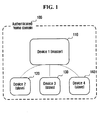
- conventional domain management comprises a master device 110 and slave devices 120, 130 and 140 within an authenticated home domain 100. Domain management is performed between the master device and the slave devices.
- the process of reproducing content based on the 'xCP Cluster Protocol' in accordance with such a configuration of the master device and the slave devices will be described with reference to FIG. 2.
- the process can be roughly divided into the following processes: a cluster-forming process (S201), a device-authenticating process (S202), a content-encrypting process (S203), and a content-decrypting process (S204). The detailed description thereof will be made below.
- a server that initially connects with a given home network creates a binding ID (hereinafter, referred to as "ID b ”) for the home network (S200).
- ID b may be a unique identifier for a server established upon manufacture of the server or arbitrarily established by a user. When an ID b is thus established, a cluster identified with ID b is formed.
- the device When a device intends to use content present in the server, the device extracts a media key (hereinafter, referred to as "K m ”) from a media key block (MKB) by using its own device key set (S210). Thereafter, the device creates its own unique key K p by using "K m " extracted in step S210 and its own identifier ID p (S212).
- K m media key
- MKB media key block
- the device When the device intends to go through device authentication, it requests the server to authenticate the device itself (S214).
- the server sends the device E (ID b ) K p , which is obtained by encrypting ID b using K p , and the unique identifier ID p of the device, and then adds ID p to an authentication table of the server, "auth.tab.”
- the authentication for the device can be accomplished by extracting ID b from E(ID b ) K p received from the server (S216).
- K b A binding key (hereinafter, referred to as "K b ”) is first created using ID b , auth.tab and K m .
- K t a title key
- each piece of content contains usage rule (UR) information including copy control information, information on whether the content is allowed to be distributed to the outside, a right to use the content, a valid use period, and the like.
- the UR information and K t are encrypted using K b to produce E(K t ⁇ H[UR]K b ) (S224) .
- DRM serves as an essential component in the development of the digital industry and also plays an essential role in a home network. Accordingly, an increased need exists for implementing the domain management model described above in the home network.
- the related art for applying the domain management technique to a home network uses a direct communication scheme between the master and slave devices in the home network, as shown in FIG. 1. This scheme needs to develop communication protocols adapted for respective domain management. Thus, there is a problem in that compatibility with respective devices is deteriorated. Accordingly, measures to efficiently solve the problem are required.
- UPnP Universal Plug and Play
- UPnP has many advantages in that it can be smoothly incorporated into existing networks due to the use of conventional standard Internet protocols and does not depend on specific operating systems, physical media, or the like. However, since a method of implementing domain management through UPnP remains unknown, there is a need for a method of effectively implementing domain management using UPnP.
- An aim of preferred embodiments of the present invention is to provide a method of more safely constructing a domain independent of the outside through the direct involvement of a user in constructing the domain, and preventing content from being illegally used by a third person.
- Another aim of preferred embodiments of the present invention is to provide a method of implementing more efficient domain management using UPnP when the domain-constructing method is applied to a home network.
- a method of constructing a domain based on a public key and implementing the domain through UPnP so that a unique domain can be constructed to allow only an authorized user to use content in a public-key based architecture in a home network comprising (a) selecting one of controlled devices that are operable as a master device and determining the selected device as the master device; (b) performing device authentication in such a manner that other controlled devices receive a secret information block from the determined master device and create certificates; (c) determining slave devices by selecting one or more devices among the authenticated controlled devices.
- the step (a) may comprise the steps of: notifying a control point that the controlled devices are connected; obtaining, by the control point, device information and DRM information of the controlled devices; selecting the master device among the controlled devices by using the DRM information; and setting the controlled device selected as the master device to a master mode and providing a list of devices to the controlled devices.
- the step (b) may comprise the steps of: receiving, by the determined master device, the secret information block from an external server; delivering the received secret information block to the controlled devices except the master device; extracting secret values and creating the certificates using the delivered secret information block; and verifying the certificates and preparing a list of authenticated devices by using the created certificates, device IDs and public keys.
- the step (c) may comprise the steps of: if the devices authenticated in the second step have no domain attributes, displaying a list of these devices to the user; selecting the slave devices among the listed devices; receiving a list of selected slave devices and creating a domain ID and a domain key; and encrypting the domain ID and the domain key using public keys.
- control point in UPnP may be taken over by the master device and the control point deals with tasks related to user interfaces.
- control point takes over important ones of said one or more functions.
- the master device and the slave devices may be determined after manager authentication is performed by obtaining manager authentication information from the master device.
- selecting the master device and the slave devices may be performed by means of user selection through user interfaces.
- FIG. 3 illustrates a method of constructing a domain in a public key-based architecture according to embodiments of the present invention.
- each device requesting a master device, which provides content, to transmit content thereto has a set of unique secret keys and a public key or a public key-creating function upon manufacture of the device.
- the set of secret keys are used to extract a secret value from a secret information block (hereinafter, referred to as "SIB") provided in a broadcast encryption manner.
- SIB secret information block
- the SIB is information for verifying the revocation of devices. Revoked devices cannot extract an intended secret value from the SIB, whereas legitimate devices can extract a common secret value.
- a master 320 involved in constructing a domain.
- the master 320 receives a SIB from an external server 310 in a broadcast encryption manner (S332). Thereafter, the master 320 recognizes the presence of devices 330 in the domain in such a manner that the devices 330 inform the server that they exist in the domain or the master itself 320 discovers the devices 330 through a wired or wireless network (S334).
- the master 320 When the master 320 provides a user with the devices 330, which have been recognized by the master, by displaying them on a display unit of the master, the user selects devices 330 that the user wants to register with the domain among the displayed devices (S336). Then, the master 320 sends the SIB, which have been already received from the external server 310, to the devices 330 selected by the user (S338). Each of the devices 330 that have received the SIB extracts a secret value from the SIB (S340), and prepares a certificate for its own public key using the extracted secret value (S342).
- the master 320 verifies the certificate in order to verify that the device is a legitimate device (S346). Then, the master 320 prepares an authentication list in which unique identifiers (IDs) and public keys of authenticated devices are recorded (S348).
- IDs unique identifiers
- S348 The number of devices that can be authenticated is limited by a user.
- the master 320 After the master 320 prepares the authentication list, the master creates a unique domain ID and a domain key using information on the devices included in the authentication list and a random number created by the master itself (S350).
- the domain ID is a secret key shared among only devices belonging to a domain formed by the user's selection and is simultaneously changed whenever there are changes in members constituting the domain.
- the domain ID is used as a discriminator for distinguishing a domain from other domains.
- the master 320 encrypts the domain ID and the domain key using respective public keys of the authenticated devices 330 present in the domain and then transmits the encrypted domain ID and domain key to the authenticated devices 330.
- the devices 330 restore the domain key using their own secret keys (S354).
- the domain for using the content is finally formed.
- the master 320 encrypts the content using a content key that in turn is encrypted using the domain key.
- the devices which want to use the content, decrypt the encrypted content using the domain key, the devices can use the content.
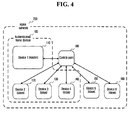
- FIG. 4 is a block diagram showing an example in which the domain-constructing method of an embodiment of the present invention is applied to UPnP.
- Each of controlled devices 110 to 160 receives/sends commands and also provides their own services under the control of a control point 190.
- a domain is constructed by designating one device of the controlled devices as a master device 110 and designating devices 120, 130 and 140, which have been selected by a user, among the remaining devices, as slave devices.
- the devices 150 and 160 that have been not designated as master or slave devices, i.e. the ones that have not been included in the domain are called guest devices.
- the master device 110 and the slave devices 120 to 140 construct an authenticated home domain, and the control point 190 and the controlled devices 110 to 160 constructs a home network 200 as a whole.
- FIG. 5 illustrates a general UPnP operation performed between the control point and the controlled devices.
- UPnP networking is based on a TCP/IP protocol of which an essential point is an addressing function.
- Each device should have a dynamic host configuration protocol (DHCP) client.
- DHCP dynamic host configuration protocol
- the device searches for a DHCP server. If there is a DHCP server, the device uses an IP address allocated thereto. If there is no available DHCP server, the device uses an "auto IP" to secure an address.
- a discovery step is performed. Once the device is connected to the network and a proper address is allocated thereto, a discovery operation can be performed. The discovery operation is processed using a simple service discovery protocol (SSDP). When the device is added to the network, the SSDP functions to notify the control point present in the network of services provided by the device.
- SSDP simple service discovery protocol
- a description step is performed subsequent to the UPnP networking.
- the control point has discovered the device, the control point still has little information on the device. If the control point intends to obtain detailed information on the device and its function and cooperates with the device, the control point should check a description of the device from a discovery message and a URL provided by the relevant device.
- the UPnP description of the device is expressed in XML, and includes unique manufacture information of the manufacturer of the device (for example, model name, serial number, manufacturer's name, manufacturer's URL, etc). Further, this description also includes lists of embedded devices and services as well as URLs for control, eventing and presentation.
- a UPnP step is substantially performed.
- the UPnP step is performed through operations for control, eventing, presentation and the like.
- the control point secures a description of the device and then performs indispensable tasks for control of the device.
- the control point sends an operation command to the device for a service provided by the device.
- the control point sends a proper control message to a control URL (available from the device description) for the device's service.
- the control message is also expressed in XML using a simple object access protocol (SOAP).
- SOAP simple object access protocol
- each device when each device is subjected to a change in its status due to the reception of the command, it notifies the control point of the status change through an event message.
- the event message includes the names of one or more status variables and the current values of these variables, and is expressed in XML and formatted using a generic event notification architecture (GENA).
- GAA generic event notification architecture
- the contents of the event are periodically updated and the control point is continuously notified of the updated contents of the event. Further, a subscription may be canceled using the GENA.
- the control point can search a page through the URL and load the page in a browser. Users can control the device or refer to the status of the device using the page. The level at which these functions can be performed depends on the presentation page and a specific function of the device.
- FIGS. 6 to 8 illustrate processes performed according to a first embodiment of the present invention.
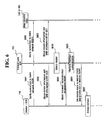
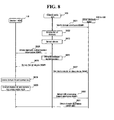
- FIG. 6 illustrates the process of determining a master device.
- all the controlled devices 110 to 160 notify the control point 190 that they have been connected to the home network by using the SSDP (S601).
- the control point 190 obtains device information and DRM information from the devices 110 to 160 (S602) through a HTTP.
- device information means general device information for use in UPnP
- DRM information means a device attribute and a device mode.
- the device attribute is a value for use in determining whether the controlled device can be operated as a master device in the domain.
- the device mode is a value enabling determination on whether the device is currently operated as a master, slave or guest. All the controlled devices are initially set as guests. Thereafter, if the devices are set as a master or slaves, the value of the device mode may be changed.
- the control point 190 obtains manager authentication information of controlled device 1 110 set as the master through SOAP. Such manager authentication information may be retrieved from a smart card of the master and is required for a procedure of confirming whether the user that has selected the master is a legitimate manager.
- the control point 190 performs manager authentication by outputting a user interface using the manager authentication information and receiving a manager's ID and password from the user (S605).
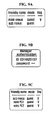
- FIG. 9b shows one example of such a user interface.
- control point 190 sets controlled device 1 110 as a domain master and then provides controlled device 1 110 with a list of devices that the control point 190 possesses (S606). Thereafter, the device mode value of controlled device 1 110 becomes "master.” Controlled device 1 110 set as the master initially creates a new domain with only the device itself as a member (S607).
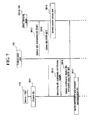
- FIG. 7 illustrates a device-authenticating process performed subsequent to the process illustrated in FIG. 6 according to the first embodiment of the present invention.
- the domain master 110 receives a new SIB through an external server in such a manner illustrated in FIG. 3 (S611).
- the control point 190 then delivers URL information with the SIB stored therein to the remaining controlled devices 120 to 160 by using SOAP (S612).
- the remaining controlled devices 120 to 160 obtain the SIB present in the URL through HTTP (S613).
- the controlled devices extract secret values using the obtained SIB, and create certificates using the secret values and their own IDs and public keys (S614).
- These certificates are used for discriminating illegal devices from legitimate devices. For example, if an authentication policy in which only devices produced by specific manufacturers are approved as legitimate devices is enforced, devices produced by other manufacturers except the specific manufacturers would be treated as illegal devices.
- the master device 110 obtains the certificates, device IDs and public keys from the remaining controlled devices 120 to 160 by using HTTP (S615). Further, the master device 110 verifies the obtained certificates and prepares a list of authenticated devices (S617). Devices classified into illegal devices through certificate verification are subsequently excluded from the domain, and there is no possibility for them to be designated as slave devices.
- FIG. 8 illustrates the process of determining a slave device that is performed subsequent to the process illustrated in FIG. 7 according to the first embodiment of the present invention.
- the control point 190 verifies domain attributes for the devices 120 to 140 approved as legitimate devices according to the results of the certificate verification by using SOAP (S621).
- Each domain attribute may include a domain key, the names of devices belonging to a domain, the number of devices belonging to the domain, and the like. If the devices have no domain attributes, the control point 190 displays a list of these devices through a user interface (S622) and allows the user to select slave devices (S623).
- FIG. 9c illustrates an example of a user interface showing a list of the legitimate devices 120 to 140.
- the user marks checks for devices that the user wishes to include in the domain among the listed devices to select slave devices. Contrary to the selection of the master, the user can select a plurality of devices as slave devices. Thereafter, in the same manner as the master-selecting process illustrated in FIG. 6, manager authentication information is obtained (S624) and the manager-authenticating process is performed (S625).
- control point 190 delivers a list of the slave devices selected among the listed devices to the master device 110 through SOAP (S626), and sets the selected devices to the slave mode through SOAP (S627).
- the devices that have been set to the slave mode have "slave" as their device mode values.
- the master device 110 creates a domain ID and a domain key using the list of slave devices (S628).
- the master device encrypts the domain ID and domain key using public keys for the slave devices (S629).
- the control point 190 delivers the URL information containing the domain attribute value from the master device to the slave devices through SOAP (S630). Then, the slave devices obtain the domain attribute present in the URL via HTTP (S631).
- the domain attribute includes the domain key, the names of the devices belonging to the domain, the number of the devices belonging to the domain, and the like.
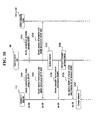
- FIGS. 10 to 12 illustrate processes according to a second embodiment of the present invention.
- the second embodiment is different from the first embodiment in that important ones of the functions of the control point 190 are taken over by the master device 110.
- the control point 190 deals with tasks related to user interfaces.
- the master device 110 has functions of a controlled device as well as functions of a control point except the residual function of the control point 190. Accordingly, loads on the control point 190 are greatly reduced. Further, problems do not occur in view of security even though the control point 190 is an illegal device. Moreover, there are no problems even though the master device has no user interface.
- FIG. 10 illustrates the process of determining a master device, wherein device 1 110 is operated only as a controlled device (CD). Therefore, this process is identical to the process of determining the master device illustrated in FIG. 6 according to the first embodiment. Thus, iterative description thereof will be omitted.
- FIG. 11 illustrates a device-authenticating process performed subsequent to the process illustrated in FIG. 10 according to the second embodiment of the present invention.
- the control point 190 notifies the master device 110 through SOAP that the device-authenticating process starts (S711).
- the master device is operated as a CD.
- the master device 110 (operating as a CD) delivers the SIB directly to the remaining controlled devices 120 to 160 using SOAP.
- the remaining controlled devices 120 to 160 extract secret values using the received SIB, and create certificates using the secrete values and their own device IDs and public keys (S713).
- the remaining controlled devices 120 to 160 deliver their certificates, device IDs and public keys directly to the master device 100 (operating as a control point) through SOAP (S714).
- the master device 110 verifies the received certificates and prepares a list of authentication devices (S715). Devices classified as illegal devices through the certificate verification are subsequently excluded from the domain, and there is no possibility for them to be designated as slave devices.
- the master device 110 (operating as a CD) notifies the control point 190 of device IDs of the verified devices by means of an event message by using GENA (S716).
- control point 190 obtains the results of the verification of the devices from the master device 110 (operating as a CD) using SOAP (S717), and then displays, through a user interface, the verification results on whether the devices are illegal or legitimate devices (S718).
- FIG. 12 illustrates the process of determining a slave device that is performed subsequent to the process illustrated in FIG. 11 according to the second embodiment of the present invention.
- the control point 190 verifies domain attributes for the devices 120 to 140 approved as legitimate devices according to the results of certificate verification by using SOAP (S721). If the devices have no domain attributes, the control point 190 displays a list of these devices through a user interface (S722), and allows the user to select slave devices (S723).
- FIG. 9c illustrates an example of the user interface showing a list of legitimate devices 120 to 140. The user marks checks for devices that the user wishes to include in the domain among the listed devices to select slave devices. Thereafter, in the same manner as the master-selecting process illustrated in FIG. 6, the manager authentication information is obtained (S724) and the manager-authenticating process is performed (S725).
- the control point 190 delivers a list of slave devices 120 to 140 selected among the listed devices to the master device 110 (operating as a CD) through SOAP (S726). Then, the master device 110 creates a domain ID and a domain key using the list of slave devices (S727). Then, the master device encrypts the domain ID and domain key using public keys for the slave devices (S728). The master device 110 (operating as a control point) directly sets the selected devices to the slave mode through SOAP, and then delivers the domain attributes of the set devices (S729).
- a communication method implemented in UPnP can be used as it is in applying domain management techniques to a home network, it is not necessary to develop a new communication method among members in a domain.
- preferred embodiments of the present invention have advantages in that devices included in a home network can be more easily authenticated, smooth incorporation into conventional networks can be made without depending on specific operating systems or physical media by using a standard Internet protocol, and compatibility with all devices supporting UPnP can be achieved.
Landscapes
- Engineering & Computer Science (AREA)
- Computer Hardware Design (AREA)
- General Engineering & Computer Science (AREA)
- Computer Security & Cryptography (AREA)
- Computing Systems (AREA)
- Computer Networks & Wireless Communication (AREA)
- Signal Processing (AREA)
- Theoretical Computer Science (AREA)
- Physics & Mathematics (AREA)
- General Physics & Mathematics (AREA)
- Small-Scale Networks (AREA)
- Selective Calling Equipment (AREA)
Applications Claiming Priority (2)
| Application Number | Priority Date | Filing Date | Title |
|---|---|---|---|
| KR10-2003-0068837A KR100533678B1 (ko) | 2003-10-02 | 2003-10-02 | 공개 키 기반 구조의 도메인을 형성하여 UPnP를통하여 구현하는 방법 |
| KR2003068837 | 2003-10-02 |
Publications (2)
| Publication Number | Publication Date |
|---|---|
| EP1521423A2 true EP1521423A2 (fr) | 2005-04-06 |
| EP1521423A3 EP1521423A3 (fr) | 2009-01-07 |
Family
ID=34309541
Family Applications (1)
| Application Number | Title | Priority Date | Filing Date |
|---|---|---|---|
| EP04255231A Withdrawn EP1521423A3 (fr) | 2003-10-02 | 2004-08-28 | Procédé de création d'un domaine à clé publique et d'implémentation du domaine avec Universal Plug and Play (UPnP) |
Country Status (5)
| Country | Link |
|---|---|
| US (1) | US7424613B2 (fr) |
| EP (1) | EP1521423A3 (fr) |
| JP (1) | JP4611686B2 (fr) |
| KR (1) | KR100533678B1 (fr) |
| CN (1) | CN100338919C (fr) |
Cited By (6)
| Publication number | Priority date | Publication date | Assignee | Title |
|---|---|---|---|---|
| EP1690370A4 (fr) * | 2003-12-01 | 2008-06-11 | Samsung Electronics Co Ltd | Réseau domestique et procède pour un réseau domestique |
| CN101997722A (zh) * | 2010-11-16 | 2011-03-30 | 西安电子科技大学 | 面向三网融合的数字家庭网络服务管理系统和方法 |
| US7979913B2 (en) | 2003-12-01 | 2011-07-12 | Samsung Electronics Co., Ltd. | Home network system and method therefor |
| WO2018057762A1 (fr) * | 2016-09-26 | 2018-03-29 | Google Llc | Interface utilisateur pour un partage de poste à poste autorisé par contrôle d'accès |
| US10298402B2 (en) | 2016-06-27 | 2019-05-21 | Google Llc | Access control technology for peer-to-peer sharing |
| US10915216B2 (en) | 2016-06-27 | 2021-02-09 | Google Llc | User interface for access control enabled peer-to-peer sharing |
Families Citing this family (63)
| Publication number | Priority date | Publication date | Assignee | Title |
|---|---|---|---|---|
| KR100820669B1 (ko) * | 2004-06-16 | 2008-04-10 | 엘지전자 주식회사 | 네트워크상에서의 디바이스에 대한 액세스 권한 설정과디바이스간의 인증을 위한 방법 및 장치 |
| US20060126831A1 (en) * | 2004-12-14 | 2006-06-15 | Cerruti Julian A | Systems, methods, and media for adding an additional level of indirection to title key encryption |
| US7519181B2 (en) * | 2004-12-16 | 2009-04-14 | International Business Machines Corporation | System and method for enforcing network cluster proximity requirements using a proxy |
| US7533258B2 (en) | 2005-01-07 | 2009-05-12 | Cisco Technology, Inc. | Using a network-service credential for access control |
| US7500269B2 (en) * | 2005-01-07 | 2009-03-03 | Cisco Technology, Inc. | Remote access to local content using transcryption of digital rights management schemes |
| US9275052B2 (en) | 2005-01-19 | 2016-03-01 | Amazon Technologies, Inc. | Providing annotations of a digital work |
| JP4381317B2 (ja) * | 2005-01-31 | 2009-12-09 | 株式会社東芝 | コンテンツ再生装置、コンテンツ再生方法及びプログラム |
| KR20060091870A (ko) * | 2005-02-16 | 2006-08-22 | 엘지전자 주식회사 | 사용자 인증 서비스를 제공하는 유피엔피 네트워크 시스템및 방법 |
| JP4387962B2 (ja) * | 2005-02-18 | 2009-12-24 | 株式会社東芝 | コンテンツ再生装置、コンテンツ再生方法及びプログラム |
| JP4760101B2 (ja) * | 2005-04-07 | 2011-08-31 | ソニー株式会社 | コンテンツ提供システム,コンテンツ再生装置,プログラム,およびコンテンツ再生方法 |
| CN101164071A (zh) * | 2005-04-08 | 2008-04-16 | 韩国电子通信研究院 | 域管理方法及基于用户和设备的域系统的域上下文 |
| JP4900891B2 (ja) * | 2005-04-27 | 2012-03-21 | キヤノン株式会社 | 通信装置及び通信方法 |
| US8788639B2 (en) * | 2005-05-13 | 2014-07-22 | Hewlett-Packard Development Company, L.P. | Method and apparatus for centrally configuring network devices |
| KR100811630B1 (ko) * | 2005-05-16 | 2008-03-11 | 엘지전자 주식회사 | 홈네트워크에서의 디바이스 소유자 설정 방법 |
| JP2007053641A (ja) | 2005-08-19 | 2007-03-01 | Sony Corp | 通信制御装置および通信制御システム |
| EP1765012A1 (fr) * | 2005-09-14 | 2007-03-21 | Nagravision S.A. | Méthode de vérification d'un dispositif cible relié à un dispositif maître |
| KR100677635B1 (ko) * | 2006-02-02 | 2007-02-02 | 삼성전자주식회사 | 네트워크에서의 기기 제어 방법 및 시스템과 그 방법을수행하는 프로그램이 기록된 기록 매체 |
| KR100703805B1 (ko) * | 2006-02-15 | 2007-04-09 | 삼성전자주식회사 | 원격 도메인의 디바이스에서 drm 컨텐츠를 로밍하여사용하는 방법 및 장치 |
| KR100708203B1 (ko) * | 2006-02-24 | 2007-04-16 | 삼성전자주식회사 | 디바이스의 제어 허용 방법 및 그를 이용한 디바이스 |
| CN101589591B (zh) | 2006-03-06 | 2012-10-31 | Lg电子株式会社 | 数据传递控制方法、内容传递控制方法、内容处理信息获取方法 |
| US8429300B2 (en) | 2006-03-06 | 2013-04-23 | Lg Electronics Inc. | Data transferring method |
| US20090133129A1 (en) | 2006-03-06 | 2009-05-21 | Lg Electronics Inc. | Data transferring method |
| US7730181B2 (en) * | 2006-04-25 | 2010-06-01 | Cisco Technology, Inc. | System and method for providing security backup services to a home network |
| CN101064628B (zh) * | 2006-04-28 | 2011-02-02 | 华为技术有限公司 | 家庭网络设备安全管理系统及方法 |
| JP2007324921A (ja) * | 2006-05-31 | 2007-12-13 | Toshiba Corp | ネットワーク接続機器及び提供サービス制御プログラム |
| KR101013686B1 (ko) | 2006-06-29 | 2011-02-10 | 엘지전자 주식회사 | Drm에서 유저 도메인 내의 장치 관리 방법 및 시스템 |
| KR20080022476A (ko) | 2006-09-06 | 2008-03-11 | 엘지전자 주식회사 | 논컴플라이언트 컨텐츠 처리 방법 및 디알엠 상호 호환시스템 |
| US8725565B1 (en) * | 2006-09-29 | 2014-05-13 | Amazon Technologies, Inc. | Expedited acquisition of a digital item following a sample presentation of the item |
| US9672533B1 (en) | 2006-09-29 | 2017-06-06 | Amazon Technologies, Inc. | Acquisition of an item based on a catalog presentation of items |
| US7882356B2 (en) * | 2006-10-13 | 2011-02-01 | Microsoft Corporation | UPnP authentication and authorization |
| KR101038166B1 (ko) * | 2007-01-05 | 2011-05-31 | 엘지전자 주식회사 | 리소스 전송 방법 및 정보 제공 방법 |
| US8584206B2 (en) | 2007-02-16 | 2013-11-12 | Lg Electronics Inc. | Method for managing domain using multi domain manager and domain system |
| EP1968316A1 (fr) | 2007-03-06 | 2008-09-10 | Nagravision S.A. | Procédé pour contrôler l'accès à des contenus audio/vidéo d'accès conditionnel |
| KR101566171B1 (ko) | 2007-03-09 | 2015-11-06 | 삼성전자 주식회사 | 디지털 저작권 관리 방법 및 장치 |
| US9665529B1 (en) | 2007-03-29 | 2017-05-30 | Amazon Technologies, Inc. | Relative progress and event indicators |
| US7921309B1 (en) | 2007-05-21 | 2011-04-05 | Amazon Technologies | Systems and methods for determining and managing the power remaining in a handheld electronic device |
| JP5084456B2 (ja) * | 2007-11-14 | 2012-11-28 | キヤノン株式会社 | 通信システム、通信処理方法、及びデバイス |
| KR20090067551A (ko) * | 2007-12-21 | 2009-06-25 | 삼성전자주식회사 | 클러스터 기반의 컨텐츠 사용 제한 및 컨텐츠 사용 방법,컨텐츠 접근 권한 인증 방법, 장치, 및 기록매체 |
| ATE484148T1 (de) * | 2008-02-11 | 2010-10-15 | Nagravision Sa | Methode zur aktualisierung und verwaltung einer anwendung für die verarbeitung von audiovisuellen daten in einer multimediaeinheit über ein modul mit bedingtem zugriff |
| CN106408237A (zh) * | 2008-08-08 | 2017-02-15 | 实耐宝公司 | 基于图像的库存控制系统 |
| US9147174B2 (en) | 2008-08-08 | 2015-09-29 | Snap-On Incorporated | Image-based inventory control system using advanced image recognition |
| US9041508B2 (en) | 2008-08-08 | 2015-05-26 | Snap-On Incorporated | Image-based inventory control system and method |
| US8842183B2 (en) * | 2008-08-08 | 2014-09-23 | Snap-On Incorporated | Image-based inventory control system with automatic calibration and image correction |
| US8488793B2 (en) * | 2009-07-31 | 2013-07-16 | International Business Machines Corporation | Efficient rebinding of partitioned content encrypted using broadcast encryption |
| DE102010044518A1 (de) * | 2010-09-07 | 2012-03-08 | Siemens Aktiengesellschaft | Verfahren zur Zertifikats-basierten Authentisierung |
| US10708634B2 (en) | 2011-07-01 | 2020-07-07 | Nagravision S.A. | Method for playing repeatable events on a media player |
| CN102957584B (zh) * | 2011-08-25 | 2015-03-18 | 华为终端有限公司 | 家庭网络设备的管理方法、控制设备和家庭网络设备 |
| JP6096782B2 (ja) * | 2011-09-28 | 2017-03-15 | コーニンクレッカ フィリップス エヌ ヴェKoninklijke Philips N.V. | 階層的属性ベースの暗号化及び復号 |
| KR101959970B1 (ko) * | 2012-09-05 | 2019-07-04 | 에스케이텔레콤 주식회사 | 컨텐츠 전송 서비스 방법, 이를 위한 캐시 장치 |
| CN103023651B (zh) * | 2012-12-06 | 2016-05-11 | 北京奇虎科技有限公司 | 用于监控可移动设备的接入的方法和装置 |
| CN104683191A (zh) * | 2013-11-29 | 2015-06-03 | 英业达科技有限公司 | 家用电子装置、家用电子装置控制方法、家用电子网络系统 |
| JP6127996B2 (ja) * | 2014-01-31 | 2017-05-17 | 株式会社Jvcケンウッド | 端末装置、管理装置、通信システム、プログラム、通信方法 |
| US9449187B2 (en) * | 2014-08-11 | 2016-09-20 | Document Dynamics, Llc | Environment-aware security tokens |
| CN107257985A (zh) | 2015-04-15 | 2017-10-17 | 实耐宝公司 | 使用多个传感技术的自动资产管理系统 |
| US10225259B2 (en) * | 2016-03-30 | 2019-03-05 | Oracle International Corporation | Establishing a cleanroom data processing environment |
| DE102019130067B4 (de) * | 2019-11-07 | 2022-06-02 | Krohne Messtechnik Gmbh | Verfahren zur Durchführung einer erlaubnisabhängigen Kommunikation zwischen wenigstens einem Feldgerät der Automatisierungstechnik und einem Bediengerät |
| EP4145840B8 (fr) * | 2020-04-29 | 2025-10-29 | LG Electronics Inc. | Système et dispositif d'affichage d'image et procédé de fonctionnement associé |
| CN116097617A (zh) * | 2020-08-07 | 2023-05-09 | 上海诺基亚贝尔股份有限公司 | 安全网络架构 |
| KR102430518B1 (ko) * | 2020-12-16 | 2022-08-10 | (주)위너스엔지니어링 | 슬레이브국의 고유 번호를 이용한 암호화/복호화 통신에 의한 보안성이 강한 계장제어장치 및 방법 |
| CN114554025B (zh) * | 2022-04-27 | 2022-07-22 | 杭州思看科技有限公司 | 三维扫描方法、系统、电子装置和存储介质 |
| KR102434382B1 (ko) * | 2022-06-08 | 2022-08-22 | 주식회사 구루미 | 확장이 유연한 네트워크 클러스터링 구성 방법 |
| KR102534826B1 (ko) * | 2022-11-29 | 2023-05-26 | 주식회사 유큐브 | 지능형 홈네트워크 기반 psu를 이용한 종단 간 보안 서비스 제공 시스템 |
| US20240267368A1 (en) * | 2023-02-03 | 2024-08-08 | Itron, Inc. | Electricity meter and system hardened against attack vectors |
Family Cites Families (12)
| Publication number | Priority date | Publication date | Assignee | Title |
|---|---|---|---|---|
| DE69838439T2 (de) * | 1997-06-25 | 2008-06-12 | Samsung Electronics Co., Ltd., Suwon | Verfahren und Vorrichtung zur Überwachung von Geräten in einem Hausnetzwerk |
| US6393467B1 (en) * | 1998-08-31 | 2002-05-21 | Nortel Networks Limited | Network interconnected computing device, server and notification method |
| US6584096B1 (en) * | 1998-12-30 | 2003-06-24 | Nortel Networks Limited | Method and apparatus for connecting a home network to the internet |
| JP2001203680A (ja) | 2000-01-21 | 2001-07-27 | Advanced Mobile Telecommunications Security Technology Research Lab Co Ltd | ダイナミックセキュアグループ移動通信方式 |
| JP2001352321A (ja) | 2000-04-06 | 2001-12-21 | Sony Corp | 情報処理システム、情報処理方法、および情報記録媒体、並びにプログラム提供媒体 |
| US6580950B1 (en) * | 2000-04-28 | 2003-06-17 | Echelon Corporation | Internet based home communications system |
| US7031945B1 (en) * | 2000-07-24 | 2006-04-18 | Donner Irah H | System and method for reallocating and/or upgrading and/or rewarding tickets, other event admittance means, goods and/or services |
| WO2002033883A2 (fr) * | 2000-10-18 | 2002-04-25 | Koninklijke Philips Electronics N.V. | Generation d'une cle de chiffrement commune |
| JP2002291039A (ja) | 2001-03-27 | 2002-10-04 | Tdk Corp | 無線通信端末及び無線ネットワークシステムにおける接続機器の選択方法 |
| JP4177073B2 (ja) | 2001-10-19 | 2008-11-05 | 松下電器産業株式会社 | 機器認証システムおよび機器認証方法 |
| US20030135552A1 (en) * | 2002-01-14 | 2003-07-17 | Blackstock Michael A. | Method for discovering and discriminating devices on local collaborative networks to facilitate collaboration among users |
| BRPI0417068A (pt) * | 2003-12-01 | 2007-03-13 | Samsung Electronics Co Ltda | sistema de rede de dados de uso doméstico, método de gerenciamento de um sistema de rede de dados de uso doméstico, equipamento de controle de gerenciamento da rede de dados de uso doméstico de um sistema de rede de dados de uso doméstico, dispositivo mestre, método de gerenciar dispositivos controlados por meio de um dispositivo mestre, meio legìvel por computador, e dispositivo mestre |
-
2003
- 2003-10-02 KR KR10-2003-0068837A patent/KR100533678B1/ko not_active Expired - Fee Related
-
2004
- 2004-08-18 JP JP2004238858A patent/JP4611686B2/ja not_active Expired - Fee Related
- 2004-08-28 EP EP04255231A patent/EP1521423A3/fr not_active Withdrawn
- 2004-09-30 US US10/953,571 patent/US7424613B2/en not_active Expired - Fee Related
- 2004-10-08 CN CNB200410080583XA patent/CN100338919C/zh not_active Expired - Fee Related
Cited By (11)
| Publication number | Priority date | Publication date | Assignee | Title |
|---|---|---|---|---|
| EP1690370A4 (fr) * | 2003-12-01 | 2008-06-11 | Samsung Electronics Co Ltd | Réseau domestique et procède pour un réseau domestique |
| US7979913B2 (en) | 2003-12-01 | 2011-07-12 | Samsung Electronics Co., Ltd. | Home network system and method therefor |
| CN101997722A (zh) * | 2010-11-16 | 2011-03-30 | 西安电子科技大学 | 面向三网融合的数字家庭网络服务管理系统和方法 |
| CN101997722B (zh) * | 2010-11-16 | 2012-05-09 | 西安电子科技大学 | 面向三网融合的数字家庭网络服务管理系统和方法 |
| US10298402B2 (en) | 2016-06-27 | 2019-05-21 | Google Llc | Access control technology for peer-to-peer sharing |
| US10915216B2 (en) | 2016-06-27 | 2021-02-09 | Google Llc | User interface for access control enabled peer-to-peer sharing |
| US11025432B2 (en) | 2016-06-27 | 2021-06-01 | Google, Llc | Access control technology for peer-to-peer sharing |
| US11675472B2 (en) | 2016-06-27 | 2023-06-13 | Google Llc | User interface for access control enabled network sharing |
| WO2018057762A1 (fr) * | 2016-09-26 | 2018-03-29 | Google Llc | Interface utilisateur pour un partage de poste à poste autorisé par contrôle d'accès |
| CN109691012A (zh) * | 2016-09-26 | 2019-04-26 | 谷歌有限责任公司 | 用于访问控制使能对等共享的用户界面 |
| CN109691012B (zh) * | 2016-09-26 | 2022-06-21 | 谷歌有限责任公司 | 用户界面用于访问控制使能对等共享的方法、系统及可读存储介质 |
Also Published As
| Publication number | Publication date |
|---|---|
| KR100533678B1 (ko) | 2005-12-05 |
| US20050086514A1 (en) | 2005-04-21 |
| US7424613B2 (en) | 2008-09-09 |
| KR20050032856A (ko) | 2005-04-08 |
| EP1521423A3 (fr) | 2009-01-07 |
| JP2005117631A (ja) | 2005-04-28 |
| JP4611686B2 (ja) | 2011-01-12 |
| CN1604552A (zh) | 2005-04-06 |
| CN100338919C (zh) | 2007-09-19 |
Similar Documents
| Publication | Publication Date | Title |
|---|---|---|
| EP1521423A2 (fr) | Procédé de création d'un domaine à clé publique et d'implémentation du domaine avec Universal Plug and Play (UPnP) | |
| US7979913B2 (en) | Home network system and method therefor | |
| EP1521422B1 (fr) | Procédé de création d'un domaine basé sur une cryptographie à clé publique | |
| CA2546670C (fr) | Systeme de reseau familial et procede associe | |
| KR101662838B1 (ko) | 홈 네트워크에서 제어 포인트 장치가 피제어 장치의 보안을 설정하기 위한 시스템 및 방법 | |
| JP5466295B2 (ja) | ネットワークへの登録時の2つの装置間における装置記述子の通信方法 | |
| JP2006500652A (ja) | 証明書に基づく認証ドメイン | |
| EP1711903B1 (fr) | Procede d'enregistrement et/ou de reproduction de donnees sous le controle de systeme de gestion de domaine | |
| JP2007512795A5 (fr) | ||
| KR100643281B1 (ko) | 홈 네트워크에서의 보안 서비스 제공 장치, 시스템 및 방법 | |
| WO2005066822A1 (fr) | Systeme d'enregistrement de dispositif, serveur, et dispositif terminal | |
| JP2008504588A (ja) | 分散承認ドメイン管理 |
Legal Events
| Date | Code | Title | Description |
|---|---|---|---|
| PUAI | Public reference made under article 153(3) epc to a published international application that has entered the european phase |
Free format text: ORIGINAL CODE: 0009012 |
|
| 17P | Request for examination filed |
Effective date: 20040911 |
|
| AK | Designated contracting states |
Kind code of ref document: A2 Designated state(s): AT BE BG CH CY CZ DE DK EE ES FI FR GB GR HU IE IT LI LU MC NL PL PT RO SE SI SK TR |
|
| AX | Request for extension of the european patent |
Extension state: AL HR LT LV MK |
|
| PUAL | Search report despatched |
Free format text: ORIGINAL CODE: 0009013 |
|
| AK | Designated contracting states |
Kind code of ref document: A3 Designated state(s): AT BE BG CH CY CZ DE DK EE ES FI FR GB GR HU IE IT LI LU MC NL PL PT RO SE SI SK TR |
|
| AX | Request for extension of the european patent |
Extension state: AL HR LT LV MK |
|
| AKX | Designation fees paid | ||
| REG | Reference to a national code |
Ref country code: DE Ref legal event code: 8566 |
|
| STAA | Information on the status of an ep patent application or granted ep patent |
Free format text: STATUS: THE APPLICATION IS DEEMED TO BE WITHDRAWN |
|
| 18D | Application deemed to be withdrawn |
Effective date: 20090708 |