EP1523672B1 - Test für bremsflüssigkeiten auf älter und zustand - Google Patents
Test für bremsflüssigkeiten auf älter und zustand Download PDFInfo
- Publication number
- EP1523672B1 EP1523672B1 EP03724086.8A EP03724086A EP1523672B1 EP 1523672 B1 EP1523672 B1 EP 1523672B1 EP 03724086 A EP03724086 A EP 03724086A EP 1523672 B1 EP1523672 B1 EP 1523672B1
- Authority
- EP
- European Patent Office
- Prior art keywords
- fluid
- strip
- brake
- copper
- test
- Prior art date
- Legal status (The legal status is an assumption and is not a legal conclusion. Google has not performed a legal analysis and makes no representation as to the accuracy of the status listed.)
- Expired - Lifetime
Links
- 239000012530 fluid Substances 0.000 title claims description 176
- 238000012360 testing method Methods 0.000 title claims description 59
- XEEYBQQBJWHFJM-UHFFFAOYSA-N Iron Chemical compound [Fe] XEEYBQQBJWHFJM-UHFFFAOYSA-N 0.000 claims description 58
- RYGMFSIKBFXOCR-UHFFFAOYSA-N Copper Chemical compound [Cu] RYGMFSIKBFXOCR-UHFFFAOYSA-N 0.000 claims description 56
- 239000010949 copper Substances 0.000 claims description 56
- 229910052802 copper Inorganic materials 0.000 claims description 56
- 238000012423 maintenance Methods 0.000 claims description 42
- 239000002184 metal Substances 0.000 claims description 34
- 229910052751 metal Inorganic materials 0.000 claims description 34
- 229910052742 iron Inorganic materials 0.000 claims description 29
- HCHKCACWOHOZIP-UHFFFAOYSA-N Zinc Chemical compound [Zn] HCHKCACWOHOZIP-UHFFFAOYSA-N 0.000 claims description 24
- 229910052725 zinc Inorganic materials 0.000 claims description 24
- 239000011701 zinc Substances 0.000 claims description 24
- 238000000034 method Methods 0.000 claims description 23
- 239000000470 constituent Substances 0.000 claims description 13
- 239000000376 reactant Substances 0.000 claims description 13
- 238000006243 chemical reaction Methods 0.000 claims description 3
- 238000007654 immersion Methods 0.000 claims 1
- 230000008859 change Effects 0.000 description 16
- 230000000875 corresponding effect Effects 0.000 description 13
- 238000009835 boiling Methods 0.000 description 12
- 101100191138 Arabidopsis thaliana DOT4 gene Proteins 0.000 description 6
- LYCAIKOWRPUZTN-UHFFFAOYSA-N Ethylene glycol Chemical compound OCCO LYCAIKOWRPUZTN-UHFFFAOYSA-N 0.000 description 6
- 101000825841 Homo sapiens Vacuolar-sorting protein SNF8 Proteins 0.000 description 6
- 101100427348 Saccharomyces cerevisiae (strain ATCC 204508 / S288c) UBP10 gene Proteins 0.000 description 6
- 102100022787 Vacuolar-sorting protein SNF8 Human genes 0.000 description 6
- 150000001412 amines Chemical class 0.000 description 6
- 230000015556 catabolic process Effects 0.000 description 5
- 230000007797 corrosion Effects 0.000 description 5
- 238000005260 corrosion Methods 0.000 description 5
- 150000002739 metals Chemical class 0.000 description 5
- JPVYNHNXODAKFH-UHFFFAOYSA-N Cu2+ Chemical compound [Cu+2] JPVYNHNXODAKFH-UHFFFAOYSA-N 0.000 description 4
- 229910001431 copper ion Inorganic materials 0.000 description 4
- 238000006731 degradation reaction Methods 0.000 description 4
- 238000013459 approach Methods 0.000 description 3
- 230000002596 correlated effect Effects 0.000 description 3
- 230000007423 decrease Effects 0.000 description 3
- 230000006866 deterioration Effects 0.000 description 3
- 238000002637 fluid replacement therapy Methods 0.000 description 3
- WGCNASOHLSPBMP-UHFFFAOYSA-N hydroxyacetaldehyde Natural products OCC=O WGCNASOHLSPBMP-UHFFFAOYSA-N 0.000 description 3
- 239000000203 mixture Substances 0.000 description 3
- 229910000831 Steel Inorganic materials 0.000 description 2
- 230000009471 action Effects 0.000 description 2
- 238000004458 analytical method Methods 0.000 description 2
- 238000011109 contamination Methods 0.000 description 2
- 150000002500 ions Chemical class 0.000 description 2
- 230000003287 optical effect Effects 0.000 description 2
- 230000008569 process Effects 0.000 description 2
- 239000010959 steel Substances 0.000 description 2
- 238000009834 vaporization Methods 0.000 description 2
- 230000008016 vaporization Effects 0.000 description 2
- XLYOFNOQVPJJNP-UHFFFAOYSA-N water Substances O XLYOFNOQVPJJNP-UHFFFAOYSA-N 0.000 description 2
- 229910000881 Cu alloy Inorganic materials 0.000 description 1
- 230000002159 abnormal effect Effects 0.000 description 1
- 238000010521 absorption reaction Methods 0.000 description 1
- 238000003149 assay kit Methods 0.000 description 1
- 230000005540 biological transmission Effects 0.000 description 1
- 238000004891 communication Methods 0.000 description 1
- 239000000356 contaminant Substances 0.000 description 1
- 238000011161 development Methods 0.000 description 1
- 230000004069 differentiation Effects 0.000 description 1
- 238000007598 dipping method Methods 0.000 description 1
- 230000000694 effects Effects 0.000 description 1
- 238000002474 experimental method Methods 0.000 description 1
- 239000003112 inhibitor Substances 0.000 description 1
- 239000007788 liquid Substances 0.000 description 1
- 230000007257 malfunction Effects 0.000 description 1
- 238000005259 measurement Methods 0.000 description 1
- 229910021645 metal ion Inorganic materials 0.000 description 1
- 239000010705 motor oil Substances 0.000 description 1
- 238000013021 overheating Methods 0.000 description 1
- 230000003647 oxidation Effects 0.000 description 1
- 238000007254 oxidation reaction Methods 0.000 description 1
- 230000003449 preventive effect Effects 0.000 description 1
- 230000009467 reduction Effects 0.000 description 1
- 238000011160 research Methods 0.000 description 1
- 230000000717 retained effect Effects 0.000 description 1
- 238000012956 testing procedure Methods 0.000 description 1
Images



Classifications
-
- G—PHYSICS
- G01—MEASURING; TESTING
- G01N—INVESTIGATING OR ANALYSING MATERIALS BY DETERMINING THEIR CHEMICAL OR PHYSICAL PROPERTIES
- G01N21/00—Investigating or analysing materials by the use of optical means, i.e. using sub-millimetre waves, infrared, visible or ultraviolet light
- G01N21/17—Systems in which incident light is modified in accordance with the properties of the material investigated
- G01N21/25—Colour; Spectral properties, i.e. comparison of effect of material on the light at two or more different wavelengths or wavelength bands
- G01N21/29—Colour; Spectral properties, i.e. comparison of effect of material on the light at two or more different wavelengths or wavelength bands using visual detection
- G01N21/293—Colour; Spectral properties, i.e. comparison of effect of material on the light at two or more different wavelengths or wavelength bands using visual detection with colour charts, graduated scales or turrets
-
- G—PHYSICS
- G01—MEASURING; TESTING
- G01N—INVESTIGATING OR ANALYSING MATERIALS BY DETERMINING THEIR CHEMICAL OR PHYSICAL PROPERTIES
- G01N21/00—Investigating or analysing materials by the use of optical means, i.e. using sub-millimetre waves, infrared, visible or ultraviolet light
- G01N21/75—Systems in which material is subjected to a chemical reaction, the progress or the result of the reaction being investigated
- G01N21/77—Systems in which material is subjected to a chemical reaction, the progress or the result of the reaction being investigated by observing the effect on a chemical indicator
- G01N21/78—Systems in which material is subjected to a chemical reaction, the progress or the result of the reaction being investigated by observing the effect on a chemical indicator producing a change of colour
-
- G—PHYSICS
- G01—MEASURING; TESTING
- G01N—INVESTIGATING OR ANALYSING MATERIALS BY DETERMINING THEIR CHEMICAL OR PHYSICAL PROPERTIES
- G01N31/00—Investigating or analysing non-biological materials by the use of the chemical methods specified in the subgroup; Apparatus specially adapted for such methods
- G01N31/22—Investigating or analysing non-biological materials by the use of the chemical methods specified in the subgroup; Apparatus specially adapted for such methods using chemical indicators
-
- G—PHYSICS
- G01—MEASURING; TESTING
- G01N—INVESTIGATING OR ANALYSING MATERIALS BY DETERMINING THEIR CHEMICAL OR PHYSICAL PROPERTIES
- G01N33/00—Investigating or analysing materials by specific methods not covered by groups G01N1/00 - G01N31/00
- G01N33/26—Oils; Viscous liquids; Paints; Inks
- G01N33/28—Oils, i.e. hydrocarbon liquids
- G01N33/2835—Specific substances contained in the oils or fuels
Definitions
- This invention is related in general to methods and devices for testing the condition of automotive brake fluid.
- the invention pertains to a novel and different approach based on a correlation between brake-fluid condition and the concentration of specific metals in the fluid, in particular copper, iron, and zinc.
- Brake fluid is used to transmit the pressure exerted on a motor vehicle's brake pedal to the slave cylinders of the braking system.
- the most commonly used brake fluids consist of glycol-based liquids categorized as DOT3 and DOT4 on the basis of the boiling point resulting from their particular composition.
- DOT3 and DOT4 fluids are required to have a dry boiling point (with no moisture in fluid) of at least 401°F (205°C) and 446°F (230°C), respectively, so that proper brake operation is ensured under all temperature conditions.
- a low boiling point can cause the brake fluid to vaporize under hot operating conditions, such as during continuous braking on a downhill road. Such vaporization can create pockets of compressible vapor in the system that dangerously reduce the effectiveness of the braking system. This is the occurrence normally referred to as "brake fade" which, in extreme cases, can cause complete brake failure.
- glycol-based brake fluid are hygroscopic. As a result of this property, they readily absorb moisture that reduces their boiling point and, if unchecked, can become dangerous. Thus, replacement of DOT3 and DOT4 fluids is desirable when they have absorbed enough moisture to decrease their vaporization temperatures to about 284°F (140°C) and 311°F (155°C), respectively, which are minimum acceptable wet boiling points (with moisture absorbed by the fluid) empirically considered safe for brake operation and established as such by the U.S. Department of Transportation. Since the moisture content of brake fluid increases with age and exposure to ambient humidity, it is clear that it should be checked periodically and that the fluid should be replaced when its boiling point approaches these safety limits.
- US6651487 B1 discloses a novel approach for estimating the boiling point of brake fluid based on the discovery that moisture content is closely correlated to the copper content in the fluid.
- the invention consists of a reactive test strip adapted to measure and indicate the concentration of copper ions in brake fluid in terms of a readily visible color change.
- the strip is immersed in the fluid and the resulting color acquired by reacting with the fluid is compared to a copper concentration-versus-color chart or to a standard color representative of the maximum concentration determined empirically to correspond to a boiling point considered safe for normal operation. If the color change indicates a higher-than-desirable copper concentration, the brake fluid is considered inadequate for safe operation and replaced without further tests.
- a similar strip is disclosed for measuring iron concentration, which, as well as zinc, is another metal found to provide a useful correlation with the moisture content of the brake fluid.
- This invention constitutes a further advance in the art based on the recognition that the copper content in brake fluid is predictably related not only to moisture content but also to time and mileage of vehicle operation. Thus, this correlation can be advantageously used to estimate milestones for maintenance purposes without regard to actual service time and/or mileage. Instead, copper content is adopted as a reliable indicator of a vehicle's "virtual age,” a term used to refer to the wear and tear on brake fluid resulting from actual mileage and/or time of service.
- a method of establishing service requirements for a brake fluid in a vehicle's brake system as a function of a variable comprising the following steps:
- a kit for establishing a maintenance schedule for a brake fluid in a vehicle's brake system as a function of a variable indicative of the fluid's service age and the service mileage comprising:
- the primary objective of this invention is a method and a test kit for determining whether the brake fluid in a vehicle has reached a state of deterioration corresponding to a predetermined time and/or mileage considered to be a threshold warranting replacement as a matter of scheduled maintenance.
- Another objective of the invention is a method and apparatus for assessing the condition of the fluids's degree of contamination, and correspondingly its remaining anti-corrosive properties, with a test similar to the one performed to determine its boiling point.
- Another goal is a test that does not require retrieval of a sample of fluid from the braking system and does not involve elaborate testing procedures.
- Yet another goal is a procedure that can be carried out rapidly during regular automotive maintenance.
- a final objective is a procedure that can be implemented easily and economically according to the above stated criteria.
- the invention consists of a reactive test strip adapted to measure and indicate the concentration of copper ions in brake fluid in terms of a readily visible color change.
- the strip is immersed in the fluid and the resulting color acquired by reaction with the fluid is compared to a copper concentration-versus-color chart or to a color standard representative of the concentration determined empirically to correspond to the desirable "virtual-age" threshold for fluid replacement or other maintenance.
- An automated embodiment of the invention includes an optical instrument to compare the color obtained from the test to a predetermined standard and determine whether a fluid change is recommended. According to other, less preferred, embodiments of the invention, similar correlations are derived between concentrations of iron and zinc and the virtual age of brake fluid.
- This invention is based on the realization that the brake-fluid concentration of copper, the principal metal previously disclosed as being predictably correlated to the degradation of the fluid's boiling point and reserve alkalinity, is also indicative of the fluid's service age and/or mileage; that is, the vehicle's virtual age. Accordingly, this correlation between service age and/or mileage and copper concentration is advantageously used to estimate the condition of the fluid and establish maintenance schedules based thereon.
- brake lines consist of steel lined with a copper alloy and represent the largest surface area of metal in contact with brake fluid.
- a typical light-duty vehicle uses about 14 meters of such tubing with an inside diameter of about 2.5 mm, for a total internal surface area of about 1,200 cm 2 . Therefore, corrosion of these lines contributes relatively large amounts of copper ions to the fluid.
- the master and slave cylinders include steel components that are also susceptible to corrosion as the fluid ages, its water content increases and its reserve alkalinity decreases. Dissolved iron is also known to appear in brake fluid after the initial amine corrosion inhibitor is significantly depleted and the dissolved copper level reaches about 200 ppm. By the time this event occurs, the fluid is highly corrosive and damaging to the system, and its replacement is long overdue regardless of its actual service time or mileage.
- New DOT3 and DOT4 fluids contain about 0.5 ppm copper, 6 ppm iron, and 0.6 ppm zinc. Since the concentration of these metals is known to increase substantially after an initial period of brake fluid operation, this invention is based on the idea of correlating these metal concentrations in the fluid with the fluid's "virtual age," the coined term used as a measure of a normalized combination of mileage and time of service, such that these metal concentrations can be used as indicators of the fluid's service age and/or time of use.
- virtual age of a brake fluid is defined as a measure of fluid condition corresponding to either actual service age or actual service mileage, or a combination of the two. Since it is known that the condition of brake fluid deteriorates with use as well as with time alone, the notion of virtual age is used as a normalized age variable to measure either or both as a function of metal content in the fluid (preferably copper).
- Figs. 1 and 2 illustrate the high degree of correlation between copper content and actual fluid age and copper content and mileage, respectively.
- Fig. 1 also shows a less pronounced correlation with iron and zinc.
- Many vehicle manufacturers recommend replacement of brake fluid after 24,000 miles or two years of operation.
- various brake fluids in many different vehicles subjected to normal operating conditions defined as about 1,000 miles per month, mostly city driving with occasional long trips
- this level of copper in the brake fluid was used according to the invention as an indicator of a two-year virtual age corresponding to either 24,000 miles or two years of actual operation.
- the virtual age was adopted to provide an indication of when the fluid should be replaced according to manufacturer recommendation (that is, when the fluid had reached a condition corresponding to the 24,000 miles or two-year usage threshold).
- the service age and mileage of the brake fluid in these vehicles were normalized to those of the normally operated vehicles by assigning a virtual age of 24 months to the data points corresponding to a copper content of 150 ppm.
- Similar tests were done with vehicles equipped with antilock brake systems (ABS), where the brake-fluid recirculation circuit fastens fluid degradation, and the fluid condition was found to closely parallel that found in harshly drive vehicles. That is, it was determined that about 150 ppm of copper in the brake fluid correlates advantageously with the fluid condition recommended for replacement at the 24,000-mile/two-year regular maintenance of the brake system.
- ABS antilock brake systems
- DOT3 and DOT4 fluids were sampled from vehicles that had been in operation for a number of years. No differentiation was made between DOT3 and DOT4 fluids because the two are perfectly miscible (both are glycol based) and in practice they can be used interchangeably in motor vehicles, especially by drivers who choose to service their brakes themselves. Therefore, some vehicles' brake systems contain a mixture of the two after some time of operation and maintenance. Since the invention was developed to produce a test for use primarily by auto mechanics during routine maintenance of brake systems, which may include a mixture of the two types of fluids, it made sense to develop correlations that relate metal contents to the fluid's virtual age in terms of unspecified fluid type.
- the device of the invention consists of a test strip for measuring the copper content of the brake fluid.
- the strip includes a reactive component that changes color as a function of metal concentration in the fluid.
- the strip is immersed in the brake fluid and allowed to react for the required amount of time to reach equilibrium; then, it is compared to a standard color-versus-concentration chart to determine the current metal concentration in the fluid and its corresponding condition. If the strip color matches or surpasses the color standard corresponding to a virtual age set as a threshold for fluid replacement, as recommended by a manufacturer or determined empirically by a user, the appropriate maintenance course of action is taken. Thus, this test can be used to readily establish maintenance requirements.
- Strips suitable to practice the invention are manufactured by EM Science, a division of EM Industries, Inc.
- the strip 10 sold as EM QuantTM varies in color from white to dark purple, with shades of increasingly dark purple corresponding to progressively higher copper concentrations ranging from 0 to 300 ppm.
- the color of the strip 10 is compared to a test chart 20 to determine the approximate copper concentration in the fluid.
- a color change corresponding to a copper concentration of about 150 ppm was found to be a safe indicator of the 24,000-mile/two-year condition of the brake fluid for maintenance purposes.
- a color change corresponding to a copper concentration of about 200 ppm was found to be a safe indicator of the 36,000-mile/three-year condition of the brake fluid.
- the plot of Fig. 3 and the strips of the invention can be used in equivalent fashion to estimate the copper level corresponding to any other mileage/time maintenance standard set by a manufacturer.
- the white-to-purple color change of copper test strips is stable and retains its shade long after the test is complete. Accordingly, the test strip can be examined for an assessment long after the test has been completed and it can be retained to show the results at a later time to a customer or other interested party. Moreover, the copper strips are not subject to deterioration from exposure to ambient conditions.
- an automated device could be used to compare the color change in a test strip with the standard chart of the invention.
- a reflectometer such as sold by EM Industries Inc. of Gibbstown, New Jersey, under the trademark RQflex®, can be readily utilized after calibration for the specific purpose of the invention. It includes test strips for particular metals of interest, a meter for detecting the metal concentration as a function of color change in the strip, a digital read-out, and programmable functions. The device provides quantifiable results simply by dipping a test strip in the brake fluid and then inserting it in the meter. The concentration of the metal of interest, such as copper, is read directly on a digital display.
- a determination of whether a milestone for required maintenance has been reached can be made rapidly and consistently according to the invention.
- the device could also be interfaced with a computer to allow data communication for storage and printout purposes.
- a data base could be added to a computerized device to collect information based on currently tested vehicles and to use this feedback to adjust the standard of comparison as a function of a vehicle's specific brake system, if that is deemed necessary.
- Electrode P/N WCU1001 ion-selective electrodes
- Electrode P/N WCU1001 provide rapid measurements of ion concentrations in a fluid. Accordingly, such a device could be used in equivalent fashion to the procedure described above.
- the readout of the device would be compared to a recommended maintenance threshold. In an automated system, the readout could be compared to the pre-set standards in a microprocessor to provide an appropriate instruction corresponding to the recommended maintenance action, if any.
- test strips 10 are provided in a separate container 40 with a brake fluid bottle 30, as illustrated in Fig. 5 , to encourage testing while adding fluid for maintenance purposes.
- a color standard patch 20 is also provided on both containers to conduct the test.
- Fig. 1 shows that a similar correlation exists, albeit not as pronounced, between the contents of iron and zinc in brake fluid and its time of service. Accordingly, the development of a similar virtual-age versus metal-content correlation was investigated using the same methodology described for copper.
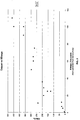
- Figs. 6 and 7 are plots of metal-versus-mileage raw data for iron and zinc, respectively.
- Figs. 8 and 9 are metal-versus-virtual age curves derived for iron and zinc, respectively, using the concept of the invention. The figures show that these curves can also be used to estimate maintenance thresholds as a function of the content of these metals in the brake fluid.
- Iron is most suitable to determine when an unacceptable corrosive level has been reached in the brake fluid, regardless of its moisture or amine level. I found that any iron level above 50 ppm should be taken as a clear indicator of a corrosive condition. Therefore, the fluid should be replaced then irrespective of its copper content.
- this invention provides an easy and accurate procedure for ascertaining the condition of brake fluid to effect the recommended maintenance of brake systems at the appropriate time as a function of actual wear and tear, rather than a prescribed schedule that may or may not reflect the actual condition of the fluid.
- the availability of this test may also encourage preventive maintenance, which is normally neglected with respect to brake fluid. While it is common practice to routinely change engine oil, transmission fluid, and all other fluids in a vehicle, brake fluid is rarely maintained unless a malfunction occurs. This is the case even though the brake system is critical to safety and brake fluid is known to deteriorate. This invention is directed at correcting this automotive maintenance shortcoming.
- this invention provides a separate test, independent of moisture content, for assessing the need for fluid replacement in order to maintain a low level of corrosiveness in the brake system.
Landscapes
- Chemical & Material Sciences (AREA)
- Life Sciences & Earth Sciences (AREA)
- Health & Medical Sciences (AREA)
- Physics & Mathematics (AREA)
- General Physics & Mathematics (AREA)
- Pathology (AREA)
- Analytical Chemistry (AREA)
- Biochemistry (AREA)
- General Health & Medical Sciences (AREA)
- Immunology (AREA)
- Engineering & Computer Science (AREA)
- Chemical Kinetics & Catalysis (AREA)
- Spectroscopy & Molecular Physics (AREA)
- Plasma & Fusion (AREA)
- General Chemical & Material Sciences (AREA)
- Oil, Petroleum & Natural Gas (AREA)
- Food Science & Technology (AREA)
- Medicinal Chemistry (AREA)
- Biophysics (AREA)
- Molecular Biology (AREA)
- Valves And Accessory Devices For Braking Systems (AREA)
- Spectrometry And Color Measurement (AREA)
Claims (19)
- Verfahren zum Erstellen von Instandhaltungsanforderungen für eine Bremsflüssigkeit in einem Bremssystem eines Fahrzeugs als eine Funktion einer Variablen, umfassend die folgenden Schritte:(a) Bestimmen einer Korrelation zwischen der Variablen und einem Gehalt eines reaktiven Bestandteils in der Flüssigkeit; wobei der reaktive Bestandteil ausgewählt ist aus der Gruppe bestehend aus Kupfer, Eisen und Zink;(b) Messen eines aktuellen Werts des Gehalts des reaktiven Bestandteils in der Flüssigkeit durch Reaktion mit einem Test-Reaktionspartner, der der Bremsflüssigkeit ausgesetzt ist;(c) Bestimmen einer aktuellen Annäherung der Variablen auf der Grundlage der Korrelation; gekennzeichnet dadurch, dass die Variable die Lebensdauer und die Laufleistung der Flüssigkeit anzeigt, und dadurch, dass das Verfahren den folgenden weiteren Schritt umfasst:(d) Erstellen eines Wartungsplans für das Bremssystem auf der Grundlage der aktuellen Annäherung der Variablen, die die Lebensdauer und die Laufleistung der Flüssigkeit anzeigt.
- Verfahren nach Anspruch 1, wobei der Test-Reaktionspartner einen reaktiven Streifen beinhaltet und Schritt (b) ausgeführt wird durch Eintauchen des Streifens in die Flüssigkeit, und durch Abgleichen einer daraus auf dem Streifen resultierenden Farbe mit einer Farbkarte, die eine Korrelation zwischen der Farbe und dem Gehalt des reaktiven Bestandteils in der Flüssigkeit darstellt.
- Verfahren nach Anspruch 1, wobei der reaktive Bestandteil Kupfer ist, der Test-Reaktionspartner einen reaktiven Kupferstreifen beinhaltet, und Schritt (b) ausgeführt wird durch Eintauchen des Streifens in die Flüssigkeit und durch Abgleichen einer daraus auf dem Streifen resultierenden Farbe mit einer Farbkarte, die eine Korrelation zwischen der Farbe und dem Kupfergehalt in der Flüssigkeit darstellt.
- Verfahren nach Anspruch 3, wobei der Wartungsplan eine empirische Kupfergehaltsschwelle von 150 Teilen pro Million für das Ersetzen der Flüssigkeit beinhaltet.
- Verfahren nach Anspruch 1, wobei der reaktive Bestandteil Eisen ist, der Test-Reaktionspartner einen reaktiven Eisenstreifen beinhaltet, und Schritt (b) ausgeführt wird durch Eintauchen des Streifens in die Flüssigkeit und durch Abgleichen einer daraus auf dem Streifen resultierenden Farbe mit einer Farbkarte, die eine Korrelation zwischen der Farbe und dem Eisengehalt in der Flüssigkeit darstellt.
- Verfahren nach Anspruch 5, wobei der Wartungsplan eine empirische Eisengehaltsschwelle von 50 Teilen pro Million für das Ersetzen der Flüssigkeit beinhaltet.
- Verfahren nach Anspruch 1, wobei der reaktive Bestandteil Zink ist, der Test-Reaktionspartner einen reaktiven Zinkstreifen beinhaltet und Schritt (b) ausgeführt wird durch Eintauchen des Streifens in die Flüssigkeit und durch Abgleichen einer auf dem Streifen resultierenden Farbe mit einer Farbkarte, die eine Korrelation zwischen der Farbe und dem Zinkgehalt in der Flüssigkeit darstellt.
- Verfahren nach Anspruch 7, wobei der Wartungsplan eine empirische Zinkgehaltsschwelle von 50 Teilen pro Million für das Ersetzen der Flüssigkeit beinhaltet.
- Verfahren nach Anspruch 1, wobei eine automatisierte Vorrichtung in Schritt (c) verwendet wird.
- Verfahren nach Anspruch 1, wobei das Bremssystem ein Fahrzeugbremssystem ist.
- Kit zum Erstellen eines Wartungsplans für eine Bremsflüssigkeit in einem Bremssystem eines Fahrzeugs als eine Funktion einer Variablen, die die Lebensdauer und die Laufleistung der Flüssigkeit anzeigt, Folgendes umfassend:einen Teststandard, der eine Korrelation zwischen der Variablen und einem Metallgehalt in der Bremsflüssigkeit darstellt;einen Test-Reaktionspartner, der in der Lage ist, mit dem Metall in der Bremsflüssigkeit zu reagieren und bei Aussetzen des Test-Reaktionspartners der Bremsflüssigkeit eine Anzeige eines aktuellen Metallgehalts in der Bremsflüssigkeit zu erzeugen, wobei das Metall ausgewählt ist aus der Gruppe bestehend aus Kupfer, Eisen und Zink, und der Teststandard eine Farbkarte beinhaltet;gekennzeichnet dadurch, dass das Kit ferner einen vorgegebenen empirischen Wartungsplan für das Bremssystem auf der Grundlage der Variablen, die die Lebensdauer und die Laufleistung der Flüssigkeit anzeigt, umfasst.
- Kit nach Anspruch 11, wobei der Test-Reaktionspartner einen reaktiven Streifen, angepasst zum Eintauchen in die Flüssigkeit, um die Anzeige eines aktuellen Metallgehalts in der Bremsflüssigkeit zu erzeugen, beinhaltet.
- Kit nach Anspruch 11, wobei das Metall Kupfer ist, der Test-Reaktionspartner einen reaktiven Kupferstreifen beinhaltet und der Teststandard eine Kupferfarbkarte beinhaltet.
- Kit nach Anspruch 13, wobei der Wartungsplan eine empirische Schwelle von 150 Teilen pro Million Kupfer für das Ersetzen der Flüssigkeit beinhaltet.
- Kit nach Anspruch 11, wobei der reaktive Bestandteil Eisen ist, der Test-Reaktionspartner einen reaktiven Eisenstreifen beinhaltet und der Teststandard eine Eisenfarbkarte beinhaltet.
- Kit nach Anspruch 15, wobei der Wartungsplan eine empirische Schwelle von 50 Teilen pro Million Eisen für das Ersetzen der Flüssigkeit beinhaltet.
- Kit nach Anspruch 11, wobei das Metall Zink ist, der Test-Reaktionspartner einen reaktiven Zinkstreifen beinhaltet und der Teststandard eine Zinkfarbkarte beinhaltet.
- Kit nach Anspruch 11, ferner umfassend eine automatisierte Vorrichtung zum Erzeugen der Anzeige eines aktuellen Metallgehalts in der Flüssigkeit, und zum Erstellen von Wartungsanforderungen für die Bremsflüssigkeit als eine Funktion des aktuellen Metallgehalts in der Flüssigkeit.
- Test-Kit nach Anspruch 11 oder 12, ferner umfassend einen Behälter mit Bremsflüssigkeit.
Applications Claiming Priority (3)
| Application Number | Priority Date | Filing Date | Title |
|---|---|---|---|
| US10/132,978 US6691562B2 (en) | 1999-07-20 | 2002-04-26 | Test for brake fluid age and condition |
| US132978 | 2002-04-26 | ||
| PCT/US2003/012000 WO2003091664A2 (en) | 2002-04-26 | 2003-04-17 | Test for brake fluid age and condition |
Publications (3)
| Publication Number | Publication Date |
|---|---|
| EP1523672A2 EP1523672A2 (de) | 2005-04-20 |
| EP1523672A4 EP1523672A4 (de) | 2010-06-23 |
| EP1523672B1 true EP1523672B1 (de) | 2017-09-27 |
Family
ID=29268765
Family Applications (1)
| Application Number | Title | Priority Date | Filing Date |
|---|---|---|---|
| EP03724086.8A Expired - Lifetime EP1523672B1 (de) | 2002-04-26 | 2003-04-17 | Test für bremsflüssigkeiten auf älter und zustand |
Country Status (5)
| Country | Link |
|---|---|
| US (1) | US6691562B2 (de) |
| EP (1) | EP1523672B1 (de) |
| AU (1) | AU2003230971B2 (de) |
| CA (1) | CA2483748C (de) |
| WO (1) | WO2003091664A2 (de) |
Families Citing this family (15)
| Publication number | Priority date | Publication date | Assignee | Title |
|---|---|---|---|---|
| JP5248616B2 (ja) * | 2007-10-11 | 2013-07-31 | シエル・インターナシヨナル・リサーチ・マートスハツペイ・ベー・ヴエー | ブレーキ液の品質の低下を検出する方法および装置 |
| US8021890B2 (en) * | 2008-11-03 | 2011-09-20 | Petty Jon A | Colorimetric test for brake system corrosion |
| US7682834B1 (en) * | 2008-11-03 | 2010-03-23 | Petty Jon A | Colorimetric test for brake fluid |
| US20140007713A1 (en) * | 2012-07-04 | 2014-01-09 | Christopher D. Prest | Mechanical testing of test plaque formed on an alloy part and mechanical proof testing |
| EP2711702A1 (de) * | 2012-09-25 | 2014-03-26 | Siemens Aktiengesellschaft | Verfahren zur Ermittlung eines Alterungszustands eines Schmierstoffs |
| EP3111194B1 (de) * | 2014-02-25 | 2025-12-10 | Jon A. Petty | Korrosionshemmendes bremsflüssigkeitsadditiv |
| US10669503B2 (en) | 2014-02-25 | 2020-06-02 | Jon A. Petty | Corrosion inhibiting hydraulic fluid additive |
| WO2015130714A1 (en) | 2014-02-25 | 2015-09-03 | Petty Jon A | Corrosion inhibiting hydraulic fluid additive |
| WO2015175754A1 (en) * | 2014-05-15 | 2015-11-19 | Schornstein Ronald | Methods and kits for testing brake fluid |
| DE102014216841A1 (de) * | 2014-08-25 | 2016-02-25 | Robert Bosch Gmbh | Verfahren und Vorrichtung zum Ermitteln zumindest einer Größe bezüglich eines Zustands einer Bremsflüssigkeit in einem Bremssystem eines Fahrzeugs |
| CN105181691B (zh) * | 2015-09-29 | 2018-09-21 | 聊城市鲁西化工工程设计有限责任公司 | 苯加氢催化剂中锌含量的检测方法 |
| US10281407B2 (en) | 2015-11-02 | 2019-05-07 | Jon A. Petty | Multi-fluid strip test |
| USD865992S1 (en) | 2015-11-02 | 2019-11-05 | Jon A. Petty | Fluid test strip |
| EP3587203B1 (de) * | 2018-06-29 | 2021-08-11 | Volvo Car Corporation | Verfahren und system zur schätzung des wassergehaltes von bremsflüssigkeit in einem bremssystem |
| FR3145133B1 (fr) * | 2023-01-23 | 2025-02-28 | Renault Sas | véhicule comprenant un système de contrôle de la qualité du liquide de frein |
Family Cites Families (20)
| Publication number | Priority date | Publication date | Assignee | Title |
|---|---|---|---|---|
| US3081619A (en) | 1961-01-16 | 1963-03-19 | William S Pappas | Continuous analyzer utilizing boiling point determination |
| US3698236A (en) | 1971-01-29 | 1972-10-17 | Gen Motors Corp | Fluid vaporization tester with hot air purge and method |
| US3844159A (en) | 1973-01-31 | 1974-10-29 | Fujisoku Electric | Liquid quality evaluating apparatus |
| US4059006A (en) | 1975-12-22 | 1977-11-22 | Showa Industries Co., Ltd. | Liquid quality-evaluating apparatus |
| US4059407A (en) * | 1976-04-14 | 1977-11-22 | Becton, Dickinson And Company | Disposable chemical indicators |
| US4049407A (en) * | 1976-08-18 | 1977-09-20 | Bottum Edward W | Solar assisted heat pump system |
| US4198207A (en) * | 1979-03-26 | 1980-04-15 | Mobil Oil Corporation | Determination of water content in presence of oils |
| US4484823A (en) | 1981-01-17 | 1984-11-27 | Fag Kugelfischer Georg Schafer & Co. | Method of determining the boiling point of a liquid |
| DE3242506C2 (de) * | 1982-11-18 | 1986-02-27 | Collins, Hans-Jürgen, Prof. Dr.-Ing., 3300 Braunschweig | Verfahren und Vorrichtung zur Bestimmung des Erreichens oder Überschreitens eines vorgegebenen Grenzwertes des in einem Flüssigkeitsgemisch enthaltenen Anteiles mit einer niedrigeren Verdampfungstemperatur als die übrige Flüssigkeit |
| US4970172A (en) * | 1986-12-22 | 1990-11-13 | Abbott Laboratories | Method and device for ketone measurements |
| US5518933A (en) | 1989-03-10 | 1996-05-21 | Unitika Ltd. | Method of analyzing washings for free acids and ions |
| US5380091A (en) | 1989-04-08 | 1995-01-10 | Alba Tools Limited | Indicating device |
| DE4031008C1 (en) * | 1990-10-01 | 1992-04-30 | Pierburg Gmbh, 4040 Neuss, De | Utilising alcohol-contg. fuel in I.C. engine - with fuel mix compsn. correction using fuel sensor signals |
| US5433105A (en) * | 1992-08-18 | 1995-07-18 | Kabushiki Kaisha Komatsu Seisakusho | Method and device for analyzing moisture content in oil |
| GB9409296D0 (en) | 1994-05-10 | 1994-06-29 | Alba Tools Ltd | Brake fluid analyser |
| US5620658A (en) * | 1995-09-11 | 1997-04-15 | Industrial Test Systems, Inc. | Colorimetric test strip |
| US5969808A (en) * | 1997-07-31 | 1999-10-19 | Leicamicrosystems, Inc. | Brake check handheld refractometer |
| US6119059A (en) * | 1998-03-26 | 2000-09-12 | Institute Of Occupational Safety And Health, Council Of Labor Affairs, Executive Yuan | Advanced warning device for monitoring the working conditions of hydraulic brakes system of motor vehicles |
| US6145468A (en) * | 1998-10-19 | 2000-11-14 | Woog; Manfred J. | Silver indicator methods and test kit |
| GB2368122B (en) * | 1999-07-20 | 2003-08-06 | Phoenix Systems Llc | Test for brake fluid age and condition |
-
2002
- 2002-04-26 US US10/132,978 patent/US6691562B2/en not_active Expired - Lifetime
-
2003
- 2003-04-17 CA CA2483748A patent/CA2483748C/en not_active Expired - Lifetime
- 2003-04-17 EP EP03724086.8A patent/EP1523672B1/de not_active Expired - Lifetime
- 2003-04-17 WO PCT/US2003/012000 patent/WO2003091664A2/en not_active Ceased
- 2003-04-17 AU AU2003230971A patent/AU2003230971B2/en not_active Expired
Non-Patent Citations (1)
| Title |
|---|
| None * |
Also Published As
| Publication number | Publication date |
|---|---|
| US20020129644A1 (en) | 2002-09-19 |
| EP1523672A4 (de) | 2010-06-23 |
| WO2003091664A2 (en) | 2003-11-06 |
| CA2483748A1 (en) | 2003-11-06 |
| EP1523672A2 (de) | 2005-04-20 |
| WO2003091664A3 (en) | 2004-07-15 |
| AU2003230971B2 (en) | 2006-11-30 |
| US6691562B2 (en) | 2004-02-17 |
| AU2003230971A1 (en) | 2003-11-10 |
| CA2483748C (en) | 2010-05-18 |
Similar Documents
| Publication | Publication Date | Title |
|---|---|---|
| EP1523672B1 (de) | Test für bremsflüssigkeiten auf älter und zustand | |
| US8021890B2 (en) | Colorimetric test for brake system corrosion | |
| US6651487B1 (en) | Test for brake fluid age and condition | |
| US20090145211A1 (en) | Virtual engine oil quality sensor | |
| Basu et al. | “Smart sensing” of oil degradation and oil level measurements in gasoline engines | |
| US20100300188A1 (en) | On-vehicle evaluation of oil formulation | |
| US10768116B2 (en) | Multi-fluid test strip | |
| US20070295648A1 (en) | Method for the measurement of the reactive molecular species in liquid petroleum and liquid petroleum products | |
| Hunt | New perspectives on lubricant additive corrosion: Comparison of methods and metallurgy | |
| Kollmann et al. | Extended oil drain intervals-conservation of resources or reduction of engine life (Part II) | |
| Hudgens et al. | Analysis of coolants from diesel engines | |
| Johnson et al. | In-Service Engine Oil Condition Monitoring-Opportunities and Challenges | |
| WO2015130714A1 (en) | Corrosion inhibiting hydraulic fluid additive | |
| Willermet et al. | The application of antioxidant analysis to transmission fluid testing | |
| US10669503B2 (en) | Corrosion inhibiting hydraulic fluid additive | |
| EP3111194B1 (de) | Korrosionshemmendes bremsflüssigkeitsadditiv | |
| Greaney et al. | A Light-Duty Fleet Evaluation of Propylene Glycol Engine Coolant | |
| ŠARKAN et al. | MEASUREMENT OF BRAKE FLUID BOILING POINT | |
| US20150329096A1 (en) | Methods and kits for testing brake fluid |
Legal Events
| Date | Code | Title | Description |
|---|---|---|---|
| PUAI | Public reference made under article 153(3) epc to a published international application that has entered the european phase |
Free format text: ORIGINAL CODE: 0009012 |
|
| 17P | Request for examination filed |
Effective date: 20041125 |
|
| AK | Designated contracting states |
Kind code of ref document: A2 Designated state(s): AT BE BG CH CY CZ DE DK EE ES FI FR GB GR HU IE IT LI LU MC NL PT RO SE SI SK TR |
|
| AX | Request for extension of the european patent |
Extension state: AL LT LV MK |
|
| RAP1 | Party data changed (applicant data changed or rights of an application transferred) |
Owner name: PHOENIX SYSTEMS, LLC |
|
| RIN1 | Information on inventor provided before grant (corrected) |
Inventor name: PETTY, JON A. |
|
| A4 | Supplementary search report drawn up and despatched |
Effective date: 20100526 |
|
| RIC1 | Information provided on ipc code assigned before grant |
Ipc: G01N 21/78 20060101ALI20100519BHEP Ipc: G01N 25/08 20060101AFI20041028BHEP Ipc: G01N 33/28 20060101ALI20100519BHEP |
|
| 17Q | First examination report despatched |
Effective date: 20130322 |
|
| GRAP | Despatch of communication of intention to grant a patent |
Free format text: ORIGINAL CODE: EPIDOSNIGR1 |
|
| STAA | Information on the status of an ep patent application or granted ep patent |
Free format text: STATUS: GRANT OF PATENT IS INTENDED |
|
| INTG | Intention to grant announced |
Effective date: 20170104 |
|
| GRAS | Grant fee paid |
Free format text: ORIGINAL CODE: EPIDOSNIGR3 |
|
| GRAJ | Information related to disapproval of communication of intention to grant by the applicant or resumption of examination proceedings by the epo deleted |
Free format text: ORIGINAL CODE: EPIDOSDIGR1 |
|
| GRAL | Information related to payment of fee for publishing/printing deleted |
Free format text: ORIGINAL CODE: EPIDOSDIGR3 |
|
| STAA | Information on the status of an ep patent application or granted ep patent |
Free format text: STATUS: EXAMINATION IS IN PROGRESS |
|
| INTC | Intention to grant announced (deleted) | ||
| RAP1 | Party data changed (applicant data changed or rights of an application transferred) |
Owner name: PHOENIX SYSTEMS, LLC |
|
| RIN1 | Information on inventor provided before grant (corrected) |
Inventor name: PETTY, JON A. |
|
| GRAR | Information related to intention to grant a patent recorded |
Free format text: ORIGINAL CODE: EPIDOSNIGR71 |
|
| STAA | Information on the status of an ep patent application or granted ep patent |
Free format text: STATUS: GRANT OF PATENT IS INTENDED |
|
| GRAA | (expected) grant |
Free format text: ORIGINAL CODE: 0009210 |
|
| STAA | Information on the status of an ep patent application or granted ep patent |
Free format text: STATUS: THE PATENT HAS BEEN GRANTED |
|
| AK | Designated contracting states |
Kind code of ref document: B1 Designated state(s): AT BE BG CH CY CZ DE DK EE ES FI FR GB GR HU IE IT LI LU MC NL PT RO SE SI SK TR |
|
| INTG | Intention to grant announced |
Effective date: 20170822 |
|
| REG | Reference to a national code |
Ref country code: GB Ref legal event code: FG4D |
|
| REG | Reference to a national code |
Ref country code: CH Ref legal event code: EP |
|
| REG | Reference to a national code |
Ref country code: AT Ref legal event code: REF Ref document number: 932402 Country of ref document: AT Kind code of ref document: T Effective date: 20171015 |
|
| REG | Reference to a national code |
Ref country code: IE Ref legal event code: FG4D |
|
| REG | Reference to a national code |
Ref country code: DE Ref legal event code: R096 Ref document number: 60350637 Country of ref document: DE |
|
| PG25 | Lapsed in a contracting state [announced via postgrant information from national office to epo] |
Ref country code: SE Free format text: LAPSE BECAUSE OF FAILURE TO SUBMIT A TRANSLATION OF THE DESCRIPTION OR TO PAY THE FEE WITHIN THE PRESCRIBED TIME-LIMIT Effective date: 20170927 Ref country code: FI Free format text: LAPSE BECAUSE OF FAILURE TO SUBMIT A TRANSLATION OF THE DESCRIPTION OR TO PAY THE FEE WITHIN THE PRESCRIBED TIME-LIMIT Effective date: 20170927 |
|
| REG | Reference to a national code |
Ref country code: NL Ref legal event code: MP Effective date: 20170927 |
|
| REG | Reference to a national code |
Ref country code: AT Ref legal event code: MK05 Ref document number: 932402 Country of ref document: AT Kind code of ref document: T Effective date: 20170927 |
|
| PG25 | Lapsed in a contracting state [announced via postgrant information from national office to epo] |
Ref country code: BG Free format text: LAPSE BECAUSE OF FAILURE TO SUBMIT A TRANSLATION OF THE DESCRIPTION OR TO PAY THE FEE WITHIN THE PRESCRIBED TIME-LIMIT Effective date: 20171227 Ref country code: GR Free format text: LAPSE BECAUSE OF FAILURE TO SUBMIT A TRANSLATION OF THE DESCRIPTION OR TO PAY THE FEE WITHIN THE PRESCRIBED TIME-LIMIT Effective date: 20171228 |
|
| PG25 | Lapsed in a contracting state [announced via postgrant information from national office to epo] |
Ref country code: NL Free format text: LAPSE BECAUSE OF FAILURE TO SUBMIT A TRANSLATION OF THE DESCRIPTION OR TO PAY THE FEE WITHIN THE PRESCRIBED TIME-LIMIT Effective date: 20170927 |
|
| PG25 | Lapsed in a contracting state [announced via postgrant information from national office to epo] |
Ref country code: RO Free format text: LAPSE BECAUSE OF FAILURE TO SUBMIT A TRANSLATION OF THE DESCRIPTION OR TO PAY THE FEE WITHIN THE PRESCRIBED TIME-LIMIT Effective date: 20170927 Ref country code: ES Free format text: LAPSE BECAUSE OF FAILURE TO SUBMIT A TRANSLATION OF THE DESCRIPTION OR TO PAY THE FEE WITHIN THE PRESCRIBED TIME-LIMIT Effective date: 20170927 Ref country code: CZ Free format text: LAPSE BECAUSE OF FAILURE TO SUBMIT A TRANSLATION OF THE DESCRIPTION OR TO PAY THE FEE WITHIN THE PRESCRIBED TIME-LIMIT Effective date: 20170927 |
|
| PG25 | Lapsed in a contracting state [announced via postgrant information from national office to epo] |
Ref country code: SK Free format text: LAPSE BECAUSE OF FAILURE TO SUBMIT A TRANSLATION OF THE DESCRIPTION OR TO PAY THE FEE WITHIN THE PRESCRIBED TIME-LIMIT Effective date: 20170927 Ref country code: EE Free format text: LAPSE BECAUSE OF FAILURE TO SUBMIT A TRANSLATION OF THE DESCRIPTION OR TO PAY THE FEE WITHIN THE PRESCRIBED TIME-LIMIT Effective date: 20170927 Ref country code: AT Free format text: LAPSE BECAUSE OF FAILURE TO SUBMIT A TRANSLATION OF THE DESCRIPTION OR TO PAY THE FEE WITHIN THE PRESCRIBED TIME-LIMIT Effective date: 20170927 Ref country code: IT Free format text: LAPSE BECAUSE OF FAILURE TO SUBMIT A TRANSLATION OF THE DESCRIPTION OR TO PAY THE FEE WITHIN THE PRESCRIBED TIME-LIMIT Effective date: 20170927 |
|
| REG | Reference to a national code |
Ref country code: DE Ref legal event code: R097 Ref document number: 60350637 Country of ref document: DE |
|
| PG25 | Lapsed in a contracting state [announced via postgrant information from national office to epo] |
Ref country code: DK Free format text: LAPSE BECAUSE OF FAILURE TO SUBMIT A TRANSLATION OF THE DESCRIPTION OR TO PAY THE FEE WITHIN THE PRESCRIBED TIME-LIMIT Effective date: 20170927 |
|
| PLBE | No opposition filed within time limit |
Free format text: ORIGINAL CODE: 0009261 |
|
| STAA | Information on the status of an ep patent application or granted ep patent |
Free format text: STATUS: NO OPPOSITION FILED WITHIN TIME LIMIT |
|
| 26N | No opposition filed |
Effective date: 20180628 |
|
| PG25 | Lapsed in a contracting state [announced via postgrant information from national office to epo] |
Ref country code: SI Free format text: LAPSE BECAUSE OF FAILURE TO SUBMIT A TRANSLATION OF THE DESCRIPTION OR TO PAY THE FEE WITHIN THE PRESCRIBED TIME-LIMIT Effective date: 20170927 Ref country code: MC Free format text: LAPSE BECAUSE OF FAILURE TO SUBMIT A TRANSLATION OF THE DESCRIPTION OR TO PAY THE FEE WITHIN THE PRESCRIBED TIME-LIMIT Effective date: 20170927 |
|
| REG | Reference to a national code |
Ref country code: CH Ref legal event code: PL |
|
| REG | Reference to a national code |
Ref country code: BE Ref legal event code: MM Effective date: 20180430 |
|
| REG | Reference to a national code |
Ref country code: IE Ref legal event code: MM4A |
|
| PG25 | Lapsed in a contracting state [announced via postgrant information from national office to epo] |
Ref country code: LU Free format text: LAPSE BECAUSE OF NON-PAYMENT OF DUE FEES Effective date: 20180417 |
|
| PG25 | Lapsed in a contracting state [announced via postgrant information from national office to epo] |
Ref country code: BE Free format text: LAPSE BECAUSE OF NON-PAYMENT OF DUE FEES Effective date: 20180430 Ref country code: LI Free format text: LAPSE BECAUSE OF NON-PAYMENT OF DUE FEES Effective date: 20180430 Ref country code: CH Free format text: LAPSE BECAUSE OF NON-PAYMENT OF DUE FEES Effective date: 20180430 |
|
| PG25 | Lapsed in a contracting state [announced via postgrant information from national office to epo] |
Ref country code: FR Free format text: LAPSE BECAUSE OF NON-PAYMENT OF DUE FEES Effective date: 20180430 Ref country code: IE Free format text: LAPSE BECAUSE OF NON-PAYMENT OF DUE FEES Effective date: 20180417 |
|
| PG25 | Lapsed in a contracting state [announced via postgrant information from national office to epo] |
Ref country code: TR Free format text: LAPSE BECAUSE OF FAILURE TO SUBMIT A TRANSLATION OF THE DESCRIPTION OR TO PAY THE FEE WITHIN THE PRESCRIBED TIME-LIMIT Effective date: 20170927 |
|
| PG25 | Lapsed in a contracting state [announced via postgrant information from national office to epo] |
Ref country code: PT Free format text: LAPSE BECAUSE OF FAILURE TO SUBMIT A TRANSLATION OF THE DESCRIPTION OR TO PAY THE FEE WITHIN THE PRESCRIBED TIME-LIMIT Effective date: 20170927 Ref country code: HU Free format text: LAPSE BECAUSE OF FAILURE TO SUBMIT A TRANSLATION OF THE DESCRIPTION OR TO PAY THE FEE WITHIN THE PRESCRIBED TIME-LIMIT; INVALID AB INITIO Effective date: 20030417 |
|
| PG25 | Lapsed in a contracting state [announced via postgrant information from national office to epo] |
Ref country code: CY Free format text: LAPSE BECAUSE OF FAILURE TO SUBMIT A TRANSLATION OF THE DESCRIPTION OR TO PAY THE FEE WITHIN THE PRESCRIBED TIME-LIMIT Effective date: 20170927 |
|
| PGFP | Annual fee paid to national office [announced via postgrant information from national office to epo] |
Ref country code: GB Payment date: 20220303 Year of fee payment: 20 |
|
| PGFP | Annual fee paid to national office [announced via postgrant information from national office to epo] |
Ref country code: DE Payment date: 20220302 Year of fee payment: 20 |
|
| REG | Reference to a national code |
Ref country code: DE Ref legal event code: R071 Ref document number: 60350637 Country of ref document: DE |
|
| REG | Reference to a national code |
Ref country code: GB Ref legal event code: PE20 Expiry date: 20230416 |
|
| PG25 | Lapsed in a contracting state [announced via postgrant information from national office to epo] |
Ref country code: GB Free format text: LAPSE BECAUSE OF EXPIRATION OF PROTECTION Effective date: 20230416 |