EP1523835B1 - Procede et station de communication pour transmettre des donnees - Google Patents
Procede et station de communication pour transmettre des donnees Download PDFInfo
- Publication number
- EP1523835B1 EP1523835B1 EP03732576A EP03732576A EP1523835B1 EP 1523835 B1 EP1523835 B1 EP 1523835B1 EP 03732576 A EP03732576 A EP 03732576A EP 03732576 A EP03732576 A EP 03732576A EP 1523835 B1 EP1523835 B1 EP 1523835B1
- Authority
- EP
- European Patent Office
- Prior art keywords
- data
- station
- relay stations
- receiving
- transmitting station
- Prior art date
- Legal status (The legal status is an assumption and is not a legal conclusion. Google has not performed a legal analysis and makes no representation as to the accuracy of the status listed.)
- Expired - Lifetime
Links
Images
Classifications
-
- H—ELECTRICITY
- H04—ELECTRIC COMMUNICATION TECHNIQUE
- H04B—TRANSMISSION
- H04B7/00—Radio transmission systems, i.e. using radiation field
- H04B7/14—Relay systems
- H04B7/15—Active relay systems
- H04B7/155—Ground-based stations
- H04B7/15528—Control of operation parameters of a relay station to exploit the physical medium
-
- H—ELECTRICITY
- H04—ELECTRIC COMMUNICATION TECHNIQUE
- H04L—TRANSMISSION OF DIGITAL INFORMATION, e.g. TELEGRAPHIC COMMUNICATION
- H04L1/00—Arrangements for detecting or preventing errors in the information received
- H04L1/004—Arrangements for detecting or preventing errors in the information received by using forward error control
- H04L1/0045—Arrangements at the receiver end
- H04L1/0054—Maximum-likelihood or sequential decoding, e.g. Viterbi, Fano, ZJ algorithms
-
- H—ELECTRICITY
- H04—ELECTRIC COMMUNICATION TECHNIQUE
- H04L—TRANSMISSION OF DIGITAL INFORMATION, e.g. TELEGRAPHIC COMMUNICATION
- H04L1/00—Arrangements for detecting or preventing errors in the information received
- H04L1/08—Arrangements for detecting or preventing errors in the information received by repeating transmission, e.g. Verdan system
-
- H—ELECTRICITY
- H04—ELECTRIC COMMUNICATION TECHNIQUE
- H04L—TRANSMISSION OF DIGITAL INFORMATION, e.g. TELEGRAPHIC COMMUNICATION
- H04L1/00—Arrangements for detecting or preventing errors in the information received
- H04L1/12—Arrangements for detecting or preventing errors in the information received by using return channel
- H04L1/16—Arrangements for detecting or preventing errors in the information received by using return channel in which the return channel carries supervisory signals, e.g. repetition request signals
-
- H—ELECTRICITY
- H04—ELECTRIC COMMUNICATION TECHNIQUE
- H04L—TRANSMISSION OF DIGITAL INFORMATION, e.g. TELEGRAPHIC COMMUNICATION
- H04L45/00—Routing or path finding of packets in data switching networks
-
- H—ELECTRICITY
- H04—ELECTRIC COMMUNICATION TECHNIQUE
- H04L—TRANSMISSION OF DIGITAL INFORMATION, e.g. TELEGRAPHIC COMMUNICATION
- H04L45/00—Routing or path finding of packets in data switching networks
- H04L45/24—Multipath
- H04L45/243—Multipath using M+N parallel active paths
-
- H—ELECTRICITY
- H04—ELECTRIC COMMUNICATION TECHNIQUE
- H04L—TRANSMISSION OF DIGITAL INFORMATION, e.g. TELEGRAPHIC COMMUNICATION
- H04L1/00—Arrangements for detecting or preventing errors in the information received
- H04L2001/0092—Error control systems characterised by the topology of the transmission link
- H04L2001/0097—Relays
-
- H—ELECTRICITY
- H04—ELECTRIC COMMUNICATION TECHNIQUE
- H04W—WIRELESS COMMUNICATION NETWORKS
- H04W40/00—Communication routing or communication path finding
- H04W40/02—Communication route or path selection, e.g. power-based or shortest path routing
- H04W40/12—Communication route or path selection, e.g. power-based or shortest path routing based on transmission quality or channel quality
-
- H—ELECTRICITY
- H04—ELECTRIC COMMUNICATION TECHNIQUE
- H04W—WIRELESS COMMUNICATION NETWORKS
- H04W88/00—Devices specially adapted for wireless communication networks, e.g. terminals, base stations or access point devices
- H04W88/02—Terminal devices
- H04W88/04—Terminal devices adapted for relaying to or from another terminal or user
-
- Y—GENERAL TAGGING OF NEW TECHNOLOGICAL DEVELOPMENTS; GENERAL TAGGING OF CROSS-SECTIONAL TECHNOLOGIES SPANNING OVER SEVERAL SECTIONS OF THE IPC; TECHNICAL SUBJECTS COVERED BY FORMER USPC CROSS-REFERENCE ART COLLECTIONS [XRACs] AND DIGESTS
- Y02—TECHNOLOGIES OR APPLICATIONS FOR MITIGATION OR ADAPTATION AGAINST CLIMATE CHANGE
- Y02D—CLIMATE CHANGE MITIGATION TECHNOLOGIES IN INFORMATION AND COMMUNICATION TECHNOLOGIES [ICT], I.E. INFORMATION AND COMMUNICATION TECHNOLOGIES AIMING AT THE REDUCTION OF THEIR OWN ENERGY USE
- Y02D30/00—Reducing energy consumption in communication networks
- Y02D30/70—Reducing energy consumption in communication networks in wireless communication networks
Definitions
- the invention relates to a method for error-monitored transmission of data via parallel interfaces of a multi-hop communication system with the preamble features of claims 1 and 2, as well as to corresponding communication systems.
- multi-hop communication systems also referred to as multi-hop communication systems
- data is transmitted from a transmitting station to a final receiving station either directly via or a plurality of intermediate relay stations.
- the data can also be transmitted via a plurality of series-connected relay stations, which is also referred to as multi-hop.
- SFN single frequency network
- one and the same signal, and thus one and the same data can be received from a plurality of relay stations simultaneously and in common, ie simultaneously or correspondingly slightly time-shifted and at the same frequency be transmitted directly to the receiving station or to another relay station.
- Predeldering or equalization techniques can be used in relay stations to increase performance.
- error detection and error correction methods known per se from such or other communication systems are used, for example an automatic request for the repeated transmission of an original or modified data packet (ARQ: Automatic Repeat Request). Also known is the application of a so-called cyclic redundancy check (CRC: Cyclic Redundancy Check).
- CRC Cyclic Redundancy Check
- WO 01/15374 A1 a method for transmitting an alarm message is known in which, when first transmission means are out of range of destination receiver means, the message is repeatedly transmitted from one or more transceivers located within reach, until the receipt of the message is confirmed by the destination receiver means by an acknowledgment signal.
- US 4 882 765 discloses a method in which a repeater station autonomously retransmits a message to the receiving station due to a certain number of retransmissions already made by the transmitting station or due to an unreceived acknowledgment from the receiving station.
- WO 00/74306 A2 discloses a system with a number of nodes, in which each node forwards a message received from another node to a subsequent one. All nodes use a uniform reference frequency.
- the object of the invention is to improve a method for error-monitored transmission of data via parallel interfaces of a multi-hop communication system, in particular with a view to improving the processing complexity of the overall system, and to propose a communication system for carrying out such a method.
- acknowledgments or requests for retransmissions only from the receiving station that is, as a rule, the last station in the transmission chain, be generated
- this station must monitor received data for a sufficient reception quality.
- this station also sends such a confirmation or request generated in the direction of the station originally transmitting the data.
- the intermediary relay stations merely serve to forward received data or to forward received acknowledgments or requests. Accordingly, in this simple case, verification for forwarding received data to the relay stations is eliminated, allowing for faster forwarding and lower power consumption.
- a relay station which checks for forwarding received data to an insufficient reception quality and does not forward the data dependent on or forwards or maintains the data connection up or down with respect to this quality of reception requires energy and time for the verification of the received data, but is replaced by a prevented forwarding and an interrupted request for a new data transmission ultimately also saved energy.
- the originally transmitted data over a plurality of parallel data paths are transmitted, there is a sufficiently high probability that in the case of data loss on a transmission path and the subsequent deactivation of this data path still the original data on at least one or more the parallel transmission paths to the intended destination station or receiving station.
- a communication system or a method of operation is advantageous in which the transmission of the data is carried out only via relay stations, which have received the data sufficiently well or with sufficient accuracy.
- a relay station independently decides whether to receive forwarded Data of sufficient quality to be forwarded is particularly advantageous in a procedure in which information from relay stations of parallel transmission paths is taken into account for decision-making. If a relay station communicates in a parallel way that it can carry out a transmission with very good or high-quality data received for forwarding, a parallel relay station informed about it does not have to carry out an additional transmission of possibly even badly received data. This is especially true when the parallel data paths intersect each other or from each relay station, the forwarded data from other relay stations can be received in their environment.
- a plurality of per se known error correction methods or error detection methods can be used in the relay stations, this method being used only to detect the quality of the received data to be relayed, but not to request again in the case of poor reception quality.
- the data received in parallel and superimposed via different parallel paths are superimposed on the receiver side in the receiving station and processed together in order to be able to achieve a further quality improvement by statistical averaging and the like.
- a communication station for performing such a method may be a transmitting station, a received station or a relay station, but may also combine two or all three of the functionalities.
- Such a communication station expediently has, in addition to a reception transmitting device, also an analysis device which may be part of the station-specific control device and is designed to analyze received data with regard to their reception quality.
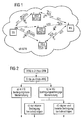
- an exemplary communication system MHSFN has a plurality of stations communicating with one another.
- a multi-hop (MH) communication system is exemplified, which is designed as a single frequency network (SFN).
- SFN single frequency network
- the distance between the transmitting station SS and the receiving station RS is assumed to be so large that a direct transmission via a direct communication link between the two is not possible.
- the transmitting station SS transmits its data D via a plurality of communication interfaces V11, V12, V13 to various intermediate stations, which are referred to below as relay stations HS1, HS2, HS3 for ease of distinctness.
- the relay stations HS1, HS2, HS3 detect, for example, at the header of received data packets, that it is to be forwarded received data D and forward this receiving data D towards the destination station, that is, the receiving station RS via further communication interfaces V21, V23 further.
- the communication interfaces V11, V12, V13, V21, V23 are preferably radio interfaces operating at the same or a single frequency.
- the receiving station RS is already in the transmission range of the relay stations HS1, HS3, the received data D to be forwarded are transmitted directly to the receiving station RS. Otherwise, the transmission takes place via further intermediate relay stations.
- the receiving station RS sends an acknowledgment ACK about a sufficient reception quality and / or a request for retransmission or modified transmission of the original data D in the direction of the original transmitting station SS.
- the acknowledgment ACK or request is again via a direct Connection or a plurality of parallel connections V21, V11; V23, V13; V22, V12 transmitted with the interposition of the relay stations HS1, HS2, HS3.
- the transmitting station SS subsequently transmits new data D or new data packets or initiates a repeated and optionally modified transmission of the original data.
- data D received for relaying in the relay stations HS1, HS2, HS3 are not simply forwarded unchecked but checked for forwarding with regard to the reception quality or the data quality. If one of the relay stations HS2 determines that the data quality of the data D received for forwarding is insufficient or this data D has been received in error, it does not establish a connection V22 for forwarding the received data D. As a result, the corresponding data path V12, V22, which was originally set up by the transmitting station SS via the second relay station HS2 to the received station RS, interrupts. In particular, the second relay station HS2 also does not cause re-transmission of the original or modified original data D.
- an analysis device A is provided for this purpose, which may be part of the central control device of the relay stations HS1-HS3.
- Further devices and / or functions are advantageously used to carry out predistortion or equalization processes, by means of which, for example, a constructive superimposition of the signals at the receiving station RS and optionally further intermediate relay stations can be achieved.
- known methods such as phase or equal gain, maximum ratio or selection distortion can be used.
- combinations or extensions as well as other predistortion techniques.
- a communication of different relay stations HS2, HS3 is possible with each other. Communication takes place via a corresponding interface VH, which can preferably be designed as a radio interface, but in principle also as a line-bound interface. In this way, information relating to the forwarding of received data D or via its reception quality can be transmitted.
- a third relay station HS3 can transmit this fact to a second relay station HS after receiving data D with a very good reception quality, which has received the same data D in parallel as a parallel station, but with a poorer reception quality.
- the relay station HS with the poorer reception quality can suppress the forwarding for forwarding received data D since the same data D with better forwarding quality is transmitted via a parallel data path SS-HS3-RS.
- SNR Signal to Noise Relation
- CRC cyclic redundancy check
- the received data D are expediently demodulated and decoded in order to be able to carry out the actual analysis.
- the analyzed data D or data packets are then re-encoded and modulated for forwarding, but it is also possible to use an embodiment in which the data D originally received for forwarding is kept in an intermediate memory in order to remain unchanged Latches can be forwarded if a doubled set of data after demodulation, decoding and analysis was found to be sufficiently good for forwarding.
- methods for retransmitting a faulty or insufficiently received data packet can be deactivated if the data D receiving station is not the destination station but only a relay station.
- forwarding it is also possible to perform a predistortion in addition to the re-encoding and modulating data D or data packets.
- a predistortion in addition to the re-encoding and modulating data D or data packets.
- the forwarding of a received signal or received data D after an equalization, amplification and possible predistortion can be carried out.
- an application is possible in both centralized as well as decentralized or self-organizing networks.
- the exchange of the abovementioned characteristics between individual stations, in particular between relay stations on mutually parallel data paths, can be used particularly advantageously, as stated above.
- only parameters which were used in the own station can also be used for the analysis, for example by means of fault recognition and error correction methods known per se.
- the application of a Error correction method can be limited to the error-detecting part in the case of a relay relay station, wherein a corrective part is used only in the event of a re-transmission not required, provided that a transfer of data over a sufficient number of parallel data connections is ensured.
- error detection methods which are preferably used in the case of a relay station limited to the detection of the error, wherein a corresponding error detection message is suppressed.
- relay stations HS2, HS3 In the case of communication between neighboring stations, in particular relay stations HS2, HS3, on the one hand only a direct transmission of an analysis result to neighboring stations can be made, but it is also possible to negotiate or negotiate the analysis or evaluation results between such neighboring stations which are at the end Such a negotiation decide which of the negotiating stations HS3 forwarding of the data is to make.
- Fig. 2 serves to illustrate different variants of the illustrated embodiment.
- One focus is on the organization of the evaluation process.
- the signals received at the intermediate stations or relay stations HS1-HS3 for forwarding can be completely demodulated and decoded.
- the starting point is an error correction method in a 2-hop SFN communication system in which the error correction ARQ end-to-end connection is performed. Error corrections, as known per se for the individual connections, can be omitted according to the concept described above.
- the originally transmitting station SS thus receives no confirmations for data or data packets which were received correctly by the intermediate relay stations HS1-HS3. It is carried out according to no separate protection of the first jumps or hops. Only the receiving station RS confirms correctly received packets, whereupon packets with a missing acknowledgment are repeatedly transmitted from the transmitting station SS in the absence of the acknowledgment.
- the intermediate relay stations HS there are various ways to handle the received data D or data packets. According to a particularly simple embodiment a) an unconditional forwarding takes place in the relay station HS. It may happen that an incorrectly received data packet or a signal with a poor signal-to-noise ratio is forwarded to the receiving station RS. The evaluation of parameters or the like is omitted in this case.
- conditionally-linked forwarding b) of received data D Preference is therefore given to conditionally-linked forwarding b) of received data D.
- These conditions can be evaluated independently of one another in individual ones of the different parallel relay stations HS or with the aid of information from all or several mutually communicating relay stations HS2, HS3. Accordingly, there are two other variants.
- the acknowledgment of confirmations or requests for retransmissions can also be omitted.
- the communication described with reference to the second and third relay stations HS2, HS3 takes place instead, in which at least one of the relay stations HS2 accesses information from at least one other of the relay stations HS3 in order to make a decision regarding possibly not optimally received data D with respect to their forwarding.
Landscapes
- Engineering & Computer Science (AREA)
- Computer Networks & Wireless Communication (AREA)
- Signal Processing (AREA)
- Artificial Intelligence (AREA)
- Mobile Radio Communication Systems (AREA)
- Radio Relay Systems (AREA)
- Communication Control (AREA)
- Selective Calling Equipment (AREA)
Claims (12)
- Procédé pour transmettre des données (D) dans un système de radiocommunication (MHSFN), dans lequel- les données (D) sont transmises d'une station émettrice (SS) à une station réceptrice (RS) des données (D) par l'intermédiaire d'au moins deux stations relais (HS1, HS2, HS) recevant et transférant chacune les données,
caractérisé en ce que- dans le cas d'une transmission insuffisante, les données (D) sont transmises à nouveau par la station émettrice (SS) suite à une demande (ACK) de la part du récepteur, et- la demande est générée exclusivement par la station réceptrice (RS) et envoyée à la station émettrice (SS). - Procédé pour transmettre des données (D) dans un système de radiocommunication (MHSFN), dans lequel- les données (D) sont transmises d'une station émettrice (SS) à une station réceptrice (RS) des données (D) par l'intermédiaire d'au moins deux stations relais (HS1, HS2, HS) recevant et transférant chacune les données, et- dans le cas d'une transmission insuffisante, les données (D) sont transmises à nouveau en l'absence d'une confirmation de la part du récepteur,
caractérisé en ce que- en l'absence de la confirmation de la part du récepteur, une nouvelle transmission des données (D) vers la station réceptrice (RS) est exclusivement commandée par la station émettrice (SS). - Procédé selon la revendication 1 ou 2, dans lequel au moins une des stations relais (HS2) vérifie les données (D) reçues de la station émettrice (SS) en termes de qualité de réception et, dans le cas d'une qualité de réception insuffisante, renonce au transfert des données (D) vers la station réceptrice (RS) et, dans le cas d'une qualité de réception suffisante, procède au transfert des données (D) vers la station réceptrice (RS).
- Procédé selon une revendication précédente, dans lequel la transmission des données (D) n'est opérée que par l'une desdites au moins deux stations relais (HS1, HS3), laquelle a reçu les données (D) de la station émettrice (SS) avec une qualité de réception suffisante.
- Procédé selon la revendication 3 ou 4, dans lequel dans au moins l'une des stations relais (HS2, HS3), avant le transfert de données (D) reçues et pour détecter les données reçues de manière suffisante ou insuffisante, des procédés de correction d'erreurs ou des procédés de détection d'erreurs sont appliqués.
- Procédé selon une revendication précédente, dans lequel au moins dans une station relais (HS2), le transfert de données (D) reçues est opéré ou non en fonction d'une certaine qualité de réception propre et en fonction d'informations relative à la qualité de transmission, reçues d'au moins une autre station relais (HS3).
- Procédé selon une revendication précédente, dans lequel la station émettrice (SS), la station réceptrice (RS) et au moins une partie des stations relais (HS1-HS3) appartiennent à un système de radiocommunication (MHSFN) communiquant sur une seule fréquence.
- Procédé selon une revendication précédente, dans lequel le transfert des données (D) est opéré sur différentes voies parallèles, formées par différentes stations relais (HS1; HS2; HS3), les données (D) faisant l'objet d'un traitement dans les stations relais, notamment d'une distorsion et/ou égalisation, d'un décodage et/ou codage.
- Procédé selon une revendication précédente, dans lequel les données (D), transmises en parallèle sur différentes voies, sont reçues à l'état superposé côté récepteur et traitées conjointement.
- Système de communication (MHSFN) comprenant au moins une station émettrice (SS), au moins deux stations relais (HS1, HS2, HS) ainsi qu'une station réceptrice (RS), et dans lequel- la station réceptrice (RS) comprend au moins des moyens pour recevoir des données (D) transmises par la station émettrice (SS) par l'intermédiaire desdites au moins deux stations relais (HS1, HS2, HS) ainsi que des moyens pour envoyer une demande (ACK) à la station émettrice (SS) en vue d'une nouvelle transmission des données (D) en cas de transmission insuffisante,
caractérisé en ce que- la station émettrice (SS) comprend au moins des moyens pour commander une nouvelle transmission des données (D) par l'intermédiaire desdites au moins deux stations relais (HS1, HS2, HS) vers la station réceptrice (RS) suite à la demande de la part du récepteur, et en ce que- seule la station réceptrice (RS) comprend des moyens pour envoyer une demande (ACK) à la station émettrice (SS) en vue d'une nouvelle transmission des données (D) en cas de transmission insuffisante. - Système de communication (MHSFN) comprenant au moins une station émettrice (SS), au moins deux stations relais (HS1, HS2, HS) ainsi qu'une station réceptrice (RS), et dans lequel- la station réceptrice (RS) comprend au moins des moyens pour recevoir des données (D) transmises par la station émettrice (SS) par l'intermédiaire desdites au moins deux stations relais (HS1, HS2, HS) ainsi que des moyens pour envoyer une demande (ACK) à la station émettrice (SS) en vue d'une nouvelle transmission des données (D) en cas de transmission insuffisante, et dans lequel- la station émettrice (SS) comprend au moins des moyens pour commander une nouvelle transmission des données (D) par l'intermédiaire desdites au moins deux stations relais (HS1, HS2, HS) vers la station réceptrice (RS) en cas de transmission insuffisante suite à l'absence d'une confirmation de la part du récepteur,
caractérisé en ce que- seule la station émettrice (SS) comprend des moyens pour commander une nouvelle transmission des données (D) vers la station réceptrice (RS) en cas de transmission insuffisante suite à l'absence d'une confirmation de la part du récepteur. - Système de communication (MHSFN) selon la revendication 10 ou 11, dans lequel lesdites au moins deux stations relais (HS1, HS2, HS) comprennent chacune- un dispositif de réception (R) pour recevoir de la station émettrice (SS) des données (D) à transférer,- un dispositif d'analyse (A) pour analyser ces données (D) quant à leur qualité de réception et- un dispositif d'émission (S) pour transférer les données (D) vers la station réceptrice (RS) en fonction du résultat obtenu dans le dispositif d'analyse (A).
Priority Applications (1)
| Application Number | Priority Date | Filing Date | Title |
|---|---|---|---|
| EP03732576A EP1523835B1 (fr) | 2002-06-21 | 2003-06-16 | Procede et station de communication pour transmettre des donnees |
Applications Claiming Priority (6)
| Application Number | Priority Date | Filing Date | Title |
|---|---|---|---|
| DE10227852 | 2002-06-21 | ||
| EP02013827 | 2002-06-21 | ||
| DE2002127852 DE10227852A1 (de) | 2002-06-21 | 2002-06-21 | Verfahren zur Kommunikationsstation zum Übertragen von Daten |
| EP02013827 | 2002-06-21 | ||
| EP03732576A EP1523835B1 (fr) | 2002-06-21 | 2003-06-16 | Procede et station de communication pour transmettre des donnees |
| PCT/EP2003/006333 WO2004002082A1 (fr) | 2002-06-21 | 2003-06-16 | Procede et station de communication pour transmettre des donnees |
Publications (2)
| Publication Number | Publication Date |
|---|---|
| EP1523835A1 EP1523835A1 (fr) | 2005-04-20 |
| EP1523835B1 true EP1523835B1 (fr) | 2006-02-01 |
Family
ID=30001462
Family Applications (1)
| Application Number | Title | Priority Date | Filing Date |
|---|---|---|---|
| EP03732576A Expired - Lifetime EP1523835B1 (fr) | 2002-06-21 | 2003-06-16 | Procede et station de communication pour transmettre des donnees |
Country Status (8)
| Country | Link |
|---|---|
| US (1) | US7577399B2 (fr) |
| EP (1) | EP1523835B1 (fr) |
| CN (1) | CN1663197A (fr) |
| AT (1) | ATE317190T1 (fr) |
| AU (1) | AU2003238507A1 (fr) |
| DE (1) | DE50302345D1 (fr) |
| ES (1) | ES2253677T3 (fr) |
| WO (1) | WO2004002082A1 (fr) |
Families Citing this family (48)
| Publication number | Priority date | Publication date | Assignee | Title |
|---|---|---|---|---|
| US7200768B2 (en) * | 2002-07-10 | 2007-04-03 | Telefonaktiebolaget Lm Ericsson (Publ) | Synchronous data transfer system for time-sensitive data in packet-switched networks |
| DE60309680T2 (de) * | 2003-06-13 | 2007-03-01 | Evolium S.A.S. | Verbesserungsverfahren der Effizienz einer Schnittstelle in einem Kommunikationsnetz |
| US7274907B1 (en) * | 2003-12-19 | 2007-09-25 | Unites States Of America As Represented By The Administrator Of The National Aeronautics And Space Administration | Wireless instrumentation system and power management scheme therefore |
| DE102004009266B4 (de) * | 2004-02-26 | 2005-12-29 | Siemens Ag | Verfahren zur Übertragung von Nutzdaten in einem Multihop-System und Netzwerkknoten-Einrichtung dafür |
| EP1589701A3 (fr) * | 2004-04-21 | 2010-07-14 | Samsung Electronics Co., Ltd. | Système et méthode pour la transmission de données dans un réseau sans fil basé sur un coordonnateur |
| US8254300B1 (en) * | 2004-07-20 | 2012-08-28 | Rockstar Bidco, LP | Base station, relay, system and method for packet re-transmission in a multi-hop network |
| US7415656B2 (en) * | 2004-09-27 | 2008-08-19 | Intel Corporation | Techniques to preserve bandwidth in a communication system |
| CN101128999A (zh) * | 2005-02-22 | 2008-02-20 | 松下电器产业株式会社 | 无线通信方法、中继站装置和无线接收装置 |
| EP1734667B1 (fr) * | 2005-06-17 | 2011-08-10 | Fujitsu Limited | Système de communication à bonds multiples |
| EP1734668B1 (fr) * | 2005-06-17 | 2008-08-27 | Fujitsu Limited | Commande de puissance dans un système de communication à bonds multiple |
| EP1734665B1 (fr) * | 2005-06-17 | 2011-08-10 | Fujitsu Limited | Système de communication à bonds multiples |
| EP1734666A1 (fr) * | 2005-06-17 | 2006-12-20 | Fujitsu Limited | Gestion de ressources dans un système de communication à bonds multiple |
| US8605642B2 (en) * | 2005-07-07 | 2013-12-10 | Telefonaktiebolaget Lm Ericsson (Publ) | Method and arrangement for coding and scheduling in packet data communication systems |
| JP4761365B2 (ja) * | 2005-12-28 | 2011-08-31 | Kddi株式会社 | 通信スケジューリング方法 |
| JP4897831B2 (ja) * | 2006-01-26 | 2012-03-14 | クゥアルコム・インコーポレイテッド | 上位層機能を選択する物理層中継器 |
| US7975199B2 (en) | 2006-04-03 | 2011-07-05 | Nokia Siemens Networks Gmbh & Co. Kg | Relay-assisted HARQ transmission system |
| CN101064555B (zh) * | 2006-04-29 | 2012-05-23 | 上海贝尔阿尔卡特股份有限公司 | 多跳接入网络的帧构造、帧处理方法及设备和系统 |
| WO2008024158A1 (fr) * | 2006-08-24 | 2008-02-28 | Nokia Siemens Networks Gmbh & Co. Kg | Système de transmission harq assistée par relais |
| KR101248071B1 (ko) * | 2006-09-06 | 2013-03-27 | 삼성전자주식회사 | 멀티 홉 기술을 지원하는 광대역 무선 통신 시스템에서재전송 방법 및 장치 |
| GB2441574A (en) * | 2006-09-08 | 2008-03-12 | Fujitsu Ltd | Network entry to a multi-hop wireless communication system |
| GB0619455D0 (en) * | 2006-10-02 | 2006-11-08 | Fujitsu Ltd | Communication system |
| GB0619454D0 (en) * | 2006-10-02 | 2006-11-08 | Fujitsu Ltd | Communication systems |
| CN101170797B (zh) * | 2006-10-25 | 2012-03-14 | 诺基亚西门子网络两合公司 | 利用中继站协助处理用户终端的请求的方法及装置 |
| GB2443464A (en) * | 2006-11-06 | 2008-05-07 | Fujitsu Ltd | Signalling in a multi-hop communication systems |
| JP4888059B2 (ja) * | 2006-11-07 | 2012-02-29 | 富士通株式会社 | 無線基地局、中継局 |
| US8014336B2 (en) * | 2006-12-18 | 2011-09-06 | Nokia Corporation | Delay constrained use of automatic repeat request for multi-hop communication systems |
| GB2447883A (en) * | 2007-03-02 | 2008-10-01 | Fujitsu Ltd | Bandwidth allocation in multi-hop wireless communication systems |
| GB2447635A (en) * | 2007-03-19 | 2008-09-24 | Fujitsu Ltd | Scheduling qos communications between nodes within a predetermined time unit in wimax systems |
| US8462690B2 (en) * | 2007-03-30 | 2013-06-11 | Samsung Electronics Co., Ltd | Apparatus and method for asynchronous control message transmission for data retransmission in wireless relay communication system |
| WO2008120958A1 (fr) * | 2007-04-03 | 2008-10-09 | Samsung Electronics Co., Ltd. | Appareil et procédé de retransmission de données dans un système de communication sans fil à relais multisaut |
| CN101296060B (zh) * | 2007-04-23 | 2011-08-10 | 中兴通讯股份有限公司 | 多跳中继网络中对混合自动重传请求突发的下行发送方法 |
| US9516671B2 (en) | 2007-07-05 | 2016-12-06 | Nokia Solutions And Networks Oy | Shared HARQ feedback channels for virtual grouping in a wireless relay network |
| US8176223B1 (en) | 2007-12-17 | 2012-05-08 | Cisco Technology, Inc. | System and method for storing communications intended for different groups using a limited amount of space |
| EP2110979A1 (fr) * | 2008-04-17 | 2009-10-21 | Nokia Siemens Networks Oy | Élément de réseau de communication et procédé de transmission de données |
| US8634763B2 (en) * | 2008-04-22 | 2014-01-21 | Intel Corporation | Cooperative communications techniques |
| WO2009133626A1 (fr) * | 2008-05-02 | 2009-11-05 | 富士通株式会社 | Contrôleur, dispositif de communication, système de communication et procédé de commande |
| CN101686545B (zh) * | 2008-09-26 | 2012-07-18 | 西门子(中国)有限公司 | 多跳无线通信系统及该系统中的中继方法和中继站 |
| EP2214435A1 (fr) * | 2009-01-30 | 2010-08-04 | Panasonic Corporation | Transmissions et retransmissions efficaces d'unité de données paquets impliquant un noeud de relais |
| CA2765663C (fr) | 2009-06-19 | 2017-06-06 | Research In Motion Limited | Transmissions en liaison montante pour relais de type 2 |
| EP2443903B1 (fr) * | 2009-06-19 | 2016-08-24 | BlackBerry Limited | Transmission au downlink a l' aide du type 2 relay station |
| KR20130124969A (ko) * | 2011-02-11 | 2013-11-15 | 후지쯔 가부시끼가이샤 | 데이터 전송 방법, 무선 통신 시스템, 목적지 노드 및 중계 노드 |
| WO2012109725A2 (fr) * | 2011-02-17 | 2012-08-23 | Research In Motion Limited | Optimisation de retard de paquet dans la liaison montante d'un réseau sans fil à relais coopératif activé, à plusieurs bonds |
| US9189320B2 (en) * | 2012-08-15 | 2015-11-17 | International Business Machines Corporation | Handling intermittent recurring errors in a network |
| US9451524B2 (en) * | 2013-08-28 | 2016-09-20 | Google Inc. | Wireless networking with flexibly-ordered relayers |
| US9338085B2 (en) * | 2013-09-04 | 2016-05-10 | Verizon Patent And Licensing Inc. | Smart mobility management entity for UE attached relay node |
| EP3213440B1 (fr) * | 2014-11-18 | 2019-02-27 | Sony Corporation | Dispositifs et procédés de communications |
| CN109729178A (zh) * | 2019-02-22 | 2019-05-07 | 苏州华必讯信息科技有限公司 | 一种大数据量文件的网络下载方法 |
| CN113079539B (zh) * | 2020-01-03 | 2023-07-18 | 大唐移动通信设备有限公司 | 一种信息传输方法、终端及网络设备 |
Family Cites Families (9)
| Publication number | Priority date | Publication date | Assignee | Title |
|---|---|---|---|---|
| US4051438A (en) * | 1975-09-11 | 1977-09-27 | International Telephone And Telegraph Corporation | Co-channel multiple signal broadcasting system |
| US4882765A (en) | 1987-05-22 | 1989-11-21 | Maxwell Ray F | Data transmission system |
| US4905234A (en) * | 1987-06-03 | 1990-02-27 | General Electric Company | Apparatus and method for transmitting digital data over a radio communications channel |
| US5898679A (en) | 1996-12-30 | 1999-04-27 | Lucent Technologies Inc. | Wireless relay with selective message repeat and method of operation thereof |
| WO2000074402A1 (fr) * | 1999-05-28 | 2000-12-07 | Afx Technology Group International, Inc. | Reseau d'emetteurs-recepteurs radio utilisant une gestion des message de donnees noeud a noeud |
| GB9919920D0 (en) * | 1999-08-24 | 1999-10-27 | Cedardell Ltd | Apparatus and method for wireless communication |
| US7113745B2 (en) * | 2001-02-21 | 2006-09-26 | Ericsson Inc. | Method to achieve diversity in a communication network |
| JP3811057B2 (ja) * | 2001-12-10 | 2006-08-16 | 富士通株式会社 | 中継コネクション管理プログラムおよび中継コネクション管理方法 |
| US7154866B2 (en) * | 2002-03-21 | 2006-12-26 | Inovonics Wireless Corporation | Message control protocol in a communications network having repeaters |
-
2003
- 2003-06-16 EP EP03732576A patent/EP1523835B1/fr not_active Expired - Lifetime
- 2003-06-16 ES ES03732576T patent/ES2253677T3/es not_active Expired - Lifetime
- 2003-06-16 US US10/518,585 patent/US7577399B2/en not_active Expired - Fee Related
- 2003-06-16 WO PCT/EP2003/006333 patent/WO2004002082A1/fr not_active Ceased
- 2003-06-16 AT AT03732576T patent/ATE317190T1/de not_active IP Right Cessation
- 2003-06-16 CN CN038146010A patent/CN1663197A/zh active Pending
- 2003-06-16 DE DE50302345T patent/DE50302345D1/de not_active Expired - Lifetime
- 2003-06-16 AU AU2003238507A patent/AU2003238507A1/en not_active Abandoned
Also Published As
| Publication number | Publication date |
|---|---|
| WO2004002082A1 (fr) | 2003-12-31 |
| EP1523835A1 (fr) | 2005-04-20 |
| CN1663197A (zh) | 2005-08-31 |
| AU2003238507A1 (en) | 2004-01-06 |
| US7577399B2 (en) | 2009-08-18 |
| ATE317190T1 (de) | 2006-02-15 |
| ES2253677T3 (es) | 2006-06-01 |
| US20050272366A1 (en) | 2005-12-08 |
| DE50302345D1 (de) | 2006-04-13 |
Similar Documents
| Publication | Publication Date | Title |
|---|---|---|
| EP1523835B1 (fr) | Procede et station de communication pour transmettre des donnees | |
| DE602005005031T2 (de) | Kommunikationsrelaiseinrichtung | |
| DE19736515B4 (de) | Netzwerkknoten für Paketvermittlung mit selektiver Datenverarbeitung und entsprechendes Verfahren | |
| DE60113708T2 (de) | Verfahren zur weiterleitung in mehrstreckennetzwerke | |
| DE19882348B4 (de) | Verfahren zum Übertragen paketvermittelter Daten in einem Mobilkommunikationssystem | |
| DE69032581T2 (de) | Übertragung von kodierten daten über nichtfunktionssichere netze | |
| DE69629911T2 (de) | Sendewiederholungssteuerungsverfahren für cdma-mobilkommunikation | |
| DE112009000395T5 (de) | Kommunikationstechniken mit Zusammenarbeit | |
| DE20023936U1 (de) | Hybride ARQ-Sende- und Empfangsvorrichtung | |
| DE69916958T2 (de) | Verfahren zur adaptiven Kodierung für Satellitenkommunikationen | |
| DE60115819T2 (de) | Verfahren und Vorrichtung zum Steuern von Wiederübertragung | |
| DE112004003036T5 (de) | Gemeinsamer Vorwärtsfehlerkorrektur- und automatischer Wiederholanforderungsbetrieb für eine Datenübertragungsschicht | |
| DE69031015T2 (de) | Zur Ausführung einer Wiederholungskontrolle pro Zeiteinheit fähiges Signalübertragungssystem | |
| DE112013006701T5 (de) | Drahtlose Vorrichtung | |
| DE102012219468B3 (de) | Verfahren zur Übertragung von Daten | |
| DE102010064582B3 (de) | Proxy-Knoten einsetzende Übertragungswiederholungsprotokolle für ein Netz | |
| EP1352492B1 (fr) | Transmission parallele de donnees identiques vers plusieurs terminaux et retransmission d'informations concernant la qualite de transmission | |
| DE10227852A1 (de) | Verfahren zur Kommunikationsstation zum Übertragen von Daten | |
| DE60105067T2 (de) | Datenübertragungsverfahren und funksystem | |
| DE602004007556T2 (de) | Adaptives weiterleitungssystem, das in einem zwischenverstärker- und in einem router-modus betreibbar ist | |
| DE69901437T2 (de) | Verfahren und Empfänger zum Schlichten von Kollisionen in der physikalischen Schicht bei einem Protokoll mit wahlfreiem Zugriff | |
| DE10031677B4 (de) | Verfahren bzw. Kommunikationssystem mit einer robusten Diversitäts-Kombinierung | |
| DE10034977A1 (de) | Verfahren und Vorrichtungssystem zur Datenübertragung | |
| DE4327777C1 (de) | Verfahren und System zum Übertragen von Signalen | |
| DE10022270A1 (de) | Verfahren und Kommunikationssystem zum Übertragen von kodierten Datenpaketen |
Legal Events
| Date | Code | Title | Description |
|---|---|---|---|
| PUAI | Public reference made under article 153(3) epc to a published international application that has entered the european phase |
Free format text: ORIGINAL CODE: 0009012 |
|
| 17P | Request for examination filed |
Effective date: 20041110 |
|
| AK | Designated contracting states |
Kind code of ref document: A1 Designated state(s): AT BE BG CH CY CZ DE DK EE ES FI FR GB GR HU IE IT LI LU MC NL PT RO SE SI SK TR |
|
| AX | Request for extension of the european patent |
Extension state: AL LT LV MK |
|
| 17Q | First examination report despatched |
Effective date: 20050523 |
|
| GRAP | Despatch of communication of intention to grant a patent |
Free format text: ORIGINAL CODE: EPIDOSNIGR1 |
|
| DAX | Request for extension of the european patent (deleted) | ||
| GRAS | Grant fee paid |
Free format text: ORIGINAL CODE: EPIDOSNIGR3 |
|
| GRAA | (expected) grant |
Free format text: ORIGINAL CODE: 0009210 |
|
| AK | Designated contracting states |
Kind code of ref document: B1 Designated state(s): AT BE BG CH CY CZ DE DK EE ES FI FR GB GR HU IE IT LI LU MC NL PT RO SE SI SK TR |
|
| PG25 | Lapsed in a contracting state [announced via postgrant information from national office to epo] |
Ref country code: NL Free format text: LAPSE BECAUSE OF FAILURE TO SUBMIT A TRANSLATION OF THE DESCRIPTION OR TO PAY THE FEE WITHIN THE PRESCRIBED TIME-LIMIT Effective date: 20060201 Ref country code: IT Free format text: LAPSE BECAUSE OF FAILURE TO SUBMIT A TRANSLATION OF THE DESCRIPTION OR TO PAY THE FEE WITHIN THE PRESCRIBED TIME-LIMIT;WARNING: LAPSES OF ITALIAN PATENTS WITH EFFECTIVE DATE BEFORE 2007 MAY HAVE OCCURRED AT ANY TIME BEFORE 2007. THE CORRECT EFFECTIVE DATE MAY BE DIFFERENT FROM THE ONE RECORDED. Effective date: 20060201 Ref country code: SK Free format text: LAPSE BECAUSE OF FAILURE TO SUBMIT A TRANSLATION OF THE DESCRIPTION OR TO PAY THE FEE WITHIN THE PRESCRIBED TIME-LIMIT Effective date: 20060201 Ref country code: SI Free format text: LAPSE BECAUSE OF FAILURE TO SUBMIT A TRANSLATION OF THE DESCRIPTION OR TO PAY THE FEE WITHIN THE PRESCRIBED TIME-LIMIT Effective date: 20060201 Ref country code: FI Free format text: LAPSE BECAUSE OF FAILURE TO SUBMIT A TRANSLATION OF THE DESCRIPTION OR TO PAY THE FEE WITHIN THE PRESCRIBED TIME-LIMIT Effective date: 20060201 Ref country code: IE Free format text: LAPSE BECAUSE OF FAILURE TO SUBMIT A TRANSLATION OF THE DESCRIPTION OR TO PAY THE FEE WITHIN THE PRESCRIBED TIME-LIMIT Effective date: 20060201 |
|
| REG | Reference to a national code |
Ref country code: GB Ref legal event code: FG4D Free format text: NOT ENGLISH |
|
| REG | Reference to a national code |
Ref country code: CH Ref legal event code: EP |
|
| GBT | Gb: translation of ep patent filed (gb section 77(6)(a)/1977) |
Effective date: 20060201 |
|
| REG | Reference to a national code |
Ref country code: IE Ref legal event code: FG4D Free format text: LANGUAGE OF EP DOCUMENT: GERMAN |
|
| REF | Corresponds to: |
Ref document number: 50302345 Country of ref document: DE Date of ref document: 20060413 Kind code of ref document: P |
|
| RIN2 | Information on inventor provided after grant (corrected) |
Inventor name: ROHLING, HERMANN Inventor name: SCHULZ, EGON Inventor name: ZIRWAS, WOLFGANG Inventor name: EICHINGER, JOSEF Inventor name: LAMPE, MATTHIAS Inventor name: GIEBEL, TOBIAS |
|
| REG | Reference to a national code |
Ref country code: RO Ref legal event code: EPE |
|
| PG25 | Lapsed in a contracting state [announced via postgrant information from national office to epo] |
Ref country code: SE Free format text: LAPSE BECAUSE OF FAILURE TO SUBMIT A TRANSLATION OF THE DESCRIPTION OR TO PAY THE FEE WITHIN THE PRESCRIBED TIME-LIMIT Effective date: 20060501 Ref country code: BG Free format text: LAPSE BECAUSE OF FAILURE TO SUBMIT A TRANSLATION OF THE DESCRIPTION OR TO PAY THE FEE WITHIN THE PRESCRIBED TIME-LIMIT Effective date: 20060501 Ref country code: DK Free format text: LAPSE BECAUSE OF FAILURE TO SUBMIT A TRANSLATION OF THE DESCRIPTION OR TO PAY THE FEE WITHIN THE PRESCRIBED TIME-LIMIT Effective date: 20060501 |
|
| REG | Reference to a national code |
Ref country code: ES Ref legal event code: FG2A Ref document number: 2253677 Country of ref document: ES Kind code of ref document: T3 |
|
| PG25 | Lapsed in a contracting state [announced via postgrant information from national office to epo] |
Ref country code: BE Free format text: LAPSE BECAUSE OF NON-PAYMENT OF DUE FEES Effective date: 20060630 Ref country code: MC Free format text: LAPSE BECAUSE OF NON-PAYMENT OF DUE FEES Effective date: 20060630 |
|
| NLV1 | Nl: lapsed or annulled due to failure to fulfill the requirements of art. 29p and 29m of the patents act | ||
| PG25 | Lapsed in a contracting state [announced via postgrant information from national office to epo] |
Ref country code: PT Free format text: LAPSE BECAUSE OF FAILURE TO SUBMIT A TRANSLATION OF THE DESCRIPTION OR TO PAY THE FEE WITHIN THE PRESCRIBED TIME-LIMIT Effective date: 20060703 |
|
| REG | Reference to a national code |
Ref country code: IE Ref legal event code: FD4D |
|
| PLBE | No opposition filed within time limit |
Free format text: ORIGINAL CODE: 0009261 |
|
| STAA | Information on the status of an ep patent application or granted ep patent |
Free format text: STATUS: NO OPPOSITION FILED WITHIN TIME LIMIT |
|
| 26N | No opposition filed |
Effective date: 20061103 |
|
| EN | Fr: translation not filed | ||
| PG25 | Lapsed in a contracting state [announced via postgrant information from national office to epo] |
Ref country code: AT Free format text: LAPSE BECAUSE OF NON-PAYMENT OF DUE FEES Effective date: 20060616 |
|
| BERE | Be: lapsed |
Owner name: SIEMENS A.G. Effective date: 20060630 |
|
| REG | Reference to a national code |
Ref country code: CH Ref legal event code: PL |
|
| PG25 | Lapsed in a contracting state [announced via postgrant information from national office to epo] |
Ref country code: CH Free format text: LAPSE BECAUSE OF NON-PAYMENT OF DUE FEES Effective date: 20070630 Ref country code: FR Free format text: LAPSE BECAUSE OF FAILURE TO SUBMIT A TRANSLATION OF THE DESCRIPTION OR TO PAY THE FEE WITHIN THE PRESCRIBED TIME-LIMIT Effective date: 20070323 Ref country code: LI Free format text: LAPSE BECAUSE OF NON-PAYMENT OF DUE FEES Effective date: 20070630 Ref country code: GR Free format text: LAPSE BECAUSE OF FAILURE TO SUBMIT A TRANSLATION OF THE DESCRIPTION OR TO PAY THE FEE WITHIN THE PRESCRIBED TIME-LIMIT Effective date: 20060502 |
|
| PG25 | Lapsed in a contracting state [announced via postgrant information from national office to epo] |
Ref country code: EE Free format text: LAPSE BECAUSE OF FAILURE TO SUBMIT A TRANSLATION OF THE DESCRIPTION OR TO PAY THE FEE WITHIN THE PRESCRIBED TIME-LIMIT Effective date: 20060201 |
|
| REG | Reference to a national code |
Ref country code: GB Ref legal event code: 732E |
|
| PG25 | Lapsed in a contracting state [announced via postgrant information from national office to epo] |
Ref country code: HU Free format text: LAPSE BECAUSE OF FAILURE TO SUBMIT A TRANSLATION OF THE DESCRIPTION OR TO PAY THE FEE WITHIN THE PRESCRIBED TIME-LIMIT Effective date: 20060802 Ref country code: LU Free format text: LAPSE BECAUSE OF NON-PAYMENT OF DUE FEES Effective date: 20060616 |
|
| PG25 | Lapsed in a contracting state [announced via postgrant information from national office to epo] |
Ref country code: FR Free format text: LAPSE BECAUSE OF FAILURE TO SUBMIT A TRANSLATION OF THE DESCRIPTION OR TO PAY THE FEE WITHIN THE PRESCRIBED TIME-LIMIT Effective date: 20060201 Ref country code: CY Free format text: LAPSE BECAUSE OF FAILURE TO SUBMIT A TRANSLATION OF THE DESCRIPTION OR TO PAY THE FEE WITHIN THE PRESCRIBED TIME-LIMIT Effective date: 20060201 |
|
| PGFP | Annual fee paid to national office [announced via postgrant information from national office to epo] |
Ref country code: RO Payment date: 20100531 Year of fee payment: 8 |
|
| PGFP | Annual fee paid to national office [announced via postgrant information from national office to epo] |
Ref country code: CZ Payment date: 20100615 Year of fee payment: 8 |
|
| PGFP | Annual fee paid to national office [announced via postgrant information from national office to epo] |
Ref country code: TR Payment date: 20100528 Year of fee payment: 8 |
|
| PG25 | Lapsed in a contracting state [announced via postgrant information from national office to epo] |
Ref country code: CZ Free format text: LAPSE BECAUSE OF NON-PAYMENT OF DUE FEES Effective date: 20110616 |
|
| PG25 | Lapsed in a contracting state [announced via postgrant information from national office to epo] |
Ref country code: TR Free format text: LAPSE BECAUSE OF NON-PAYMENT OF DUE FEES Effective date: 20110616 |
|
| PG25 | Lapsed in a contracting state [announced via postgrant information from national office to epo] |
Ref country code: RO Free format text: LAPSE BECAUSE OF NON-PAYMENT OF DUE FEES Effective date: 20110616 |
|
| REG | Reference to a national code |
Ref country code: DE Ref legal event code: R079 Ref document number: 50302345 Country of ref document: DE Free format text: PREVIOUS MAIN CLASS: H04L0012560000 Ipc: H04L0012701000 |
|
| REG | Reference to a national code |
Ref country code: DE Ref legal event code: R079 Ref document number: 50302345 Country of ref document: DE Free format text: PREVIOUS MAIN CLASS: H04L0012560000 Ipc: H04L0012701000 Effective date: 20140801 Ref country code: DE Ref legal event code: R081 Ref document number: 50302345 Country of ref document: DE Owner name: NOKIA SOLUTIONS AND NETWORKS GMBH & CO. KG, DE Free format text: FORMER OWNER: NOKIA SIEMENS NETWORKS GMBH & CO. KG, 81541 MUENCHEN, DE Effective date: 20140731 |
|
| REG | Reference to a national code |
Ref country code: ES Ref legal event code: PC2A Owner name: NOKIA SOLUTIONS AND NETWORKS GMBH & CO.KG Effective date: 20141121 |
|
| PGFP | Annual fee paid to national office [announced via postgrant information from national office to epo] |
Ref country code: DE Payment date: 20190604 Year of fee payment: 17 |
|
| PGFP | Annual fee paid to national office [announced via postgrant information from national office to epo] |
Ref country code: GB Payment date: 20190612 Year of fee payment: 17 Ref country code: ES Payment date: 20190701 Year of fee payment: 17 |
|
| REG | Reference to a national code |
Ref country code: DE Ref legal event code: R119 Ref document number: 50302345 Country of ref document: DE |
|
| GBPC | Gb: european patent ceased through non-payment of renewal fee |
Effective date: 20200616 |
|
| PG25 | Lapsed in a contracting state [announced via postgrant information from national office to epo] |
Ref country code: GB Free format text: LAPSE BECAUSE OF NON-PAYMENT OF DUE FEES Effective date: 20200616 |
|
| PG25 | Lapsed in a contracting state [announced via postgrant information from national office to epo] |
Ref country code: DE Free format text: LAPSE BECAUSE OF NON-PAYMENT OF DUE FEES Effective date: 20210101 |
|
| REG | Reference to a national code |
Ref country code: ES Ref legal event code: FD2A Effective date: 20211029 |
|
| PG25 | Lapsed in a contracting state [announced via postgrant information from national office to epo] |
Ref country code: ES Free format text: LAPSE BECAUSE OF NON-PAYMENT OF DUE FEES Effective date: 20200617 |